How Do You Propagate Succulents? Leaves, Stems or Pups
Filip Leszczyński Updated 21 November 2026 13 min read
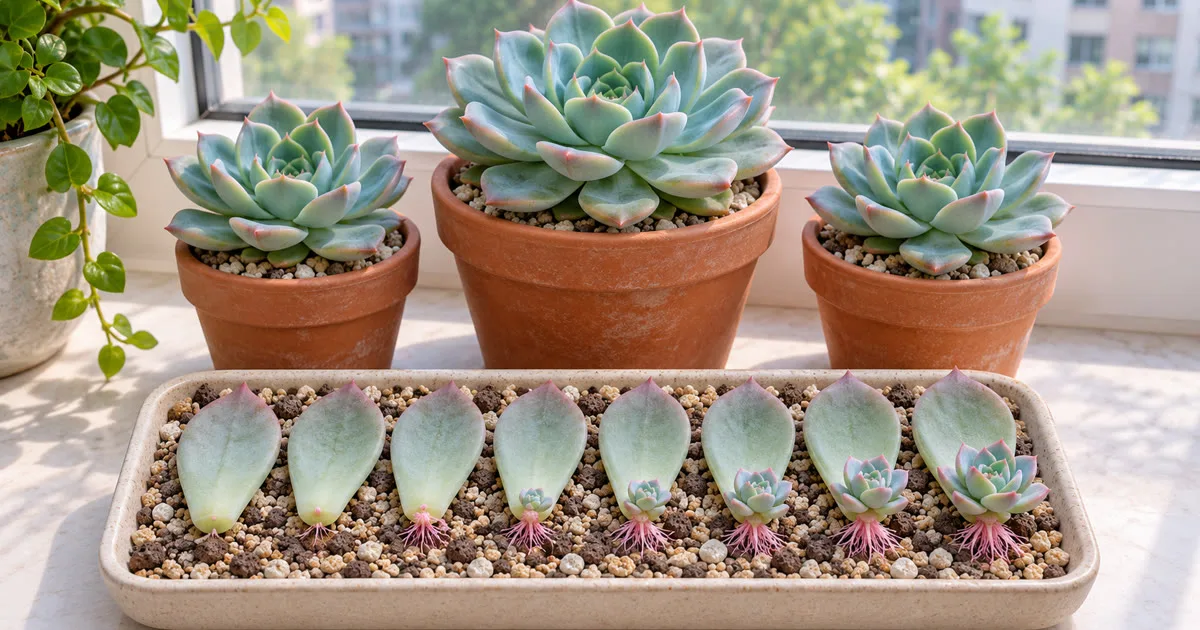
In this article
You propagate succulents in one of three ways: pull a whole leaf off cleanly and lay it on dry, gritty mix; cut a stem or rosette, let the cut dry for a few days and set it on the mix; or separate the pups that grow around the base. All three start dry, because a fresh wound on a succulent rots far more easily than it roots.
That is the part most first tries get backwards. They water a tray of new leaves every day, bury them in soil or stand a cutting in a glass of water, and a week later the tray is full of black, mushy leaves. A succulent piece already holds the water it needs to grow roots. Your job is a clean break, a dry seal and patience.
Why the clean pull decides everything
A leaf grows a new plant only from the few cells where it was attached to the stem. Iowa State University Extension puts it plainly: the entire leaf, along with the cells that attach it to the stem, has to come off, because those cells hold the growing tissue. A partial leaf will not root.
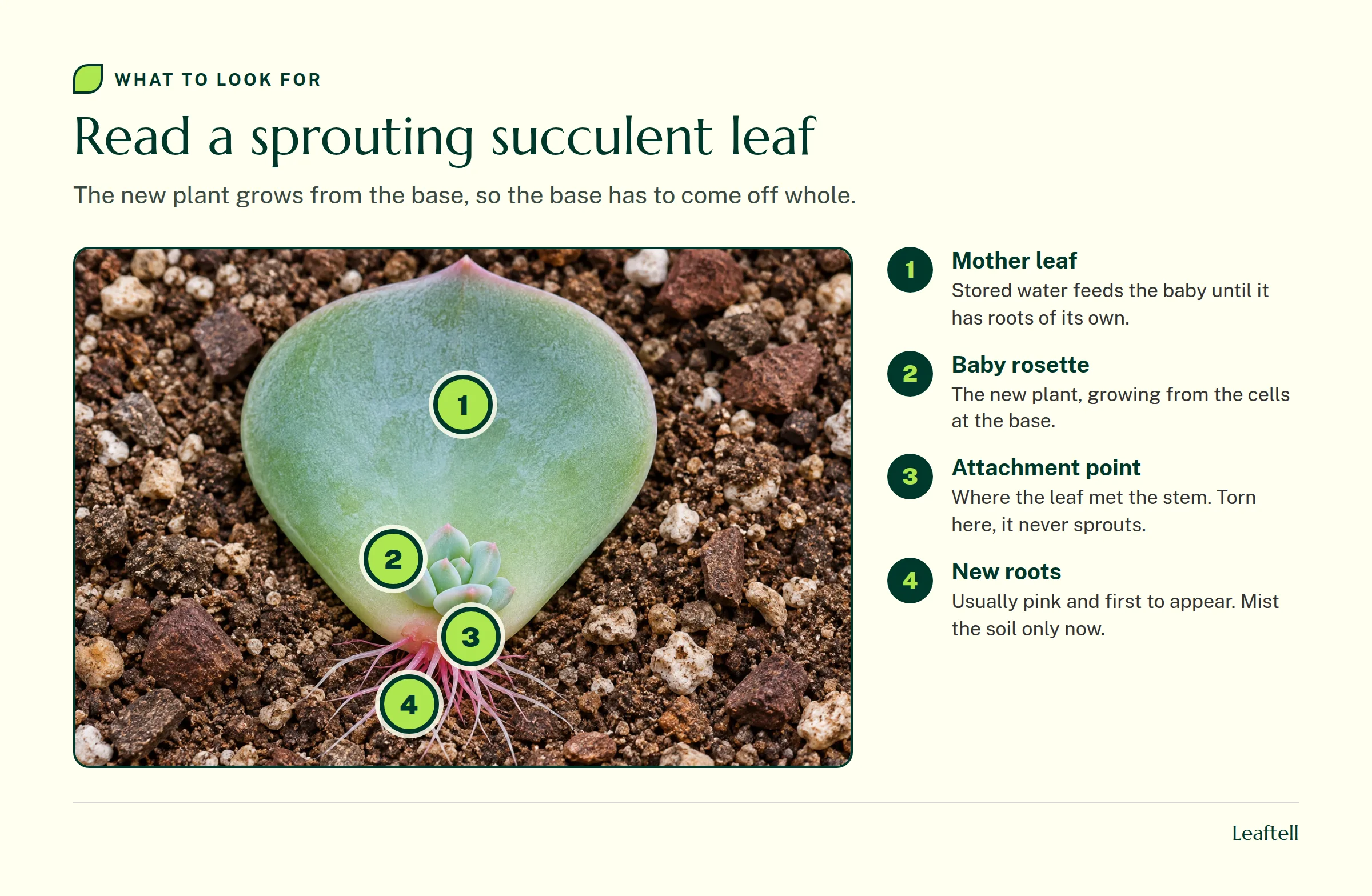
So the method is in your fingers, not in the soil. Hold the leaf near its base and wiggle it gently side to side until it pops off whole with a smooth, curved end. Don't pull it straight out or snap it in the middle. If it tears and leaves a green scrap on the stem, that leaf will shrivel without making a plant, so set it aside and try the next one down.
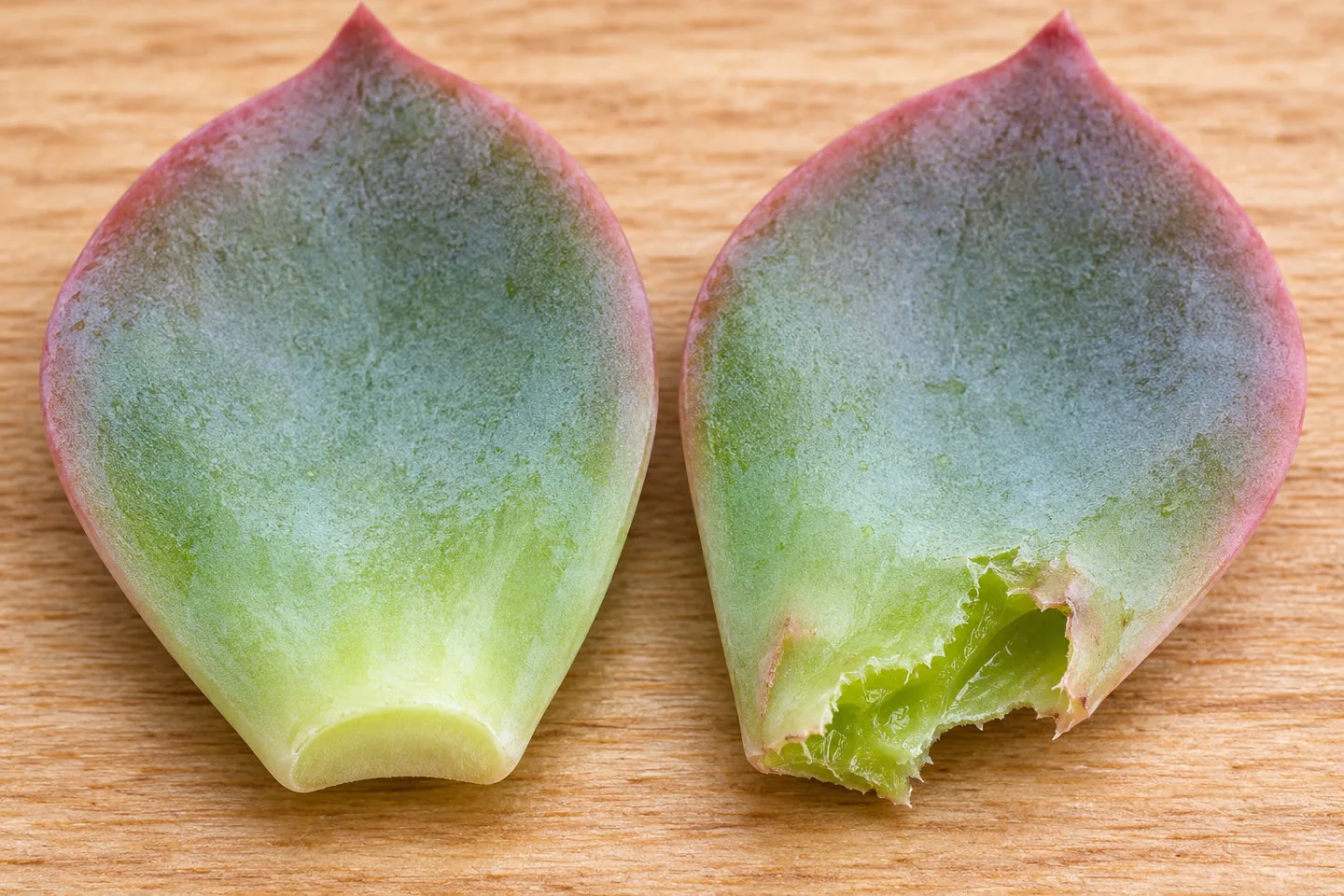
The lowest, plumpest leaves on a healthy plant are the best donors. They come away most easily and carry the most stored water. Skip thin, wrinkled or yellow leaves; they don't have enough reserve to wait for roots.
Pick the method by the succulent you have
Not every succulent grows from a leaf. Iowa State lists which method works best by plant group, and the shape of your plant tells you most of it before you look anything up.
| Your succulent | Best method | Also works | Why |
|---|---|---|---|
| Sedum, graptopetalum, pachyphytum, jade (crassula), kalanchoe | Leaf cuttings | Stem cuttings | Plump leaves pop off whole and sprout from the base |
| Echeveria, aeonium | Stem cutting or beheading the rosette | Leaves on many echeverias, slowly | A cut rosette is a full sized plant on day one |
| Aloe, haworthia, gasteria, agave, sempervivum | Offsets (pups) | Division | Their leaves rarely make new plants; they clone from the base |
| Christmas cactus and most cacti | Stem segments or offsets | Division | They grow in joints or clusters, not loose leaves |
| Snake plant | Division or leaf sections | Offsets | One of the few succulents that grows from a cut piece of leaf |
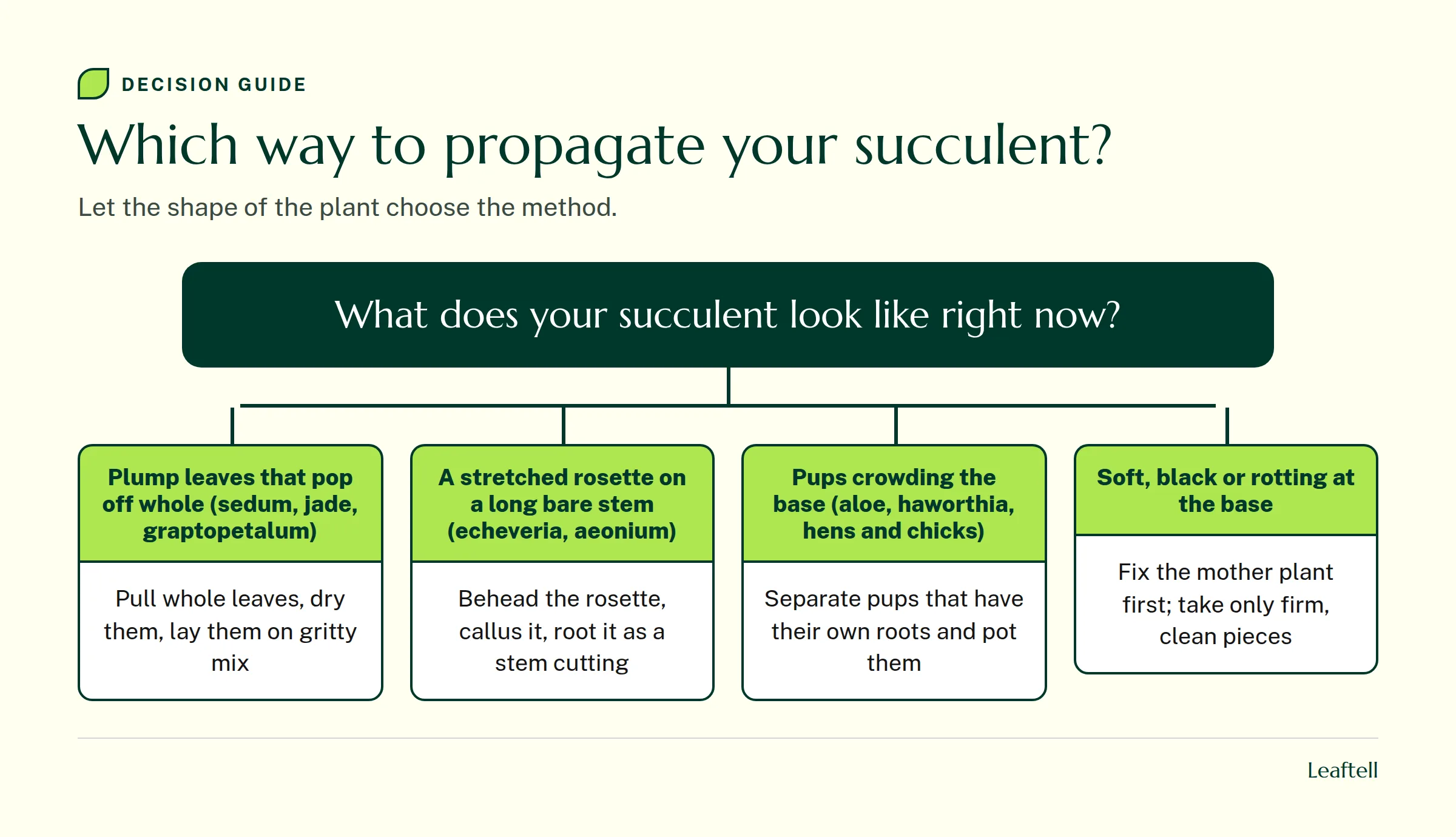
If you are unsure, pull one leaf and take one stem cutting from the same plant. Whichever sprouts first tells you how to do the rest. The best time is spring or early summer, when the plant is actively growing and the window is warm.
How to propagate succulents from leaves
Leaves are the slowest method and the one with the most to show for it: one plant can give you a whole tray. Expect roots first, then a tiny rosette at the base of each leaf, over several weeks.
How to propagate succulents from leaves
- Pull whole leaves from the bottom
Wiggle the lowest, plumpest leaves side to side until each pops off with a smooth, complete base. Discard any that tear.
- Let them dry for a few days
Lay the leaves on a dry paper towel or plate out of direct sun until the broken end looks dry and sealed. This callus is what stops rot once the leaf touches soil.
- Lay them on gritty mix, not in it
Fill a shallow tray with cactus mix, or potting mix with extra perlite or pumice. Lay each leaf flat with the base just touching the surface. Don't bury it.
- Mist the surface, don't water the leaves
Once you see the first pink roots, mist the soil surface every few days so it is lightly damp, never wet. Iowa State suggests a spray bottle for exactly this.
- Keep them bright but out of hot sun
A bright window with no harsh midday sun on the tray is ideal. Strong direct sun scorches leaves that have no roots to replace the water they lose.
- Pot them once the baby rosette has roots
When the new rosette is about the size of a coin and rooted into the soil, move it into its own small pot. Leave the old leaf attached until it falls off on its own.
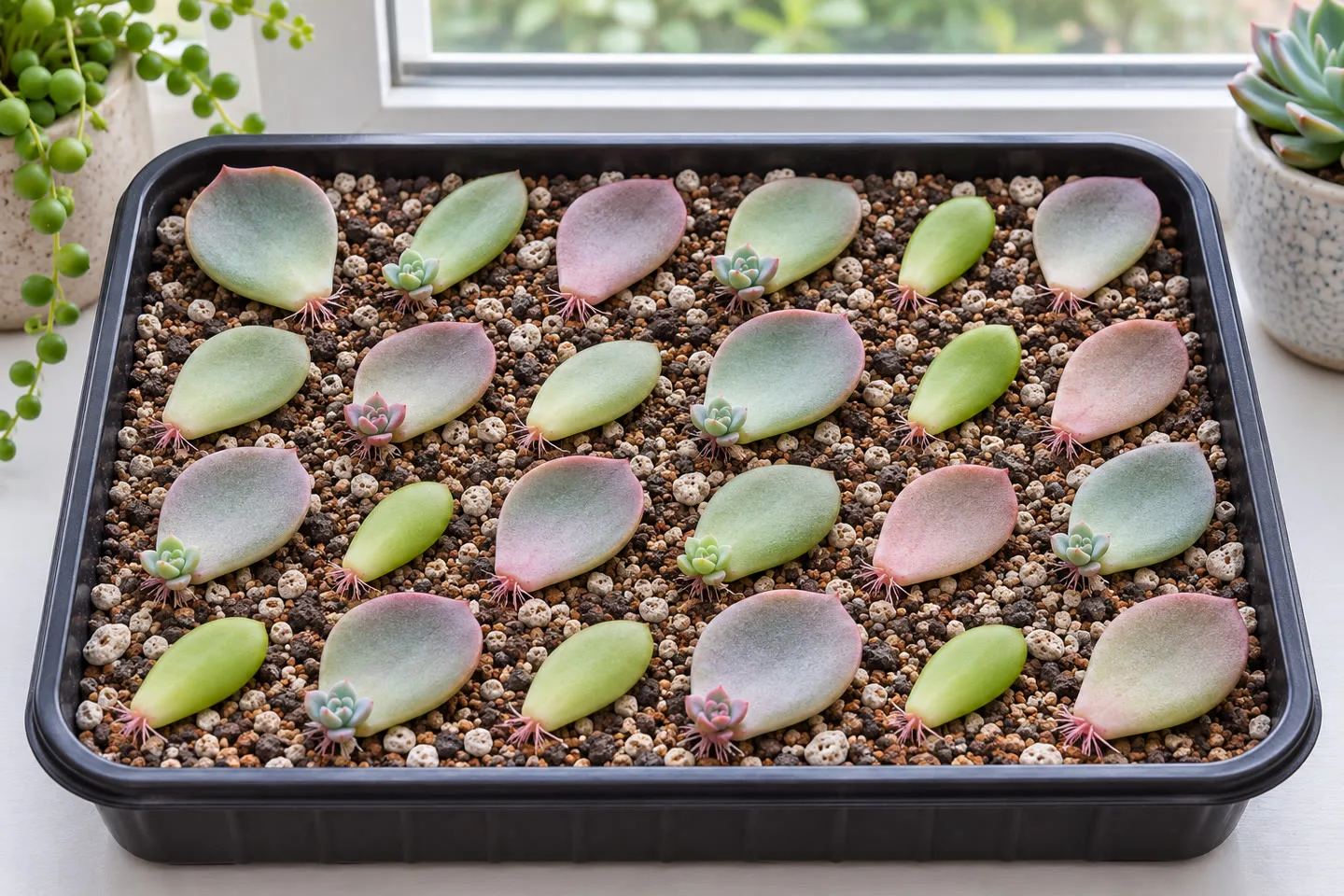
Not every leaf in a tray will make it, even if you do everything right. Some just dry up, and some grow roots without a rosette for weeks. That is normal. Pull more leaves than the number of plants you want.
Roots in the air are a good sign
Some leaves push out pink roots before they touch any soil. Don't cut them off. Turn the leaf so the roots point down to the mix, or sprinkle a pinch of soil over them so they stay in the dark.
Stem cuttings and beheading a stretched rosette
Stem cuttings are faster than leaves and give you a bigger plant right away. Iowa State suggests a piece of stem 3 to 6 inches long, cut with clean, sharp pruners or scissors, with the lower half stripped of leaves. Let the cut end dry and callus for several days on a tray, or hang it in an empty cup so it stays straight. Trailing succulents are the exception to keeping a cutting upright: string of pearls cuttings root best laid flat, with the bare stem pressed onto the mix.
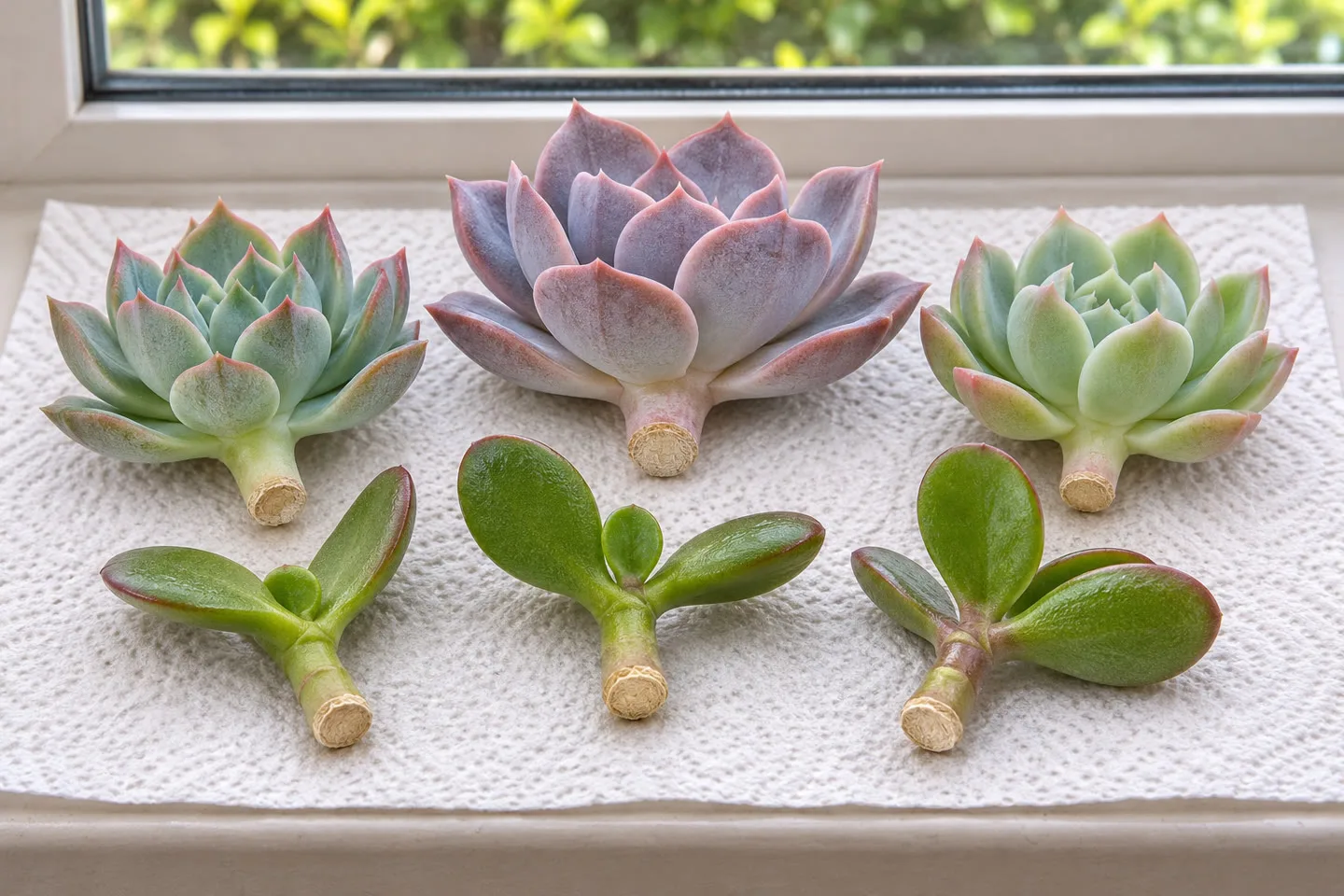
Set the callused cutting on or just into gritty mix, upright, and leave it dry for the first week. Iowa State notes that most succulents do not root well in a glass of water and that rooting hormone is usually not needed, because they root easily without it.
Beheading fixes a leggy succulent
A rosette that has stretched toward the window, with a long bare stem and gaps between the leaves, is the classic candidate. That stretch comes from too little light and does not reverse, but you can reset it. Cut the rosette off with an inch or two of stem, callus it and root it like any stem cutting.
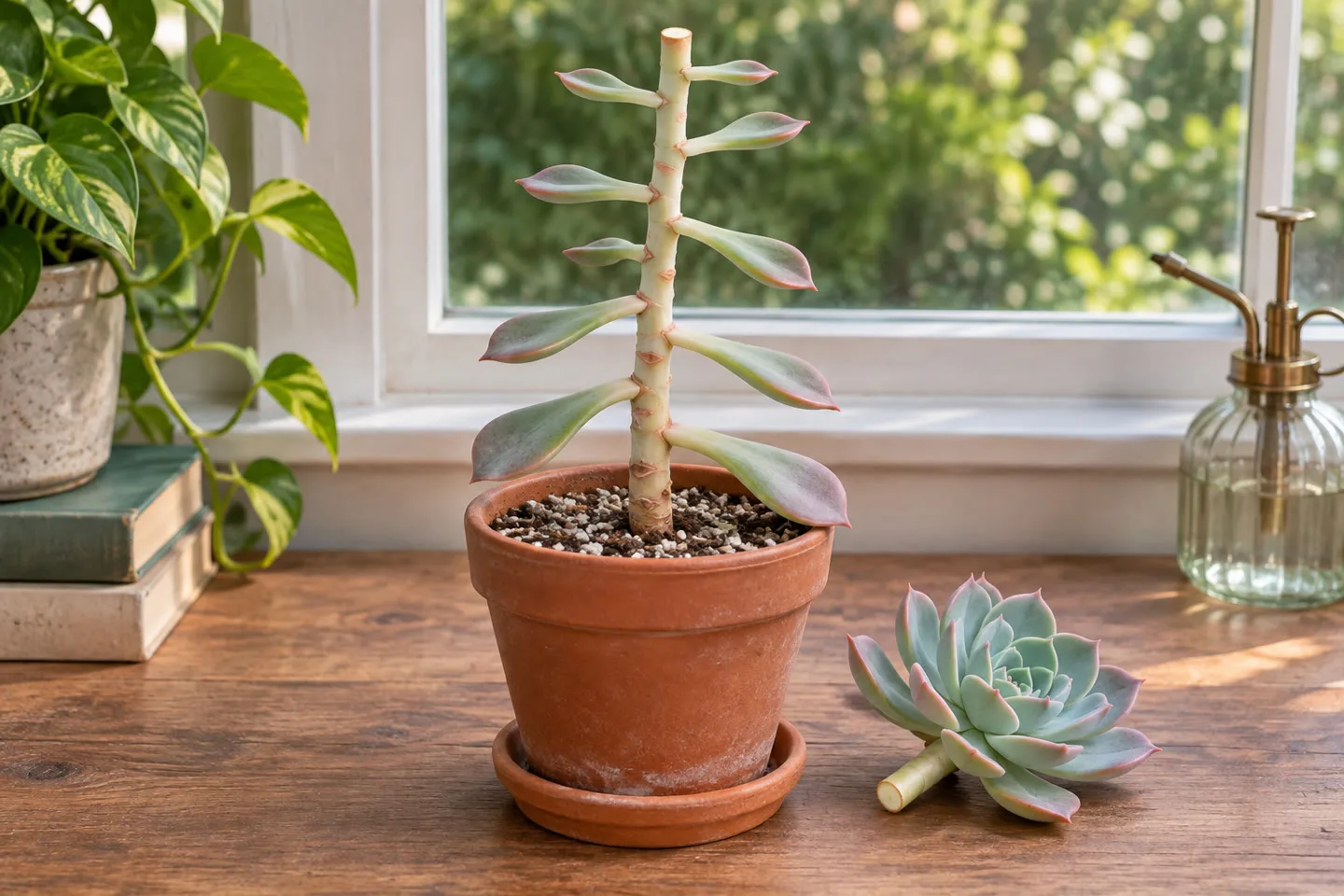
Keep the stump. In many cases it sprouts several small rosettes along the stem over the next few months, which you can leave for a fuller plant or cut and root in turn. Then give both pieces more light than before, or they will stretch again. The guide to leggy plants explains why stretching starts and how to spot it early.
Offsets: the fastest new plant
Aloe, haworthia, agave, sempervivum (hens and chicks) and most cacti make pups around their base. A pup with its own roots is already a plant, so this is the quickest and most reliable way to propagate them. For aloe specifically, our guide on how to propagate an aloe vera plant shows which pups are ready and how long to dry them.
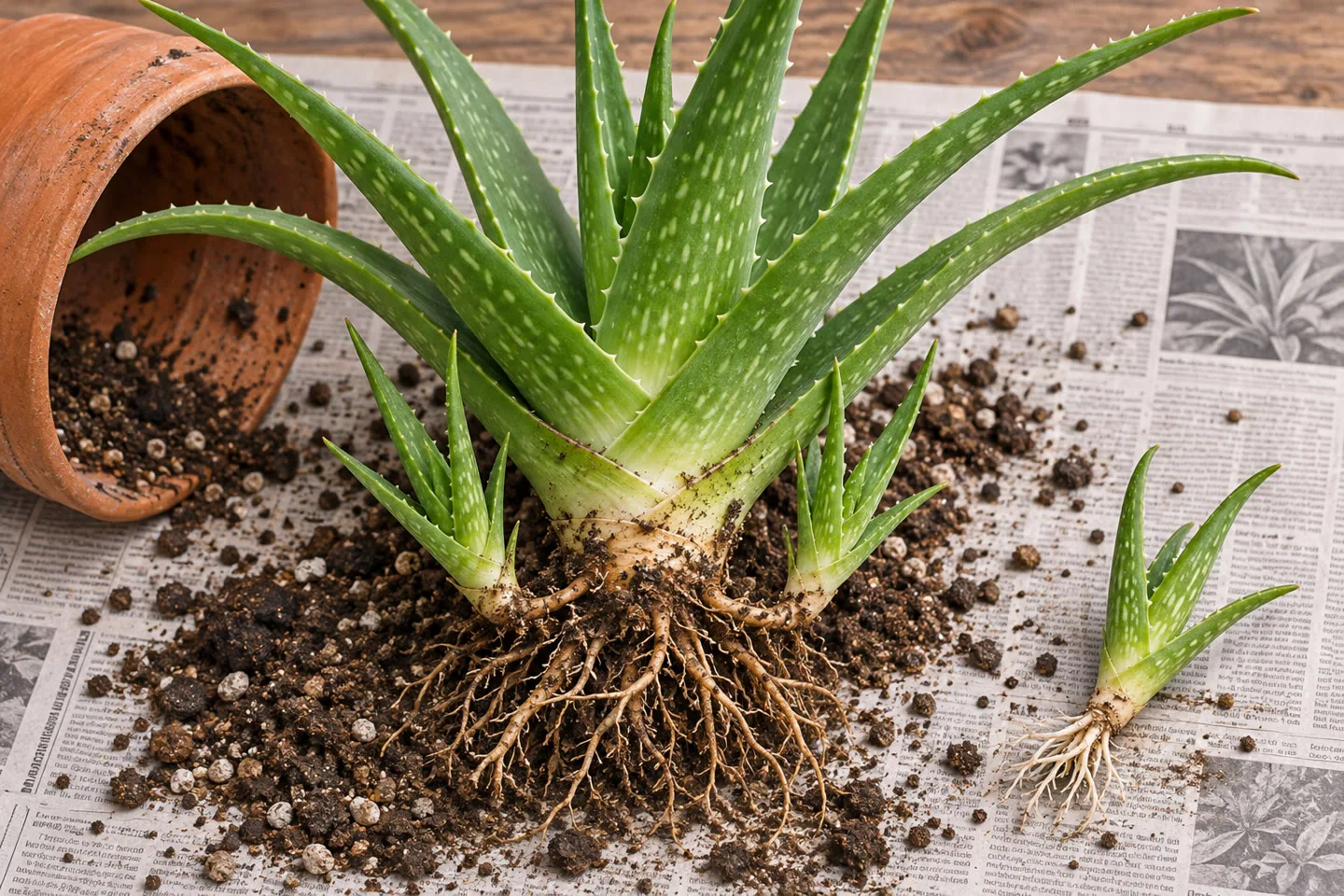
Ease the mother plant out of its pot and brush away soil until you can see where each pup joins. Pull or cut it free so it keeps both leaves and roots. Pot it in cactus mix with a drainage hole and water lightly; Iowa State says it should establish and start growing on its own within a few weeks. Pups the size of your fingertip with no roots are better left on the mother for another season. If your aloe has pups, our aloe vera care guide covers the light and pot it needs once it is on its own.
What goes wrong and what it costs
Almost every failed succulent propagation dies from water, not from a lack of it.
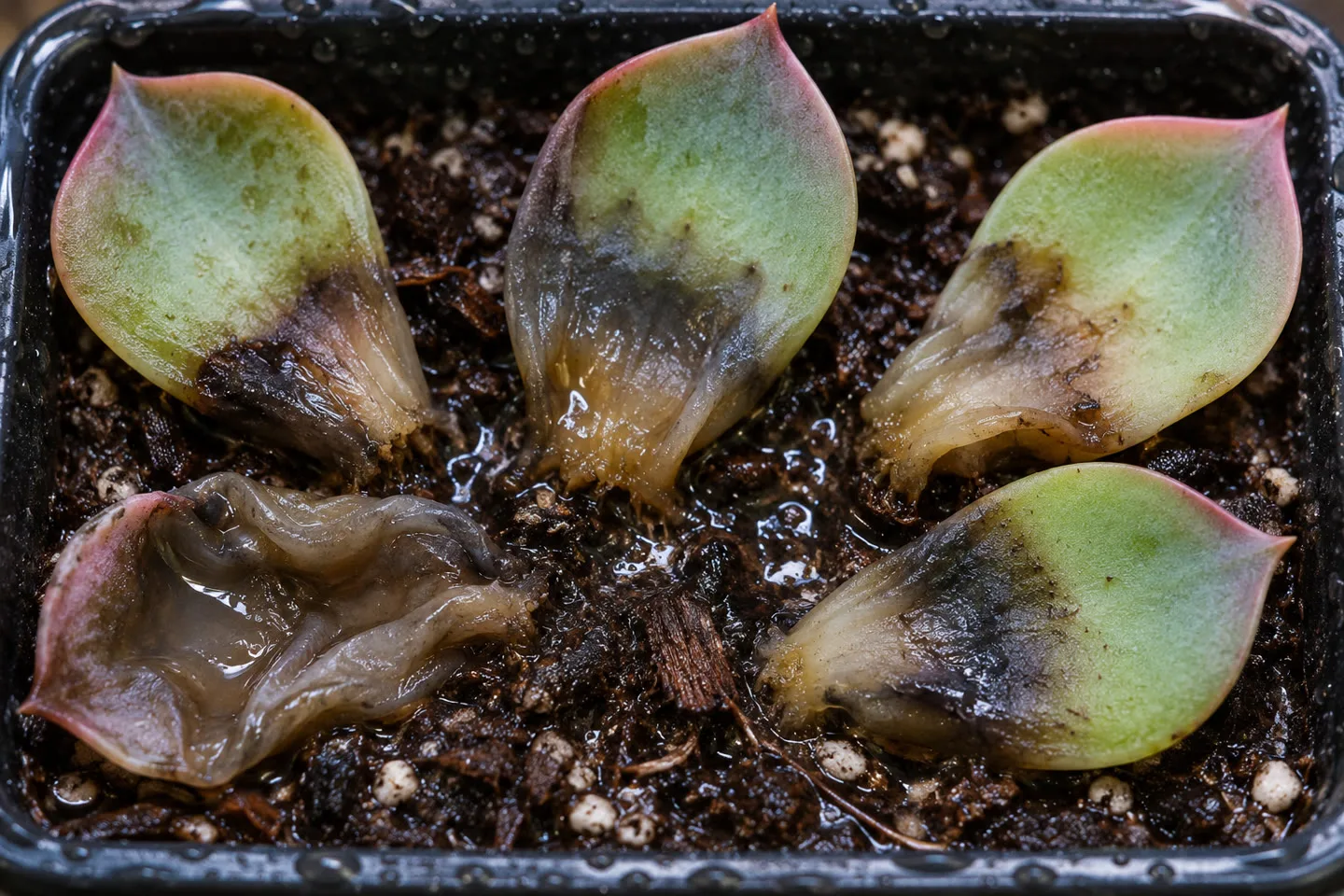
- Watering fresh leaves or cuttings. The open wound takes up water and rots. Cost: black, translucent leaves within days. Wait for the callus and for roots before you water.
- A torn leaf. The growing cells stayed on the stem. Cost: a leaf that slowly shrivels and never sprouts.
- Burying leaves or cuttings deep. Damp soil sits against the wound with no air. Cost: rot from the base up.
- Ordinary potting soil. It holds too much water around rootless pieces. Use cactus mix or add perlite or pumice; our potting mix guide shows what to add.
- Hot direct sun on unrooted pieces. They can't replace the water they lose. Cost: scorched, wrinkled leaves before roots form.
- Cutting from a sick plant. A rotting or pest infested plant passes the problem on. If the mother plant itself is collapsing, start with why your succulent is dying before you take pieces.
If a leaf or cutting turns black or soft at the base, remove it right away so it doesn't spread rot to the rest of the tray. A stem cutting with a soft end can often be saved: cut back to firm, clean tissue, let it callus again and start over on dry mix.
A shriveled mother leaf is not a problem
The opposite worry is just as common. As the baby rosette grows, the old leaf it came from wrinkles, thins and turns papery. That is the baby using up the leaf's stored water, which is exactly what should happen. Leave it until it drops off.
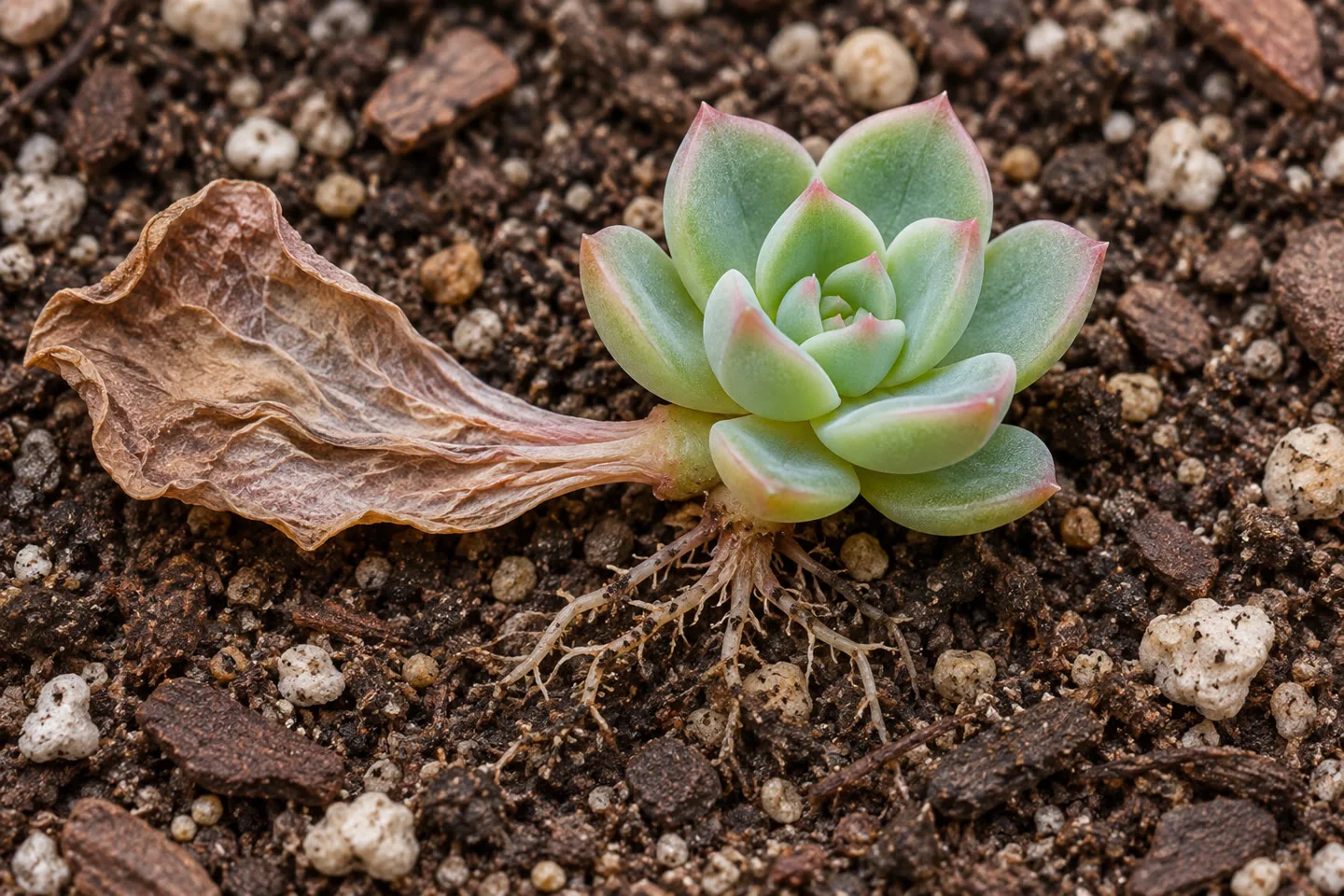
Moving babies into pots
Pot a baby once it has a root system that holds it in place and a rosette you can see clearly, or a cutting once it resists a gentle tug. Use a small pot with a drainage hole, so the mix dries quickly around a small root system. Several babies can share one shallow pot for a fuller look.
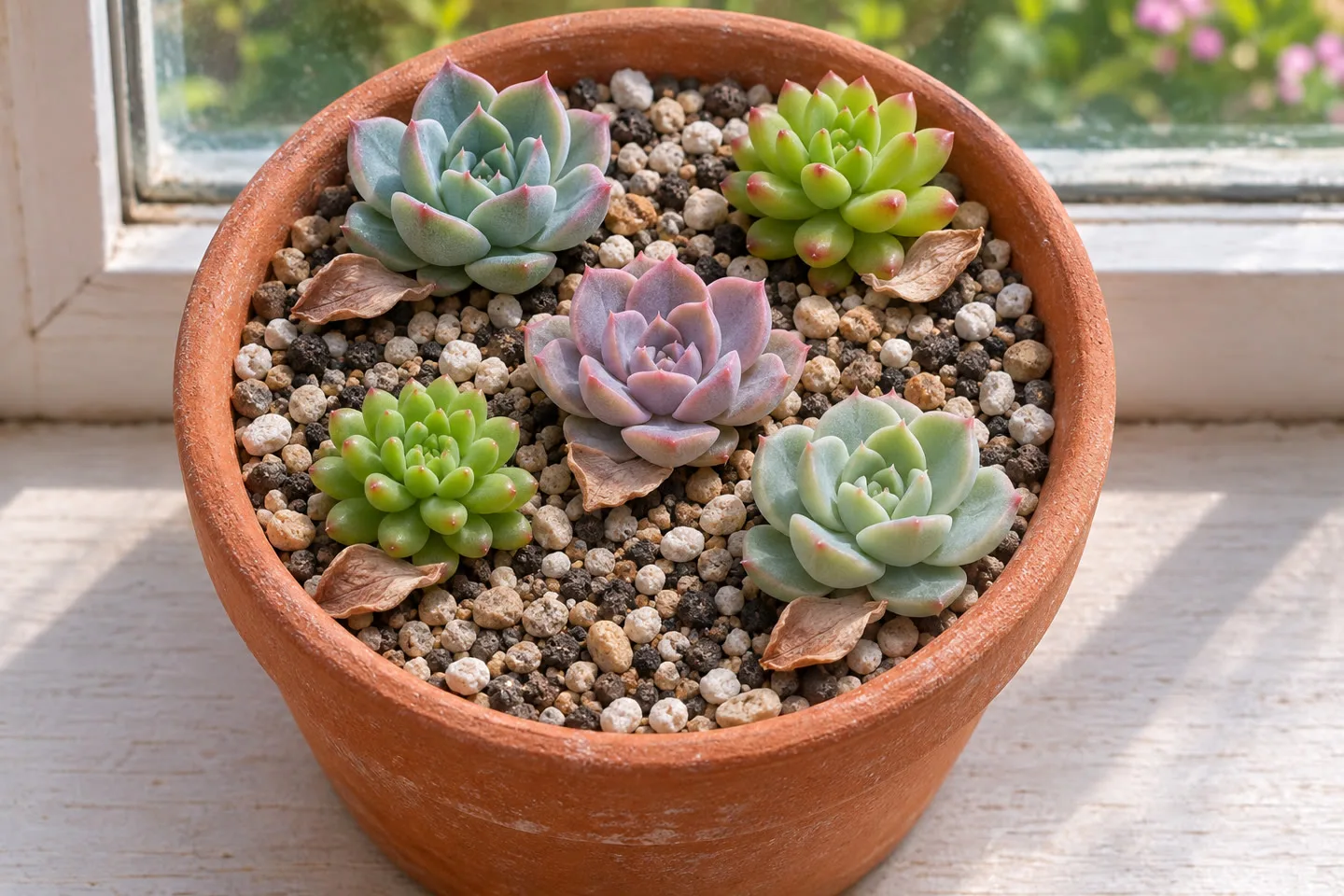
After potting, switch to the normal soak and dry routine: water thoroughly, let it drain, and water again only once the mix is dry. Our guide to how often to water succulents explains how to tell when that is, and succulent plant care covers light and feeding once they are growing.
Keep cuttings away from pets
A tray of loose leaves on a low windowsill is easy for a cat to bat around and chew. Some popular succulents are toxic to cats and dogs, including jade plant, aloe and kalanchoe, according to the ASPCA. Put propagation trays up high, clear away dropped leaves and call your veterinarian or a pet poison control service if a pet chews one. For aloe in a home with cats, see whether aloe vera is poisonous to cats.
The one thing that decides whether it works
Start dry. A clean, whole leaf or a callused cut laid on gritty mix, misted only once roots appear, roots more reliably than anything kept wet. Choose the method by the plant: leaves for sedum, jade and graptopetalum, beheading for a stretched echeveria, pups for aloe and haworthia. The same idea of starting from the right piece works for dividing a snake plant.
If a cutting or the mother plant looks wrong and you are not sure why, check your succulent in Leaftell with a photo of the whole plant, a close-up of the base of the leaf or stem and a note on how often you have been watering.
Sources
Check your growing conditions with the plant watering calculator.
Frequently asked questions
Almost every succulent cutting starts without roots. Take a whole leaf or a stem cutting, let the cut end dry for a few days until it seals, then lay it on dry, gritty cactus mix in bright light out of hot sun. Roots form from the stored water in the leaf over several weeks; mist the soil only once you see them.
Unrooted succulent cuttings live off the water stored in their leaves, so they stay firm for days and often weeks out of soil, and many start rooting while they sit. That is why drying them for a few days before planting does no harm. Plant them once the cut is sealed rather than testing how long they last, because they slowly shrivel the longer they wait.
No. Leaves and cuttings without roots do best in bright light out of hot direct sun, because they can't replace the water strong sun pulls out of them. Once a baby plant is rooted and growing, move it gradually into the brighter light that grown succulents need indoors.
Some named succulent varieties are patented. In the US, a plant patent gives its owner the right to stop others from reproducing the plant asexually, which includes leaf and stem cuttings, for 20 years from filing, according to the USPTO. Patented plants are usually labeled "PP" with a number or "PPAF" on the tag. Species and older unpatented varieties are free to propagate.
Share article
About the author

Keep checking your plant
Plant care reference
Indoor plant care
Build a routine around your plant, light and potting mix.
Plant care reference
Why is my plant dying
Trace leaf and root symptoms before choosing a care change.
Plant care reference
Pothos plant care
Choose a growing spot and prune a trailing pothos for fuller growth.
Plant care reference
How to fix root rot
Inspect root firmness and drainage, then decide whether to repot.