Snake plant leaves turning yellow: check the base first
Filip Leszczyński 16 October 2026 12 min read
In this article
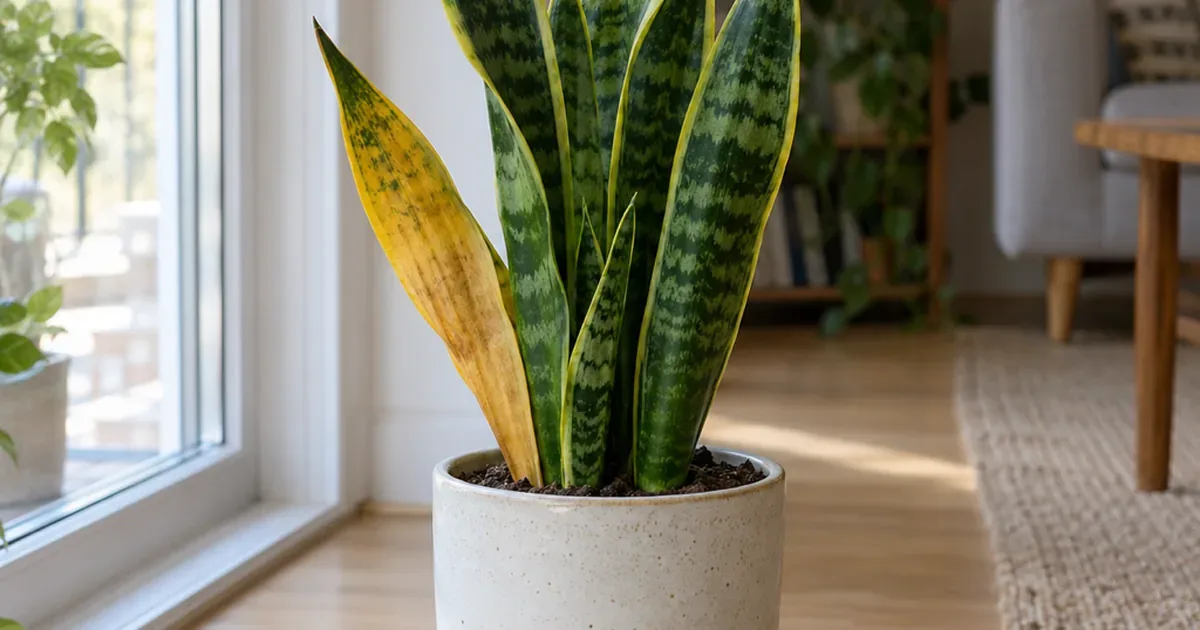
Snake plant leaves turning yellow usually comes down to one question: is the base of the leaf firm or soft? A soft, yellow base in damp mix points to too much water and possible root rot, while a firm yellow edge on a variegated plant is often just how that cultivar looks.
So press gently near the base of the yellow leaf and feel the mix before you water by habit. Then take a photo of the whole clump next to a healthy leaf. Firmness and drainage pick your next step, not color alone.
If there's one habit to drop, it's watering a snake plant on the same calendar as your leafy plants. That's where most of these yellow leaves start.
Why is my snake plant turning yellow? Check the base before the tips
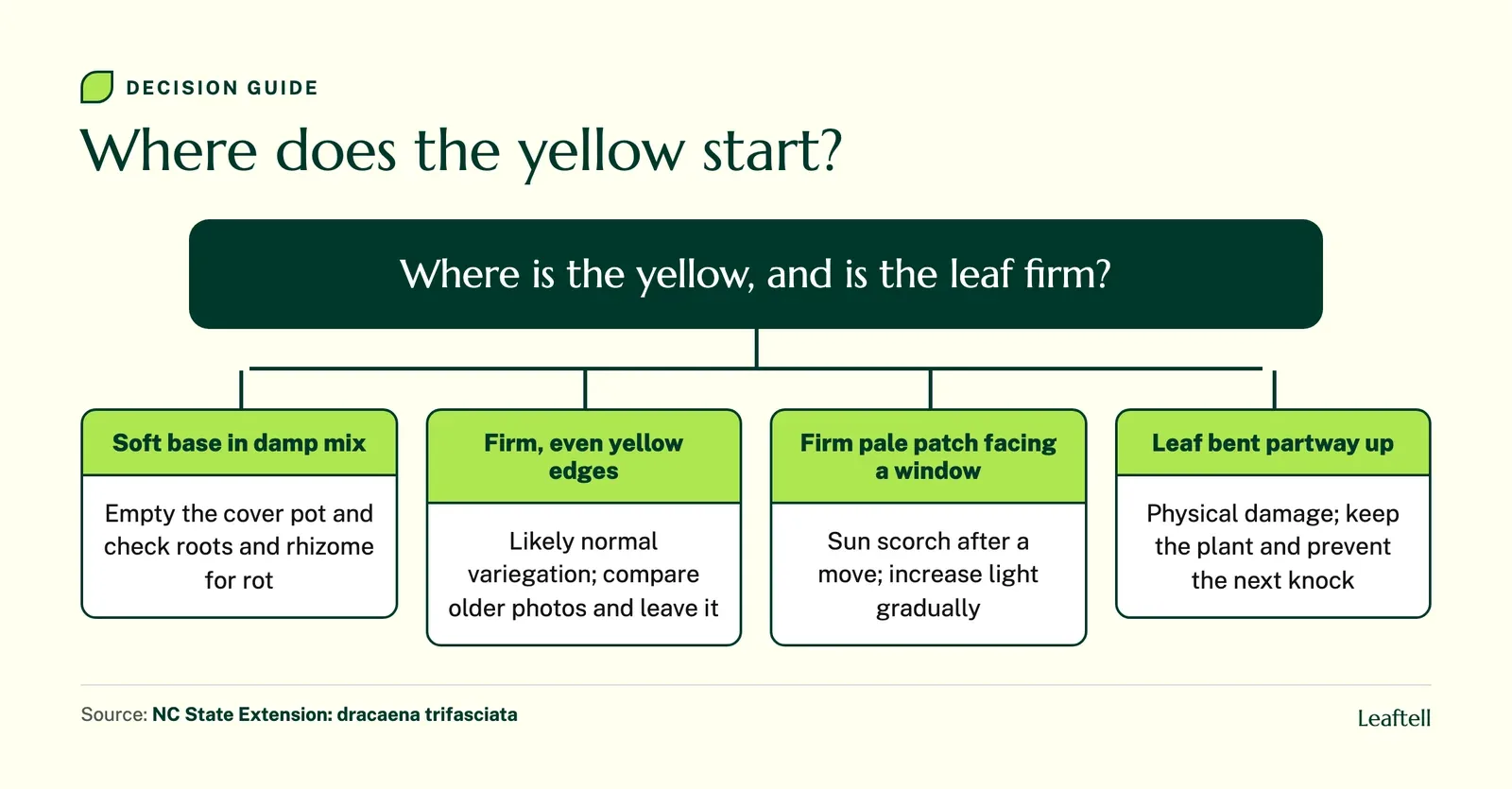
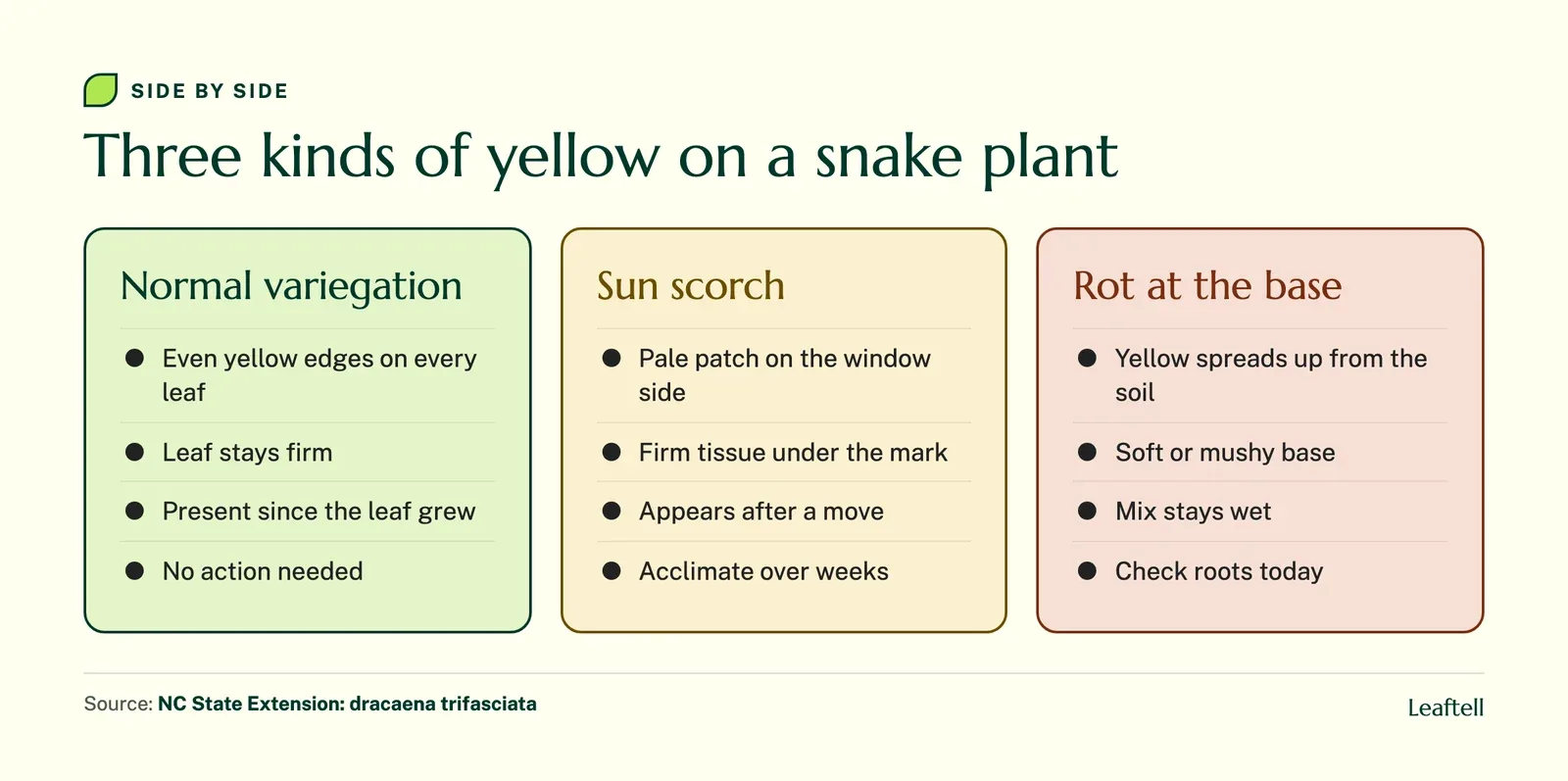
Most yellow snake plant leaves start at the soil line, not the tip. Feel the leaf where it emerges from the mix: soft, mushy or collapsing tissue there means a root-zone problem, while a firm base points you toward light, injury or normal variegation.
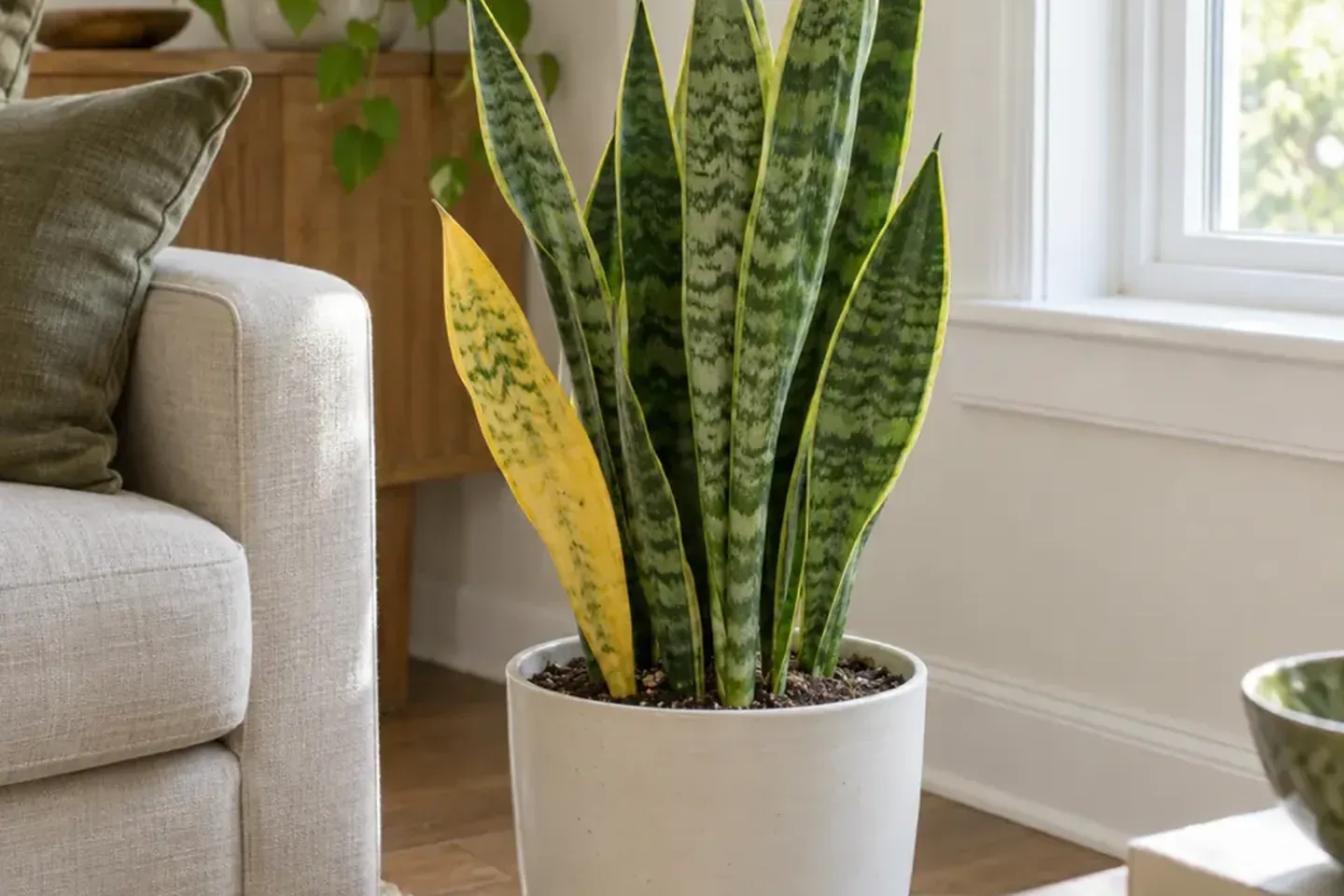
A stable yellow border on a variegated plant is a different observation from a blade that softens, folds or loosens in wet mix. The NC State Extension plant profile names overwatering as a cause of root rot in snake plants (Dracaena trifasciata) and advises letting the soil dry between waterings. Check the actual mix and the bottom of the outer pot, even if you haven't watered recently. Water sitting in a decorative cover keeps the roots wet long after the surface looks dry.
If the base stays firm, look at where the yellow patch sits and what changed recently. Sun damage after a move needs a different fix from decay at the soil line. The broader yellow leaves on plants guide covers patterns shared across species, but snake plants store water, so their rules are stricter.
Overwatered snake plant: soft yellow leaves at the soil line
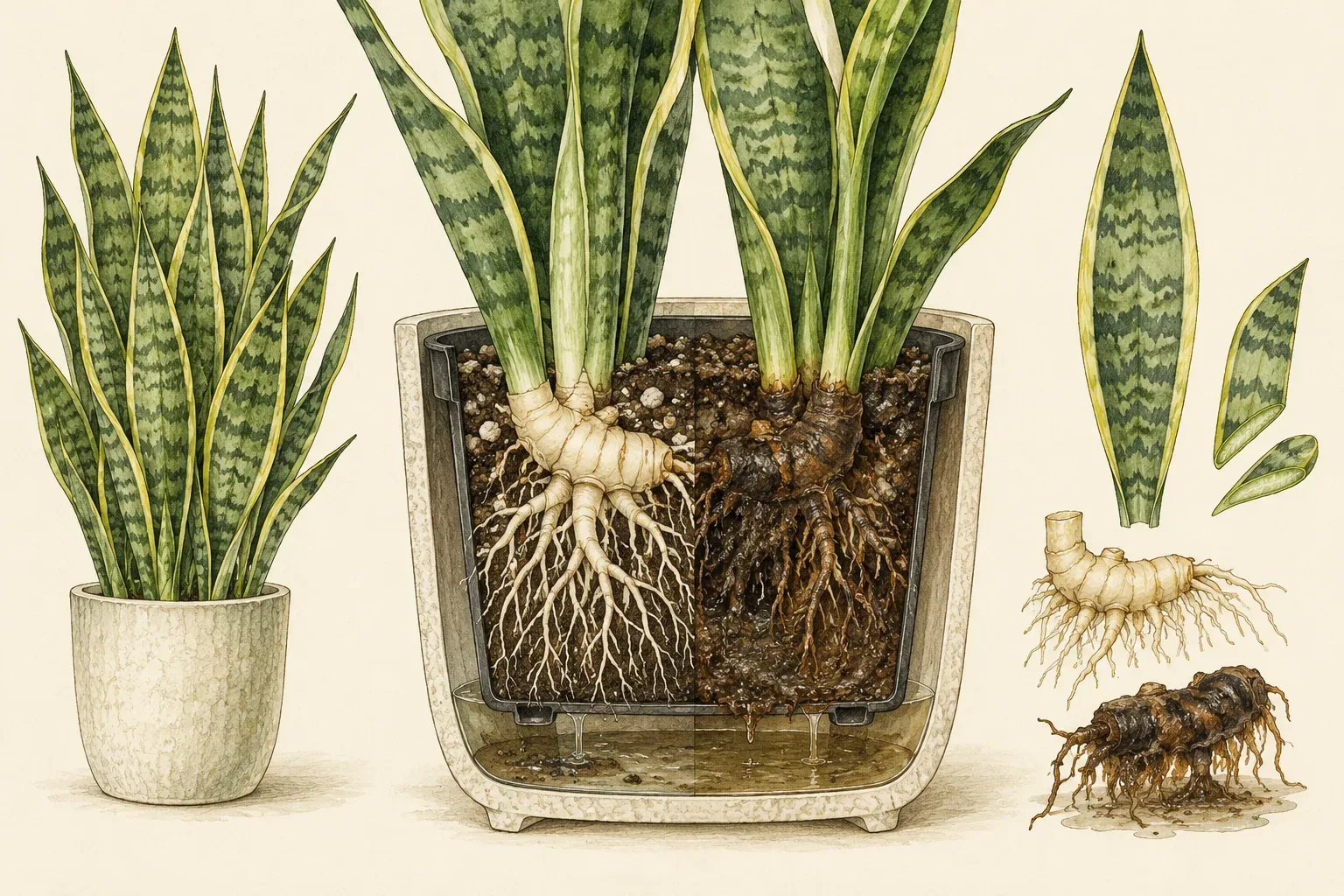
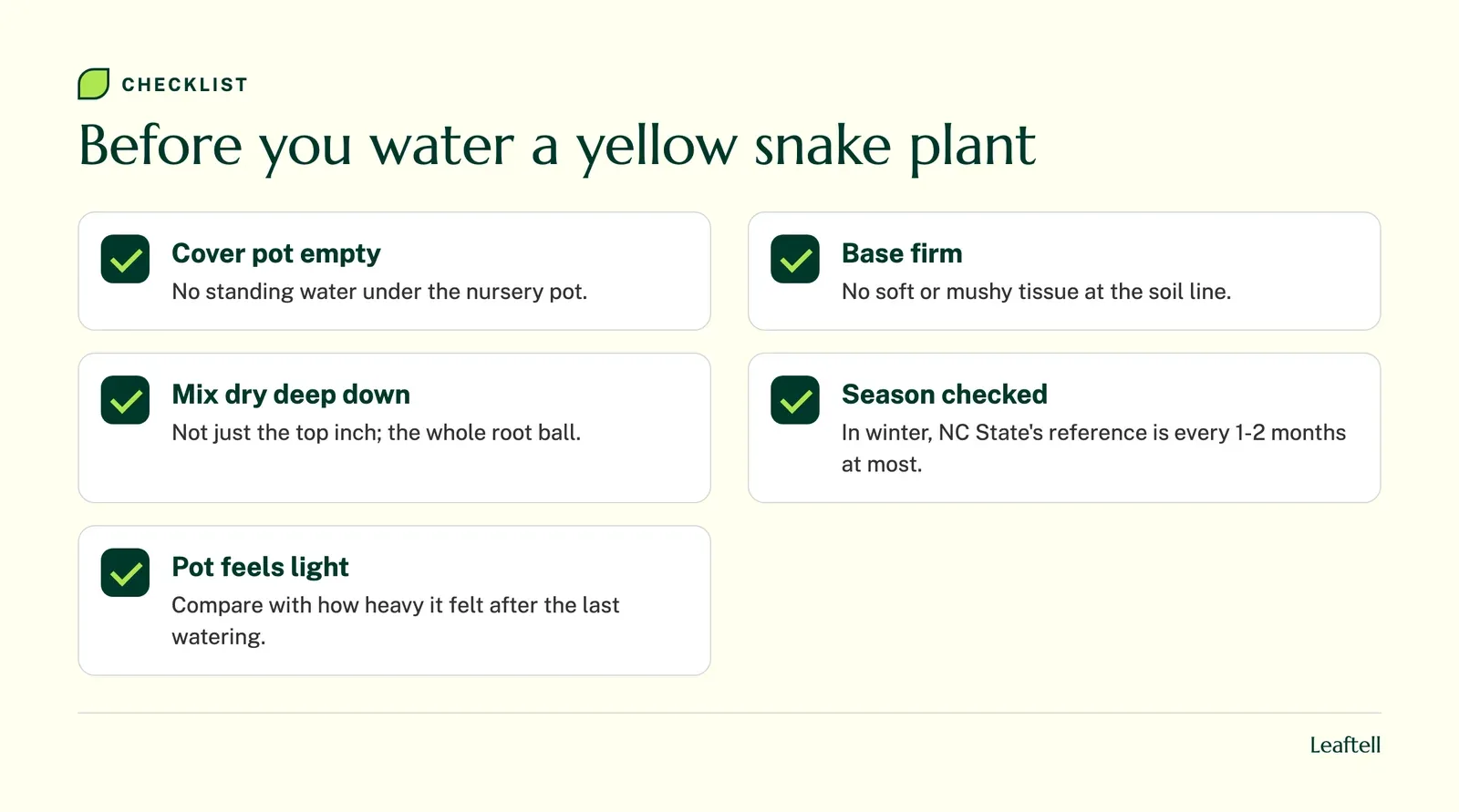
A soft yellow leaf at the soil line is a drainage problem to look into today. Take the inner pot out of its cover, check for trapped runoff and blocked holes, and feel the mix around the rhizome.
NC State advises letting the soil dry between waterings from spring to fall and watering only every 1-2 months in winter. Treat that winter interval as a reference, never as permission to water a pot that's still damp. The same source says snake plants tolerate cool rooms around 50°F, but cool roots in wet mix are exactly the combination that rots. A colder room makes frequent watering less safe, not more.
Snake plants store water, so a watering calendar shared with every pot on the shelf can keep this one soggy. Check whether the plant recently moved somewhere cooler or darker, where it dries more slowly.
| What you notice | Reference | What to do |
|---|---|---|
| Watering more often than every 1-2 months in winter | NC State winter interval, only once the mix has dried | Check roots promptly if the yellow tissue is soft |
| Mix still damp 1 inch below the top | UGA's 1 inch check is only a first reading for this plant | Wait; the whole root ball should dry, not just the surface |
| Plant sits near cold glass around 50°F | NC State gives tolerance around 50°F, not frost tolerance | Move it away from cold windows and outdoor exposure |
| Sudden move into 2-6 hours of direct sun | NC State partial sun plus UGA's 3-4 week acclimation | Introduce stronger light gradually; inspect the exposed side |
Snake plant checks from NC State, with University of Georgia moisture and light guidance. Winter intervals apply only after the mix has dried.
If softness is spreading, inspect the roots and rhizome instead of adding fertilizer. The root rot guide walks through what healthy and rotten roots look like.
How to check a yellow snake plant for rot
- Empty the cover pot
Lift the nursery pot out of any decorative container and pour out standing water. Check that the drainage holes are open.
- Feel the base, not the tip
Press gently where each yellow leaf meets the mix. Note which leaves are soft and whether the center of the clump is still firm. Don't keep tugging healthy leaves to test them.
- Test deeper than the surface
Push a finger or a wooden skewer into the mix. A dry top inch over wet mix below is not a signal to water.
- Inspect roots if softness spreads
Slide the plant out and look at the roots and rhizome. Remove loose, decaying material with clean tools and keep firm tissue.
- Let it dry before the next drink
Put the plant back in a pot with working drainage and wait until the whole root ball has dried before watering again.
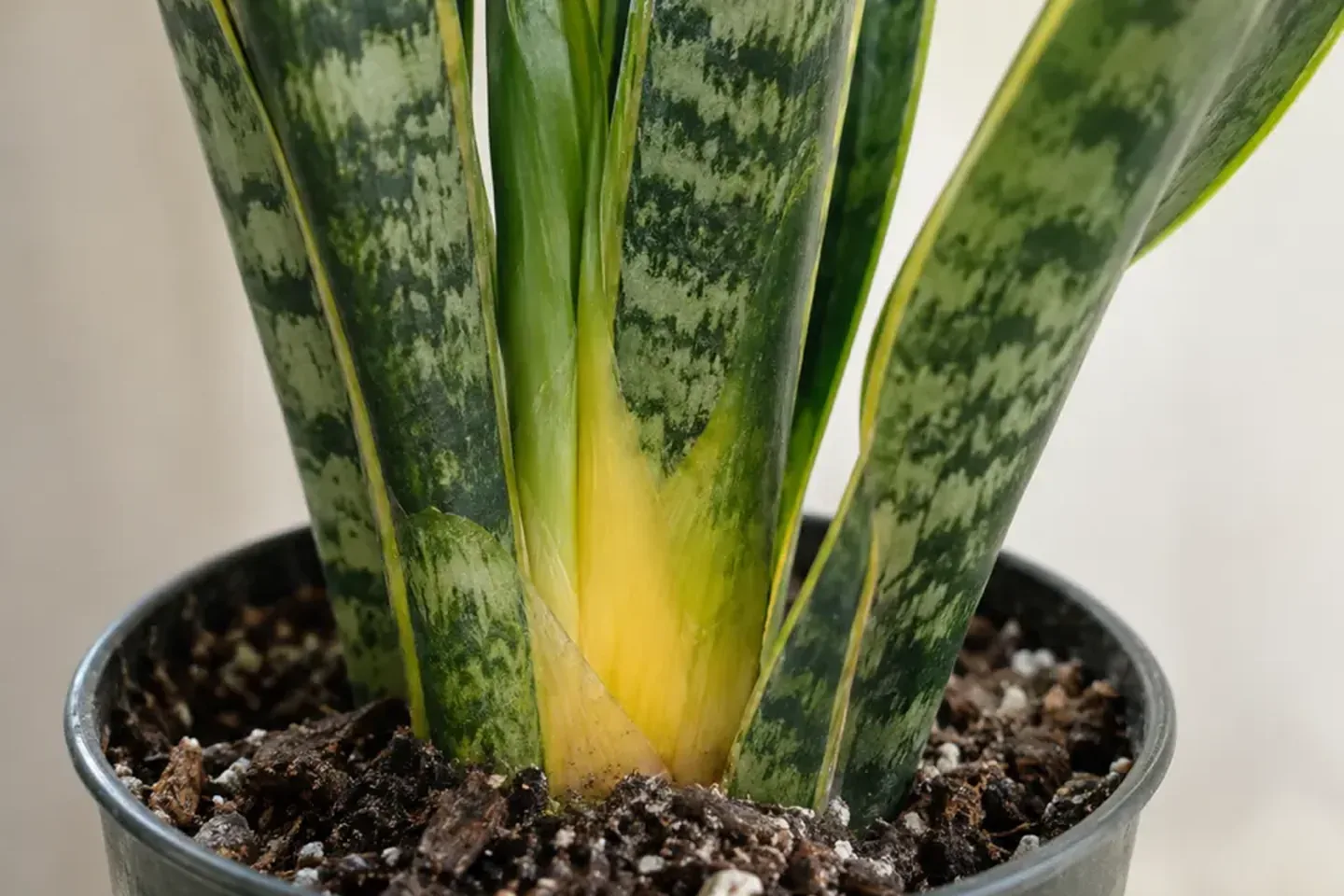
Cutting off a mushy leaf without fixing the wet mix leaves the rest of the plant in the same conditions. If you're not sure whether the pot is simply too wet, compare the signs in overwatered plant symptoms.
Snake plant yellow edges: normal variegation or damage?
Firm, even yellow edges that have been there since the leaf grew are normal on many cultivars. NC State describes 'Laurentii' as dark green with lighter zigzags and yellow edges, so leave those margins alone.
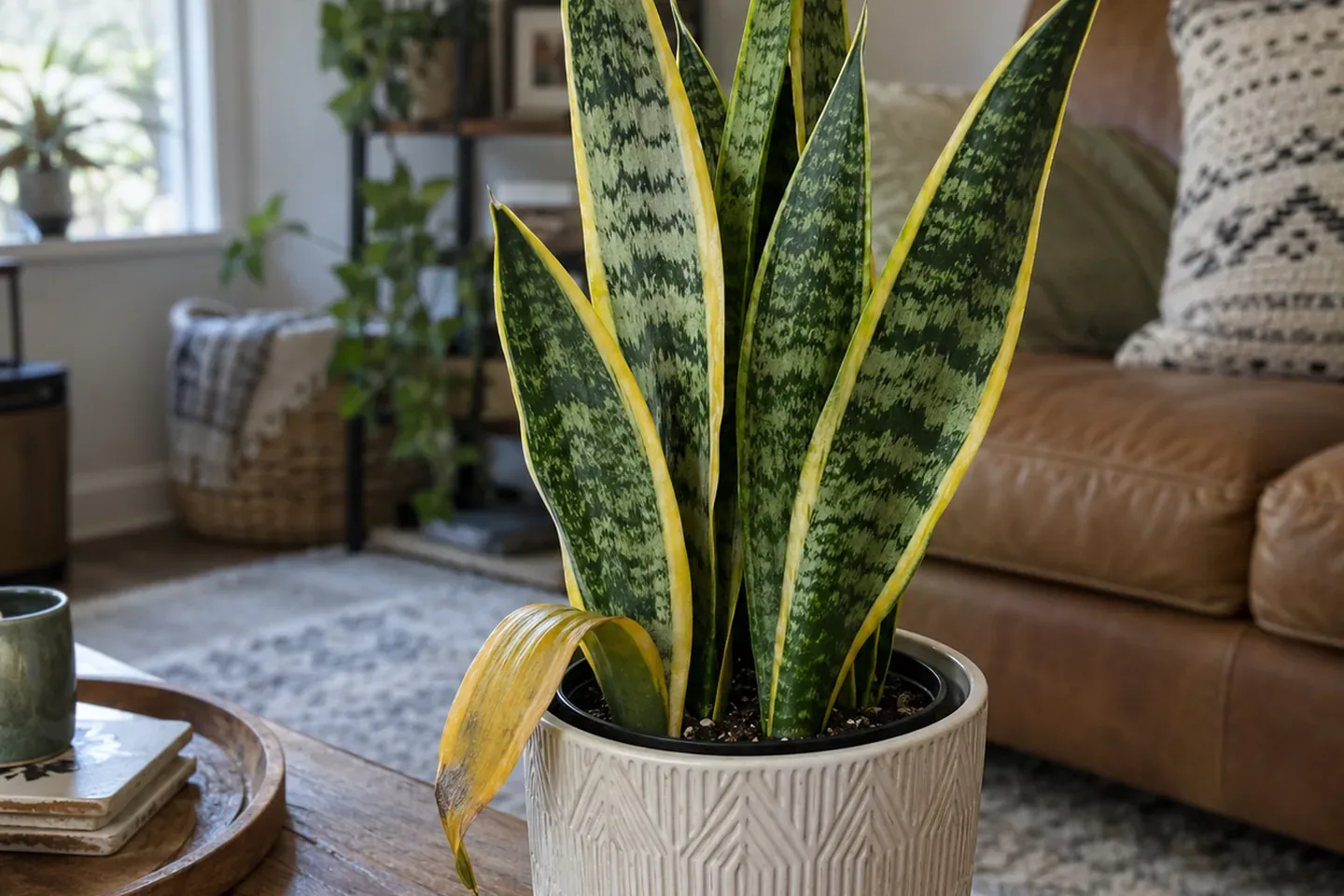
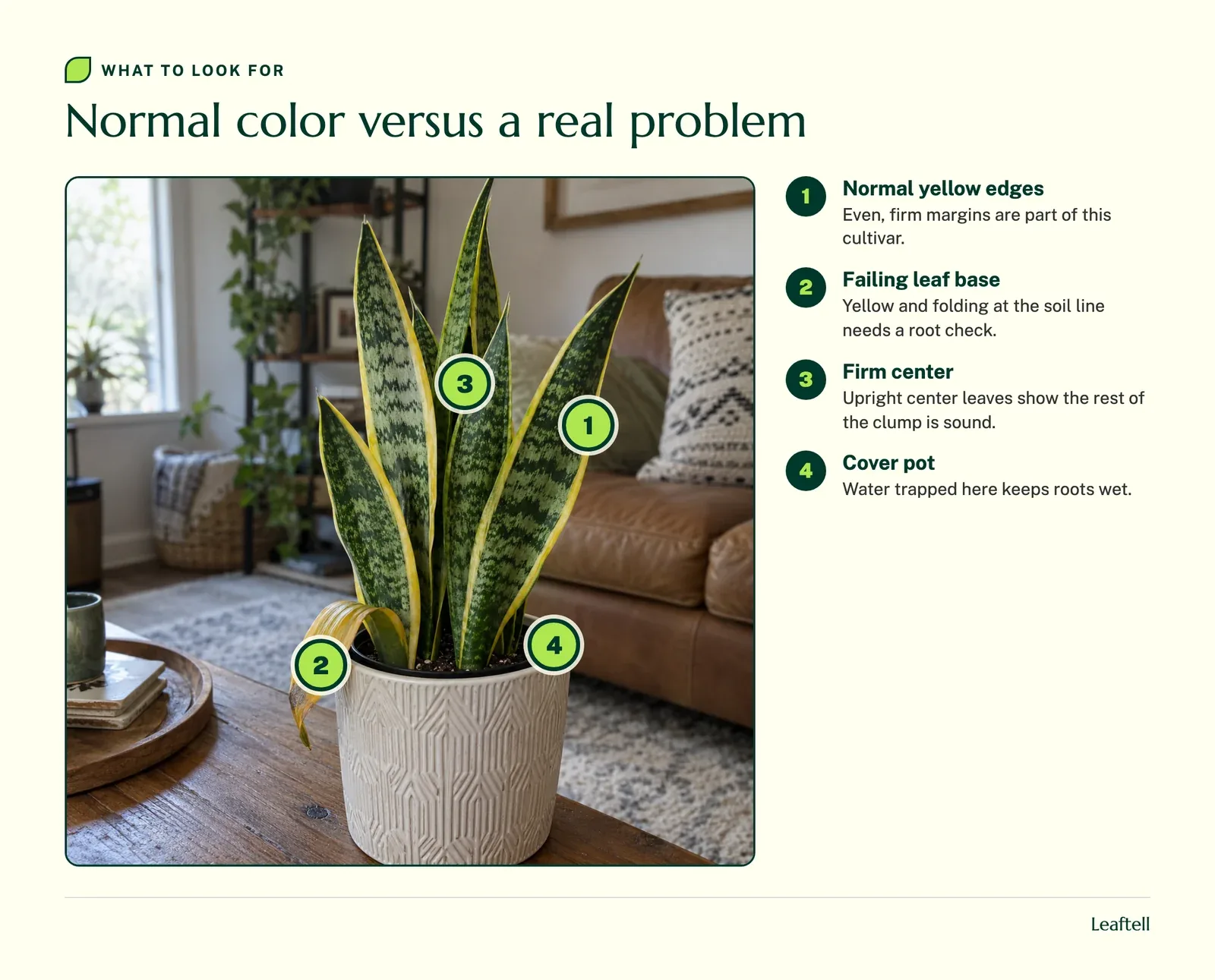
A new, irregular yellow area that spreads inward from a soft base, or a leaf that loses firmness, needs a different look. Compare with an older photo of the same plant or an unaffected leaf on it, not with a different cultivar online. The RHS houseplant leaf damage guidance supports checking light, temperature and roots before calling a color change a disease or deficiency.
Check for pests while you compare. NC State specifically lists mealybugs and spider mites. Cottony white clusters point to mealybugs on plants, while fine stippling or webbing points to mites. Visible insects tell you far more than yellow color does. Wipe away ordinary dust gently and photograph anything that looks like feeding damage.
Don't trim healthy yellow margins. That's living tissue, and cutting it can't fix a root problem somewhere else.
Snake plant leaves turning yellow after a move
Yellowing after a move usually reflects a change in light, temperature or how fast the pot dries. A sharp pale patch on the side facing a new sunny window, on a leaf that stays firm, points to sun scorch.
NC State lists partial sun of 2-6 hours and notes that snake plants tolerate very low light too. Tolerating low light doesn't mean a shade-grown plant can jump straight into hot sun. UGA recommends 3-4 weeks in a bright, sheltered spot when acclimating indoor plants, so increase exposure gradually and keep the leaves off cold glass.

Light changes how much water the plant uses. UGA puts low indoor light at 25-75 foot-candles and medium at 75-200 over 8 hours. A shelf that looks bright to you can deliver far less than a window does. If you're unsure, here's how to read your plant's light. A plant moved somewhere darker and cooler dries slower than it did by the window, so stretch the gap between waterings to match.
Don't try to erase a sun patch by feeding or by cutting every marked leaf. Keep firm tissue, and judge the new spot by whether fresh damage appears on the exposed side.
Snake plant leaves falling over: bend, base or dry pot?
Find where the leaf bent. A blade creased halfway up after a knock is physical damage; a leaf collapsing where it leaves the soil, with a soft yellow base, is a root-zone problem.
If the base is firm and the bend followed handling, keep the rest of the plant and prevent the next knock. Don't assume rot from a leaf's angle alone. If the base is soft and the mix is wet, tying the leaf to a stake just hides the collapse. Fix the water first.
Snake plants can also get too dry, so confirm before you react to wrinkles. Lift the pot and feel the mix. UGA's general check goes about 1 inch down, but for this water-storing plant that's only a first reading, since NC State asks for drying between waterings. Small, root-filled pots in brighter light dry sooner. Check whether water has been running down the sides of a shrunken root ball.
When the root ball really is dry and the base is firm, water evenly and let it drain completely. Then go back to waiting. Daily splashes won't remove an old crease, and adding water to an already wet pot won't revive damaged roots. Learn how to tell wet from dry soil before the next drink.
Mistakes that make it worse
Most yellow snake plants get worse because of the rescue. Watch for these.
- Watering because the leaf looks thirsty. If the base is soft and the mix is wet, more water feeds the rot. Cost: losing the rhizome, not just one leaf.
- Leaving water in the cover pot. Runoff trapped under the nursery pot keeps the roots wet for days. Cost: rot even on a sensible schedule.
- Feeding a yellow plant. UGA notes succulents can need little or no fertilizer for months, and a healthy new plant may carry 2-3 months of reserves. Cost: extra salts on roots that are already struggling.
- Cutting off normal yellow edges. Variegation isn't damage. Cost: less living leaf and no fix for the real problem.
- Doing everything at once. Repotting, feeding and spraying in the same week hides which change helped. Cost: you can't learn your plant's rhythm.
Snake plants should not be chewed by pets or children, so keep the plant and any cut leaves out of reach. Check your own plant against the ASPCA toxic and non-toxic plants list.
What to remove and when to get help
My recommendation: fix the water before you fix the look. Once the mix drains and dries properly, remove fully spent or collapsing leaves with clean tools, keep firm green leaves, and keep debris out of the center of the clump.
A fully yellow leaf won't turn green again, so judge progress by the remaining leaves staying firm and new shoots growing normally in the active season. NC State's winter reference of every 1-2 months applies only once the mix has dried, and neither that nor the 50°F tolerance is a recovery deadline.
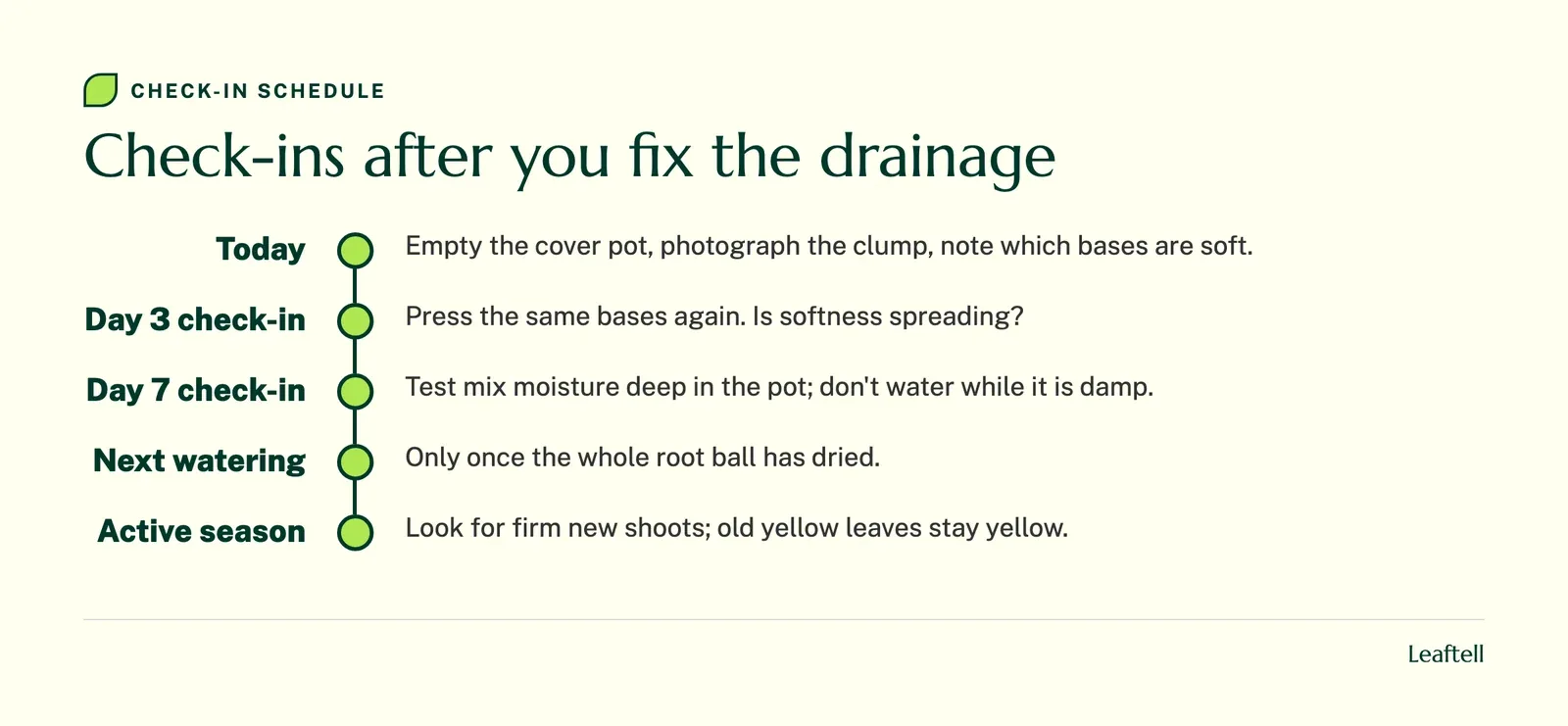
Get help from a local extension office or experienced grower if the rhizome itself is soft, softness keeps spreading after you've fixed drainage, or several leaves collapse at once. Bring photos of the roots, the base and the whole clump. For day-to-day watering and placement once it's stable, see snake plant care.
Check your snake plant in Leaftell. The check uses your answers; photos stay on your device.
Sources
Check your growing conditions with the plant watering calculator.
Frequently asked questions
Often, if firm roots and rhizome remain. Fix the trapped moisture or other stress you've confirmed and monitor the firm leaves. Extensively rotten tissue can't be restored.
They need usable light, but they don't need long hours of full sun indoors. NC State lists partial sun of 2-6 hours and notes they tolerate low light. Acclimate gradually before any move into stronger sun.
A fully yellow, damaged snake plant leaf usually won't turn green again. Look for stable, firm leaves and healthy new shoots instead.
NC State gives every 1-2 months in winter, but only once the mix has fully dried. A cool, dim room can stretch that further.
Avoid freezing glass, constant darkness, cover pots that trap runoff, and spots where pets or children can chew it. Sudden harsh sun can also scorch a plant that wasn't acclimated.
They grow slowly in low light, can rot in mix that stays wet, and shouldn't be chewed by pets or children. Place and water them with that in mind.
Firm leaves, stable bases and healthy new shoots are good signs. Slow growth alone isn't a problem, especially in cooler or darker seasons.
Share article
About the author

Keep checking your plant
Plant care reference
Indoor plant care
Build a routine around your plant, light and potting mix.
Plant care reference
Why is my plant dying
Trace leaf and root symptoms before choosing a care change.
Plant care reference
Pothos plant care
Choose a growing spot and prune a trailing pothos for fuller growth.
Plant care reference
How to fix root rot
Inspect root firmness and drainage, then decide whether to repot.