Yellow Leaves on Plants: 6 Causes and What to Check First
Filip Leszczyński 16 October 2026 12 min read
In this article
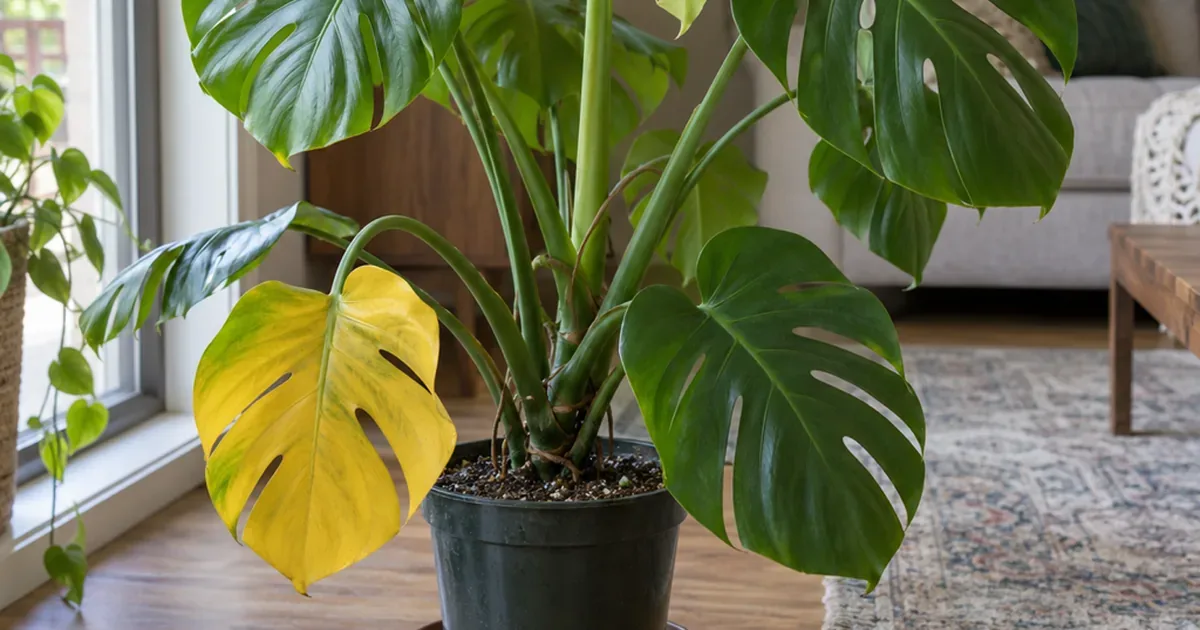
Yellow leaves on plants are a clue, not a diagnosis: the usual causes are normal aging, roots that are too wet or too dry, a change in light, pests, or a nutrient problem. Which leaves turned yellow first, and how wet the mix is below the surface, tell you which one you are dealing with.
So before you reach for fertilizer or the watering can, look at where the yellow is. One old lower leaf fading slowly on a firm plant is a very different situation from pale new growth at every tip. The yellow leaf you are staring at is already finished. Your decision rests on the next leaf up and on the roots.
A photo can show the color and position. It cannot tell you that the cover pot has been holding water for a week, or that the plant moved rooms on Sunday. Those answers pick the fix, and they are what Leaftell asks you for.
Why are my plant leaves turning yellow? Read the pattern first
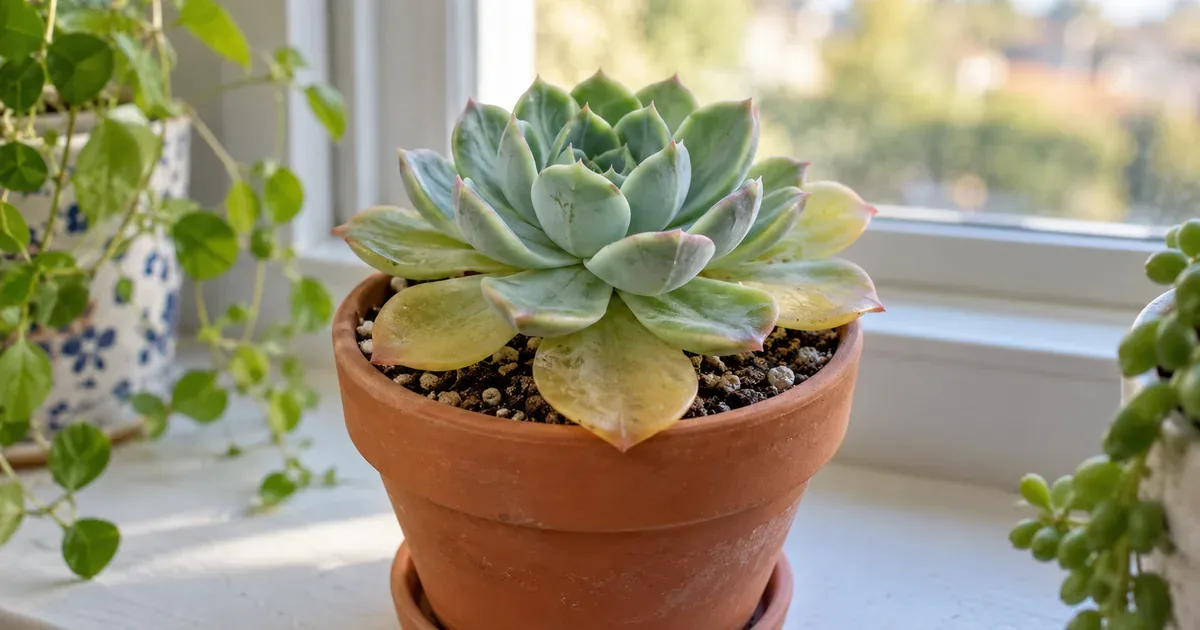
Your plant leaves are turning yellow because something changed in water, light, pests or feeding, or simply because old leaves are retiring. The pattern narrows it down: which leaves, how fast, and what the yellow looks like.
Look at the entire plant before you pull off the worst leaf. Note whether the yellowing is even, patchy, between the veins, or along one edge. Then note where it is: the oldest lower leaves, the newest growth, or one branch. Those patterns narrow the question. They do not, on their own, name a specific deficiency.
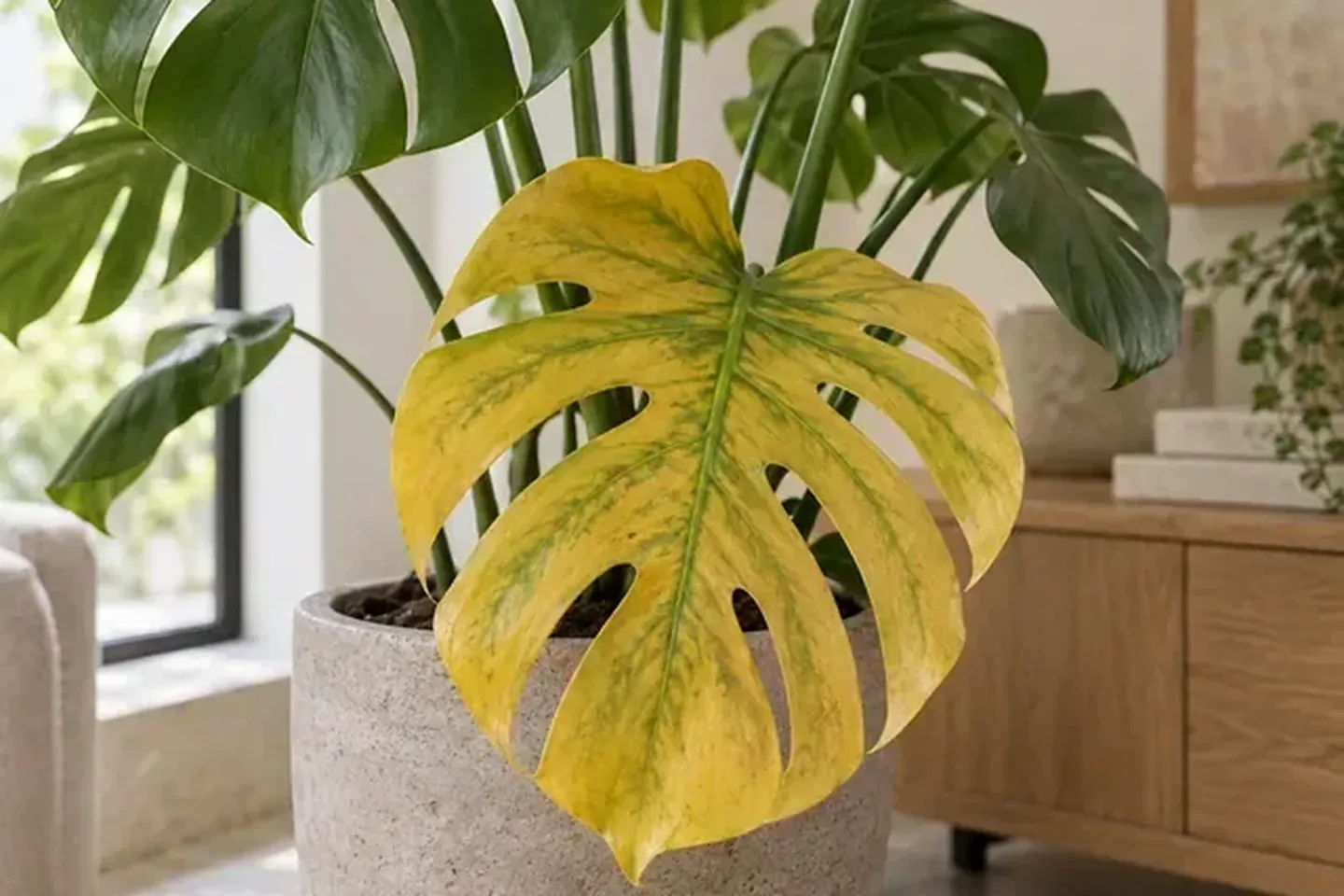
Compare the yellow leaves with healthy leaves of the same age. Variegated plants have lighter areas by nature, and new leaves often open paler than mature ones. Take your photos in the same daylight spot each time, and include the pot and its location, not only a close-up of the worst damage.
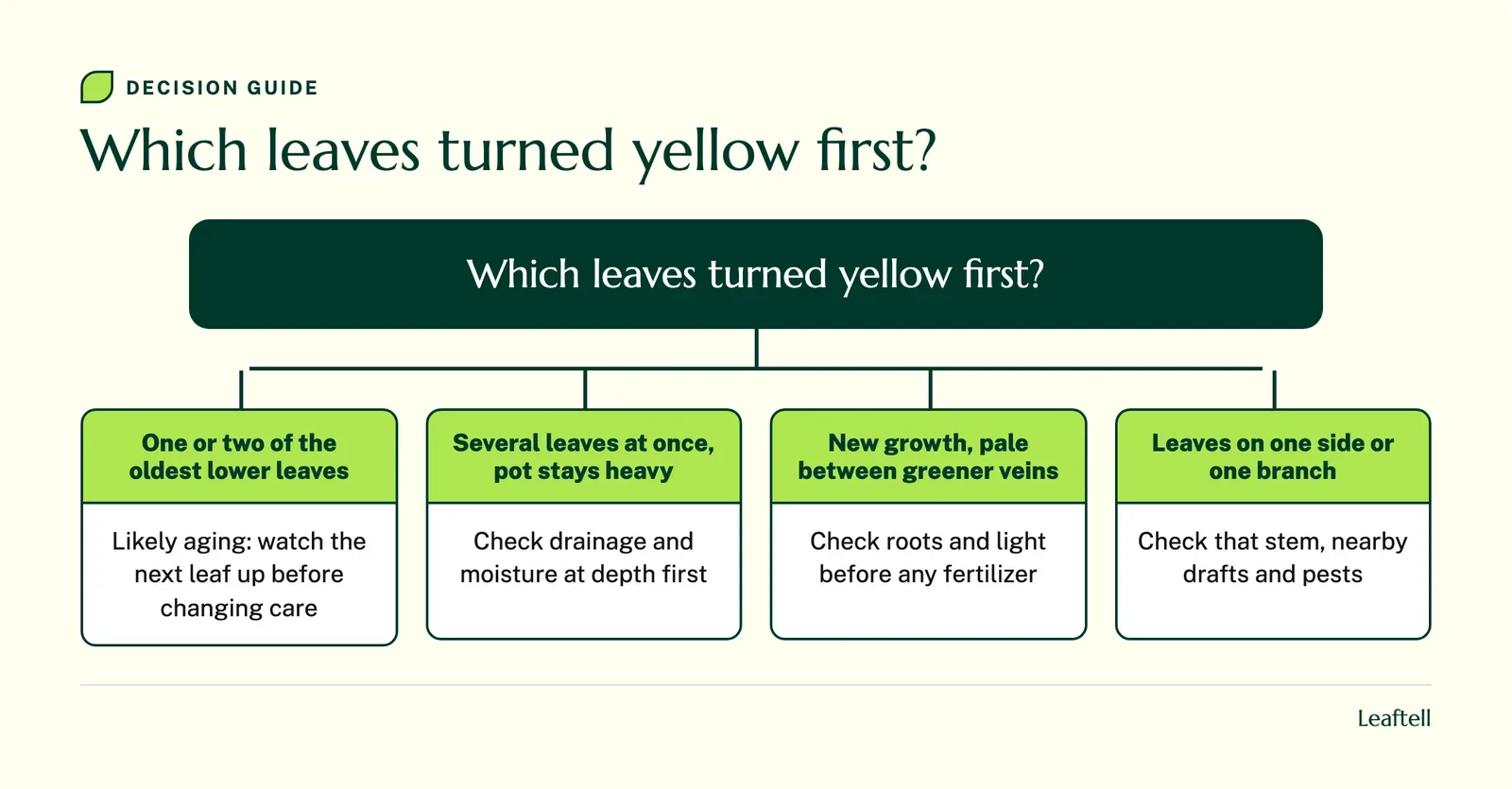
| What you see | What it often points to | First check |
|---|---|---|
| One oldest lower leaf, firm stem | Normal leaf aging | Watch the next leaf up before changing care |
| Several pale leaves, pot stays heavy | Roots sitting wet | Drainage and moisture at depth |
| Light pot, mix pulled away from the sides | Uneven or too little water | How water actually enters the root ball |
| New growth pale between greener veins | Root or growing-condition problem, sometimes nutrients | Roots and light before any fertilizer |
| Yellowing after a move or delivery | Changed light or temperature | What changed and when |
| Yellow leaves plus sticky film or webbing | Pests | Leaf undersides with a magnifier |
Each species adds its own twist. A trailing vine, for example, often yellows on shaded inner leaves, which pothos leaves turning yellow covers in detail. And do not assume every yellow plant in your collection shares one cause. A shared watering day lands very differently on a small pot and a big one, so keep a separate note for each plant.
Plant leaves turning yellow: wet roots or dry roots?
Both extremes can turn plant leaves yellow, because waterlogged roots and parched roots both leave the leaves short of usable water. Feel the mix 2 inches down and judge the pot's weight before you decide which one you have.
Check whether runoff is trapped in a saucer or decorative pot. A damp top right after watering tells you nothing about the week before. Ask how long the pot stays heavy, and whether the center dries at the same rate as the edges. A large root ball can hold moisture long after the surface looks pale and dry.
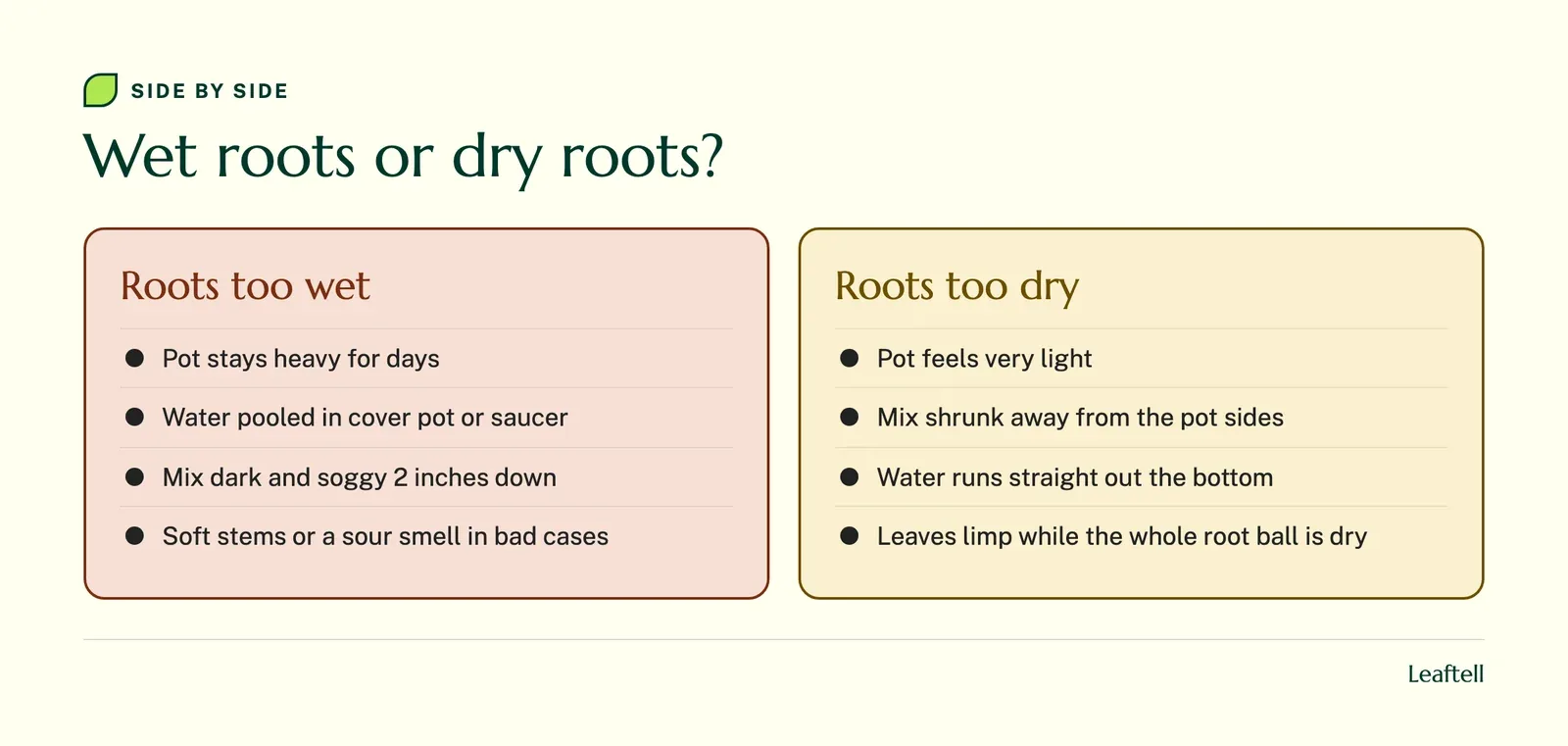
If leaves yellow while the pot stays saturated, compare overwatered plant symptoms. If the pot is very light and the mix has shrunk away from the sides, water is probably running down the gap and out the bottom without wetting the middle. Yellow color alone cannot tell these two apart, which is why the pot check comes first. The touch-plus-weight method in how to tell if your soil is wet or dry makes this quick.
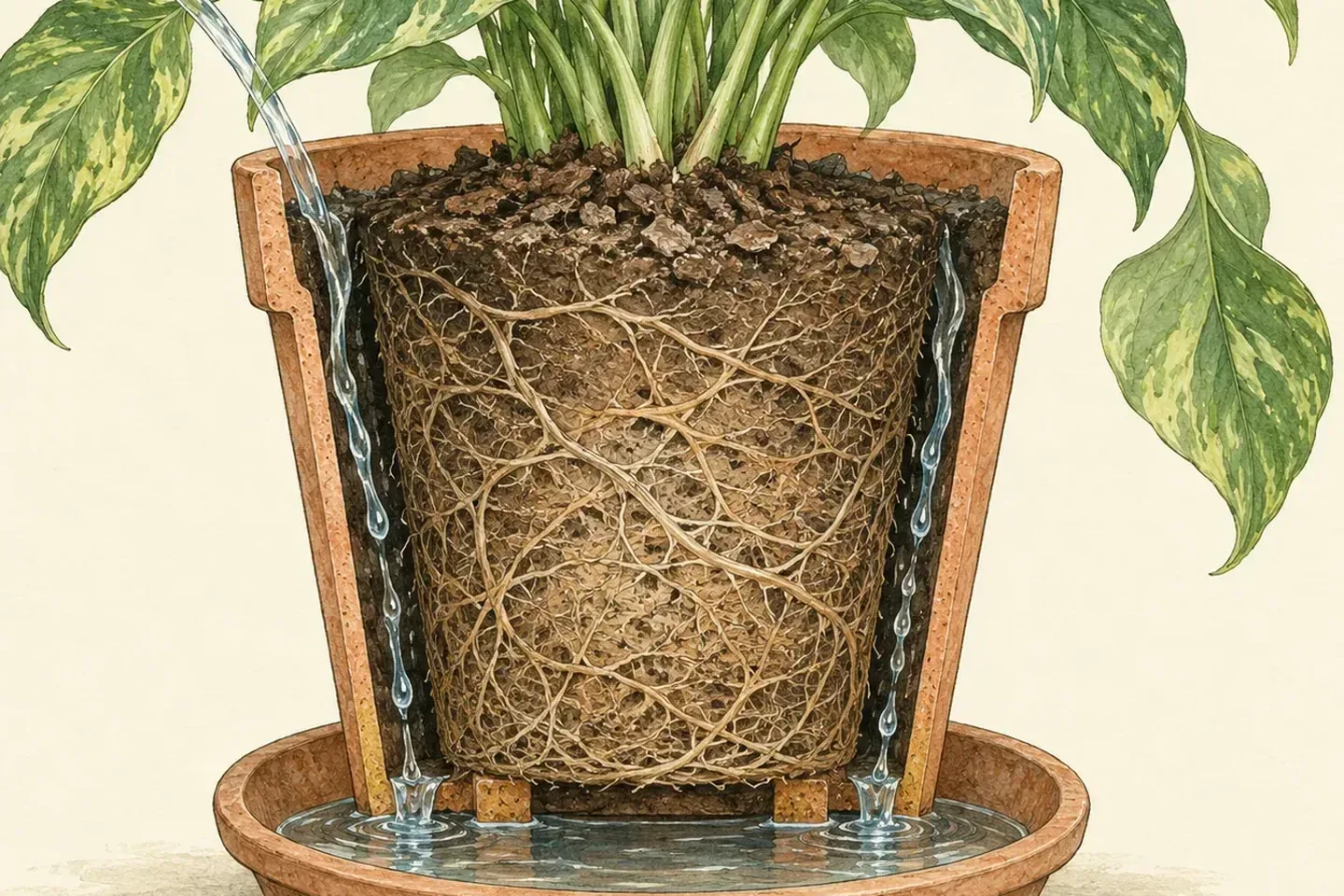
On day 1, record the condition before you do anything. On day 3, repeat the same checks and look for newly yellow leaves. These are review dates, not a watering schedule. If the roots smell bad or stems turn soft, you are past a watering adjustment and need a closer look at the roots now.
Plant leaves turning yellow at tips: what changed around the plant
When plant leaves start turning yellow at the tips or edges, look at the surroundings: a move, a darker spot, a hot window or the first week of heating season. If the yellow edges dry out and go crisp, the brown tips on leaves guide is the better match.
A move changes more than the view. Less daylight slows water use, so a pot that used to dry quickly can stay wet much longer. A hotter window stresses leaves that grew somewhere gentler. The Iowa State University Extension lists unsuitable or suddenly changed light, watering problems, low humidity and under-fertilizing among the causes of yellowing and leaf drop.
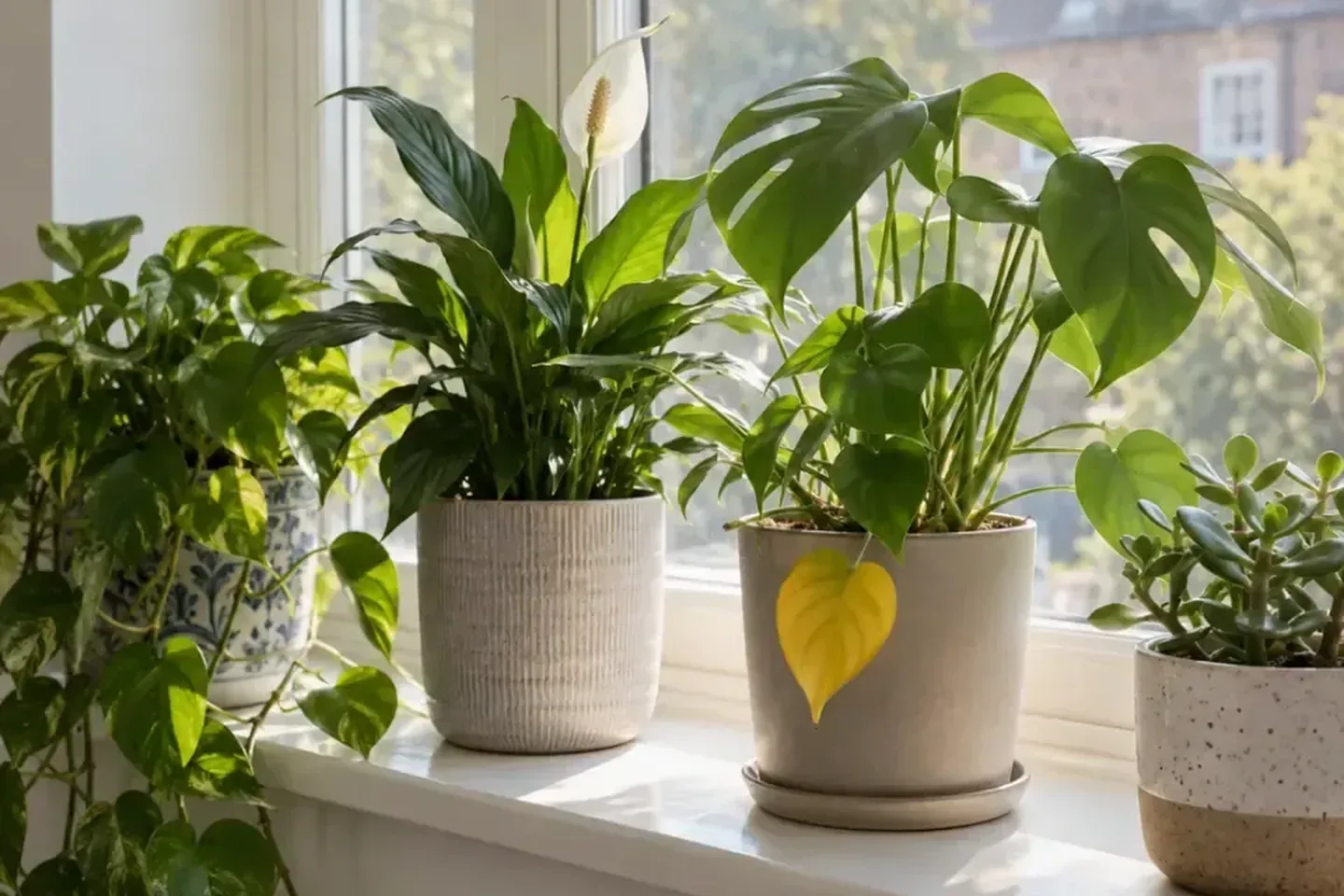
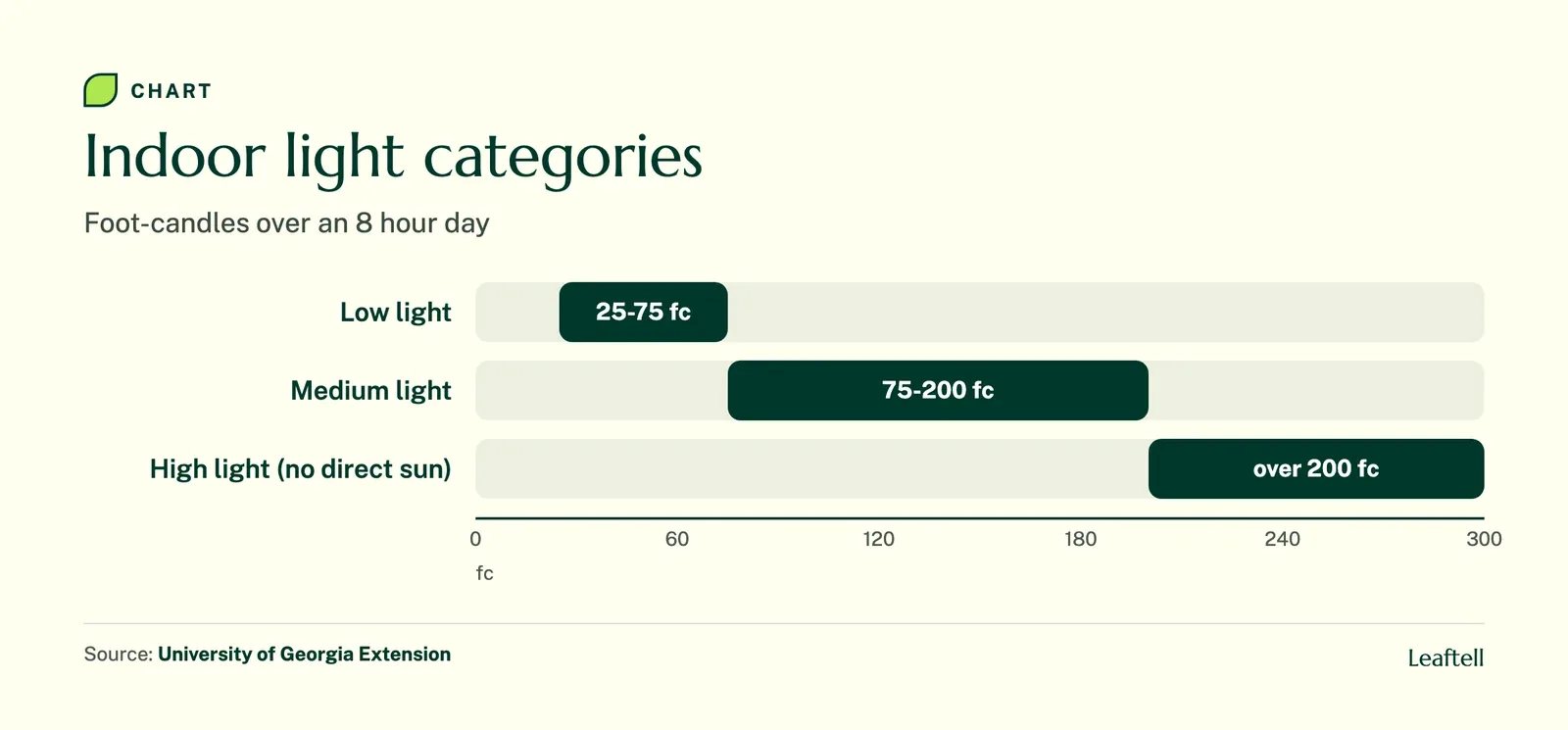
Pick a reasonable spot for the species and leave it there long enough to read the response. If the room looks bright to you but the plant sits well back from the window, read how to read your plant's light. For scale, the University of Georgia Extension rates 25-75 foot-candles over an 8 hour day as low light and 75-200 as medium. A gradual move is easier to judge than a jump from shade into harsh sun.
While you are looking, check for other clues. Sticky surfaces, fine webbing or visible insects call for identifying houseplant pests, not more light.
Feeding is the last test
To fix yellow leaves on plants, correct water, drainage and light first, and treat fertilizer as the last thing you test. Feeding cannot fix a pot that stays waterlogged or a plant parked beyond useful daylight.
Review what has already gone into the pot. A recently bought mix may contain slow-release fertilizer, and more than one person in the house may be feeding the same plant. Then look at which leaves are affected: older leaves, newer leaves, or one branch. Different nutrient problems can mimic root damage, so a visual match is not enough to pick an element. For outdoor vegetables, a local extension service can tell you whether a soil test is worth it. A houseplant in bagged potting mix needs a different assessment than garden soil.
How to fix yellow leaves on plants
- Photograph the pattern
Take one whole-plant photo and one close-up in daylight. Note which leaves are yellow and how many.
- Empty trapped water
Lift the pot out of its cover or saucer and pour out any standing water.
- Feel the mix at depth
Check 2 inches down and lift the pot. Water only if the root ball is actually dry.
- Check both leaf surfaces
Look under leaves and at stem joints for insects, webbing or sticky film.
- Change one thing and compare on day 7
Make the single change your evidence supports, then count newly yellow leaves a week later.
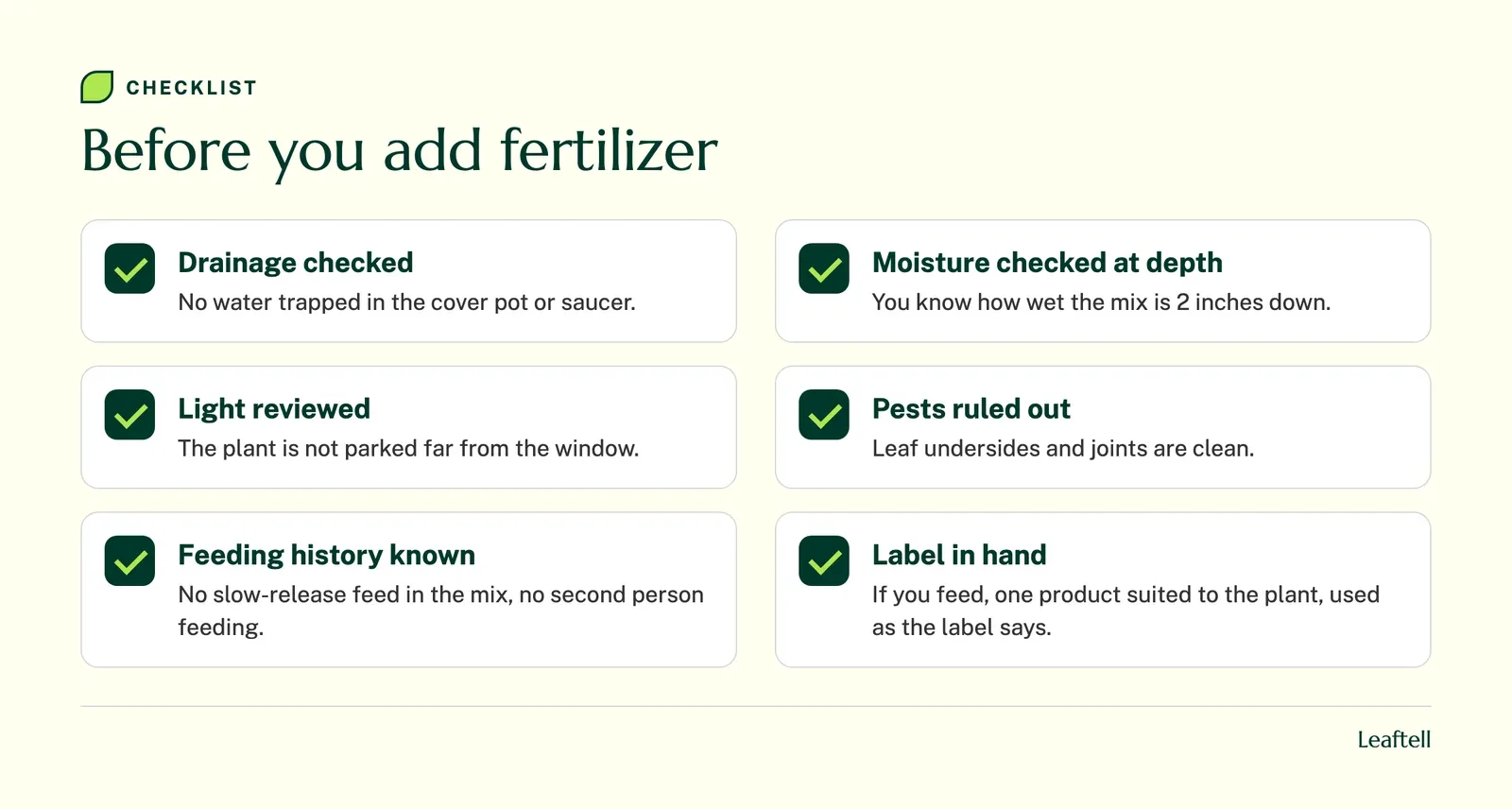
Hold off on fertilizer while the cause is unclear. If feeding is right later, use a product class suited to the plant, follow the label, and never mix products into an improvised rescue brew. Keep fertilizer and runoff away from children and pets. The ASPCA plant list tells you whether the plant is toxic, but it does not certify any fertilizer or pesticide as safe. Write down the product and date so later changes make sense.
Plant losing leaves: yellow first, or green leaves falling?
If your plant is losing leaves, map the sequence before you sweep them up: did they yellow first, or drop while still green? Iowa State links yellowing and leaf drop to watering problems, changed light, low humidity and under-fertilizing, so check those conditions instead of giving an automatic extra drink.
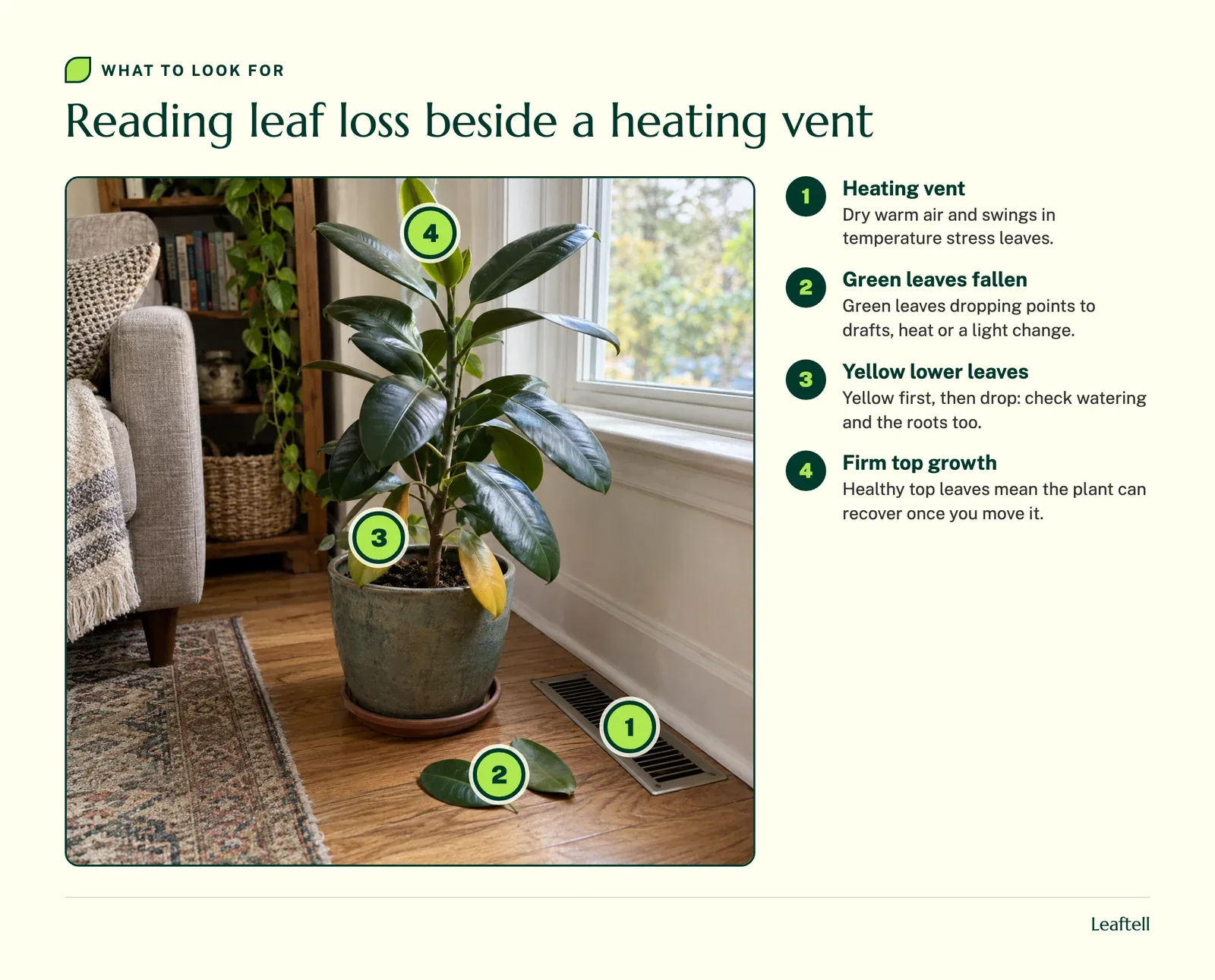
Feel the root ball and inspect the cover pot for trapped runoff, because both too little and too much water can end in leaf loss. If green leaves fell after a delivery or a move, note cold drafts, heating vents and the new window exposure. The RHS guidance on houseplant leaf damage also covers temperature stress. Keep the new spot suitable and stable rather than moving the plant again.
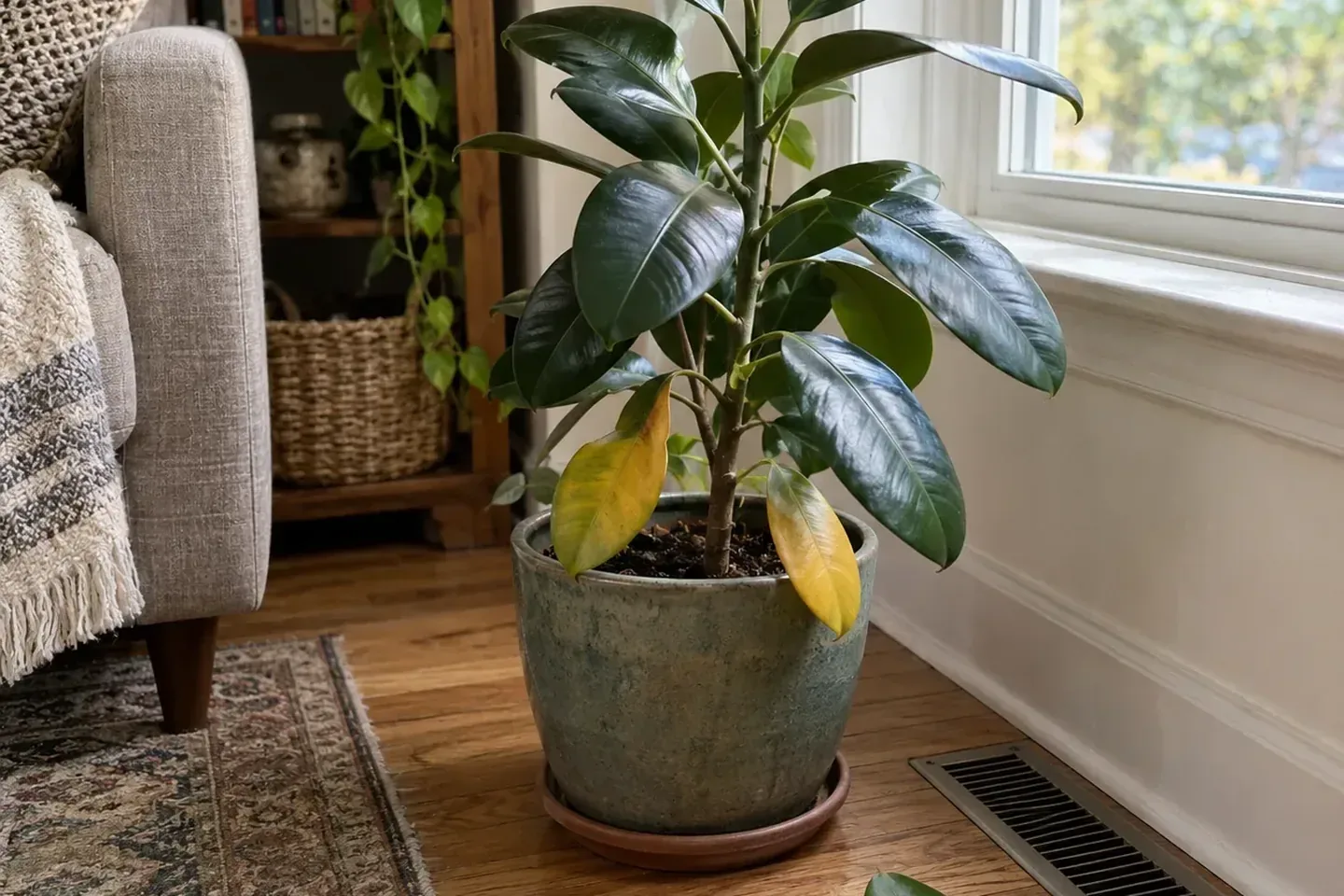
Inspect fallen and attached leaves for sticky deposits, cottony insects, raised bumps or webbing. Pest evidence needs identifying, not shrugging off as "adjusting after the move." If you grow a fig, fiddle leaf fig dropping leaves has species-specific checks.
Mistakes that keep plant leaves turning yellow
These are the moves that keep plant leaves turning yellow after you think you have fixed them.
- Watering because the leaves look thirsty. If the roots are already wet, more water deepens the problem and can lead to rot.
- Feeding first. Fertilizer will not drain a pot or brighten a dark corner, and you lose a week reading the wrong result.
- Pulling off every yellow leaf right away. You erase the record that shows whether the problem is spreading.
- Moving the plant every few days. Each new spot resets the experiment, so you never learn what helped.
- Treating the whole collection the same. One schedule across pots of different sizes guarantees some sit wet while others go dry.
Can a yellow leaf turn green again? What recovery looks like
No, a fully yellow leaf generally will not turn green again. Recovery shows up as no new yellow leaves and healthy new growth, not as old leaves greening up.
Mark the original damaged leaves in your notes instead of trimming every clue before the next inspection. You can remove fully spent leaves with clean scissors once they are photographed. Clear loose fallen leaves off the soil so they do not hide the surface.
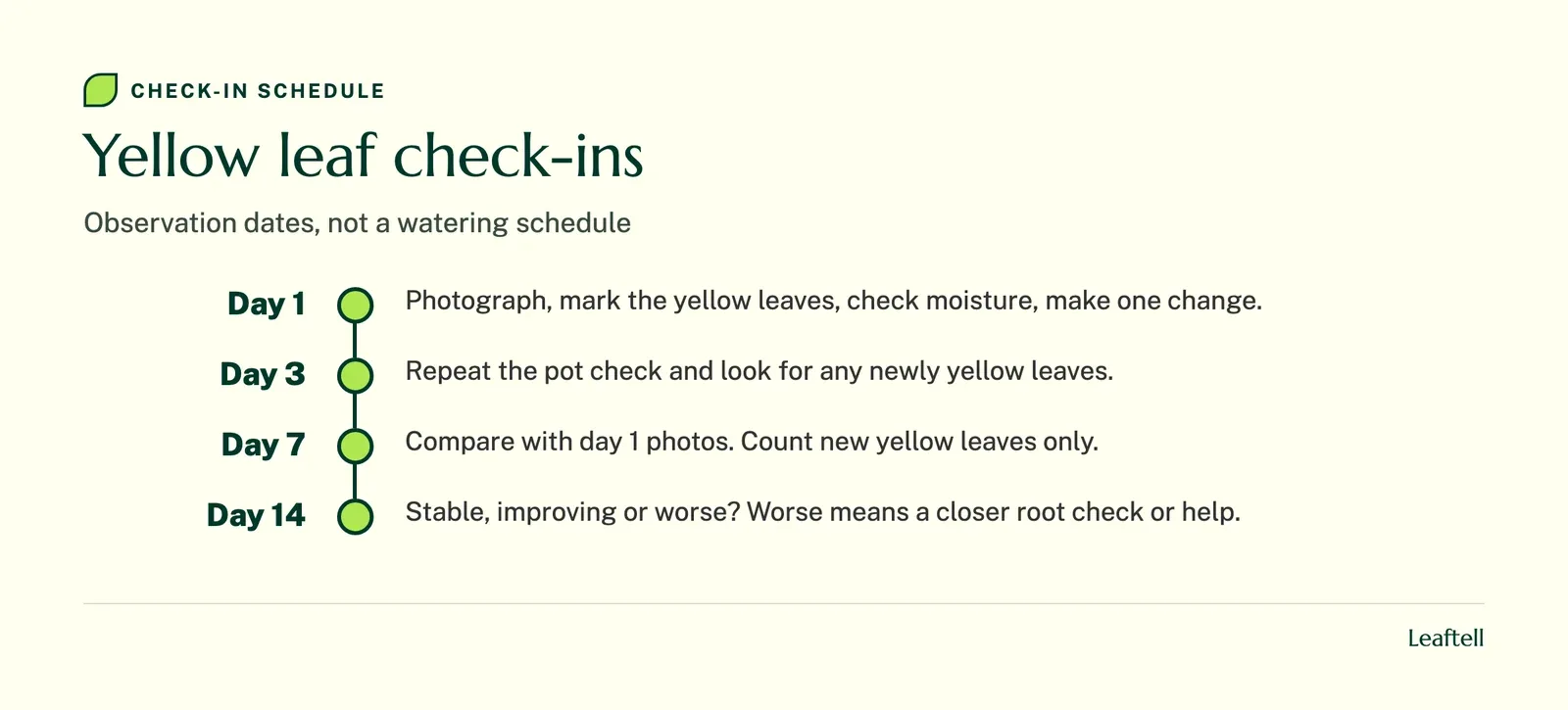
Use day 7 to compare against your first photos, and day 14 to decide whether the trend is stable, improving or still getting worse. These check-ins organize what you see. They do not promise every species bounces back in two weeks, and a plant resting in a cool, dim season responds slower than one in active growth.
Once the immediate issue is clear, settle into a routine that suits the species. If you are still not sure yellowing is the main problem, the wider checklist in why is my plant dying walks through the root zone, pests and light in order.
When to get help: escalate quickly if several plants decline at once, the stem collapses, or the root zone smells bad. Bring a whole-plant photo, close-ups of both leaf surfaces and a short care history to your local extension service. That tells an expert far more than one detached yellow leaf.
Start at the roots
Check which leaves turned yellow first, then the pot: trapped water, moisture 2 inches down, and weight. Correct drainage, watering and light before you consider fertilizer, change one thing, and judge the result by new leaves on day 7 and day 14. One old lower leaf on a firm plant is usually nothing. Several leaves a week, a soft stem or a bad smell means you look at the roots today.
Sources
Check your growing conditions with the plant watering calculator.
Frequently asked questions
Not always. Dry roots, low light, pests, nutrient problems and normal aging can also turn leaves yellow. Check the mix at depth and the roots before you decide.
You can remove fully yellow leaves with clean scissors, but photograph the pattern first. Leave leaves that still have useful green tissue and fix whatever is causing new yellowing.
A fully yellow leaf usually will not return to green. Judge improvement by stable foliage and healthy new growth instead.
Find which leaves yellowed first, then compare soil moisture, drainage, light and pests. Treat the cause you actually observe rather than feeding every yellow leaf.
They often have yellow or drooping leaves, soft roots and mix that stays wet. Those signs overlap with other problems, so check drainage and root firmness.
The oldest lower leaves can yellow as part of normal aging, especially one at a time on a firm plant. Several at once, or a pot that stays heavy, points to a watering or drainage problem worth checking.
Sudden drop often follows a move, a cold draft, a heating vent or a big change in watering. Check the roots and the new spot, and look for pests on the fallen leaves.
Share article
About the author

Keep checking your plant
Plant care reference
Indoor plant care
Build a routine around your plant, light and potting mix.
Plant care reference
Why is my plant dying
Trace leaf and root symptoms before choosing a care change.
Plant care reference
Pothos plant care
Choose a growing spot and prune a trailing pothos for fuller growth.
Plant care reference
How to fix root rot
Inspect root firmness and drainage, then decide whether to repot.