Pothos leaves turning yellow: 5 checks before you water
Filip Leszczyński 16 October 2026 11 min read
In this article
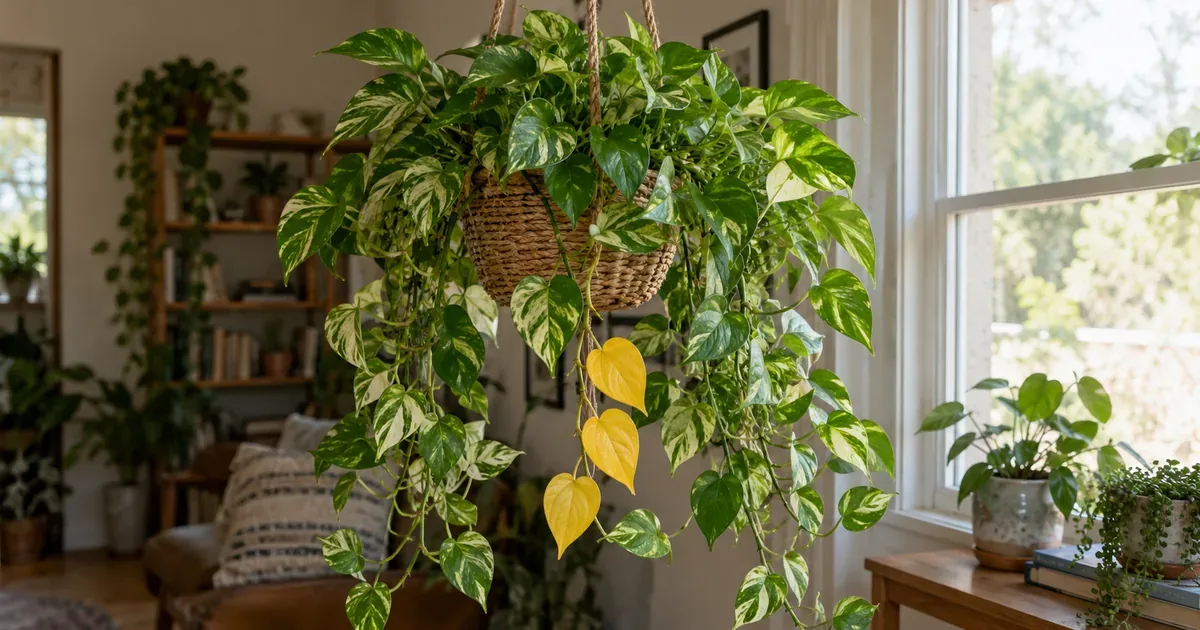
Pothos leaves turning yellow usually point to the root zone first: a pot that stays wet, a mix that dries unevenly, or one rooted cutting in the basket that is failing. Before you water, feed, or prune, follow the yellow leaf back along its vine to the pot and feel the mix below the surface.
A hanging pothos is often several rooted cuttings sharing one pot, so one yellow vine can be a single struggling cutting while the rest of the basket is fine. Which leaves turned yellow, and on which vine, tells you more than the color itself.
Old inner leaves fading one at a time is ordinary. Several leaves yellowing on one vine, or the whole basket fading at once, is worth a proper look today.
Why is my pothos turning yellow? Old leaves versus new growth
Most often it is too much water or poor drainage, sometimes low fertility, and occasionally pests or a light change. Where the yellow leaves sit on the vine narrows it down fast.
Clemson's pothos fact sheet names overwatering and low fertility as possible causes of yellow leaves, and links root rot to excess water or poorly draining soil. That order matters. Feeding a wet, declining plant does not fix anything, so check the mix and drainage first and only then look at your feeding history.
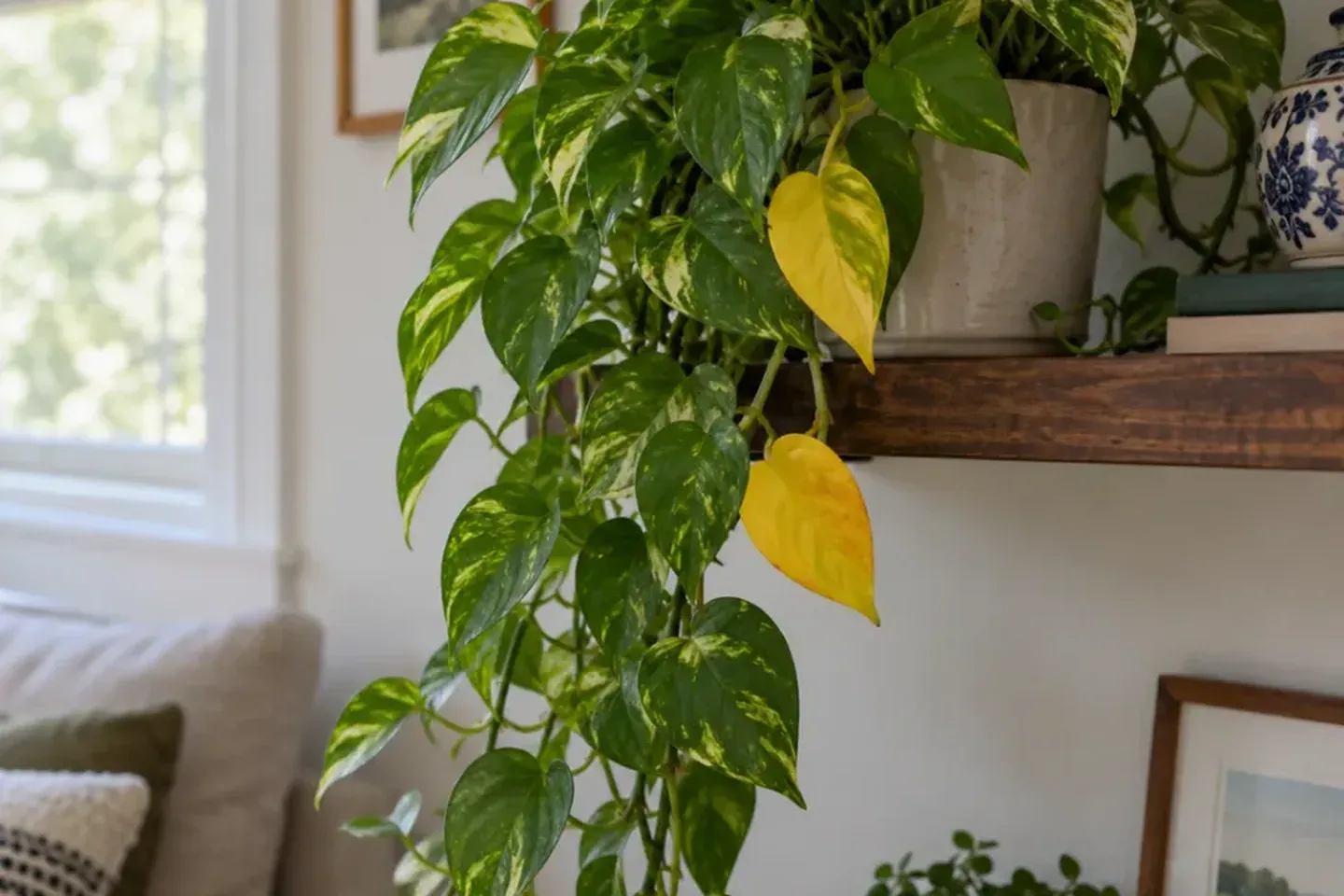
Follow the affected vine from its tip back into the pot. A yellow older leaf hidden inside a dense basket is a different story from pale new growth along several vines. Write down the position before you cut anything, because the pattern is gone once a few leaves are in the trash.
Then check whether every vine shows the same thing. A damaged stem does not explain yellowing on a different cutting. Keep one healthy vine in your comparison photos so you have a baseline.
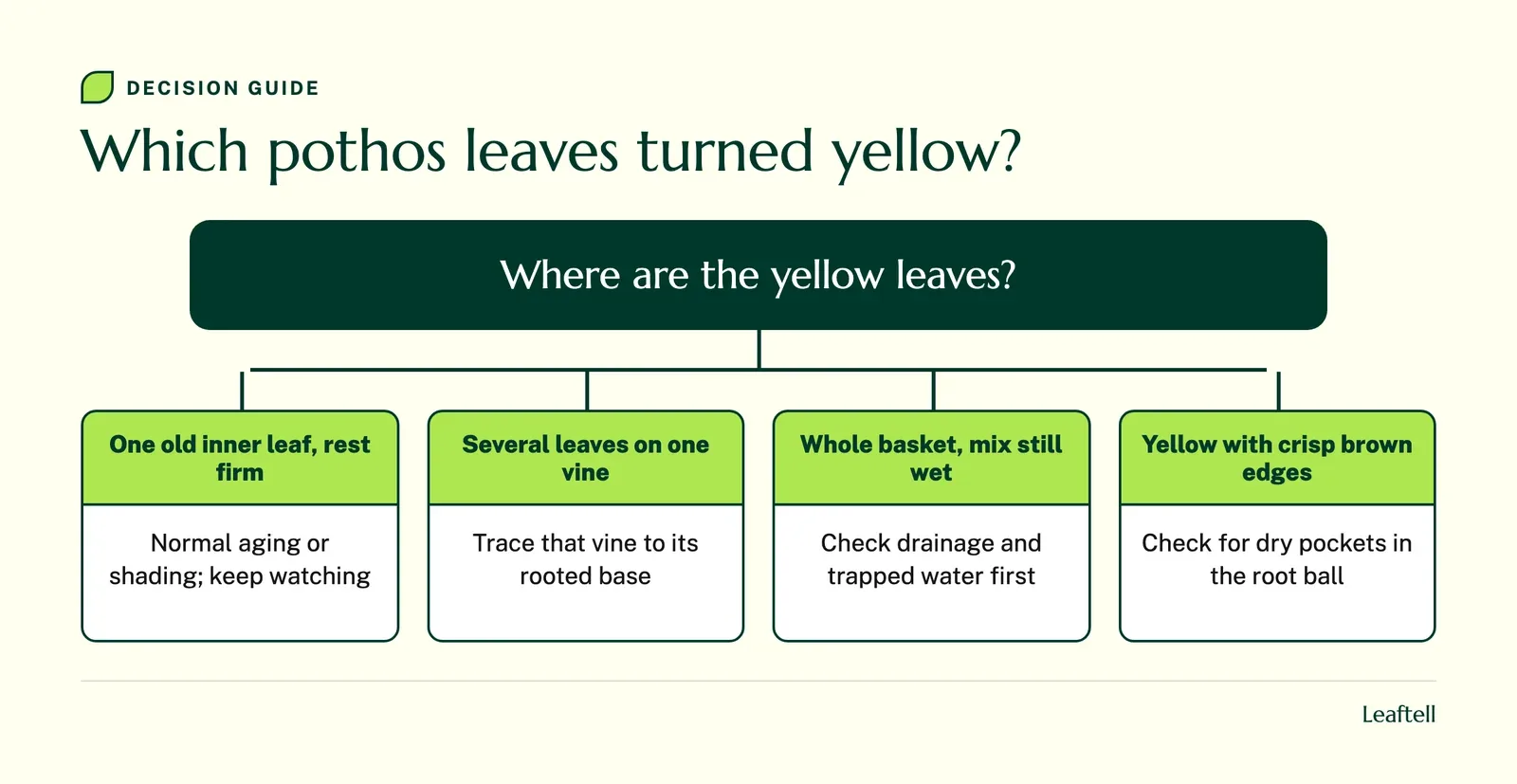
| What you see | What it usually means | Your next check |
|---|---|---|
| Stable yellow pattern on a firm leaf | Variegation, not damage | Compare with older photos of the same plant |
| Several yellow leaves on one vine only | One cutting or its roots are struggling | Trace that vine to its base and inspect it |
| Whole basket yellowing, center mix wet | Container-wide moisture or drainage problem | Check retained runoff, liner, and drainage holes |
| Inner leaves yellow, outer vines green | Shading inside a crowded pot | Compare light at the inner leaves vs the tips |
Golden pothos yellow leaves: variegation or real yellowing?
Golden pothos is supposed to have yellow and cream streaks. The problem is tissue that was green and is now turning uniformly yellow, soft, or crisp.
NC State describes the variegated foliage of Epipremnum aureum, so pale patches on their own are not a symptom. Compare the leaf you are worried about with several mature leaves on the same plant. Stable markings keep their shape and texture. Fresh damage spreads past the old pattern, goes limp, or browns at the edges.
The best reference is an older photo of your own plant, not a picture of a different cultivar online. Do not prune every patterned leaf, and do not feed the plant hoping to turn it solid green. Fertilizer will not drain wet mix either.
Overwatered pothos: yellow leaves while the soil stays wet
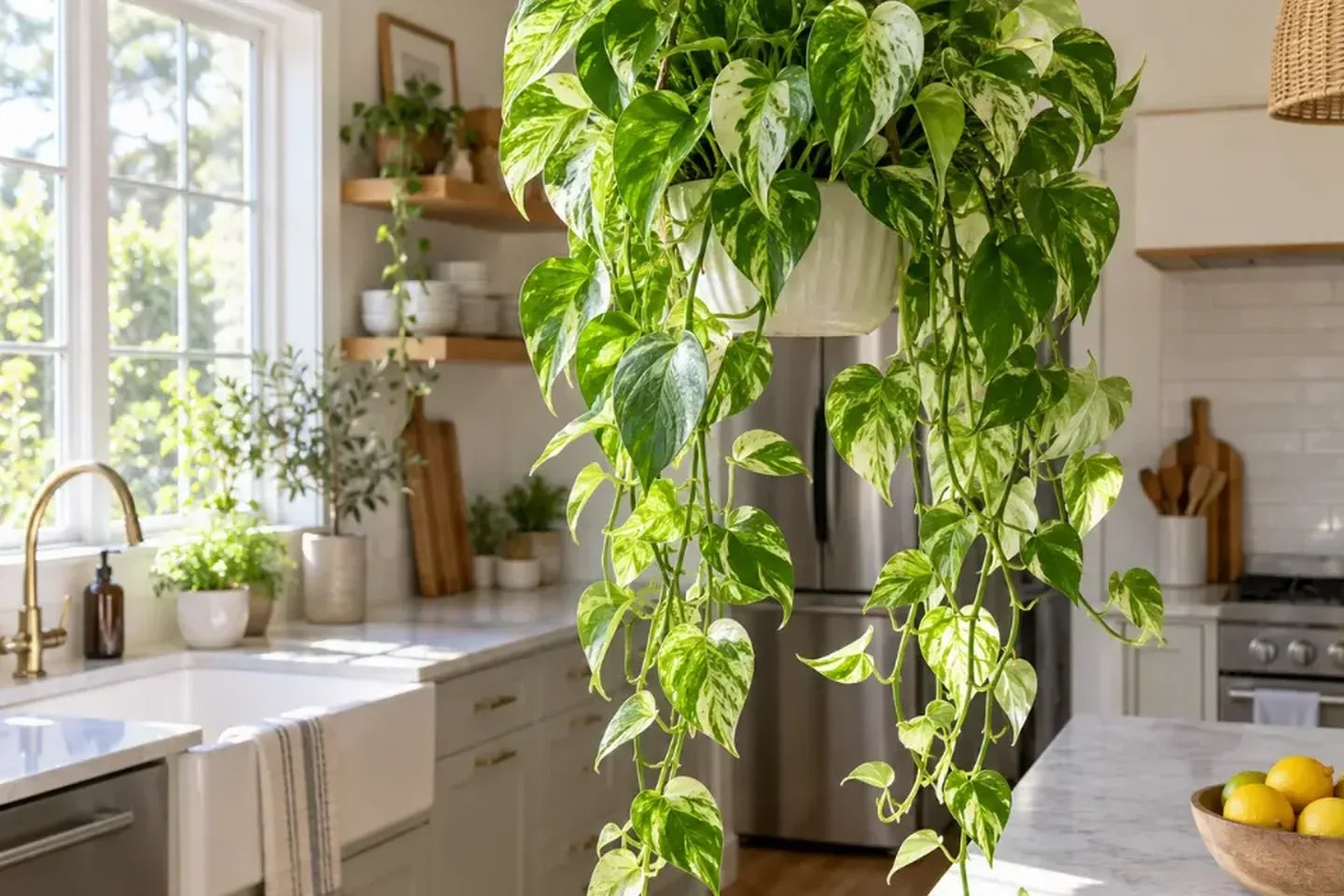
If the mix is still wet a few days after watering and leaves are yellowing, stop watering and check drainage. That pattern is the classic overwatered pothos.
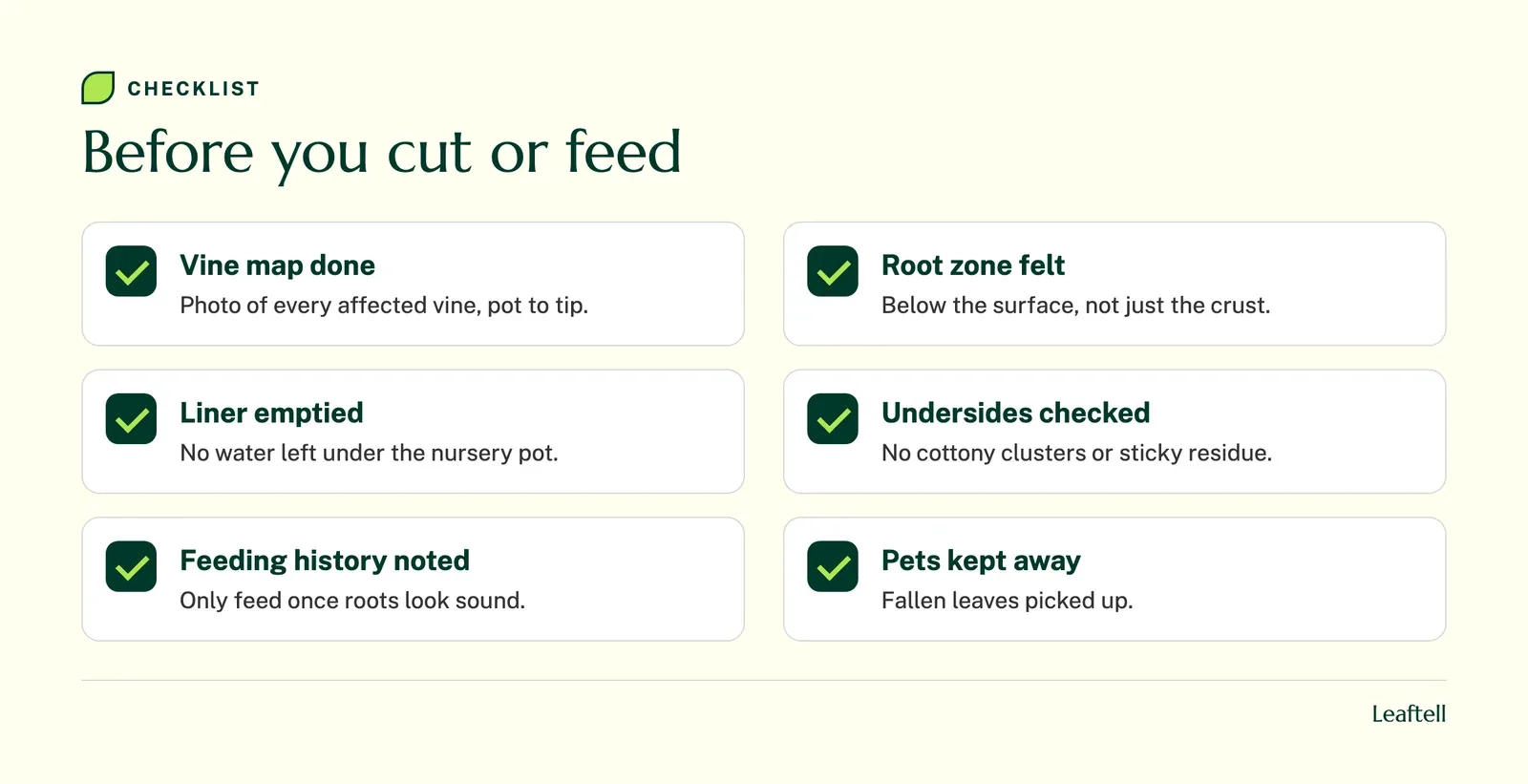
Take the basket down and lift the nursery pot out of any cover. Look for water pooled below it. Then feel the mix below the surface near the edge. A dry crust tells you nothing about the root zone in a deep hanging pot, and a basket above eye level hides both retained runoff and a dense, soggy center.
Compare against your usual dry weight. A limp outer vine does not mean the basket is thirsty. If the pot is heavy and wet, compare overwatered plant symptoms and use this wet or dry soil check before the next drink.
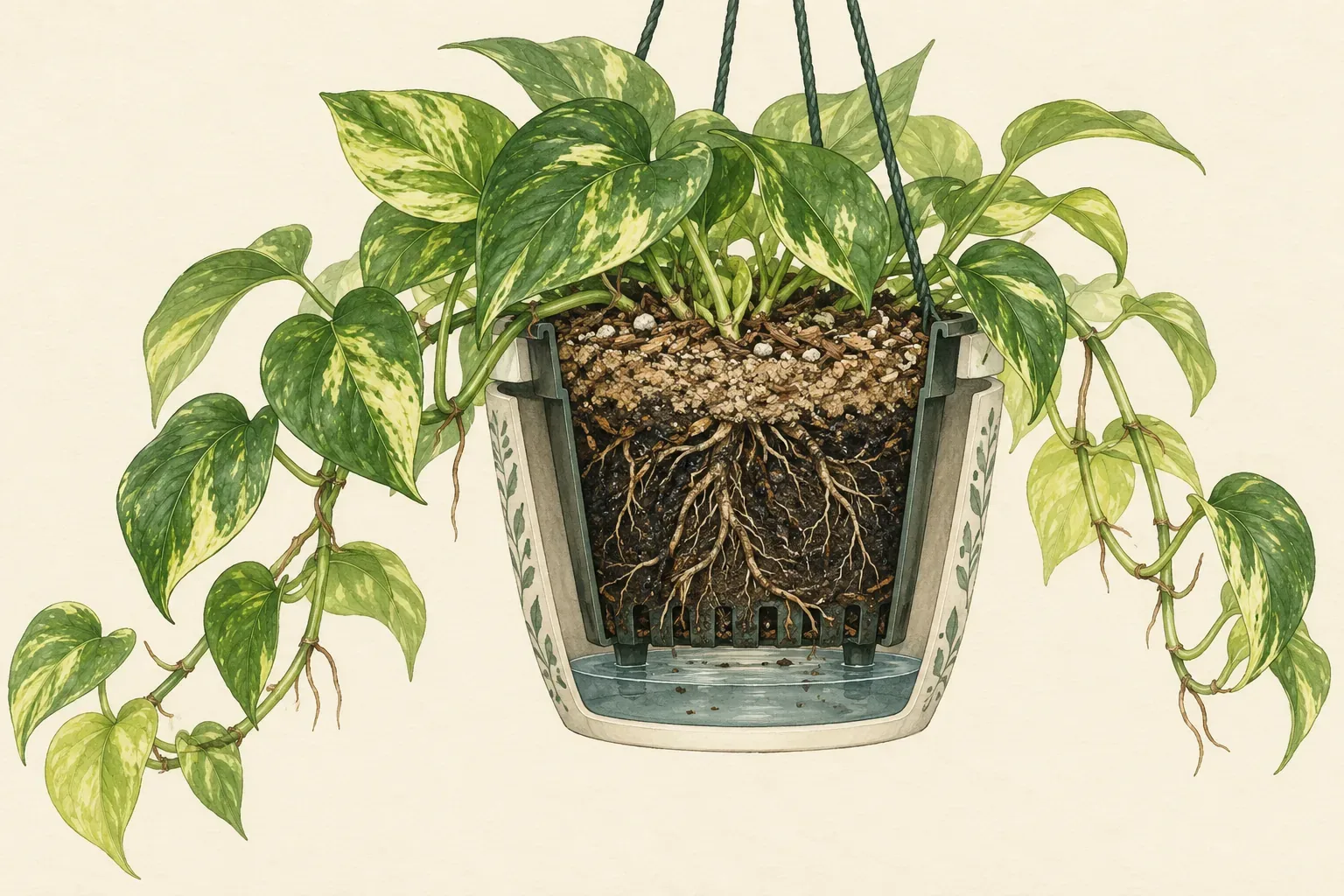
Clemson links pothos root rot to overwatering and poor drainage. Clear blocked holes and empty the cover pot. If the stem bases are soft, the mix smells sour, or leaves keep collapsing, move on to how to fix root rot. Do not move a struggling root ball into a much bigger pot: more wet mix around damaged roots keeps the problem going.
Ask what changed recently. A new cover pot, a move away from the window, or a second person watering it is often the real cause, and fixing that matters more than snipping yellow leaves.
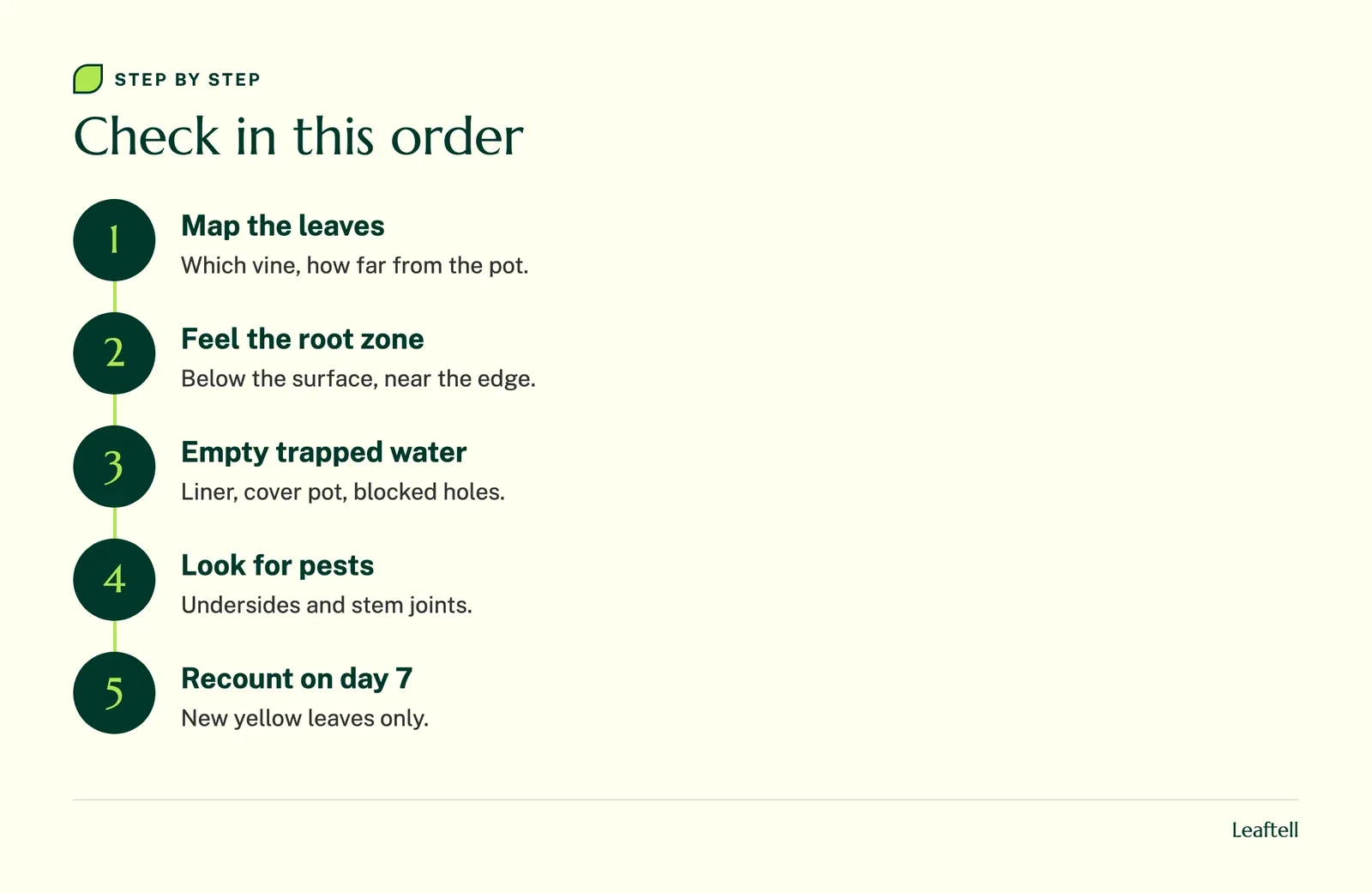
How to check a yellowing pothos
- Map the yellow leaves
Photograph the whole plant, then note which vine each yellow leaf sits on and how far it is from the pot. Pick one healthy vine as your comparison.
- Feel the root zone
Take the basket down, lift out the inner pot, and feel the mix below the surface near the edge. Compare its weight with how it feels when dry.
- Check drainage
Look for water in the cover pot or liner and make sure the holes are clear. Empty any trapped runoff before doing anything else.
- Inspect undersides and nodes
Look under leaves and at stem joints for cottony clusters, sticky deposits, or insects. Isolate the plant if you find any.
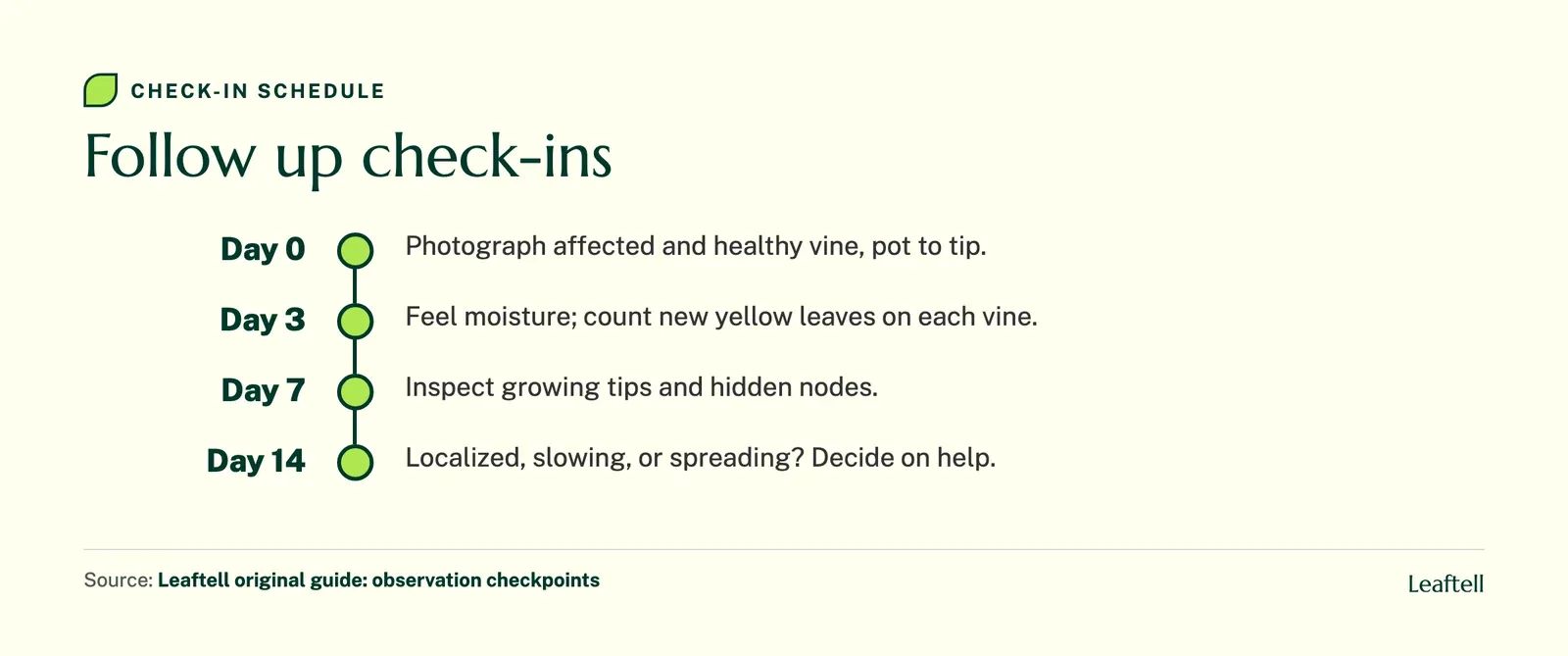
- Recheck on day 3 and day 7
Count new yellow leaves on the affected vine and the healthy one. Judge progress by new damage, not by old yellow leaves.
Dry pockets, light and pests
Yellow leaves with brown, crisp edges often mean the root ball dried out or wets unevenly. Check whether the mix has shrunk away from the pot wall.
When mix shrinks, water runs down the gap and out the bottom while the center stays dry. Runoff does not prove the roots got water. Water slowly, then check that the whole root ball is moist. If the plant is visibly limp, compare the drooping plant guide before watering a pot you already watered.
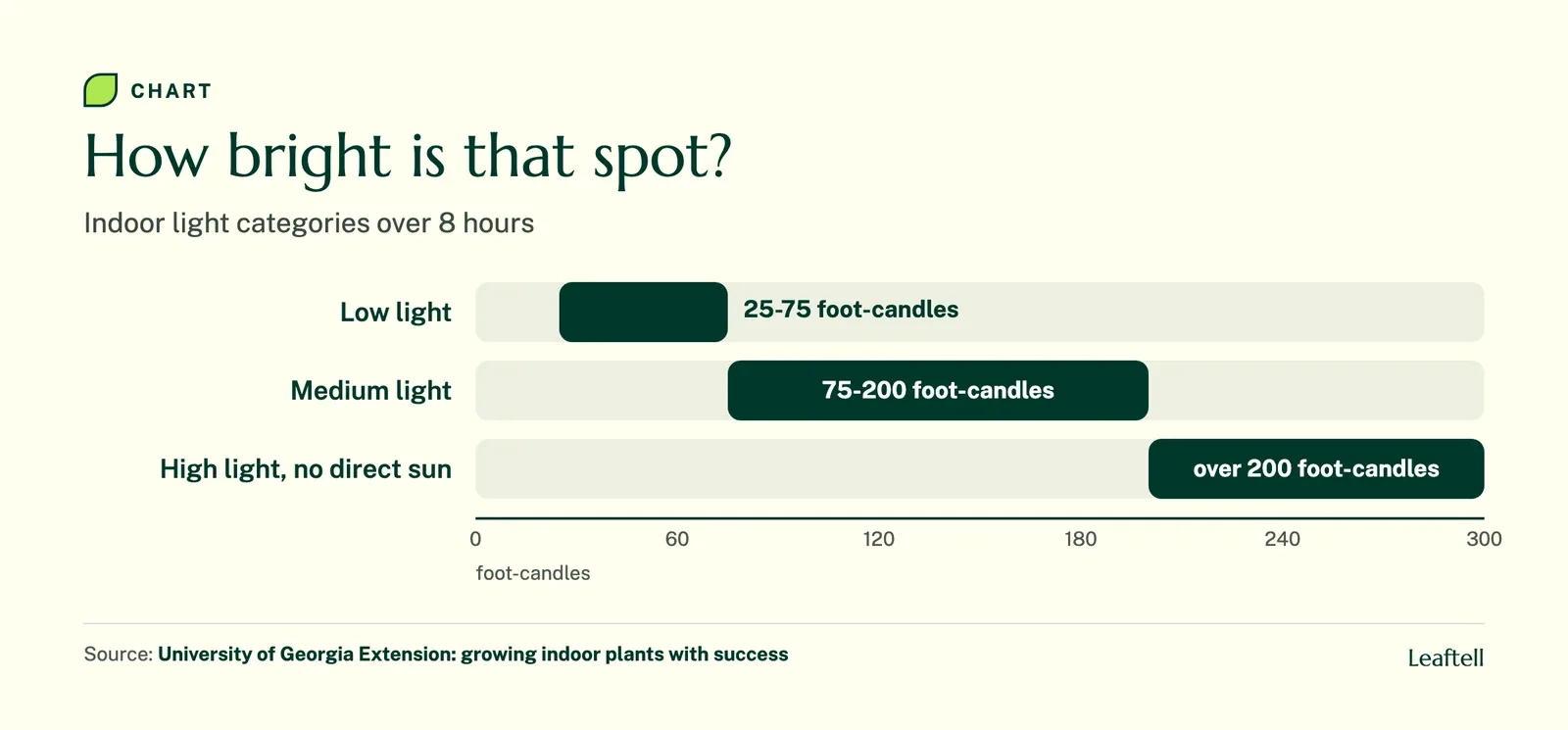
Light is the next suspect. Inner leaves in a crowded pot get far less light than a vine draped toward the window, so they fade first. A basket that just moved also uses water differently. Reading your plant's light helps before you treat pale leaves as hunger.
Then look under leaves and at the nodes. Dense vines hide pests well. Waxy, cottony clusters in the joints point to mealybugs on plants. Isolate the plant and start with careful physical removal. If you need a product, use a class labeled for that pest and plant, follow the label, and never mix products.
Keep pets and kids in mind. The ASPCA lists pothos as toxic to cats and dogs because of irritating calcium oxalate crystals, and a yellow leaf on the floor is just as toxic as a green one. Pick up fallen leaves and cuttings, and call your vet or a poison service after any suspected chewing.
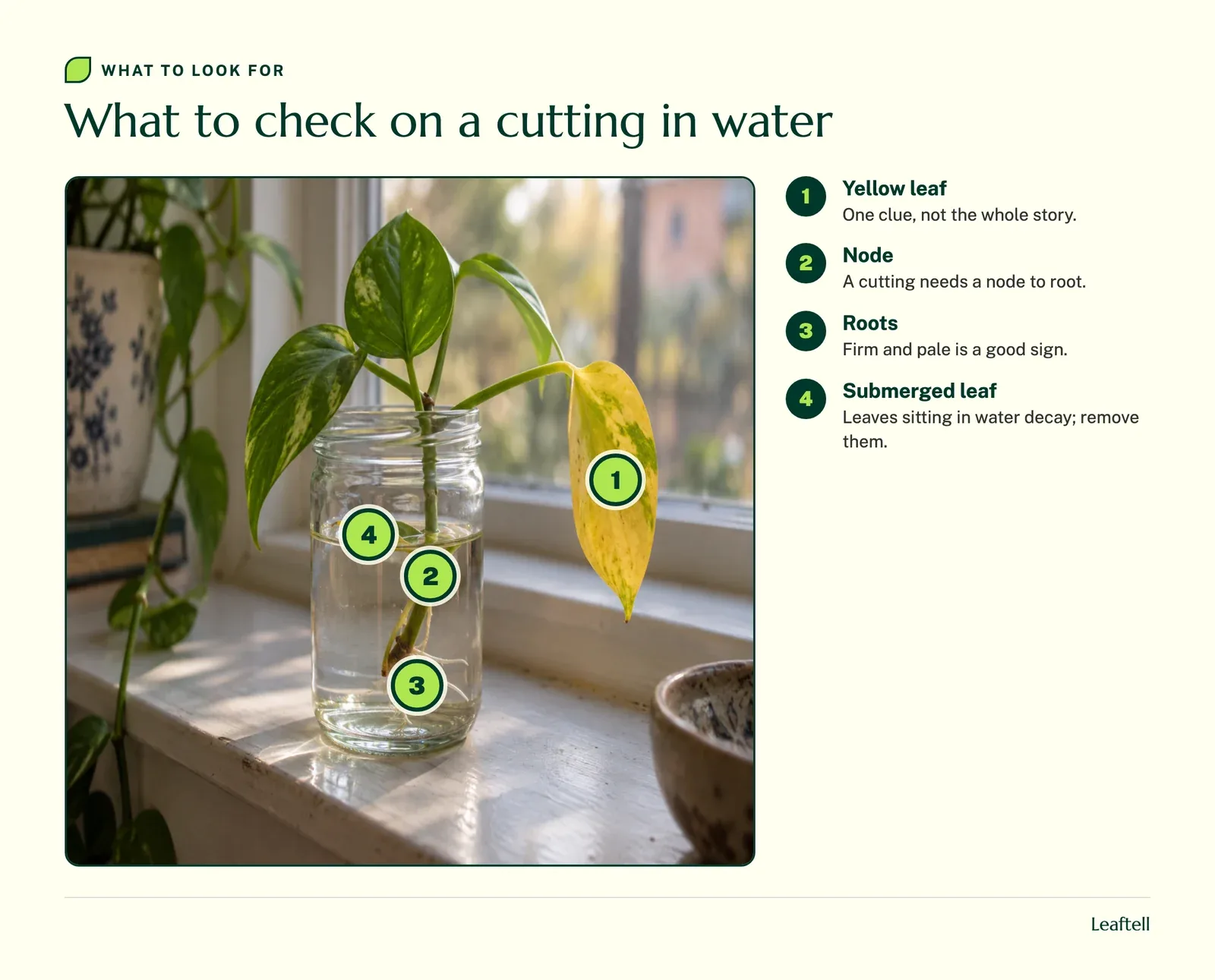
Pothos in water turning yellow: check the cutting first
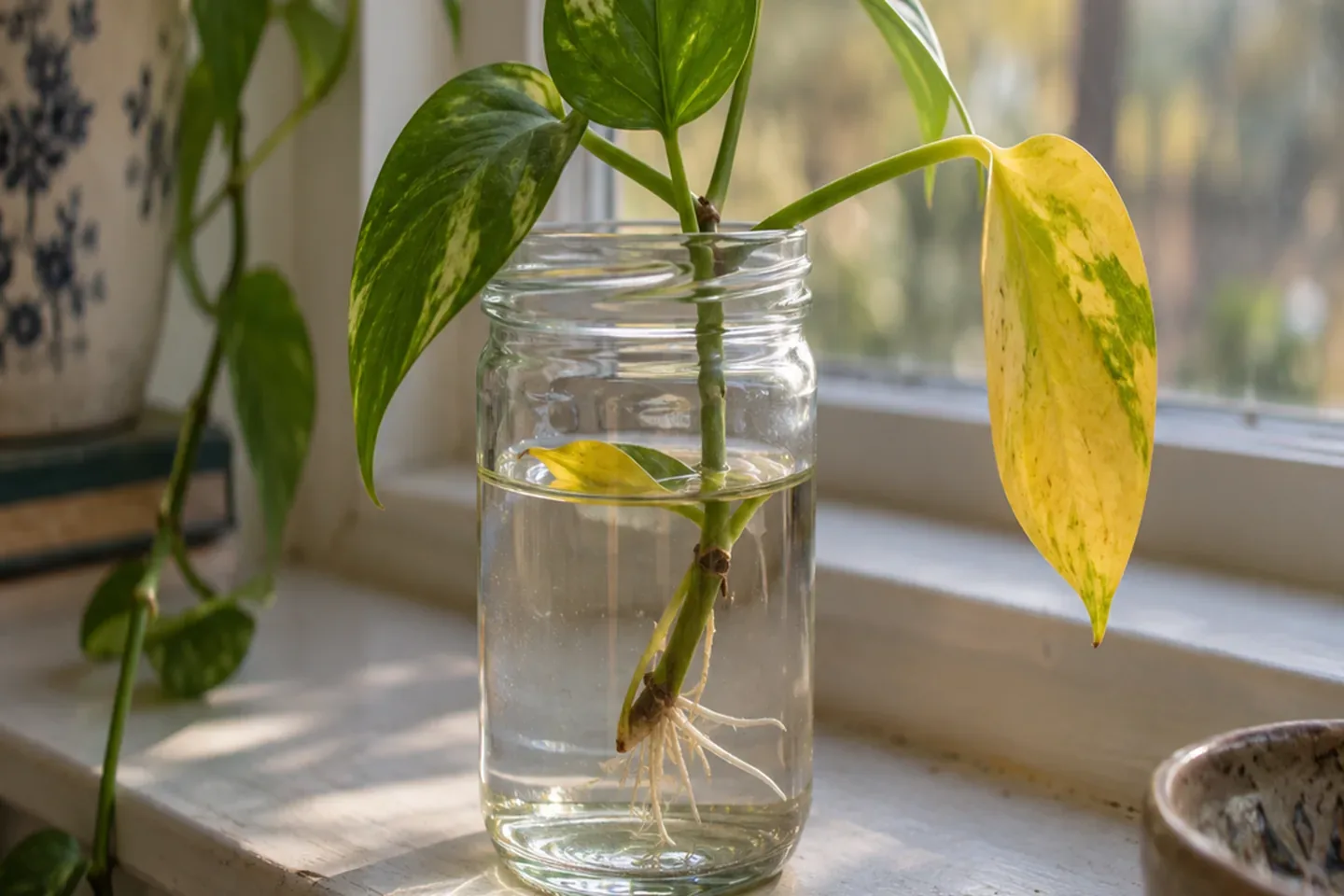
A yellow leaf on a cutting in water is usually about the stem and node, not the leaf. Check that the cutting has a node, and that the submerged part is firm.
NC State describes propagating pothos from stem cuttings, and a cutting needs a node to root. A leaf without a proper stem section is a different starting point. Pull out fallen leaves and any decaying debris from the jar, and check whether the cutting has moved into harsh sun.
Do not apply potting soil rules to a cutting with no soil. And while Clemson lists low fertility as a possible cause of yellow pothos leaves, a splash of ordinary houseplant feed is not a long-term water-growing plan. If you want to keep a pothos in water for good, look for advice written for that setup.
Pruning after recovery
Once yellowing stops, bare older stem sections will not refill on their own. That is a separate fix, covered in leggy plants. Use clean tools for any pruning and do not share cuttings from a plant with unexplained decline or pests.
Pothos leaves turning yellow: what to do this week
Start with the pot, not the leaf. Feel the root zone, empty trapped water, and only water when the mix is actually ready. Leave feeding until roots and drainage look sound. Old yellow leaves will not turn green again, so judge recovery by fewer new yellow leaves and a firm, growing tip.
Get help from a local extension office or experienced grower if stem bases go soft, leaves drop fast even with sensible moisture and light, or yellowing spreads across every vine. Bring your vine map, pot details, and what you have already changed. For the long-term routine, see pothos plant care.
Check your pothos in Leaftell. The check uses your answers; photos stay on your device.
Sources
Check your growing conditions with the plant watering calculator.
Frequently asked questions
Yellow leaves, limp vines, and mix that stays wet for days are the usual signs, sometimes with soft roots or stem bases. A heavy hanging basket can hide retained water, so check inside the container rather than judging from the leaves.
There is no fixed day. Feel the root zone and water when it is ready, then let it drain fully. Light, pot size, and mix set the interval, and it changes with the season.
You can remove fully yellow, spent leaves with clean scissors, but note which vines they came from first. Cutting them is cleanup; it does not fix the cause.
No, a fully yellow leaf usually stays yellow or drops. Recovery shows as fewer new yellow leaves and healthy, growing vine tips.
Check the root zone for wetness or dry pockets, then recent light changes, then pests. Fix the one cause you can actually see evidence for, and review the same vines after seven days.
Many baskets hold several rooted cuttings, so one vine can have its own root problem or damage. Trace it to the base and compare it with a healthy vine before changing care for the whole pot.
Either works. Climbing gives the vines support to attach to, while hanging baskets need extra checks for hidden water and a crowded, shaded center.
Share article
About the author

Keep checking your plant
Plant care reference
Indoor plant care
Build a routine around your plant, light and potting mix.
Plant care reference
Why is my plant dying
Trace leaf and root symptoms before choosing a care change.
Plant care reference
Pothos plant care
Choose a growing spot and prune a trailing pothos for fuller growth.
Plant care reference
How to fix root rot
Inspect root firmness and drainage, then decide whether to repot.