Monstera Plant Care: Light, Water and Soil in 5 Checks
Filip Leszczyński 16 October 2026 13 min read
In this article
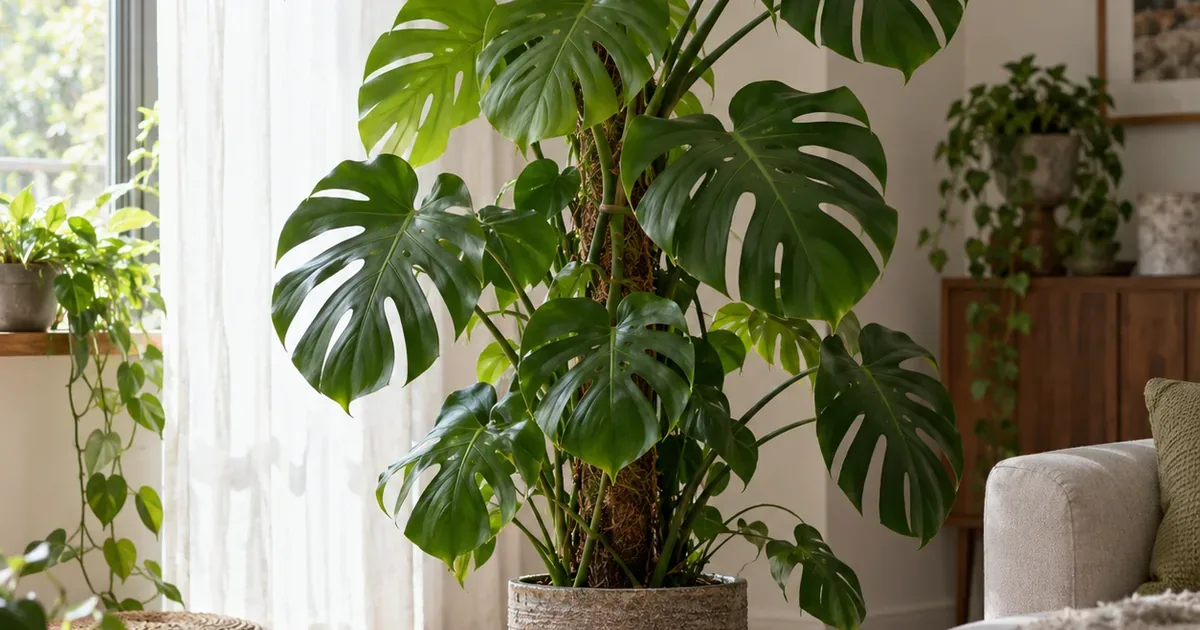
Good monstera plant care comes down to three things: bright filtered light, a pot that drains, and a sturdy support for the climbing stem. Water when the root zone has dried, not when a calendar says so.
Most monstera trouble starts with one of those three, and the leaves are a slow, noisy signal. A huge leaf can look dramatic without telling you anything about the roots. So the routine below starts with the window and the pot, then reads the leaves.
The one clue a photo never shows you is how wet the mix is two inches down. That takes your hand, the pot's weight, and a few days of notes.
Monstera plant care indoors: where the light actually lands
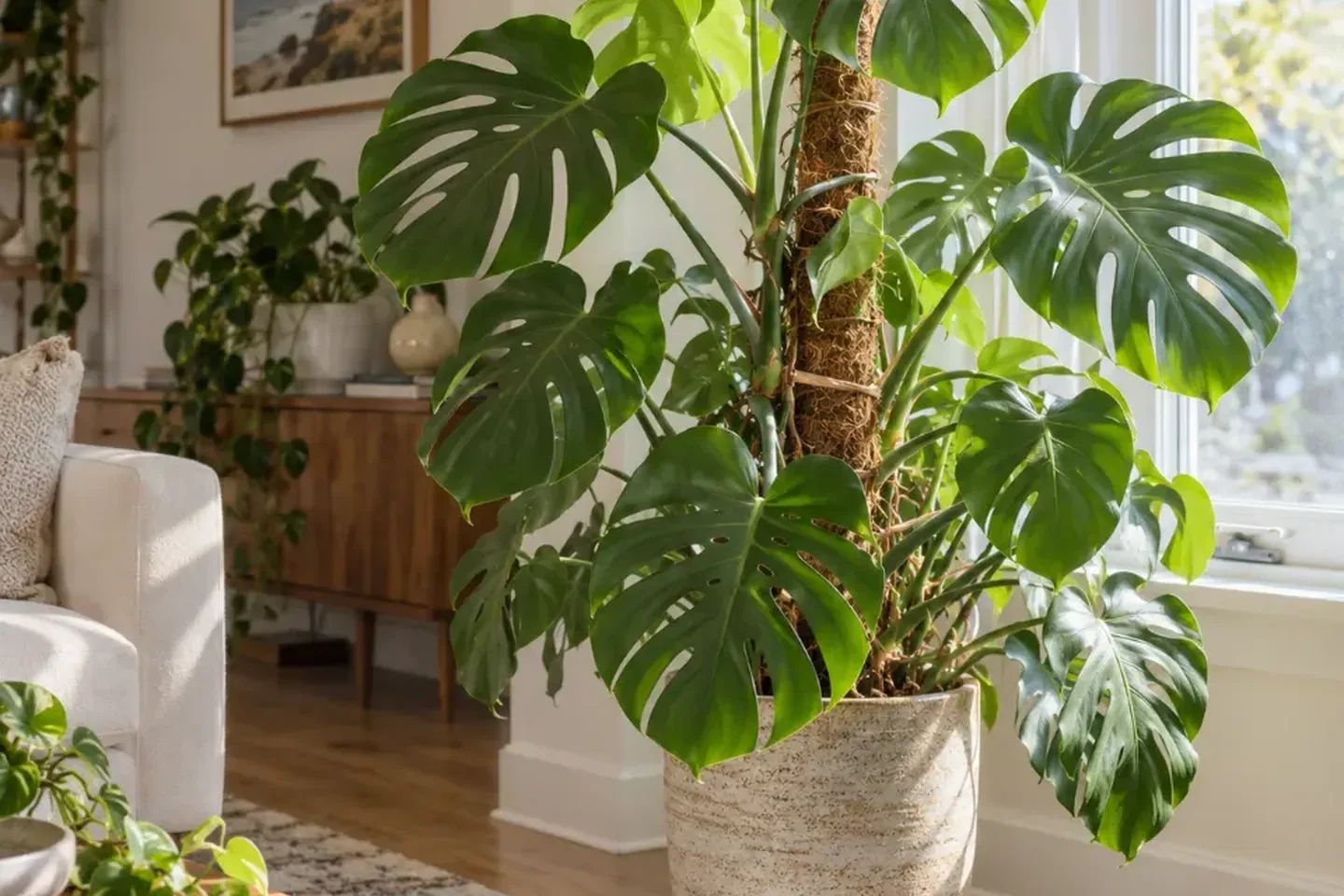
Put your monstera where daylight reaches the leaves without long hours of harsh sun on a plant that is not used to it. A bright window with a light curtain is a good start. Compass direction is only part of the story, though. A balcony overhead, a building across the street, a deep sill or a window screen can cut the light a lot.
Here is the quick test: stand where the plant stands and look toward the window. How much open sky can you see? That is the light the leaves get, not the light the room seems to have.
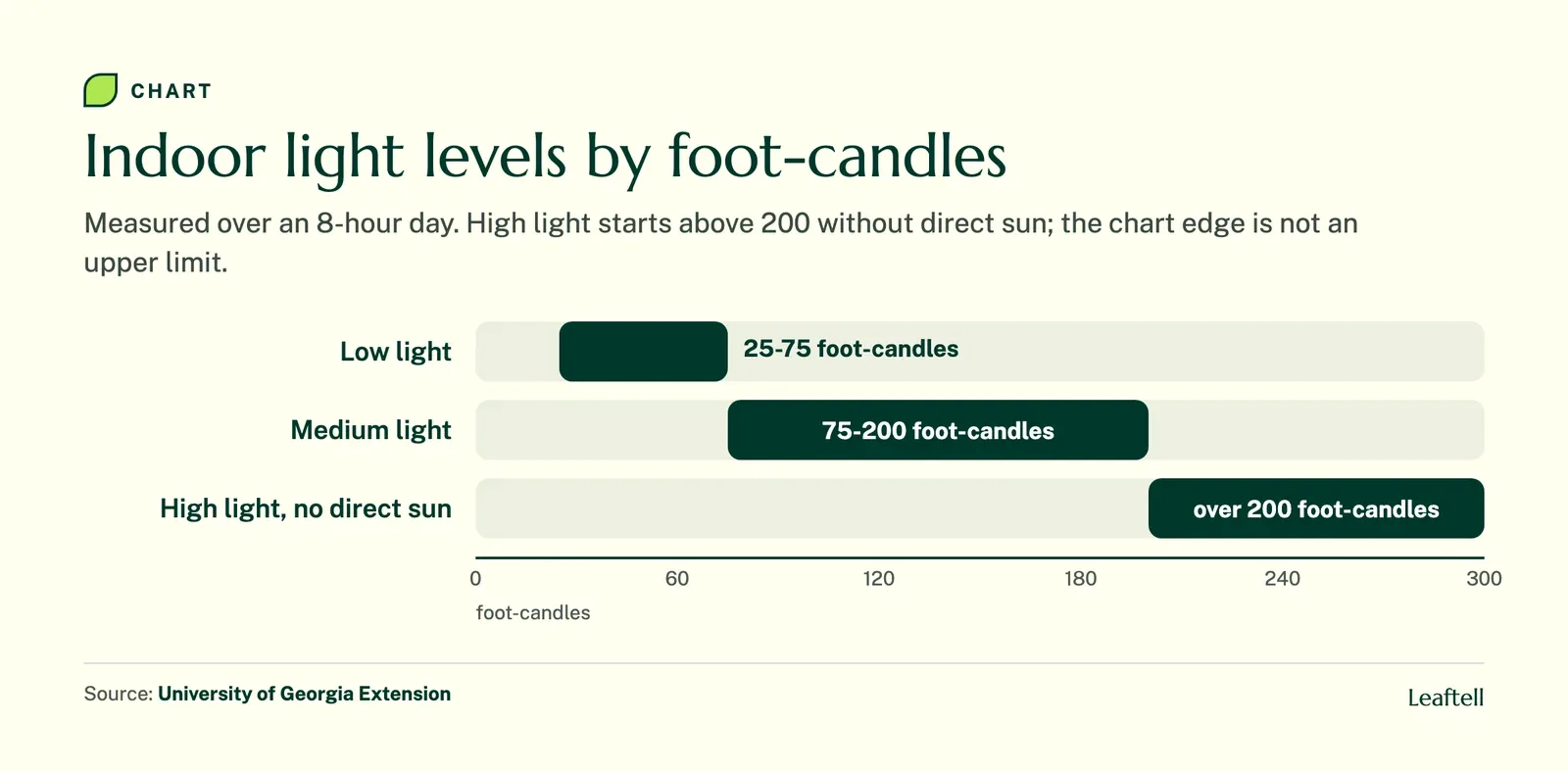
If you want numbers, the University of Georgia sorts indoor spots by foot-candles over an 8-hour day: 25-75 is low, 75-200 is medium, and over 200 without direct sun counts as high light (UGA Extension). Our guide to reading your plant's light shows how to judge that without a meter.
Keep big leaves off furniture and cold glass. A vine trained against a wall will slowly turn toward the light; let it. Don't force leaf stalks back into a decorative pose. Mark where the pot sits so you can compare new leaves under the same conditions.
No holes in the leaves? Look at the window first
This is the part most people get backwards. Wisconsin Horticulture notes that inadequate light can prevent the splits and holes monstera is known for. So an unsplit leaf is a light question, not a watering question. Young plants also make solid leaves, so one plain leaf on a small plant is normal.
If new growth stretches toward a far window with long bare gaps between leaves, read up on fixing leggy plants. Move closer to better light in steps, and check exposed leaves for pale patches. UGA suggests 3-4 weeks in a bright, sheltered spot when a new plant is getting used to your home.
How often to water monstera? Check the root zone, not the calendar
There is no reliable weekly schedule for monstera. Water when the upper mix has dried and the deeper root zone is no longer wet, then let water run out of the drainage holes and empty the outer pot.
The same plant can dry slowly in a big plastic pot during a dim week and much faster near a sunny window once it starts growing. So check every time. Feel the top layer, then press deeper near the pot edge without stabbing the main roots. UGA's general houseplant check goes about 1 inch down, but a large monstera pot can stay wet well below that. Lift the pot if you can: you will learn the difference between "just watered" and "ready" faster than any meter teaches you.
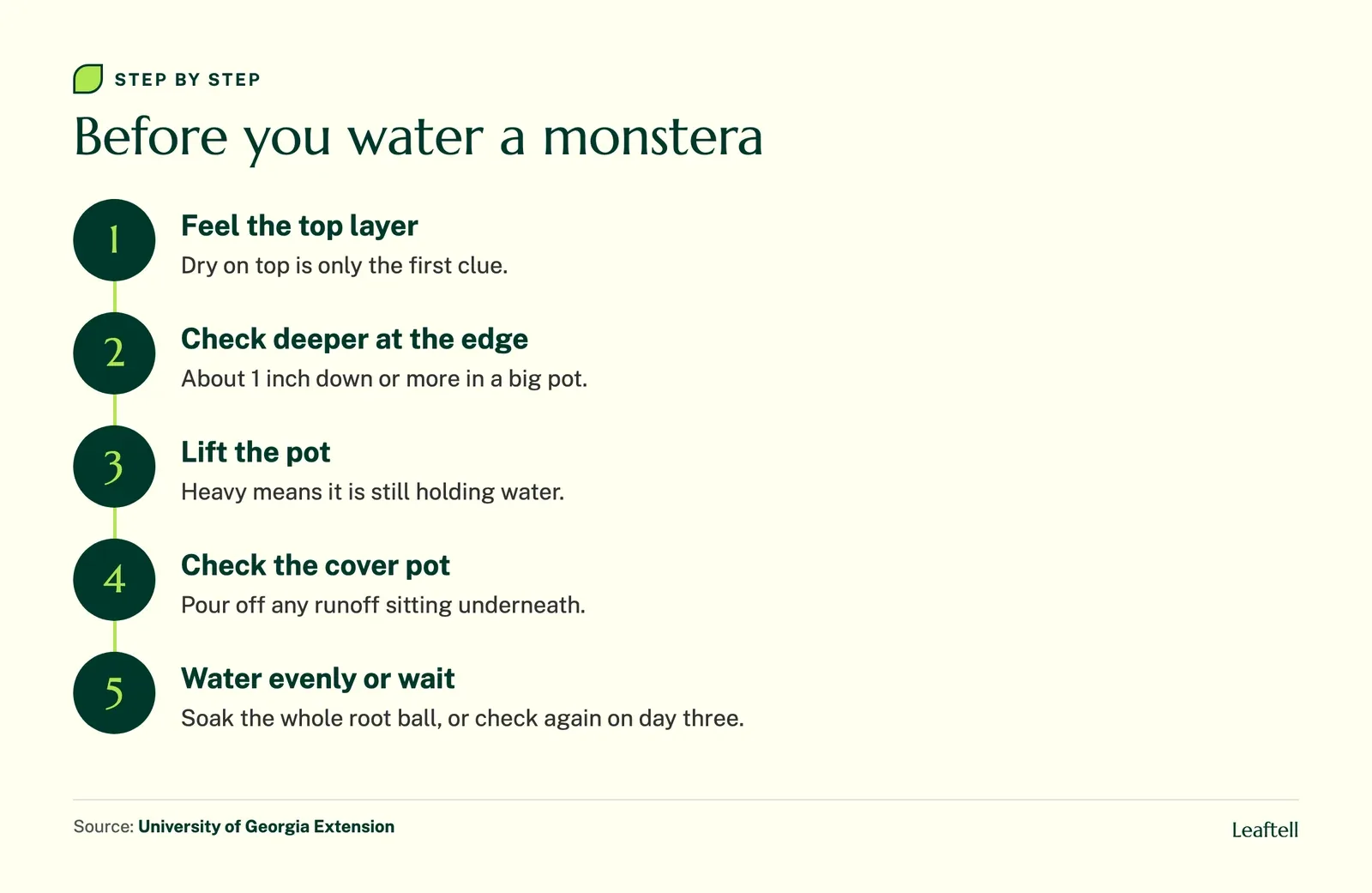
When you water, wet the whole root ball evenly. If water races straight down one side and out, the root ball may have shrunk away from the pot. Water slowly in a few passes so the center actually soaks up moisture.
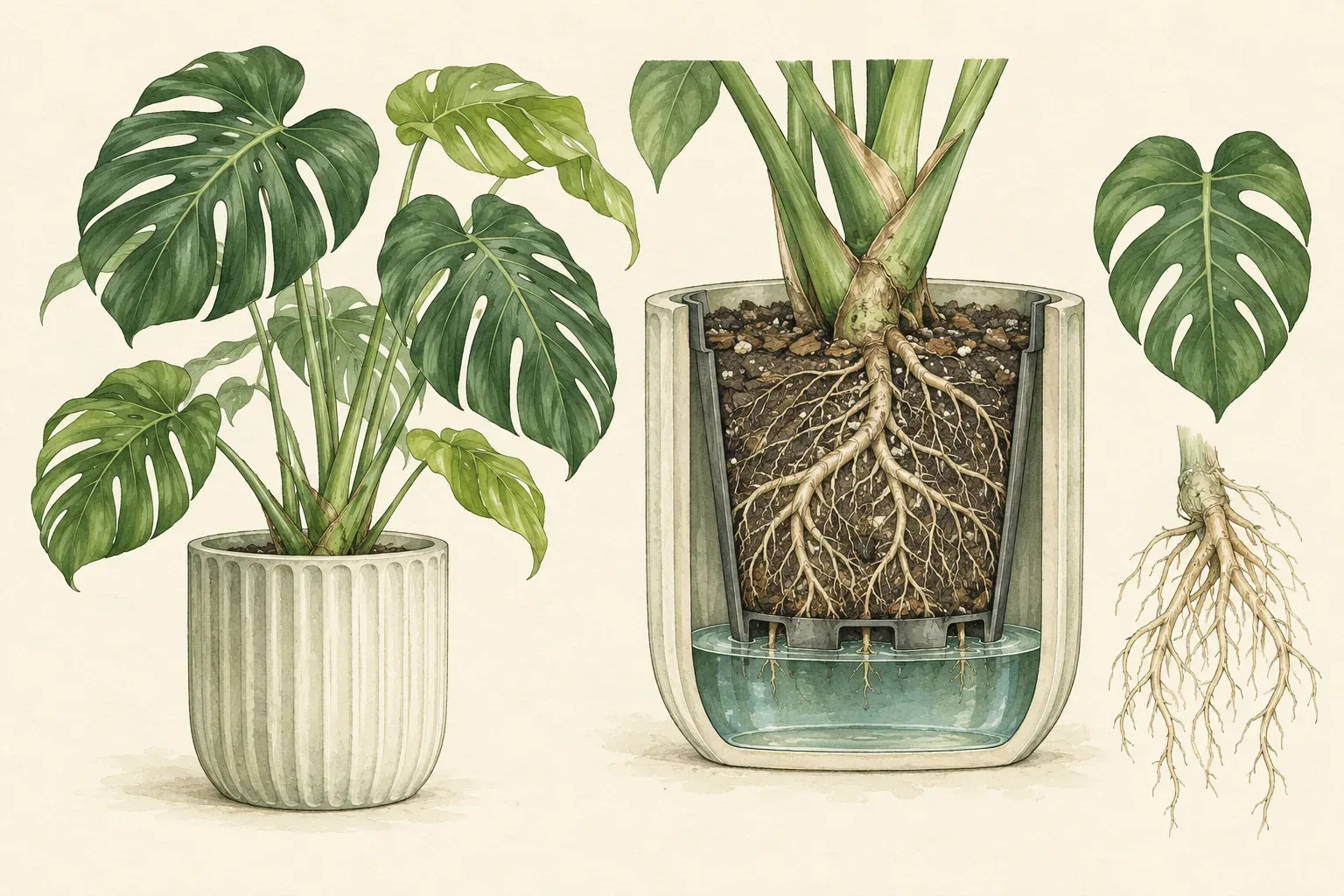
A decorative cover pot is not a reservoir. Pull the inner pot out after watering and pour off what collected. Water sitting there is invisible from above and it is the classic way a healthy plant ends up with wet roots.
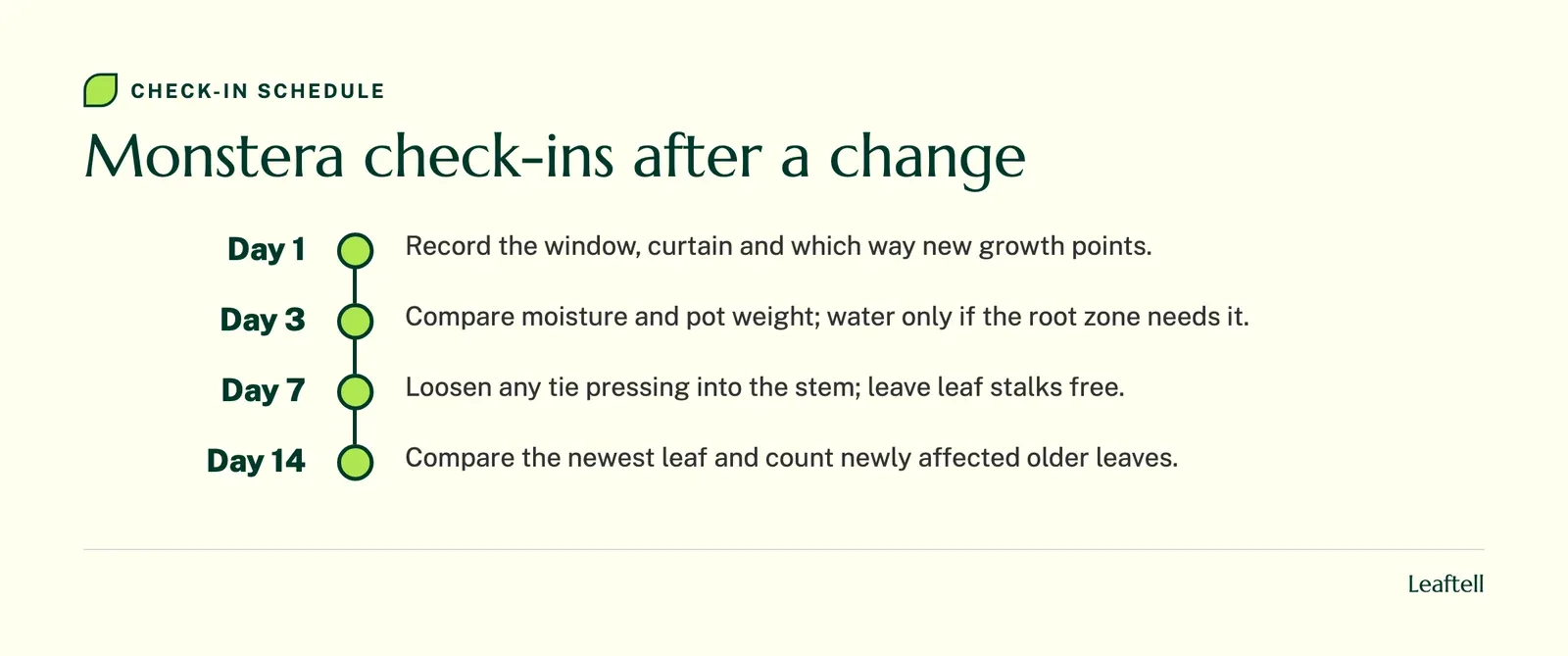
The guide on checking wet or dry soil before watering puts all these clues together. Check the pot again on day three to learn how fast it dries. That is an observation, not another watering.
How to water a monstera
- Feel two depths
Touch the top of the mix, then press a finger or wooden stick deeper near the pot edge. Wet below the surface means wait.
- Lift the pot
Compare its weight with how it felt right after the last watering. A heavy pot is still holding water.
- Water slowly and evenly
Pour over the whole surface in a few passes until water leaves the drainage holes.
- Empty the cover pot
Lift the inner pot out once it stops dripping and pour away the runoff.
- Note the date and weight
Write down when you watered and check again on day three, so the next decision is based on this pot, not a rule.
If the pot stays heavy, smells bad, or leaves keep declining, stop and compare signs of an overwatered plant before adding more water.
Monstera plant soil: roots, drainage and a climbing support
Use a houseplant mix that holds some moisture but still lets air and water move through it. A climbing pole does not make up for waterlogged soil, and neither does a bigger pot.
Monstera climbs with a main stem that makes leaves and aerial roots at its nodes. Tie that stem, not the leaf stalks, to a stable stake or pole with loose ties that leave room to thicken. Before you push a support in, find where the roots are. A pointed pole driven through the middle of the root ball does real damage.
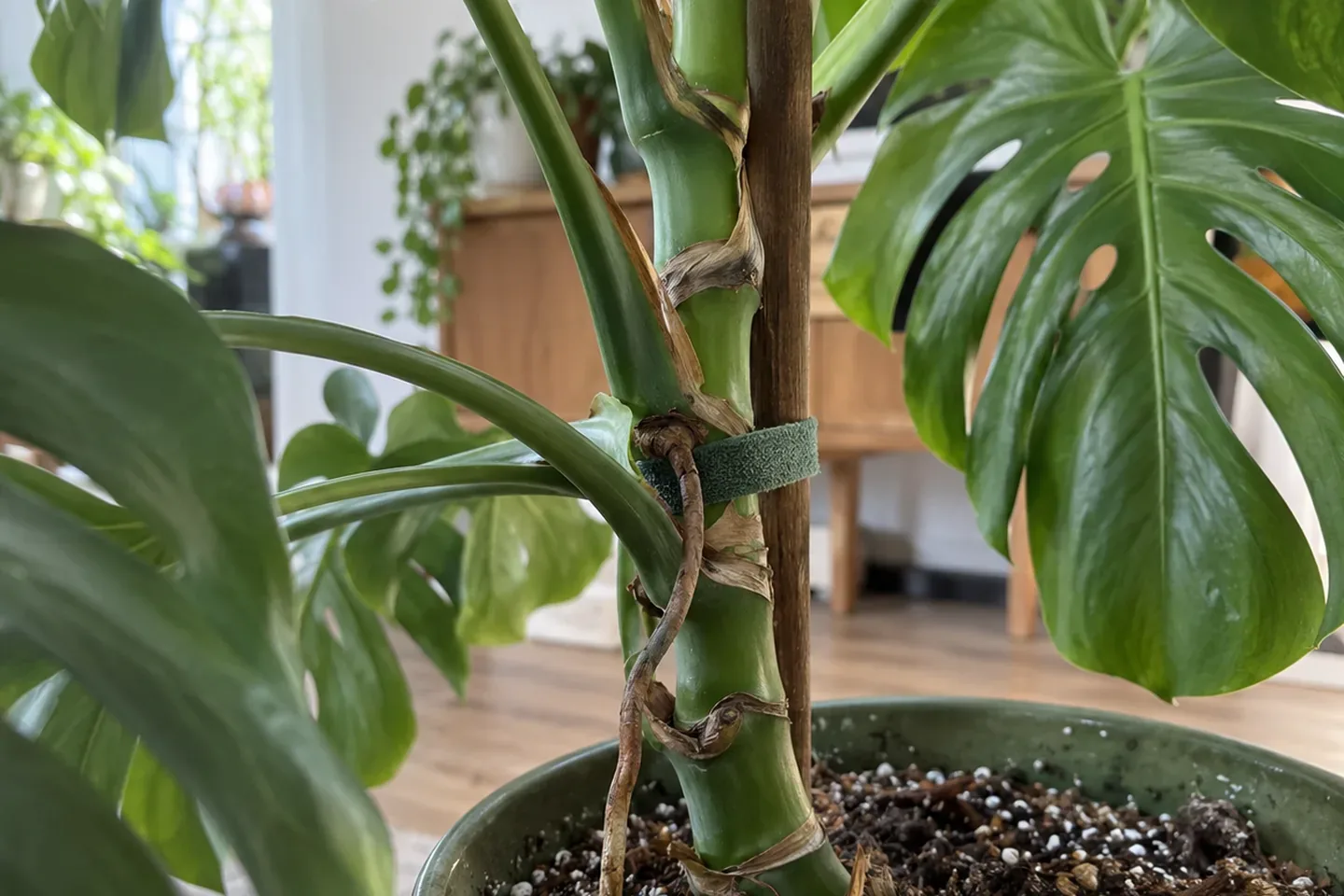
Aerial roots are not a sign you need a bigger pot. Guide them toward the mix or the pole while they are still flexible. Decide on repotting by looking at three things instead: is the pot stable, how dense are the roots, and does water still soak in easily?
If you do repot, go up only a modest size. A huge pot full of unused wet mix is harder to manage than a snug one. Prepare the new pot first, keep the plant supported while you move it, and check roots gently.
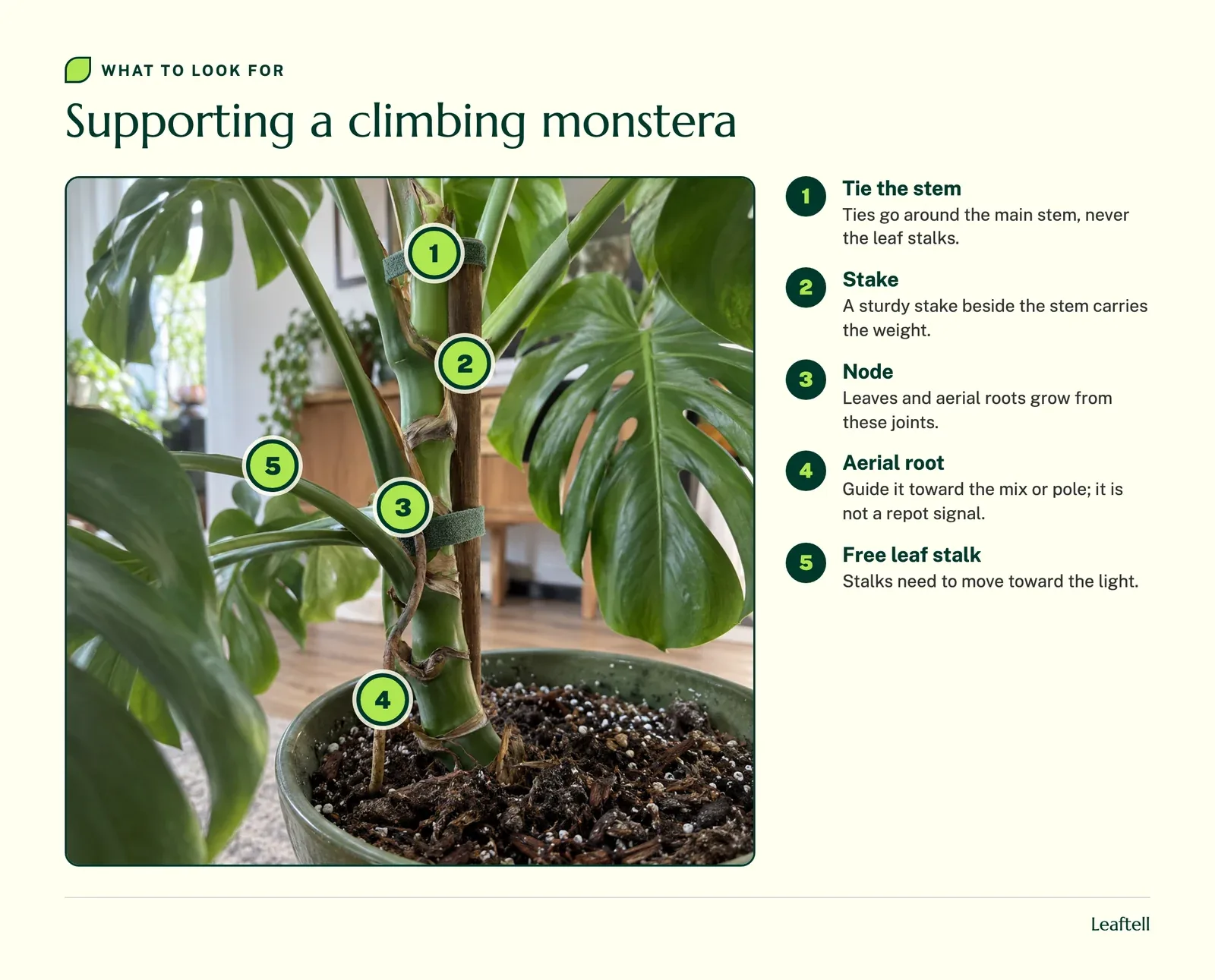
Firmness tells you more than color. A few brown roots in organic mix are normal. Roots that are soft and slide out of their outer skin are the ones to worry about, and our guide on how to fix root rot walks through what to do. Don't trim healthy roots just to squeeze the plant into a nicer pot.
Swiss cheese plant care indoor: reading the leaves
Compare a new leaf with older leaves on the same stem, not with a photo online. Fresh leaves often start lighter and thinner, then deepen in color and texture as they mature.
A bent stalk, a torn edge or a mark left while a leaf unfurled is old, one-time damage. A change that spreads across several leaves is a pattern worth investigating. Take a photo before you cut anything off, so you keep a record.
| What you see | What it usually means | First check |
|---|---|---|
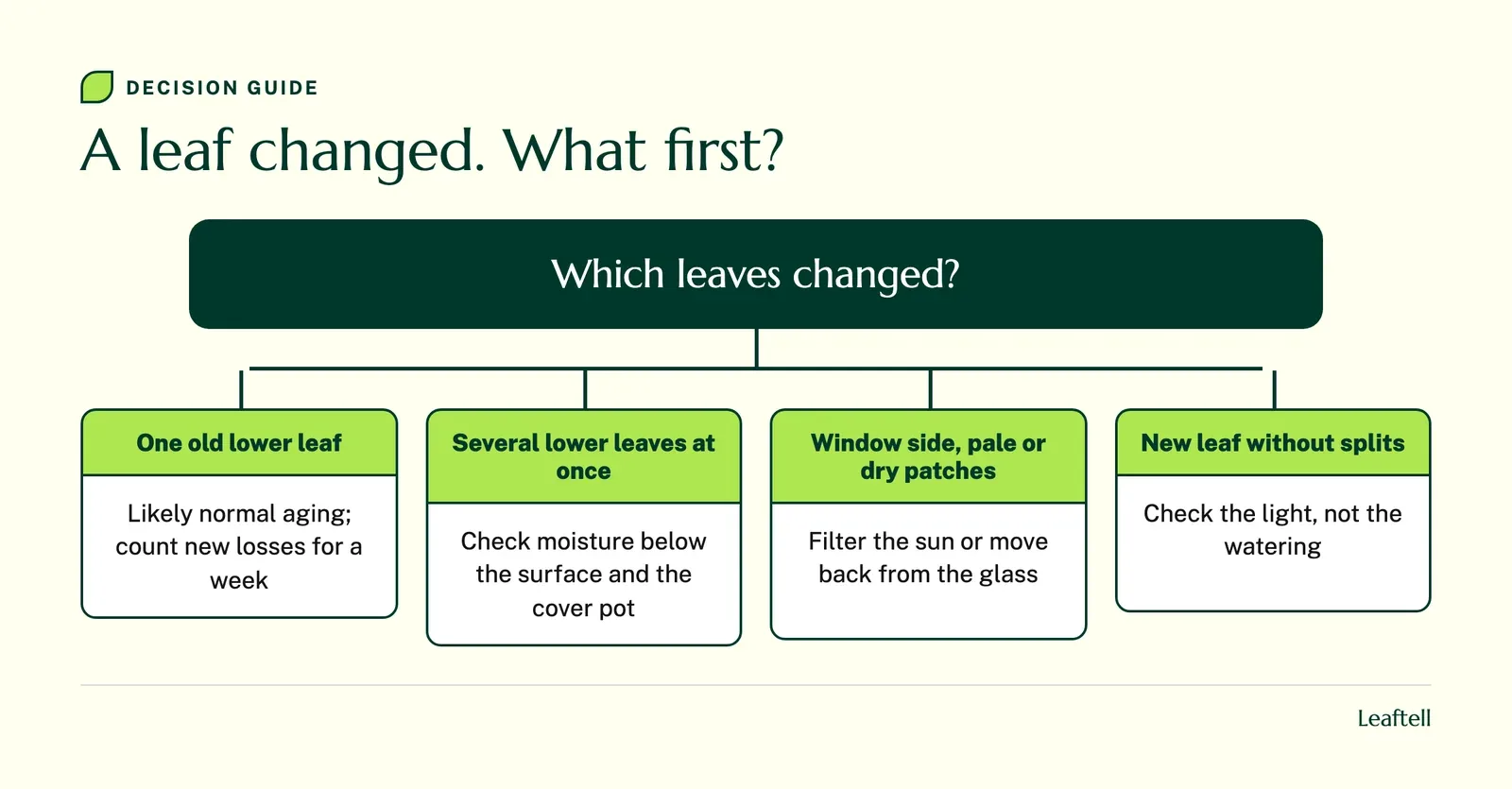
| New leaf with no splits | Young plant or not enough light | Open sky visible from the leaf |
| One old lower leaf fading | Normal leaf aging | Count new losses over the next 7 days |
| Several lower leaves yellowing together | Root zone or watering problem | Moisture below the surface and cover pot runoff |
| Pale or dry patches on the window side | Too much direct sun too fast | Curtain or move back from the glass |
| Tear or crease on one leaf | Physical damage while unfurling | Nothing; it will not spread |
| Sticky or speckled leaf undersides | Possible sap-feeding pests | Midrib and stalk junction with a magnifier |
What monstera leaves are telling you. Dates in your notes are check-ins, not watering or treatment intervals.
Wipe dust off with a soft damp cloth while you support the leaf from below. While you are there, look along the midrib and where the stalk joins the stem. Those sheltered spots hide pests that you will miss from above; our houseplant pest guide helps you name what you find. Skip leaf shine and household cleaners. They hide exactly the evidence you need.
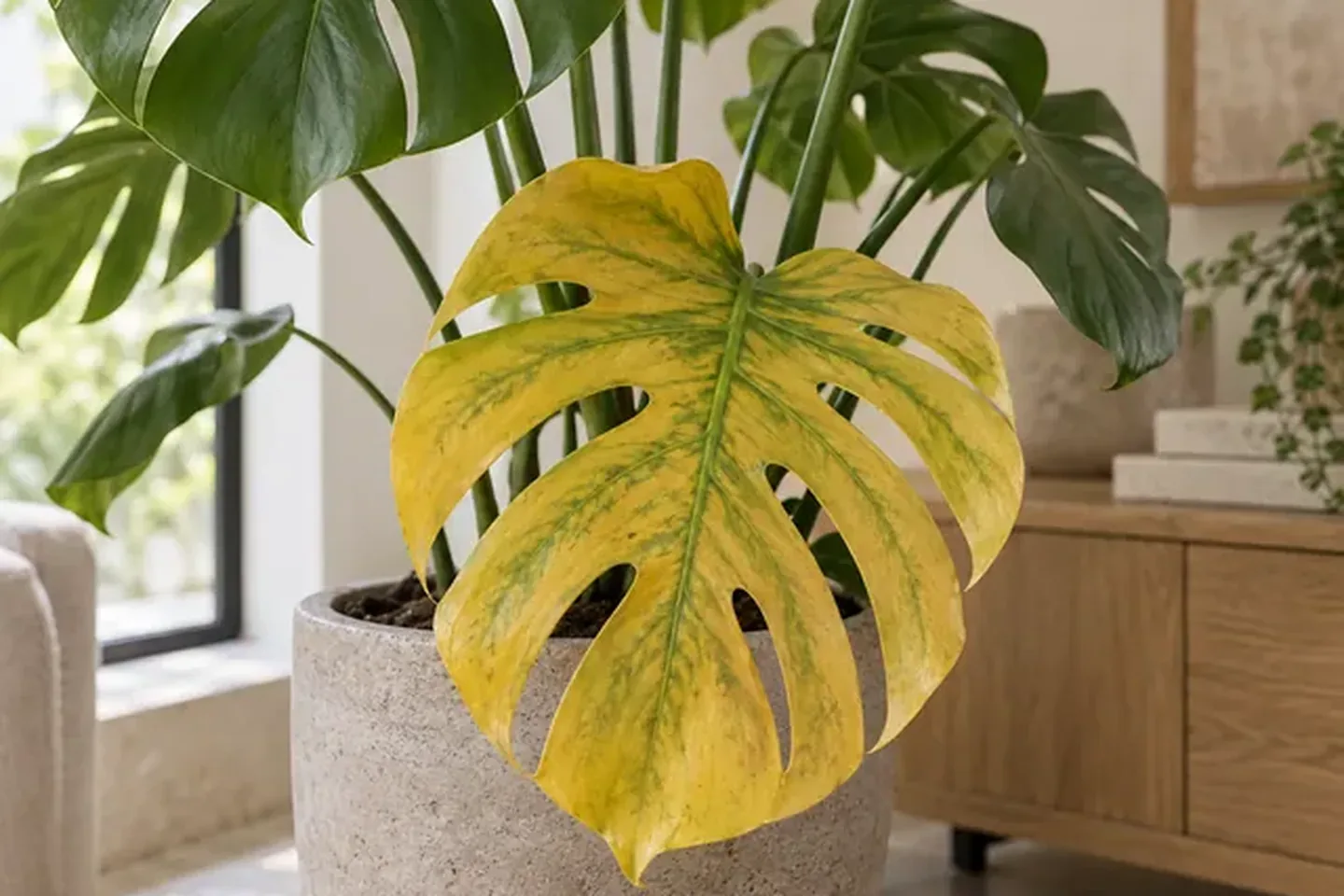
If several lower leaves are changing color at once, that has its own guide on yellow monstera leaves. Write down which leaves changed first, when you last watered and whether the plant moved. Check again after a week for new damage. Yellow tissue rarely turns green again, so count new losses rather than waiting for old leaves to recover.
Is monstera toxic to cats? Pick a spot pets can't reach
Yes. The ASPCA lists monstera as toxic to cats and dogs because its insoluble calcium oxalate crystals can irritate the mouth. Keep it fully out of reach of pets and children who chew plants.
Hanging or raising a big climber is not enough if a cat can reach a fallen leaf or a trailing aerial root from a nearby shelf. Pick up cuttings and dead leaves right away instead of leaving them in an open trash can. Wash your hands after pruning or handling sap.
Plant toxicity lists say nothing about whether a spray is safe. Any pest product has its own label, storage rules and pet warnings, so start with inspection and wiping before anything else. If you ever use one, pick a generic product class made for houseplants, follow the label exactly and never mix products.
If you suspect a pet chewed the plant, call a veterinarian or an animal poison service and tell them the plant name and any product you used on it. For a child, call your local poison service. Don't use a care guide to decide whether an exposure is harmless.
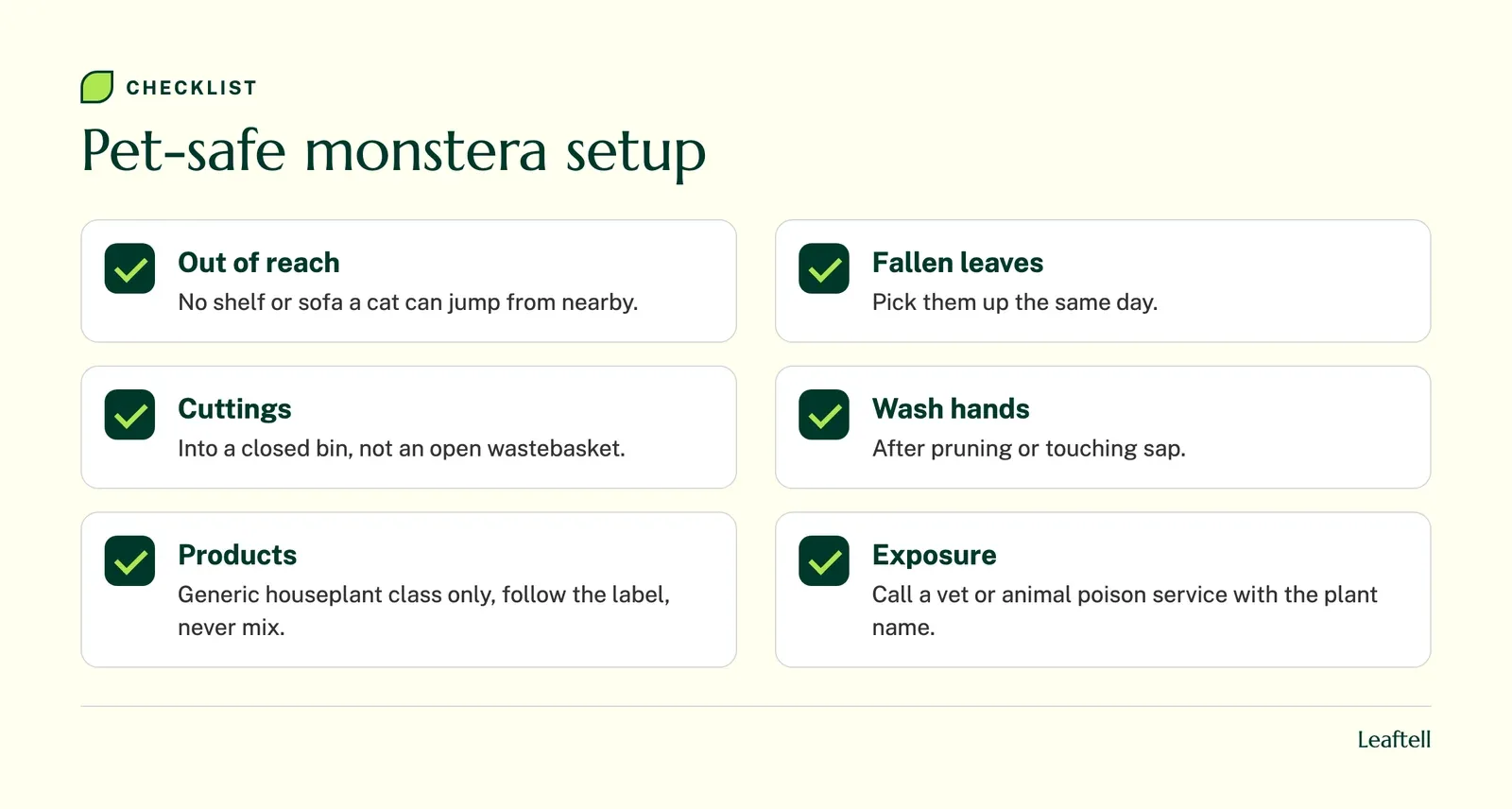
Plan the permanent spot around both good light and reliable separation from pets. Safety that depends on moving the pot every evening fails the first busy night.
Monstera care mistakes and what they cost
Most monstera problems are slow, which makes them easy to cause and hard to undo. These are the ones that cost the most.
- Watering on a weekly schedule. It works until the season or the window changes, then the roots sit wet for days. Cost: yellow lower leaves and, at worst, rot.
- Leaving water in the cover pot. The plant looks fine from above while the bottom inch of mix never dries. Cost: the same as overwatering, with no visible warning.
- Blaming water for leaves without holes. More water does nothing for perforations that depend on light. Cost: a soggy pot and still no splits.
- Tying the leaf stalks. Stalks need to move toward light. Cost: bent or snapped leaves.
- Jumping several pot sizes. Extra mix holds water the roots can't reach. Cost: a pot that stays wet for weeks.
- Shining leaves. Cleaners and shine products hide pests and dust patterns. Cost: an infestation you notice late.
When to get help
Get local horticultural advice if the main stem turns soft, damage spreads quickly across new leaves, or the plant keeps declining after you fixed light and watering. Bring photos of the whole plant, the pot and the root zone. A local extension office or a good independent garden center is a solid first call.
The monstera routine that works
Fix the light first, then let the pot tell you when to water, then read the leaves. That order matters because light drives growth and drying speed, and leaves show problems weeks after they start. A bright, curtained spot, a pot you can lift, a loose tie on a sturdy pole and a pet-proof position cover most of what this plant needs.
Keep a short log: where the pot sits, when you watered and how heavy it felt, and which leaf changed. Two weeks of notes will teach you more about your monstera than any rule. If you are still unsure what a change means, the pothos care guide uses the same root-zone approach for a close cousin.
Sources
Check your growing conditions with the plant watering calculator.
Frequently asked questions
Water when the mix has dried below the surface and the pot feels light, then let the runoff drain and empty the cover pot. Light, pot size, mix and season all change the interval, so check the pot instead of following a fixed day.
Young monsteras make solid leaves, and inadequate light can also prevent splits and holes. Move the plant gradually toward brighter, filtered light and judge the next new leaves, not the ones already open.
Check leaf age, moisture below the surface, recent light changes and pests. One old lower leaf fading is normal, while several leaves yellowing together points to a root zone or watering problem.
A thirsty monstera may droop or curl its leaves, but wet, damaged roots can cause the same look. Confirm the root ball is actually dry before you water.
You don't need to. Aerial roots are normal for a climbing plant, so guide them toward the pole or the mix while they are flexible, and trim only one that is truly in the way.
Yes. The ASPCA lists monstera as toxic to cats and dogs because of insoluble calcium oxalate crystals that irritate the mouth. Keep the plant, fallen leaves and cuttings out of reach, and call a vet if you suspect chewing.
Don't leave it in standing water, don't move it suddenly into harsh sun, and don't force new leaves open. Keep it away from pets and children who might chew it.
There is no fixed lifespan. It depends on growing conditions and damage, so watch for healthy new growth and how often older leaves drop rather than expecting each leaf to last a set number of years.
Share article
About the author

Keep checking your plant
Plant care reference
Indoor plant care
Build a routine around your plant, light and potting mix.
Plant care reference
Why is my plant dying
Trace leaf and root symptoms before choosing a care change.
Plant care reference
Pothos plant care
Choose a growing spot and prune a trailing pothos for fuller growth.
Plant care reference
How to fix root rot
Inspect root firmness and drainage, then decide whether to repot.