How to Fix Root Rot: 6 Steps and When to Let the Plant Go
Filip Leszczyński 16 October 2026 12 min read
In this article
To fix root rot, first find and remove the trapped water, then check whether the roots and the base of the stem are still firm. Trim only tissue that is clearly dead, repot into a draining pot that fits what is left, and hold off on extra water and fertilizer while the plant steadies.
Two things trip people up. Wet soil alone does not prove root rot, so a soggy pot with firm roots needs a drainage fix, not surgery. And no rescue recipe can promise a badly damaged plant will come back.
What decides the outcome is how much firm root and stem is left. Everything below is about finding that out without doing more damage on the way.
Root rot in plants: check for trapped water first
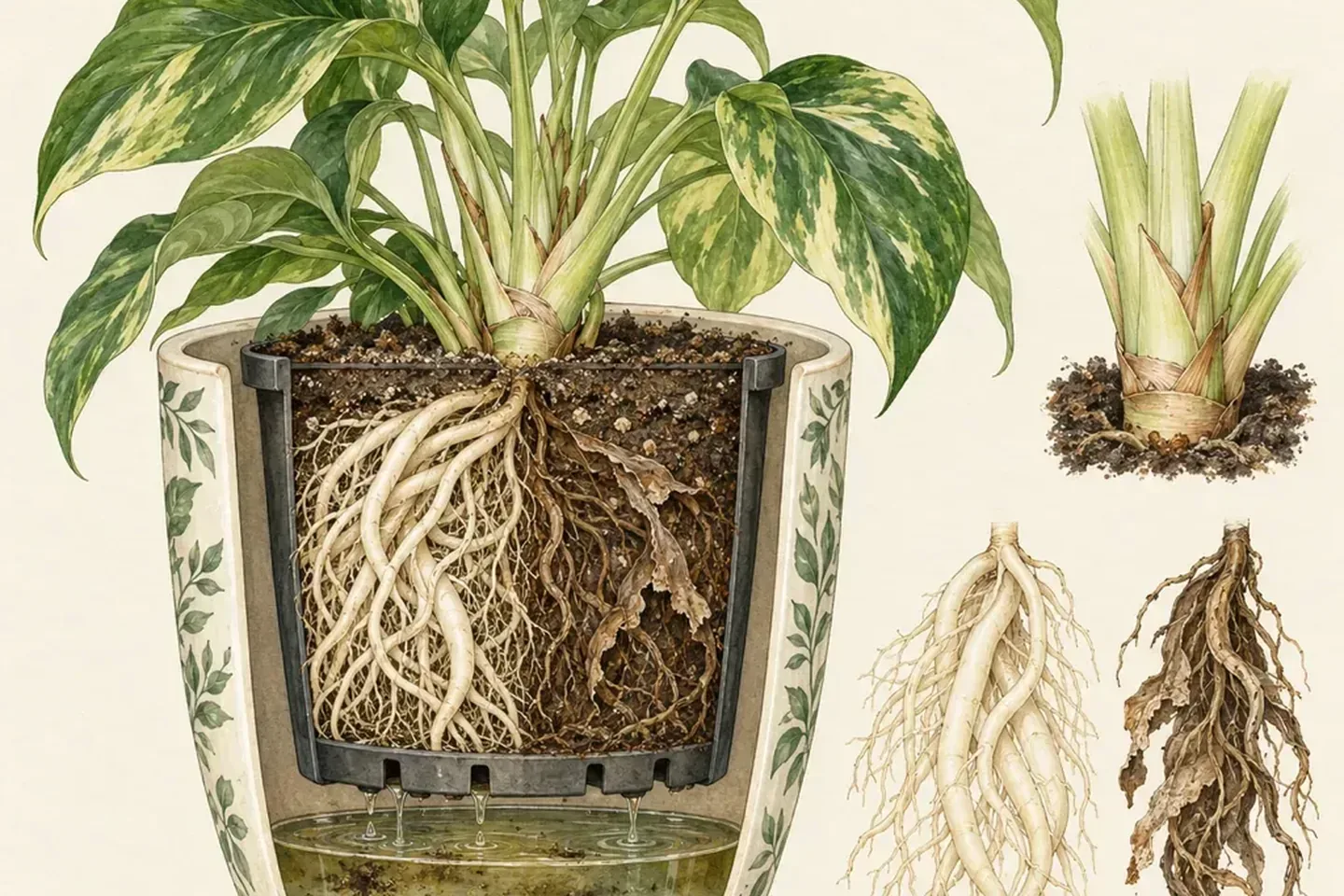
Root rot in plants usually starts with water that has nowhere to go. Before you touch the roots, lift the nursery pot out of its decorative cover and look at the bottom, because water can sit there while the soil surface looks dry.
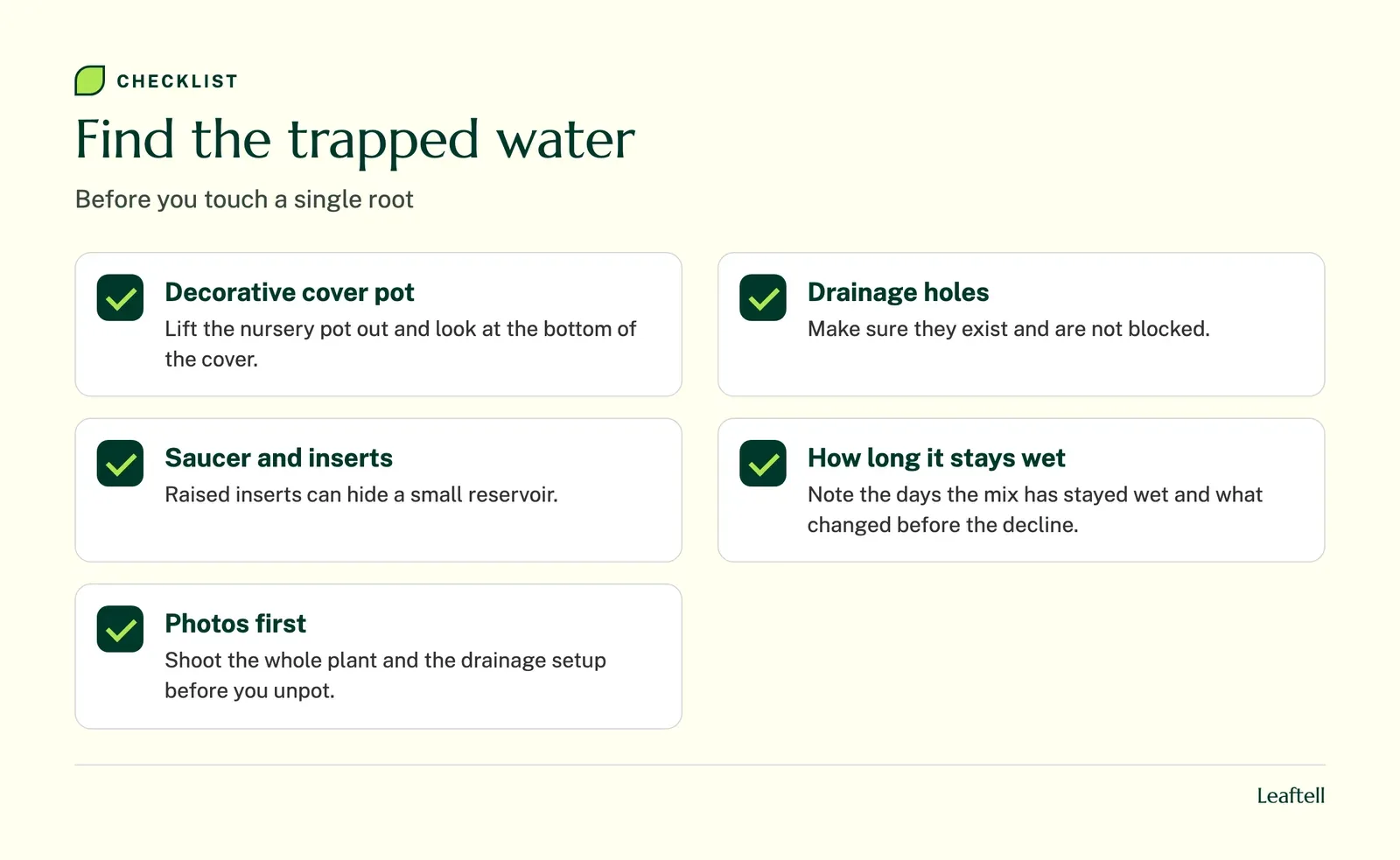
Check that drainage holes exist and are open. Look in the saucer and under any raised insert that could hide a small reservoir. Empty the runoff somewhere it will not pass through another plant's pot.
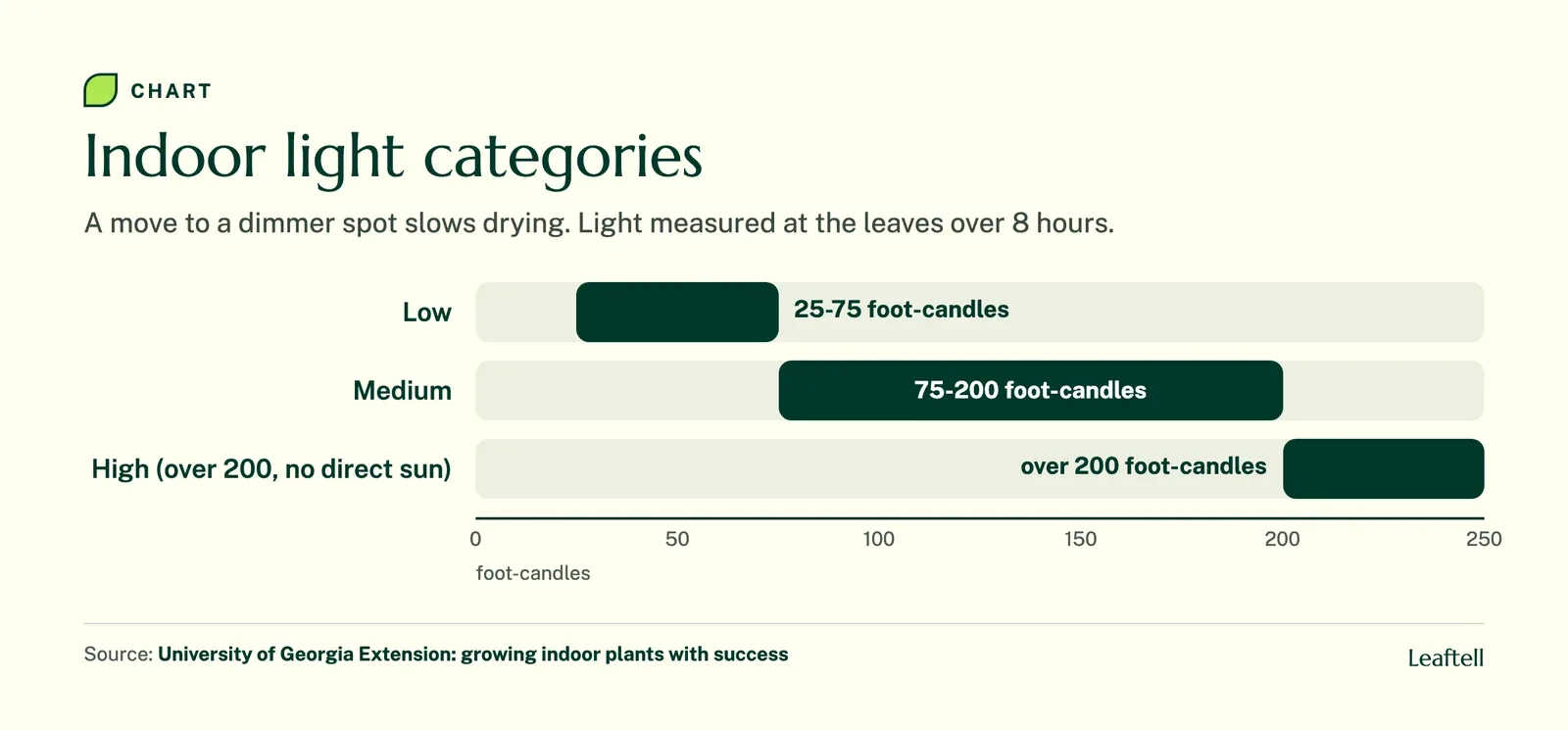
Then think about what changed before the decline began. A bigger container, a dimmer spot or a dense new mix all slow drying. The guide to overwatered plant symptoms separates a pot that is simply too wet from roots that are actually damaged. Fix the environment either way, even if the roots turn out fine.
Do not make five dramatic changes at once. Stop unnecessary watering, keep the plant in conditions that suit its species and judge how fast it is declining. If the main stem is already soft or the leaves are collapsing quickly, skip the wait-and-see and inspect now. Photograph the whole plant and the drainage setup first. That evidence is gone once the root ball is out and the old mix is in the bin.
What does root rot look like?
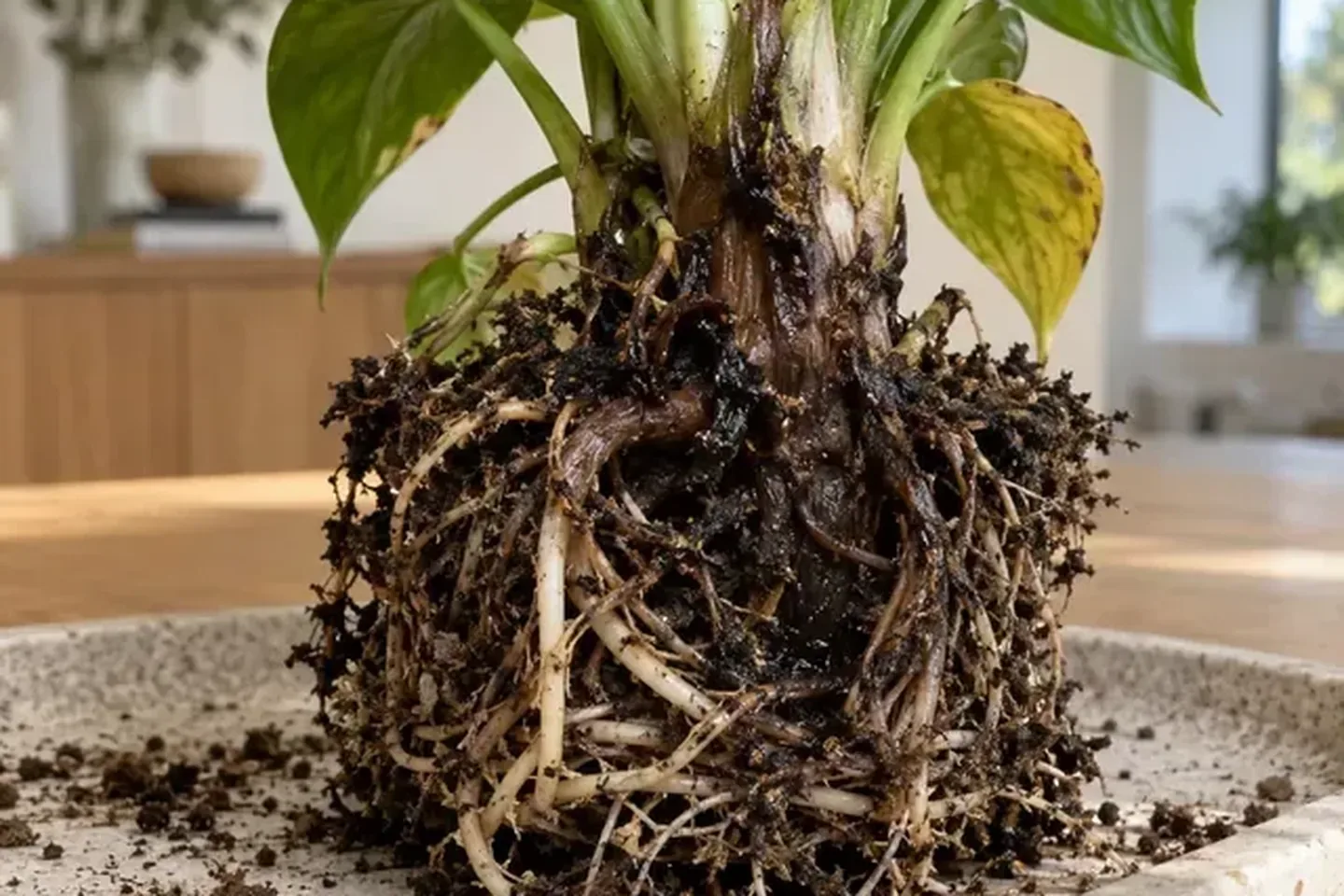
Rotting roots are soft, hollow or losing their outer layer, which slips off when you touch it. Healthy roots are firm. Judge texture, not color: brown roots are not automatically rotten, and pale roots are not automatically working.
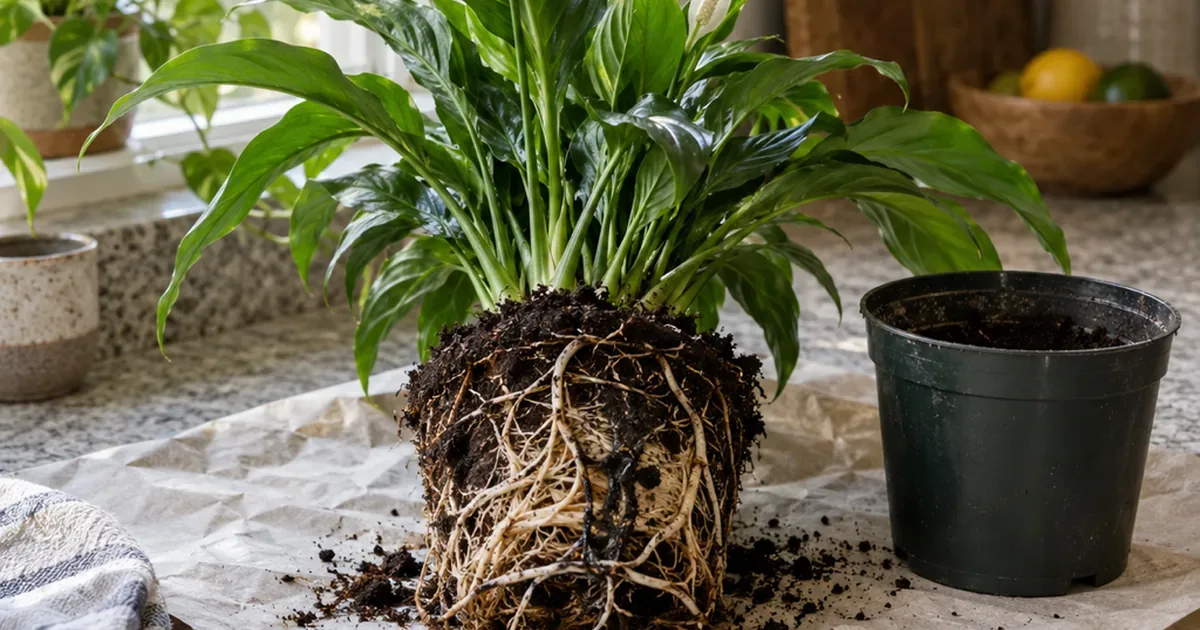
Support the plant at its base and slide the root ball out gently. Set up a clean surface and somewhere for loose mix before you start. Never pull on long leaf stalks or drag a tightly rooted plant out by its foliage; a stressed plant does not need a torn stem on top of everything else.
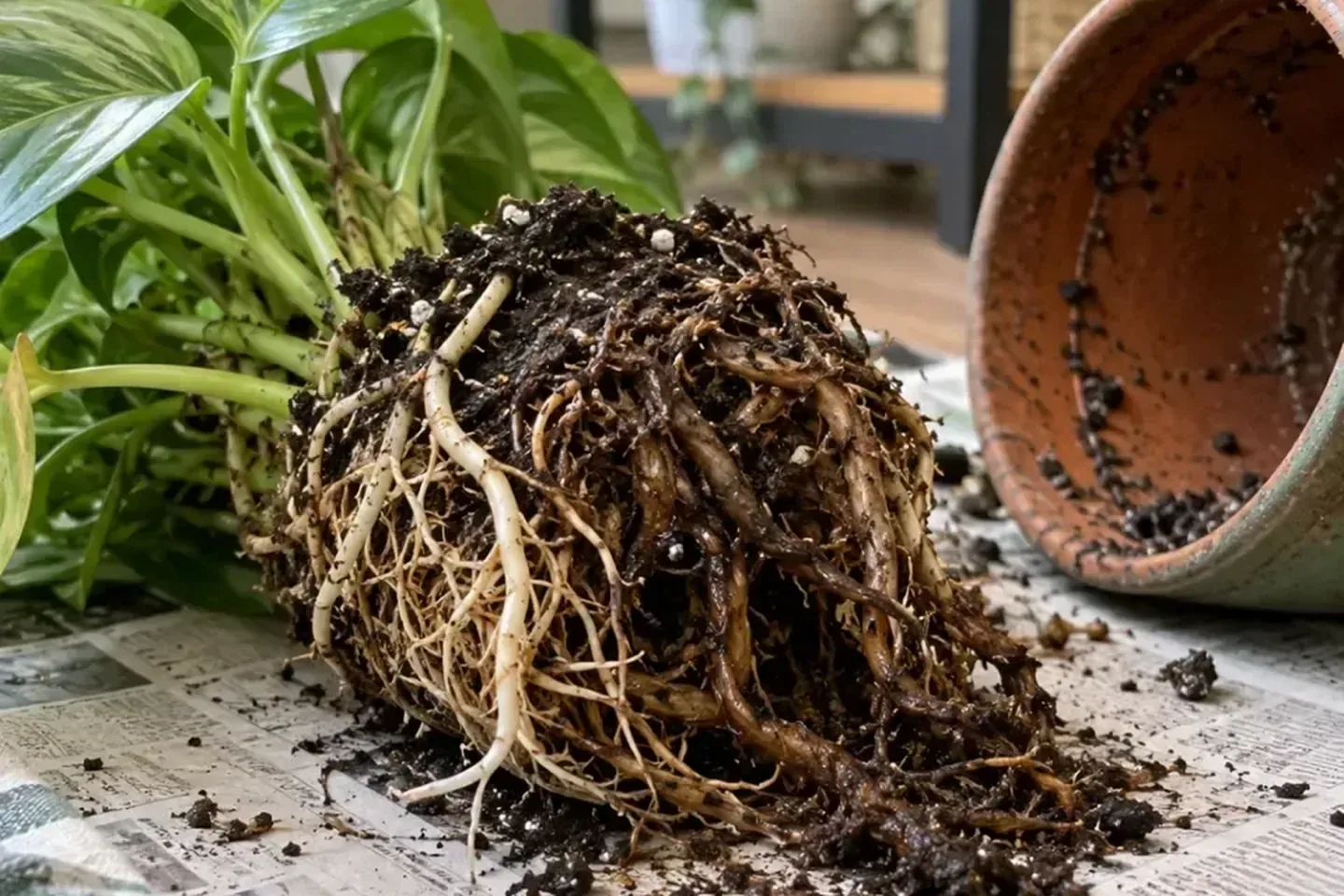
Root color varies between species and can be stained by the potting material. So look at how much of the root system is affected and whether the damage is in one patch or everywhere. Then check the main stem and crown. A firm crown above damaged roots is a very different situation from a soft crown.
| What you find | What it likely means | What to do next |
|---|---|---|
| Wet mix, firm roots, firm stem | A wet environment, not confirmed rot | Fix drainage, stop extra watering, observe |
| Some roots soft or shedding their outer layer, plenty still firm | Partial root damage | Photograph, trim the dead parts with clean tools, repot to fit |
| Firm roots but a soft main stem | A stem or crown problem | Get advice on the stem rather than focusing on roots |
| Almost no firm roots and a soft crown | Recovery is unlikely | Ask about propagation, stop repeated rescues |
| Day 3 after you intervene | A check-in, not a verdict | Look at the base and saucer without unpotting again |
Some plants need their own context. A water-storing clump like a snake plant gets soft at the base in a particular way, and snake plant care covers it. Orchid roots look different from soil-grown roots, so read orchid leaves turning yellow before you judge them. Thick, translucent succulent leaves are their own pattern; see why is my succulent dying.
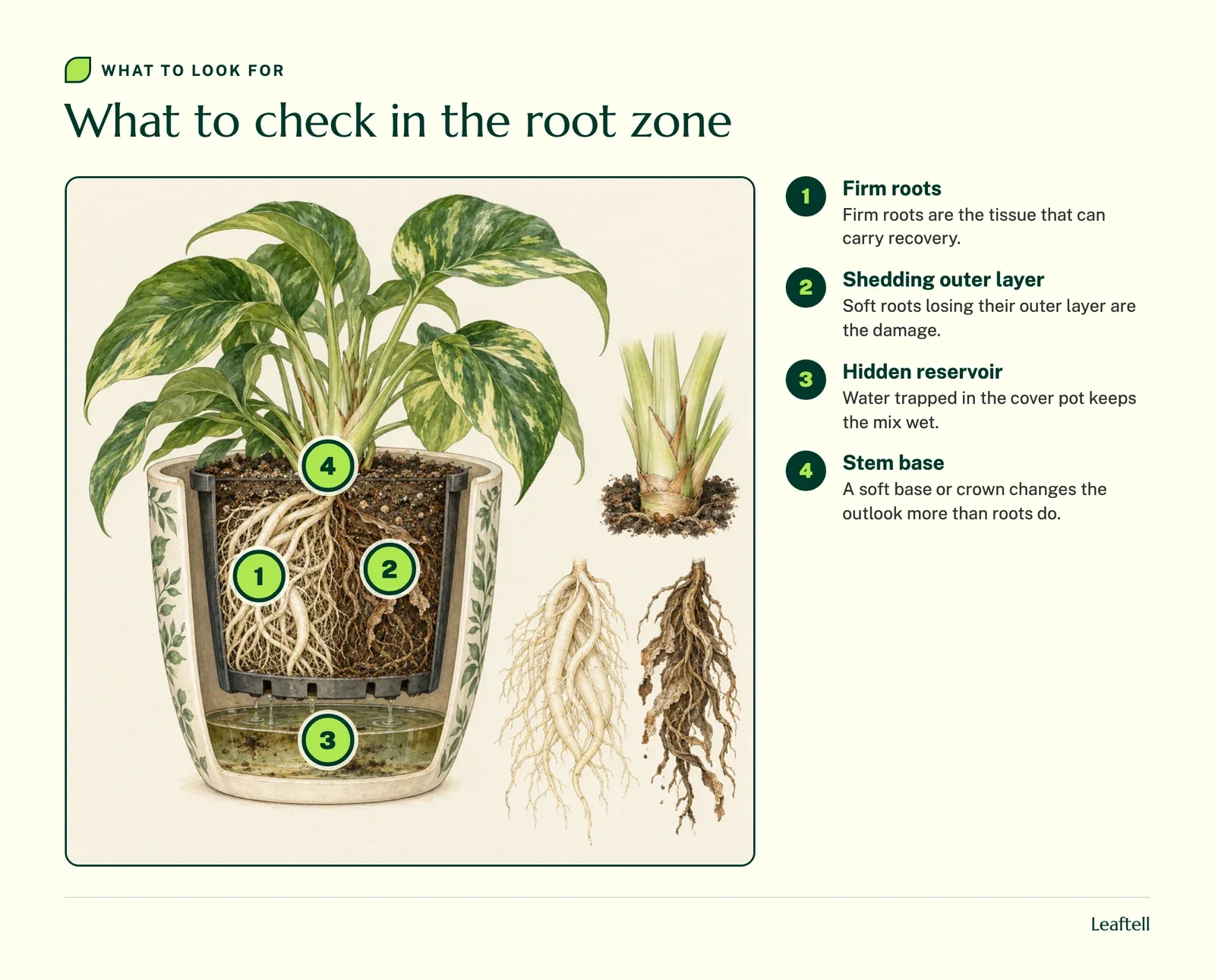
Inspect once, write down what you found and decide from there. Bare-rooting the plant again every few days to "check progress" only adds damage. If you cannot tell firm from failing tissue, get local horticultural advice with close photos before you cut away a large part of the root system.
How to fix root rot without repotting, and when you have to
You can fix root rot without repotting only when the roots are still sound and the problem is the water around them. Empty the trapped runoff, correct the drainage and change how you water. Once the mix is breaking down or the roots are soft, repotting is usually part of the fix.
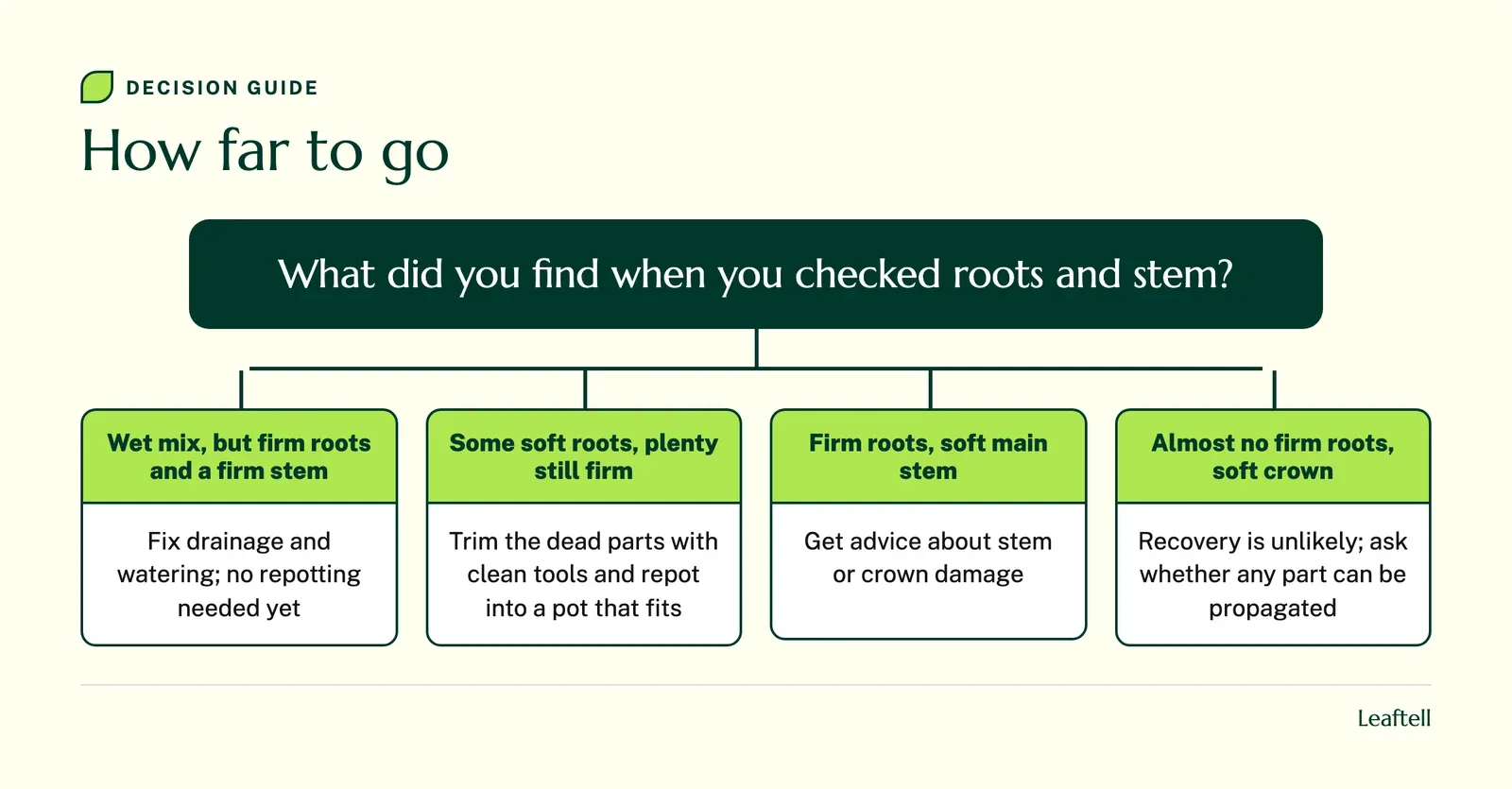
The real question is whether enough healthy root and stem remain to carry the plant. If yes, here is the order to work in.
How to fix root rot step by step
- Empty the trapped water
Take the pot out of its cover, empty the saucer and any hidden reservoir, and check the drainage holes are open.
- Slide the root ball out gently
Support the base, never the leaves. Work on a clean surface with room for loose mix.
- Sort firm from failing tissue
Feel the roots. Firm stays. Soft, hollow or shedding roots are the damage. Check the stem base and crown too.
- Trim only what is clearly dead
Use clean tools and remove only tissue you can confidently tell is dead. Keep suspect debris away from healthy plants.
- Repot into a pot that fits what is left
Choose a draining container sized to the remaining roots, use a mix suited to the species and keep the stem at its old depth.
- Hold water and fertilizer, then check
Do not water again on autopilot. Check the base on day 3 without unpotting, and compare leaf losses on day 7.
A small damaged root ball in a much larger pot sits in a bigger volume of wet mix, which is the problem you are trying to escape. Size down if anything. Do not bury the stem deeper to make the plant stand straight; use a temporary stake instead.
How to treat root rot with hydrogen peroxide? Why a soak is not a cure
Hydrogen peroxide is not a universal root rot cure, and at the wrong concentration it can injure the roots you are trying to save. Correct the growing conditions and get identification advice instead of experimenting with a chemical soak.
The same goes for household disinfectants, peroxide mixtures or pouring several products into the roots. They can hurt the remaining tissue and they do not tell you what caused the problem. If an adviser recommends a fungicide for a confirmed disease, it has to suit the plant and the indoor setting. Follow the label and never mix products. Keep children and pets away from the work area, the old mix and any supplies. The ASPCA toxic and non-toxic plants list tells you whether the plant itself is a risk to pets; it does not mean a root treatment is safe.
Root rot mistakes that cost you the plant
A lot of the damage happens during the rescue, not before it. These are the moves that make it worse.
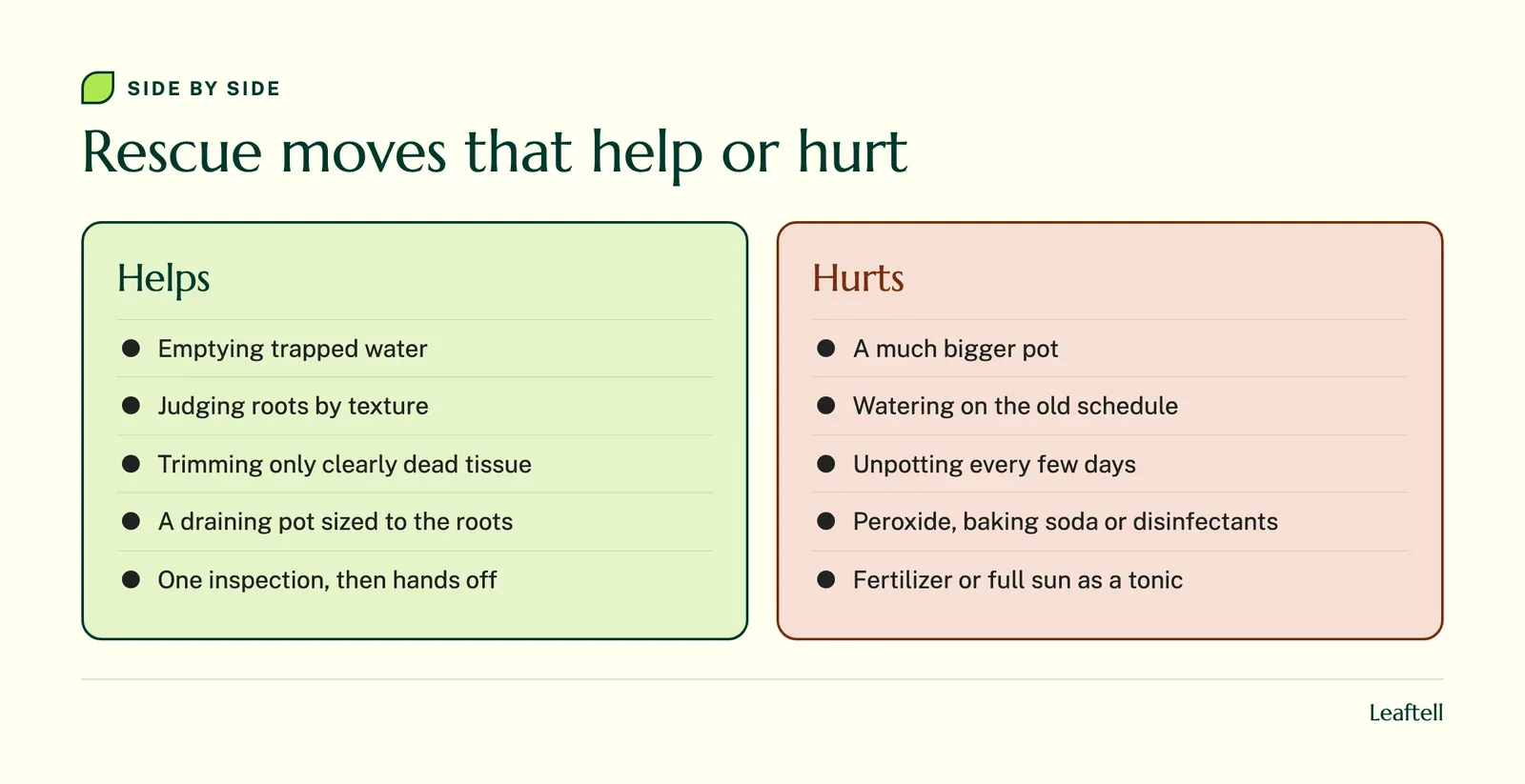
- Moving up a pot size. More wet mix around fewer roots slows drying further.
- Watering on the old schedule. A plant with fewer working roots may use water differently, and the old calendar can overwater it again.
- Unpotting every few days. Each inspection tears new roots and makes recovery harder to read.
- Kitchen chemistry. Peroxide soaks, baking soda and disinfectants do not rebuild roots and can kill the ones left.
- Fertilizer as a tonic. Hold feeding while the plant is struggling.
- Full sun to dry it out. Weakened leaves can scorch, and a sunny surface can still hide a wet center.
Can a plant recover from root rot?
Yes, a plant can recover from root rot when enough firm roots and healthy growing tissue remain. Extensive stem or crown decay makes recovery much less likely. Judge the plant by what it still has, not by how much effort you put in.
After you intervene, give it a stable spot with light that suits it and do not repot again. Disturbed roots need careful moisture, not a standing reservoir and not an automatic long drought either. Learn how the new mix feels at different depths before you go back to any routine. The University of Georgia's indoor guidance uses about 1 inch below the surface as the place to feel, and how to tell if your plant needs water shows how to combine that with pot weight.
Note when you water and whether it drains freely, and check the saucer each time. A pot with fewer roots behaves differently from the same plant before it declined. Once the root zone is drying normally again, the plant watering calculator suggests how often to check the pot for your plant, pot size and light.
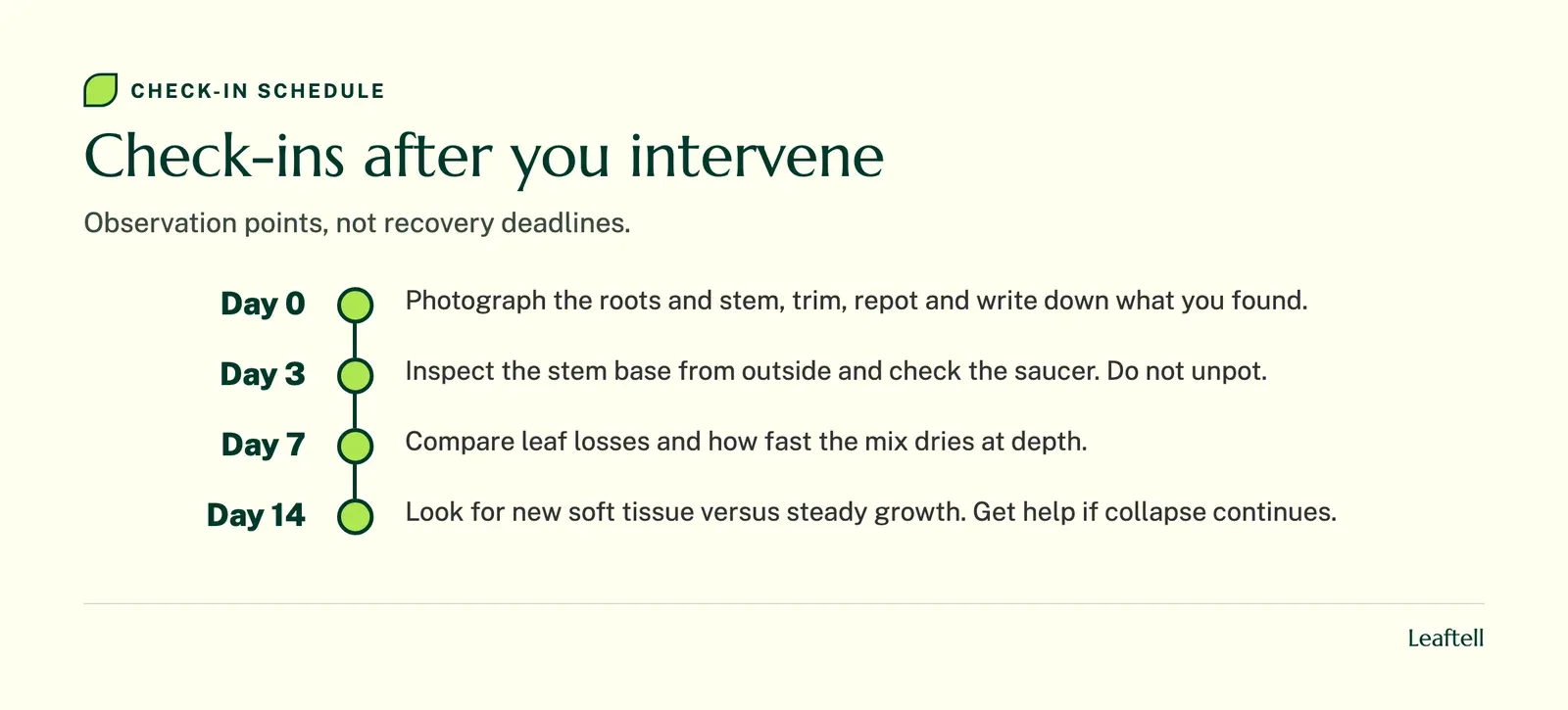
If the leaves stay limp, read drooping plant and focus on whether new collapse is happening. Leaves that were already injured may never recover, and that is fine. Hold fertilizer and keep weakened foliage out of sudden strong sun. Old yellow leaves falling off during recovery are not proof the rot is back; new soft tissue is.
Save it or let it go: how to decide
Fix the water first, judge the roots by texture, trim only what is dead and repot into a pot that fits. Then leave the plant alone apart from short check-ins on days 3 and 7. That gives a plant with firm roots left its best chance.
Get help quickly if the main stem is soft, the crown is collapsing or the plant keeps declining after you corrected the drainage. The University of Maryland Extension guide to indoor plant problems is a good starting point, and your local extension office can tell you whether any healthy part is worth propagating. Species differ in which parts root, and a green piece above a rotted base can carry the same problem, so do not give away cuttings from an unexplained decline.
If the plant does not make it, clean the pot and tools before reuse and dispose of the debris as local guidance suggests. Write down the pot, mix, light and moisture pattern. That note improves your next setup without turning one loss into a rule that every plant needs less water.
Sources
Check your growing conditions with the plant watering calculator.
Frequently asked questions
Sometimes, when enough firm roots and healthy growing tissue remain. Extensive stem or crown decay makes recovery less likely. Assess what is left before you choose how far to go.
No. Hydrogen peroxide is not a universal cure and can damage roots at unsuitable concentrations. Fix the drainage and get a diagnosis instead of experimenting with a soak.
Yes, persistently wet, poorly aerated conditions can damage roots and favor some root diseases. The pot, the mix, temperature and exposure to a pathogen all play a part too.
Empty trapped runoff and correct your watering while the roots are still sound. If the mix or roots are breaking down, inspection and repotting are usually needed. Leaving everything as it is will not always be enough.
There is no instant repair for decayed roots. Remove the source of trapped water, check how much firm tissue is left and get help fast if the base is collapsing.
No. Baking soda will not rebuild rotten roots, and adding kitchen chemicals to a stressed root zone can make things worse.
Usually not. A small damaged root ball in a large pot sits in more wet mix and dries even slower. Pick a draining pot that fits the roots that are left.
Not on autopilot. Feel the new mix at depth and check how the pot drains before you water again, because a plant with fewer roots may use water differently than before.
Share article
About the author

Keep checking your plant
Plant care reference
Indoor plant care
Build a routine around your plant, light and potting mix.
Plant care reference
Why is my plant dying
Trace leaf and root symptoms before choosing a care change.
Plant care reference
Pothos plant care
Choose a growing spot and prune a trailing pothos for fuller growth.
Plant care reference
How to fix root rot
Inspect root firmness and drainage, then decide whether to repot.