How to Get Rid of Fungus Gnats: Fix the Mix, Not the Flies
Filip Leszczyński 16 October 2026 11 min read
In this article
To get rid of fungus gnats, fix the wet potting mix they breed in, not the flies you see. Let the top of the mix dry as far as your plant allows, clear rotting debris off the surface, empty the saucer, and watch adult numbers on a sticky card for two weeks.
The flies are only the visible end of the problem. Their larvae live in the damp mix, so swatting or spraying adults changes almost nothing. And the flies themselves are a clue about moisture, not proof that the roots are rotting.
Below: how to find the pots that actually produce gnats, how to change the moisture habitat without drying a plant to death, when a targeted larval treatment makes sense, and a simple 14-day log.
Fungus gnats in houseplants: find the pots that breed them
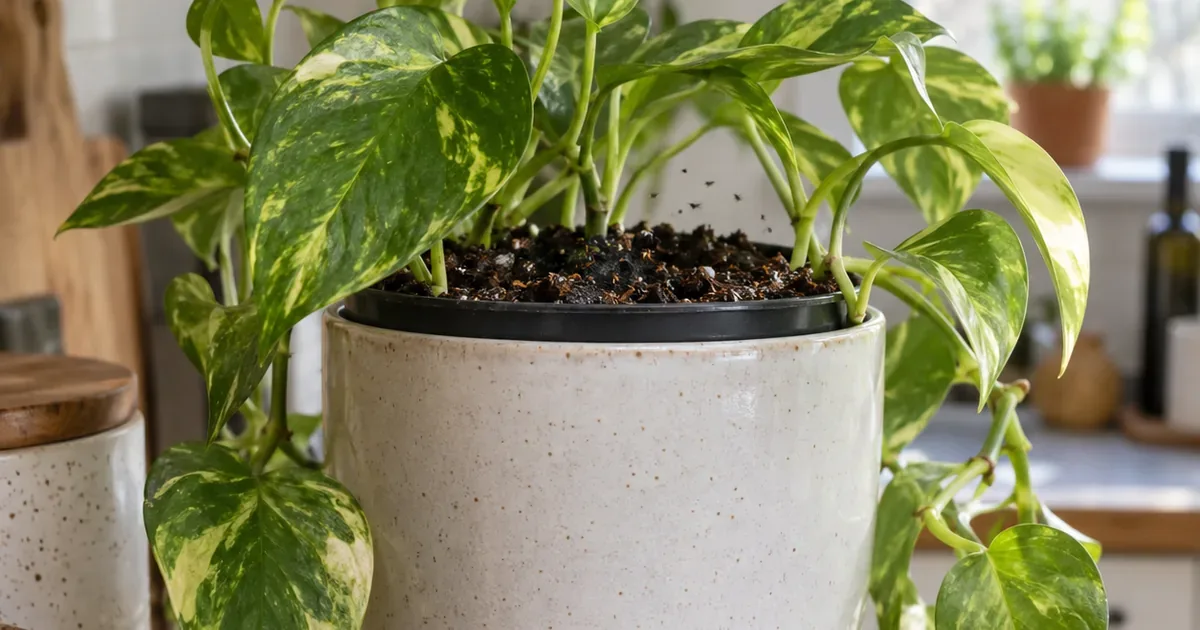
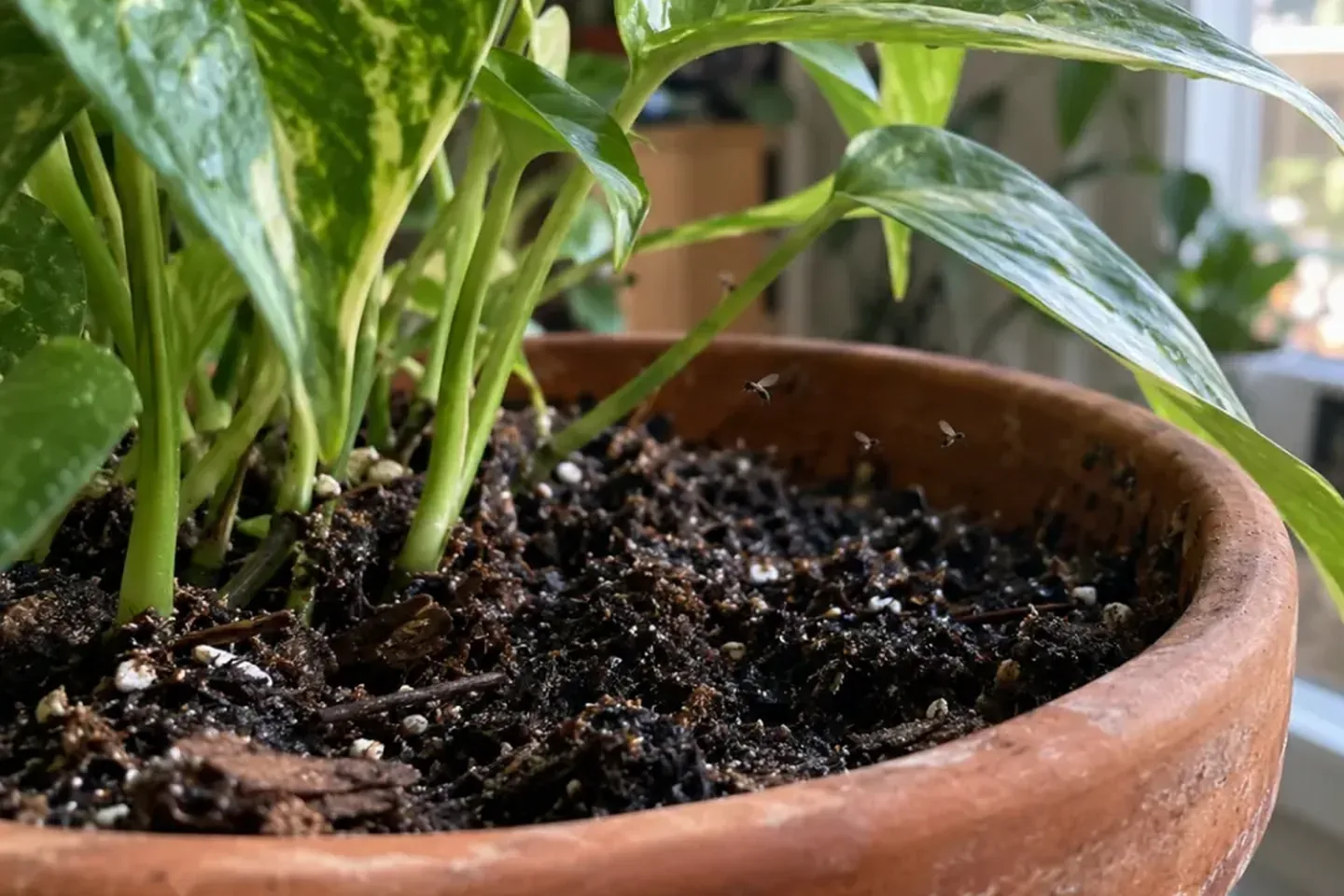
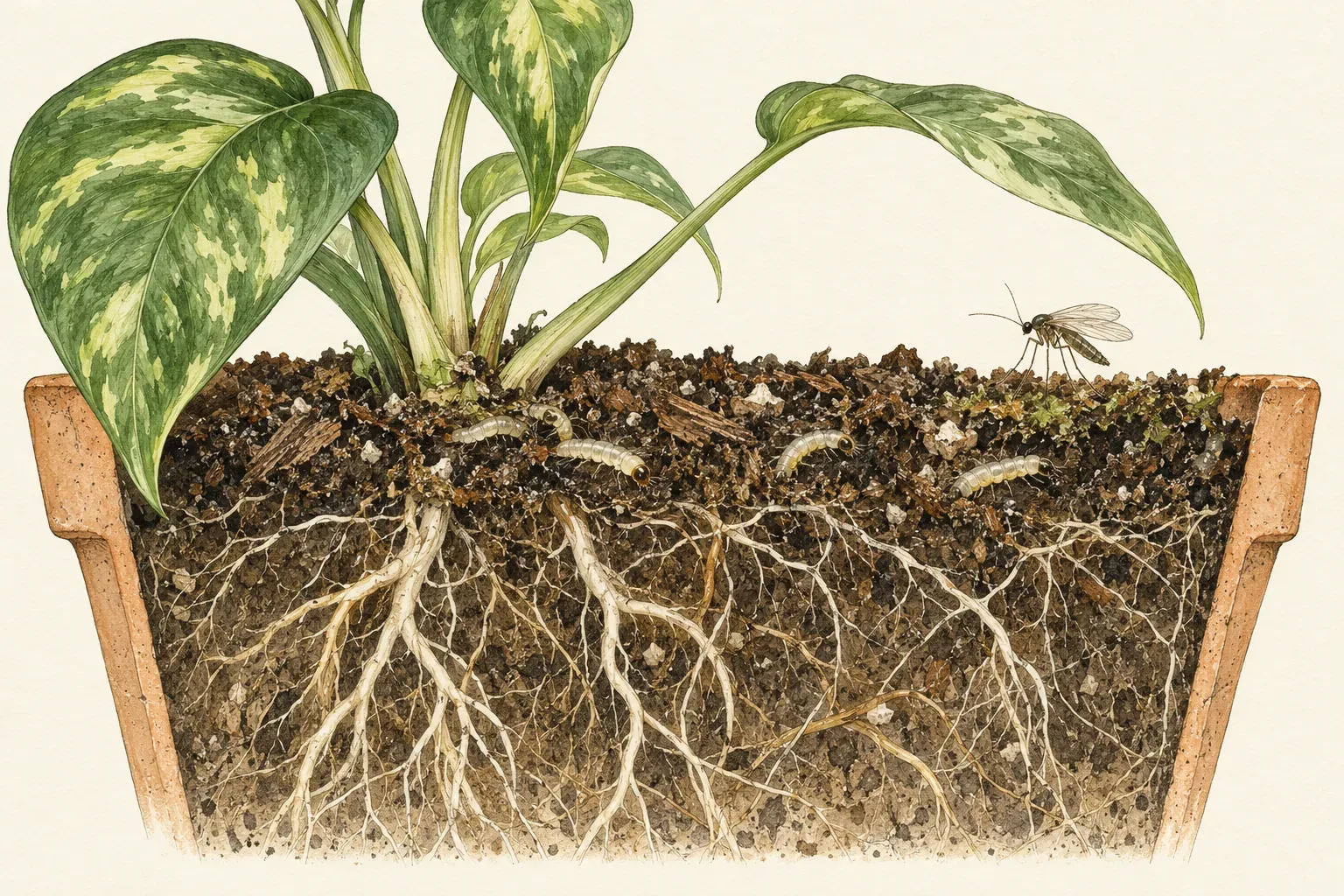
Fungus gnats in houseplants breed in moist organic potting mix. Disturb the top of each pot gently and watch where small dark flies lift off. The pot they rise from is the source; the plants beside it may just be where they land.
UC IPM explains that fungus gnat larvae develop in moist growing media. That is why the fix lives in the pot. Flies that gather mainly around fruit bowls, sinks or drains are probably a different kind of small fly.
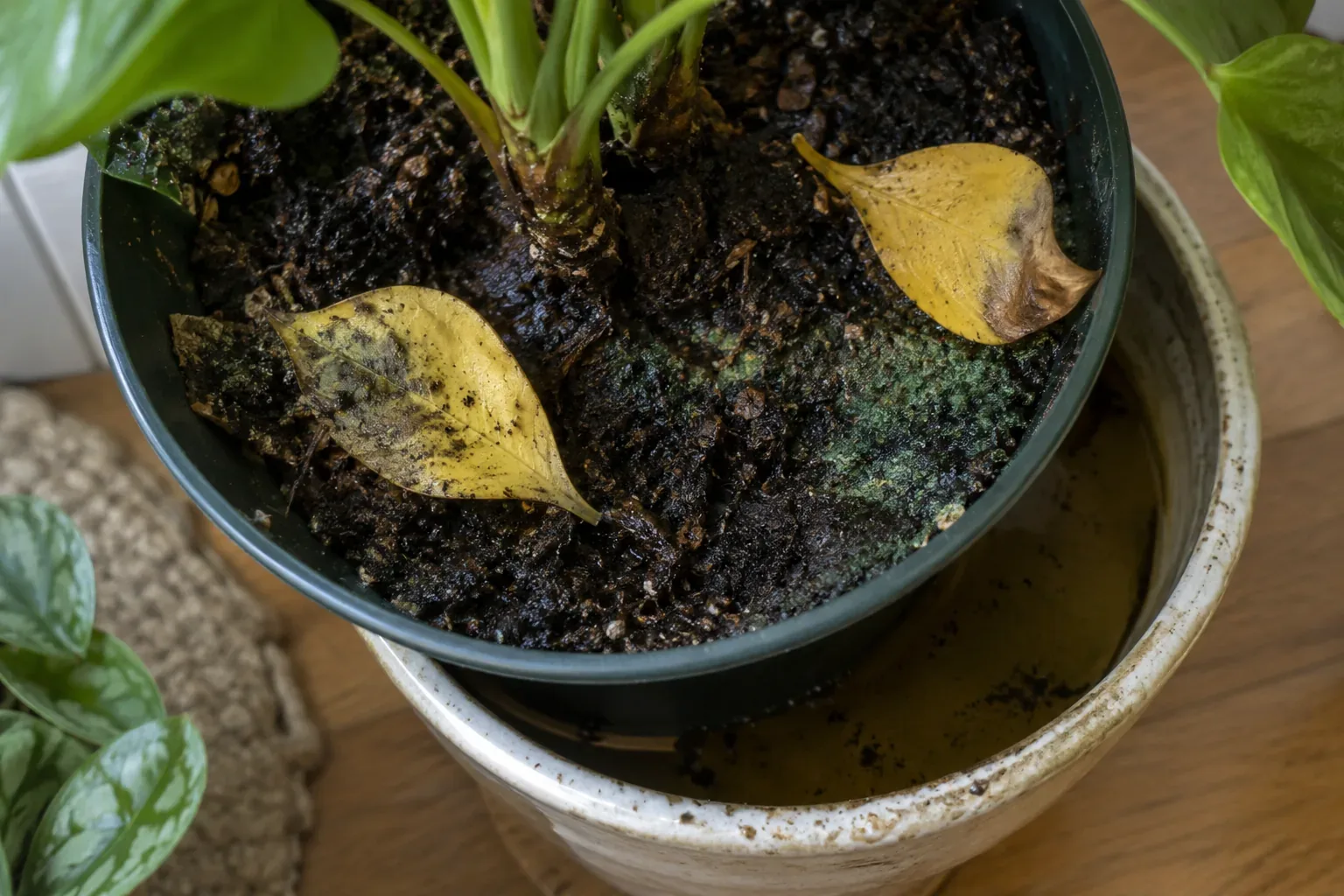
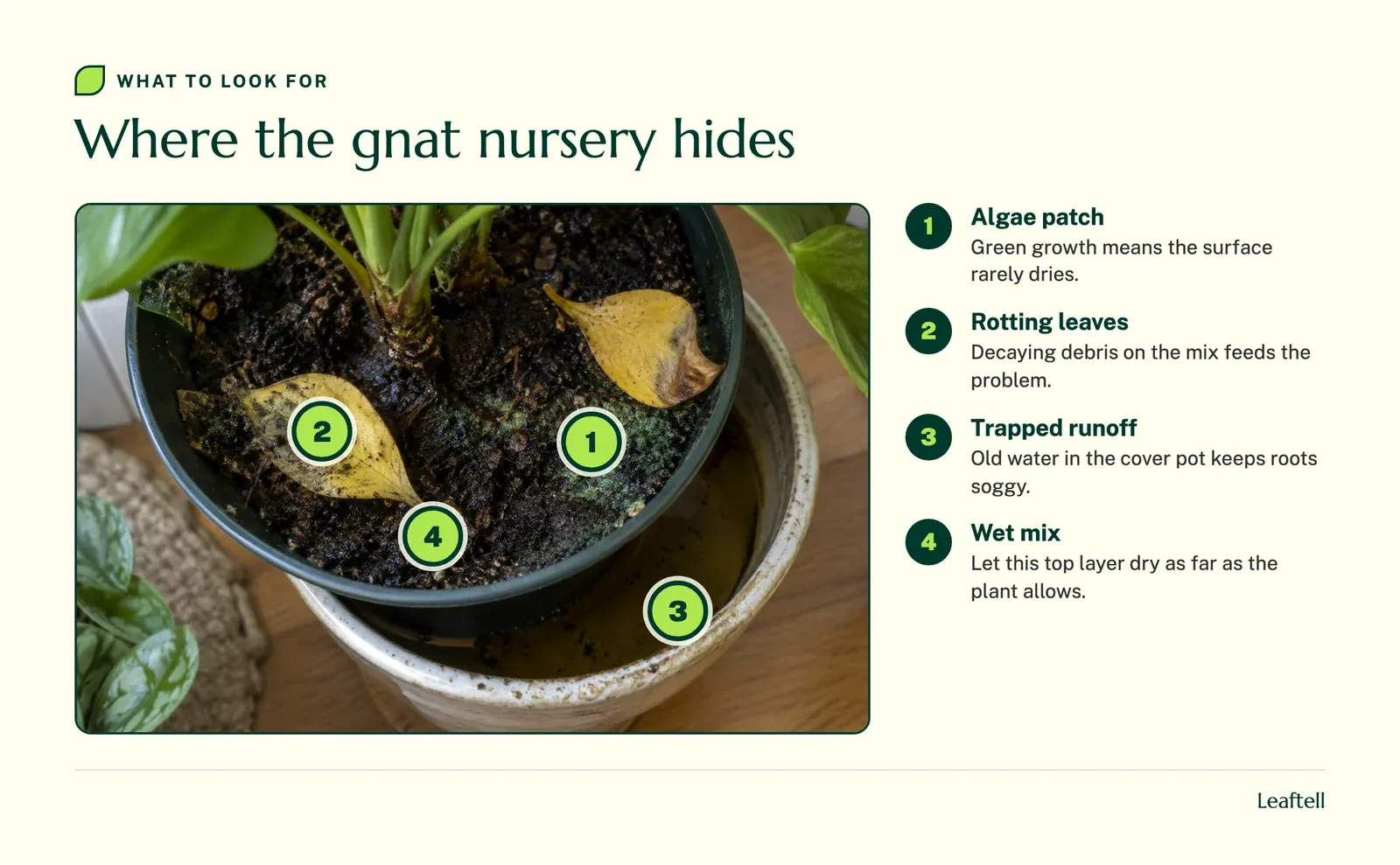
While you are at each pot, look at the surface. Fallen leaves, green algae and a crust of damp debris all point to a mix that stays wet. Lift the plant out of its cover pot and check for trapped runoff in the bottom. Old water trapped in a cover pot keeps the whole root ball soggy.
A few adults near one pot is a different situation from constant activity across a shelf of seed trays. Note which pots produce flies and which just stand nearby, so you do not dig into every plant you own.
Keep two questions apart. Gnats tell you the mix has stayed moist. They do not tell you the roots are decaying. If the plant also collapses or the roots feel soft, read how to fix root rot as a separate check, and the overwatered plant symptoms guide for what wet soil can and cannot tell you.
| What you notice | What it suggests | What to do first |
|---|---|---|
| Flies rise when you touch the mix | This pot is a breeding site | Mark it, then work on its moisture |
| Damp debris or algae on the surface | The top of the mix rarely dries | Remove the debris and review watering |
| Water sitting in the cover pot or saucer | Roots sit in runoff | Empty it and check the drainage hole |
| New catches on a card after day 7 | Adults are still emerging | Keep the moisture changes going |
| Plant wilting with soft roots | A root problem as well as gnats | Check the roots separately |
How to get rid of tiny flies: monitor adults at the pot
To get rid of tiny flies around plants, first measure them. A yellow sticky card placed near the suspect pot shows you where adults are and whether their numbers are falling. Catching adults alone will not fix the wet mix, but it tells you whether your changes are working.
Compare catches over the same length of time, for example two days each check. A crowded card that has hung for a month is not a current count. Mark the card or swap it as its instructions say so you can tell new catches from old ones.
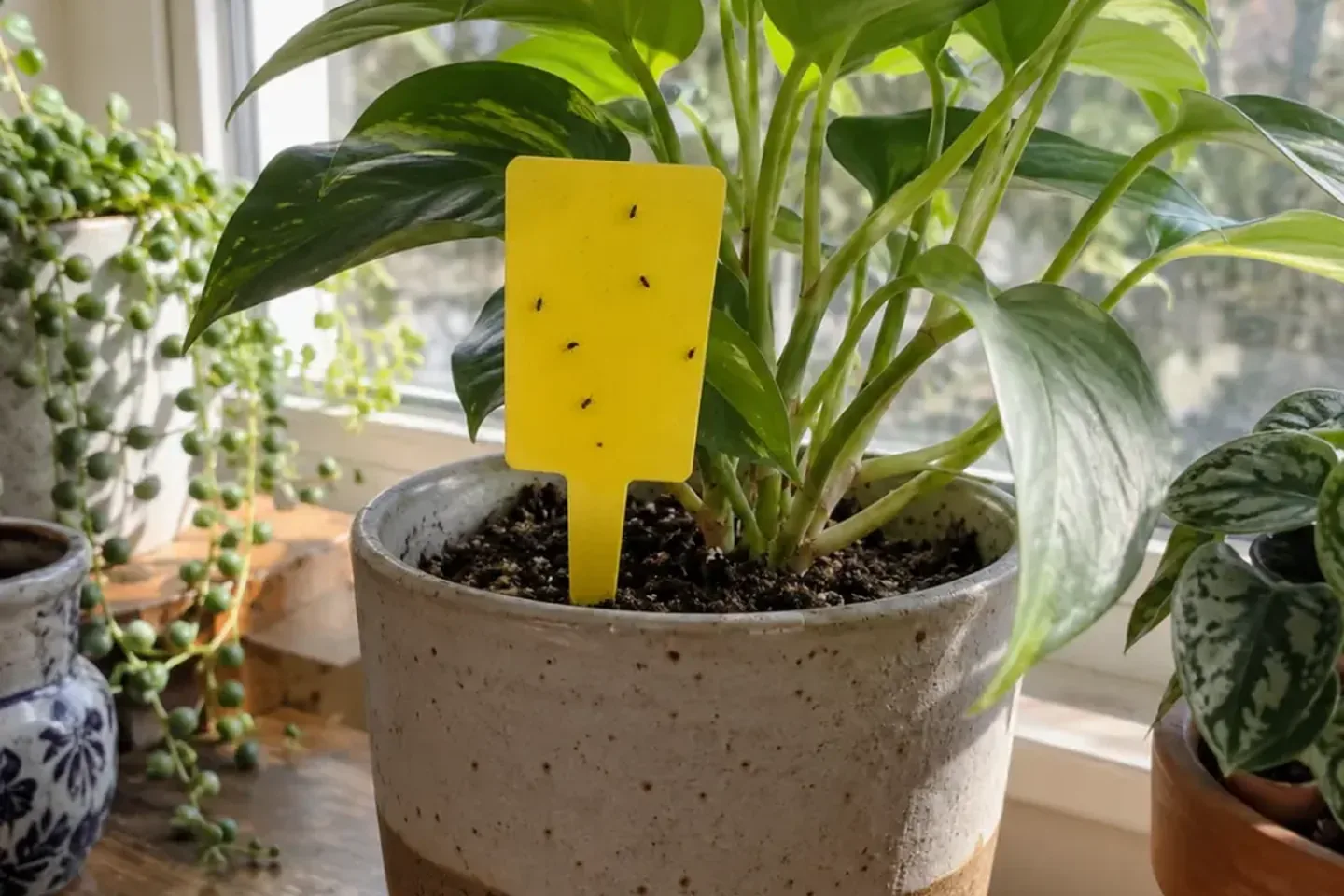
Place cards where children, pets and hair cannot reach them and where they will not stick to leaves. Use them indoors only. Outdoors they trap insects you never meant to catch.
A drop in catches is good news. It does not prove every larva in the mix is gone, because new adults keep emerging while immature stages finish developing.
If you also find insects feeding on leaves, that is a different pest. The houseplant pests guide helps you sort them, and soft-tip colonies need an aphid plan instead. Snap a close photo of a trapped adult if you are unsure what it is.
How to get rid of gnats in plants naturally: change the moisture habitat
The natural way to get rid of gnats in plants is to make the mix a worse nursery. Clear decaying debris from the surface, empty standing water and let the top layer dry between waterings where the species allows. Check the deeper root zone so you do not swing the whole plant into drought.
How to get rid of fungus gnats without a spray
- Find the source pots
Disturb the surface of each pot and note which ones release flies. Put a sticky card beside each one.
- Clear the surface
Pick off fallen leaves, algae and damp debris from the top of the mix.
- Empty the water underneath
Tip out saucers and cover pots and make sure the drainage hole is open.
- Let the top layer dry
Wait to water until the surface has dried as far as that plant tolerates, and check deeper down before you water again.
- Log catches every few days
Count new adults on the card over the same time span each check, for at least two weeks.
Treat your watering reminder as a prompt to check, not a prompt to pour. This soil moisture check shows how to feel and weigh the pot first, and the plant watering calculator can help you set a starting reminder to check. Hanging baskets are tricky: the center of a dense pothos can stay wet long after the edges dry, as pothos care explains.
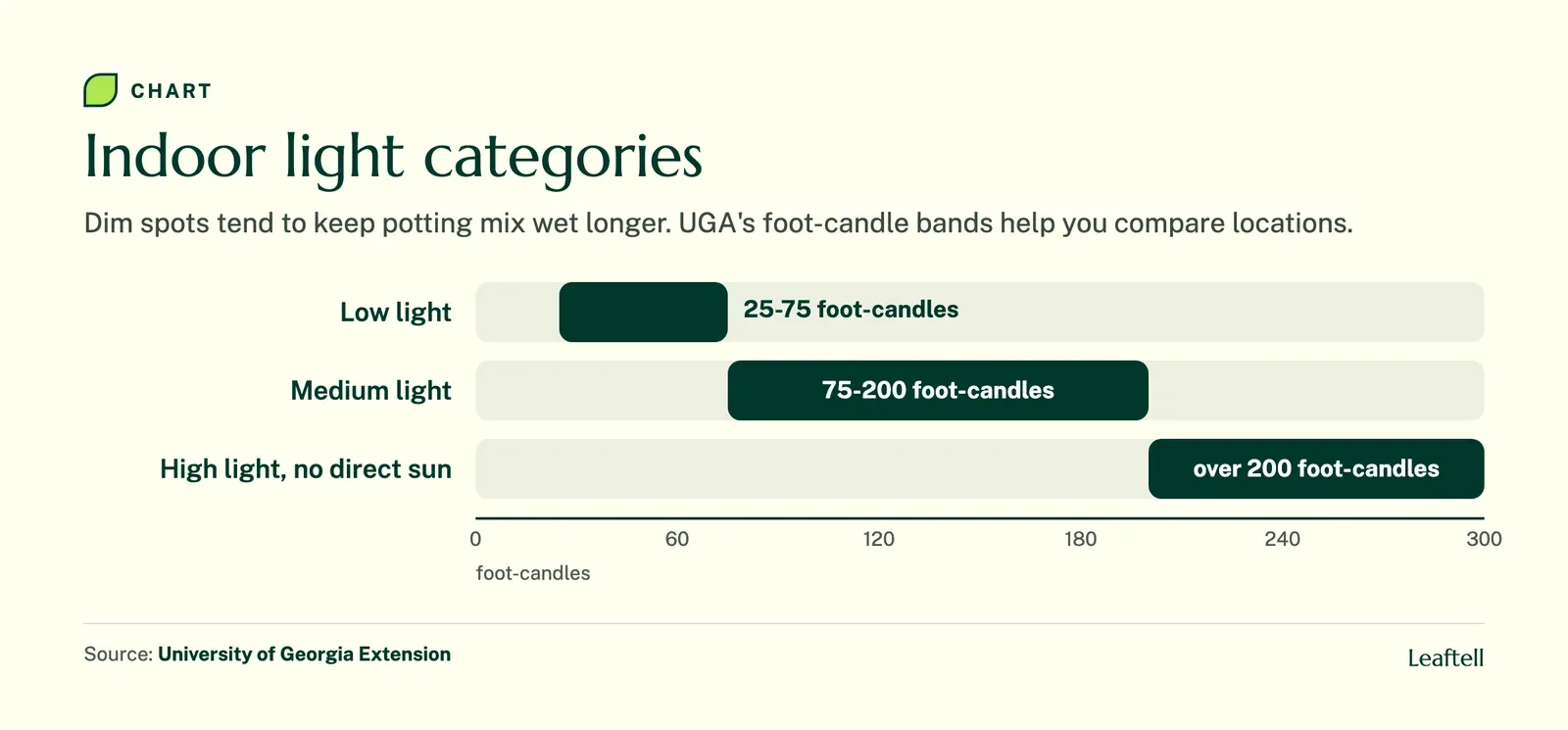
Location matters too. A pot in a dim corner tends to stay wet longer than one in a bright window, so the same watering habit gives very different results. Do not move a plant into deep shade to "rest" it while you fight gnats.
Seedlings and moisture-loving plants need the gentlest version of this. Do not force them into a dry spell they cannot tolerate.
Fungus gnat mistakes that keep them coming back
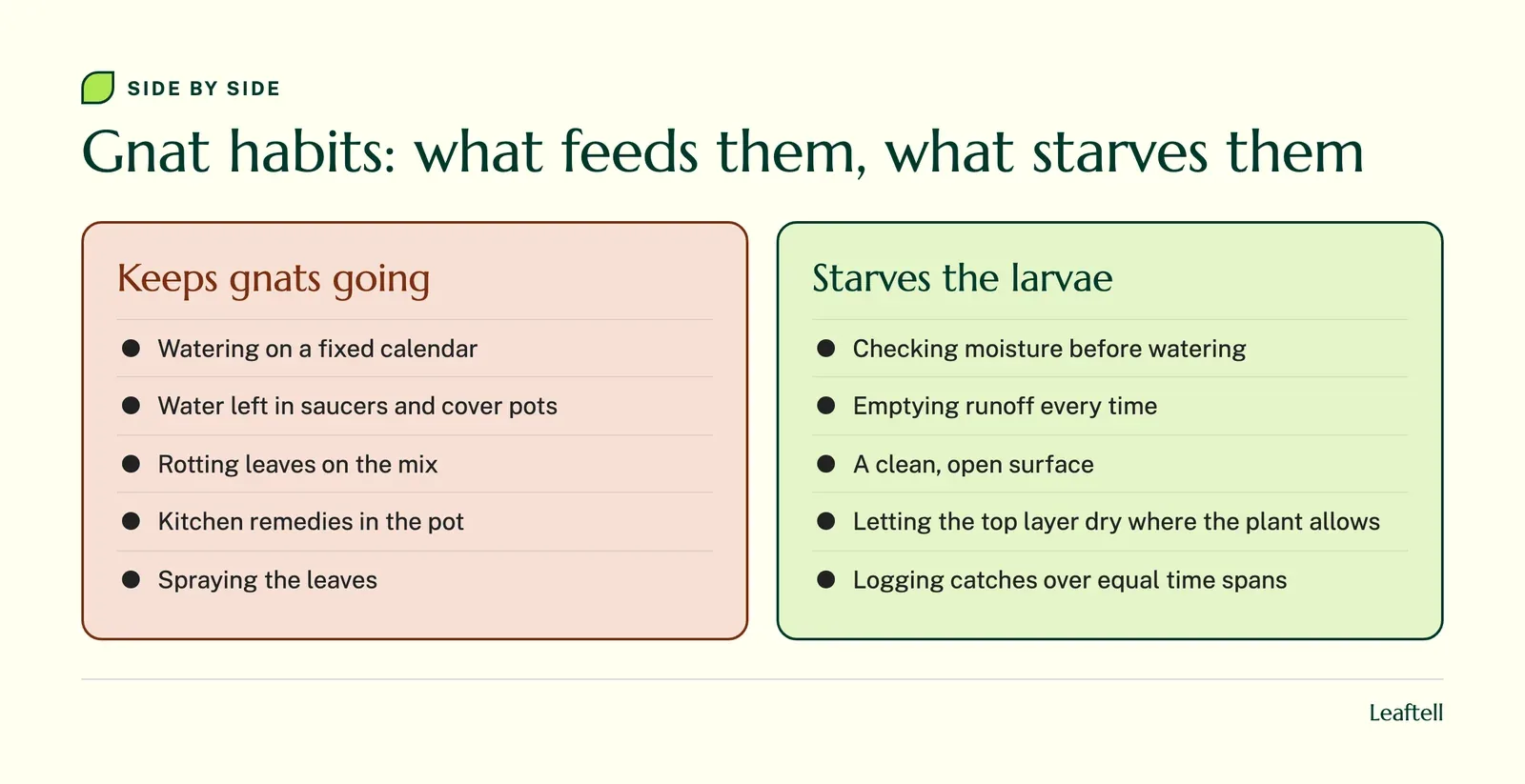
The biggest mistake is spraying the leaves. The larvae are in the mix, so a leaf spray treats the one part of the plant gnats do not depend on.
- Watering on a calendar. A wet pot watered again keeps the nursery open. You lose weeks.
- Kitchen remedies in the pot. Cinnamon, vinegar, coffee grounds or strong household liquids can hide the true moisture, change the mix or injure roots, and none of them addresses the larvae.
- Thick decorative top layers. They hold moisture underneath and stop you seeing the surface.
- Repotting everything at once. It disrupts every root system and may bring in a new bag of damp mix. Start with the smallest useful change.
- Calling it done too early. One quiet afternoon is not success. Adults keep emerging for a while.
Fungus gnat spray: when a targeted treatment is useful
A fungus gnat spray for the leaves is rarely the answer. When moisture changes and cleanup do not bring persistent activity down, ask about a treatment aimed at the larvae in the mix instead.
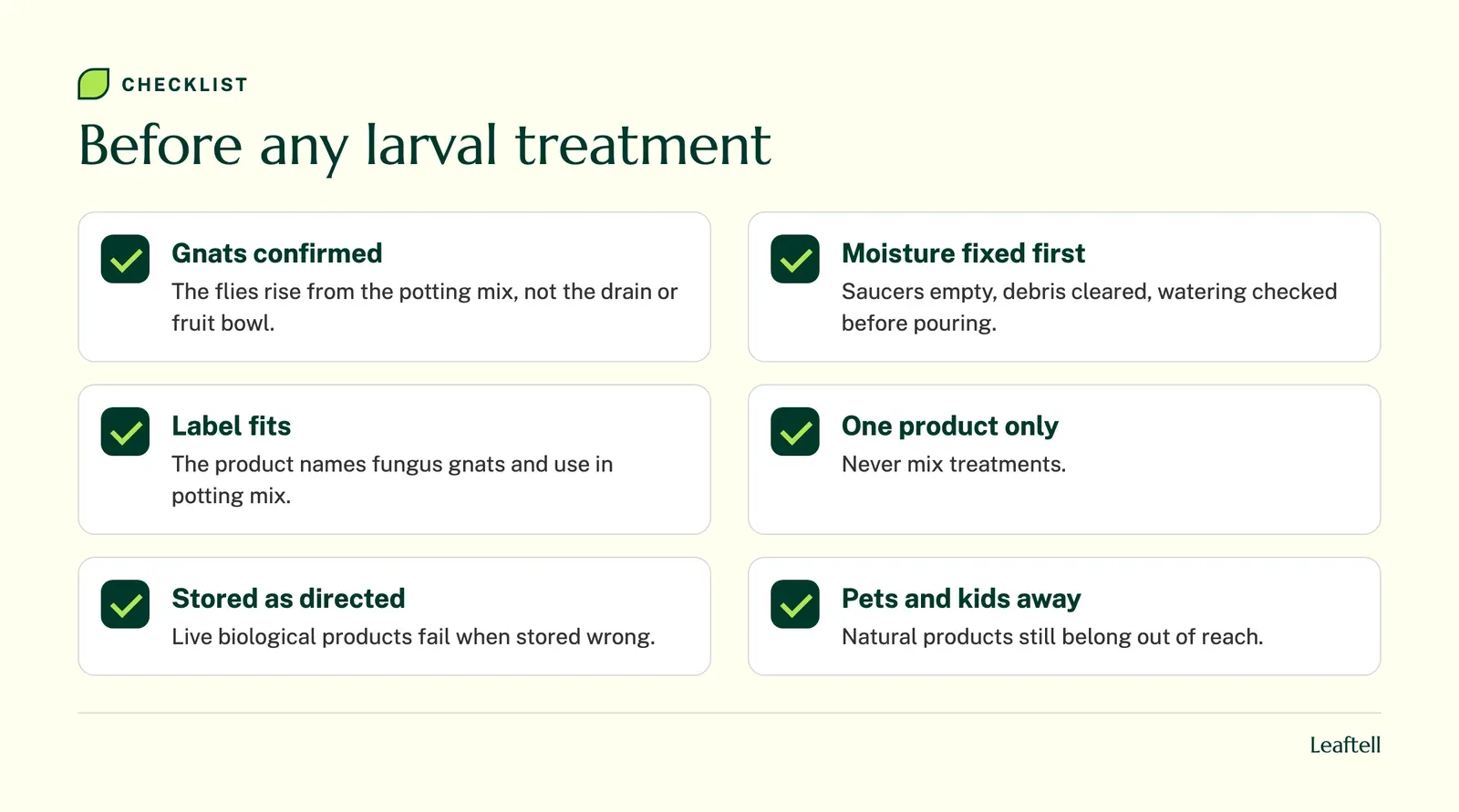
One option is a biological larvicide based on Bacillus thuringiensis israelensis, where a product is labeled for fungus gnats and for potting mix. Follow the label for how to apply it, how to store it and any repeat interval. Never mix products.
Beneficial nematodes are another biological approach, but they are live organisms with their own storage and handling needs. Ask the supplier or a local adviser whether they suit your pots. A live control agent can fail if it is stored or applied in the wrong conditions.
"Natural" does not mean safe to eat. Keep every product out of reach of children and pets, and check the plant itself on the ASPCA toxic plant list. A label-directed treatment does not make potting mix safe for a dog to dig into. Skip homemade pesticide drenches in living spaces entirely.
How to get rid of fungus gnats in house: a 14-day log
To get rid of fungus gnats in the house, keep a short log across several checks. On day 1 list the active pots and note surface moisture, debris and adult activity. Repeat the same checks on days 3, 7 and 14 so you compare like with like.
| Check-in | What to check | What it tells you |
|---|---|---|
| Day 1 | Active pots, surface moisture, debris | Where the gnats are breeding |
| Day 3 | Saucers, cover pots, a fresh adult count | Whether runoff is still collecting |
| Day 7 | Card catches over the same time span | Whether new adults are slowing down |
| Day 14 | Ongoing emergence and the plant's health | Whether to keep going or get help |
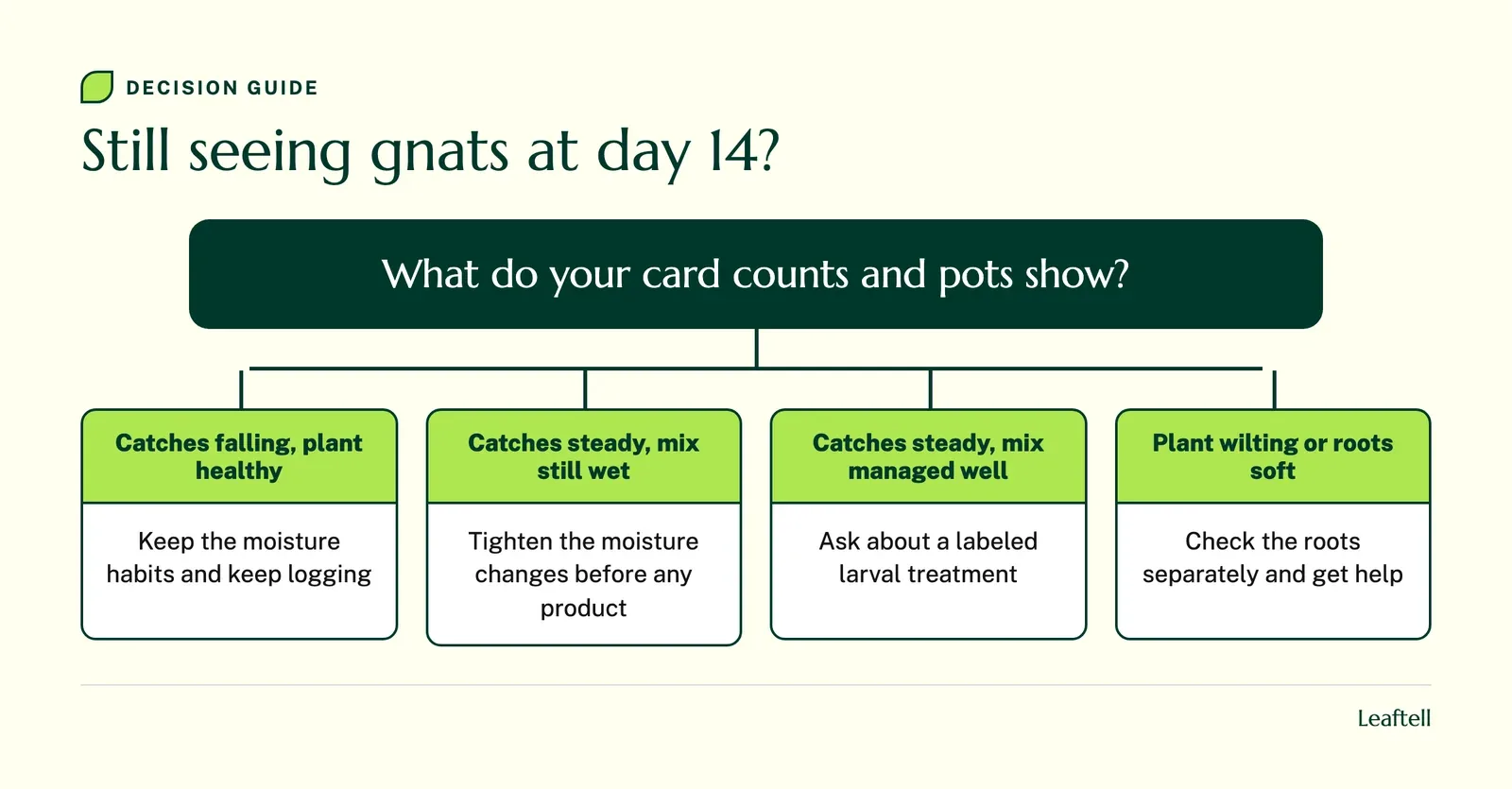
These are check-ins, not a promise that gnats vanish in two weeks. How long it takes depends on conditions, and any treatment follows its own label. A new plant or a freshly opened bag of damp mix can restart the cycle, so keep an eye on recent arrivals.
If the main new symptom is wilting, compare why plants droop rather than blaming everything on the flies.
Fix the mix first, then decide about products
Dry the surface as far as the plant allows, clear debris, empty the saucer and log card catches for 14 days. That goes after what the larvae need, which is the part a spray never reaches. Use a labeled larval treatment only if activity stays high after you have changed the moisture.
Get help when seedlings keep declining, when the plant collapses or its roots go soft, or when you cannot tell what the flies are. A photo of the whole setup helps more than a close-up of one fly: show the inner pot, the cover pot and the drainage. Then check your fungus gnat pot in Leaftell with what you have recorded.
Sources
Check your growing conditions with the plant watering calculator.
Frequently asked questions
Nothing that only targets adults ends the problem, because larvae keep developing in the mix. Fix the moist habitat first and use a labeled larval treatment only if you still need one.
It depends on how wet the mix stays, how many larvae are present and whether new plants or mix arrive. Adults can keep appearing while younger stages finish, so compare catches over several weeks.
No, fungus gnats do not bite people. If you are getting bitten, it is a different small fly and needs its own identification.
Dry, clean potting mix. Moisture management and removing rotting debris work far better than scents, oils or kitchen powders.
Indoors they can appear any time the potting mix stays moist and the room is warm enough. Your watering habits matter more than the season.
Not on their own. They show that the mix stays moist, which can go along with root problems, so check the roots separately if the plant wilts or the base turns soft.
Confirm they are fungus gnats by watching whether they rise from the potting mix. Then dry out the surface where the plant allows, empty saucers and track adults on a sticky card.
Share article
About the author

Keep checking your plant
Plant care reference
Indoor plant care
Build a routine around your plant, light and potting mix.
Plant care reference
Why is my plant dying
Trace leaf and root symptoms before choosing a care change.
Plant care reference
Pothos plant care
Choose a growing spot and prune a trailing pothos for fuller growth.
Plant care reference
How to fix root rot
Inspect root firmness and drainage, then decide whether to repot.