Why is my succulent dying? Read the leaves, then the pot
Filip Leszczyński Updated 18 October 2026 12 min read
In this article
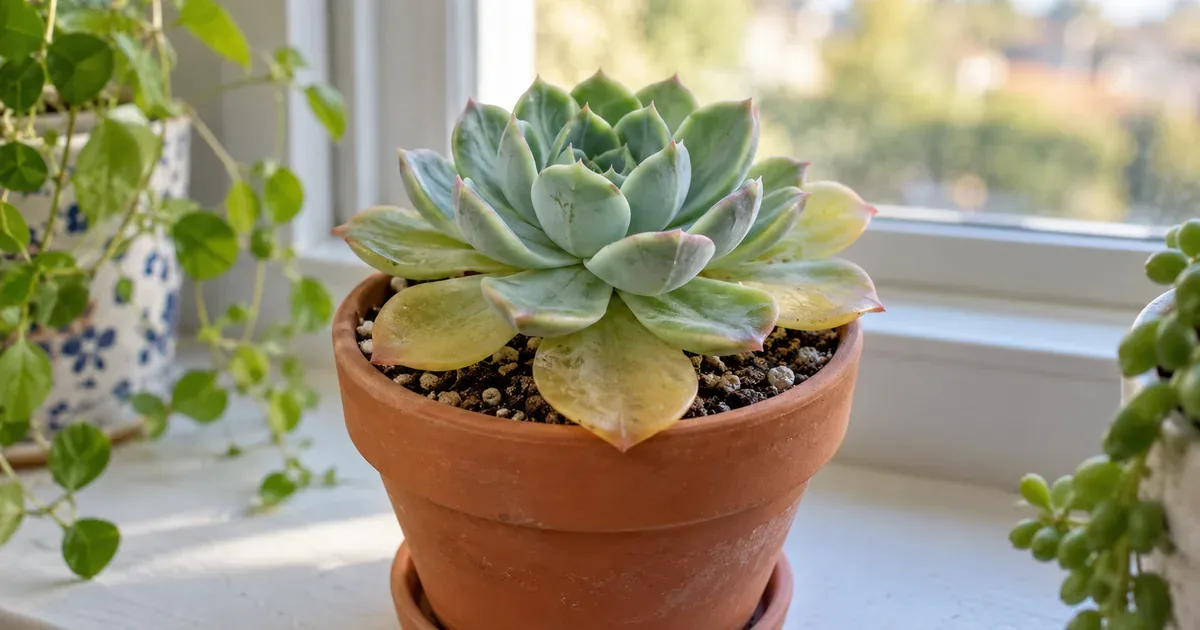
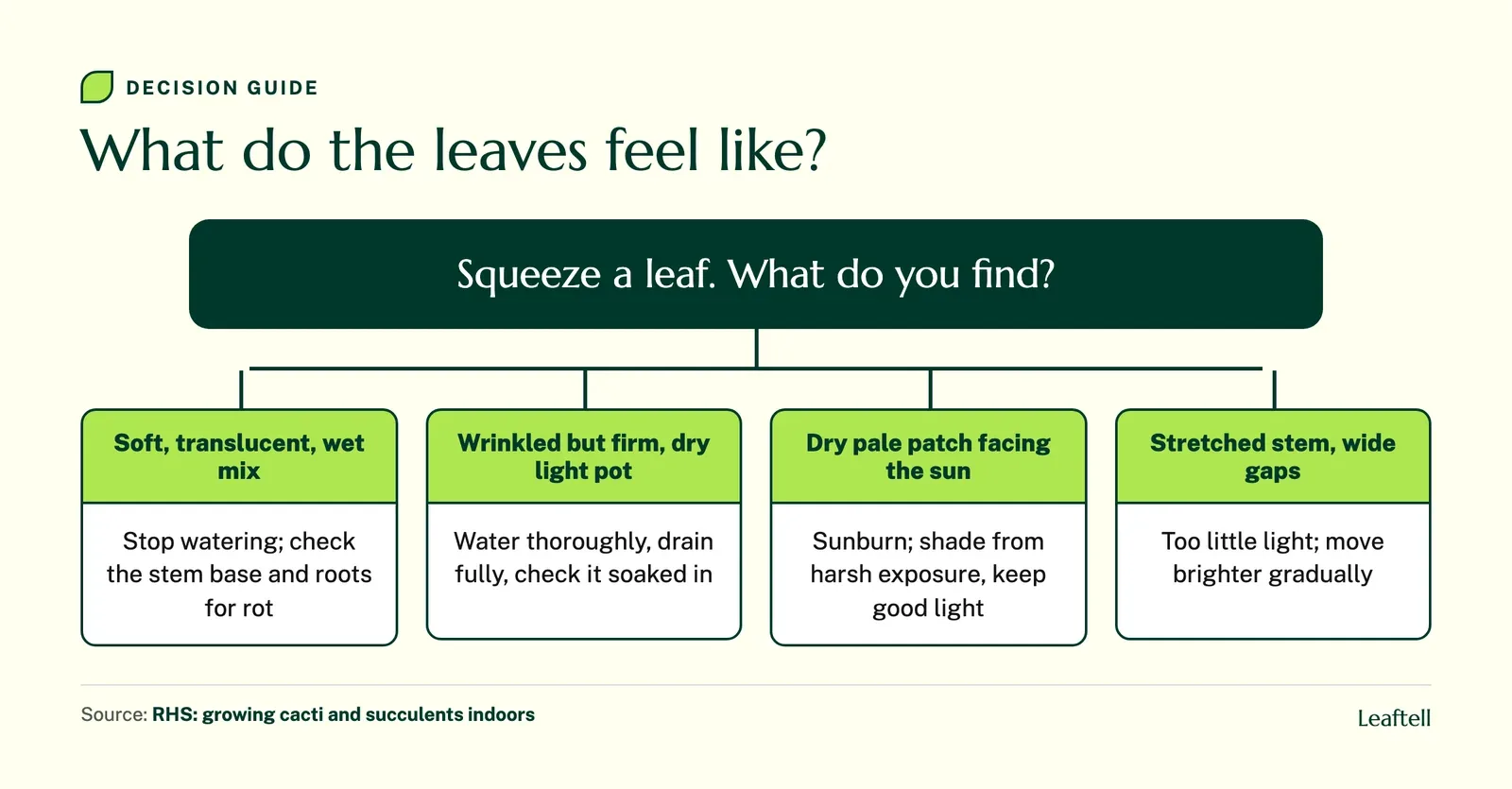
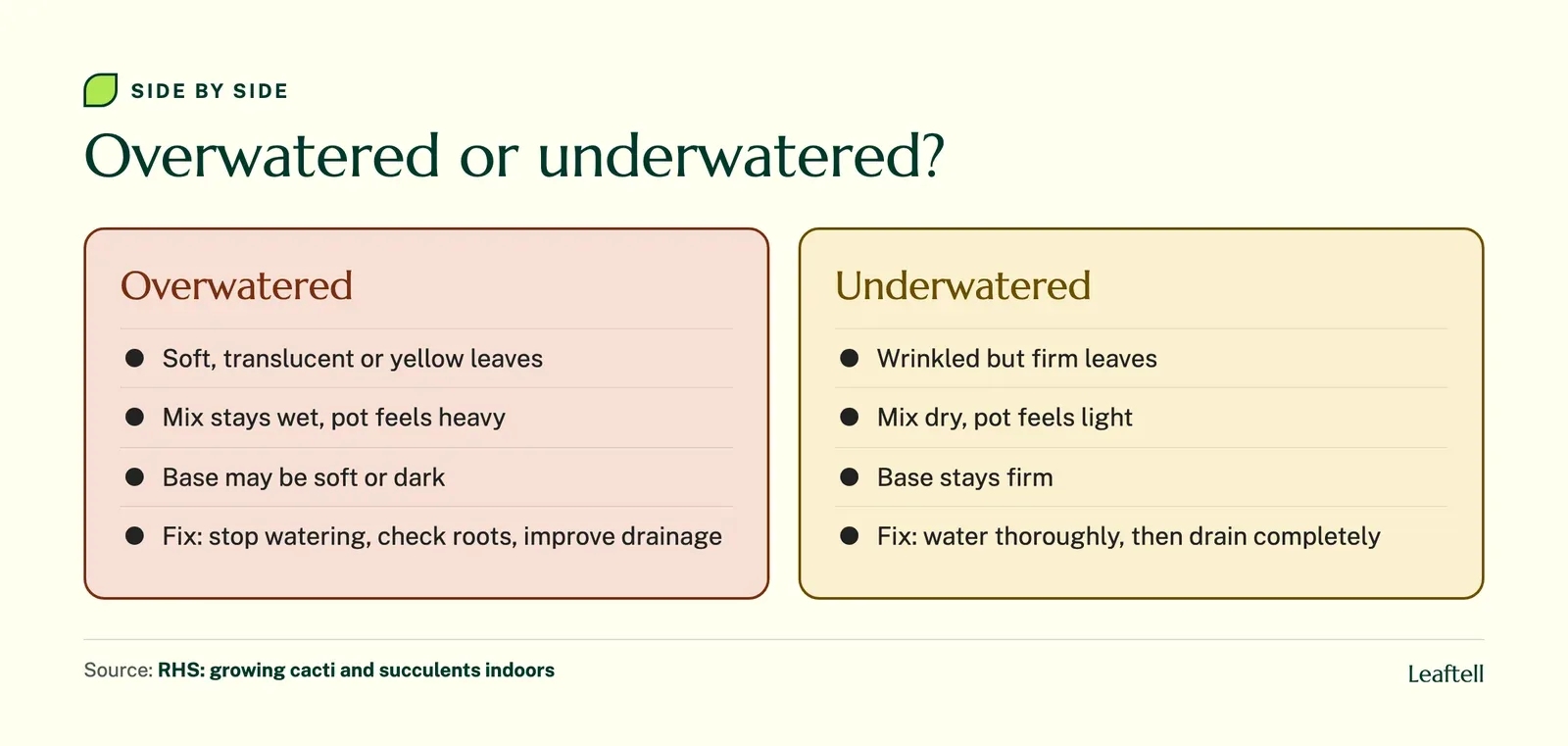
Why is my succulent dying? The leaves usually tell you: soft, translucent leaves in a pot that stays wet mean too much water and failing roots, while wrinkled but firm leaves in bone-dry mix mean it's genuinely thirsty. Squeeze a leaf, feel the stem base and check the mix before you water, because those two problems need opposite fixes.
"Succulent" covers a huge range of plants with different needs, so identify yours before borrowing a rescue routine. Photograph the rosette, the stem base and the pot. If yours is an aloe, caring for an aloe vera plant covers its light, watering and repotting in detail.
The first goal isn't to make it pretty again. It's to keep the firm tissue you still have and stop whatever is damaging it.
Overwatered succulent: soft, translucent leaves and a wet pot
Soft, see-through leaves together with a wet root ball point to too much moisture or rot. Check the center and the stem base before you water again.
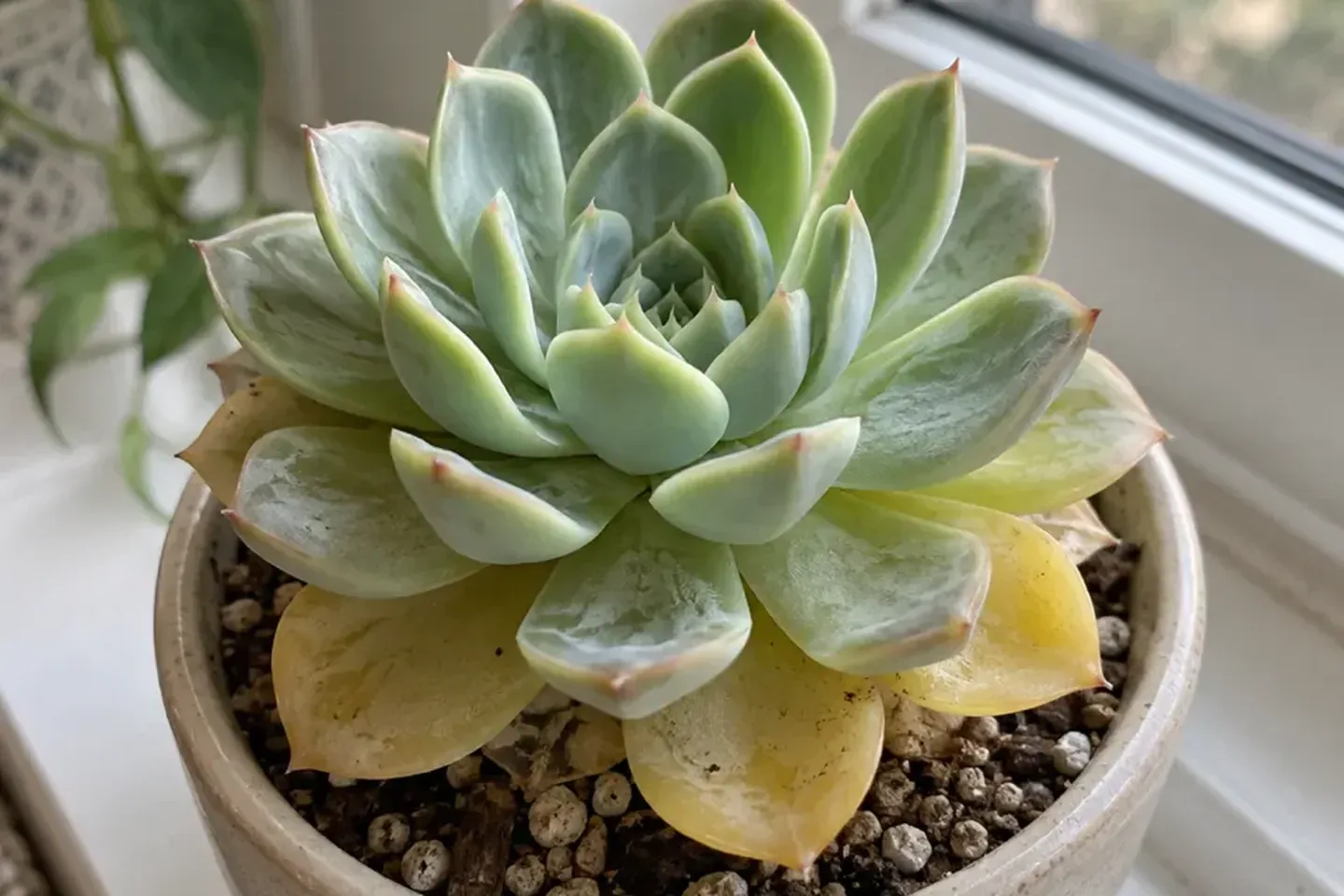
A dry, papery lower leaf under a firm rosette is a different pattern from watery tissue creeping upward. Clear loose debris so you can see the base, then look at how the pot actually drains rather than how it looks.
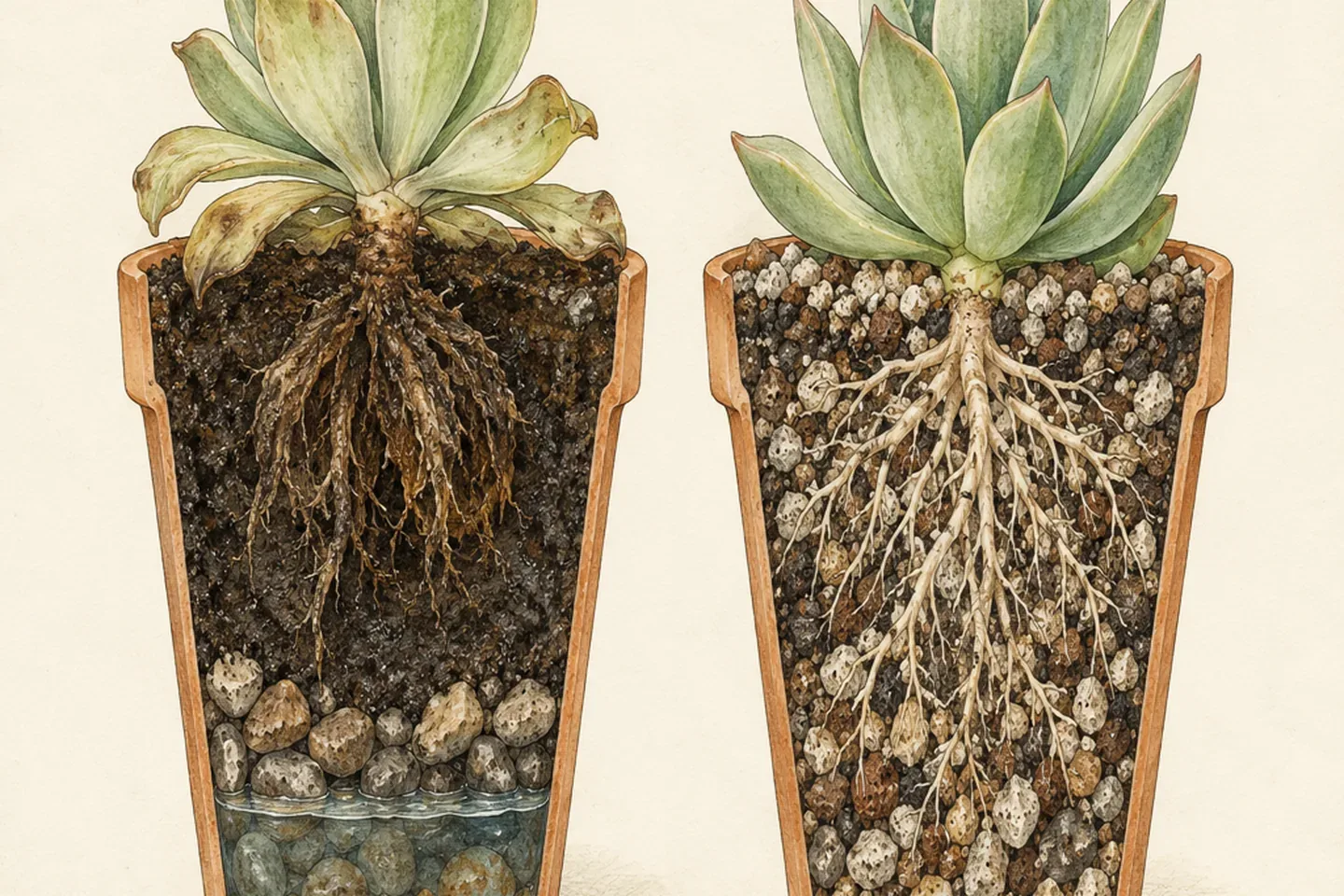
The RHS guide to growing cacti and succulents indoors recommends a freely draining mix and warns that oversized pots hold too much moisture. Its recipe is 2 parts peat-free, loam-based potting mix to 1 part grit or sharp sand by volume. That ratio describes the whole mix. A layer of stones under dense soil doesn't turn that soil into a gritty mix, and a decorative cover pot still needs its trapped water poured out.
| What you find | Reference | Next move |
|---|---|---|
| Dense mix around a softening base | RHS: 2 parts loam-based mix to 1 part grit | Check for living tissue before repotting; empty trapped runoff |
| Dormant arid succulent near 46-50°F in winter | RHS winter rest with minimal water | Confirm the species first; protect frost-tender plants |
| Fresh cut on a healthy piece | RHS: let it callus 1 day to 1 week | Plant only after the cut surface has dried |
| Echeveria stretching in a dim spot | NC State: full sun is 6 or more hours; UGA: acclimate over 3-4 weeks | Judge new compact growth; old gaps won't close |
Succulent decisions from RHS and NC State, with UGA acclimation guidance. Cool winter rest applies to suitable arid species, not everything sold as a succulent.
If the base has collapsed, look for any firm, undamaged tissue before you try to propagate. Don't bury soft leaves deeper or put the plant back in standing water. Better drainage helps surviving roots, but it can't bring back rotted tissue. The root rot guide shows what healthy and rotten roots look like, and overwatered plant symptoms covers the wider pattern.
Succulent dying after prolonged dryness: wrinkled and light
Wrinkled leaves in a dry, lightweight pot support a water-shortage check. But wrinkles in wet mix can mean damaged roots that can't take up water, and more water won't fix that.
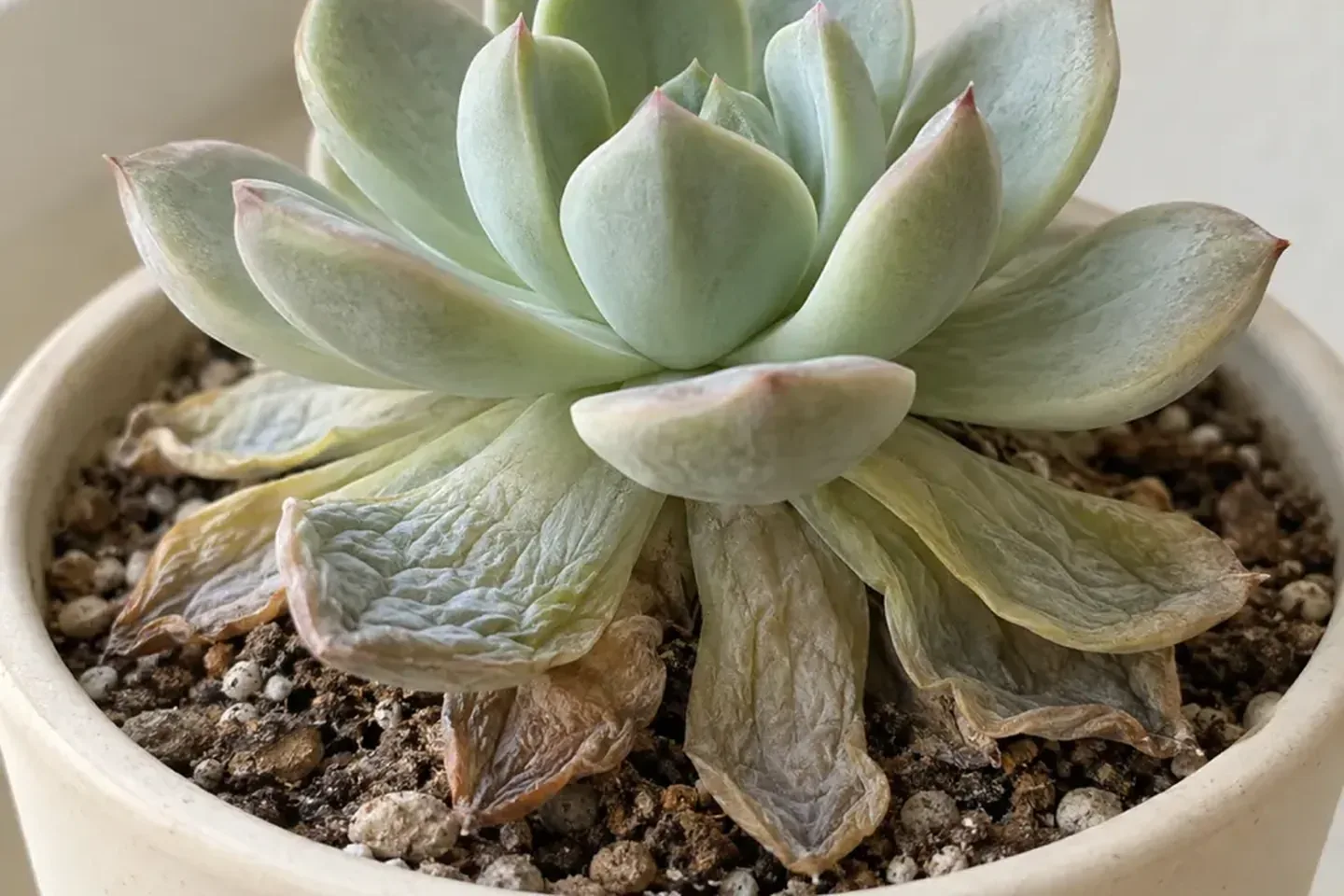
Test the mix below the surface and press the base to check it's firm. UGA's general houseplant check goes about 1 inch down, but your actual root ball and species make the call. Here's how to tell wet from dry soil reliably.
The RHS advises watering thoroughly during active spring and summer growth once the surface has dried, then draining completely. It also warns against letting plants dry out too much during that active period. Pot size matters: UGA notes smaller containers dry faster, while unused mix in a big pot stays wet. Neither source gives one number of days for every succulent on your windowsill. Our guide to succulent plant care turns that into a soak and dry routine you check by the pot, not the calendar.
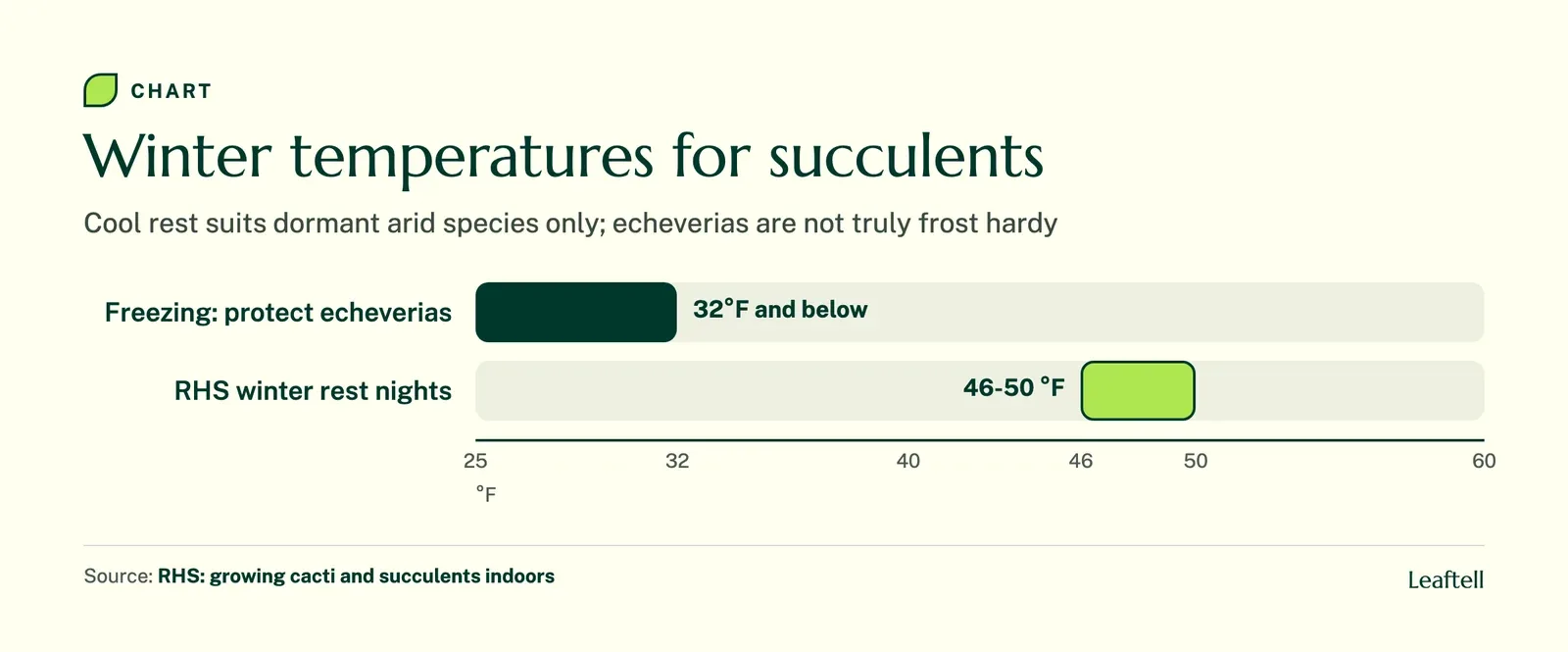
Winter care depends on what you have. For suitable dormant arid cacti and succulents, the RHS describes nights of 46-50°F with minimal or no water, just enough to stop excessive shriveling. That isn't a target for tender tropical succulents, and a Christmas cactus needs different treatment altogether. Confirm the plant before you give it a cold, dry rest.
When you water a dry, actively growing plant, check that water actually soaked into the root ball and empty the saucer. Judge progress by firmness over the following weeks, not by repeated drinks aimed at erasing an old crease.
Succulent leaves turning yellow: old leaf or spreading damage?
An echeveria naturally loses its oldest bottom leaves as it grows while the center stays firm and compact. Yellowing that spreads, turns translucent or reaches a soft center is a different problem.
The NC State Extension echeveria profile describes bottom leaves withering and falling as the plant grows, gradually exposing the stem. Compare the newest leaves with the oldest before you prune or change watering.
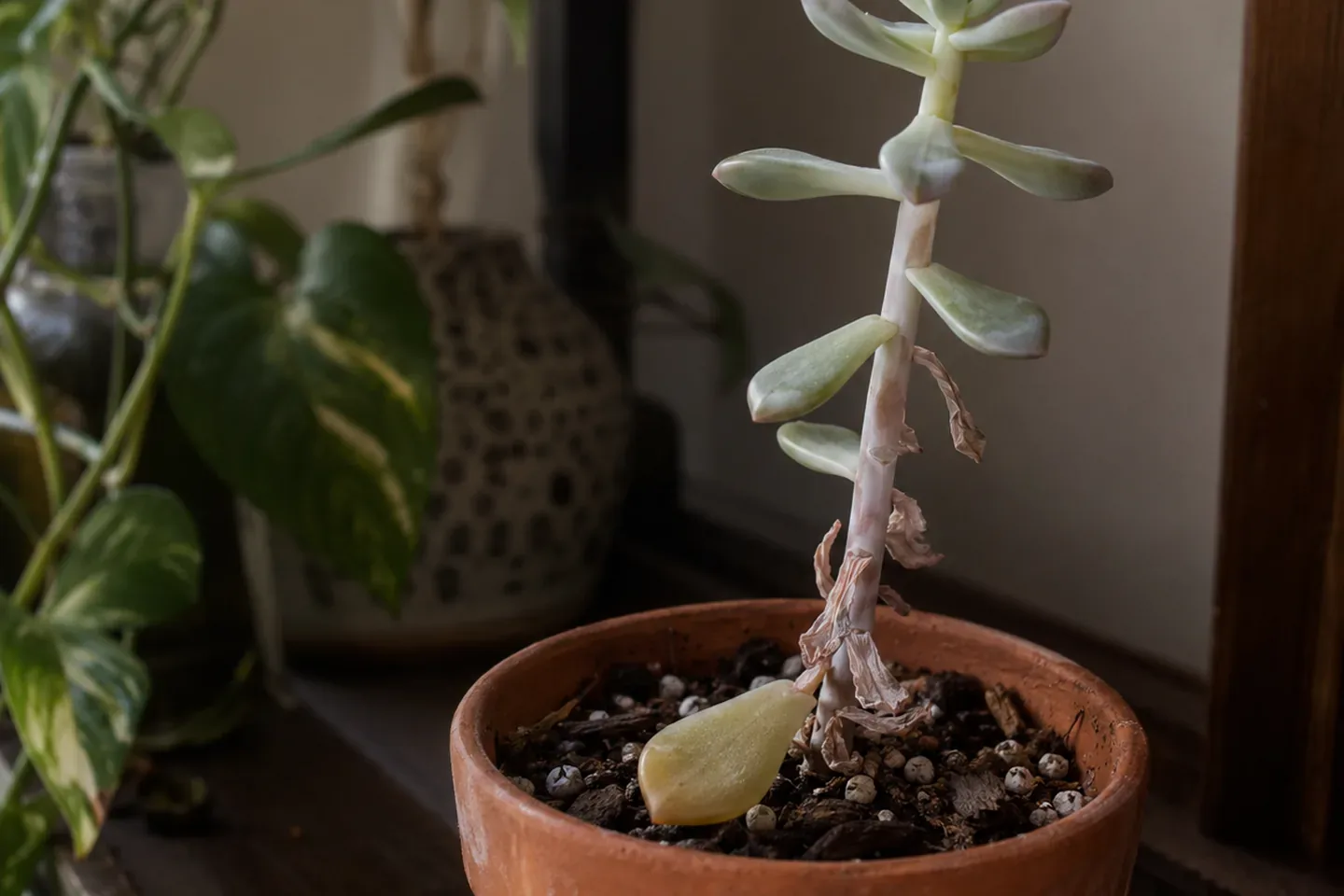
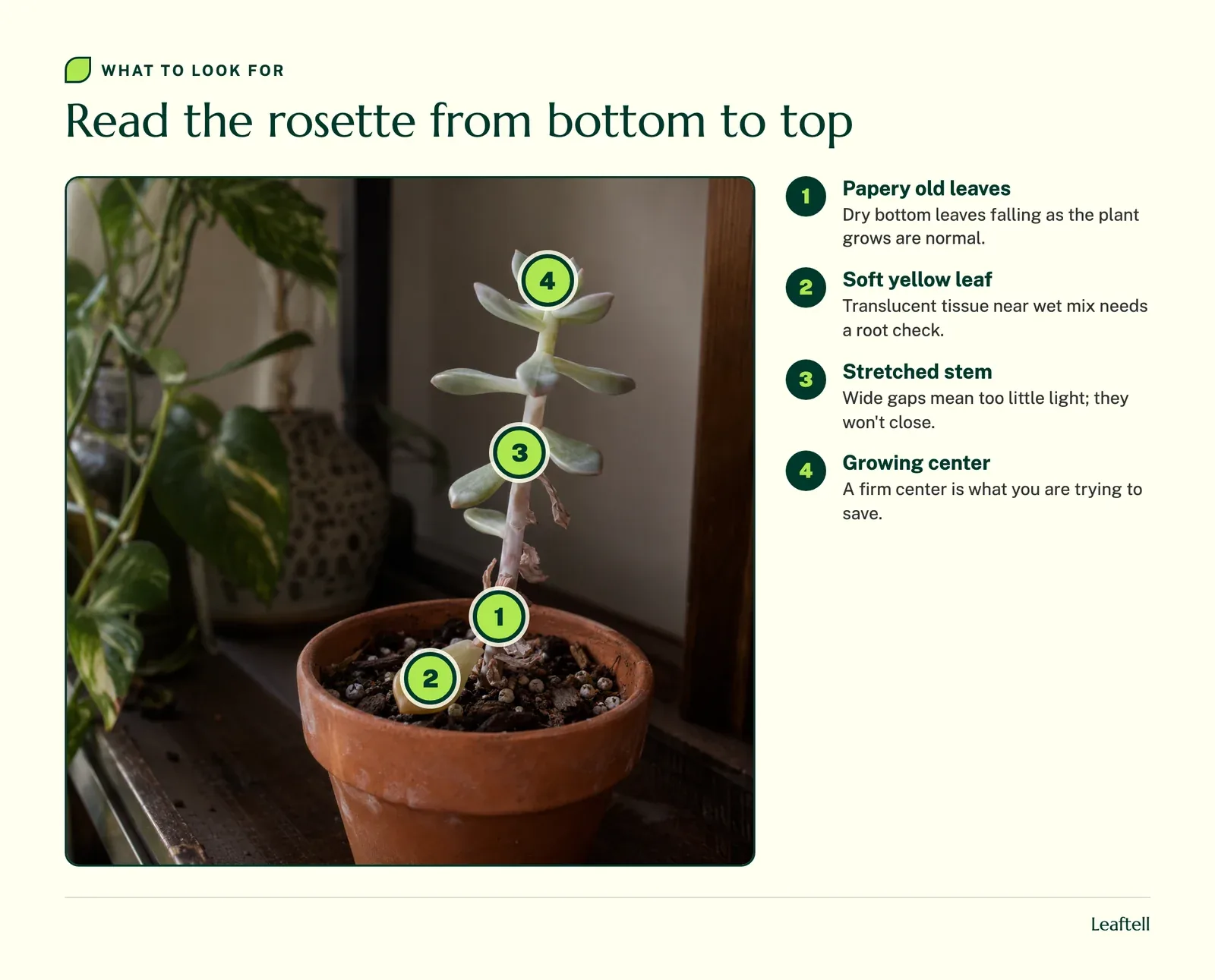
Look at how the plant is growing toward light. NC State lists full sun, 6 or more hours of direct light, for echeveria, with partial shade also possible. A stretched stem with wide gaps after a move to a darker spot points to too little light; the leggy plants guide covers that in detail. If you're not sure what a spot really gets, read the light where your plant sits.
Feeding comes after those checks. The RHS suggests monthly feeding during active growth from April through September for many indoor cacti and succulents. Use a suitable labeled feed and follow the label, and don't apply that schedule to a dormant or rotting plant. UGA notes some succulents need little extra fertilizer for months. For yellowing across many kinds of plants, see yellow leaves on plants.
Succulent leaves turning brown: sunburn, cold or rot?
Sort brown leaves by texture and position. A dry patch facing newly strong sun, a shriveled lower leaf in dry mix, and soft brown tissue near a wet stem base each need a different check.
A succulent that stretches after moving indoors needs more light. One that develops bleached, dry patches after moving outdoors needs protection from sudden exposure. Even a sun-loving echeveria needs a gradual transition if it grew in shade; UGA's general guidance is 3-4 weeks in a bright, sheltered spot.
Temperature tolerance varies too. NC State says echeverias are not truly frost hardy, so protect them from freezing and from excess winter wet. Hardy sempervivums and some sedums belong to a different outdoor-care category. Identify your plant before you transfer an outdoor rule to a tender rosette.
Move a scorched plant away from the harshest exposure while keeping it in good light. Don't park it in deep shade or flood the roots because the leaves look dry. If brown areas are soft and spreading, check the base and roots promptly. Dead patches won't disappear and stretched gaps won't shorten, so watch the new growth to see whether the new spot works. For crisp tips and edges on other plants, compare brown tips on leaves.
Succulent dropping leaves: bumped, overwatered or shriveled?
Look at the fallen leaf before you reach for the watering can. A leaf knocked loose while handling, a dry papery lower leaf under a firm rosette, and a soft translucent leaf that fell from a wet plant mean three different things.
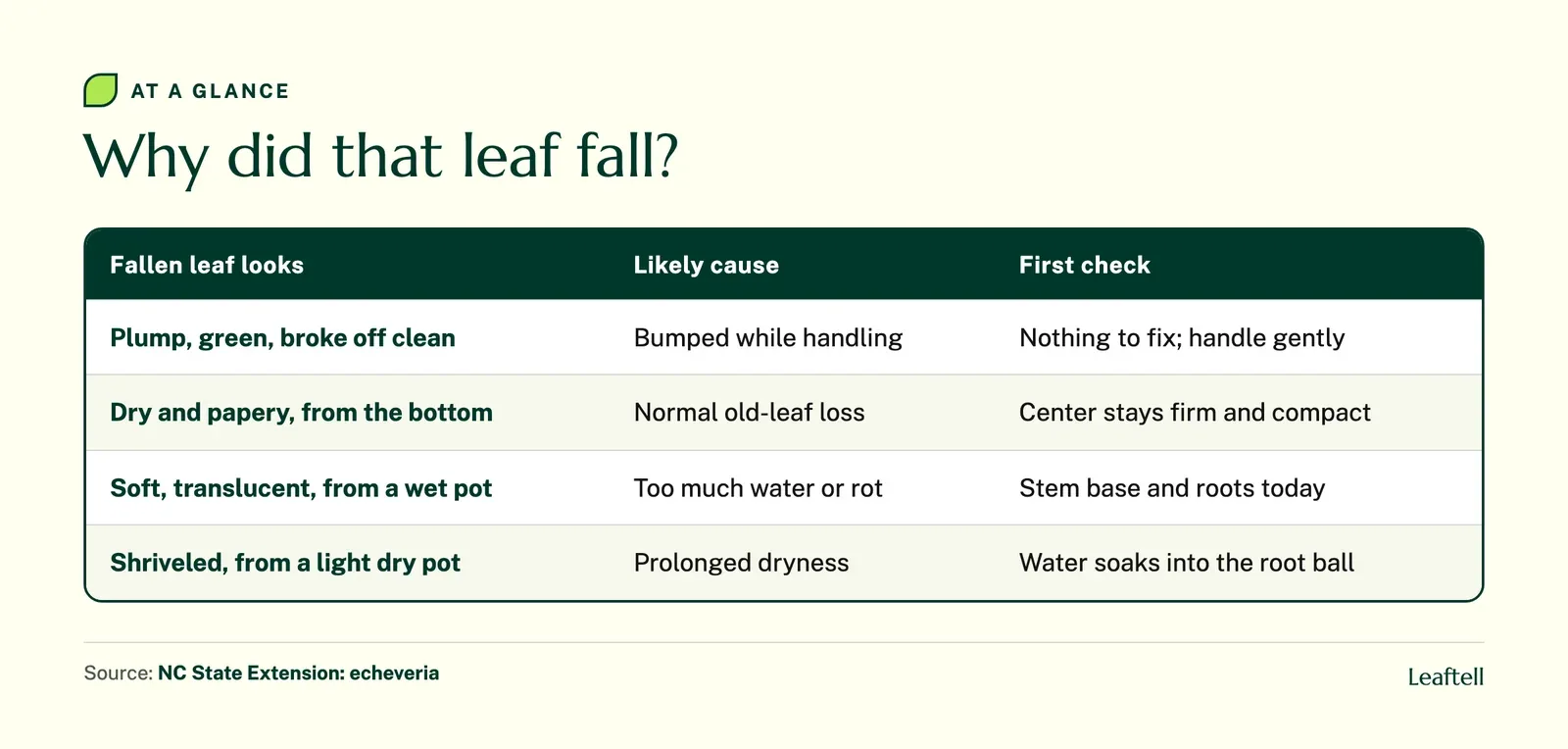
Widespread, fresh leaf loss needs a closer look. Check the stem base and growing point for firmness, then check moisture through the root ball. The RHS warns that wet mix, including in an oversized pot, can lead to rot. Watering because leaves are falling makes that worse if the roots are already wet. A light pot with shriveled leaves points the other way.
Handle gently while you investigate. Don't tug on attached leaves to see how easily they come off. Confirm the species before applying the echeveria explanation to every succulent, and photograph the center, base and fallen leaves if losses continue.
How to save a dying succulent: work from the sound tissue
Start with whatever is still firm: a healthy offset, a stem tip or an intact growing point. If all of the tissue is soft or decayed, a cutting isn't a reliable rescue.
NC State describes echeveria propagation from offsets, crowns and leaves, but leaf propagation doesn't suit every succulent. Identify the plant before removing its healthy growth. The RHS advises letting cut surfaces dry and callus for 1 day to 1 week depending on the plant, and uses a cutting mix of 2 parts peat-free, loam-based seed compost to 1 part grit, kept only slightly moist while rooting (RHS houseplant cacti and succulents).
How to save a dying succulent
- Sort firm from soft
Lay the plant out and separate firm, healthy pieces from soft or discolored tissue. Keep the firm offset, crown or stem tip.
- Cut with clean tools
Remove sound pieces with a clean blade, keeping them apart from decaying material.
- Let the cut callus
Leave the cut surface to dry for 1 day to 1 week, depending on the plant, as the RHS advises.
- Plant in gritty, barely moist mix
Use a free-draining mix such as 2 parts loam-based seed compost to 1 part grit, kept only slightly moist. Skip fertilizer; it can't replace roots.
- Fix the original problem
Give the cutting and any surviving plant better drainage and the right light. Don't keep lifting the cutting to check for roots.
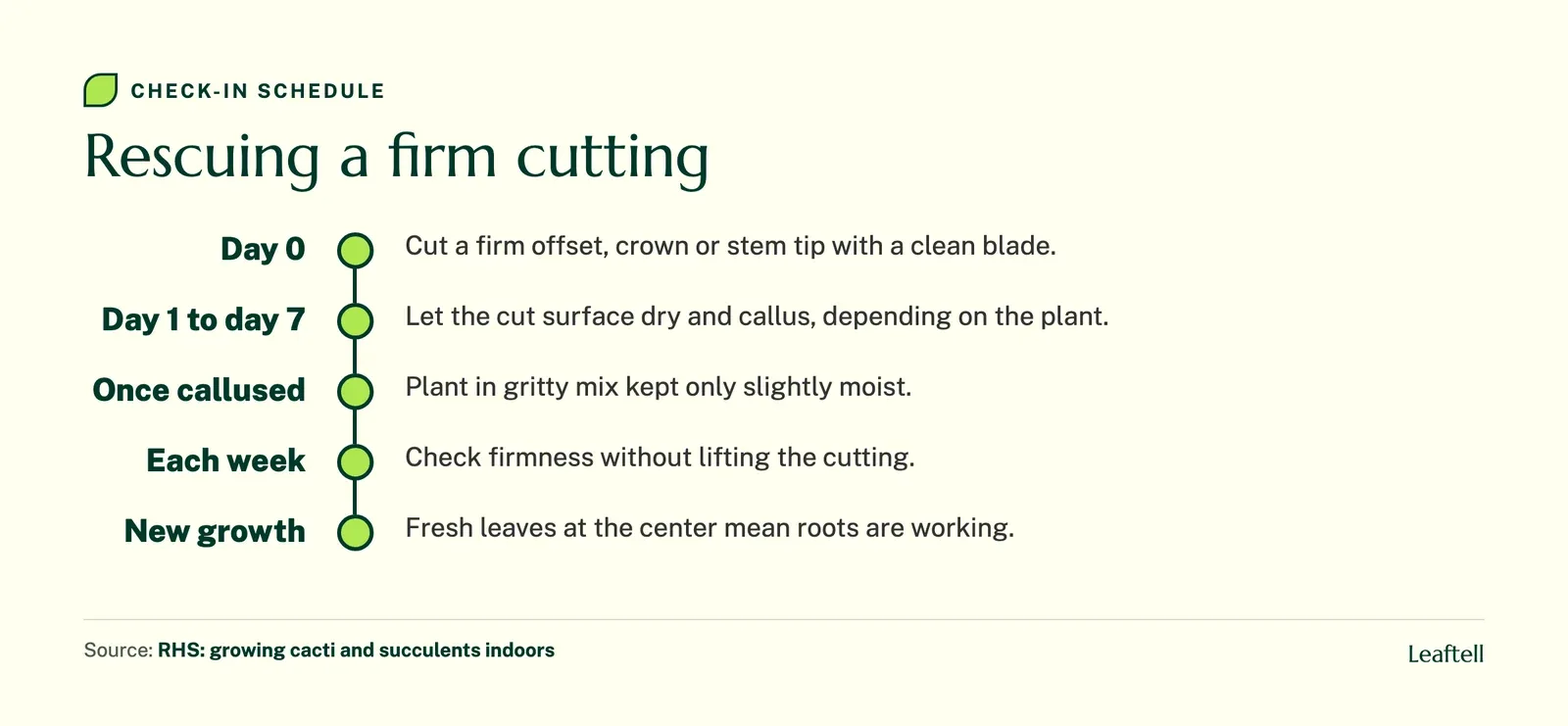
Those times are preparation guidance, not a deadline for roots to appear. A cutting returned to soggy mix or the same harsh exposure can decline again.
Mistakes that finish it off
Most of these mistakes come from too much care, not too little. Here's what each one costs.
- Watering a soft, wrinkled plant in wet mix. The roots are already failing. Cost: rot reaches the growing point.
- Trusting a layer of stones. Gravel under dense soil doesn't drain the soil. Cost: a wet root zone that looks well drained.
- Choosing a pot that's too big. Unused mix stays wet, which the RHS warns can promote rot. Cost: a soggy pot around a small root system.
- Moving a shade-grown plant straight into hot sun. Cost: permanent scorch patches on otherwise healthy leaves.
- Kitchen remedies like cinnamon. They don't fix a wet or rotting base. Cost: time you needed to save the firm tissue.
Keep cuttings, soil additives and any products away from children and pets, and check unfamiliar plants on the ASPCA toxic and non-toxic plants list.
When to get help and what to do next
My recommendation: decide by texture first. Soft and translucent means stop watering and check roots; wrinkled and firm in dry mix means water thoroughly and drain. Then fix the mix, pot and light so the problem doesn't come back.
Get help from a local extension office or an experienced grower if rot is spreading toward every growing point, the stem base is collapsing, or you can't identify the plant. Bring photos of the rosette, the stem base, the roots and the pot. Healthy new growth and a stable stem are better recovery signs than whether an old lower stem stays bare.
Check your succulent in Leaftell. The check uses your answers; photos stay on your device.
Sources
Check your growing conditions with the plant watering calculator.
Frequently asked questions
Often, depending on the species and how much firm stem, root and growing tissue remains. Identify the plant and check the base before choosing cleanup or propagation.
The roots can fail and leaves turn soft, translucent or yellow. Adding more water to a shriveled plant with damaged roots makes it worse, so check the mix and stem base first.
Overwatered leaves are soft and translucent in wet mix. Underwatered leaves are wrinkled but firm in a dry, light pot.
Yes, but how much direct sun they handle depends on the species and how they were grown. Don't move a shade-grown plant abruptly into harsh sun.
Use a pot that fits the roots and has drainage. An oversized container holds moisture around a small root system, while a cramped, dry pot may need water more often.
Many grow well indoors with enough light and good drainage, but their needs vary widely. A dark room doesn't suit most sun-loving species.
Cinnamon isn't a dependable treatment for a declining succulent. Identify the cause and save the firm tissue instead of dusting a wet or rotting base with kitchen powder.
Share article
About the author

Keep checking your plant
Plant care reference
Indoor plant care
Build a routine around your plant, light and potting mix.
Plant care reference
Why is my plant dying
Trace leaf and root symptoms before choosing a care change.
Plant care reference
Pothos plant care
Choose a growing spot and prune a trailing pothos for fuller growth.
Plant care reference
How to fix root rot
Inspect root firmness and drainage, then decide whether to repot.