Peace lily leaves turning yellow: 5 checks before you water
Filip Leszczyński 16 October 2026 13 min read
In this article
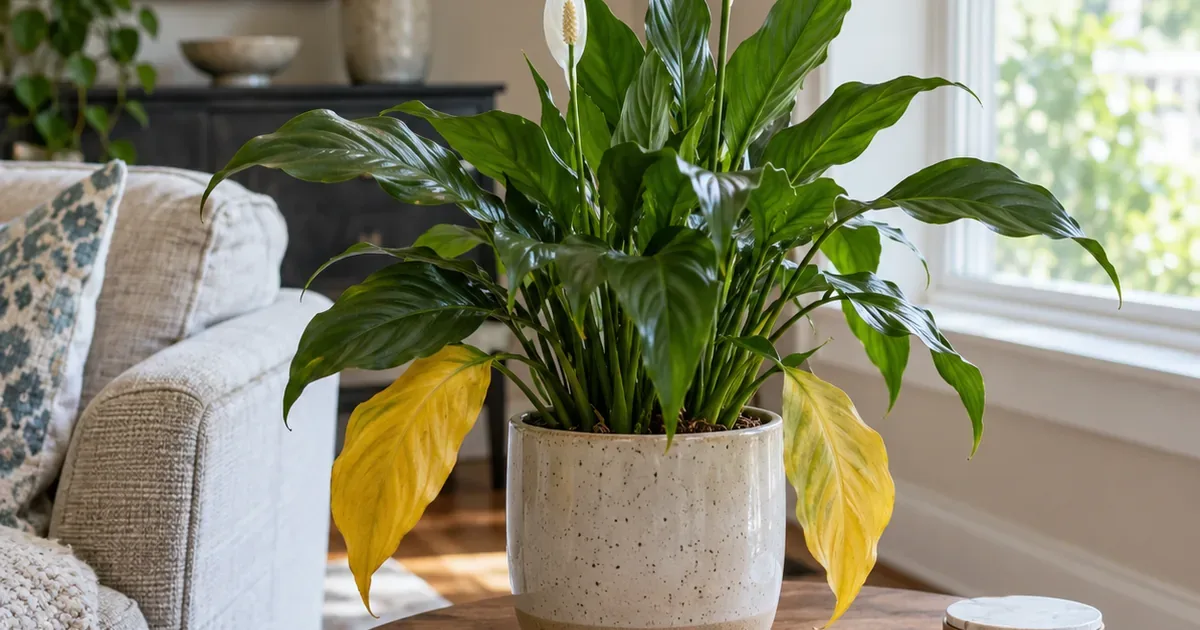
Peace lily leaves turning yellow usually point below the soil line first: a root ball that never dries, water trapped in a cover pot, a cold spell, or too much fertilizer. One old outer leaf fading while the center keeps pushing new growth is normal turnover; several leaves yellowing at once means you lift the pot and check the roots before you water or feed again.
Here's the order that works. Count which leaves turned and where they sit. Feel the mix 1 inch down. Pull the nursery pot out of its decorative cover and look for standing water. Then check the crown, the spot where the leaves meet the soil. Photograph the same clump again in 7 days so you can tell new damage from old.
The thing a photo can't show you is what's happening in the middle of the pot. A dry, pale surface can sit on top of a soaking wet center, and that hidden wetness explains more yellow peace lilies than anything else.
Follow the moisture cycle
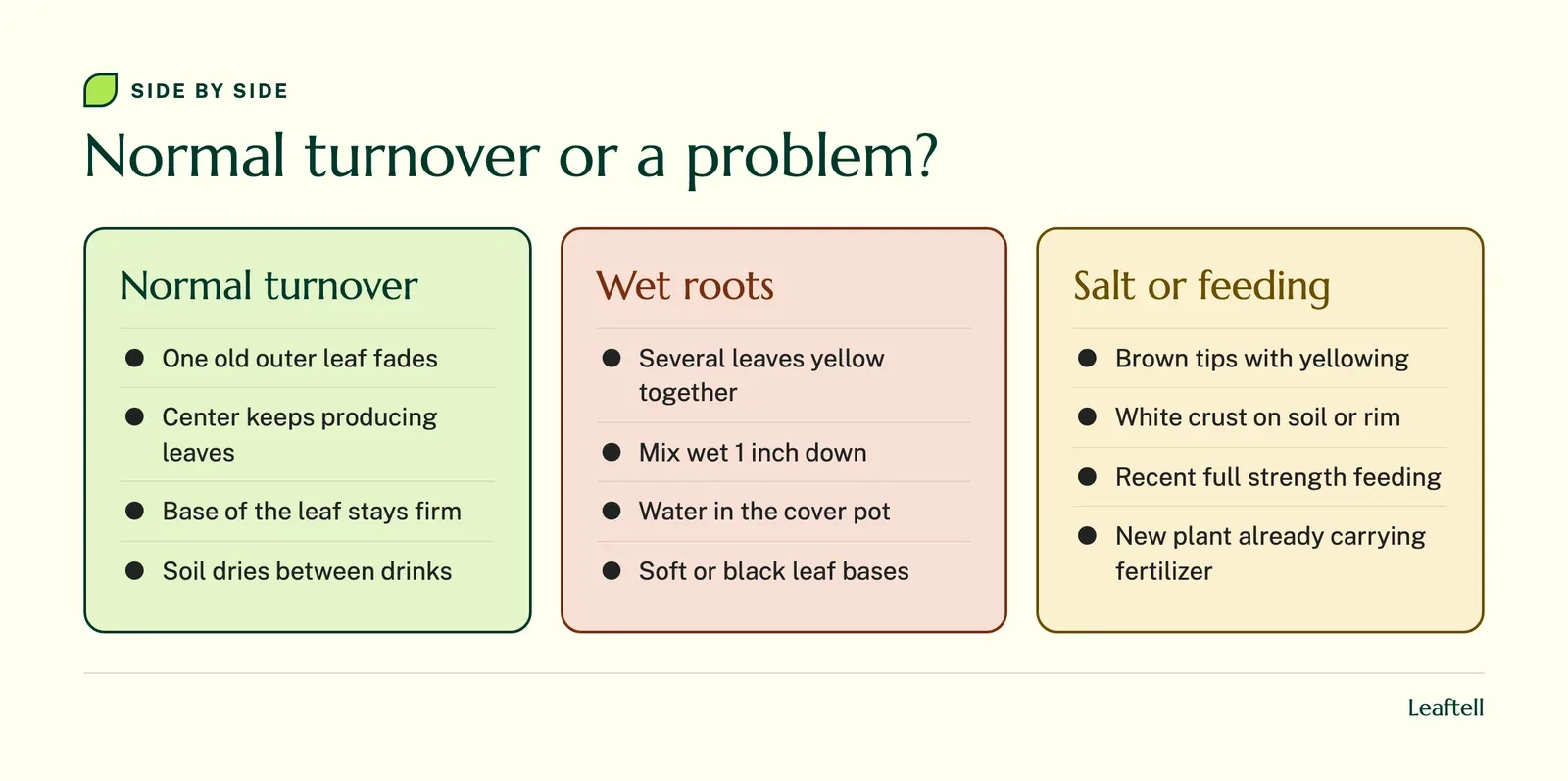
Yellow and brown leaves together usually mean the moisture cycle is off, most often too wet for too long. Peace lilies want moist soil, not soggy soil, and the mix should dry a little between drinks.
That's straight from NC State's spathiphyllum profile: moist, not soggy, drying between waterings. The University of Georgia gives you the practical test. Push a finger about 1 inch into the mix. If that layer is still moist, don't water. Then lift the pot. A pot that feels heavy is still holding water in the center, even if the top looks pale and dry.
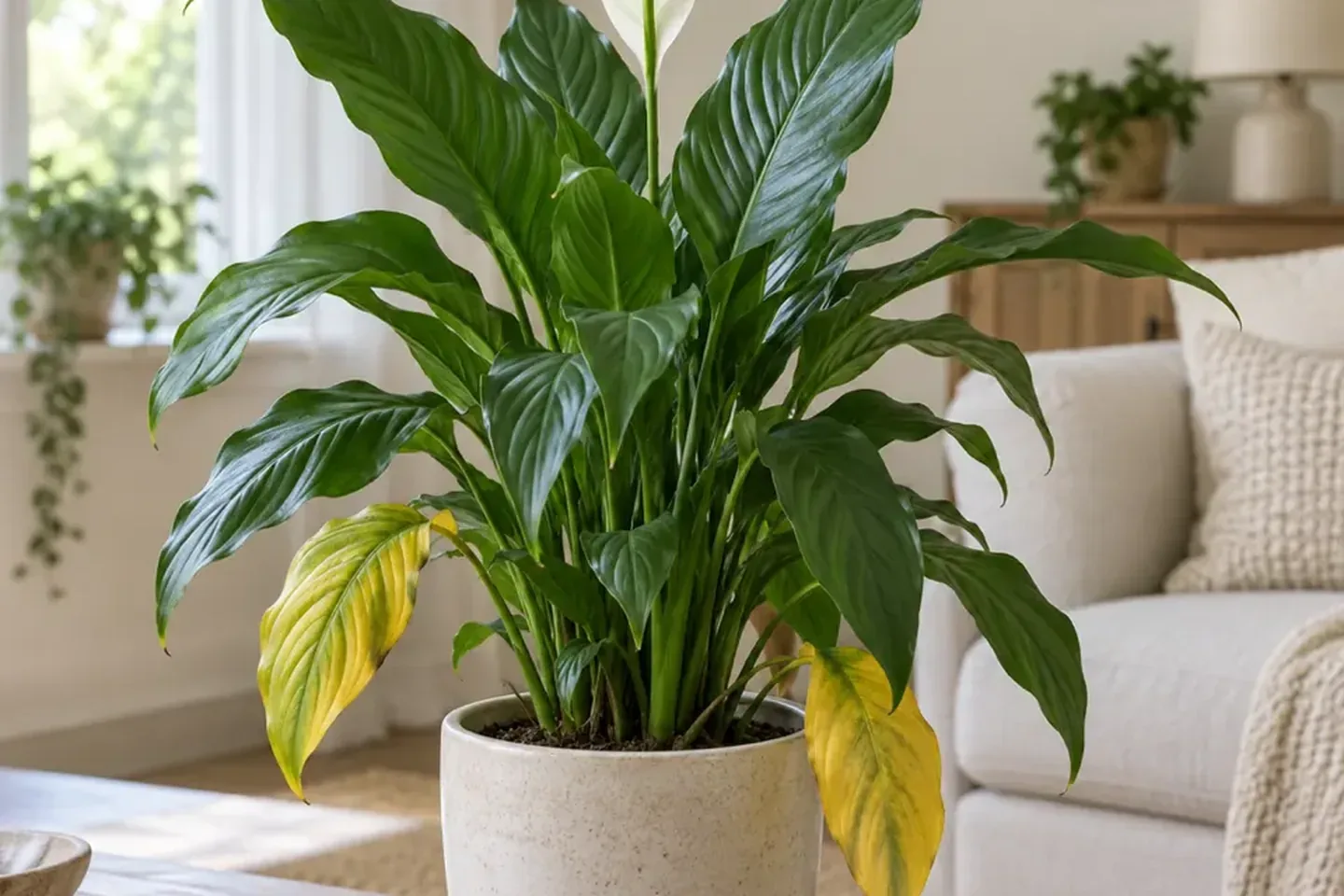
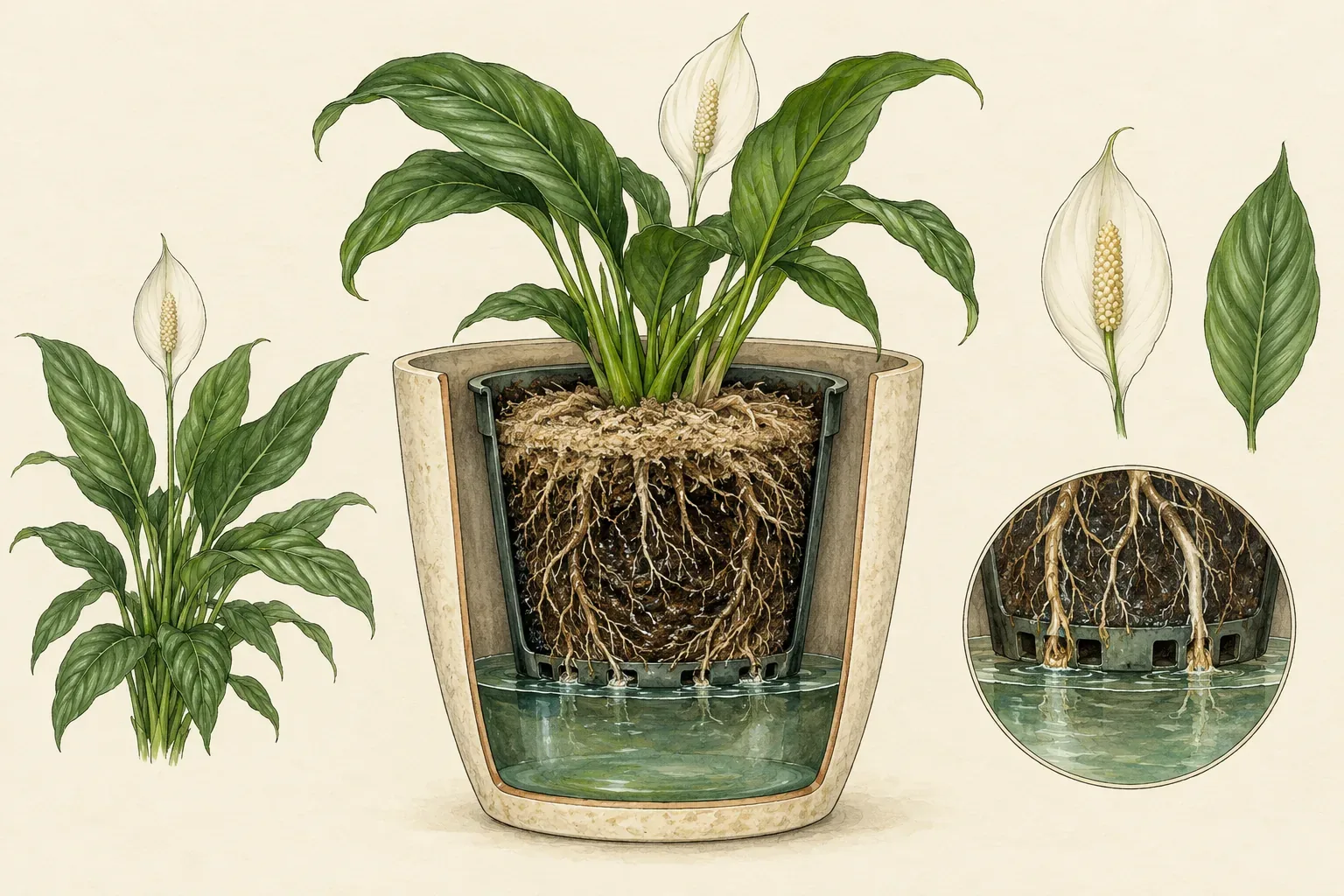
Pot size changes everything. UGA notes that small containers need water more often and bigger plants use more water. A big decorative pot around a small root ball does the opposite: it stays wet for days because there aren't enough roots to drink it. So skip the weekly calendar. No sourced number of days fits every peace lily. Let the 1-inch test and the pot weight decide. If you want a starting reminder, the plant watering calculator gives you a check-in date, and the soil still gets the final say.
When the plant does need water, wet the mix evenly and let the excess run out of the drainage holes. Then empty the saucer or cover pot. A root ball that dried out badly can shed water down the sides, so check that the center actually got wet. If the soil is soggy and you're seeing yellowing plus limp leaves, read the overwatered plant symptoms guide before you do anything else. Limp leaves in wet soil and limp leaves in a dry, light pot need opposite fixes, and the same goes for a drooping peace lily.
Peace lily leaves turning black: check the crown first
Yellow leaves with black, soft bases need a root and crown check before another drink. Black tissue where the leaf joins the crown is a much bigger deal than a yellow leaf on its own.
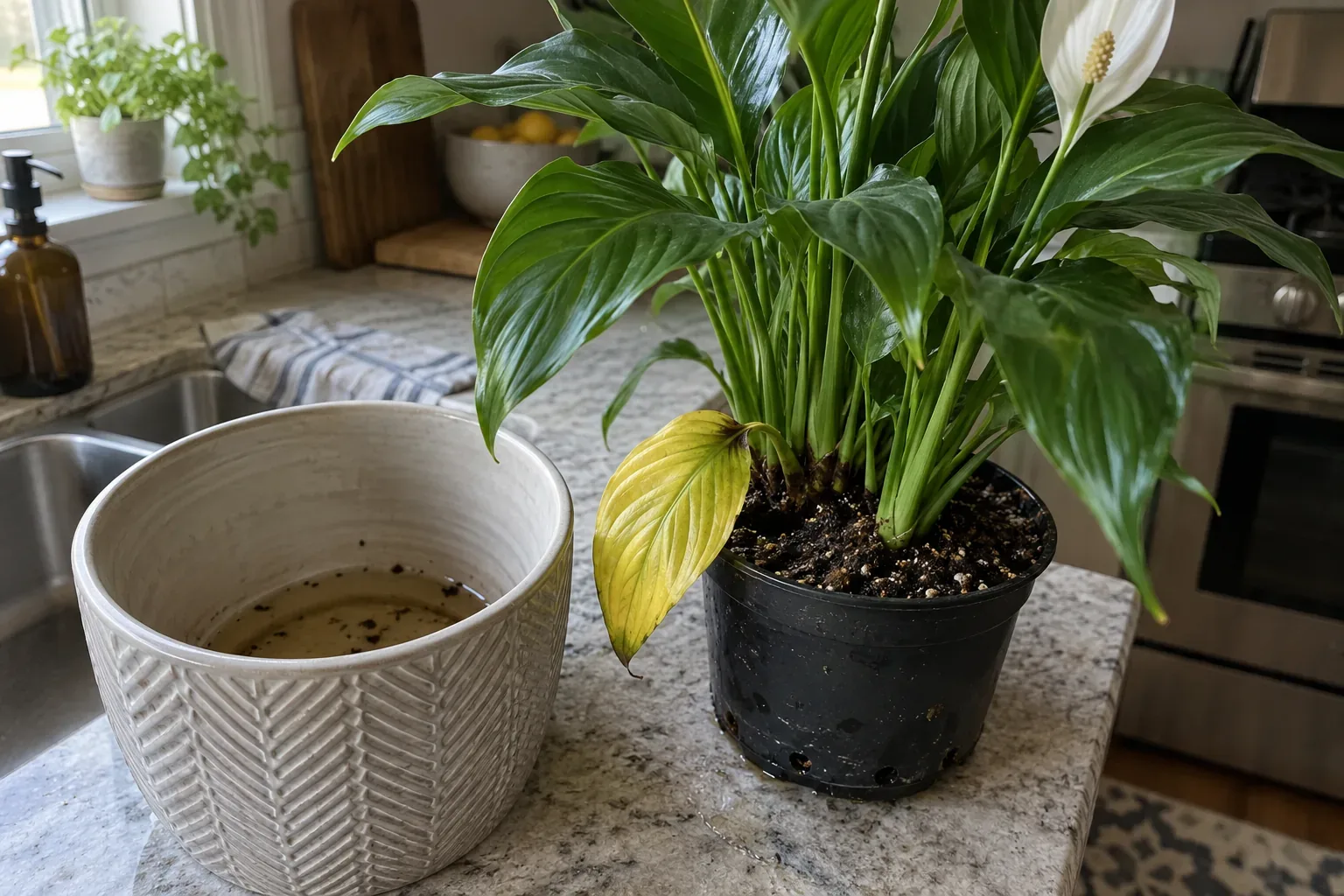
Lift the nursery pot out of its cover. Look for standing water, blocked drainage holes, and a sour smell from the root ball. Healthy roots feel firm. Roots that are mushy or slip out of their outer skin when you pull gently support a rot concern; yellow color alone doesn't. If that's what you find, the root rot guide walks through what to cut and what to save.
A dry brown tip on an otherwise firm leaf is a different finding from tissue collapsing at the base. Keep those separate in your notes.
Cold is the other suspect. NC State recommends daytime temperatures of 68-85°F (20-29°C), with a nighttime drop of no more than 10°F (about 6°C). Growth slows at 40-60°F (4-16°C), and extended exposure below 40°F (4°C) causes damage. Measure right beside the plant, especially next to winter glass or an air conditioning vent. The thermostat across the room tells you nothing about the leaf pressed against a cold window. And a peace lily carried home from the store on a cold day can show injured leaves even when your living room is perfectly warm.
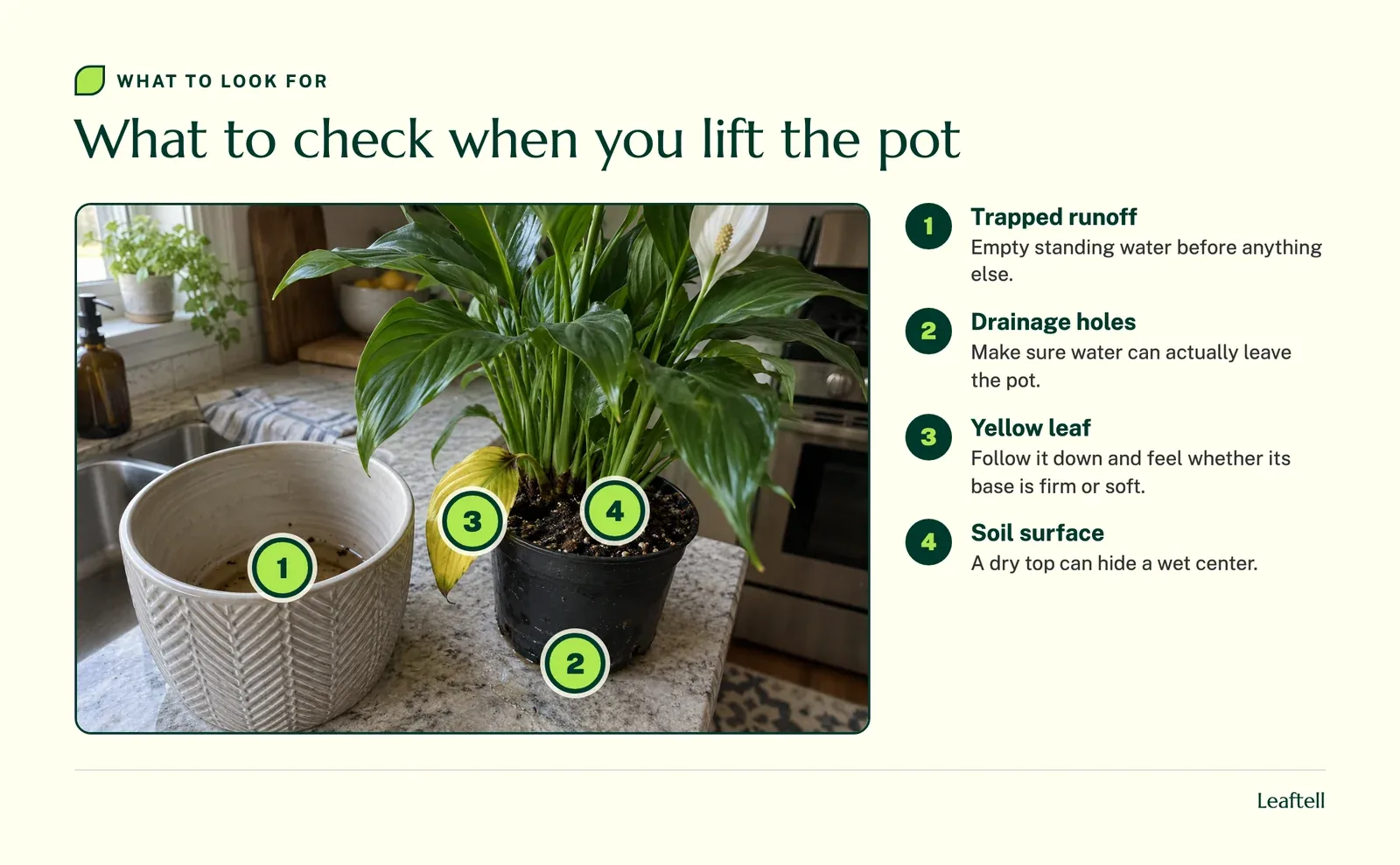
Move a chilled plant to a stable, sheltered spot with indirect light. Empty trapped runoff and clear loose rotting material so you can see the crown. If the center is collapsing, stop experimenting and get help with photos of the roots and leaf bases.
Peace lily leaves turning brown at tips: look beyond humidity
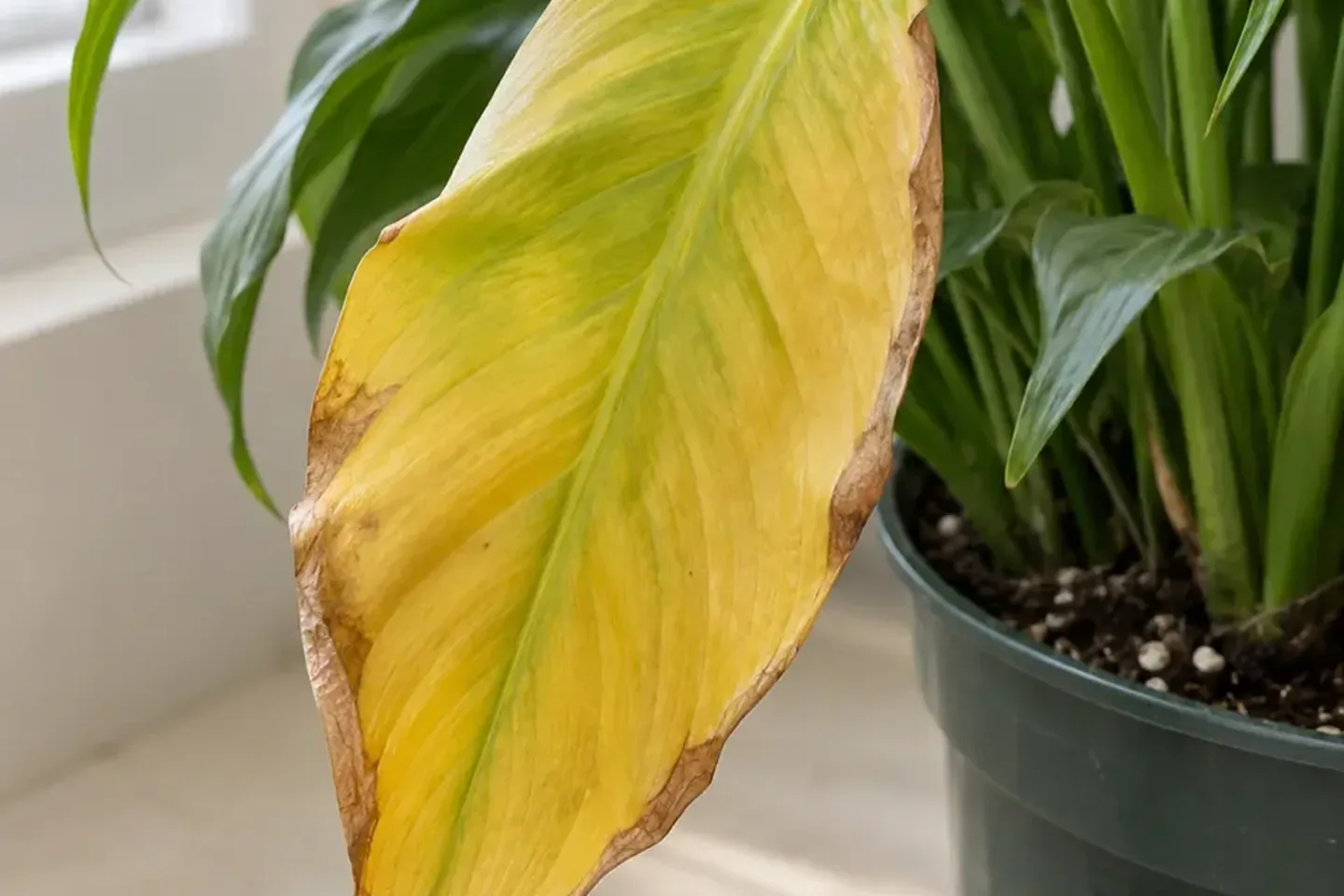
Brown tips with yellowing usually come from fertilizer salts, roots drying out, direct sun, or very dry air. Humidity gets blamed first, but it's rarely the only cause.
Look for a white crust on the soil surface or the pot rim. That's salt buildup. NC State recommends feeding peace lilies at 1/4 of the fertilizer's stated strength and flushing the soil between feedings. Full strength can burn roots and leaf tips. UGA's general starting point for indoor plants is monthly feeding at 1/4 strength during active growth, and only for a plant with sound roots and visible new leaves. A healthy plant you just bought may already carry enough fertilizer for 2-3 months, per UGA. So never stack a rescue feed on top of an unknown slow-release fertilizer.
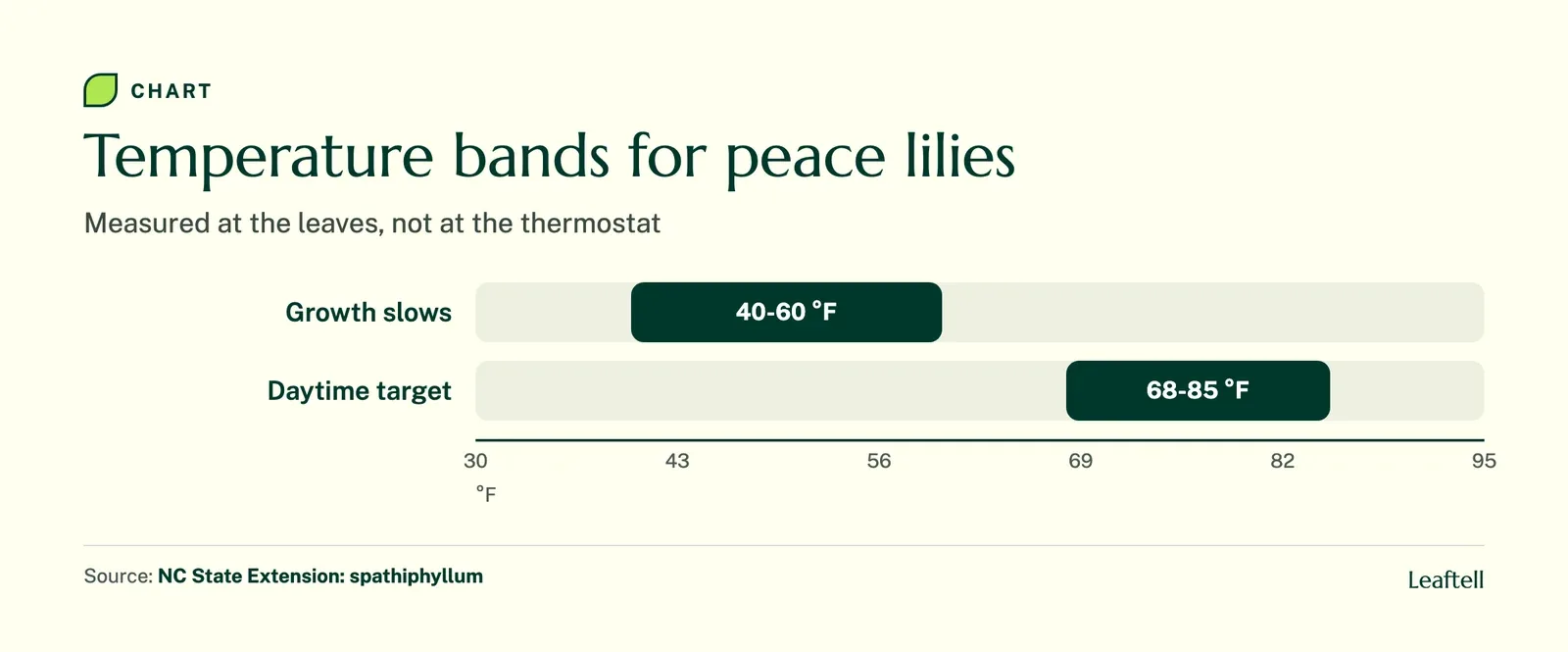
Measure humidity before you blame it. UGA calls 40-50% relative humidity medium and anything below 20% low. Those numbers describe the room. Raising humidity won't turn a brown tip green again, and misting can't rinse out salts in the pot. NC State also says peace lilies want shade, not direct sun. A crisp, scorched patch on the side facing the window points to light exposure, so check the light where the leaves actually sit using the guide to reading your plant's light.
For more on crispy edges across all plants, the brown tips on leaves guide breaks down each cause.
| What you find | What it points to | What to do first |
|---|---|---|
| Mix still damp 1 inch below the surface | Roots sitting wet | Hold off on water and check pot weight and drainage |
| Water pooled in the cover pot | Roots standing in runoff | Empty it now and let the root ball drain |
| Daytime below 68°F or above 85°F at the leaves | Outside NC State's 68-85°F range | Measure at the coldest and warmest times of day |
| Night temperature drops more than 10°F | Bigger swing than NC State advises | Check the window spot overnight and move the plant back |
| Feeding at full label strength | Salt and root burn risk | Switch to 1/4 strength and only once roots are healthy |
| Black, soft leaf bases | Possible crown or root rot | Unpot and inspect roots before any more water |
The table uses NC State temperature and feeding guidance and University of Georgia indoor measurements. Soil condition, not the calendar, decides watering.
Should I remove yellow leaves from peace lily?
Yes, remove fully yellow, spent leaves, but photograph where they grew first. Keep any leaf that still has a good amount of green tissue, because it's still feeding the plant.
Cut the leaf stalk cleanly near its base. Don't yank it, and don't damage the crown or pull neighboring leaves loose. Trimming every imperfect leaf hides the pattern you need to read, and it strips foliage the plant needs while you fix the real cause.
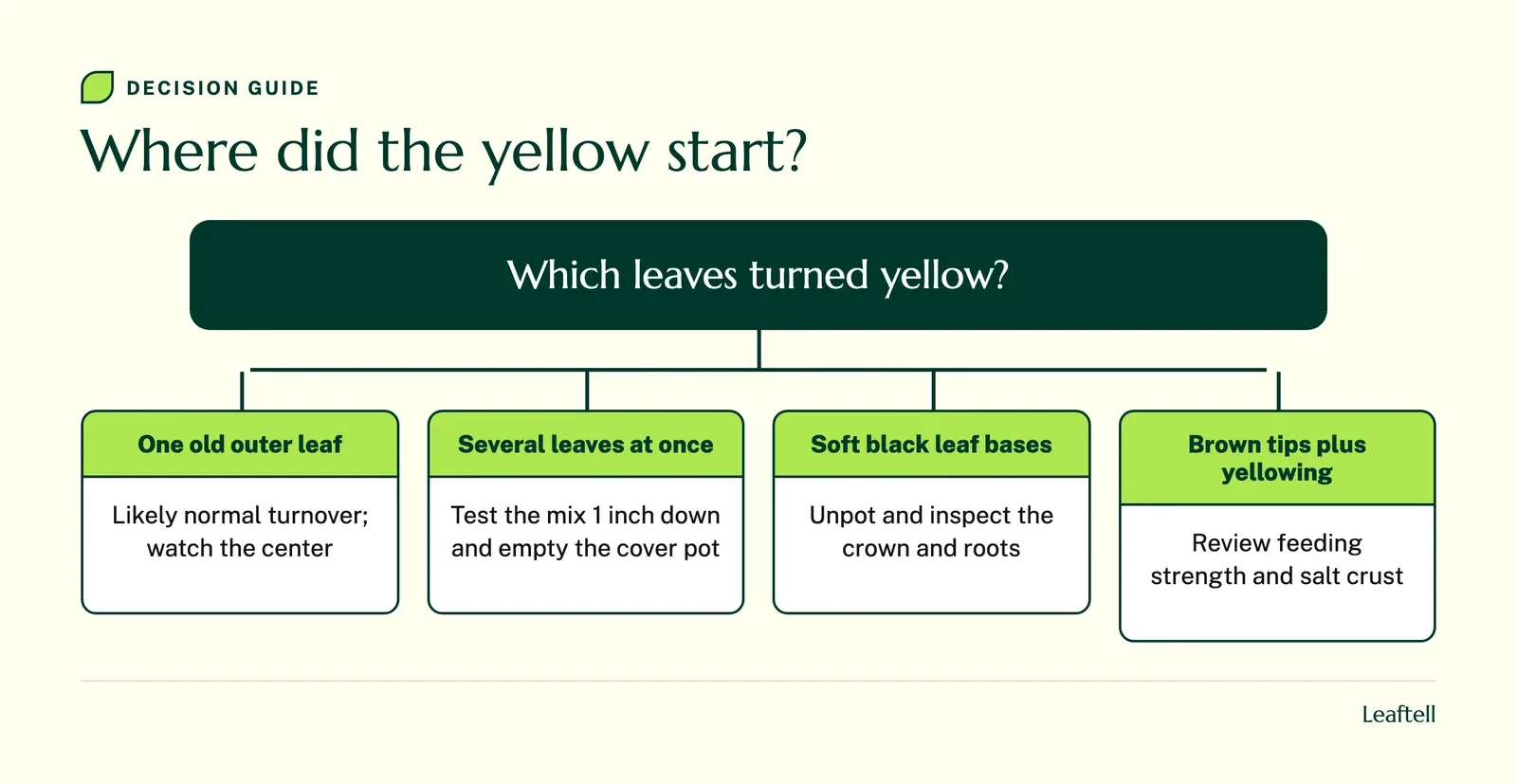
Don't confuse a fading flower with a yellow leaf. NC State notes the white spathe turns pale green after about 10 days and can stay attractive for at least another month. Follow the stalk to its origin before you assume a nutrient problem. Older outer leaves also decline naturally while the center grows. The pattern that deserves a closer look is widespread yellowing with soft bases.
While you're handling the plant, check under the leaves and in the leaf joints. NC State lists mealybugs as a common indoor pest. Look for cottony fluff and actual insects, not ordinary dust, and compare what you see with the mealybugs on plants guide. Wipe broad leaves gently with a damp cloth and move an infested plant away from the others.
Keep cut leaves, sap and runoff away from kids and pets. Peace lilies can irritate the mouth if chewed, and they appear on the ASPCA toxic plants list. Wash your hands after handling, since the sap can irritate sensitive skin.
How to check a peace lily with yellow leaves
- Count and photograph the yellow leaves
Note whether it's one old outer leaf or several leaves at once. Take a photo of the whole clump and a close-up of the leaf bases so you have a baseline for next week.
- Test the mix 1 inch down
Push a finger about 1 inch into the soil and lift the pot. If it's moist or heavy, don't water. Check the center, not just the surface.
- Empty the cover pot
Lift the nursery pot out of any decorative cover. Pour out standing water and make sure the drainage holes aren't blocked.
- Inspect the crown and roots
Press gently where the leaves meet the soil. If the base is soft or black, slide the plant out and check whether roots are firm or mushy.
- Measure temperature and review feeding
Check the temperature at the leaves, day and night, against 68-85°F. Note any recent fertilizer and its strength before you add more.
Review the next growth
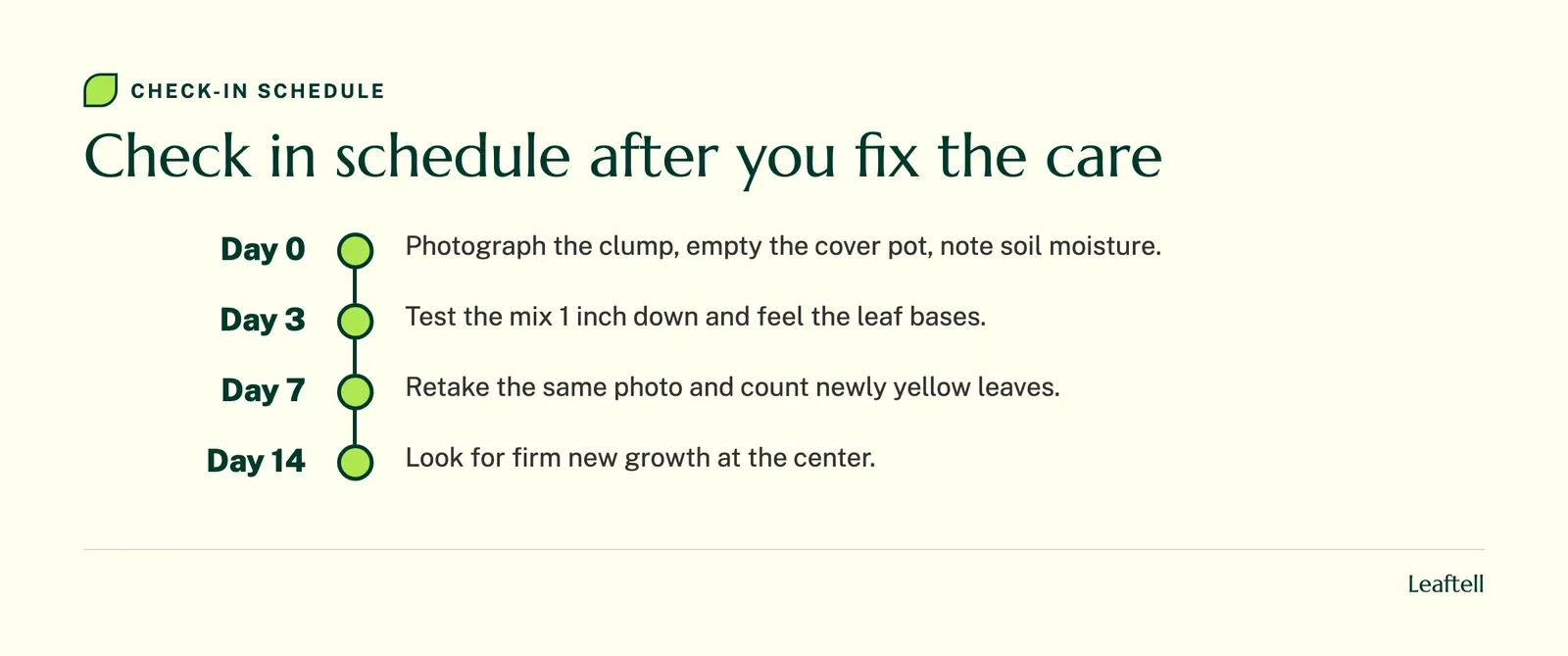
Judge recovery by the crown and new leaves, not the old yellow ones. A leaf that has already yellowed won't turn green again, so it can't tell you whether your fix worked.
The signs that matter are firm new growth, fewer newly affected leaves, and a root ball that drinks water without staying waterlogged. Keep the plant in one settled spot while you watch. Moving it every few days adds fresh sun or temperature stress and muddies the picture.
Use the sourced numbers as boundaries for that spot. Keep days in NC State's 68-85°F range with a night drop within 10°F. UGA describes medium indoor light as 75-200 foot-candles over 8 hours; that's a room light category, not a promise of flowers. Combine it with NC State's advice to avoid direct sun.
Don't set a deadline for a replacement leaf. Growth depends on the season, how many roots survived, and the cultivar. Photograph new leaves as they open and compare their tips with the old damaged ones. That record is what lets you say what improved.
Should I remove yellow leaves from peace lily? Mistakes that cost you
The most expensive mistake is watering a yellow peace lily because it looks thirsty. If the center of the pot is already wet, more water keeps the roots short on air, and yellowing spreads to the next leaves.
The second is feeding as a fix. Fertilizer on damaged roots adds salt to a root system that can't use it, so brown tips get worse and you lose another month. The third is moving the plant around to find the perfect spot. Each move resets light and temperature, so you can't tell which change helped.
The last one is cutting off every yellow and brown leaf on day one. The plant ends up with fewer working leaves, and you've thrown away the evidence that would have shown whether the damage started at the tips, the edges or the base. For a broader look at what yellow color means on other houseplants, the yellow leaves on plants guide covers the patterns.
Peace lily leaves turning yellow: what to do this week
Fix the moisture first. Empty the cover pot, wait until the mix is dry 1 inch down before watering, and stop feeding until new leaves look healthy. Then measure the temperature at the plant and move it away from cold glass or vents if needed. That combination covers most yellow peace lilies.
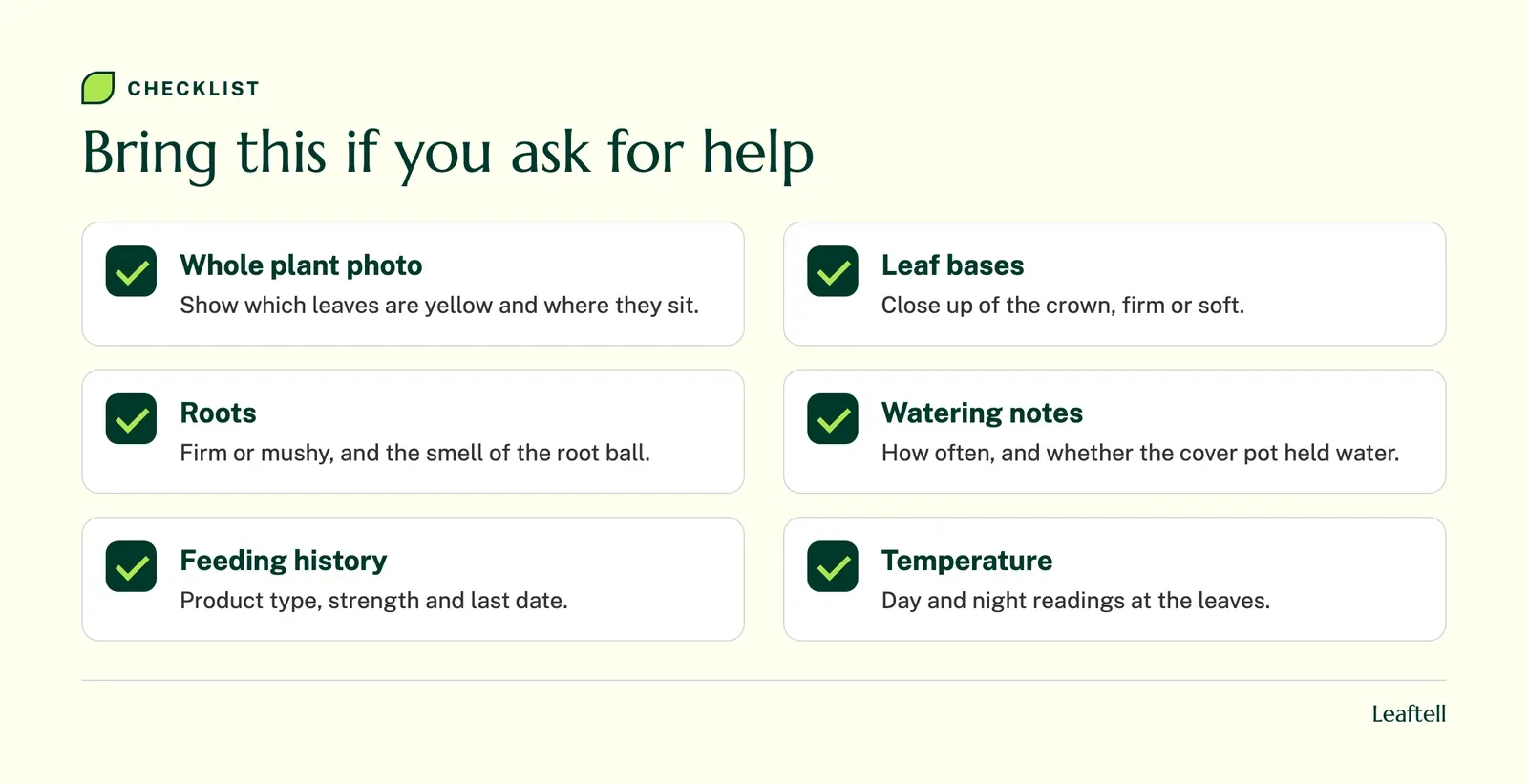
Get help from your local extension office if the crown is softening, black tissue keeps advancing, or yellowing keeps spreading after a few weeks of correct watering and stable warmth. Bring photos of the roots, leaf bases and the whole plant, plus your watering and fertilizer history.
Check your peace lily in Leaftell. The check uses your answers; photos stay on your device.
Sources
Check your growing conditions with the plant watering calculator.
Frequently asked questions
Water when the mix is dry about 1 inch down and the pot feels lighter, then let it drain fully. The interval changes with light, pot size, soil mix and season, so test the soil instead of following a fixed schedule.
No, a fully yellow leaf generally won't return to green. Judge improvement by the crown and the new leaves that open after you fix the cause.
Remove leaves that are fully yellow or dead, cutting the stalk cleanly near the base. Keep leaves that are still mostly green, and photograph the pattern before you trim.
Coffee grounds aren't a balanced fix for yellowing and can change how the soil surface holds water. Check water, roots, temperature and light first.
Not as a rescue. Feed only a plant with healthy roots and active growth, at about 1/4 of the label strength as NC State suggests, and follow the product label.
Use a pot that fits the roots with a little room to grow. A much larger pot stays wet around a small root ball, which is a common cause of yellow leaves.
Peace lilies can irritate the mouth if chewed, so keep leaves, flowers and runoff out of reach. Wash your hands after handling, and contact a vet or poison control if someone shows symptoms after chewing it.
First figure out whether it needs water, better drainage, or relief from cold. No supplement fixes a limp or yellowing plant whose roots are wet or chilled.
Share article
About the author

Keep checking your plant
Plant care reference
Indoor plant care
Build a routine around your plant, light and potting mix.
Plant care reference
Why is my plant dying
Trace leaf and root symptoms before choosing a care change.
Plant care reference
Pothos plant care
Choose a growing spot and prune a trailing pothos for fuller growth.
Plant care reference
How to fix root rot
Inspect root firmness and drainage, then decide whether to repot.