Christmas Cactus Plant Care: Water, Feed and Get It to Bloom
Filip Leszczyński Updated 18 October 2026 12 min read
In this article
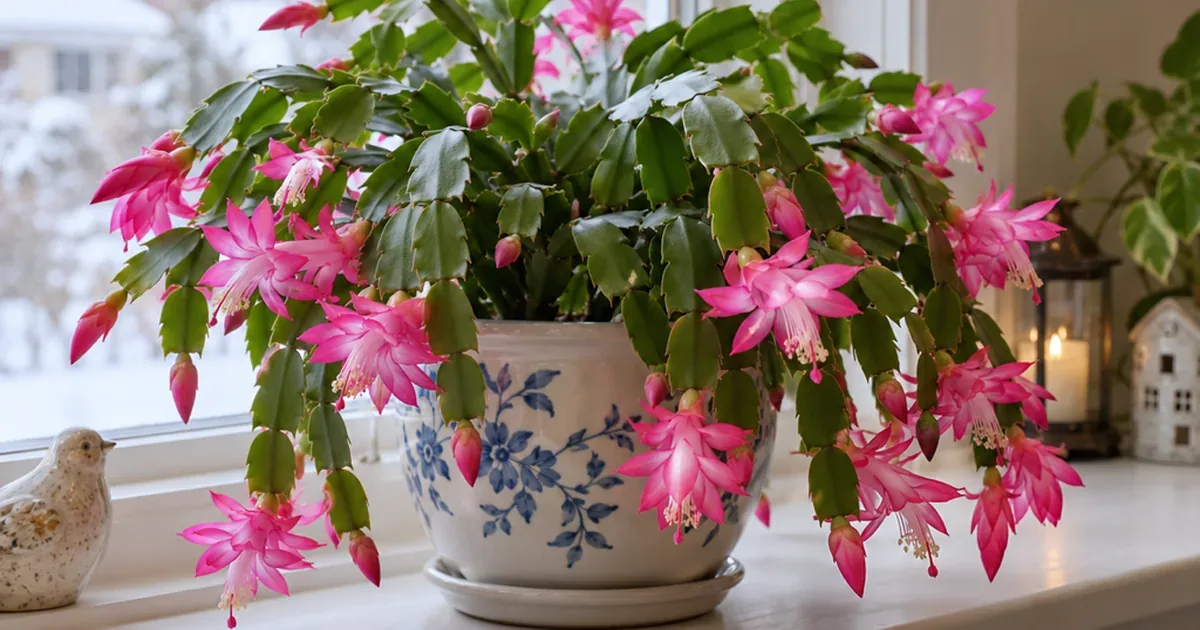
Christmas cactus plant care starts with one fact: it is a forest cactus, not a desert cactus. Give it bright indirect light, a snug pot that drains, and water based on the mix and the season, then give it cool, long nights in autumn so it sets buds.
Treat it like a desert cactus and it goes limp from thirst. Treat it like a fern and the roots rot. Most problems come from mixing up which plant you have.
Its flat green "leaves" are actually stem segments. Photograph new segments and buds as you go, because the clue you need, like how many hours of real darkness it got last week, never shows up in a single photo.
When to stop watering Christmas cactus? Reduce, never stop
You don't stop watering a Christmas cactus; you water less during its two rest periods. RHS describes reduced watering from mid-September until buds develop, and again after flowering from late January to late March.
During those rests, RHS advises letting the top few centimeters of mix dry without letting the whole pot dry out completely (RHS). Outside them, keep the mix moist but well drained. NC State describes the right medium as moist, well drained and airy.
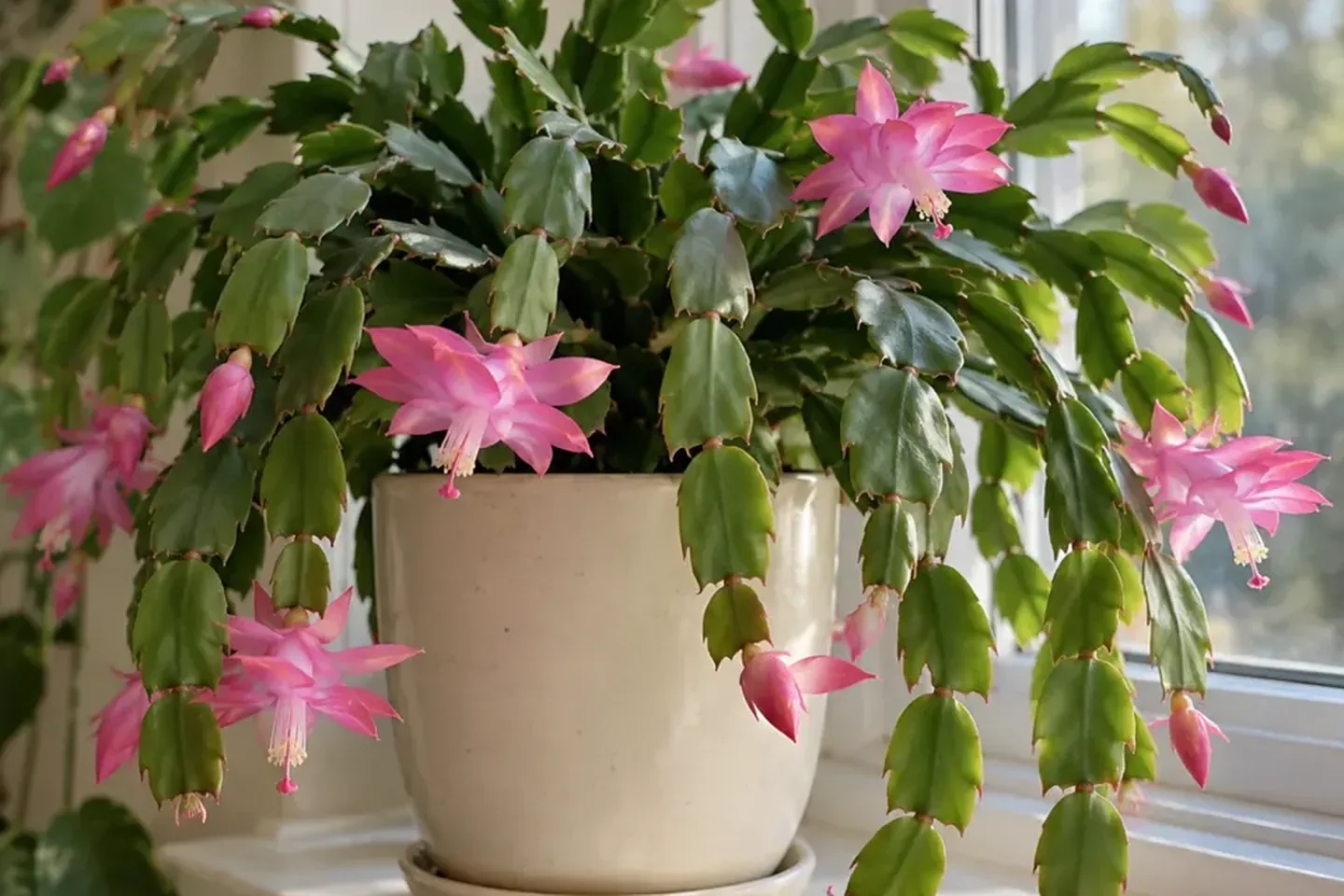
Pot size changes everything. A small crowded pot dries fast; an oversized pot can stay wet around a few roots for a long time. RHS recommends repotting only slightly larger, because Christmas cacti like a snug pot. Check the mix and drainage rather than counting days, and our guide on checking wet or dry soil shows the combined test.
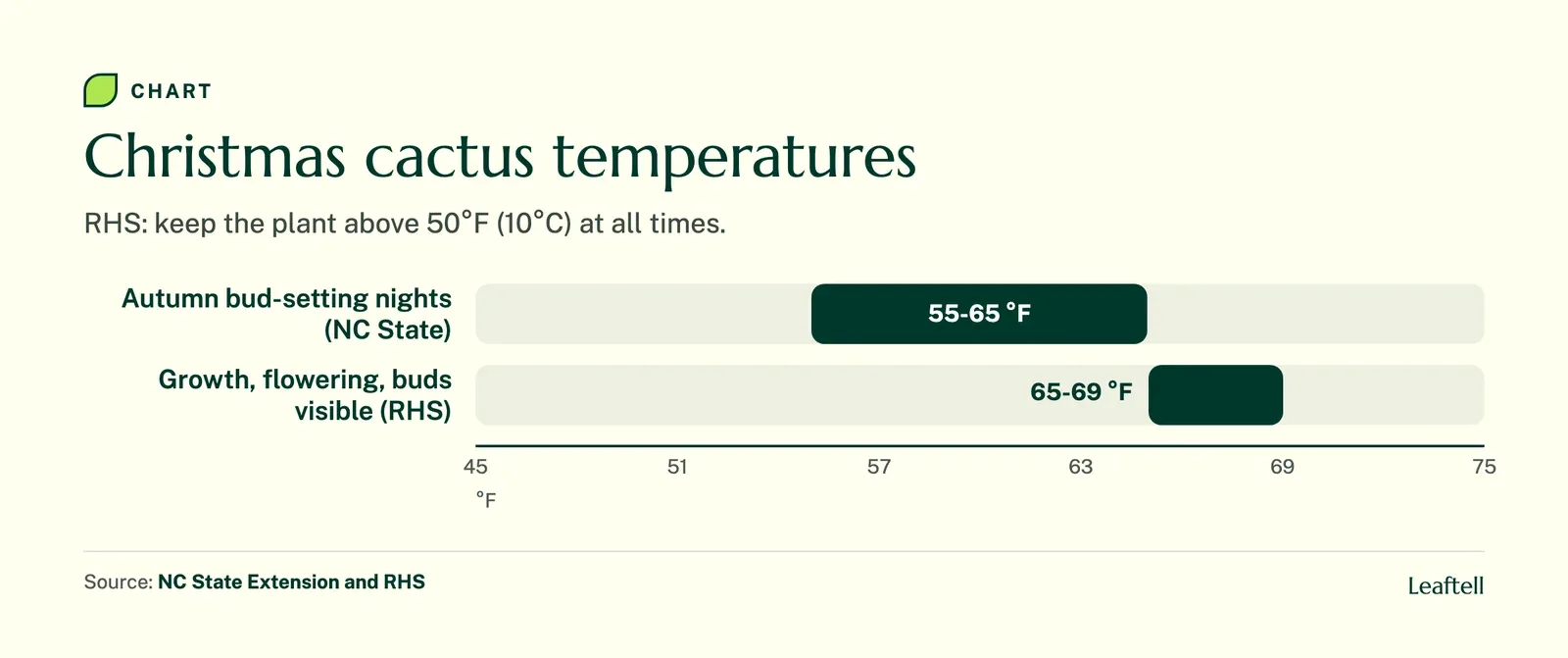
Temperatures matter alongside water. RHS recommends keeping the plant above 50°F (10°C), and 65-69°F (18-20°C) during normal growth and flowering.
Once buds are visible, return to regular watering. Keep withholding water after buds form and you risk losing them.
Why are the leaves on my Christmas cactus limp?
Limp Christmas cactus segments mean dry roots, wet roots or a damaged base, and they look almost the same. Feel the mix below the surface and press the stem bases before you do anything else.
Take the pot out of its cover. UGA's general check reaches about 1 inch into the mix (UGA Extension); if that layer is still moist, don't water just because the segments droop. Check deeper too, especially when a big pot holds a small root system.
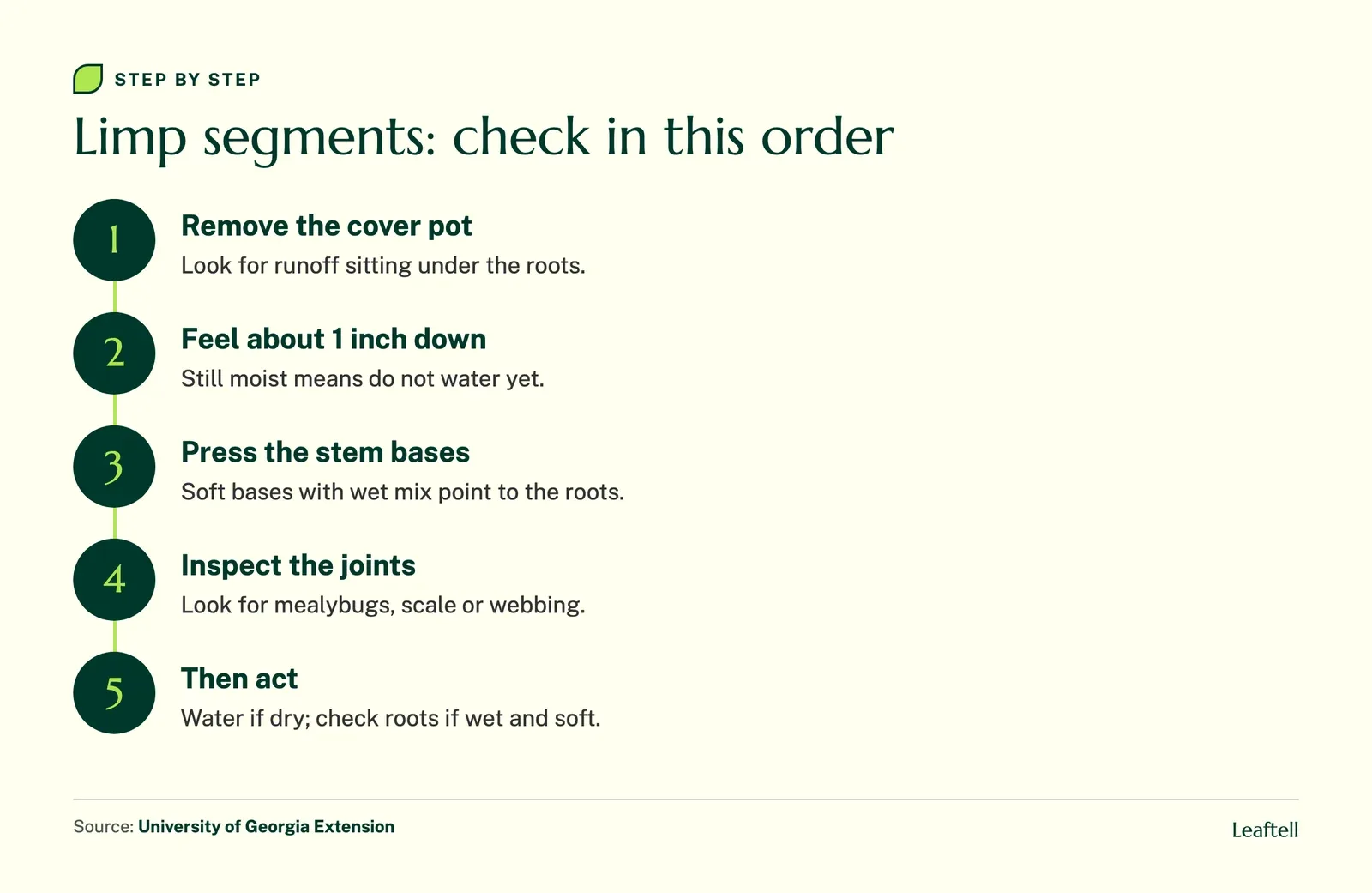
If the mix is truly dry, water evenly and let the excess drain out. If it is wet and the bases feel soft, look at the roots before you water again; our guide on rescuing a plant from root rot explains what healthy and decaying roots look like. A cold, wet root ball needs fixing even if the rest of the room feels warm.
Check the joints between segments for pests too. NC State lists mealybugs, scale and webbing among possible problems, and our guide to identifying mealybugs helps you confirm what you see. Start with isolation and wiping; any product is a generic class with its own label, so follow the label, keep it away from pets and children, and never mix products.
Don't mist every limp segment. Humidity changes water loss, but it can't rebuild a decayed root system. If softness spreads upward or the whole base collapses, get advice quickly. The broader guide to why plants droop covers the same wet-or-dry question across other plants.
Christmas cactus pruning: shape after the flower display
Prune after flowering, in spring, when you want a bushier plant. RHS recommends removing some end segments by separating them at the joints, not cutting across the middle of a segment.
Flowers form at the stem tips, so more healthy branches can mean more flowers later. Keep enough segments on the plant to support it, and use the good pieces you removed as cuttings instead of throwing them away.
Don't prune once buds are forming. That removes the flowers you have been waiting for, so keep spring shaping and autumn bud preparation separate.
Getting it to bloom: long nights and cool temperatures
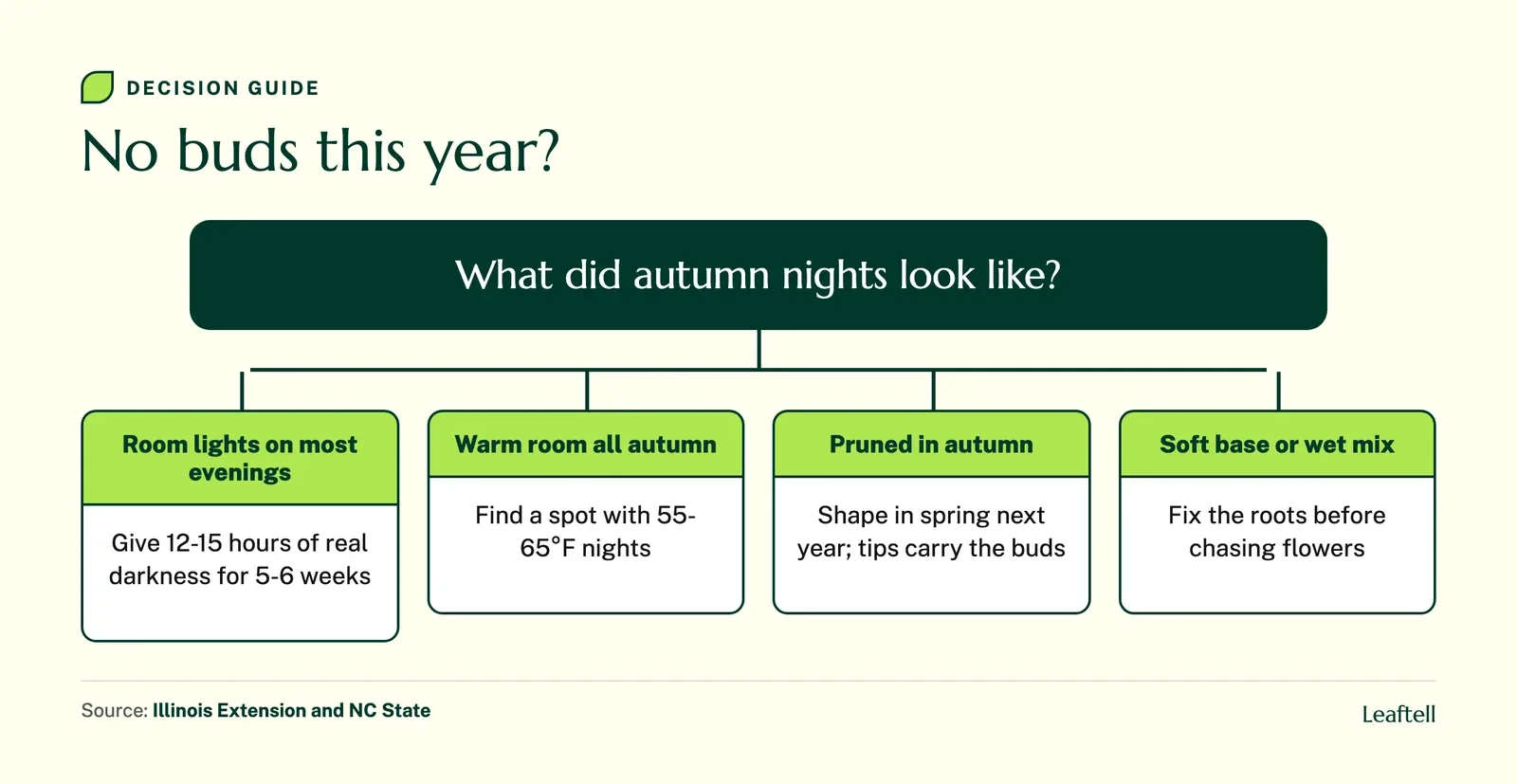
Christmas cactus sets buds in response to night length and temperature, which fertilizer alone cannot replace. NC State recommends autumn nights of 55-65°F (13-18°C) and at least 13 hours of uninterrupted darkness. Illinois Extension describes 12-15 hours of darkness a day for 5-6 weeks, with cool nights, for holiday cacti.
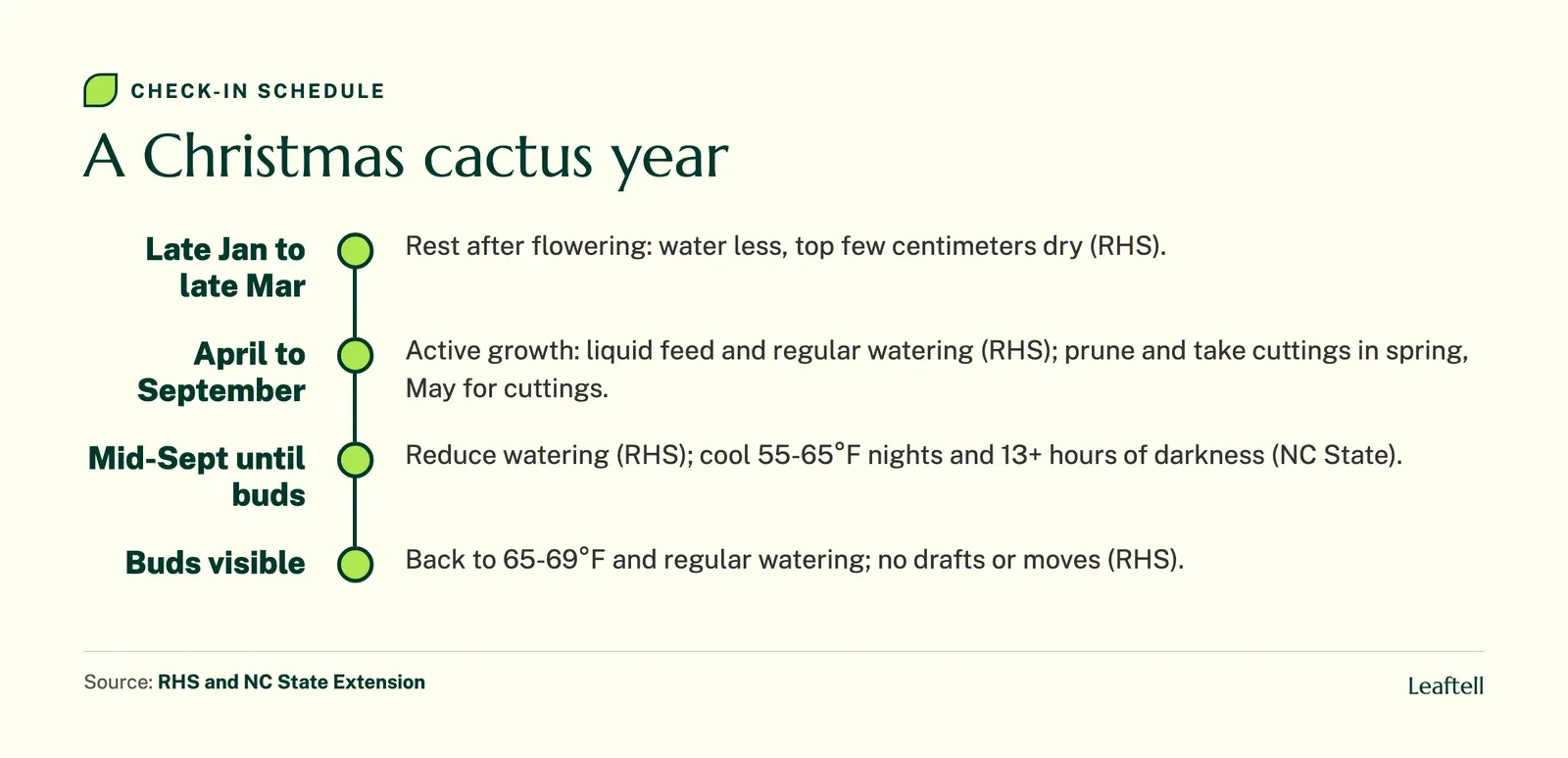
Those overlap, and they point to one routine: bright indirect light by day, then a long, truly dark night. That doesn't mean a dark cupboard all day. It means no lamp switching on in the evening. A healthy plant in a living room lit until midnight may never get the darkness it needs to start buds.
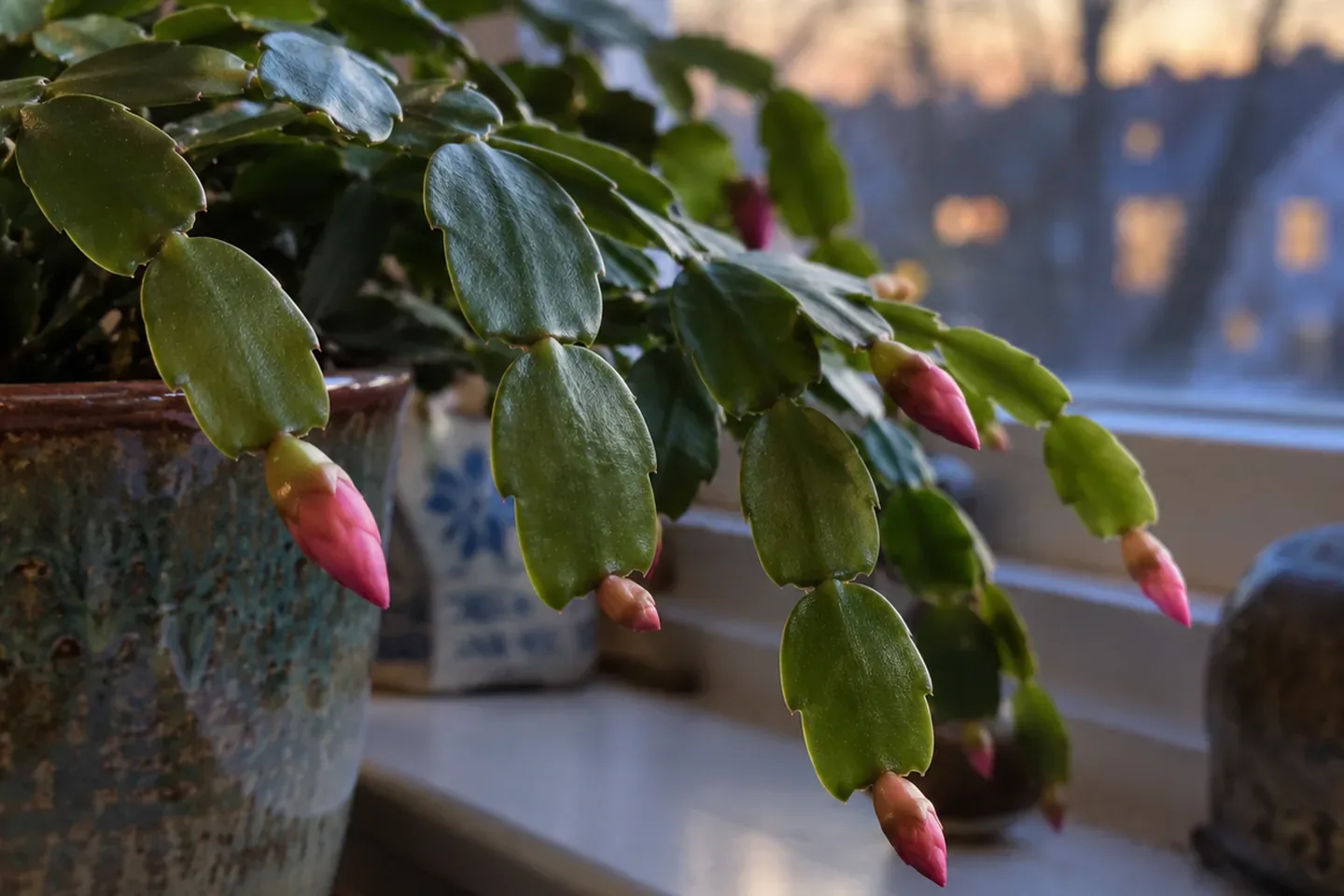
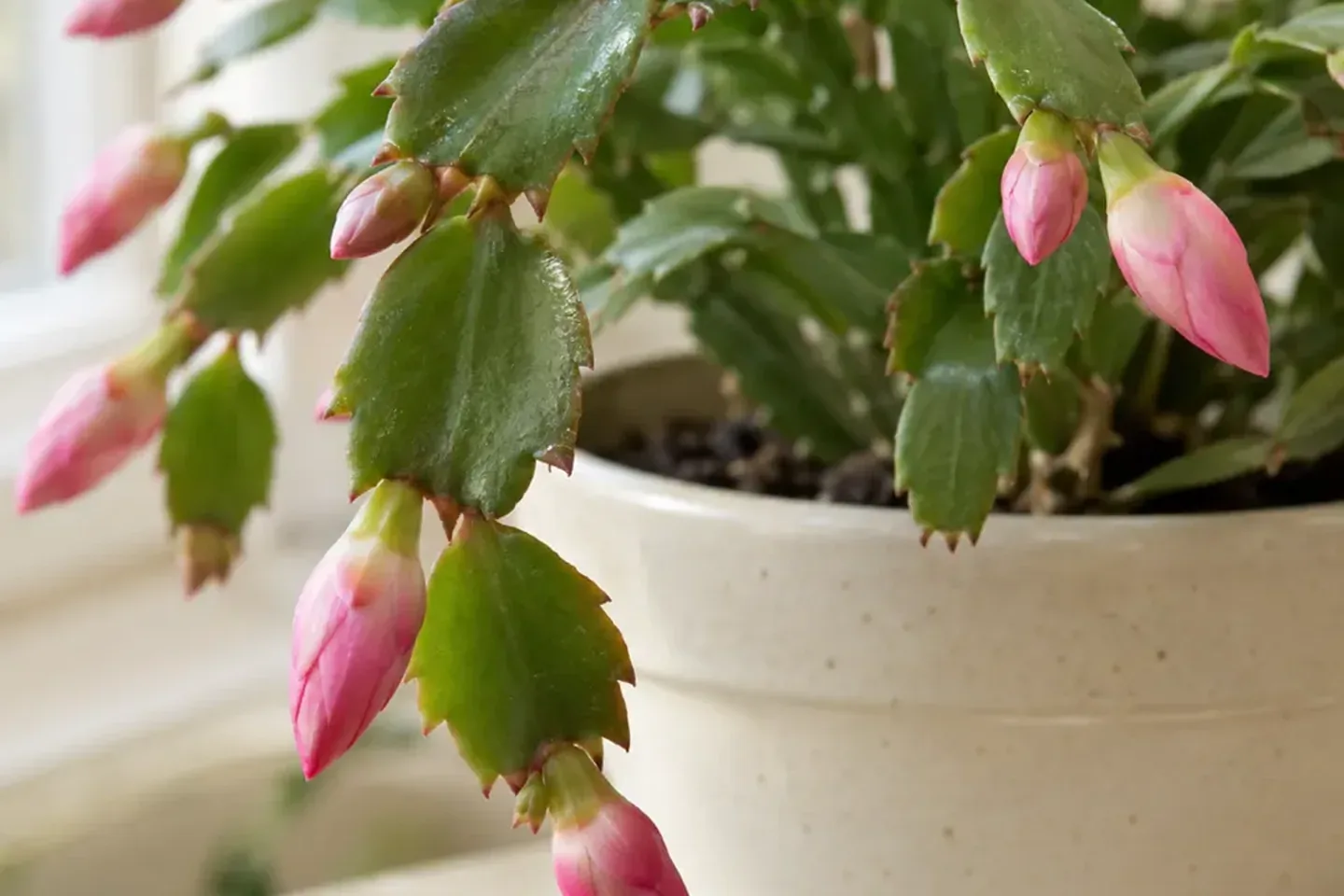
Once buds appear, RHS recommends moving it back to 65-69°F (18-20°C) with regular watering. Keep it out of drafts and away from sudden temperature swings, which can make buds drop.
Christmas cactus fertilizer: feed active growth, not distress
Feed a Christmas cactus only while it is actively growing and after you have confirmed the roots and drainage are sound. NC State recommends monthly fertilizer during the growing season, and RHS places routine liquid houseplant feeding from April through September.
For strength, UGA's general indoor-plant starting point is 1/4 of the label rate for monthly feeding during growth. Use that alongside the product's directions, and don't combine a liquid feed with an unknown slow-release dose already in the pot. UGA also notes that a healthy newly bought plant may already have nutrients for 2-3 months, so a flowering gift doesn't need feeding the day it arrives.
Fertilizer is not a fix for limp segments or a soft base. If the plant is sitting in water or struggling after a cold spell, solve that first. And don't raise the concentration to force flowers; as above, buds come from light and temperature.
Let water run through the pot and drain away each time, because salts can build up when runoff sits under the roots. Keep a simple record: new segment growth, the product and dilution, and how wet the mix was before feeding. If older segments are yellowing, the guide on yellow leaves on plants helps you separate feeding from watering causes.
Christmas cactus propagation: start with healthy segments
Take cuttings from firm, healthy segments, never from tissue that is blackening or collapsing. RHS recommends propagating in May, using a couple of end segments separated at a joint.
| Stage | What to do | The numbers | Source |
|---|---|---|---|
| Taking a cutting | Twist off 2 end segments at a joint | May | RHS |
| Before planting | Let the cut end dry | 1-2 days | RHS |
| Planting | 50:50 peat-free cutting compost and sharp sand, base just deep enough to stand | About 0.4 inch (1 cm) | RHS |
| Rooting | Bright, no direct sun, water sparingly | 3-12 weeks | RHS |
| Setting buds | Cool nights, long uninterrupted darkness | 55-65°F nights, 13+ hours dark | NC State |
| Bud induction | Long nights, cool temperatures | 12-15 hours dark for 5-6 weeks | Illinois Extension |
| Buds visible | Warmer room, regular watering | 65-69°F (18-20°C) | RHS |
Christmas cactus propagation and flowering numbers from RHS, NC State and Illinois Extension. Rooting times and bud conditions describe different stages, not a combined schedule.
How to propagate a Christmas cactus
- Pick healthy segments
In May, choose firm end segments and twist off a piece two segments long at a joint.
- Let the cut dry
Leave the cutting on a dry surface for 1 to 2 days so the wound seals before it touches wet mix.
- Mix the medium
Combine peat-free seed or cutting compost and sharp sand 50:50 in a small pot with drainage.
- Plant it shallow
Insert the base about 0.4 inch (1 cm) deep, just enough to hold it upright. Deeper planting raises the rot risk.
- Keep it bright and barely moist
Give bright light out of direct sun and water sparingly while roots form, which RHS says takes 3 to 12 weeks.
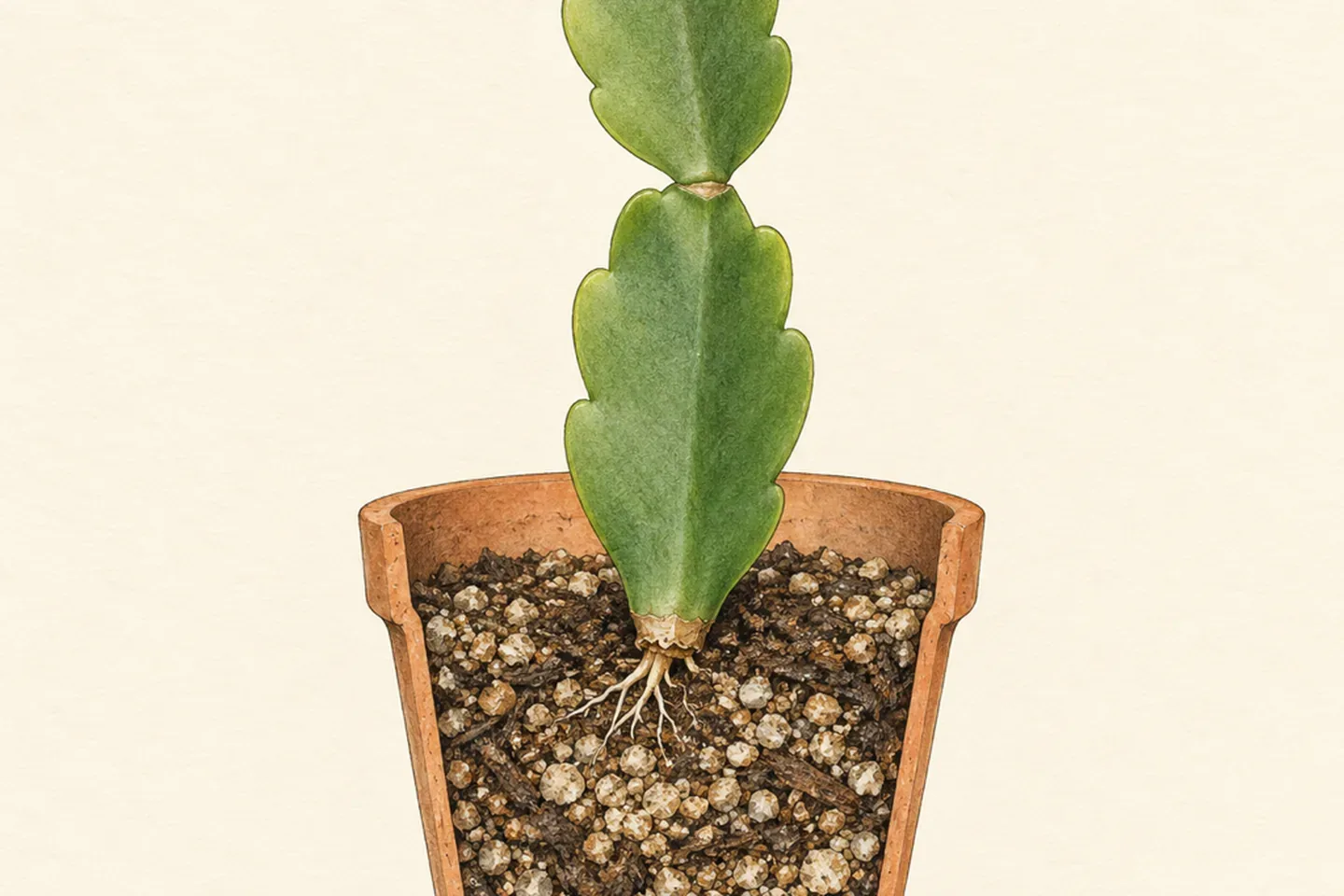
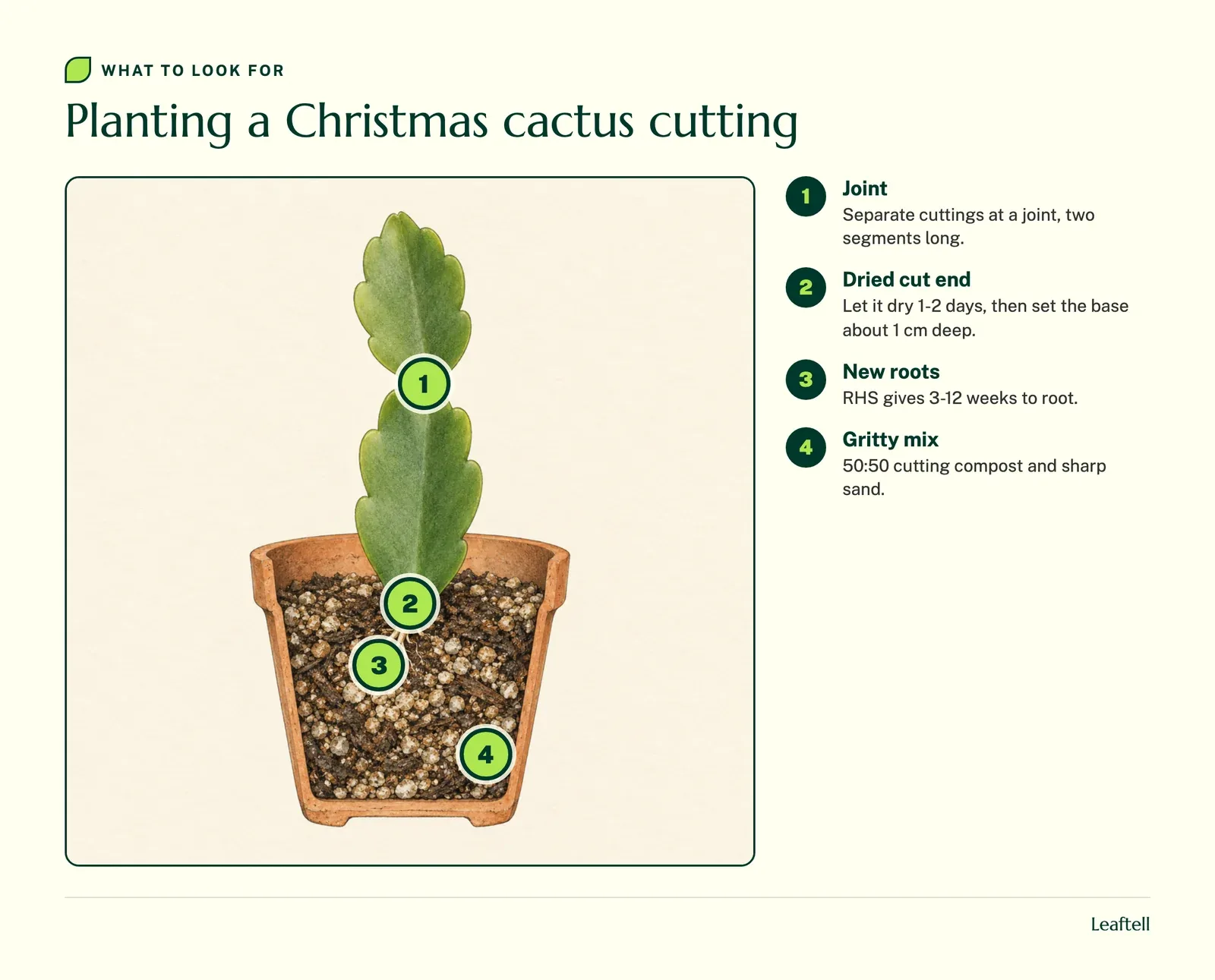
Resist tugging at the base to check for roots. Look for new growth instead, then pot each rooted cutting separately in a small draining pot, out of trapped runoff.
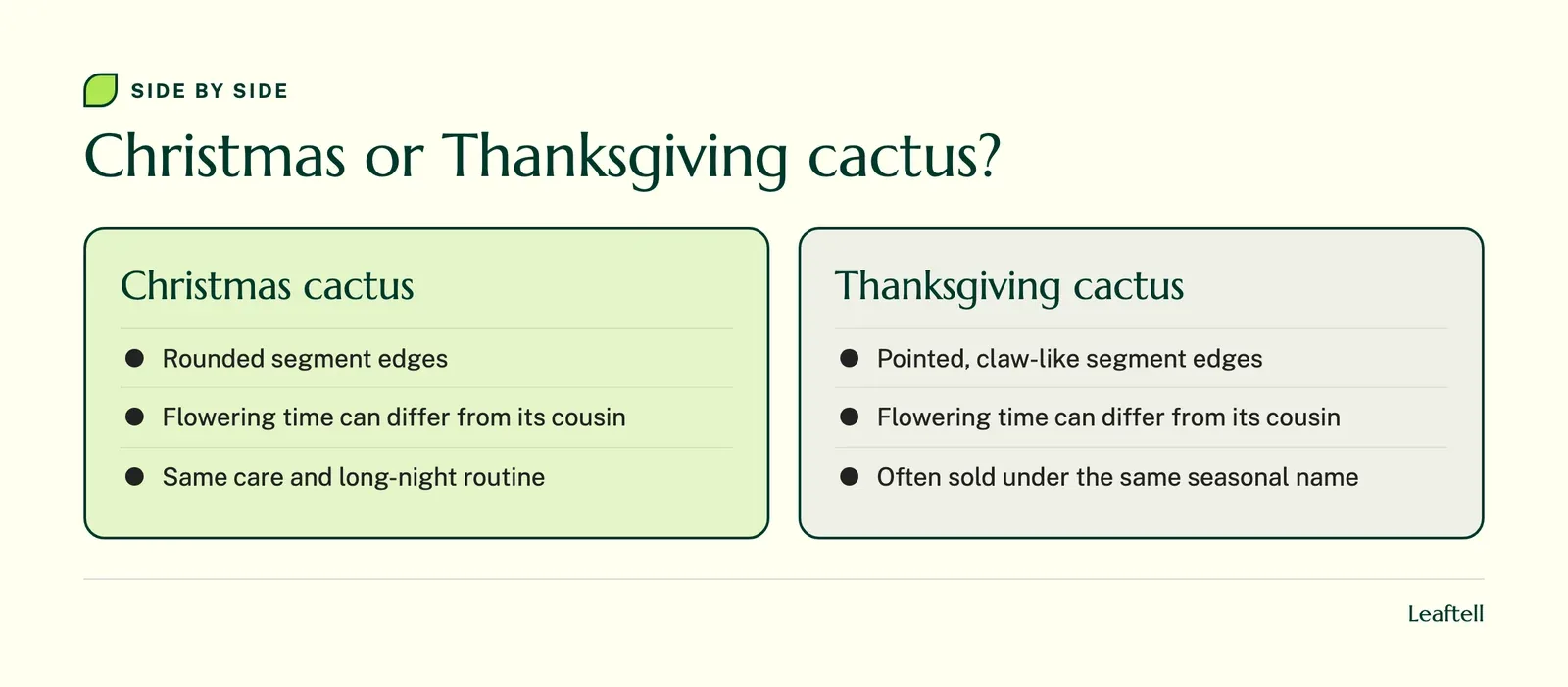
Label the parent plant if you own more than one holiday cactus. Rounded Christmas cactus segments and pointed Thanksgiving cactus segments are often sold under the same seasonal name, which explains why "your Christmas cactus" might bloom in November.
Christmas cactus mistakes and what they cost
Most failures here come from treating it like the wrong plant or the wrong season.
- Treating it like a desert cactus. Long dry spells during growth starve a forest plant. Cost: limp, wrinkled segments. Our guide to dying succulents covers the true desert types. For their everyday light, soil and watering, see how to care for succulents.
- Stopping water entirely in autumn. Reduce, don't withhold. Cost: stress and dropped buds.
- Evening lamps during bud season. Broken nights stop bud formation. Cost: no flowers that year.
- Feeding to force blooms. Feeding can't replace long nights. Cost: salt buildup, still no flowers.
- Pruning in autumn. Tips are where buds form. Cost: the season's flowers.
- Moving a budded plant around. Drafts and sudden temperature swings shed buds. Cost: bare stems right before the holidays.
When to get help
Ask a local extension office or experienced grower if softness spreads up from the base, the whole plant collapses, or decline continues after you corrected watering and temperature. Bring photos of the plant, the pot and the roots, plus notes on recent moves. If the mix stays soggy for days, compare signs of overwatering first.
The Christmas cactus routine that works
Water by the mix, ease off in the two rest periods, feed lightly from spring to late summer, and give it cool, truly dark autumn nights. If you change only one thing this year, keep evening lamps away from it during its autumn long-night weeks. Broken nights can stop buds no matter how well you feed or water.
Keep notes on bud dates, segment firmness and actual moisture so next year's adjustments follow your plant. For the rest of your shelf, the indoor plant care guide uses the same check-before-you-change approach.
Sources
Check your growing conditions with the plant watering calculator.
Frequently asked questions
Cool nights and long, uninterrupted darkness. NC State recommends autumn nights of 55 to 65°F and at least 13 hours of darkness, though cultivar and plant health also affect the response.
Never stop completely. RHS reduces watering from mid-September until buds form and again from late January to late March, letting only the top few centimeters dry between waterings.
Limp segments can come from dry roots, wet roots or a damaged base. Check moisture below the surface and press the stem bases before deciding whether to water.
Check whether the mix is dry or wet before giving anything. Correct watering or better drainage may help, while fertilizer is not a fix for limp segments.
Drafts, sudden temperature changes and inconsistent watering are the usual suspects. Keep a budded plant in one spot at about 65 to 69°F with regular watering.
One main seasonal display is typical, and repeat flowering can happen under suitable conditions. The timing and number of displays are not guaranteed.
Epsom salt supplies magnesium, but it is not a general flowering treatment. Don't add it without a clear need, and follow standard feeding guidance instead.
It can live for many years with suitable care, but there is no guaranteed lifespan. Firm roots and healthy seasonal growth are better measures than age.
Share article
About the author

Keep checking your plant
Plant care reference
Indoor plant care
Build a routine around your plant, light and potting mix.
Plant care reference
Why is my plant dying
Trace leaf and root symptoms before choosing a care change.
Plant care reference
Pothos plant care
Choose a growing spot and prune a trailing pothos for fuller growth.
Plant care reference
How to fix root rot
Inspect root firmness and drainage, then decide whether to repot.