How to Propagate String of Pearls: Lay Cuttings Flat, Not Upright
Filip Leszczyński Updated 27 November 2026 12 min read
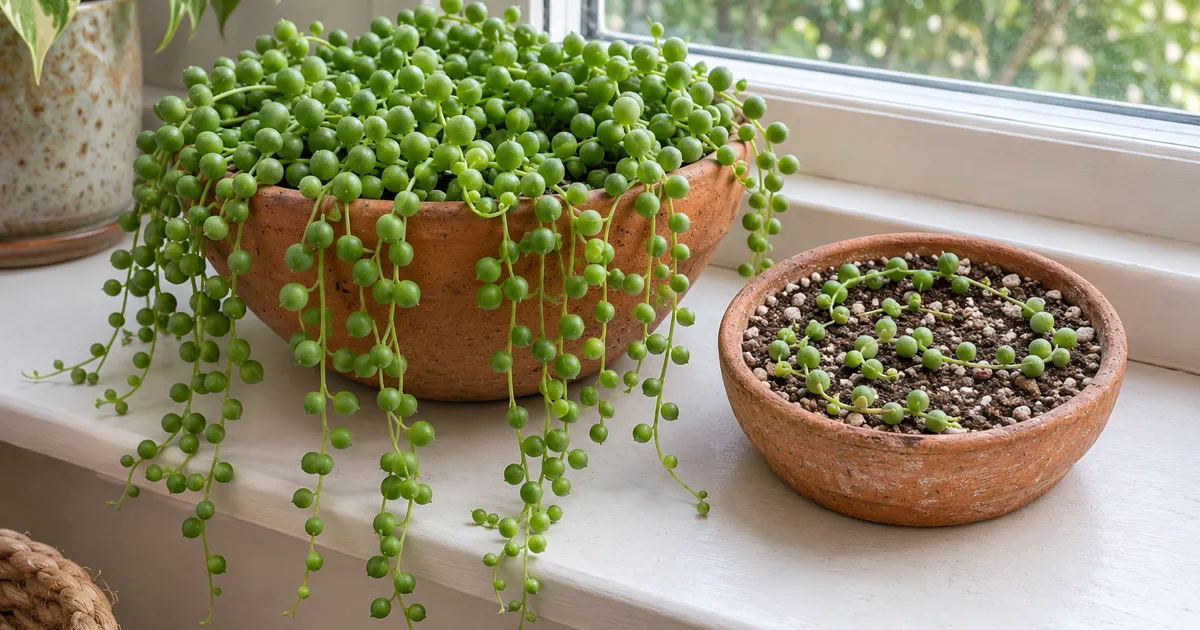
In this article
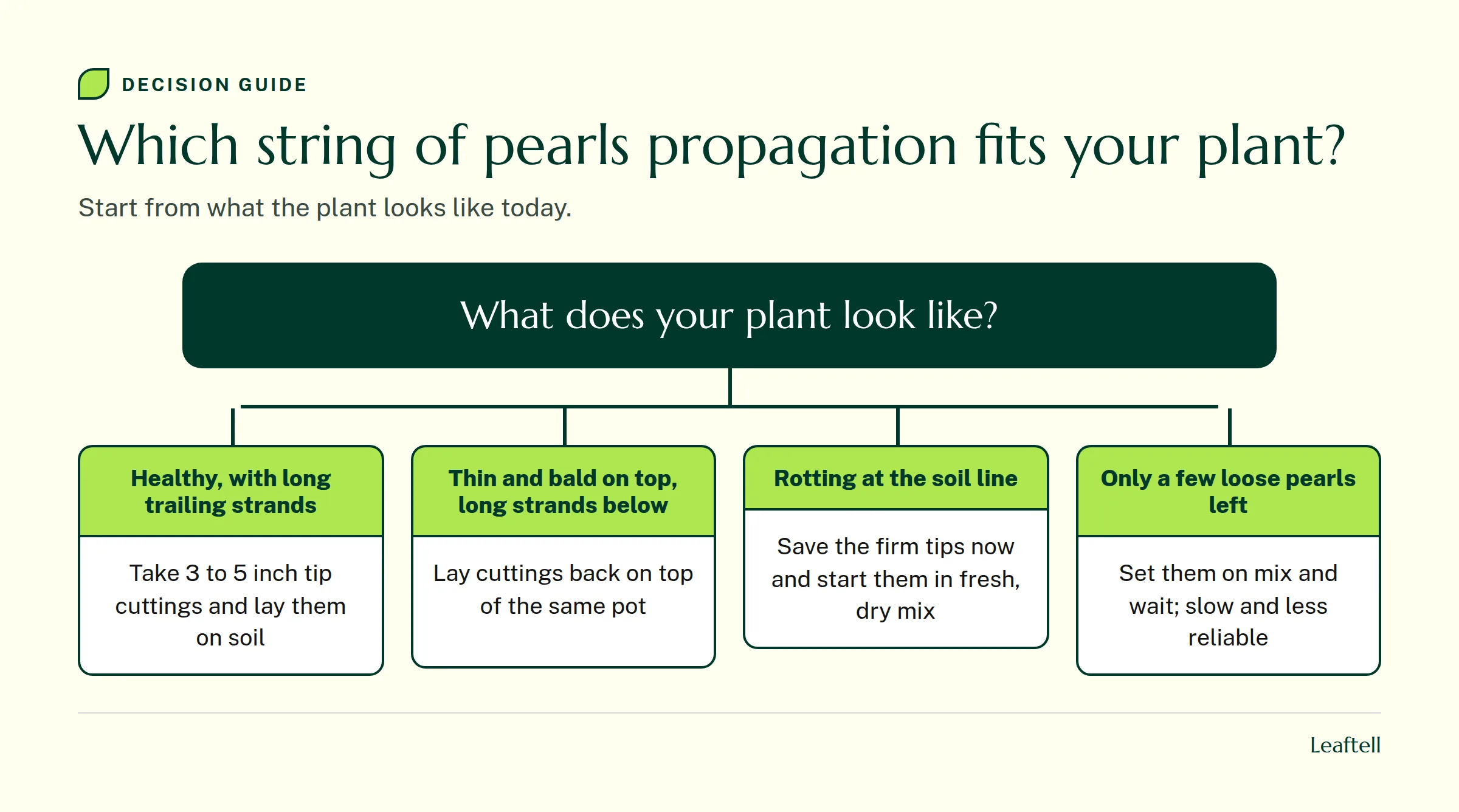
To propagate a string of pearls plant, snip a few 3 to 5 inch tips off healthy strands, strip the pearls from the bottom inch, and lay the cuttings flat on barely damp, gritty mix so the bare stem touches the soil. Keep them bright and only lightly moist, and roots form along the stem in a few weeks. That is the whole method, and it works far more often than it fails.
The part most guides get backwards is the angle. People treat a string of pearls cutting like a pothos cutting and stand it upright in a jar or poke it deep into the pot. This plant does not want that. In the wild it creeps along the ground and, as NC State Extension puts it, forms roots wherever the stem touches the ground. Lay it down, keep the stem in contact with the soil, and you are copying what it already does.
Soil, water or loose pearls: which method works
There are three ways people try to propagate string of pearls (Curio rowleyanus, sold for years as Senecio rowleyanus). They are not equal.
| Method | How well it works | When to use it |
|---|---|---|
| Stem cuttings laid on soil | Best: roots go straight into the mix they will live in | Any healthy plant, ideally in spring or summer |
| Stem cuttings in water | Works, but the roots then have to adjust to soil | If you want to watch roots form, or soil keeps rotting your cuttings |
| Single pearls dropped on soil | Slow and less reliable | Only when a few loose pearls are all you have |
NC State describes stem cuttings as easy and quick, with the single leaf method slower and less reliable. If you have a choice, take stem cuttings. Loose pearls that fall off while you work are worth scattering on the same pot, but do not count on them.
Why laying the cuttings flat works
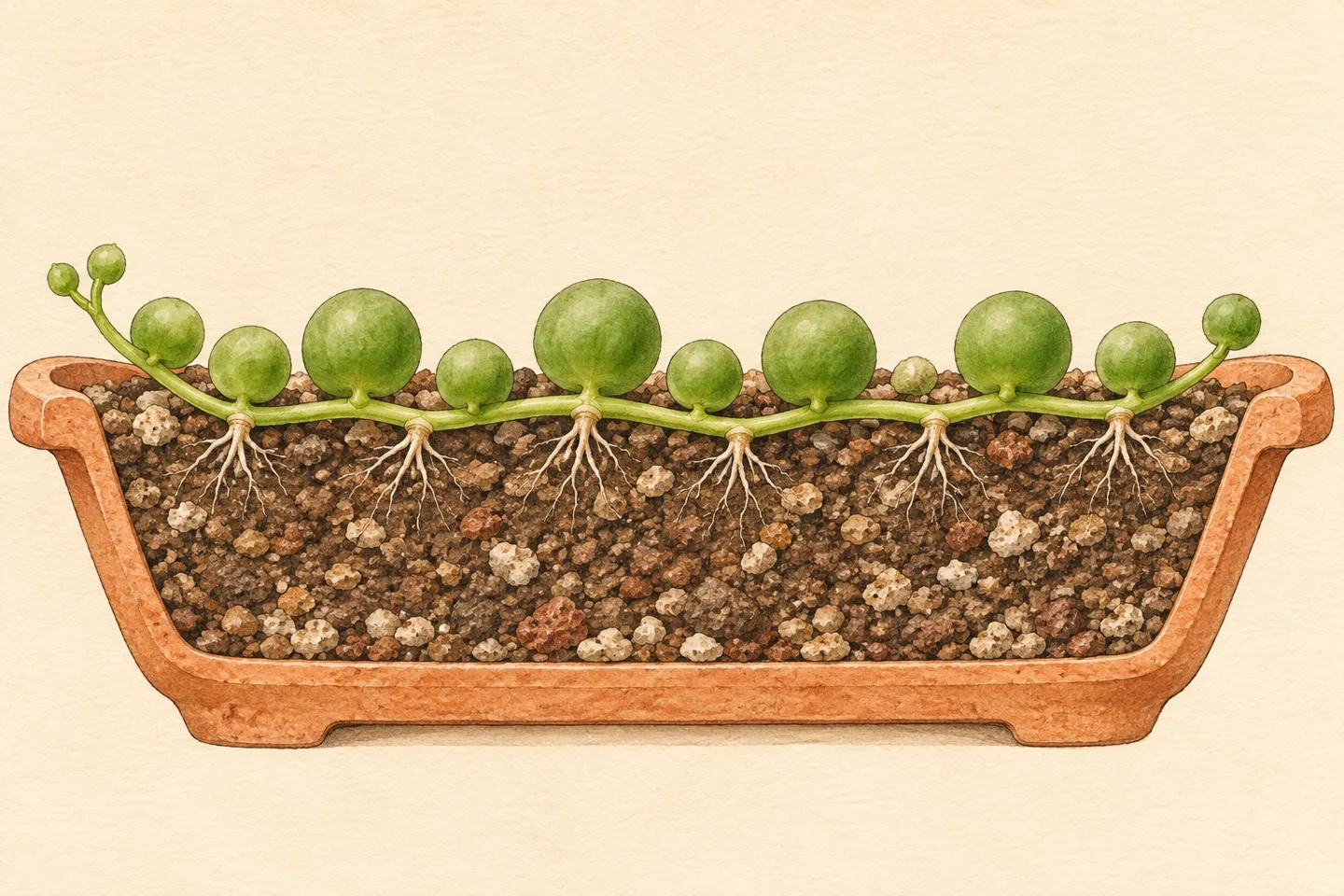
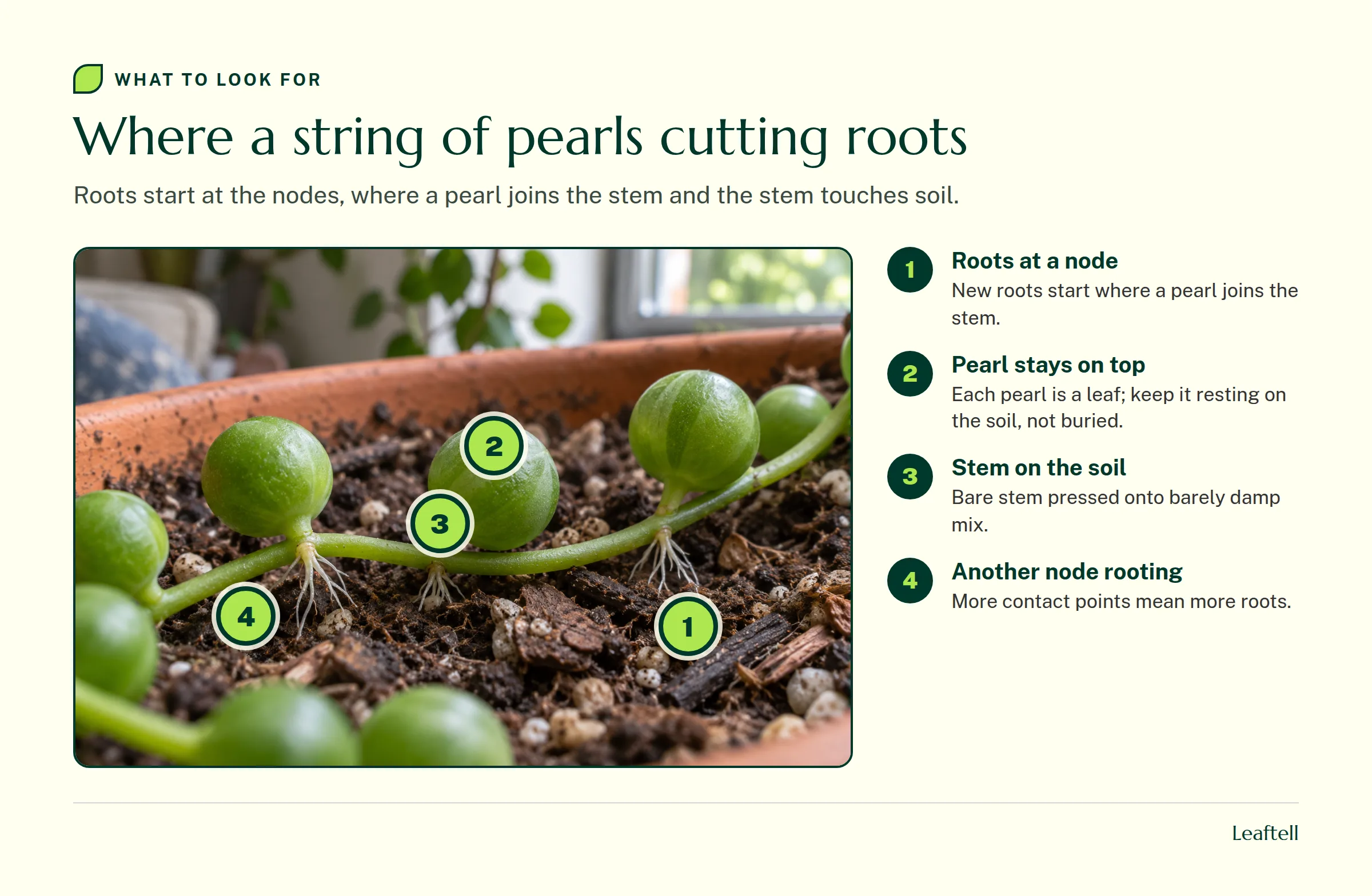
Each pearl is a leaf, and the spot where it joins the stem is a node. Nodes are where new roots start. On a string of pearls they start readily wherever a node sits on damp soil, which is why a strand that trails across a neighboring pot often roots there on its own.
That gives you the rule for planting: as many bare nodes as possible in contact with the mix, and the pearls themselves resting on top, not buried. NC State's instruction is to cover a few of the nodes in the potting mix. Laying the cutting flat and pressing the bare lower stem in lightly does exactly that, while keeping the pearls dry.
How to take and plant string of pearls cuttings
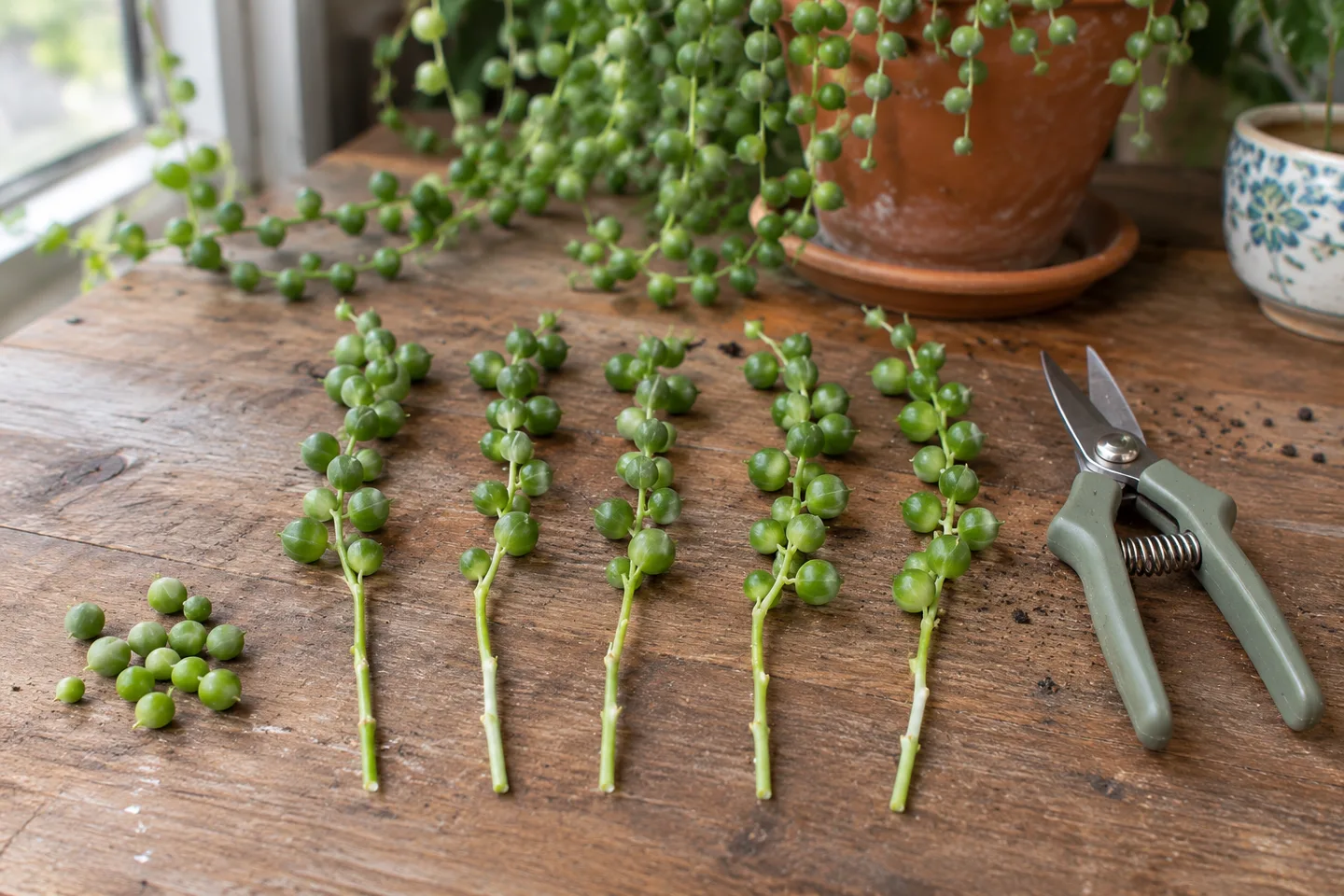
Pick strands that look plump and green from end to end. A strand with wrinkled or soft pearls is already struggling, and a struggling cutting roots slowly if at all. Spring and summer are the easiest time, because the plant is growing.
How to propagate a string of pearls plant from cuttings
- Cut 3 to 5 inch tips
Use clean scissors or snips and cut healthy strands into pieces 3 to 5 inches long, the length NC State suggests. Several short cuttings beat one long one, because each piece can root along its length.
- Strip the bottom inch
Gently pull the pearls off the lowest inch of each cutting so you have a short bare stem. Those bare nodes are what you press into the soil.
- Let the ends dry for a day
Leave the cuttings on a paper towel somewhere bright but out of direct sun for a day or so. The cut ends seal a little, which helps against rot.
- Fill a shallow pot with gritty mix
Use a shallow pot with a drainage hole and cactus mix, or regular potting mix cut with sand or perlite, the mixes NC State recommends. Water it once and let it drain so it is barely damp, not wet.
- Lay the cuttings on the surface
Lay each cutting flat or in a loose coil and press the bare stem lightly into the mix so the nodes make contact. A bent paperclip or hairpin holds a springy strand down. Leave the pearls sitting on top.
- Keep it bright and barely moist
Put the pot in bright, indirect light. Mist or give the surface a small sip of water when it dries out, rather than soaking the pot. Lift a strand gently after two to four weeks: if it resists, it has rooted.
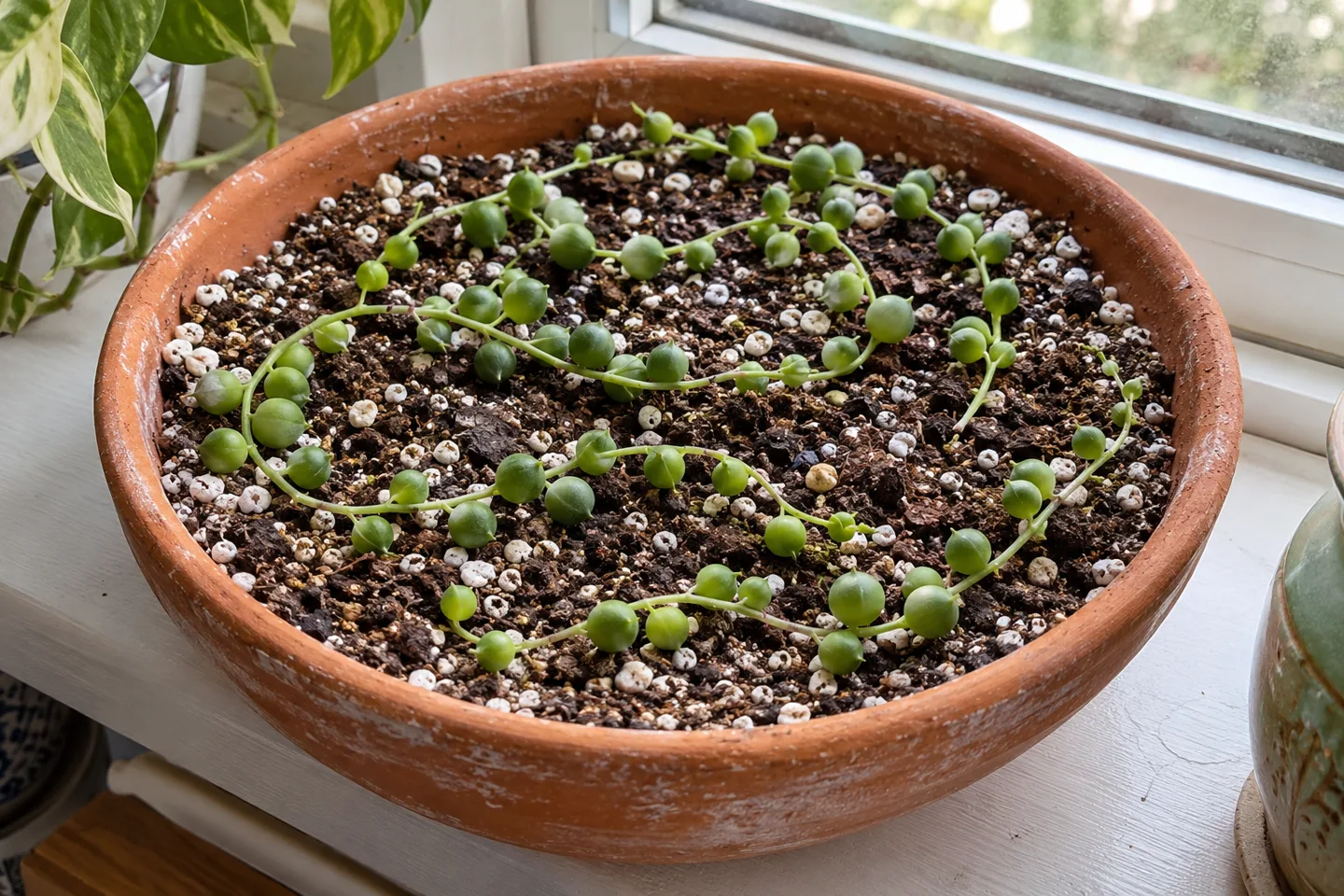
A wide, shallow bowl lets you lay several cuttings side by side and fill the pot faster. Plant more cuttings than you think you need. A full pot looks good sooner, and if one or two fail, nobody notices.
Is it better to propagate string of pearls in water or soil?
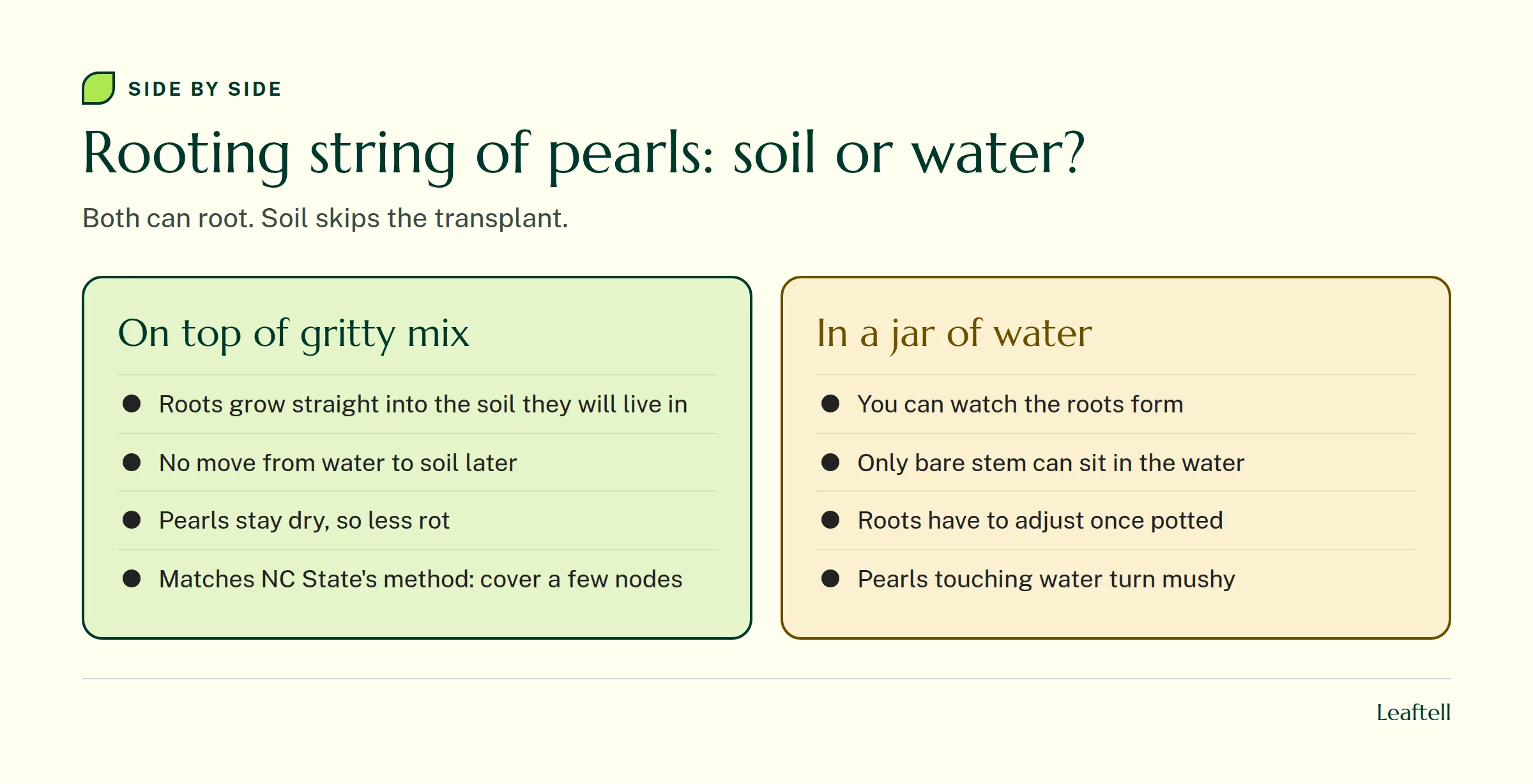
Soil, for most people. Cuttings laid on gritty mix root straight into the soil they will live in, and you skip the move from water to pot. Water rooting does work, and it is a fair choice if you like watching roots form or your cuttings keep rotting in soil.
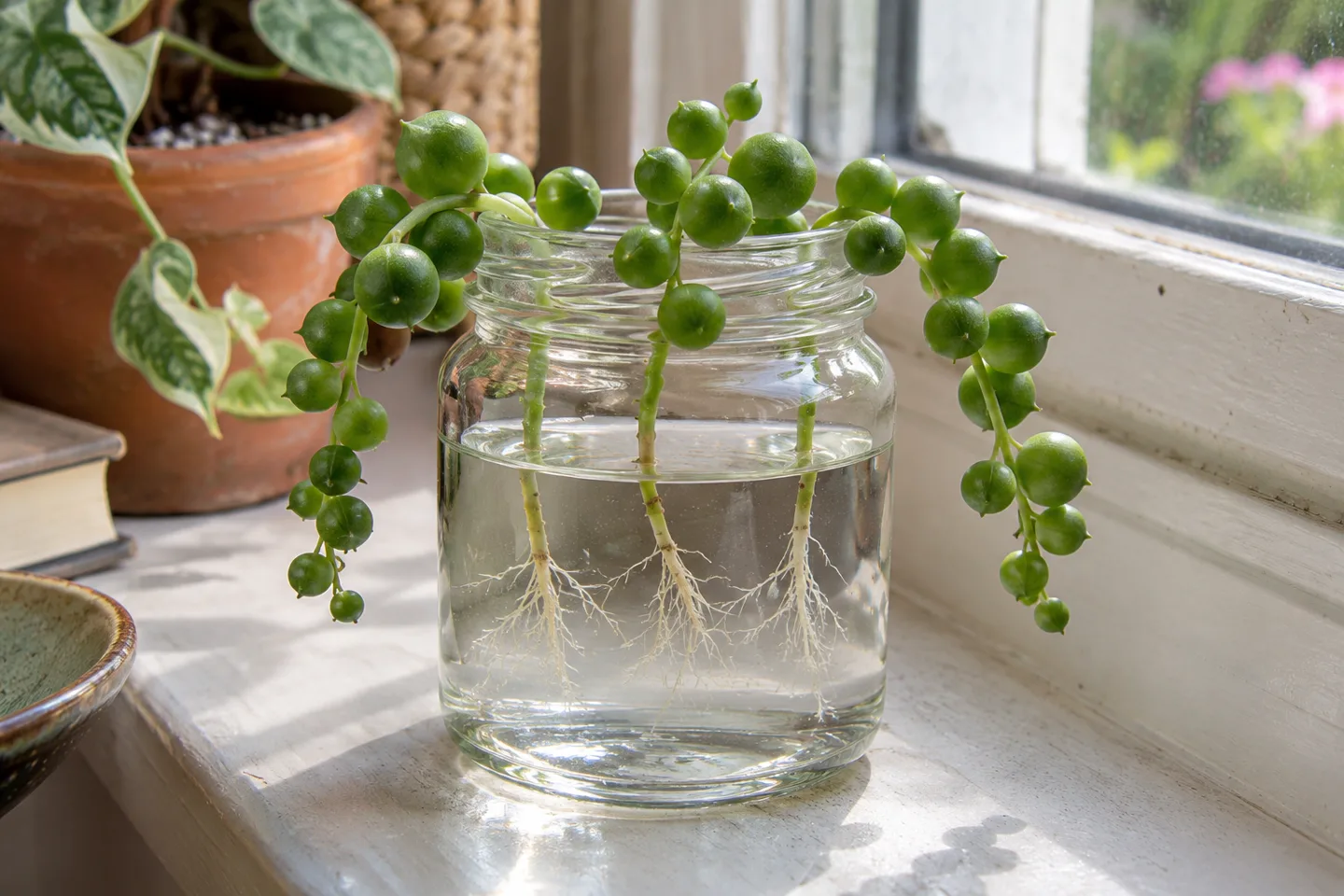
If you use water, only the bare stem goes under. Strip the bottom inch, put that in a small jar, and let the pearls drape over the rim, dry. A pearl sitting in water turns mushy within days. Change the water about once a week and pot the cuttings up once the roots are an inch or so long, before they get long and tangled.
The catch comes at that move. Roots grown in water are adapted to water, and a string of pearls planted into dry mix after weeks in a jar often sits still for a while before it grows again. Keep the new pot barely moist for the first week or two to ease the switch.
Fixing a thin top by replanting in the same pot
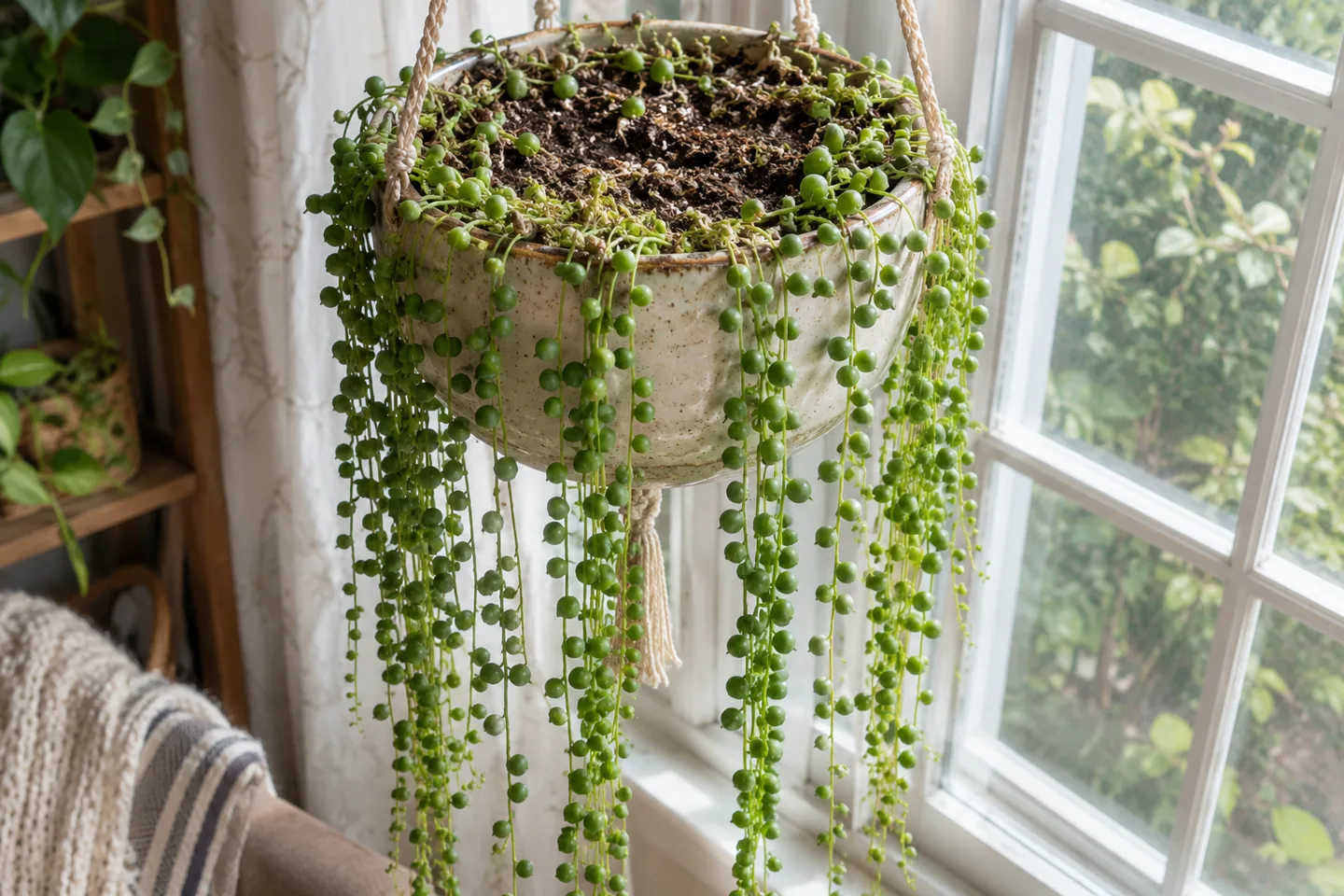
The most common reason to propagate is not wanting more plants. It is a plant that has gone bald on top while the strands keep getting longer. NC State notes these plants tend to die back after several years and recommends propagating from cuttings instead of trying to revive the old plant.
You do not need a new pot for that. Cut a few of the long strands, take 3 to 5 inch tips from them, and lay those tips on the bare soil in the center of the same pot, pressed in as above. They root into the existing mix and fill the crown back in. This is also a good moment to check the old roots and the mix; our repotting guide shows what healthy roots look like.
Do string of pearls like deep or shallow pots?
Shallow. The roots stay near the surface, so a shallow pot or bowl suits the plant and is especially right for cuttings. A deep pot holds a lot of mix below the roots that stays wet long after the top has dried, and that wet layer is where rot starts.
Pick a pot only a little wider than the cluster of cuttings, with a drainage hole. Unglazed clay dries fastest and is the forgiving choice. If your soil stays damp for days after watering, the mix needs more grit; our guide to potting mix for indoor plants covers what to add.
The first weeks after planting
New cuttings need very little. Bright, indirect light, a warm room, and a surface that is barely moist rather than dry or wet. NC State gives 70 to 80 degrees as the best summer temperatures, so a cool winter windowsill roots more slowly.
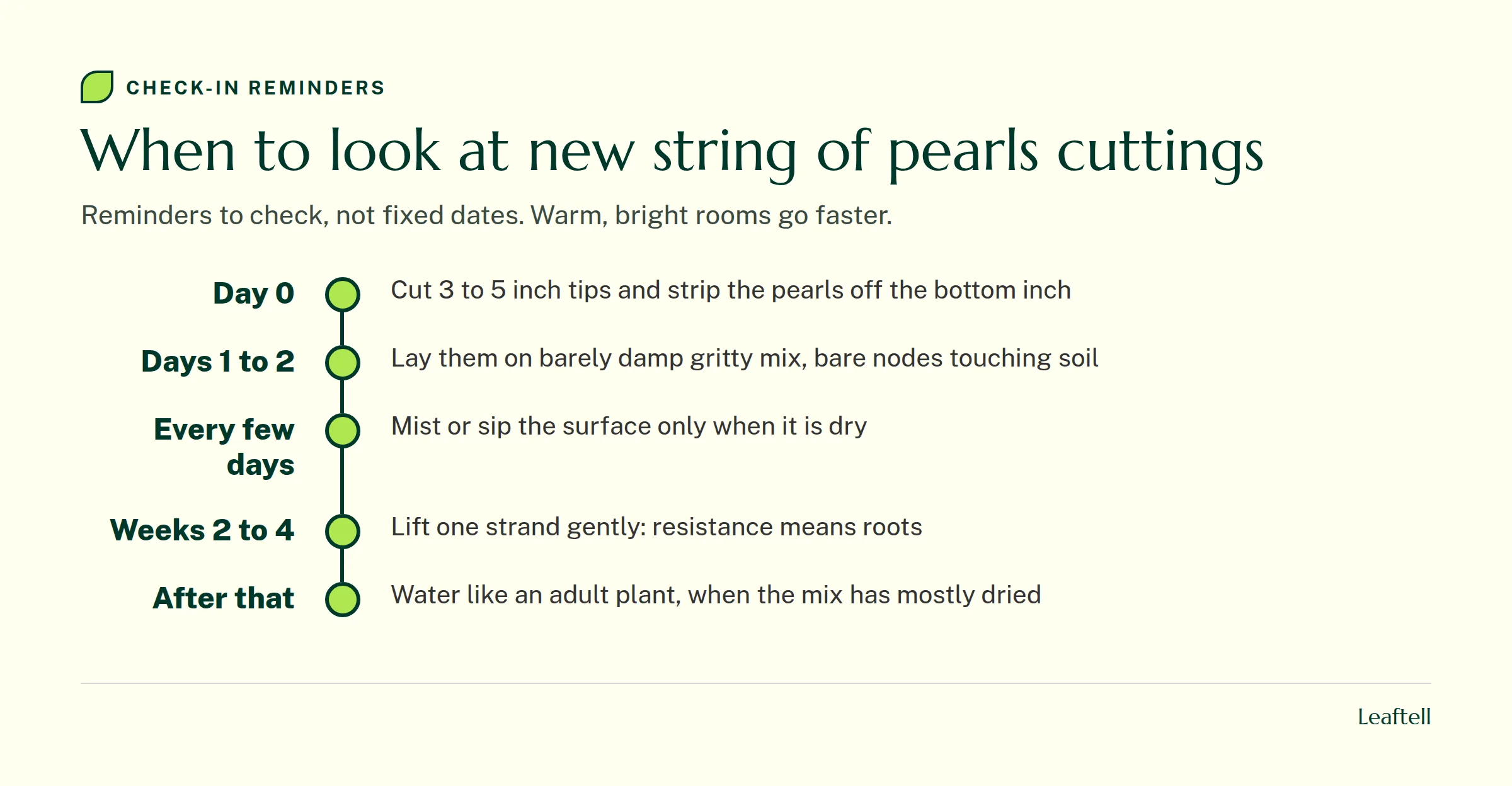
These are check-in reminders, not a schedule. Once the cuttings resist a gentle tug and show new growth at the tips, treat them like an adult plant. Unlike many succulents, NC State says string of pearls should never dry out completely between waterings, so water when the mix has mostly dried rather than waiting for bone dry. Our guide on how often to water succulents explains how to check the mix below the surface. Once they are established, our string of pearls care guide covers light, pots and pruning for the grown plant.
What goes wrong and what it costs
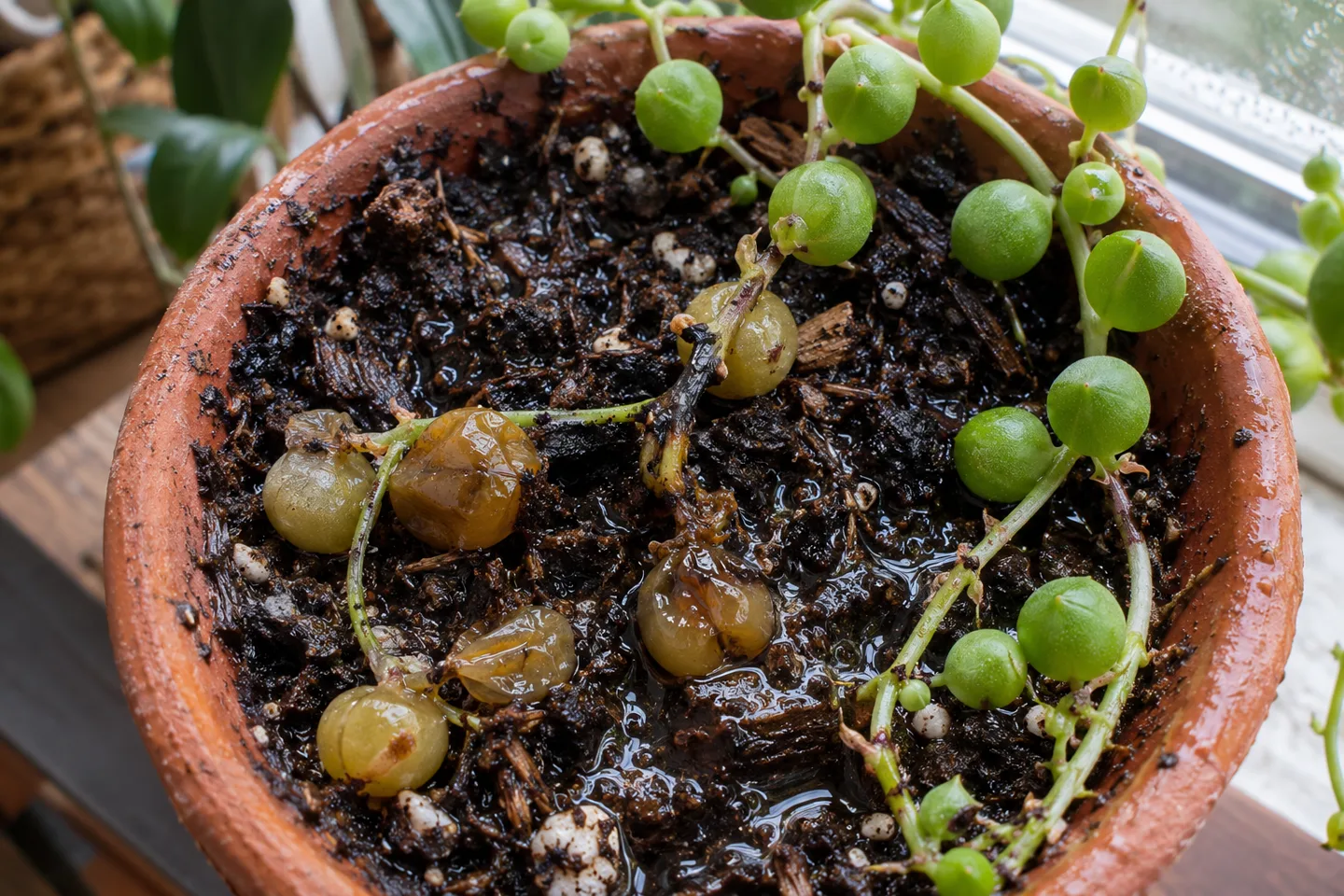
- Soggy mix. The biggest killer. Pearls at the soil line turn soft, see-through and yellow brown, and the stem blackens. NC State warns that overwatering leads to root rot. Lift any firm green tips off the strand, let them dry for a day and restart them in fresh, dry mix; our guide to saving an overwatered plant covers the rest of the pot.
- Burying the pearls. Pearls pushed under the soil rot. Only bare stem goes into the mix.
- Mix left bone dry. Cuttings with no roots yet cannot pull water from deep down. If the surface stays dry for days, the pearls shrivel and flatten. A light mist fixes it.
- Cuttings from a sick plant. Shriveled or mushy strands make weak cuttings. If the mother plant is declining, our guide to why succulents die helps you find the cause before it reaches the new pot.
- Too little light. In a dim spot, roots form slowly and new growth comes in stretched with wide gaps between pearls.
Keep cuttings away from pets and kids
NC State lists string of pearls as toxic to both humans and pets, and its sap can irritate skin, so wear gloves if you have sensitive skin and wash your hands after handling cuttings. Trays of cuttings on a low windowsill are easy for a cat or a toddler to reach. If you think a pet chewed some, call your vet or the ASPCA Animal Poison Control Center rather than waiting for symptoms.
Check your string of pearls in Leaftell
Propagating string of pearls comes down to copying how it grows: short tip cuttings, bare stem against barely damp gritty soil, pearls on top, bright light and patience for a few weeks. It is one of the easier plants to keep going this way, and the same trick fixes a thinning crown. The same method works for many trailing succulents; our guide to propagating succulents covers the ones that root from leaves instead, and succulent plant care covers what new plants need once they are growing.
If your cuttings start to shrivel or go soft and you cannot tell whether it is too much water, too little or too little light, check your string of pearls in Leaftell with a photo of the whole pot and a close-up of the pearls at the soil line. Set yourself a check-in reminder to take a fresh photo in about seven days and compare.
Check your growing conditions with the plant watering calculator.
Frequently asked questions
Soil is easier for most people. Cuttings laid on barely damp, gritty mix root straight into the soil they will live in. Water also works if only the bare stem is submerged, but the roots then have to adjust to soil after potting.
Yes. Strip the pearls off the bottom inch of a cutting and put only that bare stem in water, with the pearls dry above the rim. Change the water weekly and move the cutting to gritty mix once the roots are about an inch long.
Shallow. Their roots stay near the surface, and a deep pot holds wet mix below them that invites rot. Use a shallow pot or bowl with a drainage hole, ideally unglazed clay.
Usually a few weeks in a warm, bright spot, and longer in a cool room. Lift a strand gently after two to four weeks; if it resists, roots have formed.
Not very, once you get watering and pot size right. The usual losses come from soggy soil in a deep pot or too little light. Because older plants tend to thin out after a few years, taking cuttings now and then is part of keeping one going.
Share article
About the author

Keep checking your plant
Plant care reference
Indoor plant care
Build a routine around your plant, light and potting mix.
Plant care reference
Why is my plant dying
Trace leaf and root symptoms before choosing a care change.
Plant care reference
Pothos plant care
Choose a growing spot and prune a trailing pothos for fuller growth.
Plant care reference
How to fix root rot
Inspect root firmness and drainage, then decide whether to repot.