How to Get Rid of Aphids: 5 Steps Before Any Spray
Filip Leszczyński 16 October 2026 10 min read
In this article
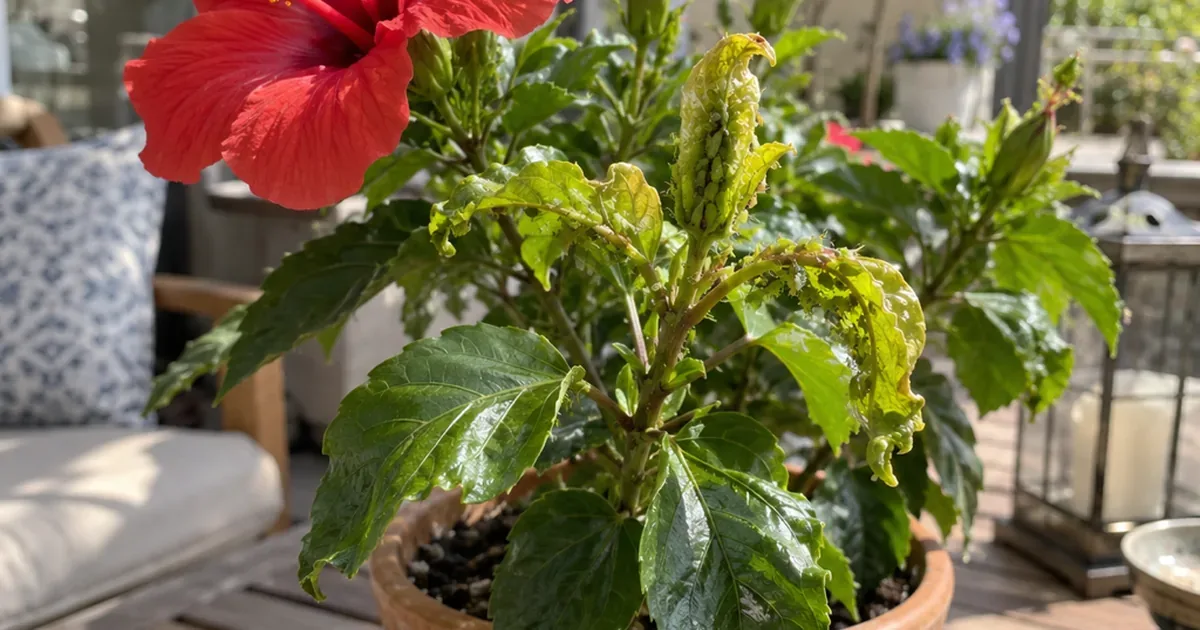
To get rid of aphids, confirm the clusters on soft new growth, then rub them off by hand or rinse them away gently where the plant can take it. Indoors, move the plant away from its neighbors first; outdoors, look for the predators already eating them before you spray anything.
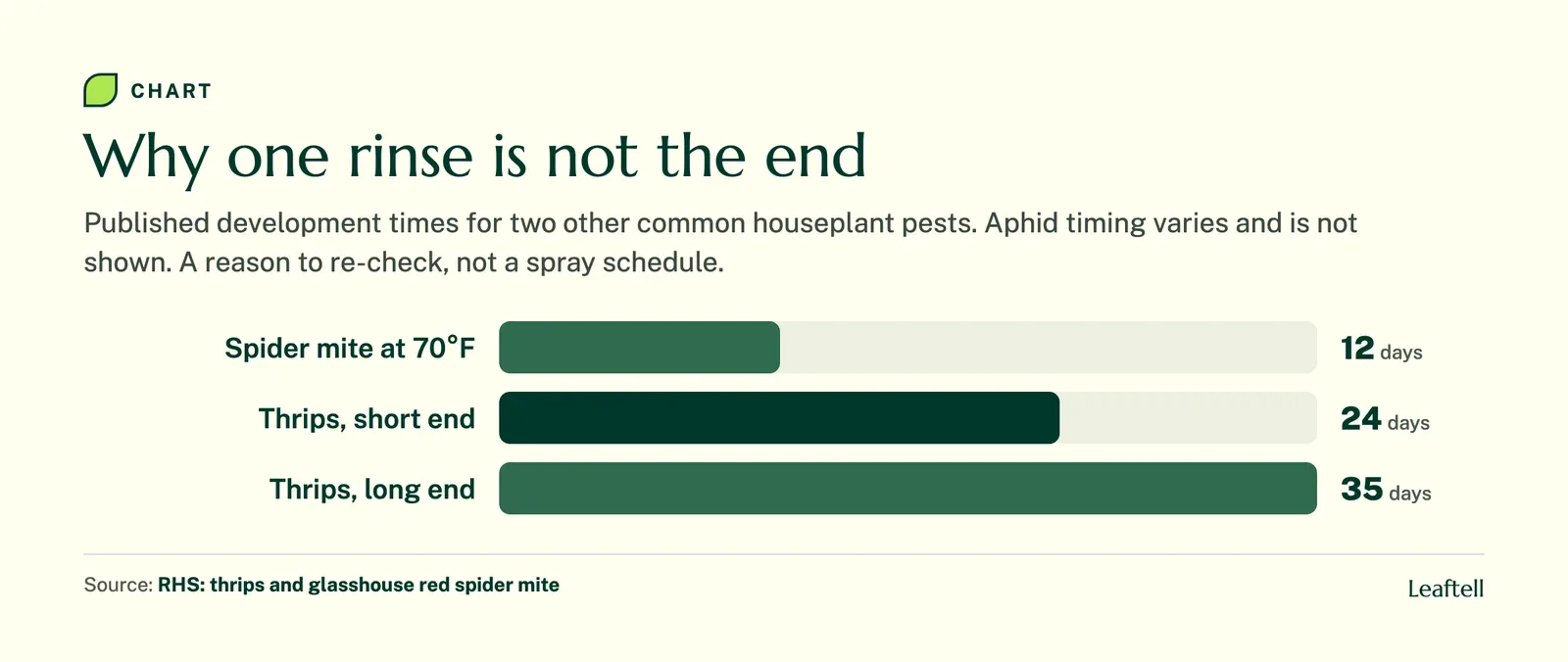
Most small colonies never need a product. What they need is follow-up, because a rinse clears the insects you can see and new ones can still arrive or hatch.
Below: where aphids actually live (mostly not in the soil), how to remove a colony without wrecking the plant, why natural enemies matter outside, when a labeled soap or oil like neem makes sense, and how to tell new colonies from old curled leaves.
Do aphids live in soil? Check the tender tips first
Most common aphids do not live in soil. They cluster above ground on new stems, leaf undersides and flower buds. Root-feeding aphids exist, but seeing aphids on a shoot tip is no reason to treat the potting mix.
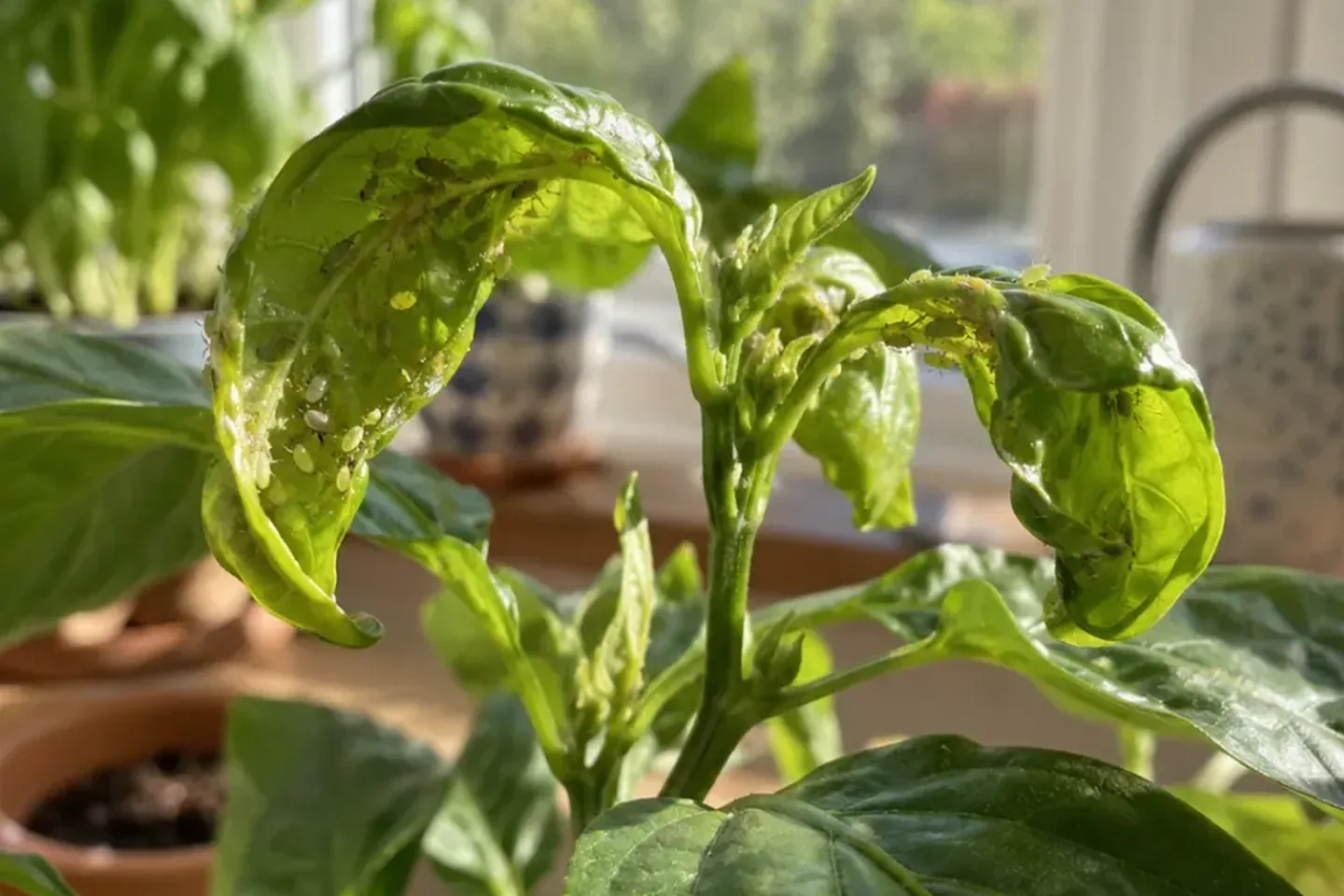
Start at the newest growth. Aphids gather in visible groups on soft tissue, and they come in green, black, pale and other colors, so judge by shape and location rather than color. A close photo often shows details you miss while the plant moves.
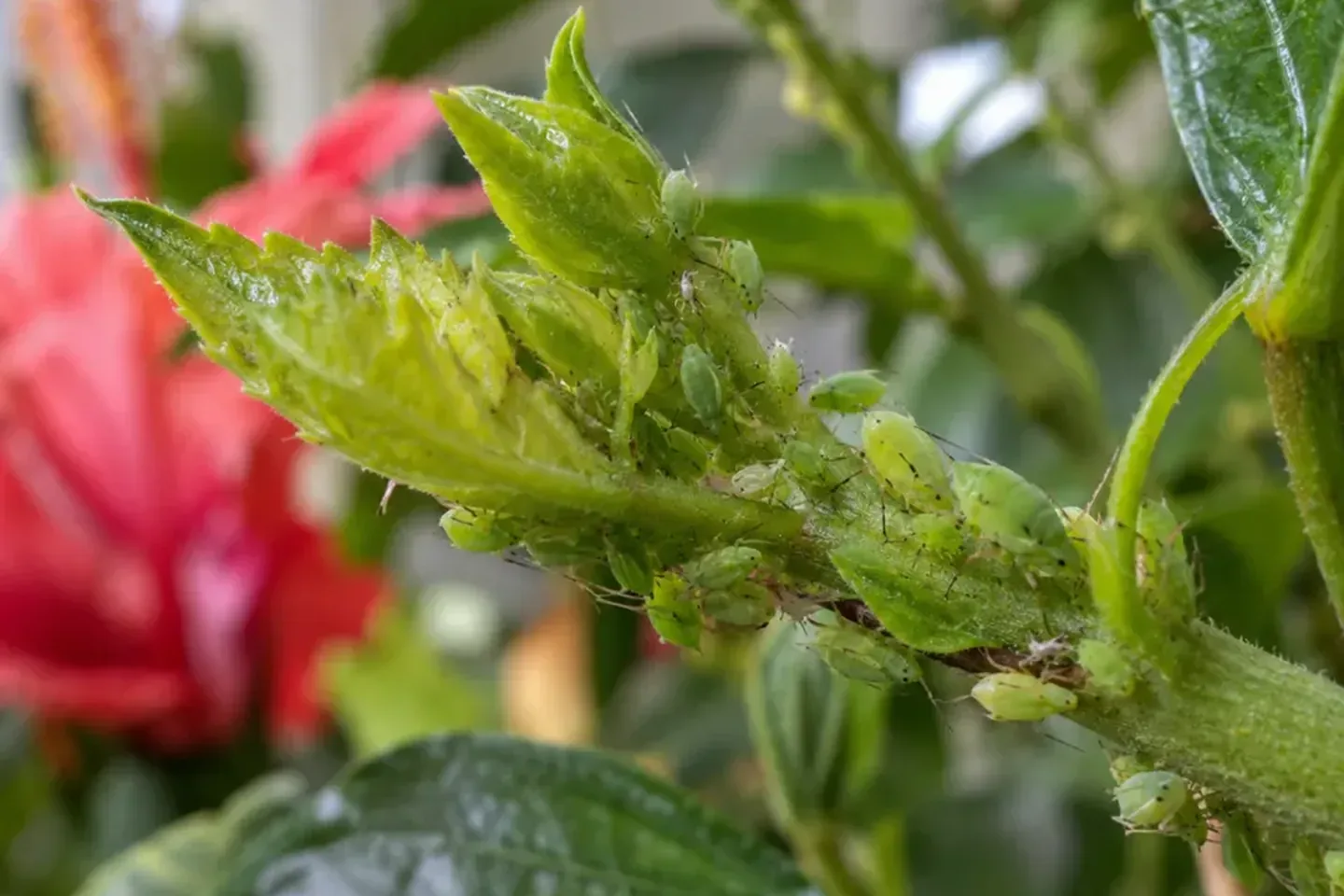
Look under and around the colony too. Curled growth, white shed skins and a sticky shine on leaves below are supporting clues. UC IPM links aphid colonies with honeydew and curled foliage. Still, sticky leaves alone are not proof, because scale insects and mealybugs also leave honeydew, and thrips distort new leaves in a different way.
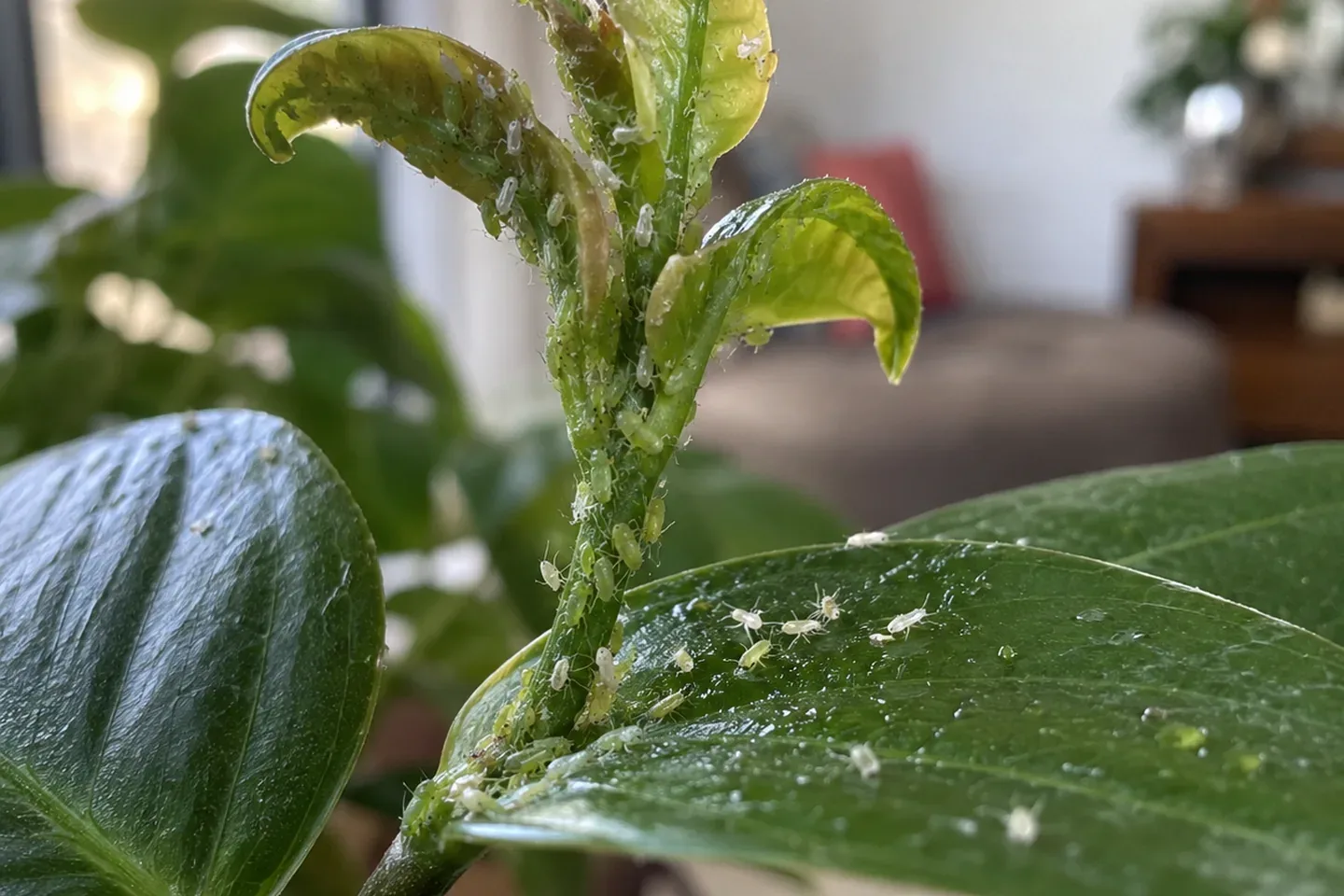
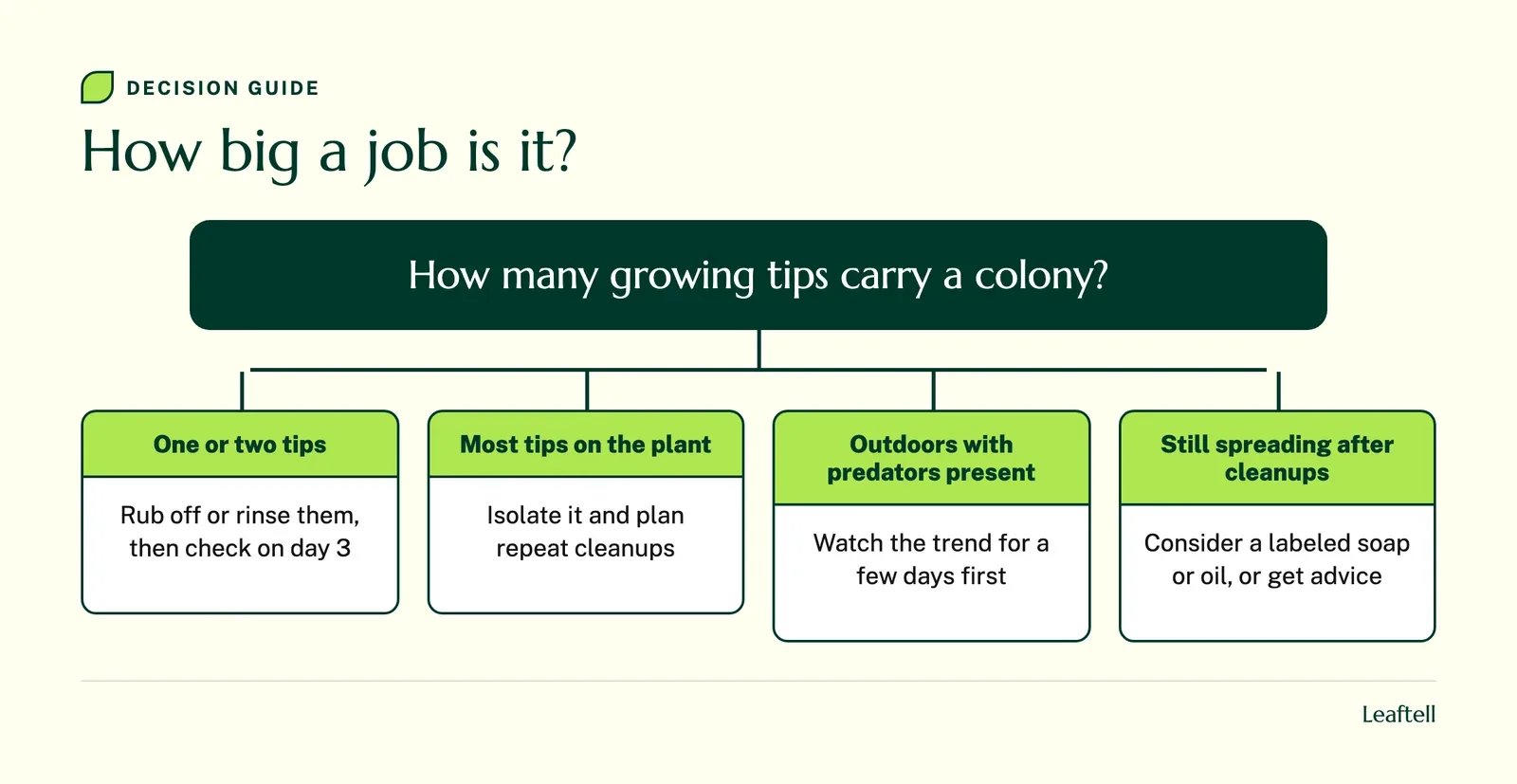
Now count. How many growing tips carry a colony, not just how many insects sit on the worst one? Two tips out of twenty is a quick local cleanup. Colonies on most tips is a bigger job. Compare a healthy shoot on the same plant too, because some new leaves are naturally curled.
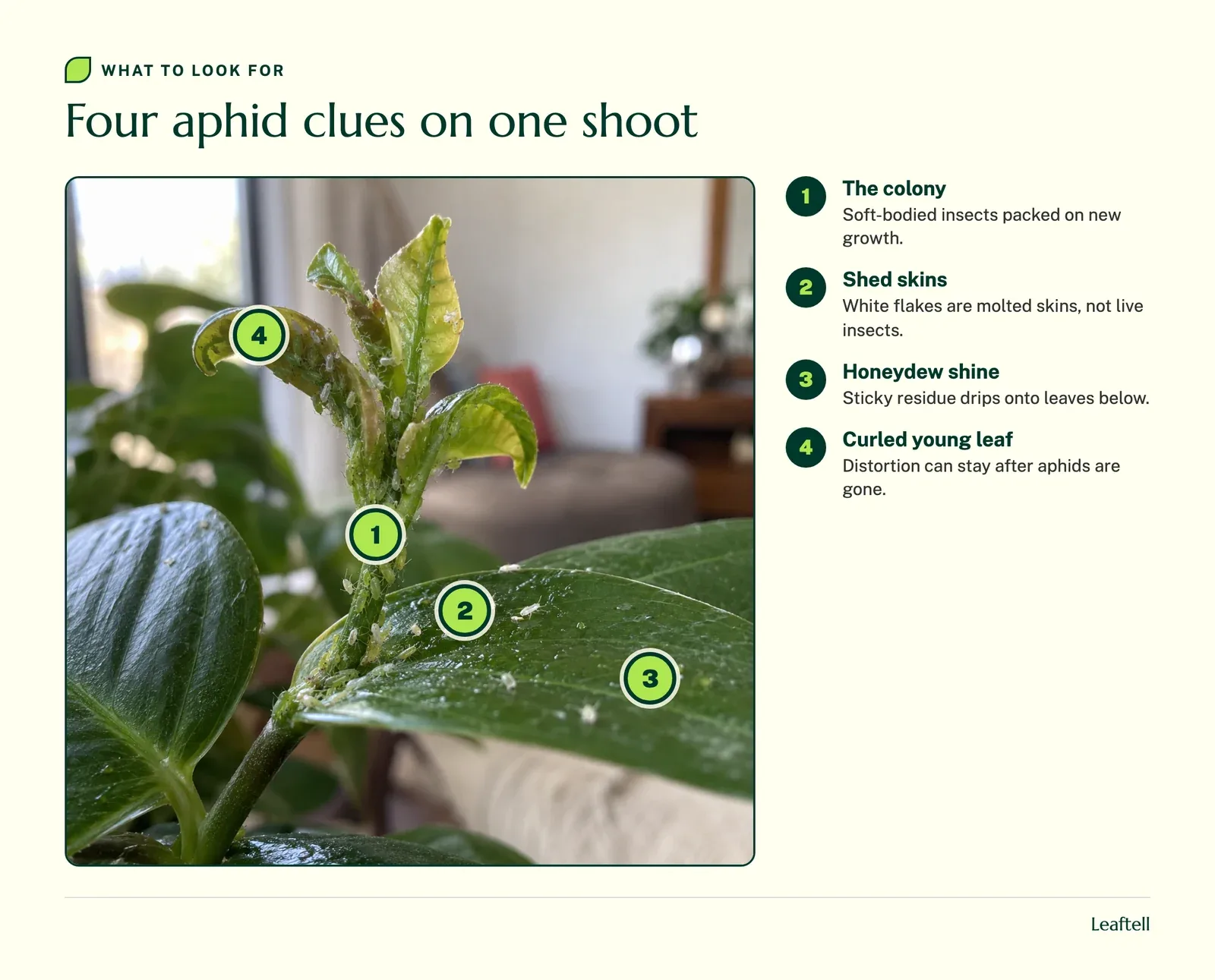
Take your photos before you rinse or prune. If the identification needs a second opinion later, those images are your evidence.
| What you find | What it means | Best first move |
|---|---|---|
| A colony on one or two soft tips | A small, local problem | Rub off or rinse those tips |
| Colonies on most tips | Spread across the plant | Isolate it and plan repeat cleanups |
| Outdoor colony with predators nearby | Natural control may be working | Watch the trend for a few days first |
| Sticky film but no insects seen | Could be old honeydew or another pest | Clean a patch and look above it |
| Old curled leaves, no live aphids | Past damage, not a current colony | Judge new growth instead |
How to get rid of aphids naturally: remove small colonies first
The most natural way to get rid of aphids is to take them off by hand. Wipe a small colony away with your fingers or a damp soft cloth, or rinse it off while supporting the stem. Match the force to the plant: a seedling needs a gentle trickle, a woody shoot can take more.
How to get rid of aphids without a spray
- Isolate the plant
Indoors, move it away from other plants so aphids cannot walk or drop onto them.
- Photograph and count
Photograph the colonies and count how many tips are affected.
- Wipe or rinse the colonies
Support each stem and remove insects by hand or with a gentle rinse. Tip the pot so water does not soak the root ball.
- Prune only what the plant can spare
Cut a heavily infested tip only if most of the growing tissue remains. Bag it before carrying it through the room and clean the blade.
- Clean up and check again on day 3
Wipe sticky shelves and pick up fallen material, then inspect the same tips and one clear tip three days later.
Do not blast a fragile plant because a strong jet removes more bugs. And do not prune most of a small plant to get rid of one colony; it leaves the plant with little to recover from. The houseplant pests guide explains how to check a whole collection without treating every nearby pot.
How to get rid of aphids permanently: let natural enemies work
There is no permanent fix, but outdoors the closest thing is a garden full of aphid predators. Before you spray an outdoor colony, look for insects feeding on it and for signs of parasitism. A broad spray kills those helpers along with the pest.
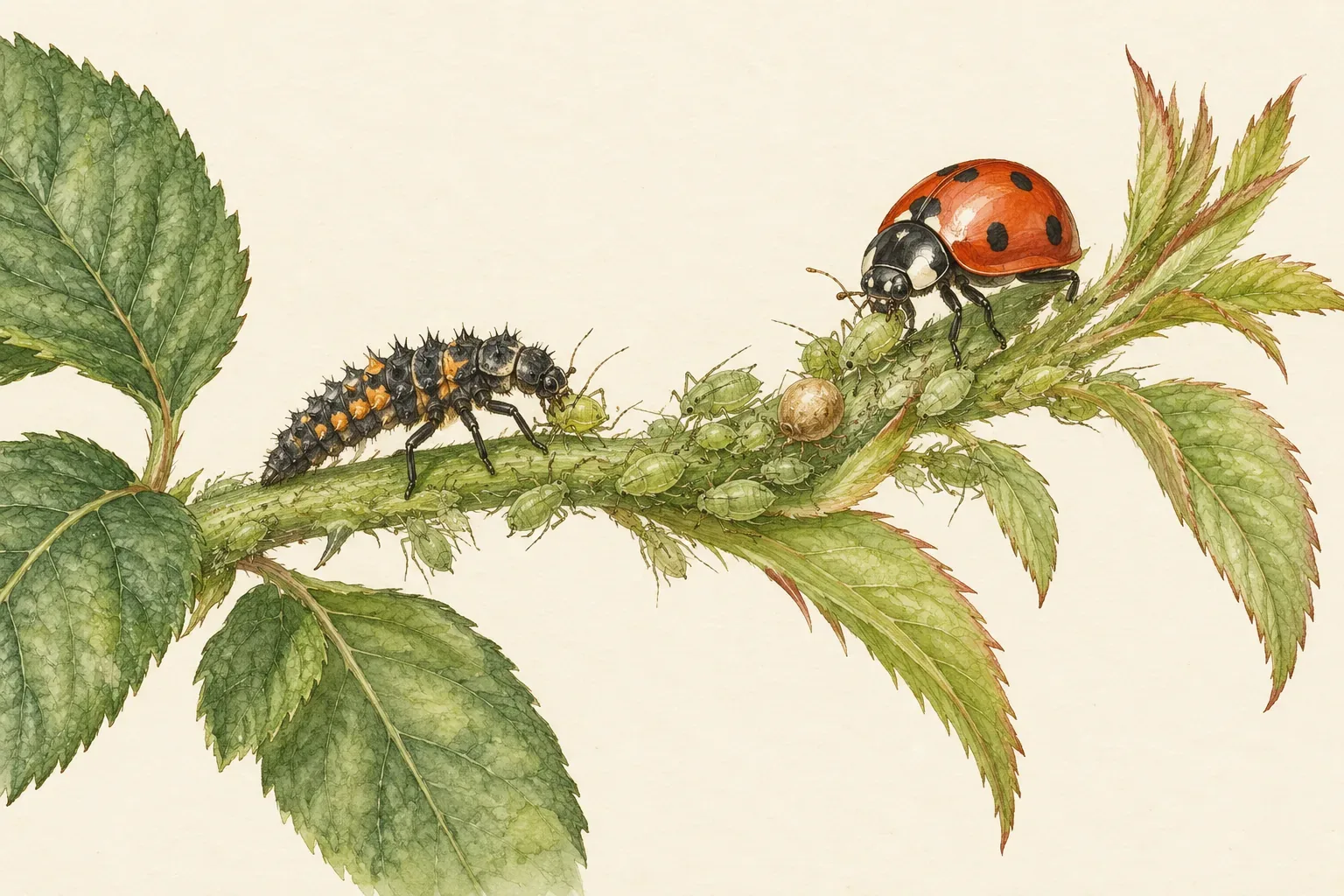
A small colony on an otherwise vigorous plant can often be left to the predators while you watch and remove a few by hand. Check several shoots over a few days. Are aphid numbers rising, steady or falling? Is new growth still coming? Note any ants around the sticky deposits, but do not let them dictate a treatment.
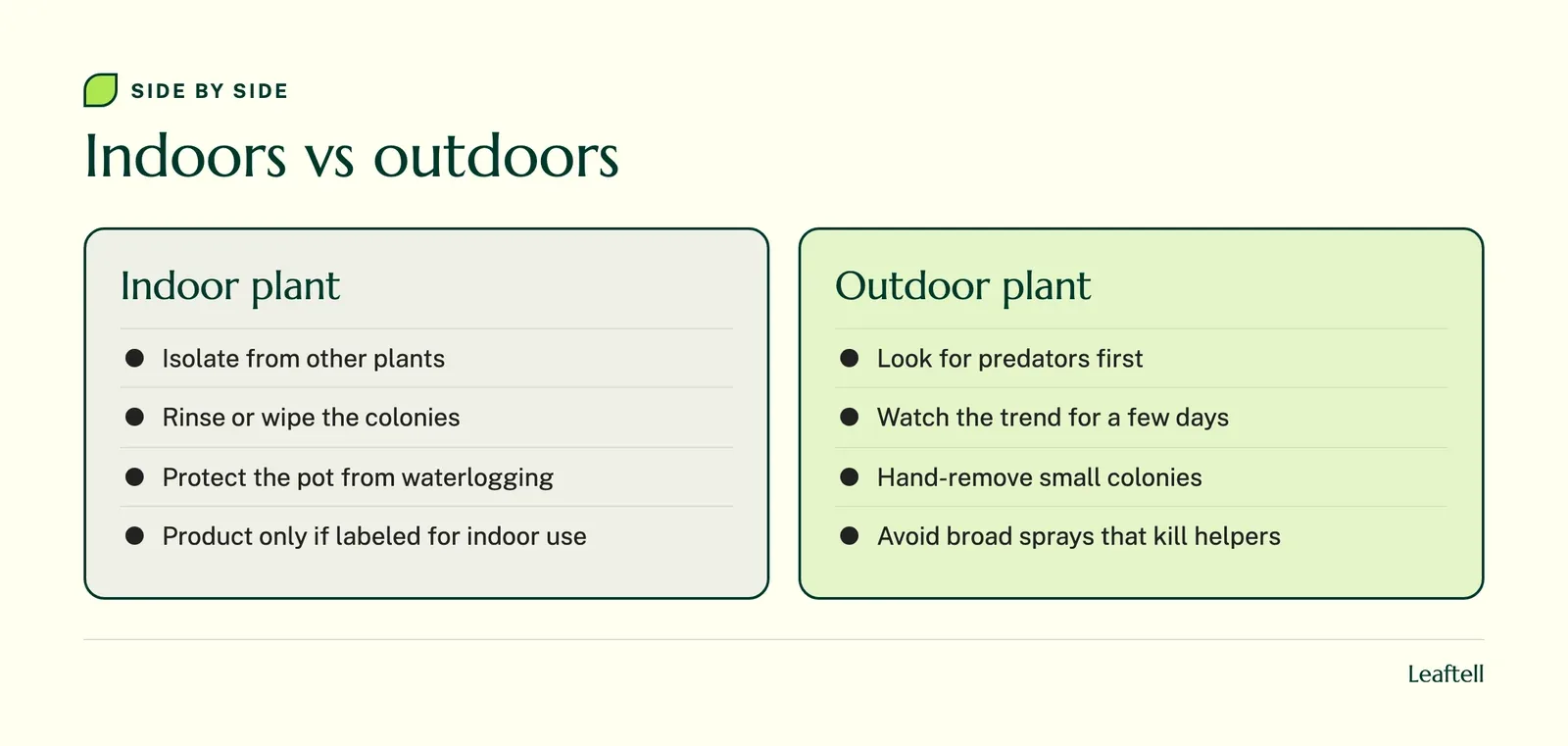
Indoors there are usually no natural enemies, so do not copy a garden approach onto a living room shelf, or the other way round. For vegetables, keep two questions apart: damage to the plant, and whether the harvest is safe to eat. This guide only covers the first. If color change becomes the main issue on tomatoes, read why tomato leaves turn yellow. Ask your local extension service about crop-specific thresholds if colonies keep building.
Will neem oil kill aphids? Use a labeled product only when needed
Some labeled oil products, including neem-based ones, can help manage aphids, but only when the label covers your plant and situation. Reach for one only after hand removal and observation have not kept up. Insecticidal soap is the other common class.
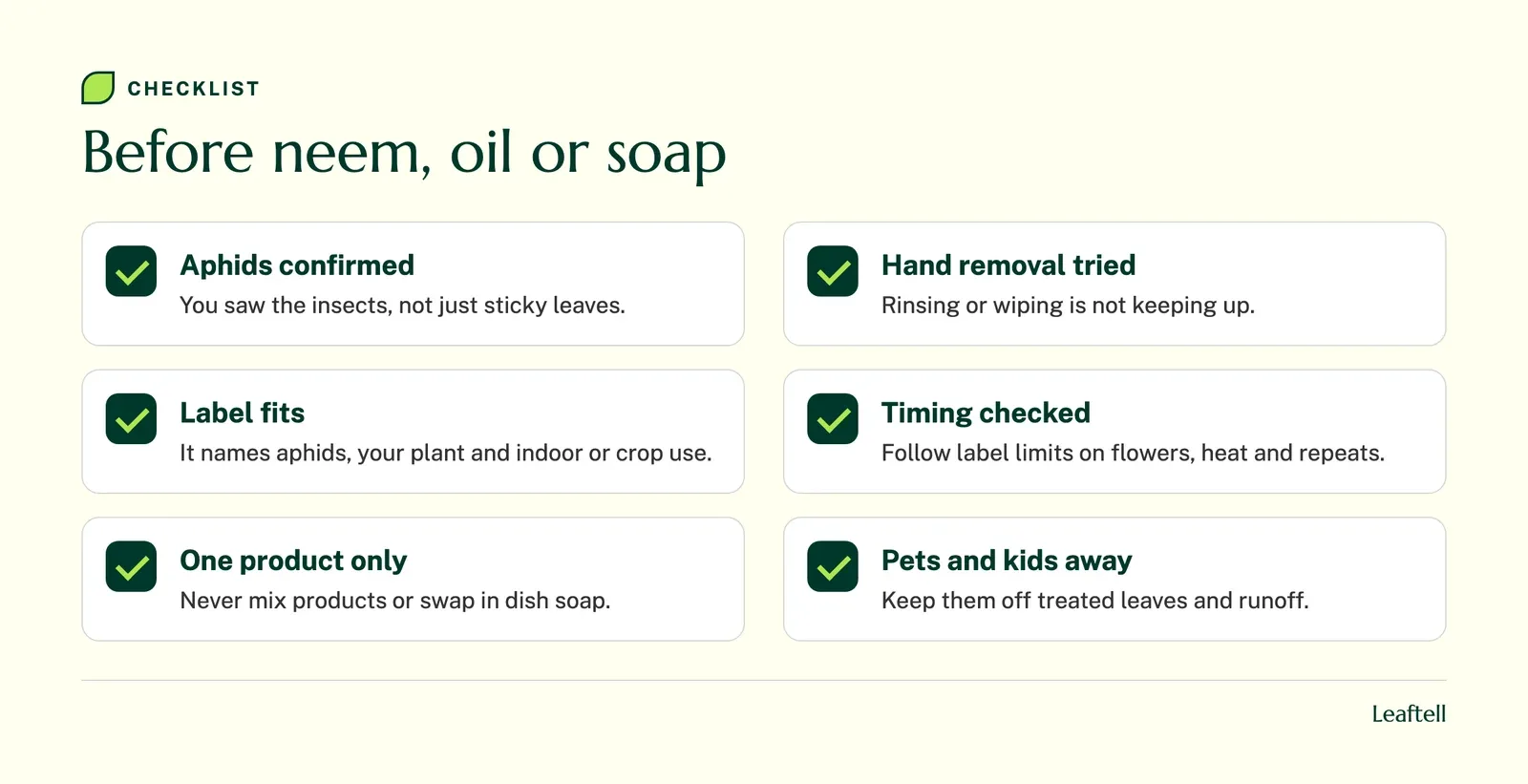
Follow the label on flowers, temperature, coverage and repeat timing. Never mix products, and never use dish detergent as a stand-in for a formulated insecticidal soap. On edible crops, the product must be labeled for that crop, and every harvest restriction applies. Indoors, check the label allows indoor use before bringing a garden spray inside.
Keep children and pets away from the product, runoff and treated leaves, as the label says. Check the plant on the ASPCA toxic plant list, especially when pruned leaves end up on the floor. That list does not cover pesticide exposure; for that, call a vet or poison service with both the plant and product names.
If aphids come back, do not make the mix stronger. Recheck the identification, the coverage and the label's timing, ideally with an adviser.
Aphid mistakes and what they cost
The costliest mistake is spraying an outdoor colony that predators were already handling. You kill the helpers along with the pest, and any aphids that survive or arrive later find fewer enemies waiting.
- Dish soap and water. It can damage leaves and is not the same as a labeled insecticidal soap.
- Treating the soil. Shoot-tip aphids are not in the mix. You stress the roots for nothing.
- Over-pruning. Removing most of the growing tissue to kill one colony leaves the plant weak.
- Coffee grounds and home remedies. They are not reliable aphid control and delay the cleanup that works.
- Judging by old curls. Distorted leaves stay distorted after the aphids are gone, so you keep treating a clean plant.
How to get rid of aphids naturally for good: follow the new tips
After cleanup, pick the shoots you cleaned plus one that was clear, and check them on day 3, day 7 and day 14. Count affected tips each time and look at fresh growth. By day 14 you will know whether hand removal is keeping up or whether you need advice.
Old curled leaves may stay misshapen even when every aphid is gone, so judge new growth and live colonies only. Sticky residue left from before the cleanup is not a new colony either; this explainer on sticky leaves helps you read it. If new leaves on tomatoes or peppers keep rolling with no aphids present, the tomato leaf curling guide covers other causes.
Keep normal care steady while you monitor. For a houseplant vine, pothos care gives a routine based on light and soil moisture, not on how often you inspect.
Start small, and let the trend decide
Rub off or rinse small colonies, isolate indoor plants, give outdoor predators a few days to work, and use a labeled soap or oil only when hand removal is losing. Judge success by live colonies and clean new growth, never by old curled leaves.
Get help when colonies keep spreading after repeated cleanups, when a crop is involved and you need crop-specific advice, or when you are not sure the insects are aphids. Bring the plant name, where it grows, close photos of the insects and a record of what you removed or applied. Then check your curled new growth in Leaftell with those notes in hand.
Sources
Check your growing conditions with the plant watering calculator.
Frequently asked questions
A rinse or rubbing them off clears exposed colonies right away. New aphids can still hatch or arrive, so check the tender tips again after a few days.
Dish detergent can injure leaves and is not the same as a labeled insecticidal soap. Start with plain water or hand removal where the plant tolerates it.
Some labeled oil products, including neem-based ones, can help manage aphids. Plant tolerance, coverage and the label directions matter, and outdoors you should protect beneficial insects.
Physical removal is often enough for small colonies. If you need a spray, a labeled insecticidal soap or horticultural oil is a better choice than a homemade recipe.
Most familiar aphids live on above-ground growth, though some species feed on roots. Find the pest and where it is before choosing what to treat.
No, coffee grounds are not a reliable aphid control. Inspect the soft tips and remove colonies by hand, or use a labeled product if the infestation warrants it.
A rinse removes the insects you can see, but others can remain hidden or arrive from nearby plants. Regular checks of new growth catch returning colonies while they are still small.
Share article
About the author

Keep checking your plant
Plant care reference
Indoor plant care
Build a routine around your plant, light and potting mix.
Plant care reference
Why is my plant dying
Trace leaf and root symptoms before choosing a care change.
Plant care reference
Pothos plant care
Choose a growing spot and prune a trailing pothos for fuller growth.
Plant care reference
How to fix root rot
Inspect root firmness and drainage, then decide whether to repot.