Leggy Plants: Why They Stretch and 5 Steps to Fix Them
Filip Leszczyński 16 October 2026 12 min read
In this article
Leggy plants are almost always telling you the light at their leaves is too weak for the way they are growing. Move the plant gradually toward stronger light first, then prune once the new growth comes in compact.
Here is the part nobody likes: the stretched stems you already have will never shrink back. Better light changes the next leaves, not the old gaps. So you judge success by the next few inches of stem, and you use pruning later to fix the shape.
The other surprise is fertilizer. Feeding a stretched plant more can make the problem worse, not better. Light comes first, then water checks, then scissors.
What are leggy plants?
Leggy plants have long stretches of bare stem between leaves, often with a weak tip leaning toward the window. The gaps between leaves are called internodes, and on a leggy plant the newest ones are noticeably longer than the older ones.
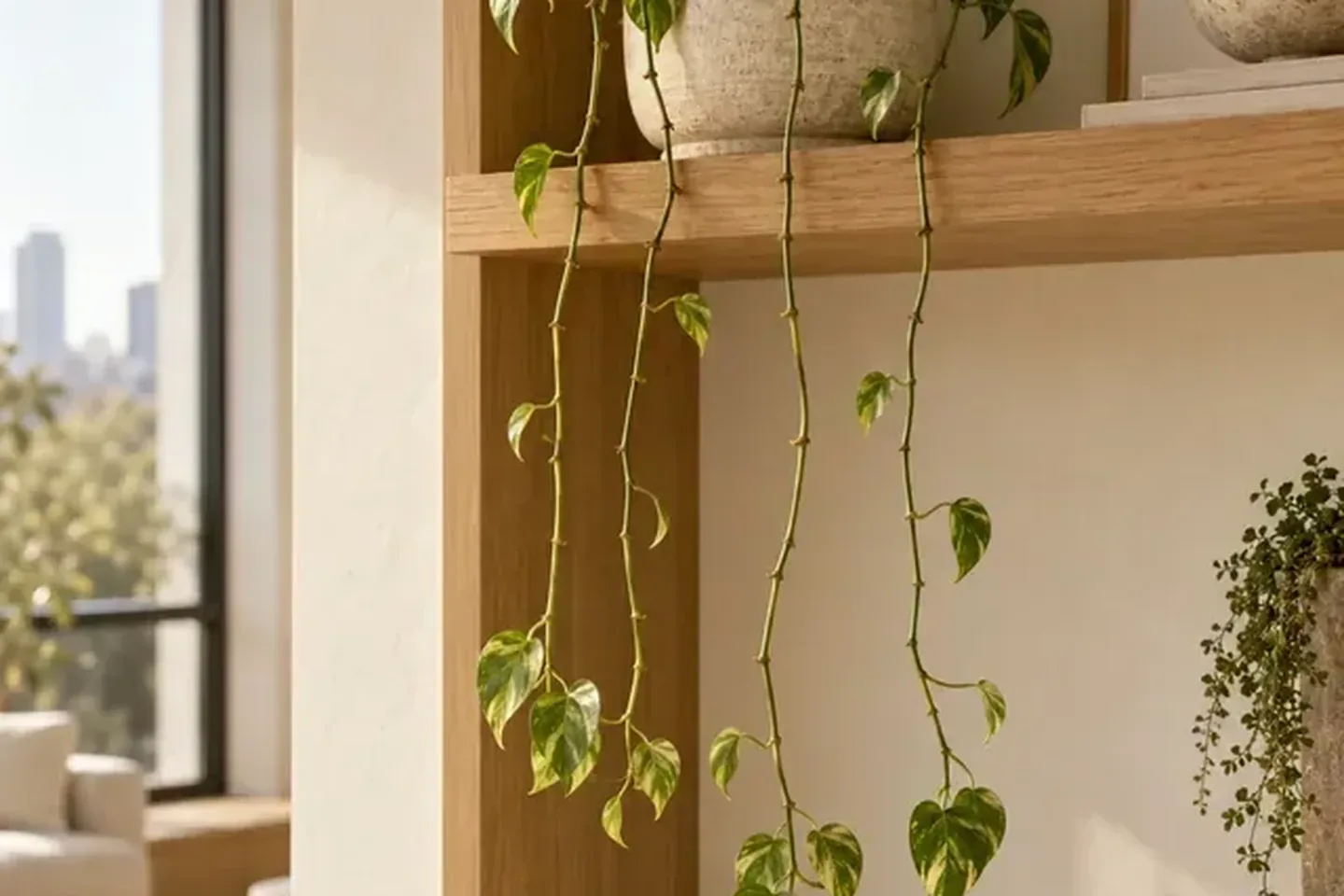
Compare the newest growth with the earlier growth on the same plant. That comparison matters more than height. A bare old stem that lost its leaves is a different problem from a shoot that is stretching right now; if leaves dropped first, look at yellow leaves on plants instead.
Natural habit matters too. Vines like pothos and monstera climb or trail by design, so do not judge them against the tight outline of a rosette succulent. Pothos plant care explains what normal trailing growth looks like. Size alone proves nothing either. NC State describes polka dot plants as roughly 1-2 feet tall and 9-12 inches wide, and a plant in that range with evenly spaced leaves is healthy, while a short seedling with a thin, stretched stem may be struggling.
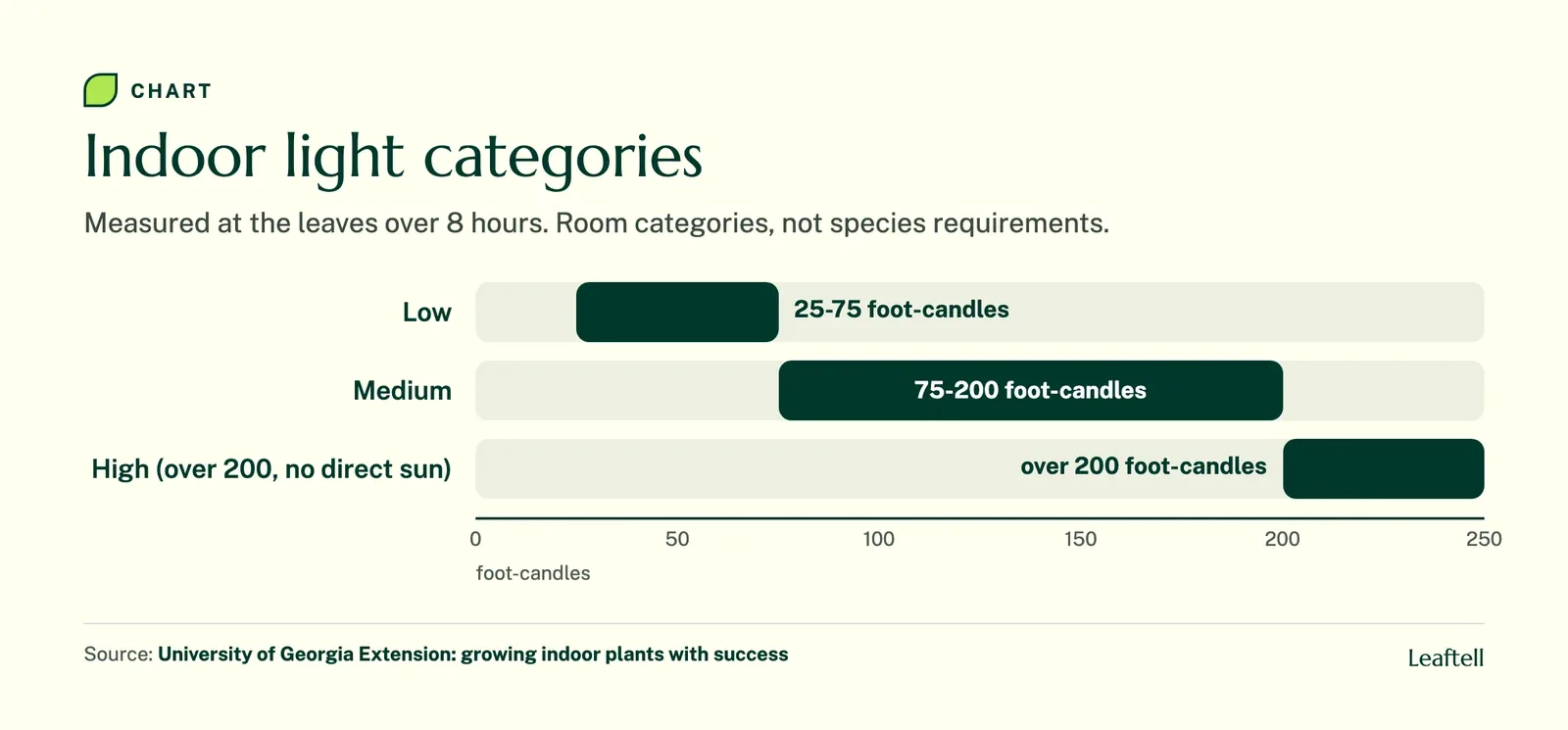
Light is the usual cause, and rooms are darker than they look from the doorway. The University of Georgia Extension classes indoor low-light areas as 25-75 foot-candles and medium areas as 75-200 foot-candles over 8 hours. Measure at the leaves if you can. Then note what changed when the gaps started: a move, a neighbor plant casting shade, or shorter winter days. Reading your plant's light walks through judging a spot without a meter.
How to fix leggy plants: move toward stronger light gradually
The fix for leggy plants is more usable light, introduced slowly. UGA recommends 3-4 weeks in a bright, sheltered spot when acclimating indoor plants, which is a good model for stepping a shade-grown plant up to a brighter position.
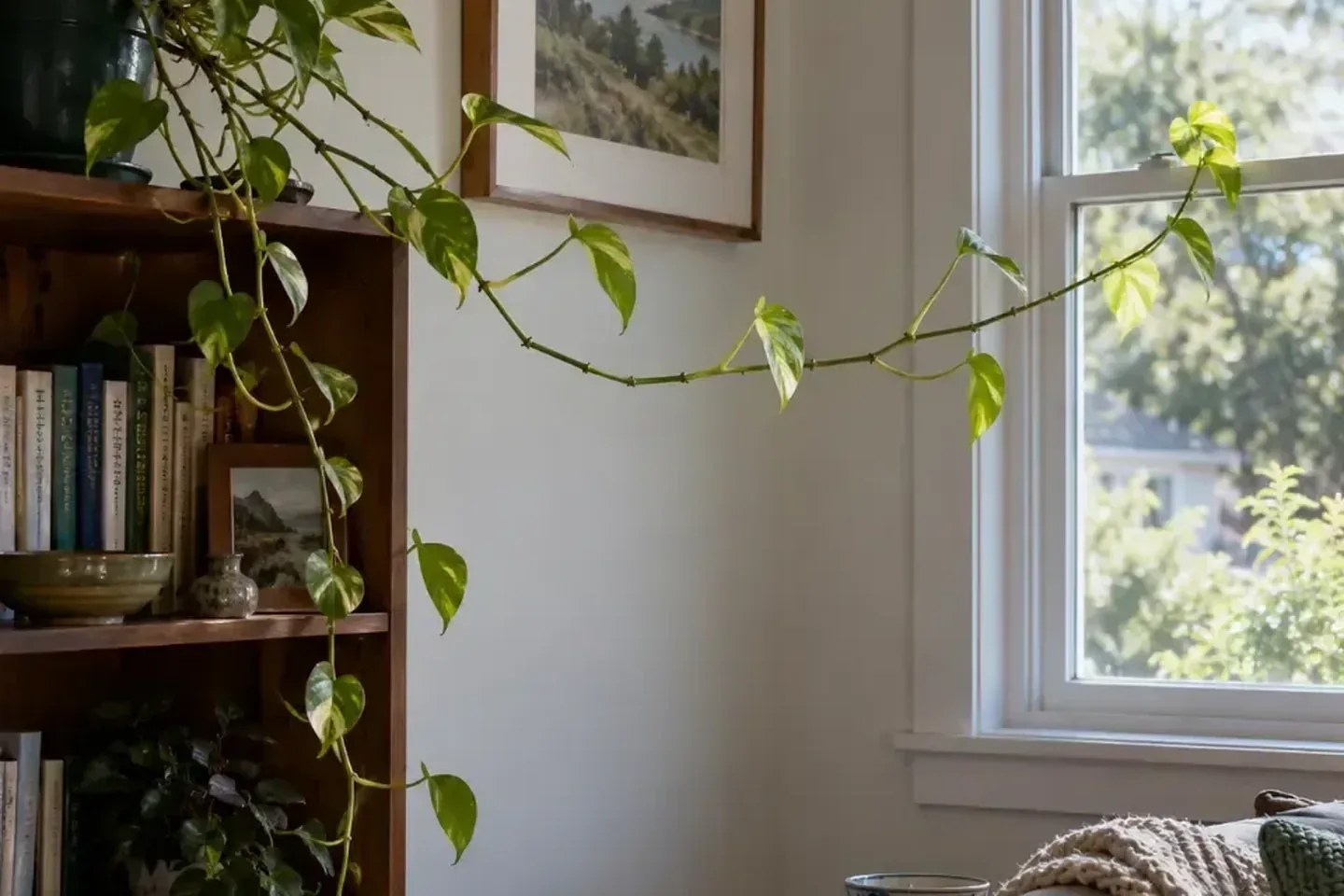
Leaves that grew in shade can scorch if you jump straight from a dim shelf into direct afternoon sun, even on a species that will eventually love the brighter spot. Watch for pale or crisp patches on exposed leaves as you go. Those mean adjust the exposure, not give up and retreat to deep shade. If tips start browning, compare brown tips on leaves to rule out other causes.
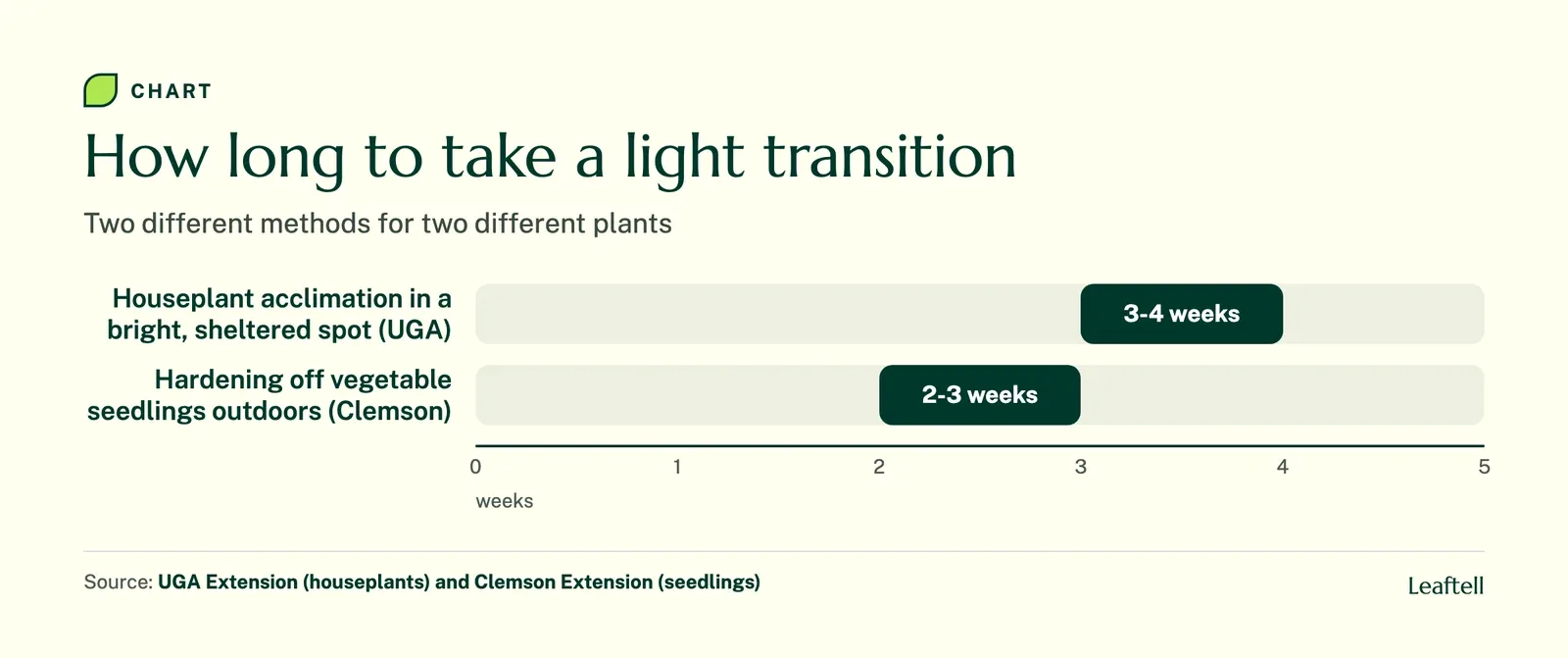
Take photos from the same angle every week or two. Compare new leaf spacing, leaf size and stem strength. A small change that produces compact new growth counts, even while the old stem still looks sparse.
How to fix a leggy plant
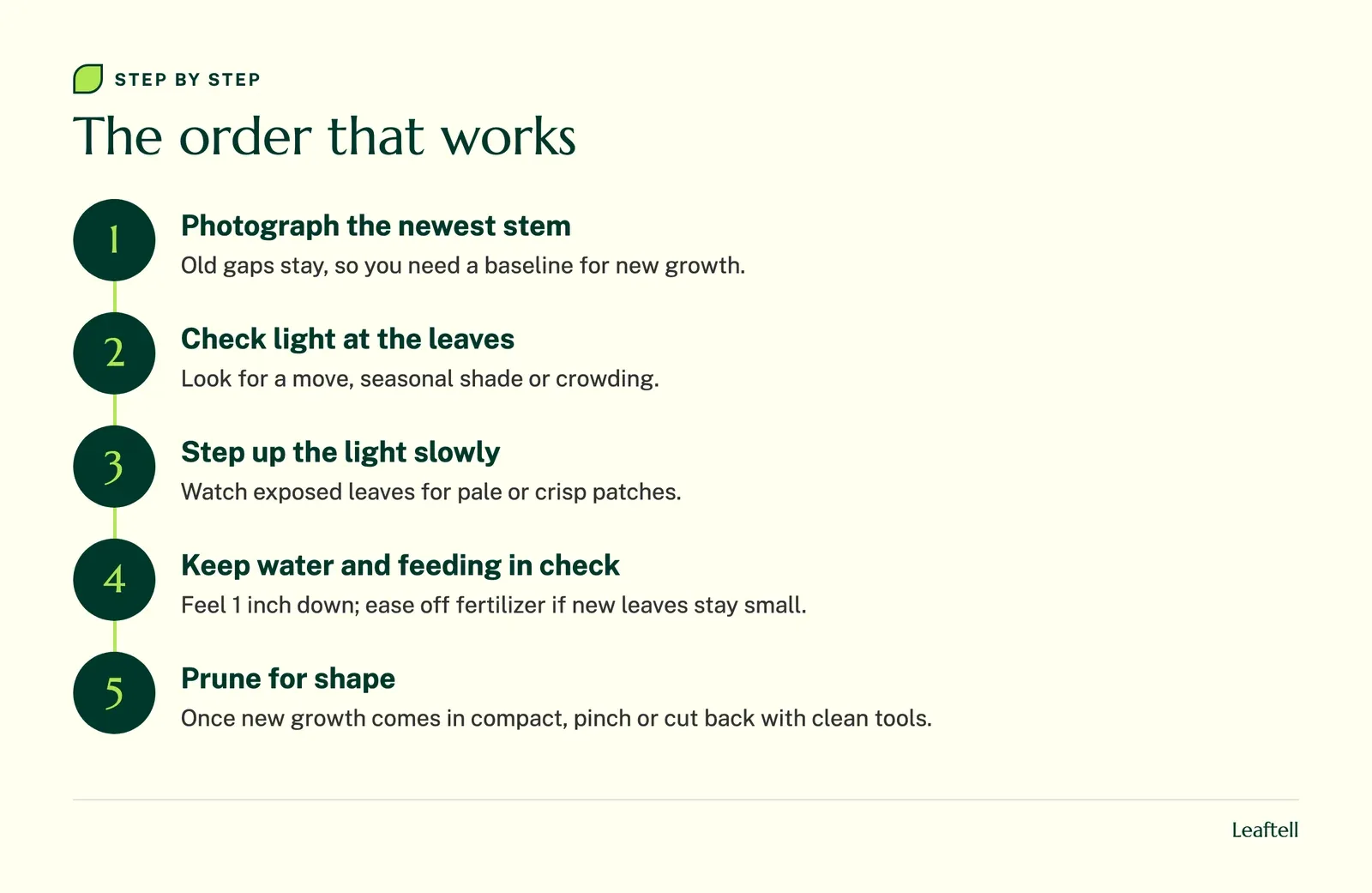
- Photograph the plant
Shoot the whole plant and a close view of the newest stem, so you can compare spacing later. Old gaps will not shorten.
- Check the light at the leaves
Look at where the leaves actually sit, not the room. Note any recent move, seasonal shade or crowding.
- Move it brighter, gradually
Step it toward stronger light over a few weeks. Back off a little if exposed leaves turn pale or crisp.
- Adjust water checks, not the schedule
Brighter light can speed drying. Feel about 1 inch down before watering instead of watering after every move.
- Prune once new growth is compact
Pinch or cut back for shape after the plant is growing well in its new spot, using clean tools and keeping healthy leaves.
Leggy seedlings: light where the leaves sit
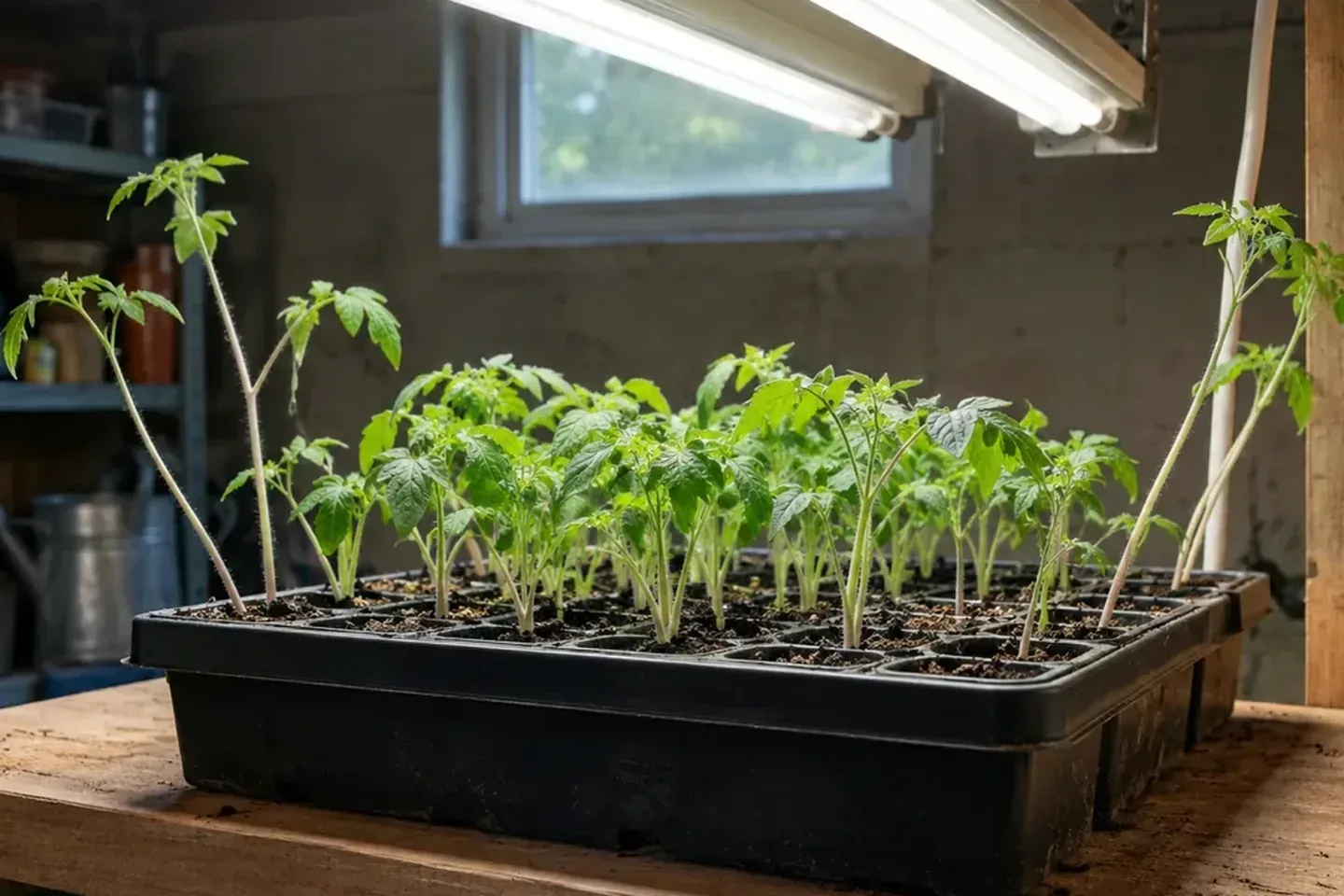
Leggy seedlings need more usable light at the growing tips, for longer. Clemson Extension recommends 16-18 hours of bright light a day for stocky indoor transplants and warns that windowsill seedlings tend to reach for the light and get tall and weak.
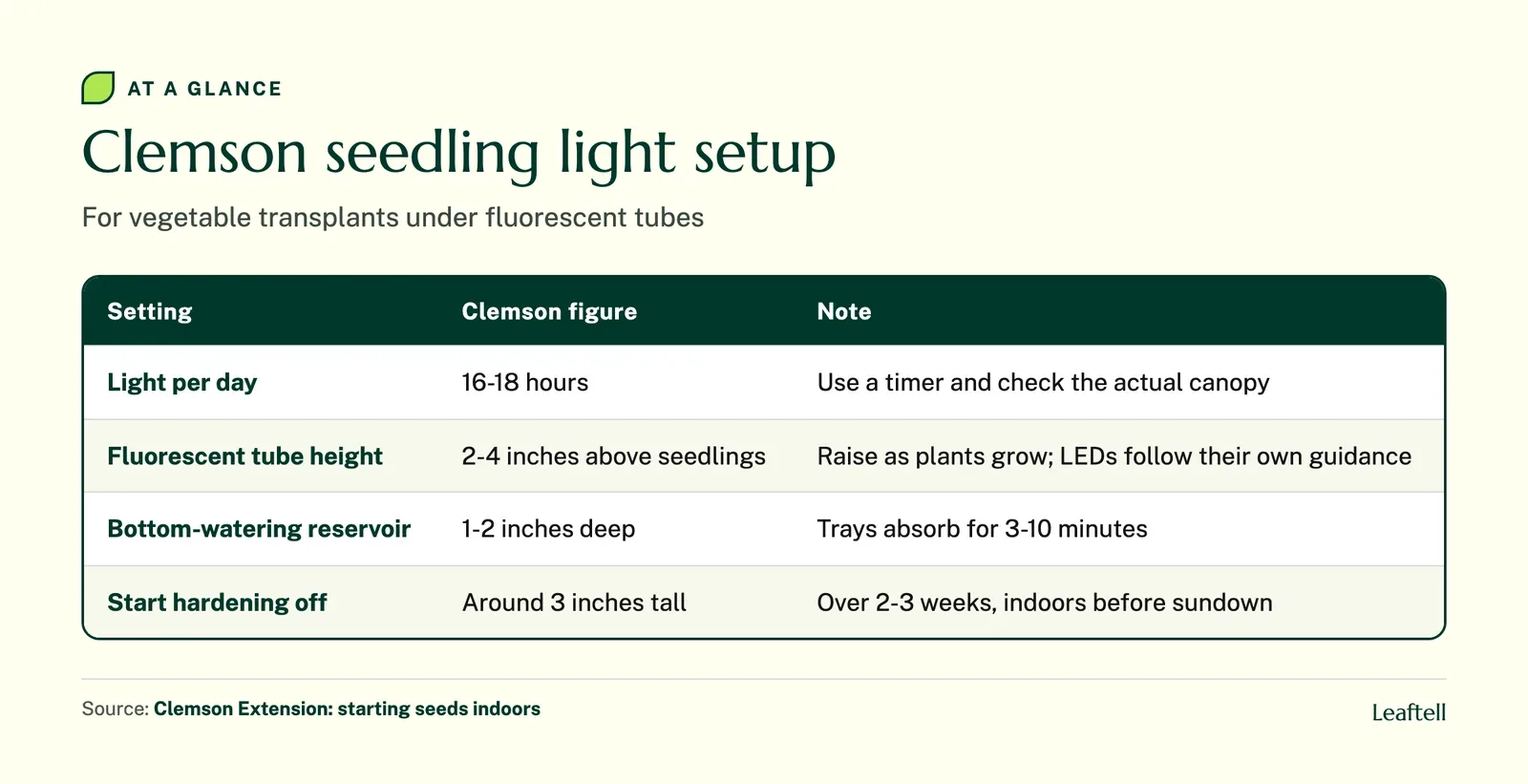
Clemson's fluorescent-tube setup places the lamps 2-4 inches above the seedlings and raises them as the plants grow. That distance belongs to fluorescent tubes. Do not put a powerful LED that close without the fixture's own guidance, because light output and heat differ.
Use a timer and check the actual canopy. A lamp hung high over a tray can leave seedlings reaching even when it runs the full 16 hours. Seedlings at the edge of the tray get less light than those directly under the lamp, and taller neighbors can shade the small ones. Watch whether new stem sections come in sturdier rather than expecting stretched ones to shorten.
Watering or feeding more will not make up for missing light. Check moisture separately: larger cells can stay wet below a dry-looking surface, and tiny seedlings are vulnerable to excess water. For bottom watering, Clemson describes a reservoir 1-2 inches deep with trays absorbing water for 3-10 minutes before they go back under the lights. That is a tray method, not a soak for an established houseplant.
A seedling that collapses with a pinched, decaying base is not leggy. That needs a separate seedling disease check.
When seedlings are around 3 inches tall, Clemson starts hardening them off, increasing outdoor exposure over 2-3 weeks and bringing them in before sundown. That routine is for vegetable transplants, not for leaving a tender houseplant outside on cold nights.
Leggy polka dot plant: pinch, but keep the useful growth
A leggy polka dot plant needs better light first and a pinch second. NC State advises removing the flowers to put more energy into foliage, and pinching growing tips can give a bushier shape.
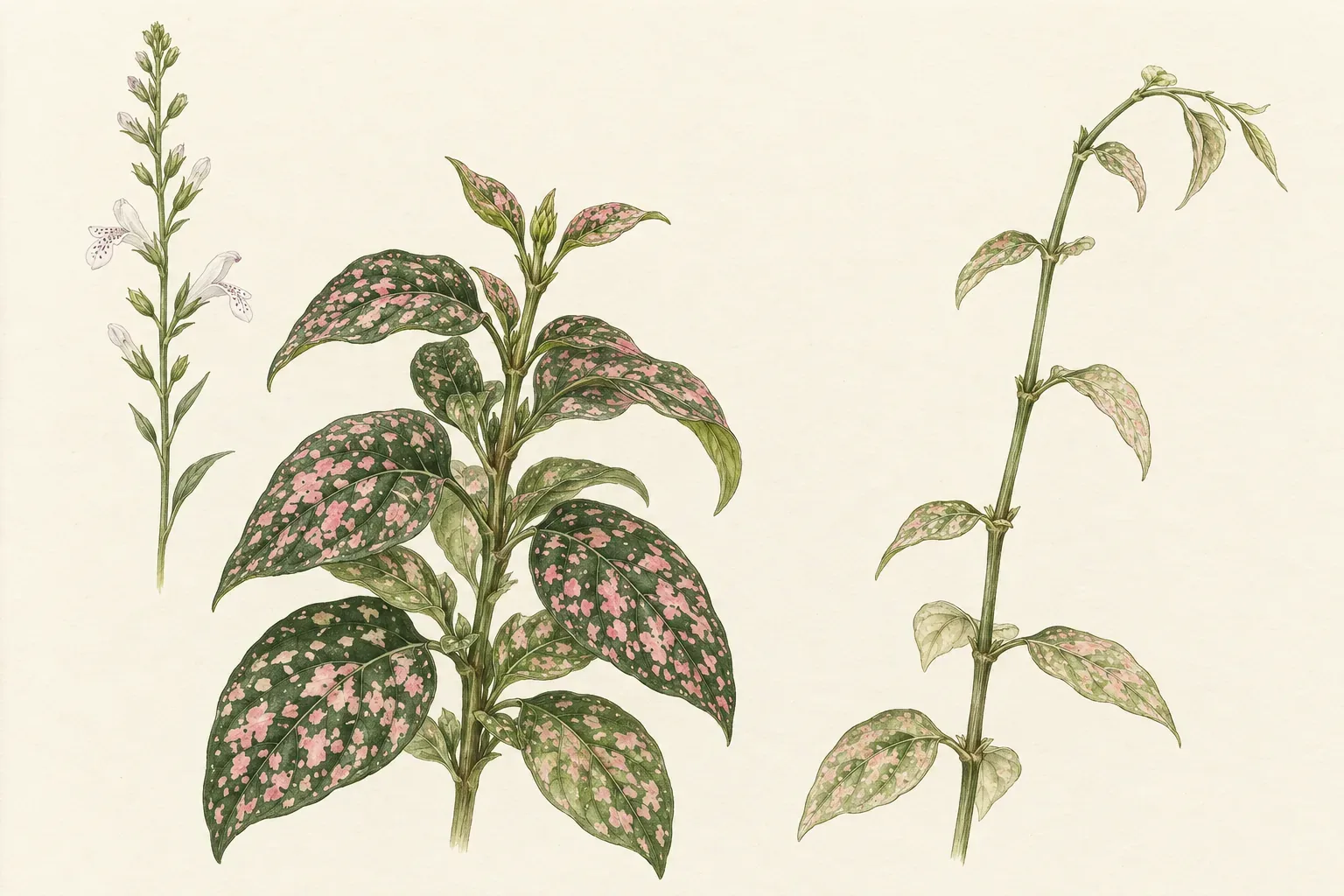
Separate natural habit from stretch. NC State describes Hypoestes phyllostachya as a branching plant with patterned leaves, flowering on spikes about 6 inches long. A flower spike rising above the foliage is not the same as a weak bare stem grown in poor light. The source lists partial shade, 2-6 hours of direct sun, but indoors you still step the plant up gradually rather than moving it into harsh sun in one go.
Look along the stems for mealybugs on plants and treat leaf loss as its own question. A plant stripped by pests needs more than a pinch. Use clean tools and do not take every growing point off a weak plant at once. Photograph the branches you keep, so you can compare the regrowth.
A compact look right after a cut is cosmetic. The lasting fix is well-spaced new leaves in a spot that suits the plant's light and moisture needs.
| Your plant | What legginess looks like | First fix | Prune? |
|---|---|---|---|
| Trailing vine (pothos, monstera) | Long bare stretches on new vine, small new leaves | Brighter spot, introduced gradually | Later, once new growth is compact |
| Polka dot plant | Weak bare stems, not flower spikes | Better light, remove flowers | Pinch tips, keep healthy leaves |
| Vegetable seedlings | Tall, thin stems leaning toward a window | 16-18 hours of light, lamp at the canopy | Not the fix; correct the light |
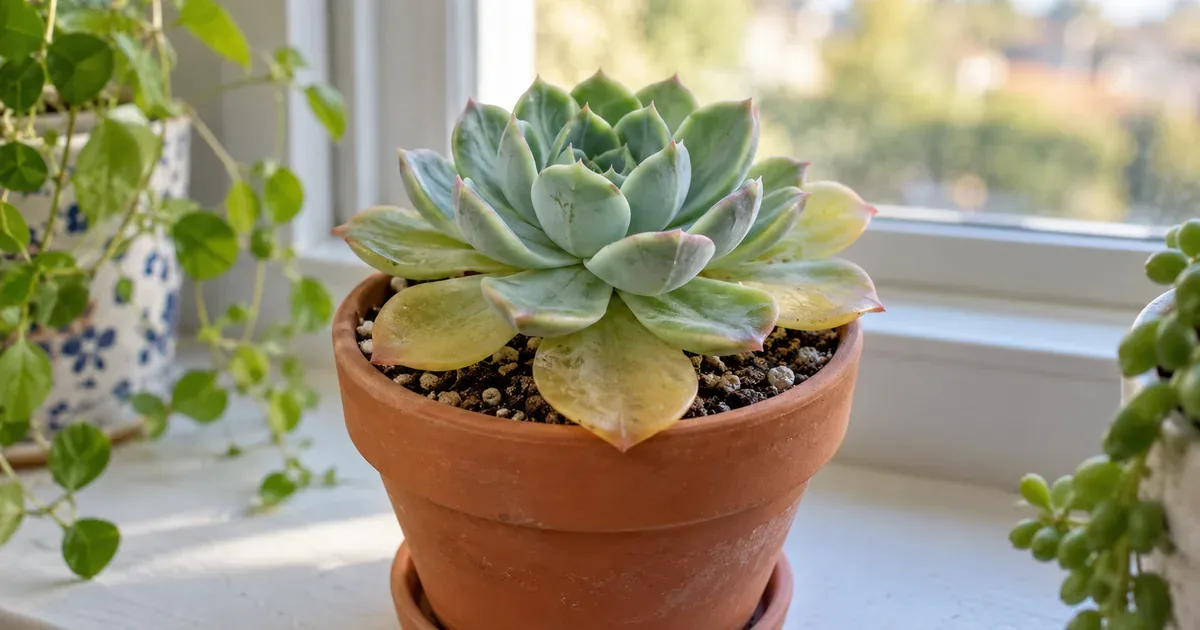
| Succulent rosette | Stretched center losing its tight shape | Gradual move to stronger light | Later, once new growth is compact |
| Plant that lost leaves first | Bare old stem, normal new spacing | Find the cause of leaf drop | Not a light problem |
How to fix leggy plants without overfeeding or overwatering
Recheck watering as the light improves, and hold back on fertilizer. UGA suggests feeling about 1 inch below the surface and waiting while the mix is still moist. Brighter spots and small pots can dry faster, but neither means a daily watering schedule.
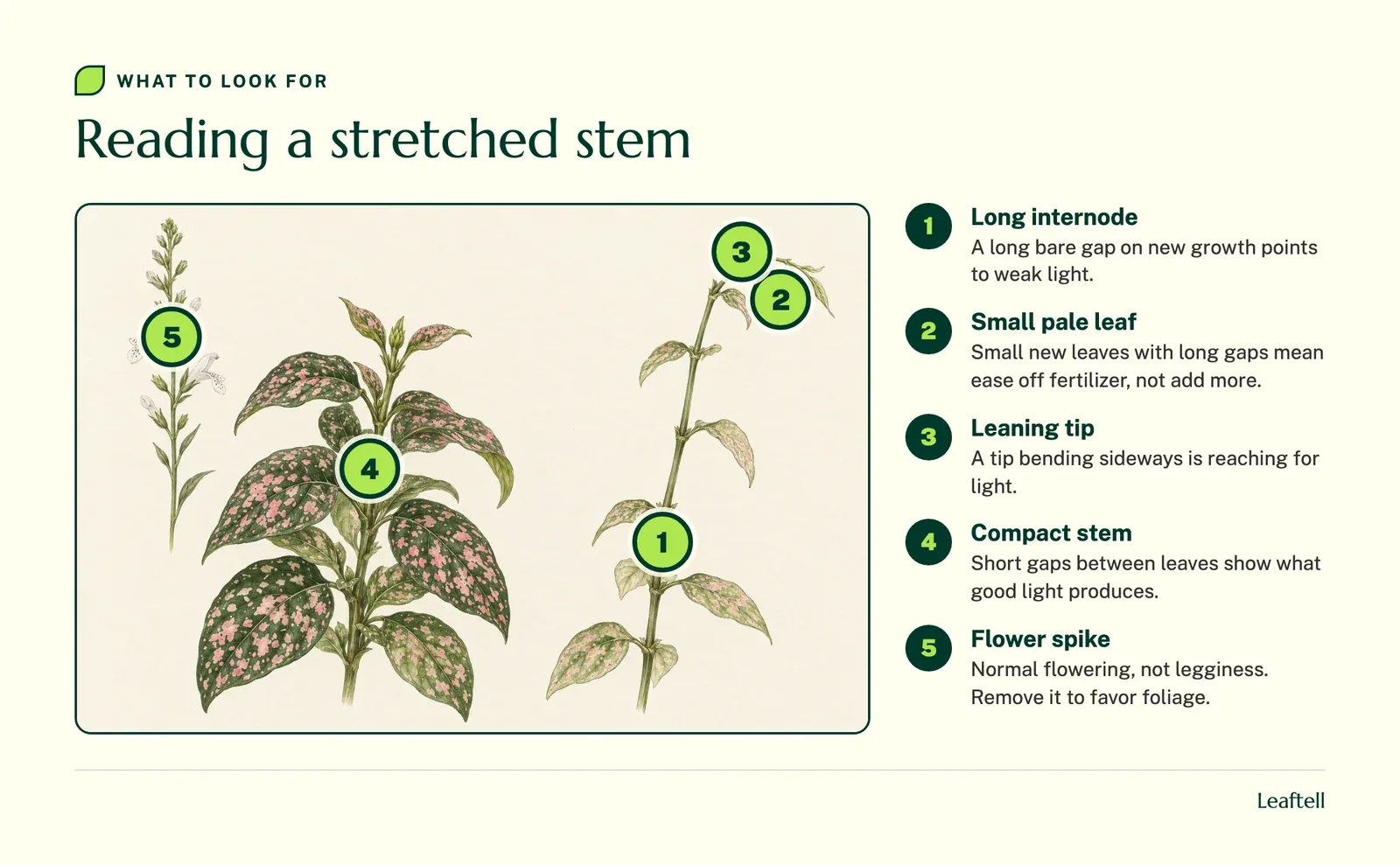
UGA's general starting point for fertilizer is 1/4 label strength monthly during active growth. More useful here: UGA advises reducing fertilizer when new leaves are small and internodes are getting longer despite dark green color. That is the opposite of the instinct to feed a stretched plant harder. A newly bought healthy plant may already have 2-3 months of nutrients in its mix, so check before adding anything.
Compare the root ball and pot weight before you change the watering interval. How to tell if your plant needs water shows how to combine touch and weight, and overwatered plant symptoms helps if the pot stays heavy in the brighter spot.
Leggy plant mistakes that waste a season
A leggy plant stays leggy if its spot does not change. Here is what costs you months.
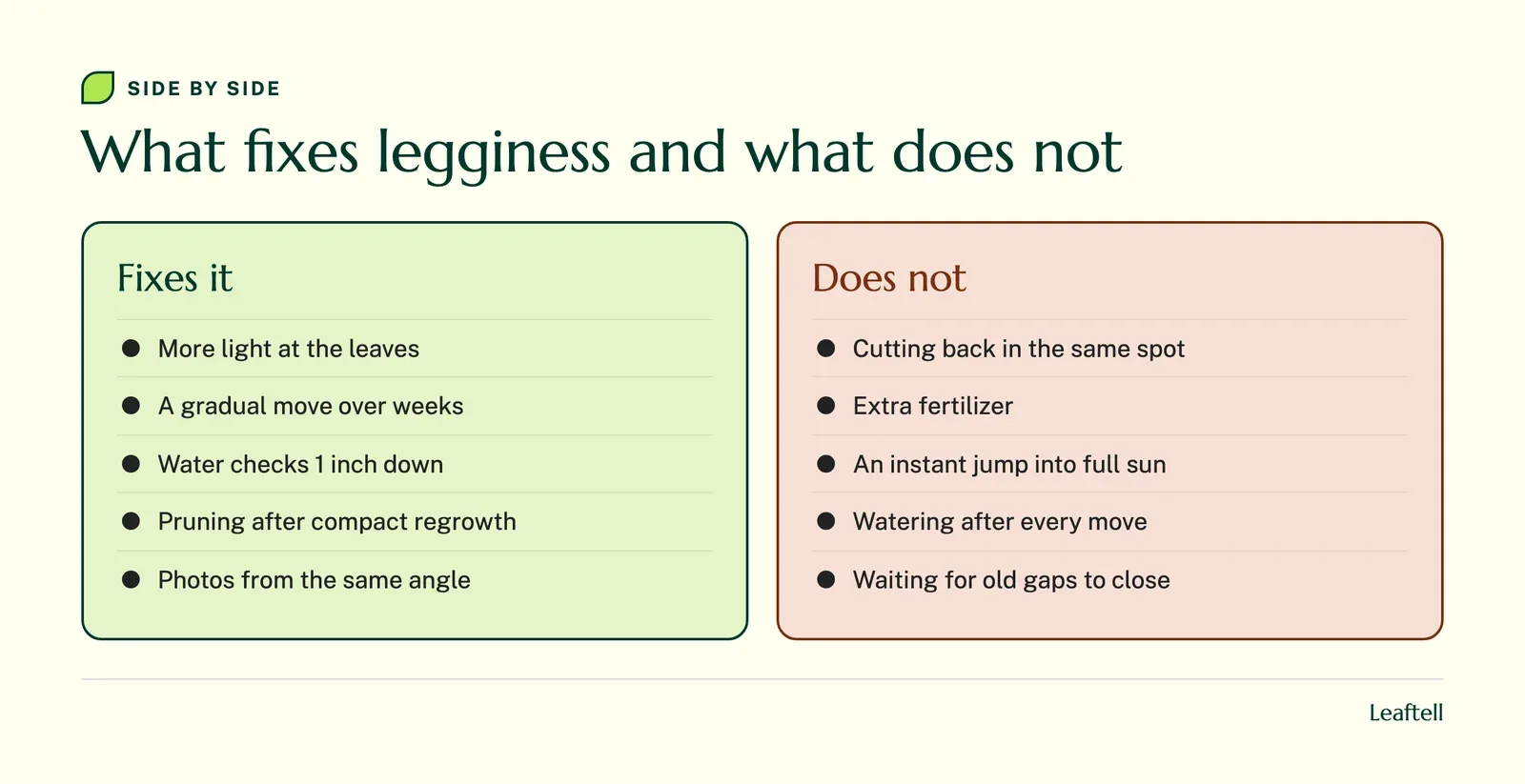
- Cutting back without moving the plant. The regrowth stretches the same way, and you have lost the leaves too.
- Feeding more. Extra fertilizer does not replace light, and UGA advises cutting back when new leaves are small and internodes long.
- The big jump into sun. Shade-grown leaves can scorch, and you end up retreating to the dark spot.
- Watering after every move. Brighter light can raise water use, but the pot decides, not the calendar.
- Waiting for old stems to tighten up. They will not. Judge the new growth.
- Taking every growing tip at once. A weak plant needs some leaves left to regrow.
Light first, scissors second
Fix the light, step the plant up slowly, keep watering tied to the pot and save pruning for when compact new growth proves the new spot works. That order turns a stretched plant into a fuller one; the reverse order just gives you a shorter leggy plant.
If new growth stays weak after the light is corrected, look past light. Check crowding, pests, temperature and the roots instead of cutting the plant back again and hoping an unchanged spot gives a different result. A stretched stem that also collapses or rots at the base, or a succulent that softens as well as stretches (see why is my succulent dying), needs a different investigation. Your local extension office can help when the pattern does not fit.
Sources
Check your growing conditions with the plant watering calculator.
Frequently asked questions
Move it gradually toward stronger light, then prune for shape once the new growth comes in compact. Existing stretched sections will not shorten, so judge the new growth.
Yes, they can produce more compact growth once conditions improve, but the old stretched sections stay. Pruning can tidy the shape, and your options depend on the species and how much healthy tissue is left.
Leggy plants have unusually long gaps between leaves or weak, stretched growth, usually linked to too little light. Compare recent growth with the plant's normal form.
Look for long bare stem sections, a lean toward the window and sparse foliage. Some trailing species grow long stems naturally, so check the normal habit too.
Give them enough light at leaf level and move them as the seasons change. Do not use extra fertilizer as a substitute for light.
Yes, but after you fix the light. Pruning first just gives the plant a fresh chance to stretch the same way. Leave some healthy leaves and growing tips on a weak plant.
Usually not. UGA advises reducing fertilizer when new leaves are small and internodes are getting longer. Fix the light first.
It is an informal saying about outdoor perennials settling in. It is not a rule for curing stretched houseplants or a reason to wait three years before checking light.
Share article
About the author

Keep checking your plant
Plant care reference
Indoor plant care
Build a routine around your plant, light and potting mix.
Plant care reference
Why is my plant dying
Trace leaf and root symptoms before choosing a care change.
Plant care reference
Pothos plant care
Choose a growing spot and prune a trailing pothos for fuller growth.
Plant care reference
How to fix root rot
Inspect root firmness and drainage, then decide whether to repot.