Tomato leaves turning yellow: 5 checks before you feed
Filip Leszczyński 16 October 2026 11 min read
In this article
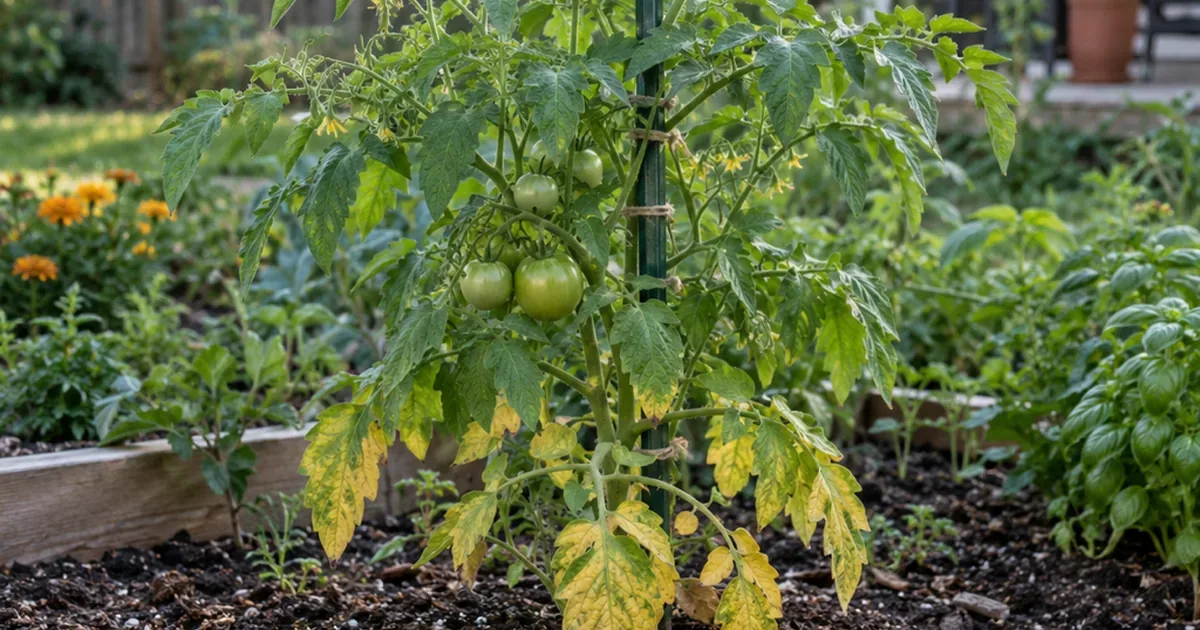
Tomato leaves turning yellow at the bottom of the plant usually come down to one of three things: old shaded leaves fading, a nitrogen shortage pulling nutrients toward new growth, or an early leaf disease that starts low and climbs. Look at where the yellow sits, whether it has spots, and how wet the soil is before you feed or spray anything.
The useful question is not "why is this leaf yellow" but "which leaves went first, and is the yellow climbing". A few bottom leaves yellowing evenly on a big, fruiting plant is a very different situation from spotted leaves spreading upward after a wet week.
One rule before anything else: this guide is about plant health only. Whether fruit is safe to eat after any treatment is a question for the product label and your local extension service.
Tomato plants turning yellow at the bottom: lower leaves or new growth?
Yellow lower leaves with no spots often mean aging, shade, or nitrogen moving to new growth. Yellow new growth at the top, or yellow with spots, points elsewhere.
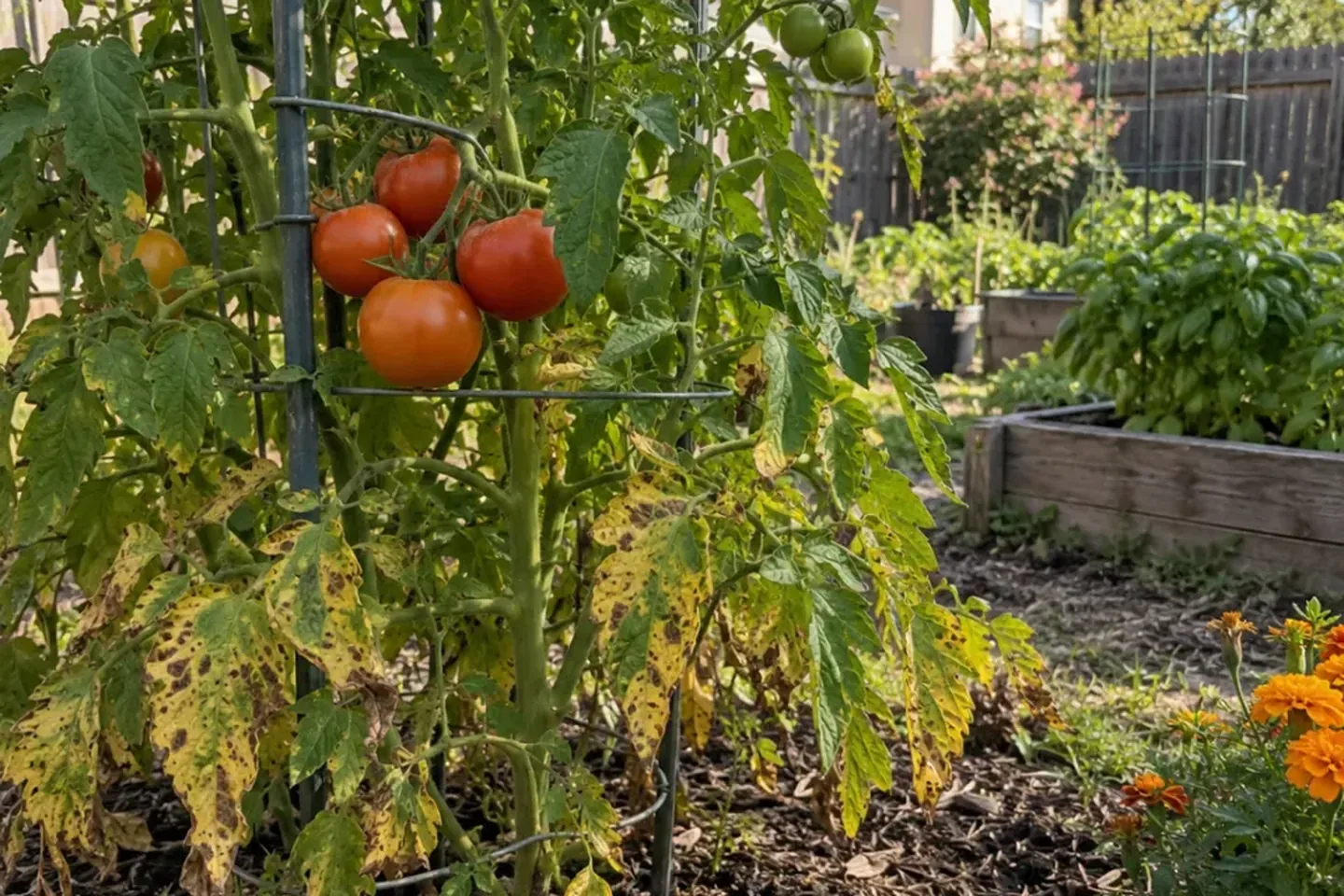
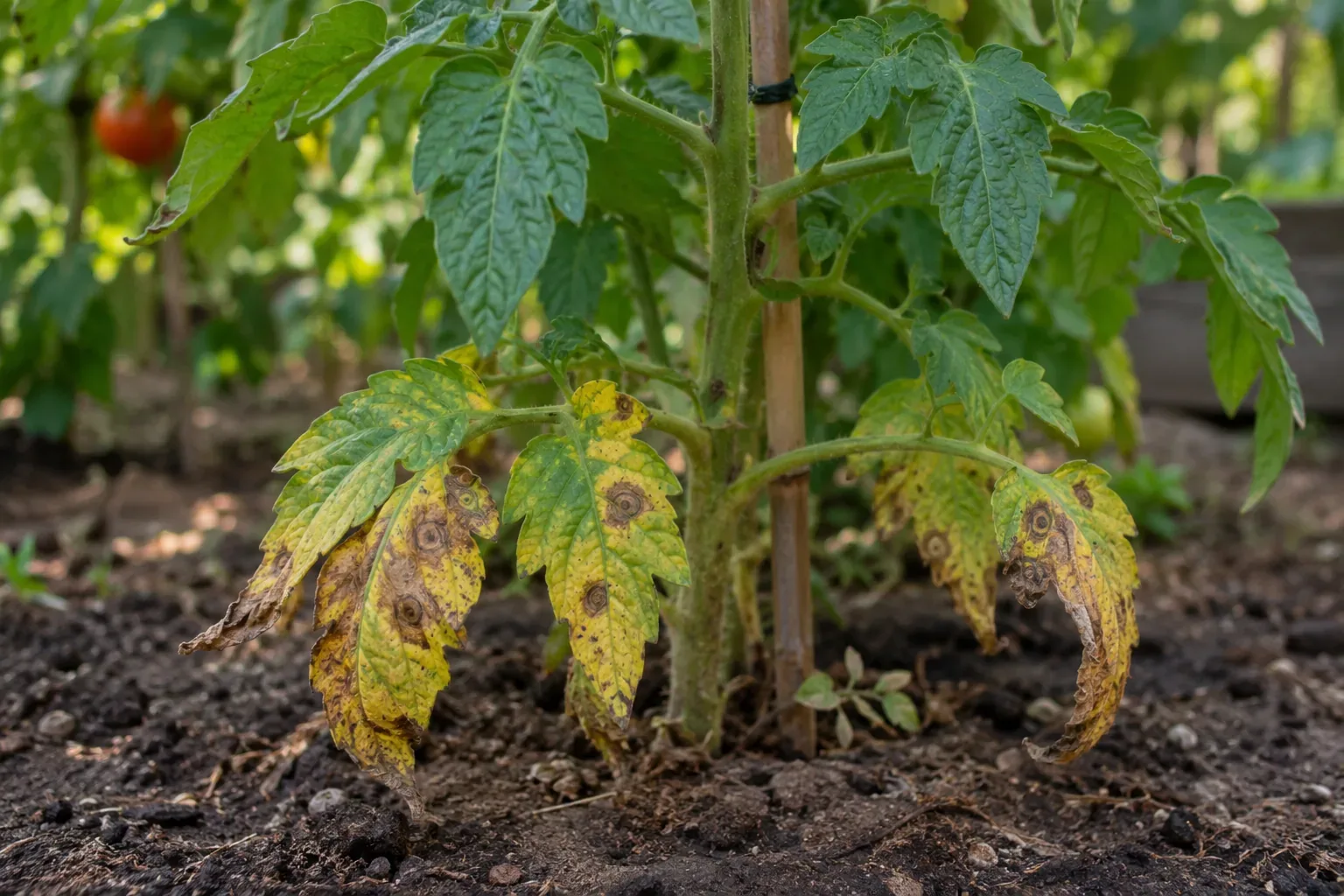
Walk around the plant and find the first leaves that changed. Lower leaves near the soil, shaded leaves inside the canopy, and pale growing tips each tell a different story. Note whether the yellow is even or comes with spots, browning, curling, or wilting. Take one photo of the whole plant, because a close-up of a single leaflet hides the pattern.
Texas A&M AgriLife explains that a nitrogen shortage tends to yellow the older leaves first, as the plant moves nitrogen to its new growth. That is a clue to follow up, not a reason to skip the watering and disease checks.
If you grow more than one tomato, compare plants of the same variety and age. A container tomato and an in-ground plant have different root zones, so a difference between them is not automatically contagious. Several plants changing in the same week points toward weather or watering, not a single sick plant.
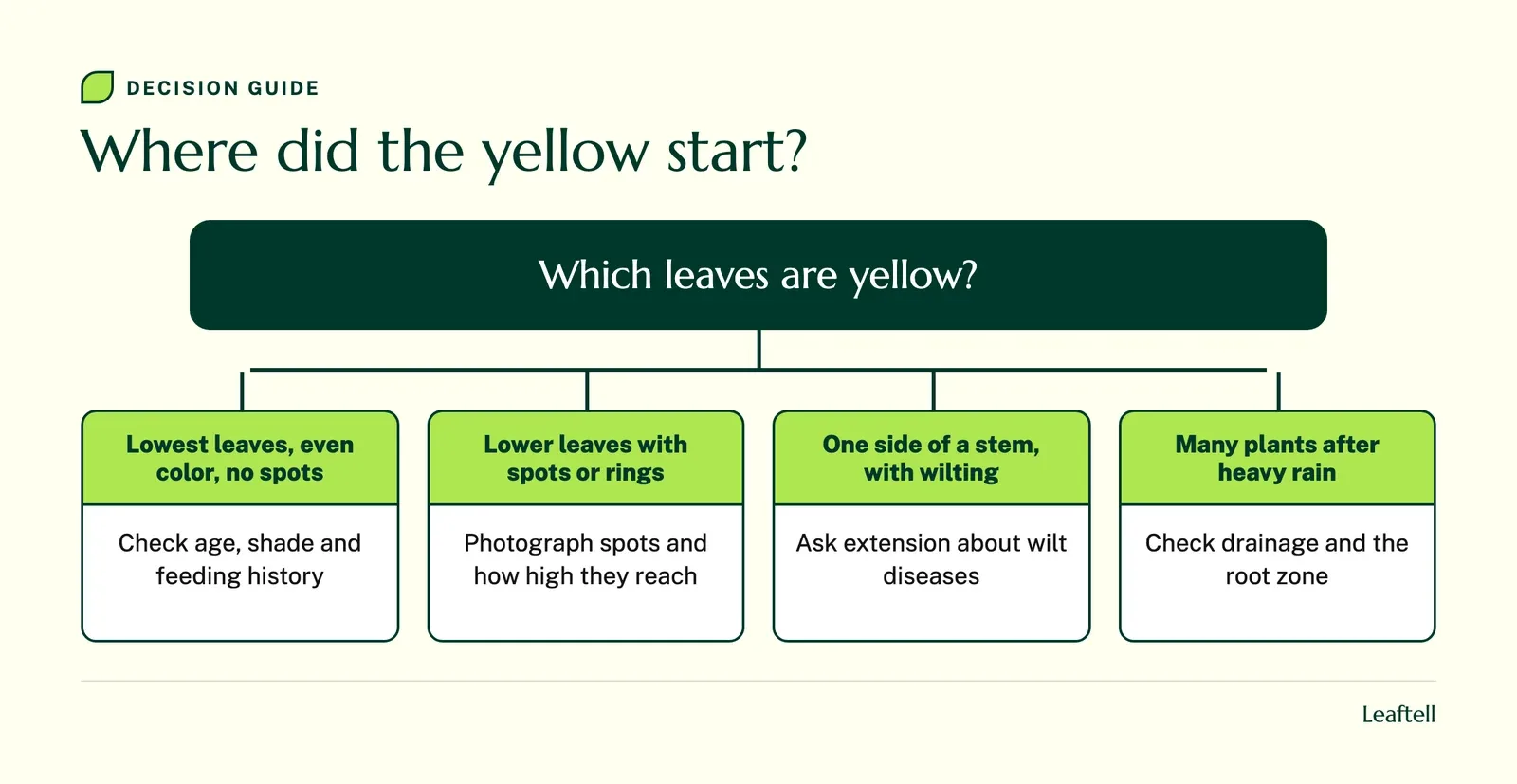
| What you see | What it points to | Your next check |
|---|---|---|
| Old shaded leaves yellow, no defined spots | Aging, shade, or nitrogen moving to new growth | Record leaf age and look at the growing tip |
| Lower leaves yellow with spots that keep growing | A leaf disease starting low | Photograph the spots and how high they reach |
| Yellowing on one side of a stem, then wilting | A wilt disease is possible | Ask extension; record whether it recovers overnight |
| Plant sits in a low spot that stays wet after rain | Saturated roots | Compare drainage with healthier plants nearby |
| Day 3: the next clear leaf above the damage | Check-in, not a deadline | Look for new spots before judging by old color |
Observation checklist for tomato leaves turning yellow. Review dates are suggested check-ins, not watering or treatment intervals.
What causes yellow leaves on tomato plants: check the root zone
Soggy soil after rain, a blocked container, and repeated dry spells can all yellow tomato leaves. Feel the soil below the surface before you decide it needs water or fertilizer.
Think about the weather before the change. Did the bed sit wet for days after a storm? Did a container dry out hard during a heat spell and then get flooded to make up for it? Alternating extremes stresses roots more than either one alone. Water the root zone consistently when it needs it.
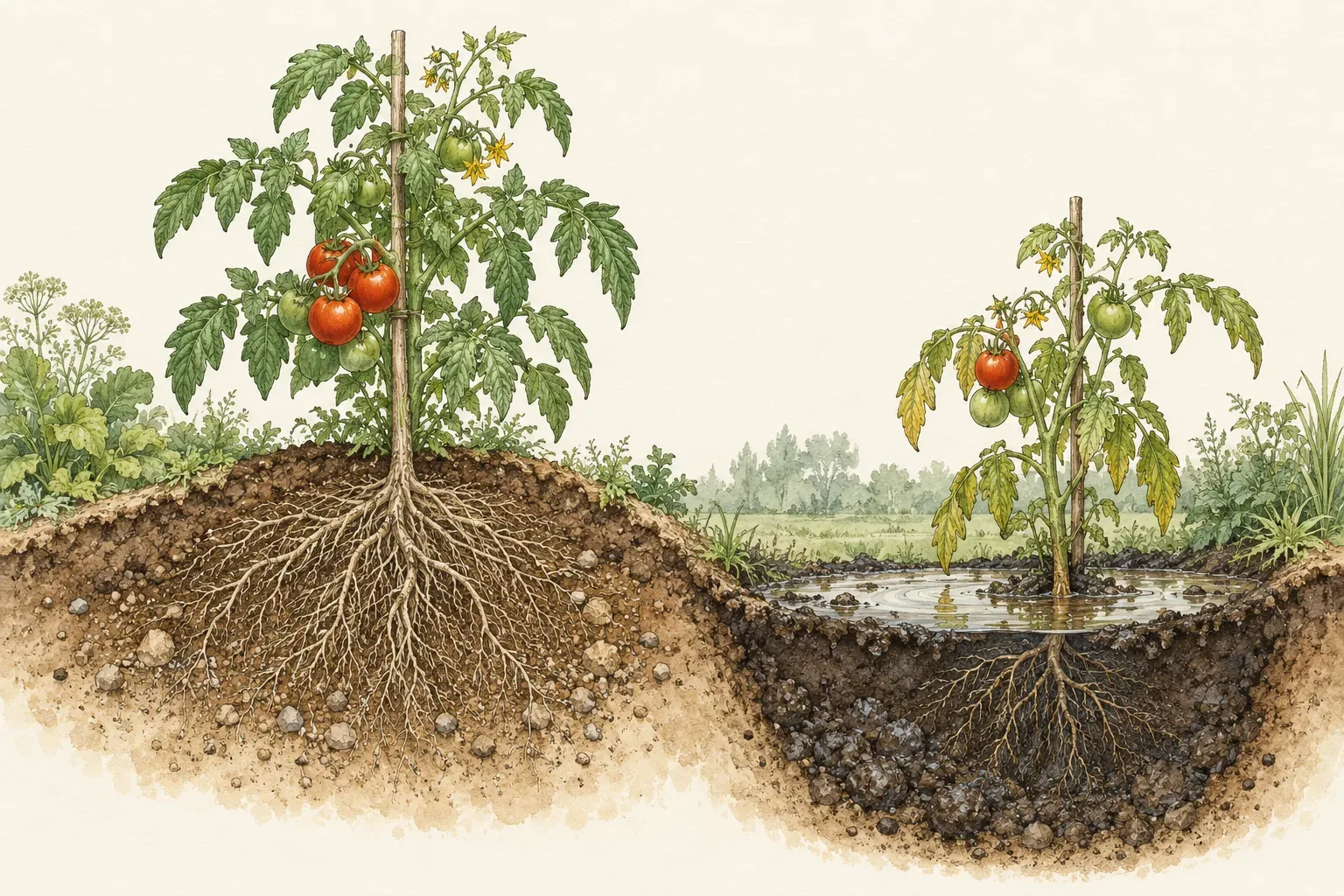
For containers, check the drainage holes and any saucer. A big leafy tomato can still sit in water if the holes are blocked. Compare overwatered plant symptoms if the root zone stays wet, and adapt this wet or dry soil check to your pot or bed. If the whole plant is wilting, the drooping plant guide has a separate wet versus dry check.
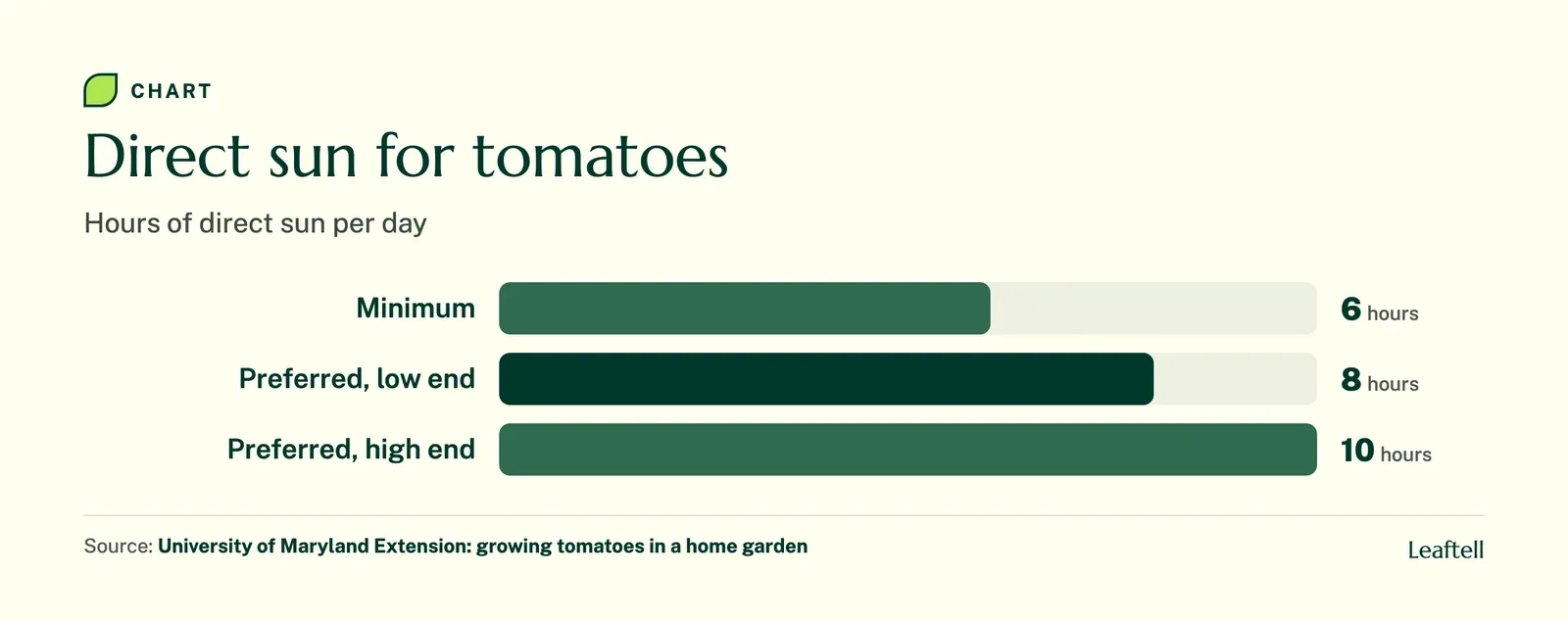
In a garden bed, notice whether the yellowing plant sits in a low spot while plants on higher ground look better. Light matters too: University of Maryland Extension recommends at least 6 hours of direct sun for tomatoes, with 8-10 hours preferred. A shaded, crowded plant has shaded lower leaves that fade first, and the bed stays damp longer after rain.
Tomato leaves turning yellow and brown: record spread up the plant
Yellow leaves with brown spots or rings usually mean a leaf disease, and the key fact is whether new spots keep appearing higher up. Photograph the spots before you remove anything.
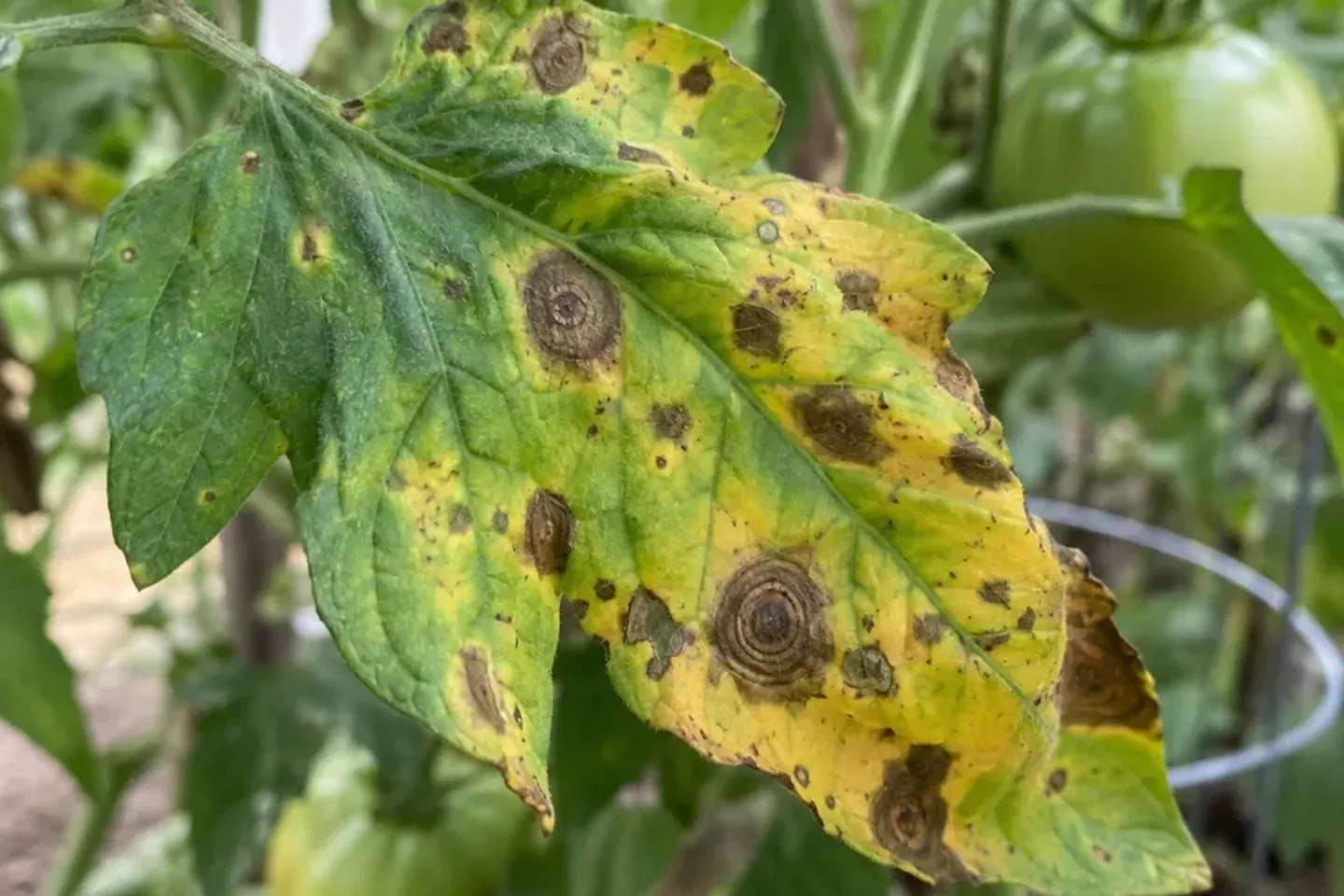
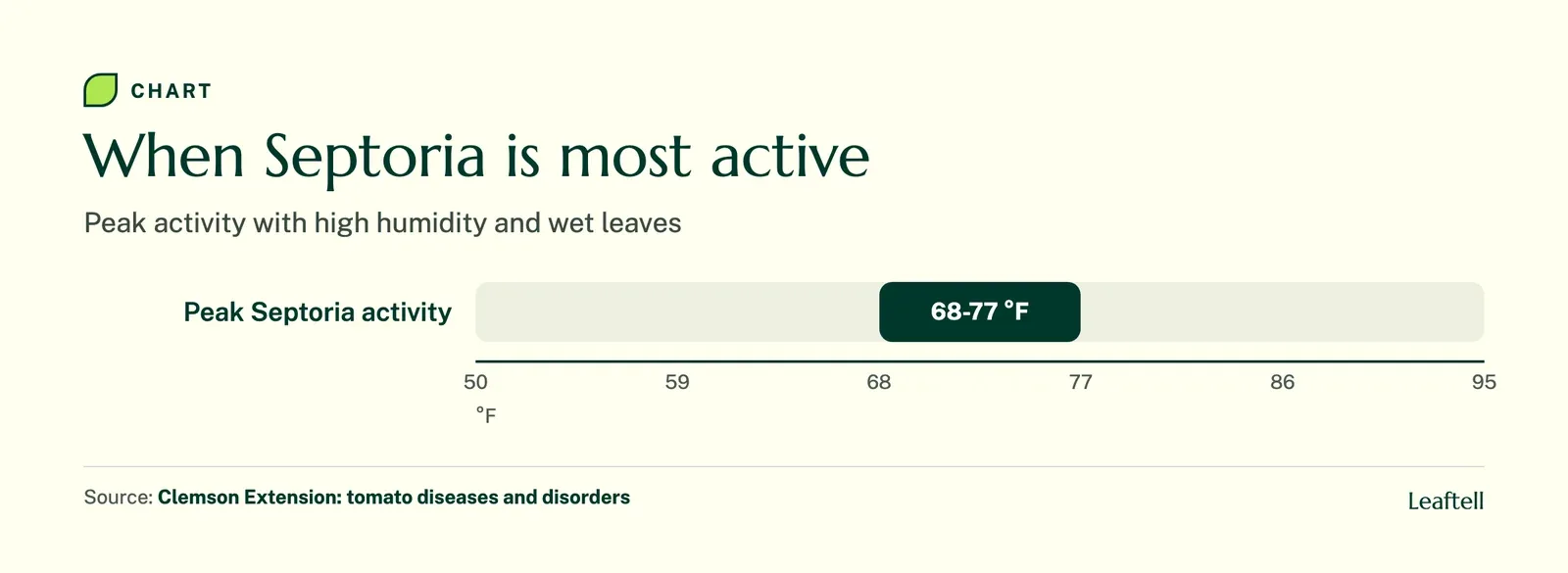
Look closely at the oldest spotted leaves and compare them with newer leaves above. Note whether spots have defined centers, rings, or dark borders, and whether yellow tissue surrounds them. Clemson Extension describes early blight starting on older lower leaves with brown target-like rings, and Septoria leaf spot as many small spots with pale centers and dark borders. Clemson places peak Septoria activity at 68-77°F with high humidity and wet foliage. A photo alone may still not tell them apart, because several diseases and non-disease injuries look alike.
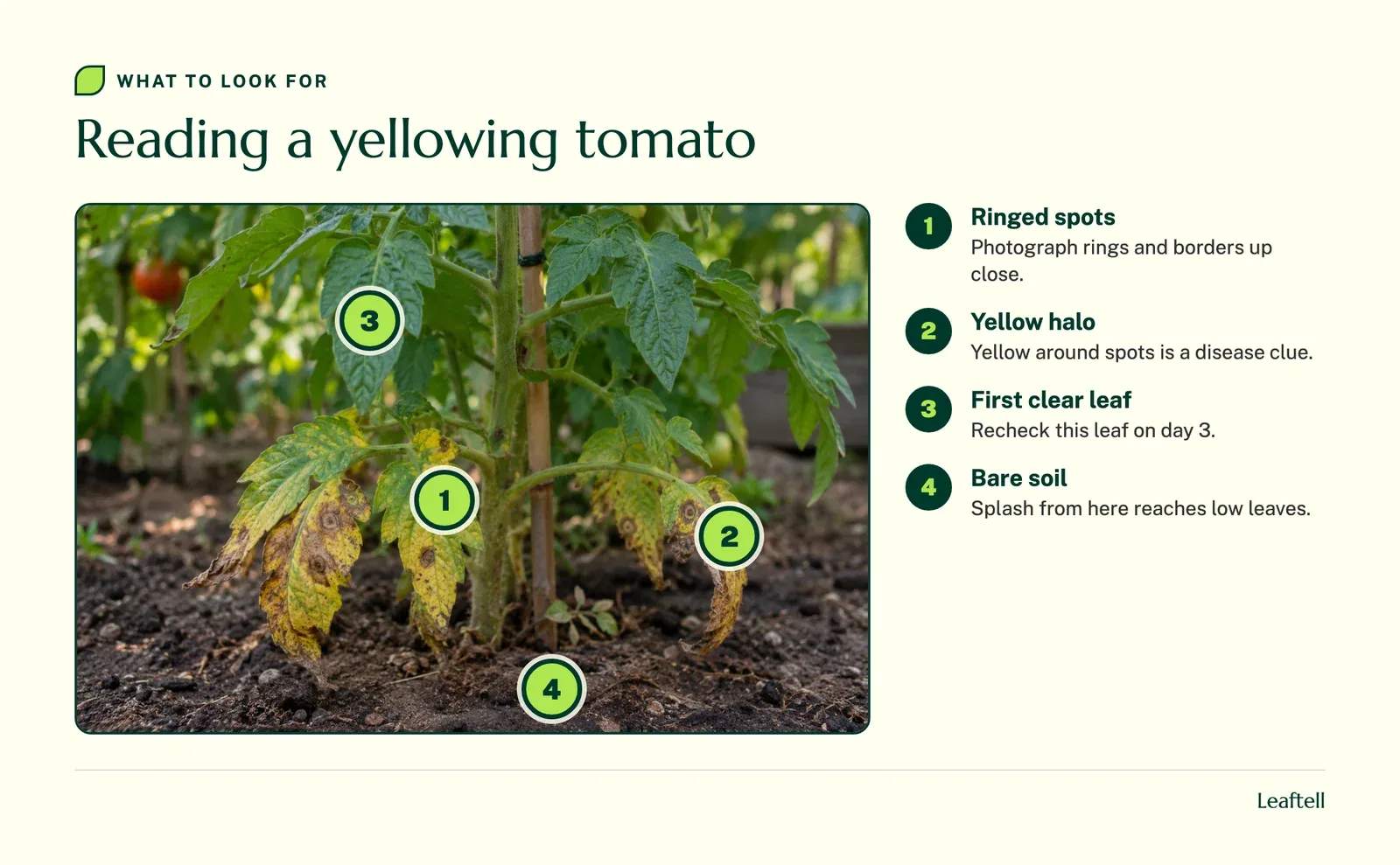
Cut down on soil splash with mulch, water at the base, and keep the canopy open enough to inspect. Remove badly affected lower leaves with clean tools when the foliage is dry, but keep enough healthy leaves to shade the fruit and feed the plant. For the full disease breakdown, see disease in tomato plant, and for defined spots in general, leaf spot disease.
A white powdery coating instead of dark spots is a different problem: compare powdery mildew on plants. Check undersides and shoot tips for insects too; how to get rid of aphids covers visible colonies.
Treatment for yellow tomato leaves: nutrients and safety
Fix drainage and watering first, then decide about fertilizer based on your soil history or a soil test. Yellow color alone cannot tell you which nutrient is missing.
Write down what you have already added, when, and at what label rate. A bed with a soil test recommendation, fresh container mix, and old reused potting mix all need different thinking. Ask your local extension service whether a soil test fits your setup.
How to check a tomato with yellow leaves
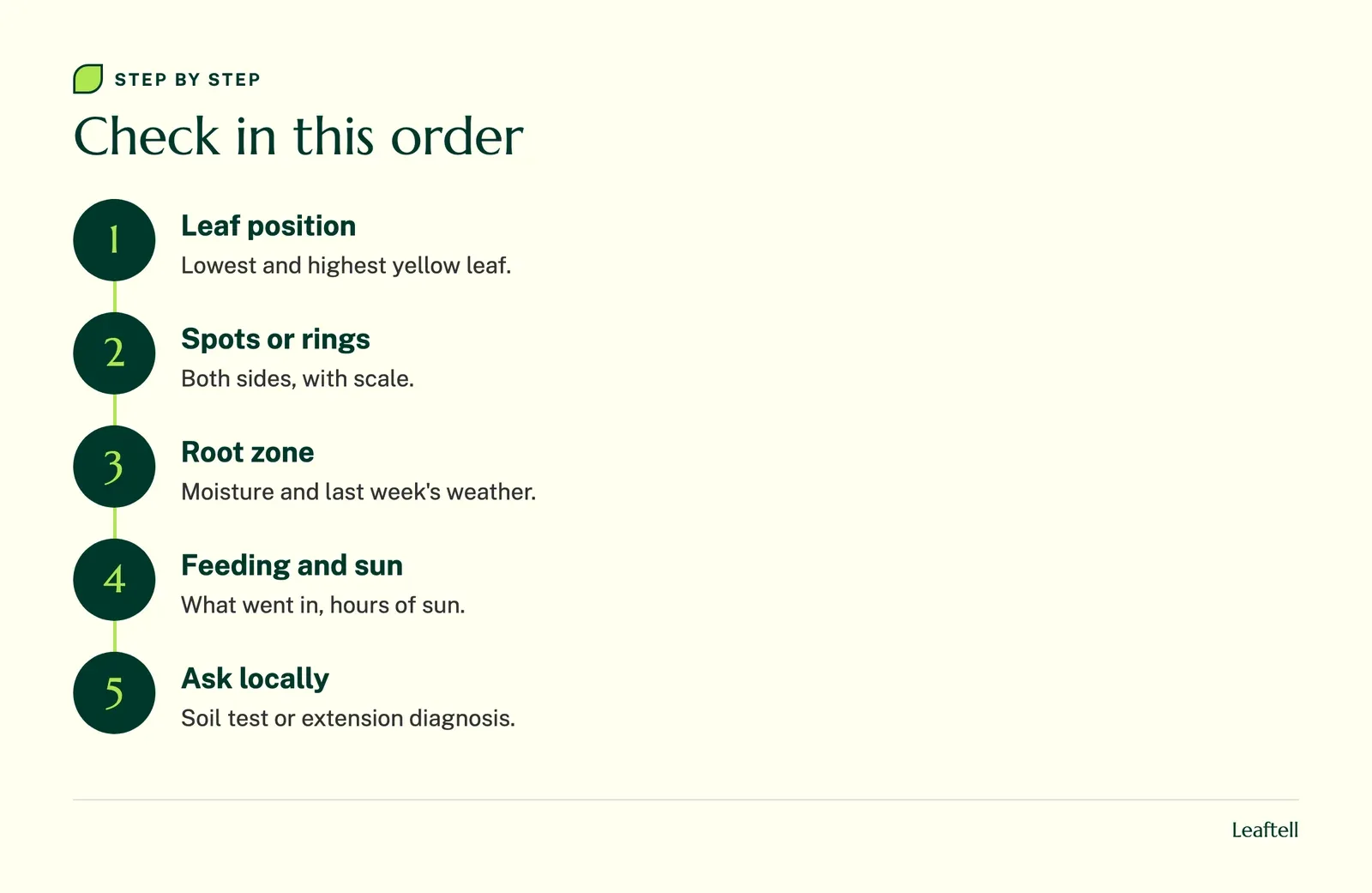
- Find the first yellow leaves
Note the lowest and highest yellow leaf and the condition of the growing tip. Take one whole-plant photo.
- Look for spots or rings
Check both sides of the oldest yellow leaves for spots, rings, or dark borders. Photograph them with something for scale.
- Feel the root zone
Check moisture below the surface and think back over the last week of rain, heat, and watering.
- Review feeding and sun
Write down what fertilizer went in and when, and how many hours of direct sun the plant gets.
- Recheck the next clear leaf on day 3
Look for new spots on the first healthy leaf above the damage before you change anything else.
If a fertilizer or pesticide class is recommended, use a product labeled for tomatoes and that specific use, follow the label, and never mix products into a home rescue brew. Respect every harvest restriction on the label.
Keep children and pets away from stored products and treated plants. The ASPCA lists tomato plants as toxic to pets, with the green parts the concern, so collect pruned leaves and stop dogs from chewing stems. After suspected exposure, call a vet or poison service with the plant and product names.
Young tomato plant leaves turning yellow: mistakes that cost you the crop
- Stripping every lower leaf. You lose the shade and the leaf area the plant needs, and the evidence of where the problem started.
- Feeding first. Root stress makes nutrient symptoms hard to read, and feeding will not drain a waterlogged bed.
- Epsom salt as a general fix. It supplies magnesium and sulfur, nothing else. It only helps with a real magnesium need.
- Spraying from a picture. Several diseases and non-disease injuries look alike. Confirm what you have, then use a labeled product if one is justified.
- Waiting for a check-in during fast decline. The day 3, 7, 14 schedule is for collecting evidence. Sudden wilting or new spots spreading quickly need help now.
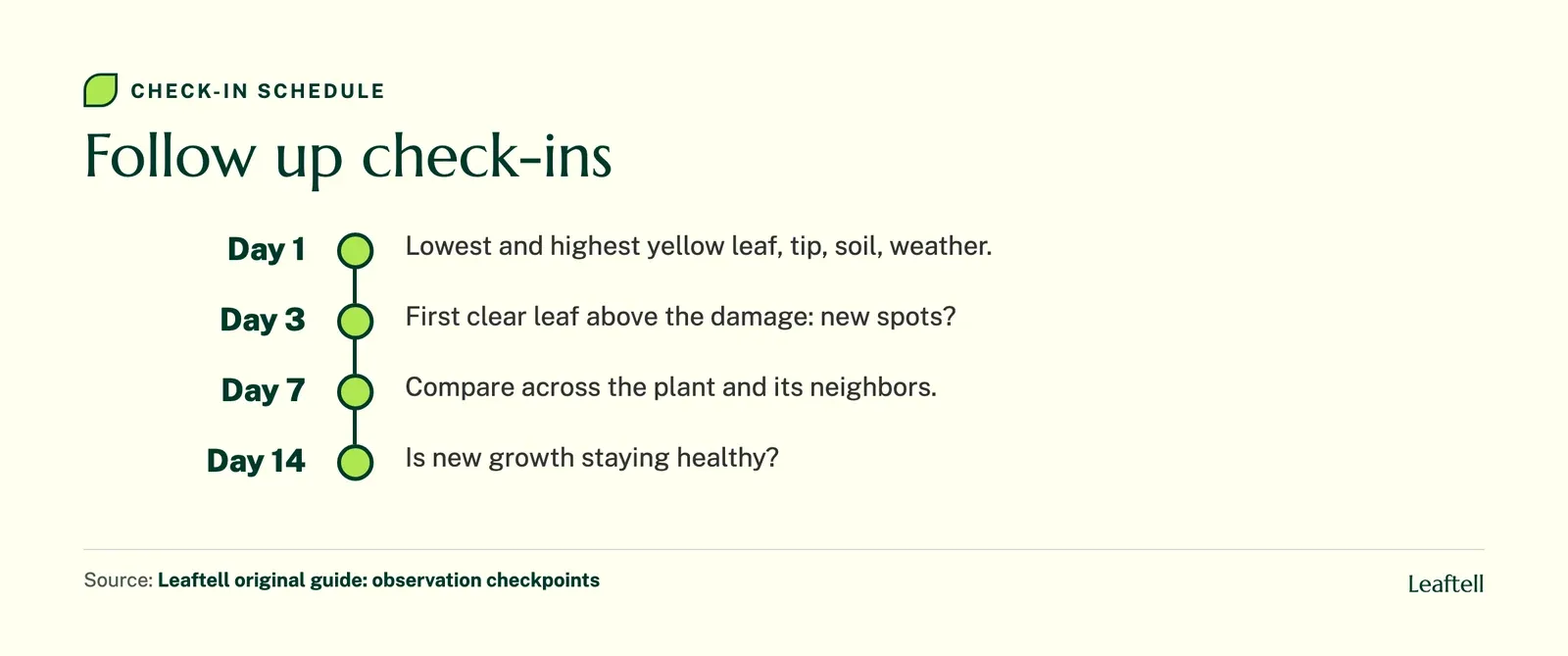
On day one, record the lowest and highest yellow leaf and the growing tip. On day three, look at the first clear leaf above the damage. At day seven, compare the pattern across the plant and its neighbors. At day fourteen, check whether new growth stays healthy. Old yellow leaves will not turn green again, so count new damage separately.
Tomato leaves turning yellow: what to do this week
Start with position and spots, then the root zone, then feeding. A few even, spotless bottom leaves on a vigorous plant can wait and be watched. Spots that climb, one-sided yellowing with wilting, or several plants declining together are worth a call to your local extension service now. Bring the variety, planting date, recent weather, watering method, and everything you have already applied. For curling rather than yellowing, see tomato leaves curling.
Check your tomato plant in Leaftell. The check uses your answers; photos stay on your device.
Sources
- Texas A&M AgriLife: why are my tomato leaves turning yellow
- University of Maryland Extension: key common problems tomatoes
- University of Maryland Extension: growing tomatoes in a home garden
- Clemson Extension: tomato diseases and disorders
- RHS: leaf damage on houseplants
- ASPCA: toxic and non toxic plants
Check your growing conditions with the plant watering calculator.
Frequently asked questions
Remove clearly spent leaves, or leaves with a confirmed disease, carefully and with clean tools. Avoid stripping the canopy, and photograph the pattern first.
Soil that stays wet, with yellowing, wilting, or damaged roots, can be a clue. Check rainfall, drainage, and the root zone alongside the leaves, because disease can look similar.
It supplies magnesium and sulfur. It is not a general fertilizer or a disease cure, so add it only when a soil test or local advice shows a need.
A fully yellow leaf usually will not regain its green. Watch the new growth after you correct the cause instead.
Older leaves can yellow first from aging, shade, or a nitrogen shortage, and early leaf diseases also start low. Check for spots and how high the yellow reaches.
Not automatically. Work out whether they are old, diseased, or reacting to root stress first; removing them alone does not fix the cause.
Only if the cause is a disease. Yellowing from aging, shade, or wet soil does not spread, which is why checking for spots and comparing neighboring plants comes first.
Share article
About the author

Keep checking your plant
Plant care reference
Indoor plant care
Build a routine around your plant, light and potting mix.
Plant care reference
Why is my plant dying
Trace leaf and root symptoms before choosing a care change.
Plant care reference
Pothos plant care
Choose a growing spot and prune a trailing pothos for fuller growth.
Plant care reference
How to fix root rot
Inspect root firmness and drainage, then decide whether to repot.