Pothos Plant Care: Light, Water and Pruning That Work
Filip Leszczyński 16 October 2026 12 min read
In this article
Pothos plant care is simple: give it bright indirect light, let the mix dry between thorough waterings, and read the whole vine, not just the tips. Do those three things and pothos is one of the easiest houseplants you can own.
The catch is that pothos survives almost anywhere, so it rarely tells you early when something is off. A long trailing stem can hide a crowded, wet root zone or a bare stretch that no amount of watering will fill.
Pot weight and moisture under the surface are the clues a photo can't give you. Start there, then read the vine from the soil to the tip.
Choose light that grows, not light that keeps it alive
Pothos tolerates dim spots, but surviving in a dark corner is not the same as making compact, leafy growth. Put the leaves where they see daylight, and check the light at the far end of a hanging vine as well as at the pot.
Those two places can be very different. A pot on top of a dark cabinet can have vines trailing down into a bright window, or the other way round.
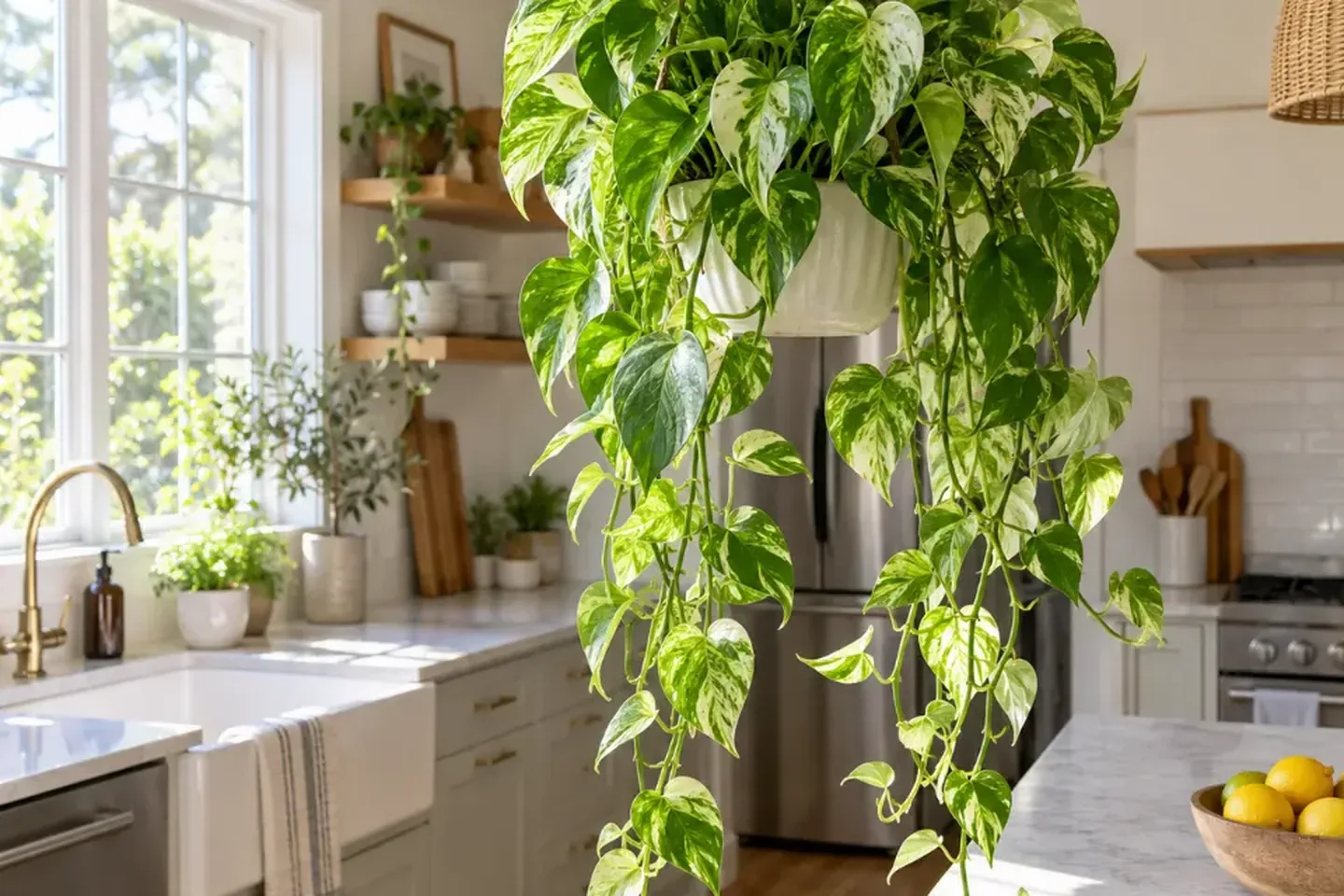
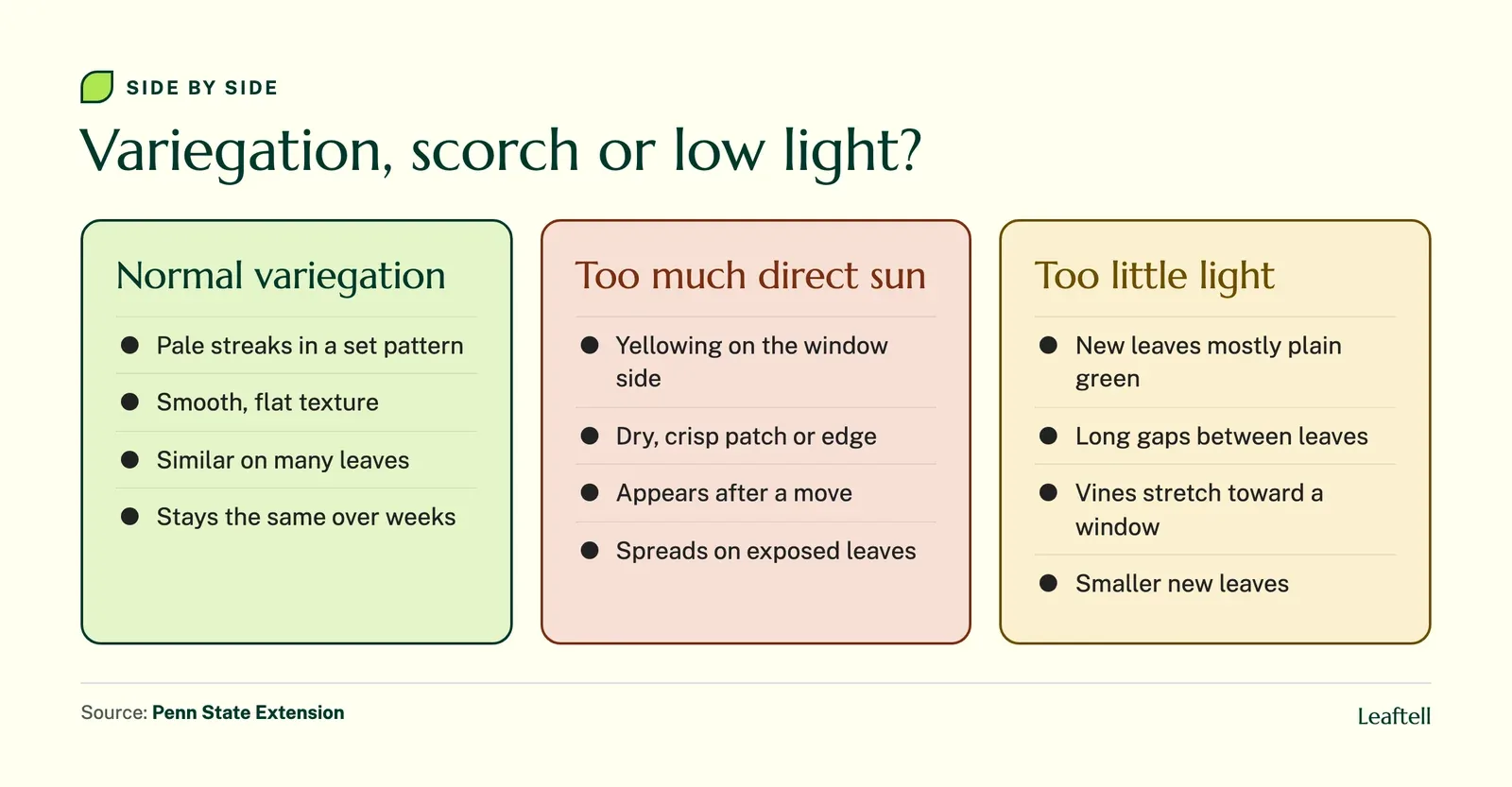
Both extremes change the leaves. Penn State Extension notes that direct sun can yellow pothos leaves, while long periods of low light can reduce variegation. That means a golden pothos fading to plain green is asking for more light, and a yellowing leaf on a sunny sill may be asking for less.
For a rough scale, the University of Georgia classes 25-75 foot-candles over an 8-hour day as low light and 75-200 as medium, with high light above 200 and no direct sun (UGA Extension). Pothos copes with low but grows best in medium to high. Our guide to judging plant light without a meter helps you tell a bright-looking room from useful light at leaf level.

Variegation or damage?
Pale patterned areas are normal on variegated cultivars. Compare several leaves before calling every light patch a problem. Scorch usually changes texture or leaves a dry, crisp edge; variegation is part of the leaf's pattern and stays flat and smooth. Photograph one healthy leaf now so you have a reference for your plant.
Keep vines away from cold glass and hot appliances. A kitchen shelf can have lovely light and also blast the leaves with heat and cooking grease.
How often to water pothos? When the mix has dried, not on a set day
Water pothos when the mix has dried below the surface and the pot feels light, then soak it evenly and let the runoff finish. There is no fixed number of days, because light, season, pot size and vine length all change how fast it dries.
Check before watering even when the vines look limp. Feel below the top layer and lift the pot if you can. A hanging basket can be dry on the surface and still wet deep inside, especially when several cuttings share one dense center. Take it off its hook or out of its cover pot so you can see the drainage instead of guessing.
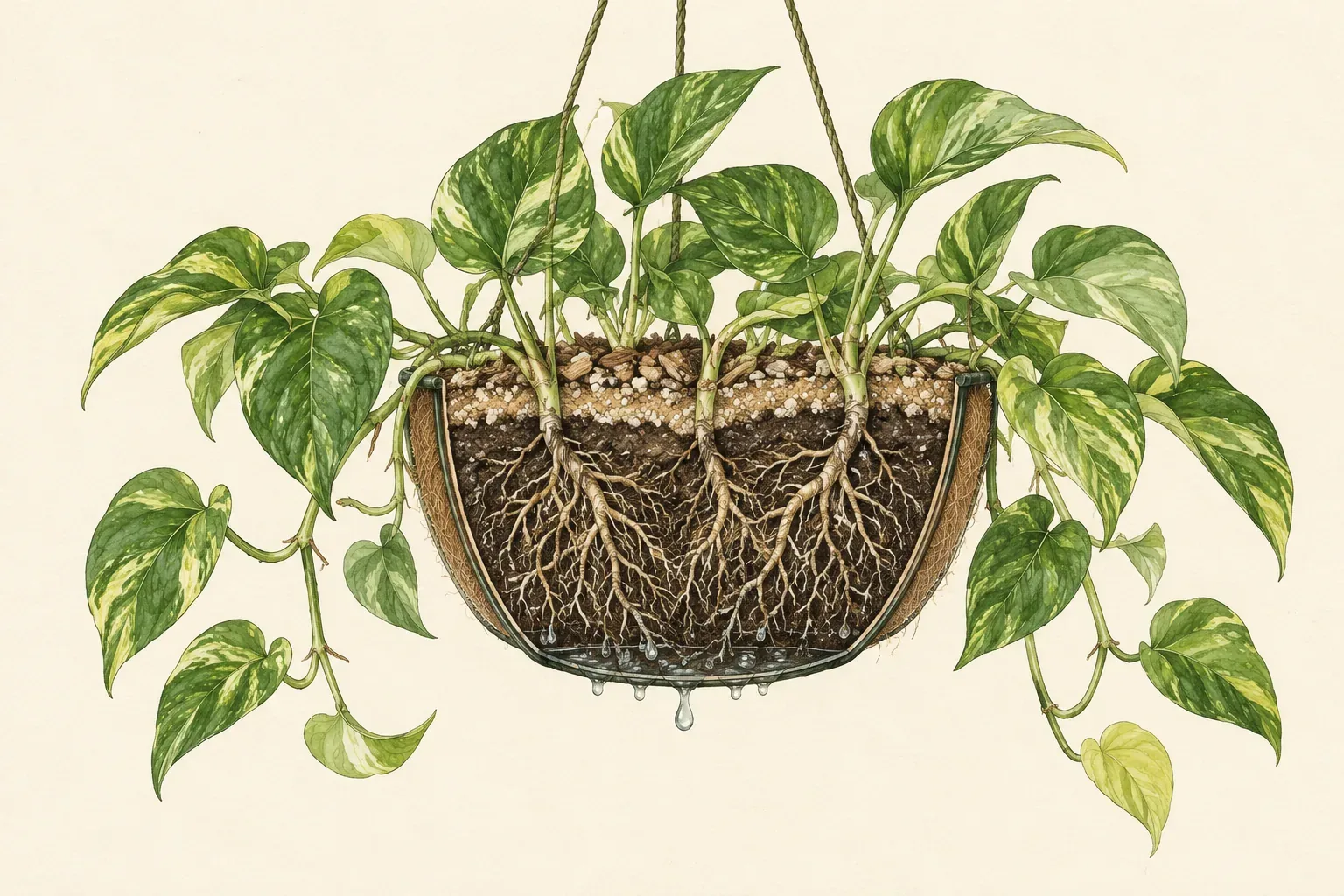
Skip small daily splashes. They wet the same top inch every time and leave you no idea what is happening lower down. If a dry root ball sheds water down the sides, pour slowly in a few passes and check that the center actually takes it up.
Our guide on testing wet or dry soil before watering combines pot weight, touch and leaf behavior into one check. Look at the pot again three days after watering to learn its drying rate. That is an observation, not a reminder to water.
How to water a pothos
- Unhook and uncover
Take a hanging basket down or lift the pot out of its cover so drainage is visible.
- Check below the surface
Push a finger into the mix and feel for moisture under the top layer, near the edge and toward the center.
- Lift and compare
Judge the weight against how it felt right after the last watering.
- Soak evenly
Water slowly over the whole surface until it drains from the holes, in a few passes if the root ball is dry.
- Drain and rehang
Let it finish dripping, empty the saucer or cover pot, then put it back.
If the mix stays wet and leaves keep collapsing, compare the signs of an overwatered plant before you change anything else.
Pothos plant care indoors: read the vine from base to tip
Follow one stem from the soil line to its growing tip. Is it leafy near the pot, bare in the middle, or losing leaves only at the far end? Each pattern points somewhere different.
A full pot often holds several separate cuttings, so one sad vine does not always describe the rest. Tie a loose label on the one you are watching if the tangle makes it hard to follow.
| Where on the vine | What you see | What it usually means | What to do |
|---|---|---|---|
| Base, near the pot | Bare nodes | Older leaves were lost earlier | Accept it; new tip growth won't refill old nodes |
| Middle | Pale patterned markings | Normal variegation | Compare with healthy leaves before treating |
| Middle or base | Several new yellow leaves | Wet mix or root stress | Check moisture below the surface |
| Growing tip | Long gaps between leaves | Not enough light | Check actual window exposure before cutting |
| Leaf undersides and nodes | Sticky film or cottony clusters | Possible mealybugs | Isolate and inspect closely |
| Cut end, 7 days after pruning | Soft or dark | Cut is struggling | Hold off on more cuts |
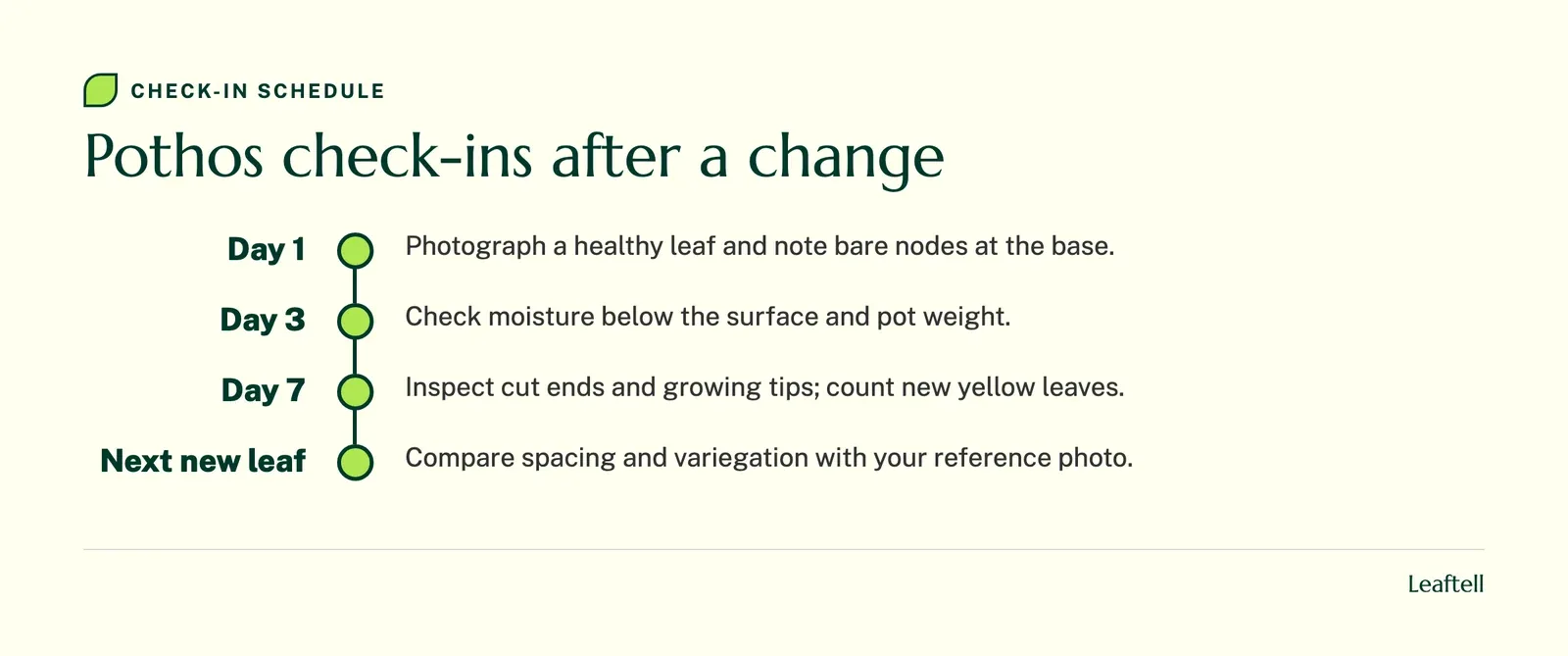
Reading a pothos vine section by section. Days are suggested check-ins, not watering or treatment intervals.
Look at the nodes where leaves join the stem and turn a few leaves over. Small brown root bumps at nodes are normal climbing growth. Sticky deposits or white cottony clusters need a closer look; our guide to spotting mealybugs on plants shows what to search for. Don't assume a pale mark is an insect until you see a body or movement.
For color changes, the guide to pothos leaves turning yellow separates old-leaf loss from wet mix and other causes. Count new yellow leaves over the next week. Leaves that are already yellow usually stay yellow even after you fix the cause, so a firm growing tip and fewer new losses are your real progress markers.
Pruning for a fuller pot
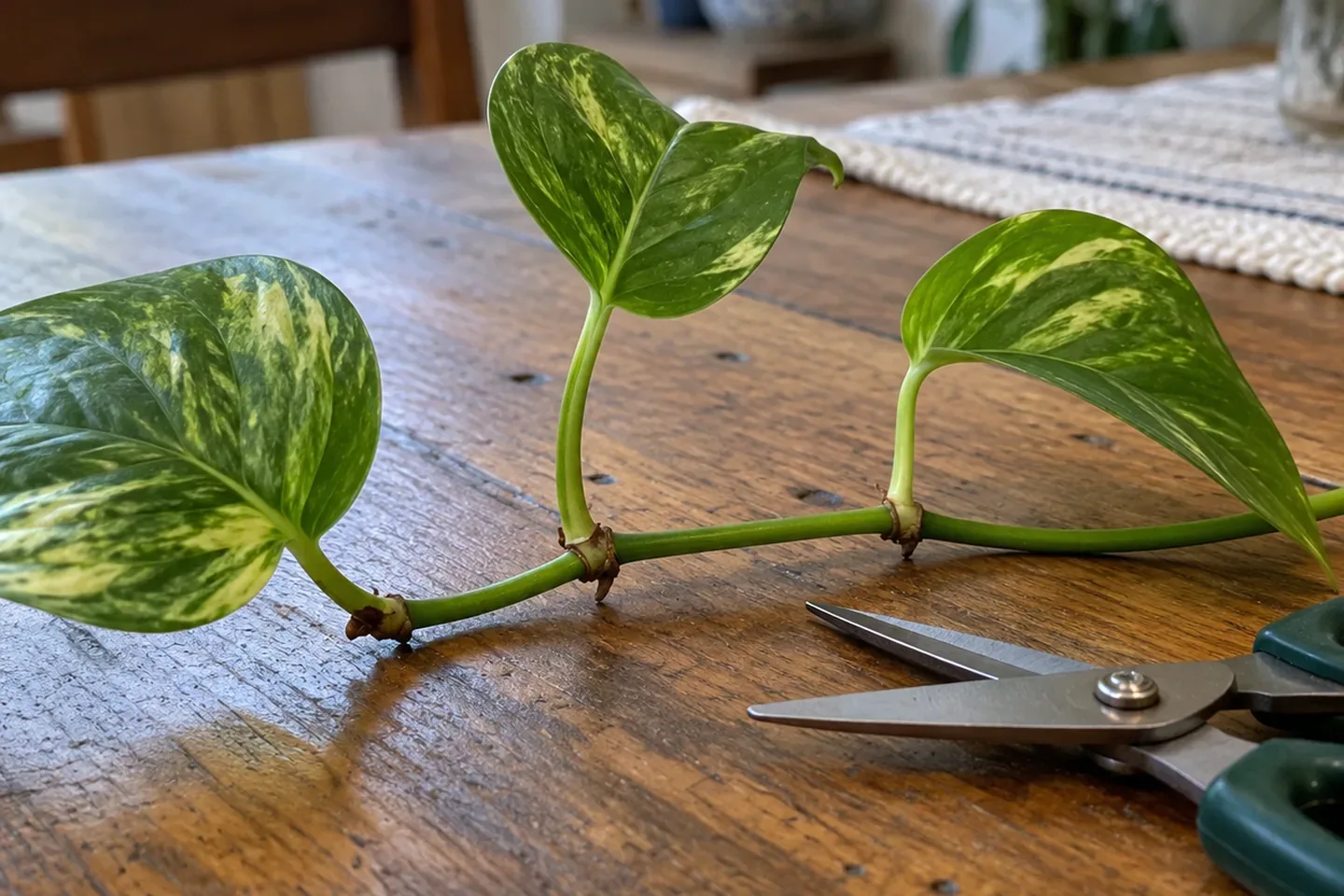
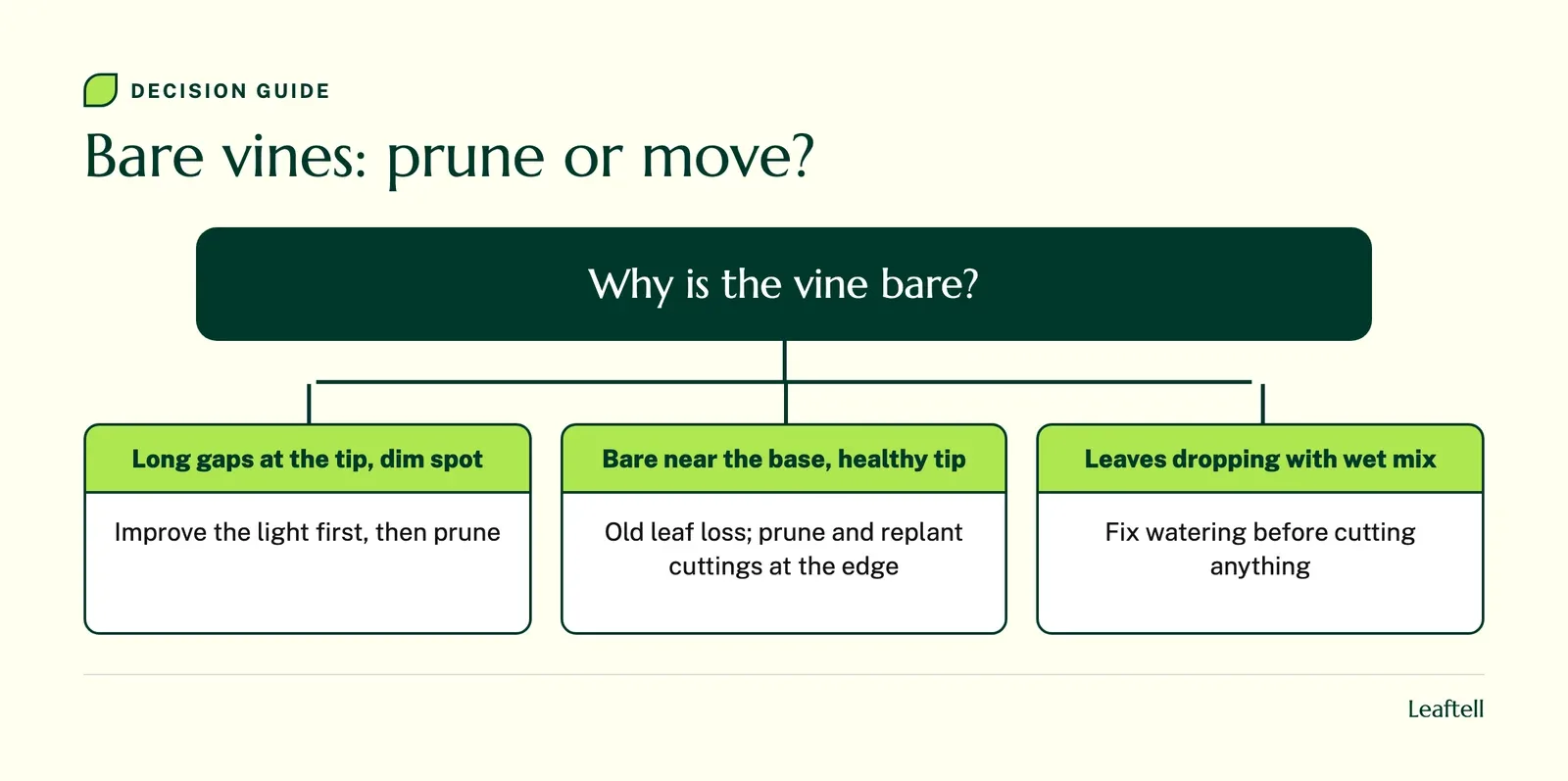
Pruning shortens a long vine, but it can't put leaves back on a bare stretch. Decide first whether you want a trailing plant, a climber or a compact pot, then cut just past a node with clean, sharp scissors.
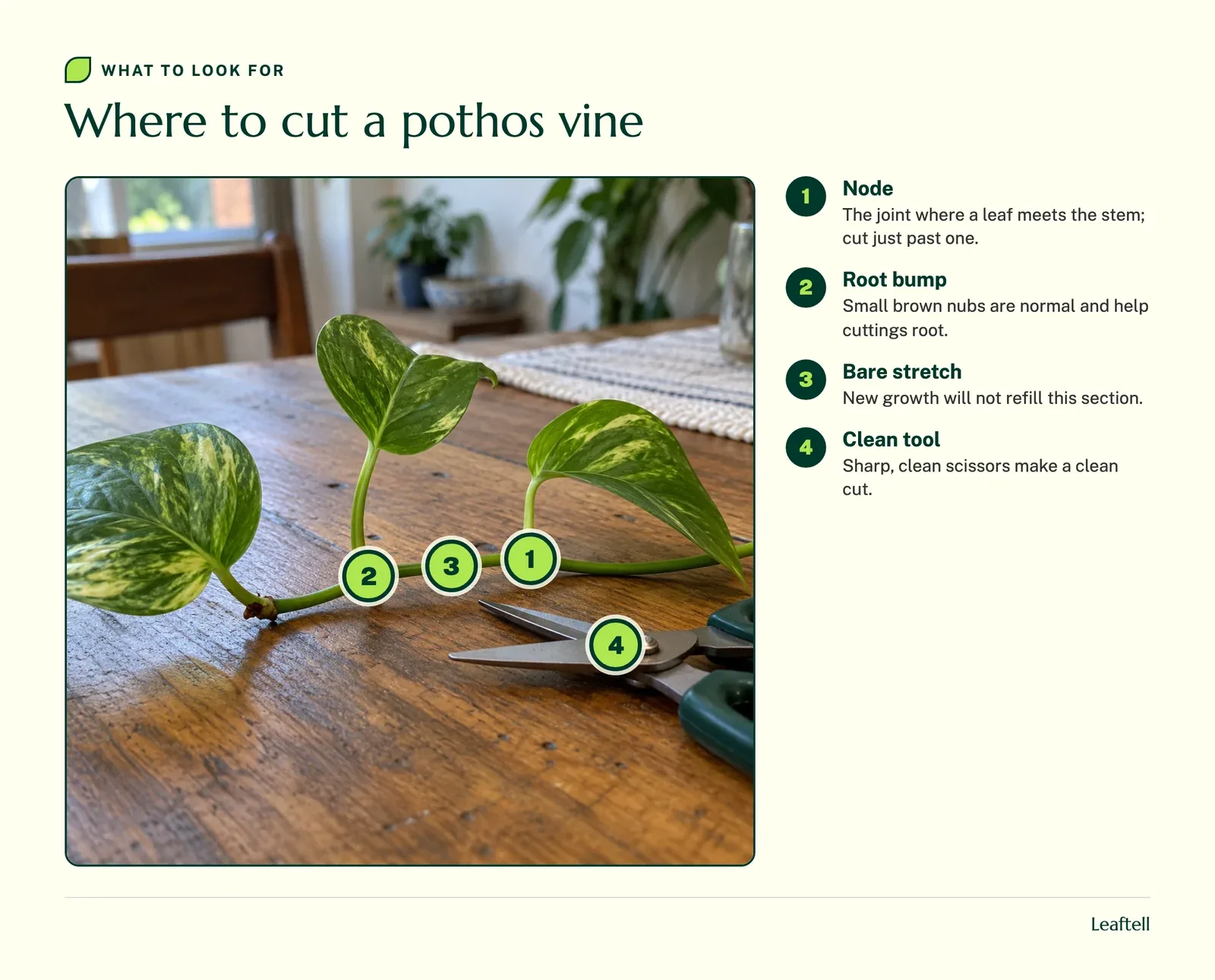
Leave plenty of healthy leaves on the parent plant, especially if it is already stressed. Cuttings need a node to root; a single leaf without a piece of stem is not the same starting point. Inspect cuttings before you root or share them, because cuttings from an infested plant carry the pests into a new pot.
For a fuller look, you can plant healthy rooted cuttings back around the edge of the pot. Don't bury leaves or pack the mix tight to hold them in place, and check drainage after a big rearrangement.
On day seven, check the cut ends and the remaining tips for softness. Wait for healthy new growth before the next round of cuts. If most stems are bare because the spot is too dark, fix the light first; repeated haircuts in a dim corner give you the same bare vines, just shorter. Our guide on fixing leggy plants covers that case in more detail.
Are pothos toxic to cats? Yes, so plan for the whole vine
Yes. ASPCA guidance lists pothos as toxic to cats and dogs because its insoluble calcium oxalates can irritate the mouth. Keep the whole plant, including trailing vines and fallen leaves, out of reach of pets and children who chew plants.
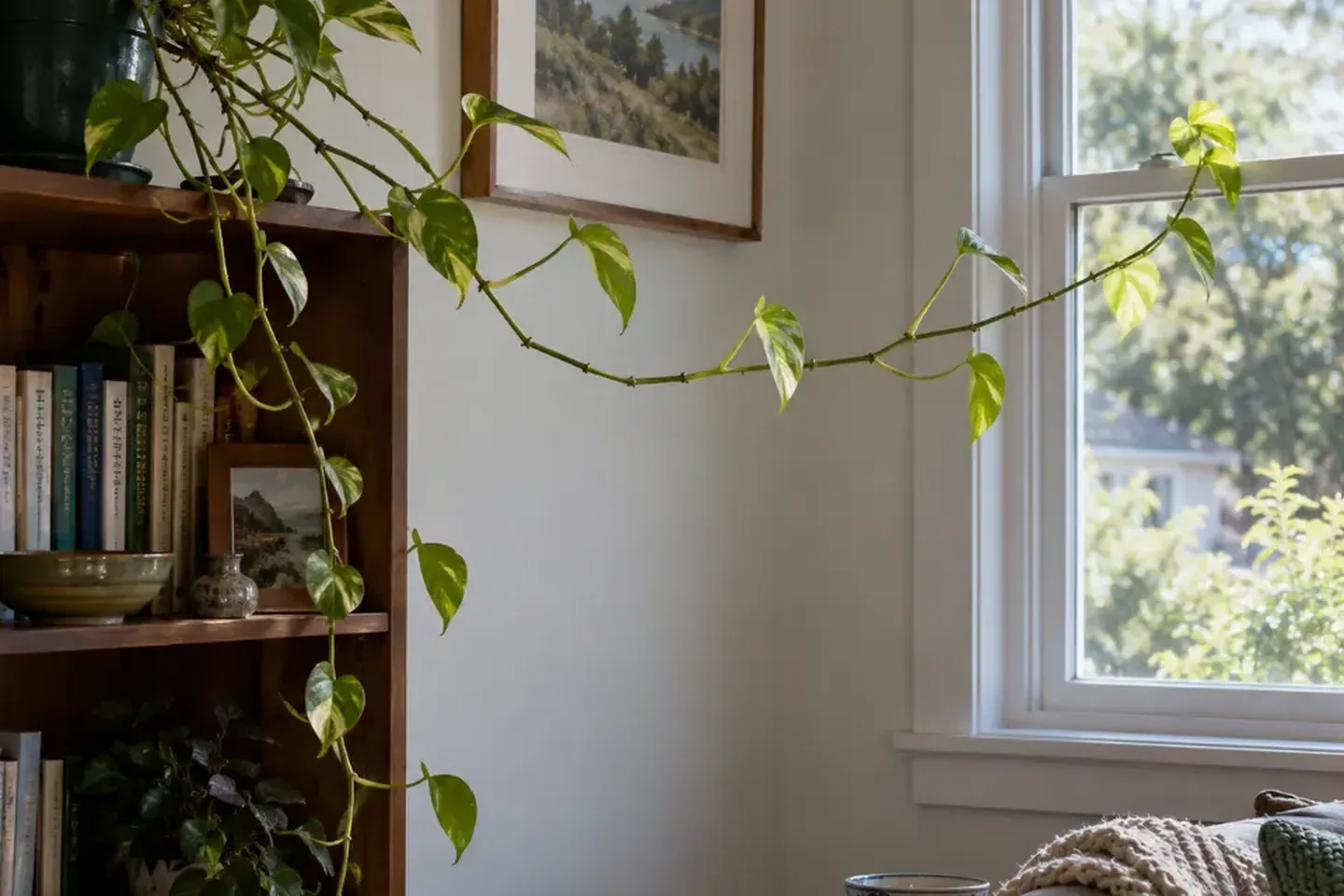
Trailing vines are the problem. A pot on a high shelf is easy to reach when a vine hangs down to the back of the sofa. Measure from the tip of the longest vine, not the pot, and check nearby furniture a cat can climb.
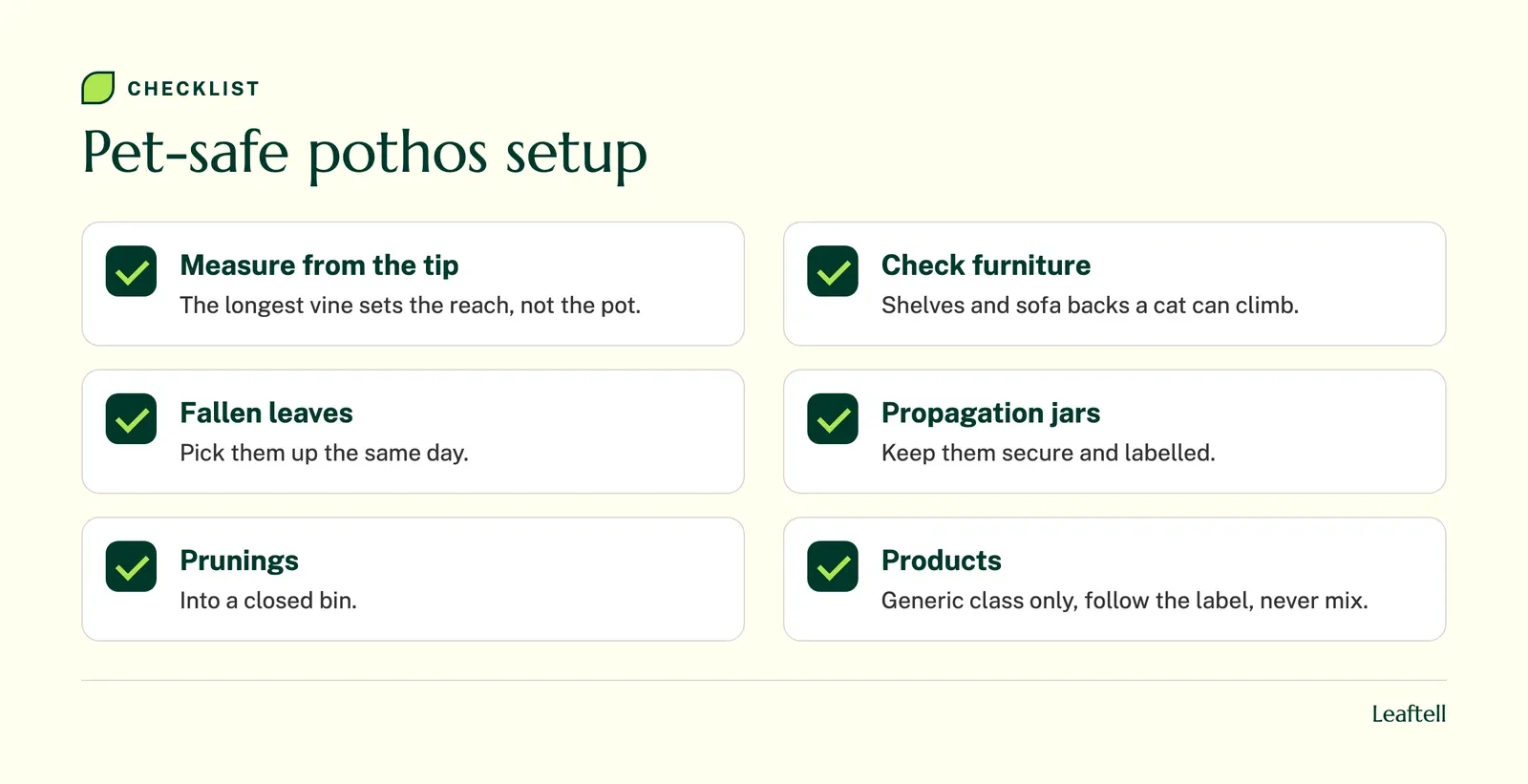
Handle fresh cuts with care, wash sap off your hands and put prunings in a closed bin. Propagation water is not drinking water for pets, so keep jars somewhere secure and label them if more than one person cares for the plants.
If pests show up, start with isolation and wiping. Any product, even one labelled natural, is a generic class with its own precautions: follow the label, store it away from pets and never mix products. For a suspected bite or chew, call a veterinarian or poison service with the plant name and any recent treatment.
Pothos care mistakes and what they cost
These are the habits that turn an easy plant into a sparse one.
- Leaving it in a dim corner forever. It survives, so nobody notices. Cost: long bare vines and faded variegation.
- Watering on a schedule. The pot dries at different speeds through the year. Cost: wet roots in winter, yellow leaves.
- Daily splashes on top. The surface stays damp while the center stays a mystery. Cost: you lose your best clue about real moisture.
- Never unhooking the basket. Runoff sits where you can't see it. Cost: a soggy center under a dry-looking surface.
- Cutting back hard in low light. Pruning without better light just repeats the problem. Cost: shorter vines that grow bare again.
- Measuring pet safety from the pot. The vines are what a cat grabs. Cost: a toxic plant within reach.
When to get help
Ask a local extension office or a knowledgeable garden center if damage spreads fast, the base collapses, or decline continues after you corrected light and watering. Bring photos of the whole plant, the pot and the roots.
The pothos routine worth keeping
Give it real daylight, check the pot before every watering, and read one vine from base to tip each week. Light is the lever most people miss: it controls growth, color and how fast the pot dries, so a better spot fixes more problems than any watering change.
Keep notes on bare nodes, new yellow leaves and the drying rate after you water. If you also grow a monstera, the monstera care guide uses the same root-zone checks, and the wider indoor plant care guide covers the rest of your shelf.
Sources
Check your growing conditions with the plant watering calculator.
Frequently asked questions
Water when the mix has dried below the surface and the pot feels light, then soak it evenly and let it drain. Light, season and pot size change the interval, so check the pot instead of following a calendar.
Yellowing, limp leaves and soft roots in mix that stays wet can point to overwatering. Look inside the pot to confirm it, because a dry plant can droop too.
Long periods of low light can reduce variegation. Move it gradually to brighter indirect light and judge the new leaves, since old leaves keep their current color.
Move it to better light first, then prune just past a node and plant healthy rooted cuttings back around the edge of the pot. Pruning alone in a dim spot only gives you shorter bare vines.
Yes. Pothos is commonly grown indoors where it gets suitable light and protection from cold, with drainage and watering matched to its pot.
Pick a pot that fits the roots with a little room to grow. An oversized pot holds moisture around a small root ball for a long time.
Both work. A support lets the climbing roots attach, while a hanging plant needs regular checks of its crowded center and the hidden part of the pot.
Yes. ASPCA guidance lists pothos as toxic to cats and dogs because of insoluble calcium oxalates. Keep the full length of the vines and any fallen leaves out of reach, and call a vet if you suspect chewing.
Share article
About the author

Keep checking your plant
Plant care reference
Indoor plant care
Build a routine around your plant, light and potting mix.
Plant care reference
Why is my plant dying
Trace leaf and root symptoms before choosing a care change.
Plant care reference
Pothos plant care
Choose a growing spot and prune a trailing pothos for fuller growth.
Plant care reference
How to fix root rot
Inspect root firmness and drainage, then decide whether to repot.