Drooping Plant? Check the Pot Weight Before You Water
Filip Leszczyński 16 October 2026 11 min read
In this article
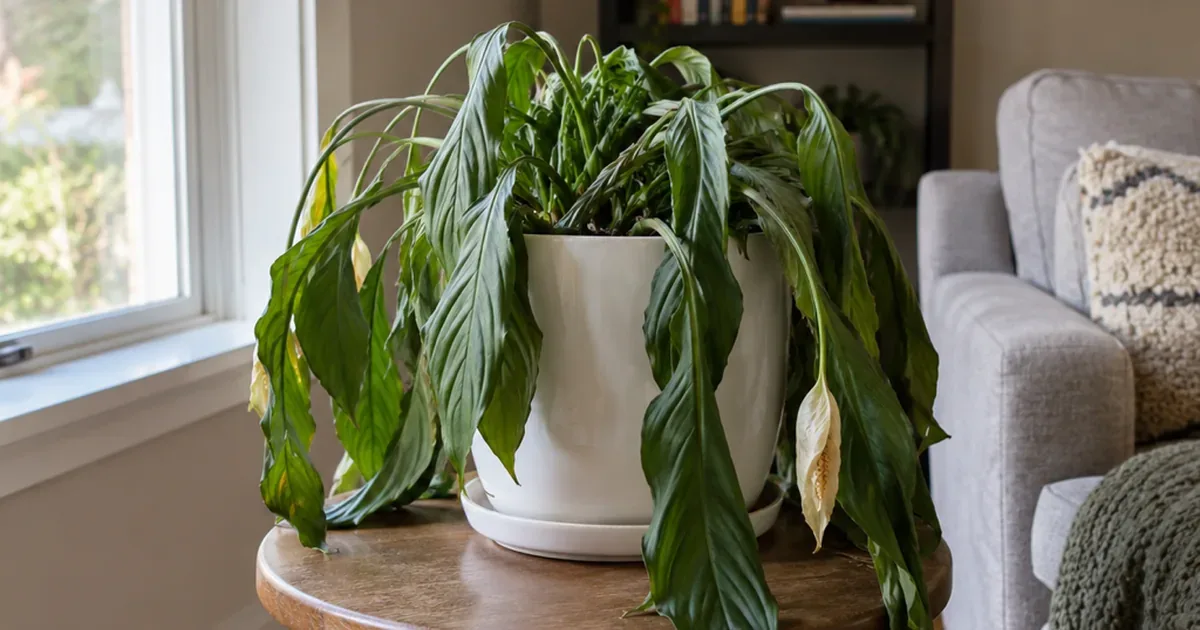
A drooping plant is either too dry or too wet at the roots, and the leaves look almost the same in both cases. So before you water, lift the pot and feel the mix below the surface: a light pot with dry mix needs a drink, while a heavy pot with wet mix needs the opposite.
That one check matters more than anything else on this page. Pouring water into an already saturated pot is the most common way a droopy plant becomes a dying one. After the root zone, look at timing, stem firmness and anything that changed recently, so your first action follows the evidence instead of the panic.
The pot weight, the smell of the mix and the time of day the leaves sag are things no photo shows. Your answers to those decide the next step.
Why is my plant drooping? Check the pot before the leaves
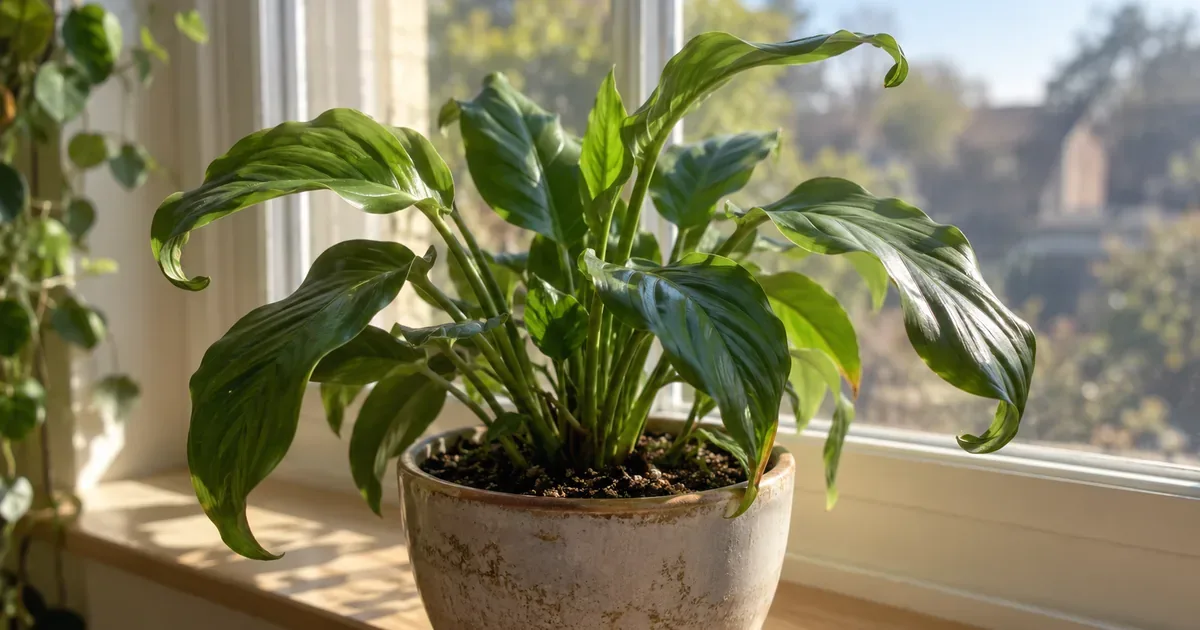
Your plant is drooping because its leaves are not getting enough water from the roots. That happens when the mix is dry, and also when wet, airless roots are too damaged to take water up. The pot tells you which.
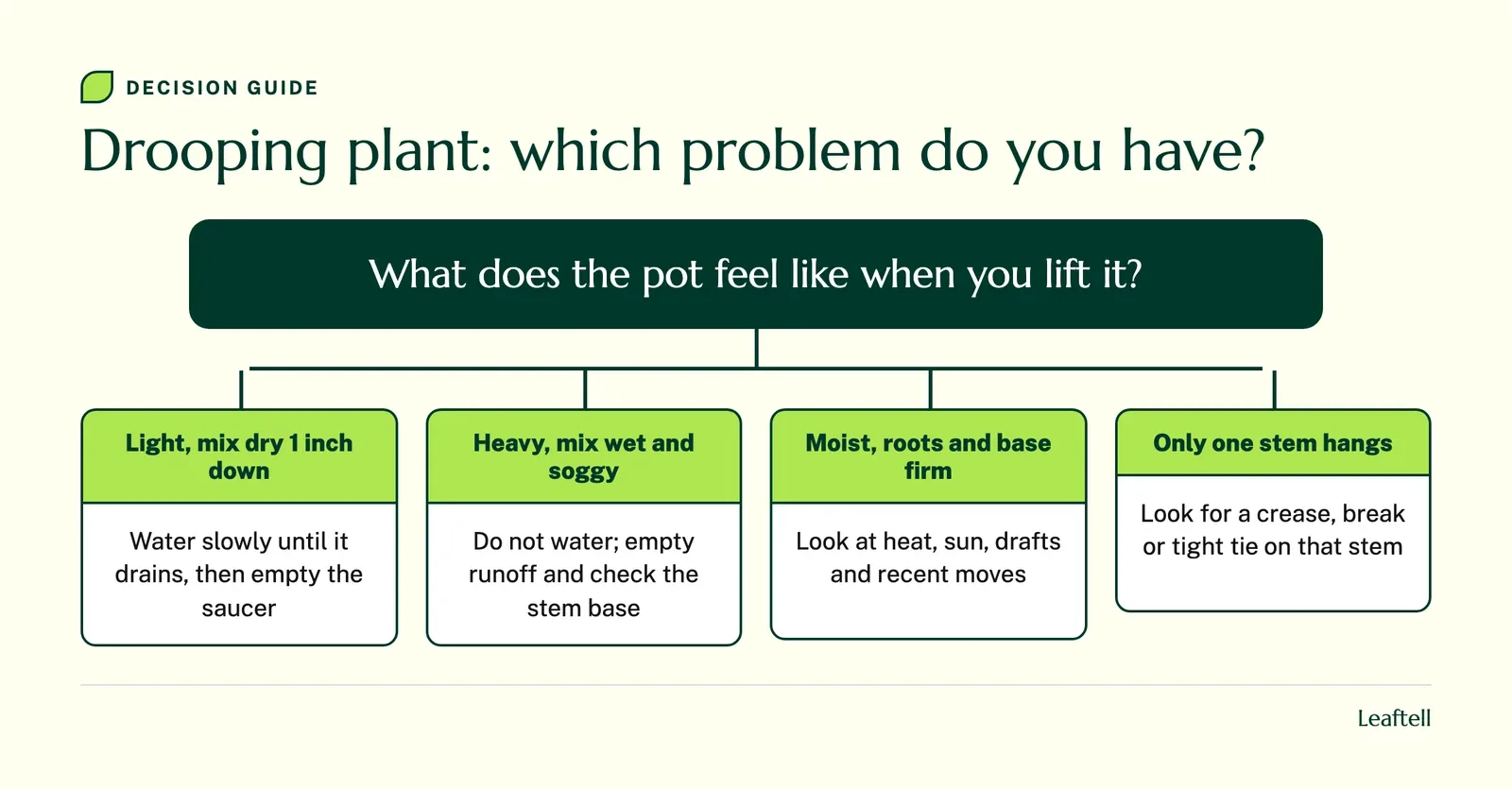
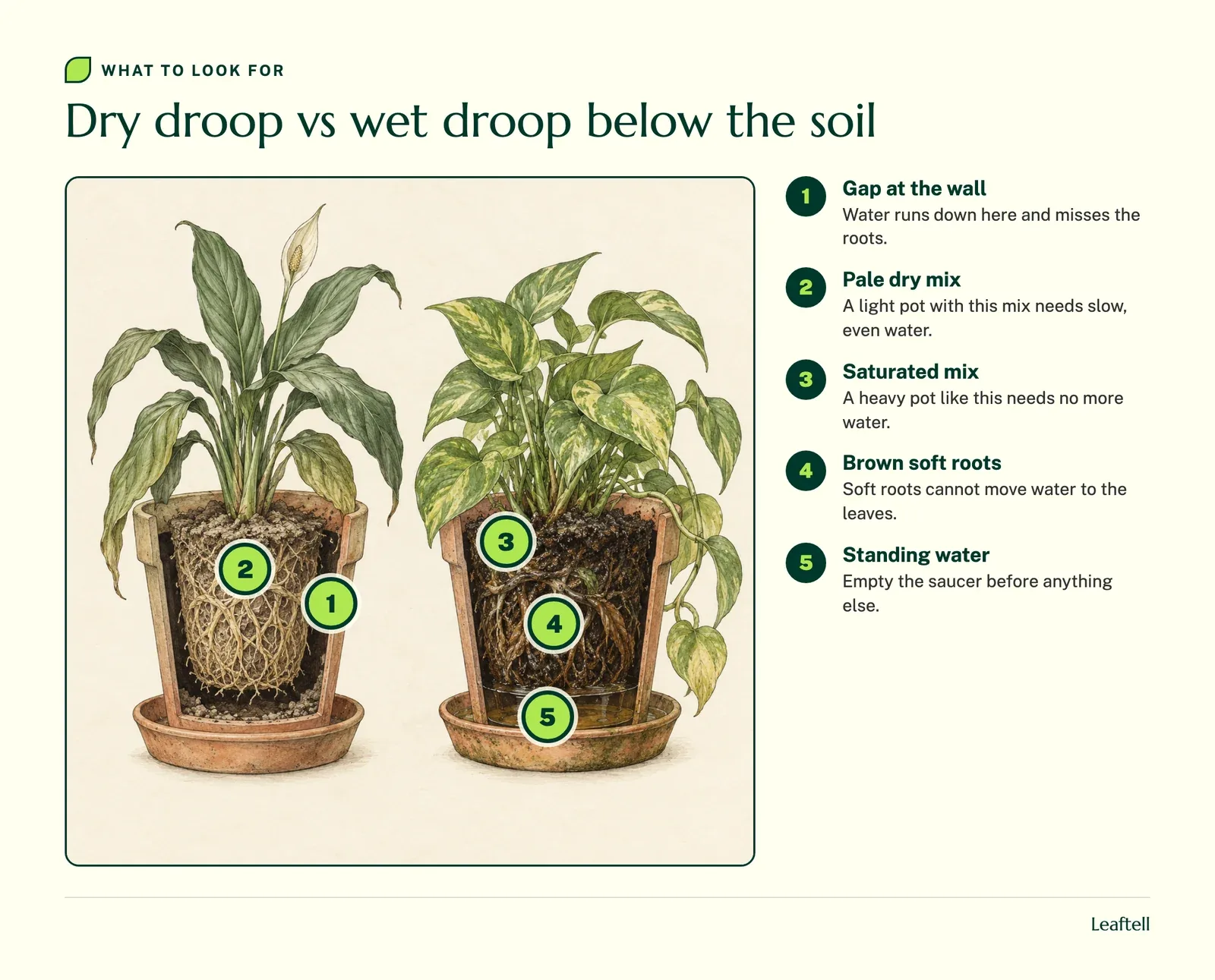
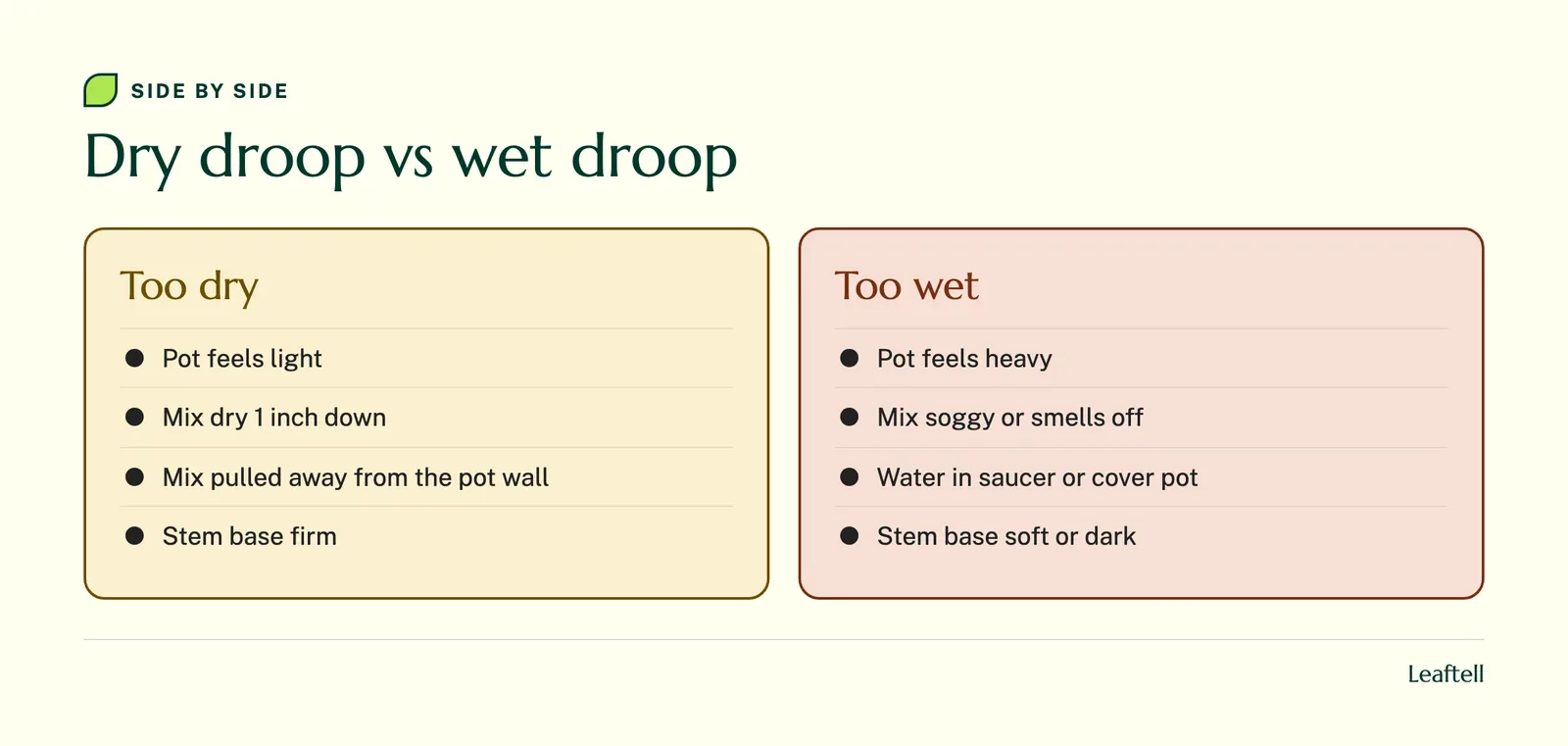
Lift the pot if you can do it safely. A light container with dry mix and limp leaves points one way; a heavy container with soggy mix points the other. Then check the cover pot or saucer for standing water, which can stay hidden while the top of the mix looks dry. Never use leaf position alone to decide.
The guide to telling wet from dry soil before watering shows how to combine pot weight with touch. A good general starting point from the University of Georgia Extension is to feel about 1 inch below the surface: if that layer is still moist, do not add water.
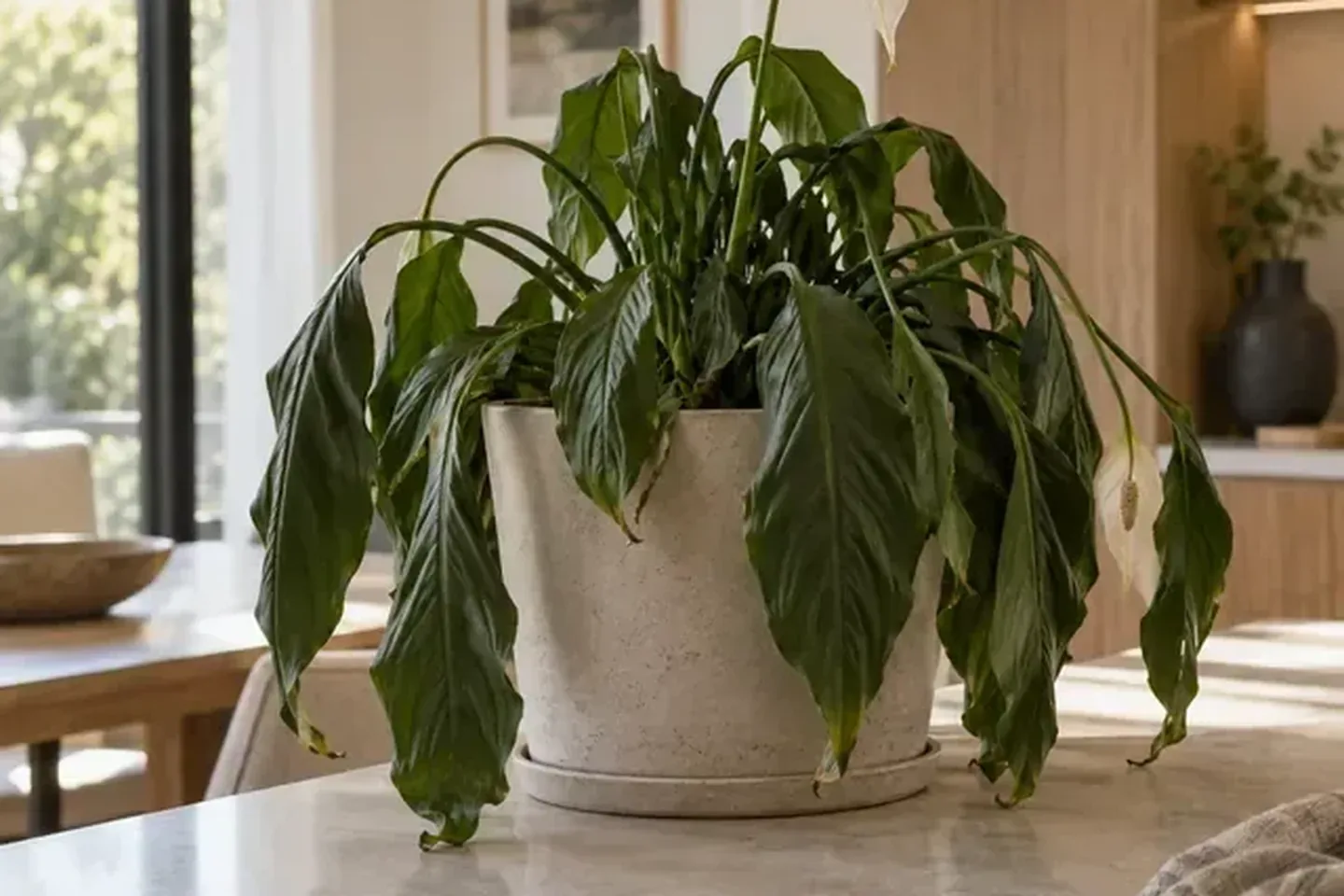
Next, see whether the whole plant droops or just one stem. A creased stem, a broken tie or a knock can make one stalk hang while the roots are fine. Take a whole-plant photo now. The angle of several leaf stalks is much easier to compare in pictures than from memory.
| What you find on day 1 | What to do next |
|---|---|
| Light pot, dry center | Water evenly if the species is due, and check the water reaches the root ball |
| Heavy pot, soft stem base | Stop watering, empty the runoff and check the roots and stem |
| Sag in the afternoon only | Note whether it follows heat or direct sun rather than staying constant |
| Day 3 and day 7 check-ins | Track drying and any new leaf losses; do not water by date alone |
Observation checklist for a drooping plant. Review dates are suggested check-ins, not watering or treatment intervals.
What causes plants to wilt besides water?
Heat, direct sun, a sudden move and transport stress can all make a plant wilt for a while. Timing is the clue: a sag that comes and goes with the afternoon heat differs from a plant that stays limp overnight.
Check the same plant in the morning and again in the evening. Note the room temperature, any direct sun and any airflow from a heater or vent when the droop is worst. A repeatable daily pattern points at the growing spot as much as the watering. The RHS guide to leaf damage on houseplants groups many of these environmental causes together.
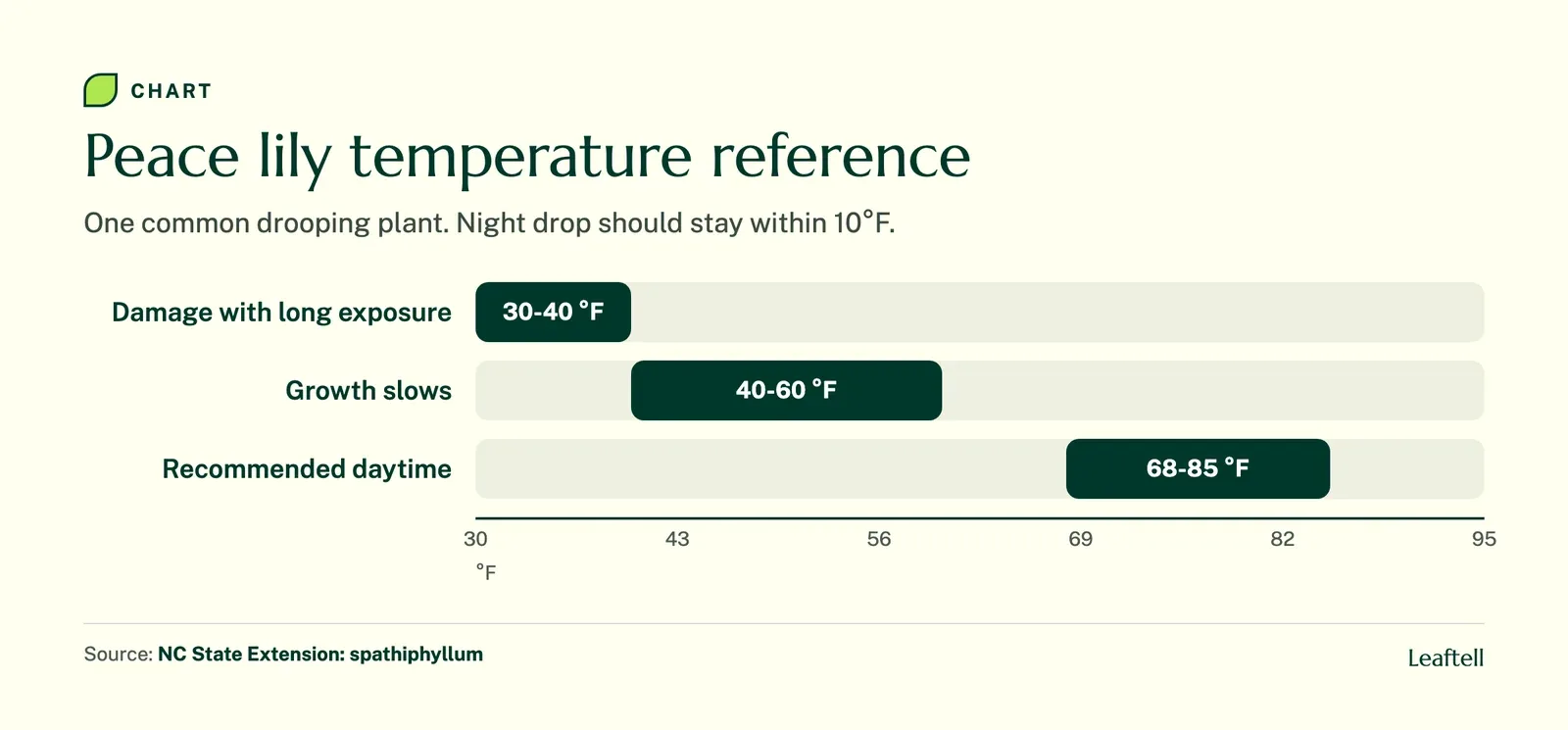
Temperature ranges differ by species. For one familiar dropper, the peace lily, NC State recommends daytime conditions of 68-85°F, with a night drop of no more than 10°F. Growth slows at 40-60°F and long exposure below 40°F causes damage.
A plant that just came home has been through transport, a light change and probably a different watering routine. Put it somewhere moderate and check the pot before any rescue. Resist the urge to repot, feed, prune and spray in the same week; you will never know which change mattered.
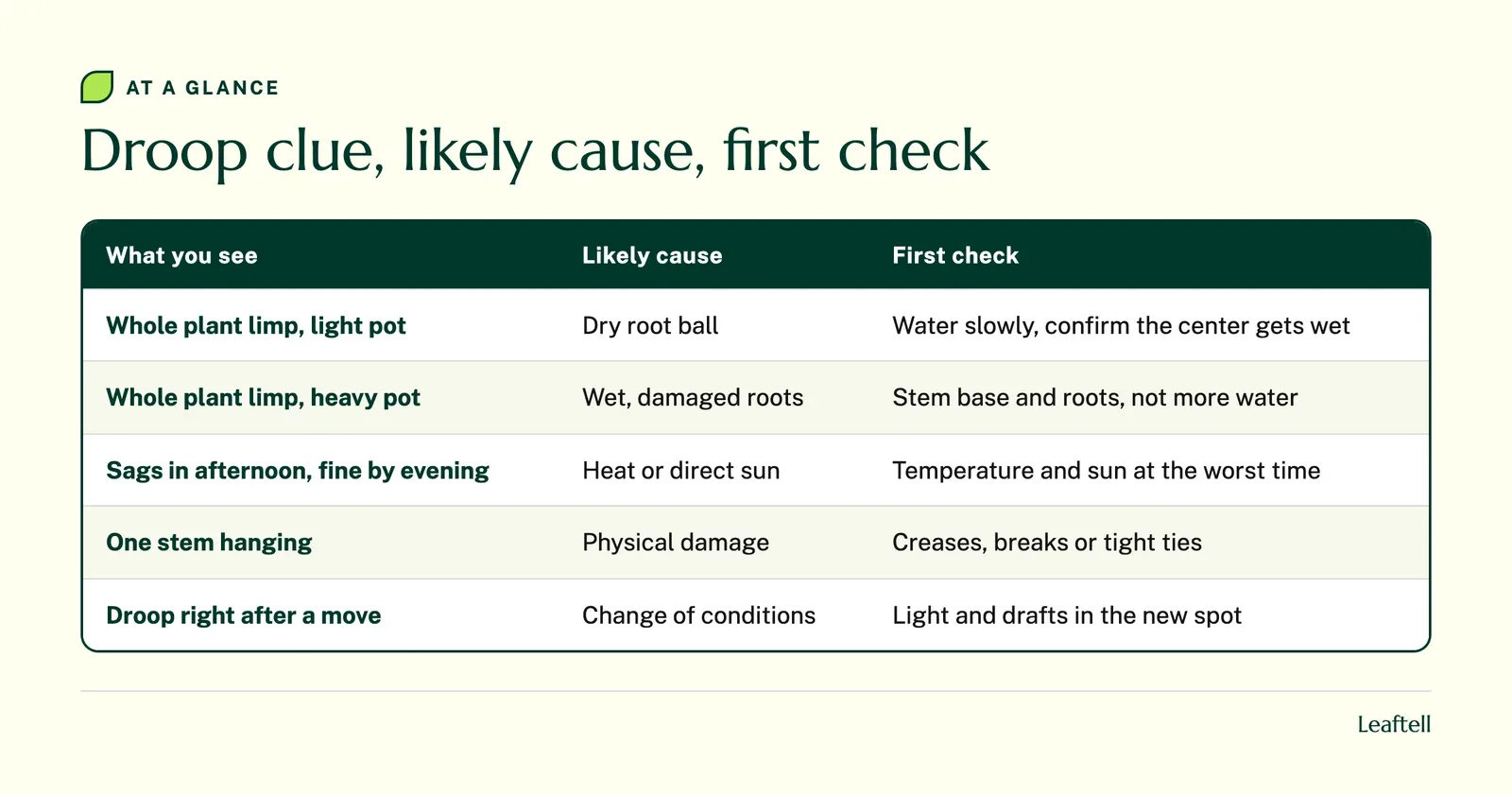
If the plant sits in a hot exposed window, or was moved somewhere much darker, read how to judge your plant's light. Increase light gradually. If lower leaves are also turning color, compare yellow leaves on plants, and if the leaves roll or cup rather than hang, curling leaves is the closer match.
Wilted plants in dry pots: how to water them properly
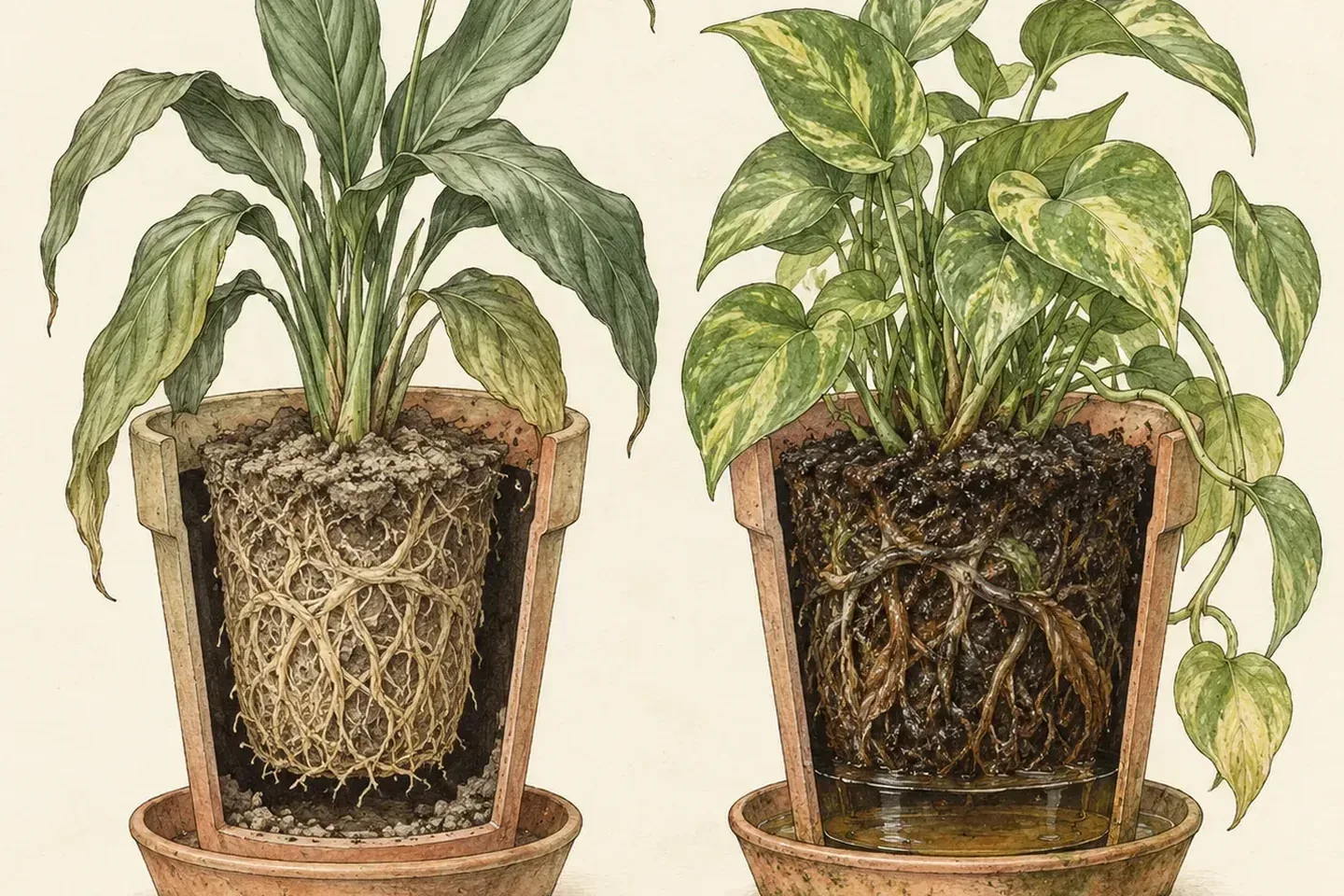
When the root ball is dry, water it slowly and evenly until water leaves the drainage holes, then check that the center actually got wet. Very dry mix shrinks away from the pot walls, so water can run down the gap and out the bottom while the roots stay dry.
How to rescue a drooping plant safely
- Lift and feel the pot
Lift the pot and feel about 1 inch below the surface. Light and dry means water may help; heavy and wet means stop and go to the base check below.
- Water a dry root ball slowly
Pour slowly in several passes until water drains out, so it soaks the center instead of running down the sides.
- Let it drain and empty the cover pot
Wait for dripping to finish, then tip out the saucer or cover pot before putting the plant back.
- Wait instead of adding more
Do not keep adding water because the leaves have not lifted yet. Check the leaf angle again the next day.
- Write down the time and the result
Record when you watered and how the plant looked the next morning, so the next decision has evidence behind it.
Different species and stress levels respond at different speeds, and a bigger volume of water will not repair a damaged root or stem. The peace lily drooping guide covers the most dramatic example, but do not apply peace lily habits to a succulent or an orchid. If the plant stays limp after the mix is properly moist, look for another cause. Continuing to soak it creates a second problem on top of the first.
Drooping leaves on a wet plant: inspect the base
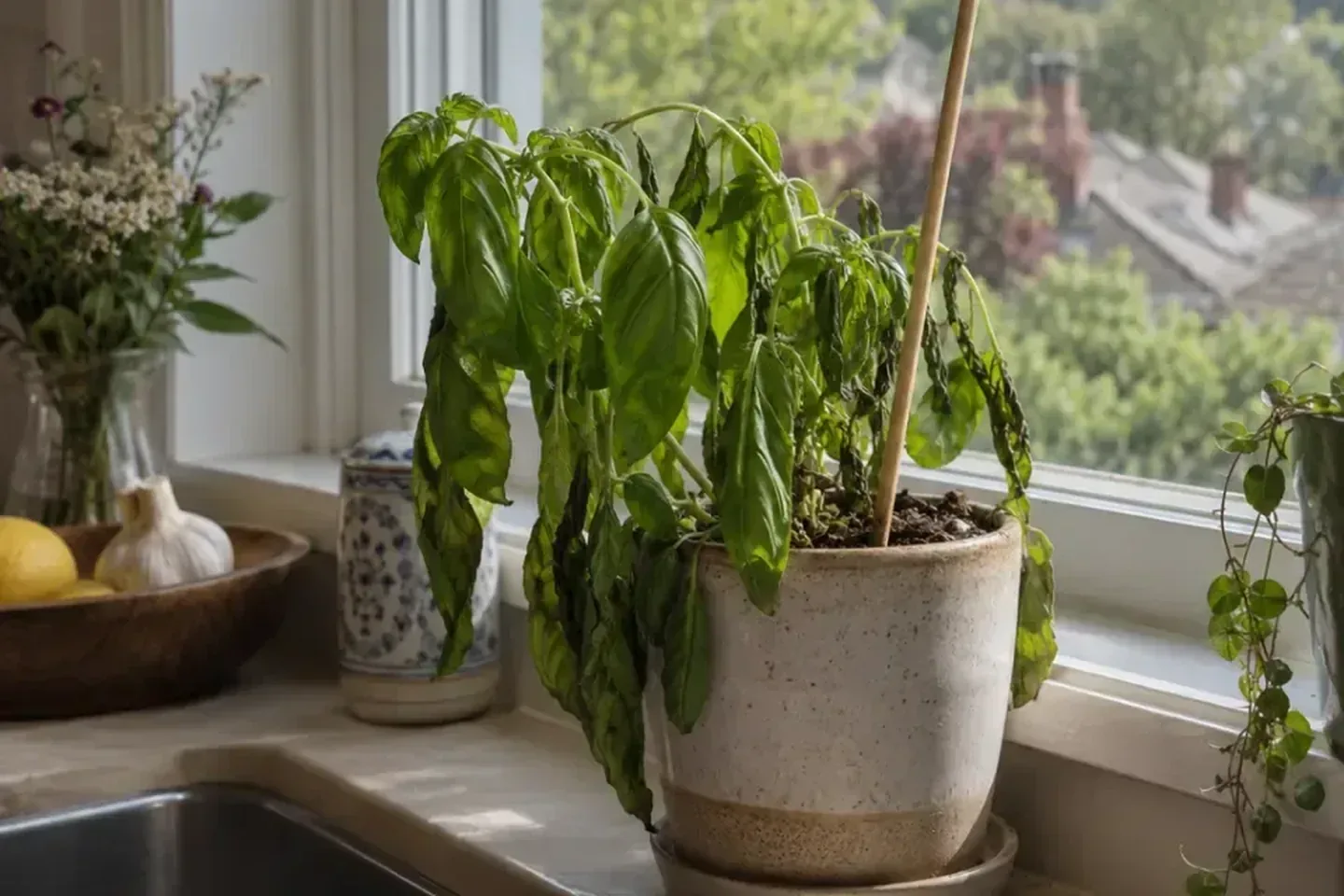
If the pot is already wet, do not water. Empty any trapped runoff, check that the drainage holes are clear, and look closely at where the stem enters the mix.
Firm tissue, a local bend and a soft collapsing base are three different findings. Note any unusual smell, but do not pull the plant apart out of curiosity if everything else looks reassuring. The University of Maryland Extension's indoor plant diagnosis guide also starts with roots and drainage when foliage collapses.
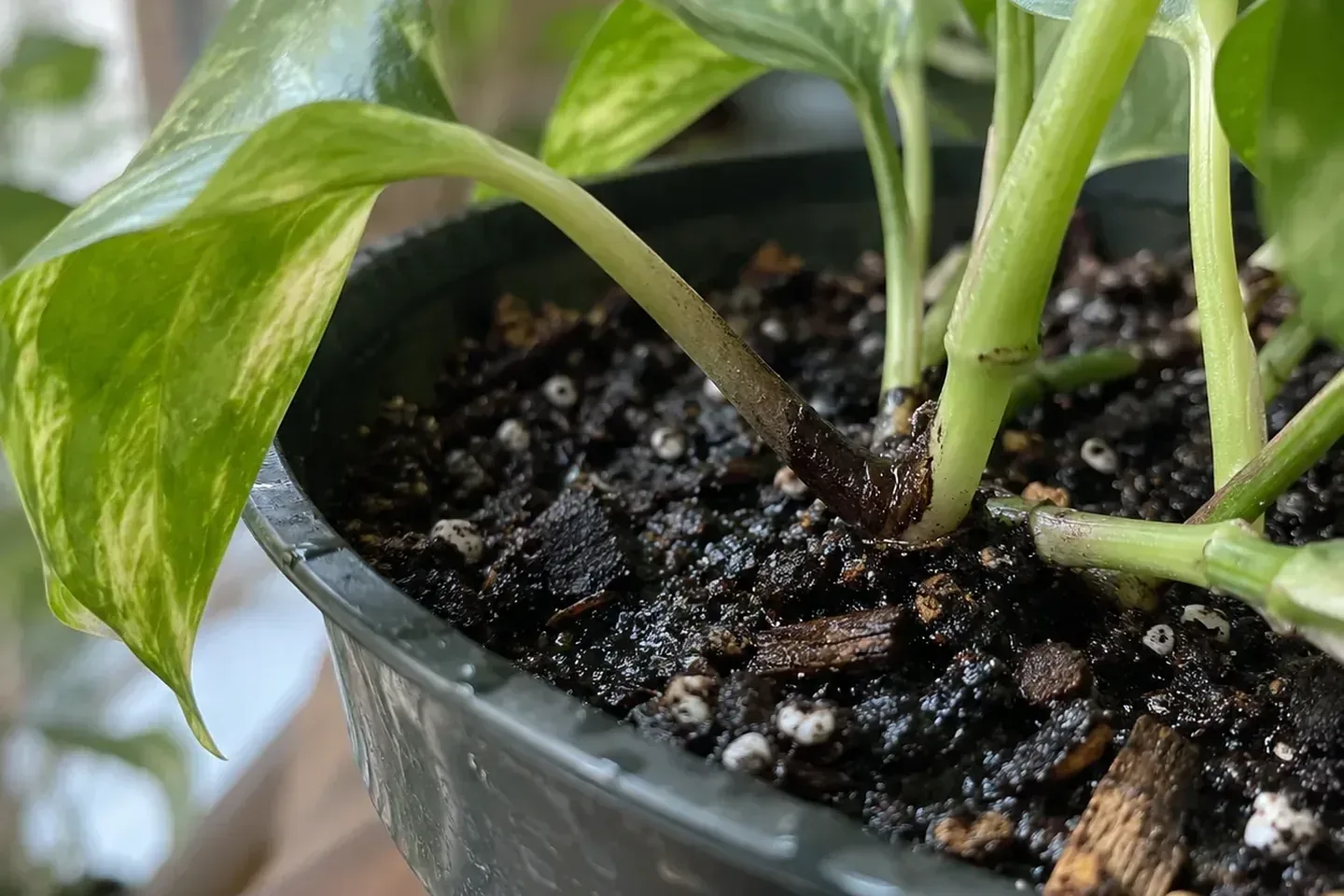
A persistent collapse, soft roots or a deteriorating base calls for a closer look using the guide to fixing root rot. The signs that come before it are in overwatered plant symptoms. Only remove the plant from its pot when you can support it and have a clean surface ready. Root color varies with the species and the mix, so texture tells you more than color.
Drooping plant mistakes that make it worse
The common fixes for a droopy plant are often the ones that finish it off.
- Watering by reflex. A wet, drooping plant gets another drink. Cost: roots that were struggling start to rot.
- Feeding as first aid. Fertilizer cannot restore injured roots. Cost: extra stress on a damaged root system.
- Repotting into a huge pot of wet mix. More soil holds more water around fewer working roots. Cost: the pot stays soggy for weeks.
- Cutting off green drooping leaves. A limp leaf may recover once the cause is fixed. Cost: leaves the plant needs to recover.
- Five changes at once. Repot, feed, move and spray in one week. Cost: you never learn what helped.
Keep drainage water away from healthy plants and clean your tools after handling suspect tissue.
How to save a wilted plant: track the next 7 days
Saving a wilted plant means fixing the root-zone cause, then watching for the right signs over about a week. Use short check-ins instead of a recovery deadline, because a bent stalk may stay bent even after the stress is gone.
On day one, record the soil, the stem firmness and the leaf angle before you do anything. The next day, compare the same three things. On day three, check that the pot is drying normally. At one week, count newly affected leaves and look at the growing points, not just the oldest limp leaf.
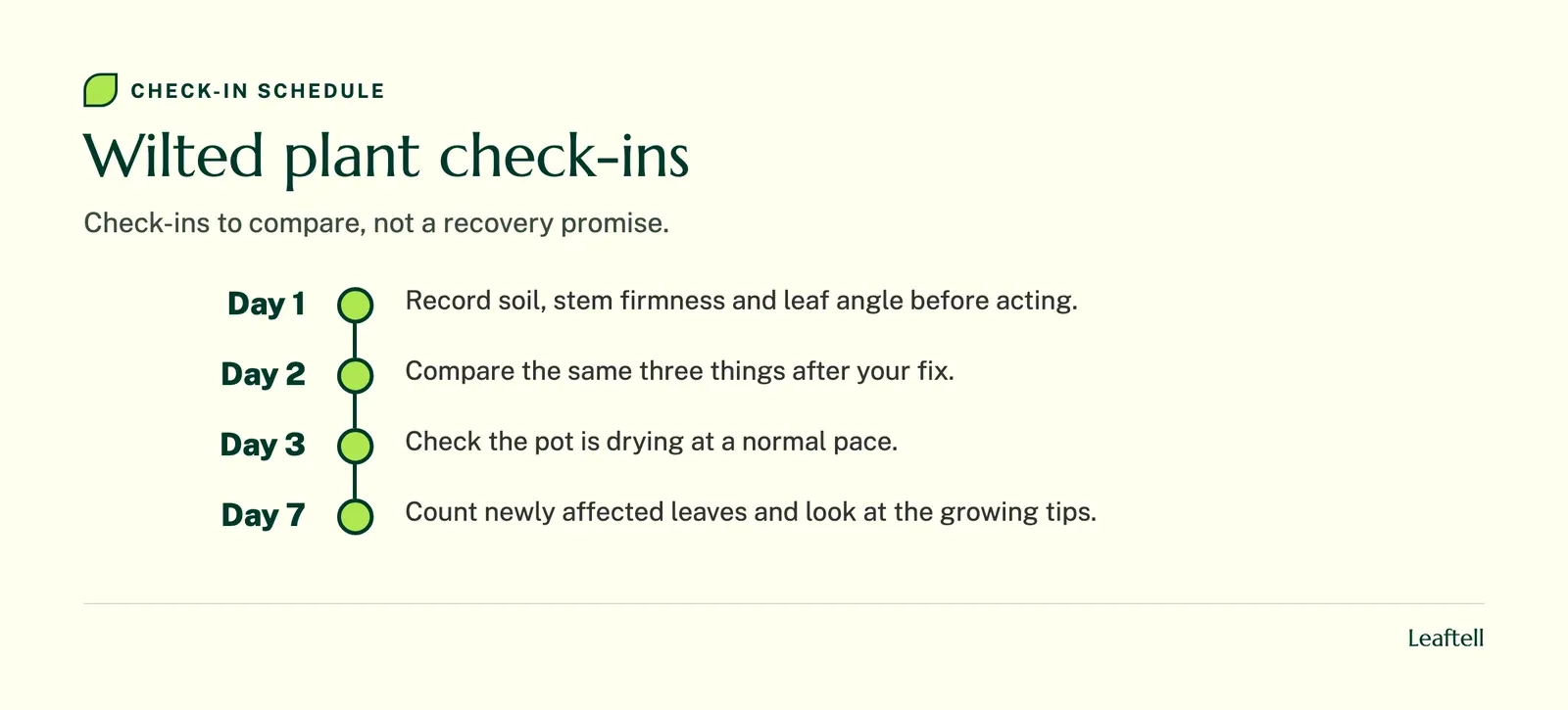
A damaged old leaf may be lost while the growing tip stays healthy. A brief improvement does not excuse a pot still sitting in water. For a routine that fits the species once it settles, start from the indoor plant care guide.
Fallen leaves can be toxic to pets and children, so pick them up and check the species on the ASPCA toxic plant list.
When to get help: if the main stem is failing, you cannot find healthy roots, the plant keeps collapsing after you corrected the moisture, or several plants droop at once, take your photos and notes to a local extension service or experienced nursery promptly. Stabilizing the conditions helps, but it cannot guarantee that badly damaged tissue recovers.
Check the roots first, then decide
A drooping plant needs a diagnosis before it needs water. Lift the pot, feel below the surface, check the cover pot and the stem base, and act on what you find. Then give it a week of check-ins before judging. Check your drooping plant in Leaftell if the clues still point both ways.
Sources
Check your growing conditions with the plant watering calculator.
Frequently asked questions
Wet roots can be damaged or short of air, so they stop taking up water and the leaves wilt anyway. Adding more water makes it worse. Check the drainage and how firm the roots and stem base are.
Often, if enough roots and growing tissue are still healthy and you correct the cause. A collapsing base or heavy root loss makes recovery much less certain.
Water a truly dry root ball slowly and evenly, or fix the drainage if it is wet. Keep it away from heat and harsh sun, then compare the leaves the next morning.
Not right away. A green leaf that droops may lift again once the cause is fixed. Remove only leaves that are clearly dead or rotting.
Peace lilies are the familiar example, but they also droop in soggy soil. Even with a plant that usually signals thirst, check the root zone before you water.
Look for pale or scorched patches on the side facing the window, especially after a recent move. Check the moisture too, since a hot spot dries a pot quickly.
There is no fixed timeline. Compare the leaves the day after you act and again at one week; root or stem damage takes much longer and may never fully reverse, so judge by new growth.
Share article
About the author

Keep checking your plant
Plant care reference
Indoor plant care
Build a routine around your plant, light and potting mix.
Plant care reference
Why is my plant dying
Trace leaf and root symptoms before choosing a care change.
Plant care reference
Pothos plant care
Choose a growing spot and prune a trailing pothos for fuller growth.
Plant care reference
How to fix root rot
Inspect root firmness and drainage, then decide whether to repot.