Potting mix for indoor plants: what's in it and how to pick one
In this article
Many indoor plant problems that look like a watering mistake start in the pot. A mix that holds too much water drowns the roots; a mix that has collapsed into a dense block sheds water down the sides and leaves the root ball dry. Knowing what a potting mix is made of, and what each part does, makes the choice at the store a quick one and explains a lot of what you see at home.
What a potting mix is for
A potting mix is not soil. Garden soil in a pot compacts, stays wet and starves roots of air. A potting mix is built to do three things at once: hold enough water to keep the plant going between waterings, drain the excess fast so the roots can breathe, and stay open for a year or two before it breaks down. Every ingredient on the bag is there for one of those jobs.
The usual ingredients
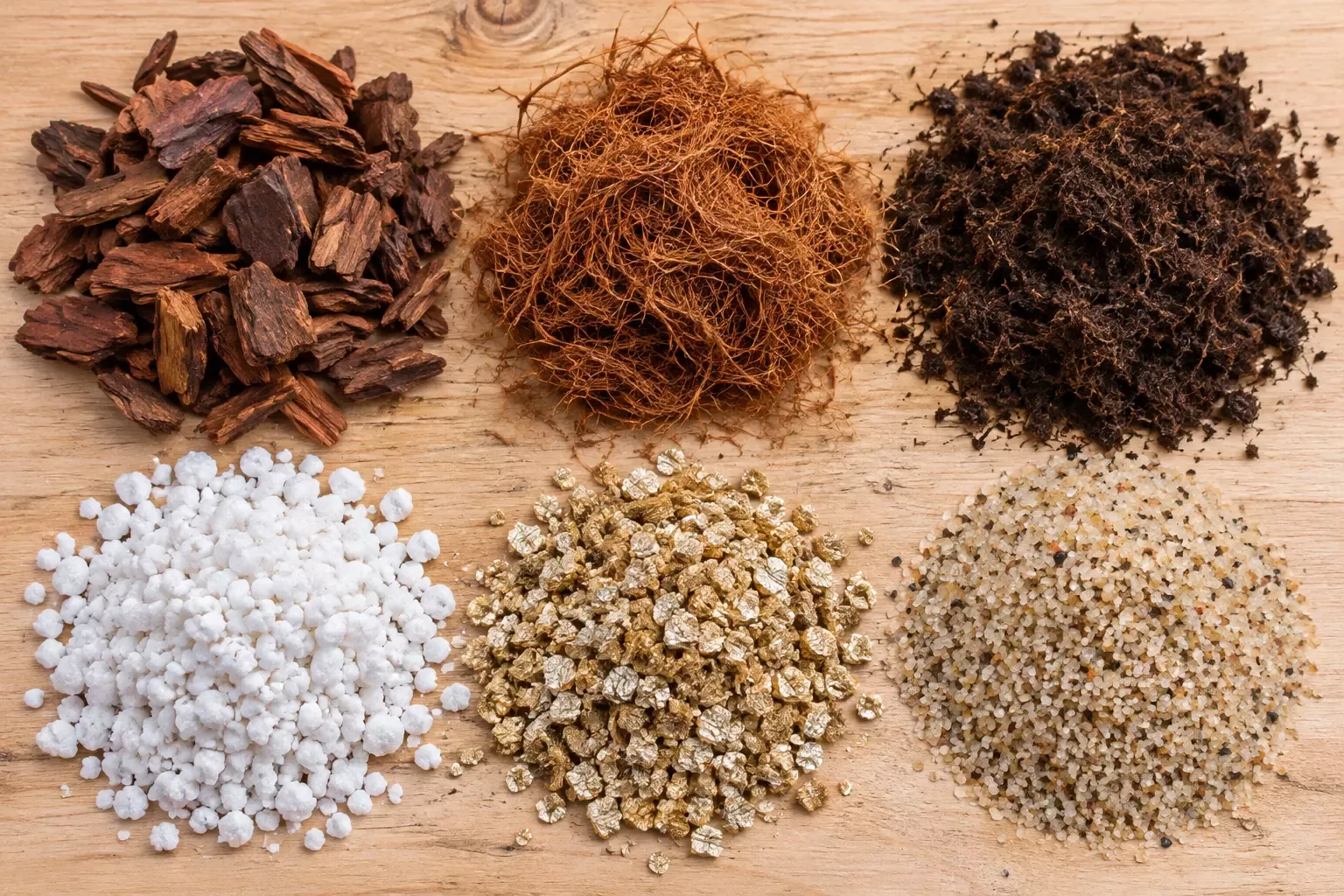
Composted bark is the backbone of most mixes. The small chunks hold a little water on their surface and leave air gaps between them, and because the bark has already been composted it ties up far less nitrogen than fresh bark as it breaks down. Coir, the fiber from coconut husks, holds water well and rewets easily when it dries out, which peat does not. Peat still appears in some mixes and holds water the same way, but once bone dry it repels water and is harder to bring back.
Perlite is the white volcanic grit that adds air and drainage without holding much water; vermiculite looks similar but holds water and some nutrients. Coarse sand adds weight and drainage in cactus and succulent mixes (fine sand does the opposite and clogs the gaps). A slow release fertilizer gives the plant its first few months of feeding, and a wetting agent helps a dry mix take water again.
| Ingredient | Main job | Watch out for |
|---|---|---|
| Composted bark | Structure and air gaps | Fine, uncomposted bark slumps fast |
| Coir | Holds water, rewets easily | Can stay wet in a big pot |
| Peat | Holds water | Repels water once bone dry |
| Perlite | Air and drainage | Floats to the top over time |
| Vermiculite | Holds water and nutrients | Too much keeps the mix soggy |
| Coarse sand | Weight and drainage | Fine sand clogs the mix |
| Slow release fertilizer | First months of feeding | Not a substitute for later feeding |
| Wetting agent | Helps dry mix take water | Wears off over months |
Reading the bag
The ingredient list is more useful than the picture. A good general indoor mix is mostly composted bark with coir or peat and a share of perlite. If the bag feels heavy for its size, it is wet or dense; if it feels like a bag of dust, it will compact. A mix sold as premium usually carries fertilizer and a wetting agent, which suits most leafy indoor plants. A cheap mix often has fine, uncomposted material that slumps within months.
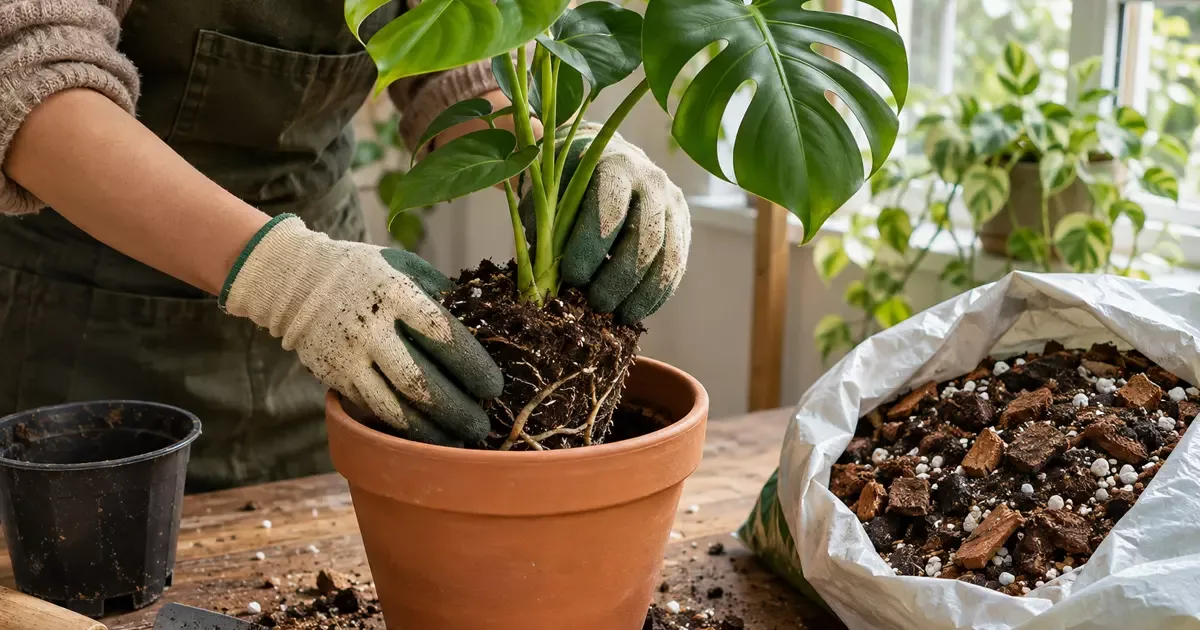
Bagged mix is a living material. Wear gloves, open the bag away from your face, and wash your hands after potting.
Matching the mix to the plant
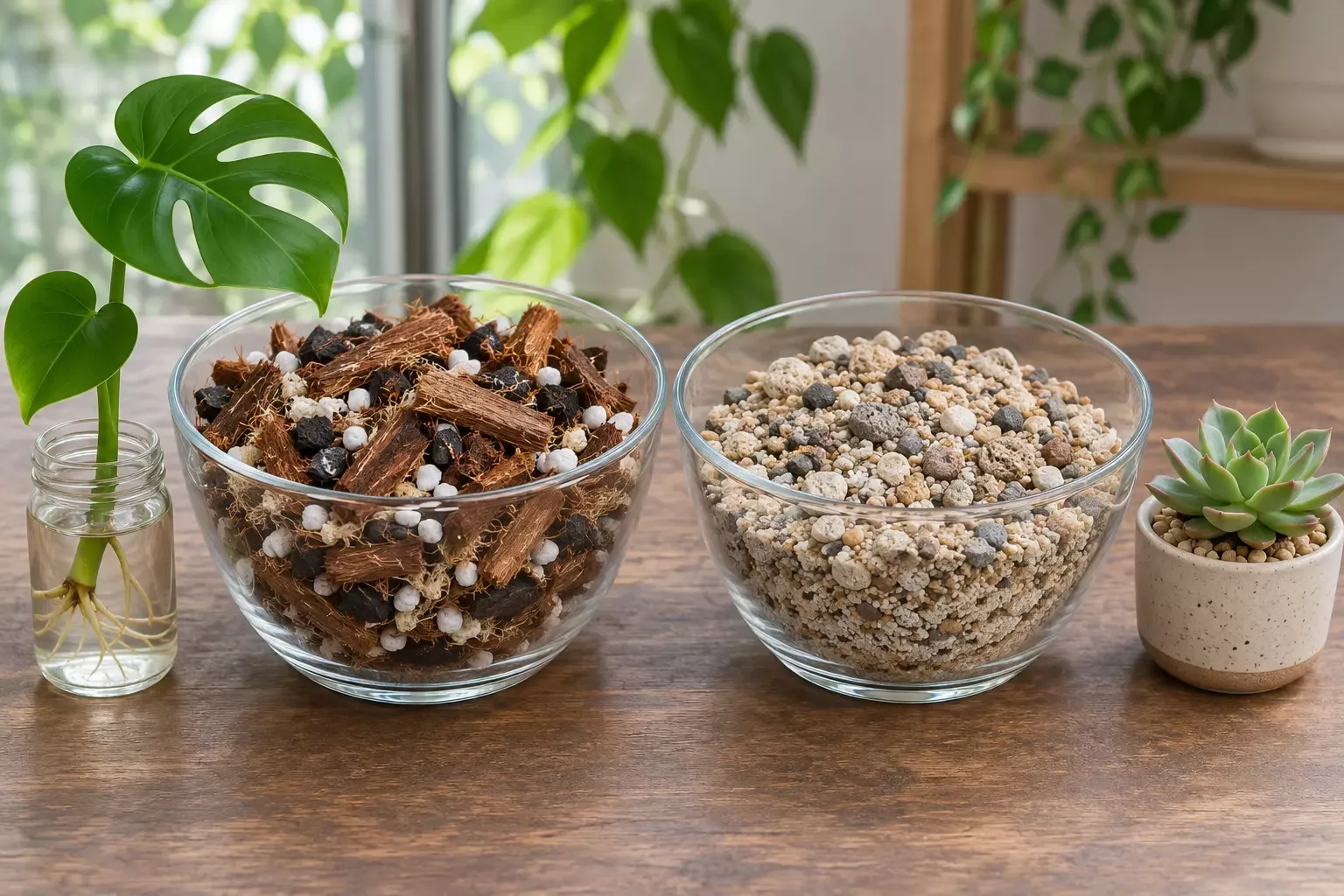
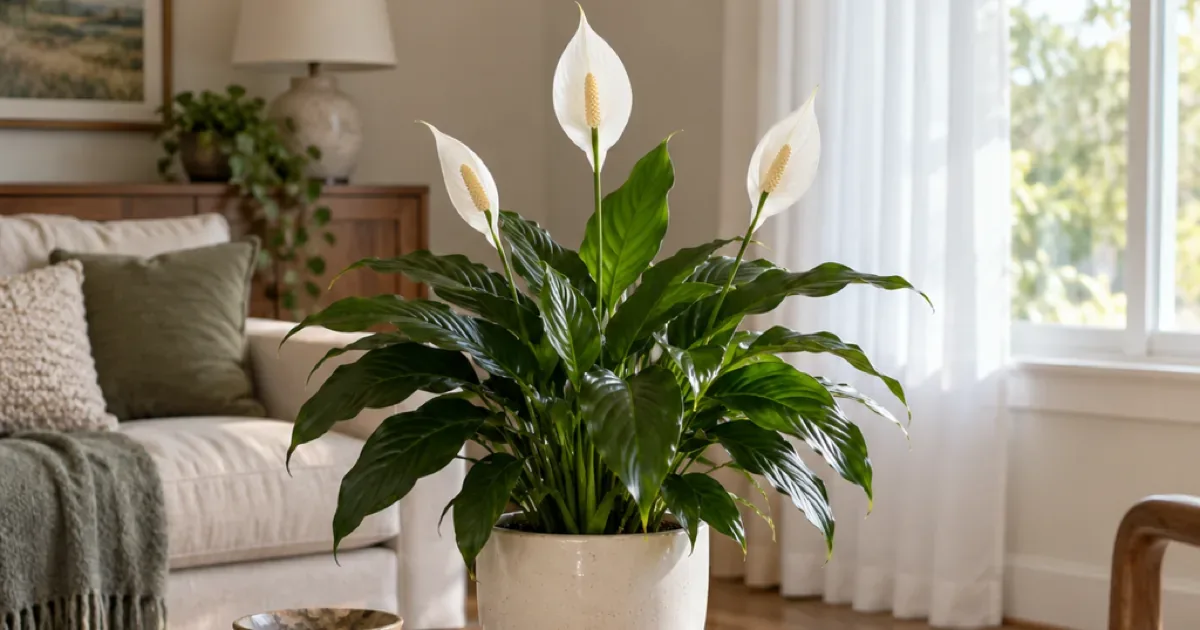
Leafy tropical plants such as peace lily and pothos want a general indoor mix with a little extra perlite, so the roots stay moist but never sit in water. Big-rooted climbers such as monstera and philodendron do better in a chunkier blend; many growers add orchid bark to an ordinary mix for them.
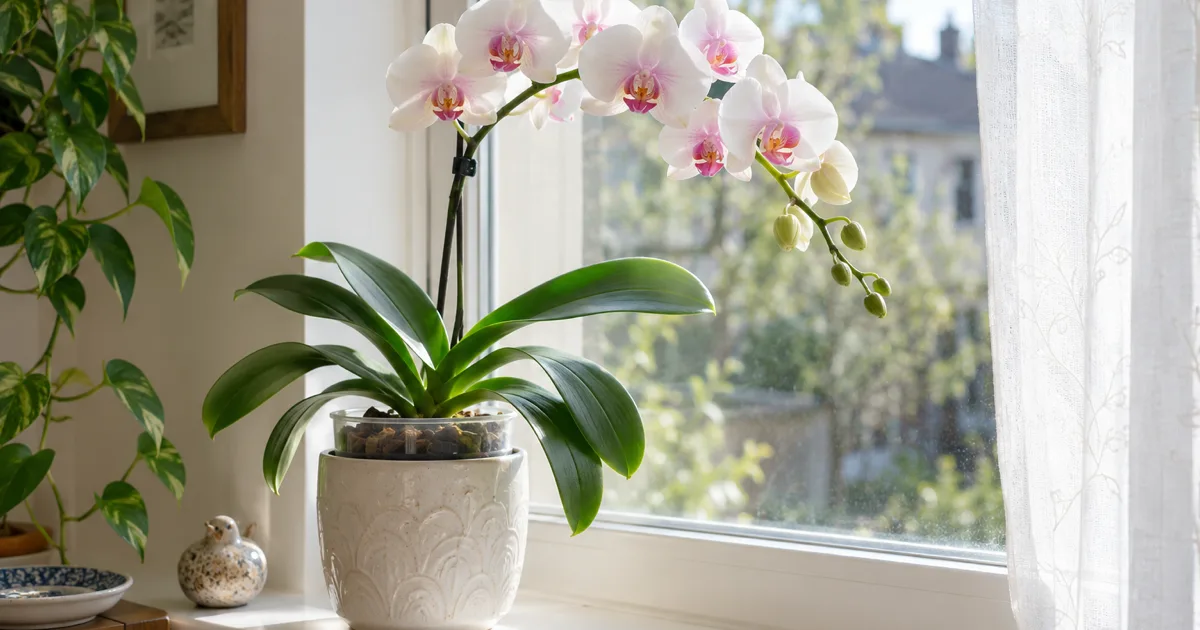
Cacti and succulents need a mix that is at least a third grit or coarse sand so it dries out within days. Moth orchids and other orchids that grow on trees in the wild are the exception to everything: bark chunks with no fine material at all, because their roots need air more than water (our orchid care guide covers the rest). Ferns and calatheas like a finer, moisture holding mix with more coir.
If you only buy one bag, a premium indoor mix plus a small bag of perlite covers most of a house.
When to repot into fresh mix
Potting mix wears out. After a year or two the bark breaks down, the air gaps close and water either sits or runs straight through. Signs it is time:
- water pooling on the surface and taking a long time to soak in
- water running out of the bottom within seconds while the plant still wilts
- a sour smell
- roots circling the surface and the drainage holes
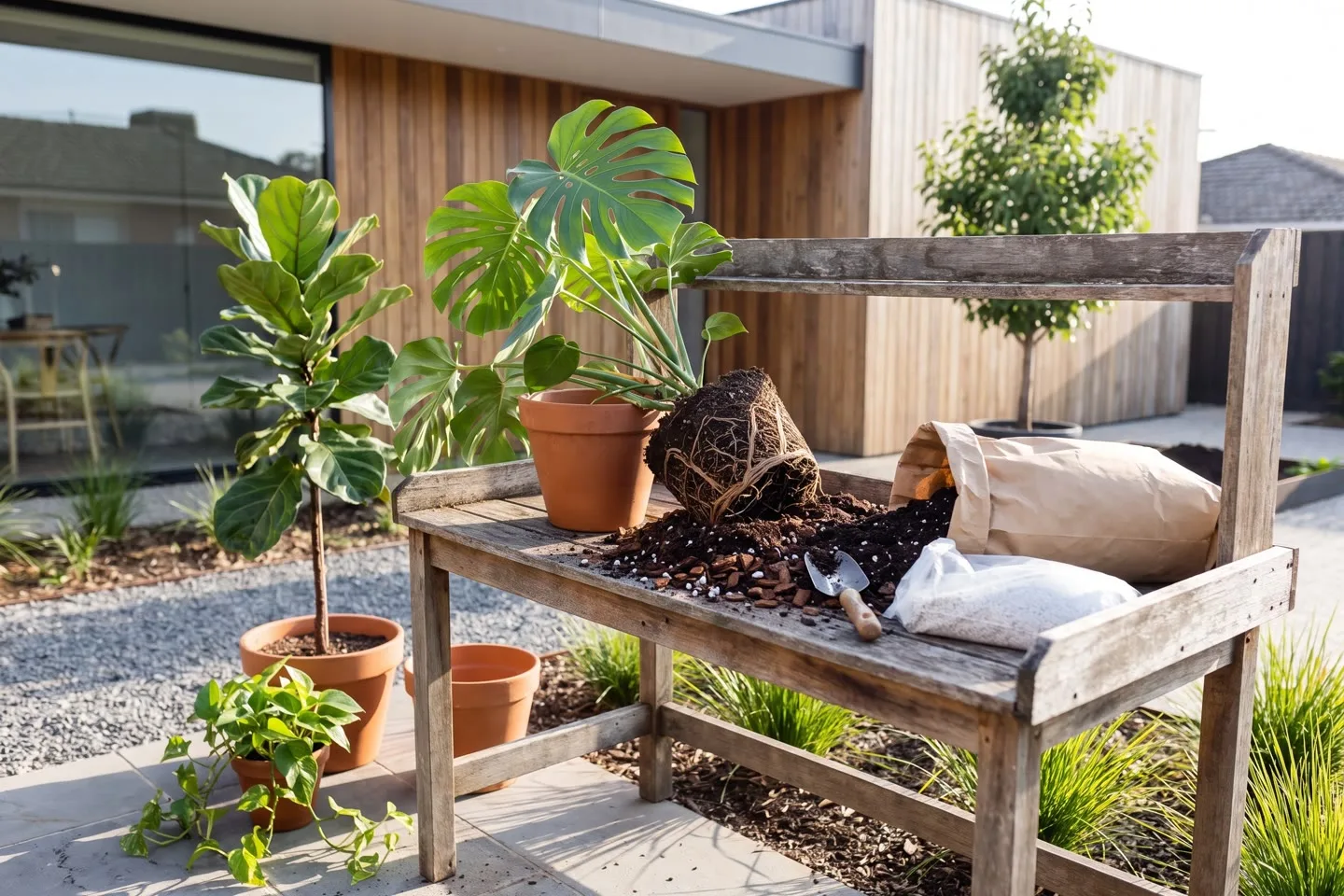
Repot in spring or early summer, into a pot one size up (about 1 to 2 inches, or 2 to 5 cm, wider), with fresh mix of the same kind. Knock off the old collapsed mix gently rather than washing the roots clean. The exception is brown, mushy roots: that is root rot, and those roots need trimming before the plant goes into new mix.
A few habits that help
Water until it runs from the drainage holes, then empty the saucer. Let the top inch or two (2 to 5 cm) dry before watering again for most leafy plants, and let the whole pot dry for succulents. Keep a bag of mix sealed and dry between uses so fungus gnats cannot move in.
If a plant keeps struggling no matter how carefully you water, the mix is the first thing to change, not the watering. Not sure whether it is the mix, the roots or the watering? Check your plant in Leaftell.
Isaac Olson runs Nursery Near Me, an Australian online nursery. Browse its potting mixes, mulches and fertilisers.
Check your growing conditions with the plant watering calculator.
Frequently asked questions
No. Garden soil compacts in a pot, stays wet and starves the roots of air. Use a potting mix made for containers.
Every one to two years for most houseplants, or sooner if water pools on top, runs straight through, or the mix smells sour.
Only for plants that like to dry out fast. Leafy tropicals dry out too quickly in it; use a general indoor mix with extra perlite instead.
Share article
Keep checking your plant
Plant care reference
Indoor plant care
Build a routine around your plant, light and potting mix.
Plant care reference
Why is my plant dying
Trace leaf and root symptoms before choosing a care change.
Plant care reference
Pothos plant care
Choose a growing spot and prune a trailing pothos for fuller growth.
Plant care reference
How to fix root rot
Inspect root firmness and drainage, then decide whether to repot.