Fiddle leaf fig brown spots: 4 causes and the first fix
Filip Leszczyński 16 October 2026 12 min read
In this article
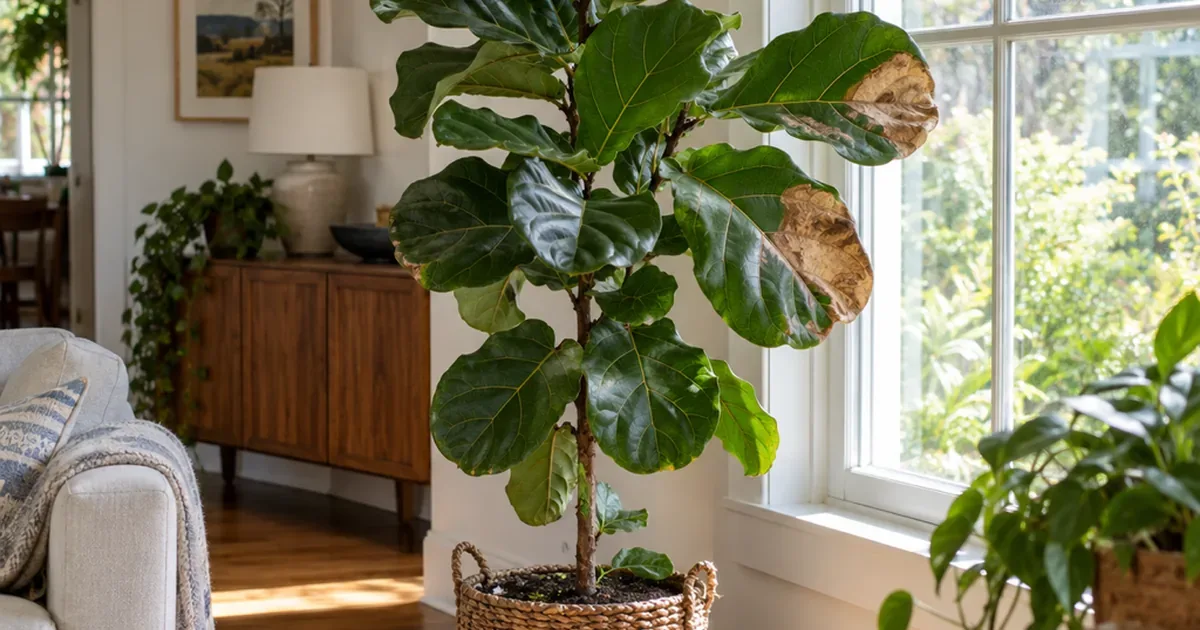
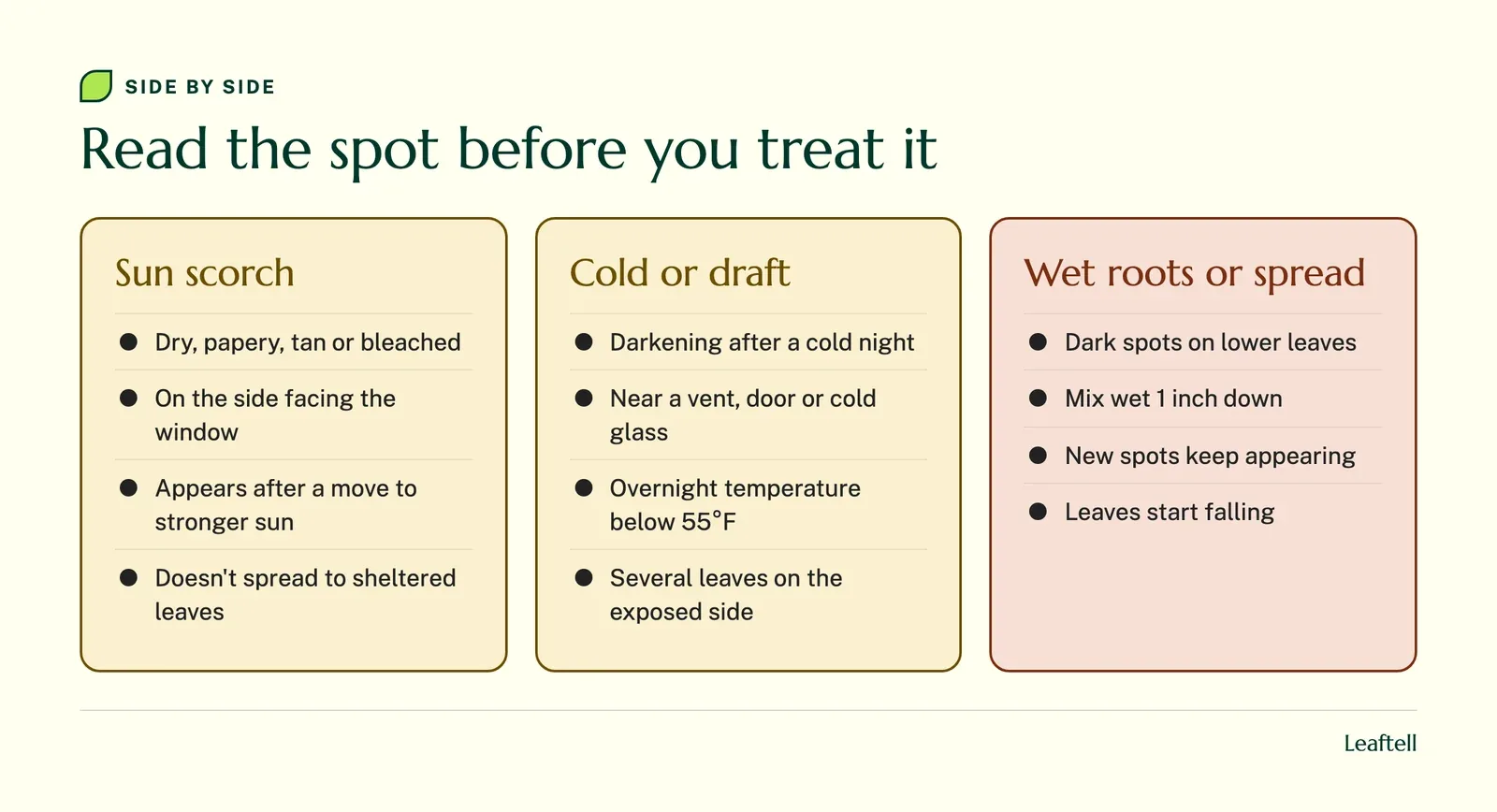
Fiddle leaf fig brown spots usually come from one of four things: sun scorch on the window side, cold or a vent blast, roots sitting in wet soil, or less often a spreading disease or pest. The spot's texture and position tell you which: a dry tan patch facing the glass is a light problem, while dark spots spreading across several lower leaves in damp soil point to the roots.
One thing to accept up front: brown tissue stays brown. The goal isn't to erase the spots you have. It's to stop new ones and keep the remaining leaves and roots working. So read the spot, check the pot, change one thing, and judge the result on the next leaves that open.
A close-up photo of a spot can't tell you whether the root ball is wet in the middle or whether a vent switches on at night. Those are the details that decide the fix.
Read the edges
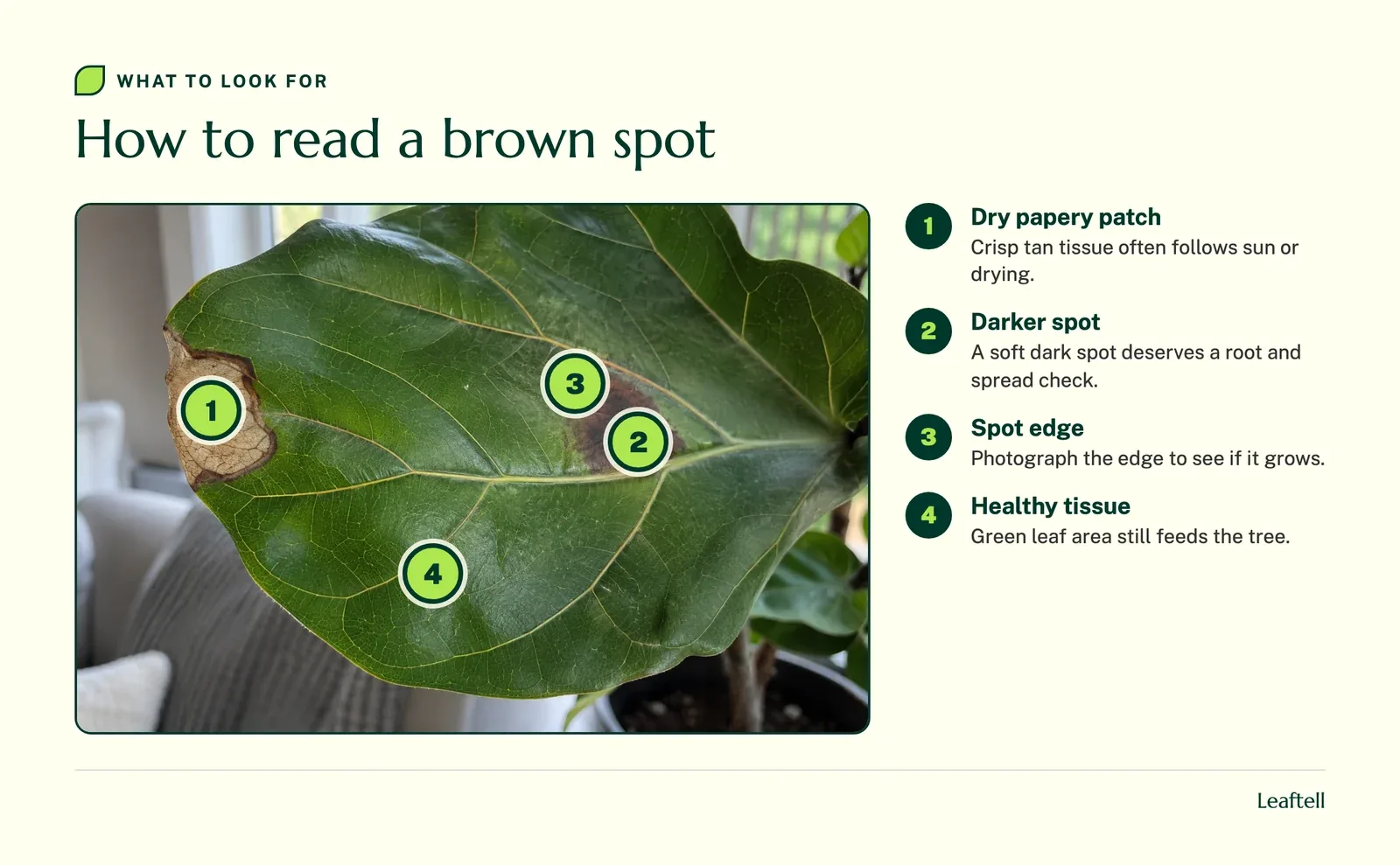
Read the edge, texture and position of a spot before you call it a disease. Dry, papery, tan patches on the sunny side point to scorch; spots that keep multiplying on leaves away from the window need a closer disease and pest check.
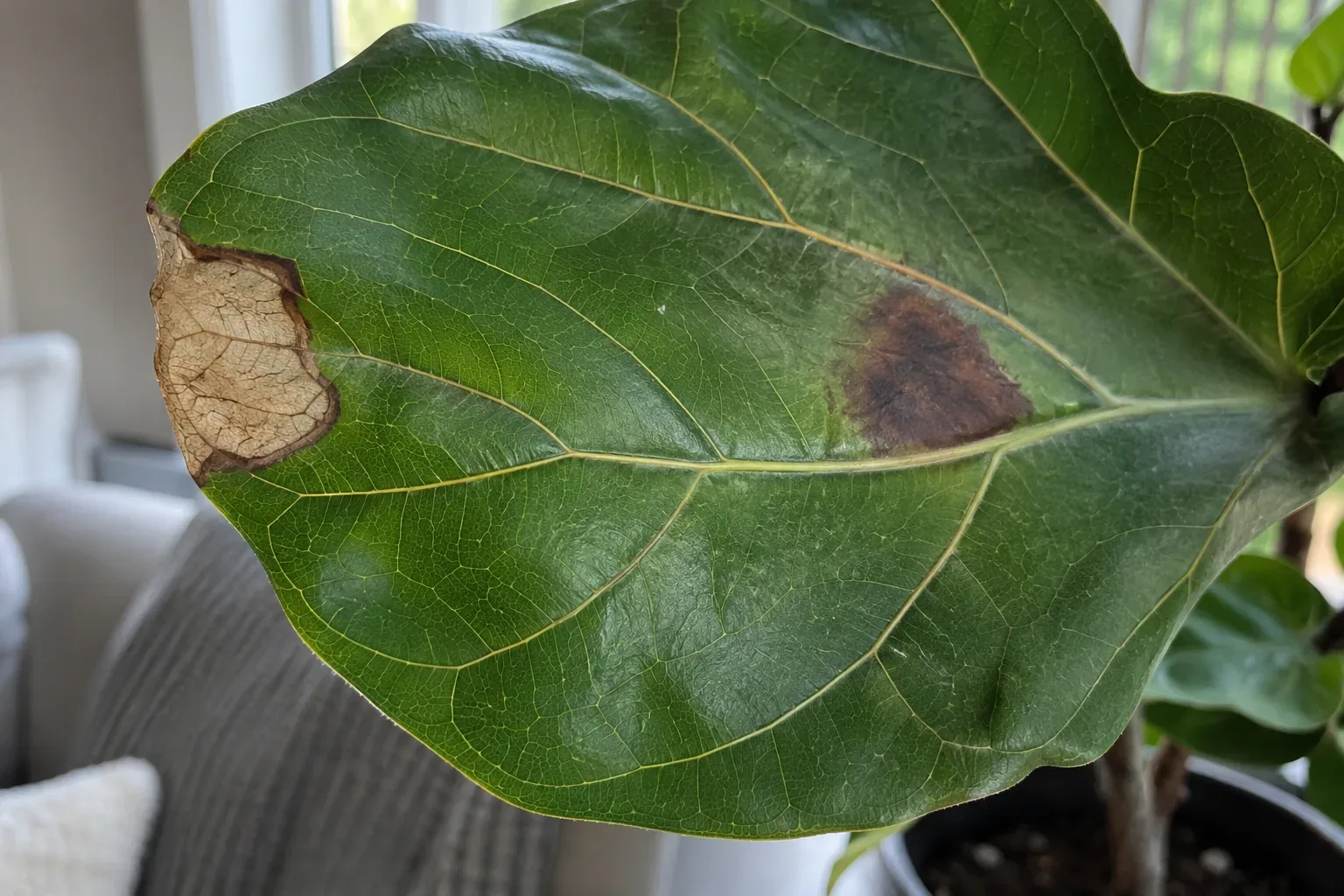
NC State's ficus lyrata profile lists bacterial and fungal diseases as possibilities, but brown color alone doesn't identify any organism. So start with what you can see. A bleached or tan dry area concentrated on the side facing strong sun supports scorch. Darkening after the tree sat near a heating or cooling vent supports temperature stress. A brown crease where you bumped the leaf moving it is handling damage.
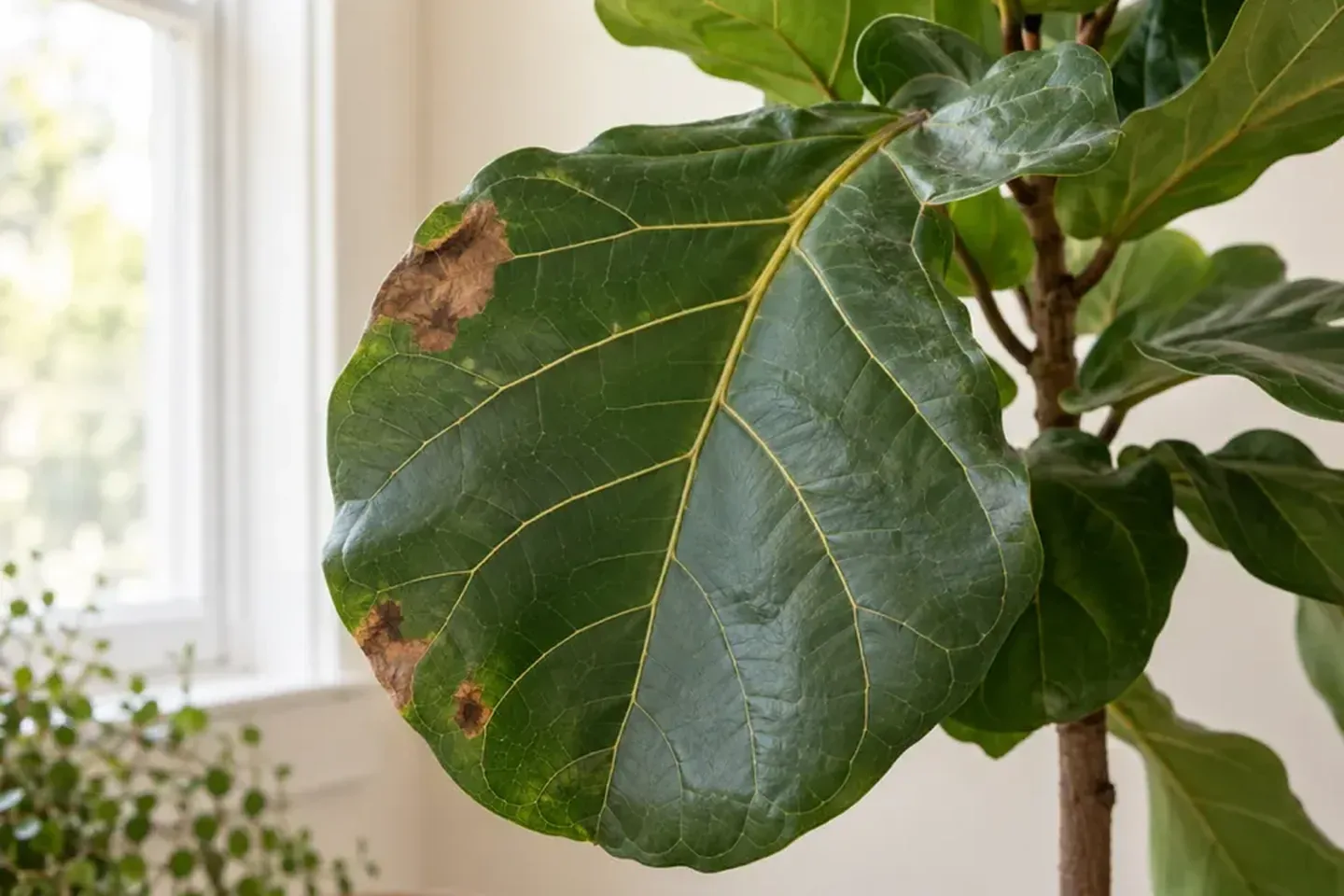
Check the overnight low too. NC State advises keeping fiddle leaf figs above 55°F (13°C) and protecting them from afternoon sun. A warm living room can still have cold glass touching a leaf, or a burst of chilled air from a vent. Move the foliage clear of that exposure but keep bright indirect light. Don't push the tree into a dark corner to protect it from scorch; you'll trade spots for leaf drop.
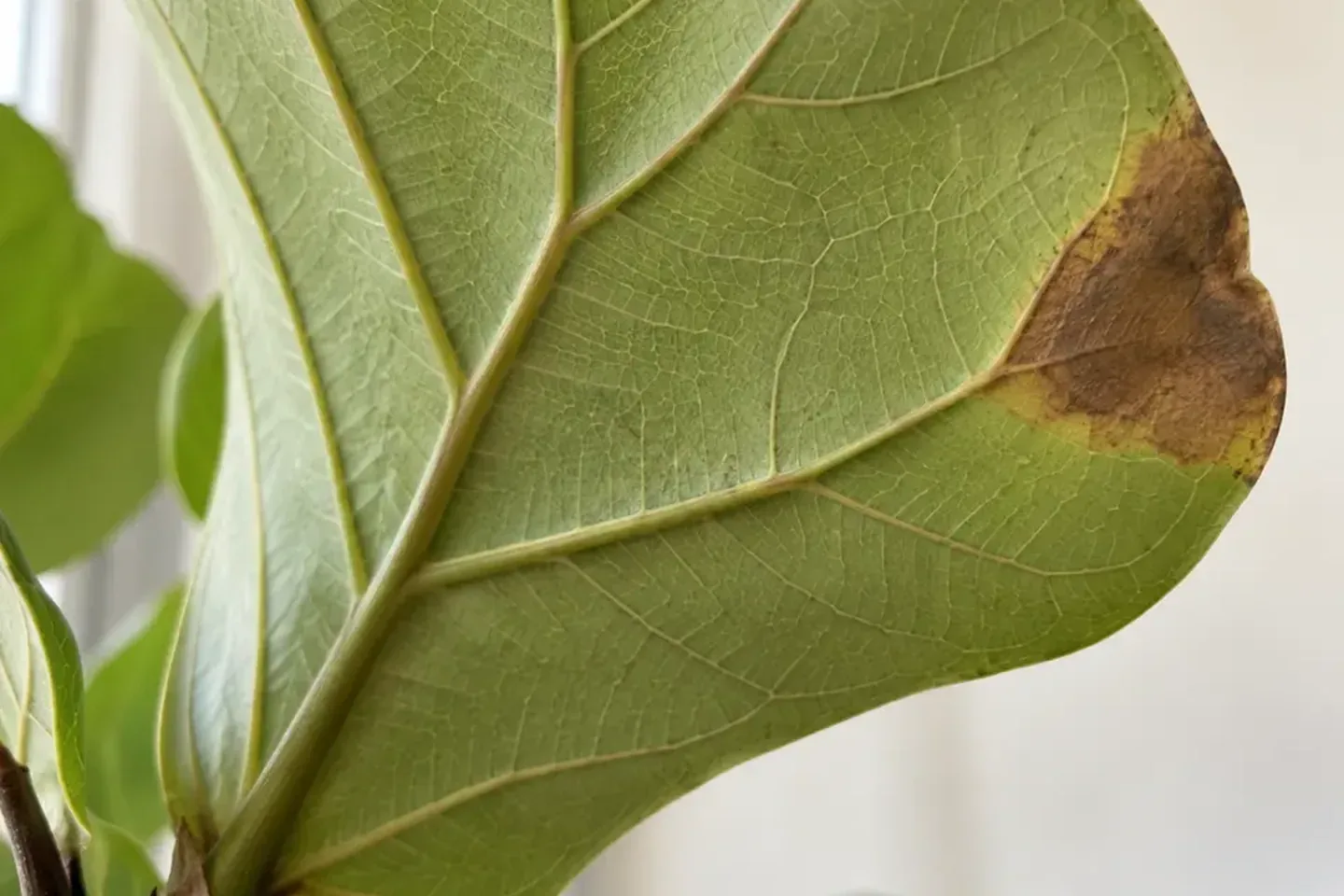
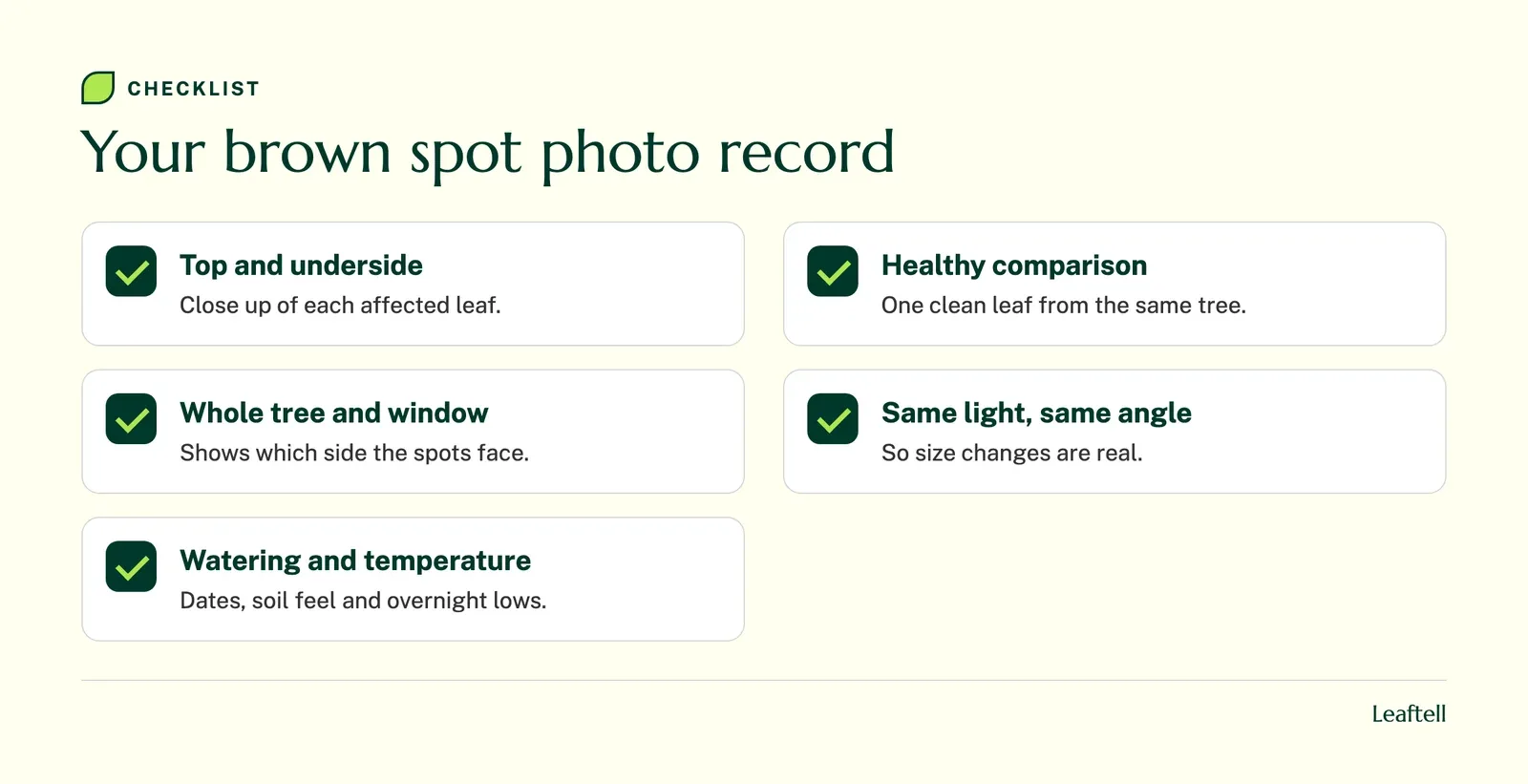
Photograph the top and bottom of affected leaves next to a healthy leaf for comparison. Note whether each patch is dry and papery, soft, or tied to a crease. The general leaf spot disease guide has more on reading spot patterns across plants.
Fiddle leaf fig leaves turning brown and falling off
When brown spots come before leaves fall, look below the canopy. NC State names both too much and too little water as causes of fiddle leaf fig leaf drop, so the pot tells you which way to go.
A pot that feels heavy and stays wet is a different problem from a dry root ball pulling away from the sides. Take the tree out of any decorative cover so you can see the drainage hole and any runoff hiding under the nursery pot.
UGA advises checking about 1 inch below the surface before watering indoor plants. Moist mix at that depth means wait. In a big container, also judge weight, because the middle can stay wet long after the top dries. UGA also notes that small containers need water more often. So the size of your pot and root ball matters more than any watering interval copied from someone else's tree. The wet or dry soil guide shows how to read it.
If the soil stays wet and leaves keep dropping, check the roots. Healthy roots feel firm; rotting ones feel soft and the outer layer slips off. That points you to the root rot fix. Fix the trapped water first and don't feed damaged roots. If leaves are falling without spots, the fiddle leaf fig dropping leaves guide covers the rest of that story.
Choose the first change
Treat the cause the evidence points to, and only that one first. Shade a sun-scorched tree, dry out a soggy one, and check for insects when you see stippling or sticky residue.
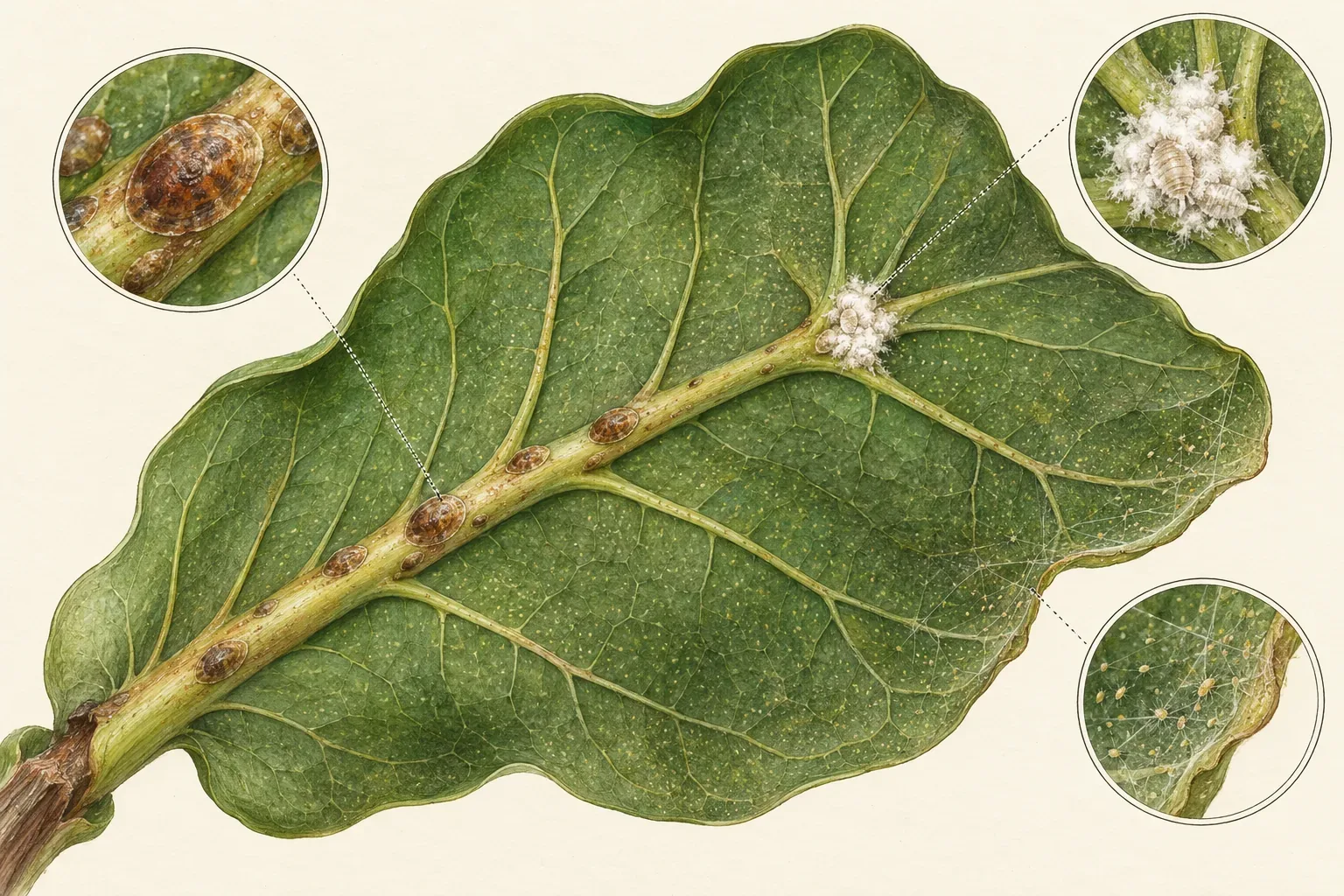
Here's how that breaks down. For a dry patch on the exposed side, shield harsh afternoon sun but keep the spot bright. For a soaked root ball, restore drainage and stop watering while the mix stays moist. For fine pale stippling, webbing, sticky residue or raised bumps, look for the pest itself. NC State lists scale, aphids, mealybugs, thrips and spider mites on indoor fiddle leaf figs, and the houseplant pests guide helps you tell them apart. Pest damage needs a different response from an old sunburn.
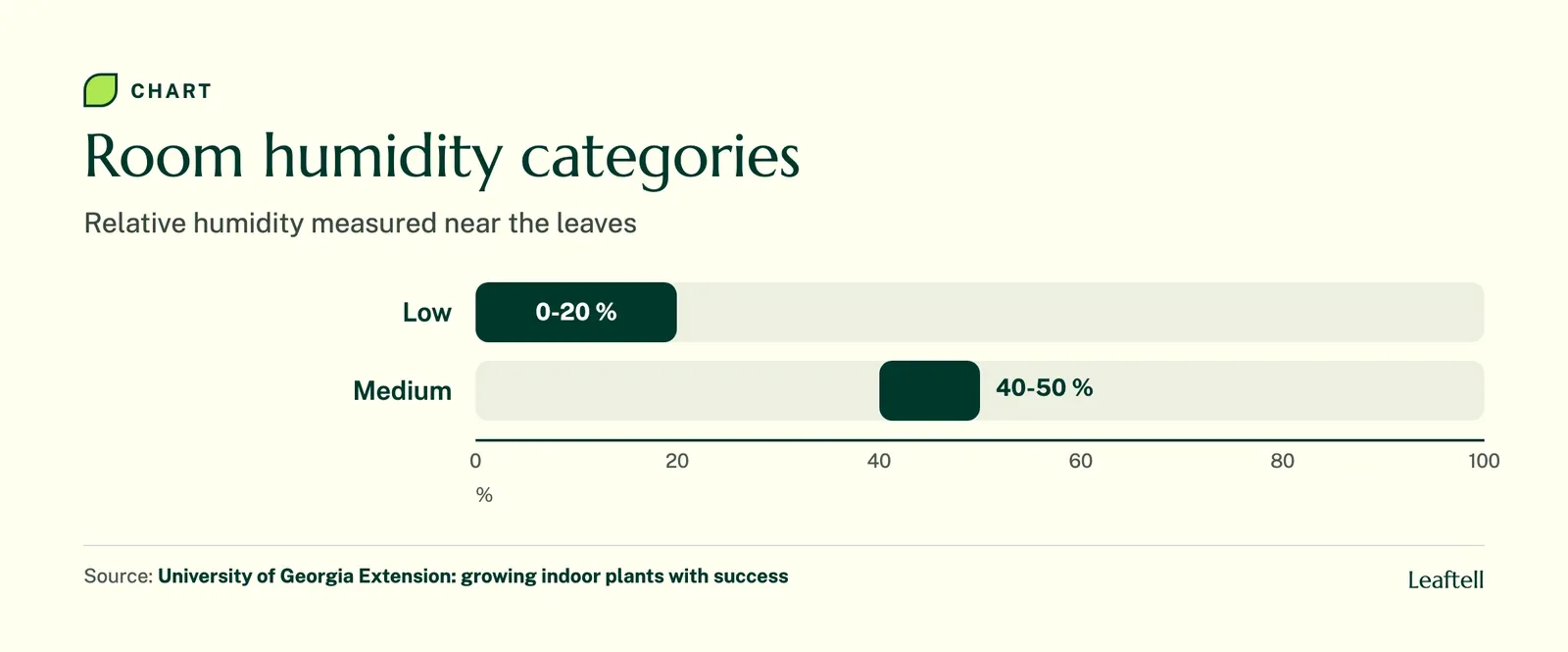
Humidity is measurable, so measure it. NC State recommends medium relative humidity, and UGA defines medium as 40-50% and anything below 20% as low. Compare a meter reading near the foliage with those numbers, especially once the heating comes on. Raising humidity won't rebuild a dead patch, and misting a tree with wet roots doesn't fix the water problem.
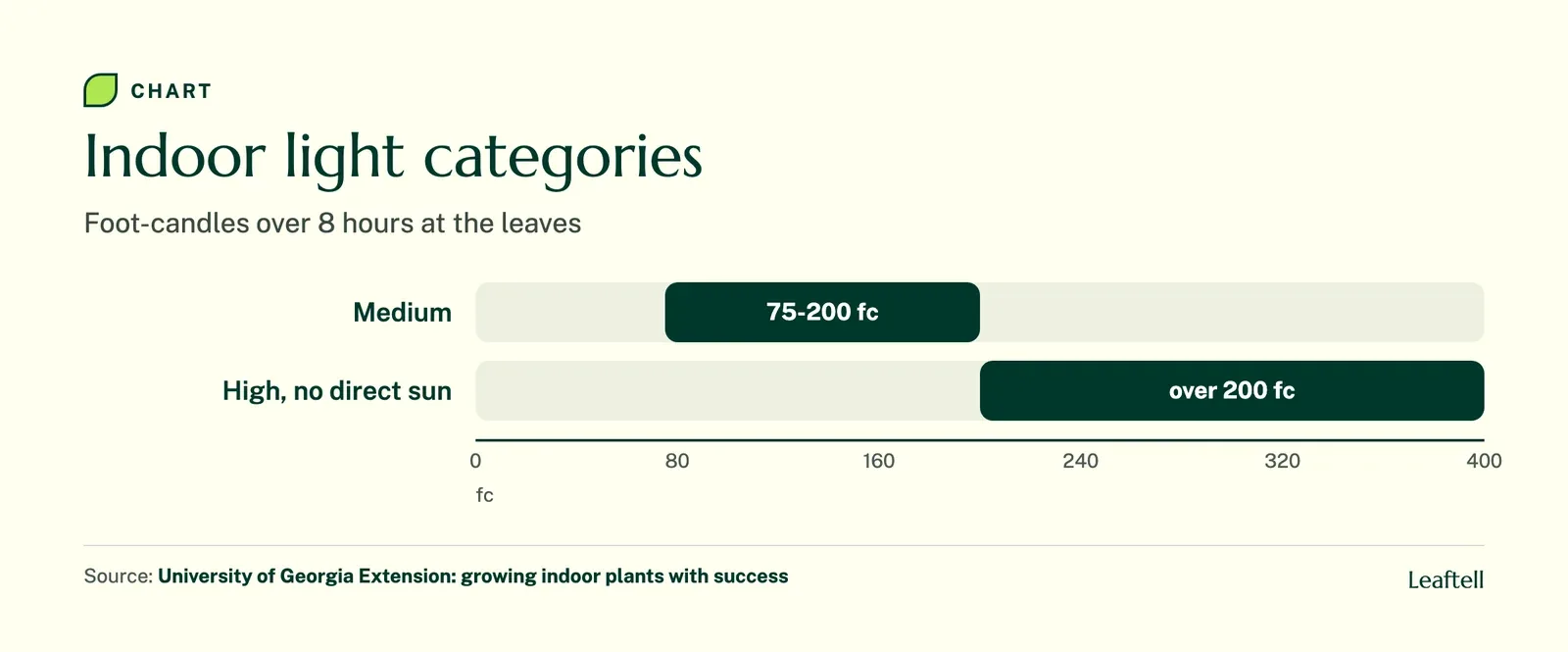
Light works the same way. UGA classifies medium indoor light as 75-200 foot-candles over 8 hours, and high light as above 200 without direct sun. Those are broad room categories, not an exact prescription for every fig. Use them to compare spots with a light meter, then go with the species' preference for bright indirect light. The guide to reading your plant's light explains how to measure at leaf level.
| What you see or measure | What it suggests | First change |
|---|---|---|
| Dry tan patch on the window side | Sun scorch | Filter afternoon sun, keep the spot bright |
| Dark spots after a cold night or vent blast | Cold or temperature swings | Keep the tree above 55°F and out of the airflow |
| Mix wet 1 inch down, spots on lower leaves | Roots sitting wet | Stop watering, fix drainage, check root firmness |
| Stippling, webbing or sticky residue | Sap feeding pests | Find and identify the insect before treating |
| Room humidity below 20% | Very dry air | Compare with UGA's 40-50% medium range |
| Light below 75 foot-candles | Low light for a fig | Move toward a brighter sheltered spot gradually |
Checks use NC State fiddle leaf fig care and University of Georgia room measurements. These values describe growing conditions, not a pathogen test.
Distinguish old marks from spread
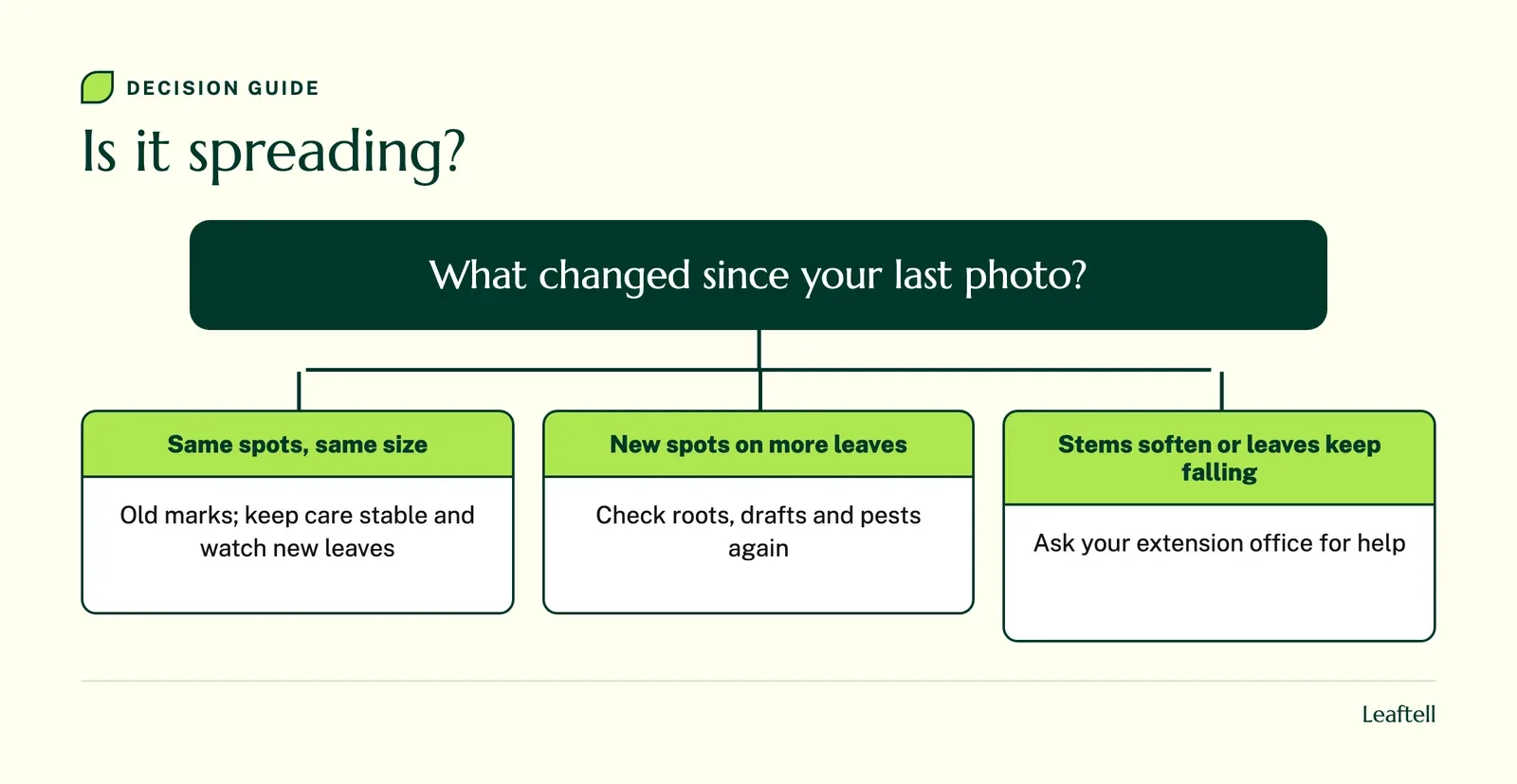
An old brown mark stays the same size once the stress is gone; spread looks like new spots on more leaves, softening stems, or repeated losses in damp soil. Compare the edge of each spot over time and watch the next leaf to open.
Take your follow-up photos in the same light from the same angle. A darker photo can make an unchanged spot look bigger and send you chasing a problem you already solved.
If the spotting started right after delivery or a move, think about acclimation. UGA recommends giving newly bought indoor plants 3-4 weeks in a bright sheltered spot before moving them to their final home. That's a transition period, not a promised healing time. The useful lesson is to stop shuttling the tree between strong sun and deep shade. Keep it above 55°F while you track the new growth.
Clean the leaves gently to get a better view. Wipe off dust without scrubbing damaged areas, then check under leaves and around the leaf joints. Sticky residue that comes back after cleaning means you need a pest check. If spots keep expanding despite stable care, stop guessing between fungus and bacteria and ask your extension office about sending a sample. Bring the original photos, your watering history and anything you've sprayed.
How to treat brown spots on a fiddle leaf fig
- Photograph the spots
Take a close-up of the top and underside of each affected leaf, plus one of the whole tree and its window. This is the baseline you'll compare against.
- Read the pattern
Note whether spots are dry and tan on the window side, dark after cold or a vent, or spreading on lower leaves away from the light.
- Check the root zone
Pull the pot from its cover, empty any runoff, and test the mix 1 inch down. Lift it to judge whether the center is still wet.
- Look for pests
Check leaf undersides, stems and joints for bumps, cotton, webbing or stippling. Isolate the tree if you find insects.
- Make one change and wait
Fix the single cause you found, such as filtering sun, moving it from a vent or letting the soil dry. Recheck new leaves in 7 days before changing anything else.
Prune with a reason
Prune a spotted leaf only if it's spent, badly damaged, or part of a confirmed treatment plan. A mostly green leaf with a small brown mark is still feeding the tree, so leave it.
Stripping the canopy to make the plant look clean leaves less foliage to support recovery. Use clean tools and cut the leaf stalk without nicking the trunk. Wear gloves: NC State warns that fiddle leaf fig sap can irritate skin. Keep the tree and clippings away from children and pets, and check any plant you're unsure about on the ASPCA toxic plants list.
Before you cut, look over the remaining leaves for scale or mealybugs. Pruning won't fix a cold window below 55°F, and it won't drain water trapped in a cover pot.
Hold off on fertilizer too. UGA's indoor guidance starts at 1/4 label strength monthly during active growth, and notes that a healthy newly bought plant can carry enough fertilizer for 2-3 months. That supports light feeding once roots and growth are sound, not dosing a stressed tree because its leaves have spots. Follow the label and count fertilizer already in the mix.
Fiddle leaf fig leaves turning brown and falling off: costly mistakes
The costliest mistake is changing everything at once. Move the tree, repot it, prune it and feed it in the same week, and when new spots stop or don't, you have no idea why. You also stack four stresses on a plant that was already struggling.
Next is spraying before you know the cause. A fungicide or insecticide does nothing for scorch, cold or wet roots, and you lose weeks while the real problem continues. If a pest is confirmed and you do reach for a product, choose a generic class labeled for houseplants, follow the label, never mix products, and keep it away from kids and pets.
The third is retreating into shade. A scorched fig moved to a dim corner often stops spotting and starts dropping leaves instead. The last is watering on a schedule: a big pot around a small root ball stays wet for days, and that's how spots on lower leaves become leaf loss. If yellowing joins the brown, the yellow leaves on plants guide covers that overlap.
The short version
Read the spot first, then the pot. Dry tan patches facing the window mean filter the sun. Dark spots after cold mean keep the tree above 55°F and out of drafts. Spots plus wet soil mean let the mix dry and check the roots. Make one change, keep the tree in place, and judge it on the new leaves.
Get help from your local extension office if spots keep spreading after you've stabilized care, stems soften, or the tree keeps losing leaves. Bring your photo record, watering history and a list of anything you've applied.
Check your fiddle leaf fig in Leaftell. The check uses your answers; photos stay on your device.
Sources
Check your growing conditions with the plant watering calculator.
Frequently asked questions
Find the cause first: check soil moisture 1 inch down, recent sun or cold exposure, and whether spots are spreading. Fix that one cause; the existing brown tissue will stay marked even once the tree is stable.
It may show yellowing, dark patches and leaf drop while the mix stays wet. Check drainage and root firmness, because those signs can have other causes too.
Remove leaves that are mostly dead or still deteriorating, using clean tools and gloves. A leaf with a small, stable spot still has useful green tissue, so keep it.
Wet roots, sun scorch, cold or vent drafts, handling damage and some diseases can all leave brown patches. The pattern and texture tell you more than the color.
Some fungal problems cause lesions or visible growth, but many brown marks aren't fungal at all. A photo alone usually can't identify a pathogen, so ask your extension office about spreading damage.
No, brown tissue doesn't turn green again. Once the cause is fixed, new leaves should open clean while the old marks stay the same size.
Very dry air can contribute, but measure before you blame it. UGA counts below 20% relative humidity as low and 40-50% as medium, which is what NC State recommends for this plant.
Share article
About the author

Keep checking your plant
Plant care reference
Indoor plant care
Build a routine around your plant, light and potting mix.
Plant care reference
Why is my plant dying
Trace leaf and root symptoms before choosing a care change.
Plant care reference
Pothos plant care
Choose a growing spot and prune a trailing pothos for fuller growth.
Plant care reference
How to fix root rot
Inspect root firmness and drainage, then decide whether to repot.