ZZ plant leaves turning yellow: wet roots, not hunger
Filip Leszczyński 16 October 2026 11 min read
In this article
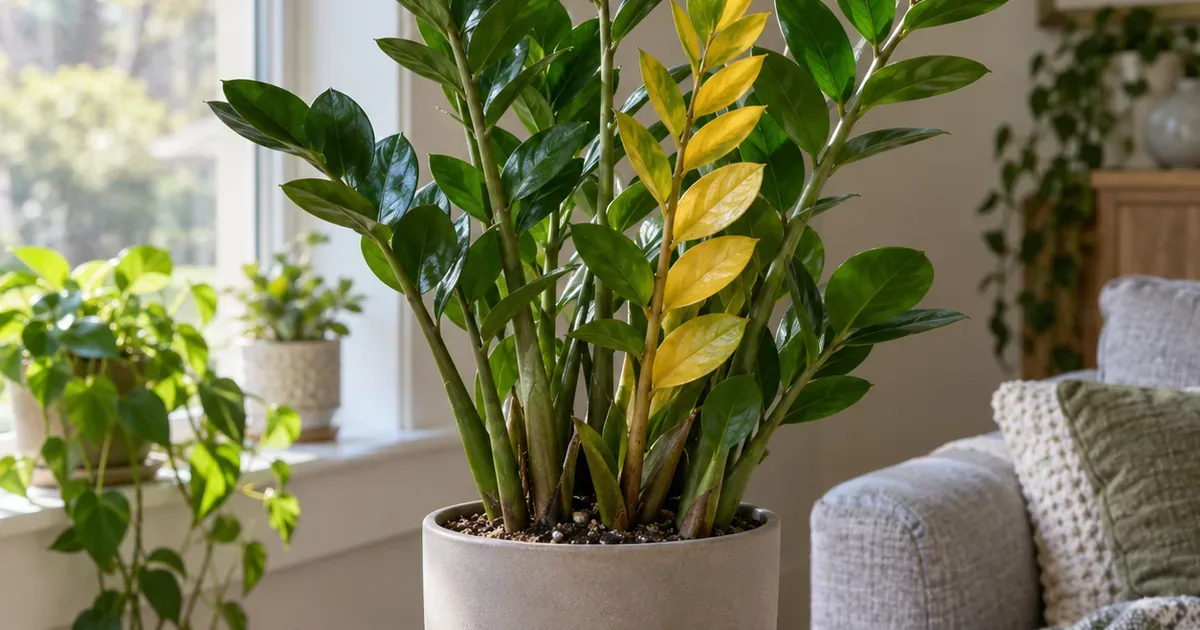
ZZ plant leaves turning yellow most often means the roots are staying wet too long, not that the plant is hungry. Check the mix deep in the pot and feel the base of the yellow stalk before you water or feed.
ZZ plants store water in swollen underground rhizomes, which is why they shrug off a missed watering. The flip side: a big pot in dim light can stay wet for weeks, and stored-water roots don't forgive that. Count which stalks are yellow, compare their bases, and take a photo before you cut anything off.
The one habit to drop: watering a ZZ on the same schedule as a pothos. Its water-storing rhizomes let it dry between waterings; the next drink depends on the root zone, light, mix and growth, not the month alone.
One stalk or many?
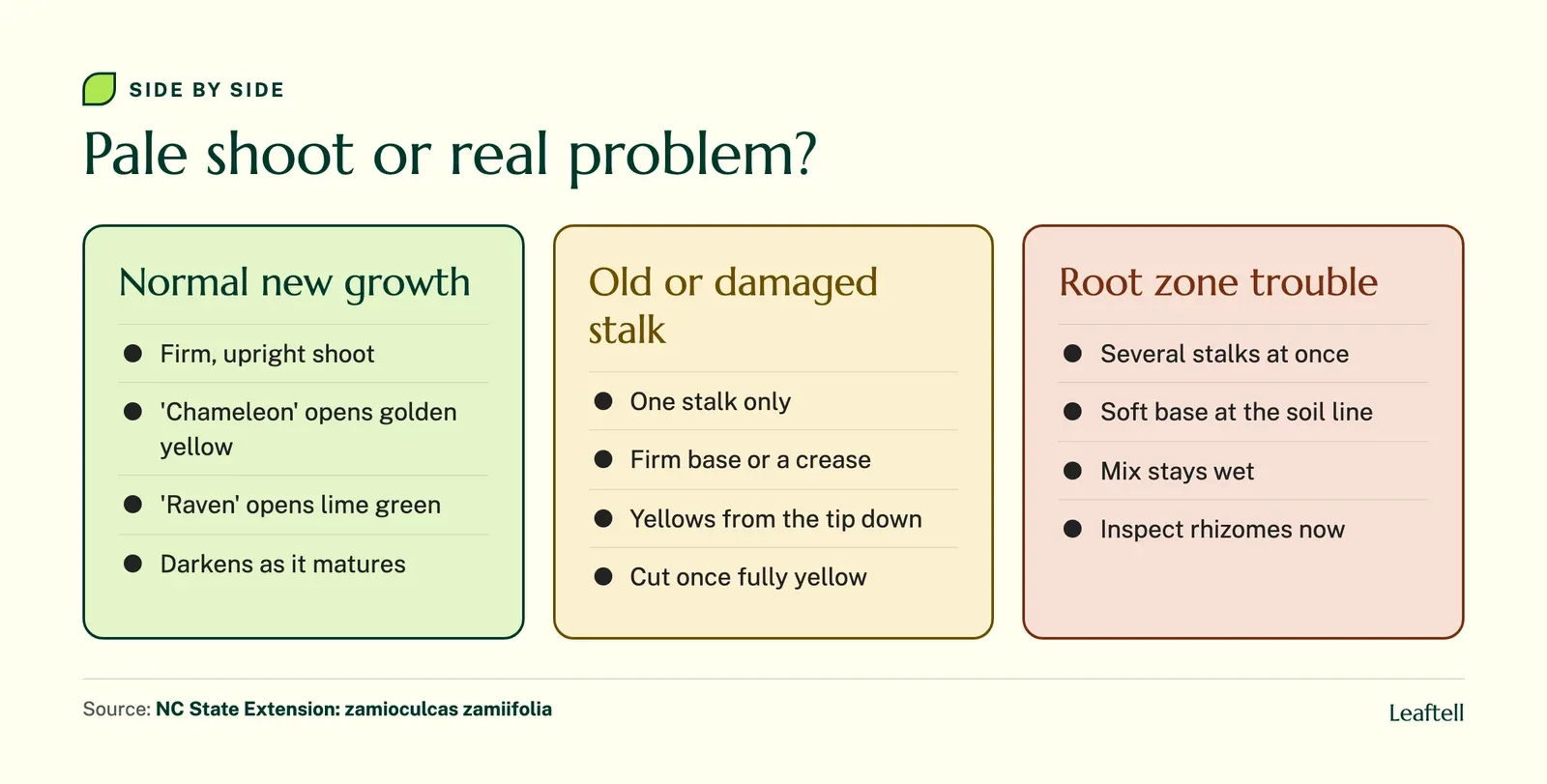
One yellow stalk with a crease or a firm base is often local damage or an old leaf. Several stalks yellowing together point to the shared root zone, usually wet mix around the rhizomes.
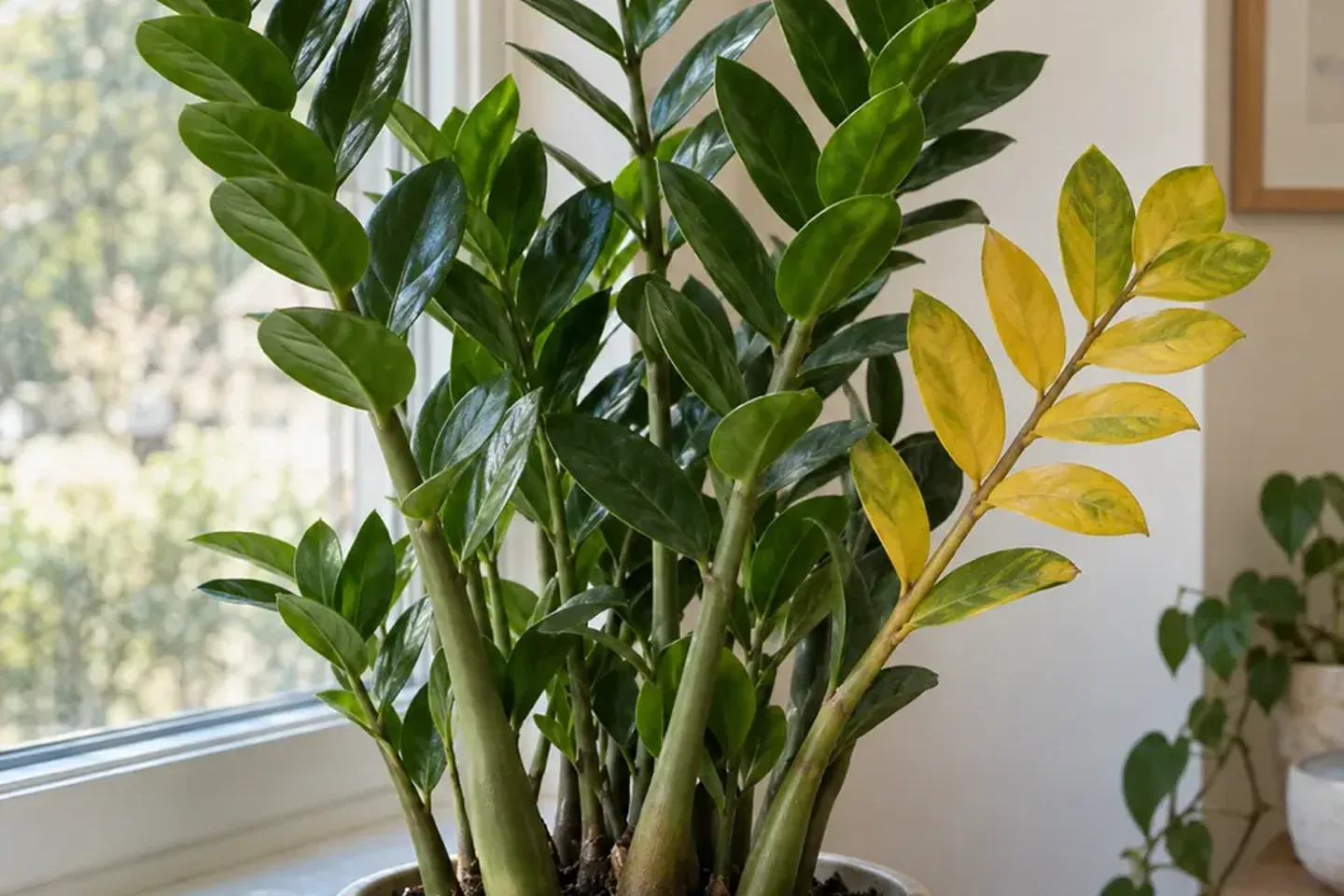
What looks like a ZZ stem is actually one compound leaf growing straight from the rhizome. The NC State Extension plant profile describes these leaves as having 6-8 pairs of glossy leaflets, with mature plants commonly reaching 2-4 feet. That structure helps you map the problem. Note whether leaflets fade along a whole stalk, only at its tip, or across unrelated stalks. Those counts help you describe the pattern; they don't diagnose a disease by themselves.
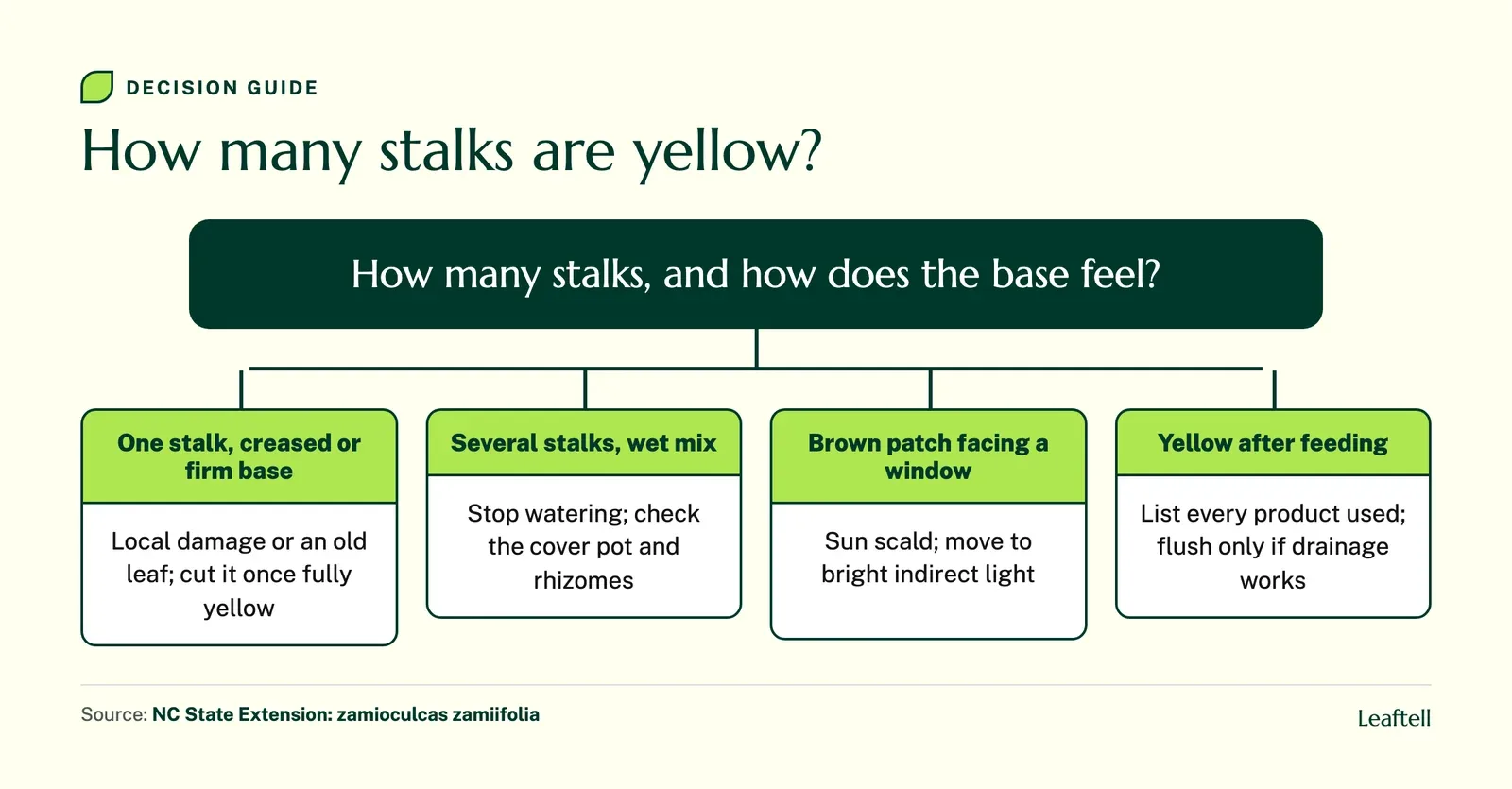
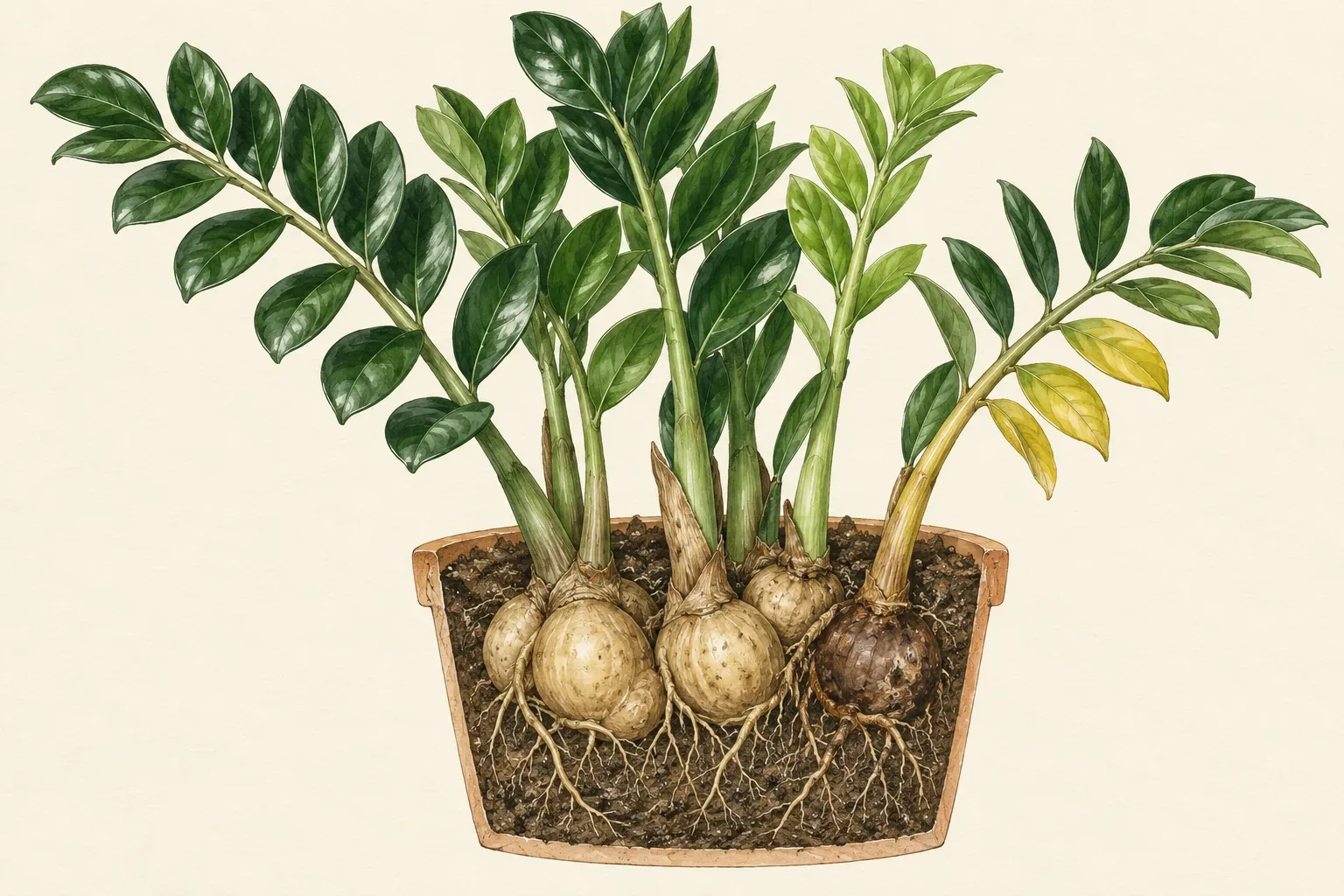
Trace the yellow leaflets down to the base of their stalk and compare it with healthy neighbors. A handling crease isolates damage to that one leaf. A soft base in wet soil points toward decay. If several stalks are yellow at once, stop treating each as an old leaf and look at the pot. The general guide to yellow leaves on plants covers patterns shared across species, but stored-water roots make a ZZ less forgiving of wet mix.
Let the pot dry before watering again
NC State gives monthly winter and twice-monthly summer watering as reference conditions, with complete drying before summer watering. Do not turn those examples into universal minimums or maximums. Wait for the mix to dry between waterings, and reassess as light, temperature, pot size and substrate change.
Check the actual nursery pot. Water trapped inside a decorative cover can keep roots wet after the surface looks dry. The University of Georgia Extension uses a check about 1 inch into the mix for houseplants in general. For a ZZ that's only a first reading; follow NC State's stricter rule that the whole root zone dries out. A dry top inch over wet mix below is not the signal to water. Here's how to tell wet soil from dry without guessing.
Pot size, light and root size change the interval. UGA notes small containers may need water more often, while an oversized pot around a small rhizome holds unused moisture for a long time. Choose a pot that fits the roots and has drainage, instead of moving a yellowing plant into something bigger.
| What you notice | NC State reference | What to do |
|---|---|---|
| Cool or dim conditions; growth is slow | Infrequent winter watering is the reference | Wait while the root zone is damp, however long that takes |
| Warm, brighter conditions; active growth | Summer watering still depends on complete drying | Check the root ball; pot size and mix change how fast it dries |
| Feeding more than twice a year | 1-2 feedings a year | Count slow-release granules and liquid feed together |
| Outdoor nights near 60°F | Bring containers inside below 60°F | Move it before a cold night; keep bright indirect light |
ZZ seasonal care from NC State, with UGA moisture checks. Watering frequencies only apply once the root zone is completely dry.
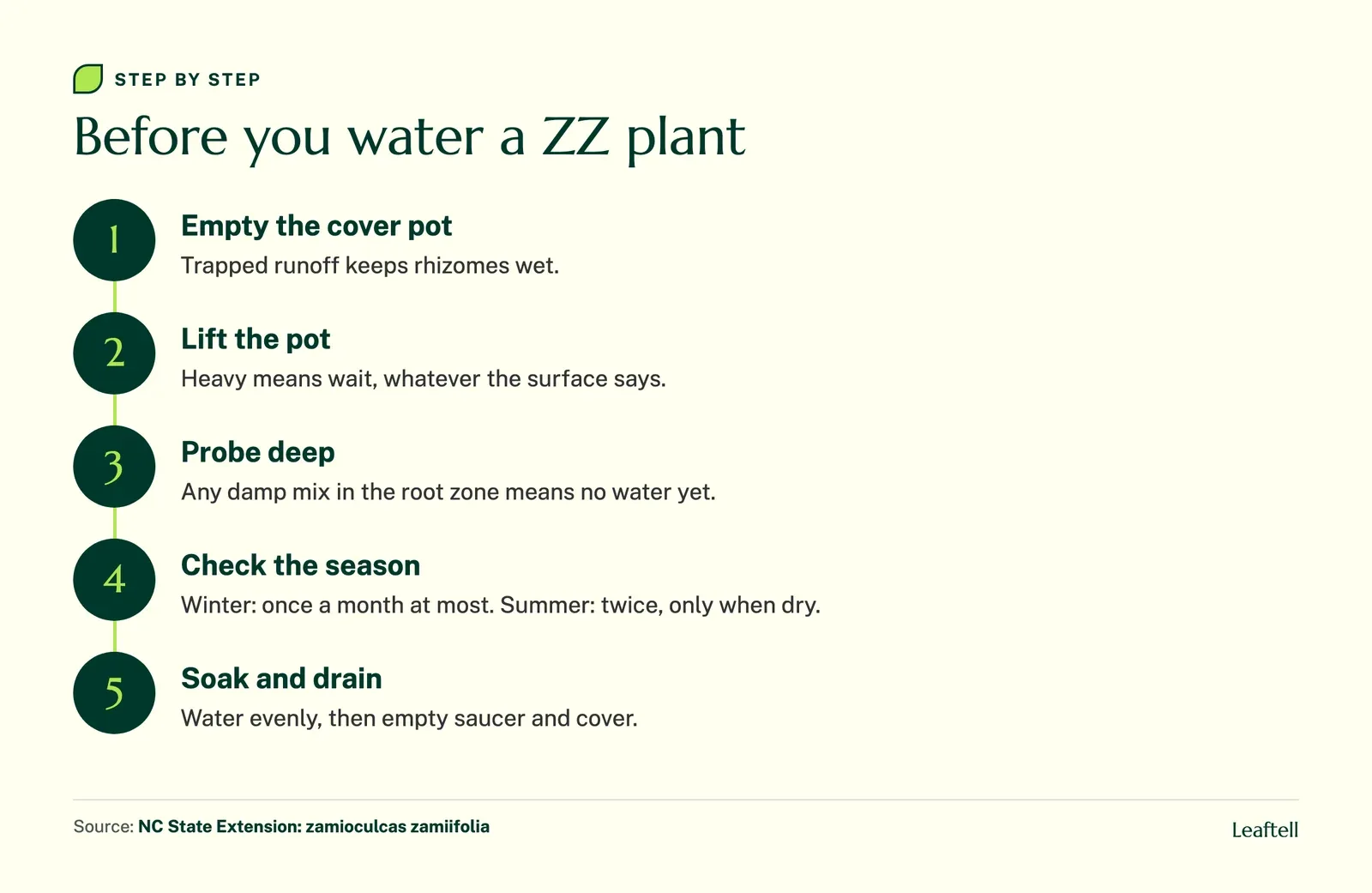
How to check a ZZ plant before watering
- Empty the cover pot
Lift the nursery pot out of any decorative container and pour out trapped runoff. Check that the drainage holes are clear.
- Lift and compare the weight
Learn how heavy the pot feels right after watering and when fully dry. A heavy pot means wait, whatever the surface looks like.
- Check deep, not just the top inch
Push a wooden skewer or finger well into the mix. Damp mix anywhere in the root zone means no water yet.
- Water thoroughly, then drain
When the whole root ball is dry, soak it evenly and let the excess run out. Empty the saucer and cover pot afterward.
If the mix has been wet for a long time and the stalks are soft, compare the signs in overwatered plant symptoms before your next watering.
ZZ plant leaves turning yellow and brown after feeding
Yellow and brown leaves after feeding call for an inventory of everything that went into the pot. That includes liquid fertilizer, slow-release granules and any enriched mix used when you repotted.
NC State recommends a balanced liquid houseplant fertilizer only 1-2 times a year for a ZZ. That's far less than the monthly routine many people use for faster-growing foliage plants. UGA also notes that a healthy newly bought houseplant often has enough nutrients for 2-3 months. Follow the product label and never layer different products to try to reverse yellow leaves.
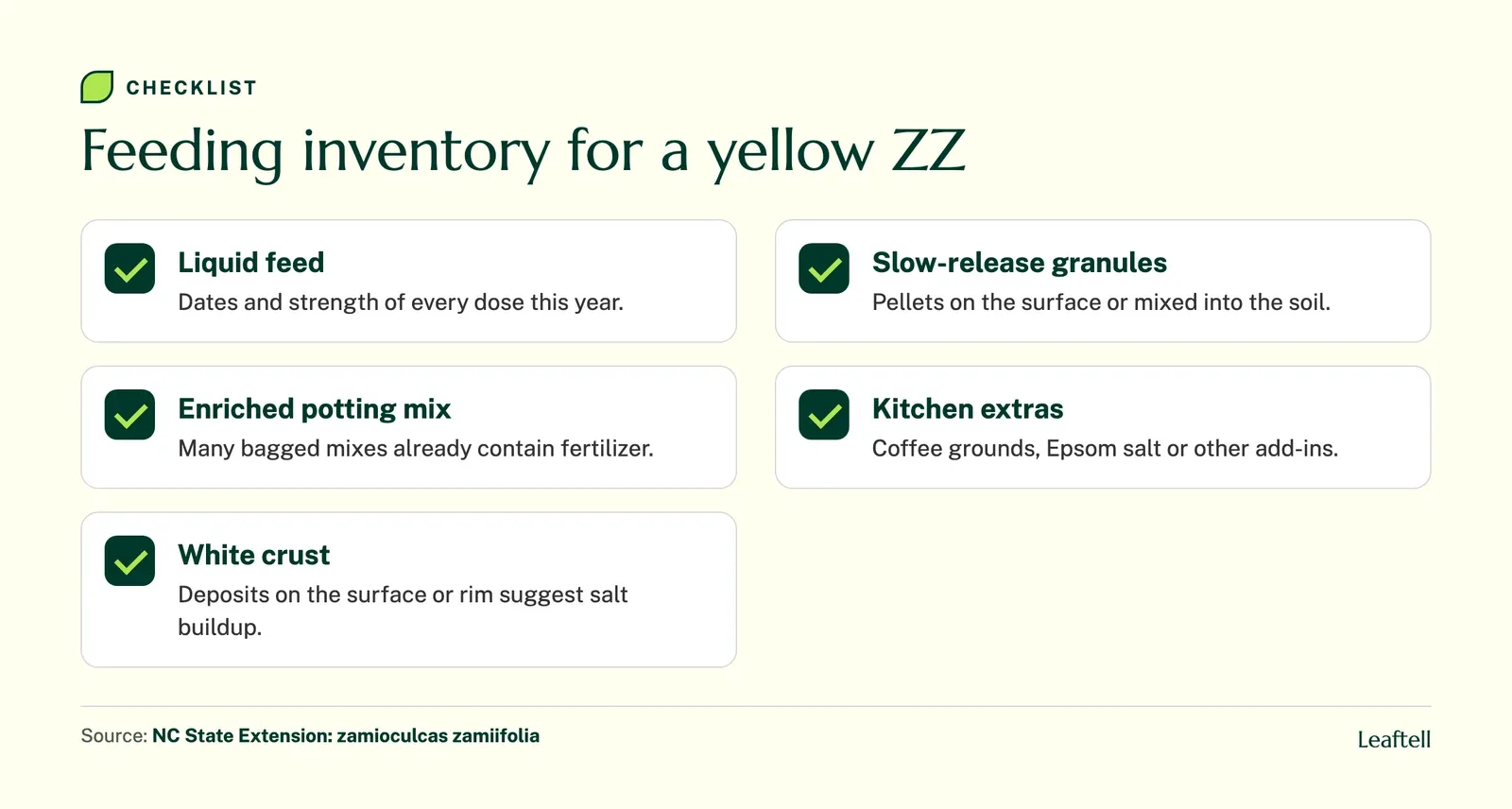
White crust on the soil surface or pot rim supports checking for salt buildup, but color alone can't identify a nutrient problem. If salts need flushing, drainage has to work first. UGA recommends letting water carry accumulated salts out and throwing away the runoff. Don't leave the ZZ soaking in a sealed cover afterward; go back to the full drying cycle.
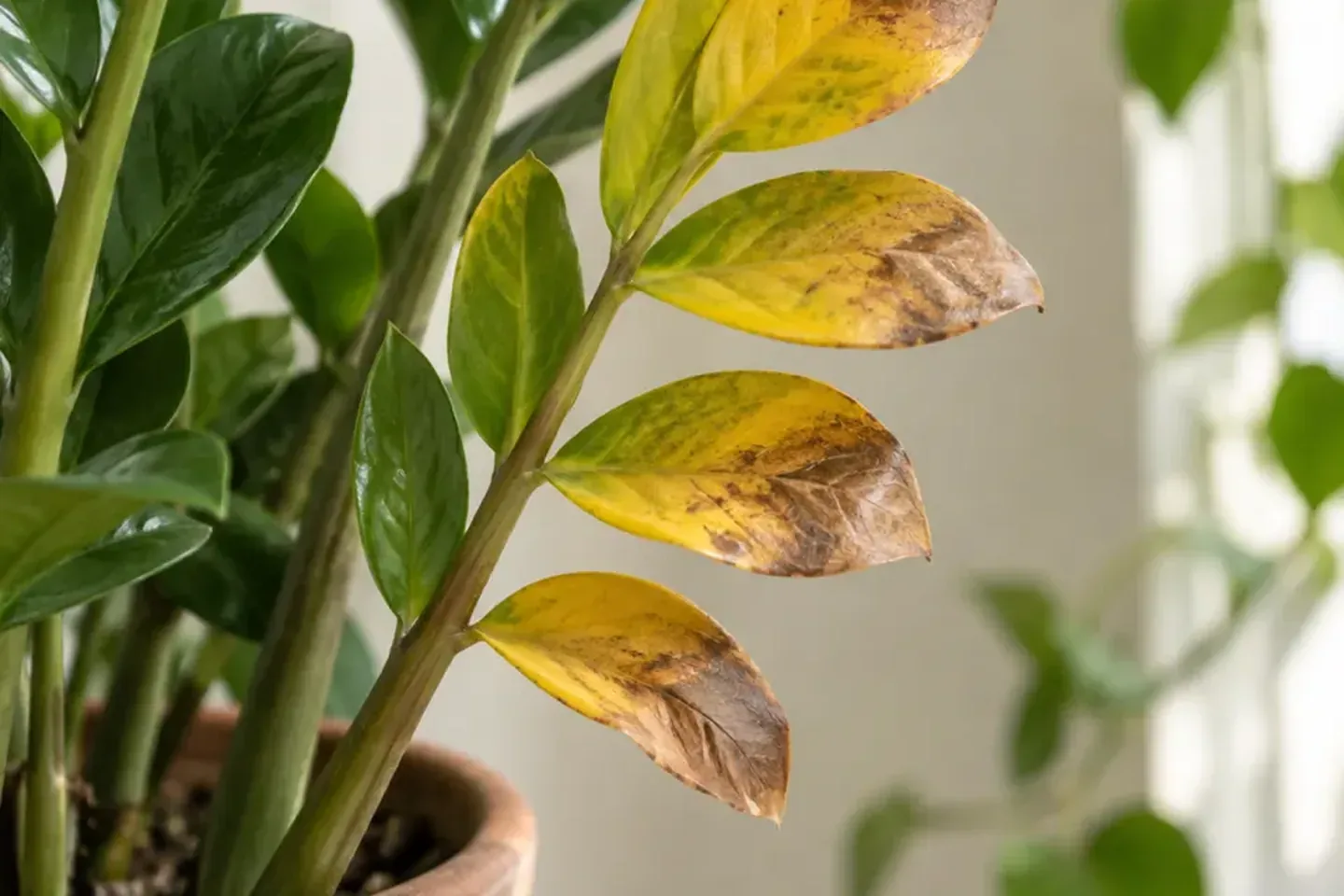
ZZ plant leaves turning yellow and brown from sun, cold or a move
A brown, scalded patch on the side facing a new sunny window is a light problem, not a root problem. NC State warns that direct sun can scald and brown ZZ foliage and recommends bright indirect light instead.
Temperature matters too. NC State advises bringing outdoor containers inside when temperatures fall below 60°F. Note any recent move outside, onto a cold sill or next to hot glass.
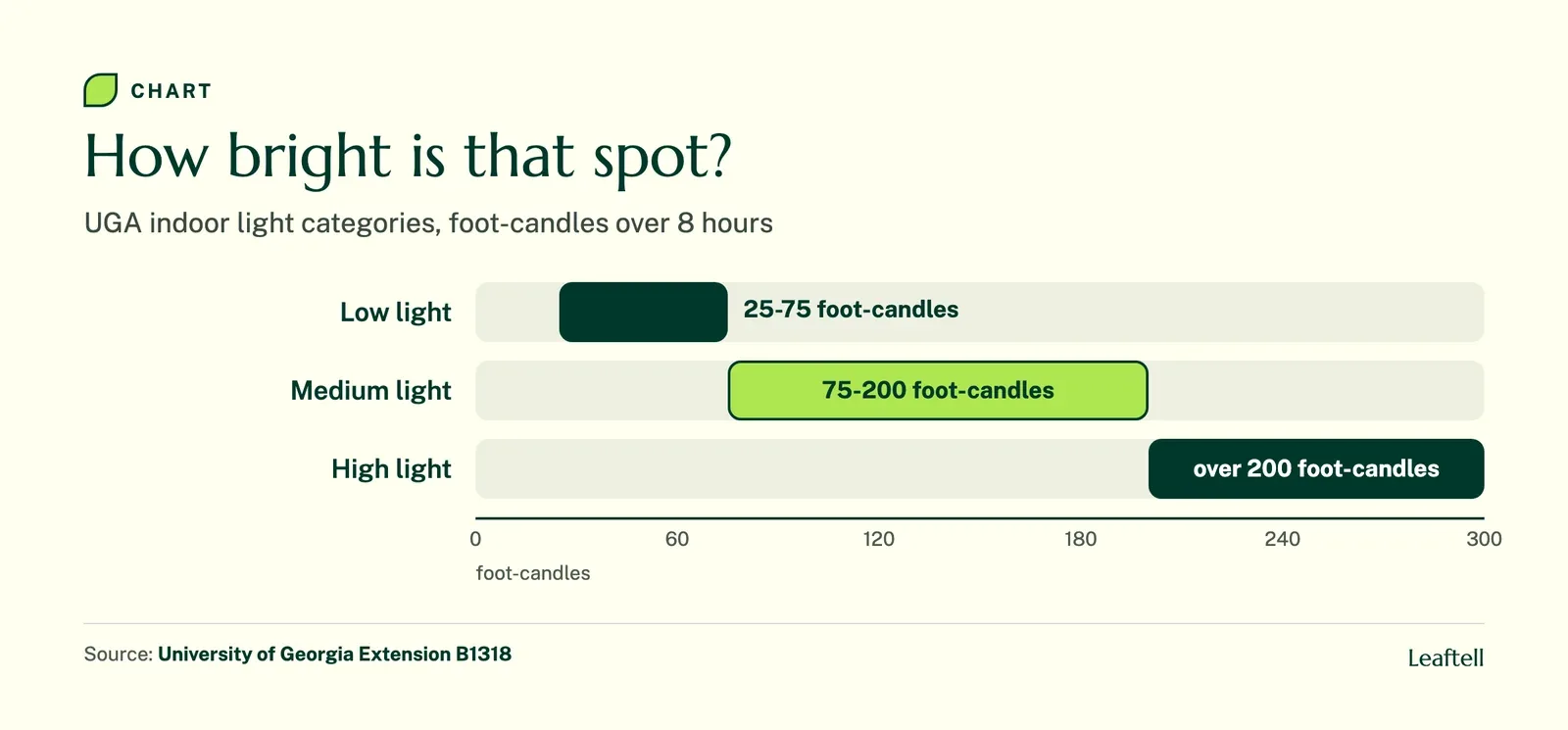
Light also changes how fast the pot dries. UGA's medium indoor-light category is 75-200 foot-candles over 8 hours. Use those figures to compare spots in your home, not as a guaranteed growth reading for a ZZ. A plant that survives in a dim hallway uses water much more slowly than one beside a bright, sheltered window, so the same watering calendar can't fit both. If you're unsure what a spot delivers, check the light where the leaves sit.
Should I cut off yellow ZZ plant leaves?
Yes, cut off a fully yellow or collapsing stalk once you've photographed it and checked its base. Leave partly green leaves in place; they still feed the plant while you fix the cause.
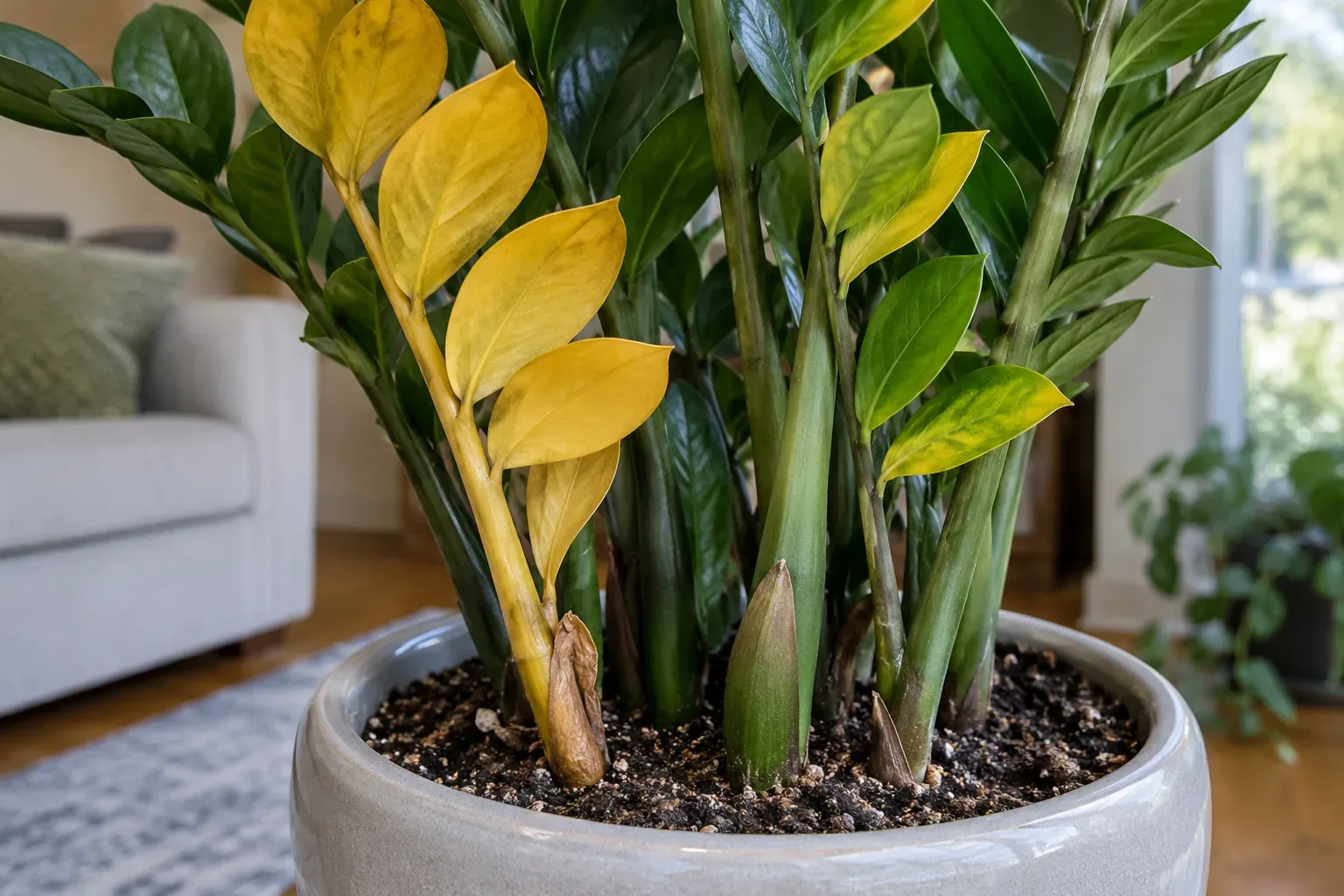
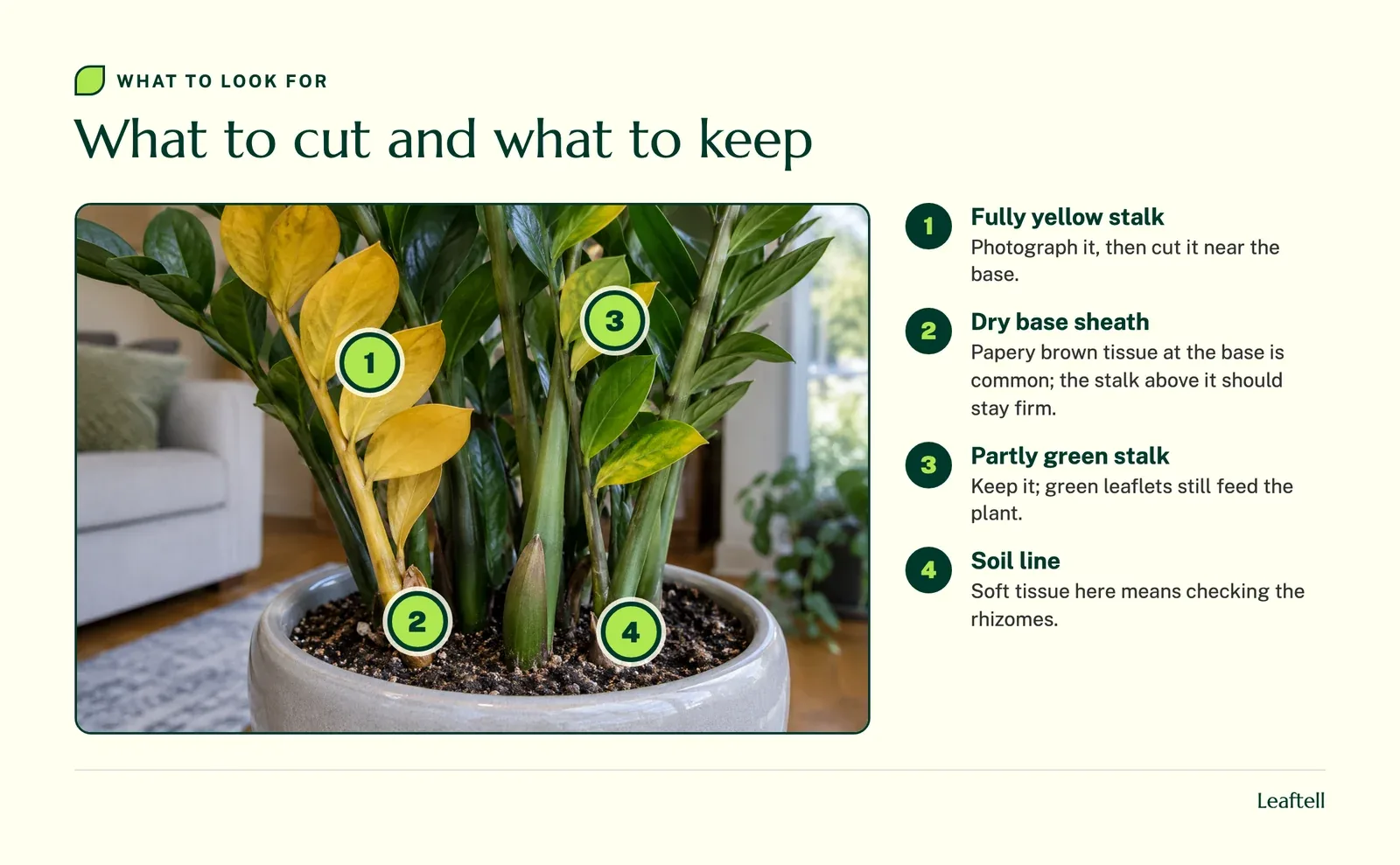
Use a clean cutting tool and cut near the base without gouging the rhizome or pulling neighboring stalks loose. Pruning changes the look today, but it doesn't fix wet mix below the surface.
Check the cultivar before you cut a pale shoot. NC State describes 'Chameleon' as emerging golden yellow and turning dark green as it matures, while 'Raven' starts lime green and darkens toward purple-black. A pale but firm new shoot on those plants isn't sick. Compare it with older growth and the cultivar description.
Keep the plant and cut pieces away from children and pets; NC State flags toxicity concerns. You can check your plant on the ASPCA toxic and non-toxic plants list. If the base is soft rather than creased, the root rot guide shows how to inspect the rhizomes.
Mistakes that cost you stalks
Most of these mistakes come from caring too much. Here's what each one costs.
- Watering on a calendar. A ZZ in a dim room can stay wet for weeks. Cost: soft rhizomes, which are much harder to save than a yellow leaflet.
- Repotting into a much bigger pot. Extra mix around a small rhizome stays wet. Cost: a wetter root zone right when the plant is weakest.
- Feeding a yellow plant without checking the cause. NC State suggests light, infrequent feeding; that does not make fertilizer a treatment for damaged roots. Cost: possible salt buildup on stressed roots.
- Kitchen remedies. Coffee grounds and Epsom salt aren't yellow-leaf fixes. Cost: a messier surface and a delay in fixing the water.
- Stripping every blemish. Partly green stalks still make food. Cost: a slower comeback for a slow-growing plant.
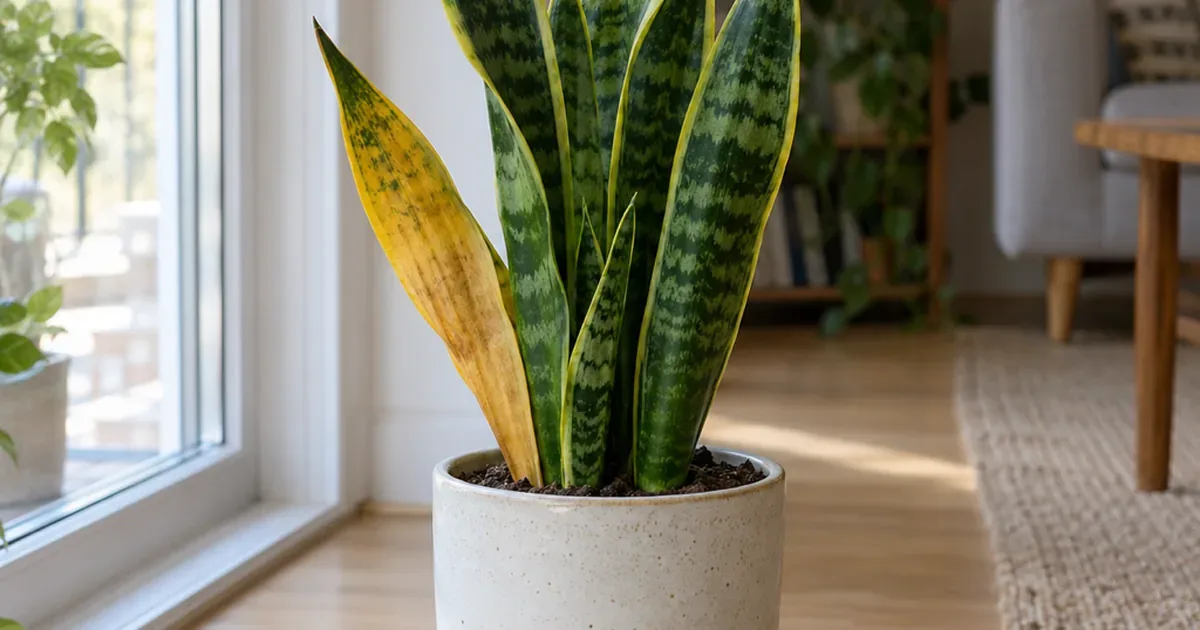
A ZZ has compound leaves rising from swollen underground rhizomes; a snake plant has thick, upright individual leaves. Both need drainage, but their normal growth and color patterns differ. Use the snake plant yellow leaves guide for that plant rather than assuming every pale shoot has the same cause.
Follow the rhizome's response
My recommendation: fix the drying cycle first, then let the plant show you. ZZ grows slowly, so a tidy pot after pruning won't sprout replacement leaves right away. Don't dig up the rhizomes to check on progress. Check moisture, look at the visible bases, and photograph new shoots as they open.
There's no sourced recovery deadline for a ZZ with unknown root damage. Let the mix dry between waterings and adjust your checks to its actual growing conditions. When the remaining stalks stay firm and new shoots mature normally, keep that routine instead of adding water because the plant seems to be bouncing back.
Get help from a local extension office or experienced grower if more stalks keep yellowing, the base or rhizomes soften, or roots decay even after you've fixed drainage. Bring your watering and feeding record and photos of the base. For the general routine across all your plants, see indoor plant care.
Check your ZZ plant in Leaftell. The check uses your answers; photos stay on your device.
Sources
Check your growing conditions with the plant watering calculator.
Frequently asked questions
Mix that stays wet, yellowing stalks, soft bases or mushy rhizomes are the warning signs. Check the container and the roots rather than judging from one pale leaflet.
Find whether the cause is wet roots, harsh sun, cold, injury or overfeeding, and correct that one condition. Removing yellow leaflets alone doesn't solve it.
A healthy, actively growing ZZ may benefit from a suitable labeled feed, but NC State suggests only 1-2 feedings a year. Yellow leaves are not proof of hunger, so check roots and light first.
Coffee grounds aren't a reliable fix for yellowing or a balanced feed. They can clutter the mix surface without addressing wet roots or poor light.
Epsom salt supplies magnesium and isn't a general ZZ tonic. Use it only if testing and qualified advice show a real need.
It isn't a blanket rule for all ZZ plants. Some named cultivars may carry propagation restrictions, so check the plant label and any applicable protections before propagating that cultivar.
There's no fixed timeline, because ZZ grows slowly and root damage varies. Firm remaining stalks and healthy new shoots are the signs it's working.
Share article
About the author

Keep checking your plant
Plant care reference
Indoor plant care
Build a routine around your plant, light and potting mix.
Plant care reference
Why is my plant dying
Trace leaf and root symptoms before choosing a care change.
Plant care reference
Pothos plant care
Choose a growing spot and prune a trailing pothos for fuller growth.
Plant care reference
How to fix root rot
Inspect root firmness and drainage, then decide whether to repot.