Powdery mildew on plants: identify it before you spray
Filip Leszczyński 16 October 2026 10 min read
In this article
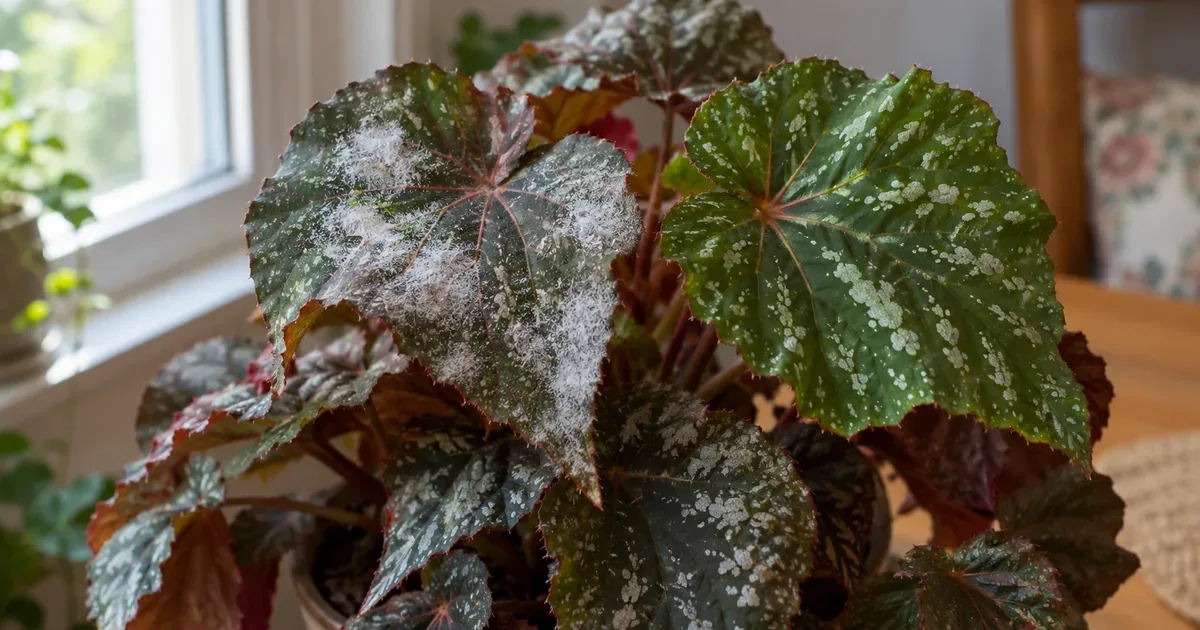
Powdery mildew on plants can appear as spreading white powder on leaf surfaces, but pests, mineral deposits, and normal markings can look similar. Check the host and coating first, then improve spacing and remove suitable affected debris before considering products.
Keeping the plant thirsty is not a mildew treatment. The canopy and root zone need separate attention: a photograph can record powdery texture, but it cannot tell you the watering history or whether the pot is dry inside.
Plant disease white spots on leaves: mildew or pests?
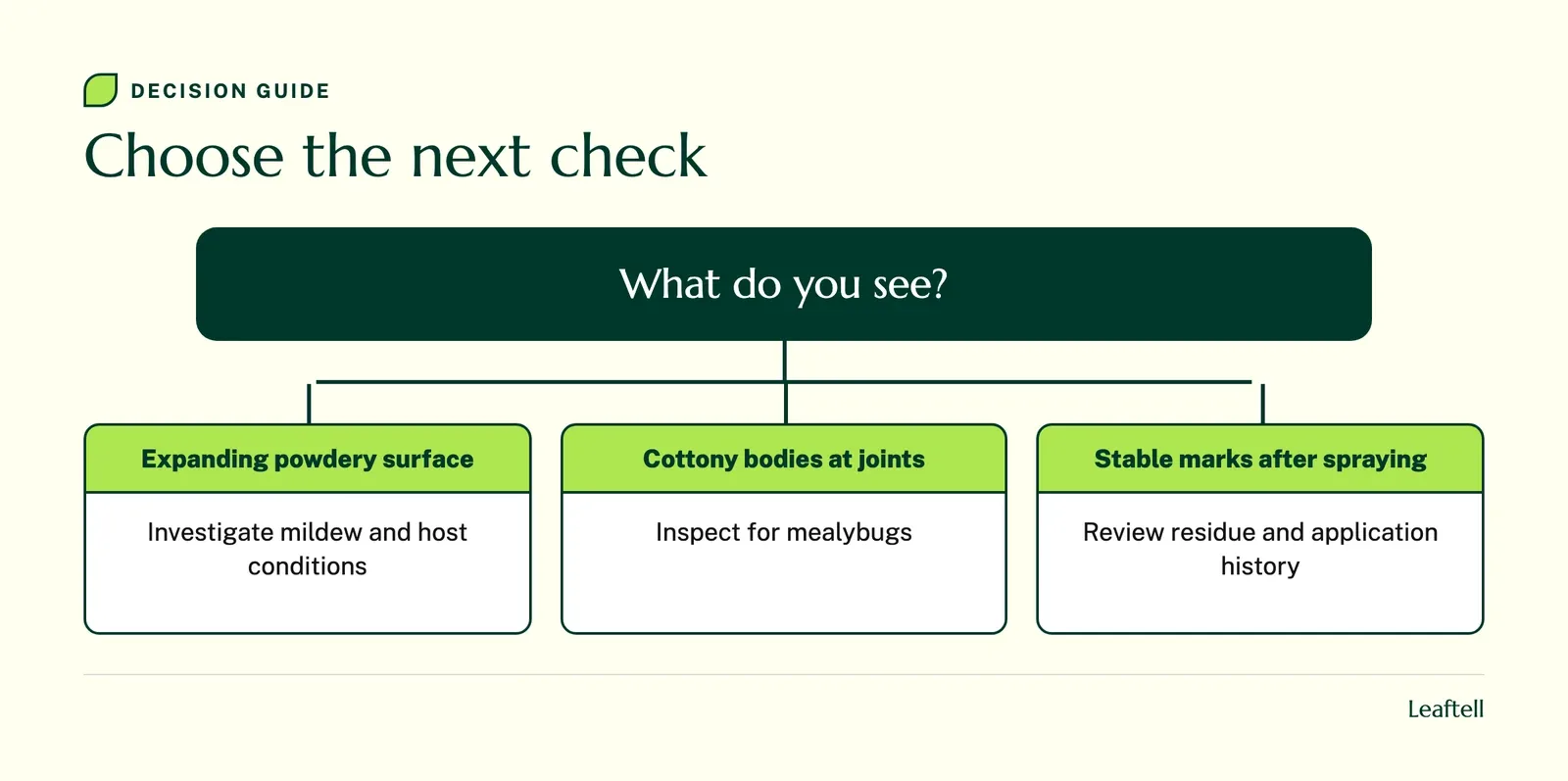
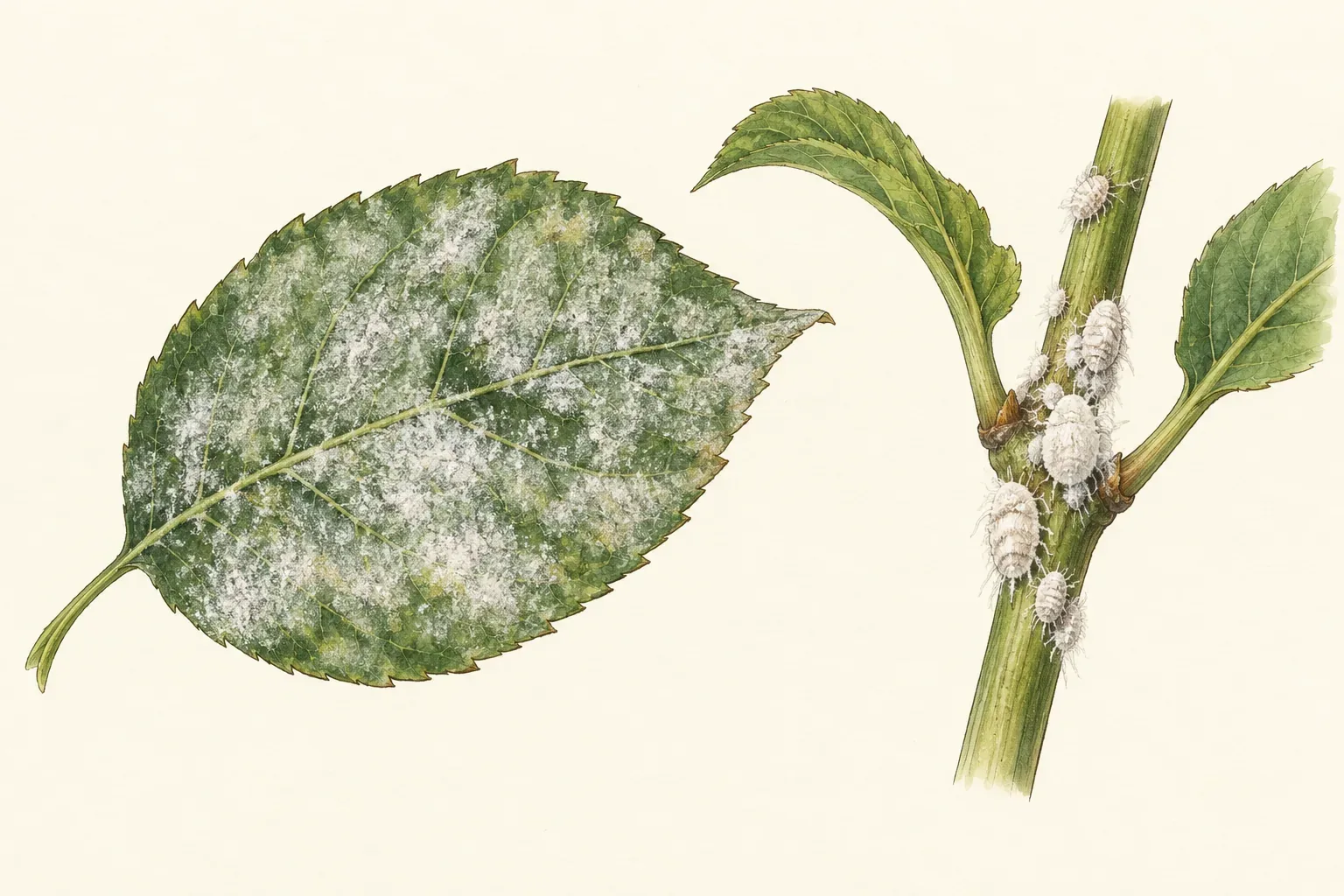
A powdery expanding surface patch supports a mildew check, while separate cottony bodies suggest insects. A stable pale marking or residue after spraying needs a different explanation.
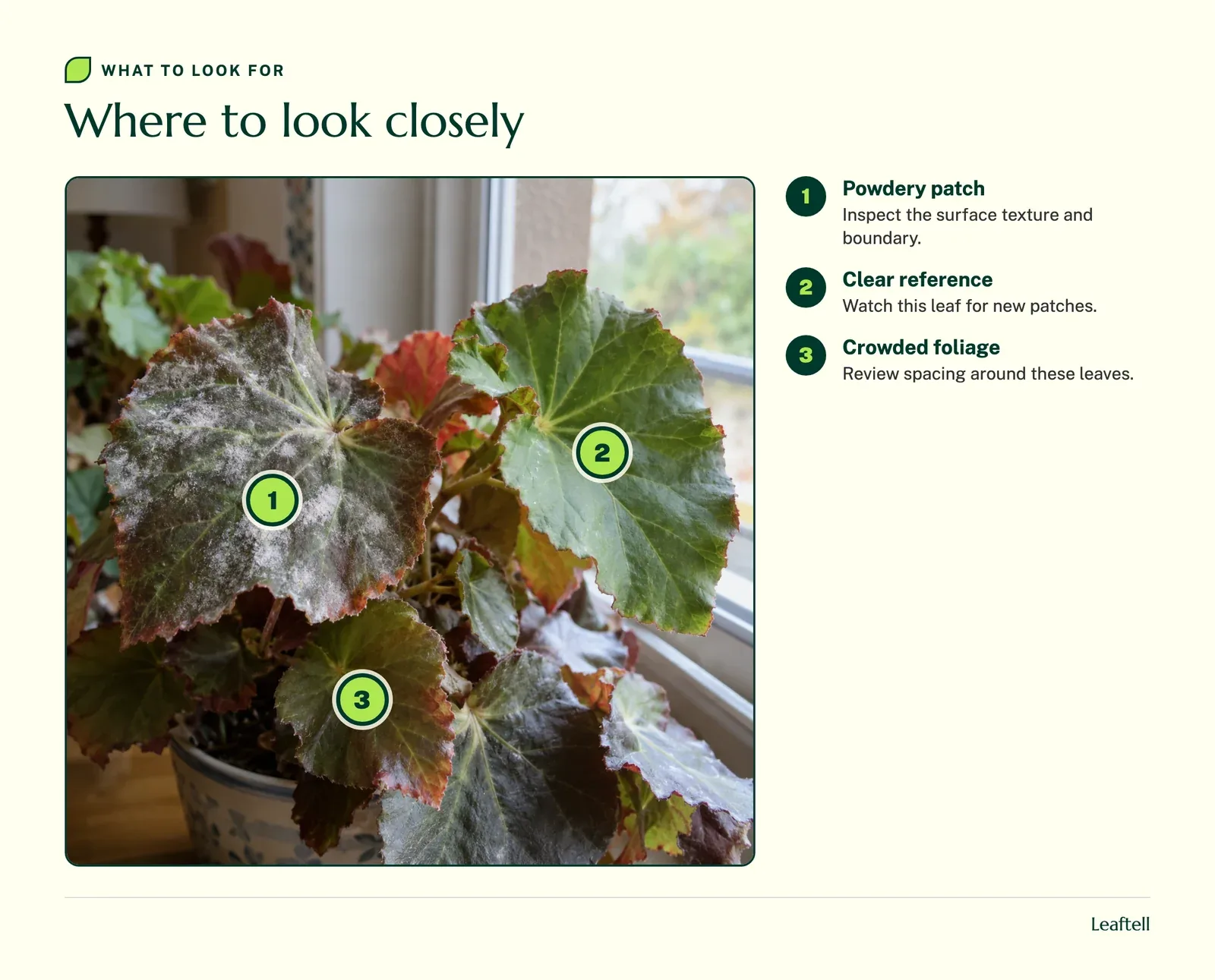
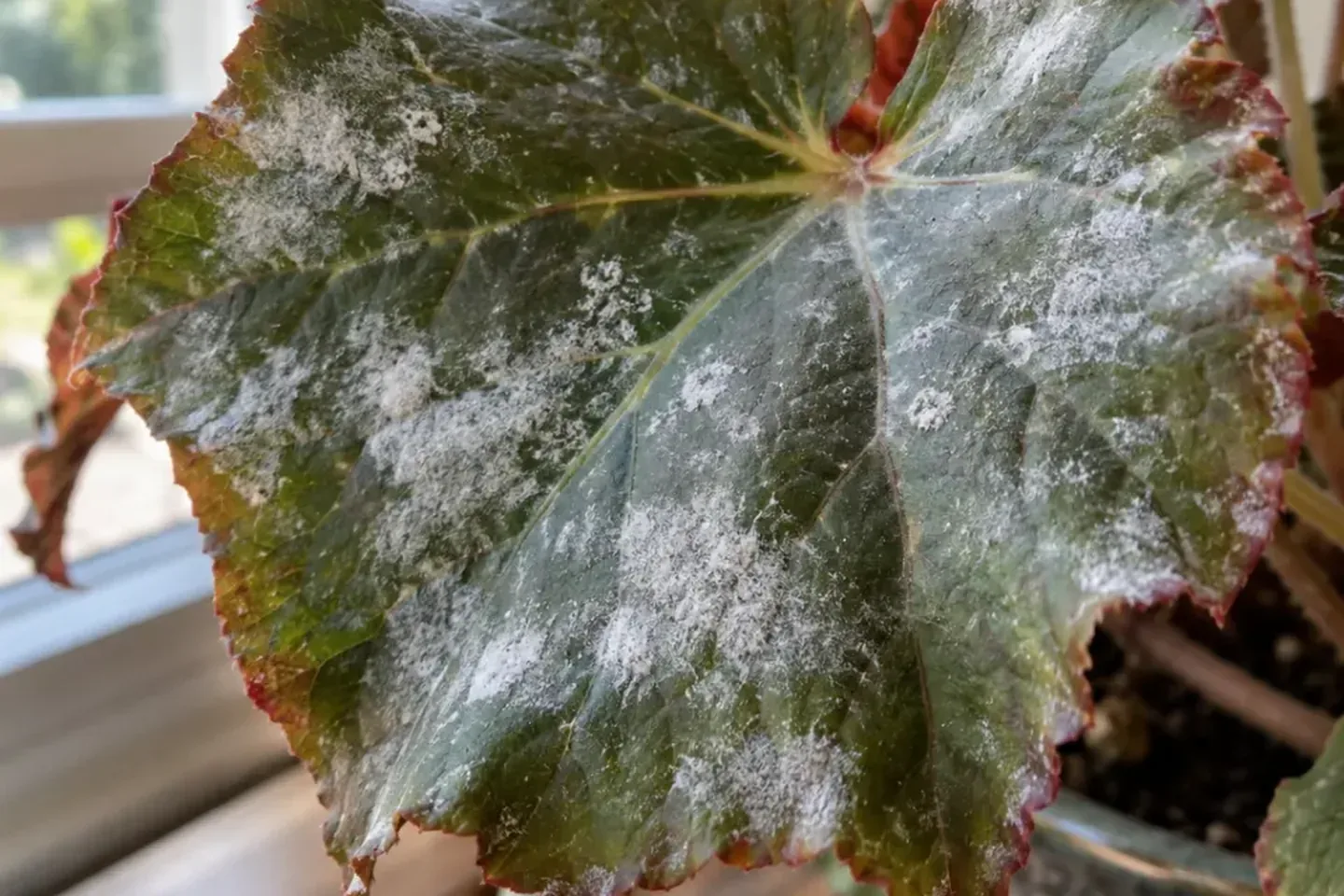
Inspect whether the white material forms a powdery surface coating, separate cottony bodies, or stable pale areas within the leaf. Look at the underside and nearby stem as well as the most obvious upper patch. A close photograph in diffuse daylight helps distinguish texture from glare, particularly on glossy or naturally patterned foliage.
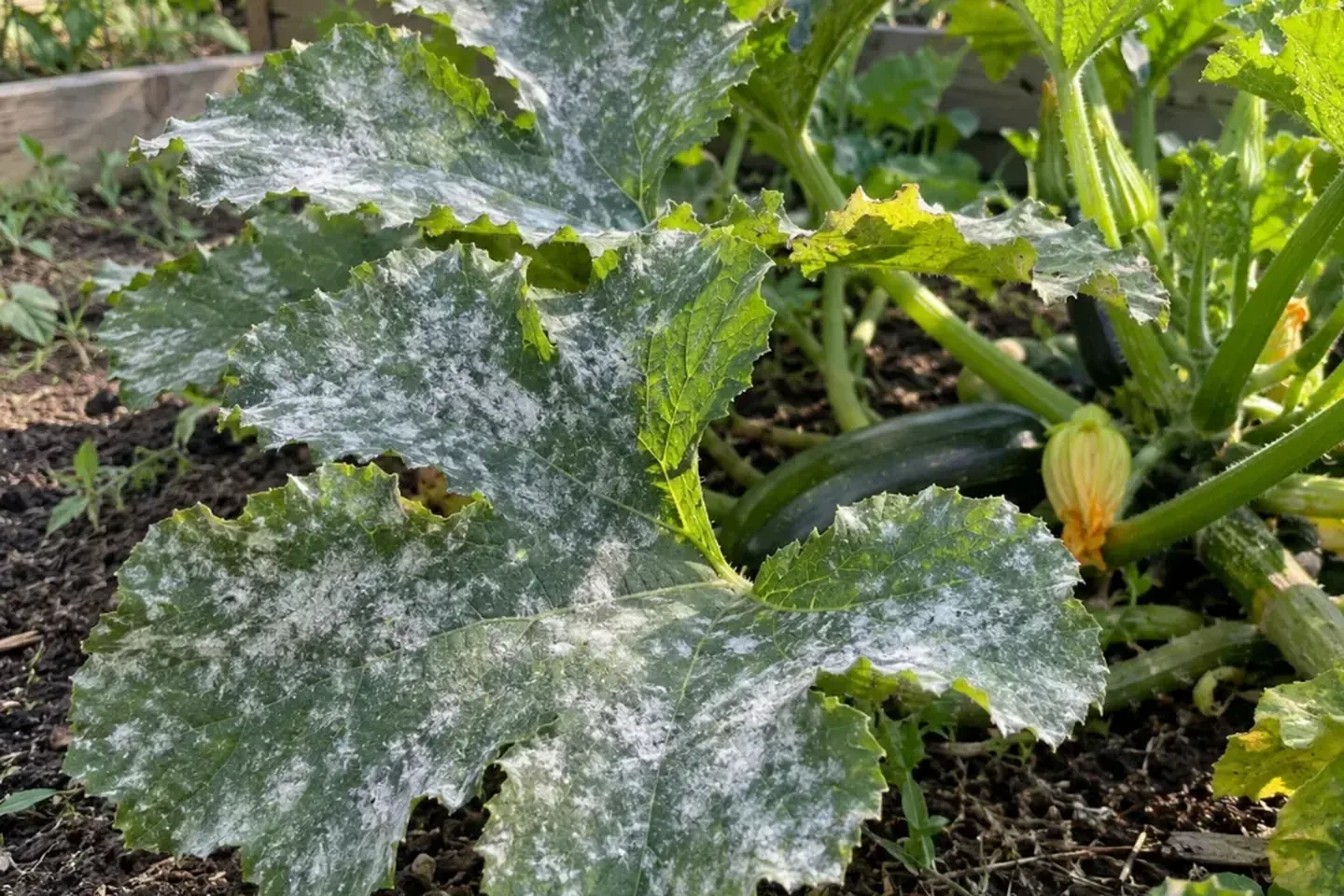
Compare mealybugs on plants if you find wax-covered insects around joints. Fine webbing and stippling call for spider mites on plants. Discrete brown or dark lesions belong in leaf spot disease. Those comparisons prevent a treatment for one category from being applied merely because several different problems look pale in a thumbnail.
Note when the coating appeared and whether new patches form on previously clear leaves. Deposits from hard water or a recent spray can persist without spreading in the same way, so include the treatment and cleaning history. Do not rub every leaf aggressively as a diagnostic test. Preserve one clear photograph and ask a local horticultural service for help if the pattern remains uncertain. Plant identity and the distribution of the coating are both important evidence before deciding what it represents.
UC IPM identifies white powdery growth as a powdery-mildew sign and discusses shade and poor airflow as favorable conditions. Inspect the coating and growing position together before selecting treatment.
Observation checklist. Review dates are suggested check-ins, not watering or treatment intervals.
| What you find | Best next check |
|---|---|
| Powdery expanding patch on the surface | Photograph texture and compare with normal markings and recent spray residue. |
| Cottony bodies concentrated at joints | Check for mealybugs rather than assuming a fungal coating. |
| Crowded canopy with inconsistent root moisture | Improve spacing and watering consistency appropriate to the host. |
| Day 7: previously clear reference leaves | Count new patches separately from coating retained on older leaves. |
What causes powdery mildew on plants: host and setting
Powdery mildews are a group of fungal problems with different host relationships. The coating on a garden squash and a similar-looking problem on an ornamental plant should not be assumed to be the same organism passing freely between every species. Record the host name and which other plants show symptoms, rather than treating the whole garden as one uniform outbreak.
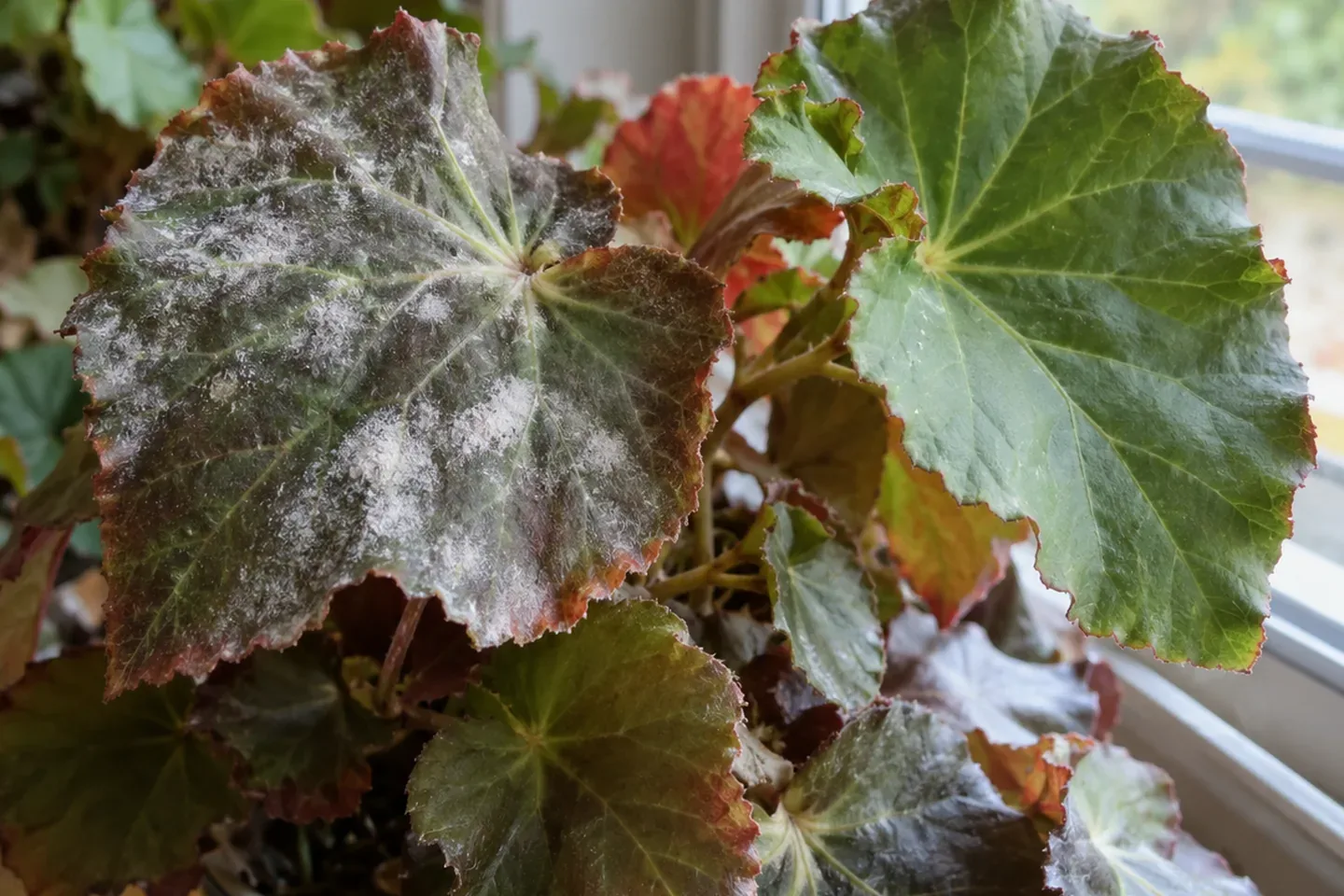
Inspect crowding, shade, air movement, and watering consistency. A sheltered dense canopy can create conditions worth correcting, while repeated drought stress can weaken the host. Avoid assuming that the solution is simply to keep every leaf as dry as possible at the expense of root moisture. The plant still needs appropriate water and a suitable growing location.
For vegetables with additional yellowing, tomato leaves turning yellow helps organize a separate crop assessment. For indoor growing conditions, indoor plant care gives a broader framework. Write down whether the problem begins on older crowded foliage or fresh exposed leaves. Those observations help an adviser assess the host and setting and can reveal a practical environmental adjustment before you consider adding any product to an already stressed plant.
Growing conditions first
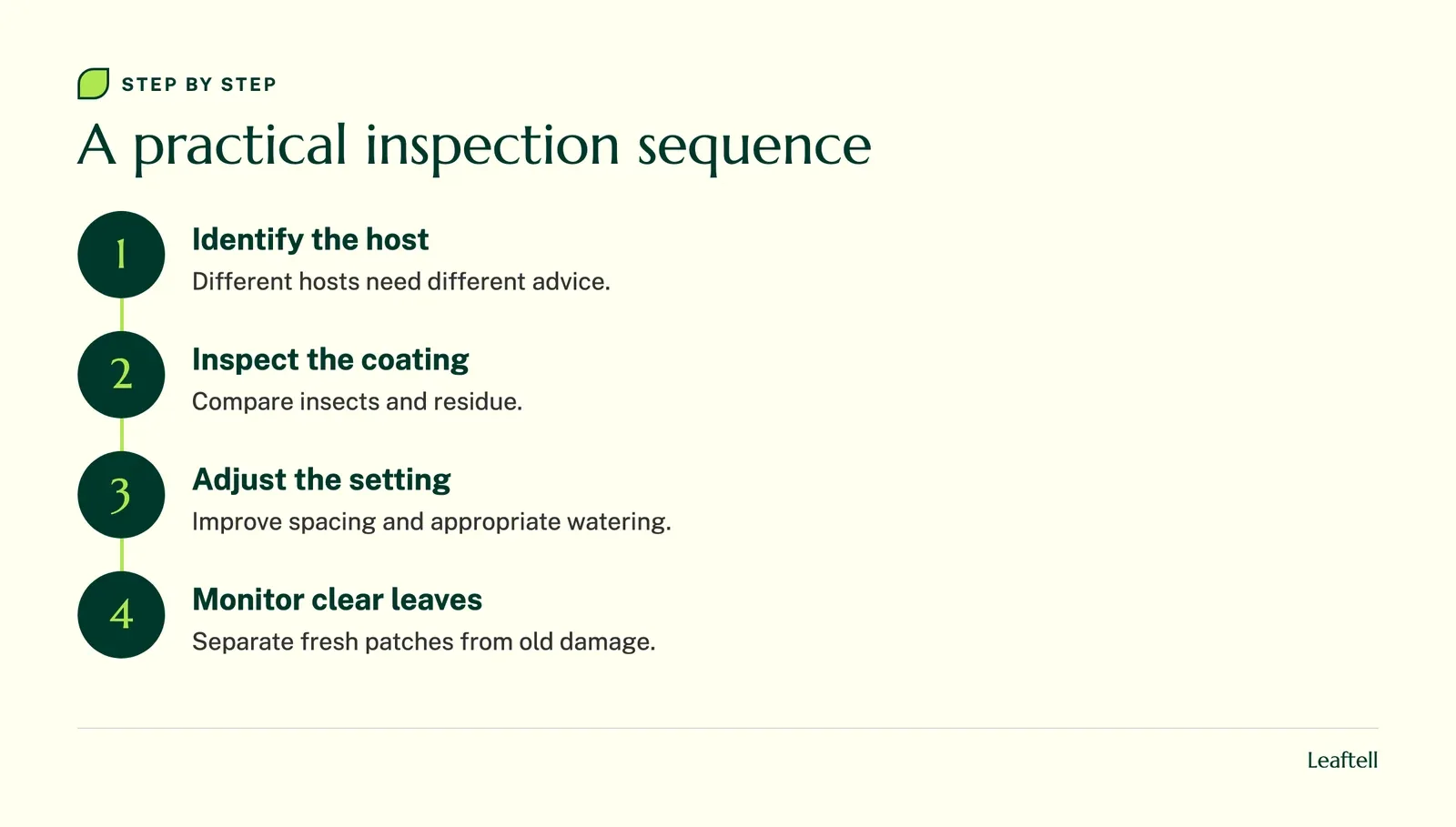
Improve spacing where practical so foliage is not tightly pressed against neighboring plants. Remove suitable affected material and fallen debris without stripping the plant of most of its green area. Use clean tools, contain removed tissue, and follow local advice for disposal when disease is confirmed. The aim is to reduce avoidable spread and stress, not to make every leaf look cosmetically perfect at once.
Water the root zone consistently according to the plant and weather. Do not let a thirsty container dry excessively because you are worried about a leaf coating. Check drainage at the same time so a disease response does not create a saturated root problem. The article on how to tell if plant needs water is useful for containers whose surface appearance hides deeper moisture.
If choosing future plants, consider locally recommended resistant cultivars where available. Resistance is a selection tool, not a guarantee against all disease under all conditions. Avoid pushing soft growth with unnecessary fertilizer while investigating an active problem. Photograph the remaining healthy foliage after cleanup and revisit it during follow-up. That makes new patches easier to distinguish from old coating on leaves that were deliberately retained.
How to check suspected powdery mildew
- Document the coating
Photograph the upper surface, underside, and nearby stem before cleaning. Include a wider view that shows where patches sit in the canopy. Note recent sprays or hard water deposits that could confuse the appearance.
- Compare the alternatives
Look for separate cottony insects at joints, fine webbing, or stable pale markings within the leaf. These clues call for different investigations. Do not rub every leaf aggressively just to see whether the white material moves.
- Improve the setting
Give crowded foliage more space where practical and keep root moisture appropriate for the host. Remove suitable affected material and fallen debris without stripping most of the green area. Use clean tools and contain removed tissue.
- Keep a clear reference
Choose previously clear leaves and save their photographs after cleanup. Compare new patches separately from coating left on older leaves. Seek host specific advice when symptoms keep appearing rather than trying progressively stronger homemade mixtures.
Powdery mildew treatment: avoid kitchen spray recipes
Do not assume a mixture of milk, baking soda, detergent, or concentrated oil is a harmless universal remedy. Homemade formulations can injure leaves, leave confusing residues, and lack reliable directions for the host and setting. Begin with identification and practical cultural measures, then seek local advice if the problem continues to affect new growth.
If a fungicide class is recommended, its label must cover the plant, disease, and use. Follow the label for timing, conditions, application limits, and all crop restrictions; never mix products. A treatment that may help protect new tissue will not necessarily restore a heavily damaged old leaf. Keep your expectations tied to what the product is actually labeled to do.
Keep children and pets away from supplies and treated plants as directed. Consult the ASPCA plant toxicity list for toxicity of ornamental hosts, recognizing that its plant listings do not assess pesticide exposure. For suspected exposure, contact the appropriate professional with the label and plant identity. This page does not determine whether affected or treated produce is safe to eat. For food crops, use crop-specific extension guidance and all applicable label directions rather than a general houseplant article as the basis for a harvest decision.
What kills powdery mildew instantly? Follow new patches
No universal instant remedy restores damaged foliage. Identification, growing conditions, and a suitable labeled treatment when needed matter more than a quick disappearance of visible powder.
Select two clear reference leaves after the initial inspection and photograph them. On day three, check whether small new patches have formed and whether the growing conditions have actually changed. At day seven, compare the reference leaves and the surrounding canopy. On day fourteen, review the trend and seek more specific advice if fresh symptoms continue appearing.

These dates are observation appointments, not a fungicide schedule or a guaranteed clearance time. Retained leaves can still display old damage, and a change in the visible coating alone may not describe the plant's overall health. Record new affected leaves and the condition of growing tips. Continue appropriate moisture management while checking the canopy.
Use plant problems if another symptom becomes dominant. For a common climbing houseplant, pothos plant care helps review placement and watering independently of the suspected disease. If the material turns out to be sticky residue or waxy insects, sticky leaves on plants offers a different route. Revisit the identification rather than repeatedly applying a mildew treatment when the evidence no longer fits. A host name, close photographs, and a treatment history make that reassessment substantially more useful.
Powdery mildew treatment mistakes that cost healthy foliage
A homemade spray can add injury and leave a new residue that makes diagnosis harder. Milk, detergent, baking soda, and concentrated oils are not interchangeable remedies for every host. Begin with identification and growing conditions rather than a kitchen recipe.
Removing every marked leaf can cost a plant most of its remaining green area. Remove material only where appropriate for the host and the severity of the problem. Cosmetic perfection is not the same thing as protecting healthy growth.
The opposite moisture mistake is easy to miss: withholding needed root water because the leaves have a coating. Check the root zone independently. Improve the canopy conditions while maintaining suitable watering and drainage, instead of exchanging a leaf problem for drought stress.
Get host specific help
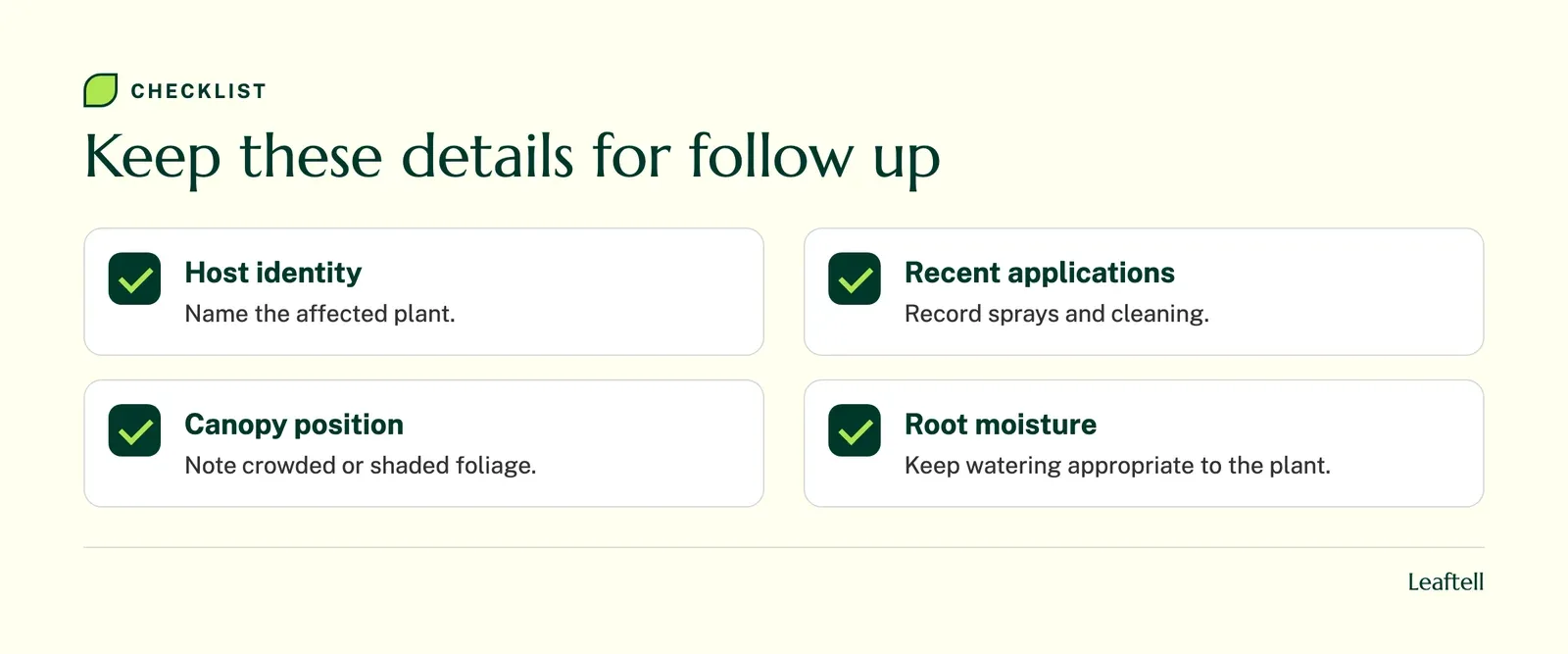
Ask a local extension adviser for help when new growth keeps developing patches, the coating is uncertain, or a food crop needs crop specific guidance. Provide the host name, a whole plant view, close texture photographs, and a list of anything already applied. Revisit identification if the evidence stops fitting mildew.
Check your powdery mildew symptoms in Leaftell. The check uses your answers; photos stay on your device.
Sources
Check your growing conditions with the plant watering calculator.
Frequently asked questions
Some labeled horticultural oils may suit particular hosts and conditions, after identification and growing conditions are addressed. Follow the label, never mix products, and keep children and pets away as directed; the plant itself may also have toxicity concerns.
Remove heavily affected material when appropriate for the plant, but avoid stripping away most of its healthy foliage. Bag debris and clean tools.
Spores can spread to susceptible hosts, though powdery mildew fungi often have host preferences. Improve spacing and monitor nearby susceptible plants.
It is a group of fungal diseases producing powdery growth on susceptible plant surfaces. White residue, pests, and other problems can look similar.
There is no universal instant cure that restores damaged leaves. Reduce favorable conditions and seek host-specific advice for an appropriate labeled treatment if needed.
Mealybugs, mineral deposits, dust, and other residues can resemble a white coating. Inspect texture, location, and the underside before deciding it is mildew.
Share article
About the author

Keep checking your plant
Plant care reference
Indoor plant care
Build a routine around your plant, light and potting mix.
Plant care reference
Why is my plant dying
Trace leaf and root symptoms before choosing a care change.
Plant care reference
Pothos plant care
Choose a growing spot and prune a trailing pothos for fuller growth.
Plant care reference
How to fix root rot
Inspect root firmness and drainage, then decide whether to repot.