Peace lily drooping: thirsty or waterlogged? Check first
Filip Leszczyński 16 October 2026 10 min read
In this article
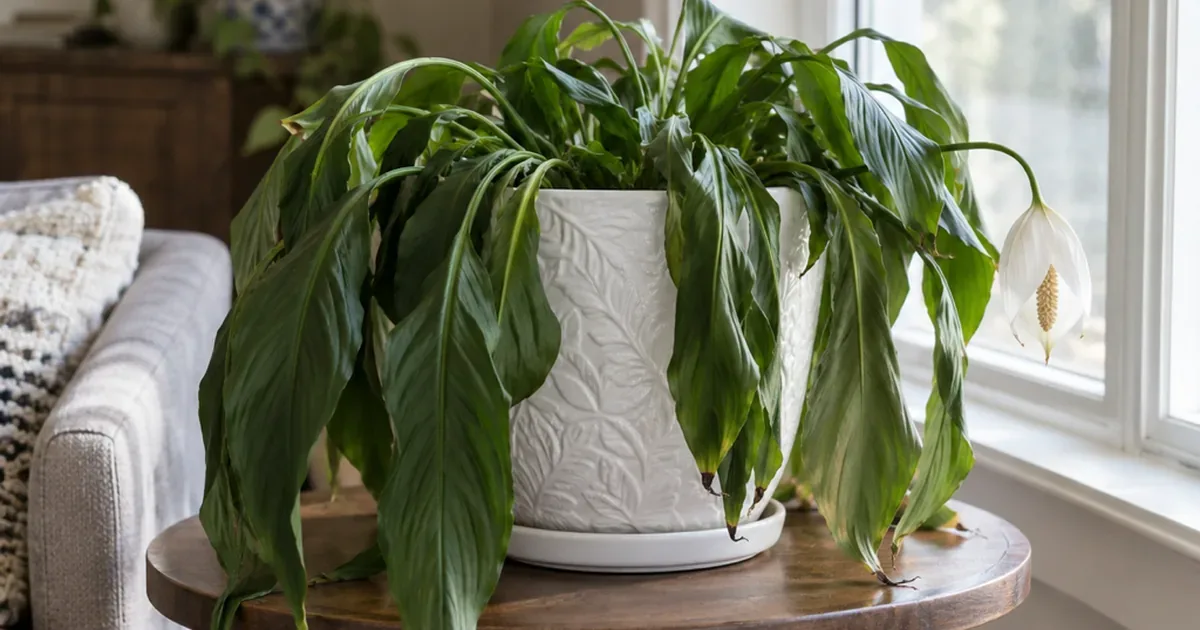
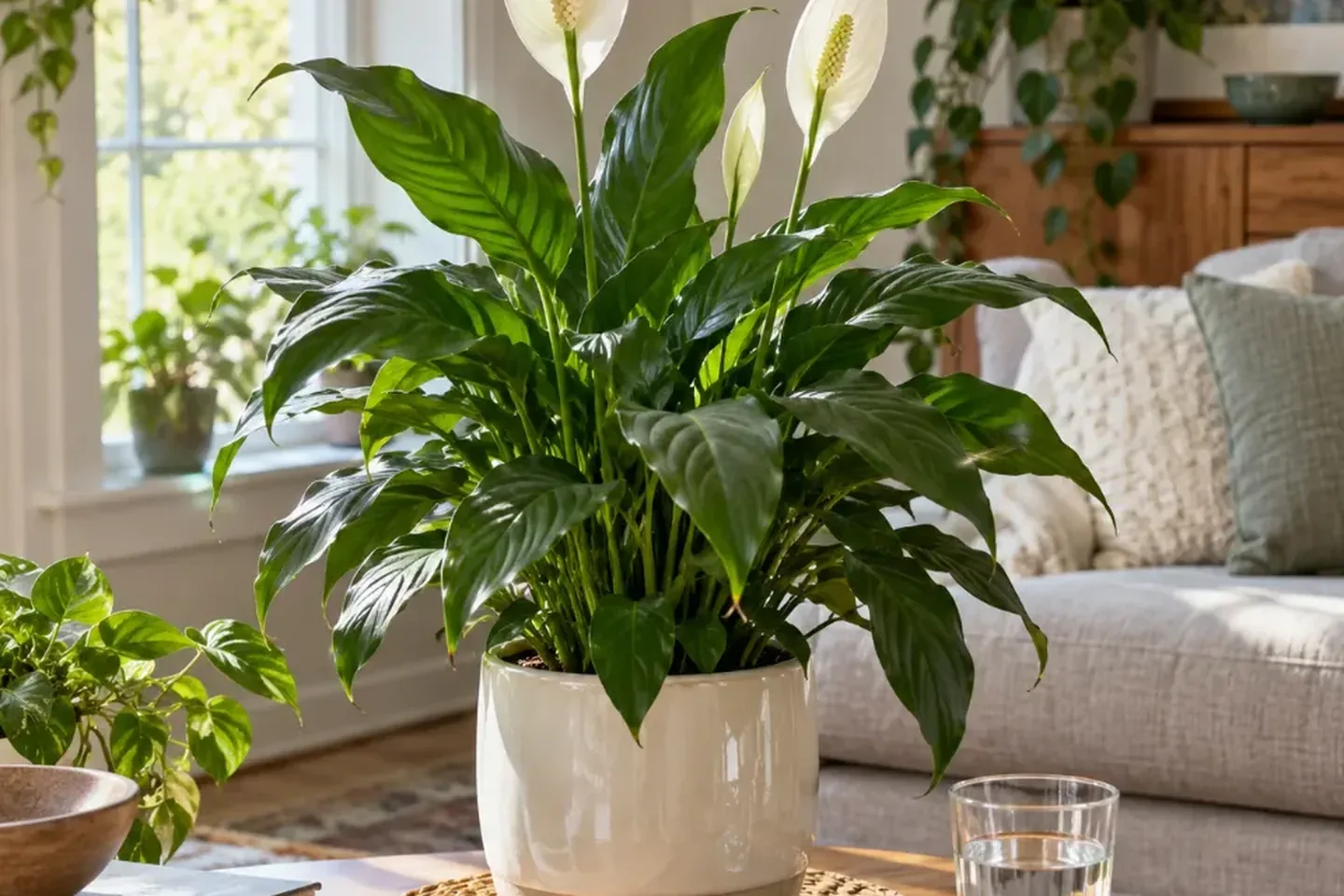
A peace lily drooping is usually thirsty, but not always: wet roots, heat, or root damage can make it sag exactly the same way. Before you water, lift the pot and feel the mix below the surface. A light, dry pot needs a drink; a heavy, wet one needs a drainage check instead.
Here is the trap. Peace lilies are famous for dramatic wilting and fast recovery after watering, so the reflex is to pour water at every droop. When the cause is wet, airless roots, that reflex makes it worse, and the leaves look identical either way. The pot tells you which one you have; the leaves cannot.
So treat the droop as a prompt to check, not a command to water.
Peace lily leaves drooping but soil is moist: dry root ball or wet container?
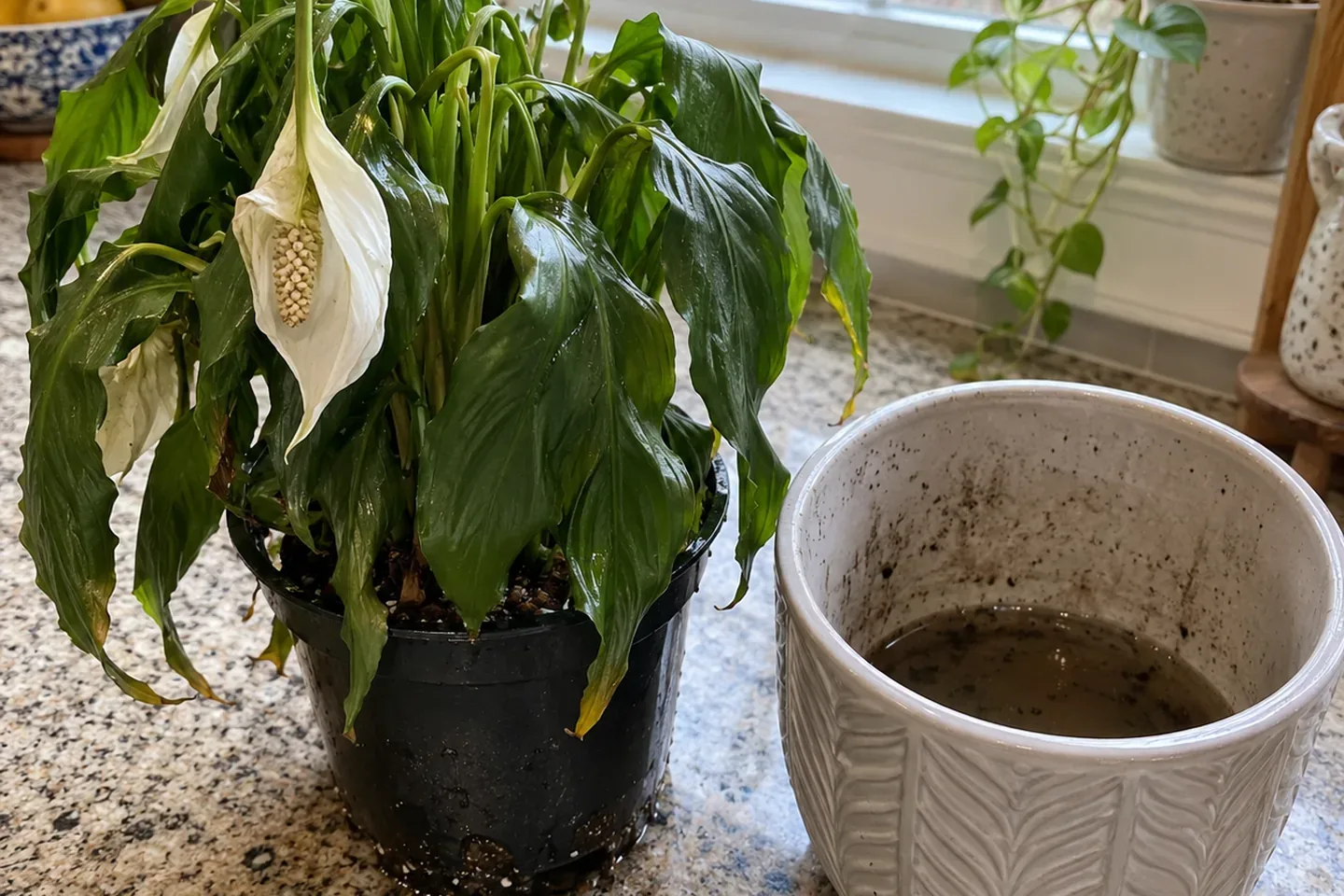
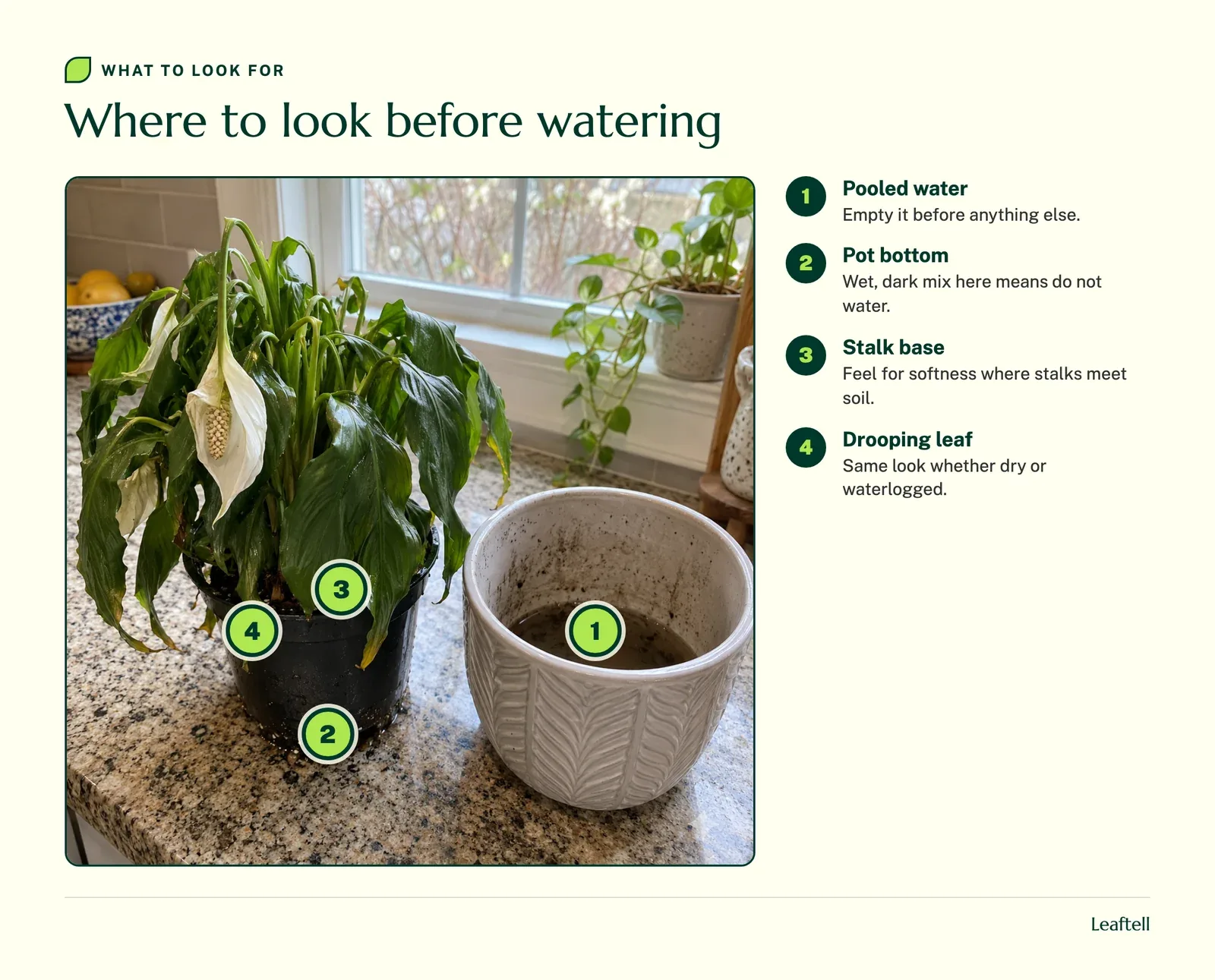
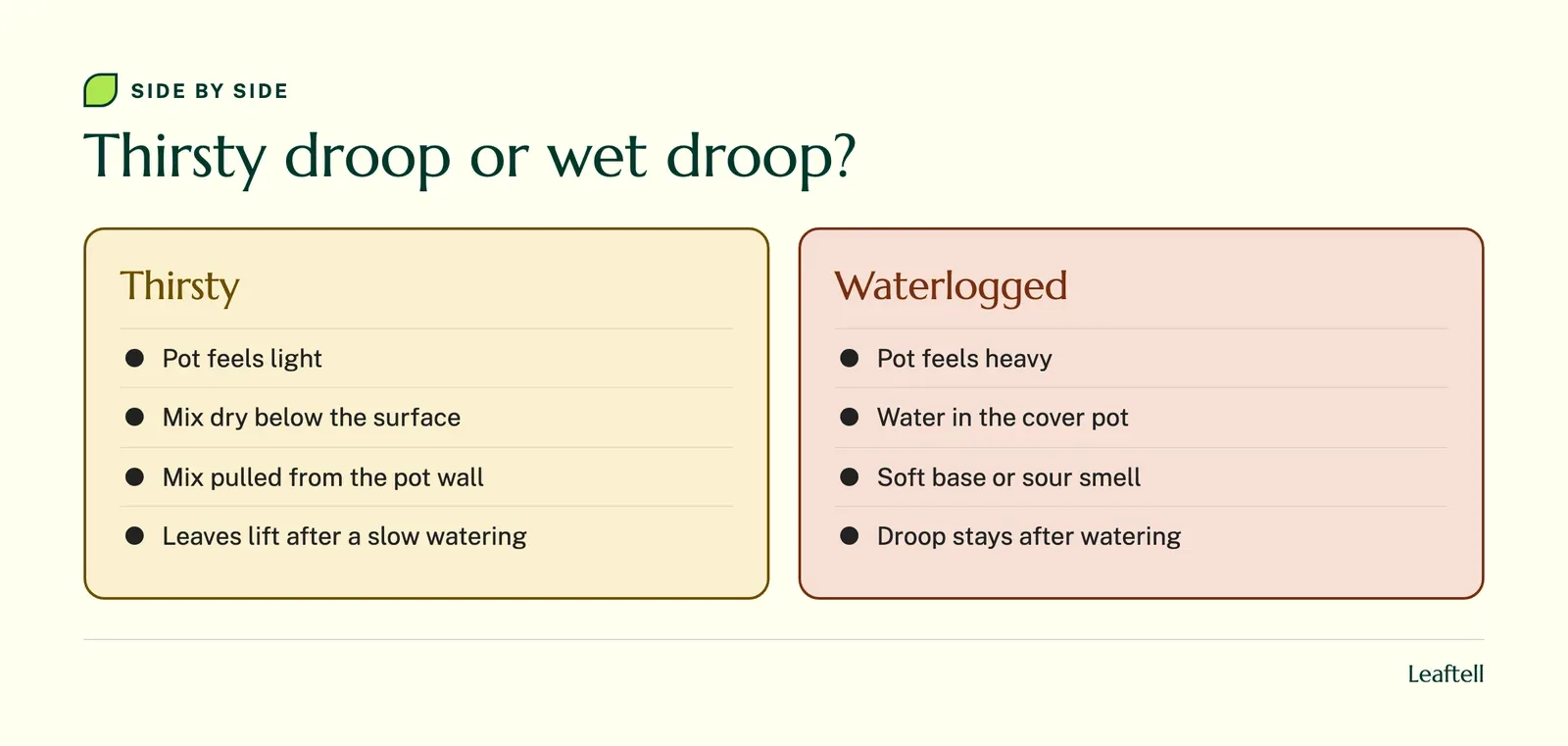
If the leaves droop while the soil feels moist, check deeper and inside the cover pot. Either the center of the root ball is dry under a damp surface, or the roots are sitting wet and short of air.
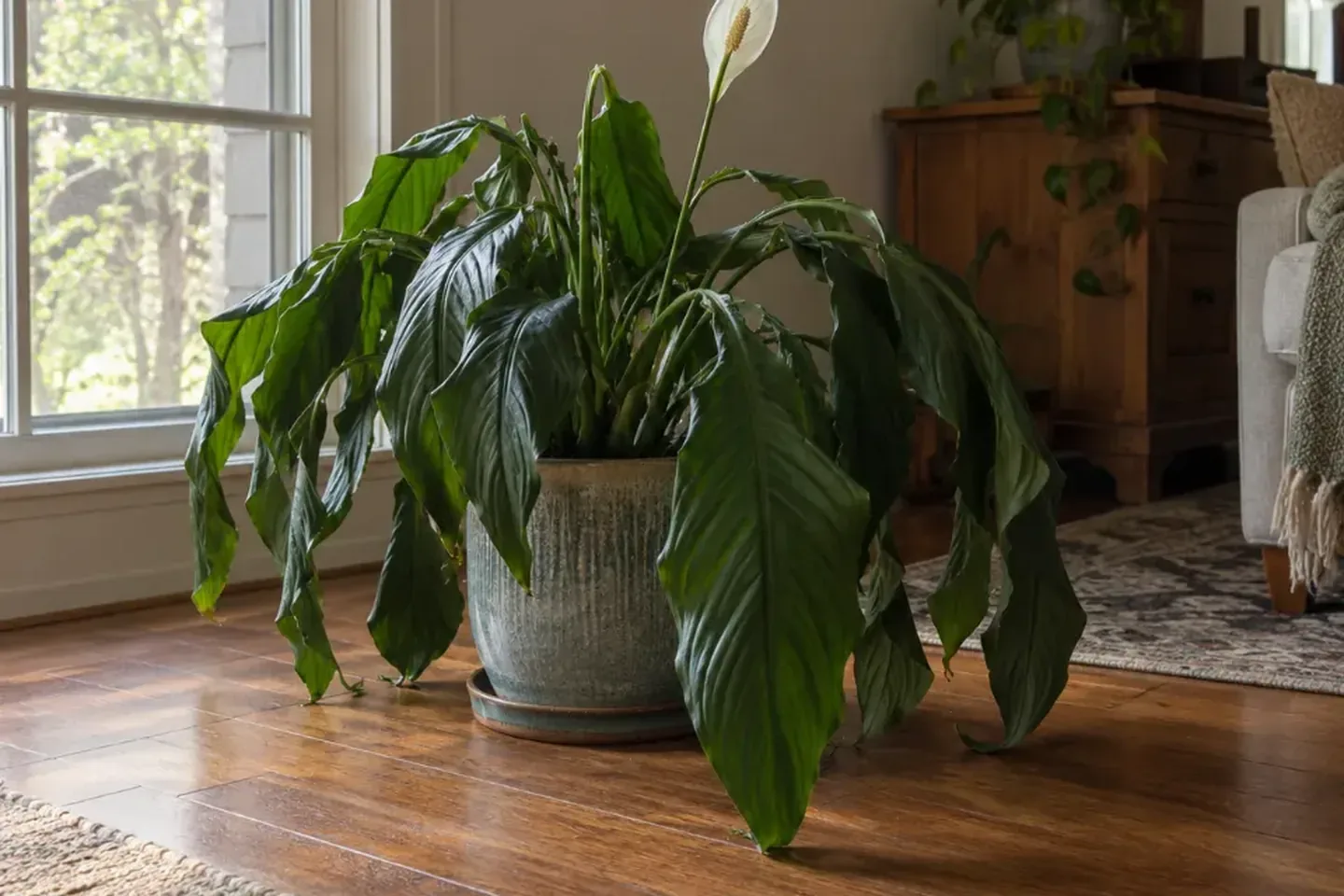
Lift the inner pot and feel the mix below the top layer. A light, dry root ball and a heavy, wet one can carry the same hanging leaves. Empty any water trapped in the cover pot and check the drainage holes. Peace lilies are often sold in decorative pots that hide exactly this.
Clemson HGIC notes that letting the plant dry out too much causes wilting and yellow leaf edges, and also warns against leaving it standing in saucer water. Both ends cause trouble, which is why the check comes before the watering can.
Then look at the stalks. The whole clump sagging together is a different story from one stalk bent by a bump. Feel the base for softness, not just the leaf stalks for flexibility. Take a photo of the whole plant now so you can compare posture under the same light later.
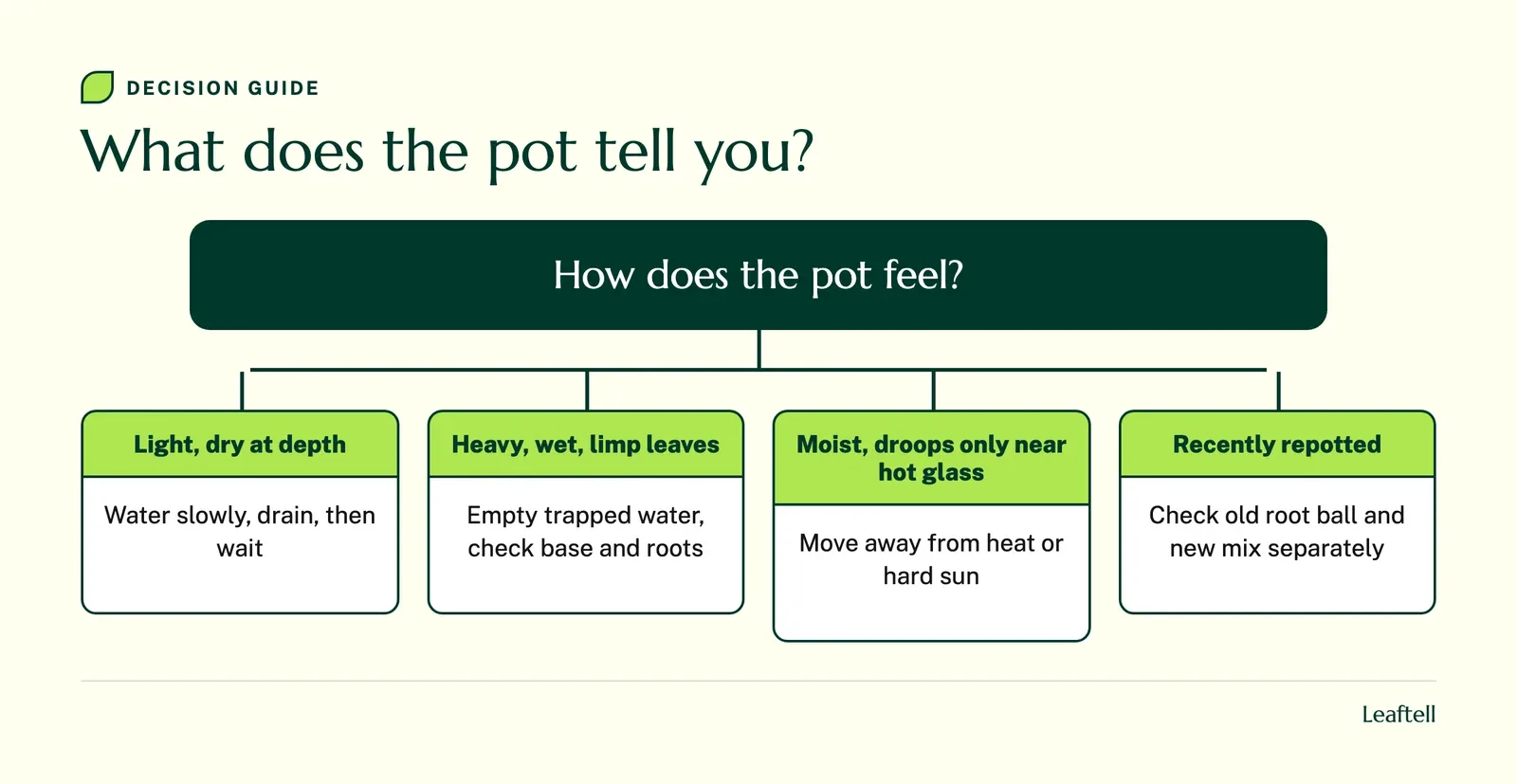
| What you find | What it usually means | Your next step |
|---|---|---|
| Light pot, dry mix at depth | Genuinely thirsty | Water slowly and evenly, let it drain, confirm the center took it up |
| Heavy pot, wet mix, limp leaves | Wet roots short of air, or root damage | Empty trapped water, check drainage and base firmness, do not water |
| Afternoon sag next to hot glass | Heat or strong sun | Compare morning posture; move away from the heat source |
| Droop right after repotting | Uneven moisture in the new mix | Check the old root ball center separately from the new mix |
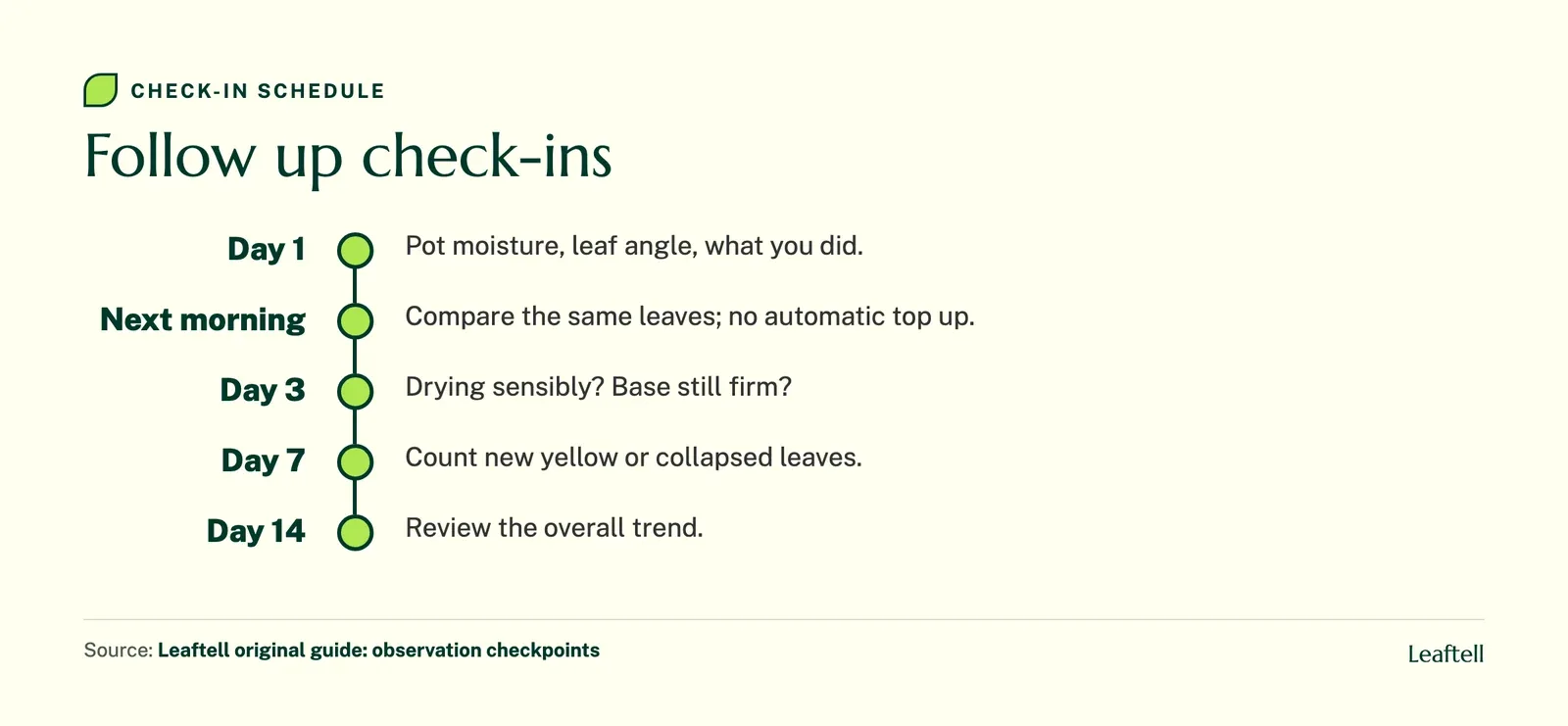
| Next morning after watering | Check-in, not a deadline | Record the response; do not top up a pot that is still moist |
Observation checklist for peace lily drooping. Review dates are suggested check-ins, not watering or treatment intervals.
Will a droopy peace lily recover after watering?
Usually yes, if the root ball was dry and the roots are healthy, as long as the water actually reaches the center. Very dry mix shrinks from the pot wall, so water slowly; fast water just runs down the gap and out the bottom.
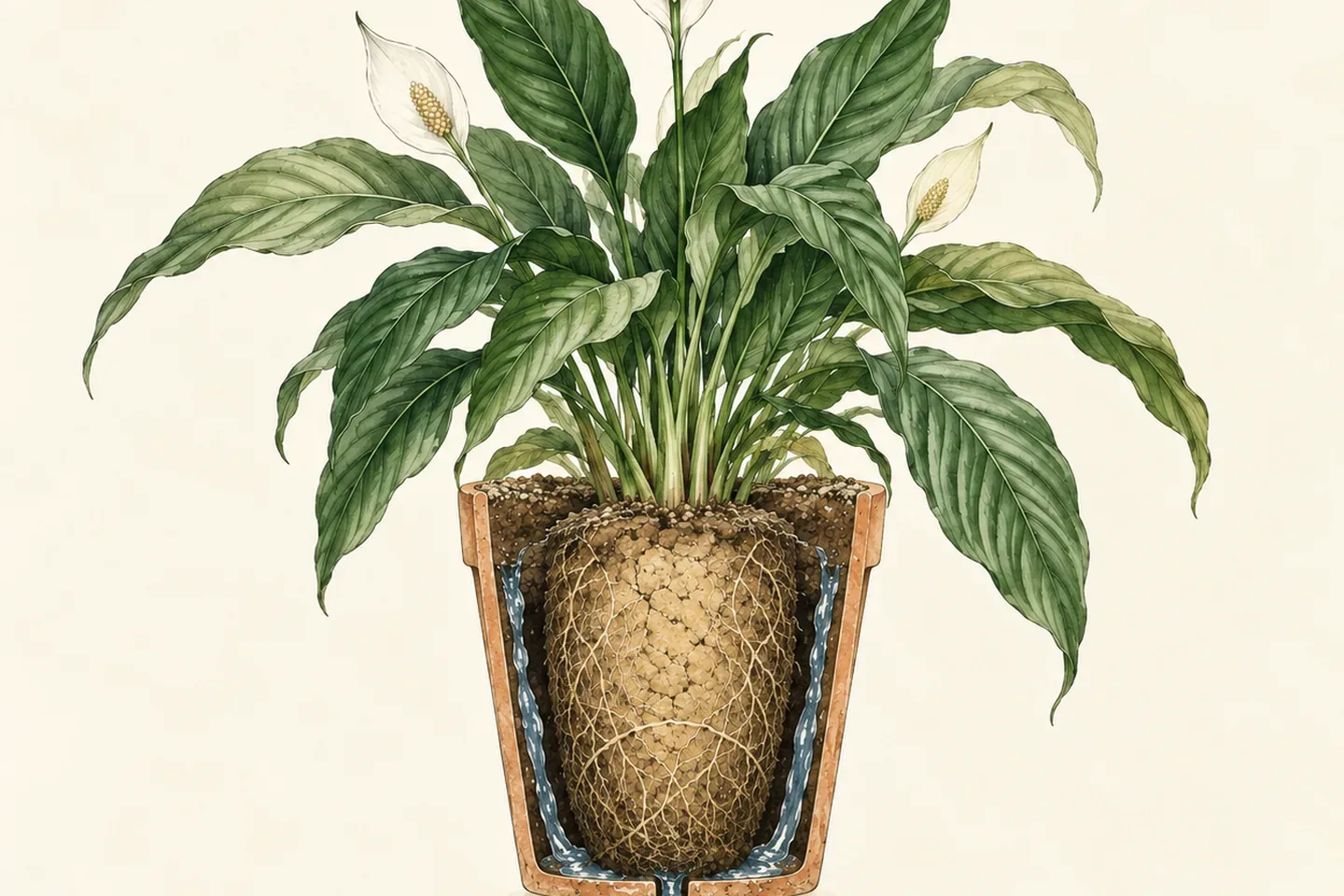
Runoff from the drainage hole does not prove the center got wet. Pour slowly, pause, and pour again, then lift the pot: it should feel clearly heavier. Let all the excess drain away, and empty the saucer.
Then stop. Leaves often lift again once a dry but healthy plant has water, but there is no reliable timetable for every plant. Roots damaged by repeated hard drying, or another problem, can slow or limit the response. Topping up an already wet pot because the leaves have not stood up yet is how a thirsty plant becomes an overwatered one. Use this wet or dry soil check to make the call next time.
How to check a drooping peace lily
- Lift the pot
Take the inner pot out of its cover and compare its weight with how it feels just after watering.
- Feel below the surface
Push a finger into the mix near the edge, below the top layer. Note whether it is dry, moist, or wet.
- Empty trapped water
Tip out any water in the cover pot or saucer, and make sure the drainage holes are clear.
- Check the base
Feel where the stalks meet the soil for softness, and sniff the mix for a sour smell.
- Water only a dry root ball, then wait
If it is dry, water slowly and drain. Compare the plant that evening and the next morning before doing anything else.

Peace lily drooping after repotting: check the new root environment
After repotting, the old root ball and the new mix around it can hold very different amounts of water. A wet outer layer can hide a dry center, or the reverse.
Feel the original root ball and the new mix separately. If the plant went into a much larger pot, there is now a lot of wet mix that no roots are using, which makes moisture harder to manage. That is not a fix for a struggling plant.
If limpness continues once moisture is right, look at the base and roots. Soft, dark, or smelly roots point to how to fix root rot, and a soggy pot overall to overwatered plant symptoms. Dry, brown leaf edges left over from earlier stress are covered in brown tips on leaves.
Will a droopy peace lily recover in a hot spot?
A peace lily that was simply dry often perks up once watered. One that droops in a hot window or by a heater will keep drooping until it moves, even with a moist pot.
Notice when it droops. A plant that sags in the afternoon near bright glass and looks fine in the morning is reacting to heat or sun, not an empty pot. A heater, a warm draft, or a recent move can all do this.
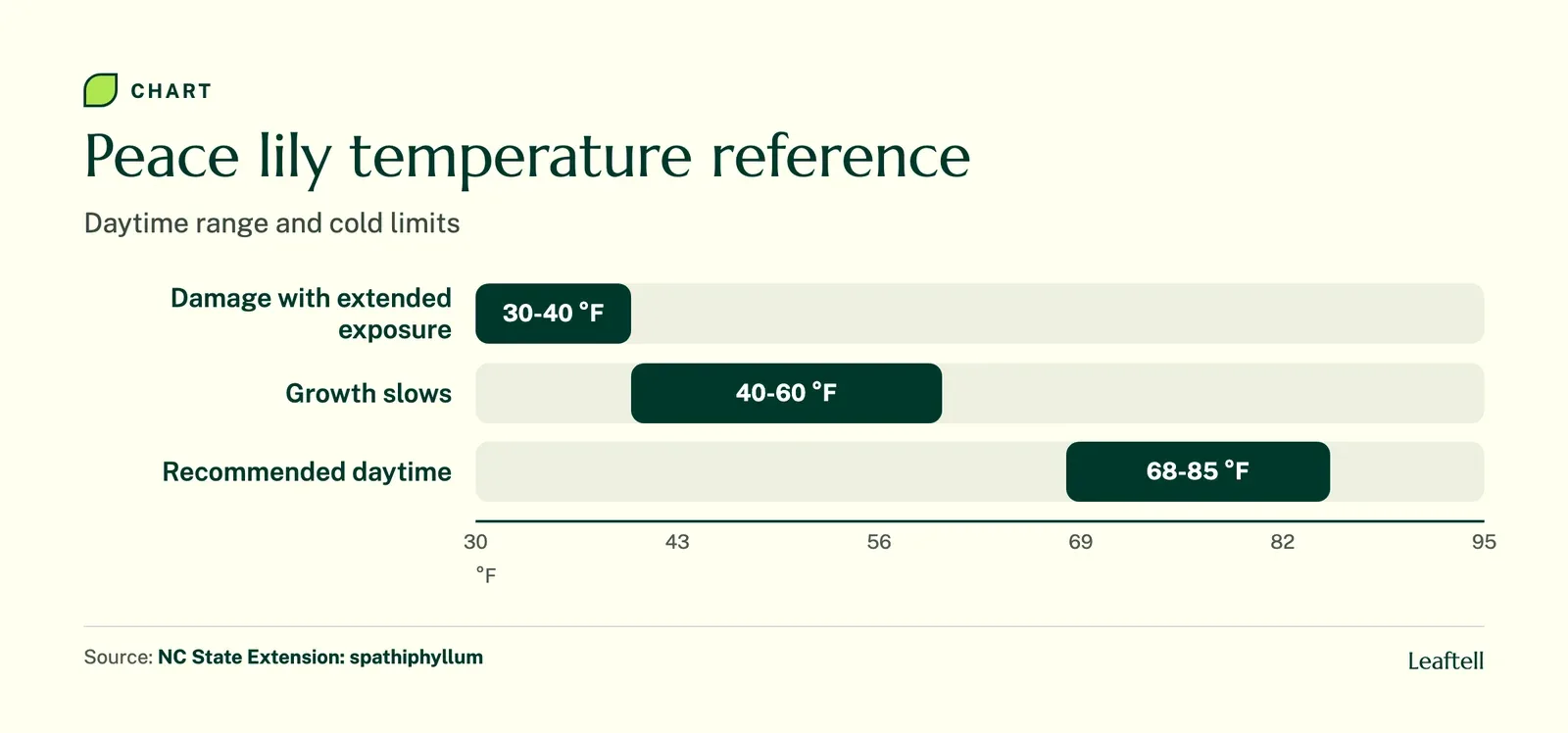
NC State recommends daytime temperatures of 68-85°F with a night drop of no more than 10°F, notes slowed growth at 40-60°F, and damage after extended time below 40°F. Keep leaves off cold glass in winter and out of direct heater airflow.
Choose filtered light rather than direct sun, and do not park it in a dark cupboard to "rest". Reading your plant's light helps you judge a new spot. Keep the moisture check separate from the move: changing the location does not tell you whether to water.
If yellowing spreads after the droop, read peace lily leaves turning yellow. Look under leaves and around the base for insects too; houseplant pests helps if you see any. Start with isolation and gentle cleaning. Any product must suit the pest and plant; follow the label and never mix products.
The ASPCA lists peace lily as toxic to cats and dogs because insoluble calcium oxalates irritate the mouth. A drooping plant at floor level draws curious pets, so put it out of reach, pick up fallen leaves, and call a vet or poison service after suspected chewing.
Mistakes that make it worse
- Watering every droop. If the pot is already wet, more water starves the roots of air and the droop deepens.
- Following a weekly reminder. Light, season, pot, and mix change how fast it dries. A fixed day ignores all of that.
- Two people watering the same plant. Leave a simple note on the pot of when it was last watered so nobody doubles up.
- Feeding a droopy plant. Fertilizer is not a revival tonic, and it does nothing for damaged or wet roots.
- Upsizing the pot as a rescue. More wet mix around a weak root system makes moisture harder to control.
- Expecting bent stalks to straighten. A creased stalk or damaged old leaf may never stand up again. Judge recovery by the healthy leaves and new growth.
What to do today
Lift the pot before you lift the watering can. Water a dry root ball slowly and fully, empty a wet one and leave it alone, and move a plant that sags only near heat or hard sun. Then compare it the next morning, again at day three, and count new yellow or collapsed leaves at day seven.
Get help from a local extension office or experienced grower if the base turns soft, roots smell sour, or collapse spreads quickly even with sensible moisture. Do not wait for a check-in date in that case. Bring a whole-plant photo and a clear account of moisture before and after watering. For a wider look at limp plants, see the drooping plant guide.
Check your peace lily in Leaftell. The check uses your answers; photos stay on your device.
Sources
Check your growing conditions with the plant watering calculator.
Frequently asked questions
Check the mix first. Water a dry root ball slowly and let it drain, or inspect drainage and roots if the pot is already wet, because more water is not always the answer.
Go by the root zone and the weight of the pot, not a calendar. How fast it dries changes with light, season, mix, and pot size.
It depends on the cause and the roots. A dry but healthy plant may respond sooner than one with damaged roots, so do not keep adding water to hit a deadline.
Wet roots may be short of air or damaged, or heat and recent repotting may be the cause. Check drainage and how firm the base is before you water again.
Give it whatever it is actually short of: water for a dry root ball, or relief from direct heat or sun. Fertilizer and household additives are not droop remedies.
Not at first. Leaves that were simply dry often lift again, so wait and compare. Remove only leaves that are fully yellow, brown, or broken.
A peace lily can grow for years with suitable care, but lifespan varies plant to plant. Healthy roots and steady new growth tell you more than its age.
Share article
About the author

Keep checking your plant
Plant care reference
Indoor plant care
Build a routine around your plant, light and potting mix.
Plant care reference
Why is my plant dying
Trace leaf and root symptoms before choosing a care change.
Plant care reference
Pothos plant care
Choose a growing spot and prune a trailing pothos for fuller growth.
Plant care reference
How to fix root rot
Inspect root firmness and drainage, then decide whether to repot.