Tomato Plant Diseases: Blight, Septoria or Stress?
Filip Leszczyński 16 October 2026 11 min read
In this article
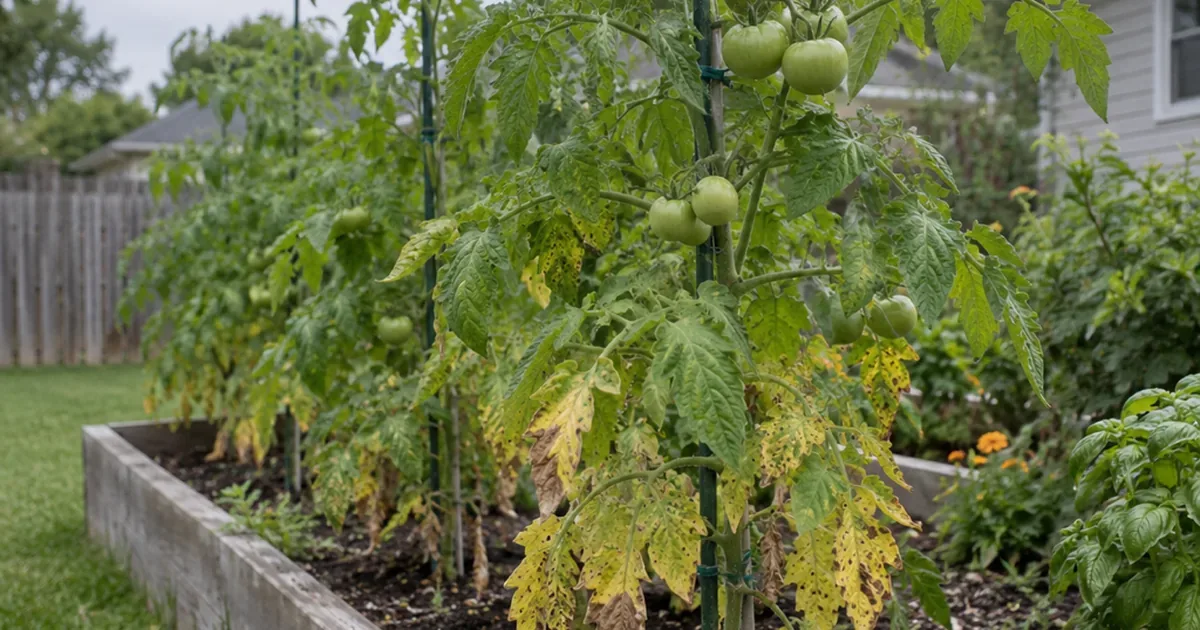
Tomato plant diseases can produce overlapping symptoms. Early blight often starts on lower leaves with brown target rings; Septoria produces many small gray-centered spots. Late blight needs urgent attention, while wilts and watering stress can mimic parts of these patterns. Start with the lowest affected leaf, the recent weather, and how fast it is spreading.
Speed is the clue most people ignore. Early blight and Septoria usually creep up the plant over weeks. Clemson Extension reports that late blight can brown and strip the foliage completely within 14 days of the first symptoms. So a dated photo of today, and another in a few days, can tell you more than a perfect close-up.
One boundary: this guide is about plant health. Whether fruit is safe to eat after a disease or a treatment is a question for the product label and your local extension service.
Tomato plant disease pictures: compare the whole pattern
Early blight, Septoria, and late blight leave different patterns on the plant, so photograph the whole plant before the close-ups. A yellow leaf alone identifies none of them.
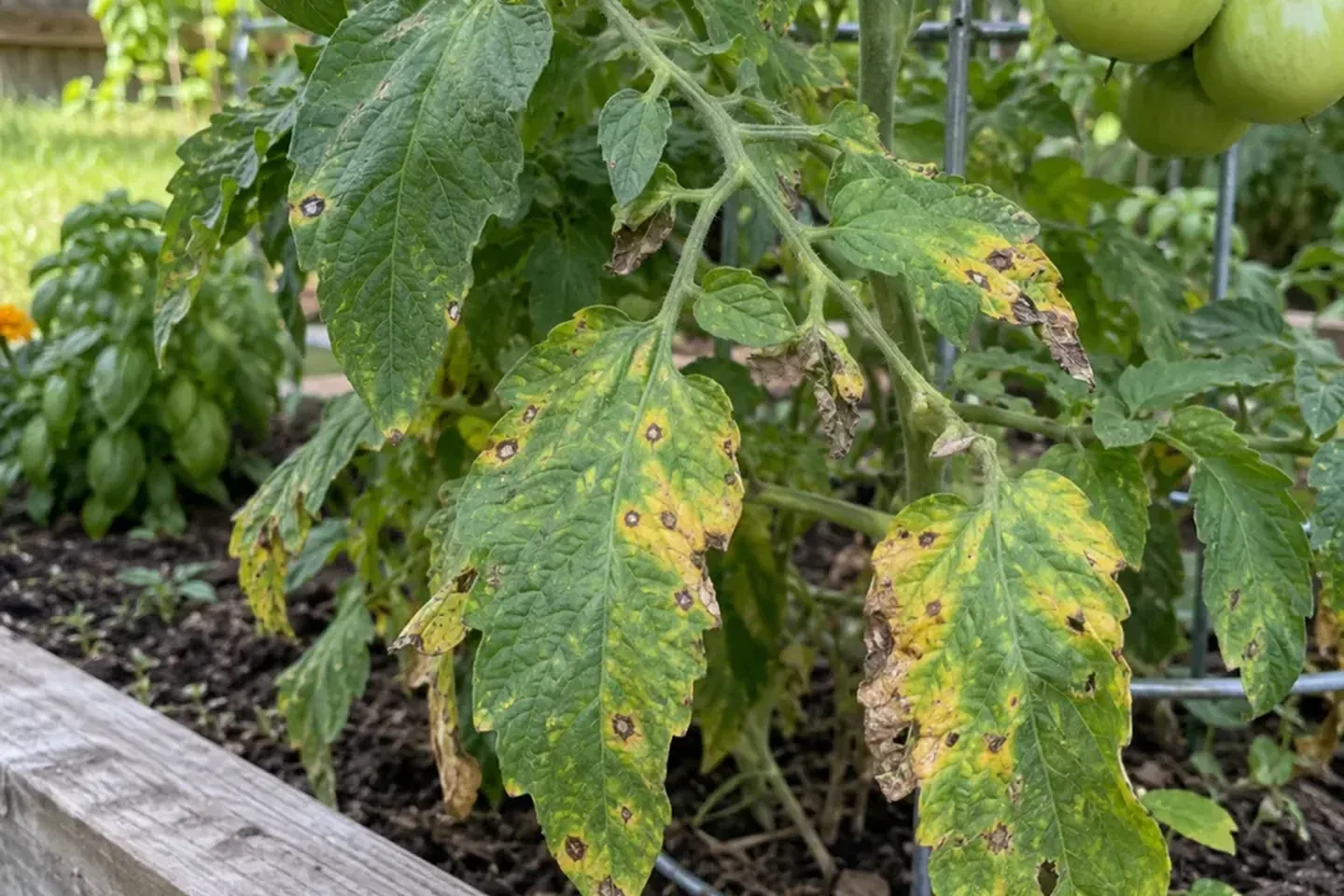
Here is how the big three differ, according to Clemson and Maryland Extension:
- Early blight (the fungus Alternaria) starts mainly on older lower leaves with brown spots showing concentric target rings, often with yellow tissue around them.
- Septoria leaf spot (Septoria lycopersici) makes many smaller spots with pale gray or beige centers and dark borders. Tiny black dots can appear inside them.
- Late blight (Phytophthora infestans, a water mold) makes fast-growing, water-soaked dark or gray-green patches, sometimes with white growth under the edges in humid weather.
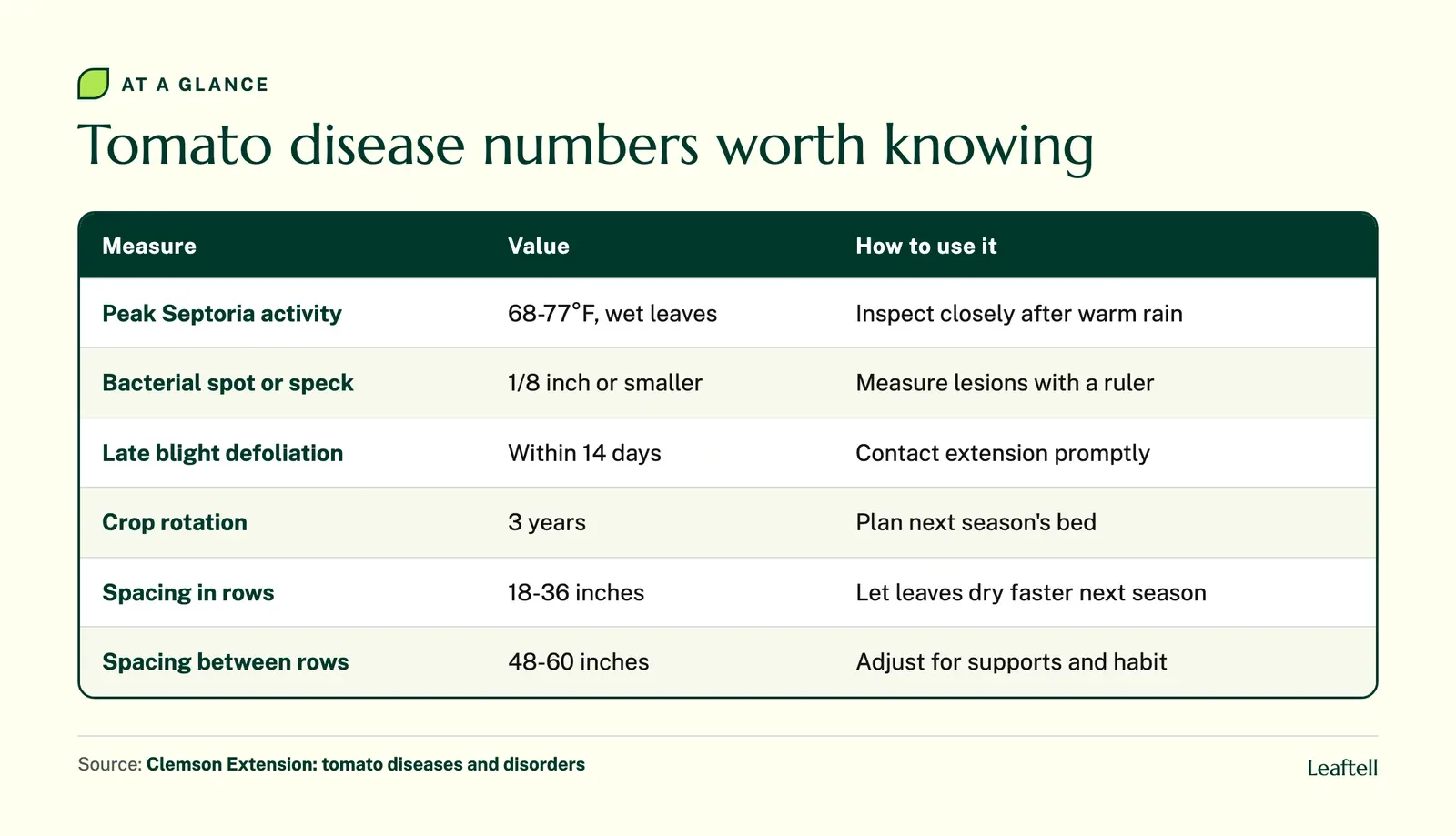
- Bacterial spot and speck leave lesions 1/8 inch or smaller, per University of Maryland Extension.
| Disease | Where it starts | What the spots look like | How urgent |
|---|---|---|---|
| Early blight | Older lower leaves near the soil | Brown spots with target rings, yellow around them | Steady; remove low leaves, cut splash |
| Septoria leaf spot | Lower leaves after wet weather | Many small spots, pale centers, dark borders | Steady; worst in warm, wet spells |
| Late blight | Anywhere, spreads fast | Greasy dark patches, white growth underneath | Urgent; contact extension promptly |
| Bacterial spot or speck | Leaves and fruit | Lesions 1/8 inch or smaller; scabby fruit marks | Get it identified before treating |
| Fusarium wilt | Lower leaves, one side of a stem | Yellowing then wilting, no defined spots | Get it identified; plan resistant varieties |
Tomato disease clues from Clemson and Maryland Extension. Patterns support identification; they do not diagnose a plant.
Fruit can help too. Bacterial spot can leave raised, scabby marks, while late blight can cause broad, dark, shiny patches. Different diseases can also show up together on one plant, and dry leaves may not show the white growth that appears after damp weather.
Early blight tomato checks near the soil line
Early blight usually climbs from the oldest lower leaves, helped by soil splashing up and old crop debris. Look for brown target spots with yellow around them, then check the lower stem.
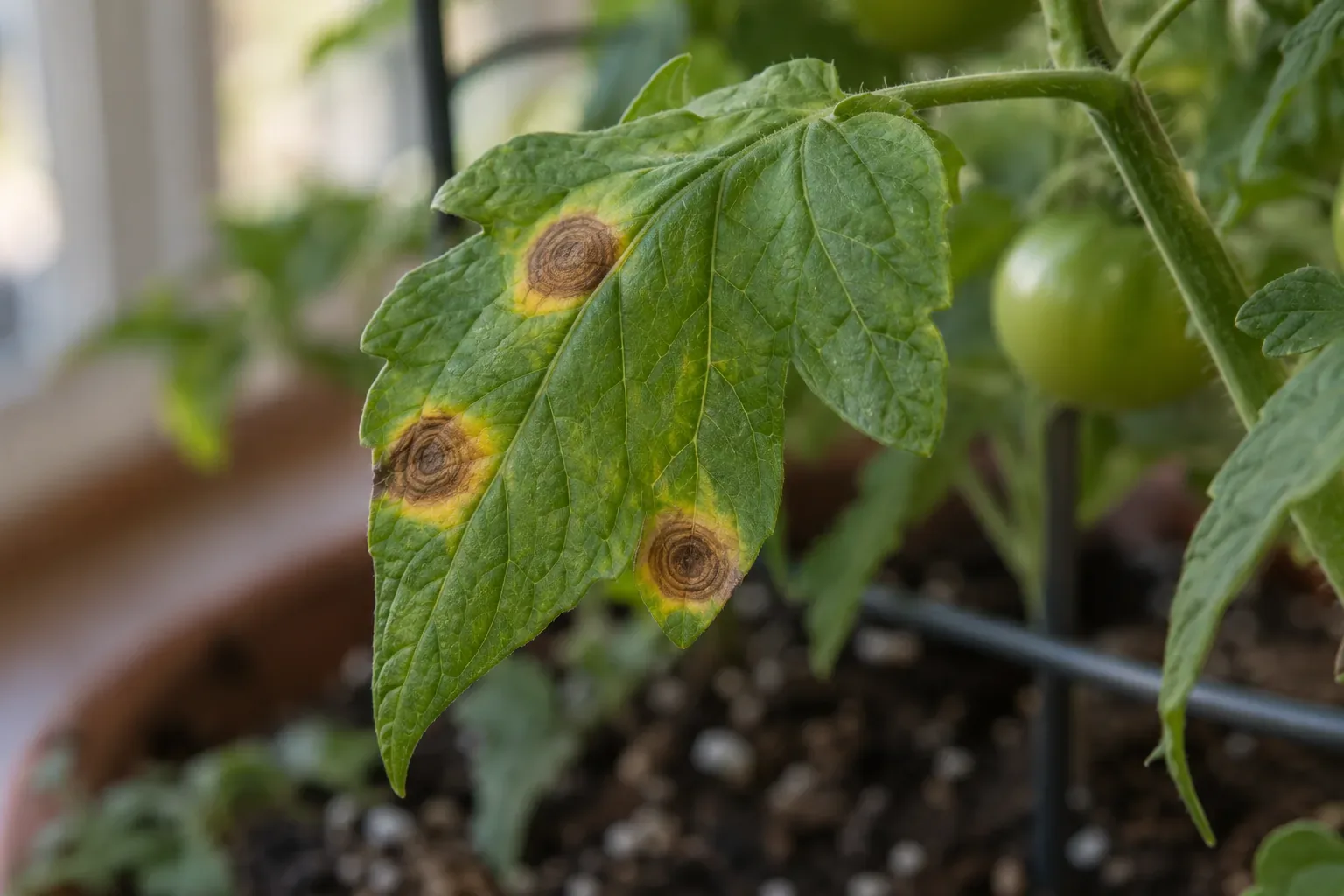
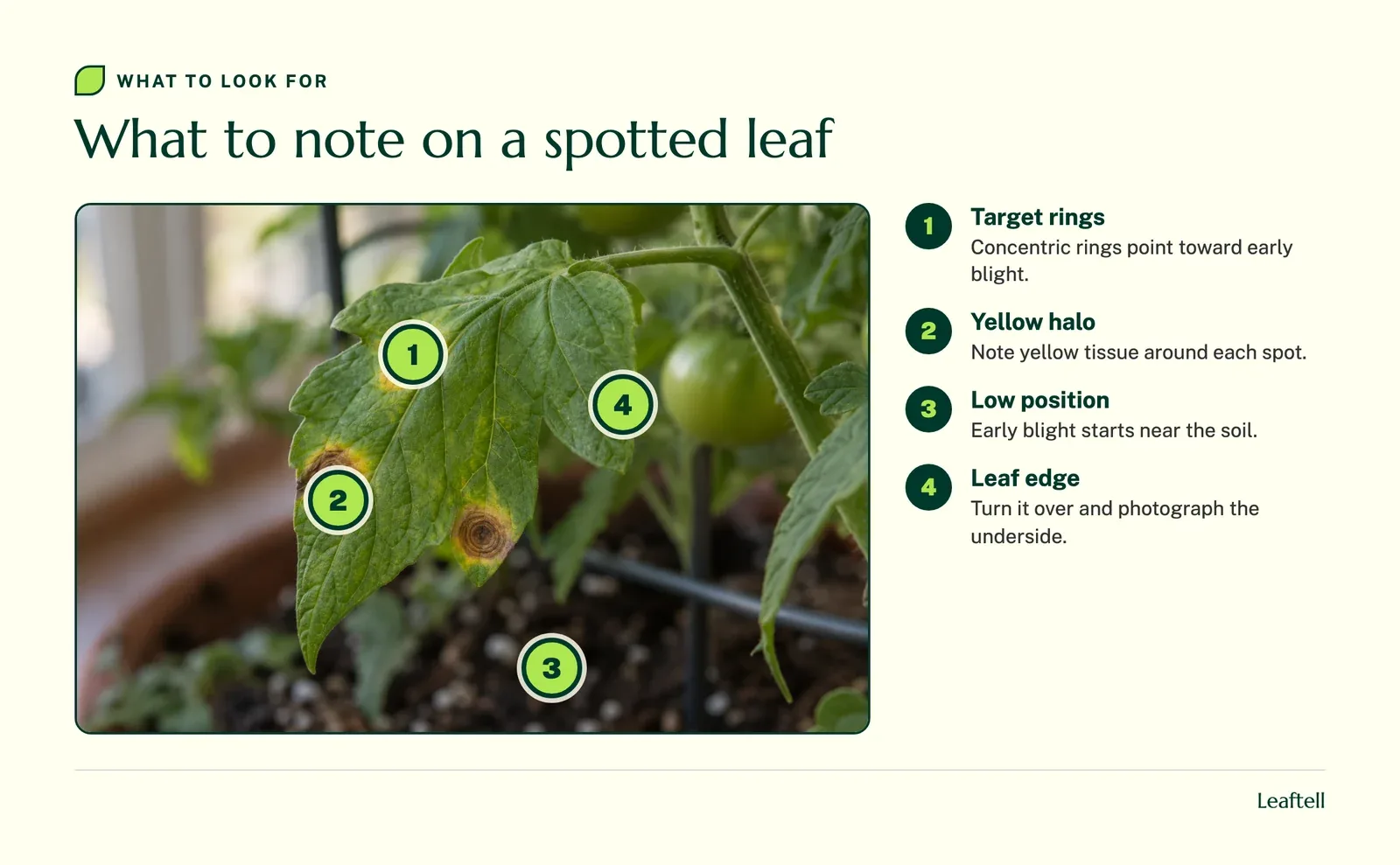
Septoria often turns up alongside it, so finding rings on one leaf does not mean every spot on the plant has the same cause. Remove affected lower leaves when the foliage is dry, without stripping the healthy canopy that shades the fruit, and keep removed leaves out of the bed.
Clemson recommends a 3-year rotation away from tomatoes and related crops, plus removal of infected debris. Rotation cuts carryover for some diseases, but it cannot stop windborne spores arriving from elsewhere. Mulch to reduce splash, water at the root zone, and pull volunteer tomato plants that can harbor disease.
For next season, give plants room to dry. Maryland recommends 18-36 inches between plants within a row and 48-60 inches between rows, adjusted for growth habit and supports, and at least 4 feet between cages. Those are planting-layout numbers, not a reason to rip out roots or hack back a crowded plant mid-outbreak.
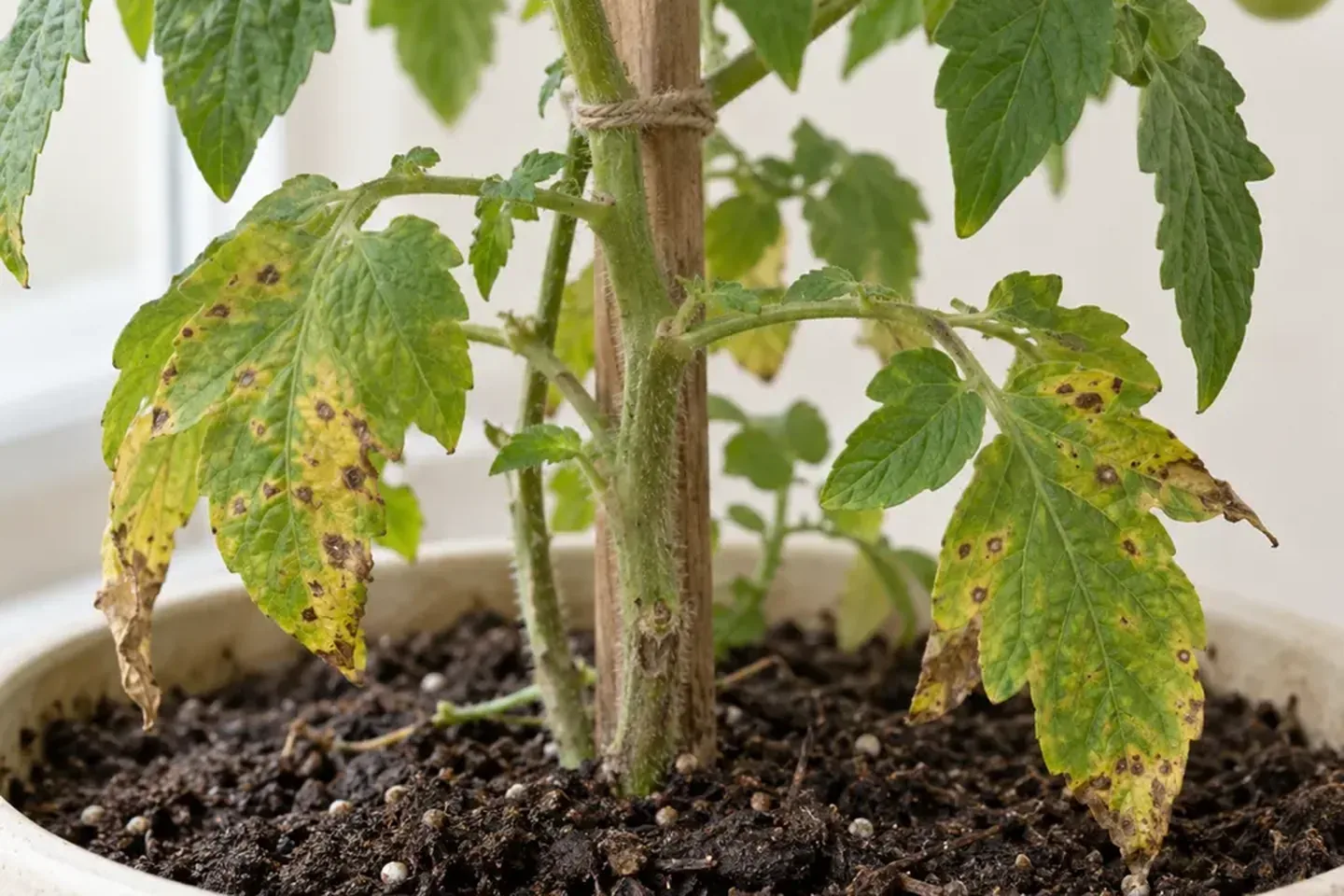
A spray cannot rebuild leaf tissue early blight has already killed. If spread continues after these steps, ask your local extension service which disease you have and whether a labeled product is justified.
Tomato leaf diseases: separate spots from stress
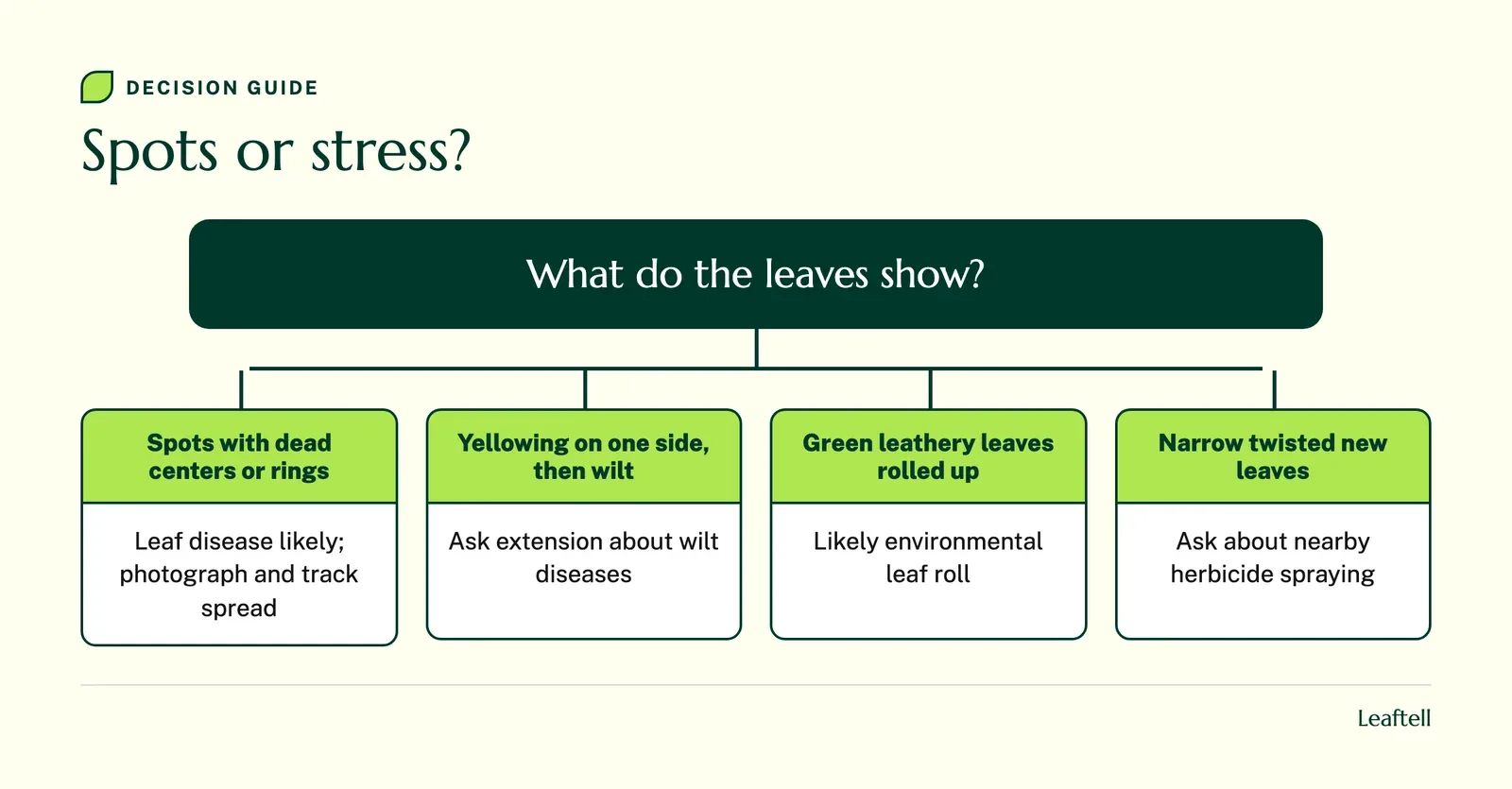
A leaf with dead spots and a plant that yellows or wilts with no spots are two different problems. Look for defined lesions before you assume infection.
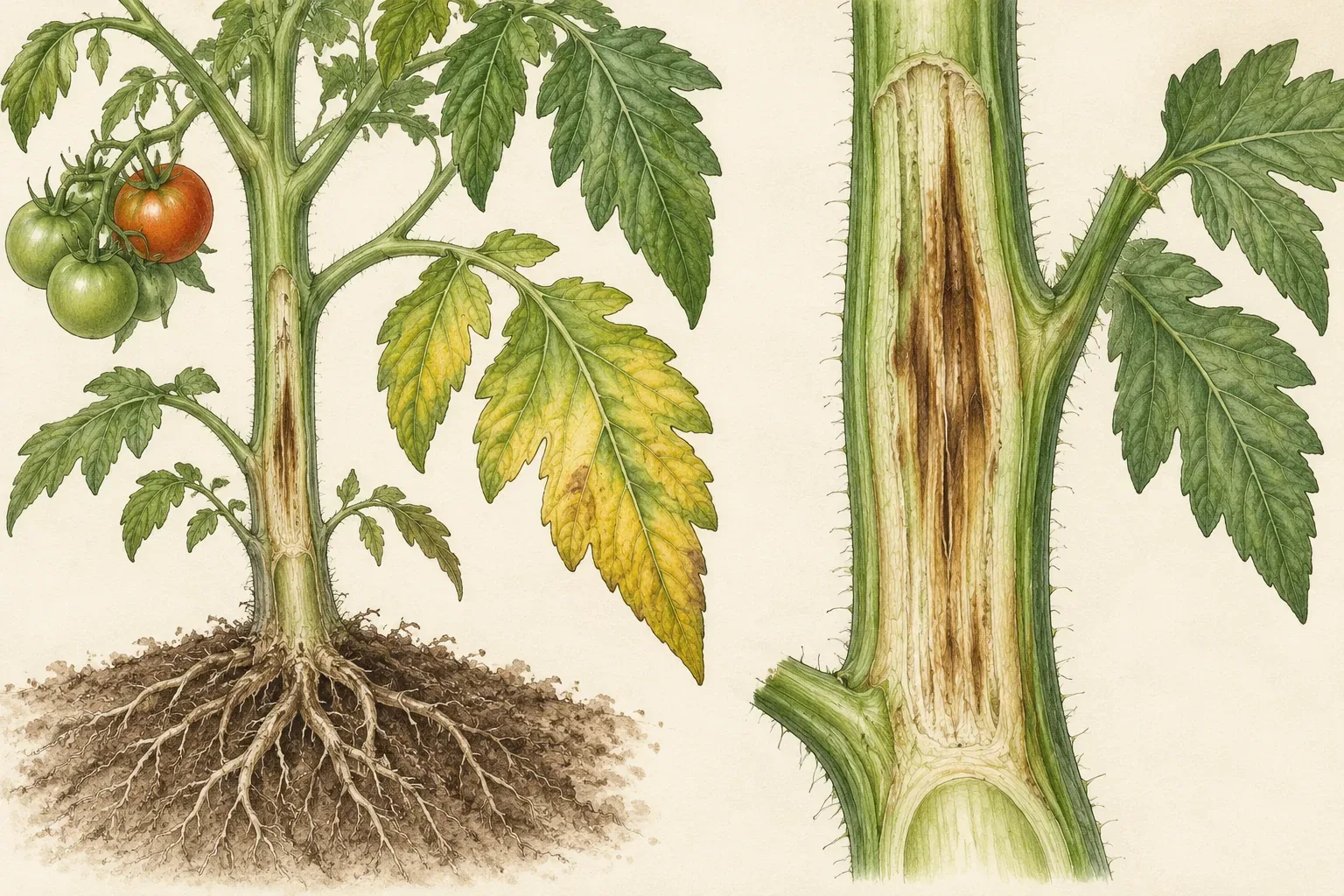
Fusarium wilt often starts with lower leaves yellowing on one side of a stem. Clemson describes brown discoloration inside the water-conducting tissue of the lower stem, without soft rot on the outside. Verticillium wilt looks similar, and Maryland lists both, noting that Fusarium is more common locally. Because they overlap, get an identification before choosing resistant replacements.
Resistance codes help with the next planting. Clemson identifies FF as resistance to Fusarium races 1 and 2, and FFF adds race 3. These guide future variety choice; they do not treat a plant that is already infected. Clemson's pH 6.5-7.0 guidance for suppressing Fusarium belongs with a soil test and an identified problem, so do not add lime just because a wilt picture looks familiar.
Plenty of non-disease problems look like disease. Nutrient shortages, waterlogged roots, herbicide drift, and physiological leaf roll all cause trouble. Yellow tissue between veins is not the same as a spot with a dead center. Green, leathery leaves rolled along the midrib, with normal new growth, point to environmental stress; see tomato leaves curling. Narrow, twisted new leaves after nearby spraying raise a different question entirely. For yellowing with no clear spots, start with tomato leaves turning yellow.
Tomato blight: when to seek help promptly
Treat suspected late blight as urgent. Fast-growing greasy dark patches, brown stems, and white growth under lesion edges in humid weather are your cue to contact extension now, not at the next check-in.
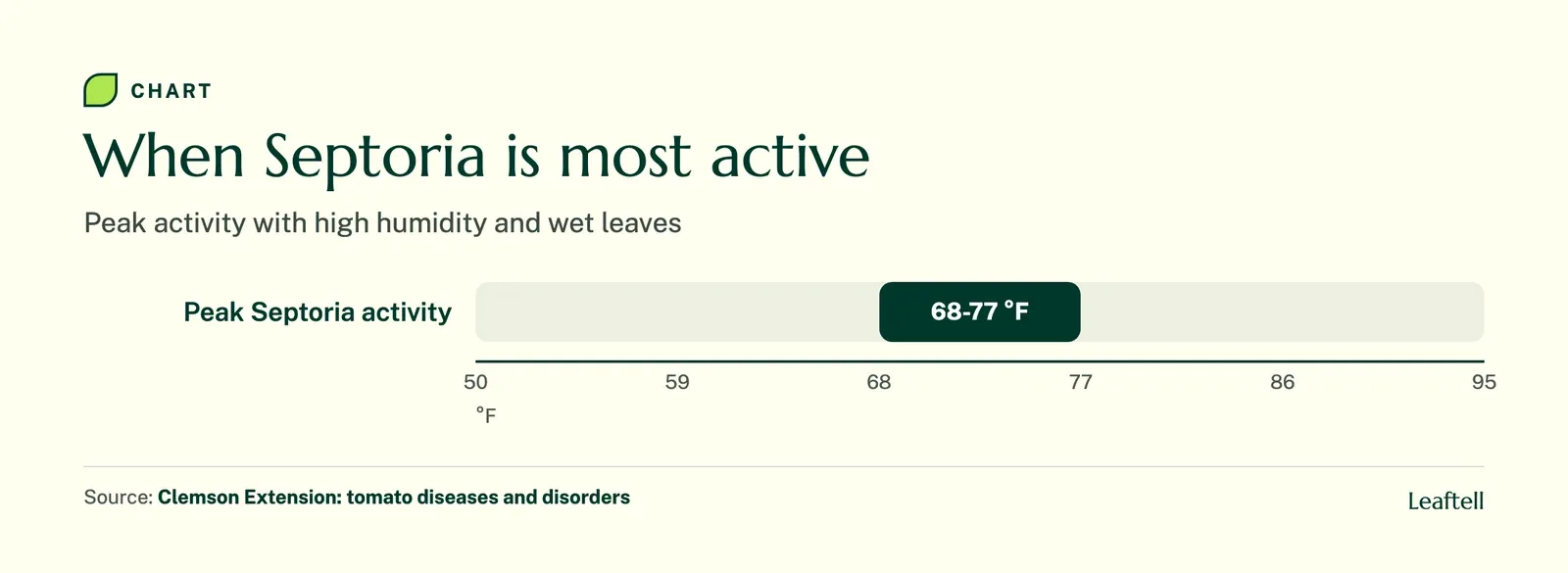
Cool, wet weather favors late blight. Clemson places peak Septoria activity at 68-77°F with high humidity and wet leaves, but that range belongs to a different disease and cannot rule late blight in or out. No weather reading replaces looking at leaf undersides, stems, fruit, and how fast it is spreading.
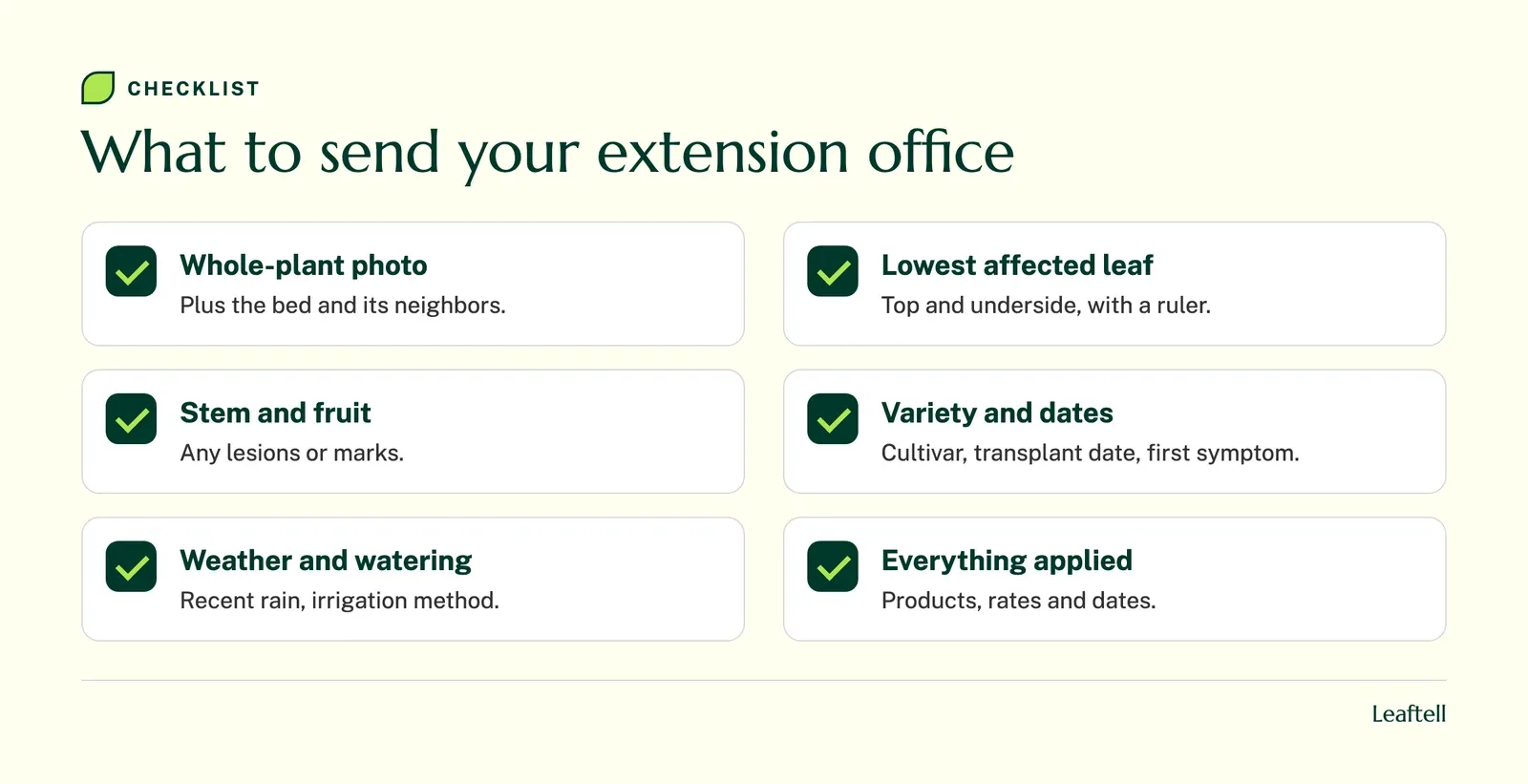
Send clear pictures to your extension office and ask how to package a sample if they want one. Do not carry uncovered infected leaves through other plantings. Keep foliage dry and avoid overhead watering late in the day.
Clemson recommends removing diseased plants and controlling volunteer potatoes, tomatoes, and related weeds that can harbor the pathogen. Confirm the problem first, though: do not pull a plant whose only symptom is physiological leaf roll. Where a fungicide is advised, use one labeled for the identified disease and crop, follow the label's application and harvest instructions, and never mix products or improvise with household ones. A preventive product does not cure tissue that is already infected.
Keep children and pets away from products and treated plants. The ASPCA lists tomato plants as toxic to pets, so collect pruned leaves and call a vet or poison service after suspected chewing.
Tomato plant diseases pictures and treatment: build a useful record
The record is the treatment plan. Write down enough that someone else could tell a leaf infection from root stress.
How to document a sick tomato plant
- Photograph the whole plant
One wide shot of the canopy, plus the bed so neighboring plants are visible.
- Capture the lowest affected leaf
Photograph the top and the underside, with a ruler for scale. Do not rub diseased leaves against healthy ones.
- Check the stem and fruit
Photograph any stem lesions and fruit marks. Note whether a wilting plant recovers overnight.
- Write down the history
Variety, transplant date, first affected leaf, watering method, recent rain, and every product already used.
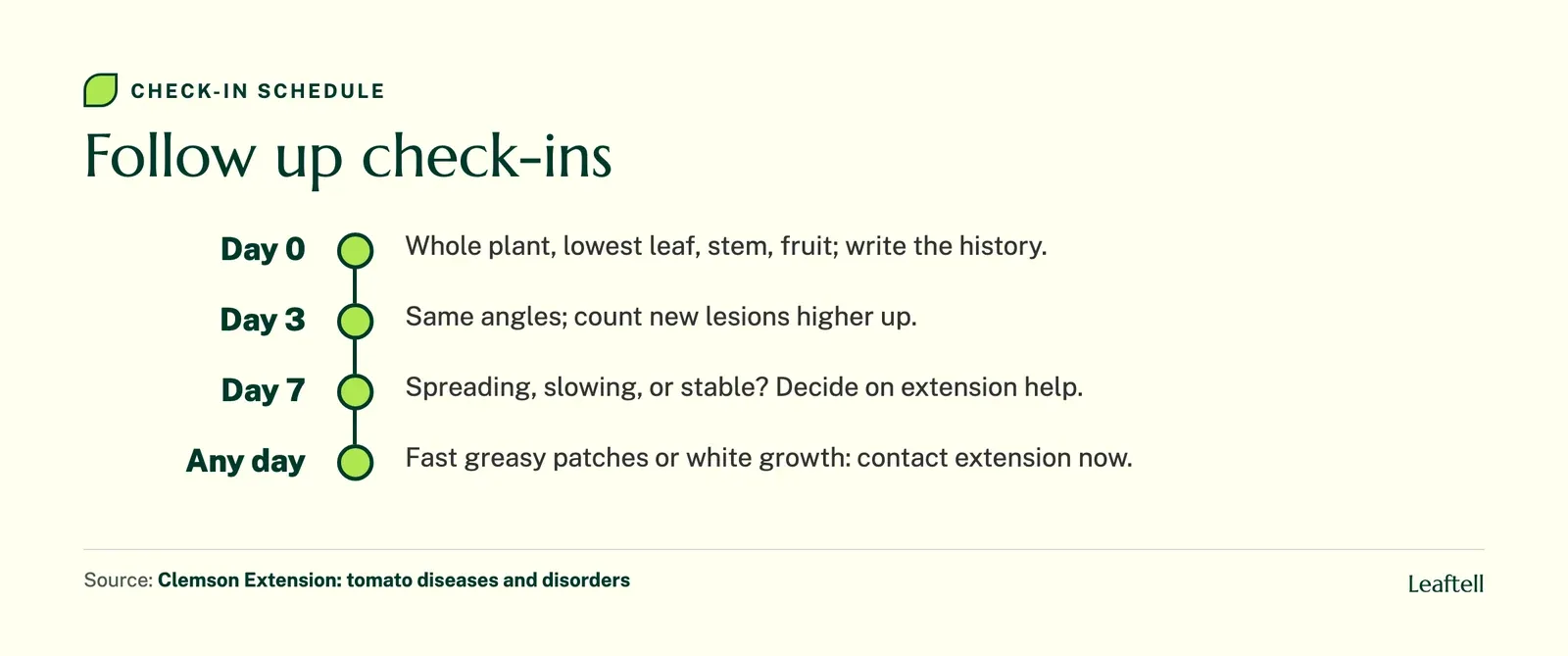
- Repeat on day 3 and day 7
Same angles, same leaves. Count new lesions separately from old ones.
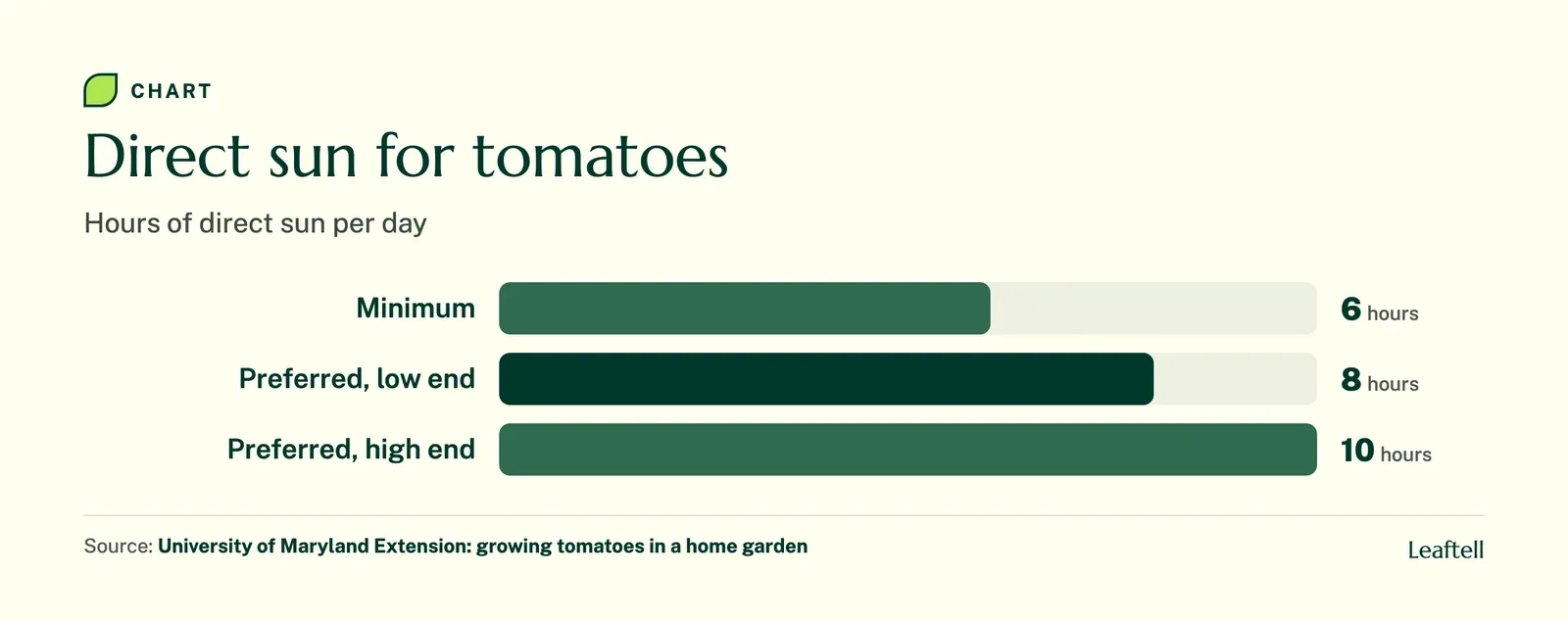
Maryland recommends at least 6 hours of direct sun for tomatoes, with 8-10 hours preferred. A shaded, crowded bed stays wet longer after rain, so fix location and spacing for the next crop instead of adding fertilizer now. For yellowing that comes with wet soil, compare overwatered plant symptoms and this wet or dry soil check.
Mistakes that cost you the season
- Spraying from a picture. Several diseases and non-disease problems look alike. A product chosen from an image match can miss the cause entirely.
- Waiting out suspected late blight. Clemson's 14 days to full defoliation is a warning, not a grace period.
- Stripping the canopy. Remove affected lower leaves, but keep the healthy leaves that shade fruit and feed the plant.
- Overhead watering in the evening. Wet leaves overnight favor leaf diseases. Water at the root zone instead.
- Liming or feeding on a hunch. pH changes and fertilizer belong with a soil test and a confirmed problem.
- Planting tomatoes in the same spot next year. Clemson recommends a 3-year rotation for the diseases that carry over in debris.
What to do this week
Photograph the whole plant and the lowest affected leaf today, with dates. Remove clearly affected lower leaves when dry, mulch, and water at the base. Existing brown targets and Septoria scars will not turn green again, so judge progress by whether new lesions keep appearing higher up. Contact your local extension service promptly for fast-spreading water-soaked patches, collapsing stems, or several plants wilting in moist soil. For other spot patterns, see leaf spot disease, and for a white coating, powdery mildew on plants.
Check your tomato plant in Leaftell. The check uses your answers; photos stay on your device.
Sources
Check your growing conditions with the plant watering calculator.
Frequently asked questions
Early blight, Septoria leaf spot, and several bacterial and viral diseases are common, with the mix varying by region. Compare your plant with local extension guidance before naming the disease.
Early blight makes fewer, larger brown spots with concentric target rings. Septoria makes many small spots with pale gray centers and dark borders, sometimes with tiny black dots inside. They can occur together.
Damaged leaves will not recover, but the plant can keep growing if new leaves stay clean. Remove affected lower leaves, cut down soil splash, and water at the base.
Baking soda is not a reliable treatment for tomato diseases. Adding it can change the root environment, so identify the problem instead of reaching for a kitchen remedy.
It supplies magnesium and sulfur, not complete nutrition and not disease control. Use a soil test and local advice before adding it.
Remove spent or diseased leaves carefully when it is justified, keeping the healthy canopy. Photograph the pattern first and avoid handling wet plants.
They can yellow or wilt while the soil stays wet, which overlaps with disease and other stress. Check drainage and the roots rather than judging from leaves alone.
Share article
About the author

Keep checking your plant
Plant care reference
Indoor plant care
Build a routine around your plant, light and potting mix.
Plant care reference
Why is my plant dying
Trace leaf and root symptoms before choosing a care change.
Plant care reference
Pothos plant care
Choose a growing spot and prune a trailing pothos for fuller growth.
Plant care reference
How to fix root rot
Inspect root firmness and drainage, then decide whether to repot.