How to Care for a String of Pearls Plant: Read the Pearls
Filip Leszczyński 27 November 2026 12 min read
In this article
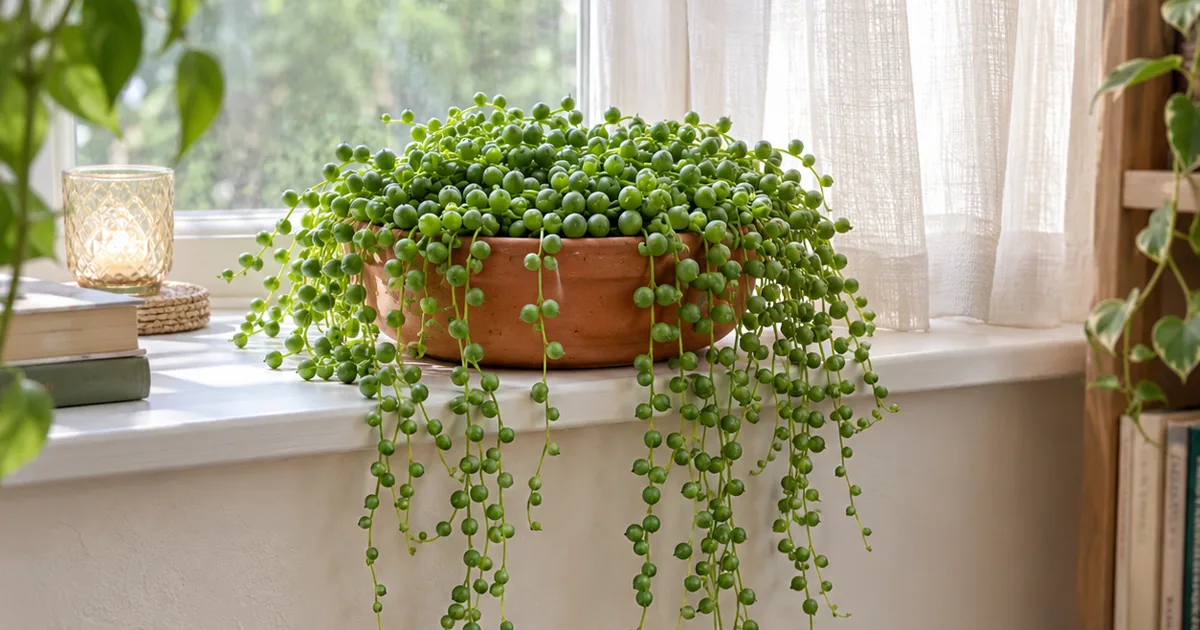
To care for a string of pearls plant, give it bright, indirect light, a shallow pot of gritty cactus mix with a drainage hole, and water when the mix is mostly dry and the pearls just start to look a little less round. Keep it at 70 to 80 degrees in summer and 50 to 60 in winter, and keep it away from frost. That covers most of what it needs.
The part that trips people up is that it is a succulent that does not want the succulent treatment. Most succulents are happy to dry out completely between waterings. NC State Extension says string of pearls should never dry out completely, and that overwatering leads to root rot. So you are aiming for a narrow middle, and the best tool for finding it is already on the plant: the pearls themselves. Learn to read them and you can drop the watering calendar.
String of pearls care at a glance
String of pearls (Curio rowleyanus, sold for years as Senecio rowleyanus) is a trailing succulent from dry parts of South Africa, where it creeps along the ground under shrubs and rocks. That history explains almost every rule below: filtered light, fast-draining soil, shallow roots.
| What it needs | What that looks like at home | What happens if you get it wrong |
|---|---|---|
| Light | Bright, indirect light; gentle morning sun is fine | Too dim: stretched strands with wide gaps. Harsh sun: scorched pearls |
| Water | When the mix is mostly dry and pearls start to soften, never bone dry | Too much: rot at the soil line. Too little: wrinkled, flattened pearls |
| Soil | Cactus mix, or potting mix cut with sand or perlite | Heavy mix stays wet and rots the shallow roots |
| Pot | Shallow, with a drainage hole; unglazed clay is the forgiving pick | A deep pot holds wet mix below the roots |
| Temperature | 70 to 80 degrees F in summer, 50 to 60 in winter | Frost kills it; bring it in before the first fall frost |
| Feeding | A light, diluted houseplant fertilizer in spring and summer only, following the label | Heavy feeding forces soft growth; winter feeding is wasted |
NC State also calls this plant "very particular about its growing conditions": it does not tolerate overwatering, underwatering or poor light. None of those is hard to get right. You just have to get all three right at once.
Why the pearls tell you what the plant needs
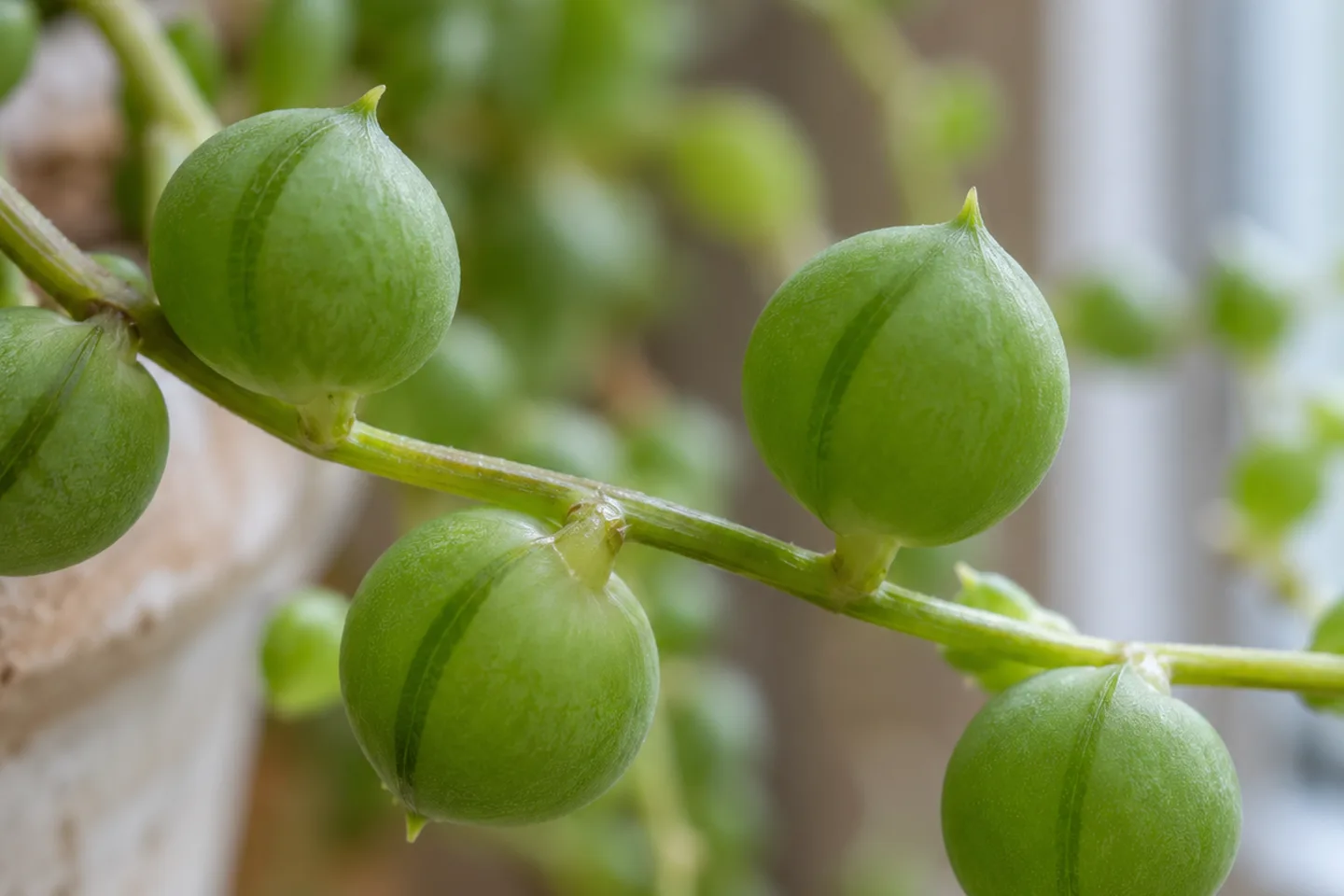
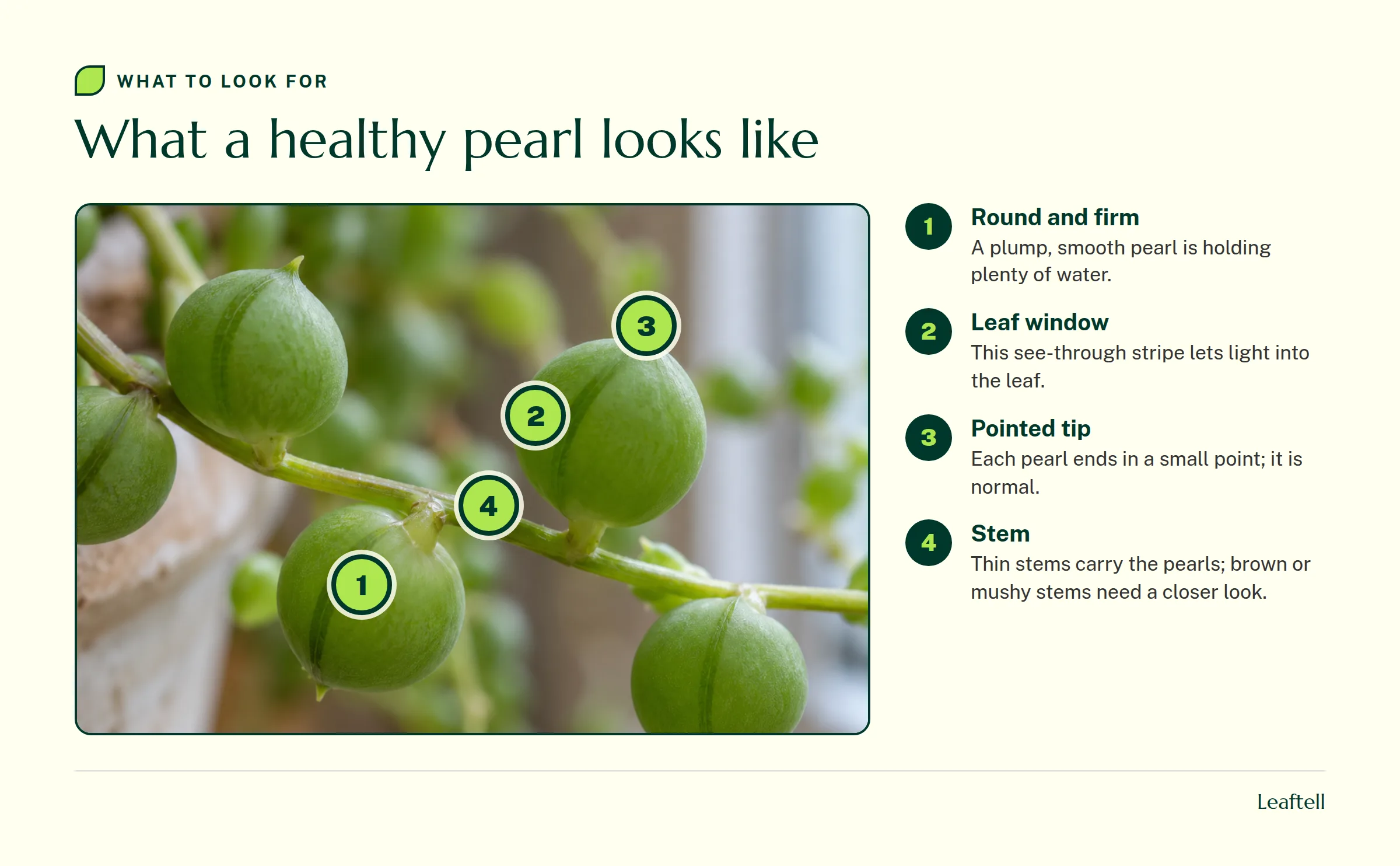
Each pearl is a leaf, rounded into a ball. NC State explains why: a sphere exposes less surface to dry air, so the leaf loses less water. Look closely and you will also see a thin, darker stripe down one side. That is an epidermal window, a strip of translucent tissue that lets light into the inside of the leaf so more of it can photosynthesize.
Two practical things follow from that. First, the pearls are water tanks, so their shape tells you how full the tank is. Round and firm means it has water to spare. Slightly wrinkled or flattened means it is drawing down. Second, a plant built to pull light inside its leaves wants a lot of light, but in the wild it grows in the shade of other plants, so it wants that light filtered rather than harsh.
How often should you water a string of pearls?
Water when the top inch of mix is dry and the pearls have just started to lose a little of their roundness. In practice that is usually more often in a bright, warm summer and much less often in winter, but there is no fixed number of days that holds across homes, pots and seasons. Check the plant, not the calendar.
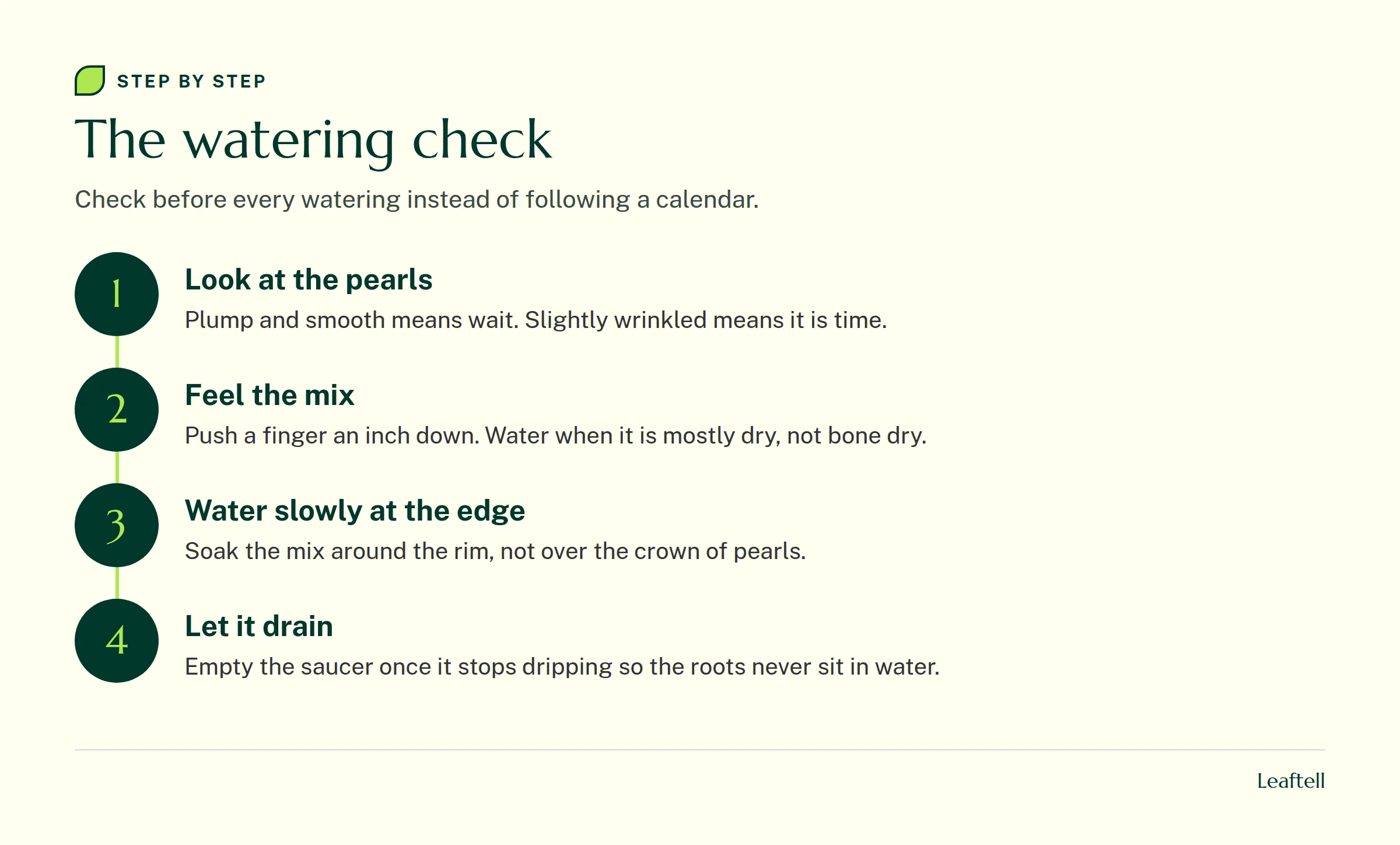
When you water, water properly. Pour slowly around the edge of the pot rather than over the crown of pearls in the middle, until water runs out of the drainage hole. Then empty the saucer. Little sips that only wet the top half inch leave the roots dry and the crown damp, which is the worst of both.
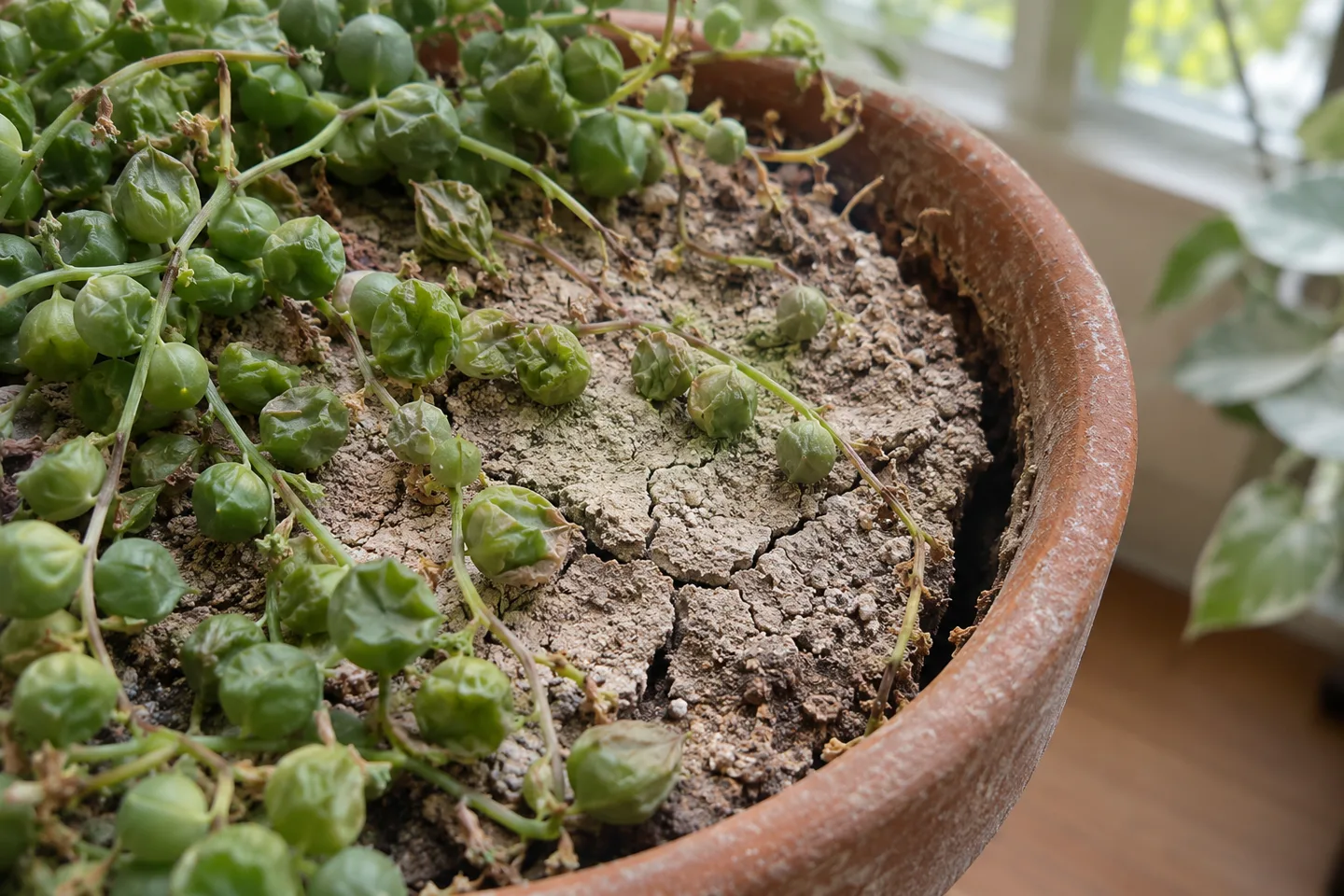
Wrinkled, puckered pearls that are still firm and green mean the plant is thirsty. Give it a thorough watering and they usually fill back out over the next several days. Soft, see-through pearls are a different problem, and a much more serious one.
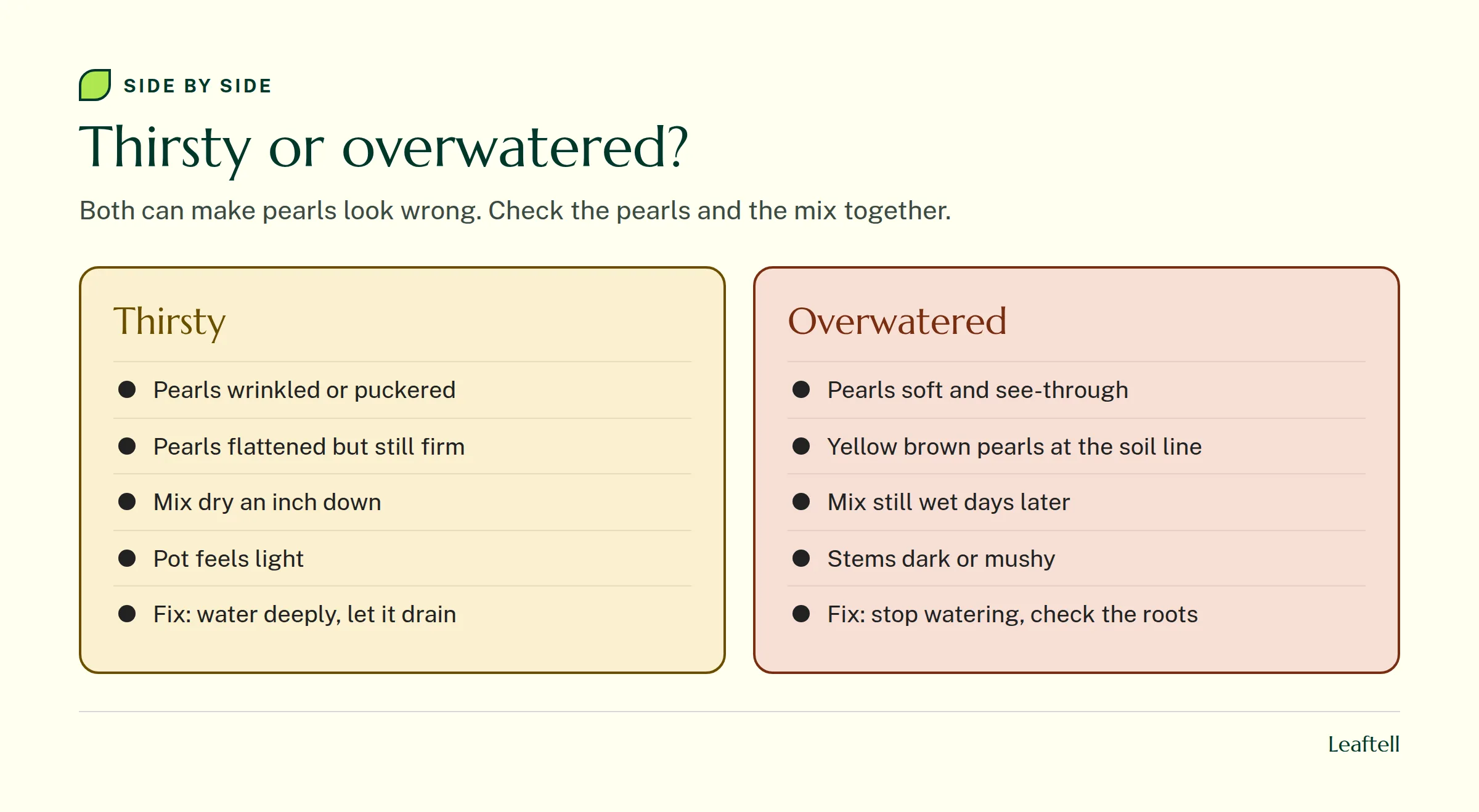
If you are not sure which one you are looking at, push a finger an inch into the mix. Dry plus wrinkled pearls is thirst. Wet plus soft pearls is too much water. Our guide on how often to water succulents shows how to check the mix below the surface in other pots too.
Where should you put a string of pearls in your house?
Near your brightest window, where it gets plenty of light but no hours of harsh, direct afternoon sun on the pearls. An east window with gentle morning sun is close to ideal. A south or west window works if the plant sits a few feet back or behind a sheer curtain. NC State notes that direct sunlight can scorch the leaves, and that indoor plants flourish in bright, indirect sunlight.
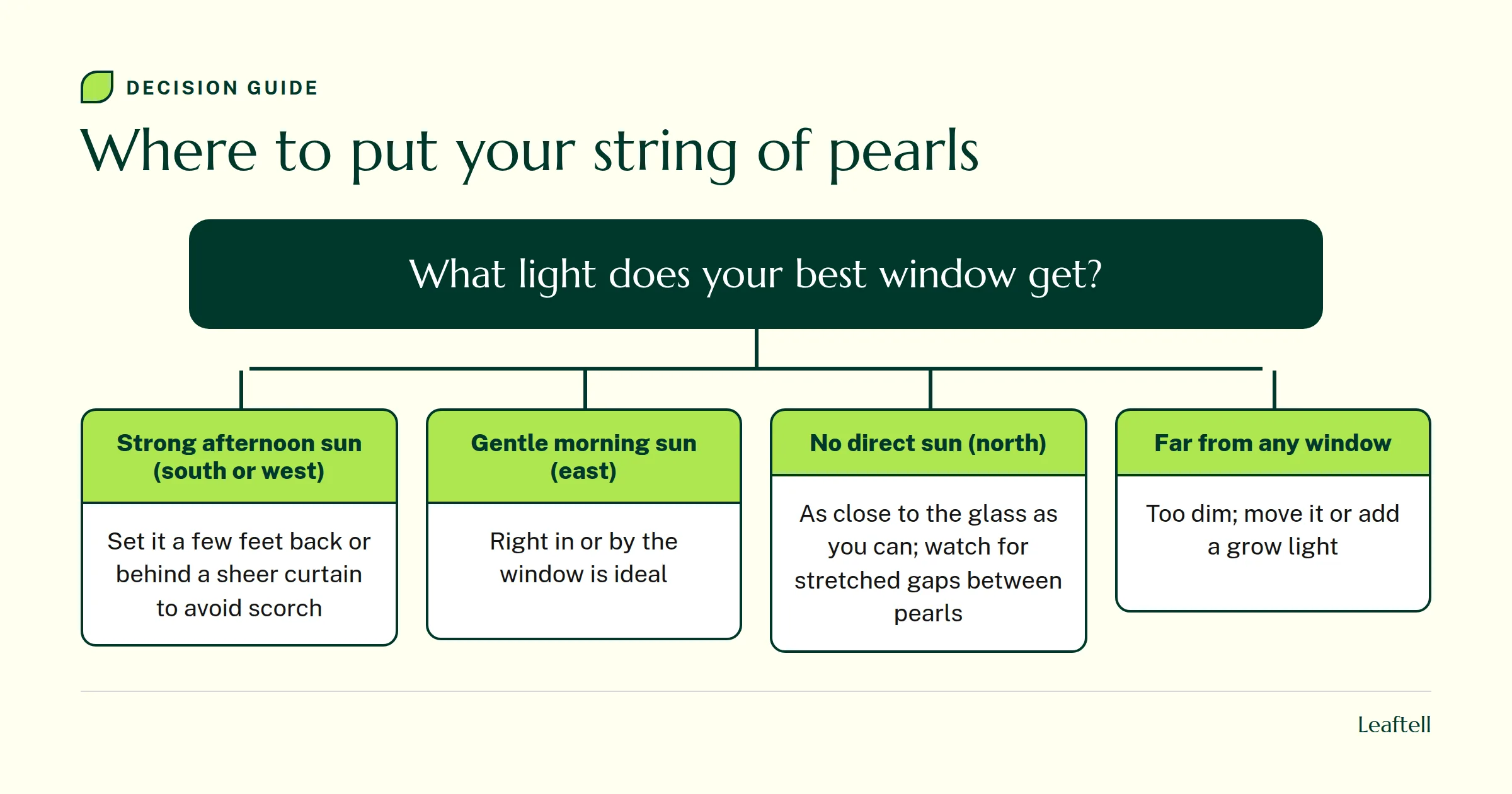
Hanging baskets are popular for this plant, and they work well, but check the height. A basket hung high in the middle of a room often sits in much dimmer light than the windowsill below it. If new growth comes in with long bare gaps between the pearls, the plant is reaching for light. Move it closer to the glass. Our guide to reading your plant's light explains how to judge a spot by its shadows.
Soil and pots
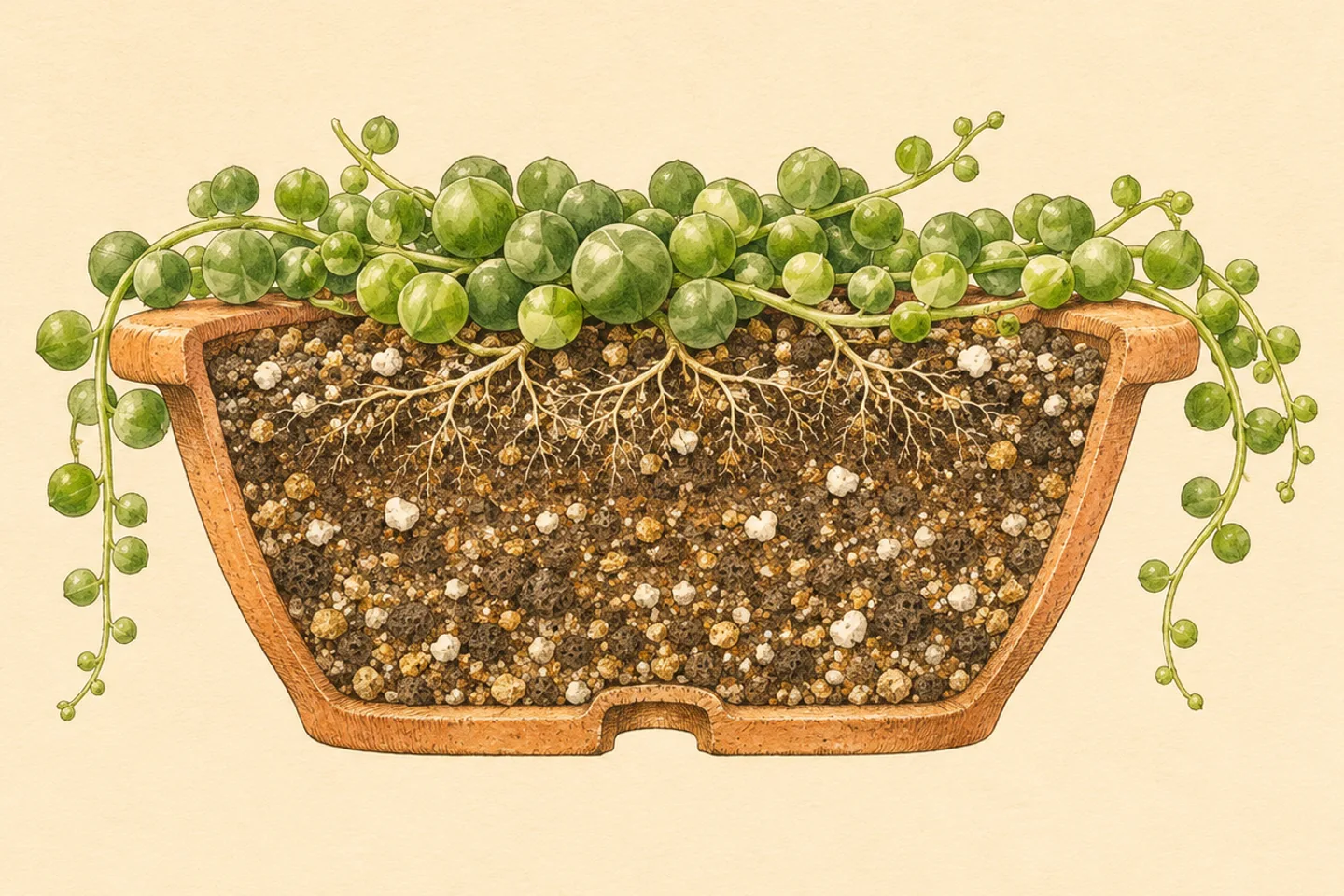
String of pearls has short, shallow roots. They sit near the top of the pot, which is why the pot itself matters as much as the watering. In a deep pot, the mix below the roots stays wet for days after the surface has dried, and that wet layer is where rot starts.
Use a shallow pot only a little wider than the plant, with a drainage hole. Fill it with cactus mix, or ordinary potting mix cut with sand or perlite, which is what NC State recommends. If the mix still feels damp several days after watering in a bright spot, it needs more grit; our guide to potting mix for indoor plants covers what to add. When roots fill the pot, move up only one size, and handle the strands as little as possible while you work.
Temperature, seasons and feeding
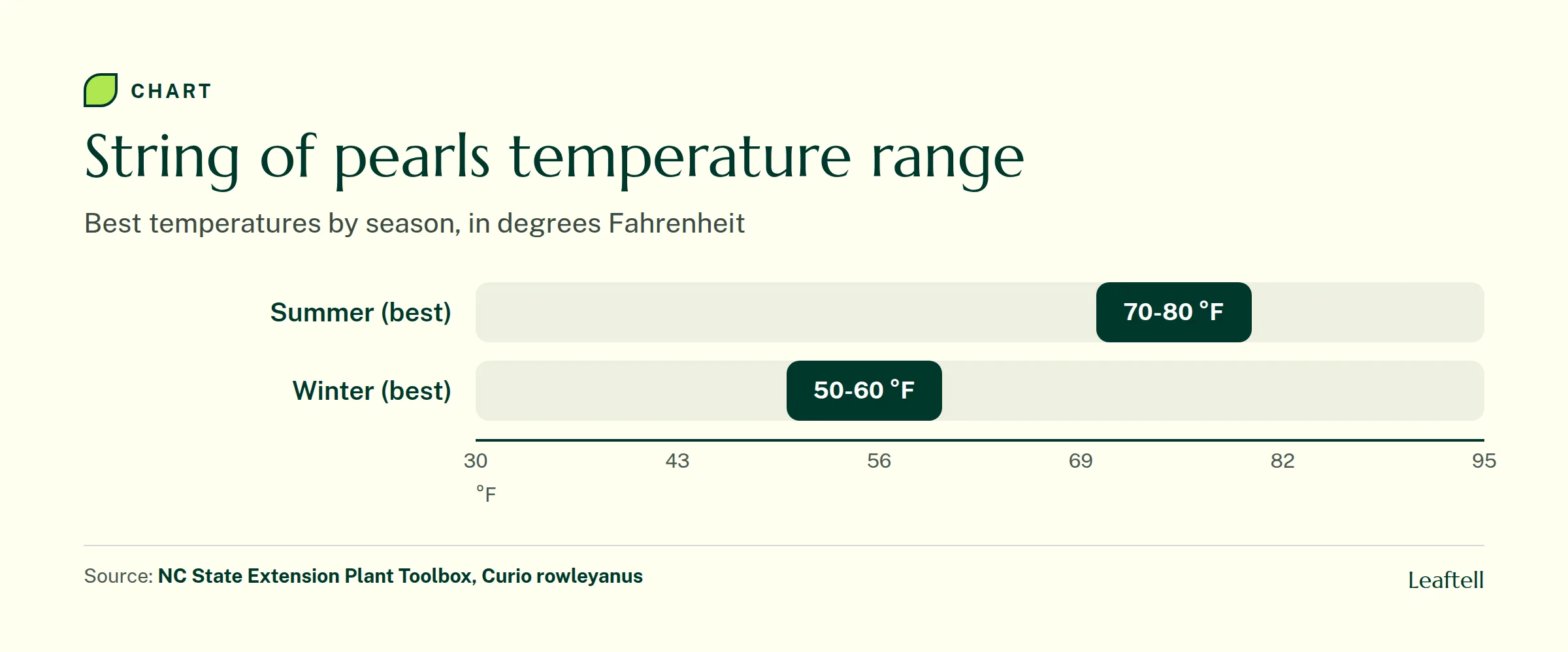
String of pearls likes a warm summer and a cooler winter. NC State gives 70 to 80 degrees F as the best summer range and 50 to 60 in winter. It is hardy outdoors only in USDA zones 9b to 11b, so in most of the US it is a houseplant, or a summer patio plant that comes back inside before the first frost.
The cool winter is also why winter watering drops so much. A plant in a 55 degree room uses far less water than the same plant in July, and the mix stays damp much longer. Keep checking the pearls; just expect to water less often.
Feed lightly, if at all. A balanced houseplant fertilizer at half strength, a few times in spring and summer while it is growing, is plenty. Skip winter. Always follow the label, and never mix products.
How to prune a string of pearls
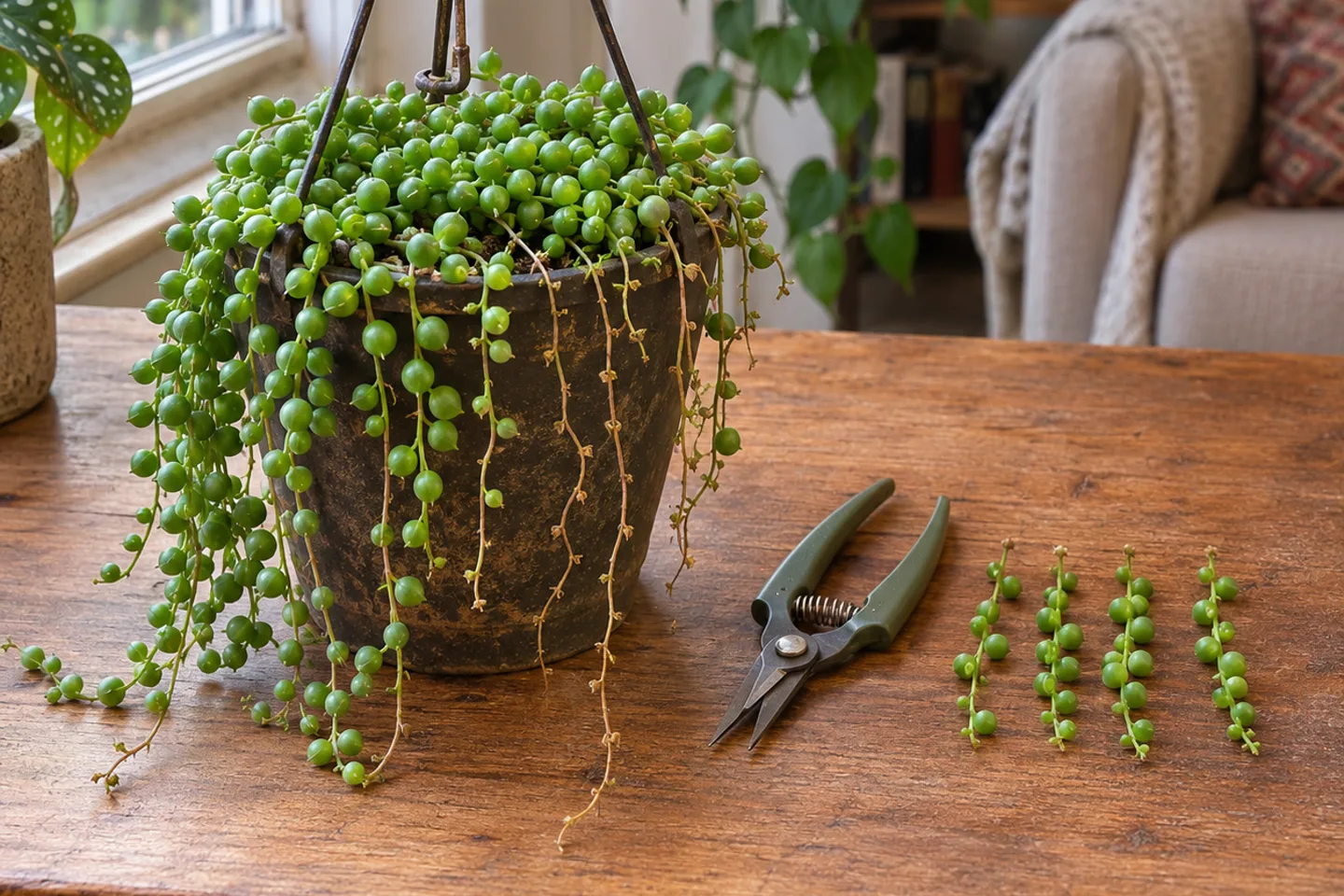
Pruning a string of pearls is mostly about the top of the pot. Older plants tend to thin out at the crown while the strands keep getting longer, and NC State notes they tend to die back after several years. Trimming the longest strands and putting the tips back on top keeps the plant full.
How to prune a string of pearls
- Pick the strands to cut
Choose strands that are too long, straggly, or bare along part of their length. Leave the fullest, healthiest strands alone.
- Cut with clean snips
Use clean scissors or small snips and cut just above a pearl. Cut back to where you want the strand to end, not flush with the soil.
- Remove dead or mushy pieces
Snip out any strands with soft, brown or shriveled pearls while you are there. They will not recover, and soft tissue invites rot.
- Save the healthy tips
Keep firm, green tips 3 to 5 inches long. Strip the pearls from the bottom inch of each.
- Lay the tips back on the pot
Lay the cuttings flat on the bare soil at the top of the pot and press the bare stem in lightly. They root there and fill in the crown.
Wear gloves if your skin is sensitive, because the sap can irritate it. For the full method, including water rooting and fresh pots, see our guide on how to propagate string of pearls.
What goes wrong and what it costs
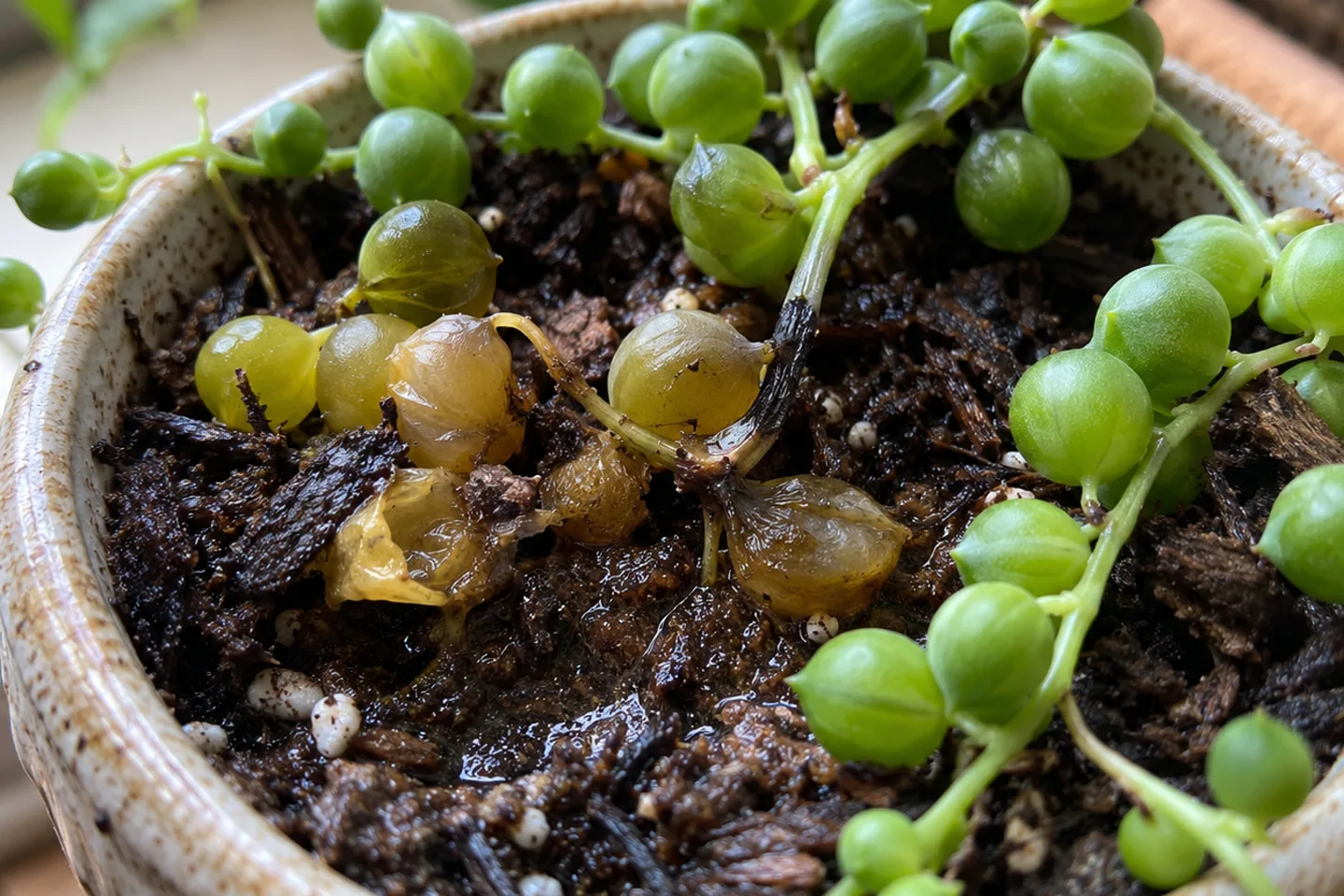
- Soggy soil. The most common way to lose this plant. Pearls at the soil line go soft, see-through and yellow brown, and stems darken. Stop watering, let the mix dry, and check the roots. If they are brown and mushy, follow our guide to saving an overwatered plant, and take firm green tips as cuttings in case the crown does not recover.
- Bone dry for too long. Pearls wrinkle and flatten, then shrivel. Caught early, a thorough watering fixes it. This is the mistake people make when they treat it like a cactus.
- Too little light. Long strands with wide gaps between small pearls, and a thinning top. Move it to brighter light; stretched growth will not tighten up, but new growth will.
- Harsh sun. Pale, bleached or scorched pearls on the side facing the glass. Pull it back from the window or add a sheer curtain.
- Pests. NC State lists aphids, whiteflies, gnats, ants and mealybugs. Mealybugs hide where pearls touch the stem and in the crown; our guide to mealybugs on plants covers the least toxic fixes first.
Most of these show first at the top of the pot, not at the ends of the strands. When you check the plant, look at the crown and the pearls nearest the soil before anything else.
Keep it away from pets and kids
NC State describes the leaves and sap as toxic to both humans and pets and suggests gloves to prevent skin irritation. A trailing plant is easy for a cat to bat at or a toddler to grab, so hang it out of reach or keep it on a high shelf. If you think a pet has chewed some, call your vet or the ASPCA Animal Poison Control Center rather than waiting for symptoms.
Check your string of pearls in Leaftell
String of pearls care comes down to a narrow middle: bright light without harsh sun, a shallow pot of gritty mix, and water when the pearls start to soften, never left bone dry and never soggy. The pearls tell you which side of that middle you are on, so look at them every time you think about watering. If your plant thrives and you want more, our succulent plant care guide covers the rest of the shelf.
If the pearls look wrong and you cannot tell whether it is thirst, rot or light, check your string of pearls in Leaftell with a photo of the whole plant and a close-up of the pearls at the soil line. Set yourself a check-in reminder to take a fresh photo in about seven days and compare.
Check your growing conditions with the plant watering calculator.
Frequently asked questions
Water when the top inch of mix is dry and the pearls have just started to lose some roundness. That is more often in a warm, bright summer and much less often in a cool winter. Never let the pot sit bone dry for long, and never leave it soggy.
That is string of pearls, botanically Curio rowleyanus and formerly Senecio rowleyanus. Its round leaves are about a quarter to a third of an inch across and grow along thin trailing stems. Related trailing succulents such as string of dolphins have differently shaped leaves.
Near your brightest window, out of harsh afternoon sun. An east window is ideal; a south or west window works with the plant a few feet back or behind a sheer curtain. Keep it out of reach of pets and small children, because it is toxic.
Use clean snips to cut long or straggly strands just above a pearl, and remove any soft or shriveled pieces. Keep firm 3 to 5 inch tips, strip the bottom inch of pearls, and lay them on top of the pot to root and fill in a thin crown.
Share article
About the author

Keep checking your plant
Plant care reference
Indoor plant care
Build a routine around your plant, light and potting mix.
Plant care reference
Why is my plant dying
Trace leaf and root symptoms before choosing a care change.
Plant care reference
Pothos plant care
Choose a growing spot and prune a trailing pothos for fuller growth.
Plant care reference
How to fix root rot
Inspect root firmness and drainage, then decide whether to repot.