What Is a ZZ Plant? The Houseplant That Stores Its Own Water
Filip Leszczyński 25 November 2026 13 min read
In this article
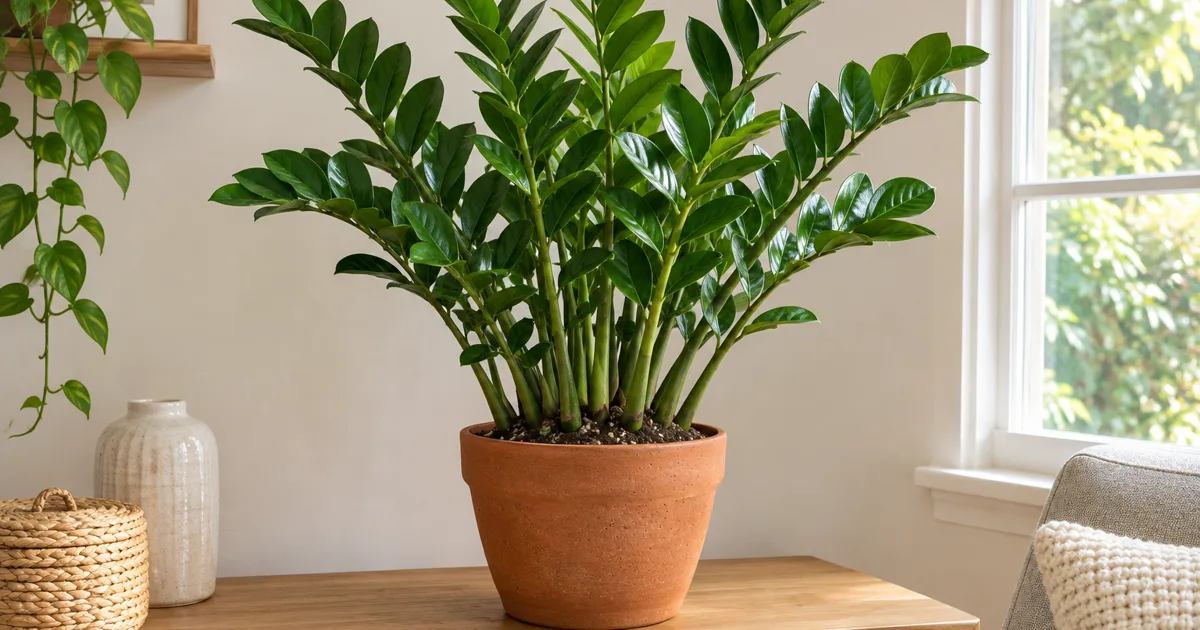
A ZZ plant is Zamioculcas zamiifolia, a slow-growing tropical African houseplant in the aroid family, the same family as pothos and peace lily. It grows from fat underground rhizomes that store water, which is why it shrugs off dim rooms and missed waterings better than almost anything else on a plant shelf.
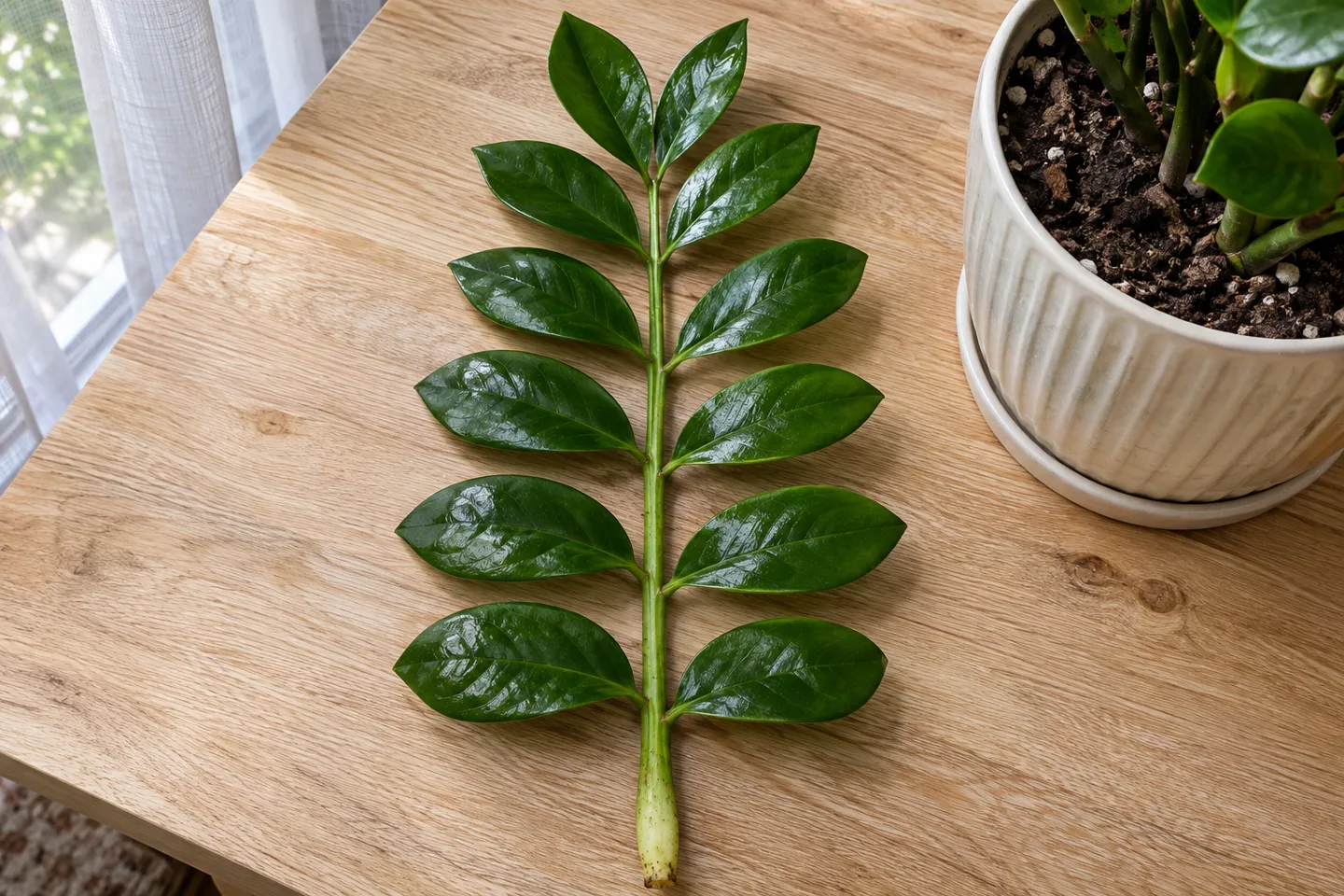
The thing most people get wrong about it: each upright "stem" is not a stem at all. It is one single leaf, and the glossy ovals along it are leaflets. That one fact explains how the plant grows, why it looks the same for months, and why the fastest way to kill it is kindness with a watering can. This guide covers what the plant is, how to recognize it, the varieties you will see in stores and the short list of care rules that actually matter.
What kind of plant is a ZZ plant?
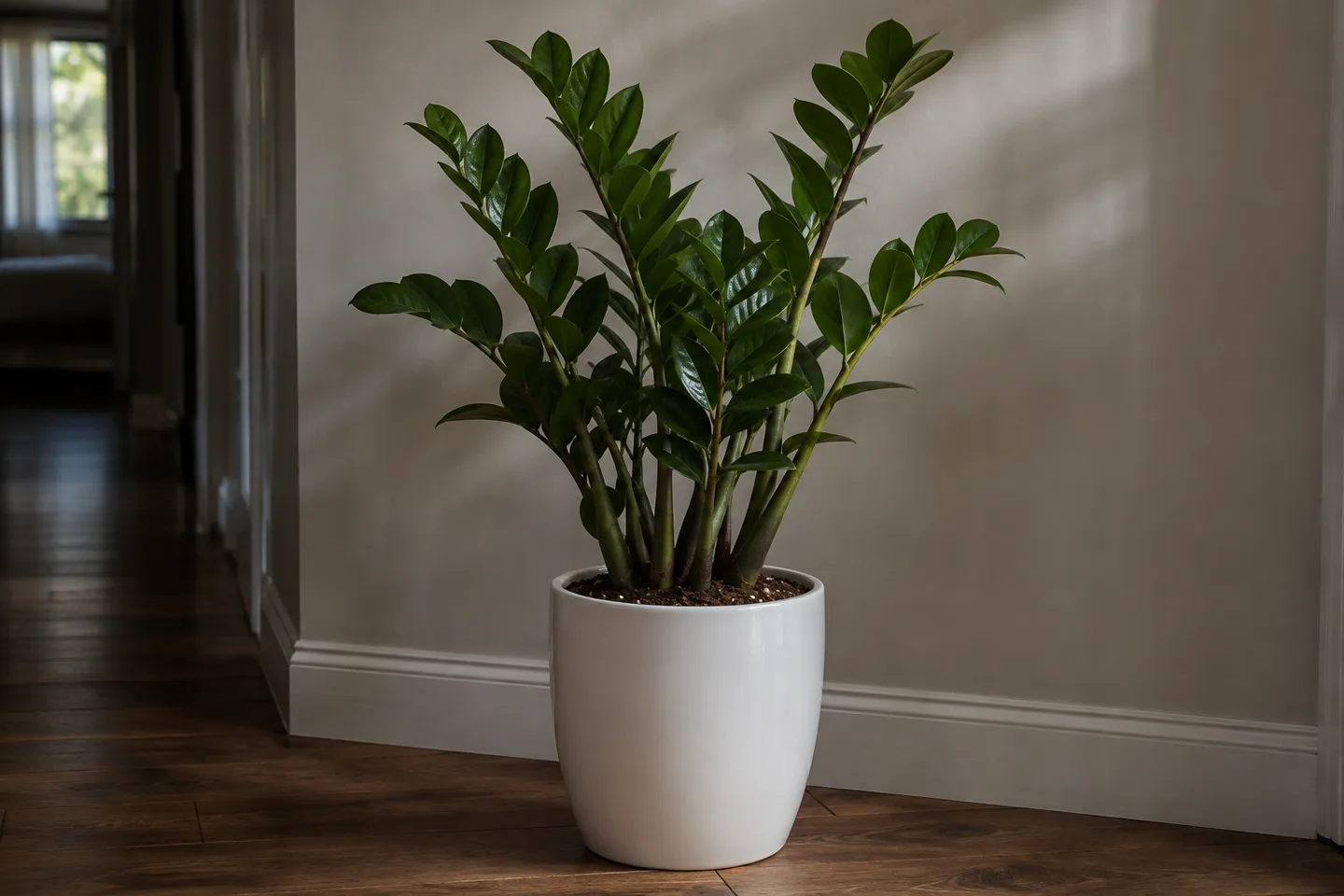
The ZZ plant is a rhizomatous, evergreen perennial in the Araceae (aroid) family, native to tropical Africa. NC State Extension's plant profile describes it as slow growing, reaching 2 to 4 feet tall and wide, with glossy leaves that store water and make it highly drought tolerant.
The name is a mouthful, which is where "ZZ" comes from. Zamioculcas zamiifolia means "having leaves like Zamia", a cycad that looks similar but is not related. You will also see it sold as Zanzibar gem, emerald palm, eternity plant, aroid palm and Zuzu plant. They are all the same species, so a "Zanzibar gem" tag needs exactly the same care as a "ZZ plant" tag.
It is not a palm and not a true succulent, even though it behaves like one. It sits in the aroid family with monstera and philodendron, but it has adapted to a dry season the way a succulent has: by storing water inside the plant.
How to recognize a ZZ plant
If you are holding a plant with no label, check these features. Two or three together make it a ZZ.
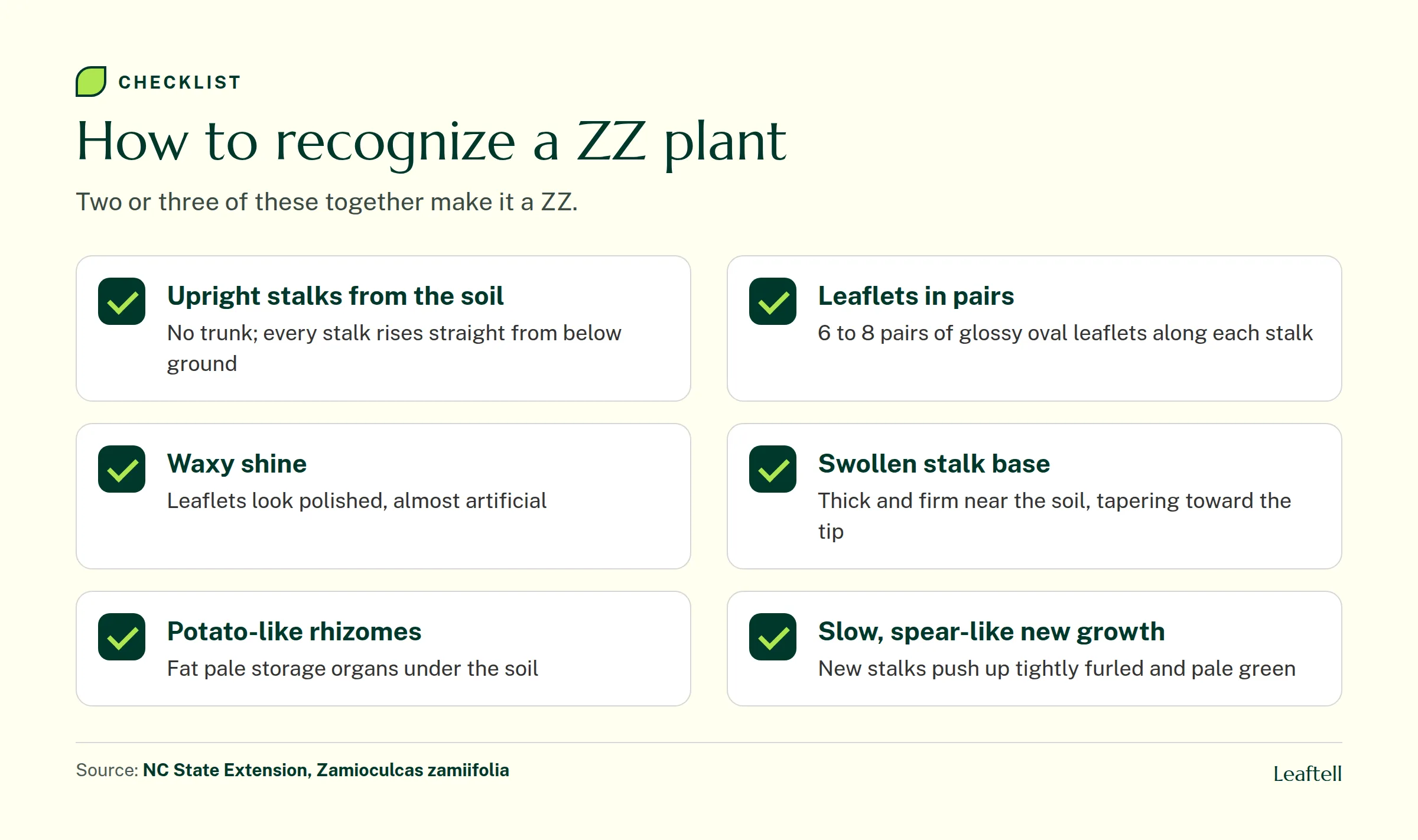
The quickest giveaway is the stem base. Press it gently: a ZZ stem is thick, swollen and firm near the soil, almost like a small bulb, then tapers toward the tip. Snake plants have flat sword leaves straight from the soil, and pothos trails on thin vines, so neither matches.
Each stem is one leaf
What looks like a stem covered in leaves is a single compound leaf. The thick lower part is the leaf stalk (petiole), and the glossy ovals are leaflets. NC State counts 6 to 8 pairs of leaflets per leaf, arranged opposite each other along the stalk.
This matters for three practical reasons:
- The plant does not branch. Cutting the top off a "stem" will not make it bushy. You just get a shorter leaf. New growth only comes up from the soil.
- A lost leaf is a big loss. When one stalk yellows and collapses, the plant has lost a whole leaf, not a few leaflets. That is why one bad month of overwatering can make a ZZ look half empty.
- Single leaflets can grow new plants. A leaflet pressed into damp mix can form its own small rhizome, which is how growers multiply them. Our ZZ plant propagation guide walks through leaflet, stem and division methods and how long each takes.
What is under the soil: rhizomes
Lift a ZZ plant out of its pot and you find pale, potato-like rhizomes packed with stored water, with roots coming off them. The thick leaf bases above the soil hold water too. Together they let the plant go weeks without a drink.
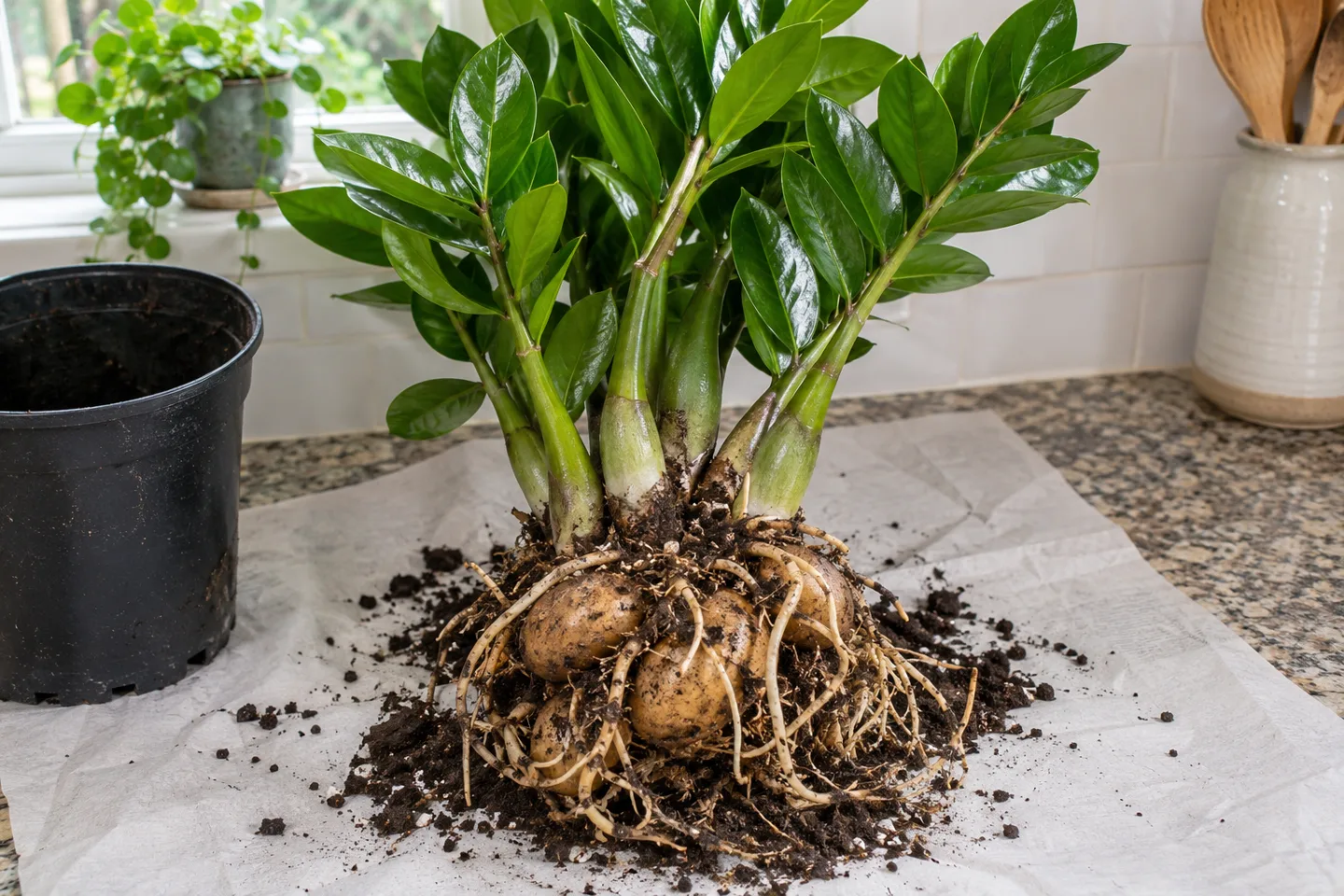
The same storage is the plant's weak point. A rhizome sitting in wet mix for days softens and rots, and nothing above the soil shows it until stems start to yellow or flop. When you repot, a firm rhizome is healthy; a soft, brown, smelly one is rot. Our guide on how to repot plants covers sizing up the pot and loosening a tight root ball, which matters here because ZZ rhizomes can crack thin plastic pots as they swell.
How a ZZ plant grows
ZZ plants grow in flushes. For weeks nothing seems to happen, then a pointed, pale green spear pushes up from the soil, unfurls over a few weeks and darkens to match the older leaves.
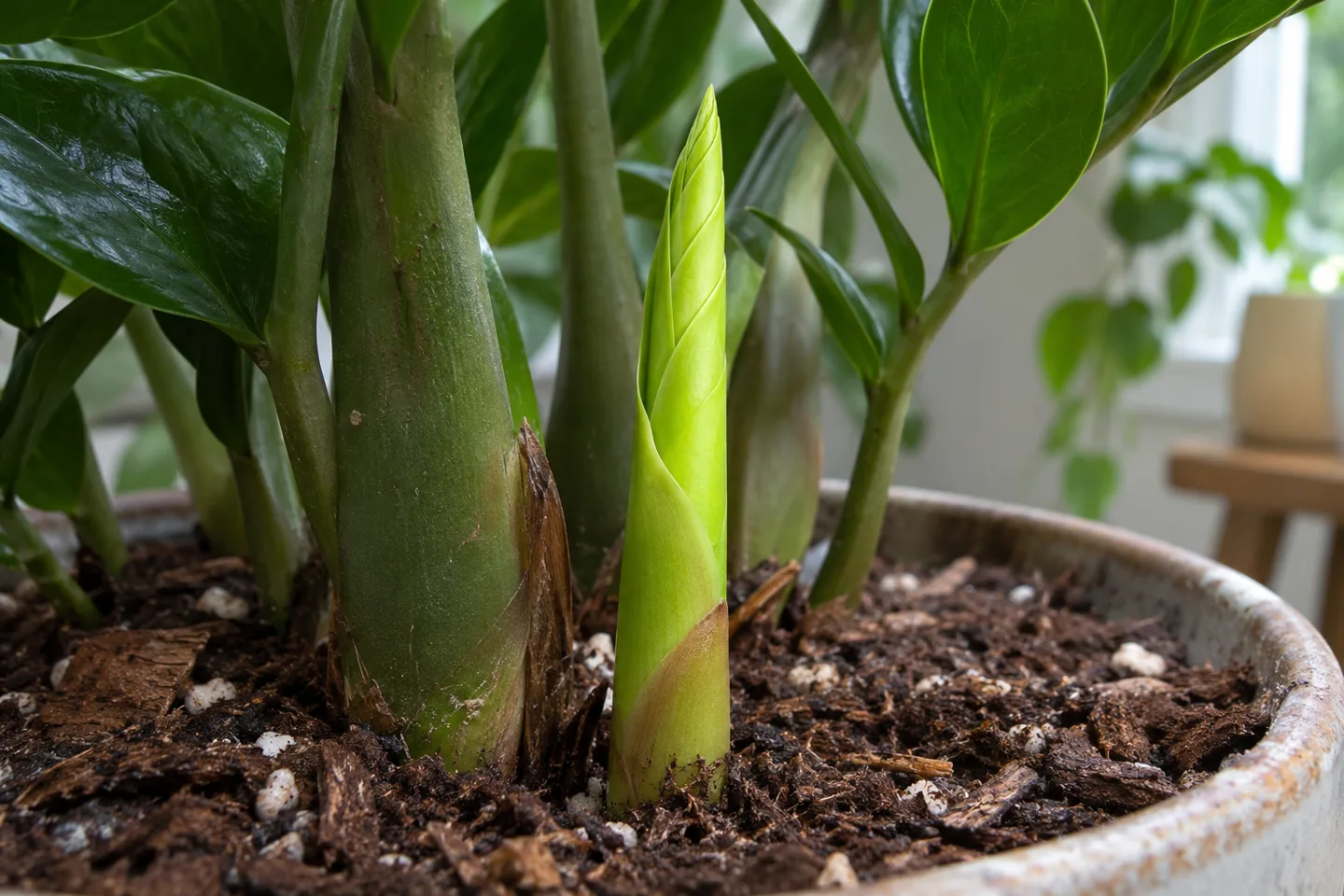
That spear is the best sign of a happy plant. It comes up straight from the rhizome, never from an existing stalk. Expect only a handful of new leaves a year in a typical apartment; NC State calls the growth rate slow, and lower light slows it further. A ZZ that "has not grown in months" is usually just being a ZZ.
ZZ plant varieties you will see in stores
Most shops sell the classic green form, and the named types are all the same species with the same basic care. The differences are leaf color, size and how much light they need to keep that color.
| Variety | What it looks like | Care difference |
|---|---|---|
| Classic ZZ | Glossy mid to dark green leaflets on tall arching stalks | The baseline: low to bright indirect light, dry between waterings |
| Raven ZZ | New leaves come up lime green, then turn glossy near black | Same as classic; the dark color holds in lower light |
| Zenzi (dwarf) | Short dense stalks, small curled leaflets packed close | Same care, stays desk size, needs a smaller pot |
| Chameleon ZZ | Sold for lighter new growth that darkens as it matures | Give it bright indirect light so new leaves keep their color |
| Variegated ZZ | Leaflets streaked or patched with cream or white | Needs brighter indirect light and grows slower than green forms |
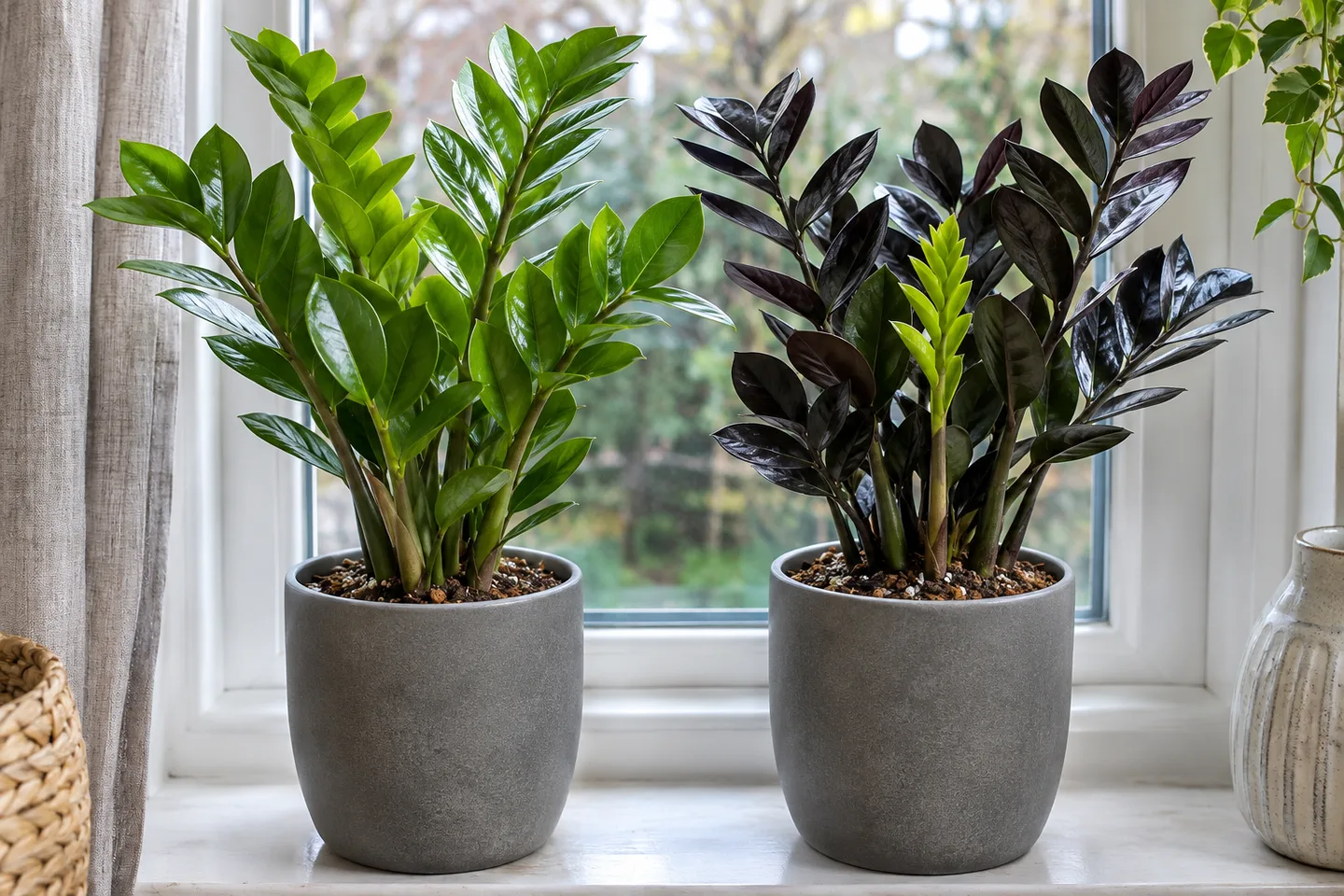
Raven is the one people ask about most. A Raven leaf starting out bright green is normal, not a mislabeled plant; give it a few weeks.
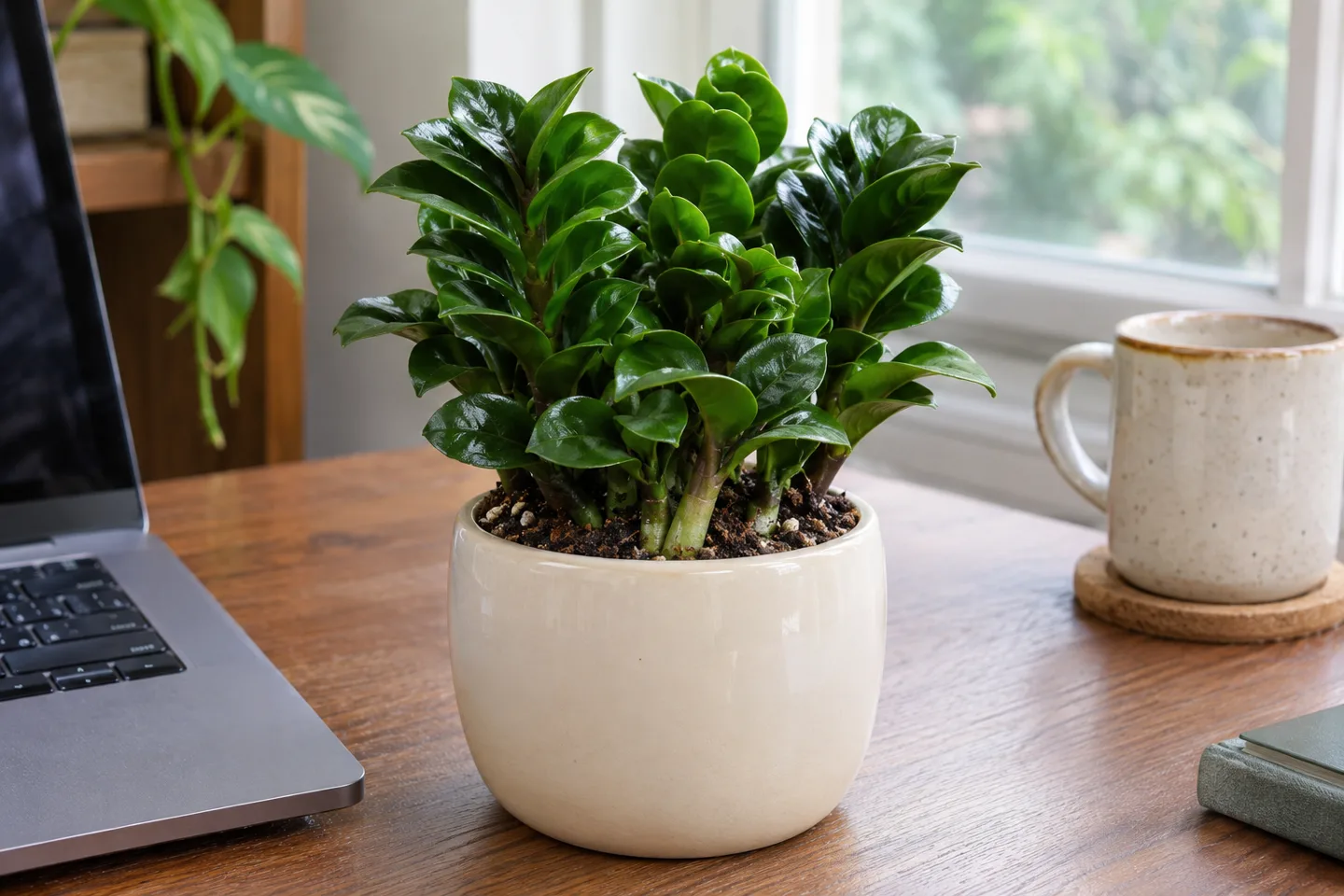
Zenzi is the pick for a desk or a narrow shelf. Its leaflets overlap tightly, so it looks fuller than a young classic ZZ of the same pot size.
ZZ plant care: the short version
ZZ care is mostly restraint. NC State says to treat it much like a cactus or other succulent, and the rules below are drawn from that profile.
| Need | What works | What to avoid |
|---|---|---|
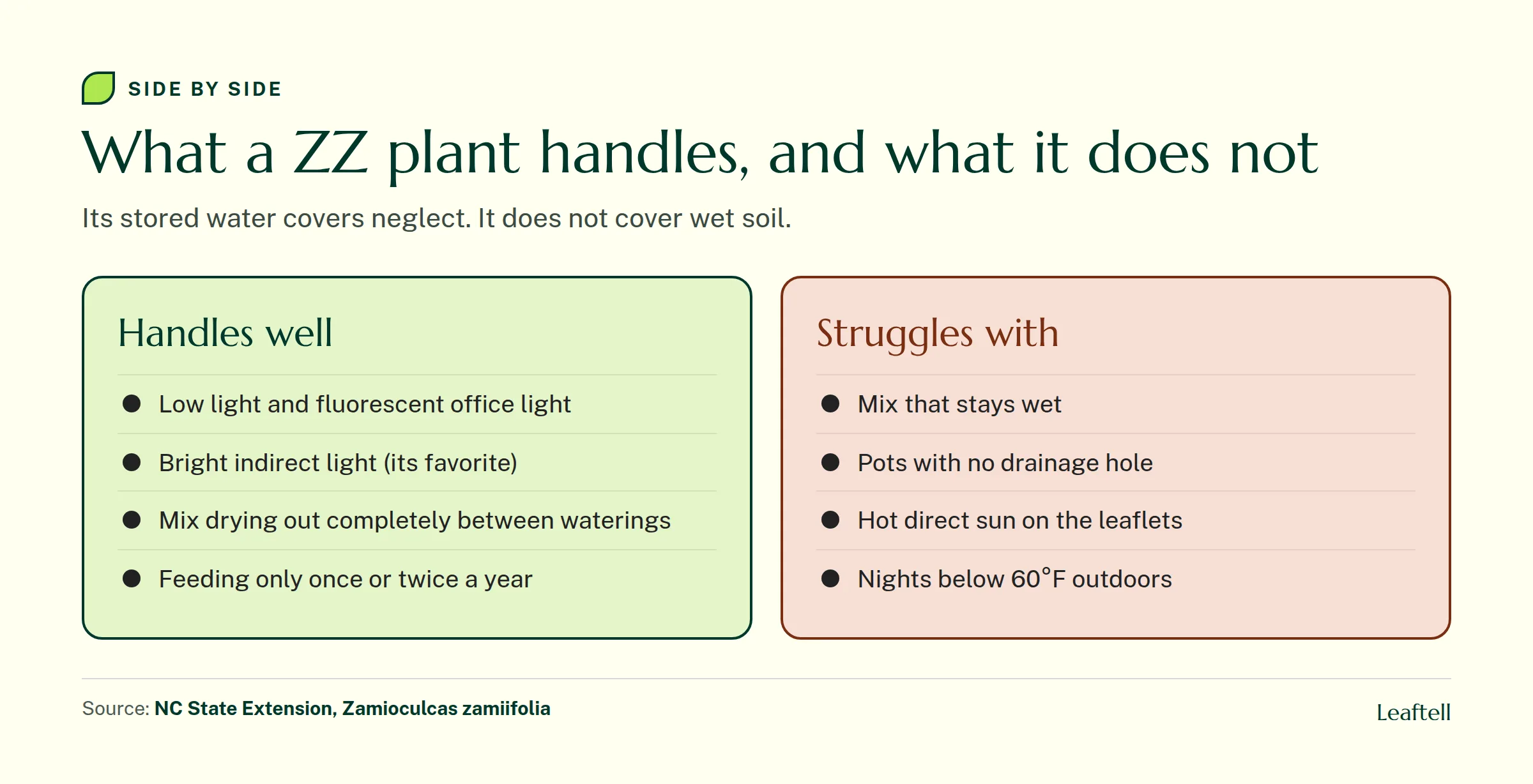
| Light | Bright indirect light is best; it tolerates low light and even fluorescent office light | Direct hot sun, which can scald and brown the leaflets |
| Water | Water only when the mix has dried out completely; NC State's rough rhythm is about once a month in winter, twice a month in summer | Watering on a schedule regardless of the soil, wet feet |
| Soil and pot | Well-drained potting mix in a pot with a drainage hole | Dense, moisture-holding mix or a pot with no hole |
| Feeding | A balanced liquid houseplant fertilizer once or twice a year | Monthly feeding; slow growers do not use it |
| Temperature | Normal room temperatures; bring outdoor pots in before nights drop below 60°F | Cold drafts, unheated porches in fall |
| Pests | No significant problems; watch for scale insects | Ignoring sticky residue or brown bumps on the stalks |
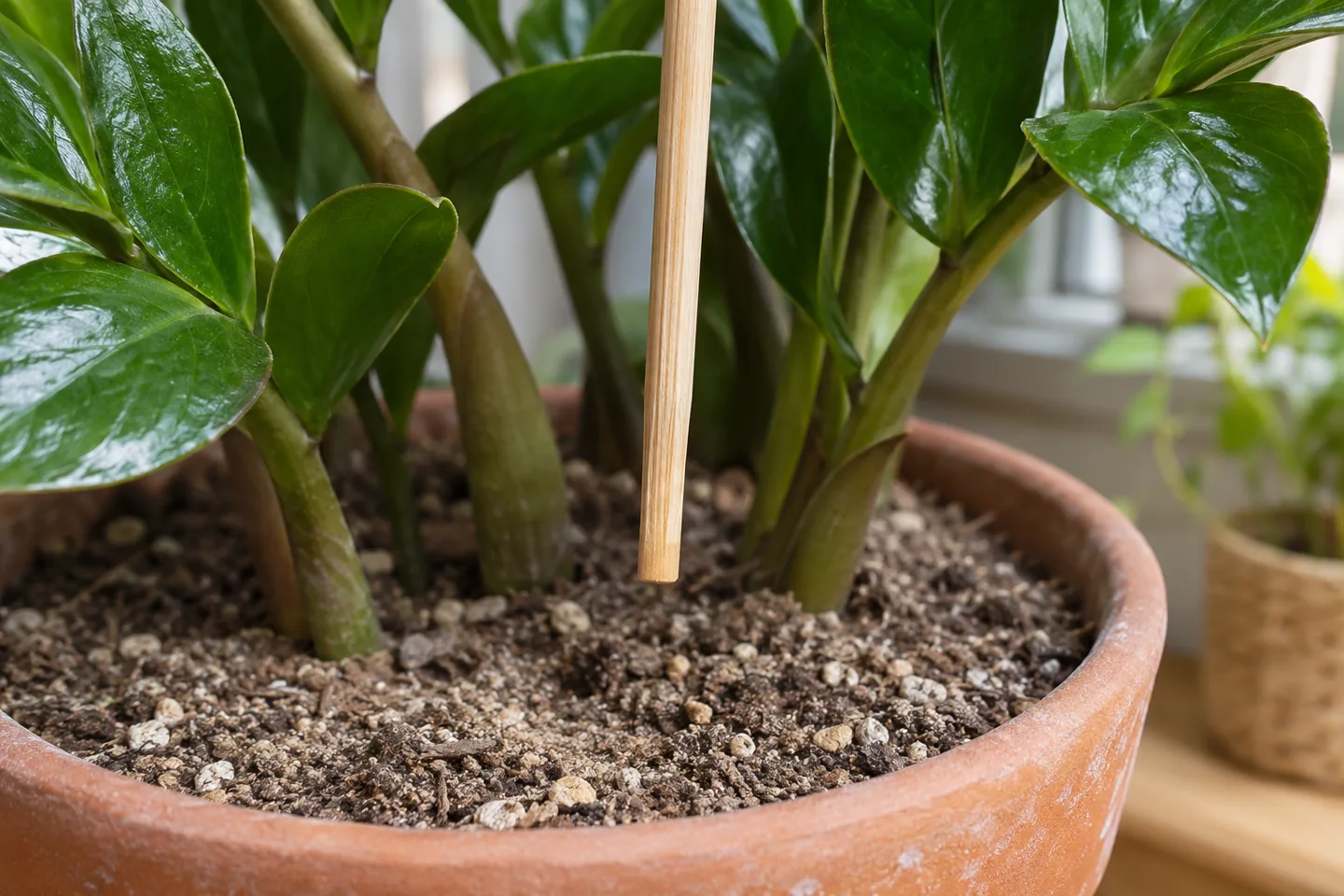
Those watering intervals are a reminder to check, not a calendar. A ZZ in a bright warm room dries out faster than one in a cool hallway. Check the mix before every watering: push a wooden chopstick to the bottom of the pot, wait a minute, and pull it out. If it comes out clean and dry, water thoroughly until water runs from the drainage hole. If it comes out damp or with mix stuck to it, wait and check again in a week.
Light: the dim corner myth
A ZZ will survive in a dim hallway, and that is why it gets sold as the plant for dark rooms. Survive is the key word. In low light it holds its leaves but almost stops making new ones, and it uses water very slowly, which makes the soil stay wet longer. If you keep it in a dim spot, water less often, not more. Our list of low light indoor plants compares it with other shade-tolerant picks if you are choosing for a dark room.
The mistake that kills most ZZ plants
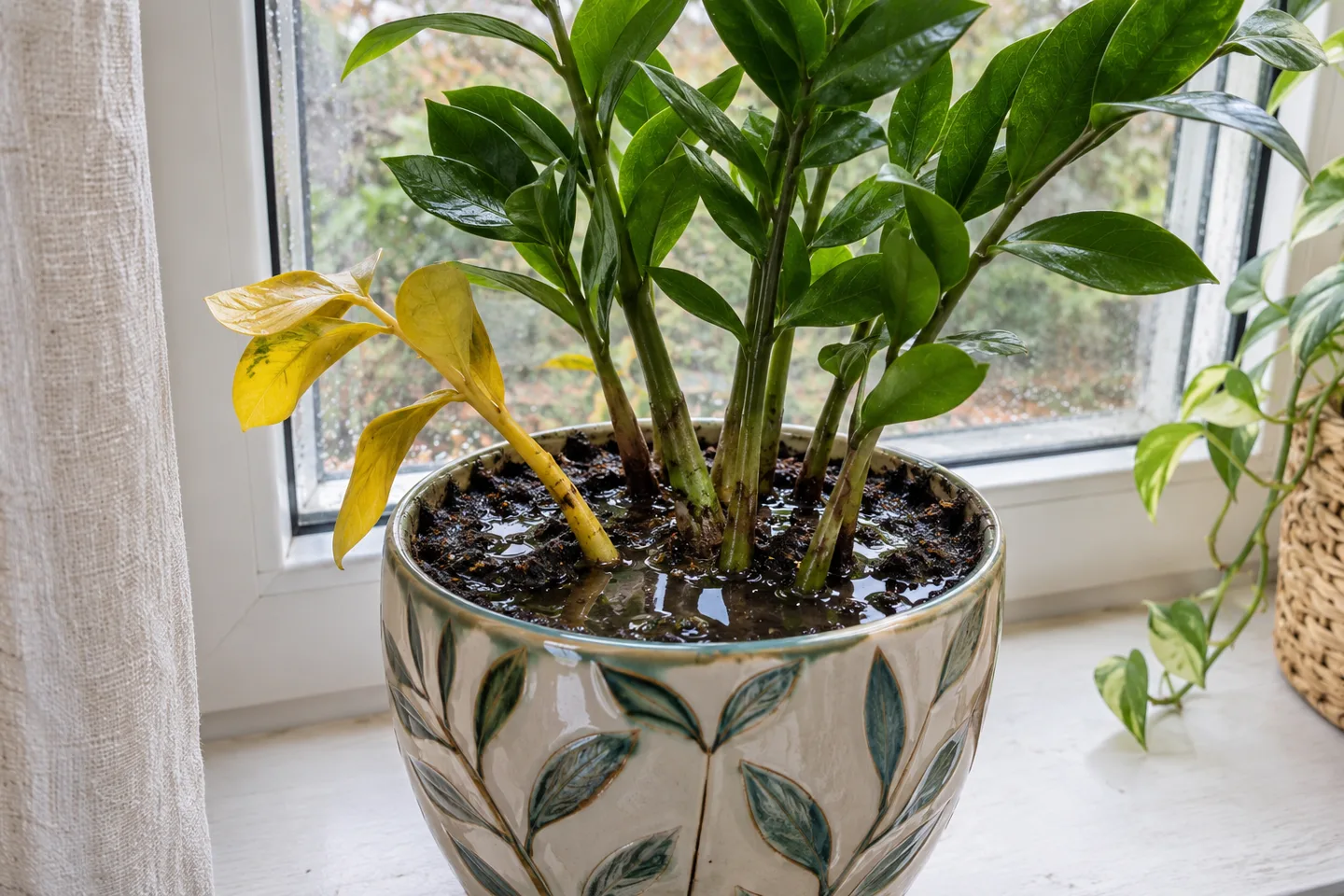
Overwatering, almost every time. The plant is built to store water, so extra water has nowhere to go and the rhizomes rot. The classic setup is a decorative pot with no drainage hole: water pools at the bottom, the mix stays soggy, and the lower stalks start yellowing a few weeks later.
Signs to take seriously:
- Yellow stalks starting at the bottom of the plant, often with soft bases. Our guide to ZZ plant leaves turning yellow sorts the normal yellowing of one old leaf from the watering kind.
- Stalks leaning or flopping over. Too little light and too much water are the usual causes; see why a ZZ plant droops for how to tell which.
- Mushy, brown rhizomes when you lift the plant. Cut away the soft parts, let the cuts dry, repot in fresh dry mix and hold off water for a week or two. If you are not sure the soil is the problem, our guide on telling overwatering from underwatering gives the checks in order.
Underwatering is rare and slow. A ZZ that has gone dry for months may show wrinkled leaflets and a lighter pot, and a thorough watering usually fixes it within days.
Is a ZZ plant safe around pets and kids?
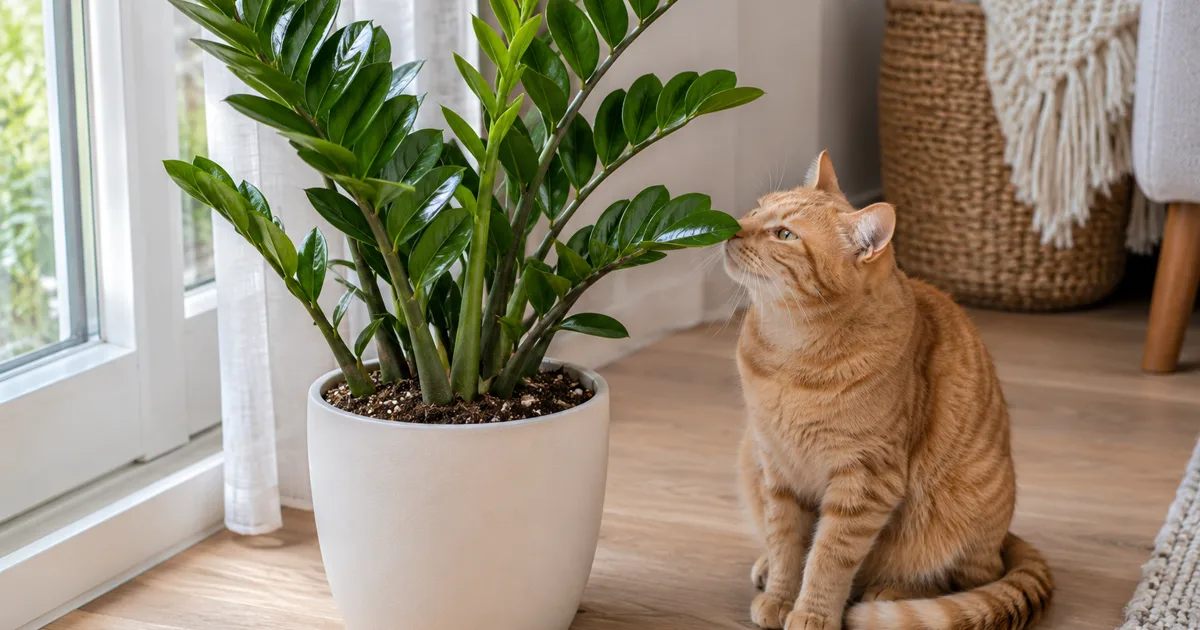
Not for chewing. NC State lists the ZZ plant as having medium toxicity to cats and dogs, and it is poisonous to people if eaten. Like its aroid relatives, it contains calcium oxalate crystals that irritate the mouth, so most bites end with drooling and an upset stomach rather than an emergency. Keep it out of reach of pets and small children who chew plants, and wash your hands after repotting. Our post on whether ZZ plants are toxic to cats covers what to do after a bite and which pet-safe plants fill the same spot.
Is a ZZ plant right for your home?
It depends on how you look after plants, not on the plant. A ZZ is easy for people who forget and hard for people who fuss.
| You | Good match? | Why |
|---|---|---|
| Travel often or forget to water | Yes | Stored water carries it through weeks of neglect |
| Have a dim room or an office with overhead lights | Yes, with less water | It tolerates low and fluorescent light, but dries out slowly there |
| Love watering and checking plants daily | Risky | Frequent watering is the main way ZZ plants die |
| Have a cat or dog that chews plants | Only out of reach | Medium toxicity to cats and dogs |
| Want fast, visible growth | No | A few new leaves a year is normal |
If you are the frequent waterer, pair the ZZ with a thirsty plant like a fern and give that one the attention. The ZZ does better ignored.
The bottom line
A ZZ plant is a drought-adapted aroid from tropical Africa that stores water in its rhizomes and thick leaf stalks. Every stalk is one leaf, it grows slowly in flushes, and the named varieties all share the same care: bright indirect light if you can, dry mix between waterings, a pot with a drainage hole and almost no fertilizer. Check the soil before you water, never the calendar, and it will likely outlast most of your other plants.
Check your growing conditions with the plant watering calculator.
Frequently asked questions
Not botanically. It belongs to the aroid family with pothos and monstera, but it stores water in its rhizomes and thick leaf stalks the way a succulent does. NC State advises treating it much like a cactus or succulent, so let the mix dry out completely between waterings.
Indoors, NC State lists 2 to 4 feet tall and wide, reached slowly over several years. Dwarf types like Zenzi stay much smaller and suit a desk or shelf.
Zanzibar gem is another name for the ZZ plant, so the care is identical: bright indirect light if possible, water only when the mix is completely dry, a pot with a drainage hole and fertilizer once or twice a year.
The same way as a classic ZZ, with one difference: give it bright indirect light so its lighter new growth keeps its color. Lower light slows new leaves and dulls the color. Water only when the mix is dry and keep it out of hot direct sun, which scalds the leaflets.
A ZZ dropping leaflets or whole stalks is most often reacting to soggy soil, followed by too little light or a sudden cold draft. Check the mix with a chopstick and lift the plant to look at the rhizomes: soft brown ones mean rot. One old stalk yellowing on its own while new spears come up is normal.
Some sellers market it as a lucky or fortune plant, and in some home traditions it is kept for good luck. That is folklore, not botany. The practical luck is that it survives neglect and low light, which makes it one of the easiest houseplants to keep alive.
Share article
About the author

Keep checking your plant
Plant care reference
Indoor plant care
Build a routine around your plant, light and potting mix.
Plant care reference
Why is my plant dying
Trace leaf and root symptoms before choosing a care change.
Plant care reference
Pothos plant care
Choose a growing spot and prune a trailing pothos for fuller growth.
Plant care reference
How to fix root rot
Inspect root firmness and drainage, then decide whether to repot.