Orchid leaves turning yellow: 5 checks before cutting
Filip Leszczyński 16 October 2026 10 min read
In this article
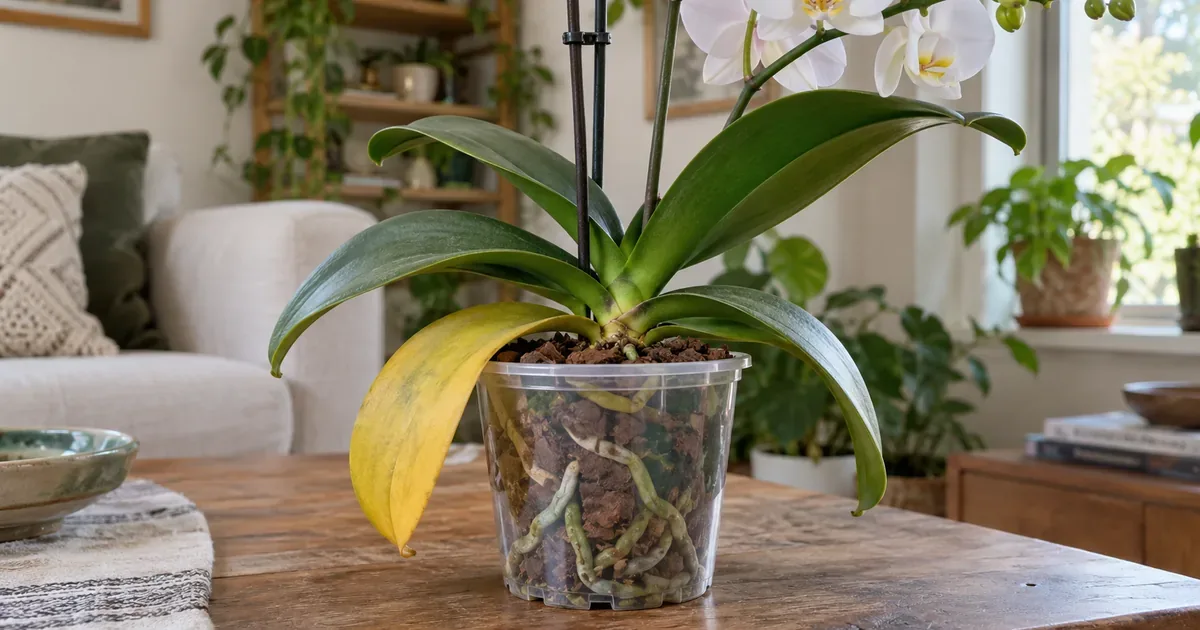
Orchid leaves turning yellow can mean normal aging of a lowest leaf or stress involving roots, light, or the crown. For a moth orchid, check which leaf changed and whether the crown and roots remain firm before watering or cutting anything.
This advice focuses on Phalaenopsis, the common moth orchid; other orchid groups can need different care. A blooming orchid can still have a root problem, and a photograph cannot reveal whether the center of its bark or moss is staying wet.
Oldest leaf or crown problem?
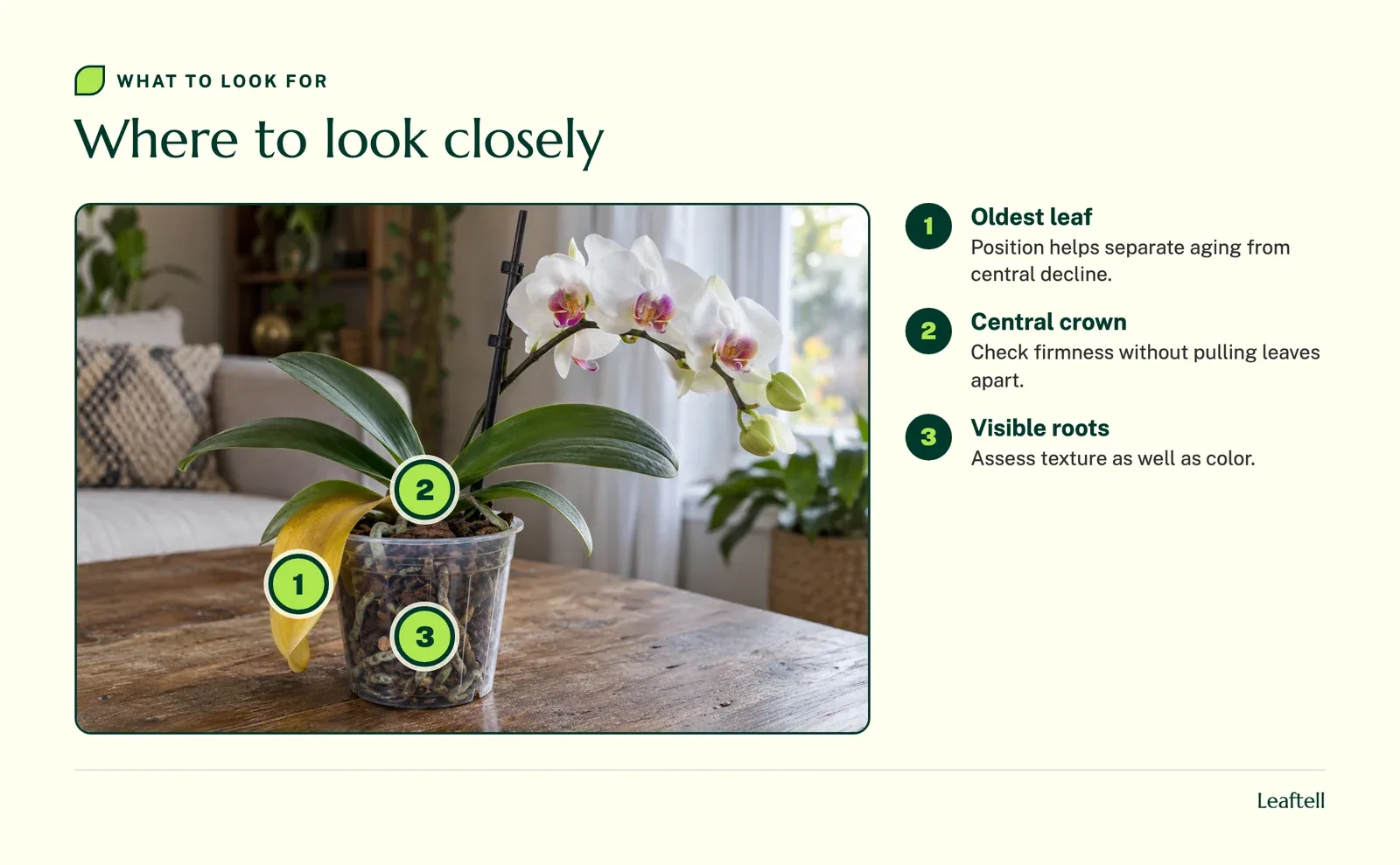
Find the leaf's position before deciding what the color means. A single oldest lower leaf gradually yellowing on an otherwise firm moth orchid deserves a different response from new leaves yellowing at the center. Look at the crown, the point from which leaves emerge, without pulling it apart. Softness, spreading discoloration, or a loose central leaf warrants prompt expert assessment.
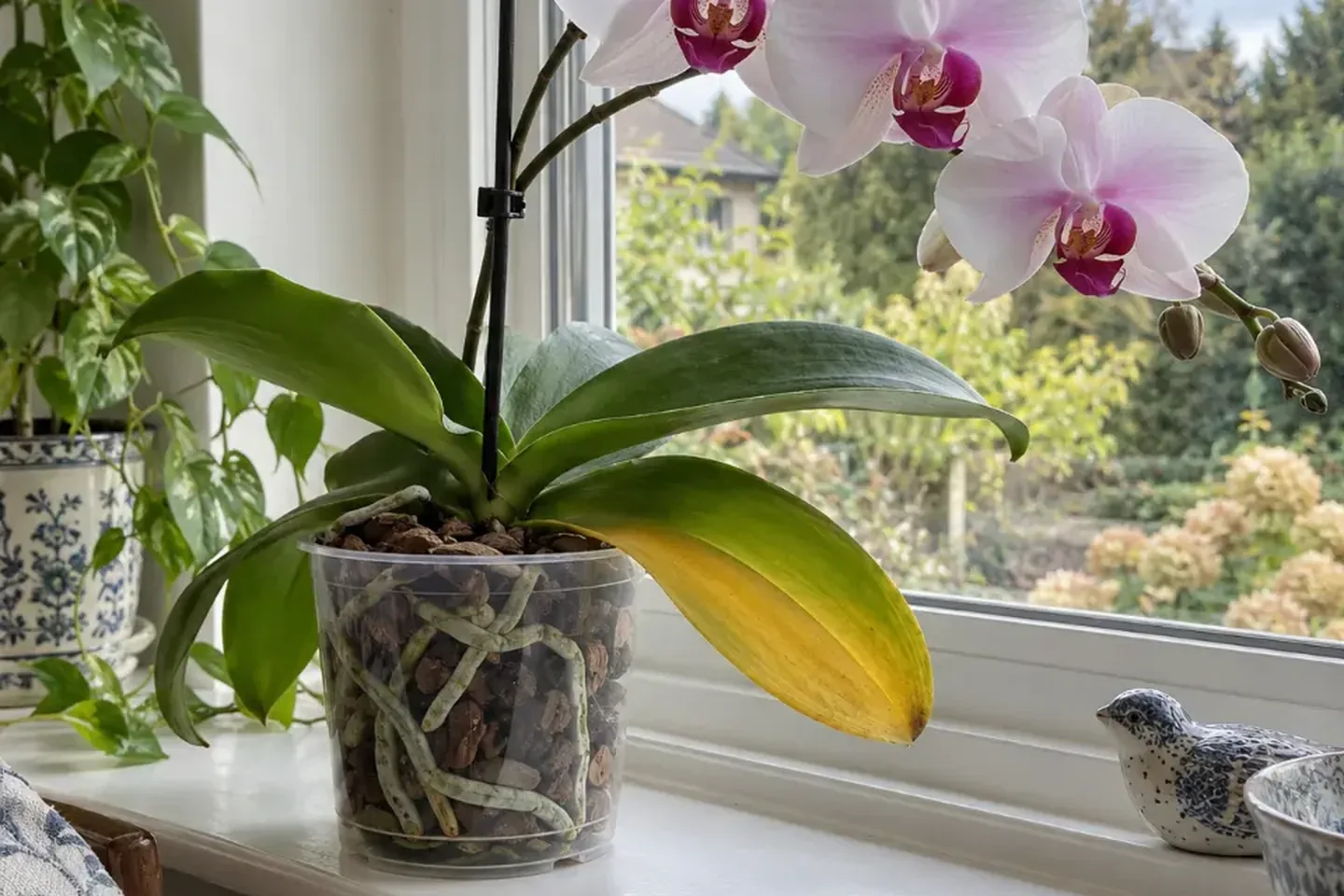
Photograph the entire orchid, including its container, and note how many leaves remain firm and green. Flowering can draw attention away from leaf and root conditions, so do not judge overall health by whether blooms are still present. Likewise, a finished flower spike is not the same tissue as a yellowing leaf.
The general yellow leaves on plants guide helps describe patterns, but orchid structure needs its own context. If collapse accompanies the color change, compare drooping plant while keeping the orchid's substrate in mind. Record the date the yellowing began and whether the plant was recently purchased, moved, or repotted. A photograph of one detached leaf cannot show those distinctions, so preserve the plant's arrangement before removing anything. Include the lowest leaf attachment and the central growing point in that record.
The American Orchid Society distinguishes a single lower phalaenopsis leaf yellowing with age from yellowing associated with root loss or environmental stress. Check the remaining leaves and roots before intervening.
Use these observations to decide whether to watch, adjust drainage, or seek help.
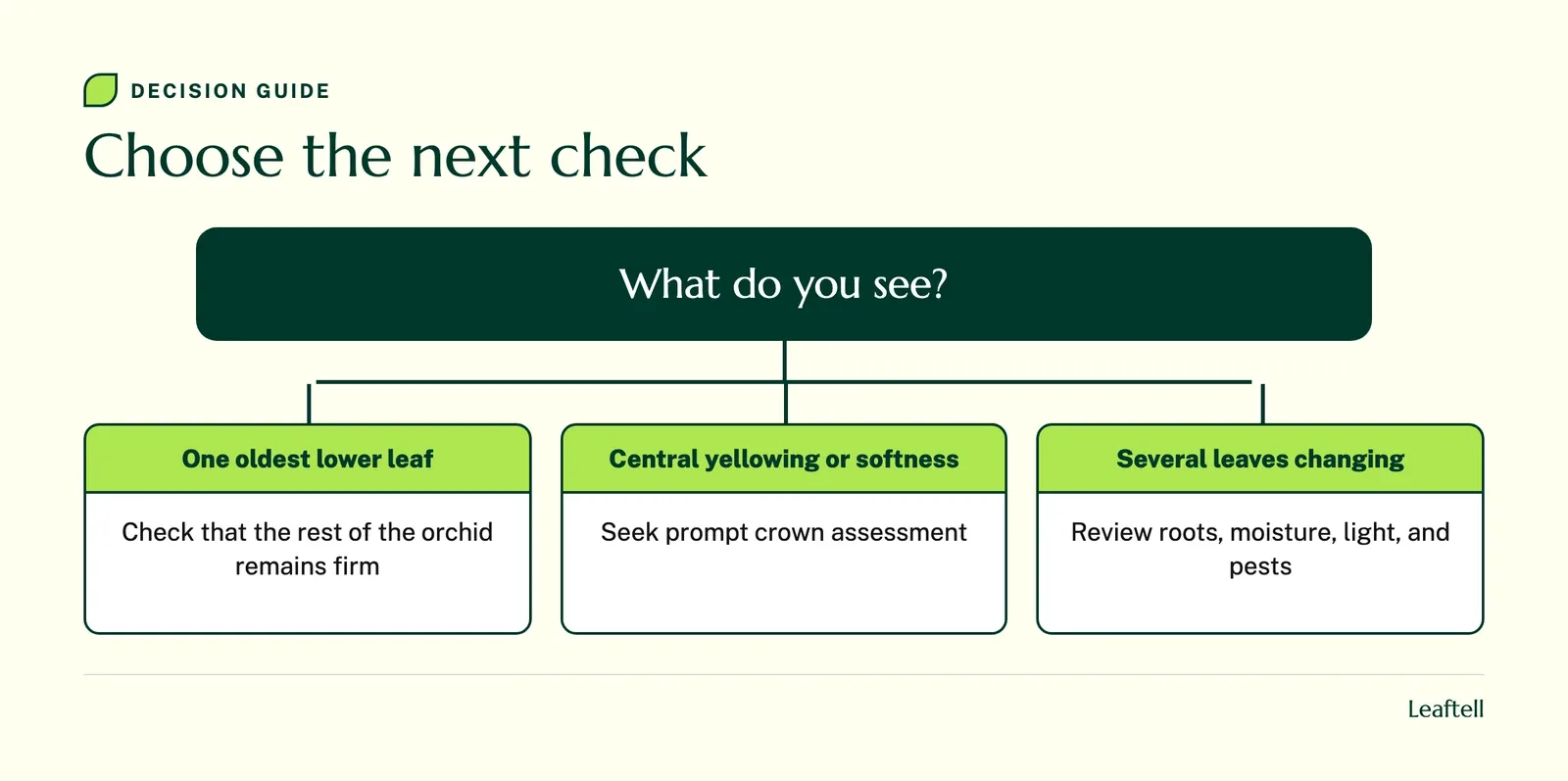
| What you find | Best next check |
|---|---|
| Only the lowest old leaf yellows | Check that the crown, remaining leaves, and roots stay firm. |
| Central leaf yellows or loosens | Seek prompt assessment of the crown rather than waiting for routine aging. |
| Bark dry on top, mossy center still wet | Assess the whole root zone and remove trapped cover-pot water. |
Check roots and bark or moss before watering
Photograph yellow leaves before removal and do not tear tissue at the crown. A naturally aging leaf may release on its own.
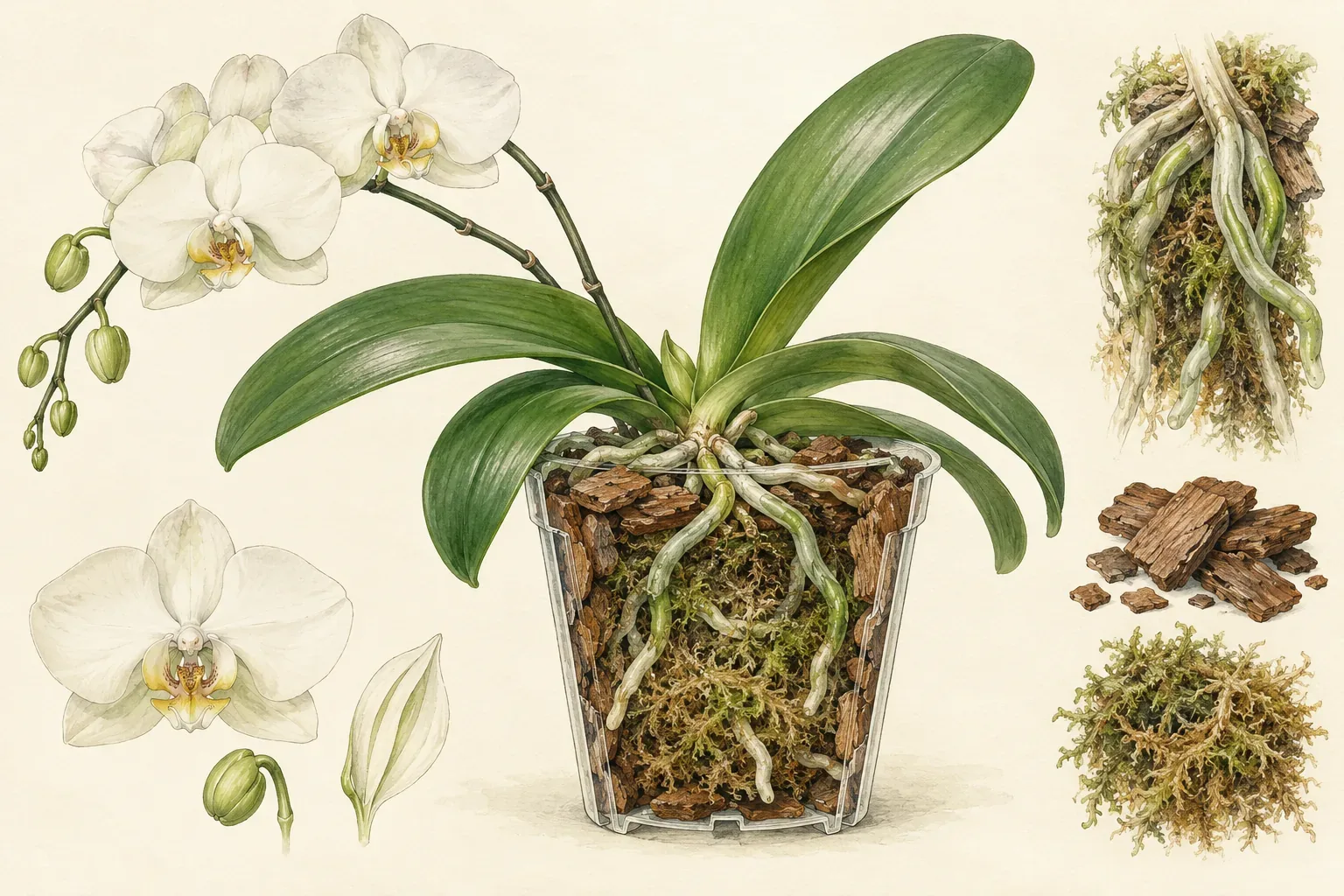
Inspect the growing medium rather than applying a standard houseplant-soil rule. Moth orchids are often grown in bark or moss, which can retain and release moisture differently. The top may look dry while the center stays wet, especially in tightly packed material inside a decorative pot. Lift the inner pot and check whether runoff is trapped below it.
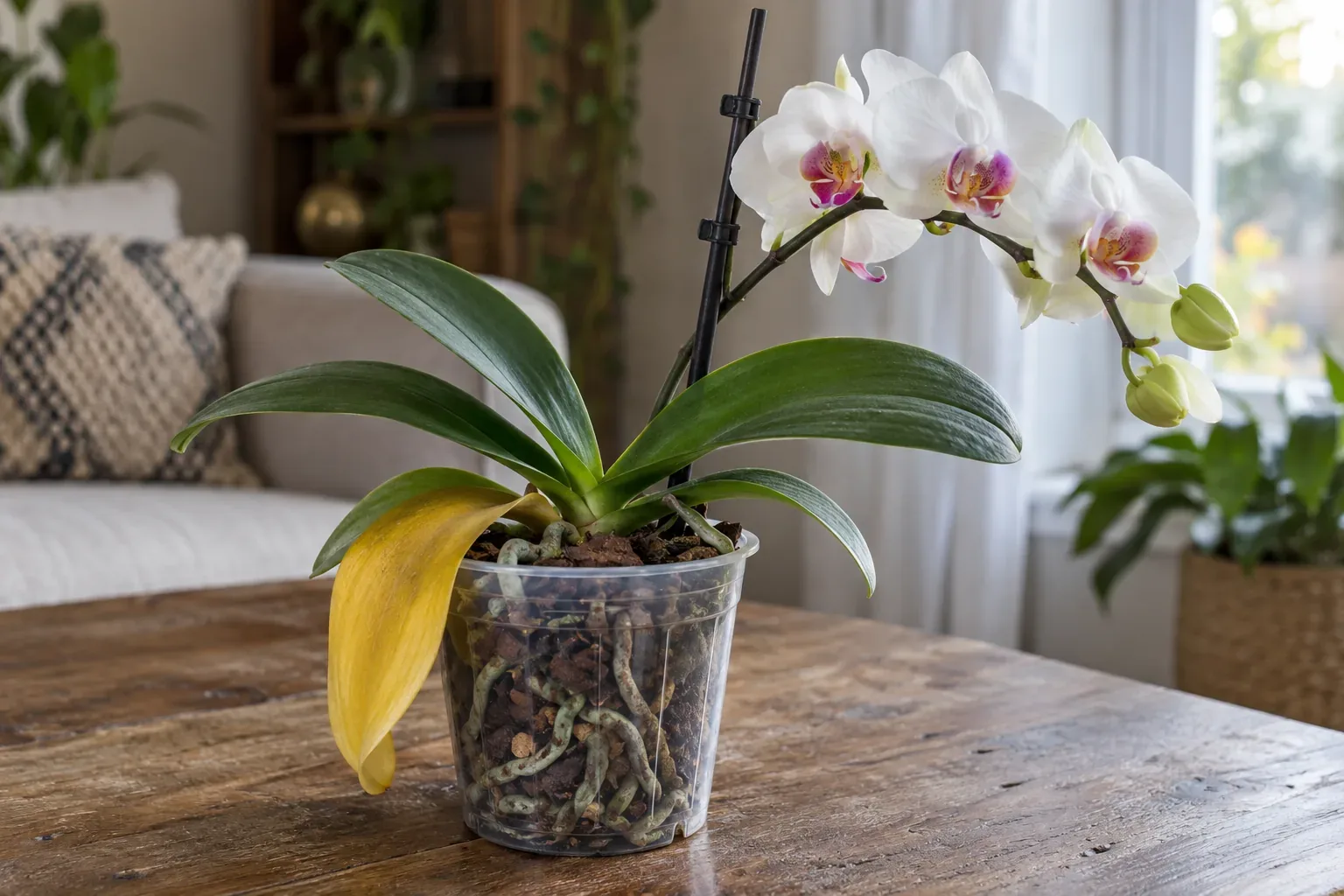
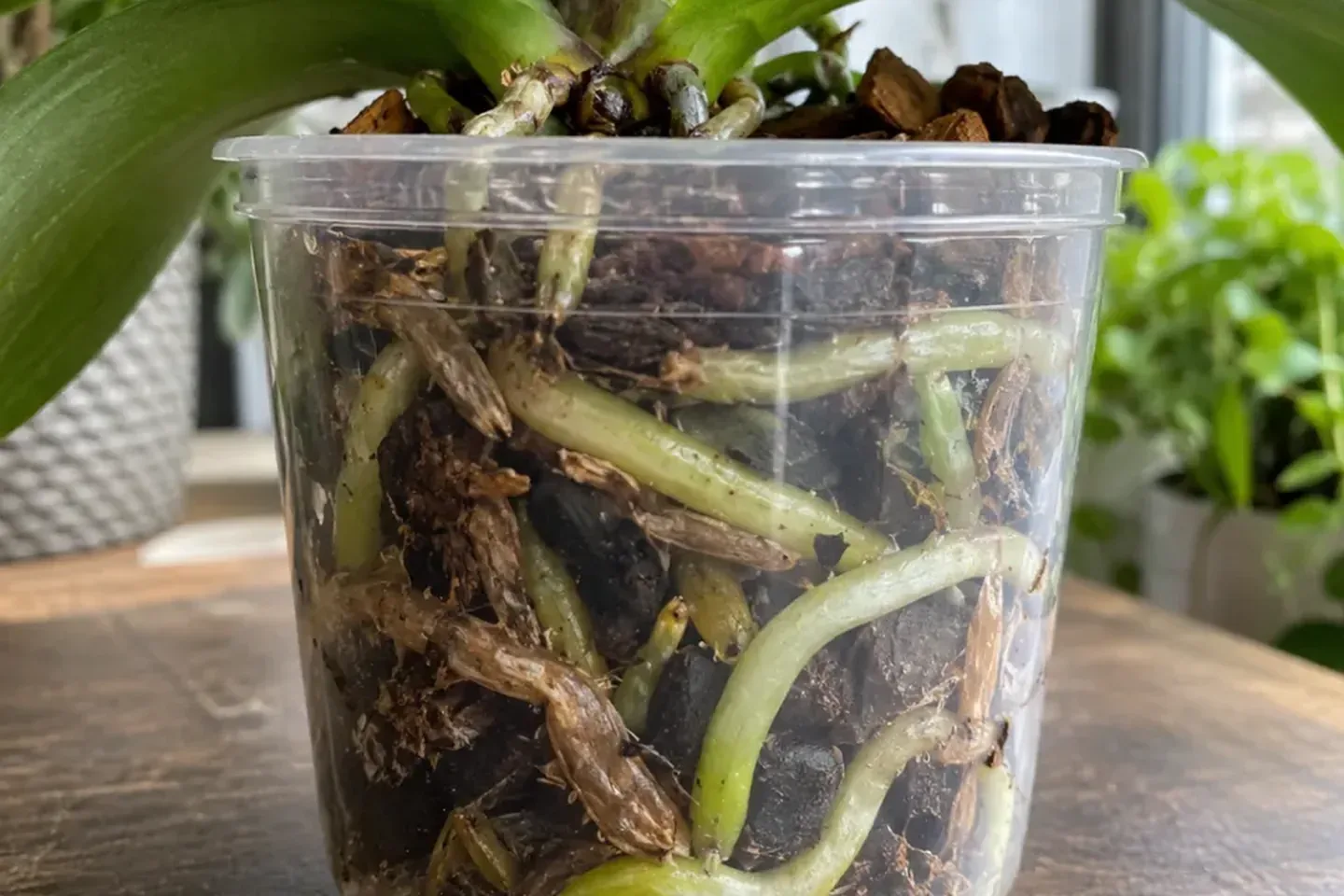
Transparent containers can help you observe roots without repeated unpotting. Many healthy moth-orchid roots change appearance as they wet and dry, but color is only one clue. Firmness and the condition of the outer root layer matter. Soft, hollow, or disintegrating roots need closer investigation through how to fix root rot.
Compare overwatered plant symptoms if the root zone stays continuously wet. Avoid adding water because yellow leaves look thirsty when the medium is already saturated. The article on how to tell if plant needs water provides a useful observation framework, though its soil examples must be adapted to bark or moss. Record the medium type in your notes so advice about moisture can be matched to the actual pot rather than to a generic watering interval.
Light changes and falling flowers
Flowers can fall as a display ends, while yellow leaves may have a separate cause. Record both timelines rather than treating simultaneous changes as one diagnosis.
Check whether the yellow or pale area faces the window and whether the orchid recently moved into stronger sun. Leaves developed in a protected location may be injured by abrupt exposure. A broad bleached area with changing texture deserves a different investigation from an evenly aging bottom leaf. Photograph the exposed and sheltered sides for comparison.
Provide bright conditions suitable for a moth orchid while avoiding sudden harsh exposure. A curtain or a position slightly farther from the glass may help, depending on the window and season. Do not keep relocating the plant daily; choose a sensible arrangement and watch the response. Review plant light requirements for the difference between room brightness and light reaching the leaves.
Check temperature at the window too, especially overnight. A leaf pressed against cold glass can suffer even when the room feels comfortable. Leave space around the foliage and maintain appropriate airflow without a direct drying blast. If you also see distinct spots or insect signs, compare leaf spot disease instead of assuming every mark is sun damage. The timing and position of the change are essential evidence when you seek a more specific assessment.
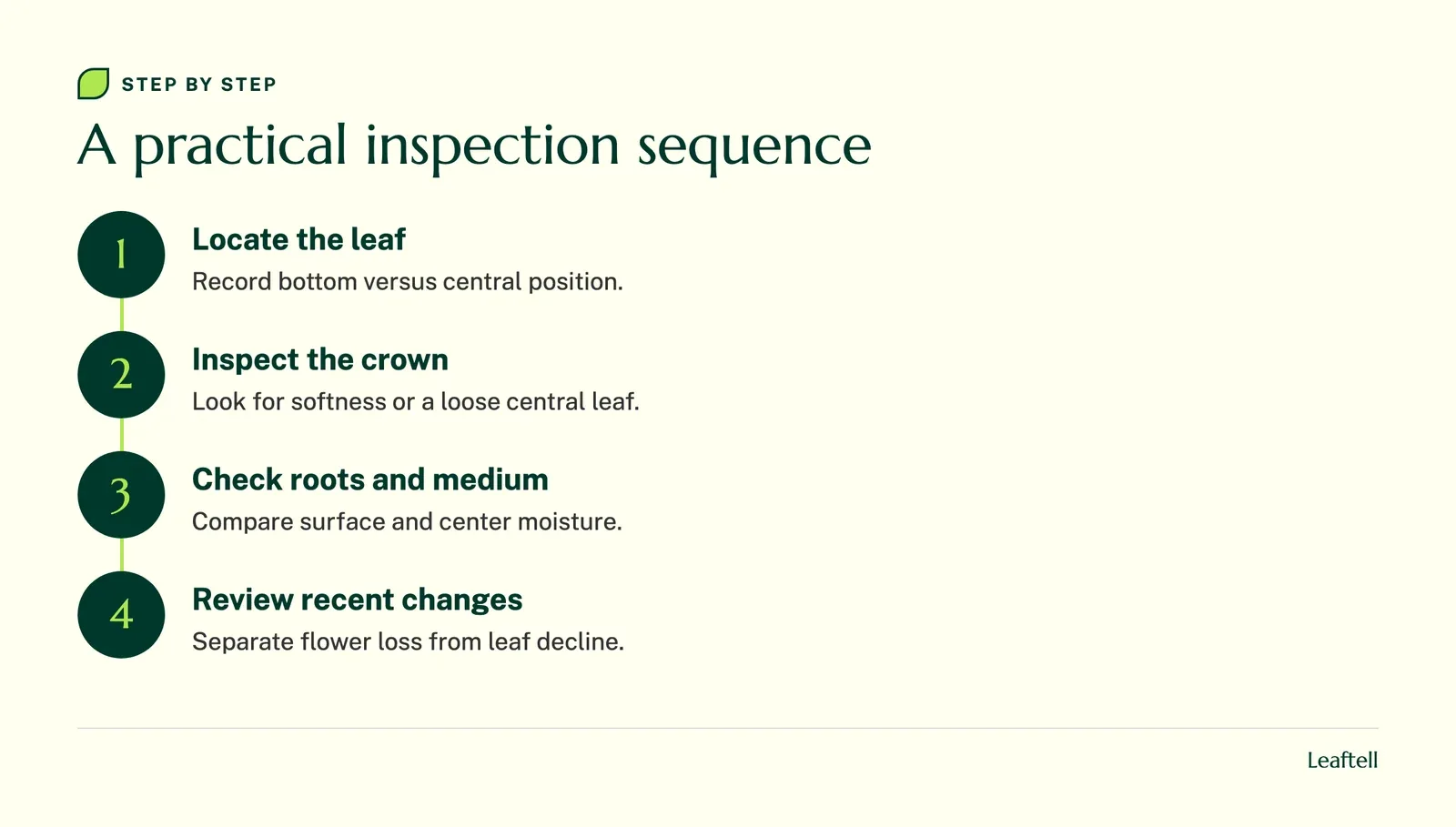
How to inspect a yellowing moth orchid
- Locate the changed leaf
Find whether it is the oldest leaf at the bottom or a newer leaf near the center. Photograph its attachment while it is still in place. Check the crown without pulling the leaves apart, and record whether other leaves remain firm.
- Look through the container
Use a transparent pot to view roots where possible. Note firmness and the condition of the outer root layer, not only color. Avoid repeated unpotting when you can see enough without disturbing the plant.
- Check bark or moss
Lift the inner pot out of its decorative cover and look for trapped runoff. Assess the center as well as the surface. Bark and tightly packed moss can behave differently, so note what the plant is actually growing in.
- Review the window and timeline
Record a recent move, stronger sunlight, cold glass contact, and when flowers began to fall. Compare the window facing leaves with the sheltered ones. Keep the leaf and flowering timelines separate until the evidence supports a shared cause.
Inspect pests before feeding
Look beneath the leaves and around their bases for insects or waxy deposits. Moth orchids can conceal pests where the leaves overlap and around stakes or clips. Use magnification and photograph any suspected organism before cleaning it away. Cottony clusters call for mealybugs on plants, while unexplained discoloration without an organism needs a broader investigation.
Do not add fertilizer as the first response to yellow foliage. Review recent feeding, the medium, and the roots. Feeding a plant whose roots are failing does not repair those roots. If a fertilizer is appropriate once the plant is stable, choose a suitable product and follow the label; never combine multiple products in a rescue mix.
Keep any treatment or fertilizer away from children and pets. Check the orchid's actual identity against the ASPCA plant toxicity list rather than assuming that every plant sold as an orchid has identical safety implications. Products and potting materials remain separate exposure concerns even when a plant is listed as non-toxic. Use physical cleaning first for accessible confirmed pests, adapting the method to the leaf and crown. Avoid leaving water pooled where leaves meet, and seek host-specific advice before applying treatments to sensitive blooms or damaged tissue.
Follow roots and new losses
On day one, record the affected leaf position, root appearance, medium, and drainage arrangement. On day three, check whether the center of the pot remains wet and whether the crown is firm. At day seven, compare the number of newly affected leaves. At day fourteen, review the trend without expecting a mature orchid to produce a replacement leaf on demand.
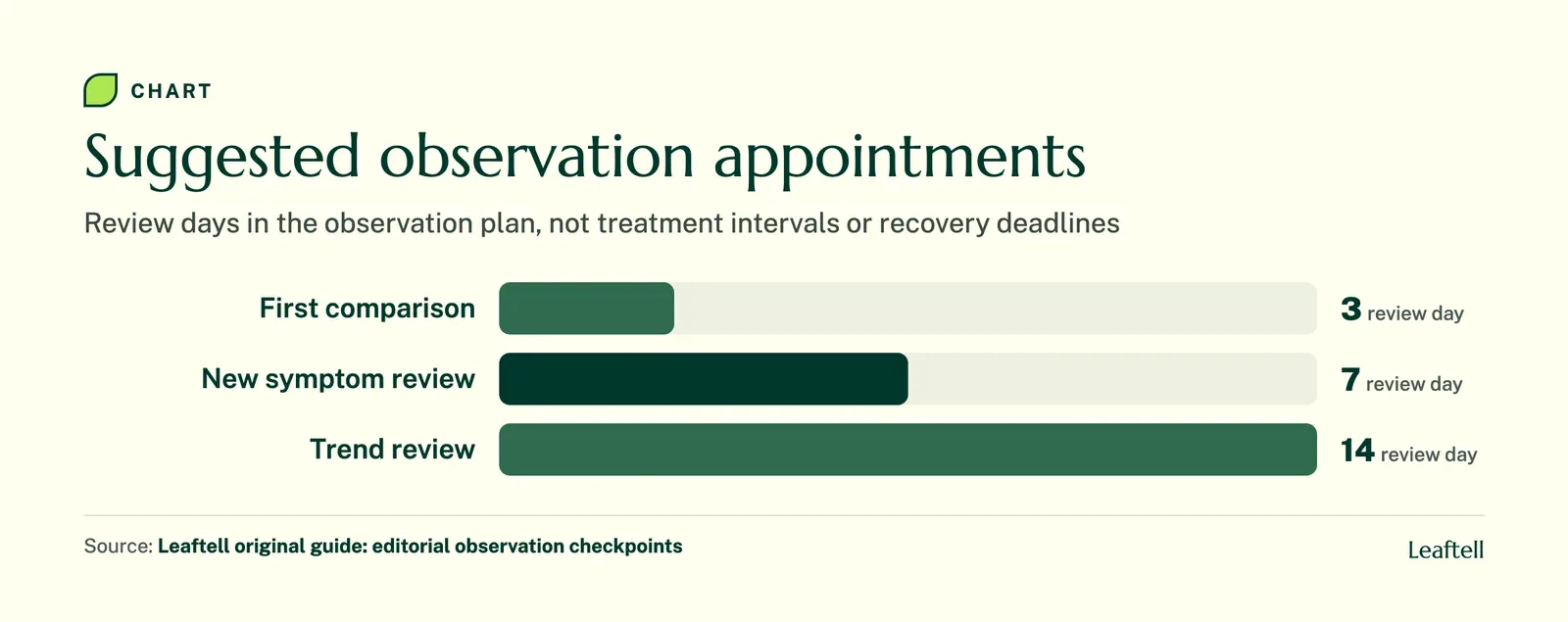
An old yellow leaf may continue drying even after growing conditions improve. Do not pull a firmly attached leaf away merely to make the plant look healthier. Follow suitable orchid-care guidance for removing dead material, and keep tools clean if a cut is necessary. New crown softness or rapid loss of several leaves requires earlier attention than the scheduled review.
The indoor plant care hub helps organize routine observations, and plant problems provides other symptom routes. Unlike a pothos plant care routine, moth-orchid care must account for its specialized medium and growth structure; do not copy the vine's watering habits. Bring a clear view of the roots, crown, pot, and growing location to an orchid grower or extension adviser if decline continues. That combination is more informative than a bloom photograph or leaf color alone.
Get help before crown collapse
Get prompt advice from an orchid grower or extension service for a soft crown, a loosening central leaf, rapid loss of several leaves, or extensive root damage. Send views of the crown, roots, pot, and window position. Do not wait for a scheduled check if those signs appear.
Check your orchid in Leaftell. The check uses your answers; photos stay on your device.
Sources
Check your growing conditions with the plant watering calculator.
Frequently asked questions
An old spent leaf can often be left to release naturally. Do not tear tissue near the crown; investigate multiple yellow leaves or soft tissue first.
For moth orchids, check the condition of roots and bark or moss rather than using one interval. Drain thoroughly and avoid leaving water in the crown.
A fully yellow aging orchid leaf generally will not regain its original green. Look for healthy roots and stable new growth.
Possible causes include pests, deposits, and damage. Inspect both surfaces and photograph the spots before cleaning; a white mark alone does not identify the problem.
Check the crown, roots, medium, and recent light changes. Correct the supported cause and seek help promptly if the crown is soft or roots are extensively damaged.
Baking soda is not an orchid revival treatment. Avoid adding kitchen chemicals to sensitive roots or the crown.
Share article
About the author

Keep checking your plant
Plant care reference
Indoor plant care
Build a routine around your plant, light and potting mix.
Plant care reference
Why is my plant dying
Trace leaf and root symptoms before choosing a care change.
Plant care reference
Pothos plant care
Choose a growing spot and prune a trailing pothos for fuller growth.
Plant care reference
How to fix root rot
Inspect root firmness and drainage, then decide whether to repot.