How to Propagate Snake Plant: Division, Pups or Leaf Cuttings
Filip Leszczyński Updated 19 November 2026 13 min read
In this article
To propagate a snake plant, either divide the clump at the roots or root leaf cuttings. Division gives you a new plant the same day. Leaf cuttings give you many plants from one leaf but take much longer. This is the same plant sold as mother-in-law's tongue, so the steps are identical whichever name is on the tag.
The choice that matters most is not water versus soil. It is whether your plant has yellow edges or another pattern you want to keep. Leaf cuttings from variegated snake plants usually grow back plain green, so the yellow-edged plant you love only copies itself through division or its own pups. Check your leaves before you pick up the knife.
Pick the method by the plant you have
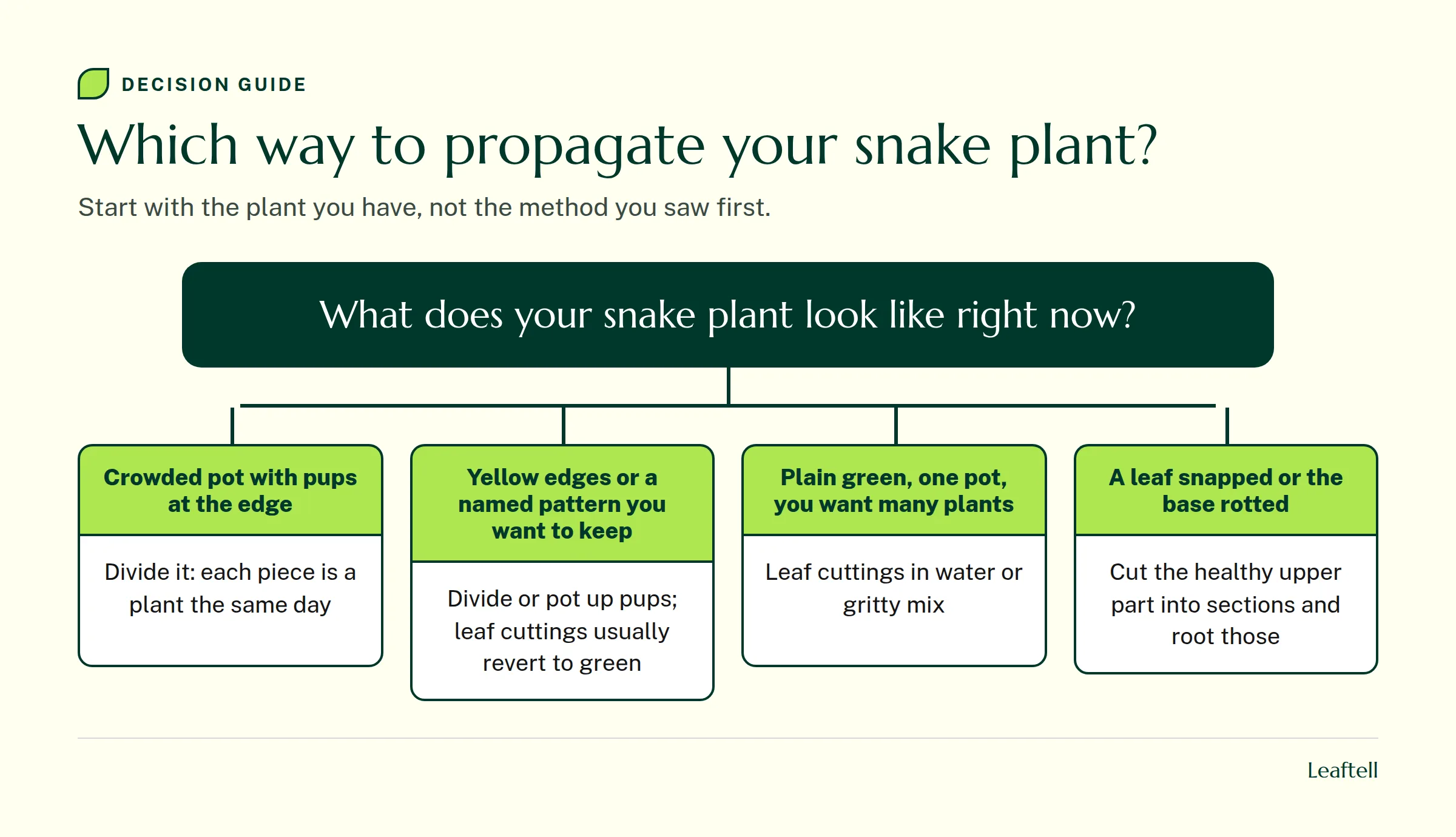
Most snake plants can be propagated three ways: pot up the pups, divide the clump, or root leaf cuttings. The RHS lists exactly those three and suggests spring, when the plant comes back into growth. Here is how to choose.
| Your plant | Best method | Why | Watch out for |
|---|---|---|---|
| Crowded pot, pups at the edge | Division | Each piece is a rooted plant the same day | Pieces with no roots of their own |
| Yellow edges or a named pattern | Division or pups | Keeps the pattern; leaf cuttings tend to revert to green | Cutting leaves anyway and losing the edges |
| Plain green, one pot, want many plants | Leaf cuttings | One leaf makes several plants | A long, slow wait and rot in wet mix |
| Broken leaf or rotted base | Leaf cuttings from the healthy part | Saves tissue that would be lost | Rooting a piece that is already soft |
If you are not in a hurry and the plant is not crowded, leave it alone. A snake plant that fills its pot will push up pups on its own, and those pups are the easiest propagation material you will ever get.
Divide the clump: the fastest way to a new plant
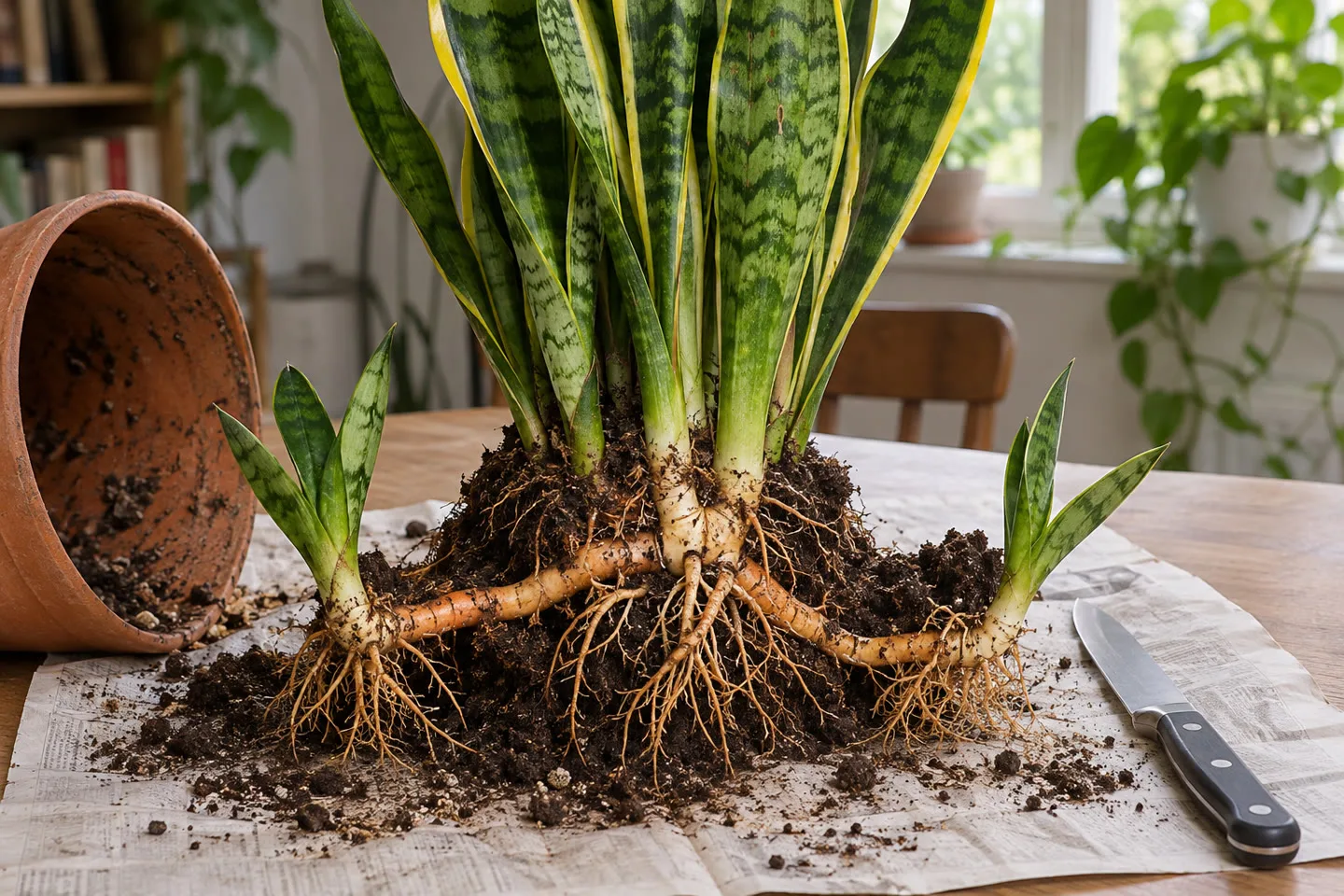
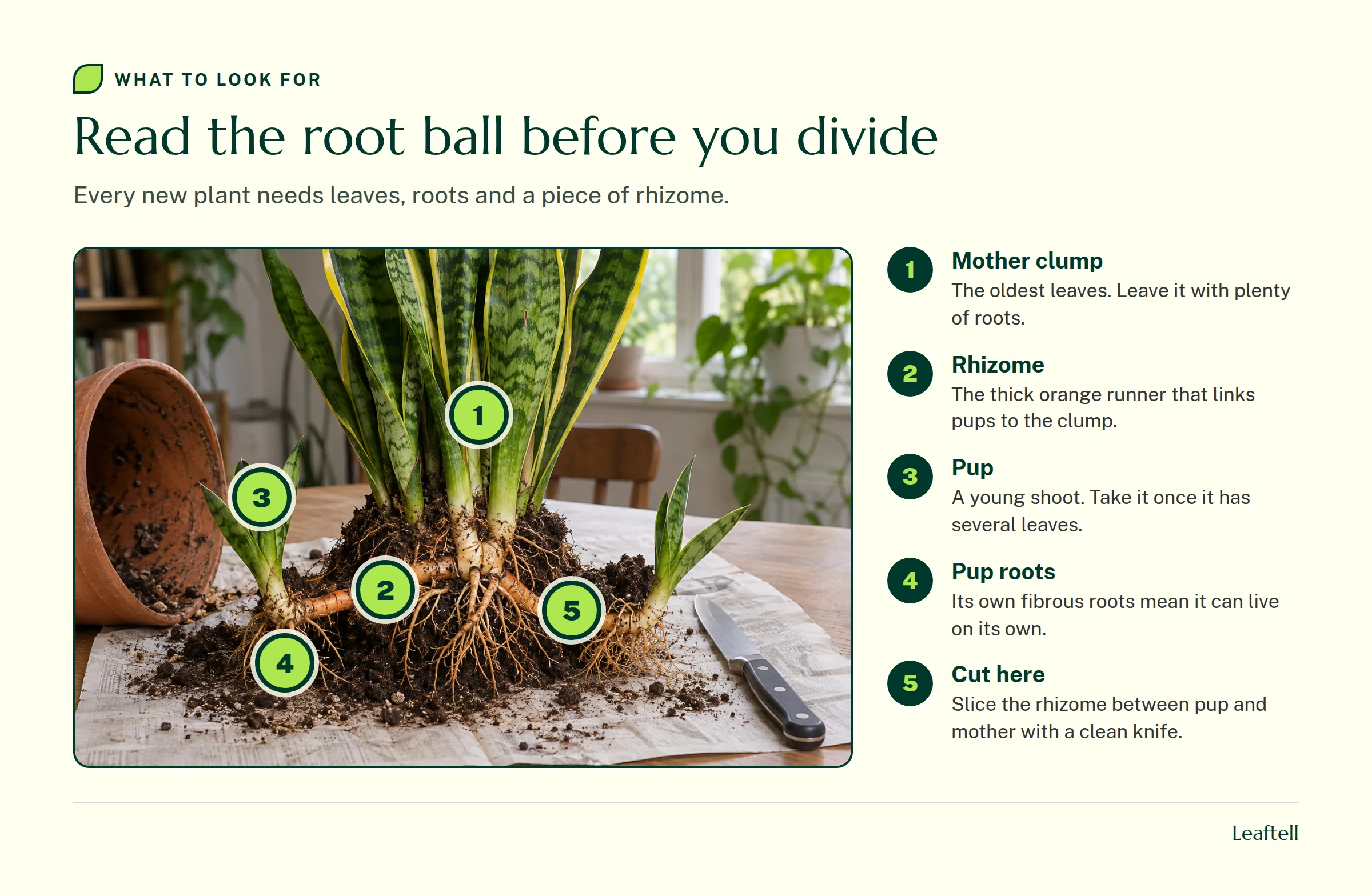
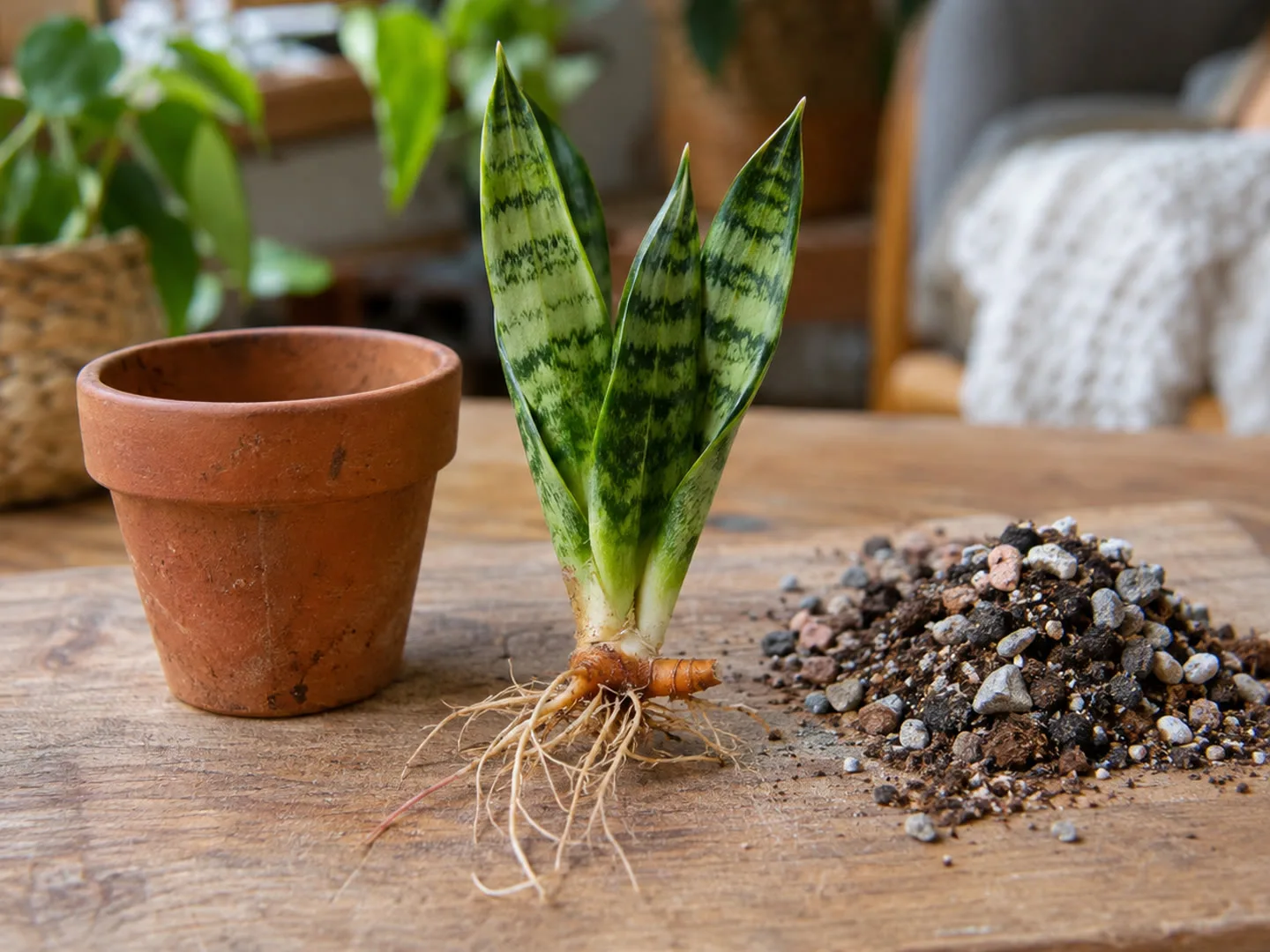
Division works because a snake plant spreads by rhizomes: thick, pale orange runners under the soil that send up new shoots. Each shoot that has its own leaves and roots is already a plant. You are only cutting the connection.
How to propagate a snake plant by division
- Water a day or two before
Lightly moist roots tear less than bone dry ones, and a soggy root ball is messy and heavy. Water the plant a day or two ahead, not right before.
- Slide the plant out of its pot
Tip the pot on its side and ease the plant out. If it is stuck, run a knife around the inside edge. A plant that has cracked or bulged a plastic pot is a good candidate for division anyway.
- Loosen the soil and find the rhizomes
Crumble away enough soil to see which leaves connect to which. Look for the orange rhizomes running between the main clump and the pups.
- Cut each piece free
Use a clean, sharp knife to slice through the rhizome between pieces. The RHS says each piece needs one or more leaves attached to fibrous roots, and that the root ball can often be pried apart by hand. Throw away any soft or dead sections.
- Pot each division at the same depth
Plant each piece in a pot just a little wider than its roots, using a gritty, well drained mix. Set it at the depth it grew before and firm the mix so it stands up. Tall pieces may need a stake until they root in.
- Wait before watering again
Let the mix dry before the next watering. Fresh cuts and disturbed roots in wet mix are where rot starts.
Size the pot to the roots, not the leaves. A small division in a big pot sits in wet mix the roots can't reach, and snake plants punish that faster than almost anything. Our guide to how to repot plants covers pot size and drainage, and the potting mix guide explains how much grit to add.
Potting up pups
A pup is a division you don't have to dig for. When a pup at the edge of the pot has several leaves, you can often loosen the soil around it, cut the rhizome that links it to the mother and lift it out with its roots. Plant it on its own or with a few others for a fuller pot. Leave very young pups with only one or two leaves attached for now; they root better while the mother feeds them.
Take leaf cuttings: many plants from one leaf
Leaf cuttings are the method most videos show, and they work. They are just slow, and a leaf section has no way to tell you it is rotting until it is soft.
Pick a firm, healthy, mature leaf and cut it off at the base with a clean knife. Then slice it crosswise into sections. The RHS suggests sections about 2 inches long, kept the same way up as they grew. Leave them somewhere dry for a day or two so the cut ends callus over before they touch water or soil.
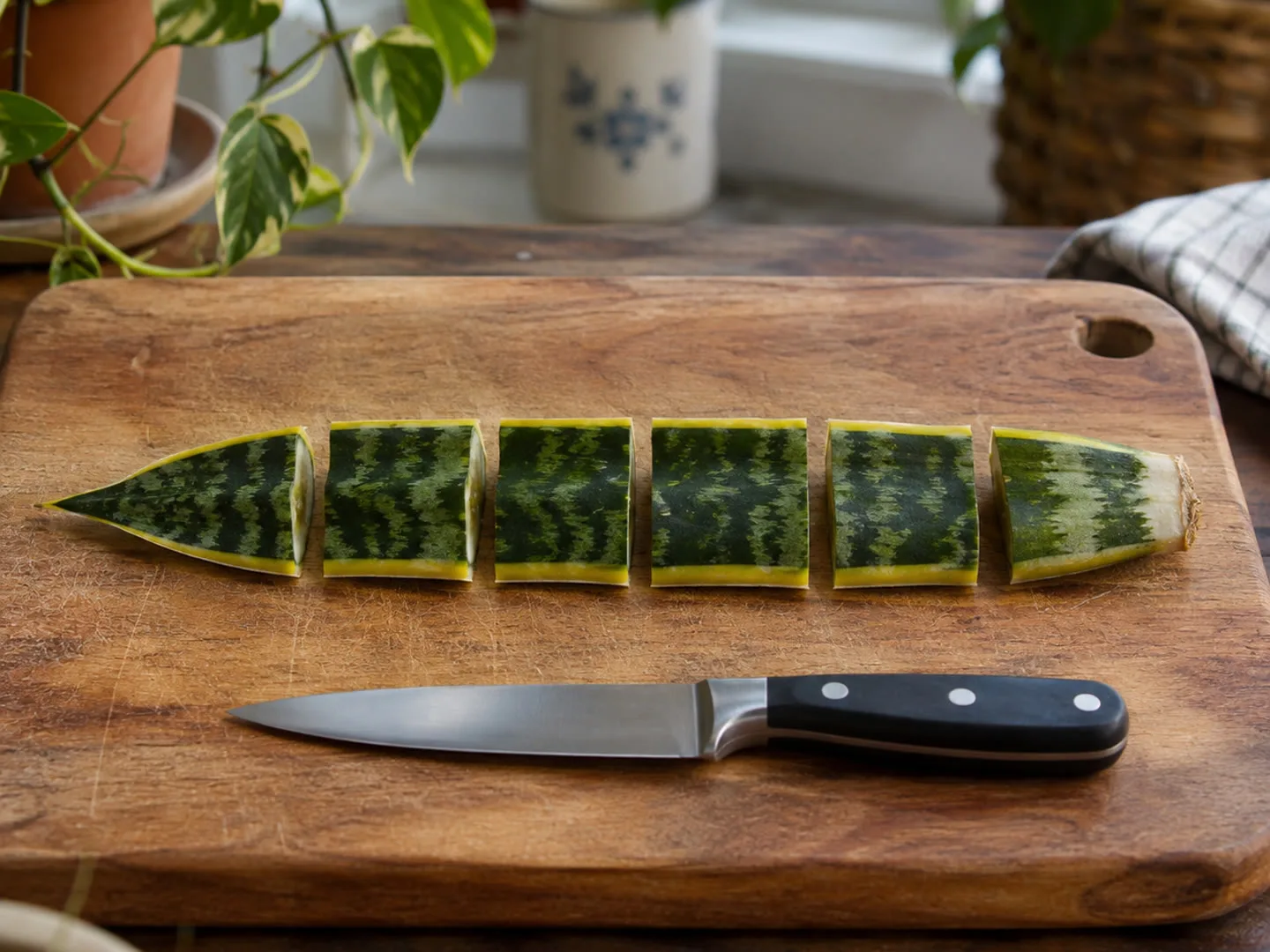
Orientation is the step people miss. A leaf section only roots from the end that was closer to the soil. Plant it upside down and it will sit there doing nothing. Before you cut, lay the leaf flat and nick a small notch at the bottom of each section, or line the pieces up on the board in order so you know which end is which.
Rooting leaf cuttings in water
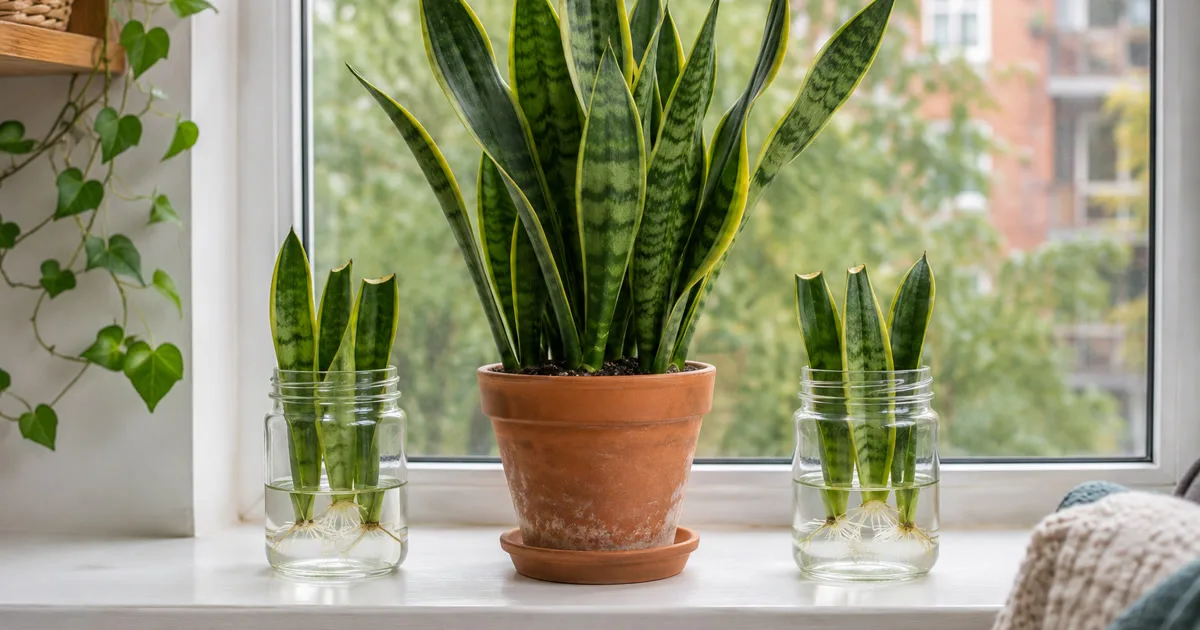
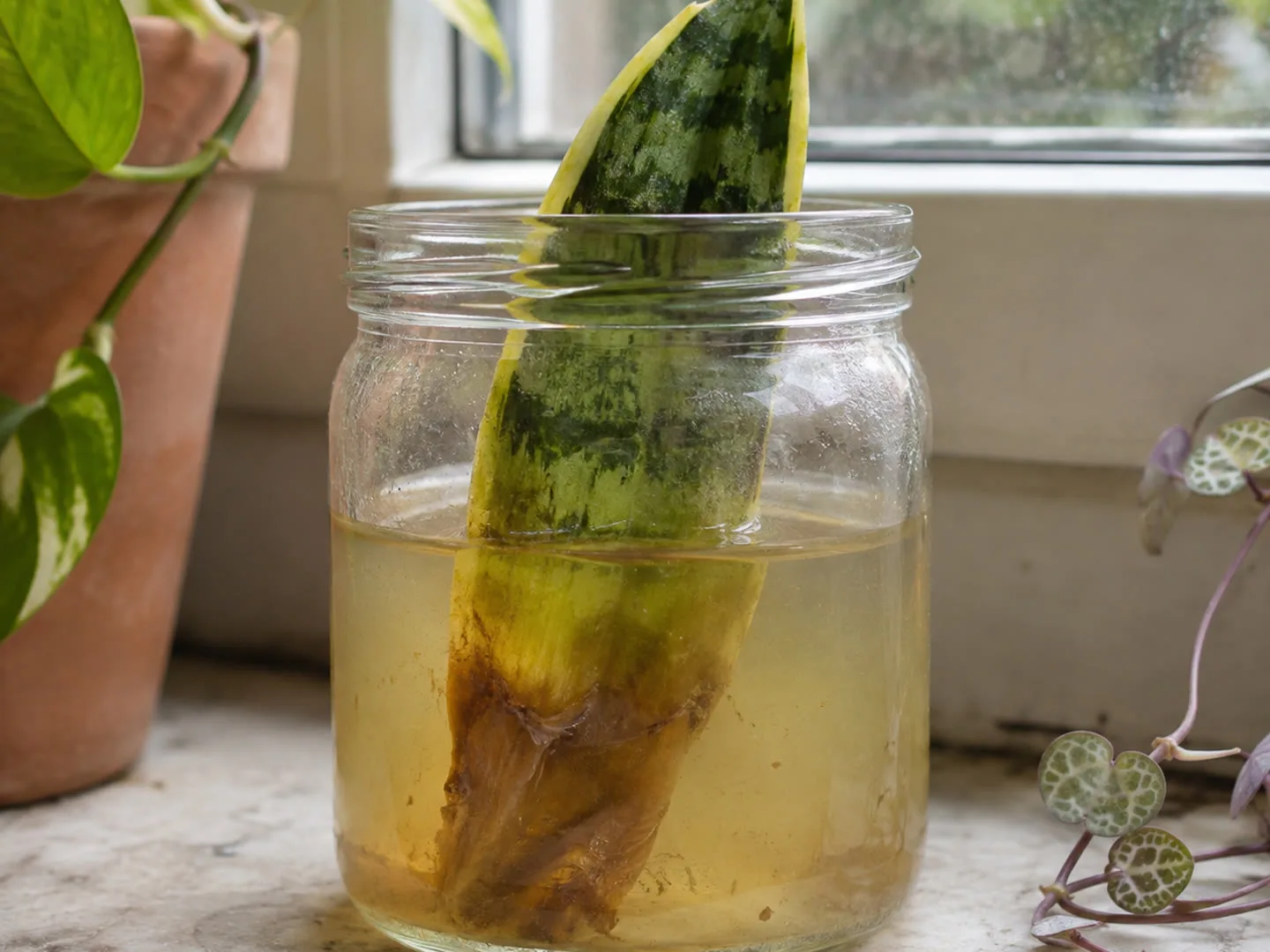
Stand the sections upright in a clear jar with only the bottom inch or so in water. Change the water whenever it looks cloudy, and at least once a week. Keep the jar in bright, indirect light, not hot direct sun on the glass.
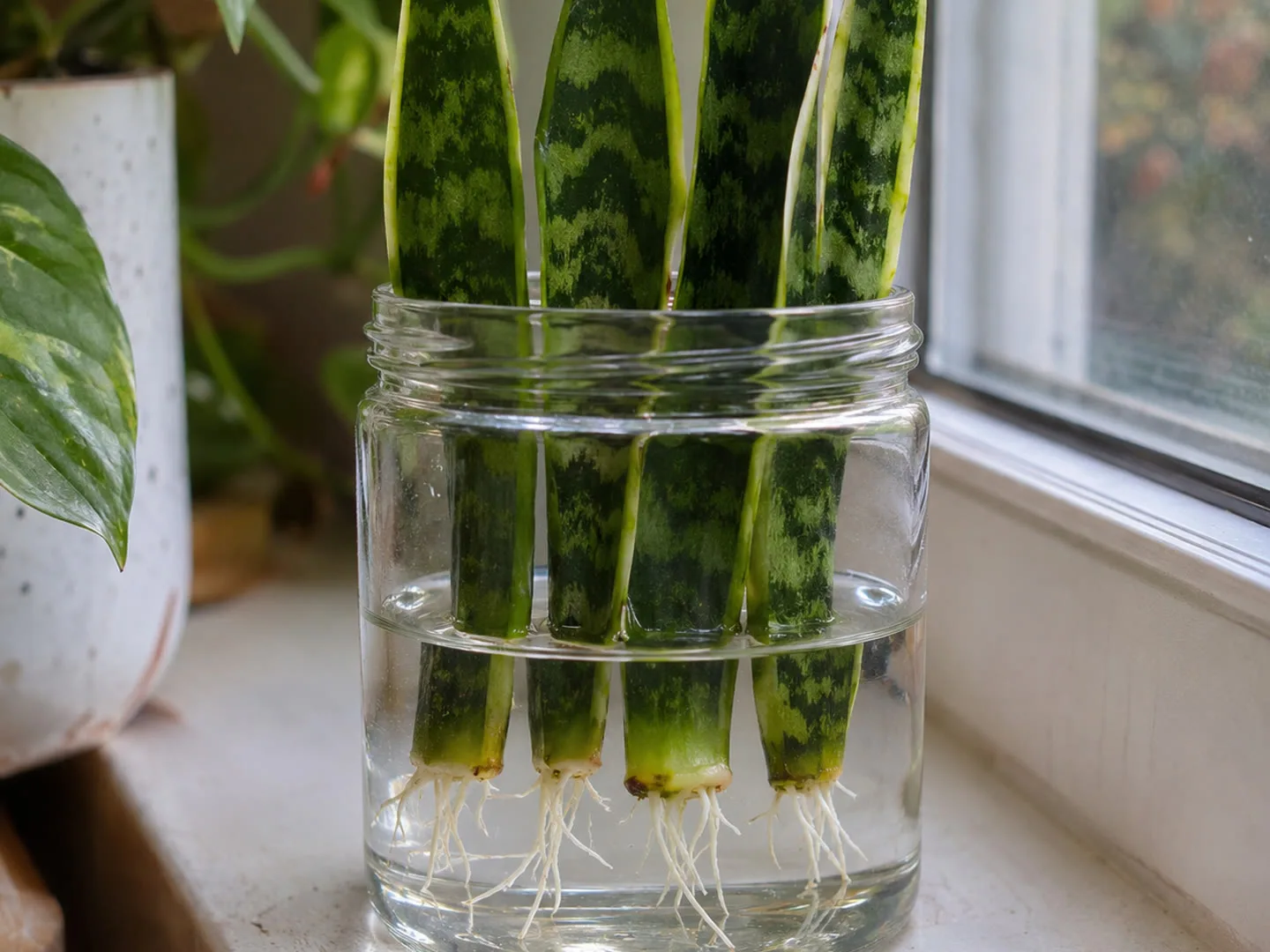
Roots come first. A new pup, the small pointed shoot that becomes the next plant, comes later and sometimes much later. Snake plants grow slowly, so a cool room or a winter windowsill stretches the wait. As long as the bottom end stays firm and pale, the cutting is still working.
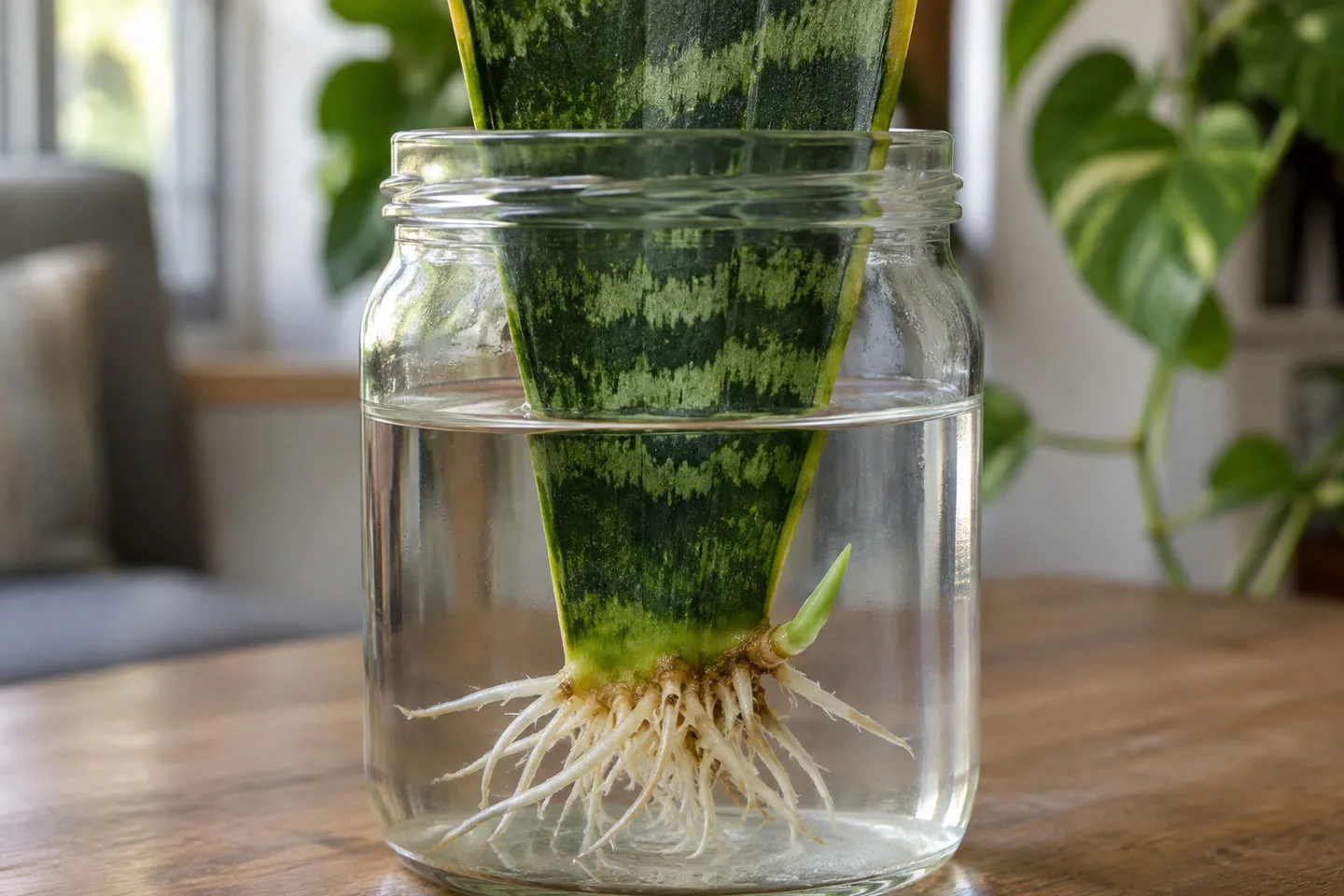
Pot the cutting into gritty mix once it has a good set of roots, ideally when a pup has started. Water roots need a gentle start in soil: keep the mix barely moist for the first couple of weeks, then let it dry between waterings like any snake plant.
Rooting leaf cuttings in soil
Fill a shallow pot with a gritty mix. The RHS suggests damp cuttings compost, or equal parts loam based compost and horticultural grit. Push each callused section in about halfway, bottom end down, and firm the mix so it stands upright.
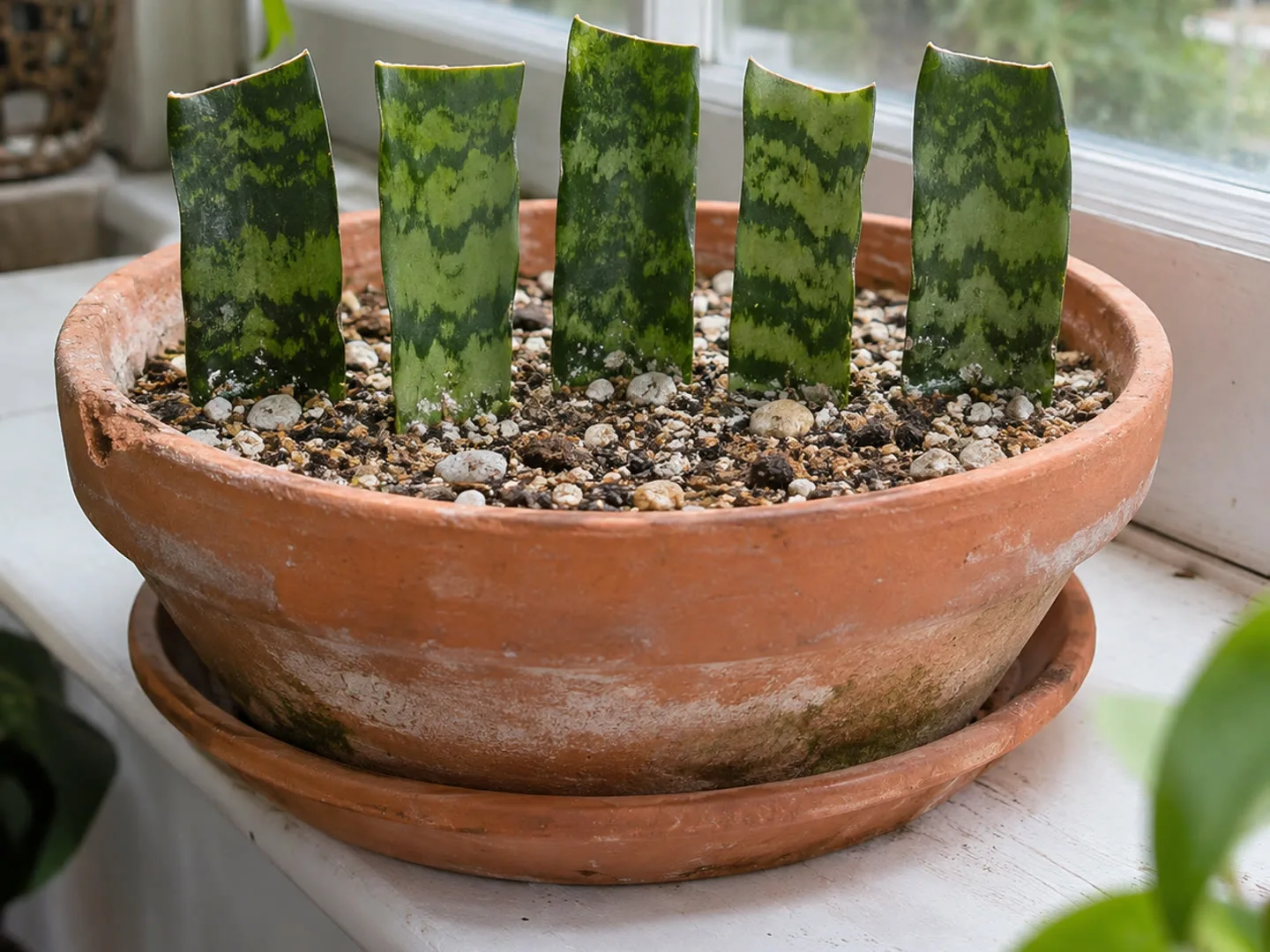
Keep the mix barely damp, never wet, in a warm, bright spot out of direct sun. The RHS suggests bottom heat of about 65°F, or a clear bag over the pot in a warm room; open the bag regularly so it does not drip. You cannot see roots in soil, so watch for a pup breaking the surface or resistance when you tug gently.
Soil skips the transplant step, which makes it the better choice if you tend to forget water changes. Water is better if you want to see what is happening and catch rot early.
Why yellow edges disappear on leaf cuttings
Leaf cuttings from a yellow-edged snake plant usually grow into plain green plants. The RHS says leaf cuttings work best with non-variegated plants because cuttings from variegated cultivars tend to revert to green. The plant is still a healthy snake plant. It just won't look like the one you cut it from.
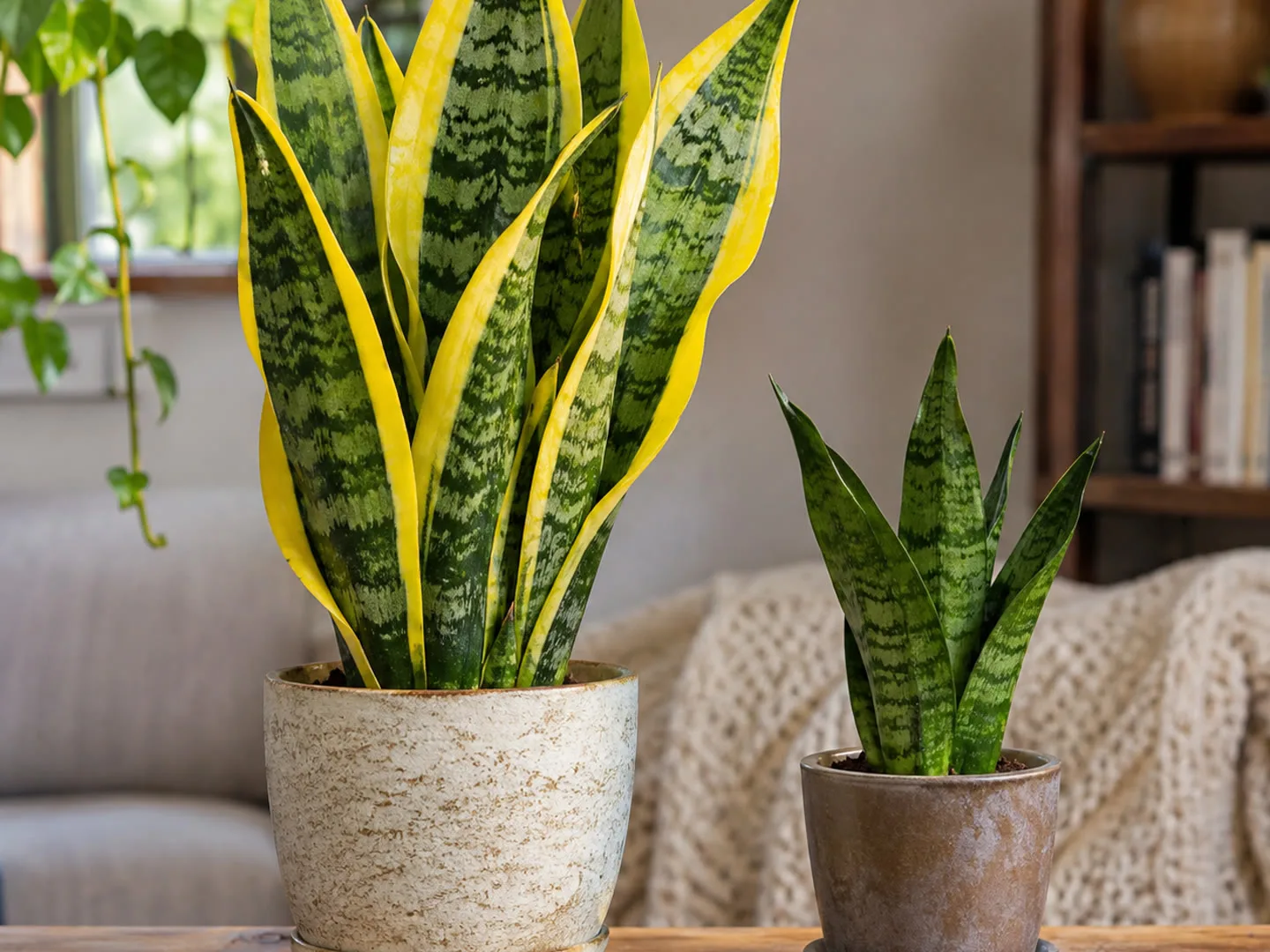
So if your plant is a yellow-edged type like 'Laurentii', the one NC State Extension describes as dark green with yellow edges, divide it or pot up its pups instead. Use leaf cuttings for plain green plants, or when you are saving pieces from a leaf that broke and don't mind a green result.
Propagating mother-in-law's tongue and other names
Mother-in-law's tongue, snake plant, good luck plant and golden bird's nest are all common names for the same species, now called Dracaena trifasciata and formerly Sansevieria trifasciata, according to NC State Extension. Everything above applies to any plant sold under those names.
Short, rosette shaped types like 'Hahnii' (bird's nest) spread the same way, so they divide easily. Whatever the name, the rule holds: division and pups copy the parent, leaf cuttings may not.
A note on named cultivars: some newer snake plant varieties are sold under a plant patent. A US plant patent lets the owner stop others from reproducing the plant asexually, which includes cuttings and division. If the tag says "propagation prohibited" or shows a plant patent number, don't propagate it without the owner's permission. Most common snake plants carry no such tag.
What goes wrong and what it costs
Most failures come down to too much water at the wrong time. Catch them early and you lose one section, not the batch.
- Planting a cutting upside down. It never roots. Cost: weeks of waiting for nothing.
- Skipping the callus. A fresh, wet cut end in water or damp mix rots more easily. Cost: a soft brown base.
- Stale water. Cloudy water grows bacteria at the cut end. Cost: rot that creeps up the section.
- Wet soil around cuttings or divisions. No roots means no way to use the water. Cost: rot before the plant can recover. If a mother plant already has mushy roots, the snake plant care guide and our root rot guide cover what to check first.
- Expecting a variegated copy from a leaf. Cost: a green plant where you wanted yellow edges.
- Cutting from a stressed plant. Leaves that are already yellow or soft root poorly. Sort out the cause first with the guide to snake plant leaves turning yellow.
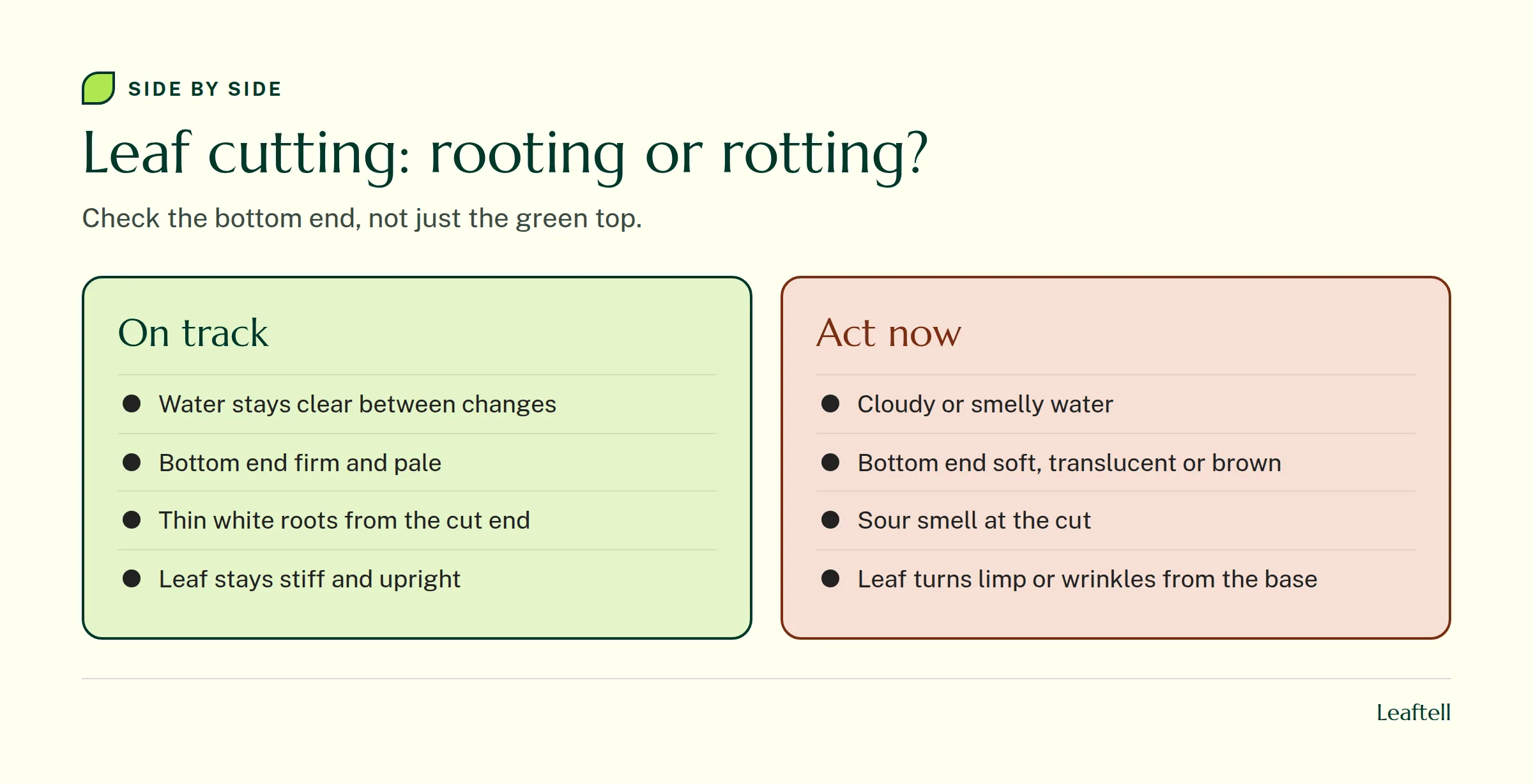
If the bottom of a section turns soft or brown, take it out, cut above the rot into firm tissue, let it callus again and restart in fresh water or dry mix. If the whole section is soft, compost it and cut a new one. Before watering any new division, check the mix with your finger first; the soil check before watering shows how.
Keep sap and cuttings away from pets and skin
Snake plants are toxic to cats and dogs, according to the ASPCA, and can cause nausea, vomiting and diarrhea if chewed. A row of jars on a low windowsill is easy for a cat to reach, so put cuttings up high and clear trimmed pieces away. The RHS also advises wearing gloves because the sap can irritate skin. For more on living with pets, see are snake plants pet safe. Call your veterinarian or a poison control service if a pet chews a leaf.
The one choice that decides how your new plants look
If you want a copy of the plant you have, divide it or pot up its pups. If you want lots of plants and don't mind plain green, root leaf sections, bottom end down, in fresh water or barely damp gritty mix. Either way, keep the new plants on the dry side until they show growth. The same patience works for other slow growers, and dividing or rooting a ZZ plant follows a very similar rhythm; for a faster project, try rooting pothos cuttings. Climbers root from the node instead, so how to propagate monstera starts with a different first cut.
If a cutting or the mother plant looks wrong and you are not sure why, check your snake plant in Leaftell with a photo of the whole plant, a close-up of the problem and a note on how wet the mix or water is.
Sources
Check your growing conditions with the plant watering calculator.
Frequently asked questions
Yes. Cut a leaf off at the base with a clean, sharp knife when it is damaged or when you want cuttings. A cut leaf does not grow back, but the plant keeps sending up new leaves from its rhizomes, and the leaf you removed can be sliced into sections and rooted.
Propagating a common snake plant at home is fine. Some newer named cultivars are sold under a US plant patent, which lets the owner stop others from reproducing the plant by cuttings or division. If the tag shows a plant patent number or says propagation is prohibited, leave that plant whole unless you have permission.
Keep them out of hot direct sun on a jar, which heats the water and scorches the leaf, and away from cold drafty glass in winter, which slows rooting. Don't leave them on low sills that cats or dogs can reach, because snake plants are toxic to pets.
Share article
About the author

Keep checking your plant
Plant care reference
Indoor plant care
Build a routine around your plant, light and potting mix.
Plant care reference
Why is my plant dying
Trace leaf and root symptoms before choosing a care change.
Plant care reference
Pothos plant care
Choose a growing spot and prune a trailing pothos for fuller growth.
Plant care reference
How to fix root rot
Inspect root firmness and drainage, then decide whether to repot.