Fiddle leaf fig dropping leaves: find the change, fix it
Filip Leszczyński 16 October 2026 12 min read

In this article
A fiddle leaf fig dropping leaves is usually reacting to a recent change: a move to a dimmer room, a cold trip home, a draft from a vent, or a watering routine that no longer matches how fast the pot dries. Check the root zone before you water again, because NC State names both too much and too little water as causes of leaf drop.
The classic trap: a fig moved from a bright nursery into your living room uses water far more slowly, so the same weekly drink that worked before now keeps the roots wet. Start a leaf-loss count today. Keep fallen leaves long enough to photograph their color and any spots, then clear them so tomorrow's count means something.
A photo of a bare trunk can't show you what changed in the last two weeks or whether the center of the pot is still soaked. That history is the diagnosis.
Reconstruct the last two weeks
Start with what changed before the leaves fell. Delivery, a darker room, a cold car ride, a heating vent, repotting or a new watering routine explain most sudden leaf loss on a fiddle leaf fig.
NC State's ficus lyrata profile recommends keeping these trees above 55°F (13°C) and identifies both excess and insufficient water as causes of leaf drop. A tree losing green leaves after a move needs its environment checked. A tree shedding spotted, soft leaves in wet mix needs its roots checked too.
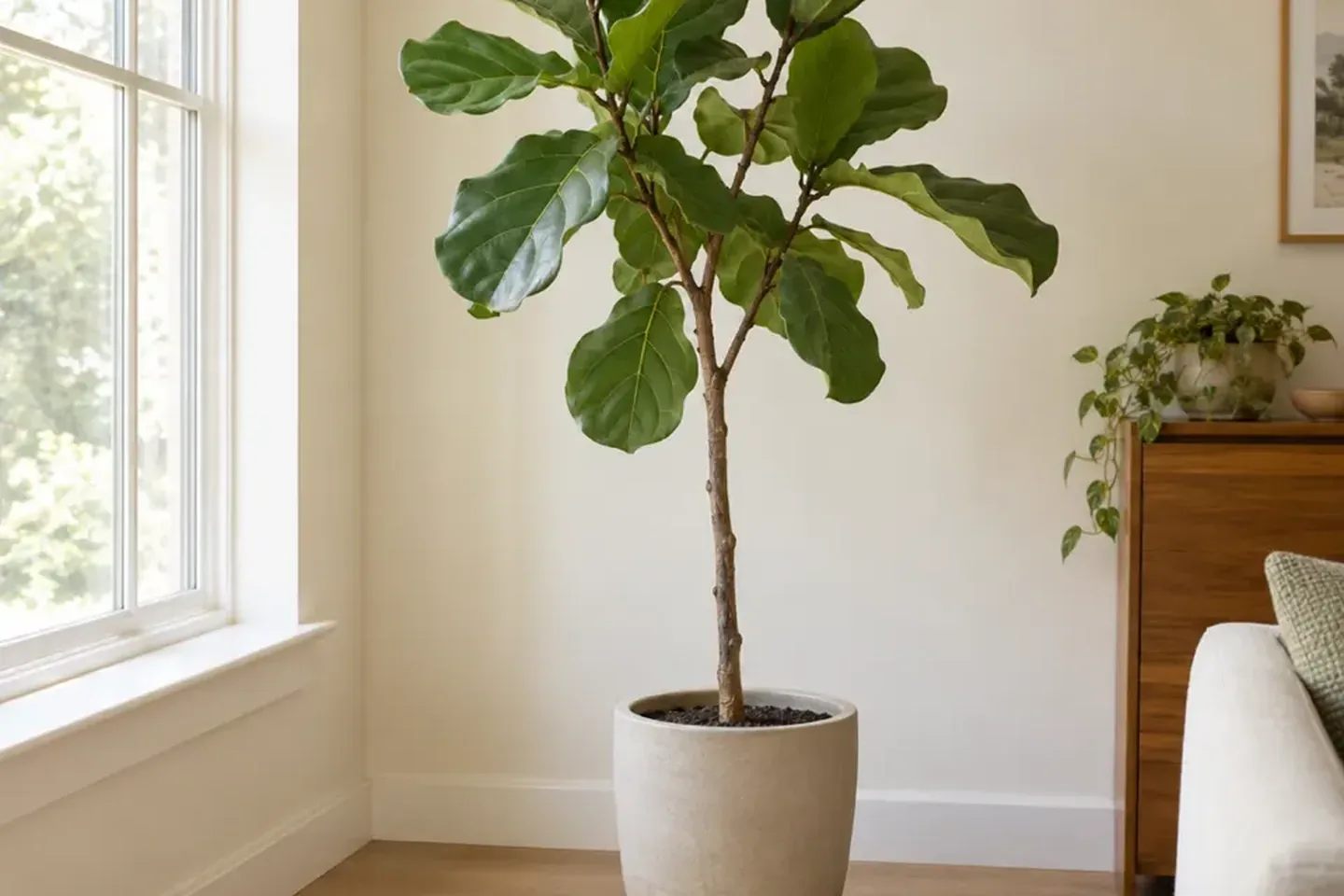
UGA recommends giving newly bought indoor plants 3-4 weeks in a bright sheltered spot to acclimate. That explains why moving the tree around repeatedly hurts. It doesn't mean every leaf lost in that window is harmless. If the base feels soft, don't wait it out just because the tree is new.
Write down where the loss started: at the bottom, throughout the canopy, or along one branch that got bent in transport. Photograph the whole tree and its pot. A stable spot, sound roots and healthy buds give the plant something to recover from. Searching the room for a better place every day keeps changing the light and water demand before you understand the original problem.
How often to water fiddle leaf fig: let the pot answer
Water a fiddle leaf fig when the root ball needs it, not on a schedule and not because a leaf fell. Feel about 1 inch below the surface and hold off while that layer is still moist, as UGA recommends.
For a big fig, add two more checks: pot weight and deeper moisture. The top can dry while the center stays wet, so a surface-only check can hide days of saturation around the roots. The wet or dry soil guide shows how to read below the surface.
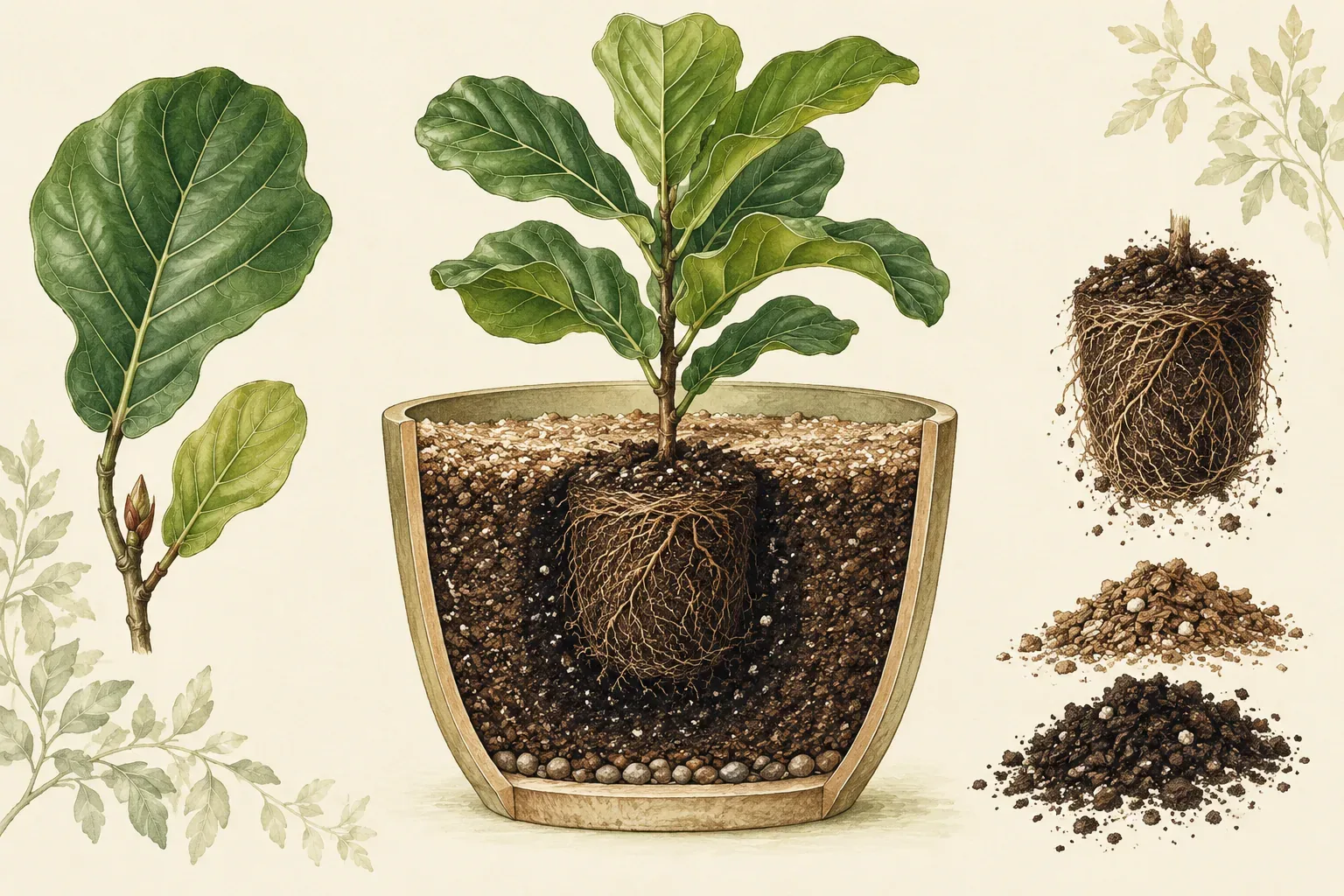
Container size changes the interval. UGA notes smaller pots need water more often and larger plants use more. A small nursery pot packed with roots and an oversized new pot around a small root ball won't dry at the same rate. Neither supports a fixed number of days between drinks. If you want a reminder to check, the plant watering calculator gives you a starting date, and the soil still makes the call.
When the tree needs water, wet the mix evenly until excess runs out the drainage hole, then empty the outer pot. If water rushes down a gap beside a shrunken root ball, make sure the center actually got wet. If water can't escape, fix the drainage before you add more. For persistent wetness with continuing drop, compare what you see with the overwatered plant symptoms guide. Fertilizer doesn't put air back into a saturated pot, and little splashes every few days can keep the problem going.
| Recent change | What it does | What to check |
|---|---|---|
| Bought or delivered in the last 3-4 weeks | Tree is still acclimating, per UGA | Keep it in one bright sheltered spot, no repeat moves |
| Moved to a dimmer room | Uses water more slowly | Test 1 inch down before the next drink |
| Move from 40-50% humidity into air below 20% | Much drier air around the leaves | Measure humidity at both spots and keep it above 55°F |
| Near a vent, door or cold glass | Temperature swings at leaf level | Move it out of the airflow, keep bright indirect light |
| Mix wet at the 1-inch check | Roots short on air | Wait for drying, check the center of a large root ball |
| Bought in the last 2-3 months | May still carry fertilizer, per UGA | Skip feeding until roots and growth are healthy |
Leaf drop checkpoints from NC State and the University of Georgia. Acclimation and feeding intervals are not guarantees of replacement leaves.
Fiddle leaf fig leaves falling off bottom: age or a pattern?
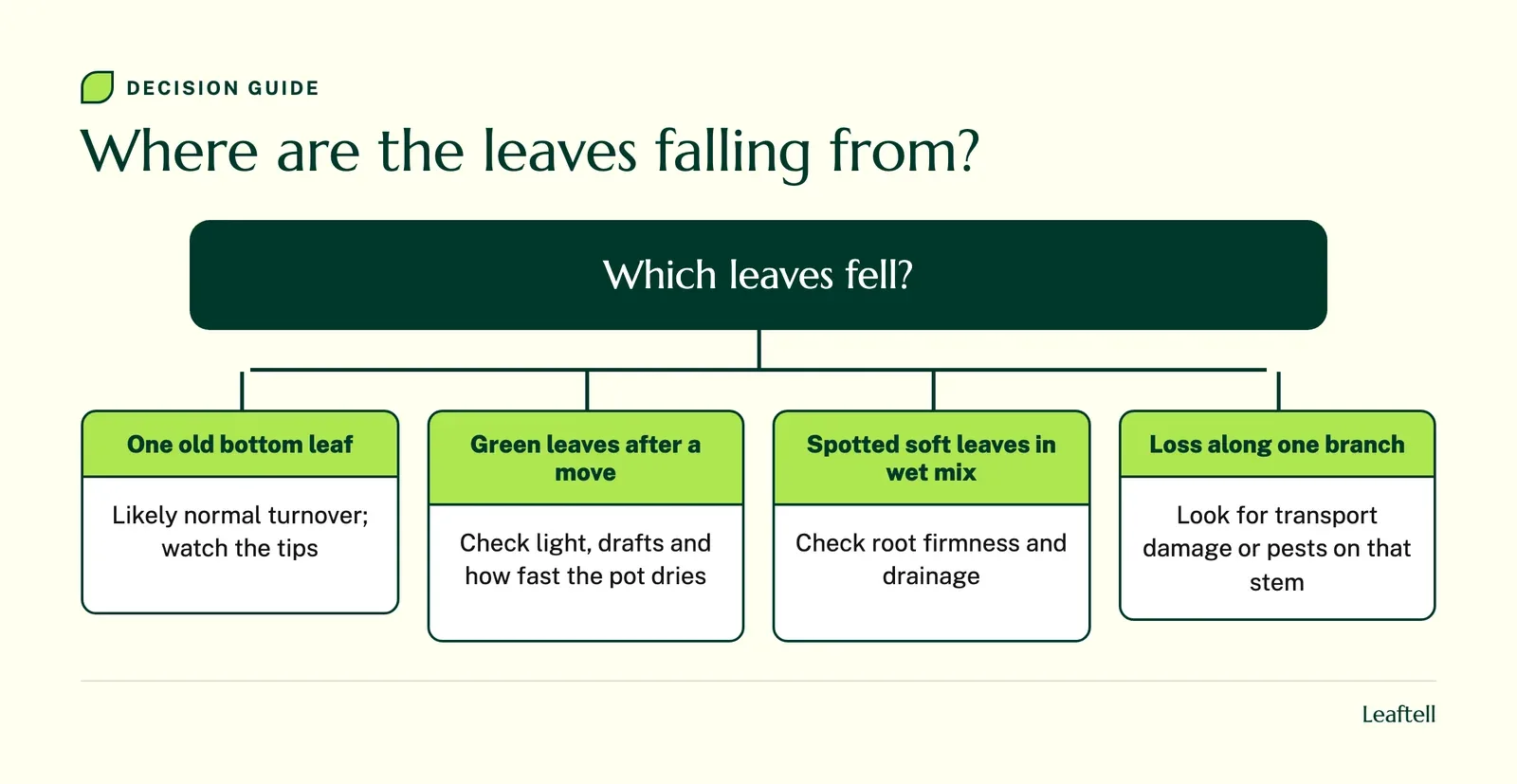
One old lower leaf fading while the top keeps growing is normal turnover. Loss marching up a bare stem is a pattern, and it usually points to low light, water stress or exposure injury.
Compare the leaf's age, its color before it fell, and the condition of the growing tip. Yellowing in a dim interior can reflect too little light. Brown patches before a leaf drops can reflect exposure injury, water stress or disease; the fiddle leaf fig brown spots guide covers how to read those. Don't assume a bottom leaf is disposable just because it's the oldest.
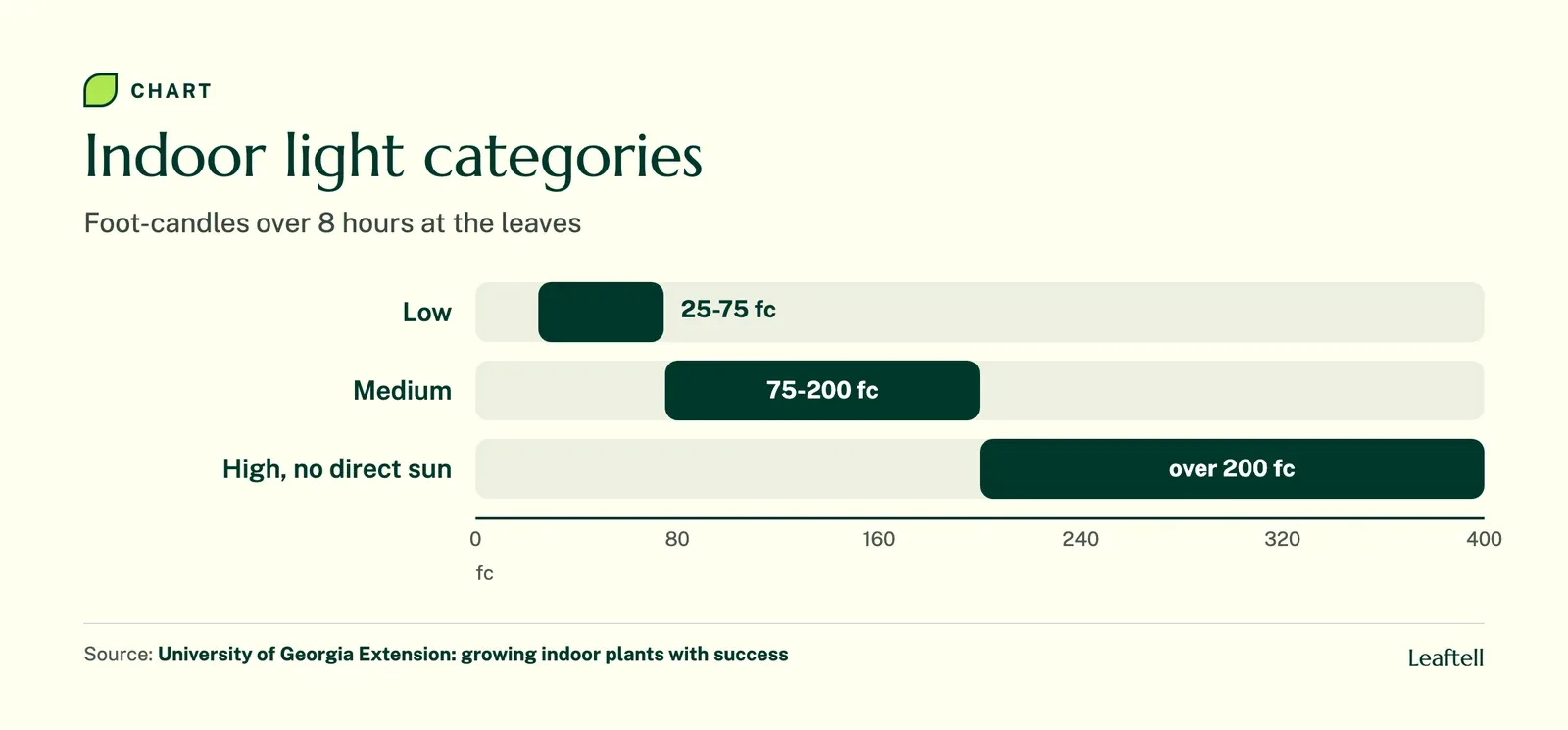
Measure the light at the foliage. UGA describes low light room areas as 25-75 foot-candles and medium areas as 75-200 foot-candles over 8 hours. NC State recommends bright indirect light for fiddle leaf figs. Use those categories to compare the old spot with a new one. Curtains, and the tree's own canopy, can make a corner much dimmer than the window a few feet away. The guide to reading your plant's light explains how to check it at leaf level.
Brighten a dim position gradually and protect the fig from harsh afternoon sun. Leave healthy leaves in place and clear fallen ones so new losses are easy to spot. If drop keeps going beyond the original lower leaves, go back to the roots and exposure.
Inspect drafts and hidden pests
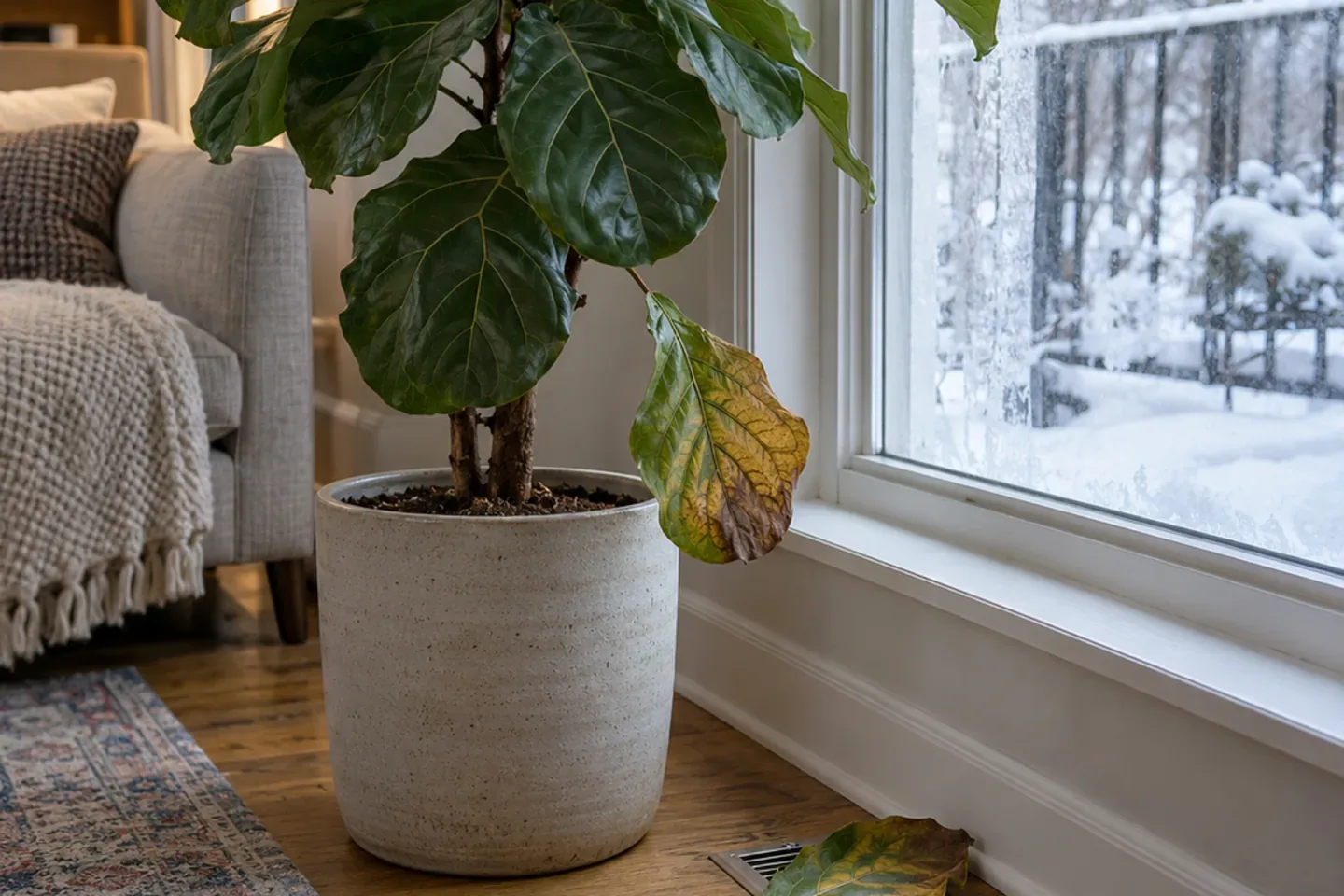
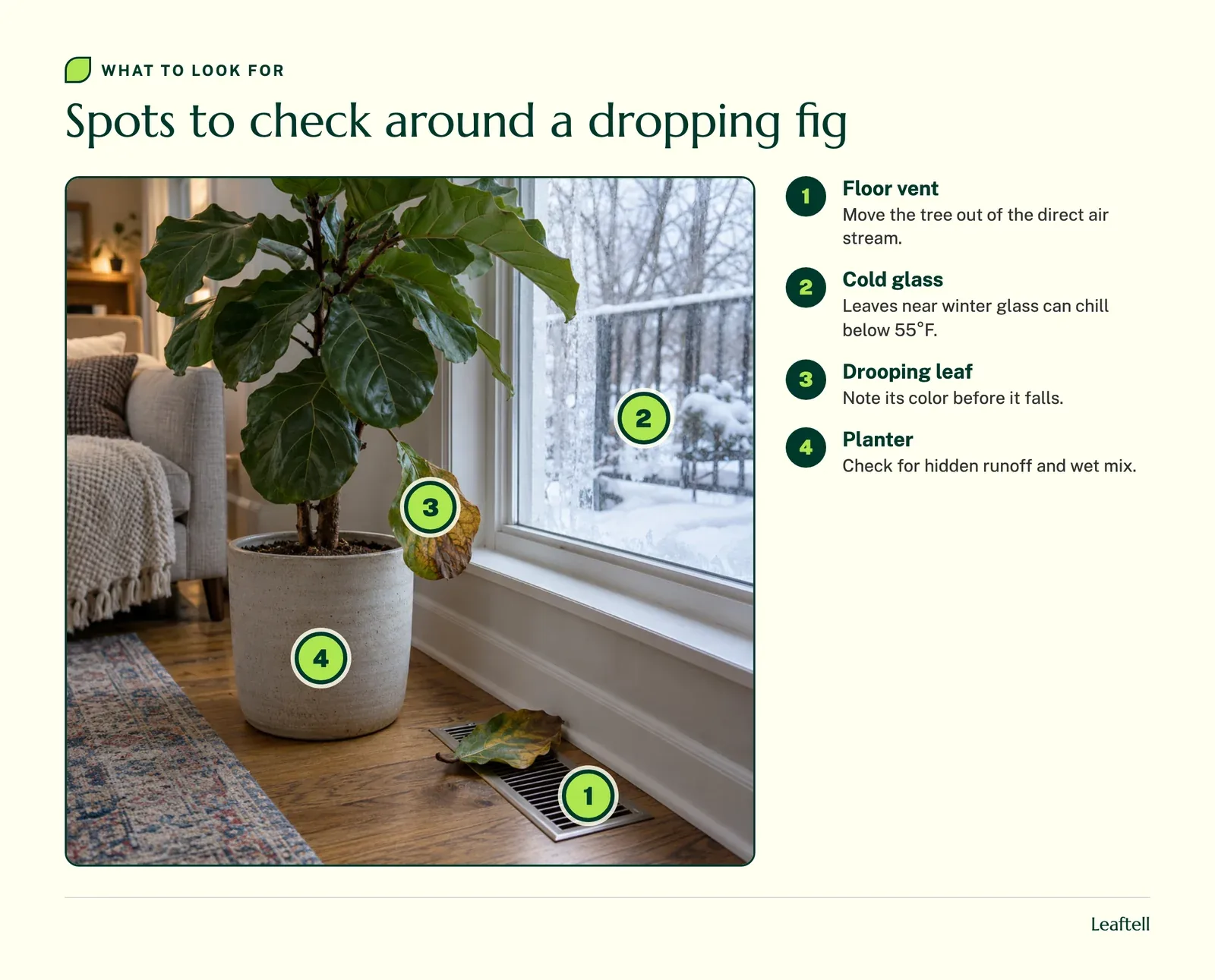
Check for drafts at plant height, then look for pests. A cold window, an exterior door or a cooling vent can make the tree's spot far less stable than the thermostat suggests.
NC State advises keeping fiddle leaf figs above 55°F (13°C) and notes that temperature swings around vents can cause brown spots. Move the tree out of the direct air stream without giving up the bright indirect light it needs.
Humidity often changes with a move too. UGA describes 40-50% relative humidity as medium, which matches NC State's preference, and anything below 20% as low. Measure near the leaves instead of misting every time one falls. Raising humidity can't fix rotting roots, and wetting the leaves over and over can hide the pest signs you're looking for.
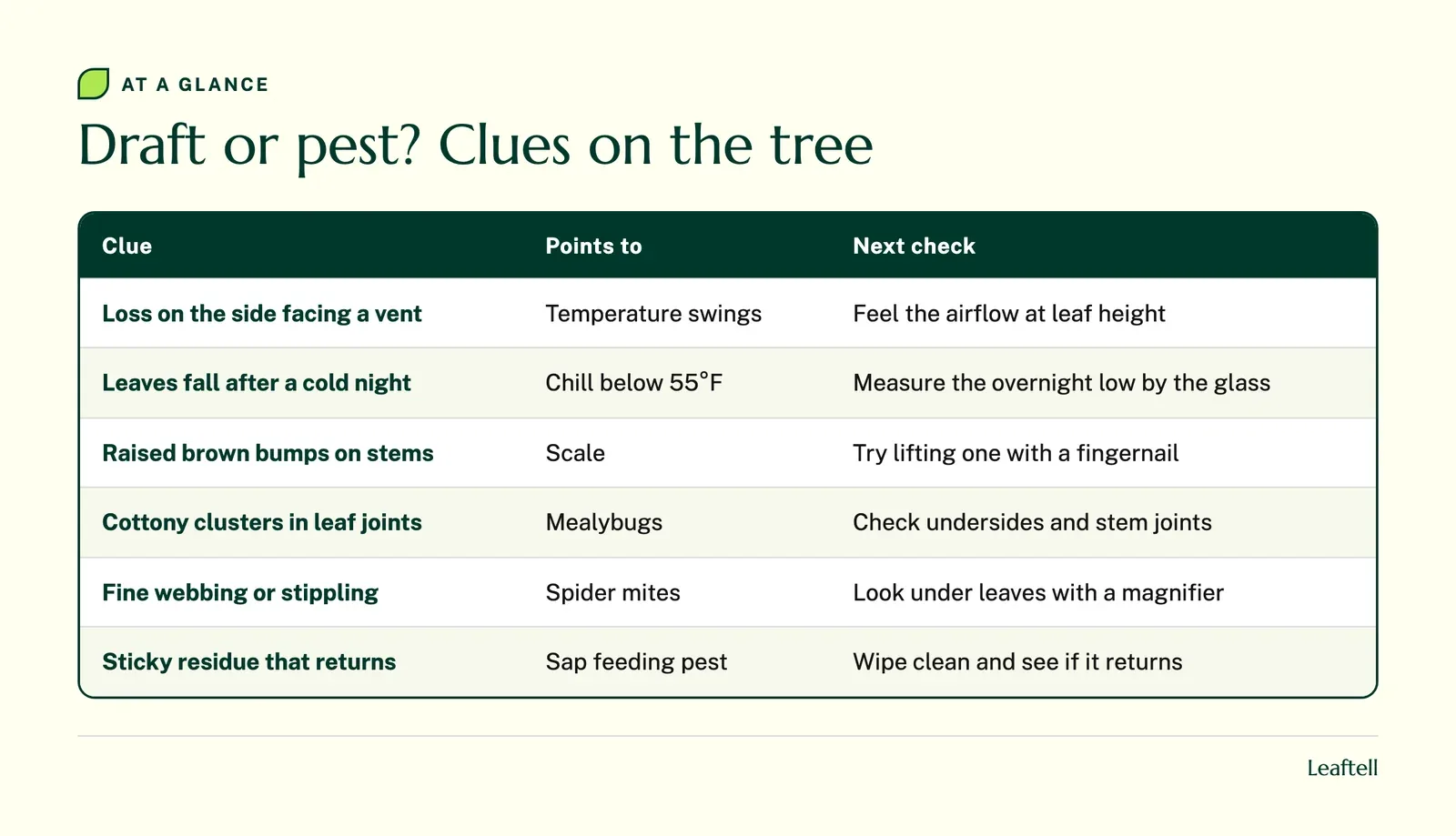
Look along leaf stalks, stems and leaf undersides for raised bumps of scale, cottony mealybugs, fine spider mite webbing or stippling. Sticky residue that comes back after you wipe it off points to a sap-feeding pest. The scale on plants guide shows what those bumps look like. Separate an infested tree from your other plants and identify the pest before choosing any treatment. Removing a confirmed pest by hand comes first; if you do use a product, pick a generic class labeled for houseplants, follow the label, never mix products, and keep it away from kids and pets.
How to save a fiddle leaf fig that is dropping leaves
- Start a dated leaf count
Photograph each fallen leaf, note its color and any spots, then clear it away. Write down how many fell and on what day.
- List what changed
Note any move, delivery, repotting, new vent or heater, or change in watering in the last two weeks.
- Check the root zone
Pull the pot from its cover, empty any runoff, test the mix 1 inch down and lift the pot to judge the center.
- Check temperature and light at the leaves
Make sure the tree stays above 55°F with no direct draft, and compare the light with UGA's 75-200 foot-candle medium range.
- Inspect for pests
Check stems, leaf stalks and undersides for bumps, cotton, webbing or sticky residue. Isolate the tree if you find insects.
- Pick one fix and hold still
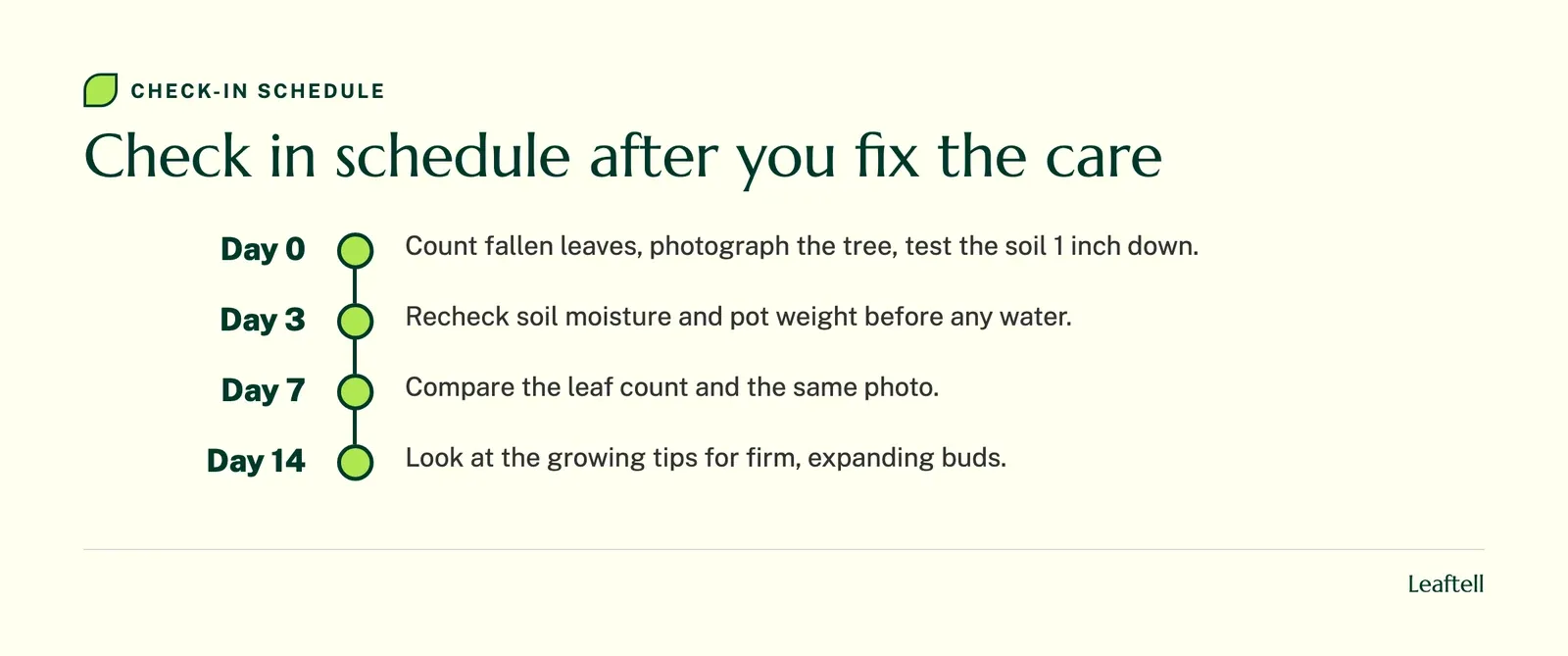
Correct the clearest cause and leave everything else stable. Recount in 7 days before changing anything else.
Judge the remaining buds
Firm buds and a stable canopy matter more than how many leaves already fell. Photograph the growing tips without picking or scratching them, and watch for them to expand during the growing season.
A bare branch may not fill back in on your schedule, and no source sets a fixed recovery window. Compare each new leaf with the ones that fell. Normal size and firm texture are the good signs.
Keep feeding light while the roots recover. UGA says a healthy newly bought houseplant often has enough fertilizer for 2-3 months, and its general starting point for active indoor growth is 1/4 label strength monthly. Those are care references, not instructions to feed a wet or declining fig. Follow the label and count slow-release fertilizer already in the mix.
Remove dead material with clean tools and wear gloves, since NC State warns that the milky sap irritates skin. Keep the tree and clippings away from children and pets, and check plants you're unsure about on the ASPCA toxic plants list.
Mistakes that make it worse
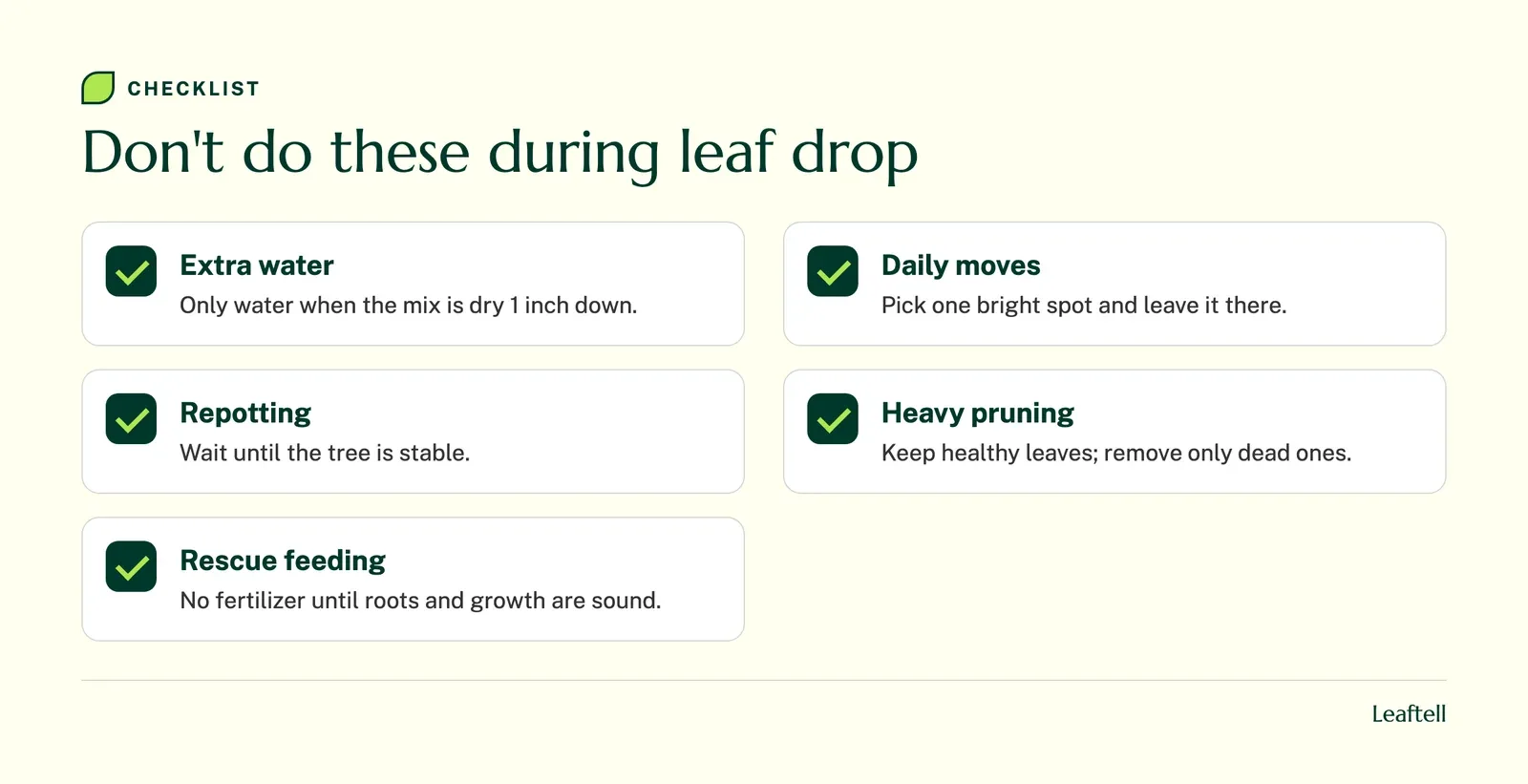
The biggest mistake is watering more because leaves are falling. If the drop came from a move into a dimmer room, the tree is already using less water, and extra water pushes it toward root rot. A wet fig that keeps losing leaves can end up needing the root rot fix instead of a simple routine change.
The second is moving the tree every few days looking for the perfect spot. Every move resets the light, temperature and drying rate, so you can never tell what helped, and UGA's 3-4 week acclimation never gets a chance.
Third is pruning or repotting during the drop. Both add stress and remove the evidence of where the loss started. Last is feeding a declining tree. Fertilizer on stressed roots adds salt they can't use and can bring brown edges on top of the drop. If yellow leaves are part of the picture, the yellow leaves on plants guide helps sort the cause.
Fiddle leaf fig dropping leaves: what to do this week
Stop watering on a schedule and let the 1-inch check decide. Keep the tree in one bright spot with no direct sun and no drafts, above 55°F. Skip feeding, pruning and repotting until new leaves look healthy. Count losses daily and compare in 7 days.
Get help from your local extension office if the trunk base softens, spots spread, roots feel mushy, or leaves keep falling after you've stabilized care. Bring your dated leaf count, photos of the tree and pot, and the timeline of recent changes.
Check your fiddle leaf fig in Leaftell. The check uses your answers; photos stay on your device.
Sources
Check your growing conditions with the plant watering calculator.
Frequently asked questions
Check soil moisture 1 inch down, drafts, recent light changes and pests. Keep a dated leaf count, fix the clearest cause, and leave everything else stable while you watch.
Changes in light or temperature, root stress from too much or too little water, pests and normal aging of old leaves can all cause it. When the drop started and which leaves fell help you tell them apart.
Wet mix with yellowing, dark patches, falling leaves or soft roots are the usual clues. Check drainage and root firmness before deciding watering is the cause.
Water when the mix is dry about 1 inch down and the pot feels lighter, then drain fully. After heavy leaf loss the tree uses water more slowly, so the gap between drinks gets longer.
Some adjustment is common after a move, and UGA recommends 3-4 weeks in a bright sheltered spot for new plants. A soft base or wet roots still need checking right away.
Rapid canopy loss, soft stem tissue and rotting roots are much more concerning than one fallen leaf. Check whether the buds are still firm, and get help if the decline speeds up.
New leaves come from healthy buds, usually at the growing tips. A bare lower trunk may not refill on its own, so judge recovery by healthy new growth rather than a full outline.
Share article
About the author

Keep checking your plant
Plant care reference
Indoor plant care
Build a routine around your plant, light and potting mix.
Plant care reference
Why is my plant dying
Trace leaf and root symptoms before choosing a care change.
Plant care reference
Pothos plant care
Choose a growing spot and prune a trailing pothos for fuller growth.
Plant care reference
How to fix root rot
Inspect root firmness and drainage, then decide whether to repot.