Plant leaves curling: 5 causes and how to tell them apart
Filip Leszczyński 16 October 2026 11 min read
In this article
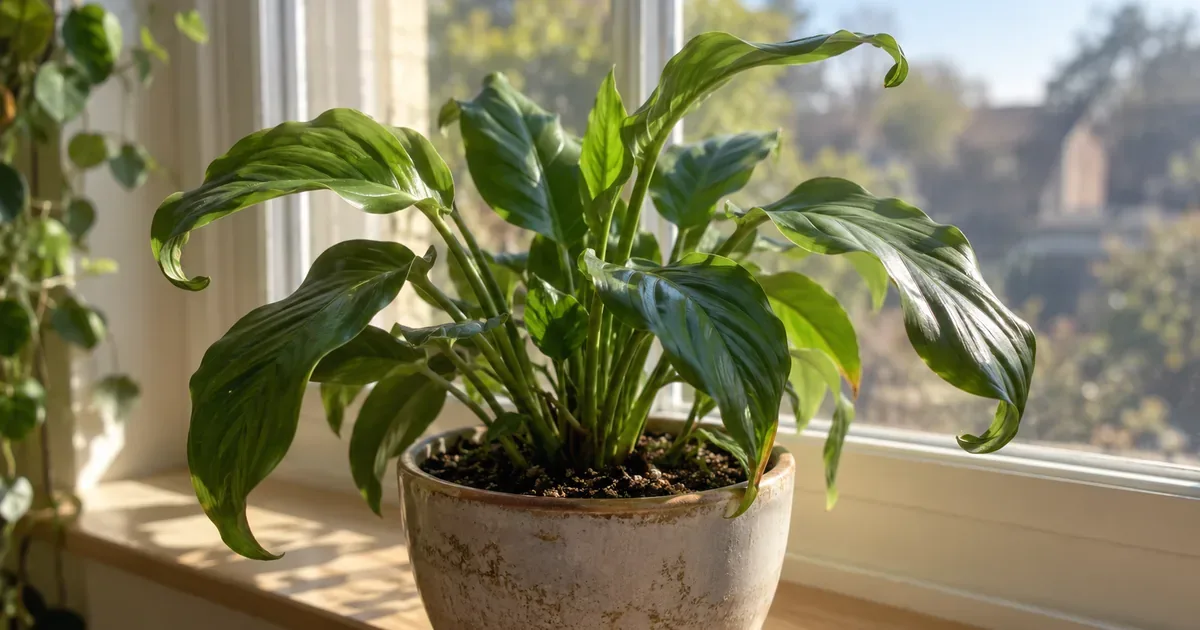
Plant leaves curling is a symptom, not a diagnosis: dry roots, waterlogged roots, hot light, dry air and sap-feeding insects can all roll a leaf. Push a finger about 1 inch into the soil and look inside the newest folded leaves before you change anything, because those two checks sort out most cases.
The shape helps, but only alongside the pot. An inward curl in a light, dry pot points one way. The same curl in a heavy, soggy pot points the opposite way. Take one close photo of a curled leaf and one of the whole plant, then fix the condition you can actually confirm.
What matters most is the next leaf. Old curled edges rarely flatten out again, so the new growth is your scorecard.
Indoor plant leaves curling inward: check the soil first
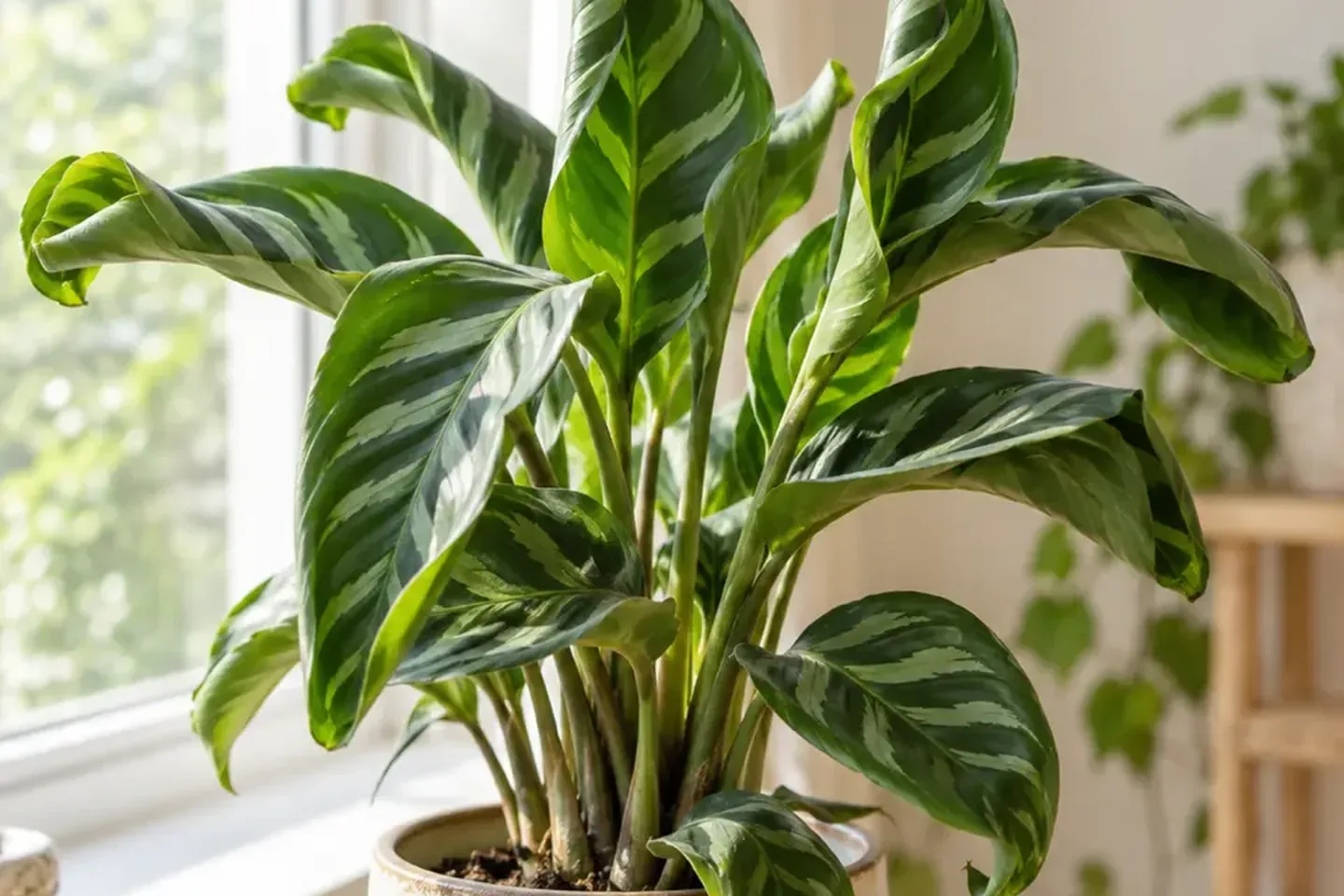
Inward curl with a dry, lightweight root ball usually means the plant is short of water. Inward curl with a heavy, wet pot means you check drainage and roots before you water again.
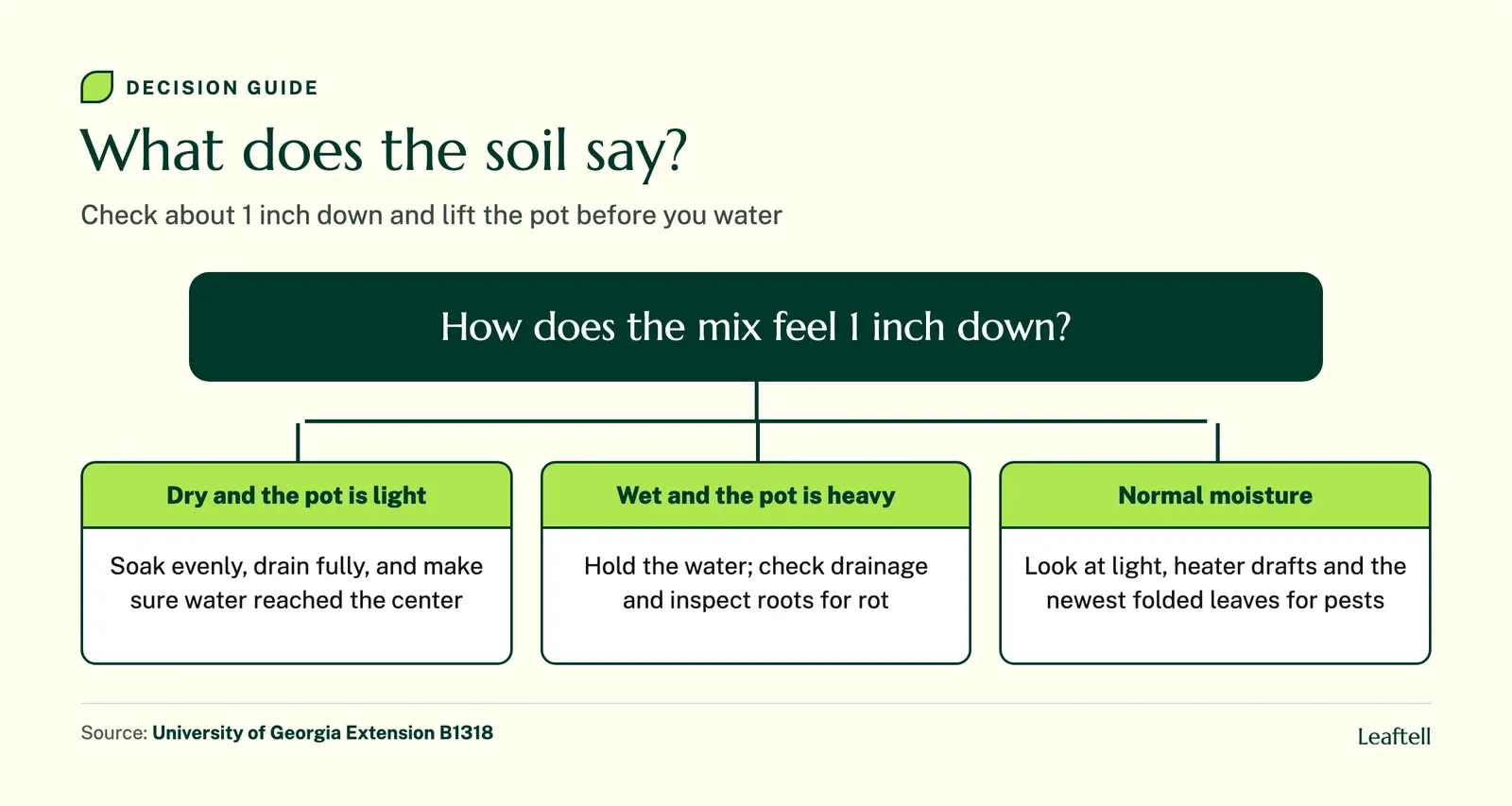
That second case trips people up. Damaged roots can't move water, so leaves lose firmness and curl even while the mix is saturated. The leaf looks thirsty; the pot is drowning. The University of Georgia Extension suggests checking about 1 inch below the surface and holding off while that layer is still moist. Here is how to tell wet from dry soil without guessing.
Treat the 1-inch check as a starting point, not a rule for every species. Water-storing succulents want more drying than a leafy tropical plant. Pot size changes the timing too: UGA notes small containers may need water more often, while a big mass of unused mix stays damp around a small root system. Lift the nursery pot out of its decorative cover and tip out any standing runoff.
When the roots really do need water, soak the mix evenly and let the excess drain. Make sure water went into a dried-out center instead of running down a gap at the pot edge. Small daily splashes leave the pot patchy and make the next reading harder. If the base feels soft, follow the root rot inspection before you water or feed again. If the whole plant is sagging rather than curling, the same wet-or-dry split applies.
Map heat, light and air
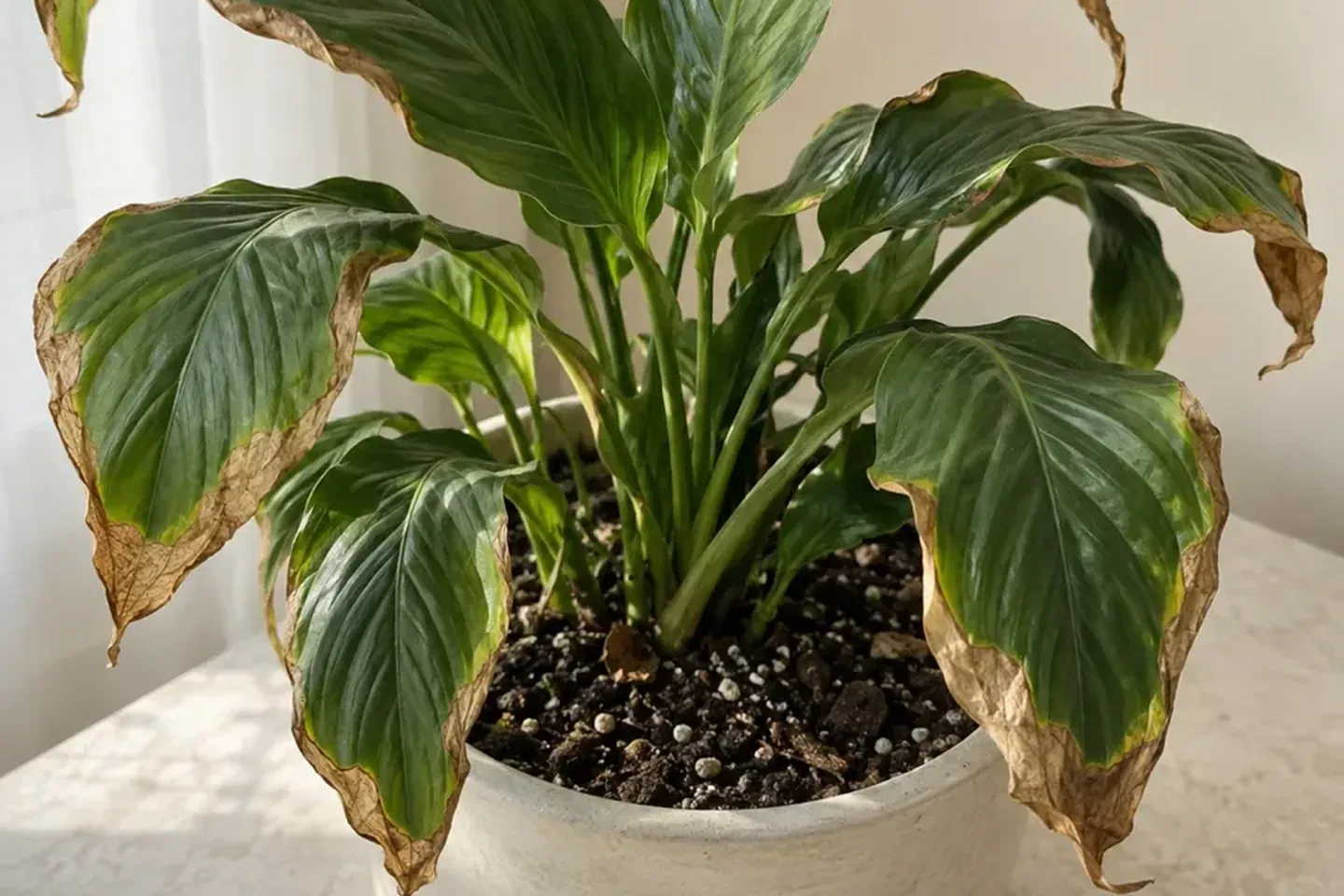
Curling with brown, crisp edges often follows hot sun, dry air or a sudden change in exposure. Map where the damage sits: leaves facing the window with bleached, crunchy patches tell a different story from even curl on a plant in a dry pot.
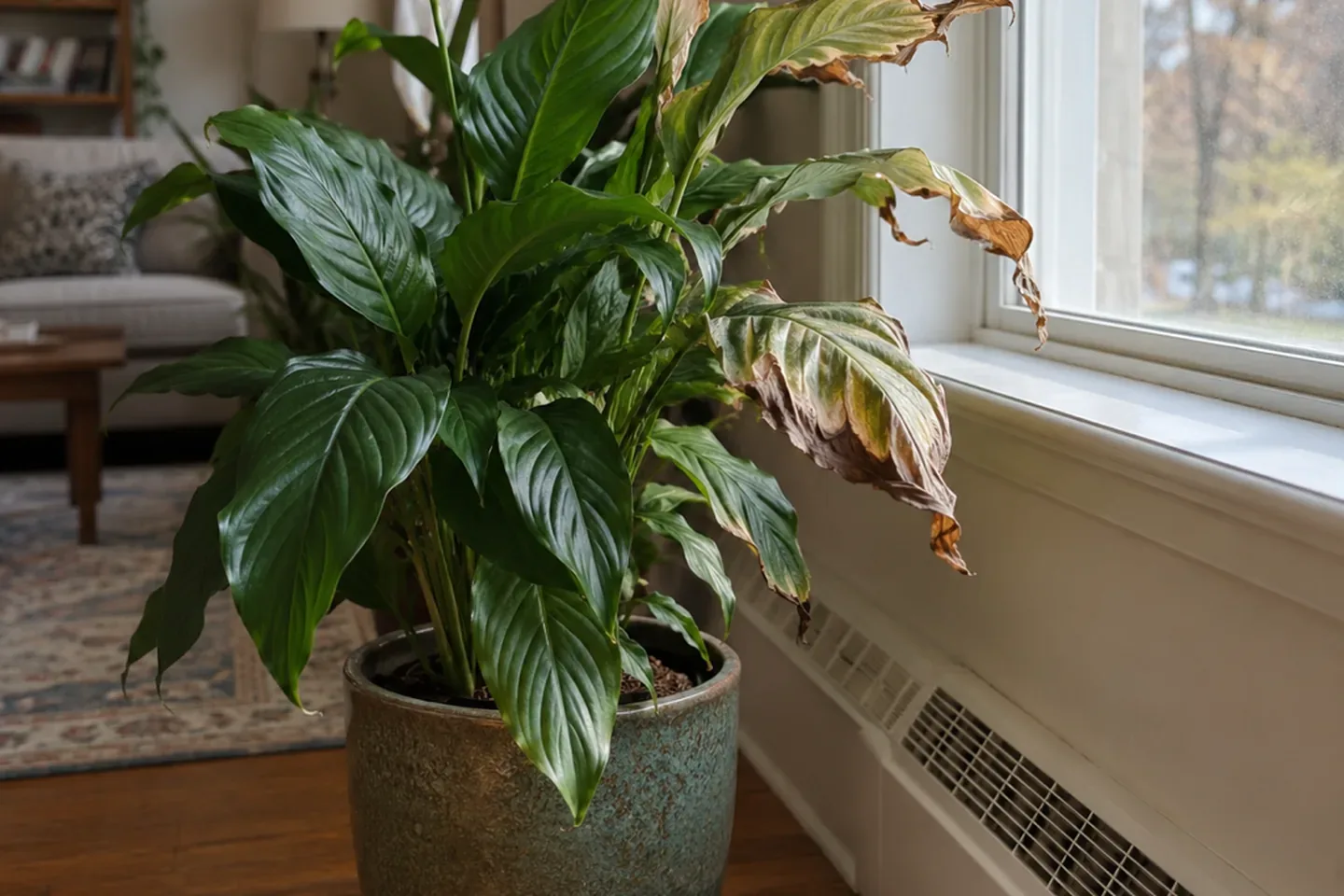
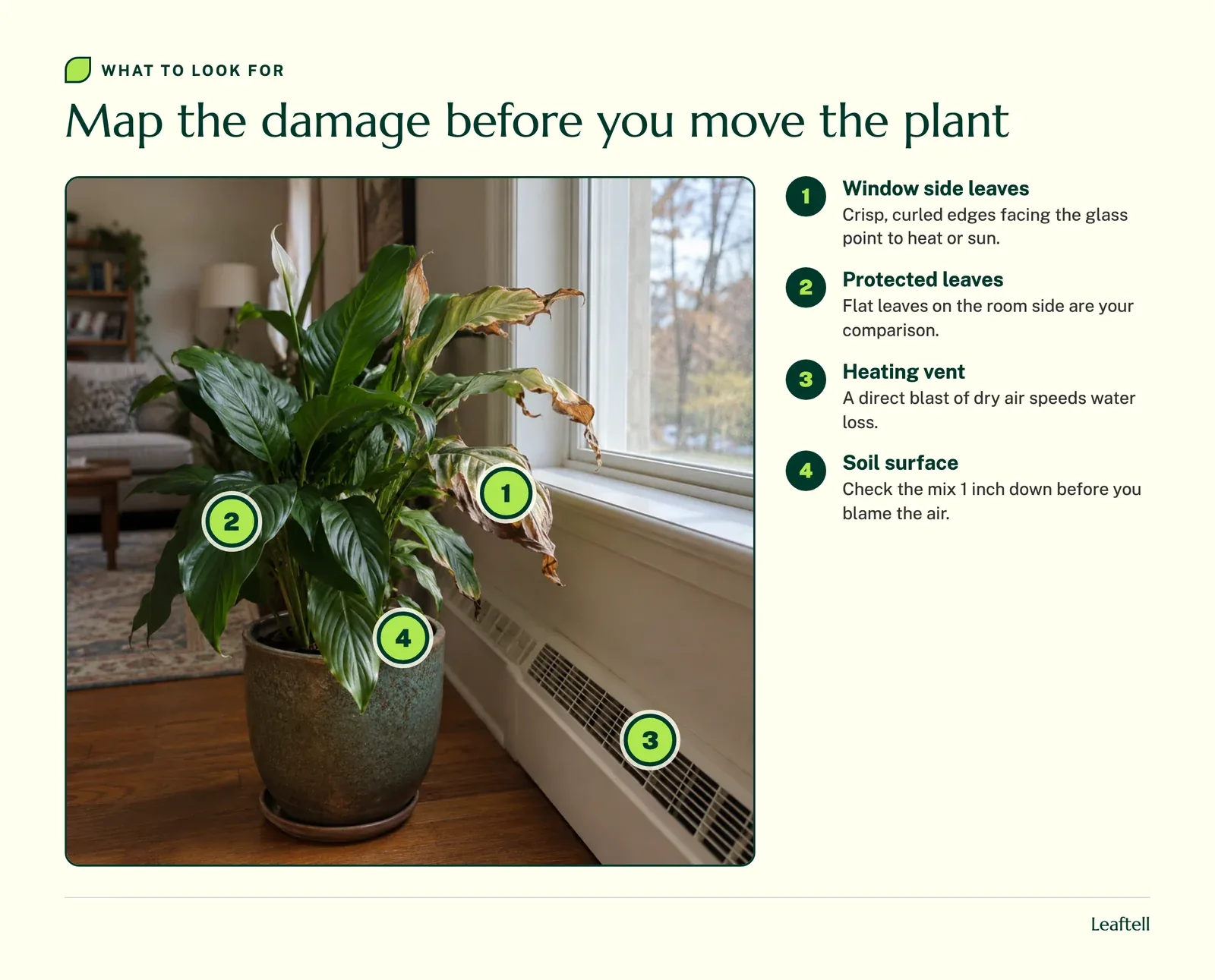
Look for a heater or air conditioner blowing across the plant and move it out of the direct blast, while keeping the light its species needs. UGA defines relative humidity below 20% as low and 40-50% as medium. Its example at 70°F shows leaves losing more water at 10% humidity than at 50%. That explains why a plant moved from a humid greenhouse into a heated apartment can dry out faster. It doesn't make humidity the cause of every curled leaf, and a wet pot still needs its own check.
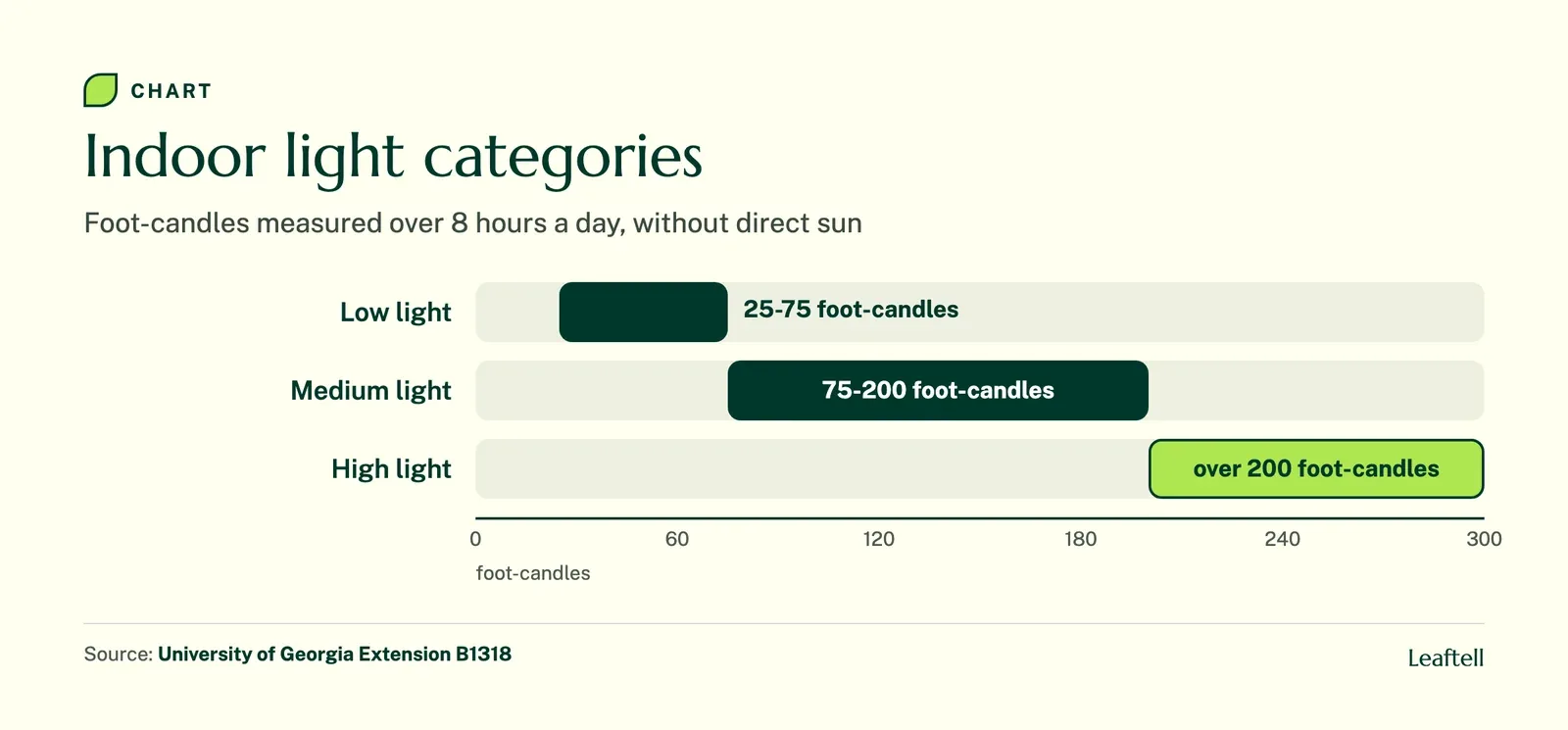
Brightness matters as much as heat. UGA's indoor medium-light category is 75-200 foot-candles over 8 hours, and high light is above 200 without direct sun. Direct sun is a separate exposure, not just the next number up. If you aren't sure what your window delivers, read the light where the leaves sit. Acclimate shade-grown plants instead of parking them on hot glass overnight.
| What you measure | Reference | What it means for curl |
|---|---|---|
| Mix still moist 1 inch down | UGA: wait while that layer is moist | Don't water yet; check deeper moisture and pot weight |
| Air below 20% relative humidity | UGA: 40-50% counts as medium | Measure next to the leaves before changing the room |
| Jump from about 75 to over 200 foot-candles | UGA light categories assume 8 hours a day | Count hours and direct sun, not just brightness |
| Slender insects up to 2 mm in folded growth | RHS: thrips cycle takes 24-35 days | Keep inspecting new leaves through a full cycle |
Curling-leaf reference points from UGA indoor-plant guidance and RHS thrips guidance. Match the reference to your plant and symptom.
Dead brown margins stay brown after you fix the cause. Note where the brown edge stops today and judge the correction by whether new injury appears. For crisp ends without much curl, the brown tips on leaves guide goes deeper.
Indoor plant leaves curling inward from pests in new growth
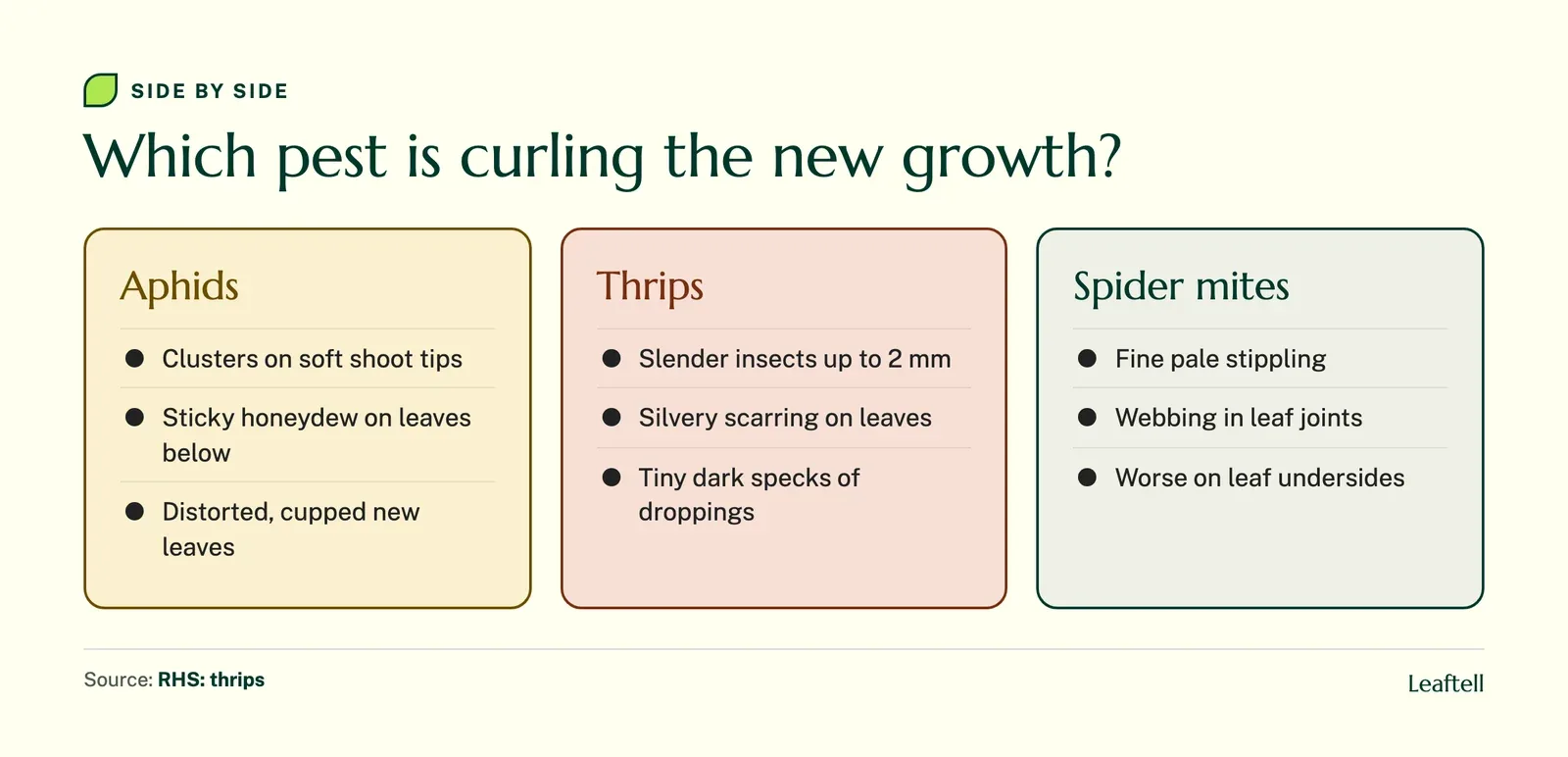
Open folded new growth gently and look for the insect itself. Aphids cluster on soft shoots and leave sticky honeydew, thrips leave silvery scars and dark specks, and spider mites leave fine stippling and webbing.
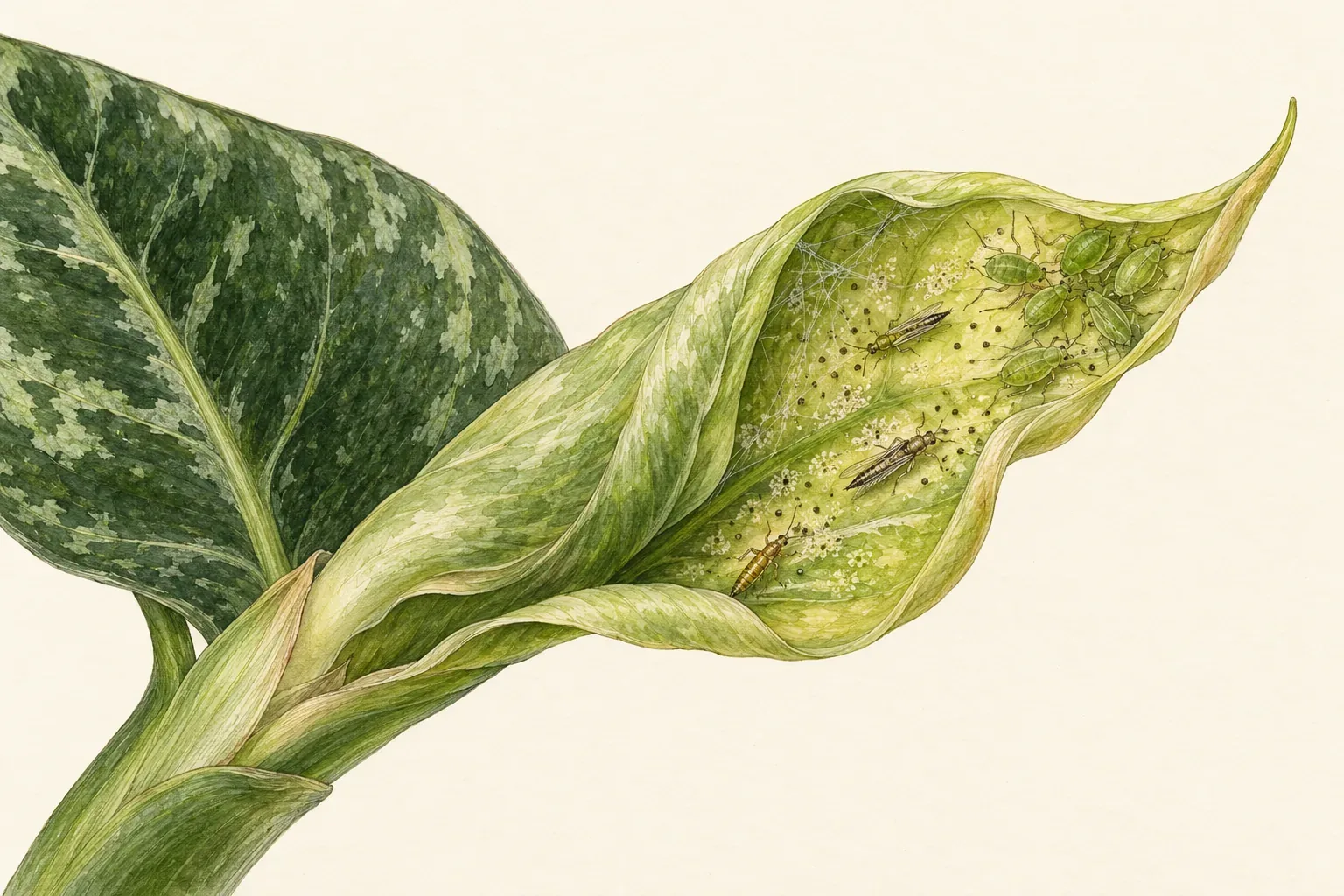
Don't pry a naturally furled young leaf apart hunting for something that isn't there; you'll do more damage than most pests. Use a magnifier and the leaf undersides instead. The RHS describes adult thrips as narrow insects up to 2 mm long, with a life cycle of 24-35 days in ideal conditions and indoor breeding all year (RHS thrips guidance). So a clean leaf right after wiping doesn't mean the problem is over. Count fresh scars on new leaves, not the old damage.
If you find them, the thrips on plants and how to get rid of aphids guides cover each pest in detail. The short version is below.
How to check curled new growth for pests
- Isolate the plant
Move it away from other plants as soon as you see insects or fresh feeding marks. Pests on one plant spread to the shelf faster than you'd think.
- Inspect with a magnifier
Check folded tips, leaf undersides and sheltered joints. Photograph anything that moves or looks like a scar so you can compare next week.
- Remove what you can by hand
Wipe or rinse sturdy leaves gently, adapting the method to the species. Skip blasting fragile folded growth and skip untested household sprays.
- Use a product only if needed
If a labeled pest product becomes necessary, pick the generic type that fits the pest, follow the label exactly and never mix products. Keep treated plants away from pets and children.
- Recheck through a full cycle
Look at new growth every few days for at least the 24-35 days the RHS gives for thrips. Fix any water or light stress at the same time.
Outdoor plant leaves curling inward: compare the whole garden
Outdoors, compare plants across the bed before you blame one cause. Aphids distort tender tips, drought and heat roll otherwise green leaves, and herbicide drift can twist new growth on unrelated plants along a shared boundary.
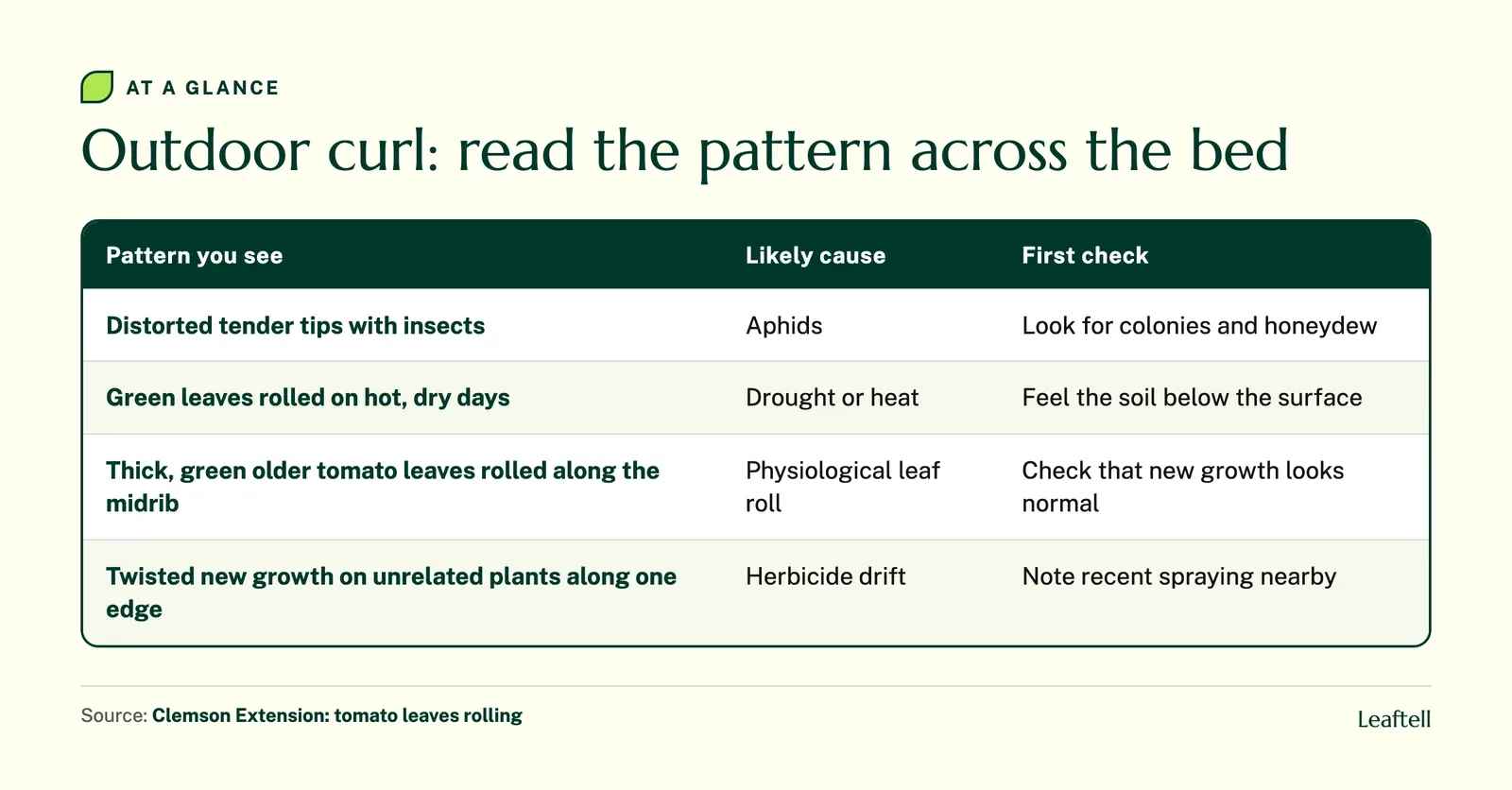
Tomatoes are a useful contrast. The Clemson Extension describes physiological leaf roll as green, thickened mature leaves rolling inward along the midrib, which is a harmless response. Its herbicide guidance describes 2,4-D exposure as downward rolling, twisted growth and sometimes whitened, split stems. That chemical name identifies an injury pattern; it isn't a product suggestion. If you suspect drift, write down any recent spraying nearby and photograph neighboring broadleaf plants. The tomato leaves curling guide covers that crop in full.
One curled leaf is not enough to call a virus. Look for actual insects, soil moisture and how the injury is spread out.
Moving a houseplant outside for summer? UGA's 3-4 weeks in a bright, sheltered spot is the acclimation guidance for indoor foliage plants. It isn't a hardening schedule for every vegetable or perennial. Change one thing at a time: don't adjust watering, feeding and sun exposure in the same week.
Mistakes that cost you the next leaf
Most curl gets worse because of the fix, not the cause. These are the usual ones.
- Watering a wet pot because the leaves look thirsty. If the mix is already soaked, more water drowns the roots that caused the curl. Cost: root rot instead of a curled leaf.
- Feeding a stressed plant. UGA's feeding starts at 1/4 label strength monthly for actively growing indoor plants, and a healthy new plant may carry 2-3 months of reserves. Stacking fertilizer on damaged roots adds salt stress. Cost: brown edges on top of the curl.
- Spraying vinegar, baking soda or mixed household sprays. They don't identify anything, and an untested mixture is one more stress on tissue that's already struggling. Cost: new marks that hide the original clue.
- Moving the plant every day. Each move is a new light and temperature change. Cost: you can't tell which change helped.
- Calling a pest problem over after one wipe. Thrips keep breeding indoors. Cost: a second outbreak a month later.
Judge recovery by the next leaf
My recommendation: fix the one condition you've confirmed, then watch the next leaf open. If it unfolds at normal size and shape, keep the new routine. If it still comes out distorted, go back to the pest check and the roots instead of repotting, feeding and spraying all at once.
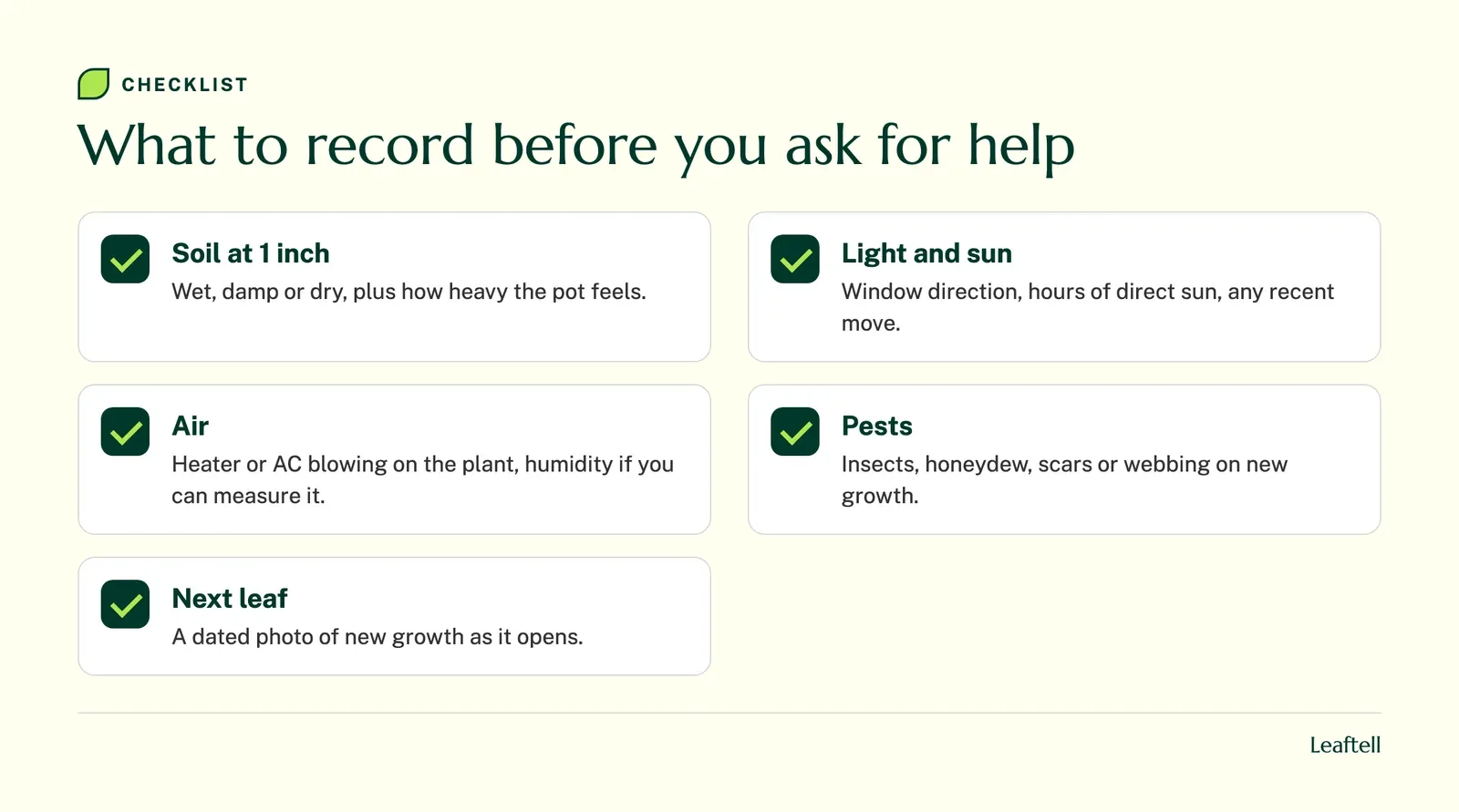
Get help from a local extension office or experienced grower when the base turns soft, curl spreads quickly to neighboring plants, or young leaves stay small, mottled and twisted after you've corrected water, light and pests. Bring photos of normal and affected growth plus your notes. For a plant that's declining on several fronts, start from why your plant is dying.
Check your curling leaves in Leaftell. The check uses your answers; photos stay on your device.
Sources
Check your growing conditions with the plant watering calculator.
Frequently asked questions
Check soil moisture 1 inch down, look for heat or sun exposure, and inspect new growth for pests. Then correct the condition with the strongest evidence, because curl is shared by several different problems.
Leaves that curled from temporary water stress can firm up again. Leaves that were scarred or grew distorted usually keep their shape, so judge recovery by the new leaves.
Yes. Wet, damaged roots can't supply water, so leaves curl even in soggy mix. Confirm the pot is wet and check the roots, since dry roots produce a similar look.
Several nutrient problems can affect leaf development, but curl alone can't identify one. Review the plant, the mix, your feeding history and a soil test before adding supplements.
Correct moisture, steady light and temperature, and hand removal of confirmed pests are the best first steps. Skip vinegar, baking soda and mixed household sprays on a problem you haven't identified.
Calcium problems tend to show on young tissue, but distorted new growth has many other causes. Get plant-specific advice and testing rather than diagnosing calcium from a curled leaf.
New growth is where aphids and thrips feed, and it also reacts first to sudden light or temperature changes. Look inside the folded tips with a magnifier before you change watering.
Share article
About the author

Keep checking your plant
Plant care reference
Indoor plant care
Build a routine around your plant, light and potting mix.
Plant care reference
Why is my plant dying
Trace leaf and root symptoms before choosing a care change.
Plant care reference
Pothos plant care
Choose a growing spot and prune a trailing pothos for fuller growth.
Plant care reference
How to fix root rot
Inspect root firmness and drainage, then decide whether to repot.