Thrips on Plants: Read the Silver Damage and Stop the Spread
Filip Leszczyński 16 October 2026 10 min read
In this article
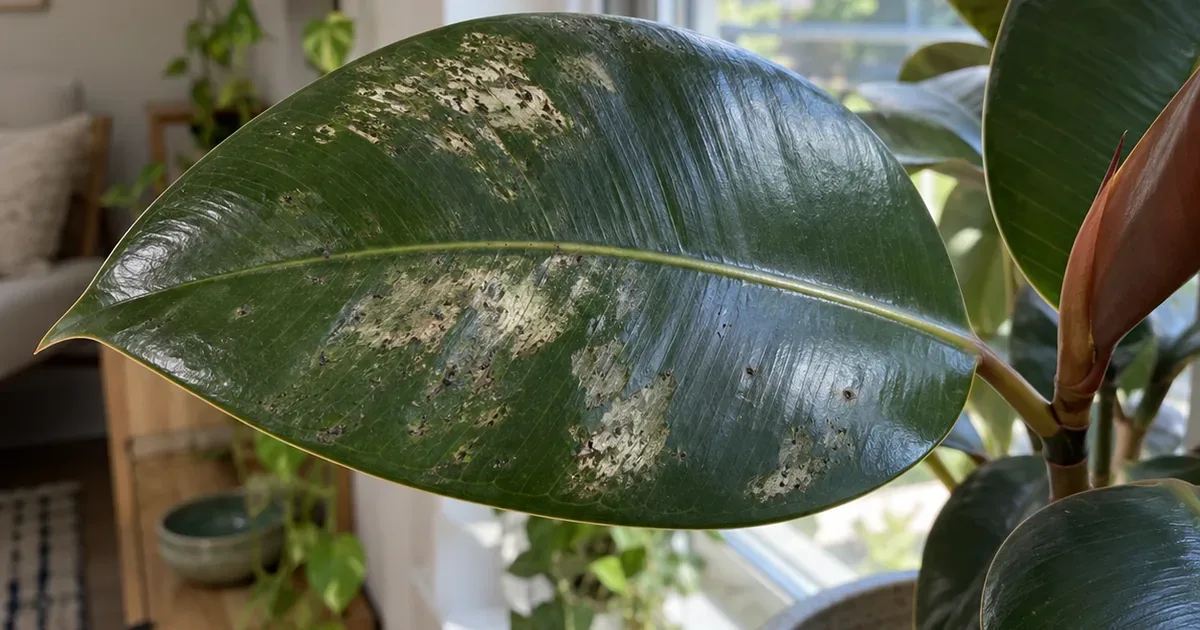
Thrips on plants leave silvery, scraped-looking patches dotted with tiny dark specks, often on distorted new leaves. To confirm them, find the insects themselves: slender, narrow bodies moving in leaf folds, buds and flowers.
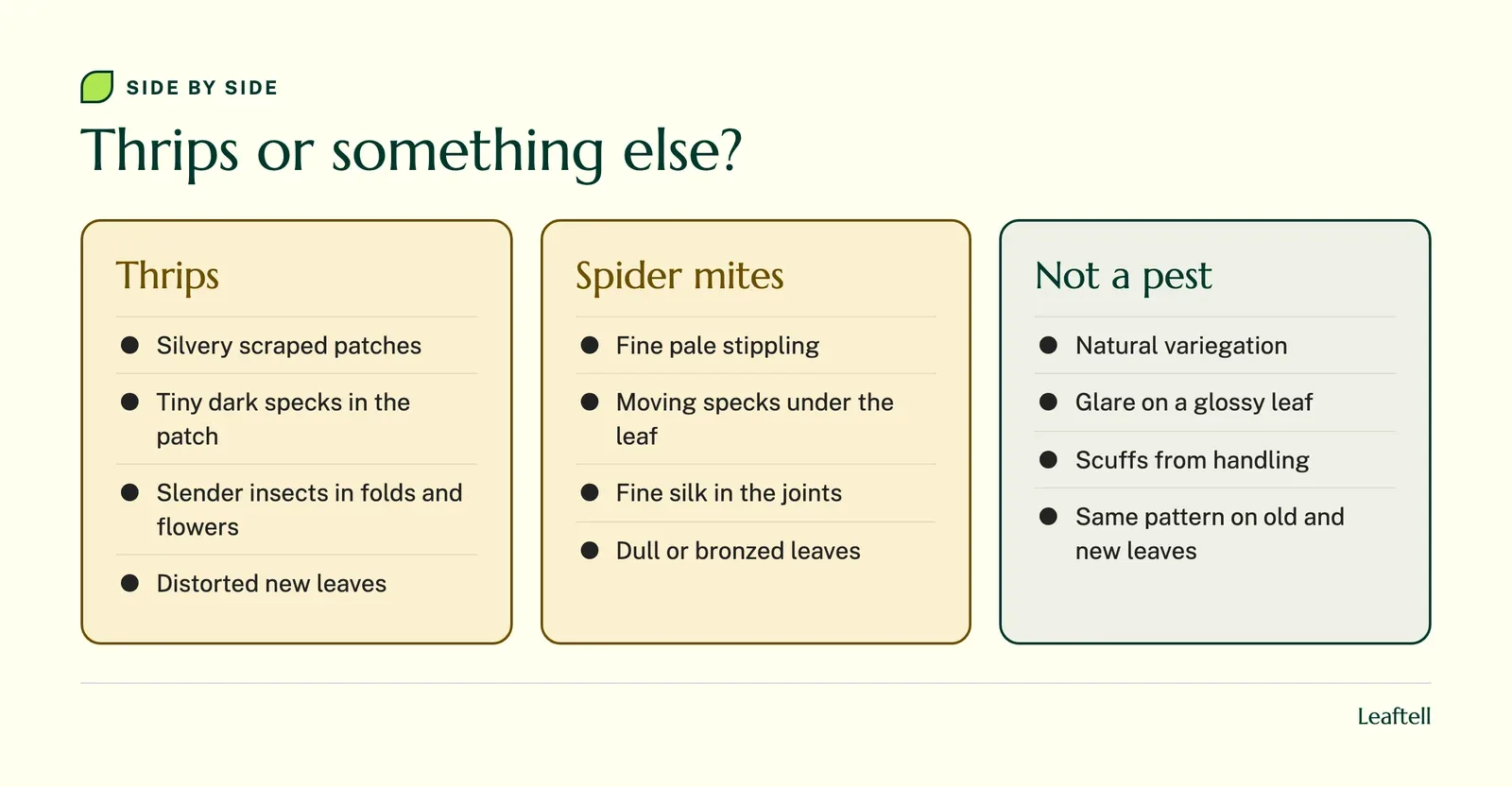
Silver damage alone is not enough. Variegation, glare on a glossy leaf and physical scuffs can all look similar. Once you have seen the insects, isolate the plant, clean what you can reach safely, and watch the next new leaves for fresh scars.
One thing surprises almost everyone. A leaf that unfolds already scarred was often damaged while it was still rolled up, before you cleaned anything. That can make thrips look suddenly worse when the damage is actually old. This post shows how to tell the difference.
Pictures of thrips on plants: silvering and dark specks
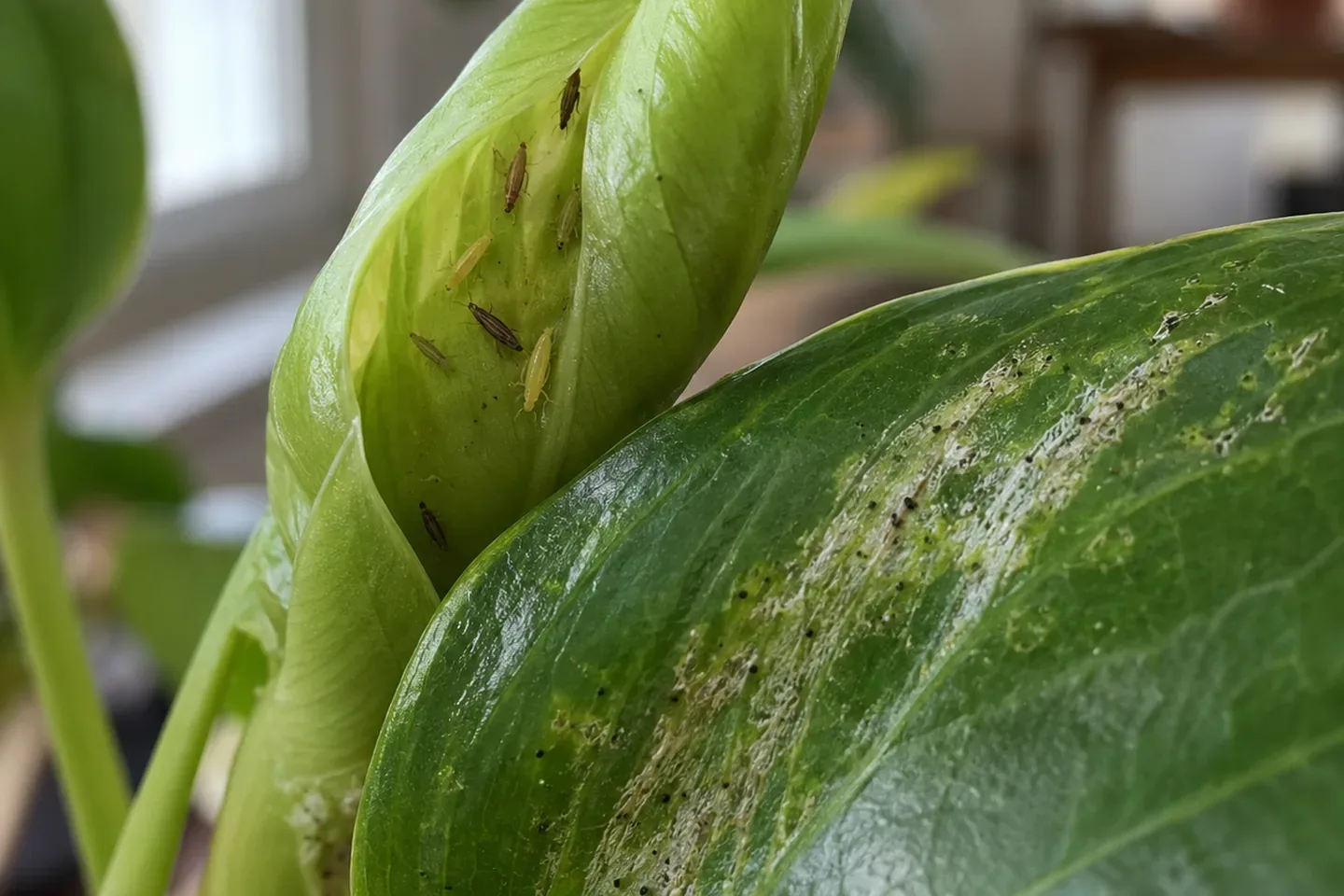
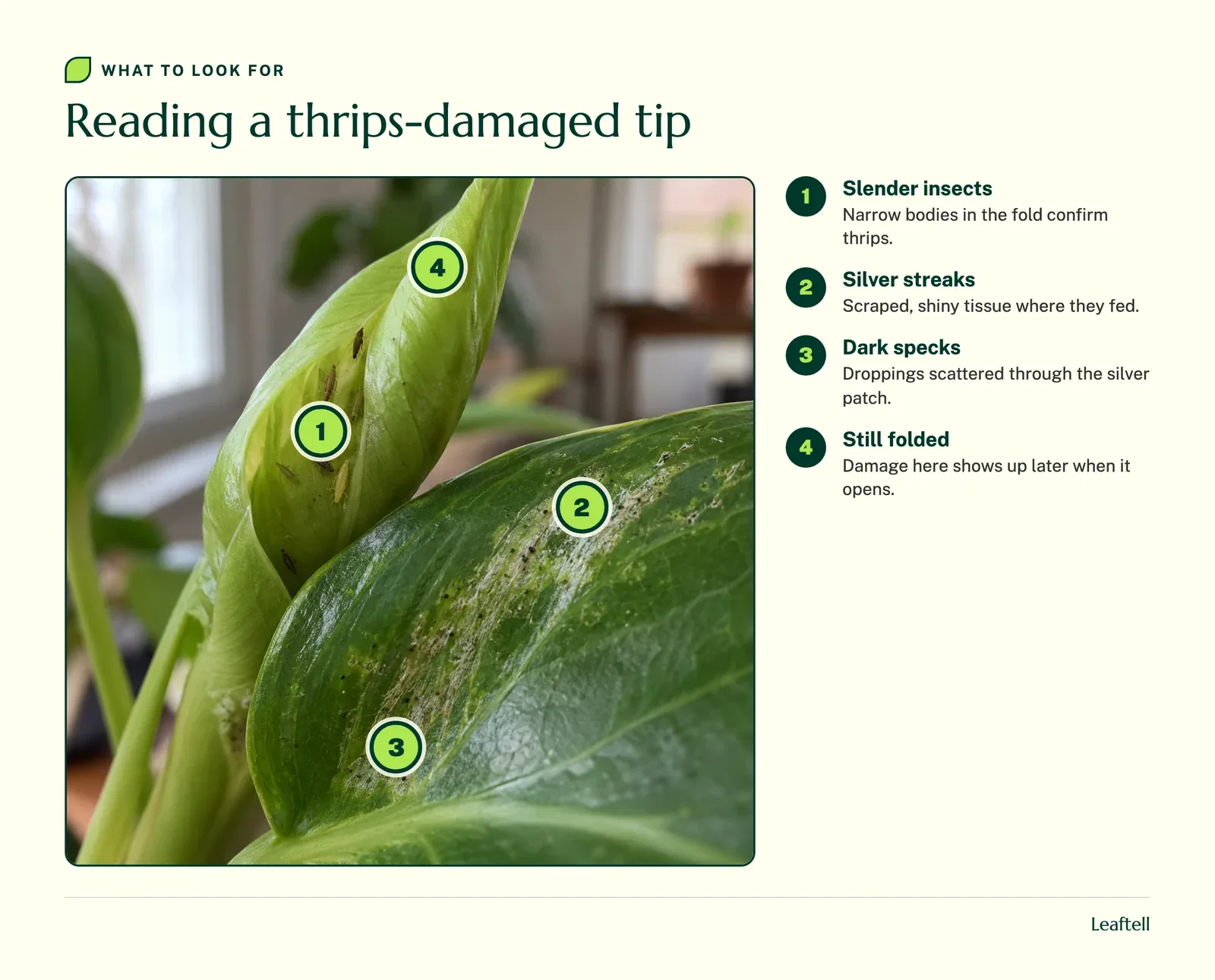
In pictures of thrips on plants, look for pale, silvery, slightly shiny patches with small dark dots scattered through them. Those dots are droppings. The insects are tiny, narrow and elongated, and the young ones are often paler than the adults.
UC IPM lists silvering and dark fecal specks among the feeding signs of thrips. Look for both together. Distortion alone could be many things.
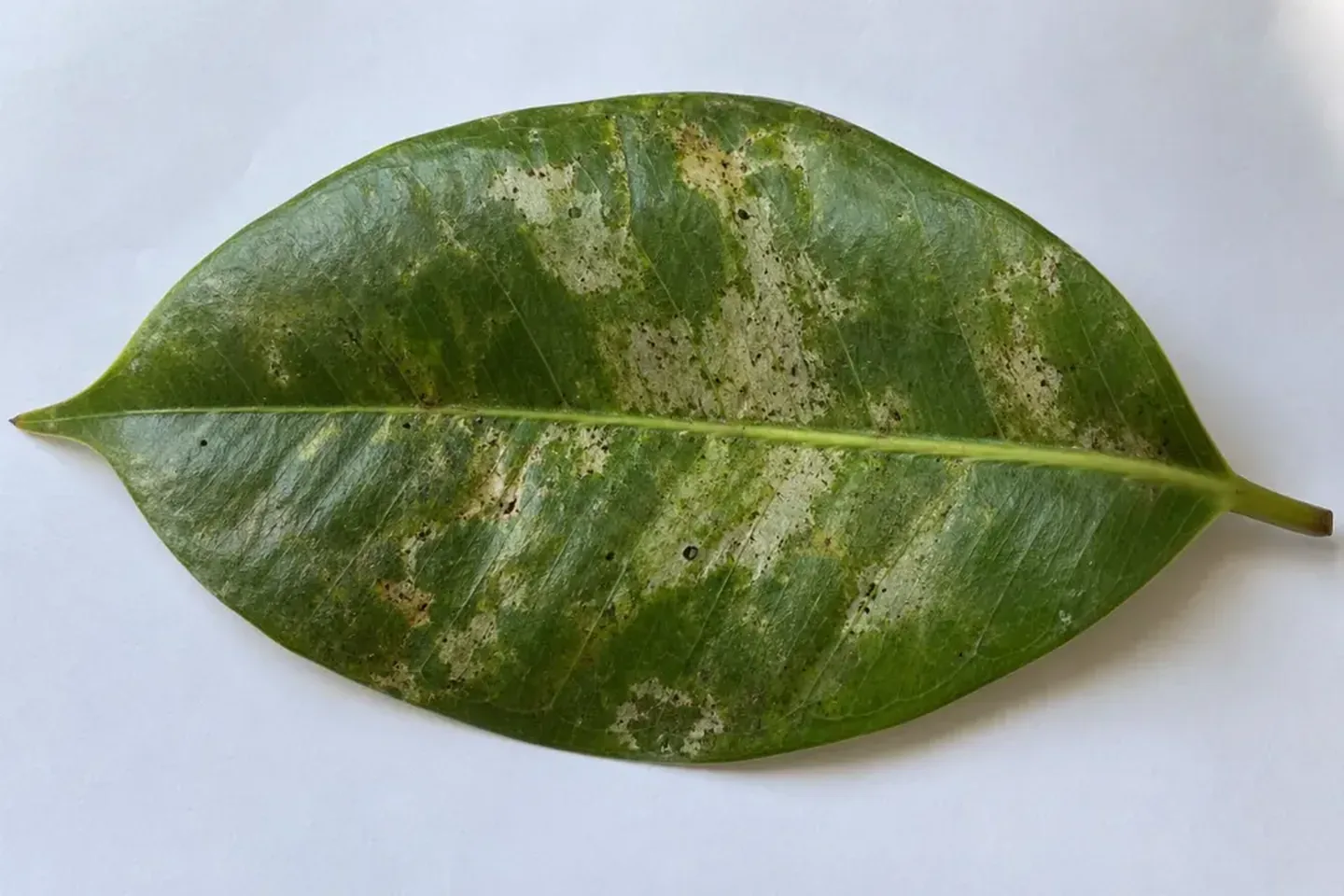
Examine the edge where normal green tissue meets the pale scarred area. Use daylight, tilt the leaf, and photograph it without flash if glare hides the texture. Keep a photo of an undamaged leaf from the same plant too. Natural markings are easy to mistake for spread when you have nothing to compare.
Then search for the insect. Check both leaf surfaces near the veins, tap the foliage over a sheet of white paper, and watch for movement. A hand lens shows the body shape, which matters more than color.
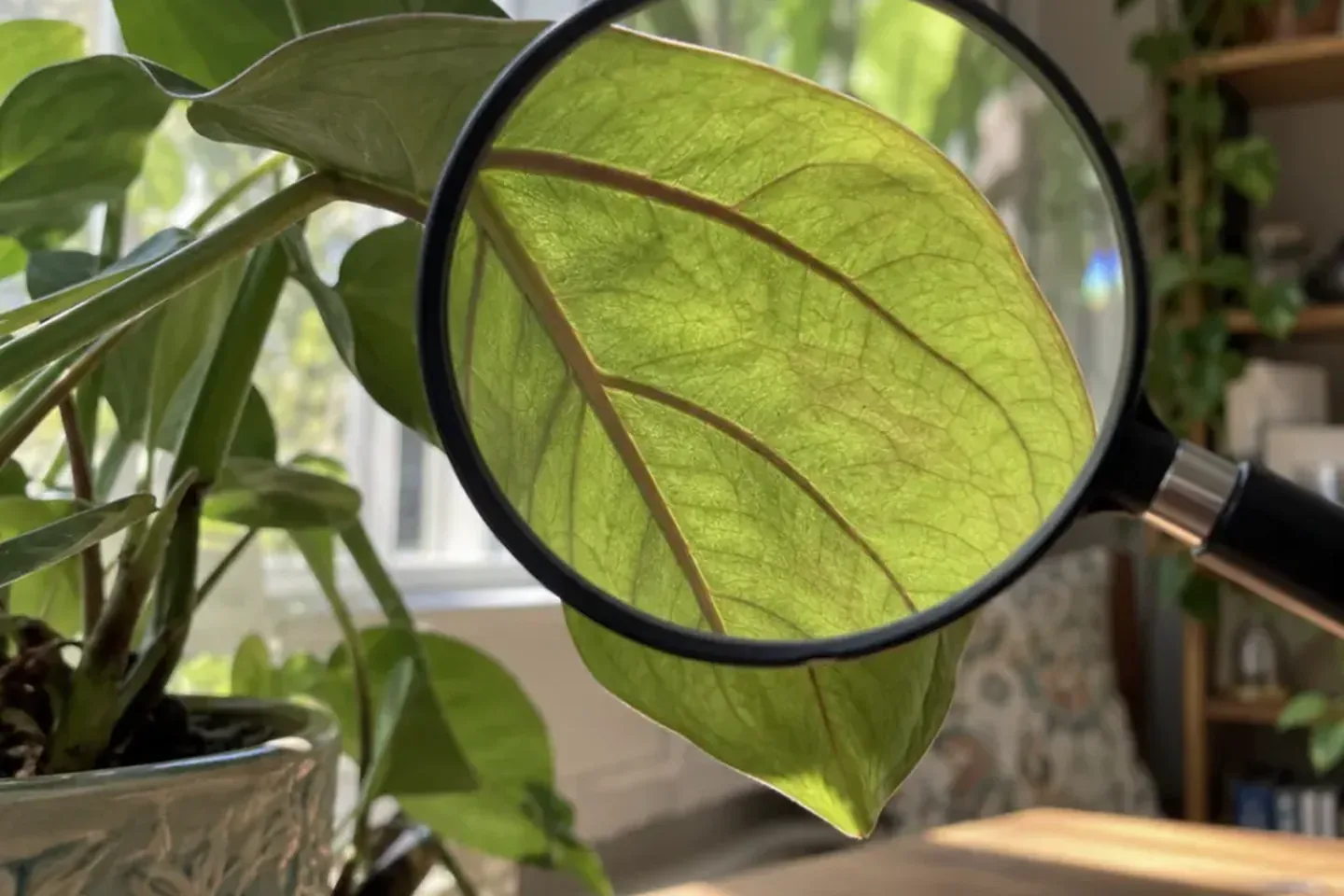
If fine stippling and silk are the stronger clues, read the spider mite guide. Separate round lesions fit leaf spot disease better, and cottony clusters point to mealybugs. If you cannot find the insect at all, isolate the plant and ask for identification help before you start weeks of treatment based only on silver color.
Do thrips bite humans? Keep skin and plant clues separate
Some thrips can cause brief skin irritation when they land on people. A skin symptom cannot identify the insect, though, so treat the plant investigation and any health question as two separate things. Find the insects on the plant to confirm them.
Where thrips hide matters more than whether they nip. New leaves and flower buds shelter them where a quick wipe never reaches. Inspect folds gently and support the tissue. Do not pull a tightly rolled leaf apart to look inside.
Check the flowers, the growing tip and the bases of neighboring leaves. On a climber, follow the main stem behind its support so hidden growth is not missed. Monstera care shows how to tie a climbing stem while leaving leaf stalks free, which also makes inspection easier.
Cut flowers and new plants deserve a look before they join your collection. That is a habit, not a reason to spray every arrival. If a flower is heavily infested and removing it makes sense, bag it before you carry it through the room, then clean your snips.
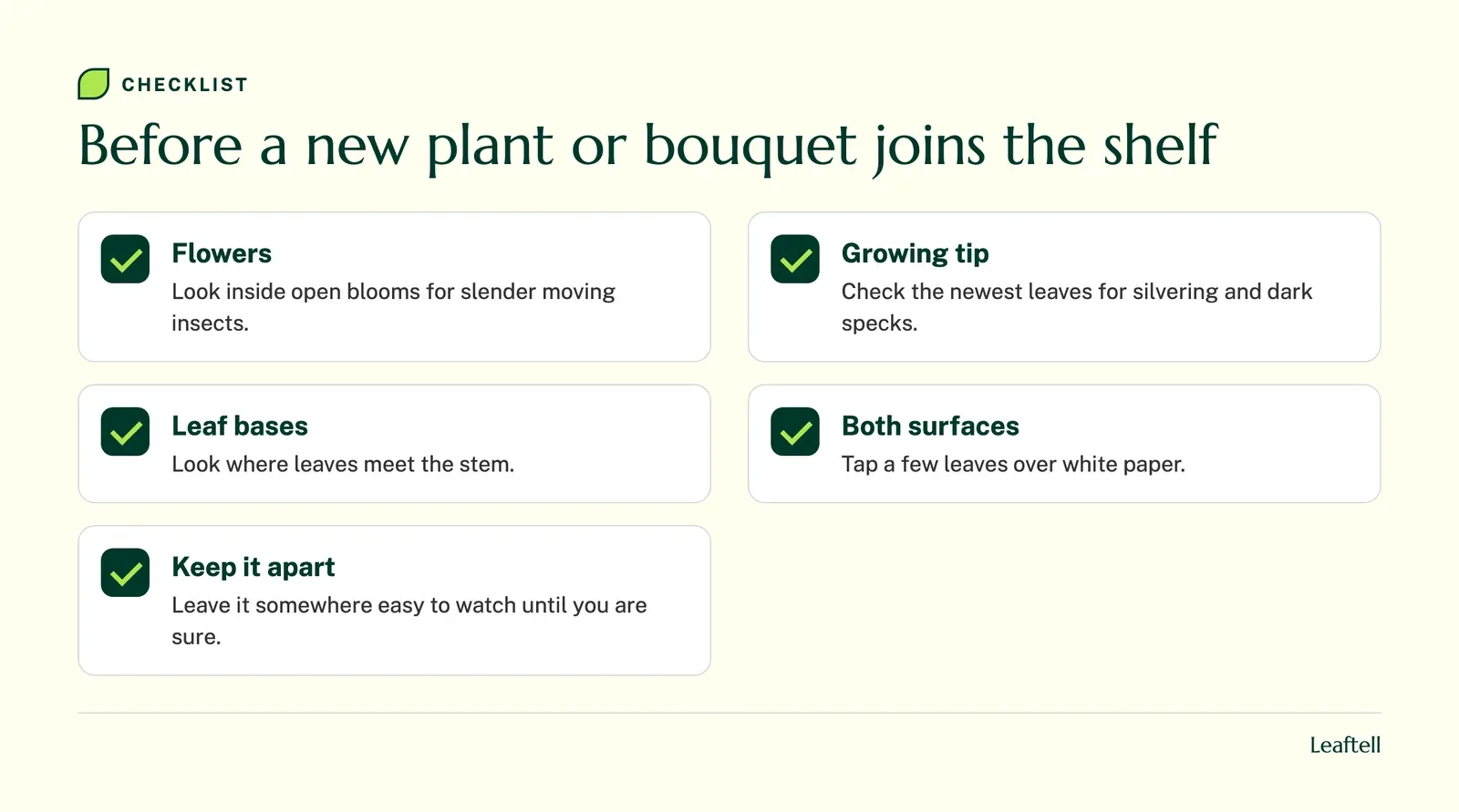
Thrips control: first actions without a spray
Good thrips control starts without a product. Separate the plant, check its closest neighbors, rinse or wipe exposed leaves where the species tolerates it, and clean up fallen debris. Hidden life stages mean you will need follow-up checks no matter how clean it looks.
How to start thrips control without a spray
- Isolate the plant
Move it away from other plants and check the closest neighbors for silvering and dark specks.
- Photograph before you clean
Take dated photos of the worst leaves and one clean leaf so you can tell old scars from new damage later.
- Rinse or wipe exposed leaves
Support each leaf and clean both sides gently. Keep rinse water out of an already damp root ball.
- Remove what is beyond saving
Cut off heavily damaged leaves or infested flowers only where the plant can spare them, and bag them.
- Clean the area
Collect fallen leaves under the plant, wipe the shelf, and wash cloths and tools before touching other plants.
Do not scrub harder when the plant is dense or fragile. Extra force causes mechanical injury that looks like more pest damage. The houseplant pests guide has a wider inspection method if you suspect more than one pest.
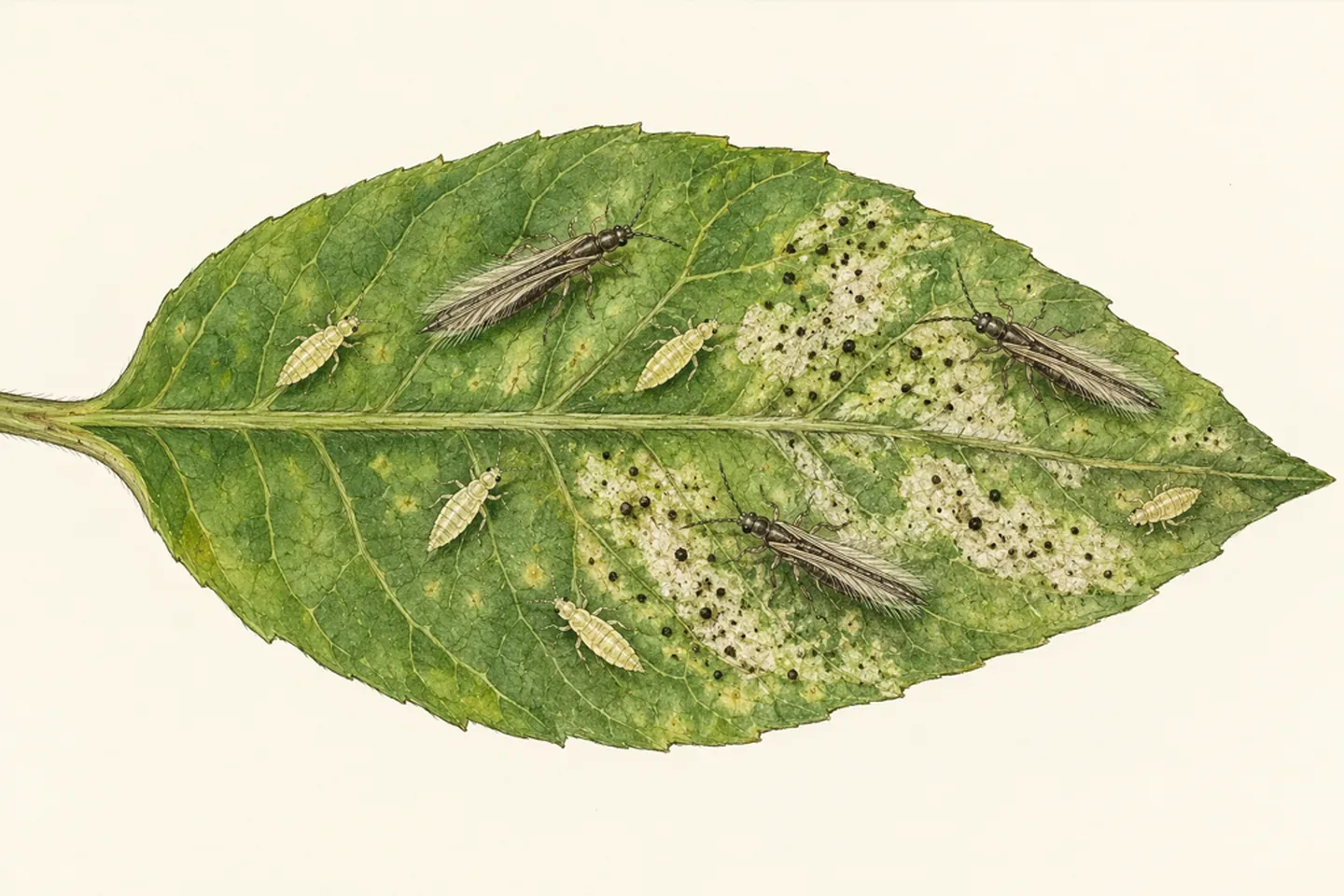
How to treat thrips on plants: match the pest and the host
To treat thrips on plants with a product, first confirm the insect and check the plant's condition. Insecticidal soap or horticultural oil may work on exposed stages when the label covers thrips, your plant and indoor use. Follow the label for coverage, repeat timing and sensitive plants.
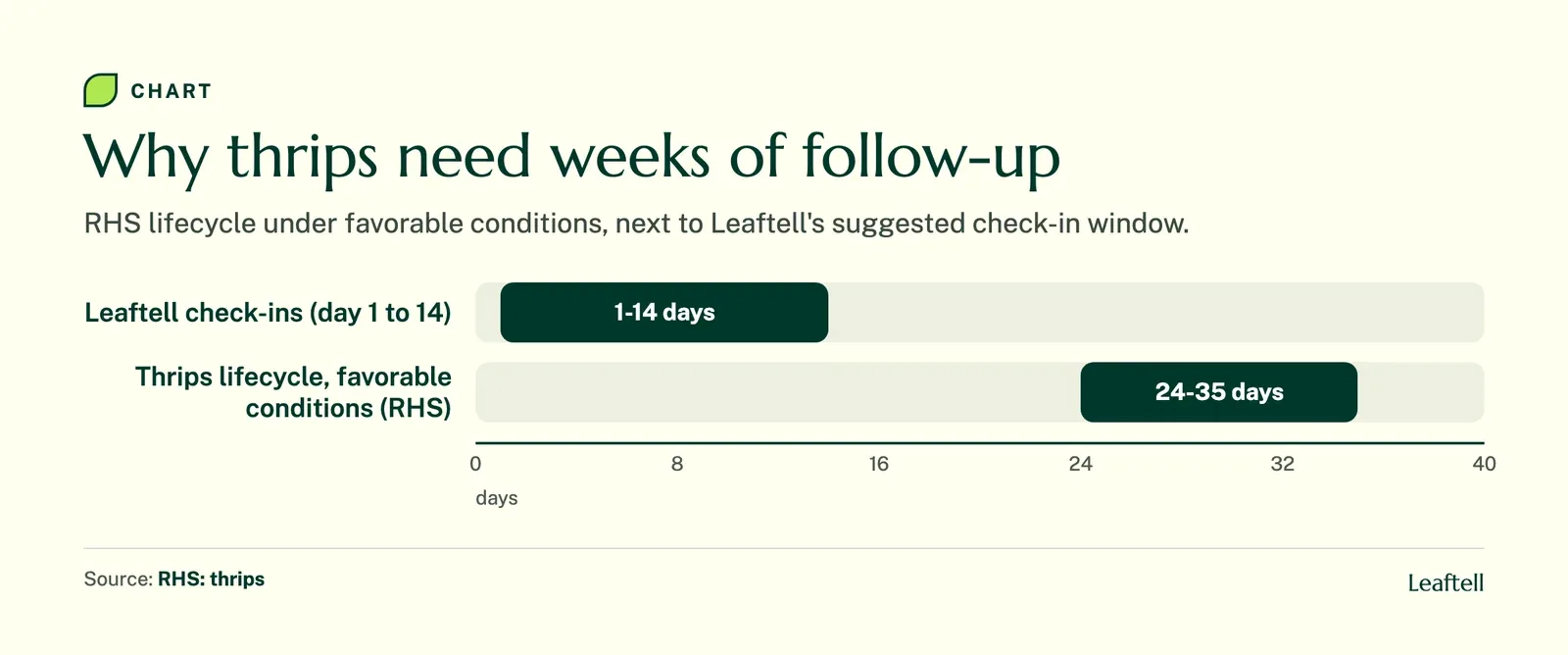
Some stages hide where a spray cannot reach, so one application is never proof of success. The RHS gives a typical lifecycle of about 24-35 days under favorable conditions, with a lot of variation. That is a reason to keep watching for weeks. It is not permission to spray on your own schedule or to make the mix stronger.
Never mix products or swap in a homemade formula. Keep pets and children away from stored products and treated foliage, as the label directs. Check the plant on the ASPCA toxic plant list, but remember that list says nothing about a pesticide. If an exposure happens, give the vet or poison service both the plant name and the product label.
Thrips mistakes and what they cost
The most expensive mistake is reading old damage as a new outbreak. Leaves that were injured while folded unfold scarred, and if you respray every time that happens, you pile treatment injury onto a plant that may already be clear.
- Diagnosing from silver color alone. Variegation, glare and scuffs look similar. You treat the wrong problem.
- Forcing buds and rolled leaves open. You tear the growth you are trying to protect.
- Respraying on a homemade interval. Labels set the timing. Extra rounds add cost and leaf burn.
- Watering every time you inspect. Isolated plants still need normal watering. Use a quick wet-or-dry soil check instead.
- Expecting silver scars to turn green. They never will. Judge new tissue only.
How to get rid of thrips inside the house: follow emerging leaves
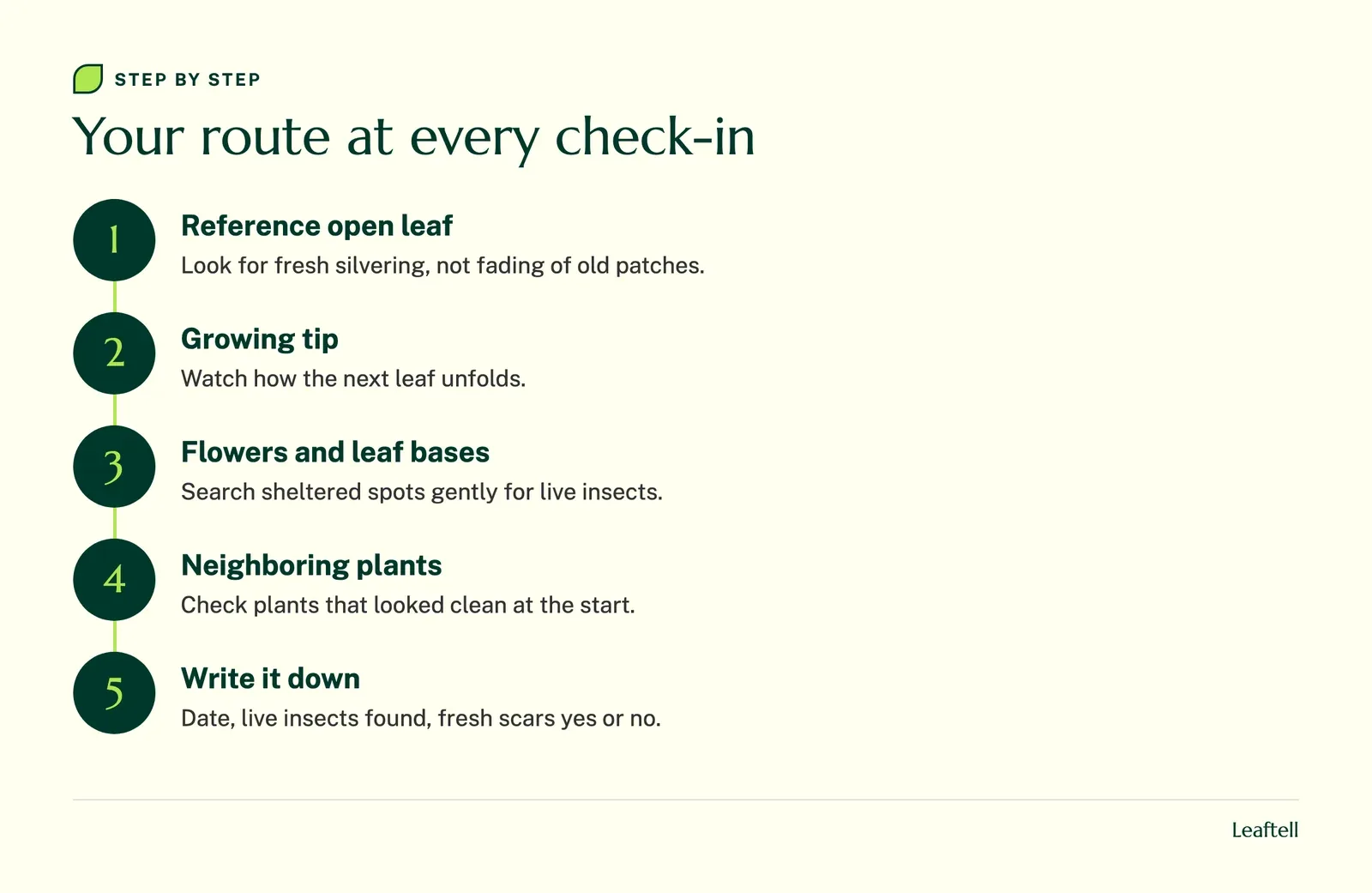
To get rid of thrips inside the house for good, track two reference points: one leaf that is already open and one growing tip. The open leaf shows new surface damage. The tip shows how the next leaf develops. Check both on days 3, 7 and 14, plus any neighbors that looked clean at the start.
| What you check | When | What it means |
|---|---|---|
| Open leaf with a silver patch and dark dots | Day 1 | Photograph the texture and search for narrow moving insects |
| Folded leaf that unfolds scarred | When it opens | Note the date; the damage may predate your cleanup |
| Flowers and leaf bases | Day 3 | Look in sheltered spots without tearing tender growth |
| Newly exposed tissue and neighbors | Day 14 | Live insects or fresh scars mean keep going; old silver does not |
These dates are check-ins, not a spray schedule. Keep checking past day 14 while you still find live thrips or while a product label calls for it.
If a sticky residue shows up instead of silvering, another sap feeder may be involved, and this guide to sticky leaves shows where to look. If leaves cup or roll more than they scar, the leaf curling guide covers other causes.
Judge the next leaf, not the last one
Confirm the insects, isolate the plant, clean what you can reach without force, and then judge only fresh tissue on your reference leaf and growing tip. Keep watching for several weeks, because thrips have stages a single cleaning or spray will miss.
Get help when careful searches keep finding no thrips but damage continues, when it spreads across the collection, or when a badly affected plant keeps declining. A local extension adviser can confirm the insect and help you decide whether nonchemical options are enough or whether the plant is worth keeping. Treatment injury, mechanical damage and a different pest can all pass for a stubborn thrips problem. When you are ready, check your silvered leaves in Leaftell with what you have recorded.
Sources
Check your growing conditions with the plant watering calculator.
Frequently asked questions
They are tiny, slender, elongated insects, often found in leaf folds, buds and flowers. Their feeding leaves silvery patches with small dark specks.
Some adults are dark, while others and the young stages are pale. Color alone is not enough to identify them, so check the narrow body shape with a lens.
Usually not. Hidden life stages let them persist and spread between plants, so keep inspecting new growth after any cleanup or treatment.
Some species spend part of their life in soil or potting mix, while others do not. Inspect the whole plant and follow advice for the species you have.
They can arrive on new plants, on cut flowers or from outdoors. Check recent arrivals and nearby plants, without assuming any single source is proven.
Some thrips can cause brief irritation when they land on skin. That does not identify them, so keep the plant investigation separate from any health concern.
The damage often happened while those leaves were still folded, before your cleanup. Note when each leaf opened and judge only damage that appears on tissue after that.
Share article
About the author

Keep checking your plant
Plant care reference
Indoor plant care
Build a routine around your plant, light and potting mix.
Plant care reference
Why is my plant dying
Trace leaf and root symptoms before choosing a care change.
Plant care reference
Pothos plant care
Choose a growing spot and prune a trailing pothos for fuller growth.
Plant care reference
How to fix root rot
Inspect root firmness and drainage, then decide whether to repot.