Succulent Plant Care: Light, Soil and Watering That Work
Filip Leszczyński 18 October 2026 12 min read
In this article
Succulent plant care comes down to three things: the brightest spot you have, a gritty mix in a pot with a drainage hole, and a soak and dry watering rhythm that follows the pot rather than the calendar. Get the light right first, because most indoor succulent problems start there.
Here is the part most care cards skip. Overwatering and low light are usually the same problem. In a dim spot, a succulent uses water slowly, so the mix stays wet for days and the roots sit in it. Move the plant to brighter light and the same watering habit often stops causing trouble.
Light: the limit indoors, not water
Iowa State University Extension calls light one of the most limiting factors for succulents grown indoors. It recommends ten or more hours of bright, indirect light, light strong enough to cast a shadow, and notes that most species need at least six to eight hours even when they tolerate less.
That is a lot more than a shelf across the room provides. A windowsill facing south or west usually gives the most light in the Northern Hemisphere, and an east window with morning sun is a good second choice. A north window or a spot several feet back from any window is rarely enough for rosette types like echeveria.

The University of Georgia Extension puts numbers on it: plants sold as high light prefer roughly 500 to 1,000 foot-candles, while low light plants grow well at 75 to 200. If you have a light meter, take the reading at the leaves, not at the glass. For a fuller look at direct sun versus bright shade, see our guide to reading your plant's light.
How to tell a succulent wants more light
A succulent short on light stretches. The stem grows longer between leaves, new growth comes in paler, and the whole plant leans toward the window. Rosettes that were tight open up and flatten.
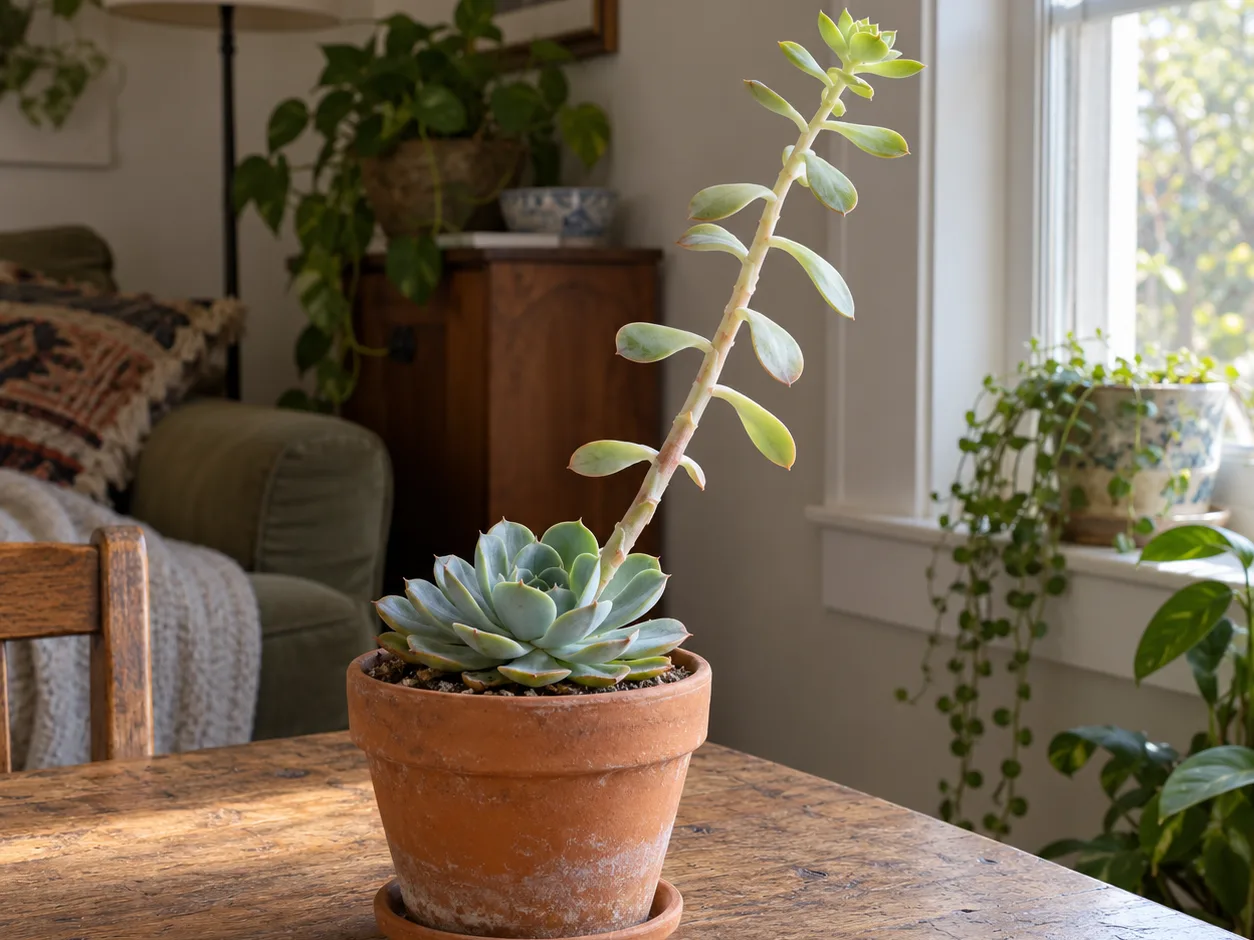
Stretched growth does not shrink back. The fix is brighter light for everything that grows next, and later you can cut and replant the stretched top if you want a compact plant again. Our guide to leggy plants covers when to cut back and when to wait.
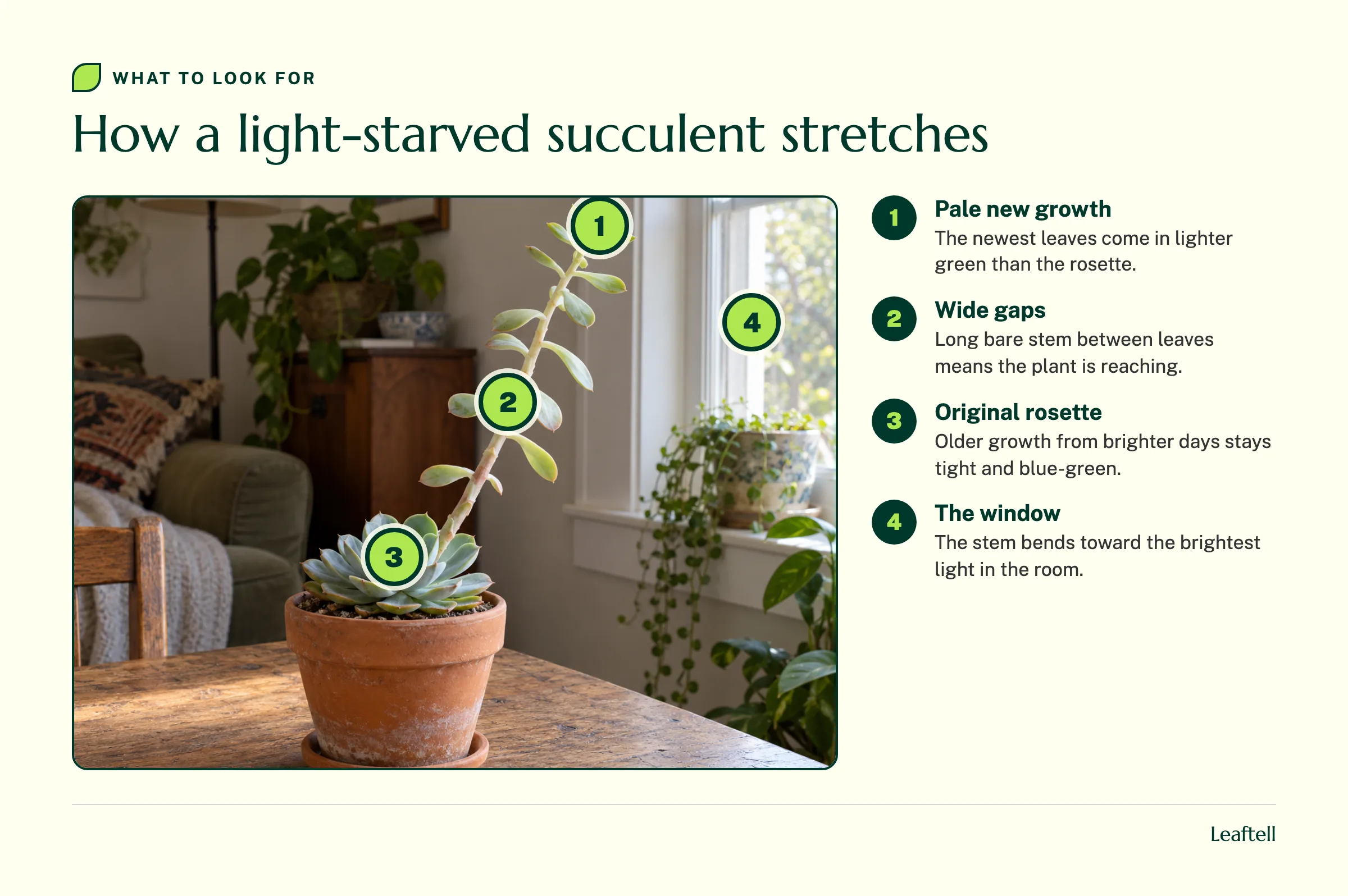
Move a stretched plant to stronger light in stages over a week or two rather than straight into hot afternoon sun. Leaves that grew in dim conditions can scorch, which shows as bleached or brown patches that do not heal. Rotate the pot a quarter turn every time you water so it grows evenly.
If no window works, a full-spectrum LED grow light can supply what the room cannot. Follow the fixture's instructions for distance and hours.
Choose care by succulent type
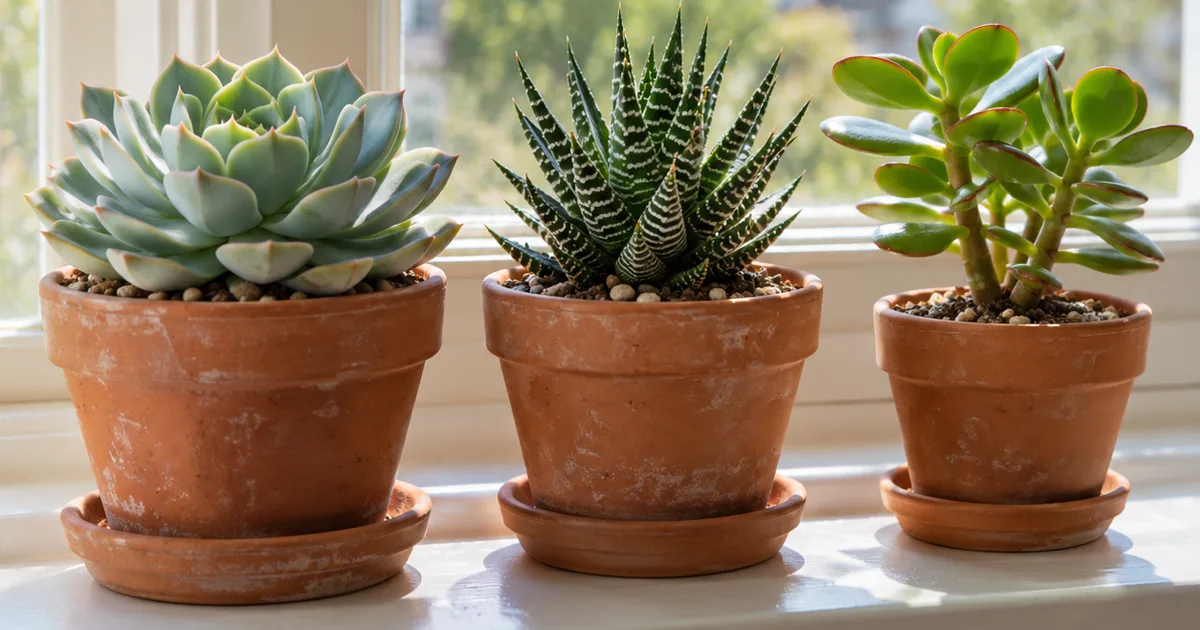
"Succulent" covers plants from several families, and they do not all behave the same way on a windowsill. Group yours by shape before deciding where it goes.
| Type | Common examples | Light indoors | What usually goes wrong |
|---|---|---|---|
| Rosettes | Echeveria, hens and chickens, ghost plant | The brightest window you have, some direct sun | Stretching and fading color in dim rooms |
| Tree-like | Jade plant | Bright light with some direct sun | Dropping leaves after long wet or very dry spells |
| Clump-forming with stiff leaves | Aloe, haworthia, gasteria | Bright light; haworthia and gasteria cope with less | Floppy aloe in low light, rot from wet mix |
| Trailing | Burro's tail | Bright, indirect light | Leaves fall off when the plant is moved or brushed |
| Cacti | Barrel and columnar cacti | The brightest spot, including direct sun | Lean and narrow growth toward the window |
If you only have moderate light, haworthia and gasteria are the forgiving choices. Echeveria and other colorful rosettes are the ones most likely to stretch indoors. A Christmas cactus is a different case: it is a forest cactus and wants more water and less sun than the desert types in this table.
Soil and pots that drain fast
Regular potting soil holds too much water for succulents. Iowa State recommends a mix of about one part organic material, such as potting soil, pine bark or coir, to two parts mineral material, such as perlite, pumice or coarse sand. A bagged cactus and succulent mix is a fine starting point.
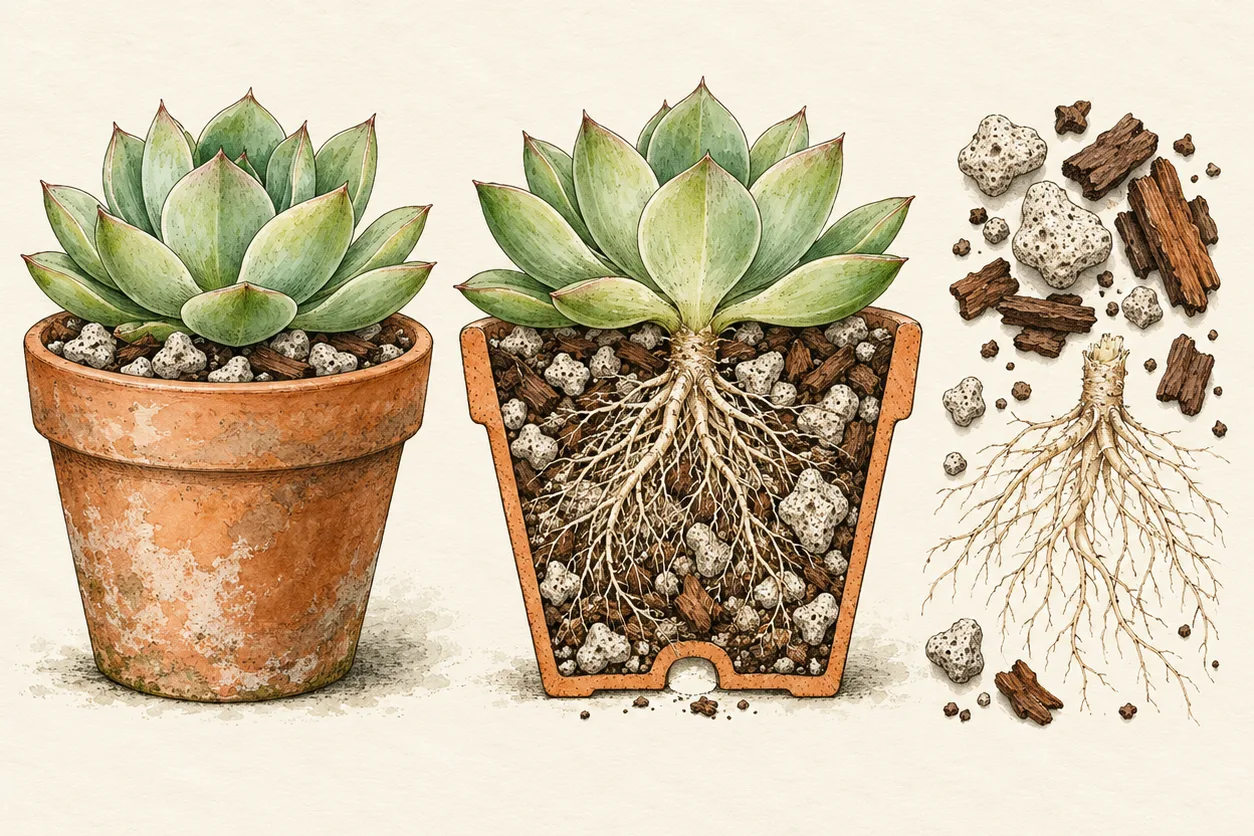
The pot needs a drainage hole. A layer of gravel in the bottom of a pot without a hole is not a substitute; it still leaves wet mix around the roots. If you love a decorative pot without a hole, keep the succulent in a plain nursery pot and set that inside, then lift it out to water.
Terracotta dries faster than glazed ceramic or plastic, which helps if you tend to water often. Choose a pot just big enough for the roots. A large pot holds a lot of mix the roots cannot reach, and that mix stays wet. Repotting is only needed when the plant is top-heavy, the roots fill the pot, or the old mix has broken down and stays wet.

Watering: soak, drain, then wait
Water a succulent thoroughly, then let the mix dry completely before you water again. This wet and dry cycle is what Iowa State recommends, and it suits the way succulents store water in their leaves and stems.
How often that works out to depends on light, pot, mix, temperature and season. Iowa State suggests starting with a check every two to three weeks and watering only when the mix is dry several inches down. In a bright window in summer that check may come sooner; in a dim room in winter, much later. Treat any interval as a reminder to check, not a schedule.
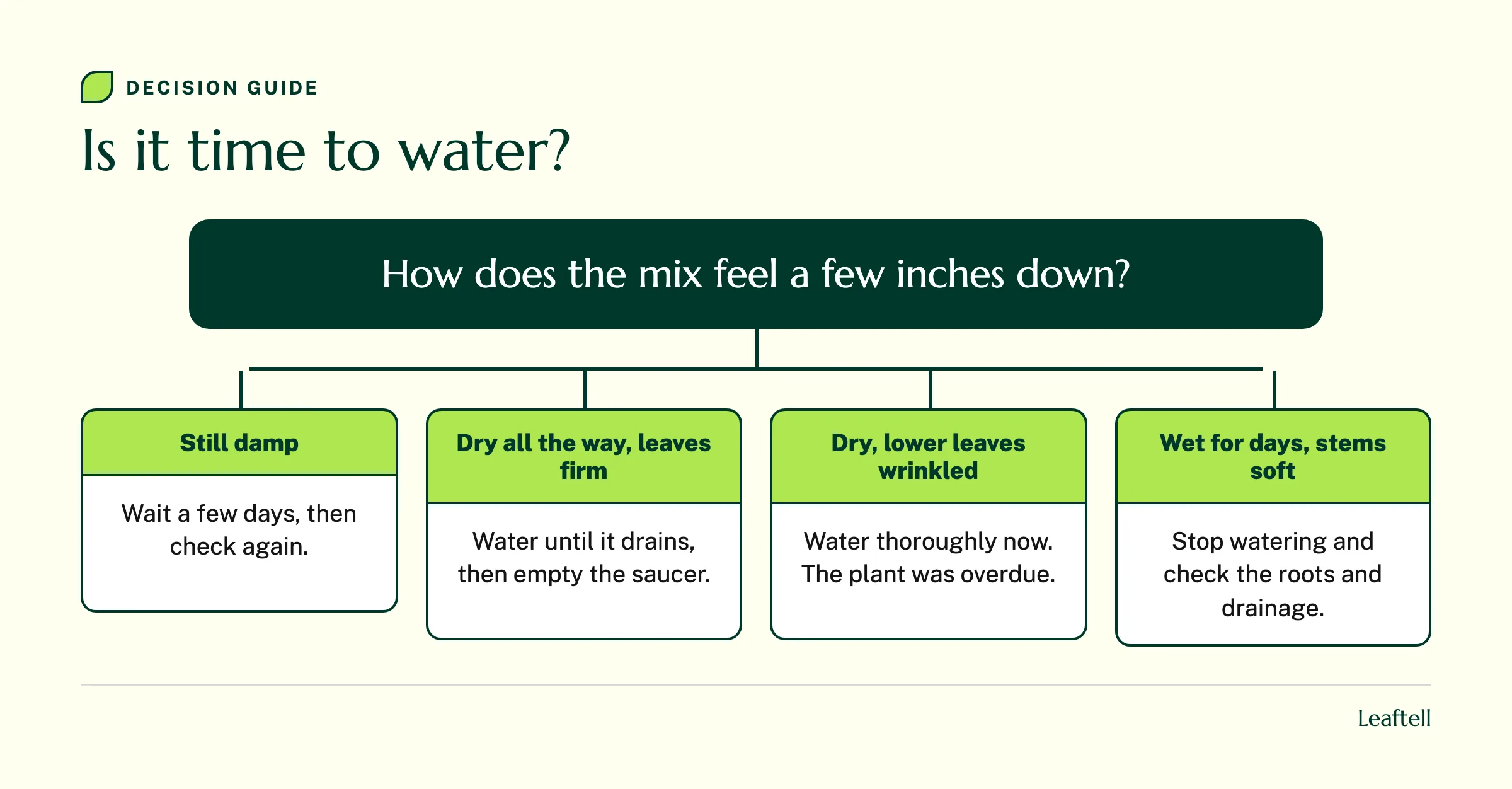
How to water a succulent with the soak and dry method
- Check the mix first
Push a finger or a wooden skewer a few inches into the mix. If it comes out damp or with soil stuck to it, wait a few days and check again.
- Water until it drains
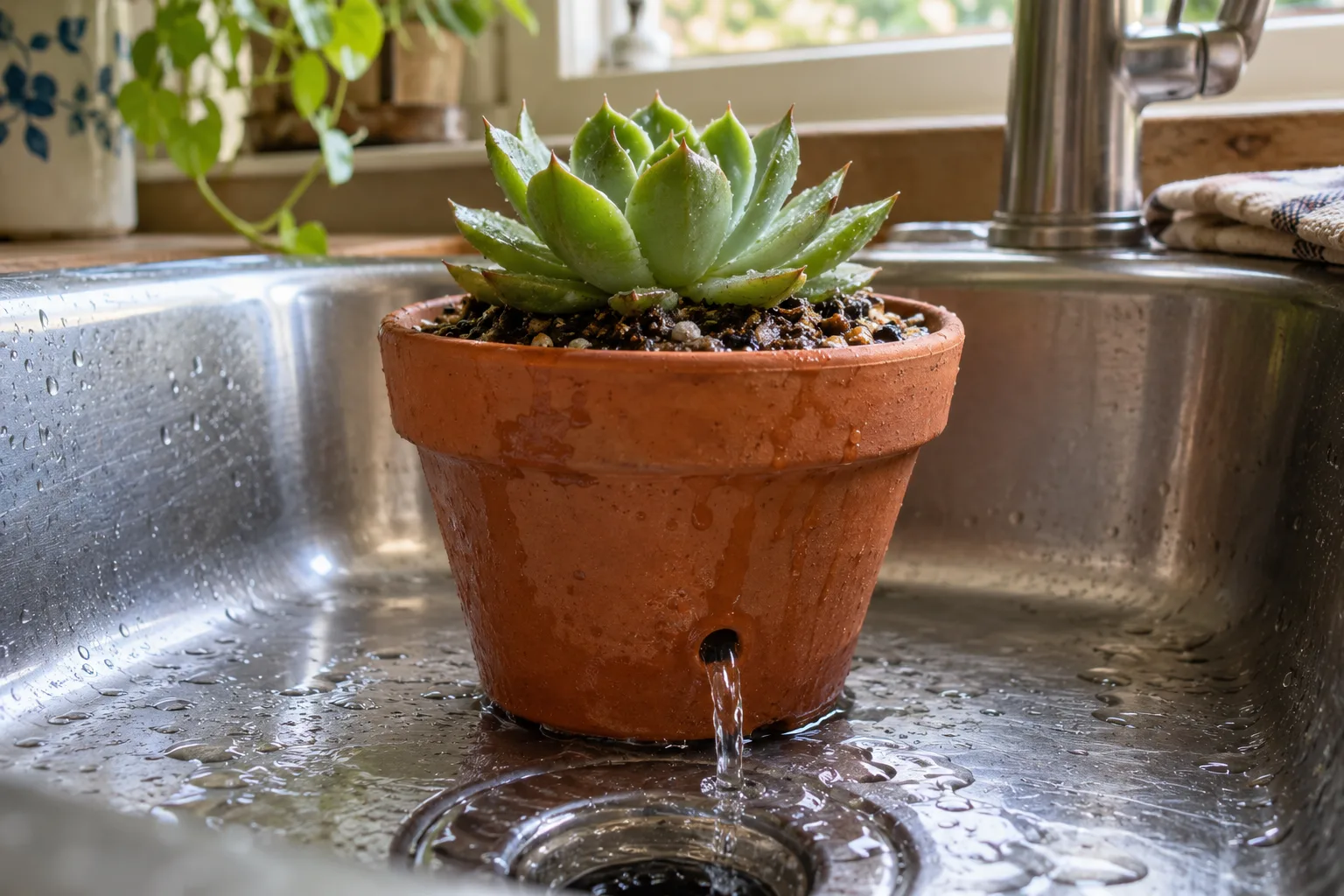
When the mix is dry, water slowly over the whole surface until water runs out of the drainage hole. Doing it in a sink makes this easy.
- Let it drain completely
Leave the pot to drain for several minutes. Empty any saucer or outer pot so the plant is never standing in water.
- Note the date and the weight
Lift the pot right after watering and remember how heavy it feels. Next time, a much lighter pot is a good sign the mix has dried. For more ways to read the soil, see how to tell if a plant needs water.
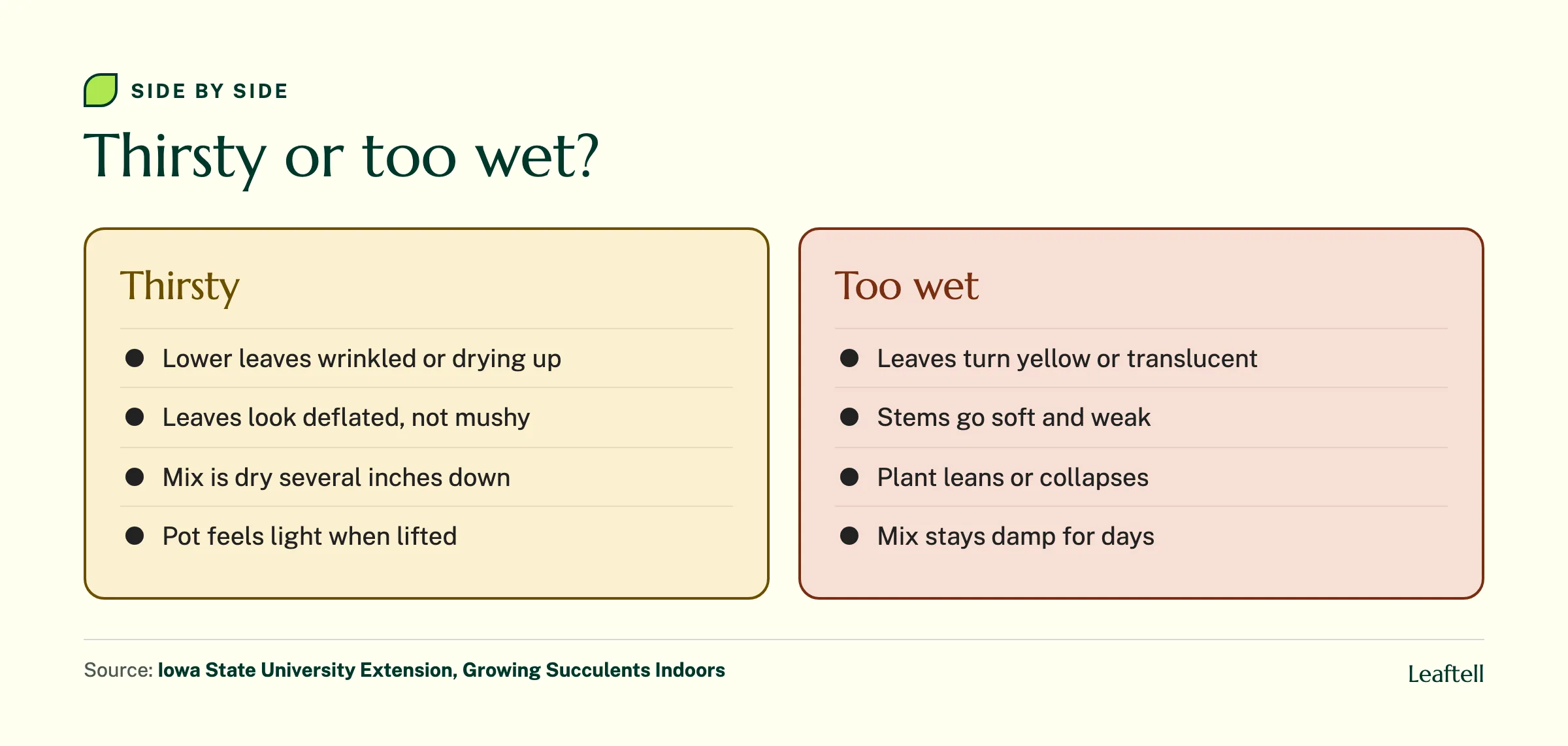
Thirsty or too wet?
Both problems show in the leaves, but they look different. A thirsty succulent wrinkles: lower leaves deflate and pucker, and the mix is bone dry. A succulent kept too wet turns yellow or translucent, its stems go soft, and it may lean or collapse.
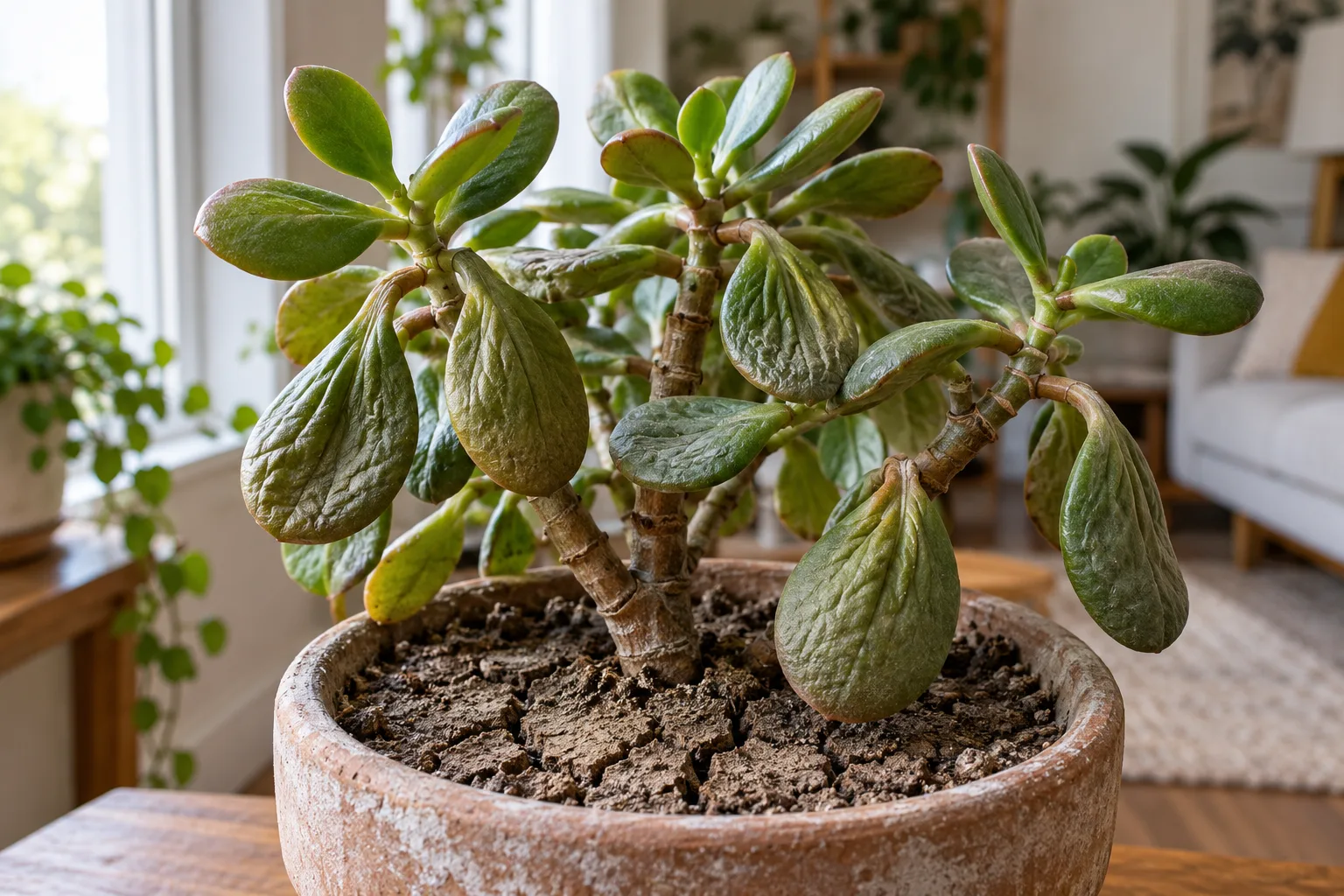
Wrinkled leaves usually firm up within a few days of a thorough watering. Soft, mushy stems do not recover with drying alone. If the base is soft or the mix smells sour, unpot the plant and look at the roots; our guide to fixing root rot walks through what to cut and how to replant. If the plant is already losing leaves or turning black, start with why your succulent is dying.
Temperature, humidity and feeding
Succulents do not need extra heat indoors. Iowa State gives 55°F to 75°F as the preferred range, with some tolerating 45°F to 85°F, and cooler nights than days. Dry indoor air in winter suits them, so skip the humidifier and pebble tray. Keep pots off cold windowsills on freezing nights and away from heating vents that bake one side.
Feed lightly or not at all. In spring and summer, a balanced houseplant fertilizer at half to a quarter of the label rate every three or four waterings is plenty; a fertilizer made for cacti and succulents can be used as its label directs. Do not feed in winter, when growth is slow. Follow the label, and never use fertilizer to make up for poor light.
Mistakes that cost succulents the most
- A dim spot plus regular watering. The plant cannot use the water, the mix stays wet, and the roots rot. Fix the light before anything else.
- Small sips of water. Wetting only the top inch keeps the surface damp while the roots below stay dry. Water thoroughly, then wait.
- No drainage hole. Water collects at the bottom with nowhere to go.
- Coffee grounds, eggshells and kitchen scraps on top. Grounds hold moisture and can grow mold on the surface; none of these replace a fast-draining mix.
- Crowding. Iowa State notes that moving air helps the mix dry and reduces pests like mealybugs and spider mites. Leave space between pots. If you do see white cottony spots, our guide to mealybugs on plants starts with the least toxic fixes.
Succulents, pets and children
Several popular succulents are toxic to cats and dogs, so check before a plant goes where pets can reach it. The ASPCA plant database lists jade plant (as Crassula argentea, a synonym of Crassula ovata), aloe, kalanchoe and pencil cactus as toxic to cats and dogs. It lists hens and chickens, zebra haworthia and burro's tail as nontoxic.
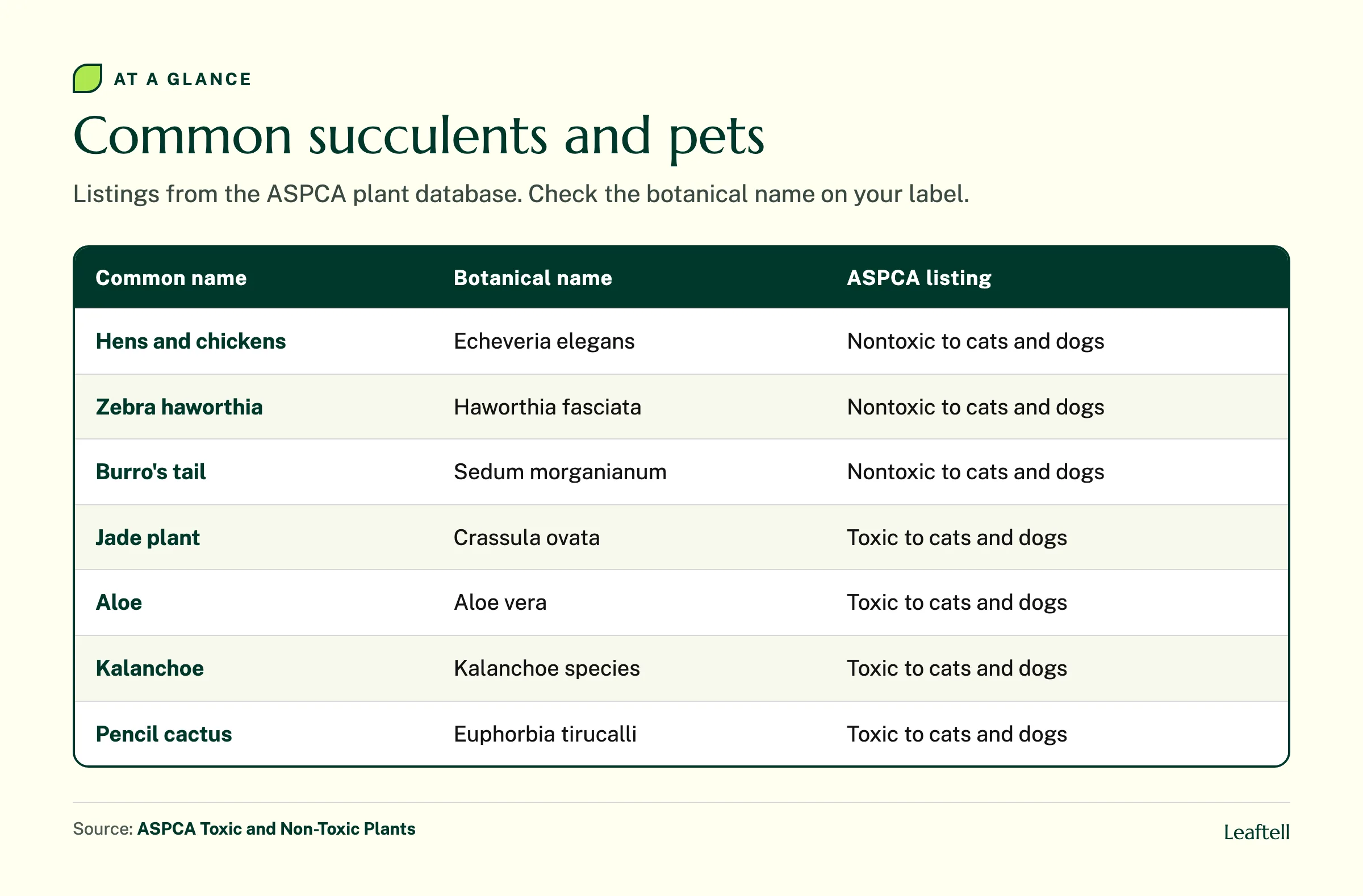
Common names are loose, so match the botanical name on the plant label. Nontoxic does not mean edible: chewing any houseplant can upset a pet's stomach. These listings are for animals, not children, so keep all succulents out of reach of small children too. Pencil cactus sap is irritating to skin and eyes, so wear gloves when handling it. If a pet or child has chewed a plant and you are worried, call your veterinarian or a poison control service rather than trying a home remedy.
Check your succulent in Leaftell
Give succulents the brightest spot you have, a gritty mix in a pot that drains, and a thorough watering only when the mix is dry all the way down. When a plant stretches, fix the light. When it wrinkles, water it. When it goes soft and yellow, stop watering and check the roots.
If you are not sure which of those your plant is showing, check your succulent in Leaftell. Note how bright the spot is, when you last watered and how the mix feels a few inches down; those details matter as much as how the leaves look.
Check your growing conditions with the plant watering calculator.
Frequently asked questions
Water when the mix is dry several inches down, not on a fixed day. Iowa State suggests starting with a check every two to three weeks and adjusting for light, pot, mix and season. A succulent in a bright summer window dries much faster than one in a dim room in winter.
Most succulents grow best with bright light for ten or more hours a day, and many rosettes and cacti appreciate some direct sun indoors. Haworthia and gasteria cope with less. Move a plant into stronger sun gradually so the leaves do not scorch.
Small, snug pots. A pot just big enough for the roots dries faster, which is what succulents want. Oversized pots hold wet mix the roots cannot use, which raises the risk of rot.
No. Coffee grounds hold moisture and can grow mold on the surface of the mix, which is the opposite of what a succulent needs. Use a fast-draining cactus mix and, if you feed at all, a diluted fertilizer in spring and summer.
Some growers dust cut stems or leaf cuttings with cinnamon in the hope that it keeps rot away. The step that reliably helps is letting the cut end dry and callus for a few days before it touches soil, then keeping the cutting on the dry side until roots form.
Some large succulents in cool, dim conditions can survive a long dry spell by drawing on the water in their leaves, but survival is not good care. Lower leaves will wrinkle and growth stops. Check the mix regularly and water when it is dry.
Leaves turn yellow, translucent or mushy, stems go soft, and leaves may drop at a touch. The mix stays damp for days. Stop watering, let the mix dry and check the roots for brown, soft sections.
Share article
About the author

Keep checking your plant
Plant care reference
Indoor plant care
Build a routine around your plant, light and potting mix.
Plant care reference
Why is my plant dying
Trace leaf and root symptoms before choosing a care change.
Plant care reference
Pothos plant care
Choose a growing spot and prune a trailing pothos for fuller growth.
Plant care reference
How to fix root rot
Inspect root firmness and drainage, then decide whether to repot.