Overwatered plant symptoms: check roots before rescue
Filip Leszczyński 16 October 2026 10 min read
In this article
Overwatered plant symptoms include yellowing or drooping leaves alongside a root zone that stays wet and heavy. Empty trapped runoff and check moisture below the surface before adding water or deciding to repot.
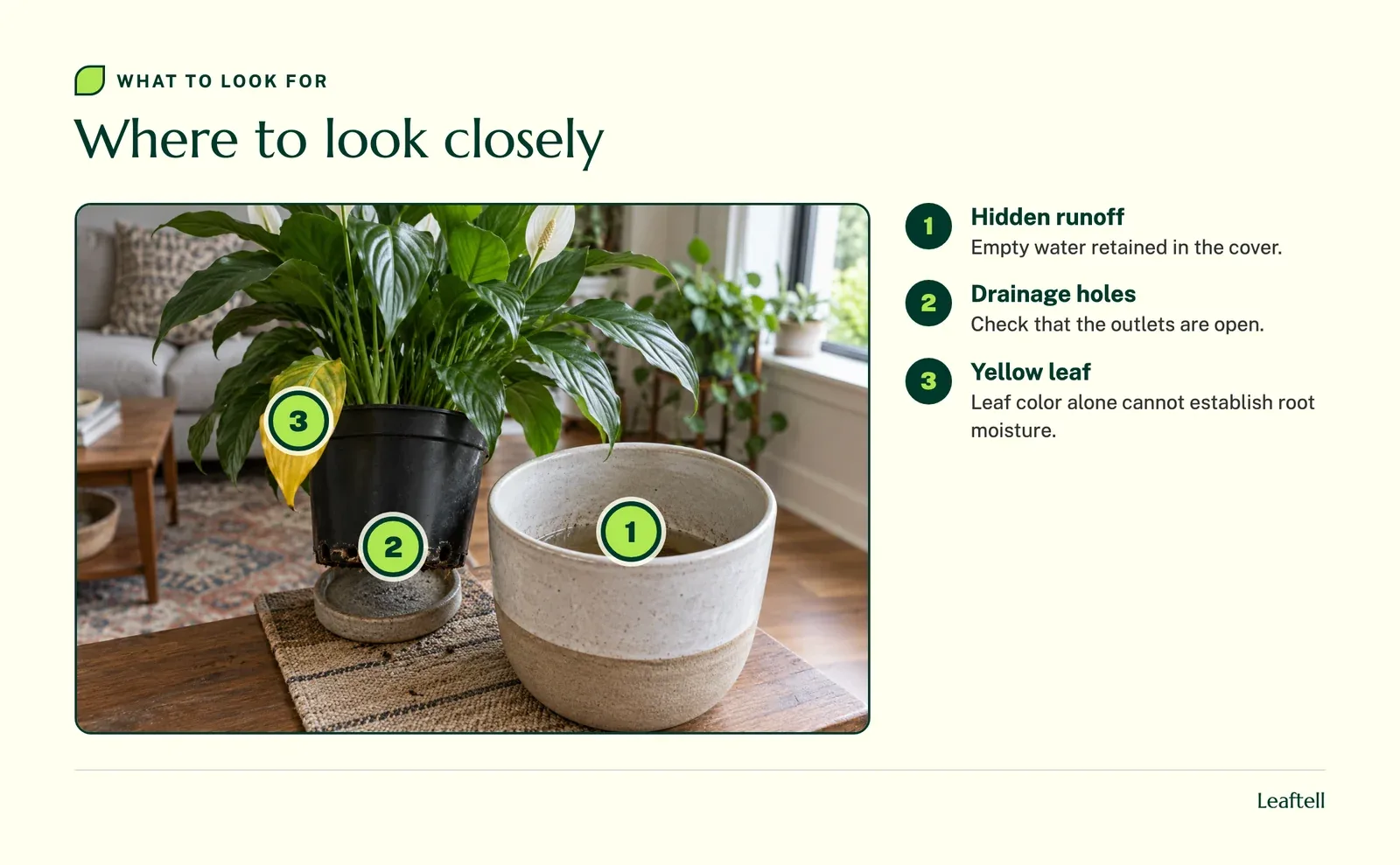
A thirsty plant can droop in much the same way. The leaf is the alarm, not the verdict: a photograph cannot show how long the center of the pot has stayed wet or whether its decorative cover holds water.
Start inside the pot
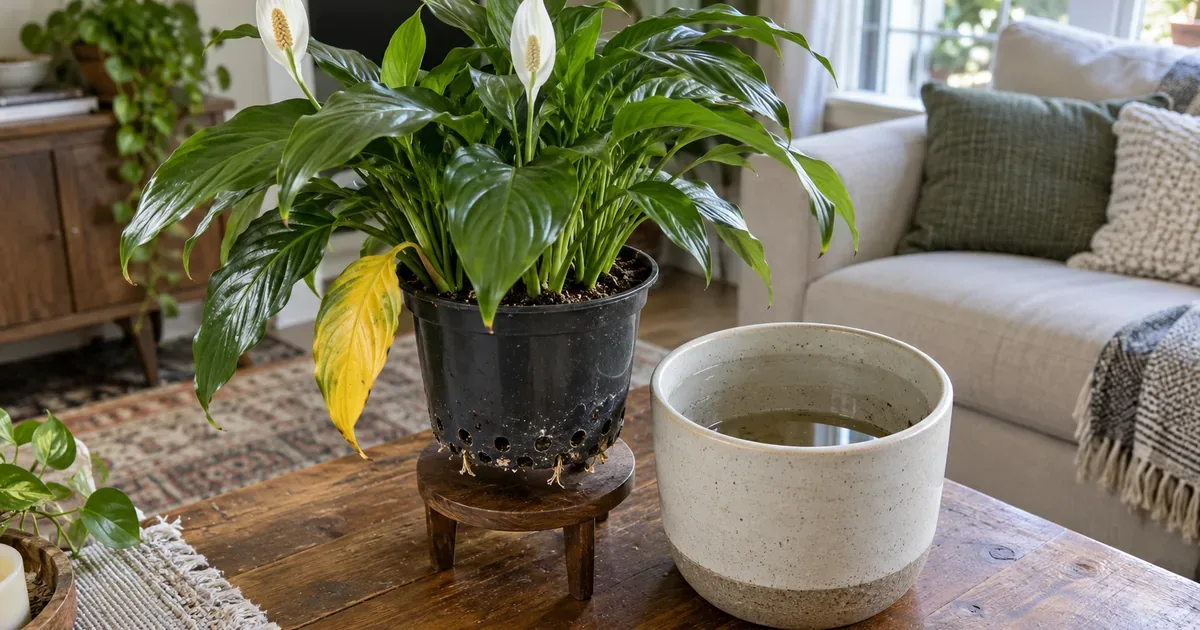
Begin with the pot rather than the leaf color. Lift a manageable container and feel below the surface in more than one place. A wet heavy root ball tells a different story from dry mix that has shrunk away from the sides. Check the inner pot separately from its decorative cover, because standing runoff can remain hidden below a raised base.
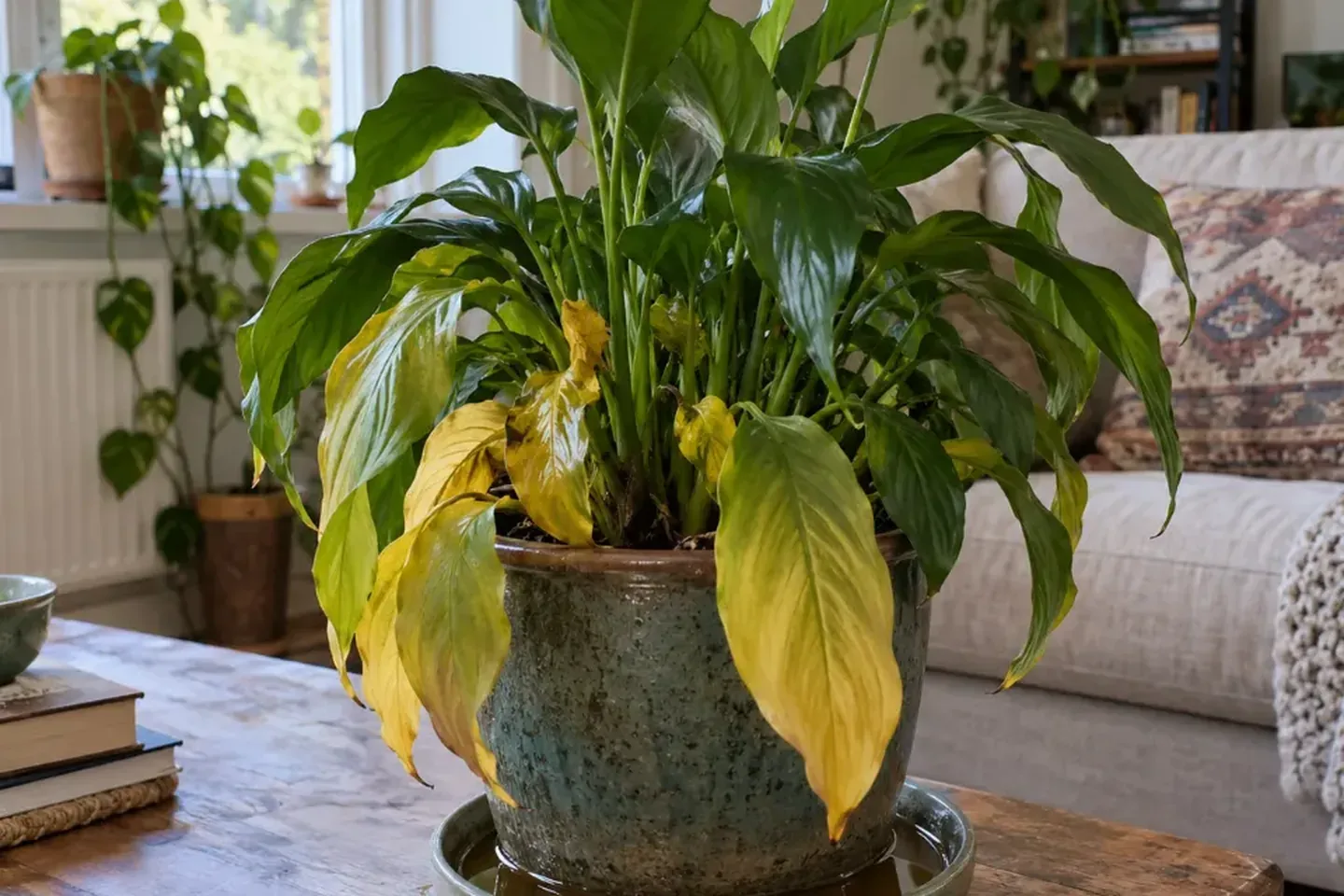
Both situations can produce a drooping plant, and both may eventually involve yellow leaves on plants. The outward overlap is why adding a drink whenever foliage looks unhappy is unreliable. Record the root-zone condition before making a change so later observations have a useful starting point.
A moisture meter is an extra clue, not a substitute for inspecting the growing system. Different substrates and uneven root balls can produce confusing readings. Compare the reading with touch, weight, and drainage behavior. If the evidence conflicts, investigate the conflict instead of choosing the result that fits your first guess. A recently watered surface above a dry center, for example, needs a different response from a uniformly saturated pot that has remained heavy for many days.
Observation checklist. Review dates are suggested check-ins, not watering or treatment intervals.
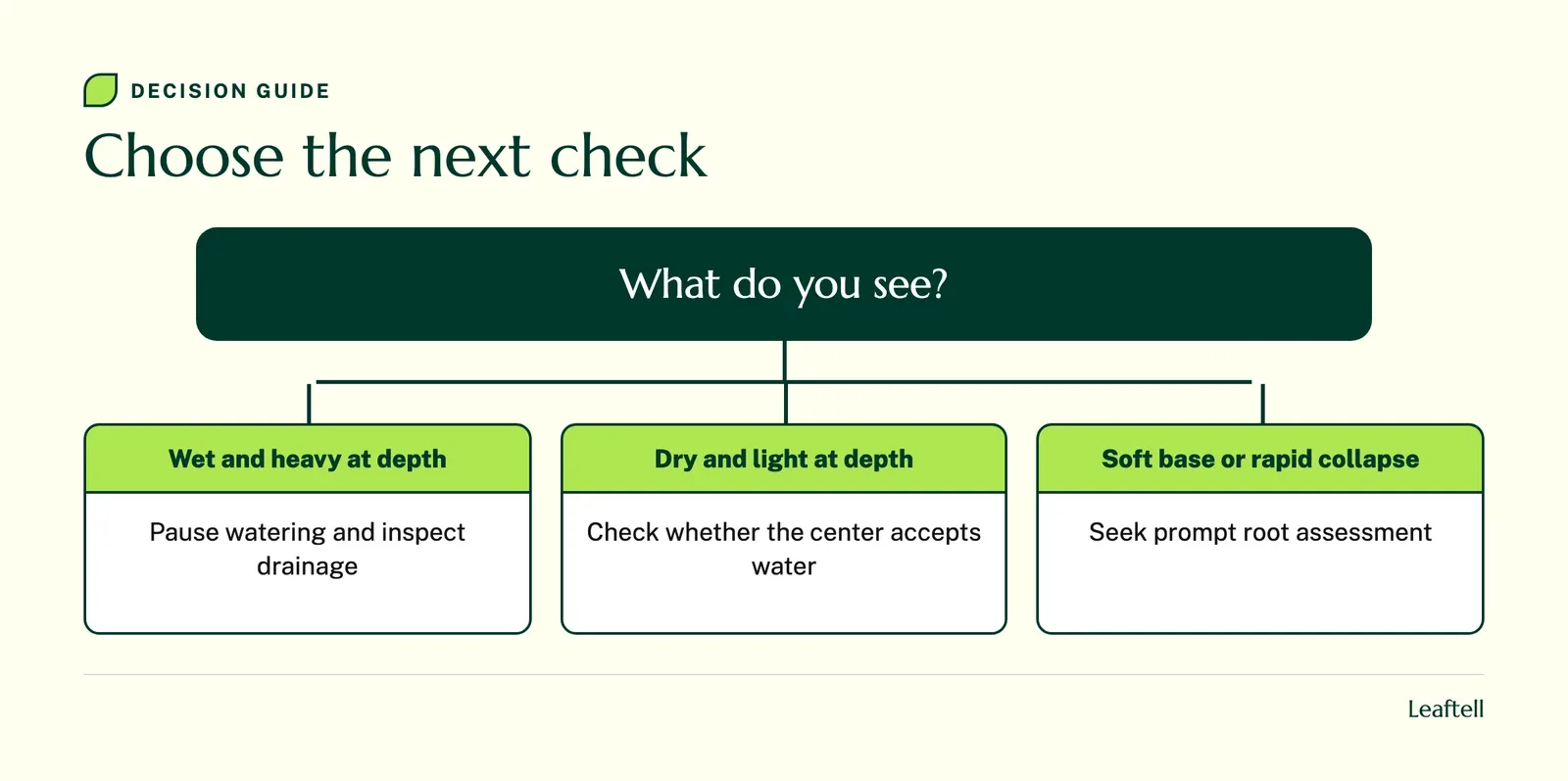
| What you find | Best next check |
|---|---|
| Wet at depth, heavy container | Inspect holes and retained runoff before any additional watering. |
| Dry at depth, water bypasses the center | Check uneven rewetting rather than assuming the plant was thoroughly watered. |
| Day 3: same wet weight after drainage correction | Review substrate, light, and root condition; the surface alone may mislead. |
| Day 7 to day 14: fewer new losses | Track stabilization without expecting old yellow tissue to recover. |
Why the pot stays wet
Overwatering describes the condition around the roots, not simply how much water was poured on one occasion. A reasonable watering can be followed by prolonged saturation if the pot has no outlet, the cover retains runoff, or the mix drains poorly. A large new container also holds material that the current root system may not use quickly.
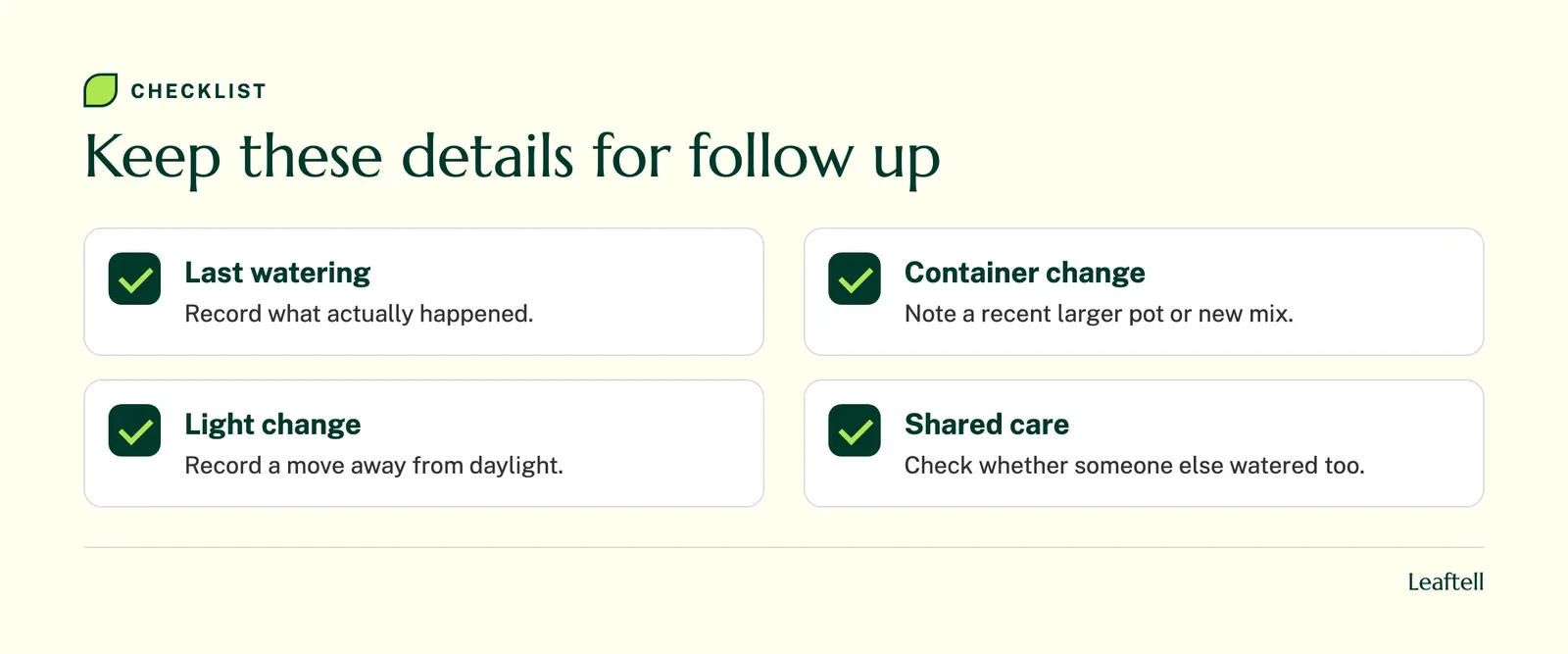
Review light and temperature changes. A plant moved farther from daylight may use water more slowly while its owner continues the old routine. A cool season can change drying too. Note the date of repotting, the size of the new pot, and whether several people have been watering independently. Those details often explain why the pattern began.
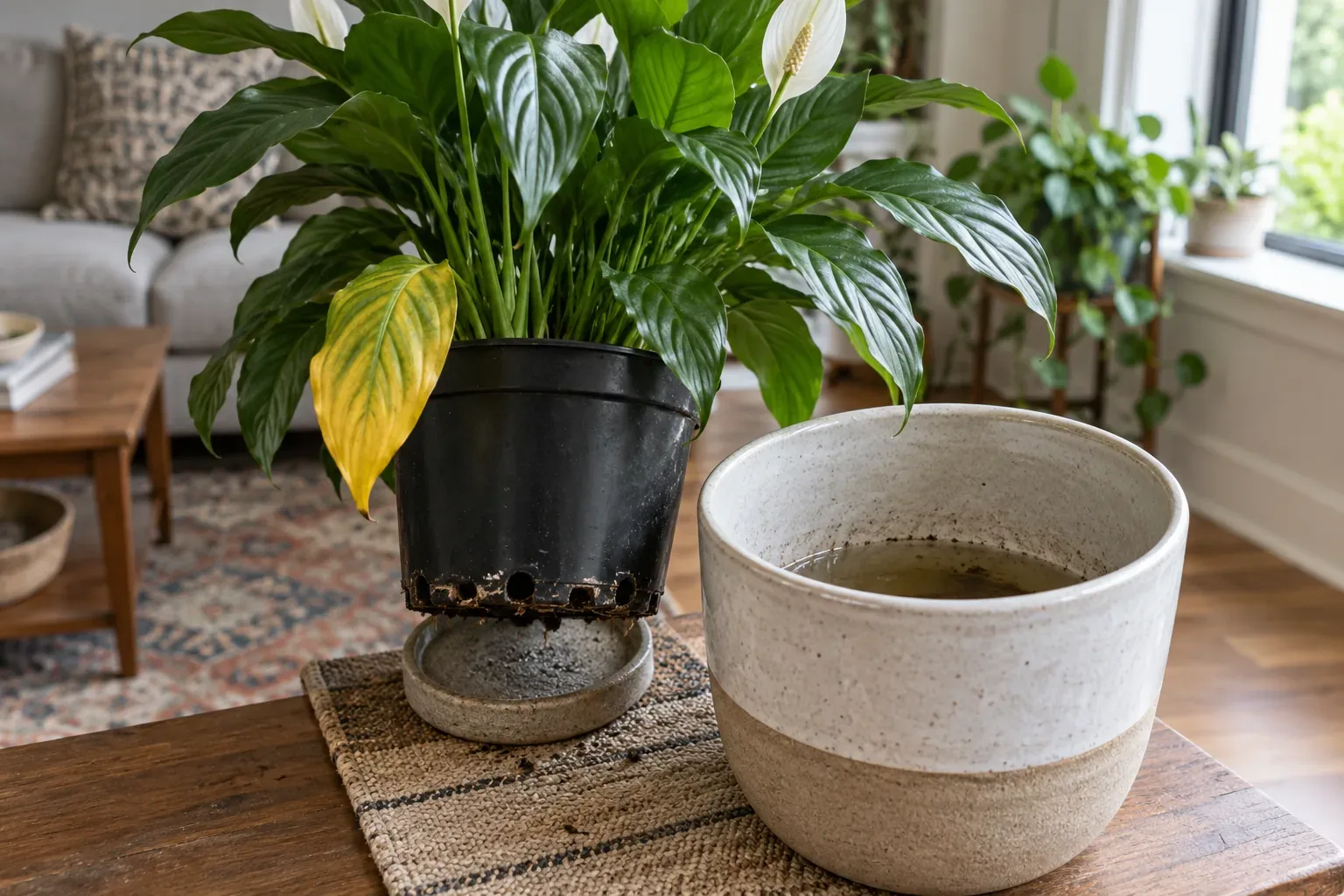
How to get rid of fungus gnats is relevant when small flies accompany persistently damp organic mix, though gnats do not prove rot. How to tell if plant needs water helps replace a fixed calendar with observations. Empty trapped water first and verify that drainage holes are functional. Do not assume the problem is solved until you have watched how the pot behaves through the next moisture cycle under the corrected conditions.
University of Maryland Extension treats watering and growing conditions as part of indoor plant diagnosis. Use the root environment to interpret the leaves, not the other way around.
Underwatered plant: check before reversing course
A very light pot, dry mix at depth, and a root ball pulling away from the container are useful clues to investigate dryness. They do not mean every species needs the same amount of water or the same speed of intervention. Confirm the plant and assess whether the dry material will accept water evenly before applying repeated large volumes.
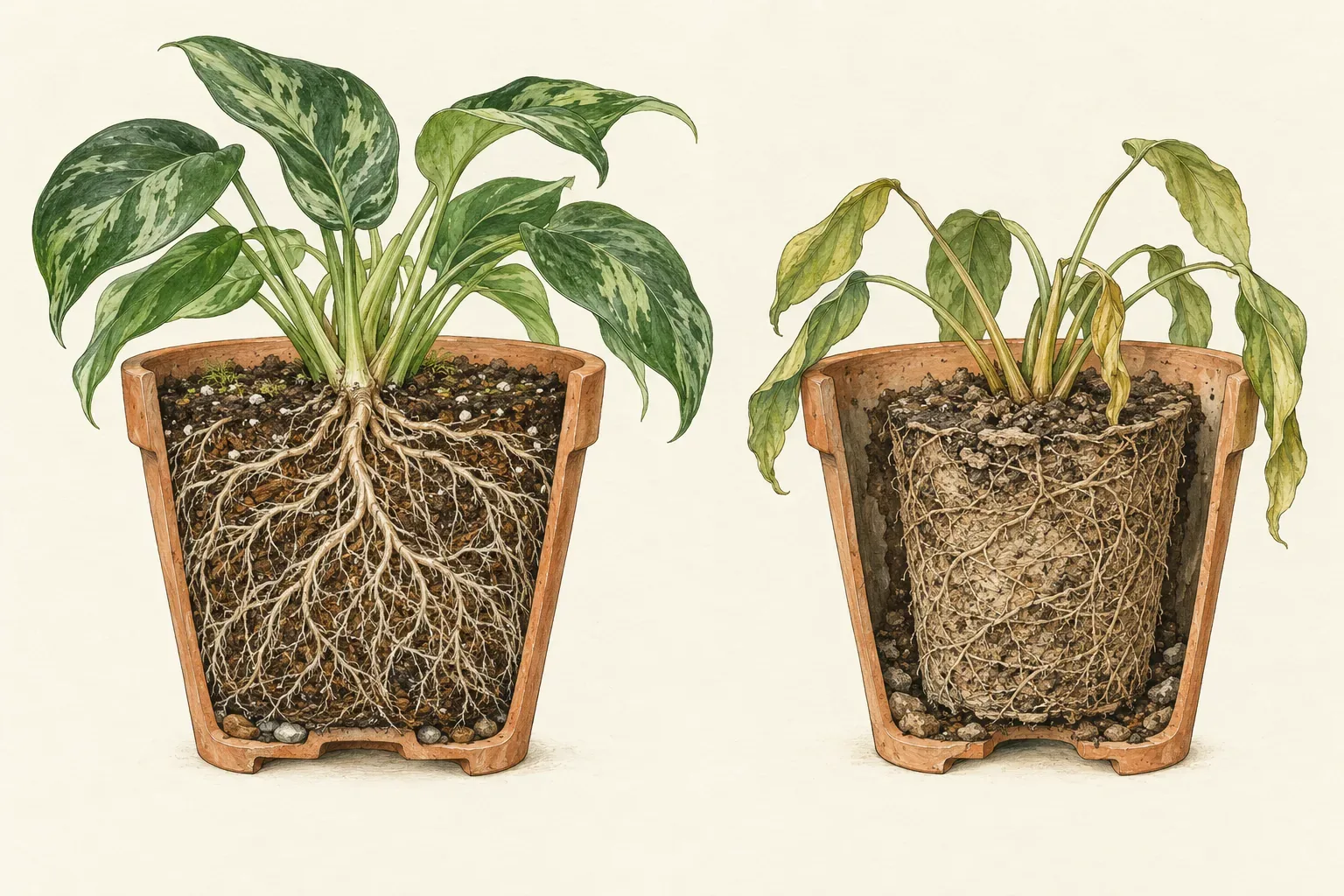
Water that immediately exits through a side gap can leave the center dry. Apply it slowly where appropriate and check the root ball afterward. Let excess drain fully rather than leaving the pot standing in water as compensation for the previous dry spell. Keep the response tied to the actual root-zone condition, not to guilt about missing a reminder.
For a water-storing clump, snake plant care explains why substantial drying can be appropriate. A thin-leaved plant needs a different assessment, covered by peace lily drooping. Once moisture has been corrected, give the plant time to respond and watch for new decline. More water is not a useful repeat treatment when the original dryness has already been resolved. A persistent limp appearance calls for reviewing roots, stems, and growing conditions again.
How to stabilize a persistently wet plant
- Expose the drainage setup
Remove the inner pot from its decorative cover and check beneath any raised insert. Empty retained runoff and confirm that drainage holes are present and open. A dry saucer outside the cover does not tell you what is trapped inside.
- Check more than the surface
Feel below the top layer in more than one accessible place and lift a manageable container. Compare the center and edges where possible without damaging roots. Record whether the mix is evenly wet or whether the clues conflict.
- Pause unnecessary watering
If the root zone is still wet, do not add water because leaves look limp. Keep the plant in suitable light, away from harsh sun and temperature extremes. The goal is a better root environment, not the fastest possible surface drying.
- Decide whether roots need inspection
A soft base, disintegrating tissue, or continued decline makes closer assessment important. If drainage can be corrected and the plant remains firm, repeated unpotting is not a useful progress check. Save the setup and care history for an adviser if needed.
Stabilize before repotting
Empty standing runoff and pause additional watering while assessing the plant. Keep it in suitable light with reasonable air movement, away from temperature extremes. Do not place a weakened plant in harsh sun to force the soil dry. Rapid drying at the surface can coexist with a wet center and may add leaf injury without correcting the root problem.
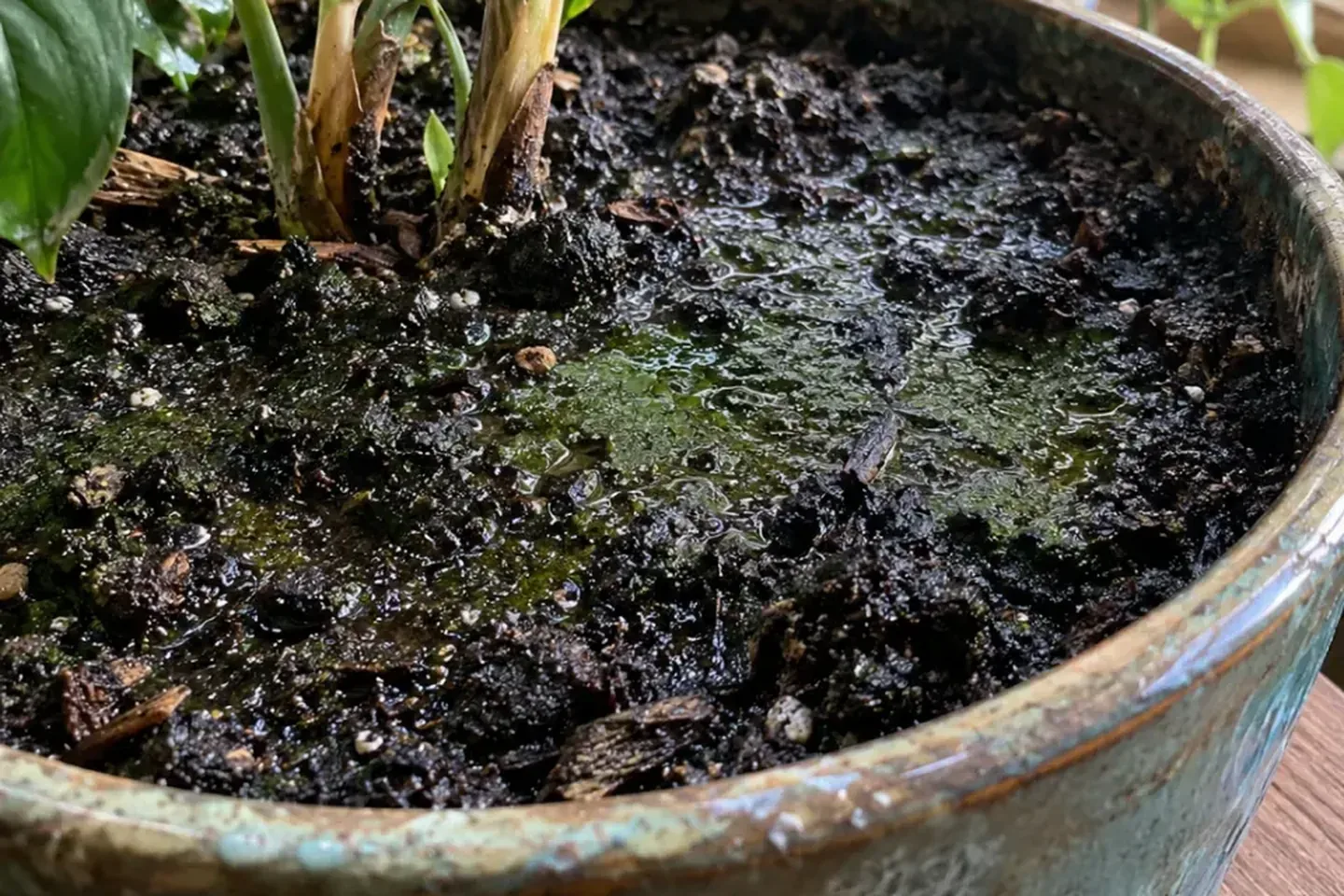
Repotting is not required for every wet pot. It becomes more relevant when the container or substrate is unsuitable, drainage cannot be corrected, or symptoms justify examining the roots. If tissue is soft or disintegrating, consult how to fix root rot. Support the plant and use a clean work area rather than repeatedly pulling on foliage to inspect it.
Do not add fertilizer or a household chemical drench as a general rescue measure. Remaining roots need appropriate conditions, and dead tissue cannot be restored by a tonic. If professional advice calls for a treatment class, follow the label and never mix products. Keep children and pets away from the work area, waste, and supplies. Check plant toxicity through the ASPCA plant toxicity list separately, especially when repotting exposes roots and leaves that an animal can reach more easily than in the original display.
Follow the next leaves
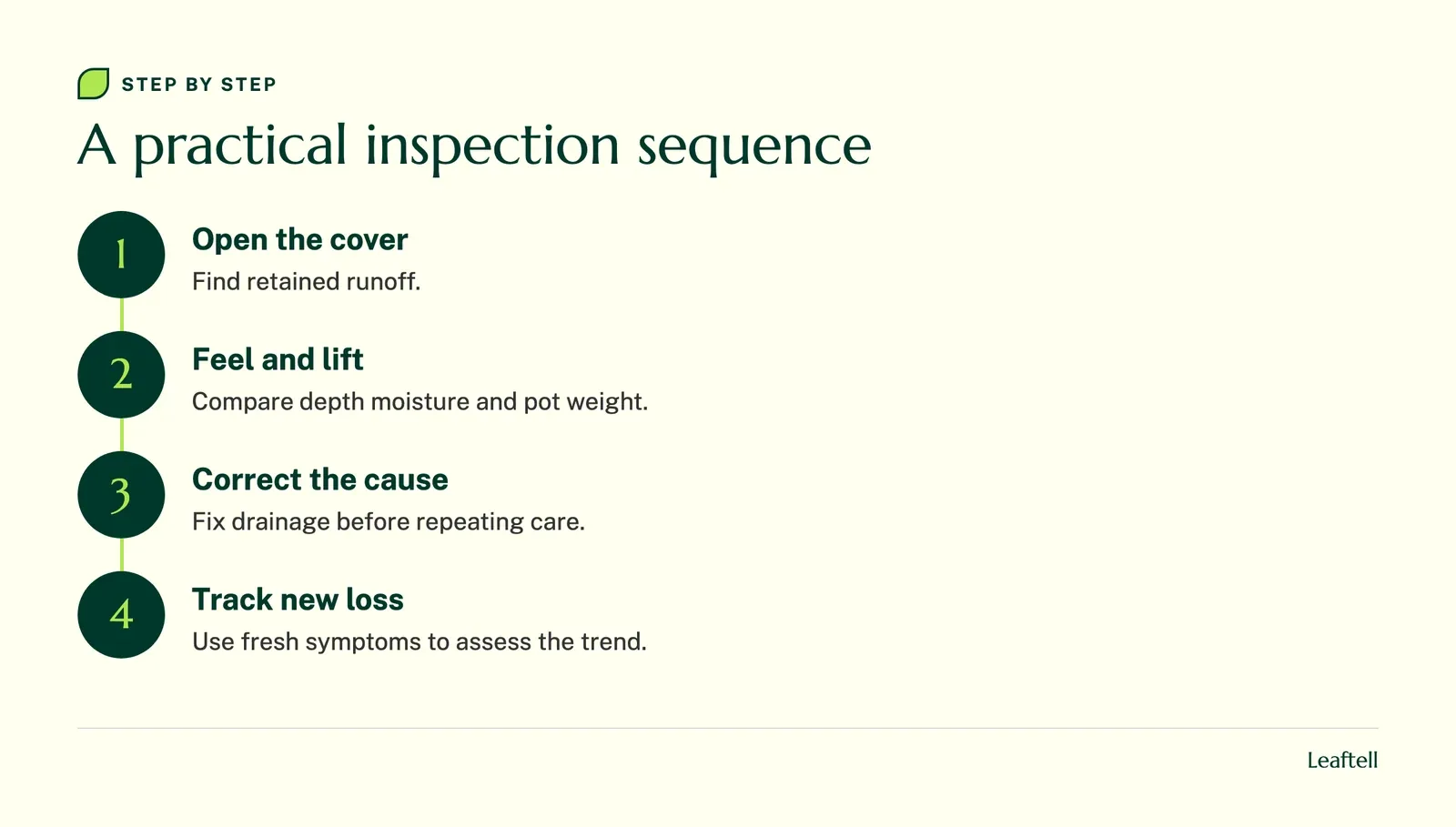
Write down the initial pot weight, moisture, and the leaves already damaged. On day three, repeat the moisture check without automatically adding water. On day seven, look for new yellowing or collapse and assess whether drainage remains clear. At day fourteen, review the direction of change and whether further advice is needed.
A check schedule is not a recovery deadline. Old yellow leaves may remain yellow or fall even when the plant stabilizes. A reduced root system can also alter water use for a while. Focus on firm growing points, fewer newly affected leaves, and a root zone that no longer stays persistently saturated. Avoid repeated unpotting when external observations are adequate.

Return to indoor plant care to establish a routine appropriate to the species and container. The plant problems hub helps reassess if the symptoms change or fail to match the original explanation. Seek local advice promptly for a soft main stem, strong unpleasant odor, or rapid collapse. Bring the drainage setup and care history into the discussion; a close-up of a yellow leaf cannot show how long the roots were wet or why water was retained in the first place.
Once the root zone has dried, the plant watering calculator suggests how often to check the pot for your plant, pot size and light.
Rescue mistakes that add stress
Moving a wet plant into harsh sun can scorch the leaves while the middle of the pot stays wet. Surface drying is not proof that the root zone has recovered. Give the plant suitable light, not an emergency heat treatment.
Repotting every limp plant is another costly reflex. Handling can disturb a plant that only needed its cover pot emptied. Inspect roots when the symptoms or an unsuitable container justify it, not every time you check moisture.
Finally, do not swing from constant watering to a rule that the entire plant must become extremely dry. A snake plant and a thin leaved peace lily do not have the same needs. Correct the wet condition, then build the next watering decision around the species and the actual root zone.
Know when to get help
Seek local horticultural advice promptly for a soft main stem, a strong unpleasant odor, or rapid collapse. Bring photographs of the pot inside its cover as well as the plant. The drainage arrangement and watering history can explain more than a close view of a yellow leaf.
Check your overwatered plant in Leaftell. The check uses your answers; photos stay on your device.
Sources
Check your growing conditions with the plant watering calculator.
Frequently asked questions
Empty standing runoff, check drainage, and pause watering while the mix is already wet. Inspect roots if the base softens or decline continues.
Too much depends on how long the root zone stays poorly aerated, not just the volume poured once. Pot size, drainage, mix, and plant water use matter.
Not automatically. Check soil moisture, weather, crop stage, and the irrigation system; daily watering can be excessive in some beds and necessary for some hot containers.
Both can kill roots or foliage, and the more urgent problem depends on the plant and duration. Identify the actual condition before correcting it.
Sometimes, if sufficient healthy roots and growing points remain. Correct the conditions and monitor; extensive rot can prevent recovery.
Minutes are not a reliable universal measure. Check whether water reaches the root zone evenly and excess drains, then reassess moisture before watering again.
Share article
About the author

Keep checking your plant
Plant care reference
Indoor plant care
Build a routine around your plant, light and potting mix.
Plant care reference
Why is my plant dying
Trace leaf and root symptoms before choosing a care change.
Plant care reference
Pothos plant care
Choose a growing spot and prune a trailing pothos for fuller growth.
Plant care reference
How to fix root rot
Inspect root firmness and drainage, then decide whether to repot.