Monstera leaves turning yellow: what the pattern tells you
Filip Leszczyński 16 October 2026 11 min read
In this article
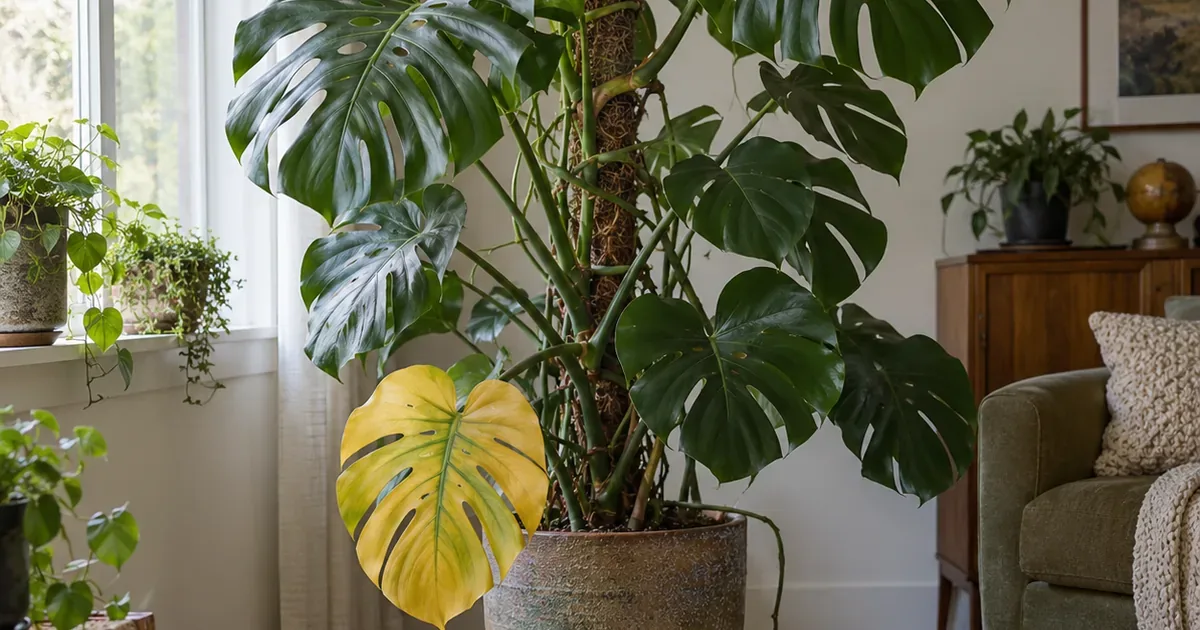
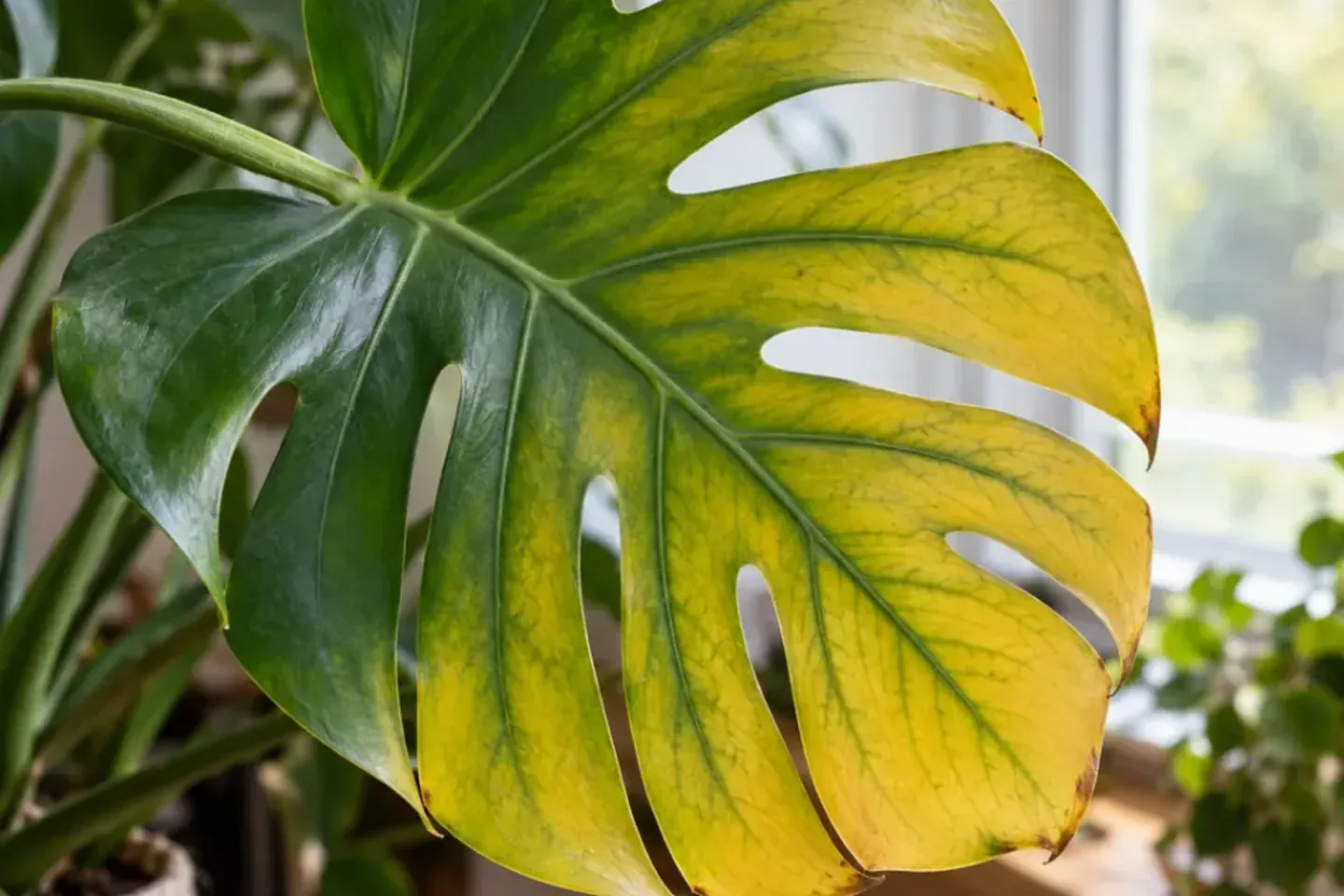
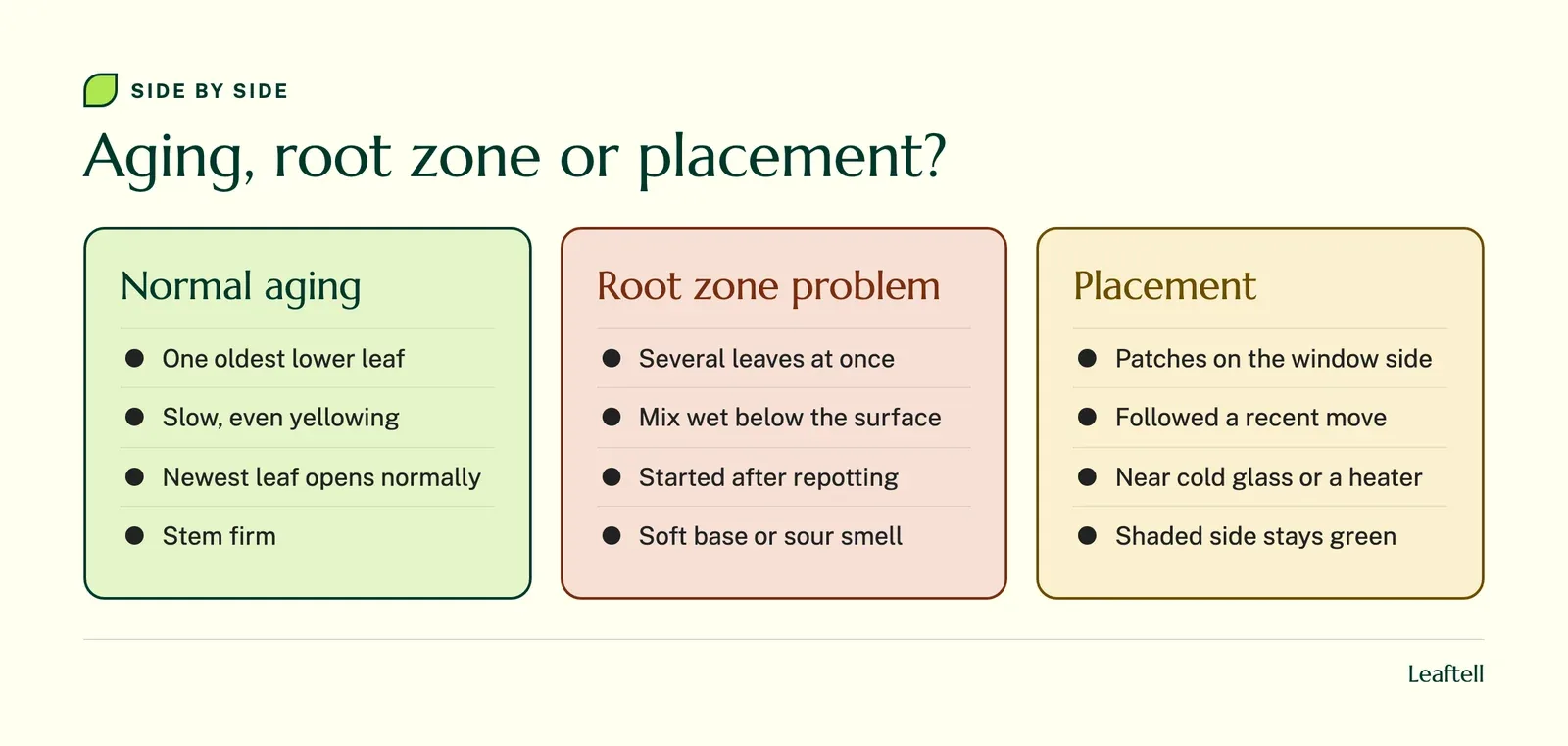
Monstera leaves turning yellow most often trace back to the root zone: a big pot that stays wet underneath, or a plant moved into a pot far larger than its roots. One old lower leaf fading slowly while the newest leaf opens normally is usually just aging; several leaves yellowing together is worth checking today.
The size of a monstera works against you here. A large yellow leaf grabs your attention, but where it sits on the stem tells you far more than how big or how yellow it is. And a large pot can be soaked at the bottom while the top inch feels dry.
So start with a leaf map and a moisture check, and hold off on fertilizer until you know the roots are fine.
Why is my monstera turning yellow? Start with which leaves changed
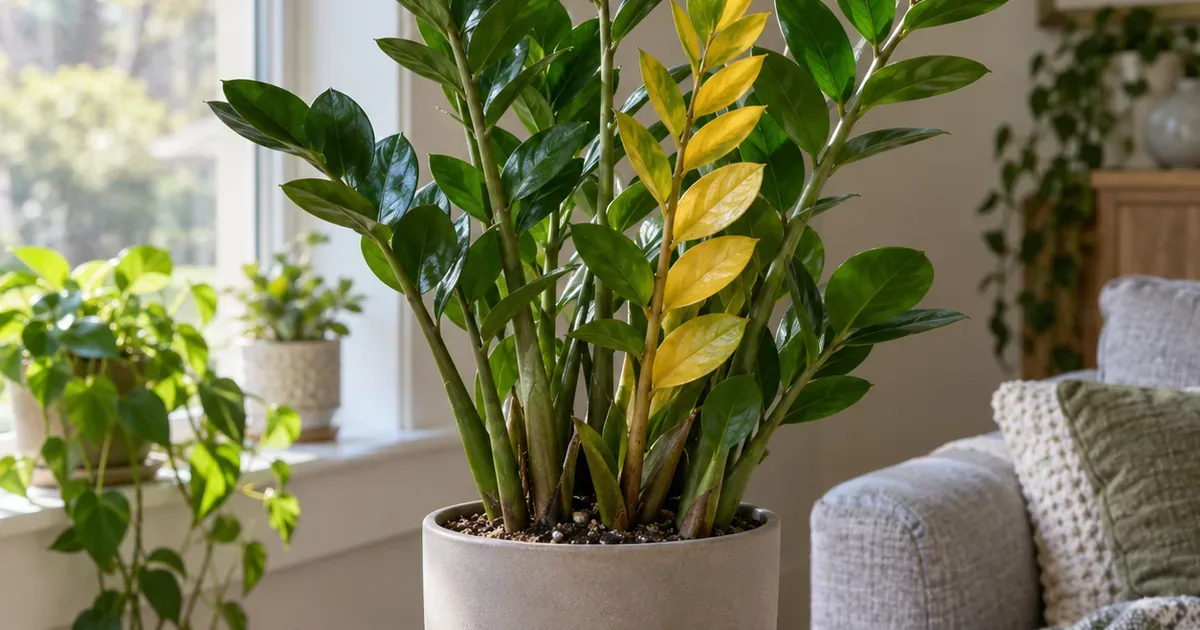
Separate one old lower leaf from yellowing on several leaves or near the growing tip. Position does not name the cause, but it tells you where to look first.
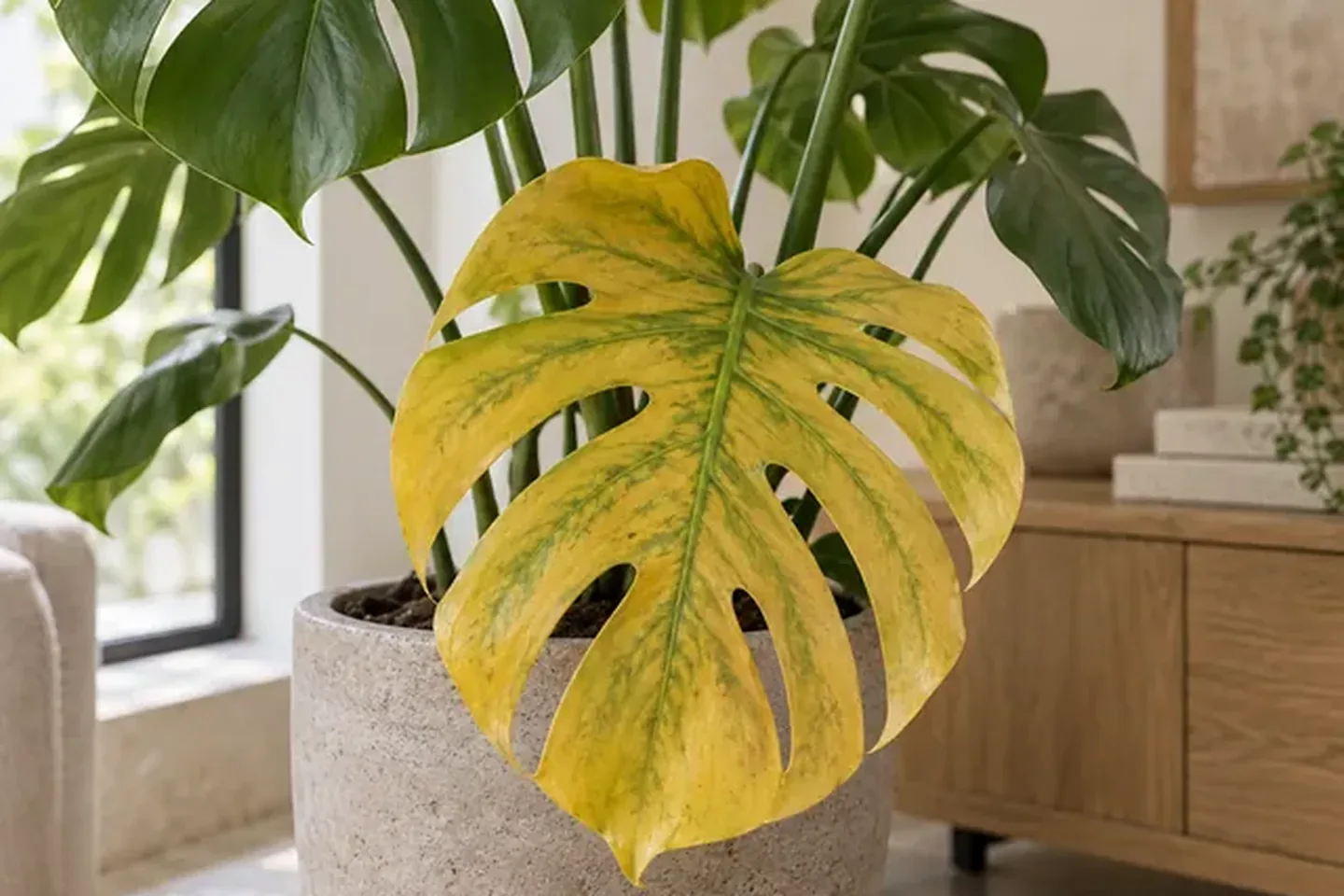
Number the leaves in your notes from the oldest at the bottom to the newest at the tip. Mark which ones are yellow, how fast they changed, and whether the newest leaf is unfurling normally. Include the leaf stalks and main stem in your first photo.
A freshly opened leaf is often lighter than mature foliage until its color settles, and variegated plants have pale patches by design. Compare leaves of similar age, in daylight, not under different lamps.
UConn's monstera fact sheet describes root damage from overwatering and over-potting, and yellowing associated with mealybugs and scale. Those need different evidence: a wet pot calls for a drainage check, cottony fluff or stuck-on bumps call for a pest check. Yellow color alone is never a reason to spray.
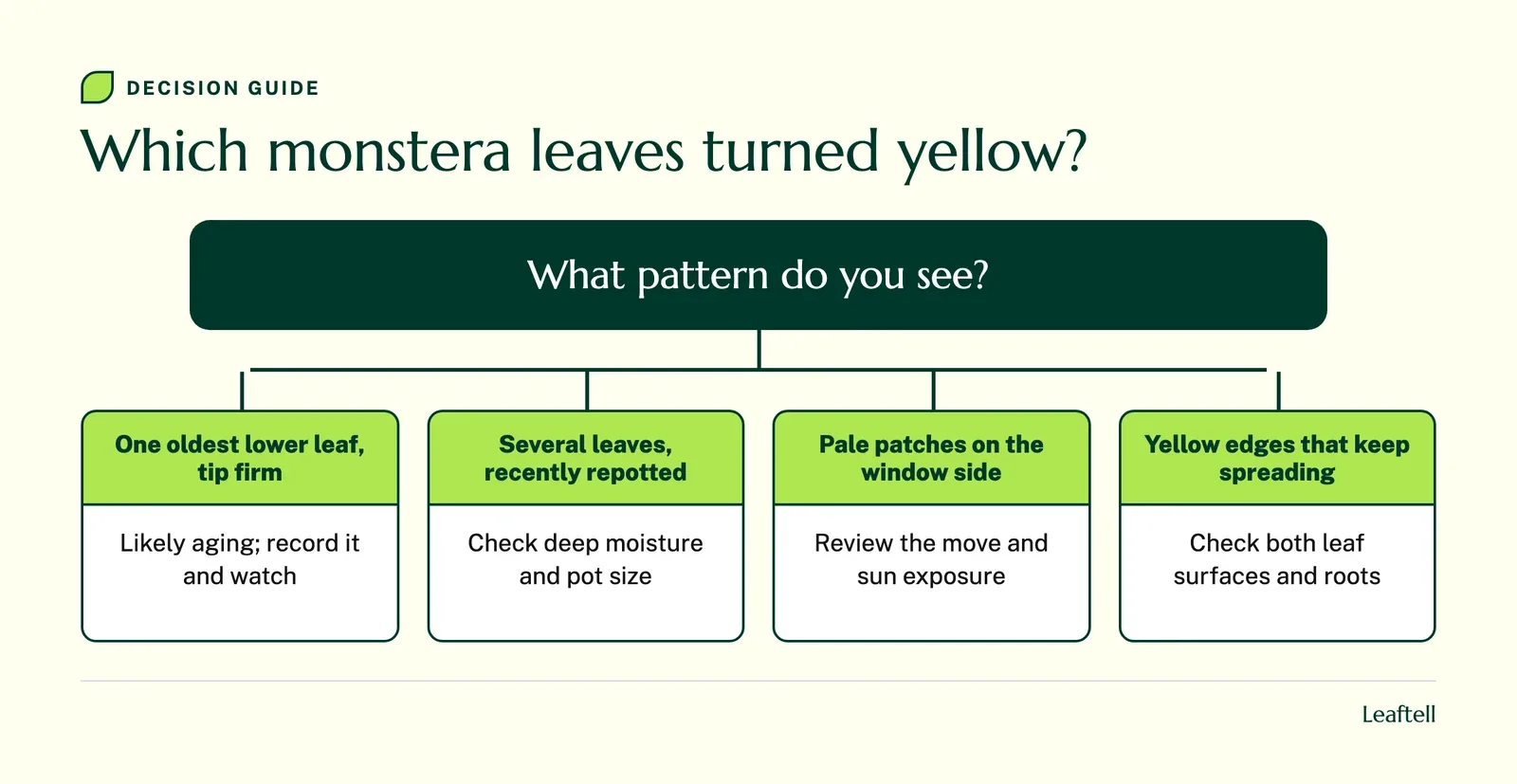
| What you see | Likely direction | Check first |
|---|---|---|
| Oldest lower leaf yellow, growing tip firm | Normal aging | Record it and watch whether other leaves join |
| Several leaves yellow after moving to a bigger pot | Wet mix around a small root ball | Deep moisture and the volume of unused wet mix |
| Pale or bleached patch only on the window side | Abrupt sun or a recent move | Relocation date and which leaves face the glass |
| Yellow margins that keep advancing | Watering stress, salts, or leaf-edge disease | Both leaf surfaces, roots, fertilizer history |
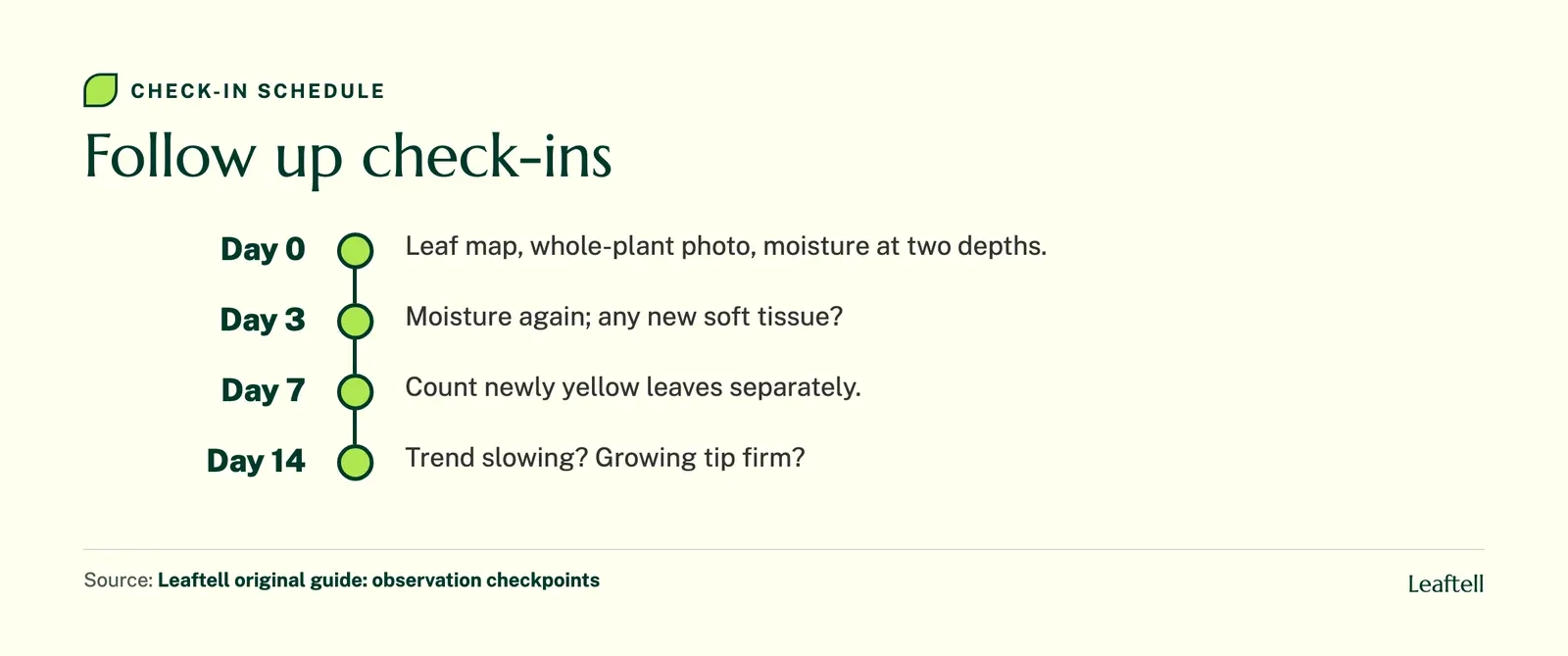
| Day 14 after your first check | Check-in, not a deadline | Count new yellow leaves separately from old ones |
Observation checklist for monstera leaves turning yellow. Review dates are suggested check-ins, not watering or treatment intervals.
Overwatered monstera: yellow lower leaves with wet soil
If lower leaves are yellowing and the mix is still wet below the surface, stop watering and check the pot. That pairing is the most common monstera problem.
Large containers hold water below a surface that looks dry. Feel near the pot edge at more than one depth without stabbing into the main root mass. If the pot is too heavy to lift safely, skip the weight test and look at the mix and drainage instead. Remove the cover pot, empty any water sitting in it, and make sure the holes are clear. A thick layer of decorative stones on top makes the mix underneath much harder to judge.
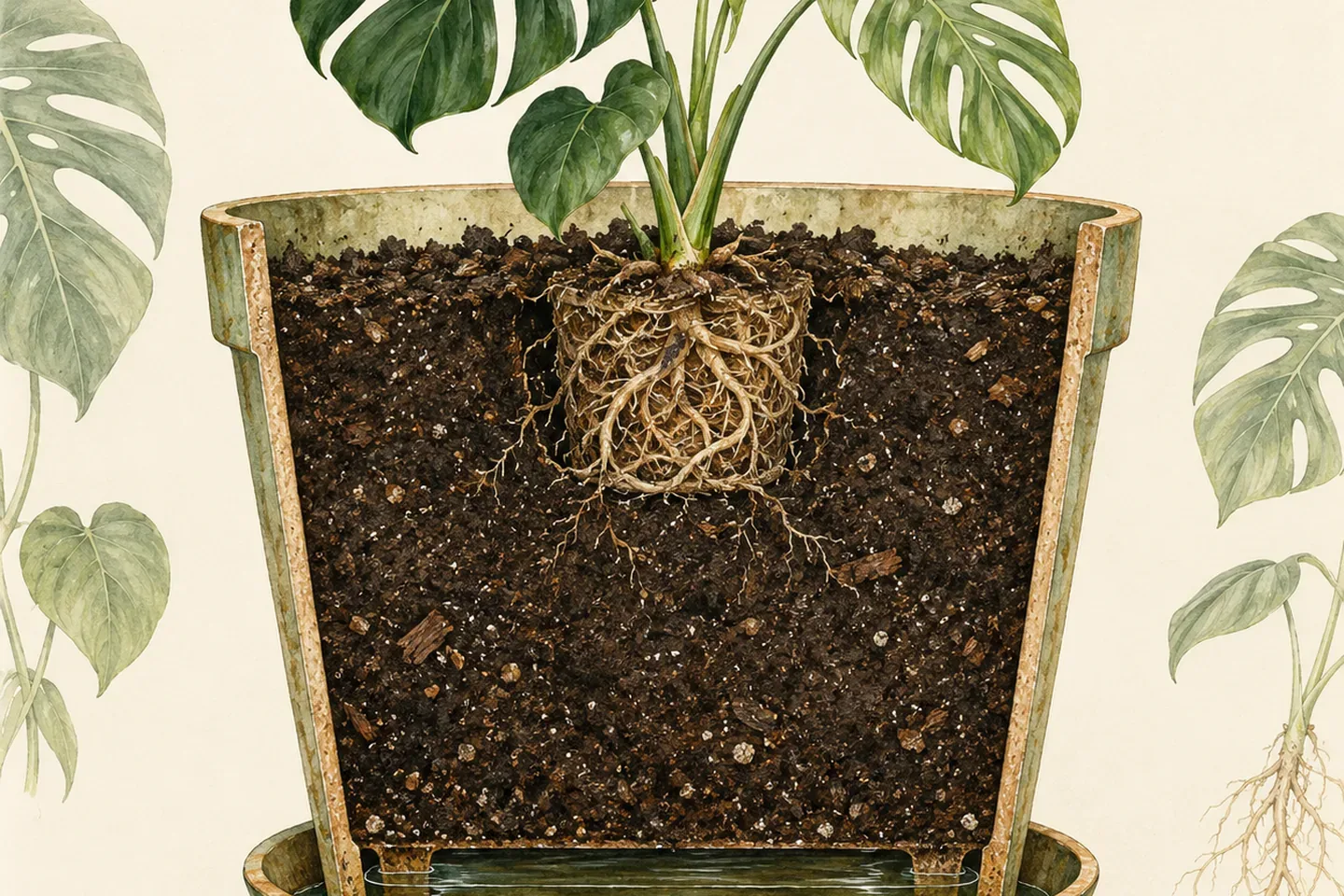
UConn warns about root damage from both overwatering and over-potting. A pot far larger than the root system leaves a lot of wet mix that no roots are drinking from. If the yellowing started after repotting, compare the new pot with the roots it actually holds. A bigger pot is not a recovery step.
Compare overwatered plant symptoms if the pot stays wet, and use this wet or dry soil check before you water again. If the base softens, the roots smell sour, or decline continues after drainage is fixed, go to how to fix root rot. Do not move a reduced root system into an even larger wet container, and do not fertilize to make up for roots that cannot work.
How to check a monstera with yellow leaves
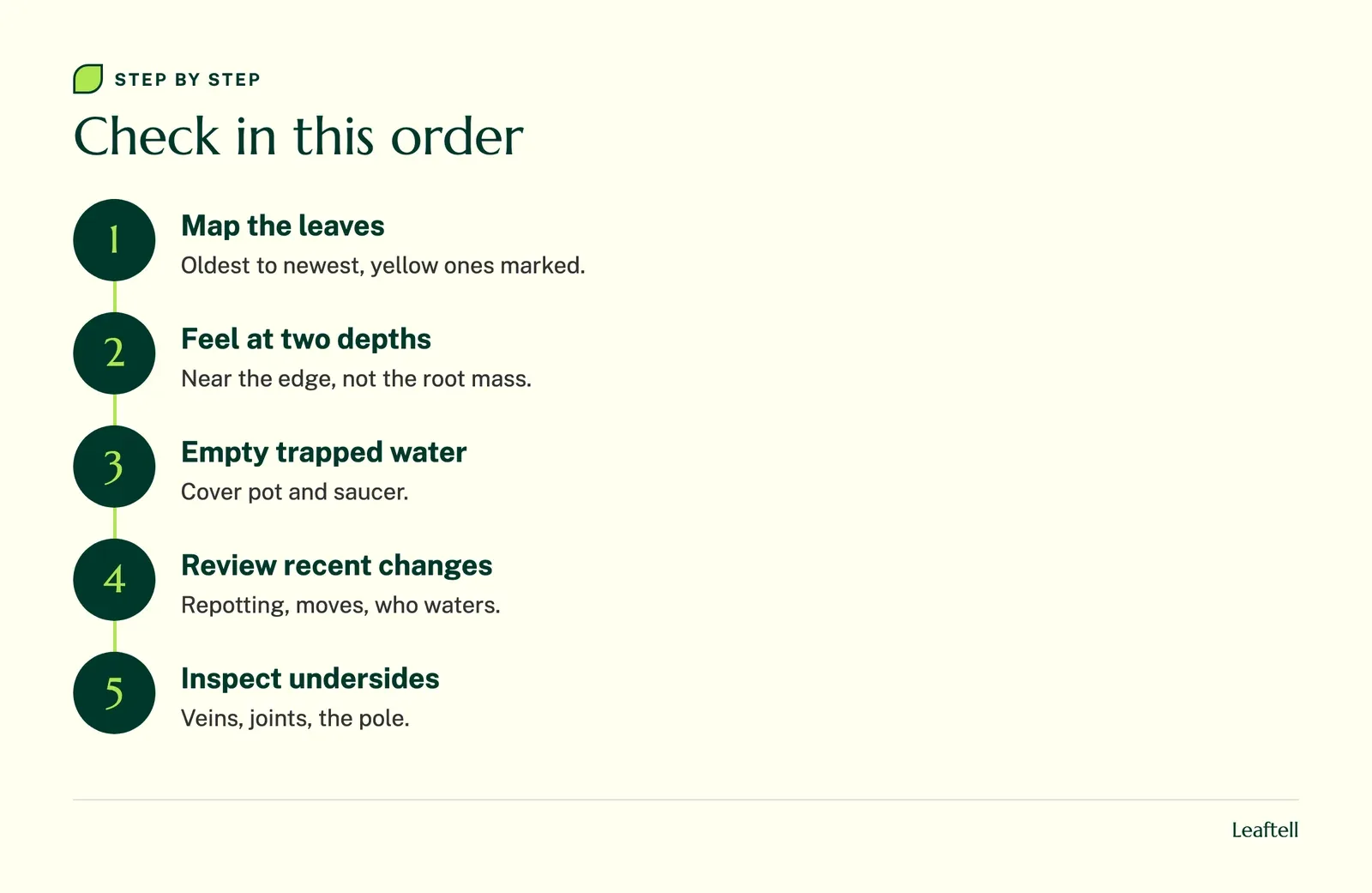
- Map the leaves
Photograph the whole plant including stem and pot. Number leaves from oldest to newest and mark the yellow ones.
- Feel the root zone at depth
Check near the edge at two depths. Lift out the inner pot if it is safe, and empty any water trapped under it.
- Review the last month
Write down any repotting, move, new window, or change in who waters it. Those changes alter how fast the pot dries.
- Inspect undersides and joints
Use a light and a magnifier on leaf undersides, main veins, and where leaves meet the stem or pole. Isolate the plant if you find insects.
- Recheck at day 3, 7 and 14
Count newly yellow leaves separately from ones already affected, and check the growing tip.
Monstera yellow edges: watering stress, salts or leaf-edge disease
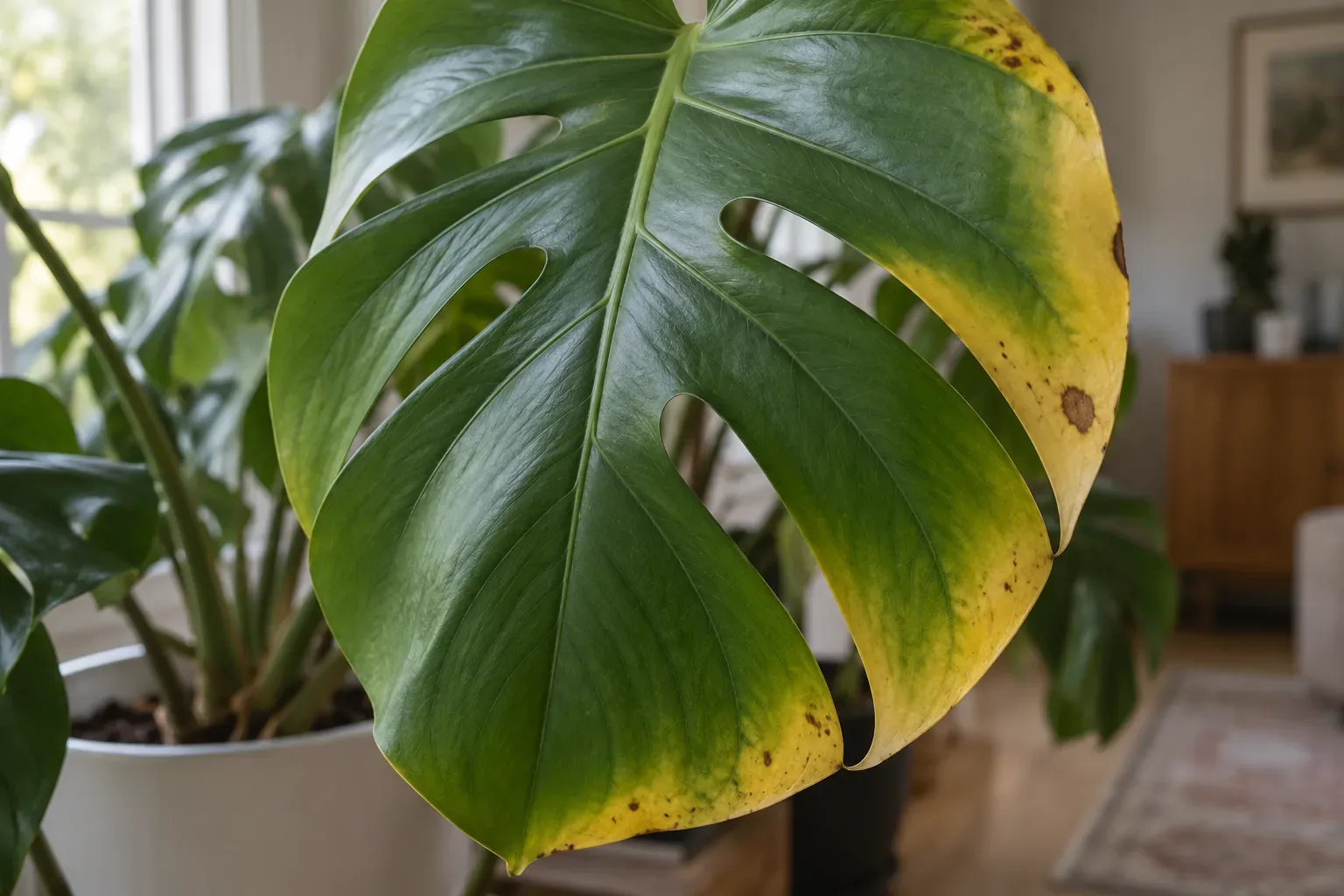
Yellow margins are a pattern, not a diagnosis. Compare the edge with the middle of the leaf: is it dry, soft, spotted, or just lighter?
Check several leaves on the same side of the plant and photograph the edge in daylight so you can tell whether the border is advancing. UConn describes anthracnose starting with yellowing along leaf edges. That makes a spreading edge a reason to look for disease, but a yellow outline alone does not prove it. The same source covers root damage and pests, so check drainage, roots when the plant is declining, and the undersides before you choose any treatment.
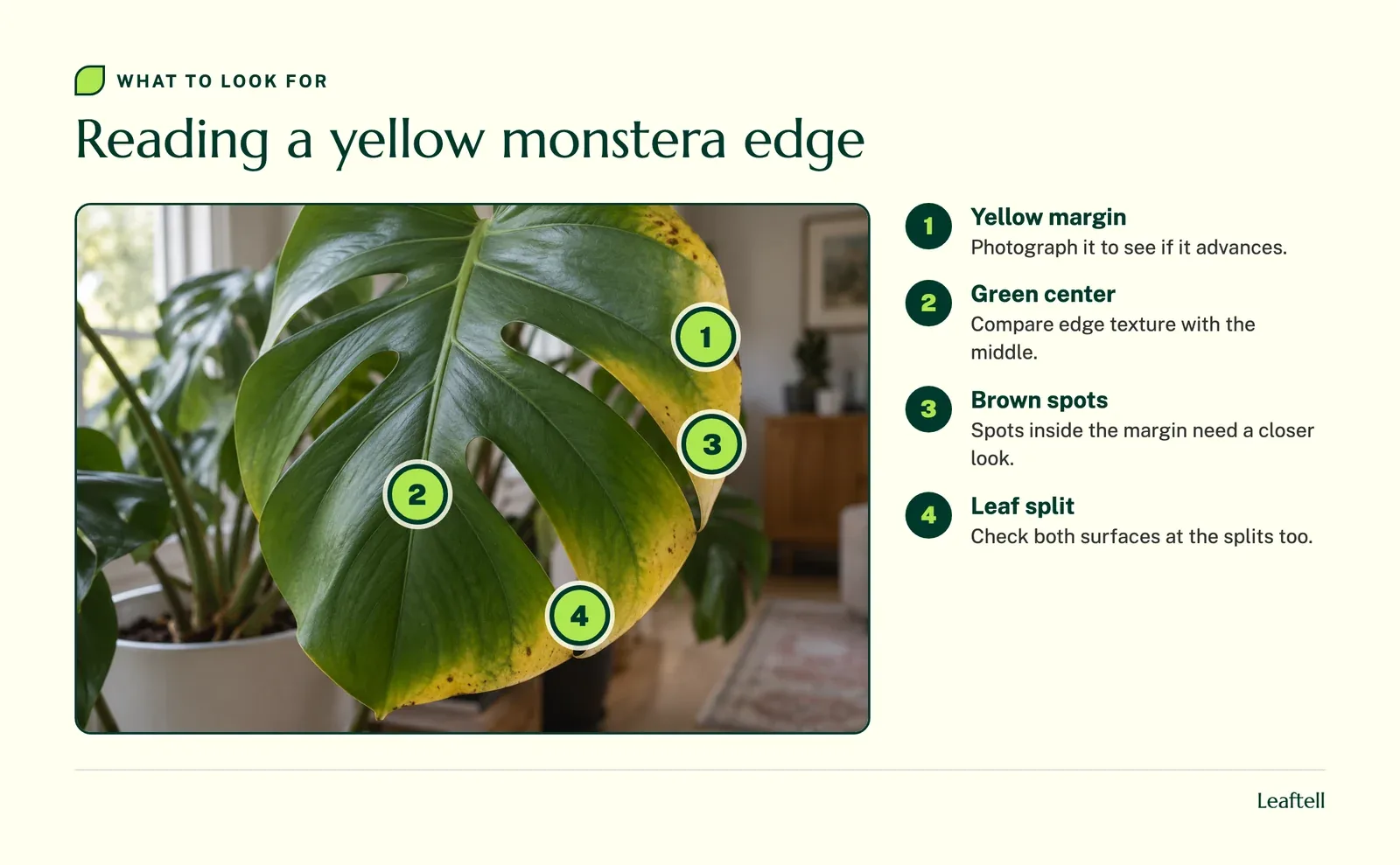
Review fertilizer use too, including feed already mixed into a recently bought potting mix. The RHS leaf damage guidance covers growing-condition problems that look like disease. Do not add nutrients because a margin changed color, and do not apply a fungicide based on a picture match. If lesions keep spreading in good conditions, take clear photos of both leaf surfaces to a local plant adviser, with the date the first edge changed.
Light, veins and hidden pests
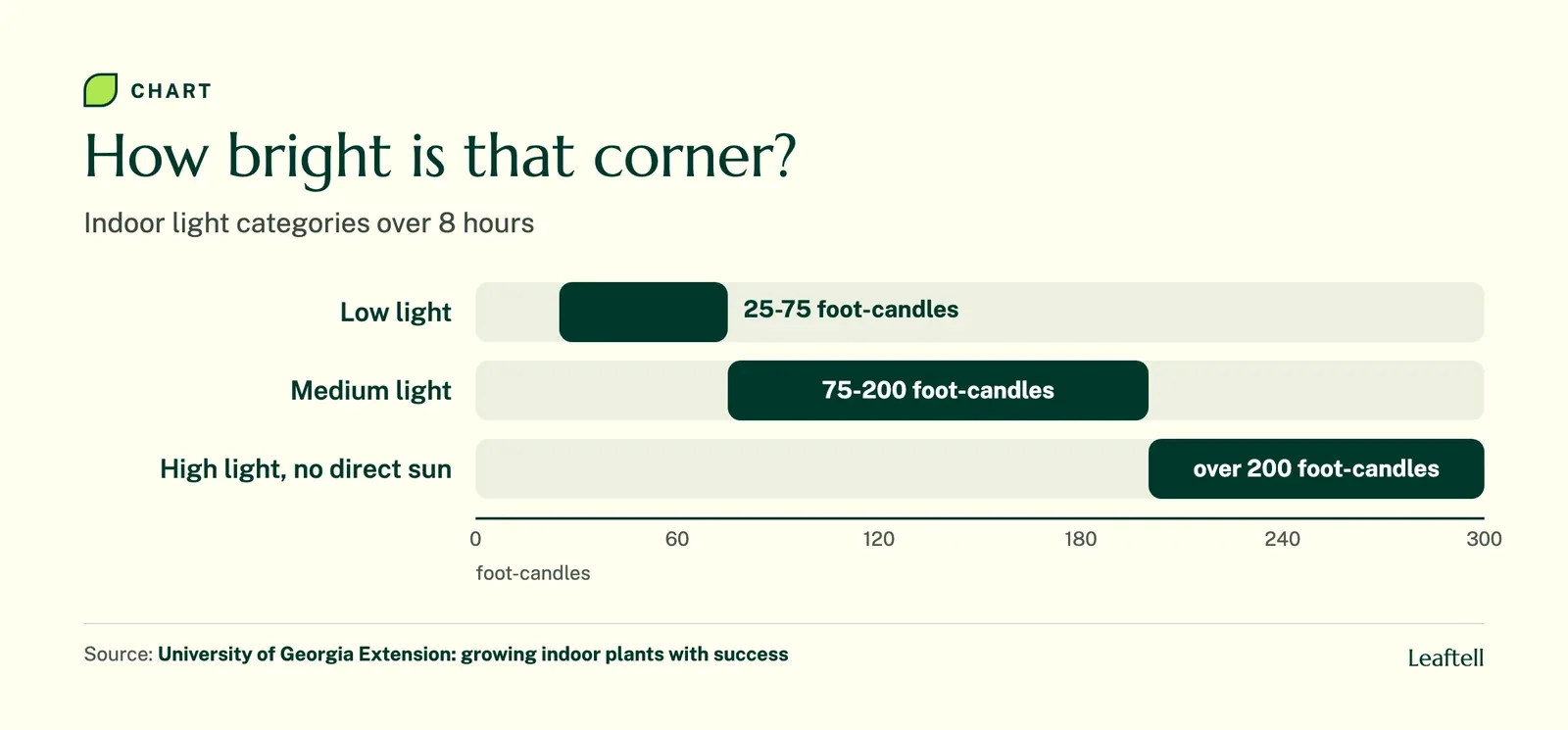
Broad pale patches on the side facing the glass point to light or a move. Even yellowing on shaded older leaves points back to the root zone.
A monstera near a new window can get different light, heat, and drying even when the room feels the same. Keep leaves off cold glass and out of direct heater airflow, and introduce stronger sun gradually. Reading your plant's light helps you check whether a bright room has a dim corner. Once you pick a better spot, leave the plant there and watch new growth. Old yellow tissue will not recover.
Large leaves hide small insects, especially where foliage overlaps the support pole. Fine stippling and silk point to spider mites on plants. Silvery scars with dark specks point to thrips on plants. Confirm the insect before choosing a treatment.
Start with isolation and gentle cleaning, and keep rinse water from soaking the pot again. If you need a product, use a class labeled for that pest and plant, follow the label, and never mix products. Keep a dated note so spray injury is not later mistaken for a deficiency.
The ASPCA lists monstera as toxic to cats and dogs. Keep cut leaves and products away from pets and children, and contact a vet or poison service after suspected chewing.
Yellow leaves on monstera adansonii: same checks in a smaller pot
Confirm you have Monstera adansonii before borrowing advice written for a big Monstera deliciosa. The core checks still transfer: which leaves changed, whether the stem is firm, how wet the mix is, and whether water is pooling under the nursery pot.
Trace each yellow leaf back along its vine. Leaves lost from one stem tell a different story from yellowing across every vine in the pot. The UConn details above are for deliciosa, so treat species specifics with care. If you are unsure of identity, take a whole-plant photo to someone who knows the species.
Support and handling while the plant recovers
Support the main stem rather than tying leaf stalks tightly to a pole. Avoid repeated unpotting: investigate roots when continuing decline, odor, or a soft base gives you a reason, then leave sound roots undisturbed while you monitor new damage.
Monstera leaves turning yellow: what to do this week
Feel the root zone at depth, empty trapped water, and only water when the mix is actually ready. Compare the pot size with the roots it holds. Leave feeding until roots look sound. Judge progress by the newest leaf and the growing tip, not by old yellow leaves turning green again.
Get help sooner than your next check-in if the main stem goes soft, several leaves collapse fast, or spots spread across both leaf surfaces. Bring photos of the whole plant, leaf undersides, pot, drainage, and growing spot to a local extension office or plant adviser. For the routine once things settle, see monstera plant care, and for the wider pattern, yellow leaves on plants.
Check your monstera in Leaftell. The check uses your answers; photos stay on your device.
Sources
Check your growing conditions with the plant watering calculator.
Frequently asked questions
Yellowing, drooping, damaged edges, or slow new growth can all be stress. The pattern across the plant, the roots, and recent changes in care are what tell you which kind.
Check below the surface and water when the root zone is ready, not on a calendar. A large pot in lower light can stay wet much longer than you expect.
A fully yellow leaf usually will not go back to green. Look for stable remaining leaves and healthy new growth instead.
You can remove fully dead leaves with clean tools, but record where they were first. Removing them is cleanup; it does not fix the cause.
Compare its growth, the spacing between leaves, and the actual light at the leaves. A room can feel bright while a plant several feet from the window gets little useful light.
Do not leave roots in runoff, force an unfurling leaf open, or move a shade-grown plant suddenly into harsh sun. Keep foliage away from pets that chew.
Yellow tissue between green veins is a pattern to record, not a diagnosis by itself. Check the root zone and your feeding history first, since root stress can make nutrient symptoms hard to interpret.
Share article
About the author

Keep checking your plant
Plant care reference
Indoor plant care
Build a routine around your plant, light and potting mix.
Plant care reference
Why is my plant dying
Trace leaf and root symptoms before choosing a care change.
Plant care reference
Pothos plant care
Choose a growing spot and prune a trailing pothos for fuller growth.
Plant care reference
How to fix root rot
Inspect root firmness and drainage, then decide whether to repot.