How Often Do You Have to Water Succulents? It Flips by Season
Filip Leszczyński 4 November 2026 11 min read
In this article
You have to water a succulent only when its potting mix has dried out, and then you water it thoroughly until water runs out of the drainage hole. Indoors that often works out to roughly every one to two weeks in a bright window in spring and summer, and much less, sometimes not at all for weeks, from November to early March. The dry pot decides, not the date.
Here is the part most schedules get backwards. Succulents are not plants that want to be ignored all year. When they are growing, regular deep soaks make them grow faster. When they rest in winter, the same soak can rot them. So the answer to "how often" flips with the season, and a plant watered on one fixed day all year is wrong for half of it.
A starting rhythm, and why it flips with the season
If you want one number to start from, Iowa State University Extension suggests watering indoor succulents about every two to three weeks, wetting the whole root ball and letting the mix dry completely before the next round. It also notes that growth speeds up when succulents get regular water on that wet and dry cycle. Less water is not automatically better.
The Royal Horticultural Society splits the year in two. In spring and summer it says to water thoroughly once the surface feels dry and not to let the mix dry out excessively. From November to the beginning of March it asks for a rest: a cool spot, nights around 46 to 50°F, and minimal or no water, given only if the plant starts to shrivel.
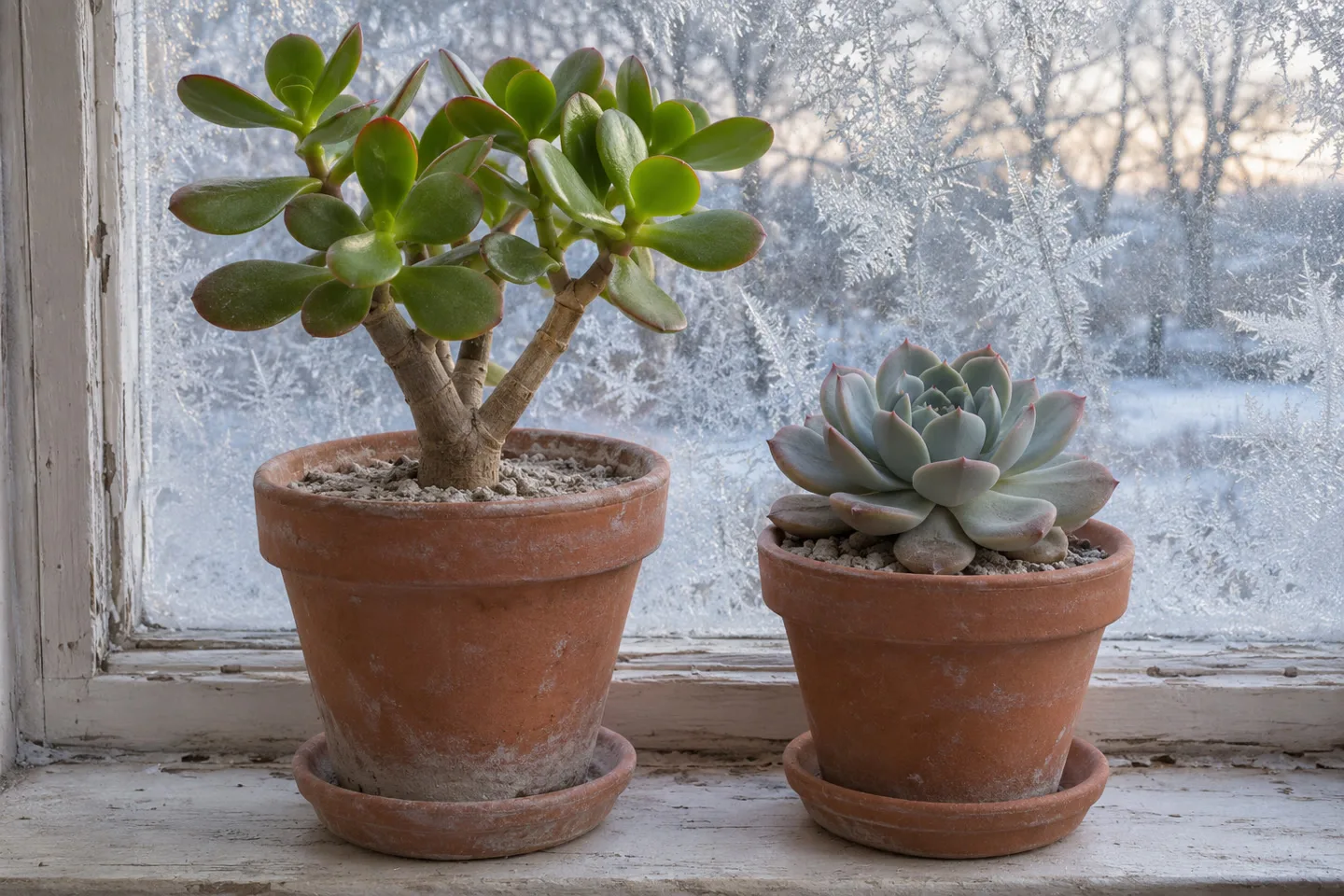
Treat every number in this post as a reminder to check, not a watering day. A bright, warm summer window can empty a small pot in a week. A cool winter sill can keep the same pot damp for a month.
How often to water succulents in your setup
Find the row closest to your plant. The check-in column is when to look, not a promise that the pot will be dry.
| Your setup | How fast the pot dries | First check-in reminder | What to watch for |
|---|---|---|---|
| Small terracotta pot, south or west window, summer | Fast | About 5 to 7 days after a soak | Soft, slightly wrinkled lower leaves mean it ran dry early |
| Medium plastic or glazed pot, bright window, summer | Moderate | About 10 to 14 days | Pot still heavy at day 14: wait, do not top up |
| Pot much bigger than the root ball | Slow at the bottom | About 2 weeks, then weekly | A dry surface over a wet core |
| Any indoor succulent, November to early March | Very slow | Every 3 to 4 weeks | Water only if leaves start to shrivel |
| Dim spot, far from a window | Very slow | Fix the light first | Pale, stretched growth and mix that never dries |
| Outdoor container in summer | Fast unless it rains | After a few dry, hot days | Rain fills the pot and saucer; tip out standing water |
| Fresh cutting or just repotted | Roots still forming | Wait about a week before the first watering | A soft stem base after watering |
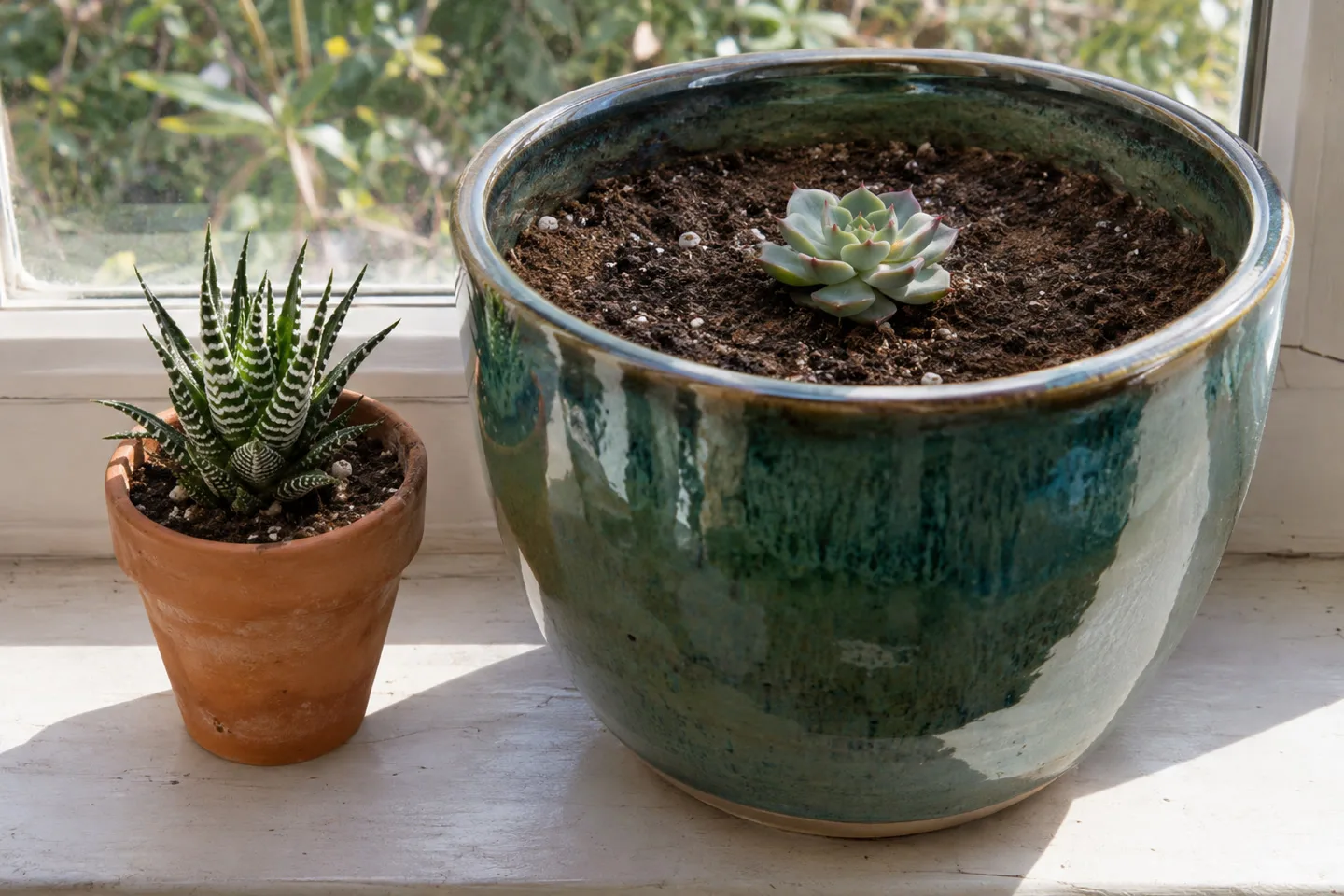
Pot size is the row people miss. Succulents do better in a pot just big enough for the roots than in a big one. A large pot holds mix the roots cannot reach, and that mix stays wet long after the top has dried. If a small plant sits in a big glazed pot, move it into a snug pot with a drainage hole before you change anything else.
Light sets the pace too. Iowa State says most succulents need at least six to eight hours of bright light indoors, and ten or more is better. A plant in a dim corner barely uses water, so its mix stays damp and every watering adds risk. Our guide to reading your plant's light shows how to tell whether your window is bright enough.
Why small sips every day do more harm than one soak
You do not need to water a succulent every day, and a daily splash is one of the quickest ways to lose one. A little water wets only the top inch. The roots below never get a full drink, while the surface and the base of the stem stay damp all the time, which is what rot and fungus gnats like.
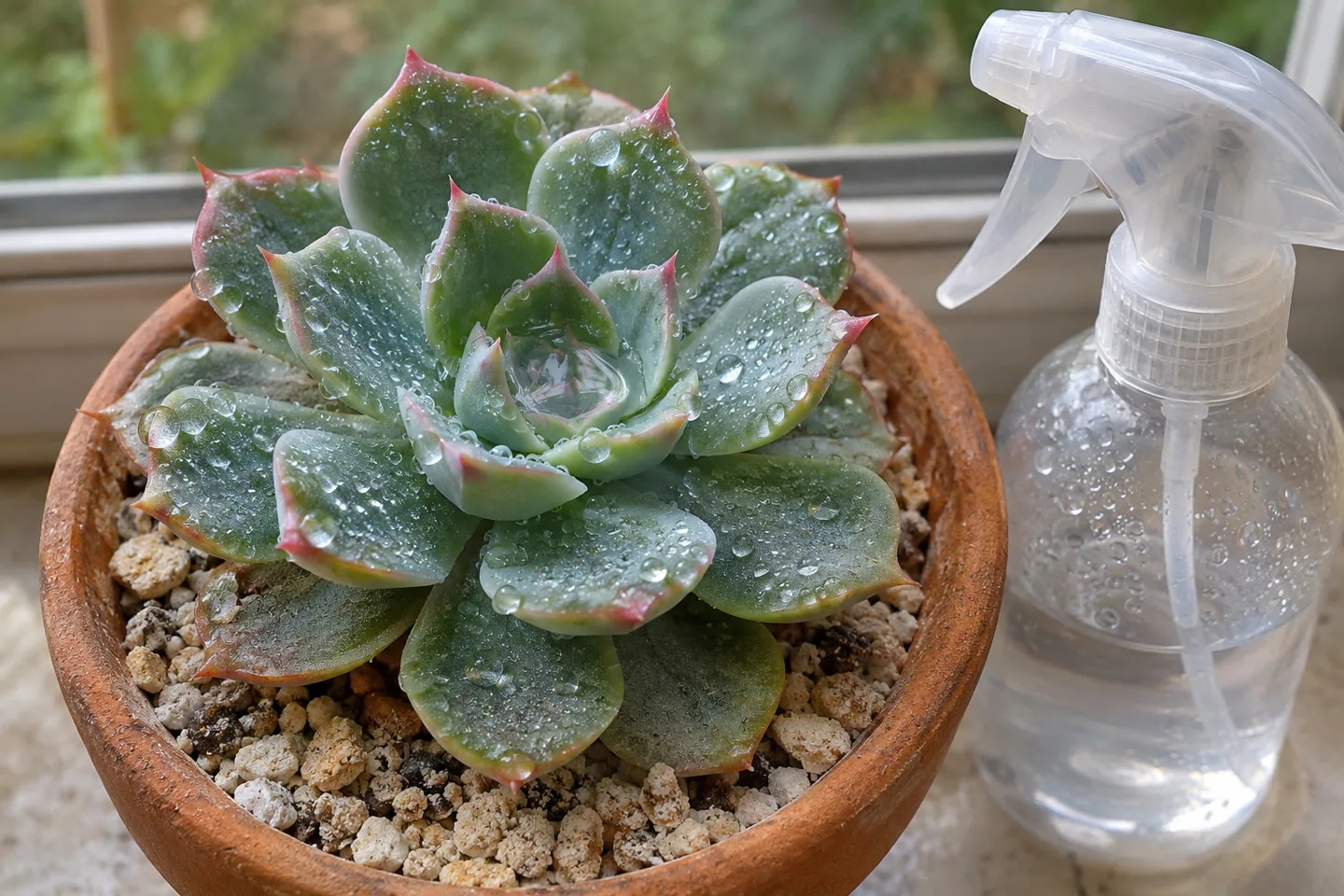
Misting is the same mistake in a spray bottle. It wets the leaves, can pool in the center of a rosette, and does almost nothing for the roots. Succulents cope well with the dry air in heated homes, so they do not need the humidity either.
One deep soak, then a real wait, is the whole method. It also gives you a clear signal: once you know how heavy the pot feels right after a soak, you can feel when it has dried.
How to tell when a succulent needs water
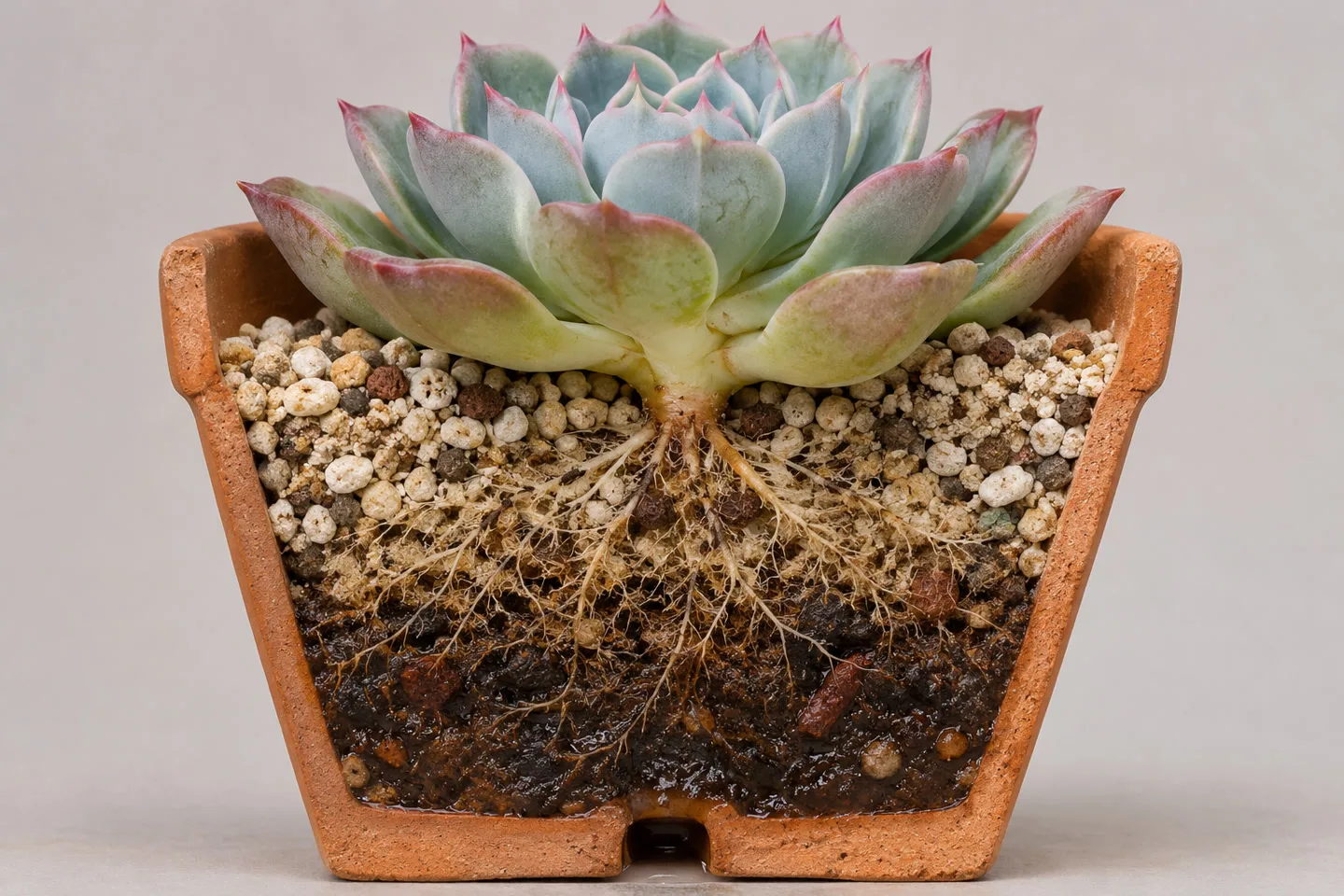
The mix dries from the top down. The surface can look bone dry while the bottom third, where most of the roots are, is still wet. That hidden wet layer is why a quick look at the soil is not enough.
Use one of these checks before every watering:
- A wooden skewer. Push a plain skewer to the bottom of the pot, wait about 10 minutes and pull it out. Dark, damp wood or soil stuck to it means wait.
- The weight of the pot. A pot that feels much lighter than it did right after a soak has dried out. This works best with small plastic or clay pots.
- The lower leaves. Iowa State notes that wrinkled or drying lower leaves mean conditions are too dry. Firm, plump leaves mean the plant still has water in reserve.
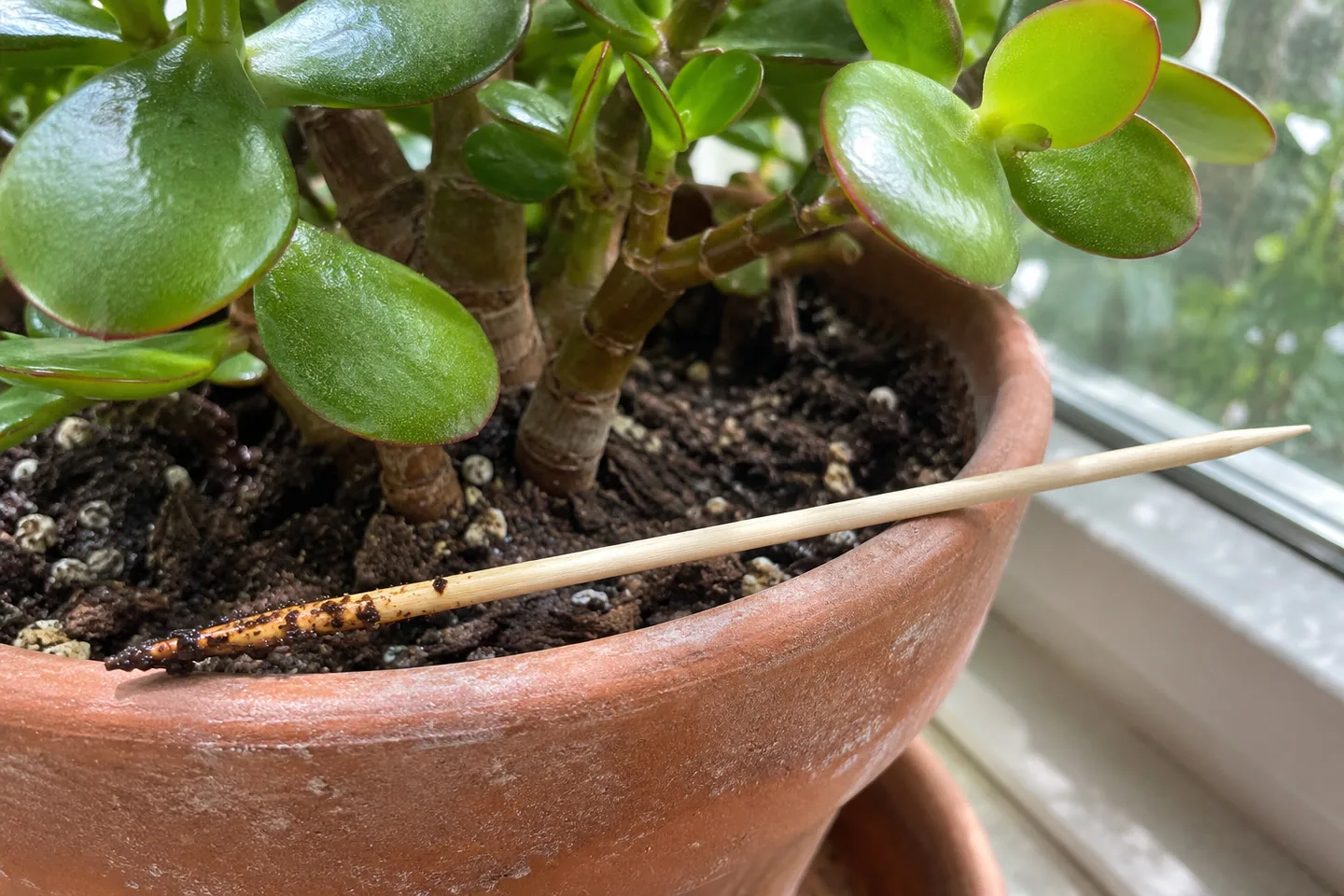
If you are still unsure how to read the mix, our guide to checking whether a plant needs water walks through the finger, skewer and weight tests side by side.
How to water a succulent
- Check the bottom of the pot
Use a skewer or the weight of the pot. Water only when the mix is dry most of the way down, and in winter only when the leaves start to soften or wrinkle.
- Water the soil, not the leaves
Pour at the base of the plant, around the rim of the pot. Keep water out of the center of a rosette, where it can sit and cause rot.
- Soak until it drains
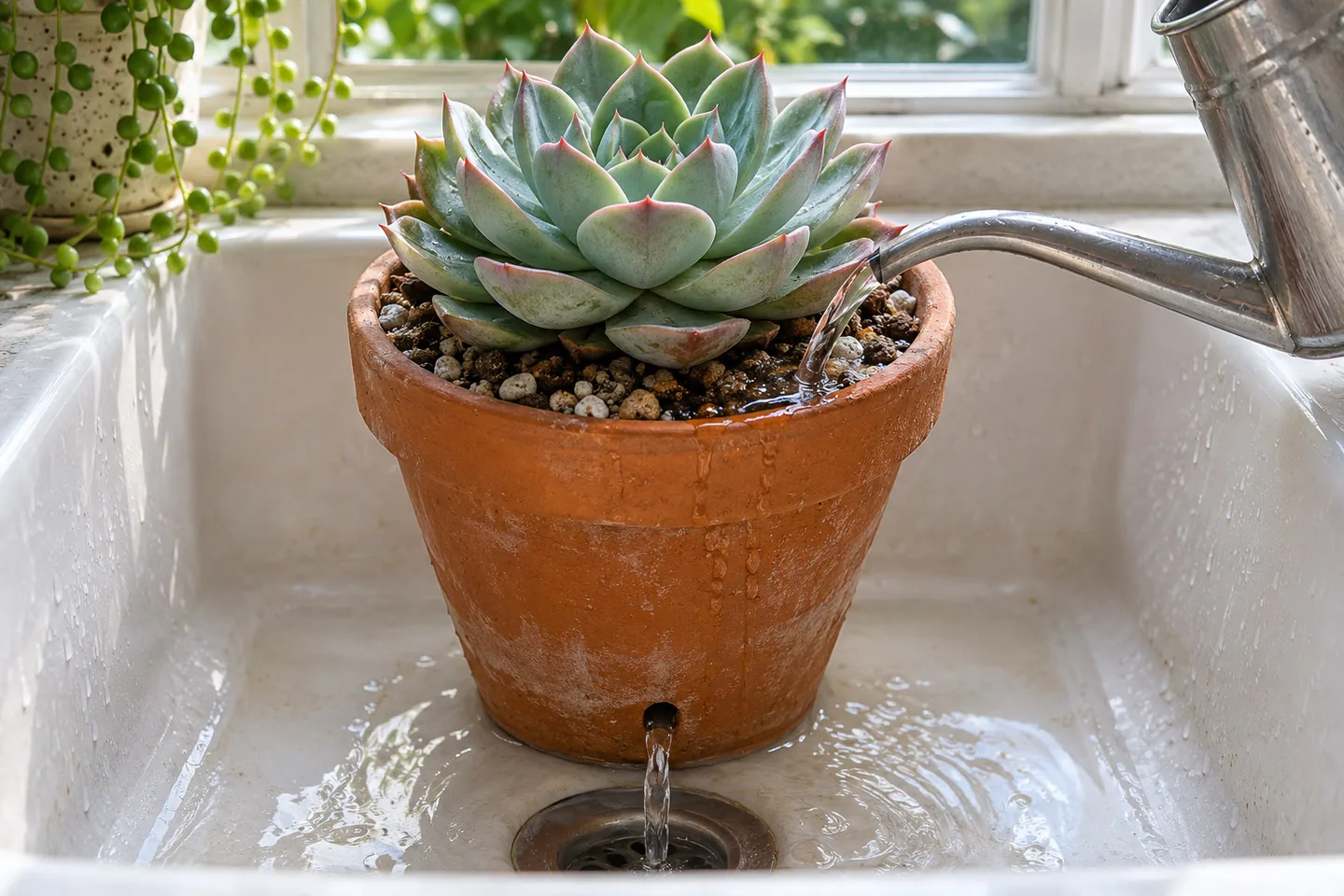
Water slowly over the whole surface until water runs out of the drainage hole. A sink makes this easy.
- Empty the saucer
Let the pot drain for several minutes, then tip out the saucer or outer pot. Iowa State warns never to leave water sitting in trays, sleeves or double pots.
- Wait for it to dry again
Set a reminder to check, not to water. Next time, compare the weight of the pot with how it felt today.
Thirsty or overwatered? Read the leaves
Both problems can make a succulent look unhappy, but the leaves feel very different.
A thirsty succulent has thin, soft, wrinkled leaves, usually starting at the bottom, sitting over dry, light mix. It plumps back up within a few days of a good soak.
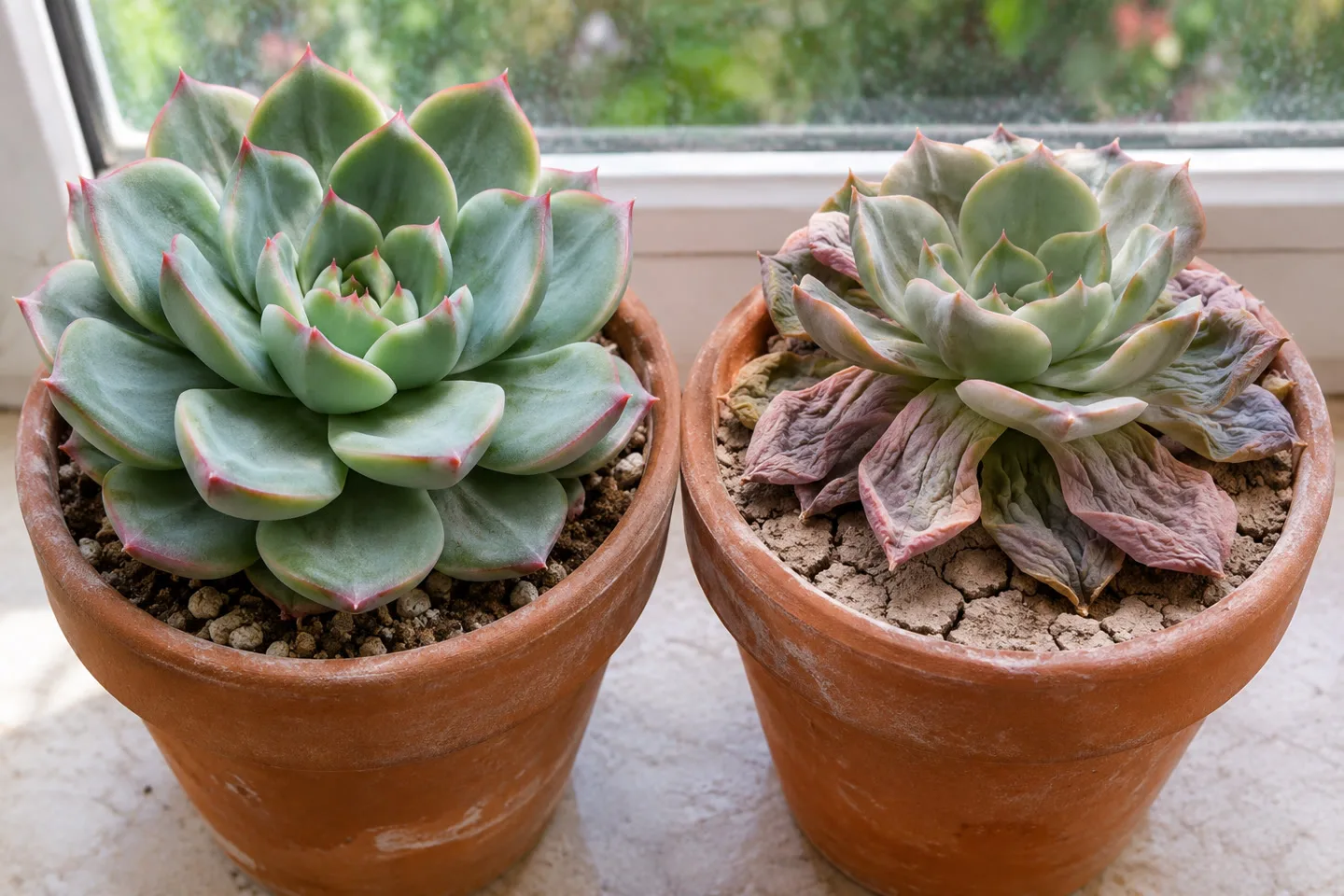
An overwatered succulent has swollen, translucent or yellow leaves that feel mushy, often with a dark, soft stem base and leaves that drop at a touch, while the mix is still wet. Iowa State lists yellowing leaves and soft, weak stems as signs of conditions that are too wet. More water will not help, and drying alone may not either if the roots have rotted.
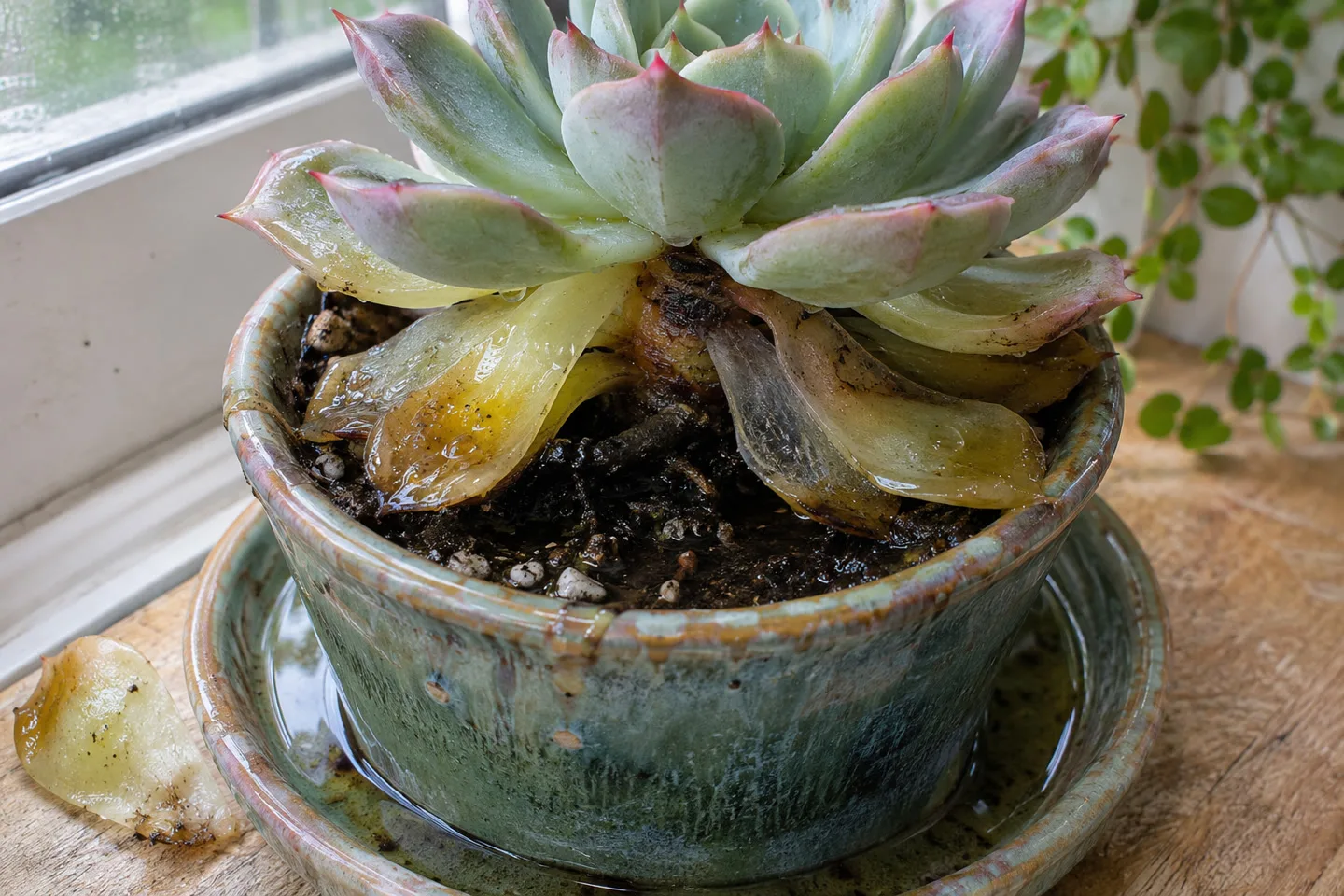
If the stem base is soft or the mix smells sour, unpot the plant and look at the roots. The root rot guide covers what to trim and when to restart from a healthy cutting, and why succulents start dying sorts the other causes, from low light to cold.
Watering mistakes that cost succulents
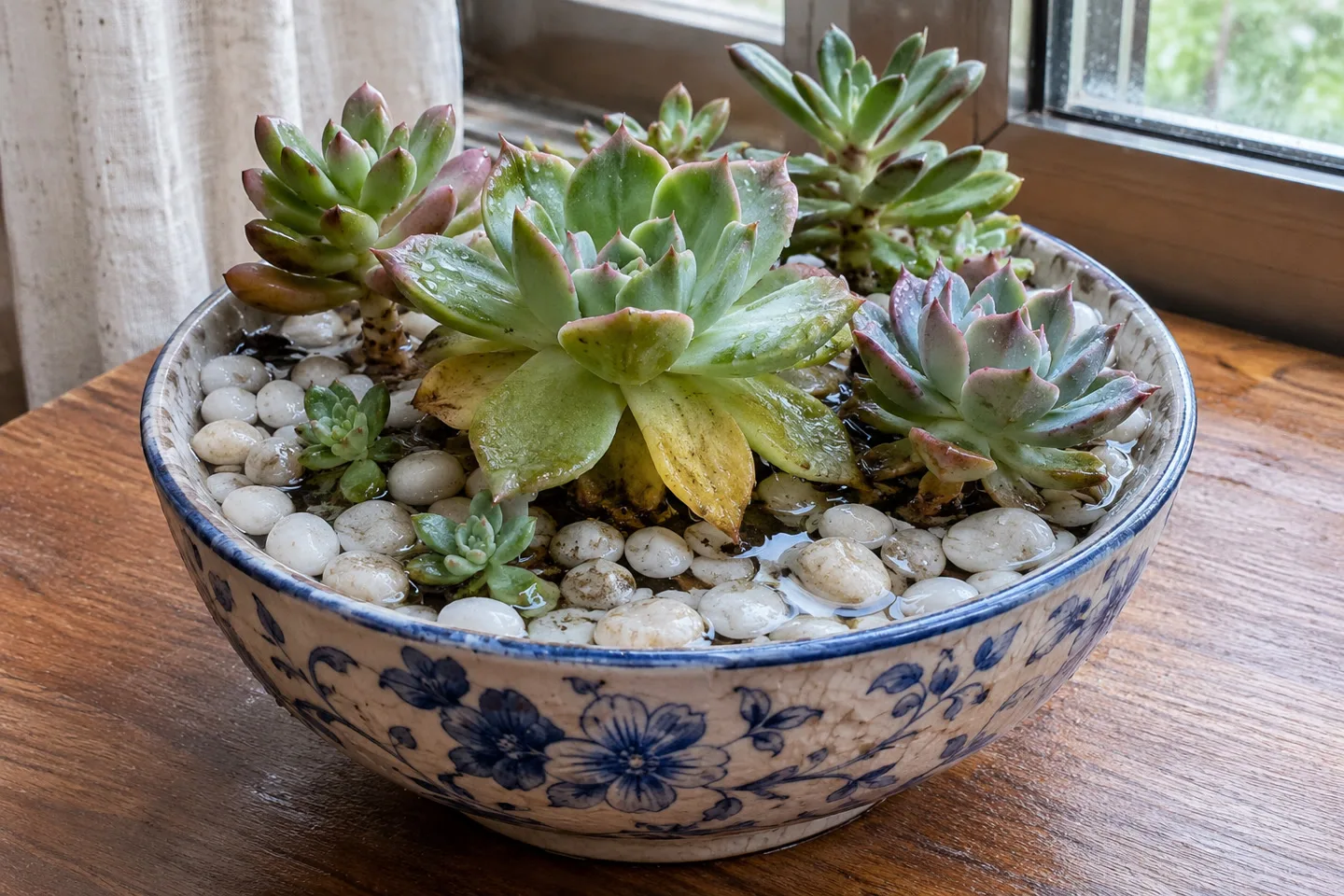
- A pot with no drainage hole. Decorative bowls and pebble tops trap water at the bottom, where you cannot see it. Keep the plant in a nursery pot with a hole and lift it out to water.
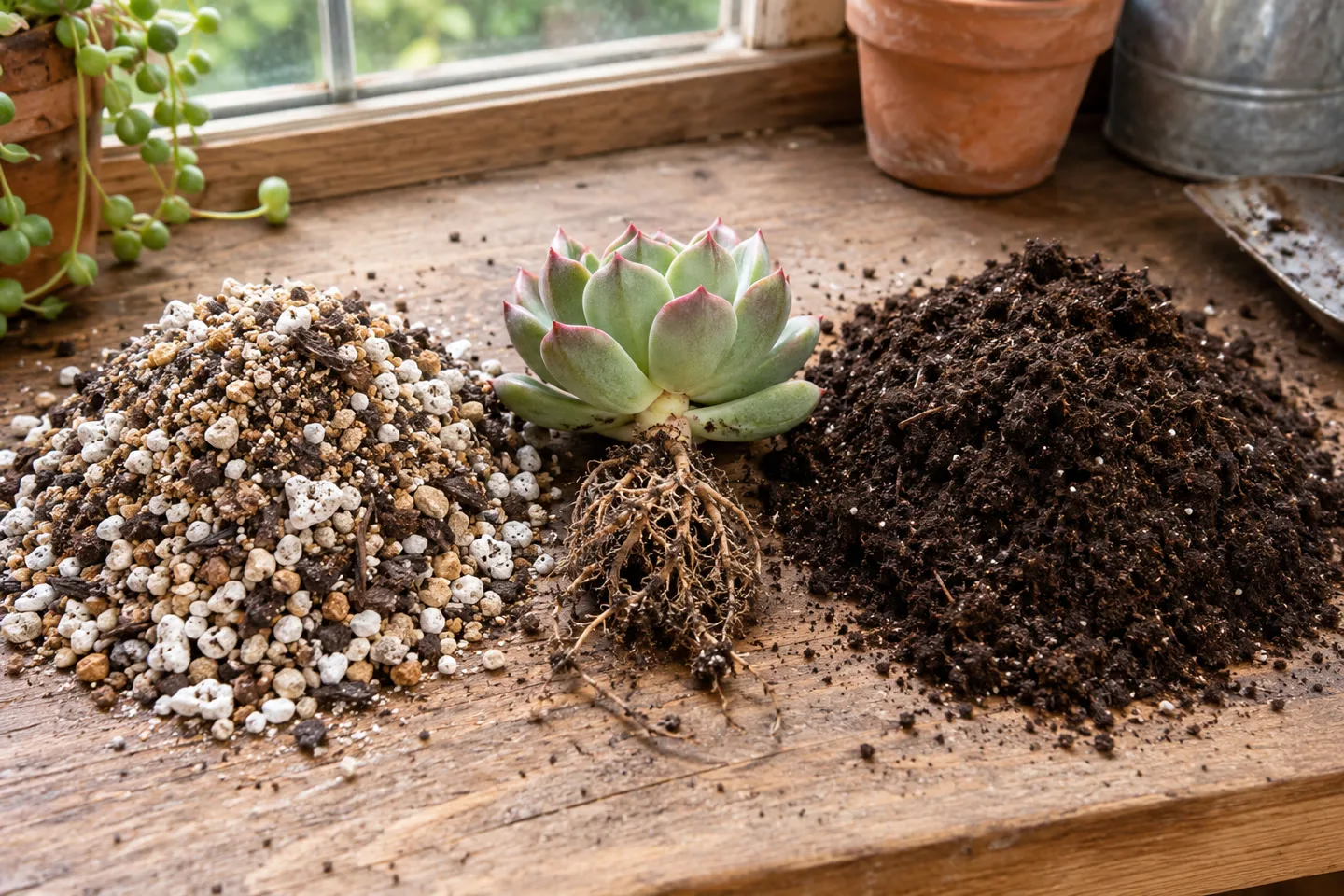
- Regular potting soil. Iowa State notes that typical potting soil holds too much water for succulents. Use a cactus and succulent mix, or add perlite, pumice or coarse sand. The succulent care guide has a simple mix ratio.
- One schedule all year. The same weekly watering that suits July can rot a plant in January. Stretch the gap as days get shorter and cooler, and shorten it again in spring when new growth starts.
- Treating every succulent the same. Rainforest succulents such as the Christmas cactus want more frequent water and a different rest season, so they have their own rhythm in how often to water a Christmas cactus. Aloe follows the desert pattern but has deep pots of its own to worry about, covered in how often to water aloe, and jade sold as a "money plant" is easy to mix up with three other plants in our money plant watering guide.
- Hard tap water every time. The RHS prefers tepid rainwater, because minerals in tap water can build up in the mix and leave white, chalky marks on leaves. Filtered water is a fine stand in.
Check your succulent in Leaftell
Watering a succulent is one rule applied with the seasons: soak it when the pot is dry, then wait. In spring and summer that wait can be about a week in a bright window; from November to early March it stretches to weeks. Let the pot, the light and the leaves set the timing, and let a skewer at the bottom have the final word.
If the leaves are changing and you cannot tell thirst from rot, check your succulent in Leaftell with a photo of the whole plant, a close-up of the lowest leaves, and a note on what the skewer showed. A photo cannot see the bottom of the pot, so that note matters most. Take a fresh photo as a check-in reminder in about seven days and compare.
Check your growing conditions with the plant watering calculator.
Frequently asked questions
No. Daily watering keeps the top of the mix wet and never soaks the roots, which invites rot. Water thoroughly only when the mix has dried most of the way down, which indoors is usually every one to three weeks in the growing season and less in winter.
Small, snug pots. Choose a pot just a little wider than the roots, with a drainage hole. A big pot holds extra mix the roots cannot reach, and it stays wet long after the surface looks dry.
Push a wooden skewer to the bottom of the pot for about 10 minutes. If it comes out clean and dry and the pot feels light, water. Soft, wrinkled lower leaves over dry mix are another sign the plant is thirsty.
Share article
About the author

Keep checking your plant
Plant care reference
Indoor plant care
Build a routine around your plant, light and potting mix.
Plant care reference
Why is my plant dying
Trace leaf and root symptoms before choosing a care change.
Plant care reference
Pothos plant care
Choose a growing spot and prune a trailing pothos for fuller growth.
Plant care reference
How to fix root rot
Inspect root firmness and drainage, then decide whether to repot.