Aloe Vera Plant Care: Light, Water, Soil and Repotting
Filip Leszczyński 18 October 2026 13 min read
In this article
Care of an aloe vera plant comes down to two things: as much sun as your brightest window gives, and a gritty, fast-draining pot that dries out completely between deep waterings. Most indoor aloes that fail are not neglected. They are watered on a schedule, kept in a dim room, or both.
Aloe vera is a succulent that stores water in its thick leaves, so it handles a missed watering far better than a wet pot. That flips the usual houseplant instinct. When an aloe looks unhappy, check the light and the moisture deep in the pot before you reach for the watering can.
Aloe vera plant care at a glance
| Care decision | A useful starting point | Change course when |
|---|---|---|
| Light | Your sunniest window, ideally south or west | Leaves turn pale, thin and flop outward |
| Water | Soak until it drains, then let the mix dry completely | The mix is still damp deep in the pot |
| Soil | Cactus and succulent mix, or potting mix with added sand or perlite | Water sits on top or the pot stays heavy for days |
| Pot | Clay or terracotta with a drainage hole, only a little wider than the root ball | Roots circle the pot or pups crowd the surface |
| Temperature | Normal room temperatures, away from cold glass in winter | Leaves discolor after a cold night by the window |
| Feeding | Light feeding only in spring and summer, if at all | Growth is soft and stretched rather than firm |
These are starting points, not a calendar. A small clay pot in a hot south window can dry out in days, while the same plant in a plastic pot in a cool room may stay damp for weeks. Read the pot, not the date.
Light: the sunniest window you have
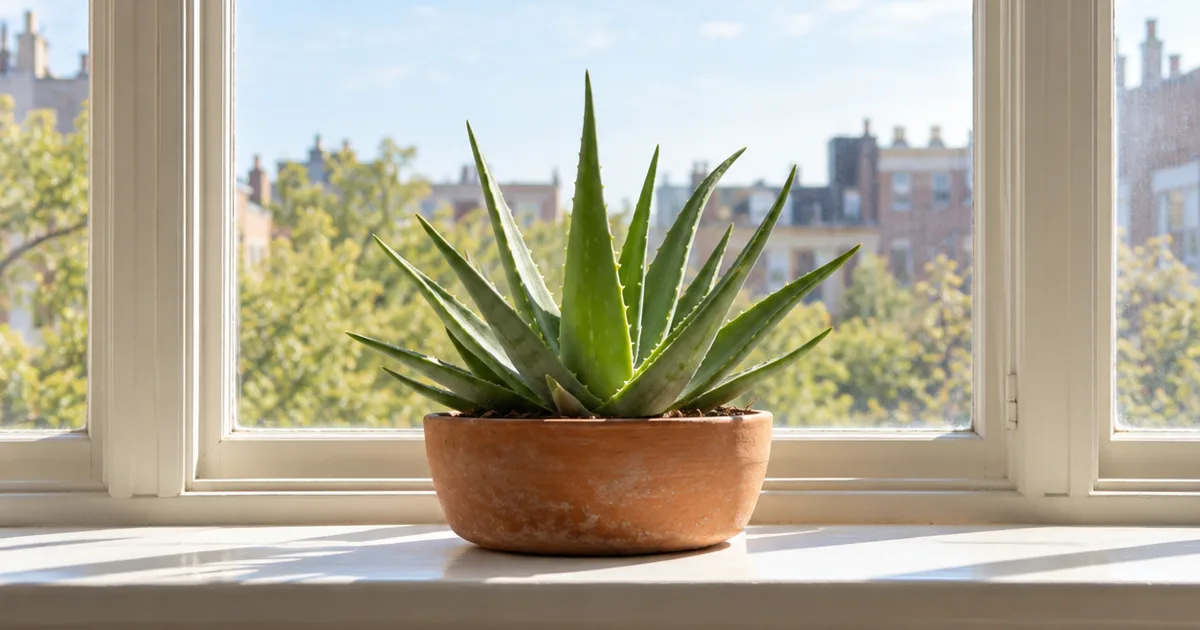
Indoors, an aloe wants a lot of light. The New York Botanical Garden recommends a window that gives at least six hours of sunlight a day, and NC State Extension suggests a south or west window for aloes grown inside. A north window or a spot across the room rarely gives enough.
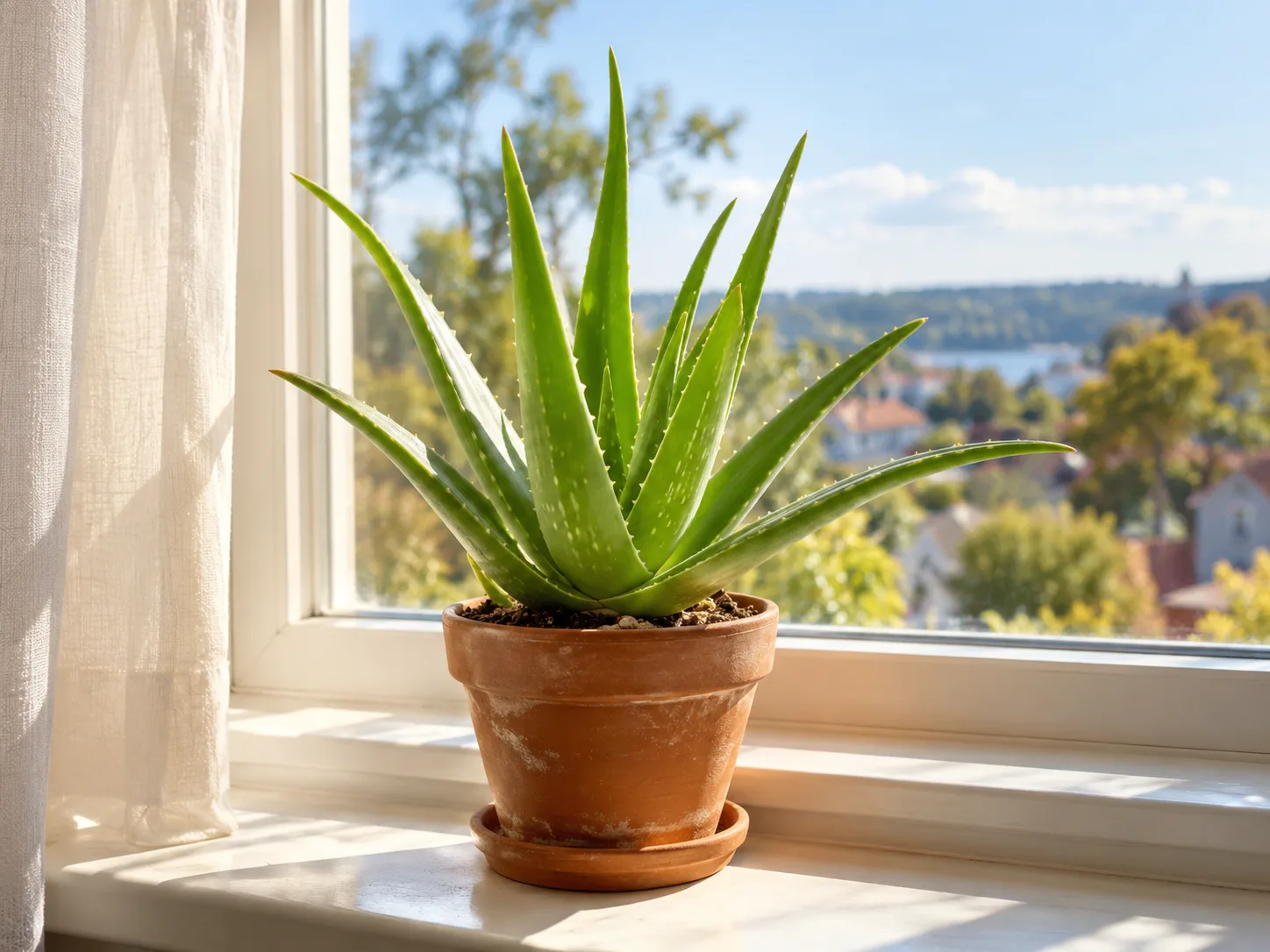
There is one catch. A plant that has lived in a dim spot or a garden center can scorch if you move it straight into hot, unfiltered sun. Move it closer to the window over a week or two, or start it behind a sheer curtain, then open the curtain once new growth looks firm. A reddish or brown tinge on the sun-facing leaves is a sign to slow down.
If you are not sure how bright your window really is, our guide to reading your plant's light walks through a quick way to judge it. A grow light is a reasonable backup in a dark apartment; NYBG notes that artificial light needs to run much longer each day than sunlight to do the same job.
Temperature: normal rooms are fine, cold glass is not
Aloe is comfortable in ordinary home temperatures. NYBG gives 60 to 75°F during the day and 50 to 60°F at night as well tolerated for succulents indoors.
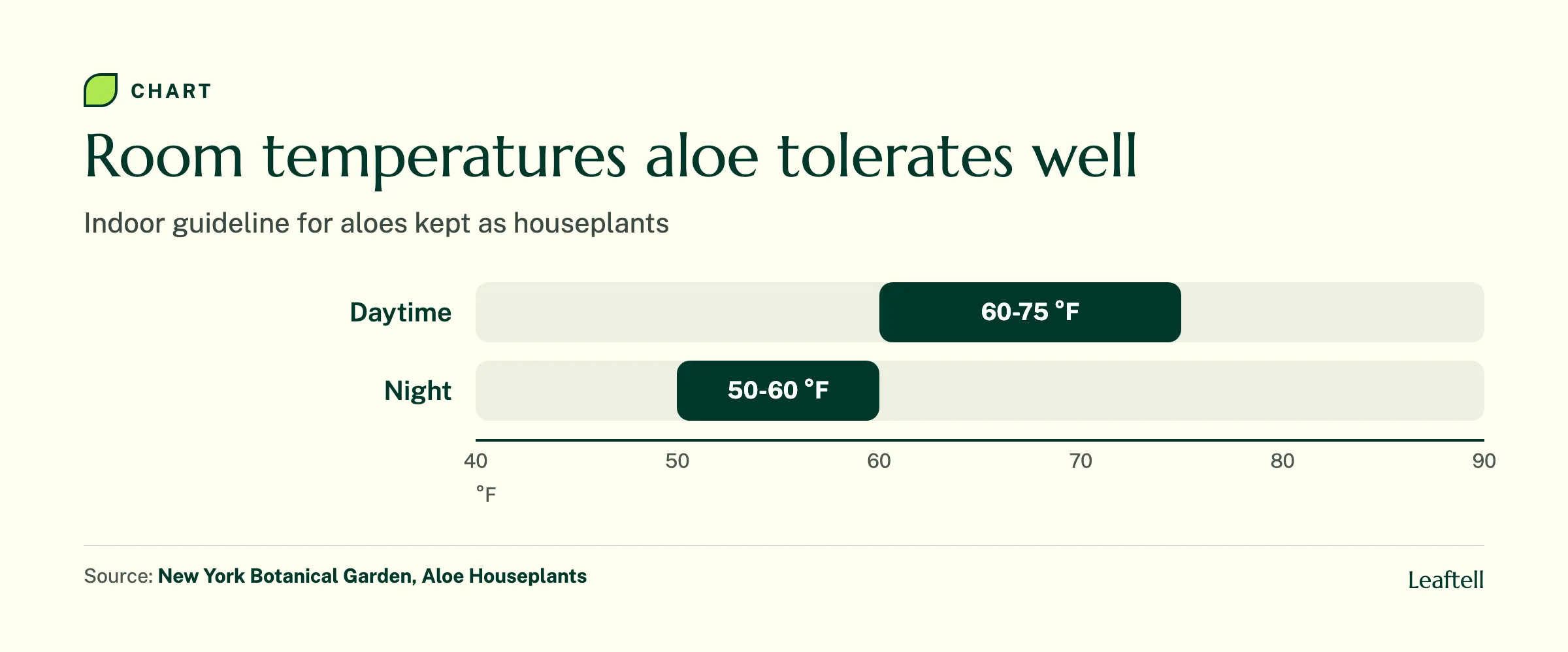
The risk is the microclimate right against the window. In winter, the glass and sill can run much colder than the middle of the room, and an aloe that sits on a cold sill or in a draft can discolor. Pull it back a few inches on the coldest nights, and keep it away from heater vents that blast hot, dry air across the leaves.
How often to water aloe vera
There is no fixed number of days. Water an aloe when the potting mix is dry all the way down, then water it thoroughly. In a sunny window in spring and summer the pot dries faster, so checks come around sooner. In winter the plant is resting and the pot dries slowly, so the gap between waterings gets much longer.
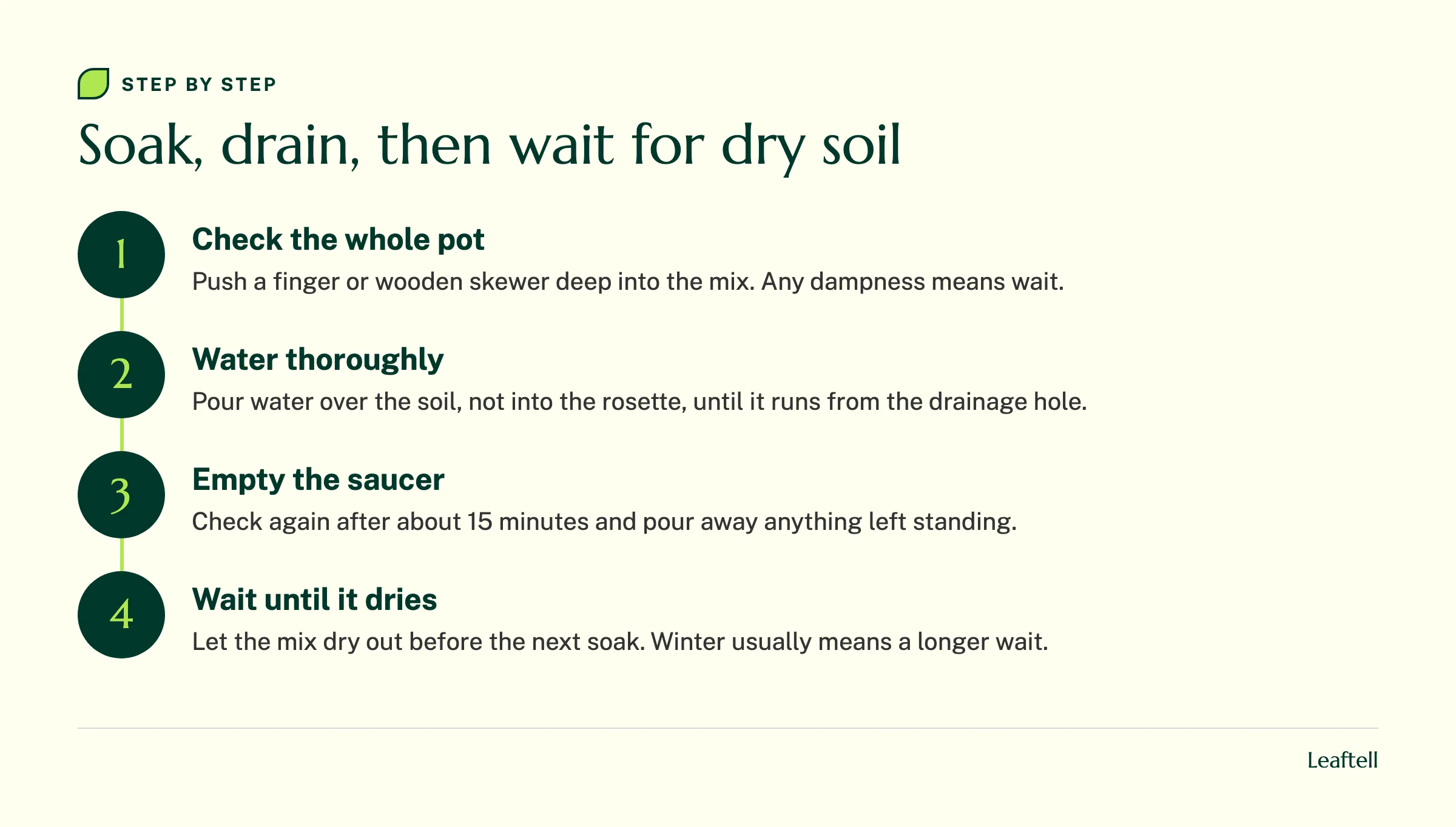
Check below the surface, not just the top inch. Push a finger or a wooden skewer deep into the mix, or lift the pot: a fully dry pot feels noticeably lighter. If the readings disagree, use the checks in wet or dry soil before watering before you add anything.
When you water, pour onto the soil around the plant rather than into the center of the rosette, and keep going until water runs out of the drainage hole. NYBG suggests checking back after about 15 minutes and emptying the saucer. Water left standing in the rosette or in a cachepot is how many aloes start to rot.
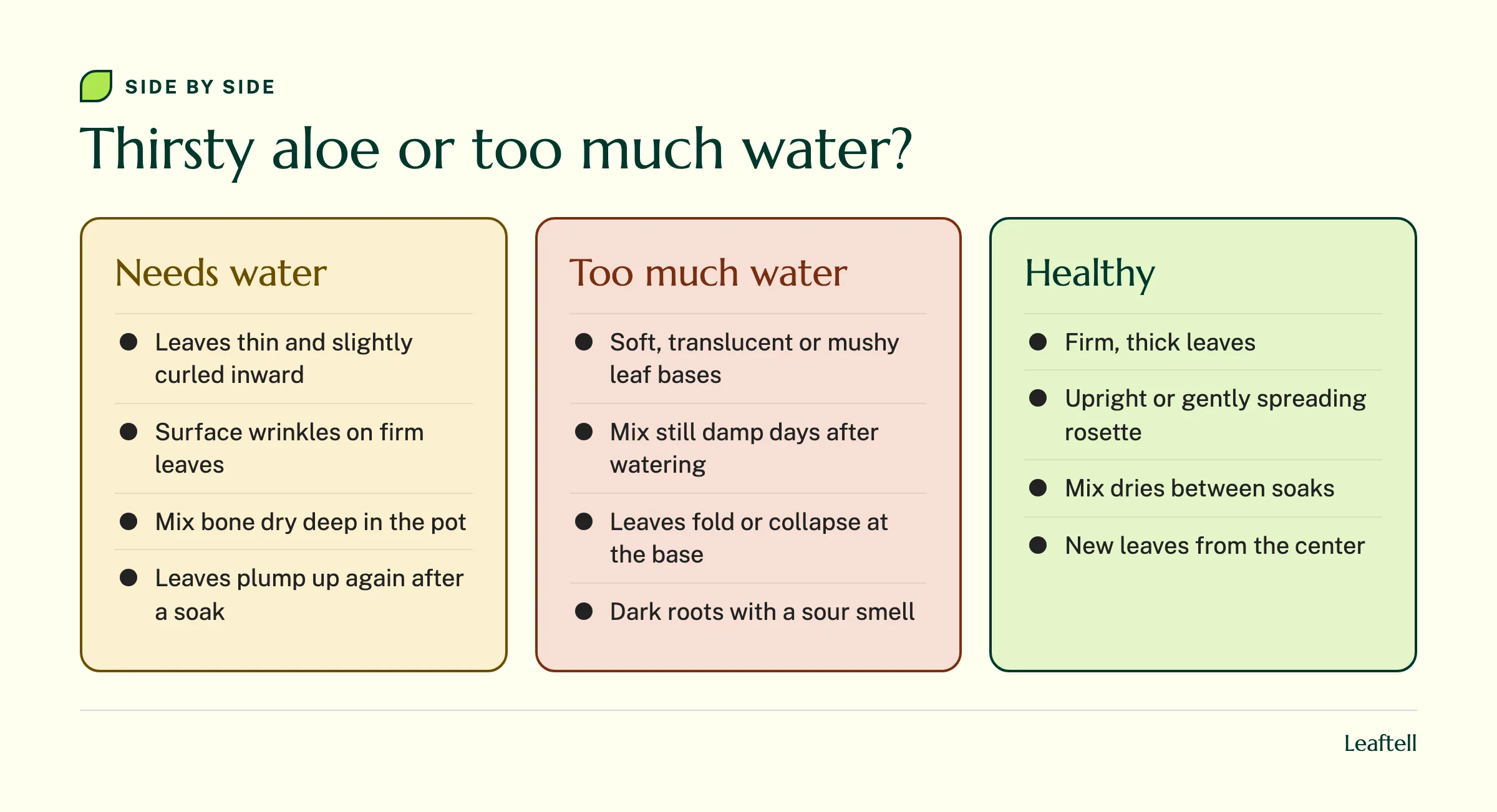
A thirsty aloe is easy to rescue: thin, slightly curled leaves usually plump up again within days of a good soak. Soft, translucent leaf bases in damp mix are a different and more serious problem. If that sounds like your plant, compare it against the overwatered plant symptoms and check the roots before you water again.
Soil and pot: drainage does most of the work
Aloe roots are short and shallow, and they rot when they sit in wet mix. Use a cactus and succulent mix, or a regular potting mix opened up with coarse sand or perlite. NYBG suggests roughly equal parts potting soil, peat and sand, and advises against mixes with fertilizer already added.
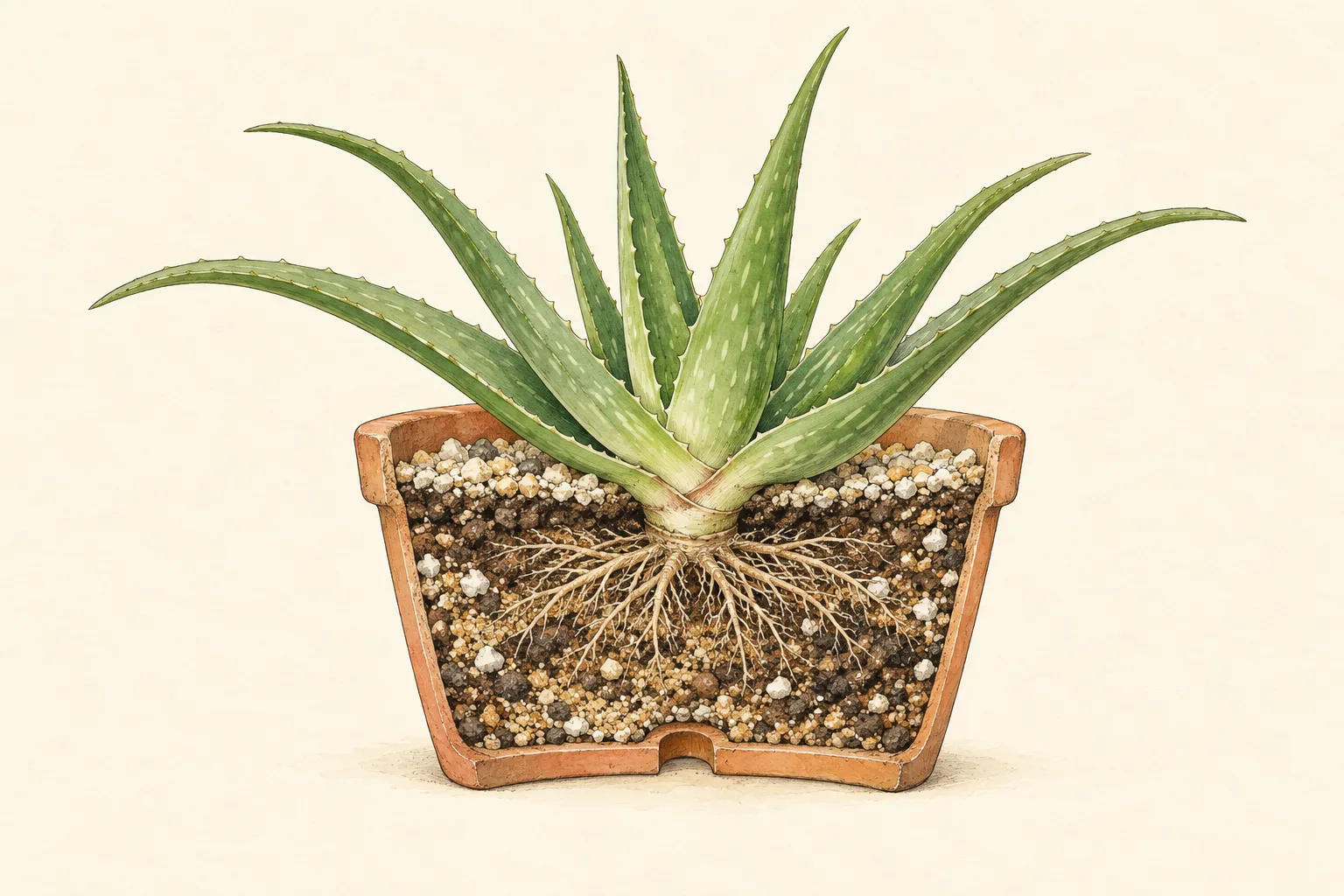
The pot matters as much as the mix. It needs a drainage hole, and NC State notes that clay is best because it lets the mix dry out faster than plastic. Decorative pots without a hole, and shallow succulent bowls sold with several plants crowded together, are a common reason a healthy-looking aloe collapses months later.
Do aloe plants like big or small pots?
A pot only a little wider than the root ball is the right size. A large pot holds far more wet mix than the roots can use, so it stays damp for longer. Choose a heavy clay pot over a light one, because a mature aloe gets top-heavy and can tip a small plastic pot over.
How to repot aloe vera and separate the pups
Repot when the plant fills the pot, tips over, or is surrounded by pups (the small offsets that grow from the base). NYBG suggests midsummer, July or August, for older plants. Wear gloves if the leaf edges are spiny, and work on newspaper so you can see the roots.
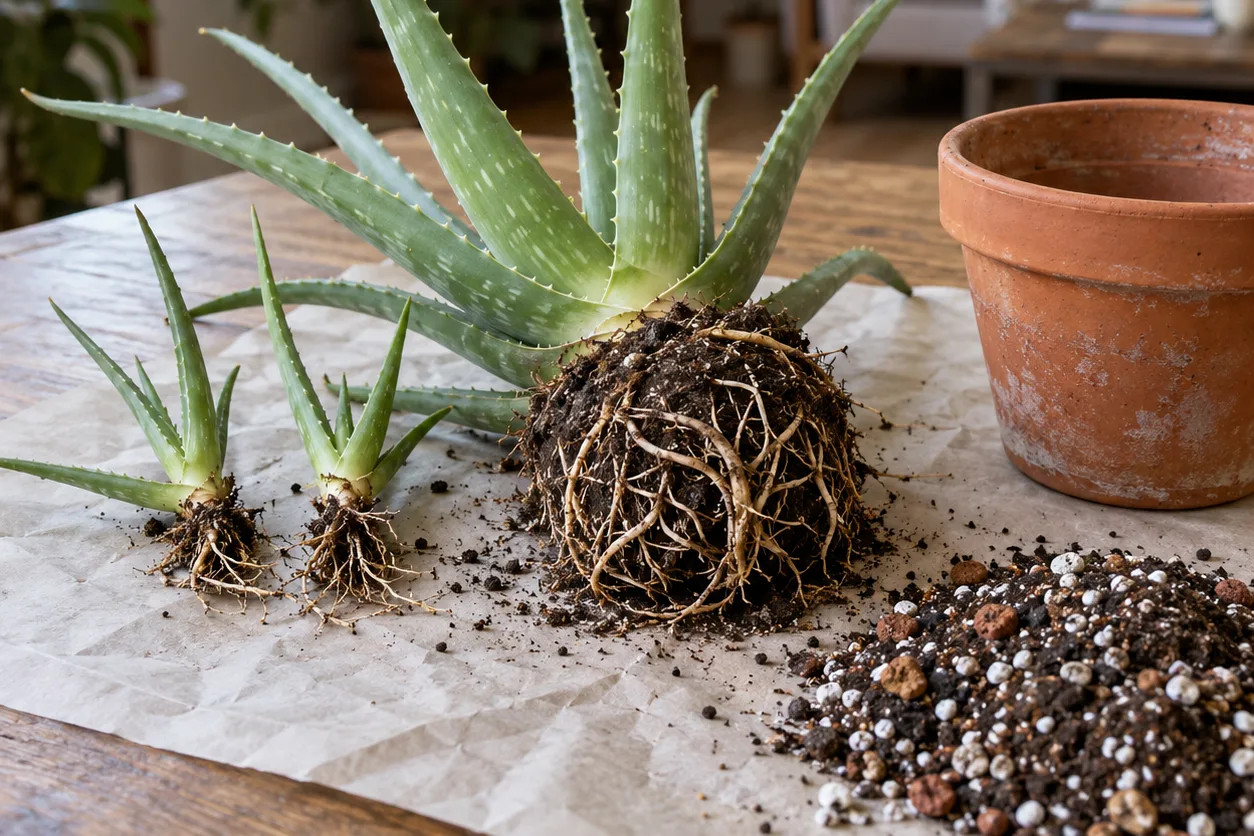
How to repot an aloe vera plant
- Let the mix dry first
Wait until the pot is dry. Dry roots slide out more easily and are less likely to tear than wet ones.
- Ease the plant out
Tip the pot on its side and slide the plant out while supporting the base. Tap the pot or run a blunt knife around the inside edge if it sticks.
- Check the roots
Healthy roots are firm and pale. Trim any that are soft, dark or smell sour with clean scissors, and note it: rot means the old mix stayed too wet.
- Separate pups with their own roots
Gently pull or cut away pups that already have roots of their own. Pot each in a small container of the same gritty mix.
- Replant at the same depth
Set the mother plant at the depth it grew before, in fresh mix. Burying the base deeper invites rot.
- Wait before watering
Leave the repotted plants dry for about a week so any damaged roots can seal, then water thoroughly and return to the normal routine.
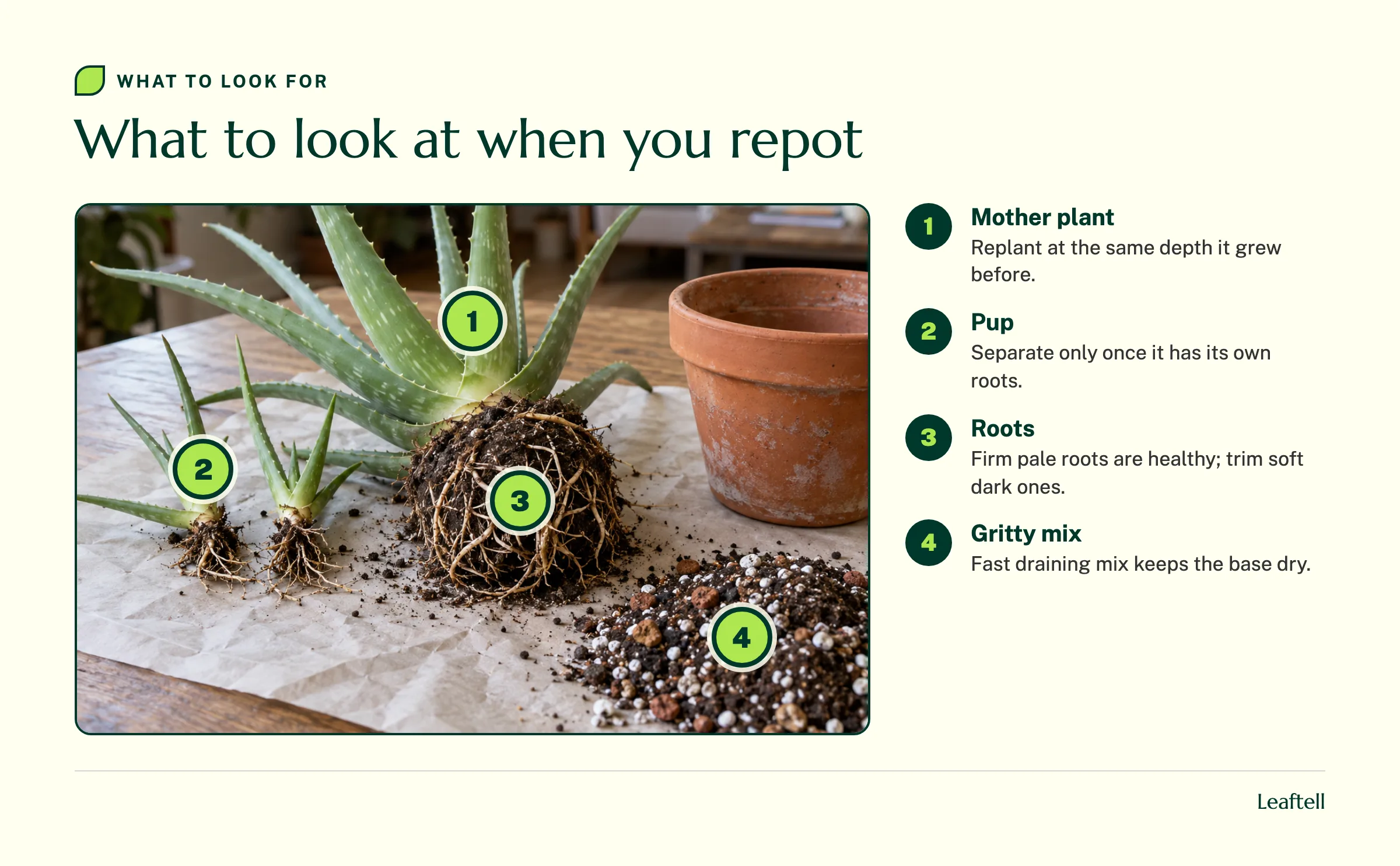
If you found mushy, dark roots during the repot, the root rot guide covers how much to trim and when a plant is better restarted from a healthy pup.
Reading the leaves when something is off
Aloe leaves give clear clues, but several problems look alike in a single photo. Start with where the change appears and how the leaf feels, then check the most likely cause before changing anything else.
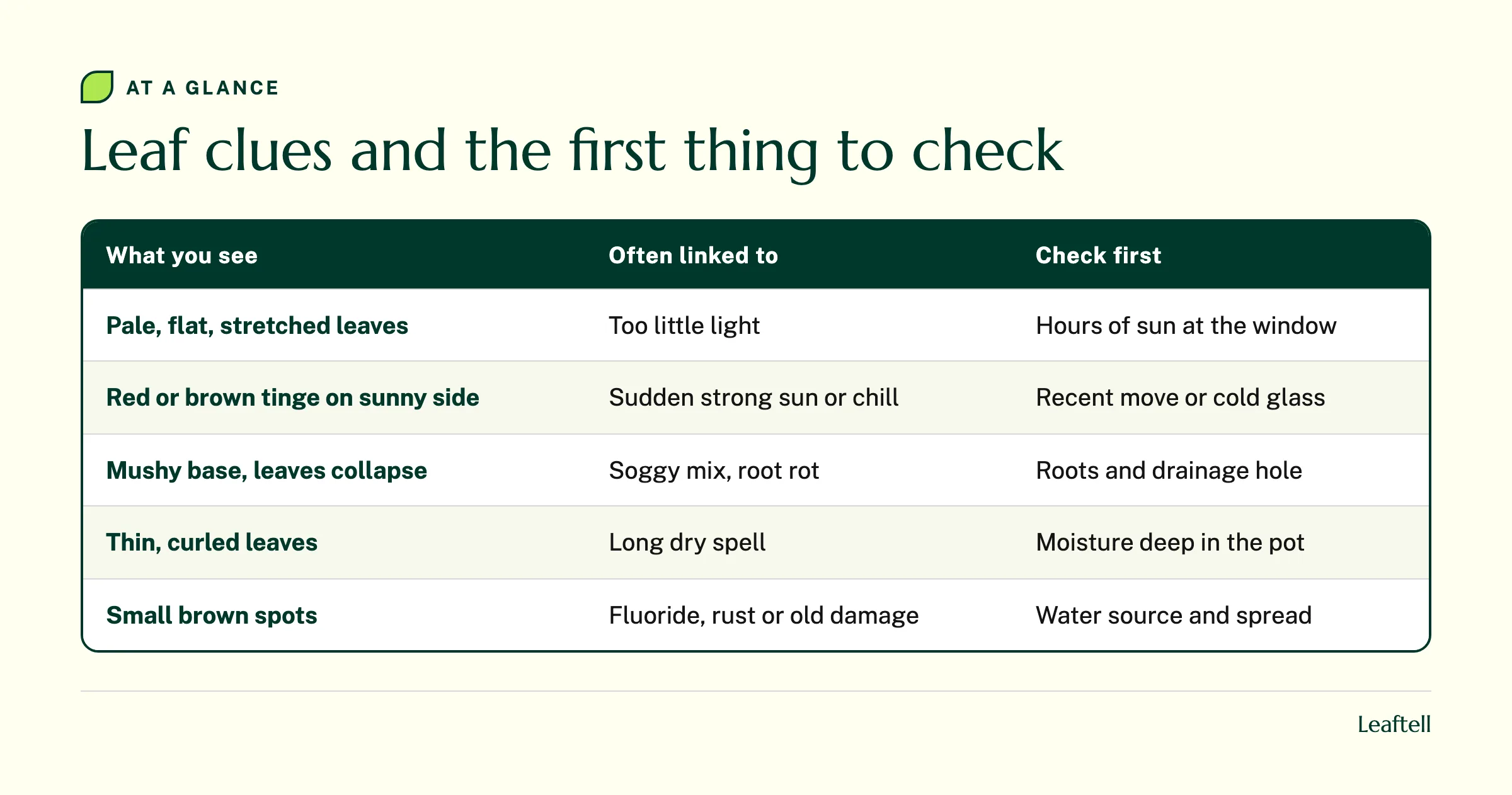
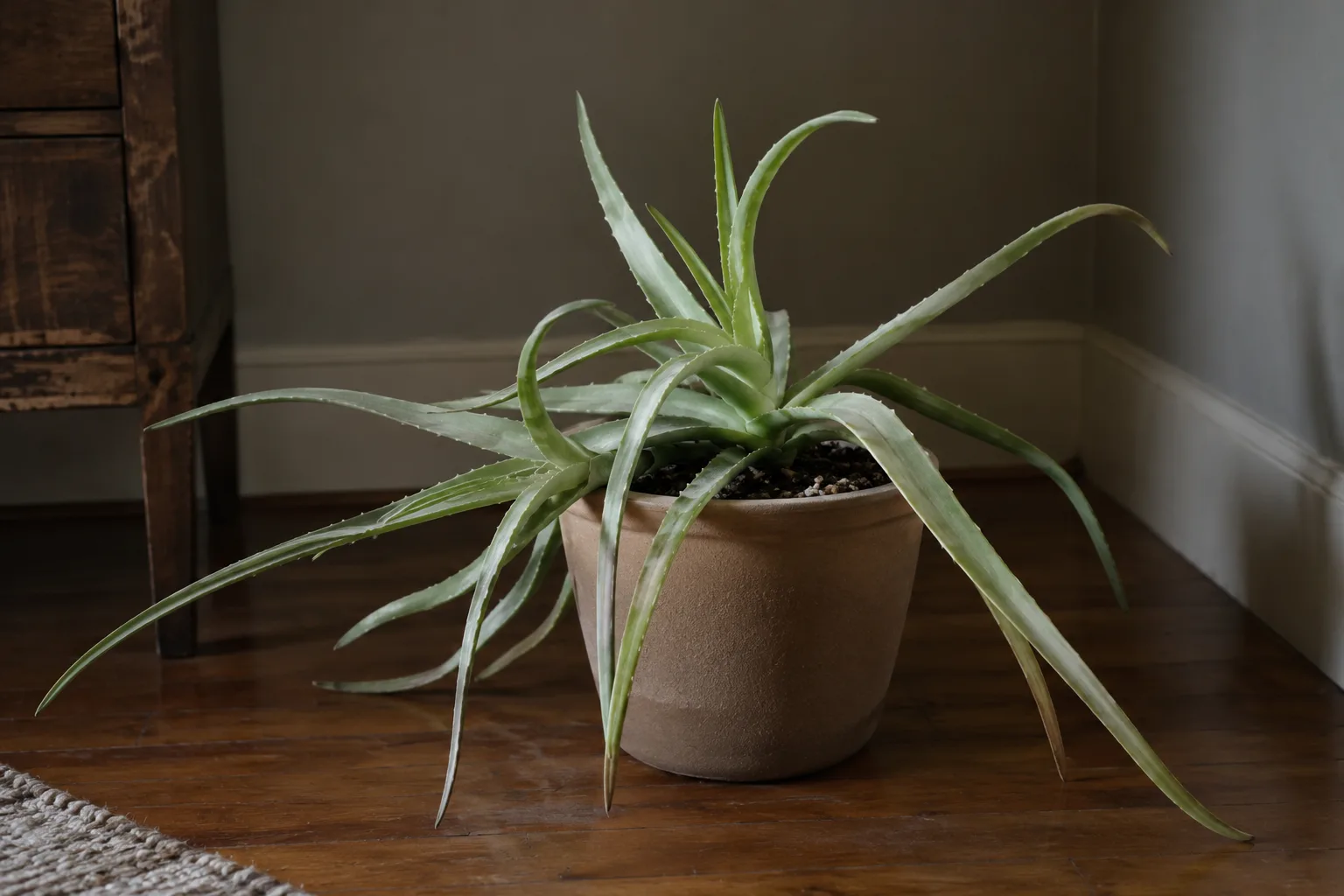
Pale, thin, stretched leaves. This is the most common indoor problem. Without enough light, aloe grows soft, flat leaves that splay outward and flop over the pot edge. Move it to a brighter window gradually. Stretched leaves will not shrink back, but new growth from the center should come in firmer.
Red, orange or brown tones. Aloe often blushes reddish brown in response to stress: a sudden jump to strong sun, a cold sill, or a long dry spell. If the leaves are still firm, correct the cause and watch the new growth.
Mushy, collapsing leaves at the base. Treat this as a root problem until proven otherwise. Lift the plant and inspect the roots. Our succulent decline guide helps separate rot from thirst when the symptoms overlap.
Brown tips and small brown spots. NYBG notes some aloes are sensitive to fluoride and may show brown spotting; if that matches, try rainwater or purified water and watch new leaves. Old dry tips will not turn green again. You can trim a brown tip with clean scissors for looks, cutting at an angle to keep the leaf shape, but it is optional.
Pests: check the base of the rosette
Aloe has few pests, but mealybugs and scale can hide where the leaves meet the soil. SDSU Extension notes mealybugs usually gather at the base of the plant and leave a sticky residue. Isolate the plant and remove what you can see by hand first.
White, cottony clusters point toward the mealybug checks; hard, raised bumps that do not move point toward scale insects. If you still need a product after identifying the pest, choose a houseplant insecticidal soap labeled for that pest and indoor use, follow the label, test a small area first, and never mix products. Keep children and pets away from treated plants as the label directs.
Is aloe vera safe around cats and dogs?
No. The ASPCA lists aloe as toxic to cats and dogs (and horses), with vomiting, lethargy and diarrhea among the signs. Place the plant where pets cannot chew it, and keep fallen leaves and trimmings off the floor. Keep it out of reach of young children too.
If a pet has chewed an aloe and seems unwell, contact your veterinarian or a pet poison helpline rather than waiting for symptoms to pass.
Through the year: active growth and winter rest
Indoor aloe follows a simple seasonal rhythm. It grows in spring and summer and rests through the darker months, when it needs less water and no fertilizer. The light should not drop in winter; if anything, the sunniest spot matters more.
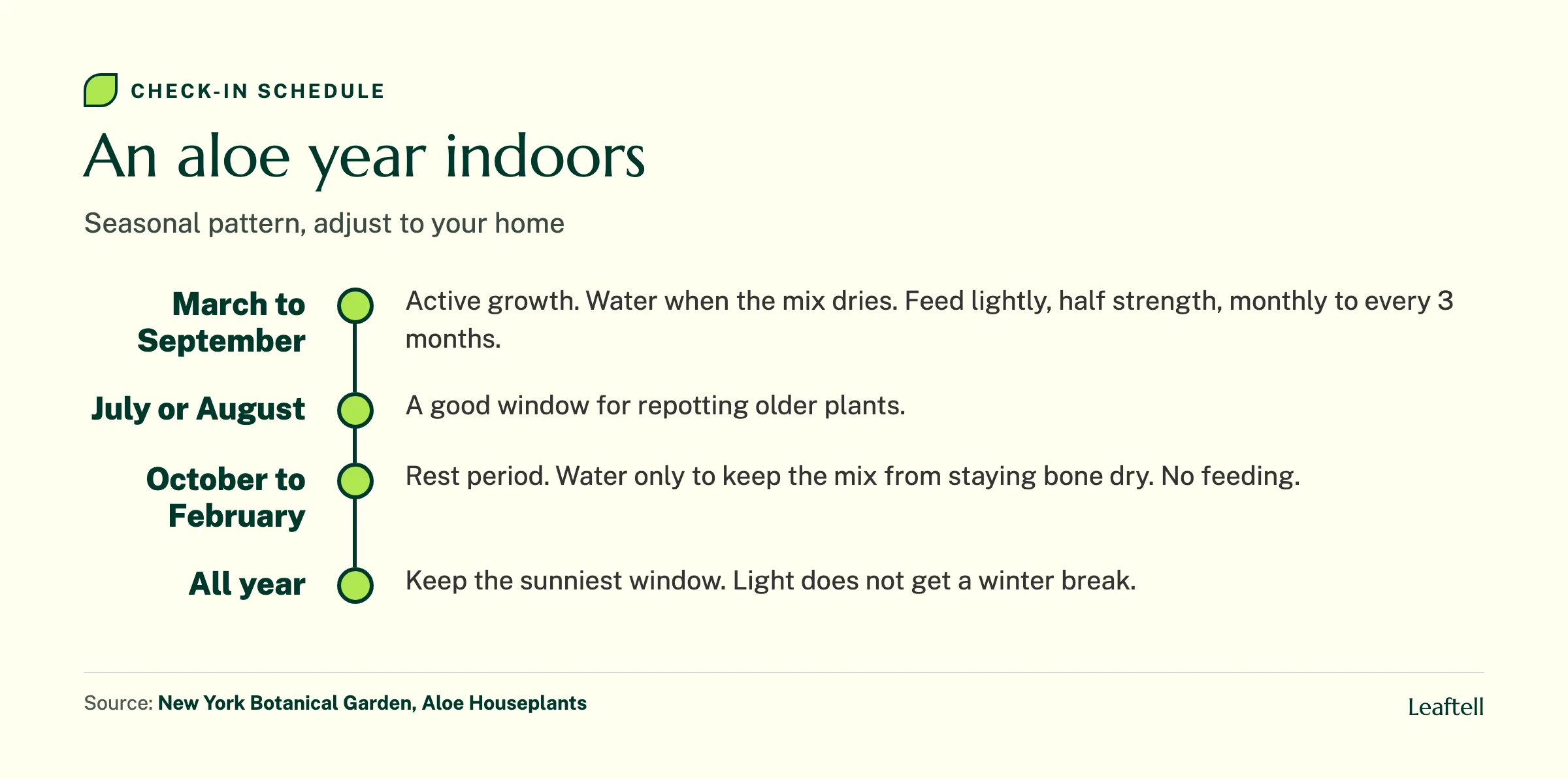
Fertilizer is optional. If you use it, NYBG suggests a balanced houseplant food at half strength during the growing season only, and warns against high-nitrogen products. Follow the label and keep fertilizer away from pets and children. Extra feeding will not fix a plant that is short on light.
Aloe can spend summer outdoors in most of the US, but move it into full sun gradually and bring it back inside before nights turn cold. NC State lists it as an outdoor perennial only in zone 10 and warmer.
Check your aloe in Leaftell
A good aloe routine is short: the sunniest window, a gritty mix in a clay pot with a hole, and a deep soak only when the whole pot is dry. If a leaf changes, look at the light and the moisture deep in the pot before you change anything else, and change one thing at a time.
If the cause is still unclear, check your aloe in Leaftell with a photo of the whole plant, a close-up of the leaf, and what the mix feels like deep in the pot. A photo cannot tell whether the bottom of the pot is wet, so that detail matters most. Take a fresh photo as a check-in reminder in about seven days and compare the newest leaves.
Check your growing conditions with the plant watering calculator.
Frequently asked questions
Indoors, yes: give it the sunniest window you have, ideally south or west, with at least six hours of light. Outdoors or after a move from a dim spot, introduce strong sun gradually, because a sudden change can scorch the leaves reddish brown.
Right at your brightest window, but a few inches back from cold glass in winter and away from heater vents. Choose a spot where pets and small children cannot reach it, since aloe is toxic to cats and dogs.
Water only when the potting mix is dry all the way down, then soak it until water drains from the hole. How long that takes depends on the window, pot and season: faster in a sunny summer window, much slower in winter.
Leaves turn soft, translucent or mushy, often starting at the base, and may fold or collapse while the mix is still damp. Lift the plant and check the roots: dark, soft roots with a sour smell point to rot.
A small pot, only a little wider than the root ball, with a drainage hole. An oversized pot holds wet mix for too long around shallow roots. A heavy clay pot also keeps a top-heavy aloe from tipping.
Only if you want a tidier look. A dry brown tip will not turn green again, and trimming it with clean scissors does no harm. Fix the cause first, such as a long dry spell, cold glass or water quality.
Normal home temperatures suit it. The New York Botanical Garden gives 60 to 75°F by day and 50 to 60°F at night as well tolerated. Keep it off cold windowsills and out of drafts in winter.
Not reliably indoors. A mature aloe vera, usually at least three years old, can send up a tall stalk of tubular yellow to orange flowers, mostly when it gets plenty of sun. A plant that has not flowered is not necessarily unhealthy.
Share article
About the author

Keep checking your plant
Plant care reference
Indoor plant care
Build a routine around your plant, light and potting mix.
Plant care reference
Why is my plant dying
Trace leaf and root symptoms before choosing a care change.
Plant care reference
Pothos plant care
Choose a growing spot and prune a trailing pothos for fuller growth.
Plant care reference
How to fix root rot
Inspect root firmness and drainage, then decide whether to repot.