How to Propagate an Aloe Vera Plant From Pups (Not Leaves)
Filip Leszczyński 19 November 2026 12 min read
In this article
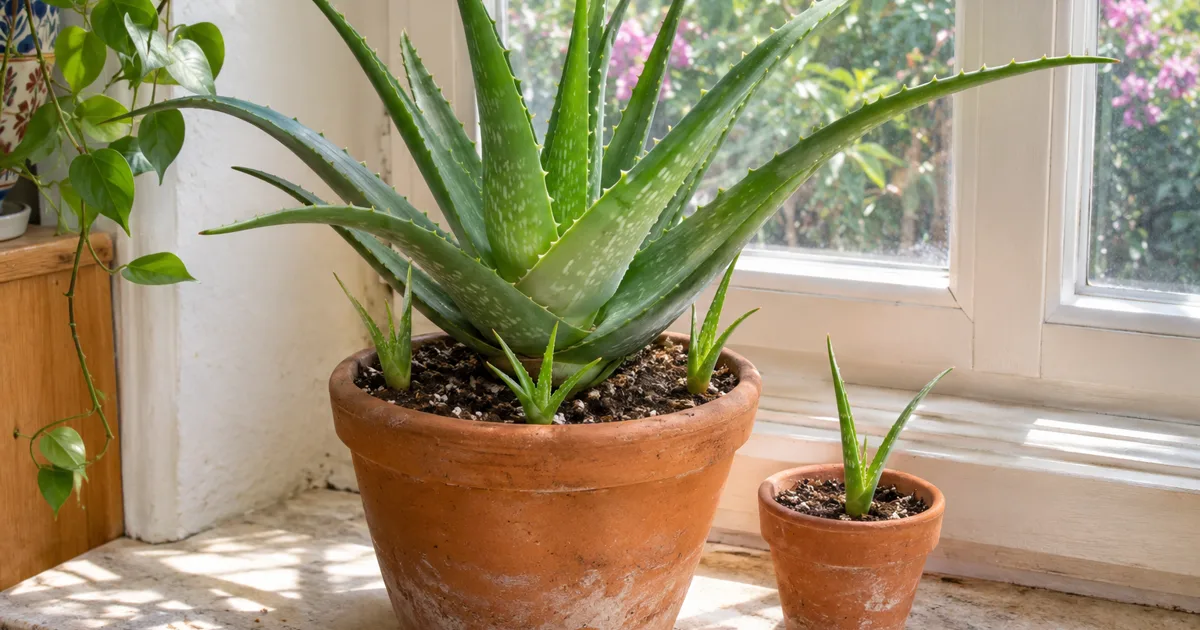
To propagate an aloe vera plant, separate one of the pups growing around its base: wait until the pup has a few leaves and roots of its own, ease it away from the mother, let the cut dry for a few days, then plant it in dry, gritty cactus mix. That is the method that works. Aloe vera makes new plants on its own, and your job is mostly to time the split and then hold back the water.
The thing most guides bury is that a cut aloe leaf will not grow into a new plant. It looks like it should, because it is thick and full of water, but it has none of the growing tissue a new plant starts from. People who try leaf cuttings usually end up with a shriveled or rotting leaf weeks later and think they did something wrong. They did not. They picked the one method aloe vera does not do.
Pups, leaves or seeds: which method works
Aloe vera spreads by offsets, the small plants called pups that come up from its base. NC State Extension puts it in one line: the plant spreads by offsets and is propagated by division. Here is how the methods people try compare.
| Method | Does it work for aloe vera? | When to use it |
|---|---|---|
| Pups with their own roots | Yes, the easiest and most reliable way | Any time a pup has a few leaves and roots, best in spring and summer |
| Pups without roots | Often, but slower and with more risk of rot | When a pup snaps off or the mother plant is failing |
| Leaf cuttings | Almost never; the leaf shrivels or rots | Do not bother, unless you want aloe gel |
| Seeds | Possible, but slow and rarely done at home | Only if your aloe flowers and you want a project |
If your aloe has no pups yet, it is probably young or not getting enough light. Mature plants in a bright window make pups readily. A dim aloe puts its energy into staying alive, not into babies, so the fix is the same one in our full aloe vera care guide: more sun.
Where aloe pups come from
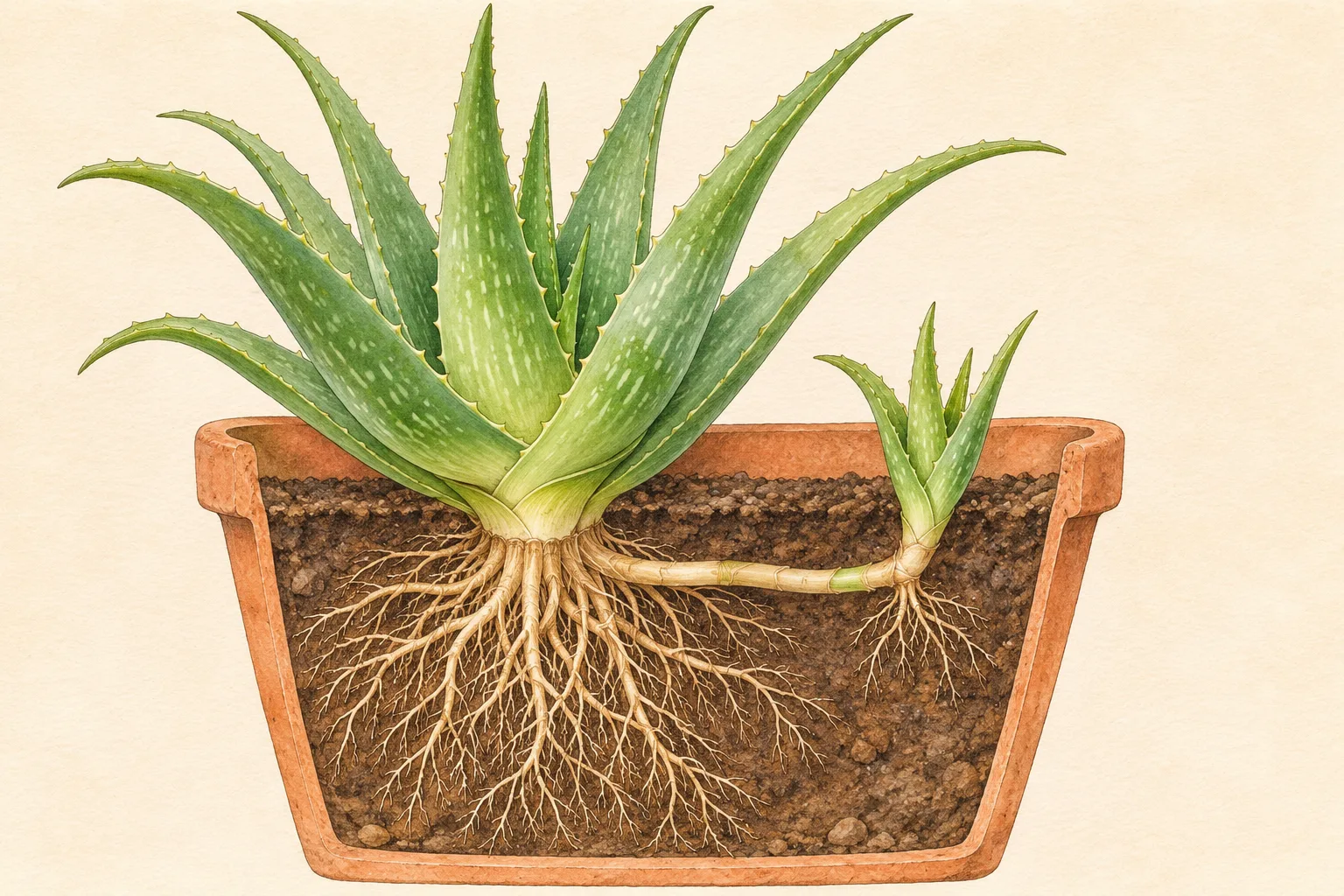
A pup is not a seedling. It grows from a short underground stem that runs out from the mother's base, and for a while it lives off her roots. As it grows, it sends down roots of its own. That is why timing matters: a pup separated before it has roots has to build them from scratch, while one with roots just keeps going.
When a pup is ready to separate
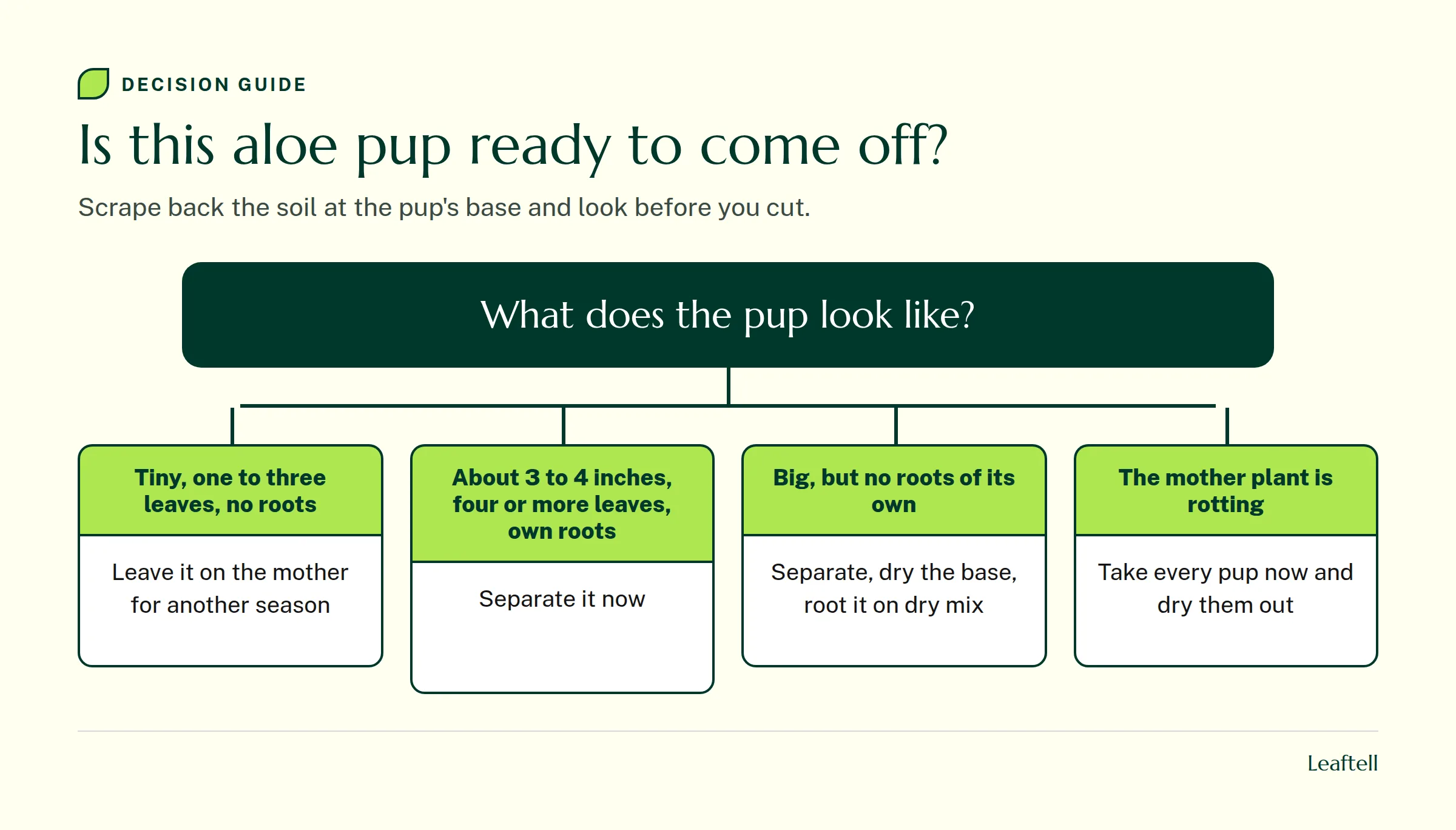
A pup is ready when it looks like a small aloe rather than a sprout. A useful rule of thumb: about 3 to 4 inches tall, with four or more firm leaves, and some roots of its own when you scrape back the soil at its base. Smaller pups can survive, but they grow slowly and dry out faster.
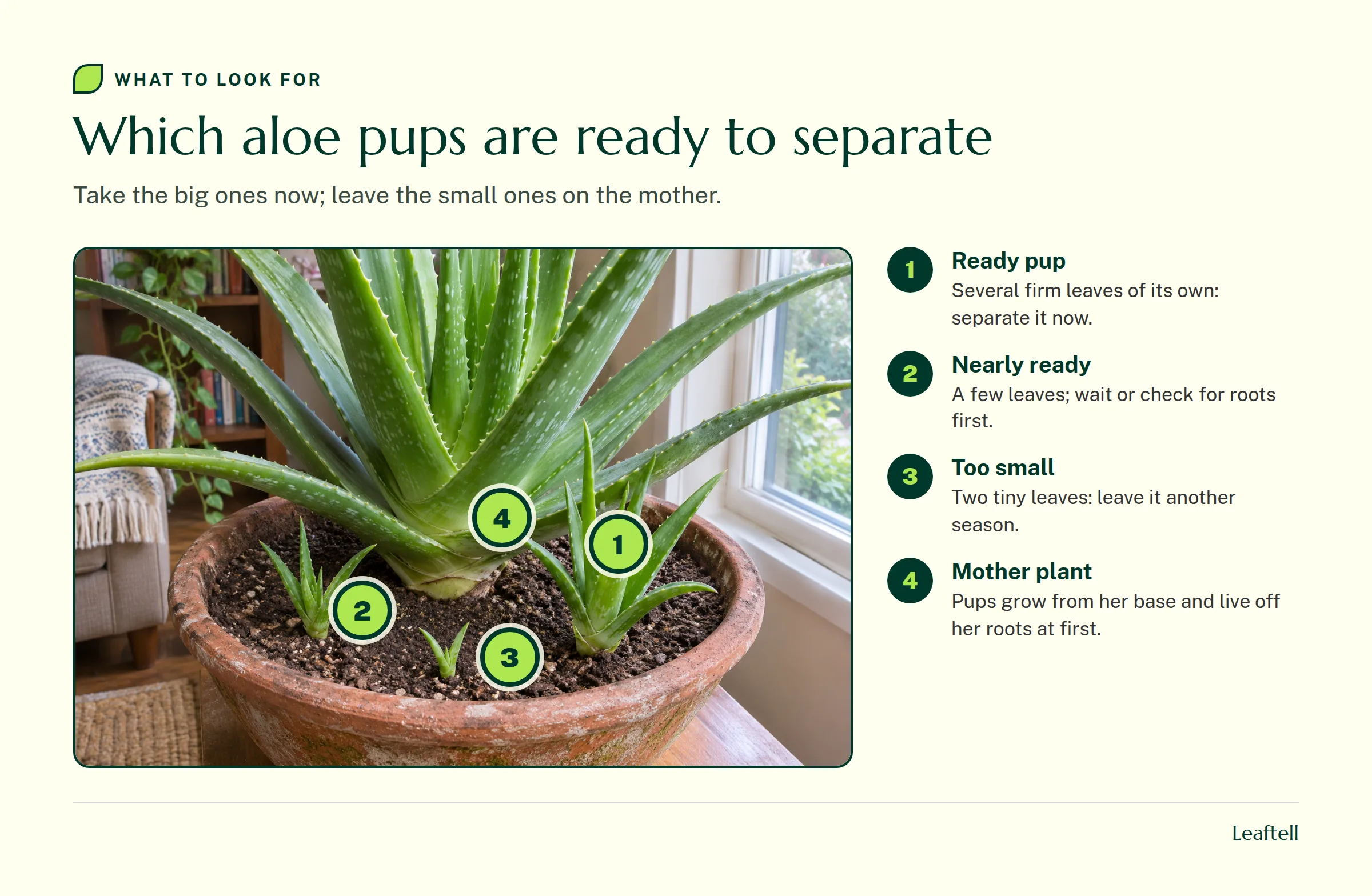
Leave the smallest pups attached. They will be ready next season, and the mother does not mind the company. If the pot is crowded and you are repotting anyway, take the big ones and put the mother back with the small ones still in place.
How to separate aloe pups
Do this when the soil is dry. Dry mix falls away from the roots, and a dry plant is less likely to rot where you cut it. Spring and early summer are the easiest time, because the plant is growing and the pups root fast.
How to propagate aloe vera from pups
- Let the pot dry out first
Skip watering for a week or so before you start, so the mix is dry and crumbly. Dry roots tear less and wounds seal faster.
- Tip the plant out of its pot
Lay the pot on its side on newspaper and slide the whole root ball out. Tap or squeeze a plastic pot to loosen it; run a knife around the inside of a clay one.
- Find where each pup joins the mother
Brush the soil away from the base until you can see the stem or root that connects the pup to the mother plant. Many pups pull free with a gentle wiggle.
- Cut the connection cleanly
If the pup does not come away by hand, cut the connecting stem with a clean, sharp knife, keeping as many of the pup's own roots as you can. Iowa State University Extension stresses separating offsets with both leaves and roots attached.
- Let the cut dry for a few days
Set the pups on a paper towel somewhere bright but out of direct sun. Two to four days is usually enough for the cut to dry and seal over.
- Plant each pup in dry, gritty mix
Use a small pot with a drainage hole and cactus or succulent mix. Plant the pup at the same depth it grew, with the roots covered and the base of the leaves above the soil. Firm the mix so it stands up.
- Water lightly, then wait
Iowa State recommends watering the new pots lightly. If you tore a lot of roots, wait a few days before that first drink. After that, let the mix dry before watering again.
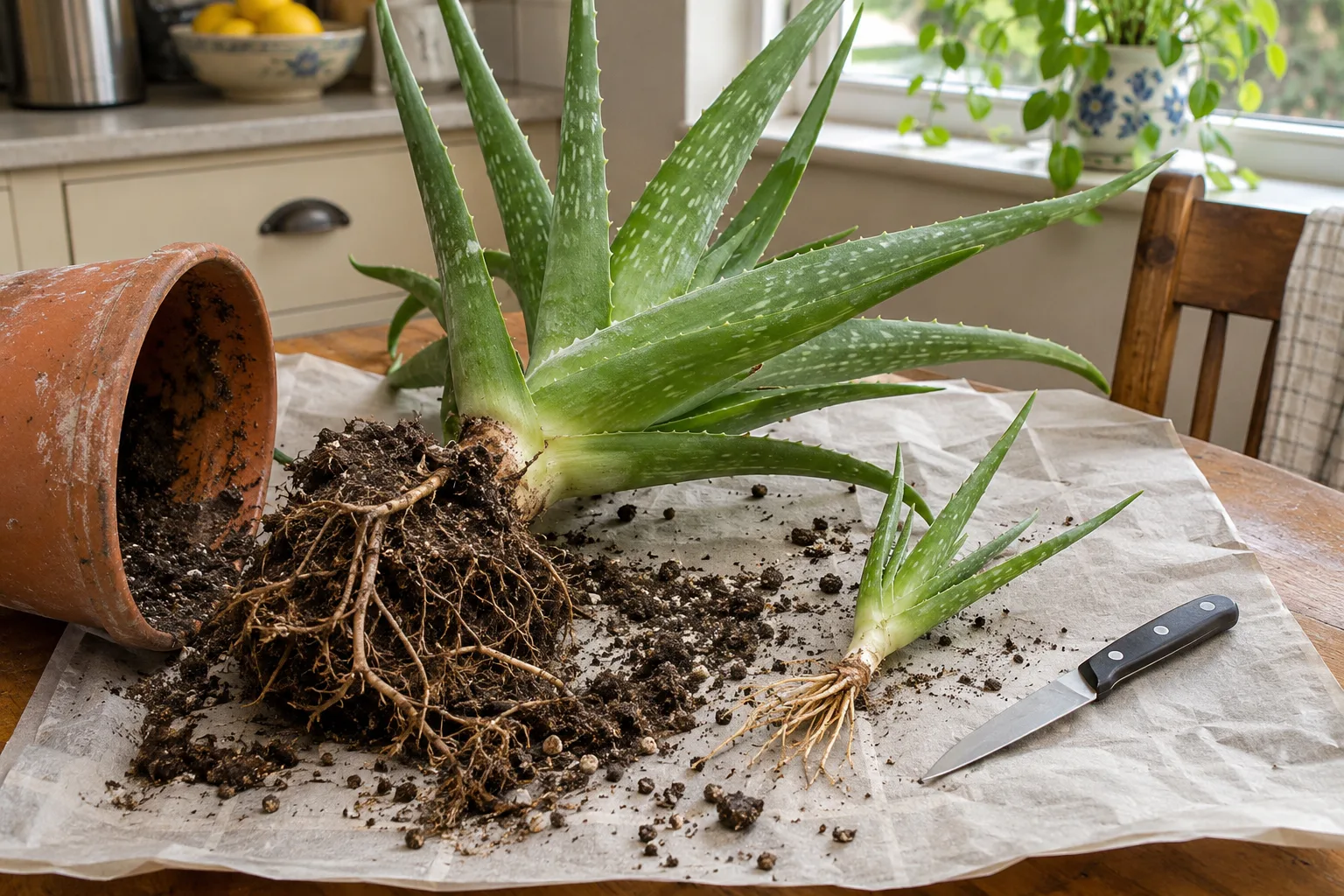
The connection is usually right at the soil line or just below it. Once the root ball is out, you can see it clearly, which is why tipping the plant out beats digging around it in the pot. Put the mother back in fresh mix at the same depth; this is also a good moment to check her roots, and our repotting guide covers what healthy and rotten roots look like.
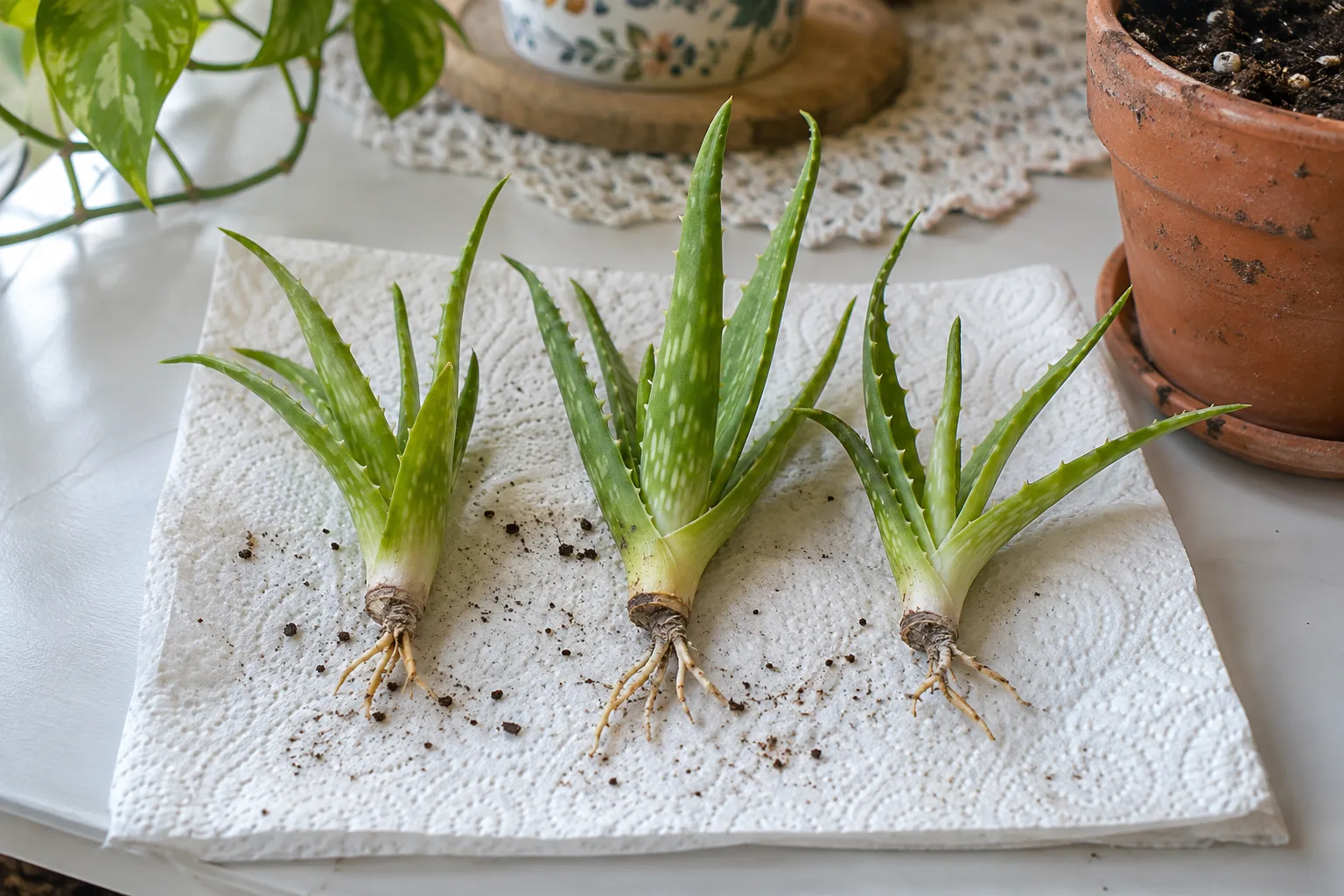
The drying step feels like a wasted few days, but it is the step that saves the most pups. A fresh, wet wound pressed into potting mix is an open door for rot. A dry, sealed one is not.
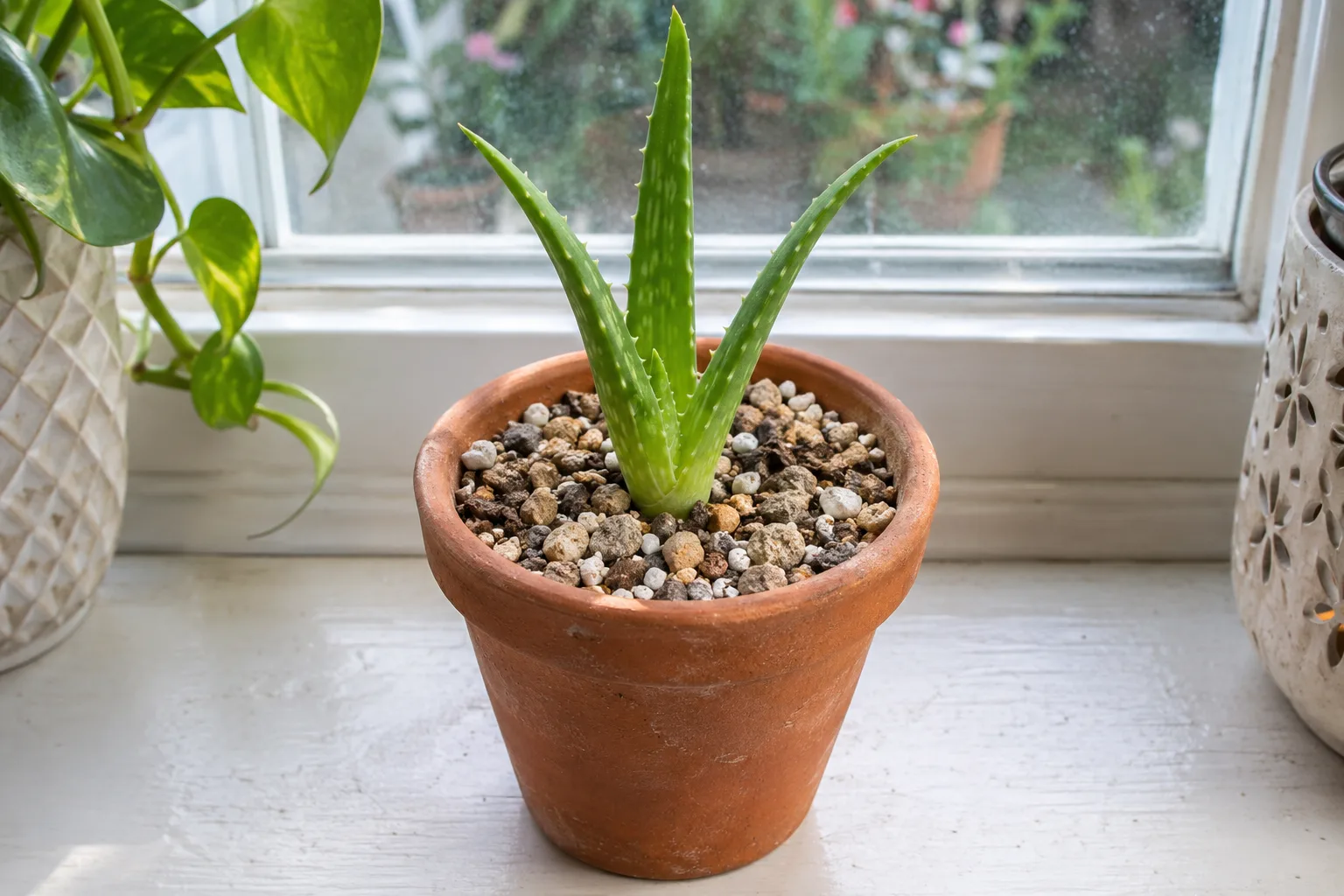
Pick a pot that is only a little wider than the pup's roots. A big pot holds more mix, and more mix stays wet longer around roots that are too small to use the water. Unglazed clay dries fastest, which suits a new pup.
Can you replant aloe vera without roots?
Yes, often. A pup that snapped off with no roots, or the top of a stretched aloe, can grow new roots if you let the base dry and seal first, then set it on dry, gritty mix. It is slower than planting a rooted pup and more likely to rot, so keep it bright, keep it dry, and be patient.
The difference is in the watering. A rooted pup can take a light drink after potting. A rootless one cannot use water yet, so it sits on barely damp or dry mix until it roots. Mist the surface lightly now and then if the mix is bone dry for weeks, but never soak it. A gentle tug that meets resistance means roots have formed.
Why a leaf cutting will not work
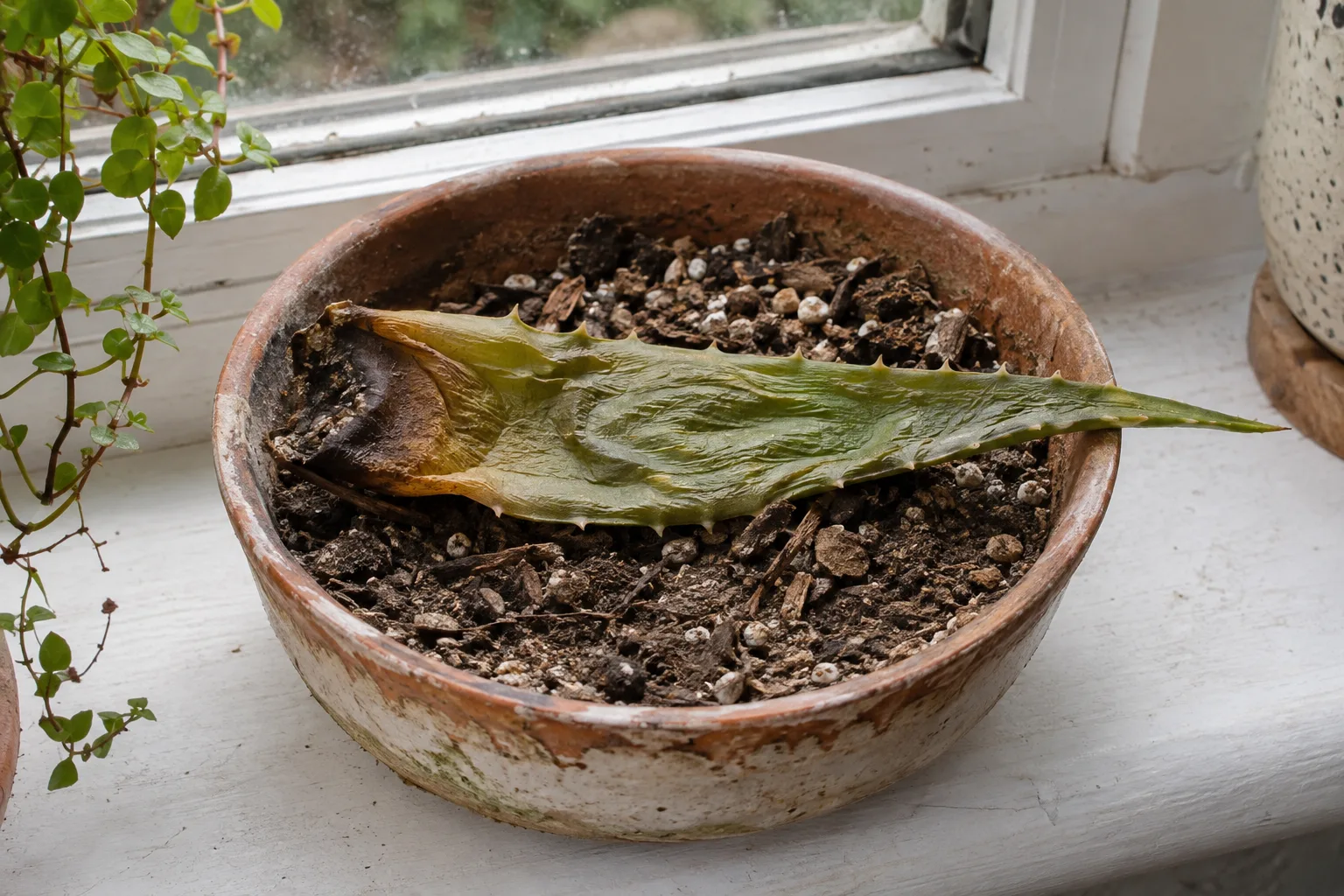
Succulents that grow from leaves, like echeveria, root from a few cells where the leaf joined the stem. Iowa State is clear that partial pieces of leaves will not root. An aloe leaf is cut, not popped off whole, so you lose those cells, and the leaf is too big and wet to survive while it waits. It slowly uses up its water, shrivels, or rots from the cut end.
If you want more aloe, use the pups. If you want to try leaf propagation, it works well on many other plants, and our guide to propagating other succulents shows which ones and how.
Should you propagate aloe in water or soil?
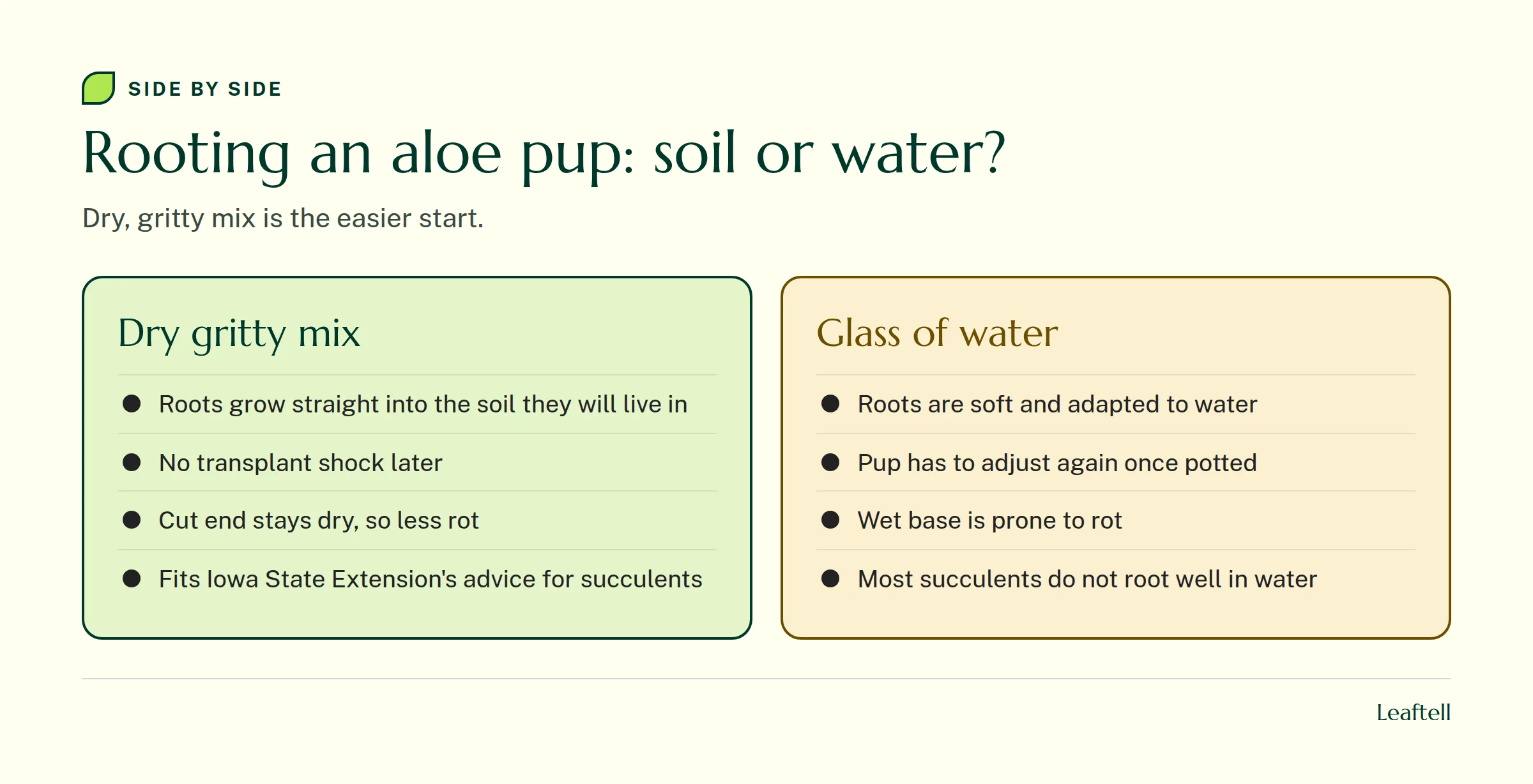
Soil. Plant pups in dry, gritty cactus mix, not a jar of water. Iowa State notes that most succulents do not root well in a glass of water, and aloe is a plant built to root into fast-draining soil, not sit in it.
Some people do get roots on an aloe pup in water, and it makes a nice windowsill picture. The problem comes after: soft roots grown in water have to adjust to soil, and the pup sulks or rots in the switch. Going straight into dry mix skips that step.
The first weeks after potting
New pups do not need much from you. The goal is to keep them bright and on the dry side while roots grow.
- Light: a bright window, but ease young pups into hot direct sun over a week or two, especially if they came from the shady base of a crowded pot.
- Water: after the first light drink, water again only when the mix is dry. Our guide on how often to water an aloe explains how to check the bottom of the pot, not just the top.
- No fertilizer: a pup has nothing to use it on yet. Wait until it is clearly growing.
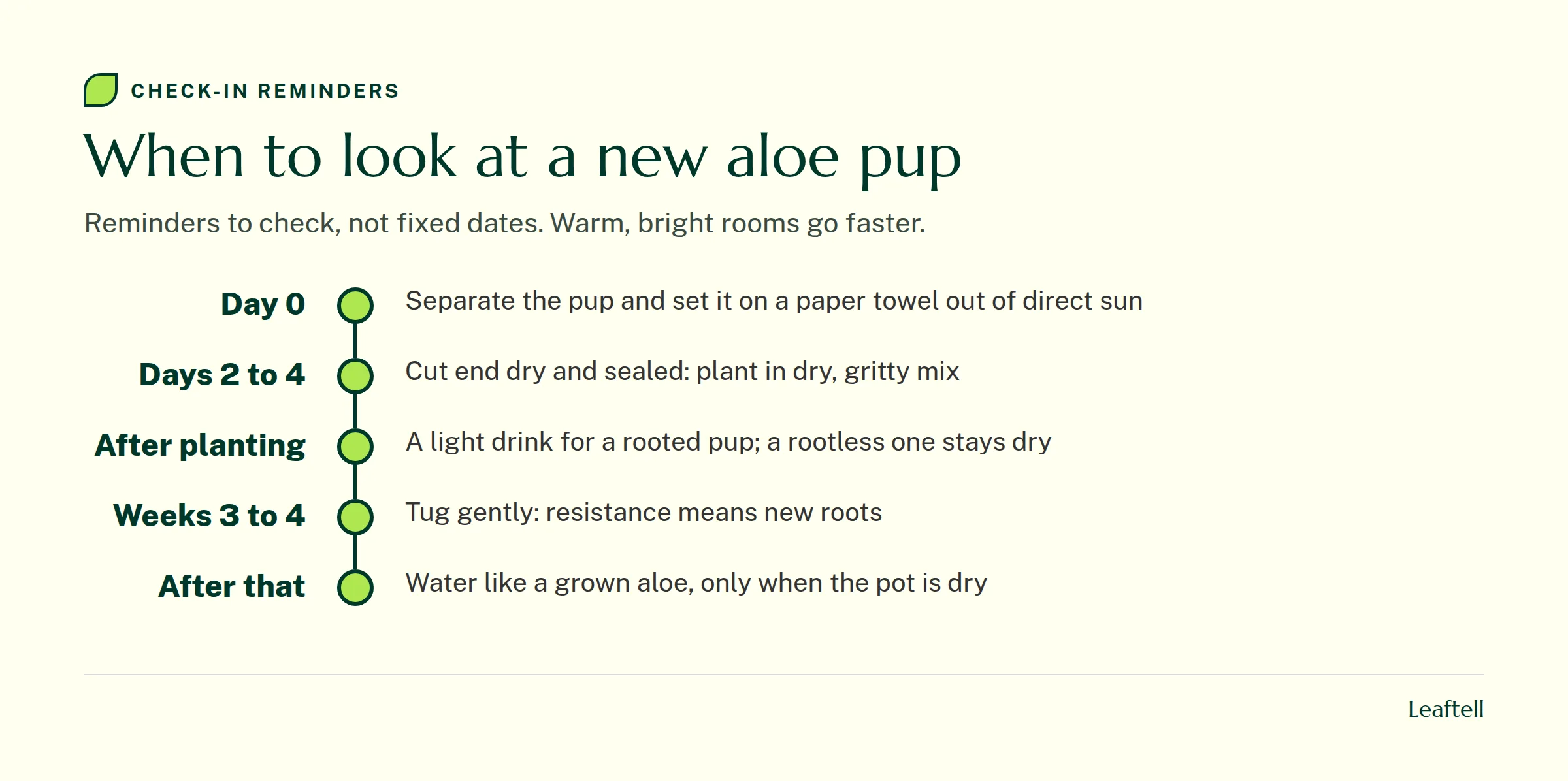
These are check-in reminders, not a schedule. A pup in a warm, bright window roots faster than one in a cool winter room. Iowa State says offsets usually establish and start growing on their own after a few weeks.
What goes wrong and what it costs
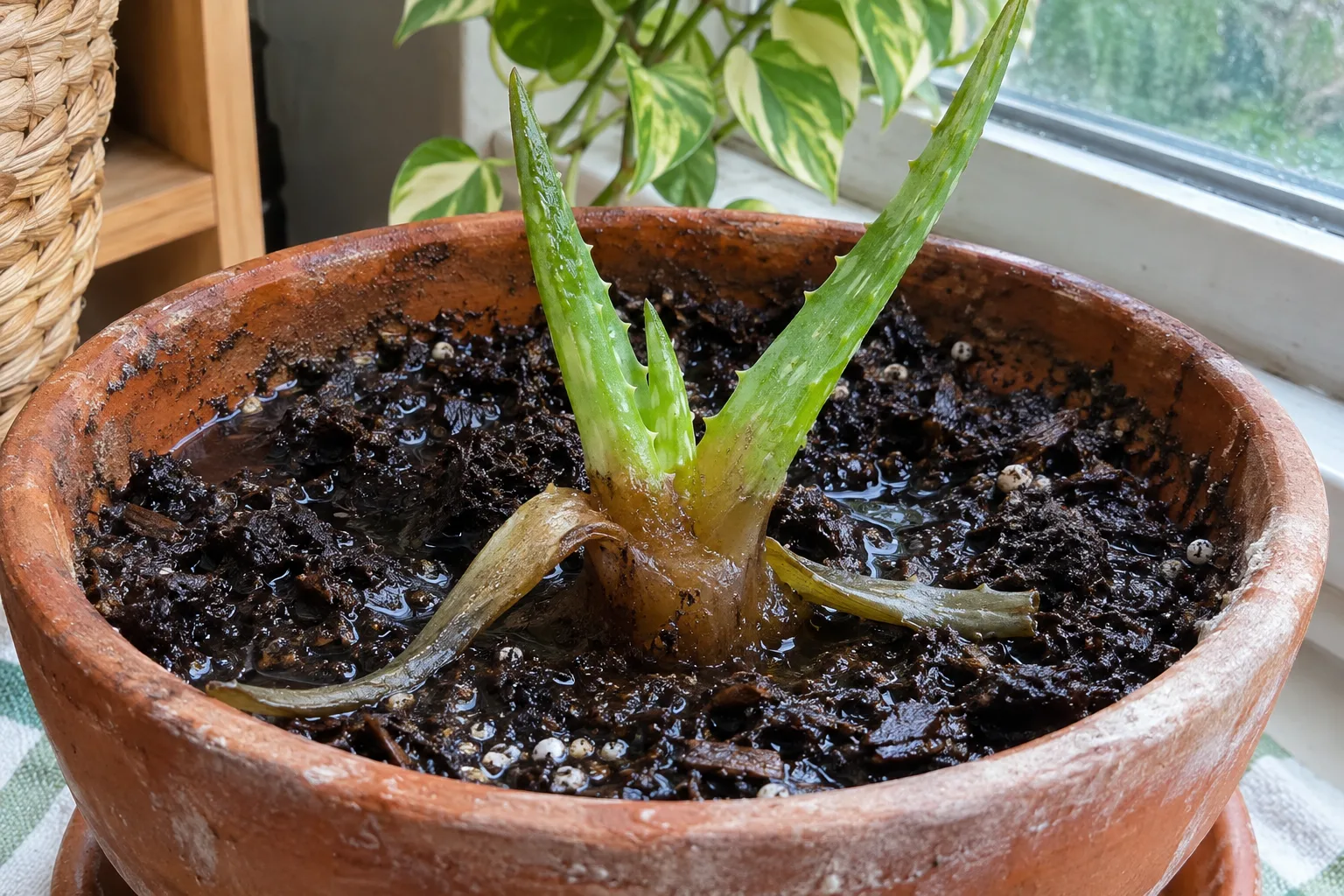
- Watering a fresh cut. The base turns soft, brown and see-through, and the pup collapses. Once rot reaches the center, the pup is lost; if only the base is soft, cut back to firm tissue and start the drying step again.
- Taking a pup too early. A tiny pup with one or two leaves and no roots dries up before it roots. Give it another season on the mother.
- A big pot of wet mix. The pup cannot use that much water, and the mix stays damp for days. Use a small pot.
- Planting too deep. Burying the base of the leaves keeps them wet and invites rot. Plant at the depth it grew.
- Leaf cuttings. Weeks of waiting for a leaf that was never going to root.
If a newly potted pup starts to lean or flop, our post on why an aloe plant droops helps you tell thirst from rot from too little light.
A note if you have pets: aloe is on the ASPCA list of plants toxic to cats and dogs, and a row of small pots on a low windowsill is easy to chew. Our post on aloe and cats covers what to do if one takes a bite.
Check your aloe in Leaftell
Propagating aloe vera is mostly patience: wait for a pup with roots, cut it free, let the cut dry, and plant it in dry, gritty mix. The pups that fail are nearly always the ones watered too soon or taken too small, and leaf cuttings fail because aloe was never going to root that way. Once your new plants are growing, they need the same simple care as the mother; setting up a new aloe walks through the first weeks.
If a new pup goes soft or stops growing and you cannot tell whether it is rot, thirst or light, check your aloe in Leaftell with a photo of the whole pot and a close-up of the pup's base. Set yourself a check-in reminder to take a fresh photo in about seven days and compare.
Check your growing conditions with the plant watering calculator.
Frequently asked questions
Not from a leaf cutting. A cut aloe leaf lacks the growing tissue a new plant needs and usually shrivels or rots. Pups are the reliable way, and a stem cutting from the top of an old, stretched aloe can root if you let it dry first.
Soil. Plant the pup in dry, gritty cactus mix in a small pot with a drainage hole. Pups can grow roots in water, but those roots struggle once moved into soil, so starting in mix is easier and rots less.
A mature, healthy aloe in bright light usually sends up new pups during the growing season, often several at a time, and keeps doing so year after year. Young plants and aloes kept in dim spots may not make any until they get more sun.
Yes. Let the base dry and seal for a few days, then set it on dry, gritty mix in a bright spot and hold off on real watering until it roots. It takes longer than a rooted pup and rots more easily, so keep it on the dry side.
Share article
About the author

Keep checking your plant
Plant care reference
Indoor plant care
Build a routine around your plant, light and potting mix.
Plant care reference
Why is my plant dying
Trace leaf and root symptoms before choosing a care change.
Plant care reference
Pothos plant care
Choose a growing spot and prune a trailing pothos for fuller growth.
Plant care reference
How to fix root rot
Inspect root firmness and drainage, then decide whether to repot.