Indoor Plant Care: 3 Checks That Beat a Watering Schedule
Filip Leszczyński 16 October 2026 13 min read
In this article
Indoor plant care comes down to three checks: light where the leaves sit, moisture inside the root ball, and a close look at new growth. Do those on a regular visit, then water, feed or prune only the pots that actually need it, which is often none of them.
That is the whole idea of this guide. A monstera, a pothos and a snake plant on the same shelf can need three different decisions on the same afternoon, so a shared watering day is the first habit to drop. Below you get the routine that works for most houseplants, the species care posts that refine it, and the mistakes that quietly cost the most leaves.
A photo of your plant shows the leaves. It cannot show how heavy the pot is, whether the cover pot is holding water, or what you changed last week. Those answers come from you.
A plant care guide that starts with looking, not watering
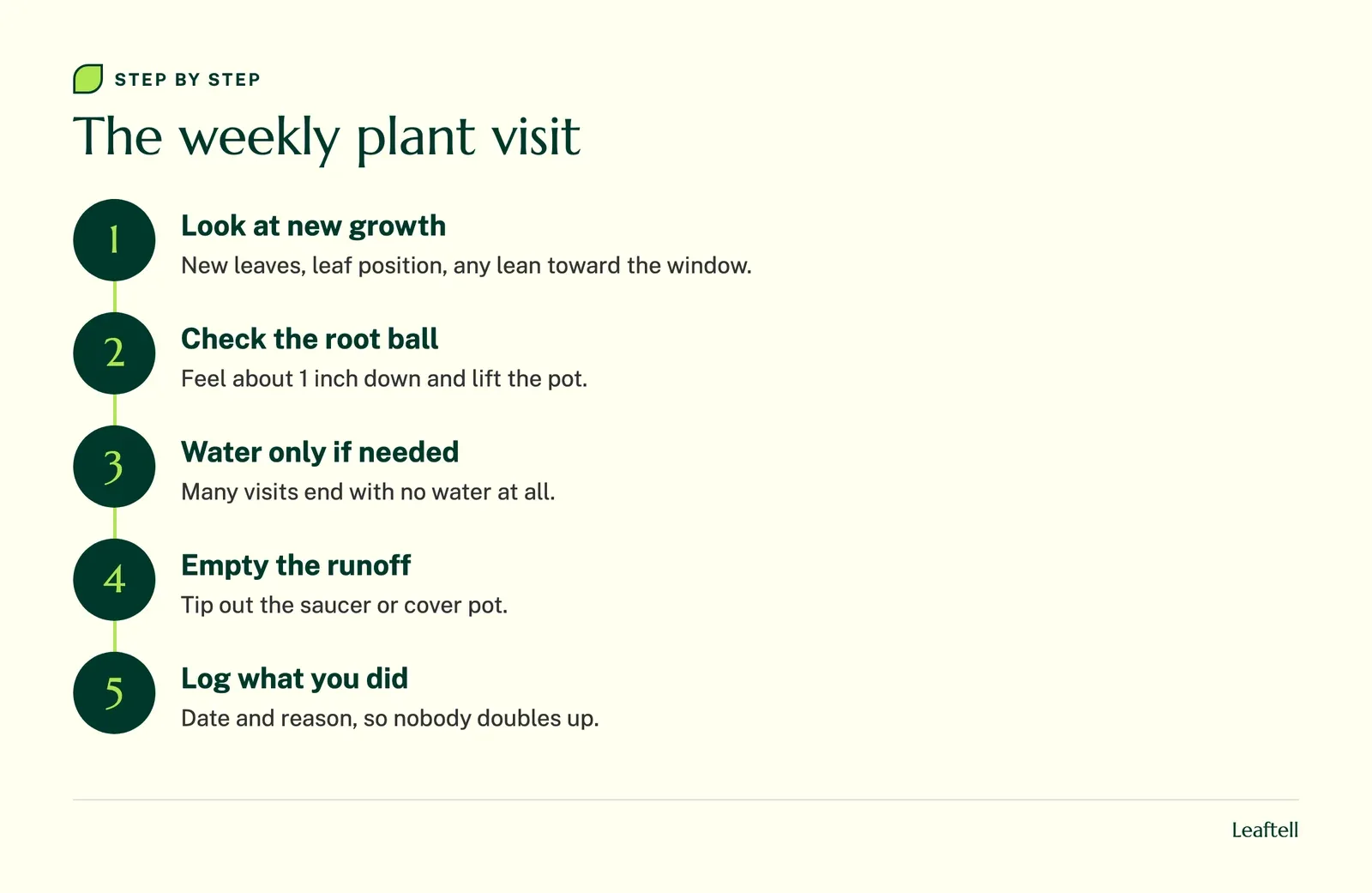
A good plant care guide starts with a visit, not a watering can. Pick a regular time, look at the collection, and let the visit end with no action at all when the conditions already fit the plant. That counts as care.
On each visit, check four things: new leaves, leaf position, pot weight and the surface of the mix. Turn over one representative leaf and look at stem joints, growing tips and the pot rim. A small problem is far easier to describe when you catch it early.
Keep a short log of what you actually did, not what you meant to do. Write the date when you watered, fed, pruned or repotted, plus one line on why. Anyone else in the household can then see what happened without guessing, and you stop double-feeding the same pot.
Make every plant reachable enough to inspect. A basket above eye level or a big pot wedged behind the sofa hides drainage problems and pests. Leave room to lift the inner pot out of its cover and to reach a leaf underside.
The University of Maryland Extension's guide to diagnosing indoor plant problems works the same way: observe the plant and its conditions first, then narrow down causes. Treat every observation as information about the growing setup, not a grade on you as a plant owner.
Which houseplant care guide do you need for your species?
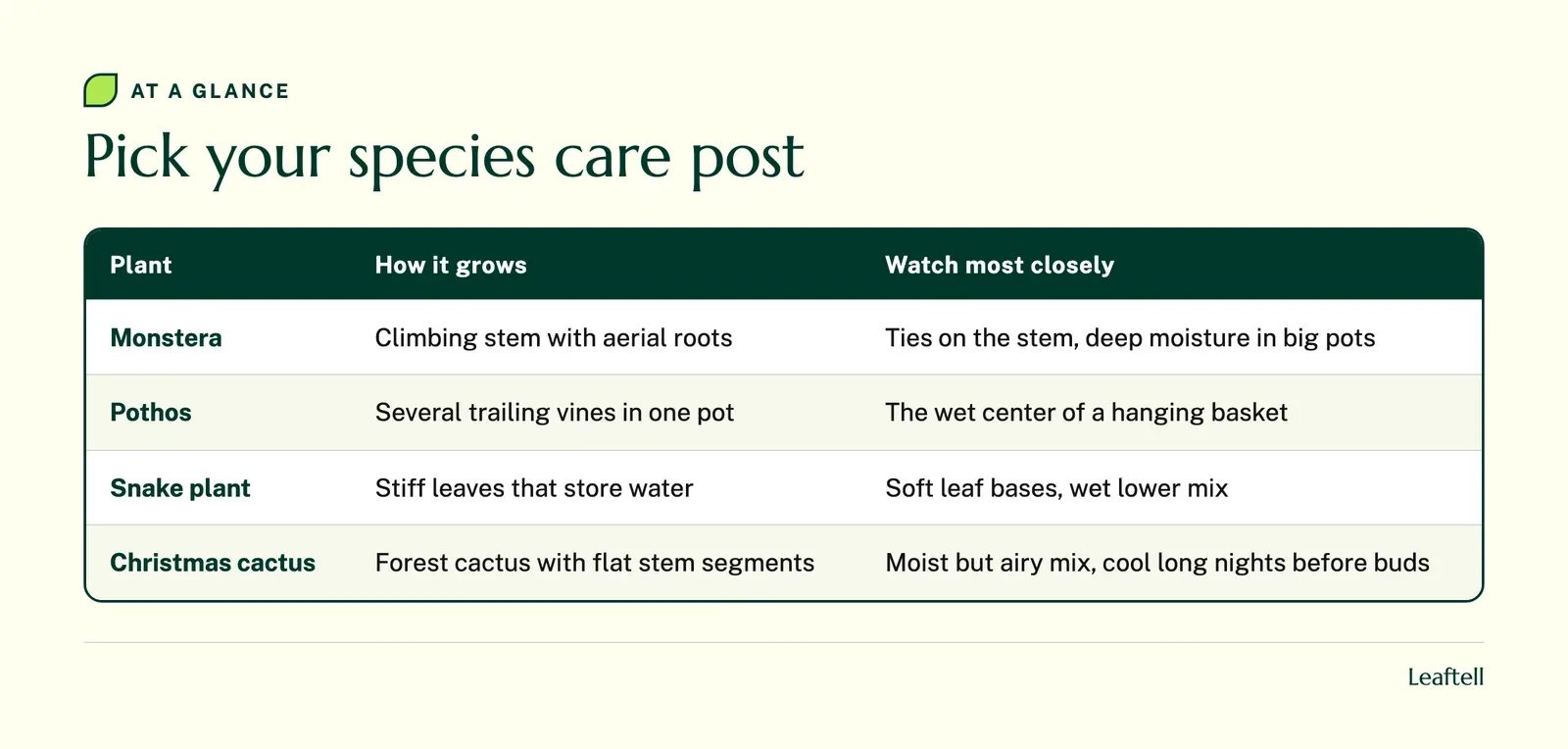
Start from how the plant grows: a climbing stem, a trailing vine or stiff water-storing leaves each change what you check. Pick the species post below, and use this page for the routine they all share.
A monstera climbs with a main stem that puts out leaves and aerial roots, so support and deep moisture in a large pot matter most. The monstera plant care guide covers ties, poles and big-container watering. A pothos is usually several rooted cuttings in one pot, and the center of a hanging basket can stay wet while the surface looks dry; pothos care, vine by vine shows how to read each stem. A snake plant stores water in its upright leaves, so it wants substantial drying and firm leaf bases; snake plant care explains why a heavy wet pot worries more than a missed reminder. And a Christmas cactus is a forest cactus, not a desert one; Christmas cactus care covers its cool nights and long darkness before flowering.
| What you see | What to check first | What it means for the routine |
|---|---|---|
| Monstera with a climbing stem | Ties on the stem, moisture deep in the pot | Support the stem, leave leaf stalks free |
| Pothos with several trailing vines | Each vine from base to tip, the basket center | Water by the center, not the surface |
| Snake plant with firm upright leaves | Leaf bases and the lower mix in a tall pot | Let it dry well; a soft base needs a root check |
| A weekly collection visit | Light, moisture, new growth, pests | Water only the pots that need it |
| Before someone else waters for you | Actual watering dates, cover pots | Show them how to empty each cover pot |
Observation checklist for indoor plant care. These are things to look at on each visit, not watering or treatment intervals.
Not sure what the plant is? Photograph the whole plant, the stems and the leaf arrangement before you look for identification help. Common names can point to several different plants. Until you know, skip strong fertilizer, experimental pruning and any chemical treatment. Knowing the species also lets you check whether it is toxic to pets.
Houseplant care guide for light: put the leaves in useful light
Judge light from the leaf's position, not the room's. A leaf a few feet back from the window can get far less daylight than the bright room suggests.
The University of Georgia Extension's indoor plant guide gives a useful scale. It classes low-light areas as 25-75 foot-candles and medium-light areas as 75-200 foot-candles over 8 hours. High light is above 200 foot-candles without direct sun. Most rooms drop fast as you move away from the glass.
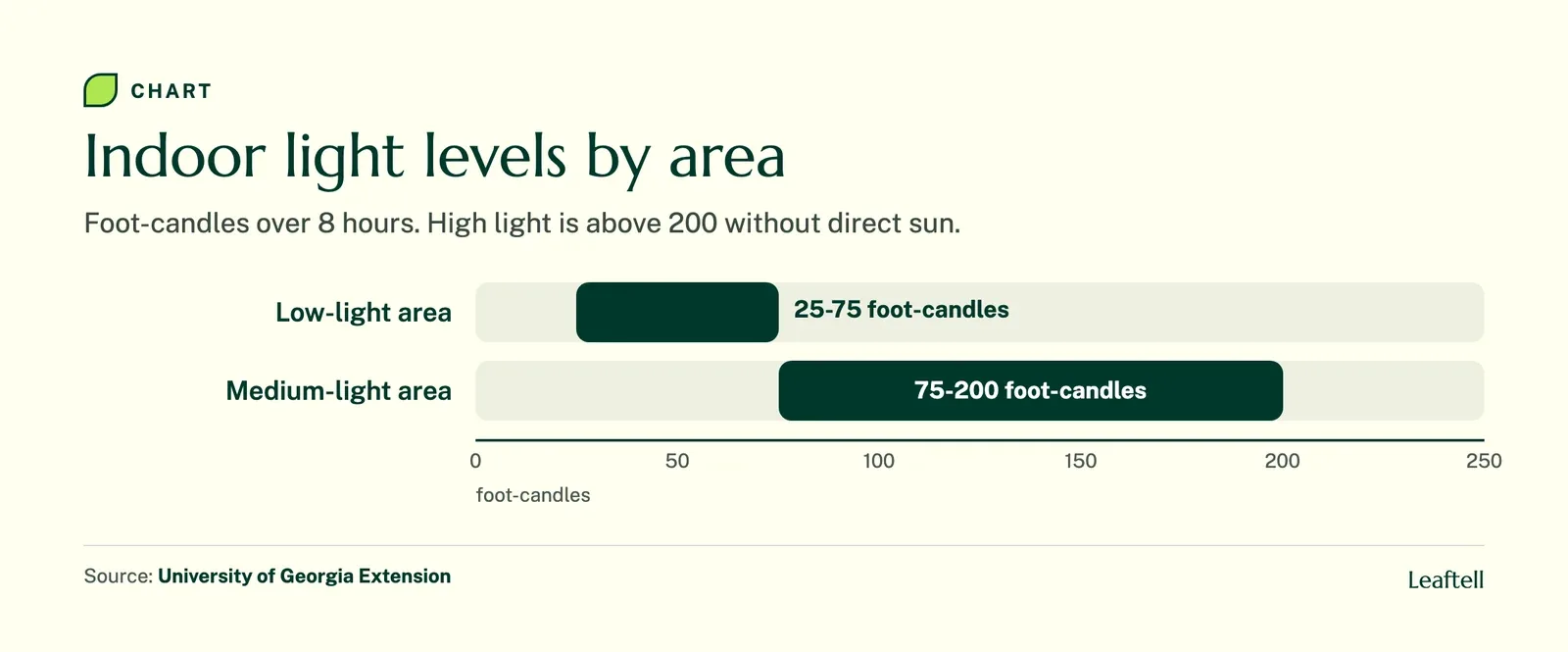
Curtains, a neighboring building, an overhang and the season all change exposure. Check the actual spot during the day and watch whether the newest growth leans or stretches toward a brighter opening. The guide on reading your plant's light walks through the full placement check.
When a plant needs more light, move it gradually. UGA suggests 3-4 weeks in a bright, sheltered spot when acclimating newly bought indoor plants. Keep leaves off cold glass and out of direct heater airflow; a bright spot with repeated temperature swings can still be a bad spot.
Then leave it there. Record the new position and give it time. Constant reshuffling every time one old leaf changes color tells you nothing, because you never see a response to one setup.
Plant care guide for watering: water the root ball and empty the runoff
Check moisture below the surface before every drink, then water the whole root ball evenly and let the excess drain away. UGA's practical check is to feel about 1 inch below the surface: if that layer is still moist, do not add water.
Learn the weight of each manageable pot when freshly watered and when ready for water. The center and edge can dry at different rates, especially after repotting or in a dense basket. The guide to checking wet or dry soil before watering shows how to combine pot weight with touch.
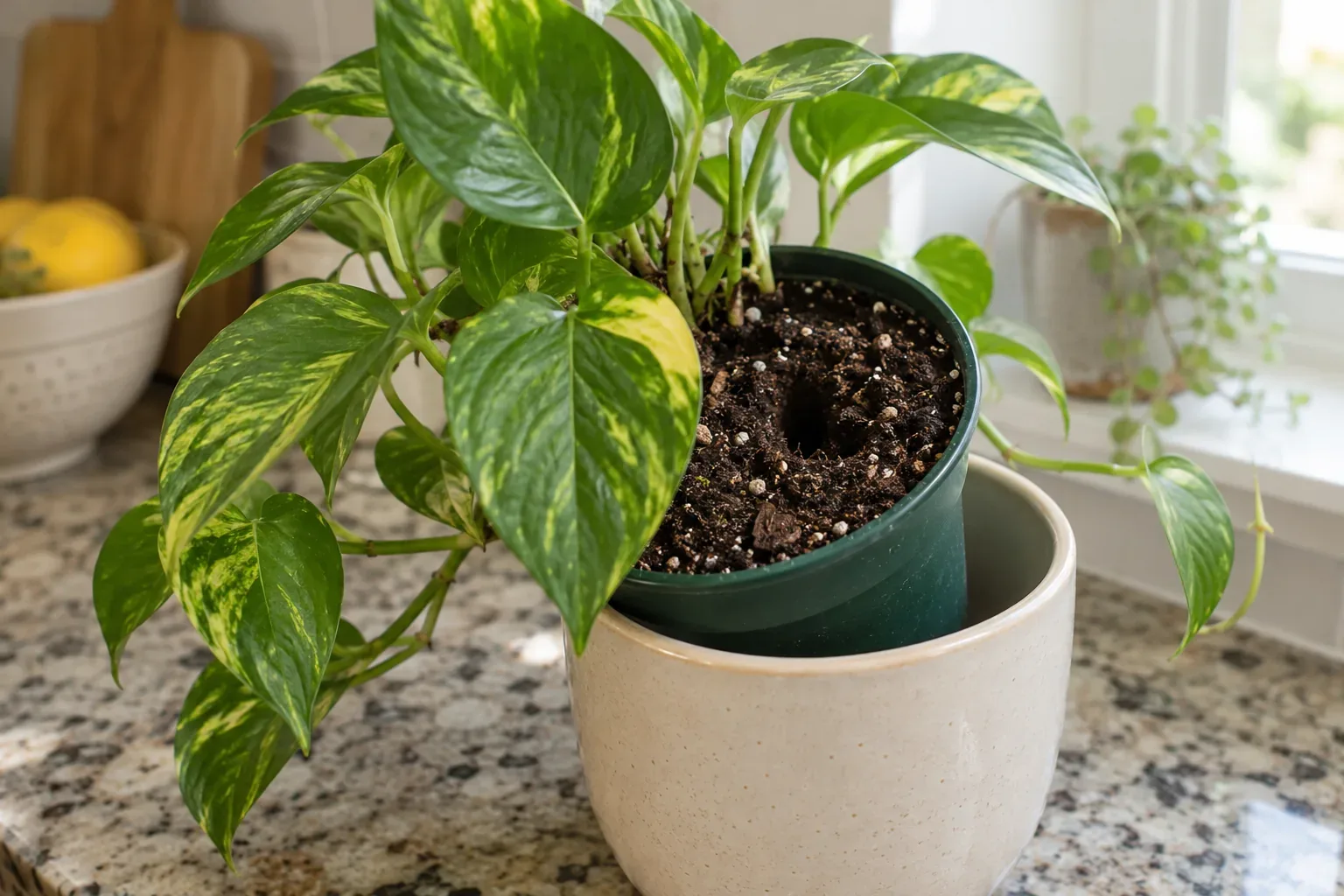
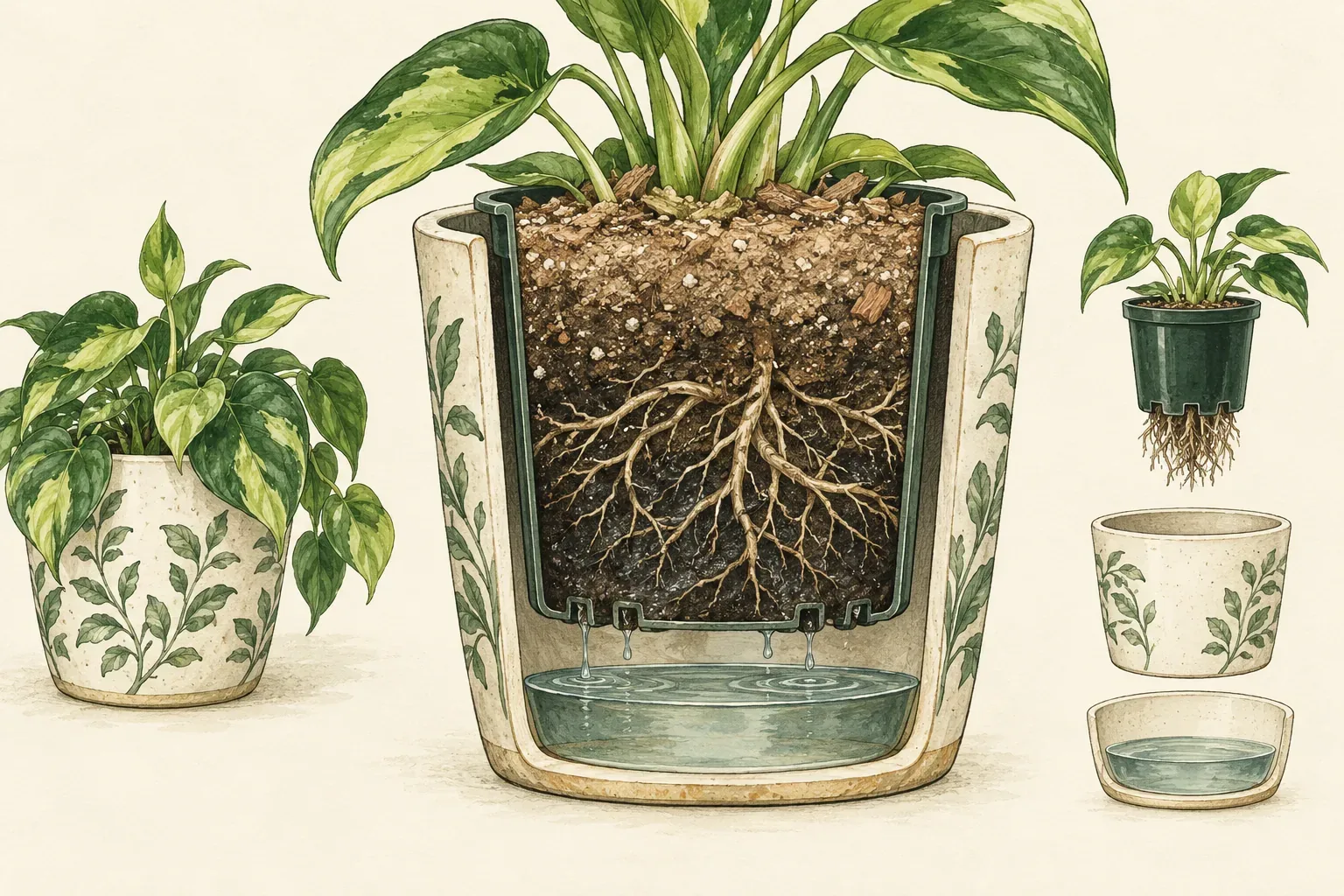
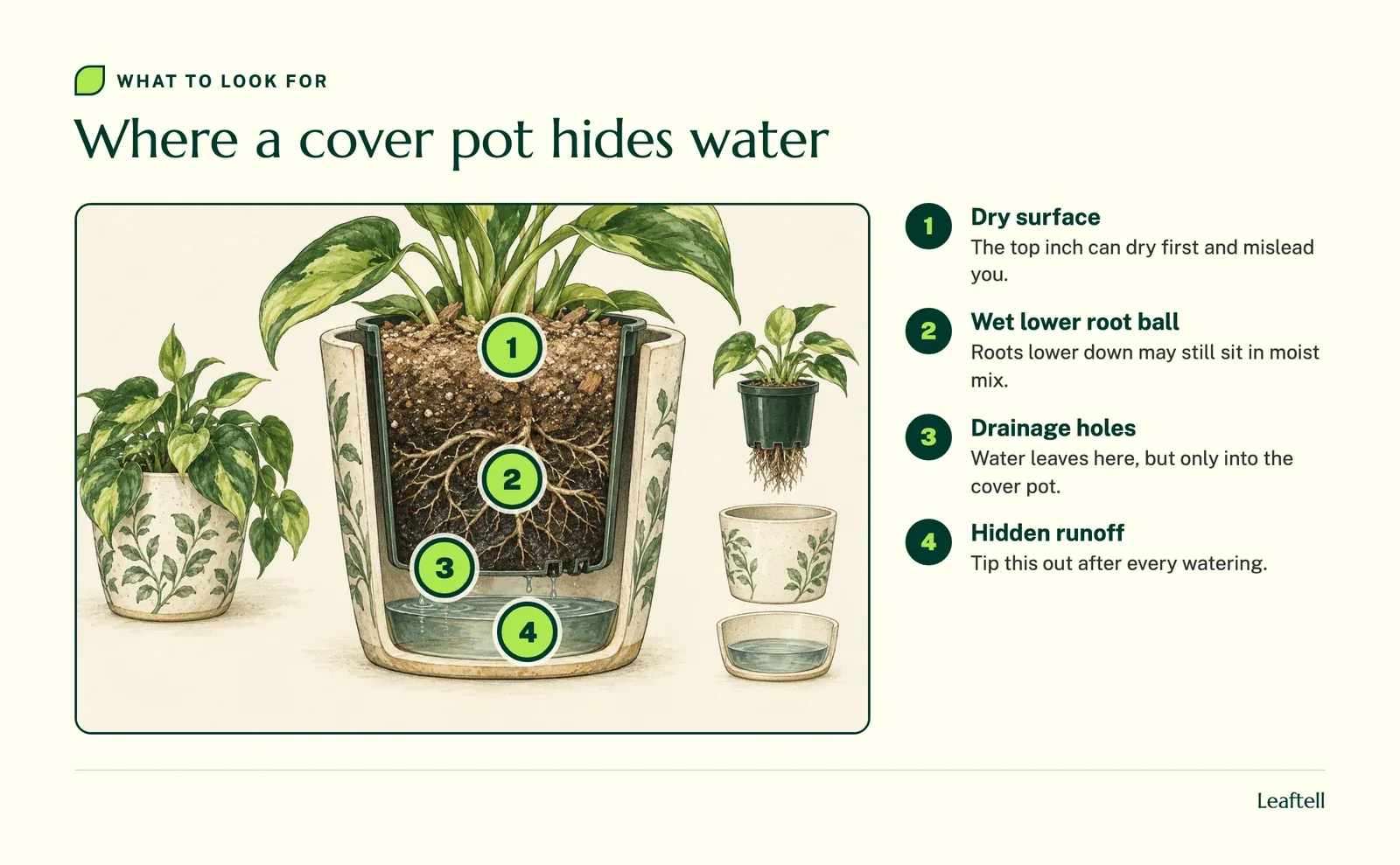
The hidden problem is usually the cover pot. A decorative outer pot can hold a pool of water below the visible container, so the top looks dry while the roots sit wet. Drainage is a property of the whole setup, not just a hole you cannot see.
How to water a houseplant without guessing
- Check before you pour
Feel about 1 inch below the surface and lift the pot. If the mix is still moist or the pot is heavy, stop here and check again in a few days.
- Water the whole root ball
Pour slowly and evenly until water leaves the drainage holes. If the mix has shrunk from the pot sides, add water in several passes so the center actually gets wet.
- Let it drain completely
Leave the pot in a sink or tray until dripping stops, rather than putting it straight back into its cover.
- Empty the cover pot or saucer
Tip out any retained runoff before returning the plant to its display spot.
- Write it down
Note the date and why you watered. Next time, compare how fast that pot dried.
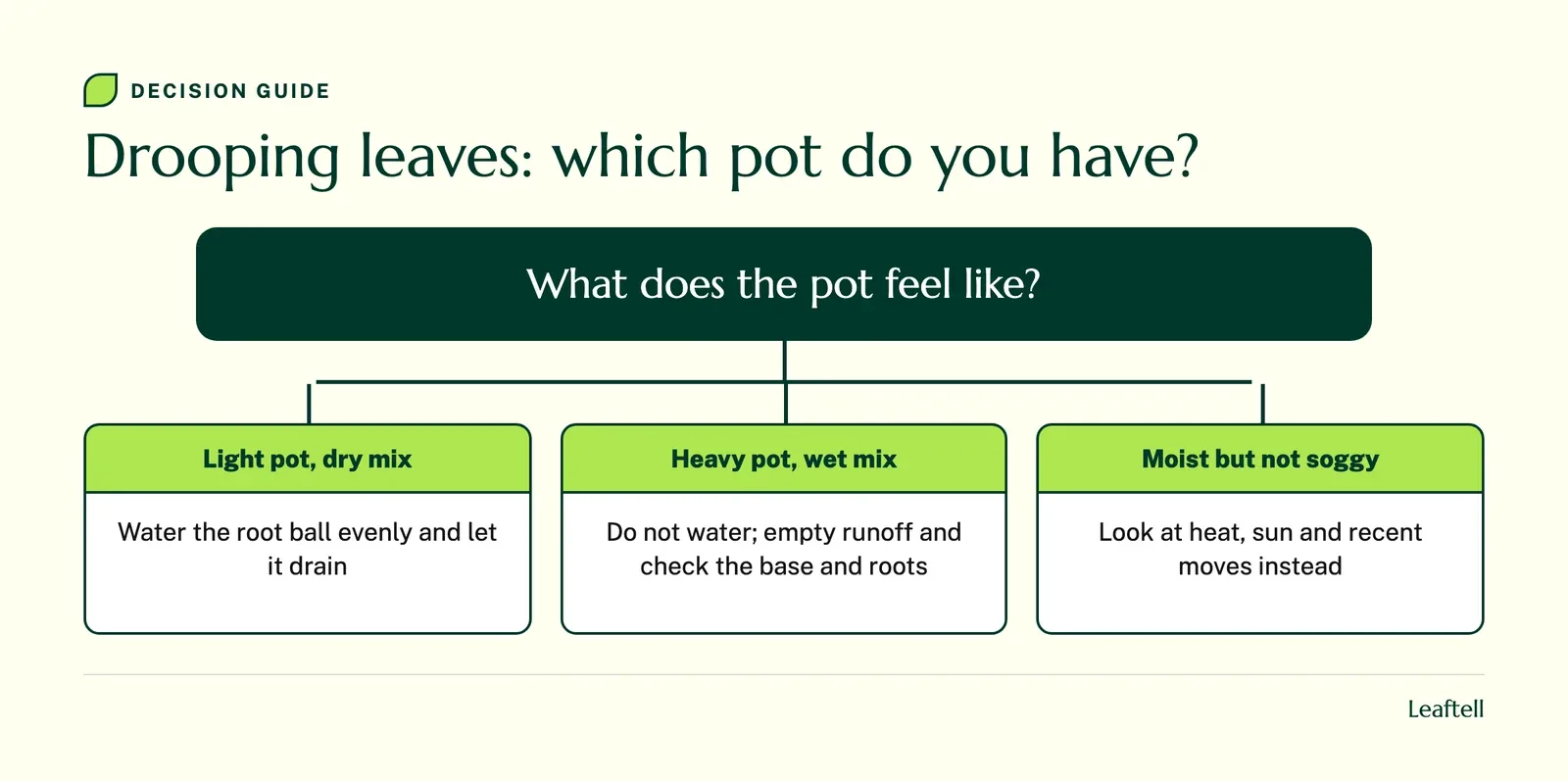
A drooping plant is the classic trap. Wilting can happen in a bone dry pot and in a waterlogged one, which is why the check comes before the drink. Look at the root zone, not the leaves, to tell the two apart. Consistency here means using the same check every time, not the same volume or day for every pot all year.
Are coffee grounds good for indoor plants?
No. Fresh coffee grounds are not a balanced houseplant fertilizer, and spreading them on top of the pot can make it harder to read surface moisture. Skip them as a fix for slow growth or yellow leaves.
Before feeding anything, ask whether the plant is actively growing in suitable light and whether the mix already holds nutrients. UGA notes that a healthy, newly bought plant often has enough fertilizer for 2-3 months. When feeding is warranted, UGA's general starting point is 1/4 of the label rate, monthly, during active growth. Log the product and date so two people do not feed the same pot.
Repot when the roots and container call for it, not because a bigger decorative pot looks nicer. Prepare a draining pot and suitable mix first, support the plant while you handle it, and do not bury the base deeper to make it stand up. If the roots are soft or falling apart, that is not routine repotting; go to fixing root rot instead.
Keep fertilizer, cuttings and used mix away from children and pets. Monstera, pothos and snake plant are all on the ASPCA toxic plant list for cats and dogs. If a product is ever needed for a confirmed problem, use the generic class labeled for that plant and setting, follow the label, and never mix products. Plant toxicity and product safety are separate questions.
Indoor plant care mistakes that cost you leaves
Most indoor plant losses come from routines, not neglect. These are the ones that do the most damage.
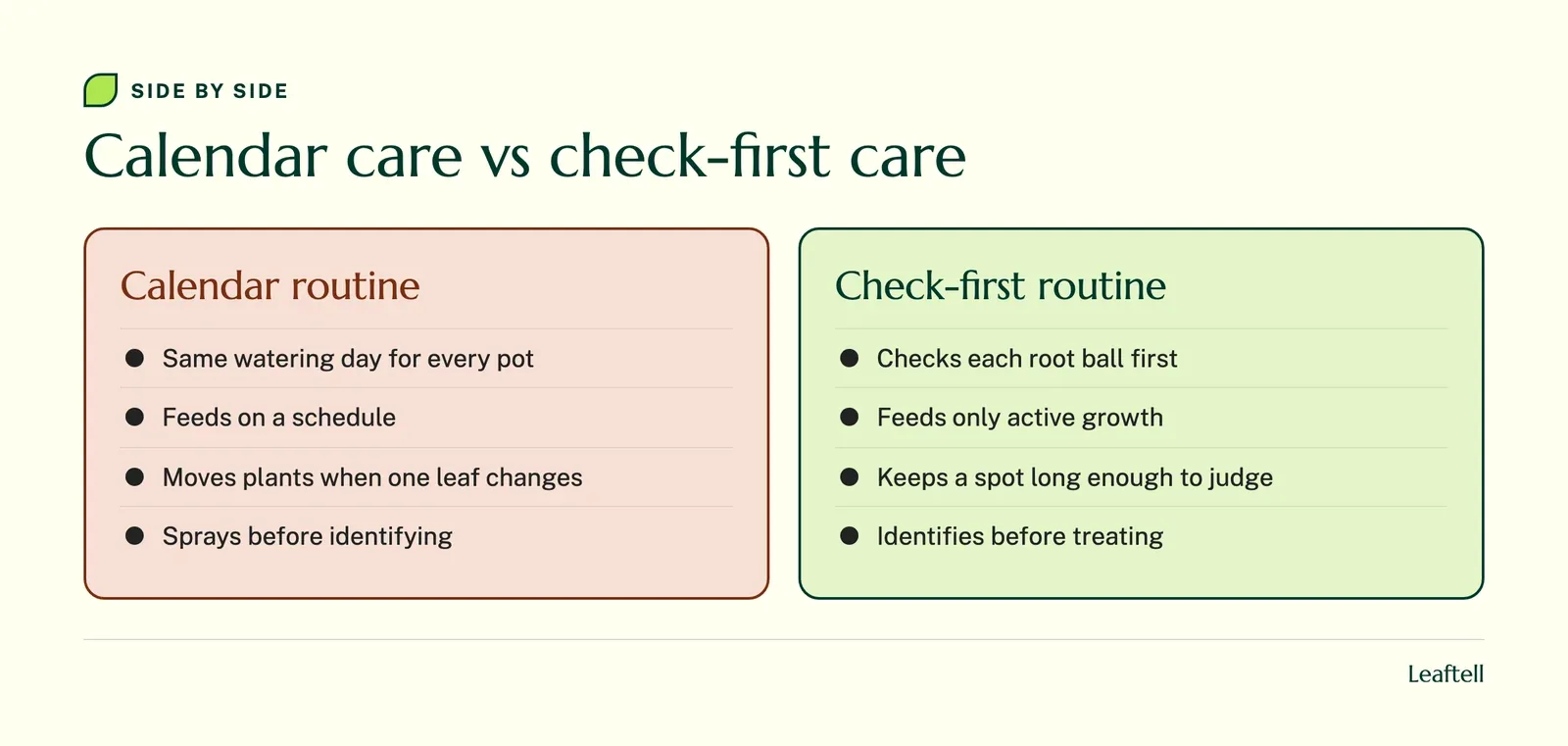
- One watering day for every pot. Small leafy plants in bright warmth dry far faster than a big snake plant in a dim corner. The calendar overwaters the slow ones. Cost: soft bases and root damage.
- Ignoring the cover pot. Runoff pools out of sight. Cost: roots sitting in water while the surface looks dry.
- Feeding a struggling plant. Fertilizer cannot fix wet roots or poor light. Cost: more stress on roots that are already in trouble.
- Moving the plant every week. You never see a response to one setup. Cost: months of guessing.
- Treating before identifying. Spraying an unknown spot or bug wipes out the evidence. Cost: a second problem on top of the first.
Indoor plant care guide PDF: save your observation checklist
For an indoor plant care guide PDF, open your browser's print menu and choose Save as PDF. That keeps this page and its checklist for offline reference.
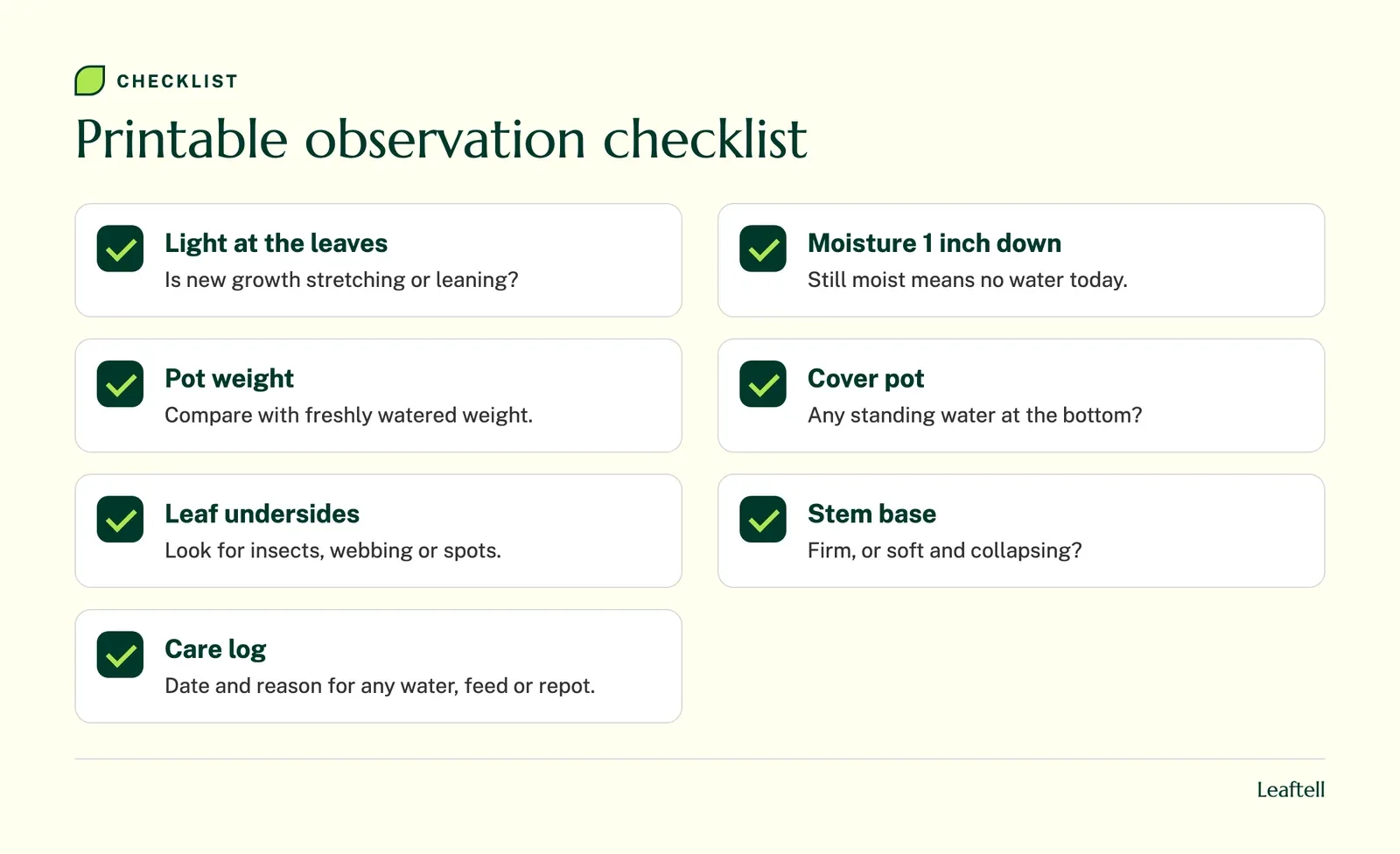
Plan one observation session a week and adjust it to each plant, without turning it into weekly watering. Check new arrivals and recovering plants more closely. Inspect new plants before they join the collection, and keep a hand lens near your watering supplies. Photograph the same growing point now and then so slow improvement becomes visible.
When something looks wrong, switch from routine care to investigation. The plant problems guide groups symptom checks by what you see.
Get local help when the problem goes beyond ordinary care: rapid spread, a collapsing base, several plants declining at once, or continued decline after you corrected the conditions you found. A local extension service or experienced nursery can work with your photos and care log. For a suspected pet or child exposure, call a veterinarian or poison service right away.
The routine worth keeping
Visit every plant on a regular schedule, check the root ball before any water, put leaves where the light actually is, and write down what you do. Use the species posts for the details, and feed only plants that are growing. Check your plant in Leaftell when a visit turns up something you cannot explain.
Sources
Check your growing conditions with the plant watering calculator.
Frequently asked questions
There is no single frequency. Check about 1 inch below the surface and the weight of the pot, and water only when the mix has dried enough for that species. Pot size, light, season and mix all change the answer.
There is no safe universal interval. A small leafy plant in bright warmth can dry out much faster than a large succulent in cooler light. Check each pot before you leave and arrange care for the fast driers.
Minutes do not tell you whether the root ball is evenly moist. Water until it drains, check that the center got wet, and empty the runoff instead of timing every pot under the tap.
No. Fresh grounds are not a balanced fertilizer and they make the soil surface harder to read. Use a houseplant fertilizer at the label rate or less, and only when the plant is actively growing.
You can trim dead tips for looks with clean scissors, leaving a thin brown edge so you do not cut into healthy tissue. Find what caused the browning first, or the new tips will brown too.
It depends on the species, temperature and how gradually the plant gets used to outdoor light. Start in a sheltered spot and bring tender plants inside before nights get too cold for them.
No. Snake plants tolerate low light, while most foliage plants grow more compactly in medium to bright indirect light. Match the spot to the species and watch whether new growth stretches toward the window.
Look up the exact species on the ASPCA toxic plant list. Monstera, pothos and snake plant are all listed as toxic to cats and dogs, so keep them and their fallen leaves out of reach.
Share article
About the author

Keep checking your plant
Plant care reference
Indoor plant care
Build a routine around your plant, light and potting mix.
Plant care reference
Why is my plant dying
Trace leaf and root symptoms before choosing a care change.
Plant care reference
Pothos plant care
Choose a growing spot and prune a trailing pothos for fuller growth.
Plant care reference
How to fix root rot
Inspect root firmness and drainage, then decide whether to repot.