Snake Plant Care: Light, Water and the Rot You Can Avoid
Filip Leszczyński 16 October 2026 12 min read
In this article
Snake plant care comes down to two rules: let the mix dry out well between waterings, and give it real light even though it tolerates low light. Get those right and the plant asks for very little else.
The leaves store water, so a snake plant almost never suffers from a missed watering. It suffers from a pot that stays wet. A heavy, damp pot deserves more of your attention than any calendar reminder.
What you can't see in a photo is the bottom half of a tall pot. That is where most snake plant trouble starts, so check it before you touch a soft or leaning leaf.
Snake plant light requirements: low light is tolerated, not ideal
A snake plant survives in low light, but it does not grow equally well everywhere. Put it where daylight reaches the whole clump, then watch whether new leaves come up strong and upright.
Here is the part people miss: a dim corner also slows drying. Move a snake plant somewhere darker and keep the same watering routine, and you have quietly made root rot more likely.
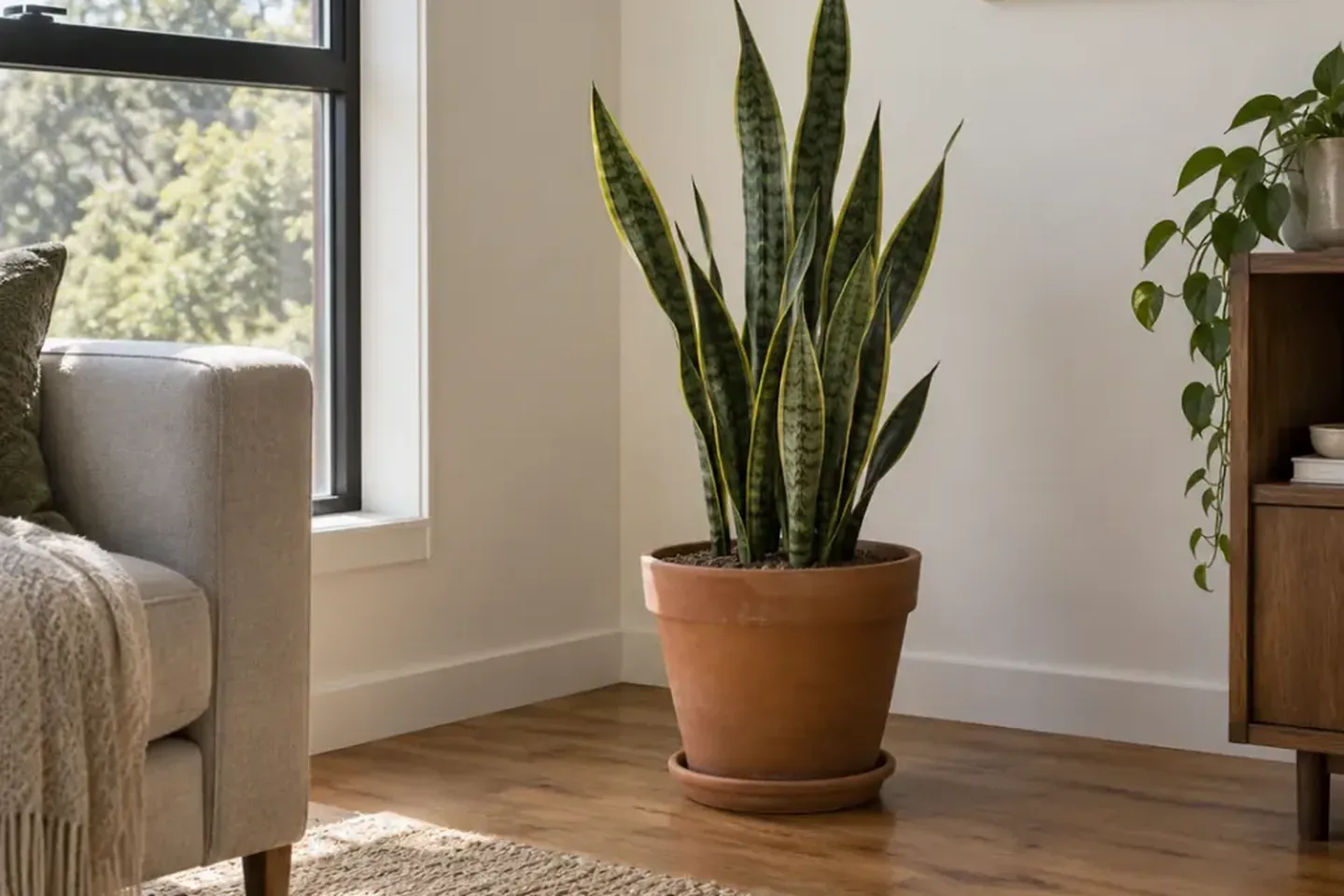
NC State lists snake plant for partial sun of 2-6 hours and notes it also tolerates very low light (NC State Extension). The University of Georgia counts 25-75 foot-candles over an 8-hour day as low indoor light and 75-200 as medium. Our guide to reading your plants' light explains why a few feet from the window changes everything.

Check the window side for pale, dry patches, and distinguish damage from normal cultivar traits. NC State describes 'Laurentii' with yellow edges, 'Moonshine' with silvery-gray leaves and 'Hahnii' as a short, funnel-shaped rosette. A pale leaf or compact clump is not automatically a light or watering problem. Compare the new growth with your cultivar and look for a change in texture or pattern.
If narrow new leaves stretch or lean toward the window, compare what causes leggy plants while keeping your variety's natural shape in mind. Keep the pot out of cold drafts and off chilly glass; NC State puts its cool tolerance around 50°F.
Do snake plants need full sun? No, but they can adjust to it
No. Full sun is not a requirement for an indoor snake plant. It needs usable light, and if you want to give it stronger direct sun, increase exposure gradually.
Suddenly moving an indoor plant into a hot, exposed window risks scorched leaves. UGA suggests 3-4 weeks in a bright, sheltered spot when a plant is adjusting to new conditions, and the same slow approach works when you move a snake plant toward more sun. Mark which side faced the window before you move it, and judge the next new leaf. Mature leaves keep the shape they already have.
How often to water snake plant? Only when the mix is dry
Water a snake plant after the mix has dried, checking below the surface. NC State gives a one- to two-month winter interval as a reference for slow-growing conditions, not a rule for every home. Light, warmth, substrate and pot size determine how quickly your plant dries.
Penn State Extension names overwatering-related root rot as a common snake plant problem and recommends watering only when the medium is dry. So the real skill is checking.
A dry surface is not enough in a tall pot, where the lower mix can still be wet. UGA's general houseplant check reaches about 1 inch down; for a water-storing plant like this, treat that as a starting point and check deeper near the edge. A wooden stick pushed in and pulled out is another clue. No single meter reading replaces knowing how heavy your pot feels when it is truly dry.
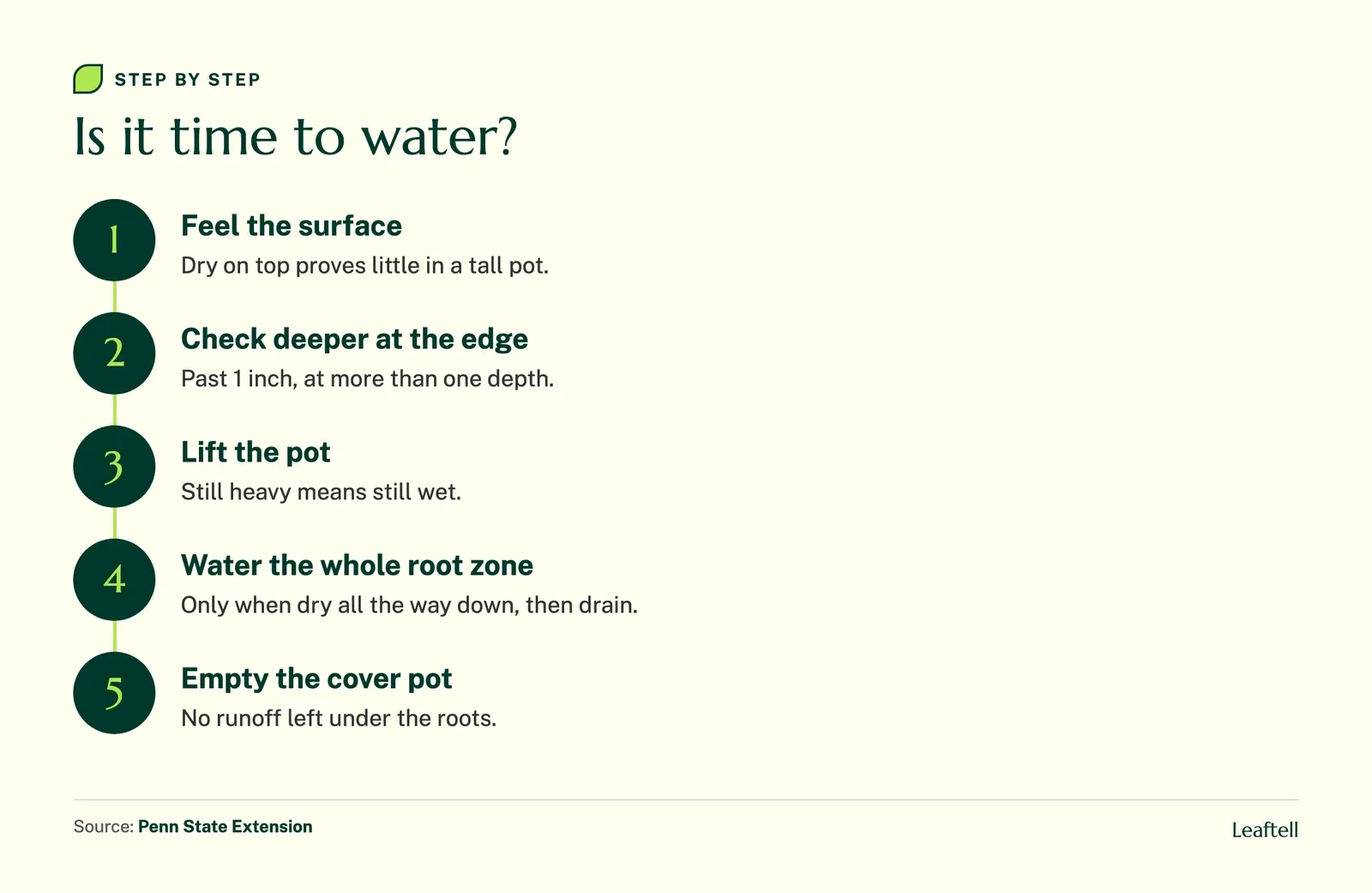
How to water a snake plant
- Check deep, not just the top
Feel the surface, then push a finger or wooden stick down near the edge at more than one depth.
- Lift the pot
A tall pot that still feels heavy is still holding water. Wait.
- Water the whole root zone
When it is dry, water evenly around the pot, not just into the center of the leaves, until it drains.
- Empty the saucer and cover pot
Pour away the runoff once the dripping stops.
- Write it down
Note the date and schedule a moisture check in about seven days, even if no water is needed then.
Avoid pouring a little water into the middle of the leaf cluster again and again. It feels like care but leaves the wider root ball unevenly wet. Keep the base clear of trapped leaves and debris.
Winter, lower light and a recently upsized pot all stretch the time between waterings. Our guide to checking whether soil is wet or dry covers the combined check. If the pot stays heavy or leaves go soft, compare overwatered plant symptoms before adding more.
Snake plant root rot: soft, mushy leaves at the base
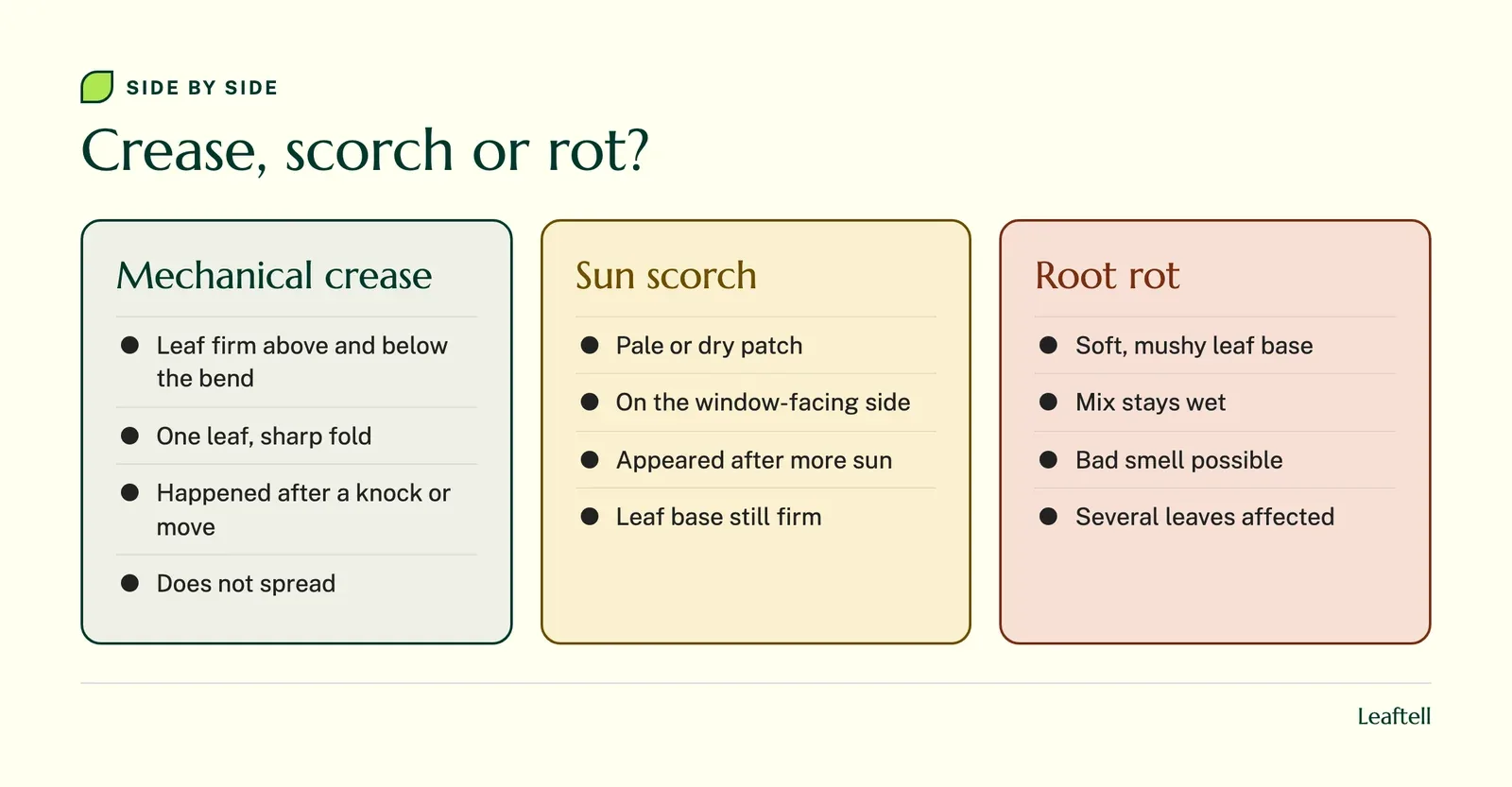
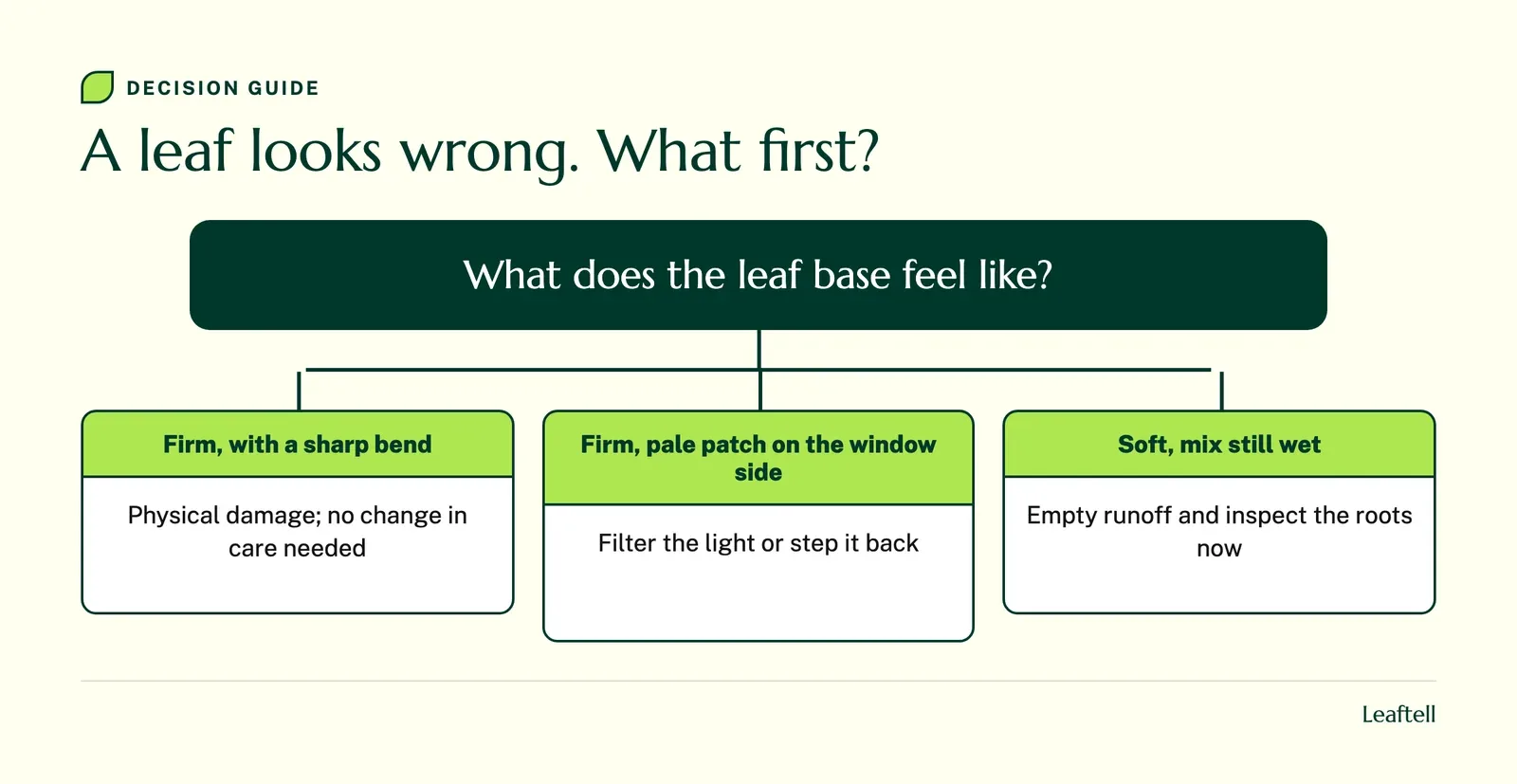
Soft, mushy leaf bases with wet mix point to root rot, and they need attention quickly. A firm leaf with a sharp crease from being knocked over is a different, harmless thing.
Look where the soft leaf meets the mix. A collapsing base or a bad smell, especially across several leaves, means you should check drainage now. Lift the inner pot out of its cover and see whether it has been sitting in runoff you couldn't see from above.
| What you find | What it likely means | What to do |
|---|---|---|
| Dry surface, heavy tall pot | Lower mix still wet | Wait and check deeper before watering |
| Firm leaf with a sharp bend | Mechanical damage | Leave it or trim it; a crease alone is not rot |
| Soft base, runoff in the cover pot | Wet roots, possible rot | Empty the cover pot and check roots promptly |
| Several soft bases and a bad smell | Advanced rot | Inspect roots and rhizomes; save firm sections |
| Pale dry patch on the window side | Sun scorch after a move | Filter the light or step it back |
Snake plant symptoms and the first check for each. Day counts are check-ins, not watering intervals.
If the decline continues, a careful root check is worth it. Support the clump as you slide it out; stiff leaves snap if you use them as handles. Look for firm roots and rhizomes next to any soft, falling-apart tissue. Color alone misleads you, because healthy roots can be stained by the mix. Our guide on treating root rot lists what to look for and what to bring to local advice.
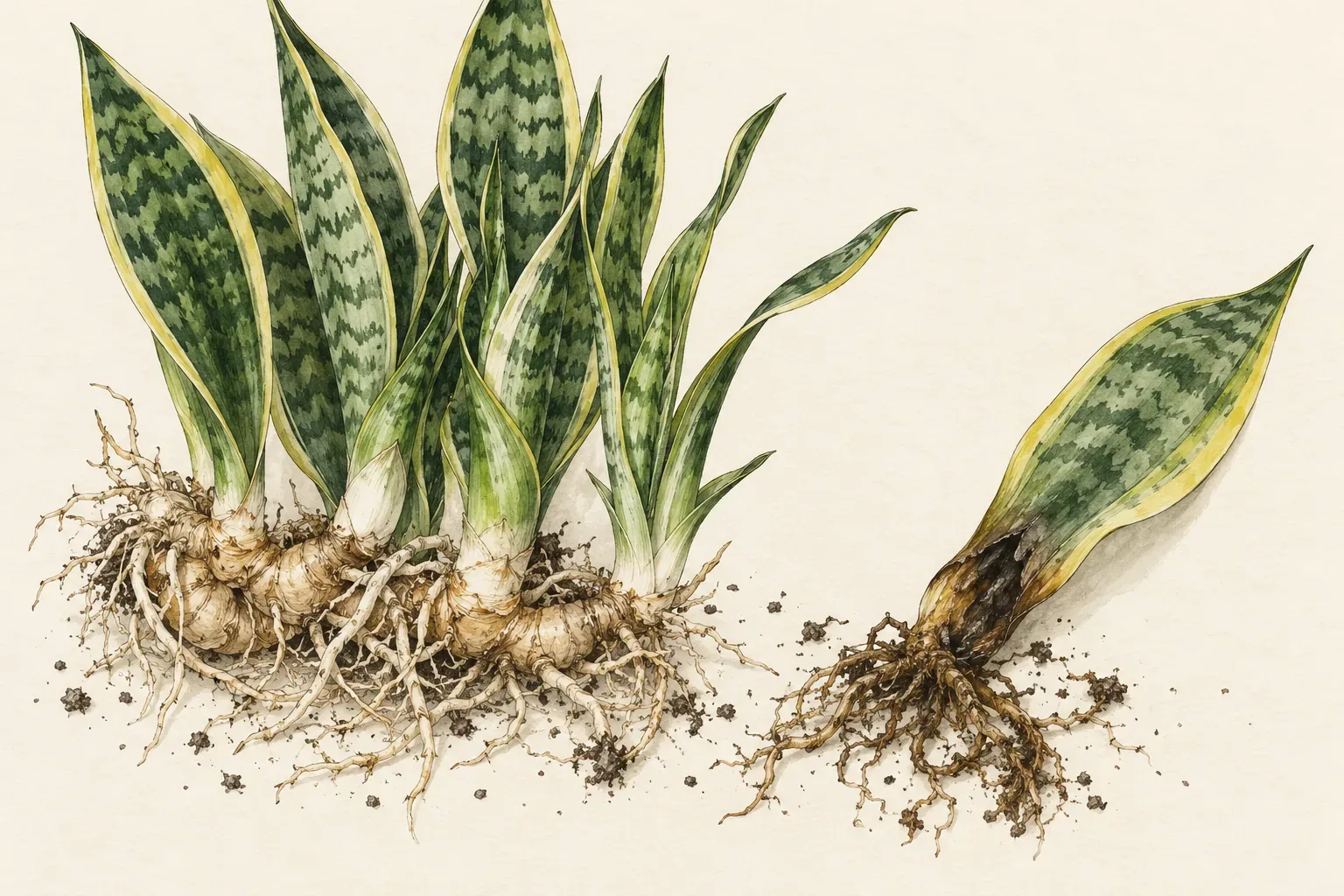
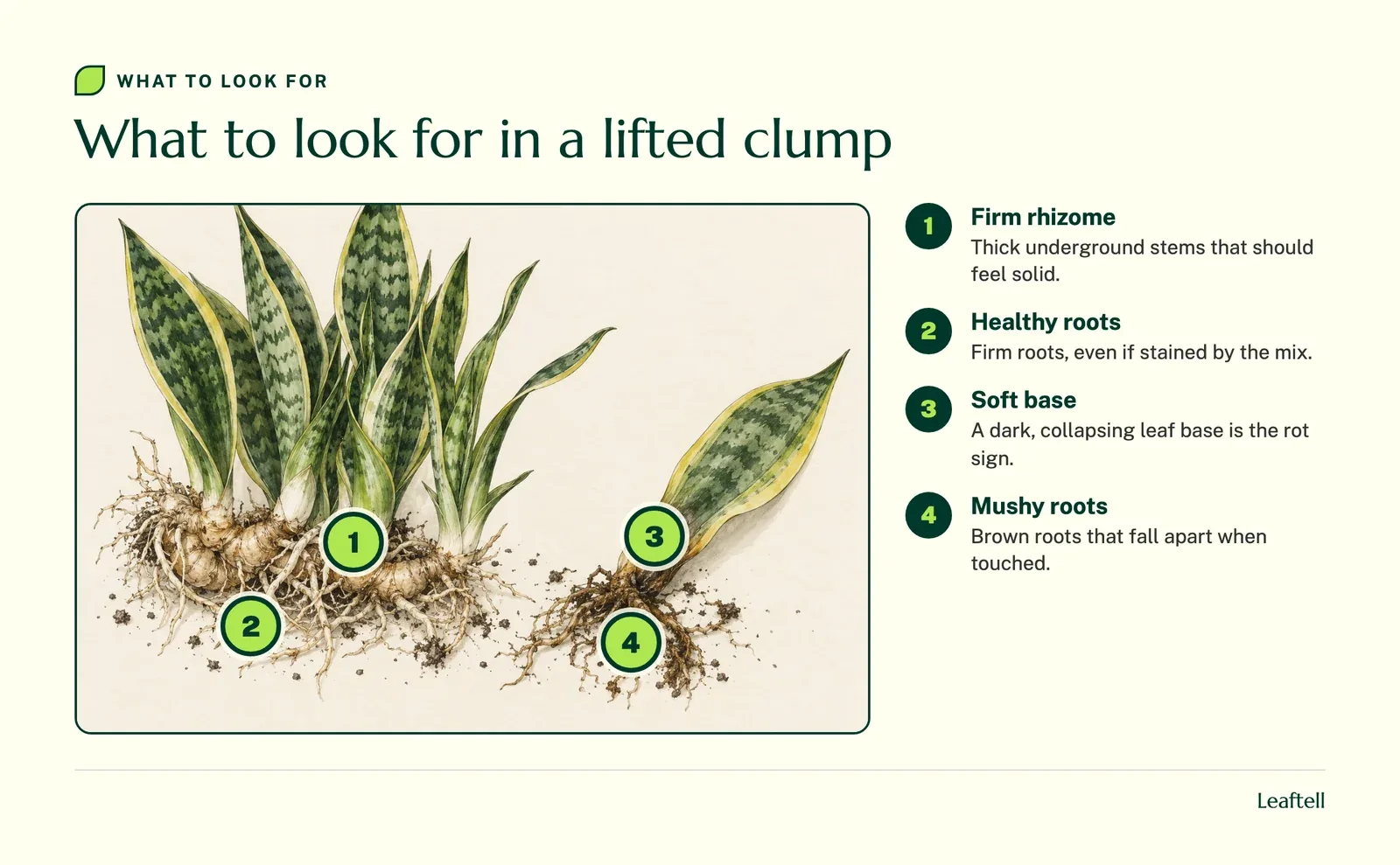
Don't respond with fertilizer, deeper planting or a much bigger pot of wet mix. None of those repairs damaged roots. Keep nearby plants out of shared runoff and clean your work surface after handling suspect material. A clump with a failing center may not be worth saving, so weigh how much healthy tissue is left before repeated disruptive fixes.
If you see yellowing rather than softness, the guide to snake plant leaves turning yellow separates cultivar patterns from real damage.
Snake plant care indoors: dividing and repotting
Repot only when the pot is bulging or distorted, roots fill most of the space, or the plant has become hard to water evenly. A slow but stable snake plant doesn't need a bigger pot just because a year passed.
Snake plants spread through underground growth that slowly crowds a container. Check the actual roots before you buy anything. Then choose a stable pot with drainage and only a little extra room.
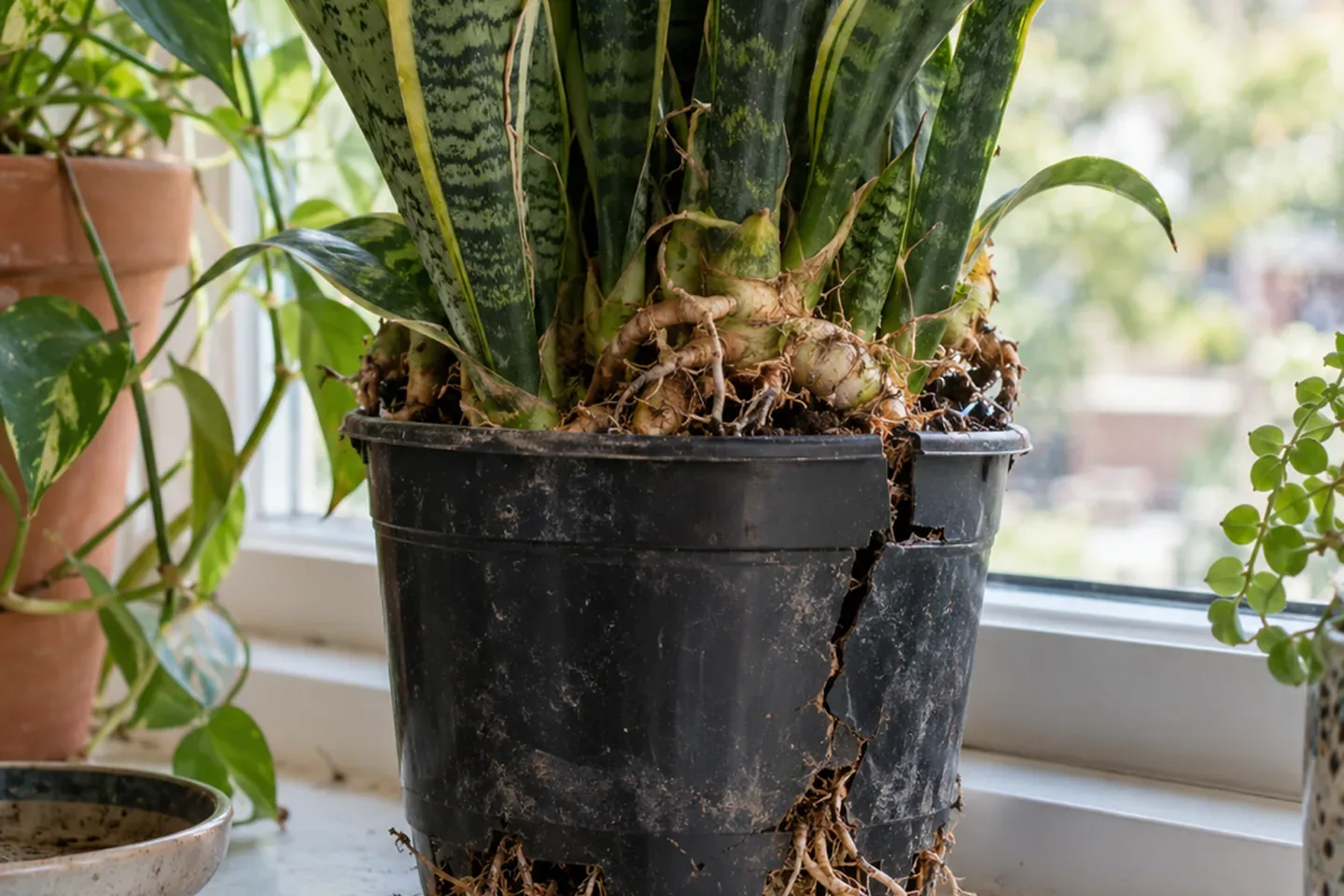
Prepare the mix and work area before you lift the clump. If you divide it, keep healthy roots and connecting tissue with each piece, and use clean tools. Don't cut a plant that is already losing leaves or showing soft bases into lots of tiny divisions.
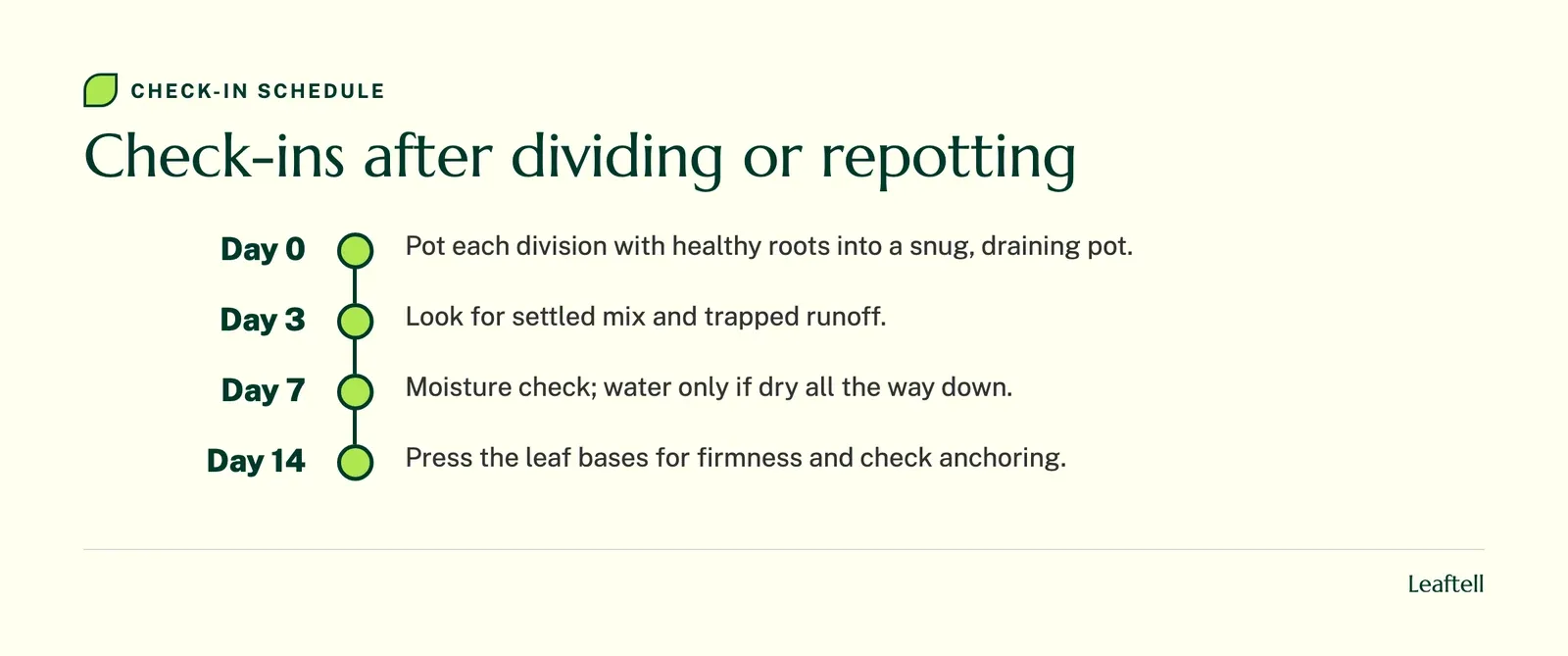
After handling, keep it in familiar, moderate conditions and don't make up for root disturbance by keeping the pot wet. On day three, check for settled mix and trapped runoff; on day fourteen, press the bases for firmness. New shoots are not required to prove a division is stable, and snake plants grow slowly indoors.
If leaves develop small brown marks after the move, compare brown tips on leaves and the timing of any knocks before assuming the whole division has a root disease.
Pests and pet safety
NC State recommends watching for mealybugs and spider mites. Start with wiping and isolation; any treatment product is a generic class with its own label precautions, so follow the label and never mix products. The ASPCA lists snake plant as toxic to cats and dogs, so keep leaves, cut pieces and divisions away from pets and stop children from chewing them. Stiff pointed leaves also deserve a spot away from walkways and play areas. After a suspected exposure, call a vet or poison service with the plant name and any products used.
Snake plant mistakes and what they cost
Snake plants forgive almost everything except wet roots. These are the mistakes that cost the most.
- Watering on a weekly reminder. The plant rarely needs it, especially in winter. Cost: root rot, which Penn State names as a common snake plant problem.
- Moving it to a dark spot without changing watering. Less light means slower drying. Cost: a pot that stays wet for weeks.
- Leaving runoff in the cover pot. The bottom of the pot never dries. Cost: soft bases with no warning from above.
- Fixing decline with fertilizer or a bigger pot. Neither helps damaged roots. Cost: more wet mix around fewer healthy roots.
- Trimming healthy leaves for looks. Leaves are the plant's water and energy store. Cost: slower recovery, and a cut tip never regrows its point.
- Sudden full sun. No time to adjust. Cost: scorched patches that stay for good.
When to get help
Get local horticultural advice if softening spreads from one base to the next, the center of the clump collapses, or decline continues after you fixed watering and drainage. Bring photos of the whole plant, the pot and the roots instead of escalating home remedies.
The snake plant routine that works
Give it real daylight, water only when the pot is dry all the way down, and empty the cover pot every time. Judge recovery by firm bases and no new collapse, not by fast growth. That is the whole job.
Keep a short record of watering dates and how heavy the pot felt. If you grow a bigger, thirstier plant too, the monstera care guide shows how the same root-zone check plays out on a plant that dries much faster.
Sources
Check your growing conditions with the plant watering calculator.
Frequently asked questions
Water when the mix has dried, confirmed below the surface and by pot weight. Winter or lower light often slows drying; warmth, brighter light and a freer-draining mix can change the interval. No fixed number of weeks suits every pot.
No. Snake plants store water in their leaves and usually need the mix to dry well between waterings. Low light and a large pot can stretch the interval a lot.
They tolerate very low light, but they grow better with more. In a dim spot the pot also dries more slowly, so water even less often there.
You can trim dead tips for looks, but the cut does not fix the cause or regrow the original point. Avoid cutting into healthy tissue.
Low light, the season, root stress or a recent move can all slow growth, and snake plants are slow indoors anyway. Check light and the root zone before adding fertilizer or water.
Baking soda is not a snake plant tonic. It can add unwanted salts and won't repair damaged roots or dead leaf tissue.
Avoid freezing windows, permanent darkness, pots that sit in standing water and spots where pets or children can chew the leaves.
Yes. The ASPCA lists snake plant as toxic to cats and dogs. Keep leaves and cut pieces out of reach, and call a vet if you suspect your pet chewed one.
Share article
About the author

Keep checking your plant
Plant care reference
Indoor plant care
Build a routine around your plant, light and potting mix.
Plant care reference
Why is my plant dying
Trace leaf and root symptoms before choosing a care change.
Plant care reference
Pothos plant care
Choose a growing spot and prune a trailing pothos for fuller growth.
Plant care reference
How to fix root rot
Inspect root firmness and drainage, then decide whether to repot.