How to Take Care of an Aloe Vera Plant: A Beginner's Setup
Filip Leszczyński 18 November 2026 14 min read
In this article
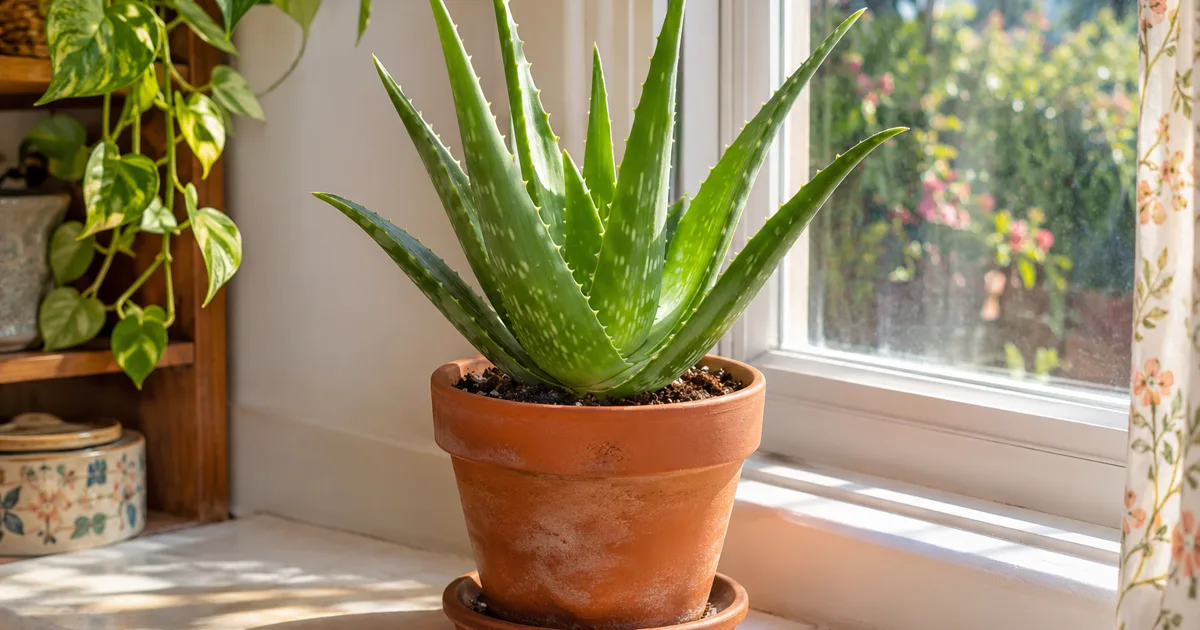
To take care of an aloe vera plant, give it your sunniest window, plant it in gritty cactus mix in a pot with a drainage hole, and water only when the whole pot has dried out. That is nearly all of it: an aloe wants strong light and long dry spells, and it suffers far more from attention than from neglect.
The catch for beginners is that most aloes come home set up to fail. A store aloe usually sits in dense, damp nursery mix inside a pretty cover pot with no hole, and it lands on a shelf a few feet from the window. Fix those three things in the first week and the routine afterwards takes about five minutes a month.
What an aloe vera plant needs
Here is the whole job on one screen. The last column is the early sign that one of the needs is not being met, so you can catch it before the plant does something dramatic.
| Need | What to give it | Early sign it is wrong |
|---|---|---|
| Light | The sunniest window you have, ideally 6 or more hours of direct sun | Leaves turn pale, thin and flat and the plant leans toward the glass |
| Water | A full soak, then nothing until the mix is dry to the bottom of the pot | Soft, see-through leaves at the base (too much) or thin, curling leaves (too little) |
| Soil | Cactus and succulent mix, or potting soil cut with perlite or coarse sand | The pot stays heavy and damp for a week or more after watering |
| Pot | Any pot with a drainage hole; unglazed clay dries fastest | Water pooling in a cover pot or saucer |
| Temperature | Normal room temperature, about 60 to 75°F by day | Leaves discolor near cold glass or a draft |
| Food | Little or none; half strength in spring and summer at most | Floppy, lush growth after heavy feeding |
The New York Botanical Garden calls light the place where most succulent growers fall short, and NC State Extension sums up the water rule in one line: let the soil dry completely between waterings. If you only remember two things, remember those.
Your first week with a new aloe
A new aloe needs a quick inspection and, more often than not, a new pot. Do it once and you remove the most common reasons aloes die indoors.
How to set up a new aloe vera plant
- Lift it out of the cover pot
Check whether the decorative pot has a drainage hole. If it does not, keep the aloe in its plastic nursery pot and lift it out every time you water, or move it to a pot with a hole.
- Feel the mix and look at the base
Push a finger and a wooden skewer into the mix. Dense, black, wet nursery mix is normal at the store and bad at home. The leaves at the base should be firm, not soft or see-through.
- Repot into gritty mix if it stays wet
If the mix is dense or soggy, ease the plant out, shake off what falls away and replant at the same depth in cactus mix in a pot only slightly wider than the root ball. Do not bury the stem deeper than it was.
- Wait before the first soak
After repotting, leave the plant dry for about a week so any roots damaged in the move can seal before they sit in wet mix.
- Move it into the sun in stages
Put it in your brightest window. If it was living in a dim store, give it a week or two of bright light before hours of hot afternoon sun, or the leaves can scorch.
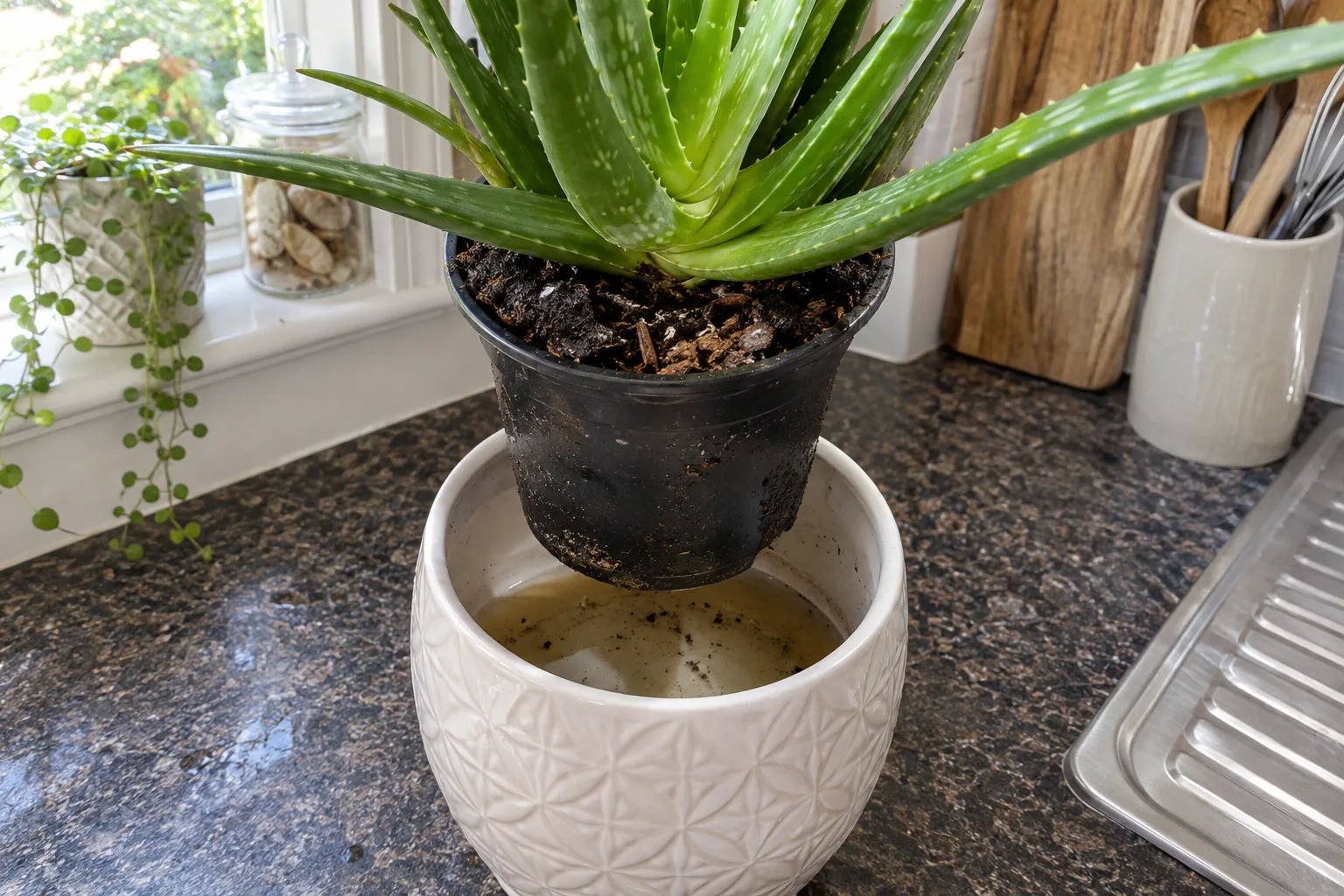
That puddle is the problem with cover pots. Water drains out of the nursery pot and then sits under it, so the bottom of the root ball stays wet long after the top looks dry. If you love the decorative pot, use it as a sleeve and tip it out after every watering.
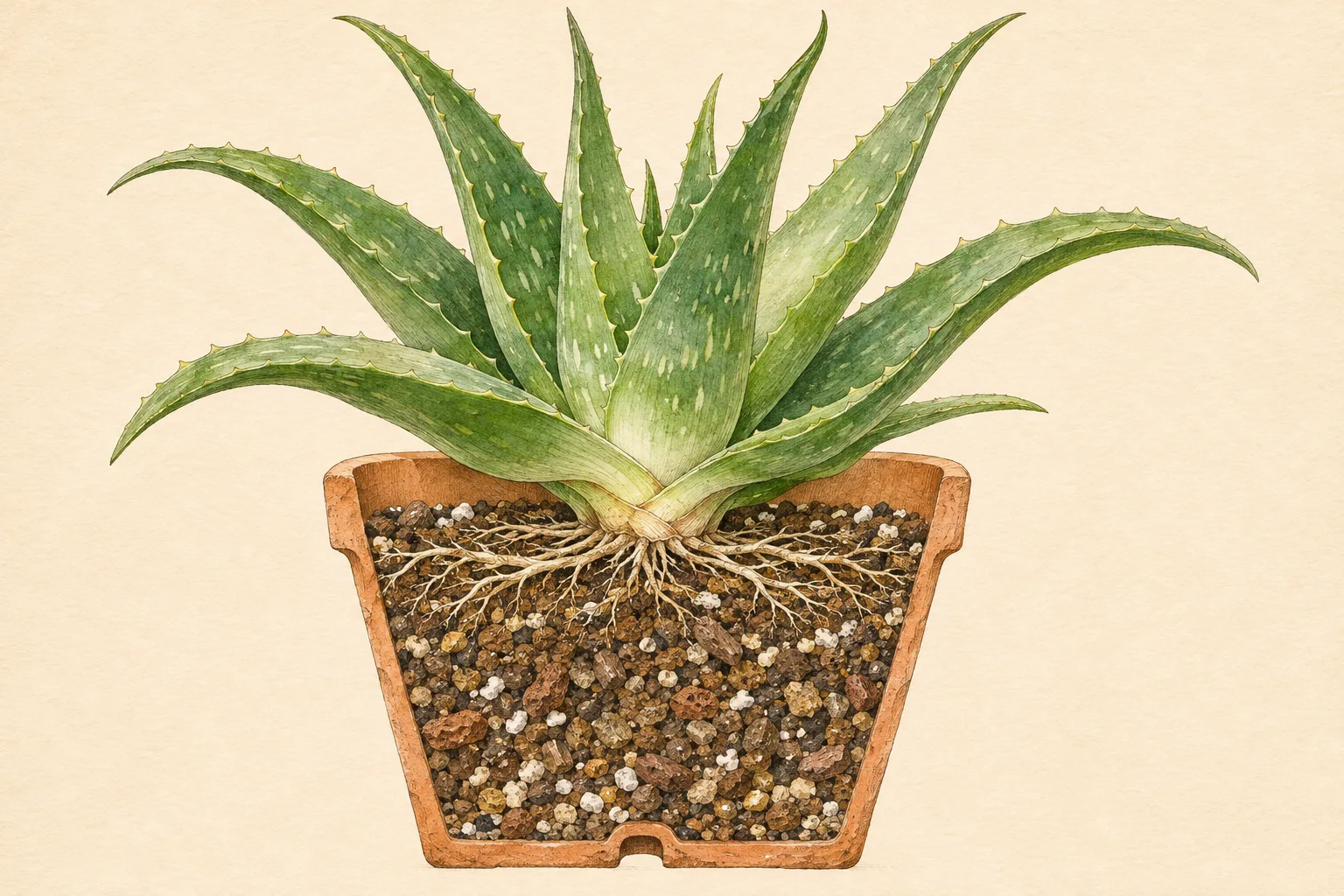
The roots explain why soil matters so much. An aloe's roots are shallow and fine, and they rot quickly when they sit in mix that stays damp. A gritty, fast-draining mix and a pot that is not much bigger than the roots mean the whole pot can dry out between waterings. For the full repotting routine, our guide to repotting plants covers sizing up and root checks step by step.
Which routine fits your aloe
Aloes differ less by variety than by situation. Find the row that matches yours; each one gets a short note below.
| Your aloe | The main risk | What to focus on |
|---|---|---|
| New from the store | Wet nursery mix, no drainage, too little light | The first week setup above |
| Small pup or young plant | Overwatering a pot that has few roots in it | A small pot, longer dry spells |
| Big, older aloe | Deep pot staying wet at the bottom, tipping over | Check the bottom of the pot, separate pups |
| Summers outdoors | Sunburn, rain filling the pot, cold nights in fall | Shade at first, tip out rain, bring in early |
A small pup or young plant
A young aloe has few roots, so it drinks little and the pot dries slowly. Keep it in a small pot, wait longer between soaks than you think you should, and give it the same bright window as an adult. Our aloe watering guide has a table of check-in reminders by pot size and season.
A big, older aloe
A mature aloe vera grows a few feet tall and spreads by offsets, and its older outer leaves naturally sprawl a little away from the center. That is normal shape, not a sign of trouble. Two things change as it grows: a deep pot can stay wet at the bottom while the top looks dry, and the plant gets top-heavy. A wide terracotta pot helps with both.
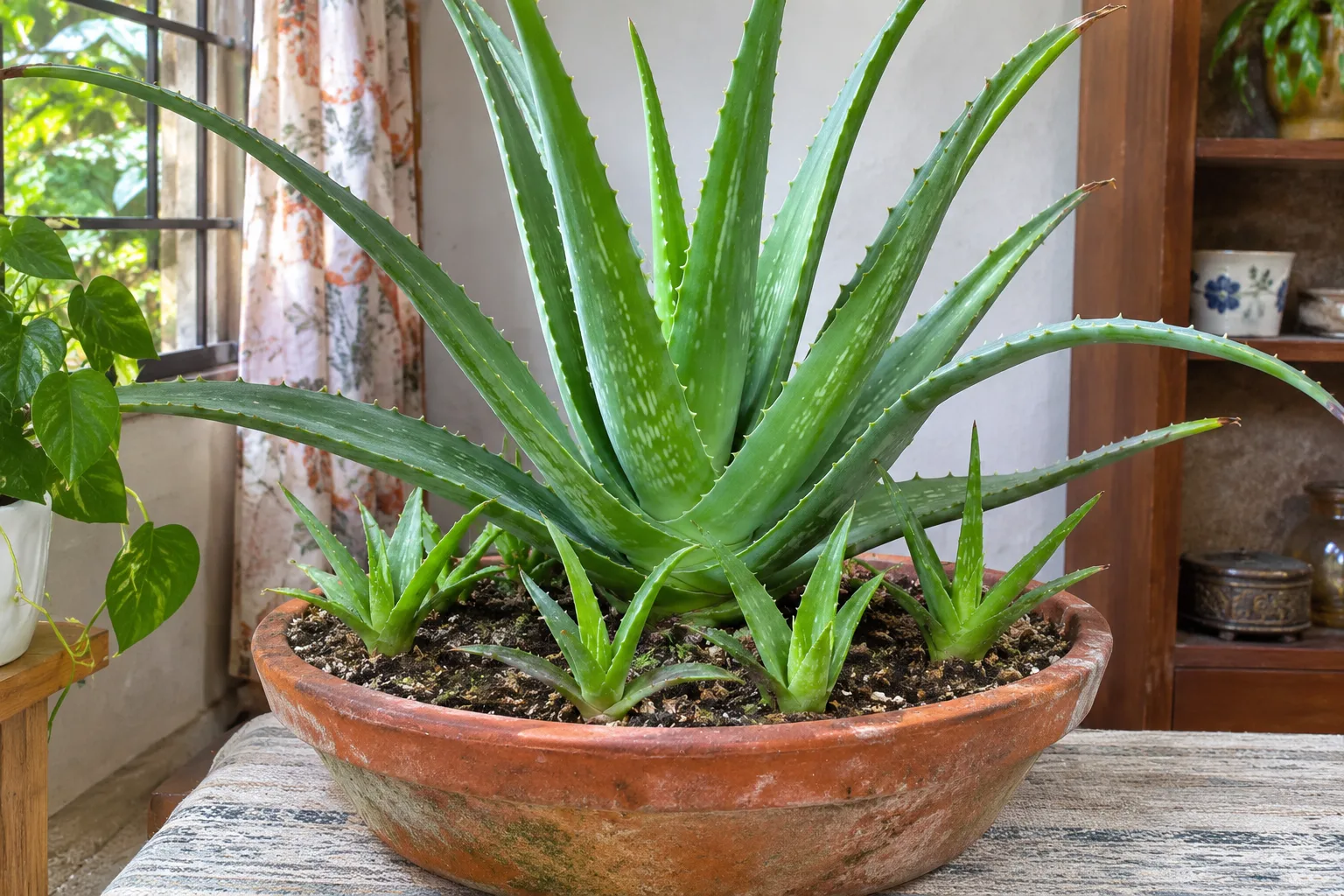
When the pot gets crowded with pups like this, it is time to divide. Separate pups that have their own roots and pot them up on their own. Our step by step on propagating aloe vera from pups covers the cut, the drying and the first watering. NYBG suggests July or August for repotting older plants, while they are still growing.
An aloe that summers outdoors
NC State notes aloe can move outdoors for the summer, and most enjoy it. The risk is the switch: an aloe that has lived behind glass is not used to full outdoor sun.
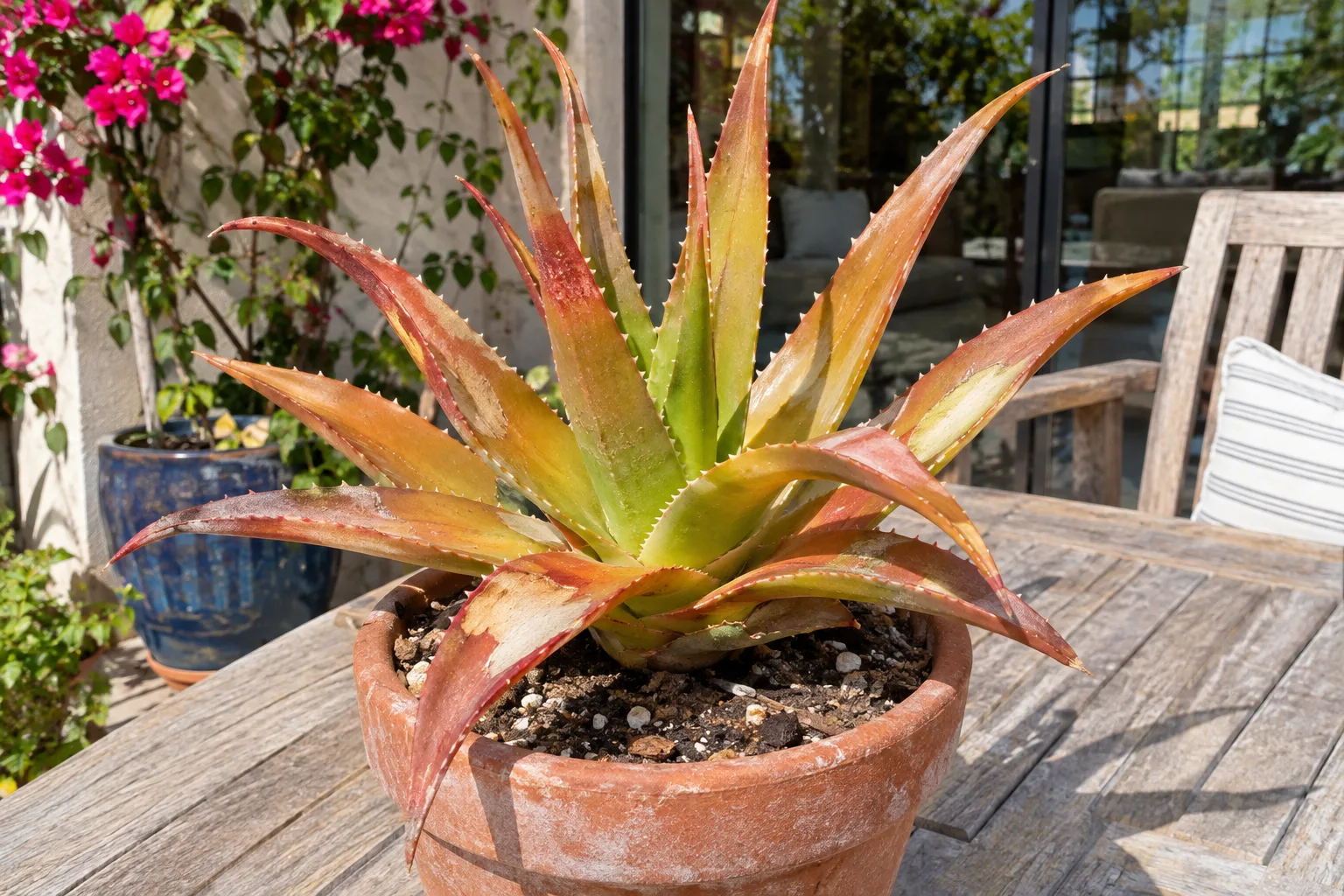
Orange, red or bleached patches after a move outside are sun stress. Start the plant in bright shade, move it into more sun over a couple of weeks, tip out any rain that collects in the pot or saucer, and bring it in before nights turn cold in fall.
How much light does an aloe need?
As much direct sun as your home can give it. NYBG recommends a window with at least six hours of sunlight a day; in most US homes that means a south or west window. A spot "near" the window, a few feet back, is usually not enough.
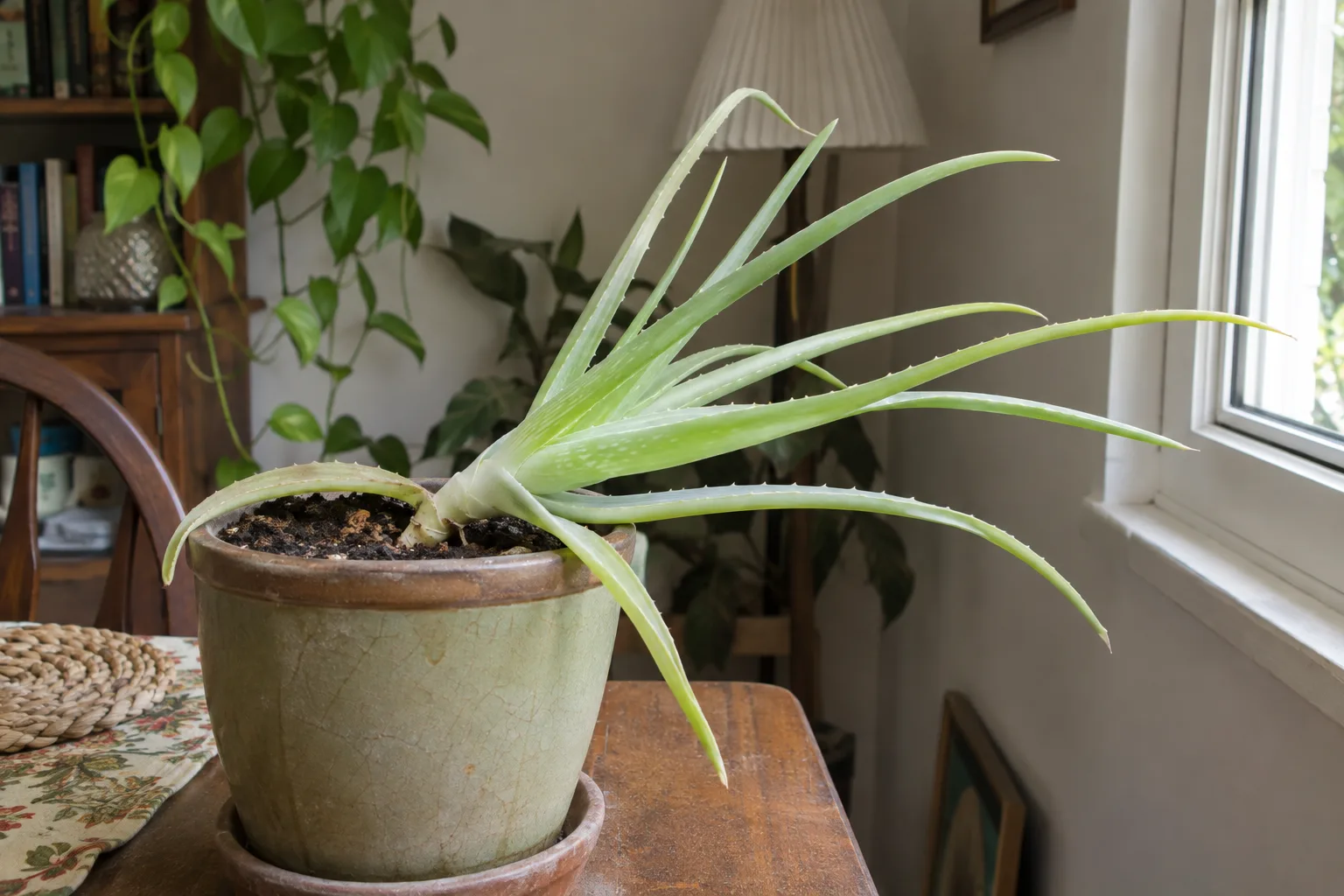
This is what too little light looks like: pale, thin leaves that splay out flat and a rosette leaning toward the glass. It does not happen overnight, which is why it surprises people. If your brightest window is still too dim, a grow light close to the plant helps; NYBG notes artificial light needs to run much longer each day than sunlight, at least 14 to 16 hours. Our guide to reading the light in your windows shows how to judge a spot without a meter.
Temperature rarely needs any work. Normal rooms suit aloe, and a slight drop at night helps.
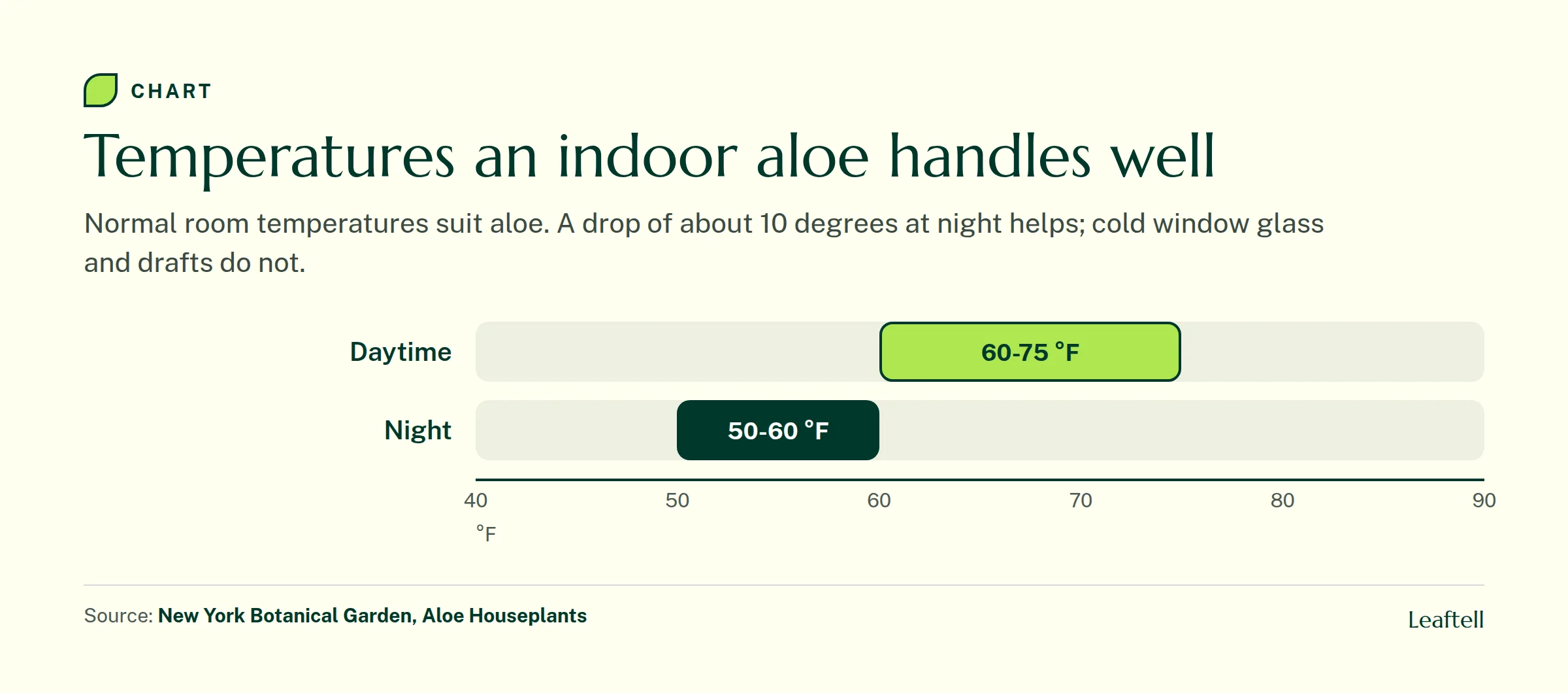
The one thing to watch is cold glass. A windowsill in January can run about 10 degrees colder than the middle of the room, and an aloe chilled against the pane or in a draft will discolor.
How often should you water an aloe vera plant?
Water when the potting mix is dry all the way to the bottom of the pot, then soak it until water runs out of the hole. Indoors that often works out to every week or two in spring and summer and much less from October to February, but the dry pot decides, not the calendar.
Check with a wooden skewer pushed to the bottom of the pot rather than a finger in the top inch, because the bottom dries last. Tip out the saucer about 15 minutes after watering, and never leave water standing in the center of the rosette. Aloes do not need misting or extra humidity.
What does an overwatered aloe look like?
An overwatered aloe has soft, swollen leaves that look see-through or water-soaked, usually starting at the base of the plant, and the mix is still damp days after watering. In worse cases the lower leaves turn mushy and yellow or brown and collapse over the rim.
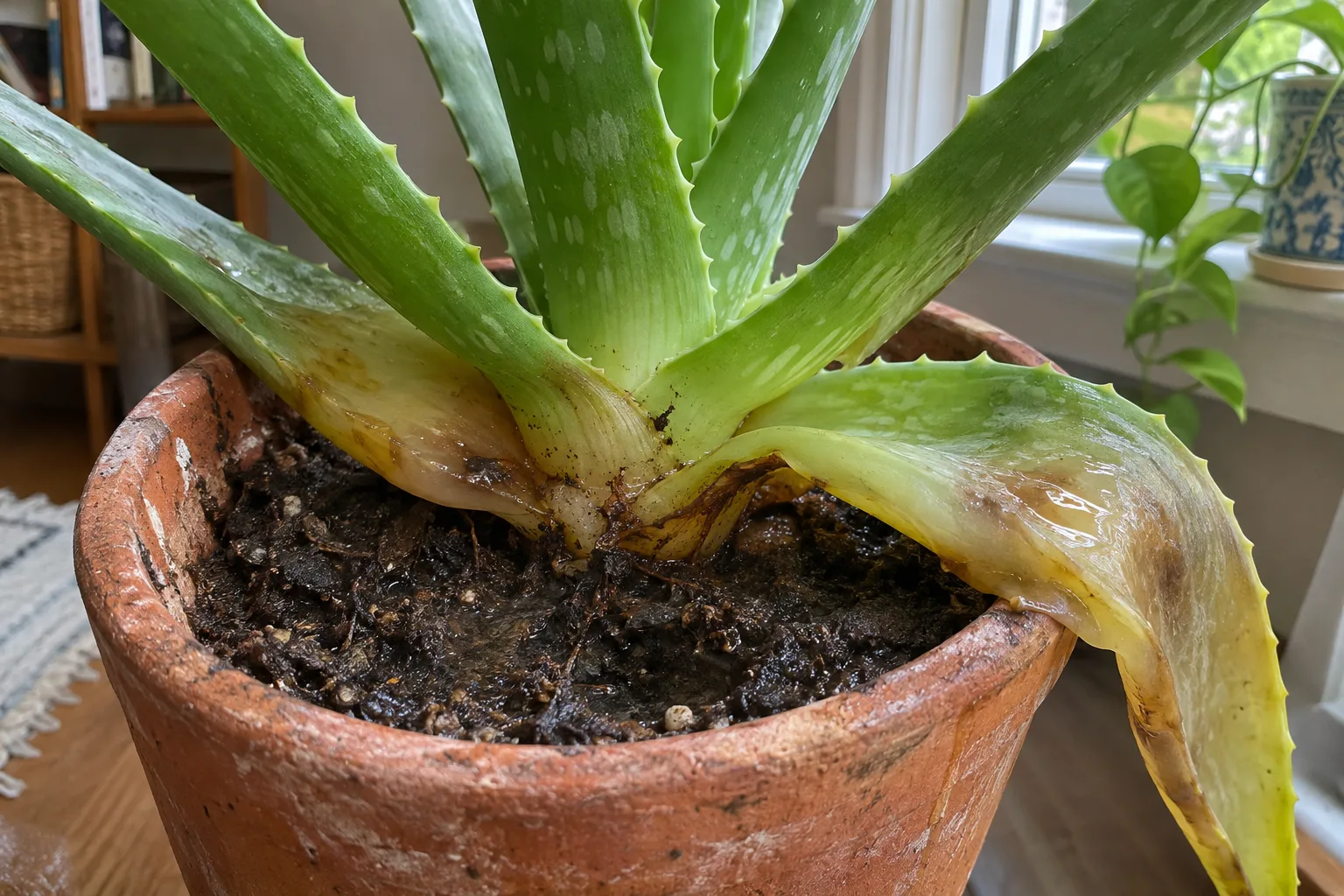
The trap is that a thirsty aloe also changes its leaves, so people sometimes water a rotting plant even more. This comparison is the quickest way to tell the two apart.
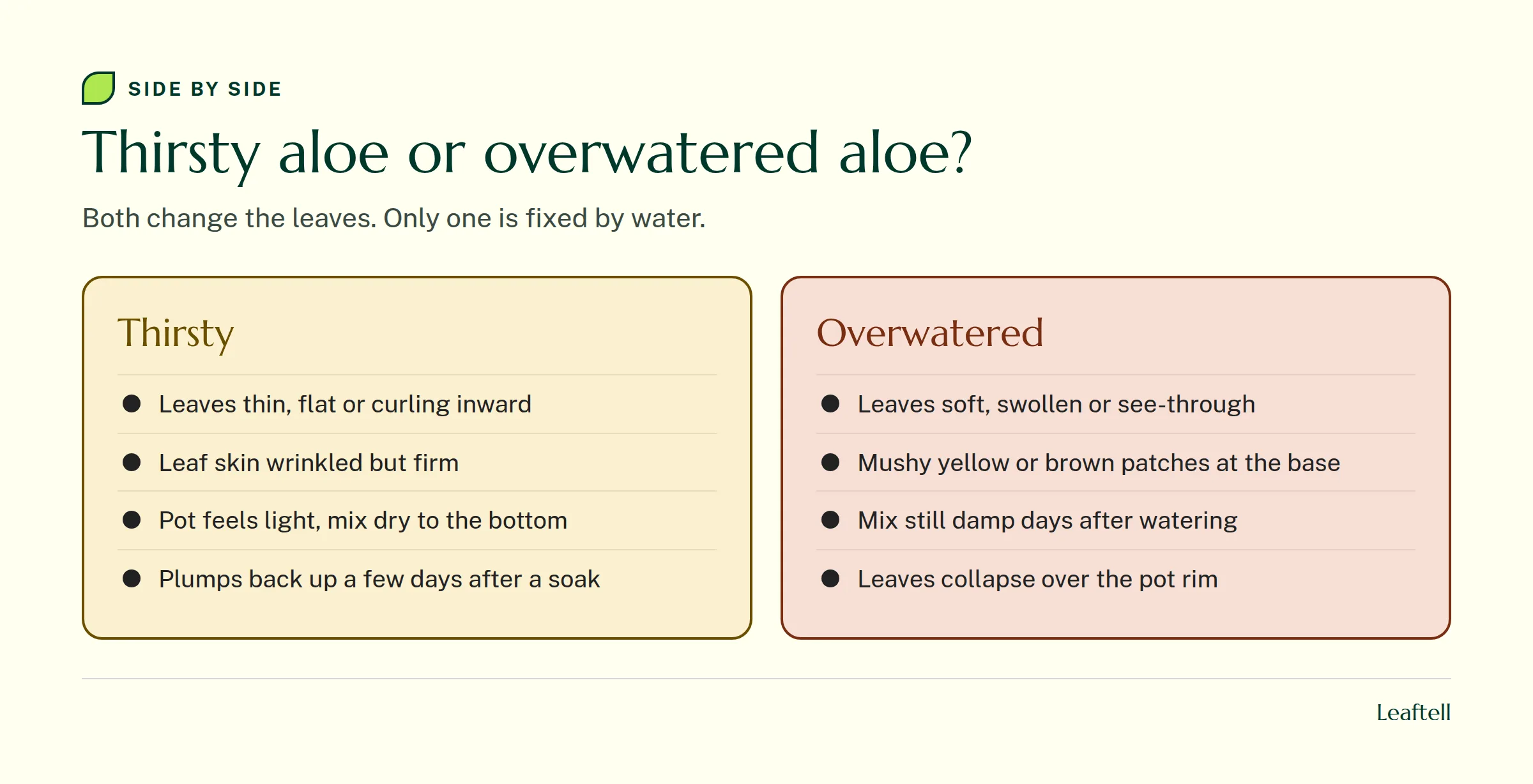
If it is overwatered, stop watering, lift the plant out and look at the roots. Healthy roots are pale and firm; rotting roots are dark and mushy. Trim the rotten parts, let the plant dry and replant it in dry gritty mix. The root rot guide covers how far to cut, and if your aloe is folding over rather than turning soft, start with why aloe plants droop instead.
Should you cut brown leaves off your aloe?
Yes, if the whole leaf is dried out or soft. A dead leaf will not turn green again, and a mushy one can spread rot. A leaf with only a dry brown tip can stay; trim the dry part with clean scissors if it bothers you, leaving a little brown edge so you do not cut into live tissue.
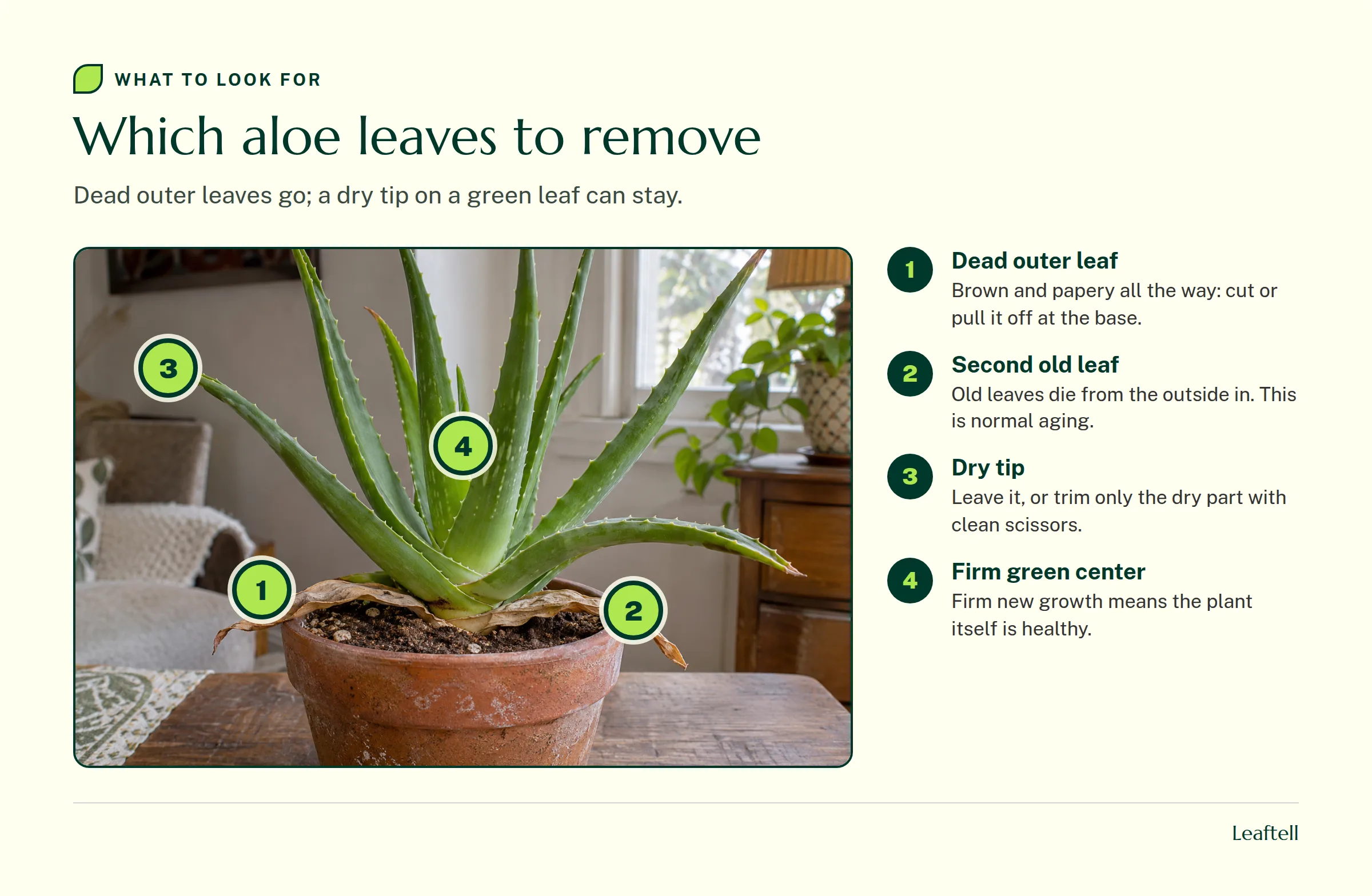
Old outer leaves drying out one at a time is normal as the plant grows. Pull or cut them off right at the base. Several leaves browning at once is different: it points to too much sun, cold, or a watering problem, so find the cause before you trim.
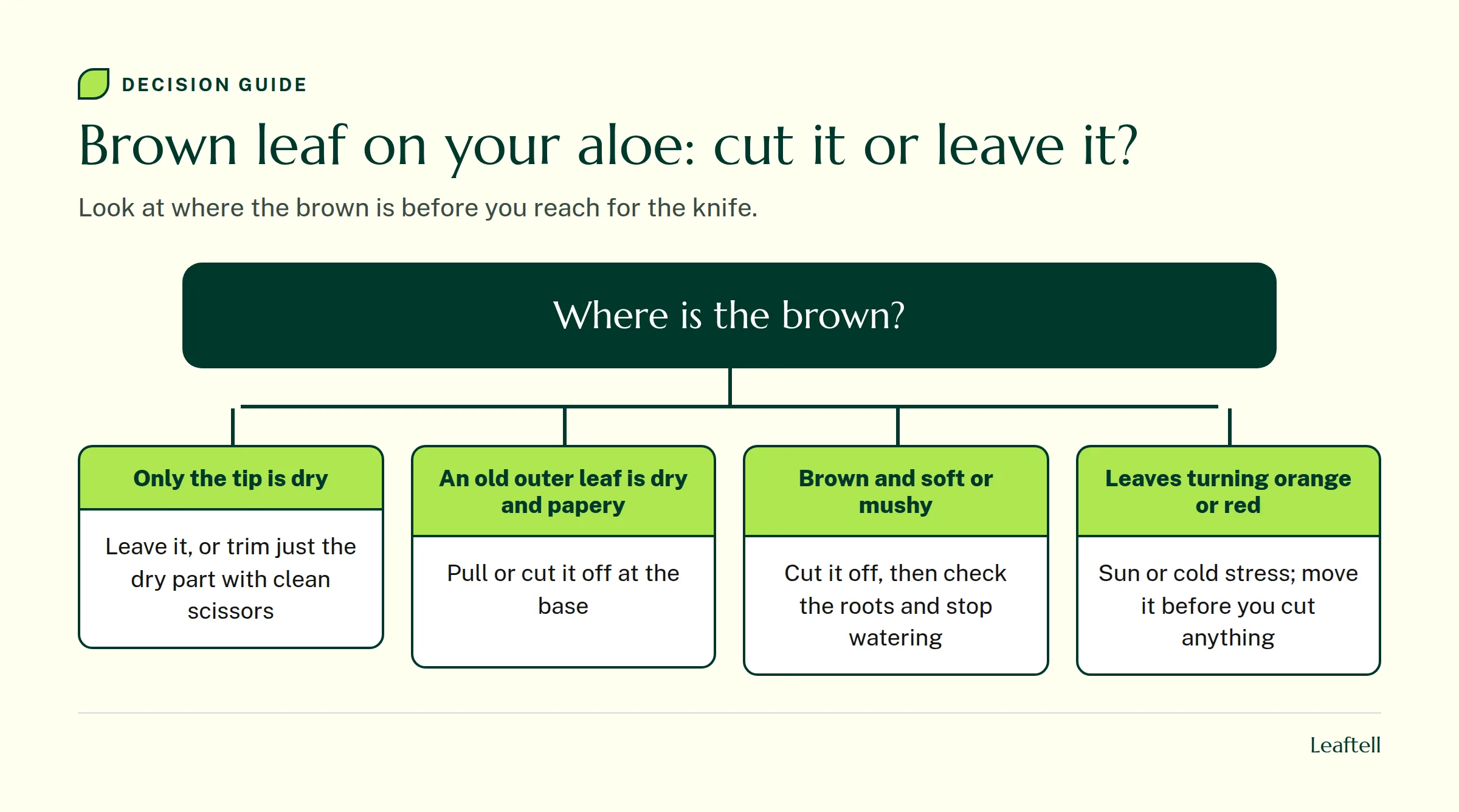
Brown spots scattered across healthy leaves can have another cause. NYBG notes some aloes react to fluoride in tap water with brown spotting, so rainwater or filtered water is worth a try before anything else.
How to make an aloe grow faster and bigger
You cannot make an aloe fast, but you can stop slowing it down. Growth follows light first: an aloe in a bright south window will outgrow the same plant on a dim shelf every time. After light, a pot one size up when the roots fill the old one, and food in small amounts during the growing season, do the rest.
- Light first. More direct sun means thicker, faster leaves. Nothing else comes close.
- Water fully when dry. A real soak in spring and summer fuels growth; small sips do not.
- Feed lightly. NYBG suggests a balanced houseplant fertilizer at half strength once every one to three months from March to September, and none in winter. Skip high-nitrogen feeds, which make soft, floppy growth.
- Pot up when it is crowded. Move to a pot one size larger, not a huge one, which stays wet.
- Let it rest in winter. From October to February it barely grows. Keep the sun, cut the water, and do not push it.
A note if you have pets: aloe is on the ASPCA list of plants toxic to cats and dogs, so place it where they cannot chew it. Our post on aloe and cats covers what to do if one takes a bite.
Beginner mistakes that cost aloes
- Leaving it in a cover pot with no hole. Water pools under the roots and rots them from the bottom up.
- Watering on a schedule. A weekly glass of water ignores the season and the pot. Check the bottom of the mix first.
- Keeping it "near" the window. A few feet back can be too dim. Aloes stretch and flop slowly, so the damage shows weeks later.
- Moving it straight into full sun. An indoor aloe sunburns outdoors or in a hot window without a slow transition.
- A pot that is far too big. Extra mix holds extra water that the small roots cannot use.
For a deeper look at soil recipes, pests and flowering, our full aloe vera care guide goes through each one in turn.
Check your aloe in Leaftell
Taking care of an aloe vera plant comes down to a good first week and a lazy routine: drainage, gritty mix and a bright window, then a soak only when the pot is dry. Most aloe problems are too much water or too little light, and both show in the leaves weeks before the plant is in real trouble.
If a leaf is changing and you cannot tell whether it is thirst, rot or sun, check your aloe in Leaftell with a photo of the whole plant, a close-up of the leaf base, and a note on what the skewer showed. Set yourself a check-in reminder to take a fresh photo in about seven days and compare.
Check your growing conditions with the plant watering calculator.
Frequently asked questions
Only when the potting mix is dry all the way to the bottom of the pot. Indoors that is often every week or two in spring and summer and much less from October to February. Soak it until water runs out of the hole, then tip out the saucer.
The leaves turn soft, swollen or see-through, usually starting at the base, and may go mushy, yellow or brown while the mix is still damp. Stop watering, lift the plant and check the roots for dark, soft rot.
Cut off leaves that are completely dry or soft and mushy, right at the base. A leaf with only a dry brown tip can stay, or you can trim just the dry part with clean scissors.
Give it the most direct sun you can, at least six hours a day, soak it fully when the pot is dry in spring and summer, and pot it up one size when it is crowded. Feed lightly at half strength during the growing season and let it rest in winter.
Not safely. Water collects at the bottom and rots the shallow roots. Keep the aloe in a pot with a hole and use the decorative pot as a sleeve, tipping it out after every watering.
Share article
About the author

Keep checking your plant
Plant care reference
Indoor plant care
Build a routine around your plant, light and potting mix.
Plant care reference
Why is my plant dying
Trace leaf and root symptoms before choosing a care change.
Plant care reference
Pothos plant care
Choose a growing spot and prune a trailing pothos for fuller growth.
Plant care reference
How to fix root rot
Inspect root firmness and drainage, then decide whether to repot.