Why Is My Aloe Plant Drooping? Squeeze a Leaf to Find Out
Filip Leszczyński 4 November 2026 12 min read
In this article
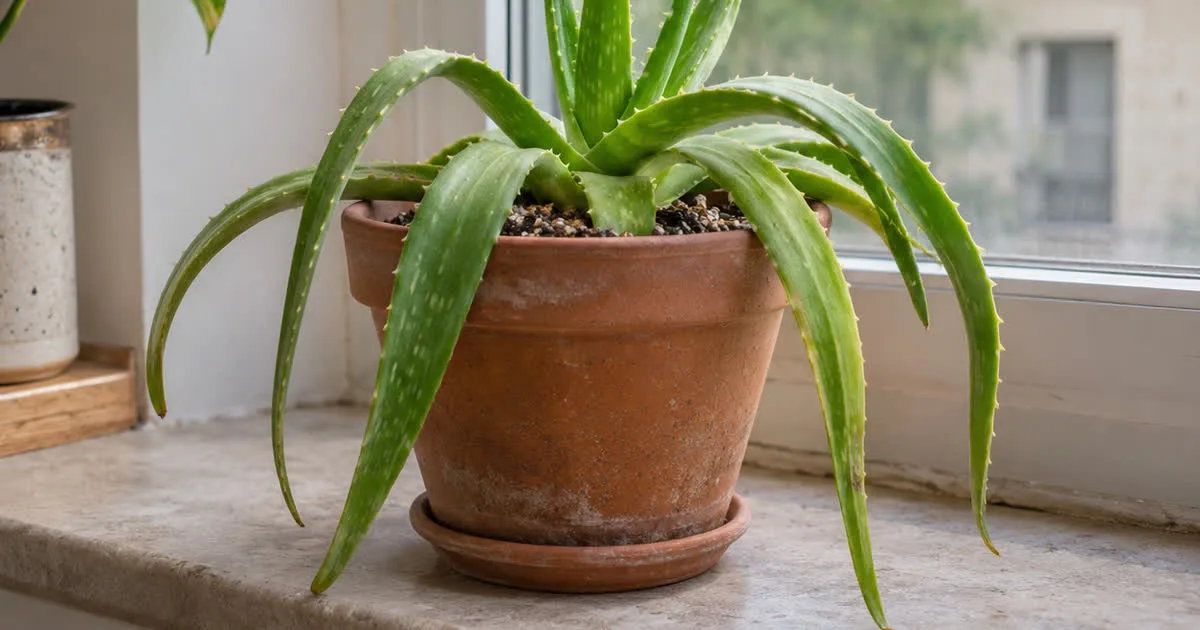
A drooping aloe almost always comes down to one of three things: too much water, too little light, or too little water. Squeeze one drooping leaf near its base: soft or see-through means rot, thin and wrinkled means thirst, and firm but long, flat and pale means the plant is starving for sun.
The one most people get wrong is light. A floppy aloe with smooth, firm leaves looks limp, so it gets watered. But nothing is wrong with its water supply. It has grown long, weak leaves while reaching for sun, and the extra water only puts it at risk of rot. Before you reach for the watering can, feel the leaf.
The 10-second squeeze test
Pick one leaf that has flopped and pinch it gently about an inch above the soil. You are feeling for three things: thickness, firmness and whether the tissue near the base has turned glassy.
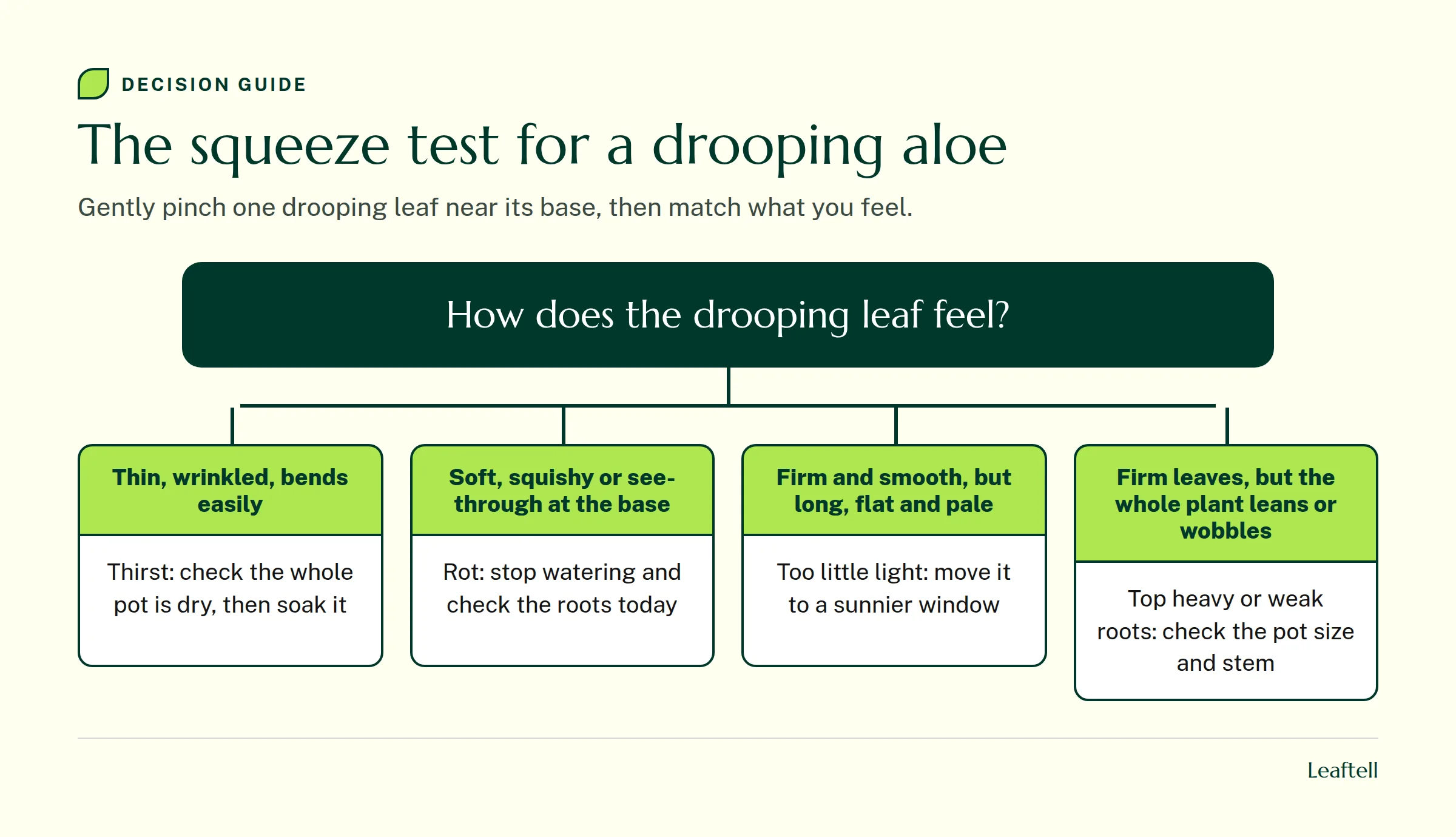
A healthy aloe leaf feels plump and stiff, like a cold cucumber. Each cause changes that feel in its own way, which is why the squeeze tells you more than the shape of the plant does from across the room. Then push a wooden skewer to the bottom of the pot to see whether the roots are sitting wet or dry. Our guide to reading wet or dry soil before watering walks through that check.
Why is my aloe plant drooping? The causes at a glance
Find the row that matches the leaves and the pot, then jump to that section. If two rows fit, deal with the wet roots first, because rot is the only one of these that gets worse on its own.
| Cause | What the leaves look like | What the pot shows | First fix |
|---|---|---|---|
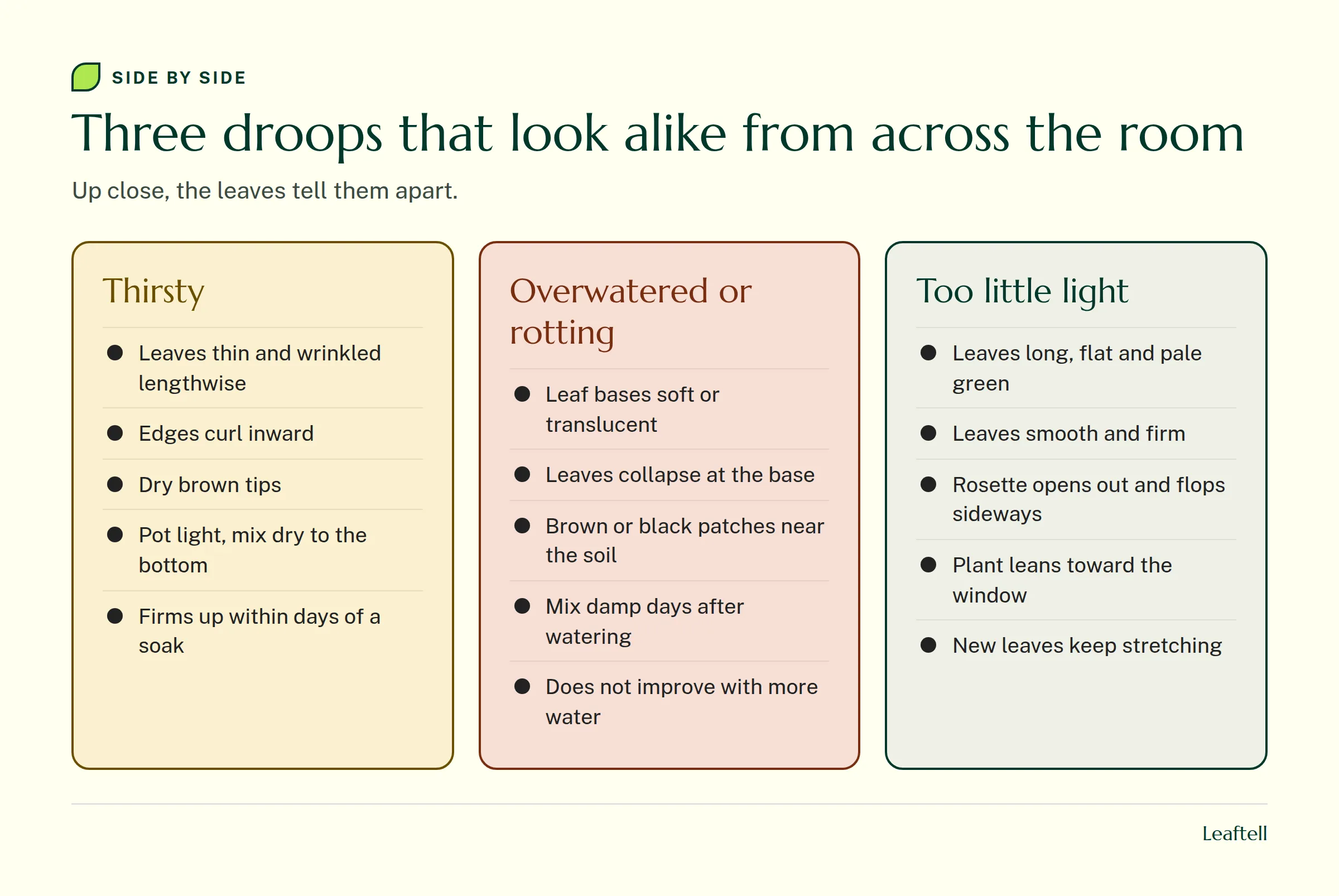
| Overwatering or root rot | Soft, glassy or brown at the base, collapsing outward | Mix still damp days after watering, water in the saucer | Stop watering, unpot and check the roots |
| Too little light | Firm and smooth, but long, flat and pale, splaying sideways | Dry or damp, it does not matter | Move it to a window with at least six hours of sun |
| Thirst | Thin, wrinkled lengthwise, curling inward, dry tips | Pot light, mix dry to the bottom and pulled from the rim | Soak until water drains, then let it dry fully |
| Top heavy or weak stem | Leaves fine, but the whole plant leans or tips | Small, light pot or a long bare stem above the soil | Heavier clay pot, or replant the top |
| Cold damage | Leaves discolored and limp after a cold night | Spot near cold glass or a winter draft | Move it away from the glass |
| Normal aging | Only the oldest outer leaves lie low; the center stands up | Nothing unusual | No fix needed |
Overwatering and root rot: the droop that starts at the base
The New York Botanical Garden calls too much water the most frequent cause of succulent failure, and NC State Extension warns that overwatering leads to rotting roots. Aloes have shallow, sparse roots. When the mix stays wet, the roots rot first, and the leaves above them lose their support where they join the stem.
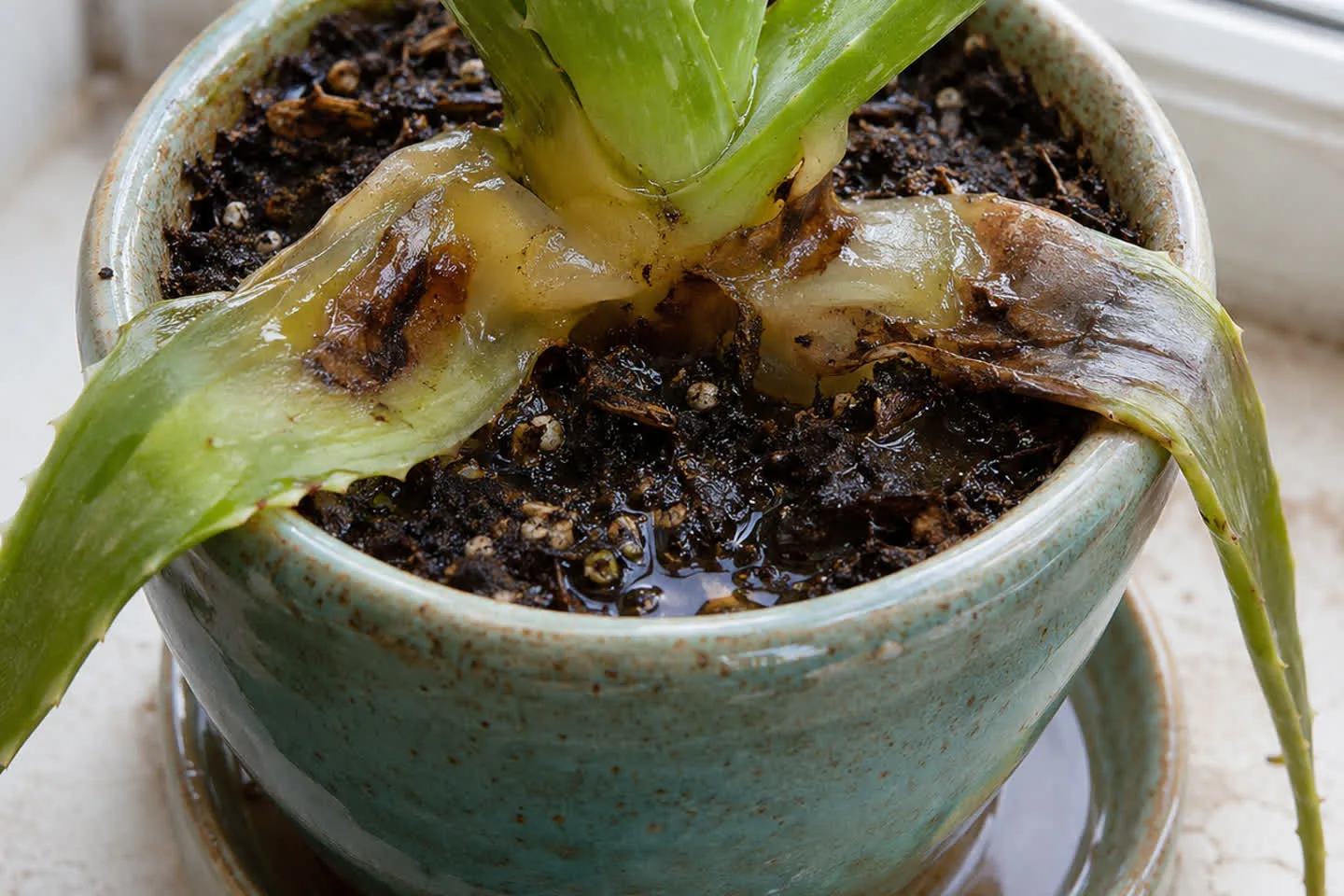
That is why an overwatered aloe droops from the base rather than bending halfway along the leaf. The tissue at the bottom turns soft and translucent, then brown, and the leaf folds over the rim of the pot.
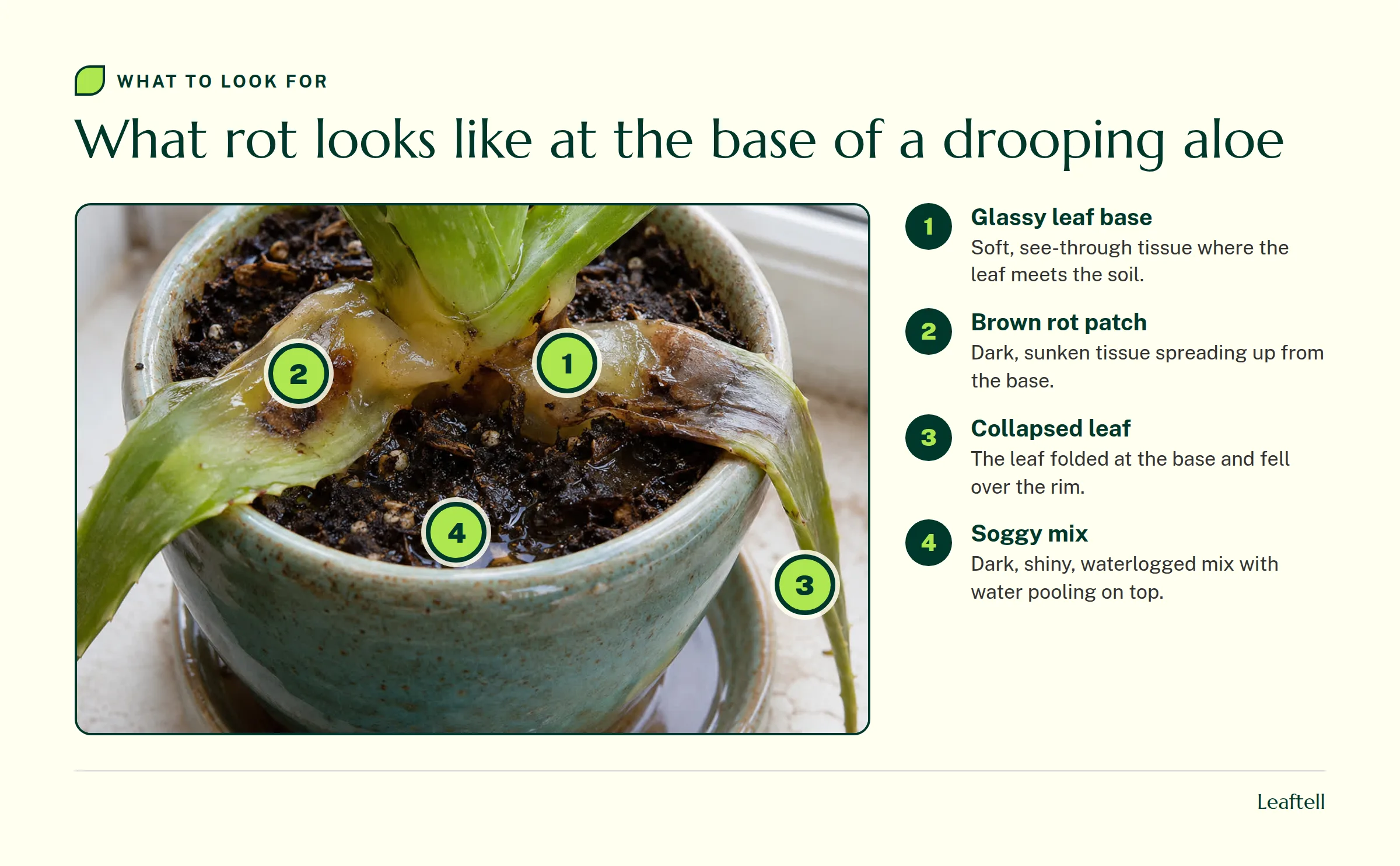
The riskiest time is winter. NYBG treats October through February as a rest period, when the plant uses little water and a pot can stay wet for weeks. A glazed pot, a pot without a drainage hole and a saucer full of runoff all make it worse.
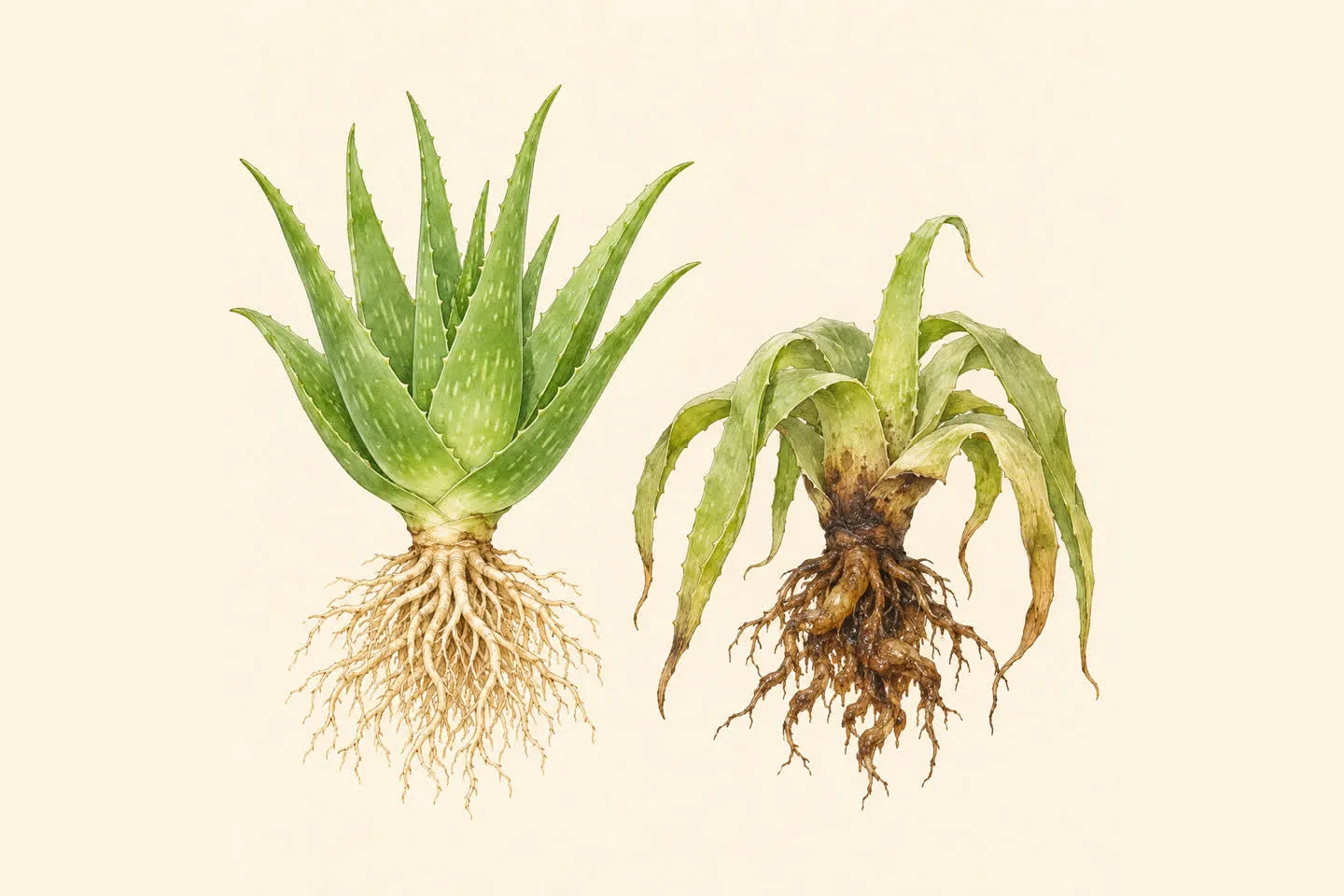
Rot shows up in the roots before you can confirm it anywhere else. Healthy aloe roots are firm and pale; rotten ones are brown or black, mushy, and may slide off in your fingers.
How to rescue an overwatered aloe
- Unpot it and look at the roots
Slide the aloe out and shake off the wet mix. Firm, pale roots are alive; brown, mushy roots are dead and will keep rotting.
- Cut away the rot
With clean scissors, remove every mushy root and any leaf that is soft at the base. Wipe the blades between cuts. Aloe sap is toxic to cats and dogs according to the ASPCA, so bin the trimmings where pets cannot chew them.
- Let it dry out
Leave the plant bare root in a bright, airy spot for a few days so the cut ends dry and seal before they touch soil again.
- Repot dry, in fast-draining mix
Use a cactus and succulent mix in a clay pot with a drainage hole, which NC State calls the best choice for aloe. Set the plant no deeper than it grew before; NYBG warns that burying the stem leads to rot.
- Wait before the first watering
Hold off for about a week, then soak it once and let the pot dry completely before the next drink.
If the base of the stem itself is soft all the way through, the plant may not come back, but a firm leaf or a healthy pup can still be rooted. Our step-by-step guide on how to fix root rot covers the cutting and drying in more detail.
Too little light: the floppy aloe that is not thirsty
This is the droop people mistake for thirst. The leaves are smooth and firm when you squeeze them, but they have grown long, thin and pale, and the rosette opens out flat instead of pointing up. NYBG describes exactly this kind of "aloe flop": without enough sun, the leaves do not have the strength to grow upright and look limp, flattened and elongated.
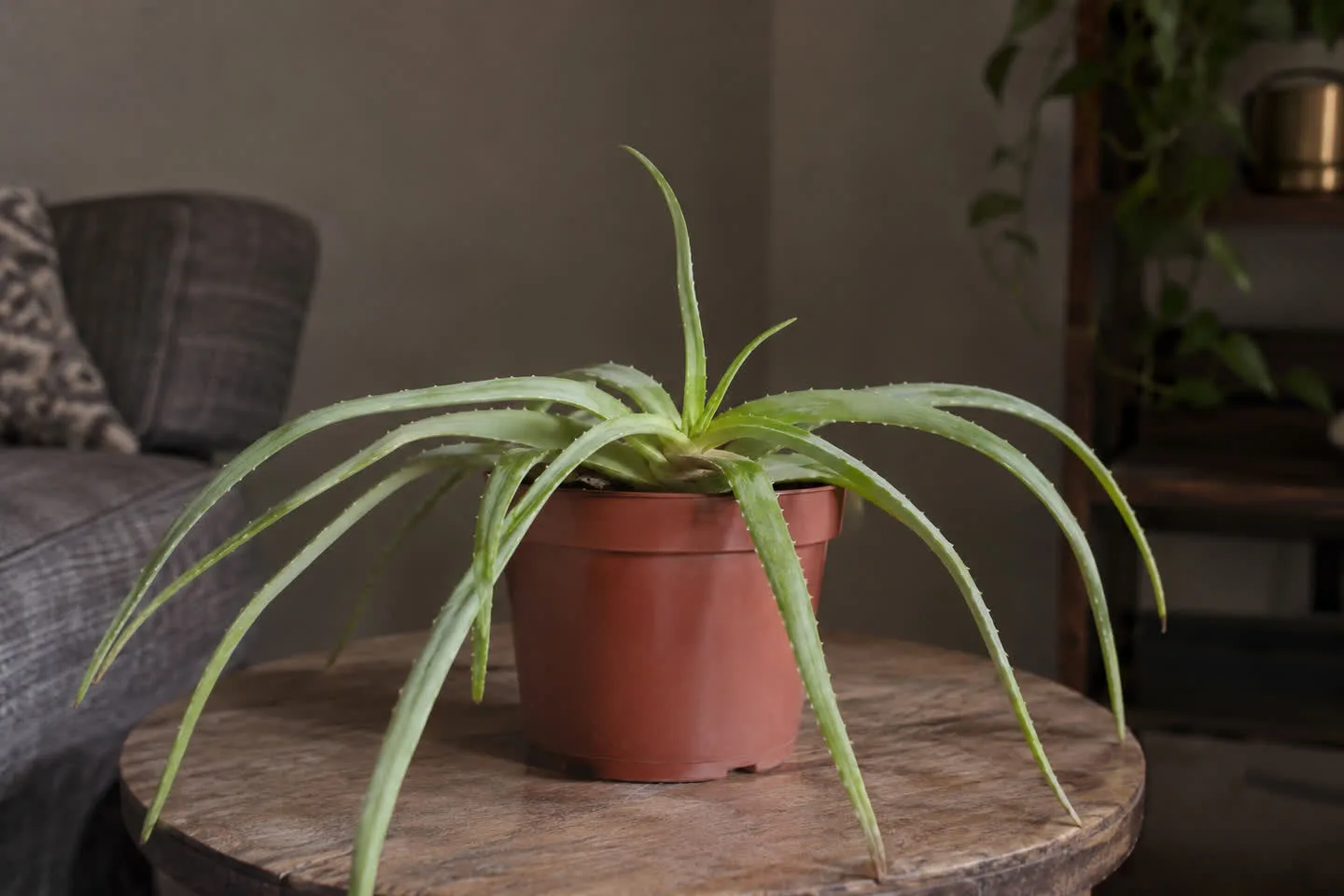
Aloes need far more light than most houseplants. NYBG recommends a window with a minimum of six hours of direct sun a day. A spot that looks bright to you, such as a north window or a shelf a few feet back from the glass, is often not enough. Our guide to reading your plant's light shows how to judge a window.
What to do:
- Move it to your sunniest window, usually south or west facing in the US. Do it gradually over a week or two so leaves that grew in shade do not scorch.
- Use a grow light if no window is strong enough. NYBG suggests a white fluorescent light 6 to 12 inches above the plant for at least 14 to 16 hours a day.
- Do not expect the stretched leaves to shrink back. They stay long and floppy. What tells you the fix worked is compact, upright new growth in the center.
- Water less while it adjusts. A plant in low light uses little water, which is how a light problem quietly turns into a rot problem.
Thirst: thin, wrinkled leaves that fold
An aloe stores water in its leaves, so when it runs dry it spends that store and the leaves deflate. They get thinner, wrinkle along their length, curl inward at the edges and can start to sag. The mix is dry to the bottom of the pot and the pot feels light in your hand.
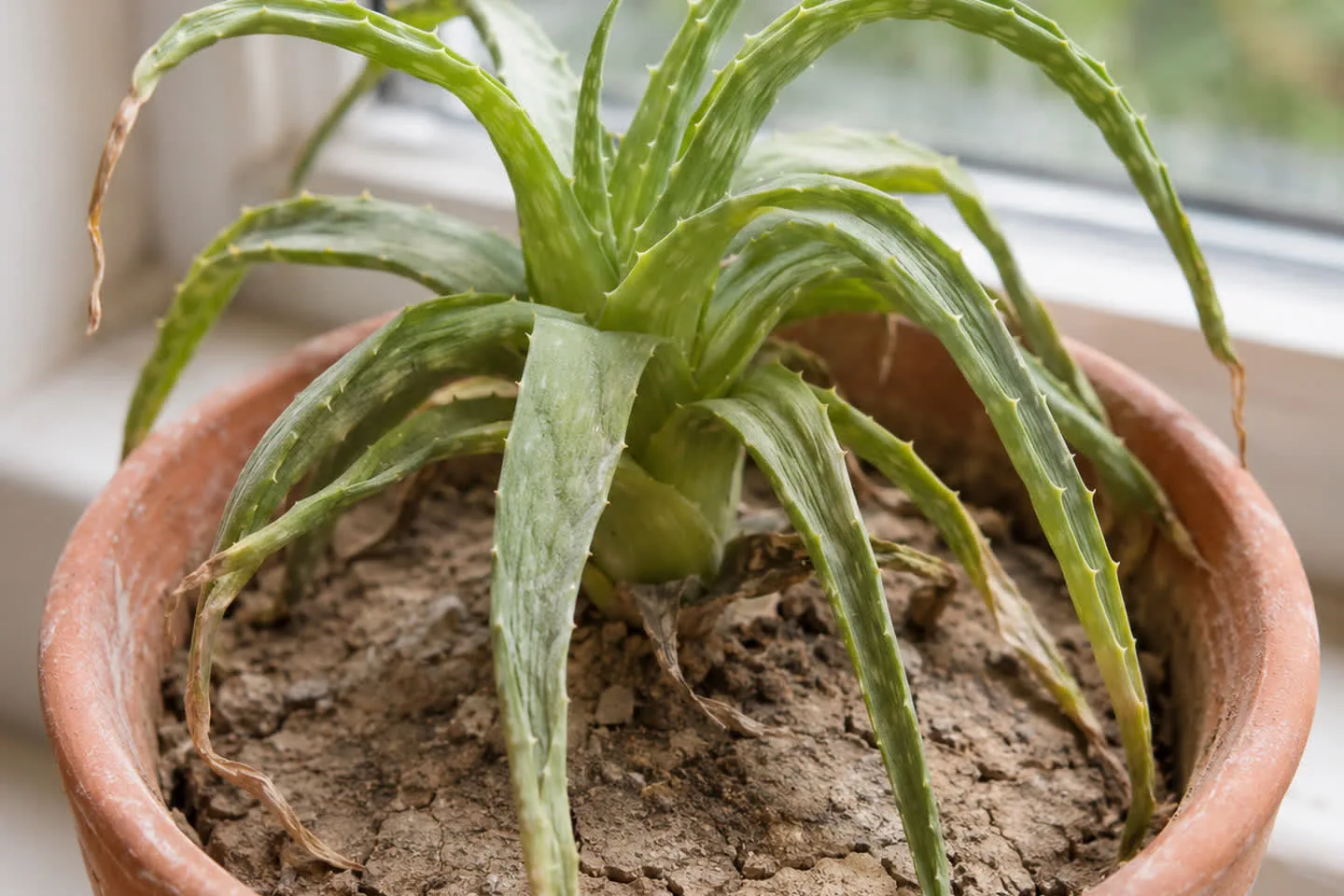
This is the easy one. Soak the pot until water runs from the drainage hole, empty the saucer after about 15 minutes, and let it dry out completely before the next soak. A thirsty aloe usually plumps up again within a few days. If it does not, check the roots: dead roots cannot take up water, so a rotting aloe can also look thirsty. Our guide on how often to water aloe covers the seasonal rhythm and the skewer test.
When the whole plant leans or topples over
Sometimes the leaves are fine and the plant itself is the problem. A big aloe in a small plastic nursery pot is top heavy: the rosette outweighs the pot, so it leans and eventually tips. Older aloes also grow a bare stem as the lowest leaves die off, which lifts the heavy rosette higher above the soil.
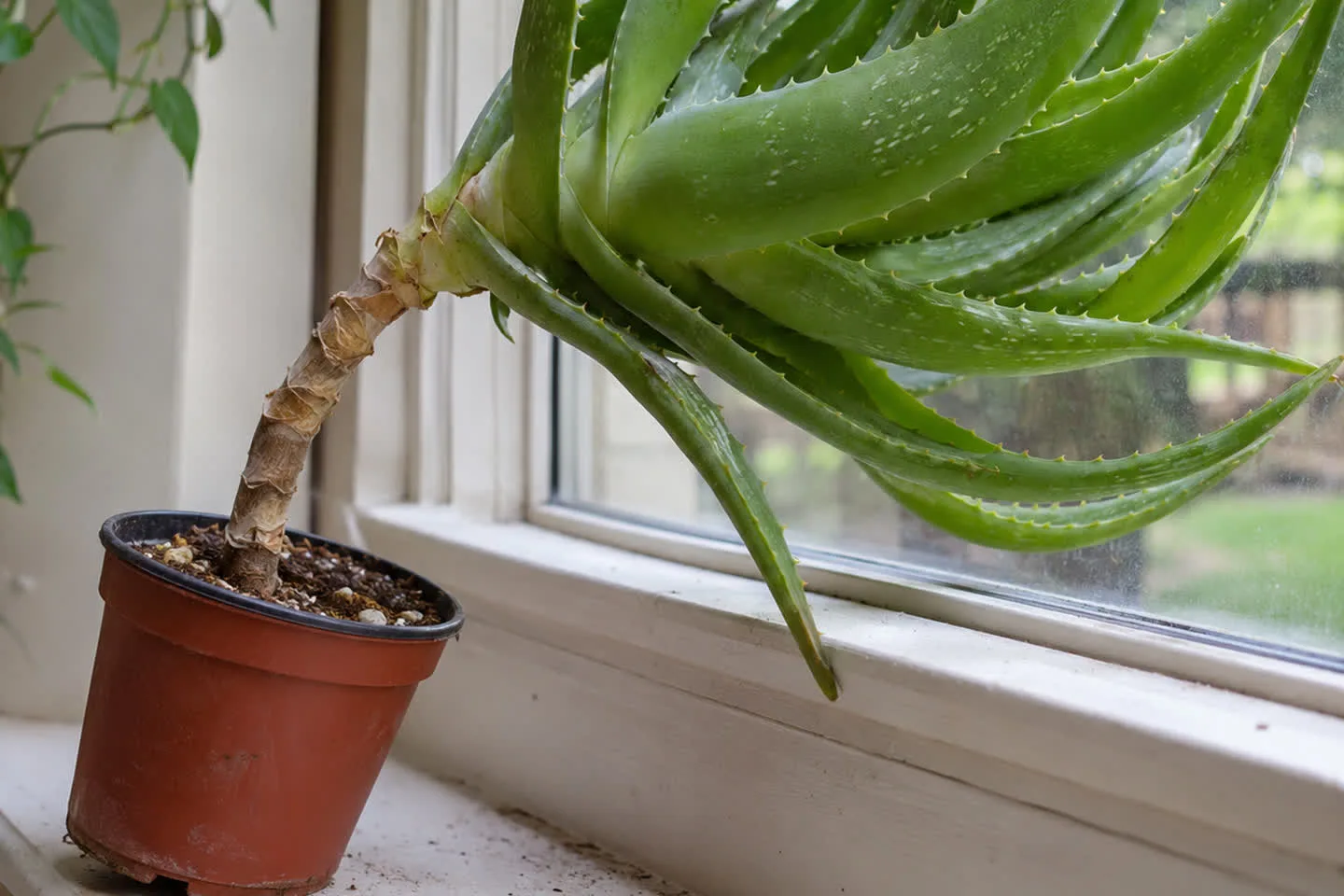
Leaning toward the window is a light signal as well. A plant that bends hard toward the glass is reaching for more sun than it gets.
How to stand it back up:
- Repot into a heavier, wider clay pot one size up, with gritty mix. The extra weight at the bottom stops tipping.
- Turn the pot a quarter turn each time you water so it does not keep leaning one way.
- Prop it briefly with a small stake or a few stones on the soil surface while new roots anchor it.
- Replant the top if the stem is long and bare. Cut the rosette off with a few inches of stem, let the cut dry for several days, and set it in dry cactus mix. It roots like a large cutting.
Cold, repotting and other less common causes
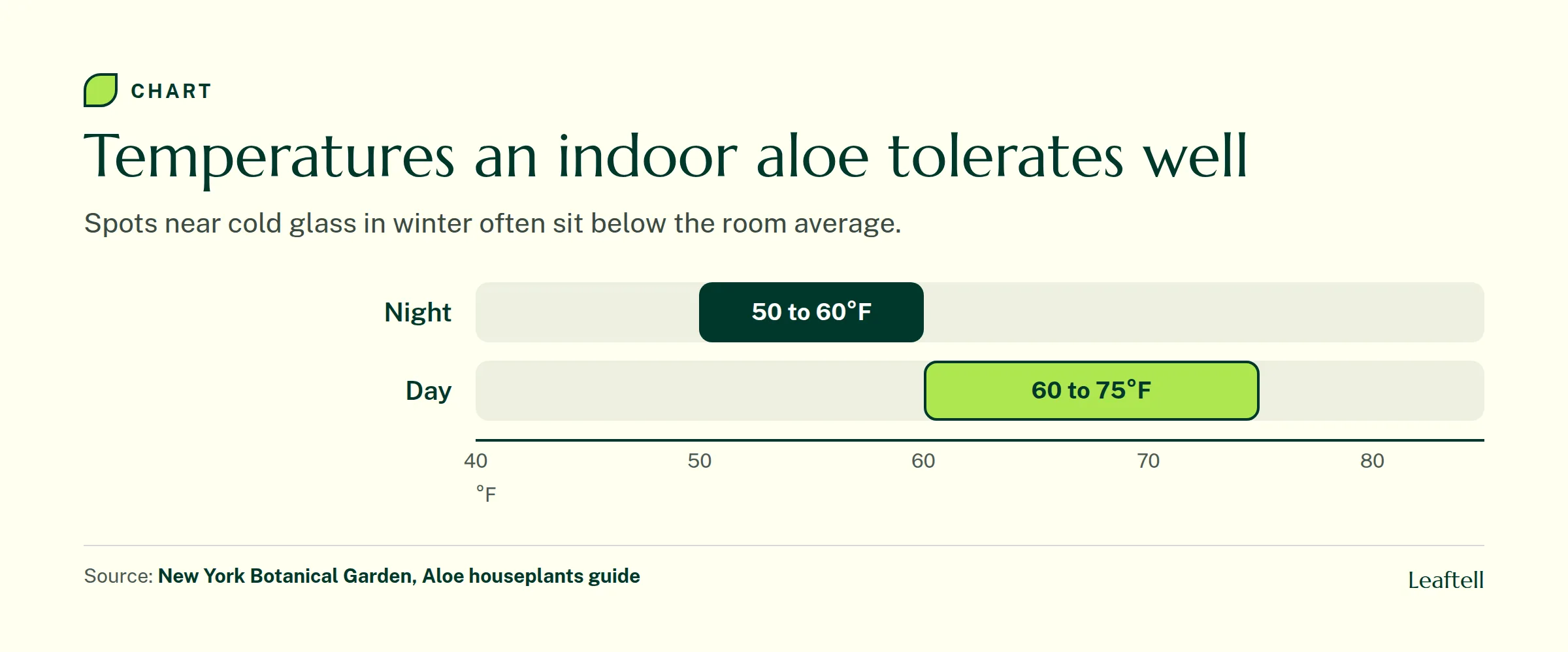
Cold. Window sills get much colder than the room in winter. NYBG says an aloe chilled on a cold sill or in a draft will discolor, and cold-damaged leaves can go limp and soft. Move the plant a little back from the glass on cold nights and away from doors and leaky windows.
A recent repot. Disturbed roots take a week or two to settle, and the plant can look a little limp in that time. Keep it dry and out of harsh afternoon sun, and do not try to fix it with extra water.
Pests. NYBG lists mealybugs as a pest that can hide in the rosette or among the roots. Look for white, cottony clusters at the leaf bases. Our guide to mealybugs on plants covers the least-toxic way to clear them.
Normal aging. NYBG notes it is natural for the older outer leaves of a mature aloe vera to droop and sprawl away from the center. If only the bottom ring lies low and the center stands up firm and green, your aloe is simply growing up.
If several things went wrong at once, such as dark corner, dense soil and a pot without a hole, fix the light and the drainage together. Our aloe vera care guide covers the full setup, from soil to pot size.
Can a drooping aloe recover?
Usually yes, if the roots are still alive and you fix the cause, but not every leaf will stand up again. A thirsty aloe often firms up within days of a soak. Leaves that flopped from low light or rot rarely lift, so judge recovery by the new growth in the center.
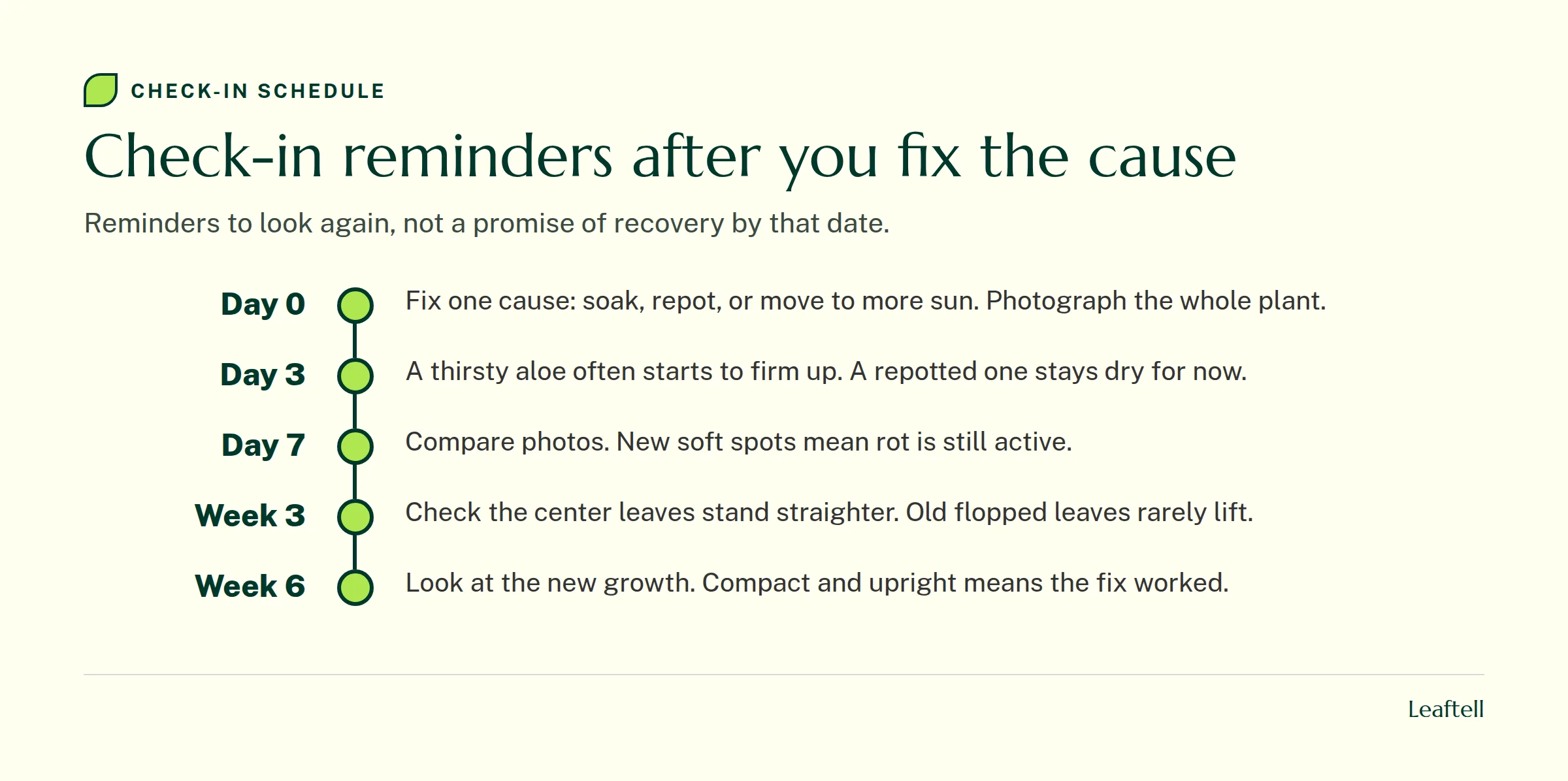
Fix one cause at a time and give it a few weeks before changing anything else. Trim leaves that are soft at the base, leave firm ones in place, and compare photos taken a week apart. If the whole plant is beyond saving, pups and firm leaf cuttings can restart it. For drooping on other houseplants, see our general guide to why plants droop.
Check your aloe in Leaftell
If you cannot tell whether your aloe is thirsty, rotting or just reaching for light, check your aloe in Leaftell. Send a photo of the whole plant from the side, a close-up of where the leaves meet the soil, and a note on what the skewer showed, since a photo cannot see the bottom of the pot. Then take a fresh photo as a check-in reminder in about seven days and compare.
Check your growing conditions with the plant watering calculator.
Frequently asked questions
Usually the plant is top heavy for its pot, the stem has grown long and bare, or it is leaning hard toward too little light. Repot into a heavier, wider clay pot, move it to a sunnier window, and if the stem is long and bare, cut the top off and replant it as a cutting.
Yes, as long as some roots or the base of the stem are still firm. Unpot it, cut away mushy roots and soft leaves, let it dry for a few days, then repot in dry cactus mix. If the whole base is soft, root a healthy pup or a firm leaf instead.
Only when the mix is dry all the way to the bottom of the pot, then soak it until water drains. Indoors that often means every week or two in spring and summer and much less from October to February, but check the pot rather than the calendar.
The leaves turn soft, swollen or translucent at the base, may go yellow or brown, and collapse outward over the rim while the mix is still wet. Unlike a thirsty aloe, it does not perk up after watering, so stop watering and check the roots.
Share article
About the author

Keep checking your plant
Plant care reference
Indoor plant care
Build a routine around your plant, light and potting mix.
Plant care reference
Why is my plant dying
Trace leaf and root symptoms before choosing a care change.
Plant care reference
Pothos plant care
Choose a growing spot and prune a trailing pothos for fuller growth.
Plant care reference
How to fix root rot
Inspect root firmness and drainage, then decide whether to repot.