How Often to Water Aloe: Read the Pot, Not the Calendar
Filip Leszczyński Updated 4 November 2026 10 min read
In this article
Water an aloe only when the potting mix is dry all the way to the bottom of the pot, then soak it until water runs out of the drainage hole. Indoors that often works out to roughly every one to two weeks in spring and summer and about once a month or less from October to February, but the dry pot decides, not the date.
Here is the part most schedules miss: an aloe pot dries from the top down. The surface can look bone dry while the bottom third, where the roots sit, is still wet. That hidden wet layer is what rots aloes. A thirsty aloe plumps back up within days of a soak; a rotting one often does not come back. So when you are not sure, wait and check deeper.
A rough rhythm, then the real rule
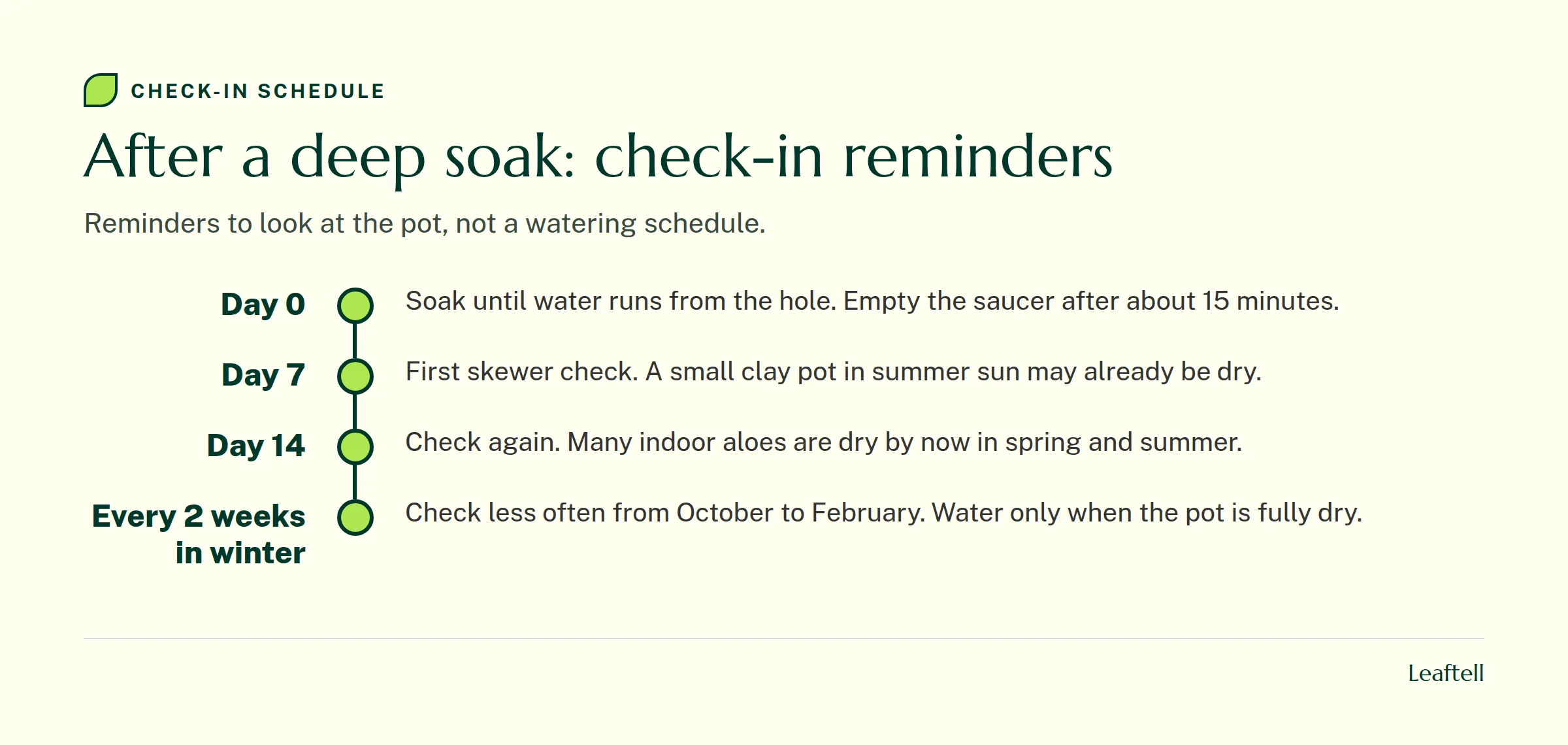
If you want a number to start from, the common rule of thumb for a potted indoor aloe is a soak every week or two during the growing season and roughly monthly in winter. Horticulture.co.uk gives that same rough range, and the New York Botanical Garden treats October through February as the rest months, when an aloe wants extended dry spells.
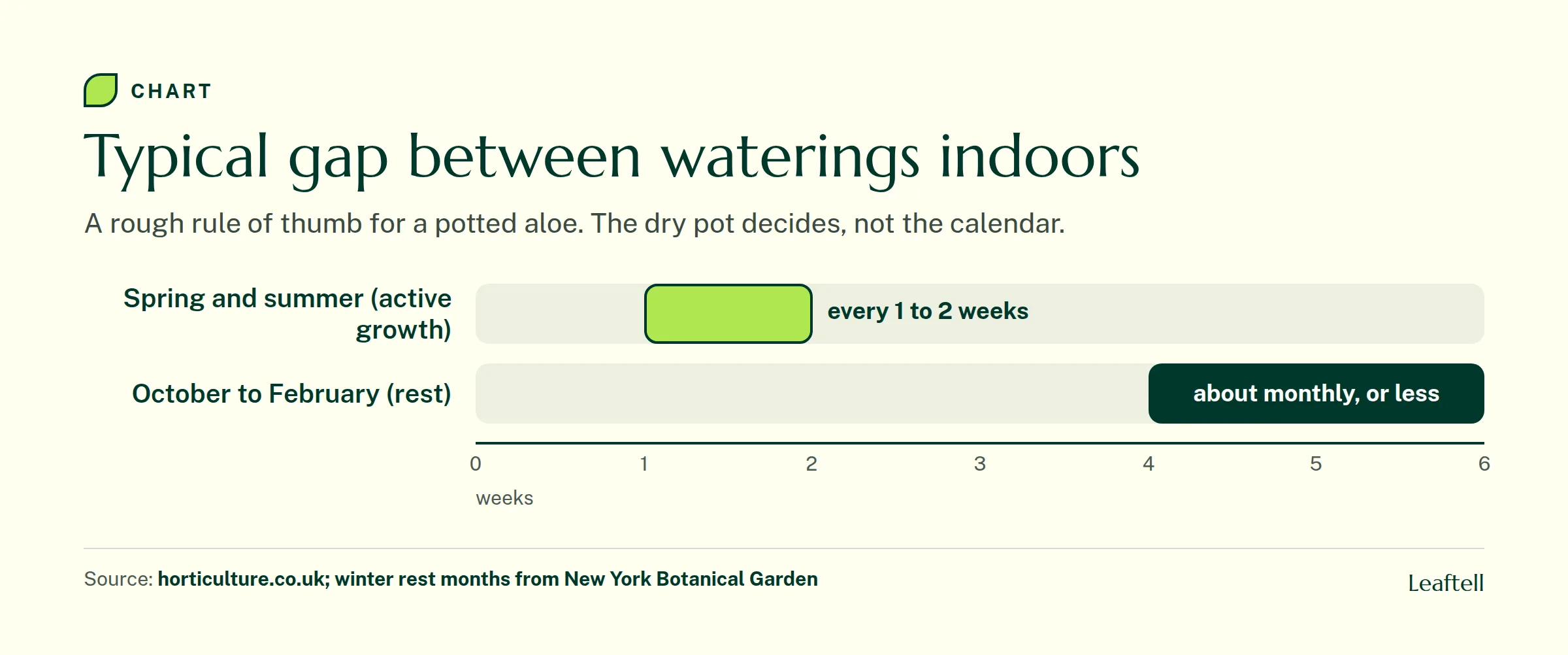
Treat those numbers as reminders to check, not as watering days. NC State Extension puts the actual rule plainly: let the soil dry completely between waterings, and water less in winter. Everything below is about reading when "completely dry" has arrived in your pot.
How often to water aloe in your setup
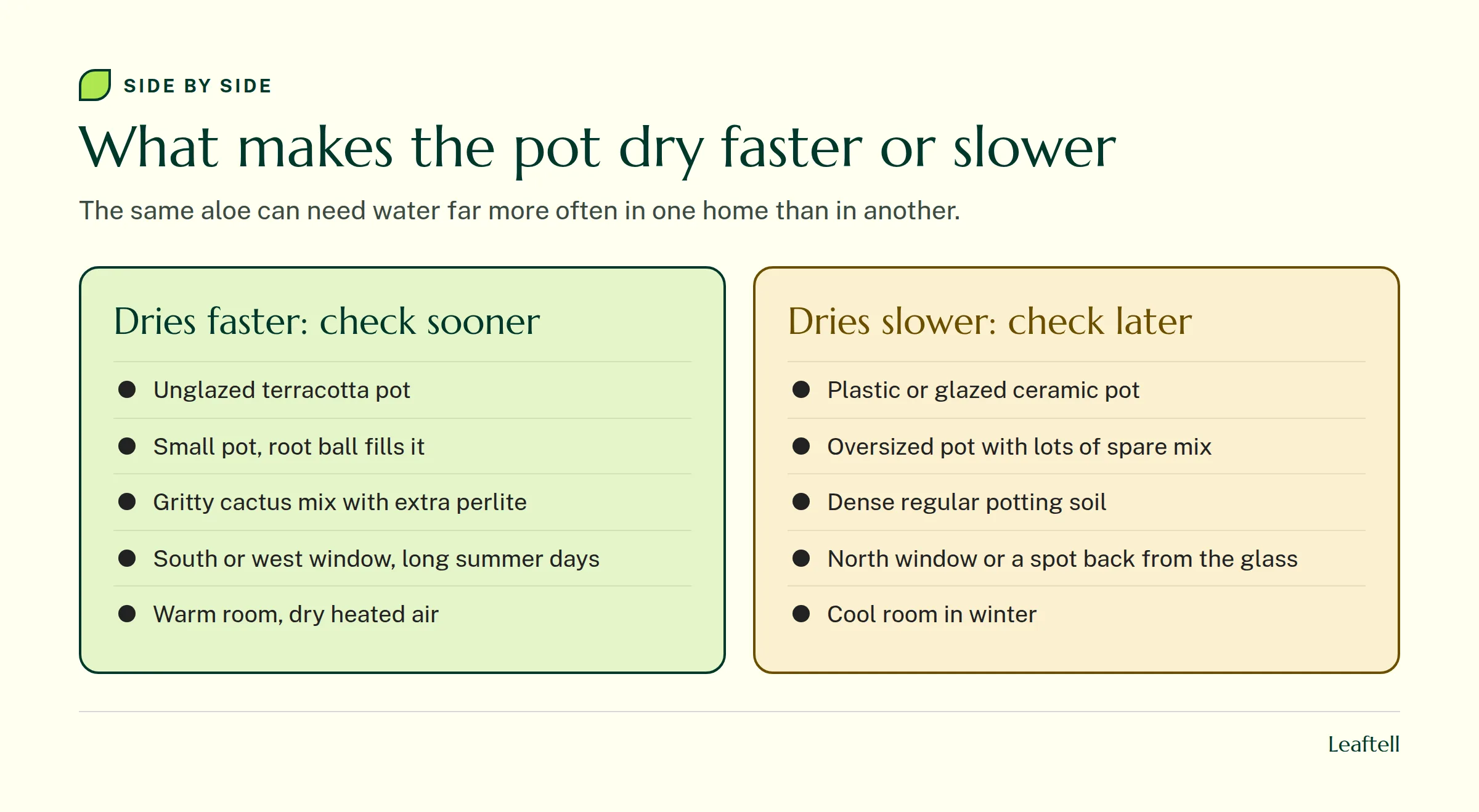
The same plant can be dry in five days in one home and still damp after three weeks in another. Find the row closest to yours. The check-in column is a reminder to look, not a promise the pot will be dry.
| Your setup | How fast the pot dries | First check-in reminder | What to watch for |
|---|---|---|---|
| Small terracotta pot, south or west window, summer | Fast | About 5 to 7 days after a soak | Thin, slightly curled leaves mean it ran dry a little early |
| Medium plastic or glazed pot, bright window | Moderate | About 10 to 14 days | Pot still heavy at day 14: wait, do not top up |
| Large aloe in a big pot | Slow at the bottom | About 2 weeks, then weekly | A dry surface over a wet core |
| Any aloe, October to February | Slow | Every 2 weeks or so | Water only when the whole pot is dry and light |
| Just repotted or a fresh pup | Roots still healing | Wait about a week before the first soak | Soft base after watering means the roots were damaged |
| Outdoors on a patio in summer | Fast, unless it rains | After every few dry days | Rain fills the pot and saucer; tip out standing water |
Large aloes deserve their own warning. A big plant in a deep pot uses more water, so the top dries quickly and looks thirsty, but the mix at the bottom of a deep pot can stay wet for a long time. Check with a skewer that reaches the bottom before every soak.
Why the calendar fails: the pot dries from the top
Sun and air dry the surface first. The last moisture in the pot sits at the bottom, around the shallow roots and just above the drainage hole. A finger in the top inch only reads the part that dried first.
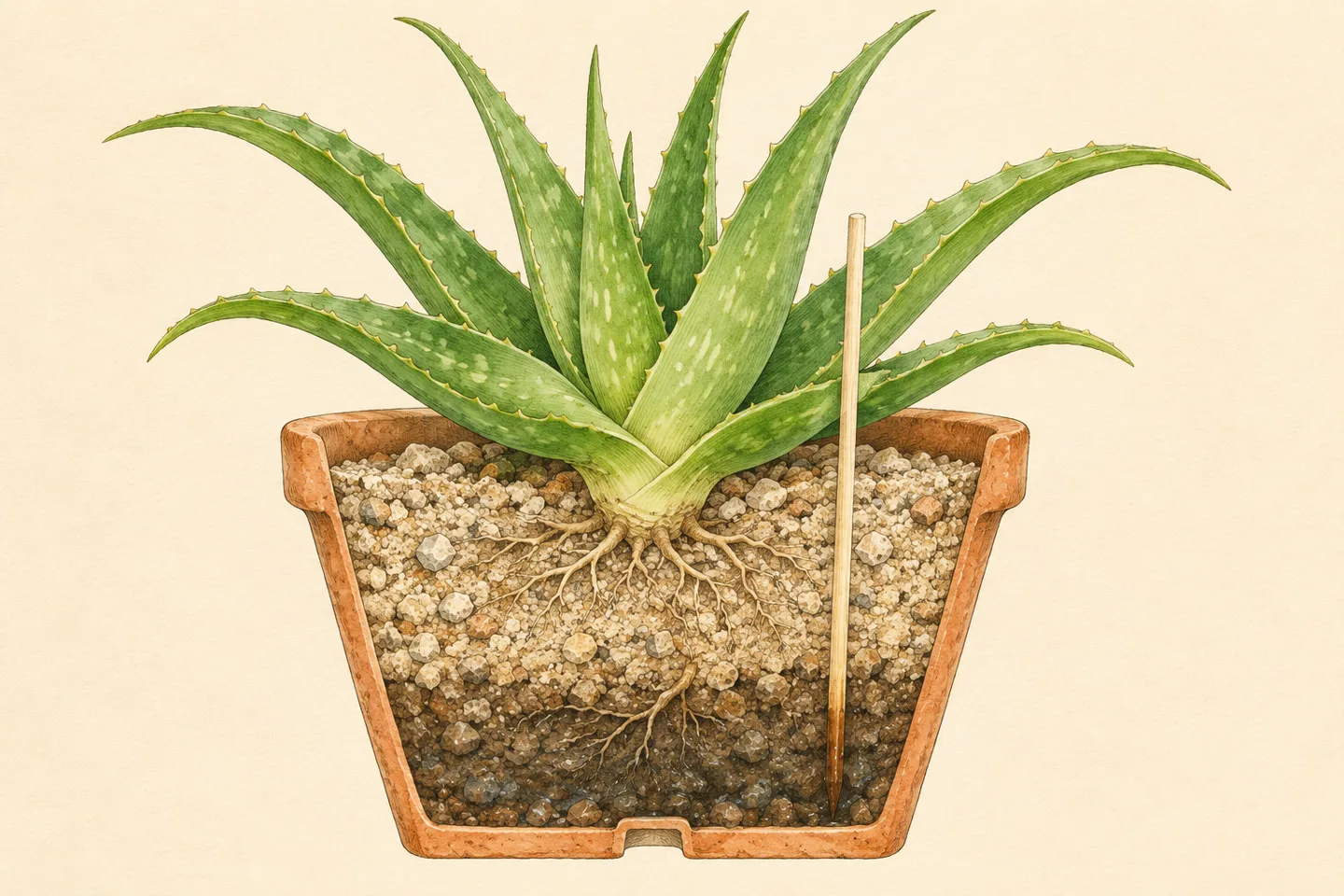
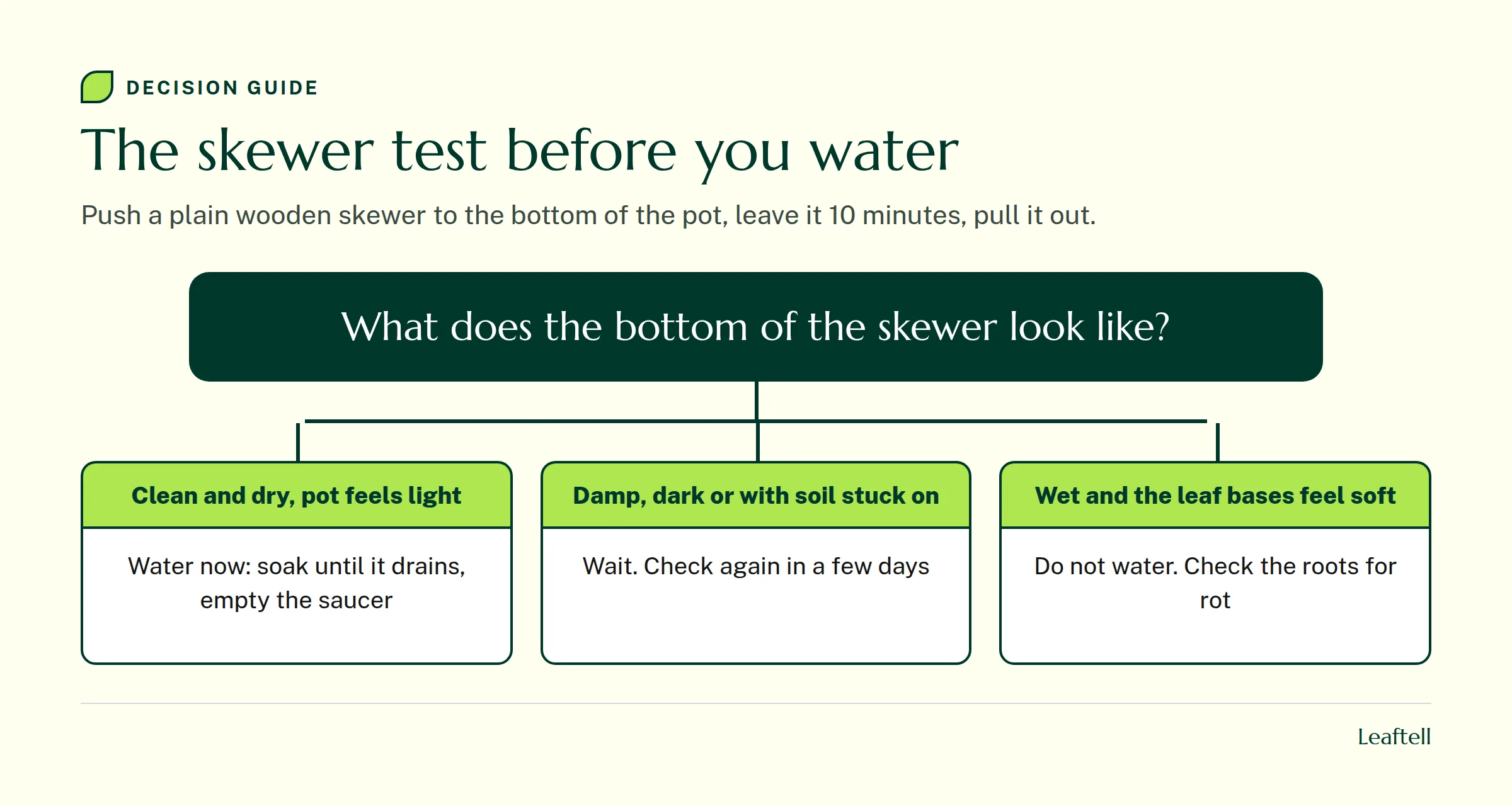
That is why a skewer beats a finger for aloes. A plain wooden skewer pushed to the bottom of the pot shows what the roots are sitting in. If you are still unsure how to read soil, our guide to checking wet or dry soil before watering compares the skewer, finger and pot weight methods.
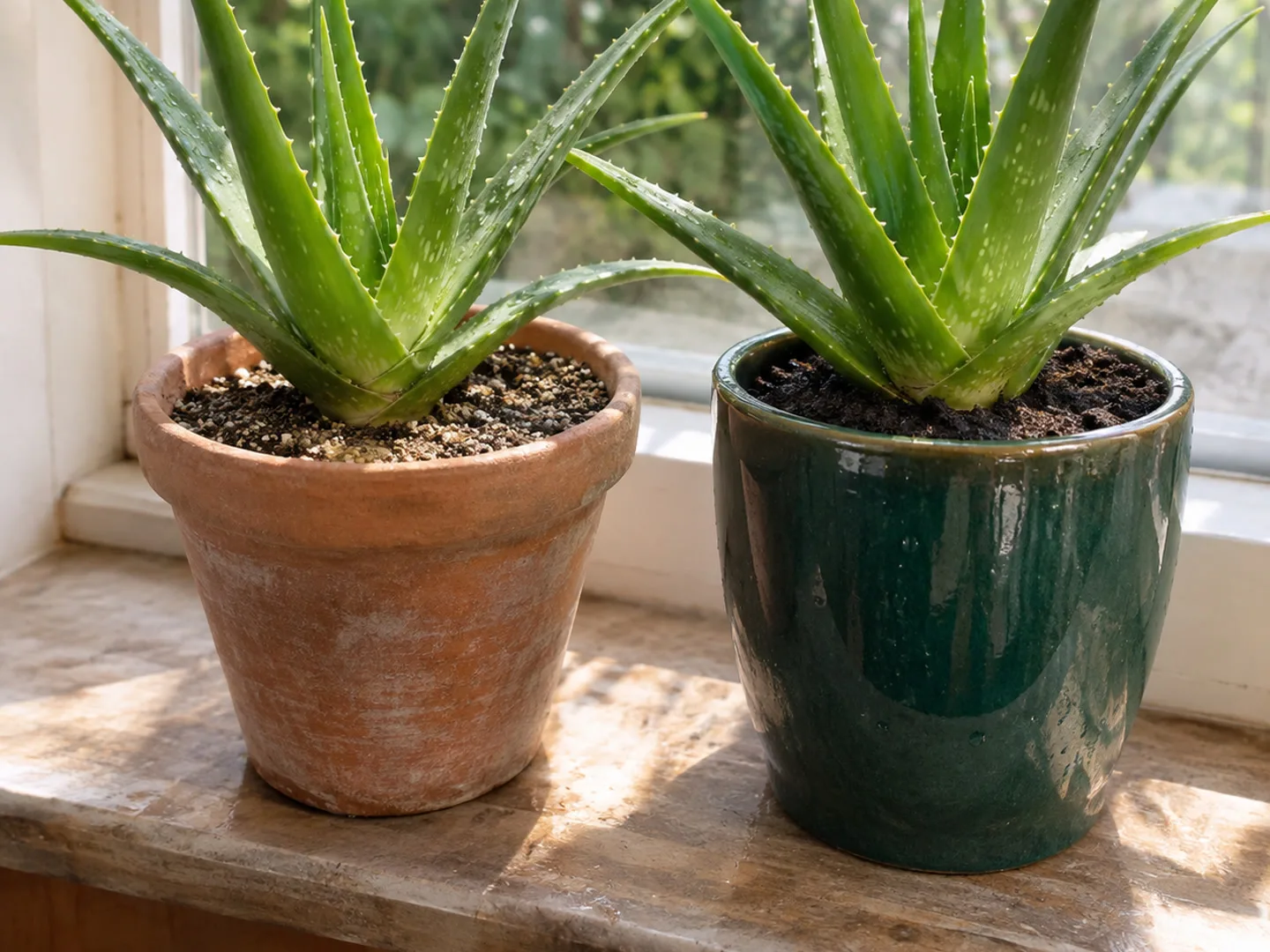
The pot itself changes the timing more than most people expect. Unglazed terracotta breathes and pulls water out through its walls; plastic and glazed ceramic hold it in. NC State calls clay the best choice for aloe for exactly this reason.
Light is the other big lever. An aloe in a dim spot uses little water, so the pot stays wet longer and rot sets in faster. NYBG asks for at least six hours of sun a day. If your window falls short, the fix is more light, not less water alone; reading your plant's light shows how to judge a window.
How to tell if your aloe needs water
Check two things before every soak: the bottom of the pot and the leaves. The pot tells you whether water is available; the leaves tell you whether the plant is using it.
Lifting the pot is the fastest second check. Right after a soak, feel its weight once. A fully dry pot is noticeably lighter, and after a few rounds you will feel the difference without the skewer.
How to water an aloe vera plant
- Check the bottom of the pot
Push a wooden skewer to the bottom, leave it about 10 minutes and pull it out. Water only if it comes out clean and dry and the pot feels light.
- Water the soil, not the rosette
Pour slowly onto the mix around the plant. NYBG warns against letting water stand in the leaf rosette, where it can start rot.
- Soak until it drains
Keep going until water runs freely from the drainage hole, so the whole root zone is wet, not just the top.
- Empty the saucer
Check back after about 15 minutes, as NYBG suggests, and tip out any water left in the saucer or cachepot.
- Let it dry completely
Put the can away until the skewer comes out dry again. Skip misting: aloes do not need humidity, and NYBG advises against it.
Thirsty or overwatered? Read the leaves
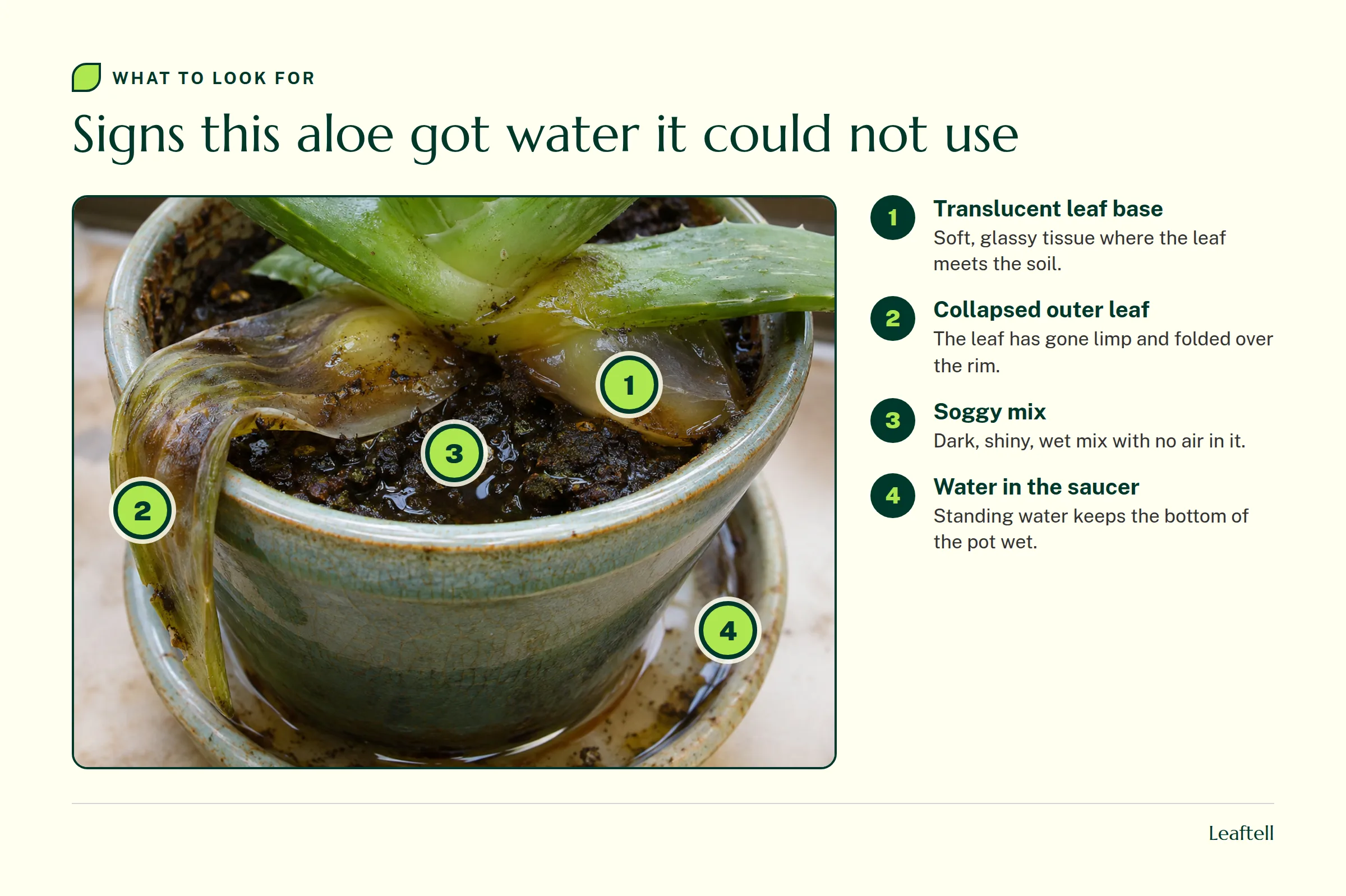
Both problems change the leaves, but in opposite directions. Underwatering makes leaves thinner; overwatering makes them softer.
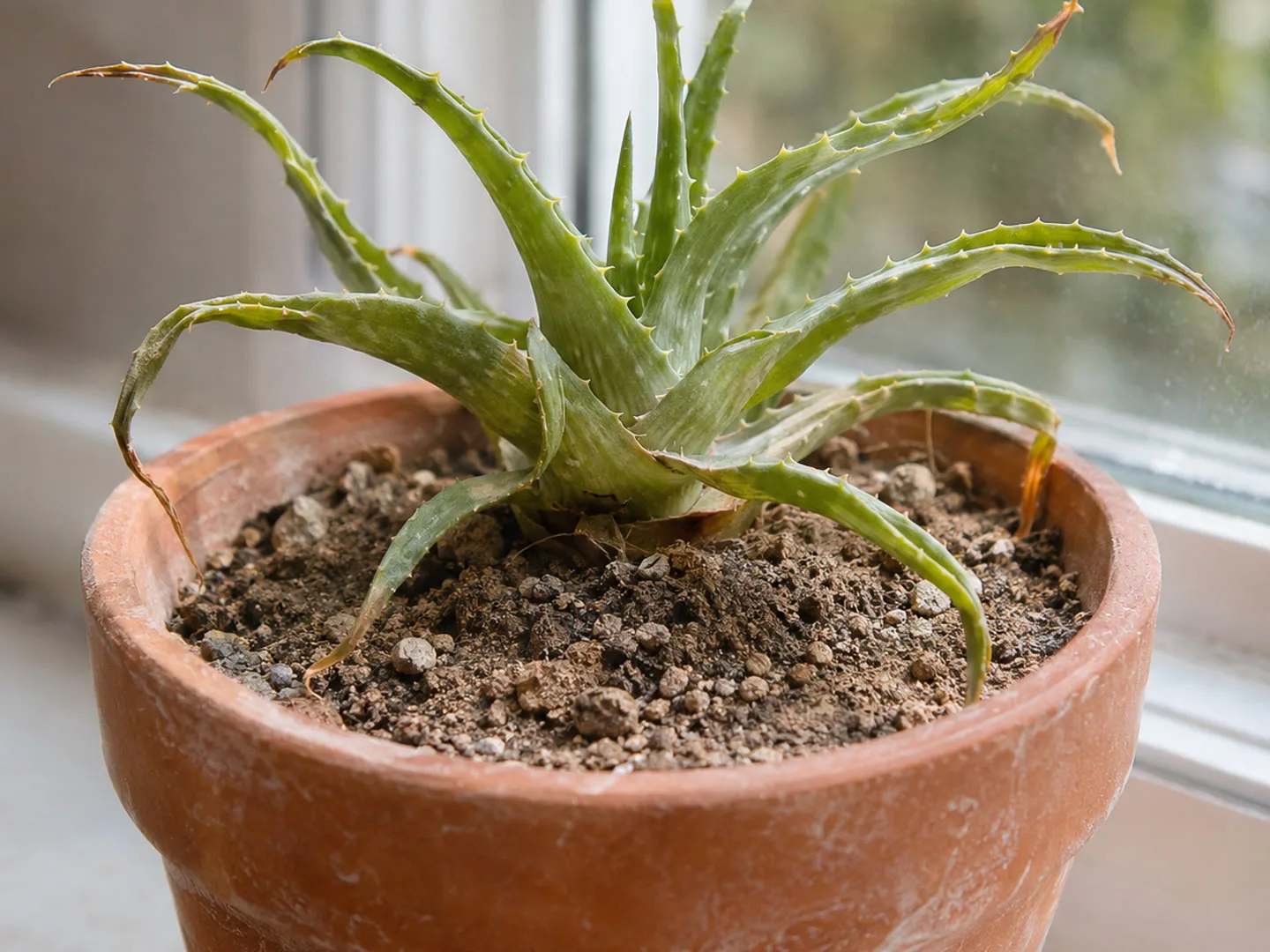
Thirsty. Leaves look thin, slightly wrinkled and curl inward along the edges, sometimes with dry brown tips. The mix is dry from top to bottom and the pot feels light. Give it a full soak. The leaves usually firm up again over the following days.
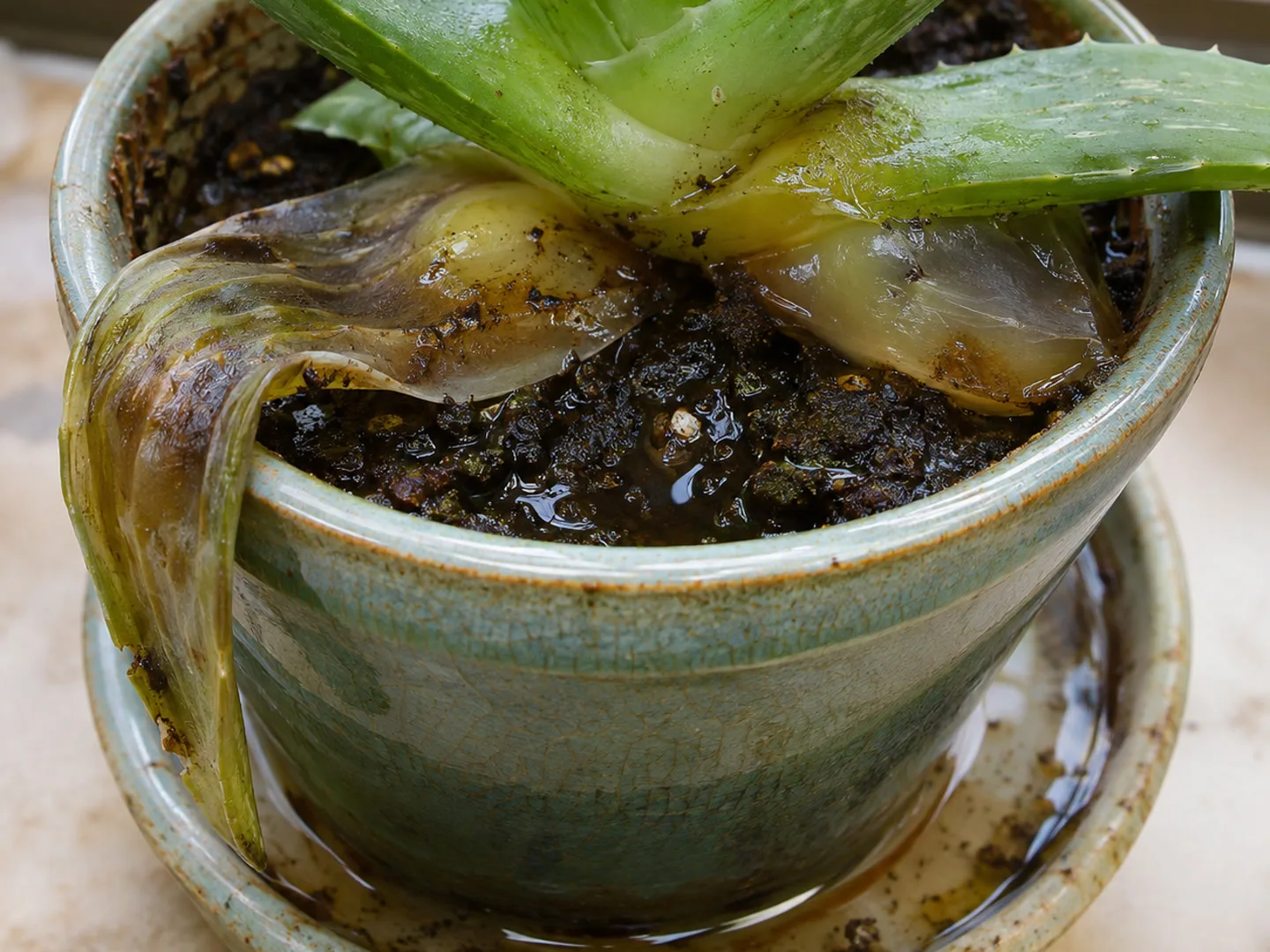
Overwatered. Leaf bases turn soft, glassy or translucent, often with yellow or brown patches, and outer leaves may collapse while the mix is still damp. Do not water. Lift the plant and check the roots: firm and pale is fine, dark and mushy is rot. If the leaves are flopping but still feel firm, the problem may be light rather than water: see what makes aloe leaves droop.
If the roots are soft and dark, the root rot guide covers how much to trim and when it is smarter to restart from a healthy pup. For symptoms that are harder to read, compare them against the signs of an overwatered plant or the wider checks in why succulents start dying.
Watering mistakes that cost aloes
- Small sips every few days. A splash wets only the top inch, keeps the surface damp and never reaches the roots evenly. Soak fully, then wait.
- A pot without a drainage hole. Decorative cachepots and shallow succulent bowls trap water at the bottom. NYBG says a drainage hole is a must; keep the aloe in a plastic or clay pot with a hole and lift it out to water.
- Regular potting soil. Dense mix holds water for too long around aloe's shallow roots. Use a cactus and succulent mix, or add perlite or coarse sand. Our succulent care guide covers mixes in more detail.
- Watering on the summer schedule in winter. From October to February the plant rests and the pot dries far more slowly. Keep checking, but expect long gaps.
- Blaming brown spots on thirst. NYBG notes some aloes react to fluoride in tap water with brown spotting. Rainwater or filtered water helps; more water does not. See brown tips on leaves for the other common causes.
Check your aloe in Leaftell
Watering an aloe is one rule repeated: wait until the whole pot is dry, then soak it and drain it. Let the season, the pot and the window set how long that wait is, and let a skewer at the bottom of the pot have the final say. For light, soil, repotting and pups, the full aloe vera care guide covers the rest of the routine. Your other succulents follow the same soak and dry rule, and our succulent watering guide shows how pot size and winter rest change the wait.
If the leaves are changing and you cannot tell thirst from rot, check your aloe in Leaftell with a photo of the whole plant, a close-up of the leaf base, and a note on what the skewer showed. A photo cannot see the bottom of the pot, so that note matters most. Take a fresh photo as a check-in reminder in about seven days and compare.
Check your growing conditions with the plant watering calculator.
Frequently asked questions
Push a wooden skewer to the bottom of the pot and leave it for about 10 minutes. If it comes out clean and dry and the pot feels light, water. If it is damp or has soil stuck to it, wait a few days and check again.
Its leaves turn soft, swollen or translucent, usually starting at the base, and may yellow, brown or collapse over the rim while the mix is still wet. Stop watering, lift the plant and check the roots for dark, mushy rot.
Often, yes. If the pot stays heavy and damp for weeks, the mix is too dense or the pot is too big or has no hole. Repot into a gritty cactus mix in a clay pot with a drainage hole, then wait about a week before the first soak.
Share article
About the author

Keep checking your plant
Plant care reference
Indoor plant care
Build a routine around your plant, light and potting mix.
Plant care reference
Why is my plant dying
Trace leaf and root symptoms before choosing a care change.
Plant care reference
Pothos plant care
Choose a growing spot and prune a trailing pothos for fuller growth.
Plant care reference
How to fix root rot
Inspect root firmness and drainage, then decide whether to repot.