Why Is My ZZ Plant Drooping? Check the Rhizomes First
Filip Leszczyński 10 November 2026 13 min read
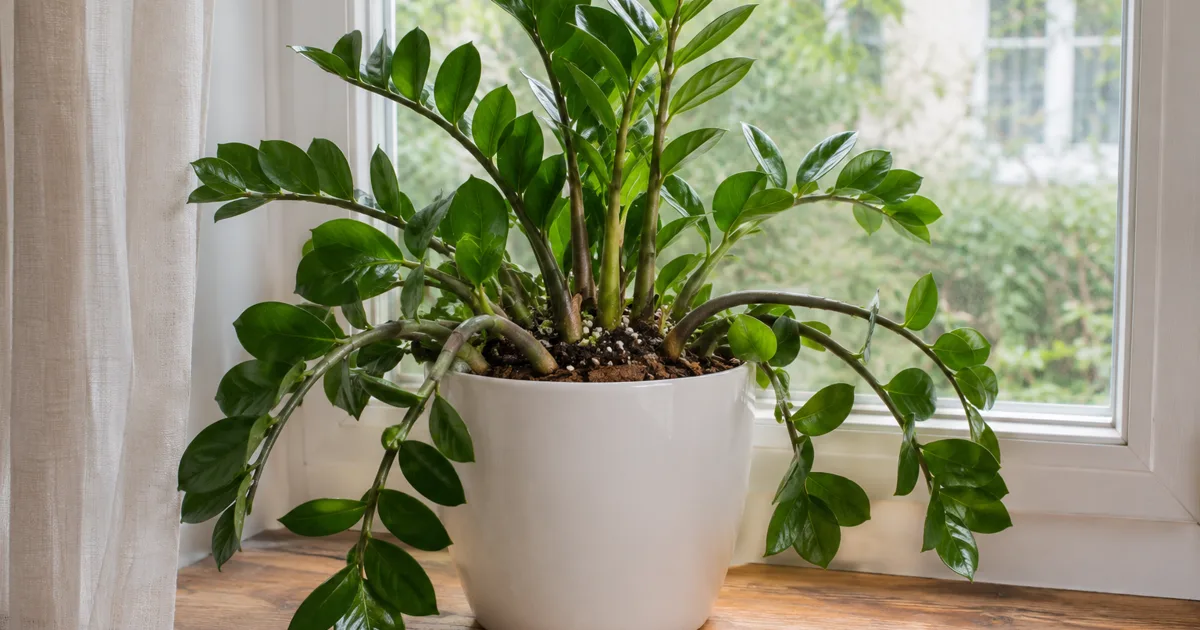
In this article
A drooping ZZ plant is usually getting too much water, not too little. Its stems flop when wet soil starts rotting the potato-like rhizomes under the surface, so the first move is to stop watering and check the soil. Low light, a recent repot, cold and stems that have simply grown too tall and heavy cause most of the rest.
The thing to remember: ZZ plants store water in those rhizomes and in their thick stems, so they almost never droop from thirst. That means the usual instinct to water a limp plant is exactly wrong here. Feel the soil before you reach for the watering can, and if the soil is wet, look at the rhizomes.
Three checks before you water
These three checks sort almost every drooping ZZ plant in a few minutes. Do them in this order.
- Push a finger 2 inches into the soil. Wet or damp soil on a drooping ZZ points to too much water. Bone-dry soil that has been dry for weeks is the only case where thirst is likely. Our guide to checking whether a plant needs water shows the finger test in detail.
- Squeeze a stem right where it meets the soil. Firm and green is good. Soft, yellow or black at the base means rot has started.
- Look at where the plant sits. Long stems all leaning one way mean the plant is reaching for light. A plant that was just repotted, moved next to cold glass or is very tall points to the other causes below.
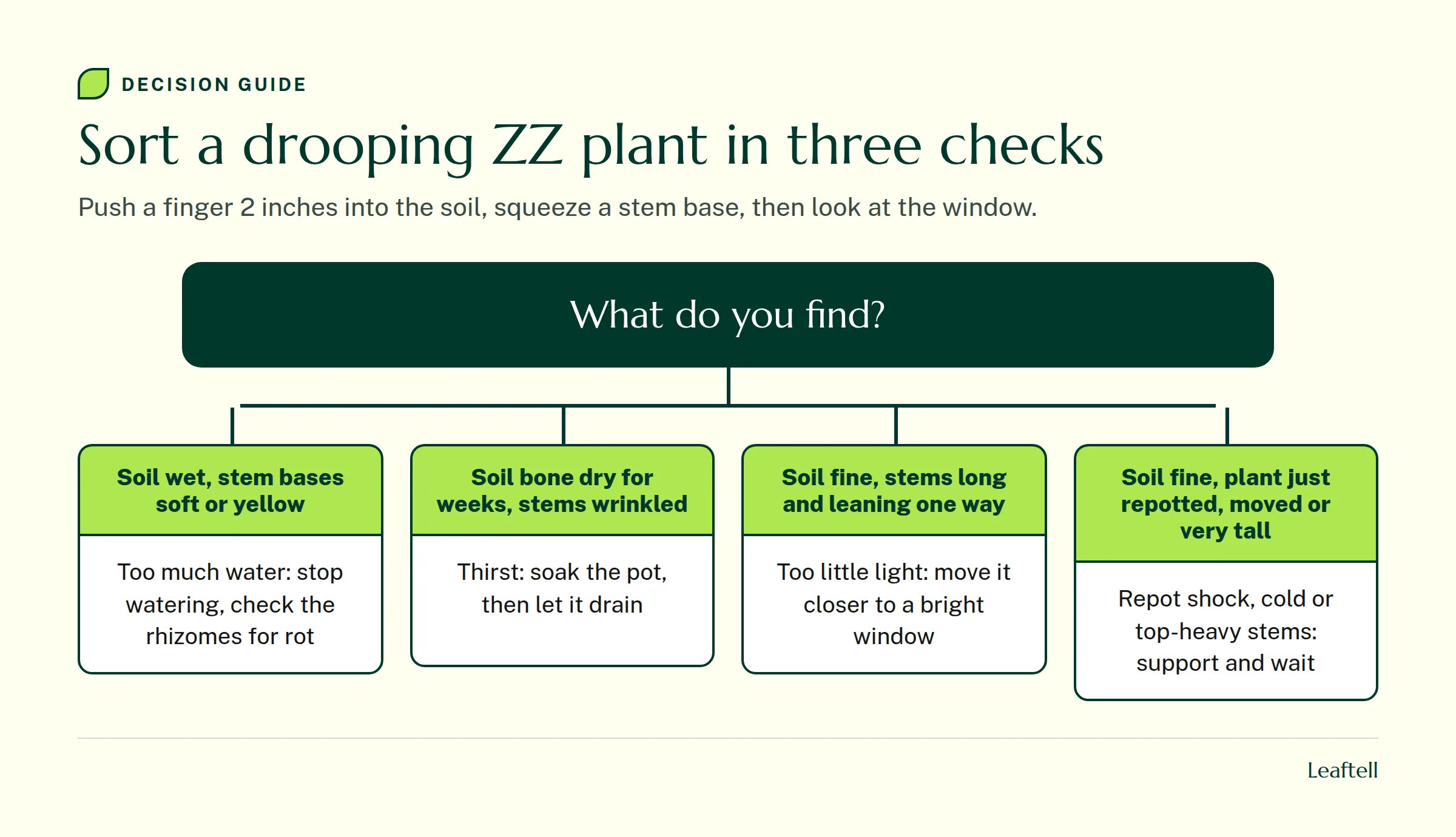
Why is my ZZ plant drooping? The causes at a glance
Match what you see to the row below, then jump to that section. If two rows fit, fix the watering first, because rot is the cause that can kill the plant.
| Cause | Soil at 2 inches | Stems and leaves | Rhizomes | First move |
|---|---|---|---|---|
| Too much water | Wet or soggy | Floppy, yellowing near the base, soft stem bases | Soft, brown, smelly | Stop watering, check for rot |
| Thirst (rare) | Bone dry for weeks | Wrinkled stems, curled leaflets | Firm but shriveled | Soak, then let it drain |
| Too little light | Damp for a long time | Long, thin, widely spaced leaflets, leaning one way | Usually fine | Move closer to a bright window |
| Fresh repot | Damp | A few stems splayed for a week or two | Recently disturbed | Bright shade, no extra water |
| Top-heavy stems | Any | Tall outer stems arching out, still firm and green | Fine | Support, turn the pot, trim |
| Cold or a draft | Damp | Dark, water-soaked leaflets, limp stems | Fine unless also wet | Move away from cold glass |
Too much water: the most common cause
ZZ plants grow from thick rhizomes that hold water, and they do not tolerate wet feet. NC State Extension's plant profile describes the plant as highly drought tolerant and recommends letting the soil dry out between waterings, treating it much like a succulent. Water it on a fixed schedule, especially in a dim room or in winter, and the soil stays wet long enough for the rhizomes to start rotting.
The signs come in a set: soil that is still damp days after watering, stems that lean and flop at the base, and leaflets yellowing from the bottom of the stem up. Water sitting in the saucer makes it worse. If your plant is yellowing more than drooping, our guide to ZZ plant leaves turning yellow covers that side of it.
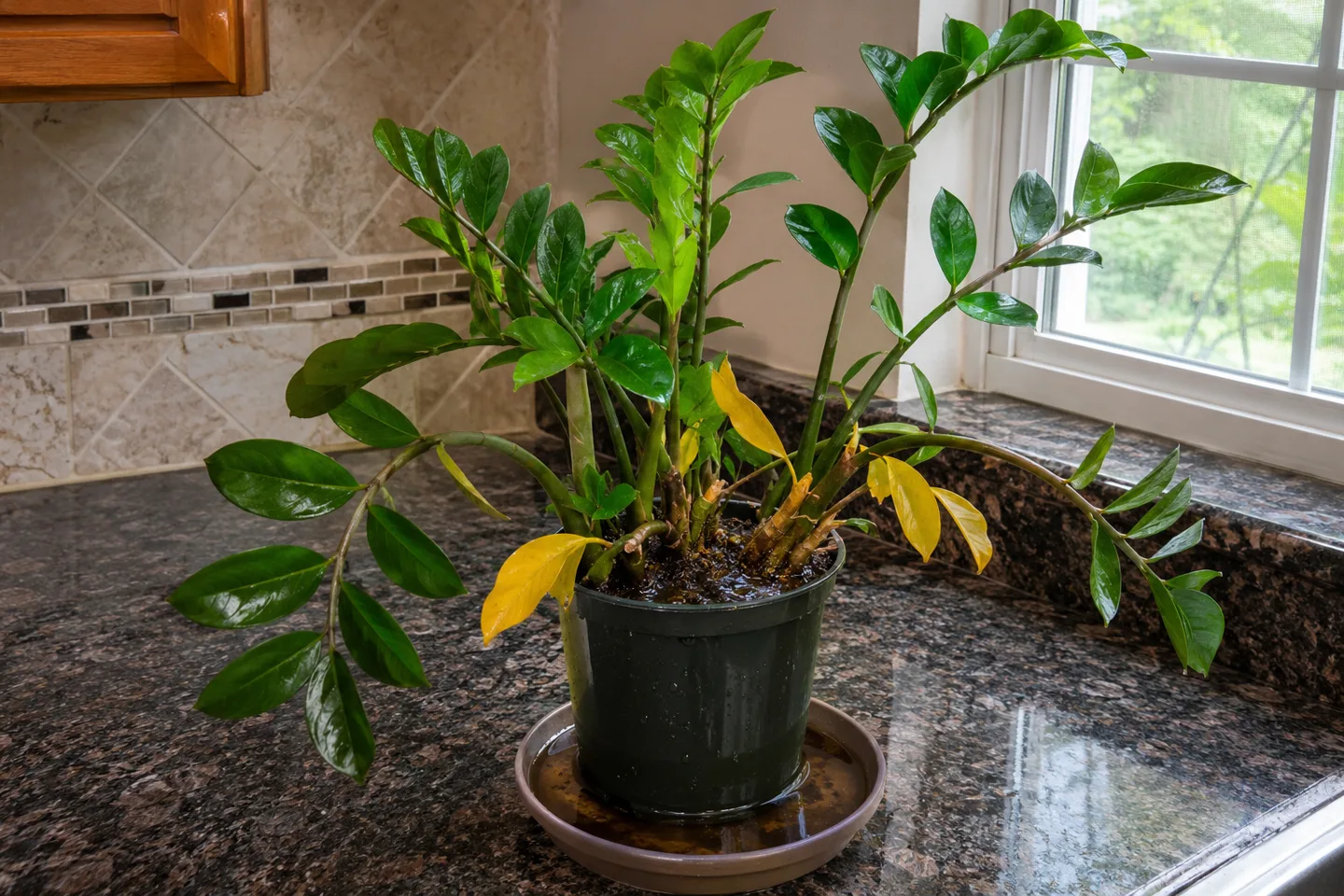
What to do depends on what you find under the soil:
- Soil wet, stem bases still firm: empty the saucer, stop watering and let the pot dry right through. Move it somewhere brighter so it dries faster.
- Stem bases soft, or the soil smells sour: take the plant out and look at the rhizomes now. Waiting lets the rot spread.
Not sure whether you are looking at too much or too little water? Our overwatered or underwatered guide puts the two side by side.
Check the rhizomes for rot
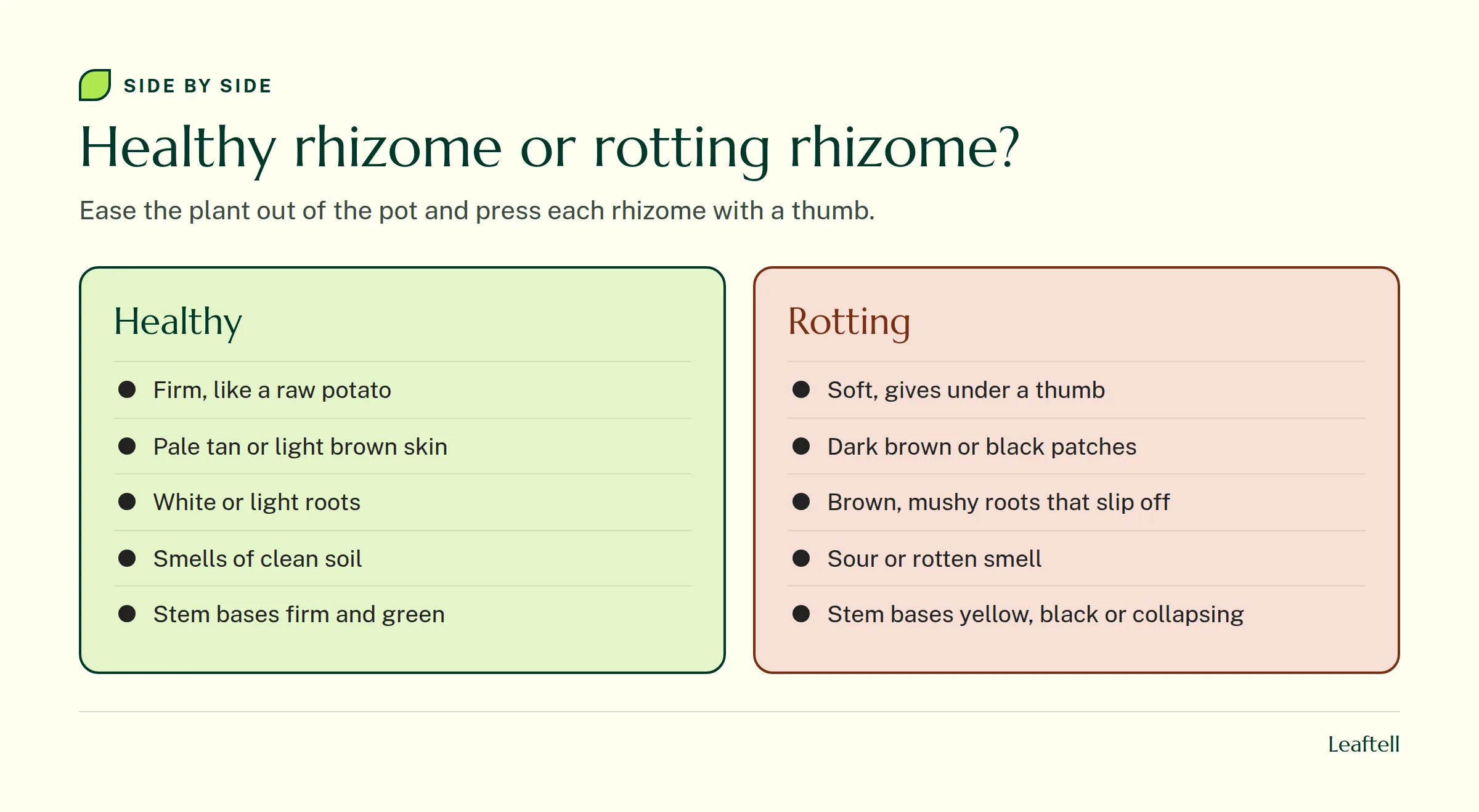
A healthy rhizome feels firm, like a raw potato. A rotting one gives under your thumb, turns dark and smells bad. Stems that grow from a rotting rhizome collapse no matter what you do above the soil.
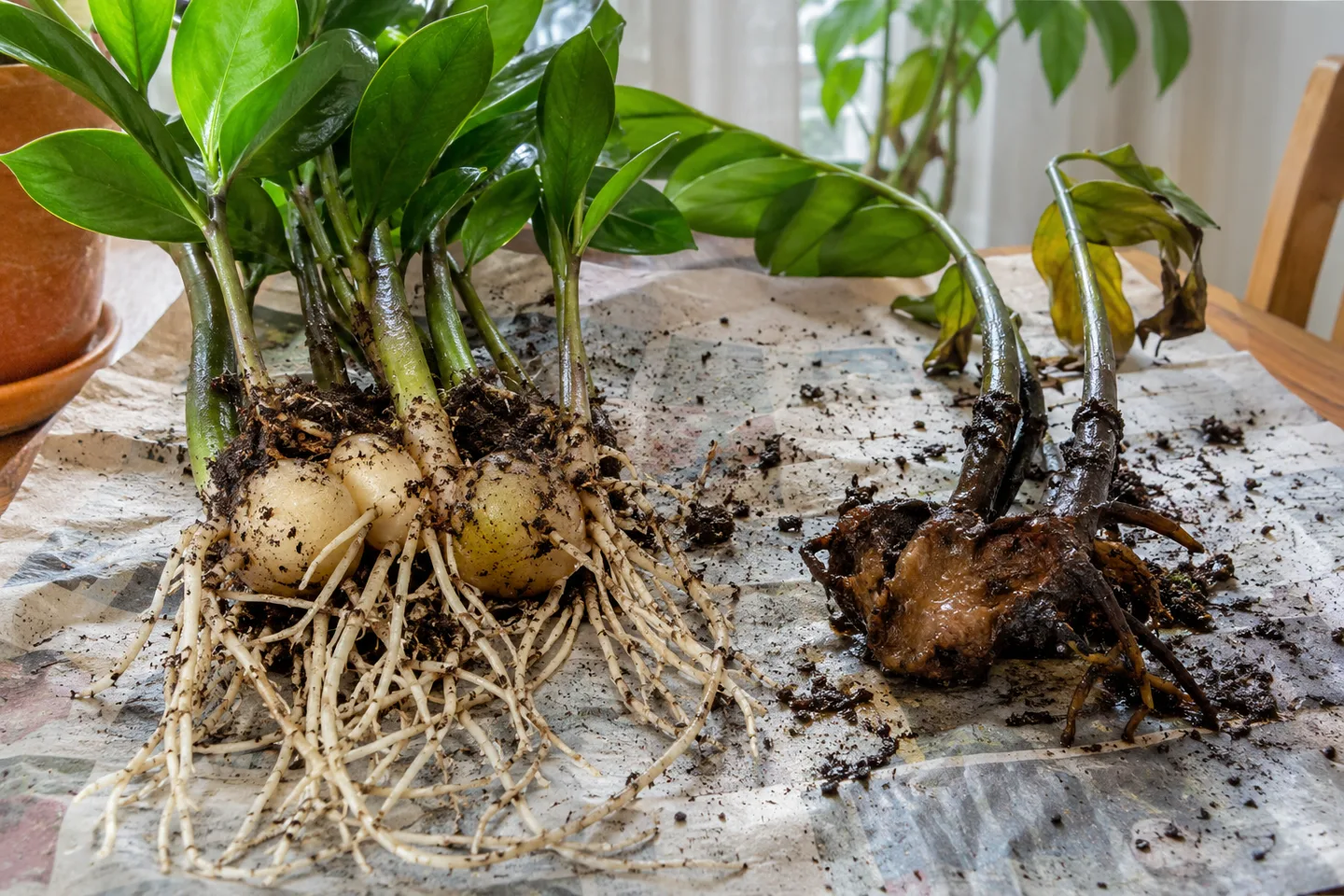
How to check and fix a drooping ZZ plant's rhizomes
- Ease the plant out
Tip the pot on its side and slide the plant out, holding it at the base of the stems. If it is stuck, squeeze a plastic pot or run a butter knife around the inside edge.
- Clear the old soil
Crumble away the wet soil with your fingers so you can see every rhizome and root. Rinse gently if the soil is heavy and sticky.
- Press each rhizome
Firm and pale is healthy. Soft, dark or smelly is rot. Check the stem bases as well.
- Cut out the rot
With clean, sharp scissors or a knife, cut away soft rhizomes, mushy roots and collapsed stems back to firm tissue. Wipe the blade between cuts. Let the cut surfaces dry in the air for a few hours.
- Repot in fresh, fast-draining mix
Use a pot with a drainage hole that is only a little larger than the root mass, and a gritty mix like the ones in our potting mix guide. Set the rhizomes at the same depth as before. Wait about a week before the first light watering.
If most of the rhizomes are gone, save what you can. A single firm rhizome with a stem, or even a healthy leaflet pushed into damp mix, can root again in time. Our guide to fixing root rot walks through a badly rotted plant step by step.
Thirst: rare, and slow to show
A ZZ plant can go weeks without water, so thirst only causes drooping after a long dry spell, usually in a hot, bright room or a small terracotta pot. When it does happen, the stems look slightly wrinkled and soft rather than wet, the leaflets curl, and the soil has shrunk away from the side of the pot.
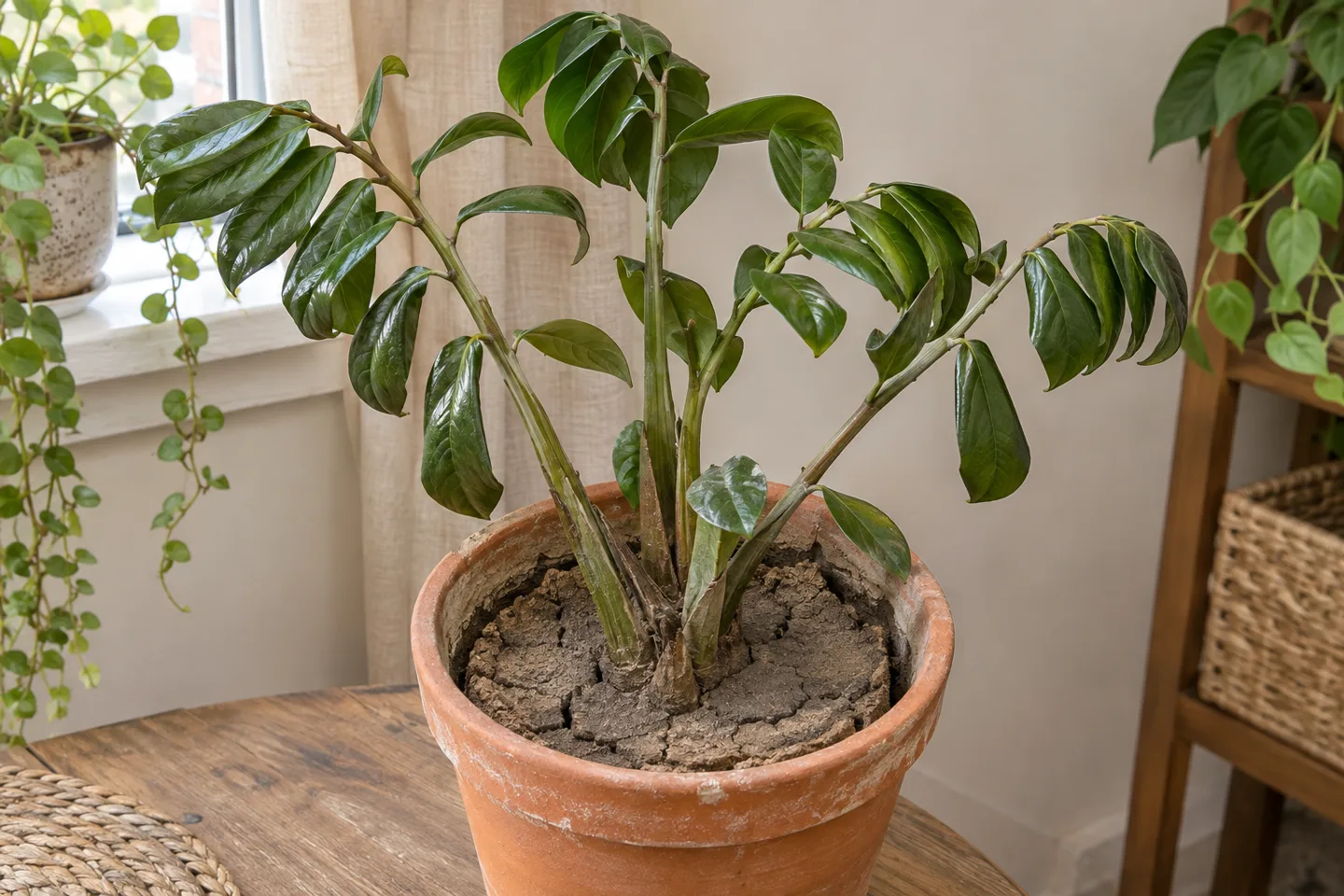
The fix is one thorough watering. Water slowly until it runs out of the drainage hole, or stand the pot in a bowl of water for about 30 minutes, then let it drain fully and empty the saucer. Do not water again until the soil has dried right through. If your plant was dry and also has soft rhizomes, treat it as rot, not thirst.
Too little light: long stems that lean and flop
ZZ plants survive in dim rooms, which is why they are sold as low light plants. Surviving is not the same as growing well. In a dark corner, new stems grow long and thin with leaflets spaced far apart, reach toward the nearest window and then bend under their own weight. The soil also stays wet longer, which feeds the overwatering problem above.
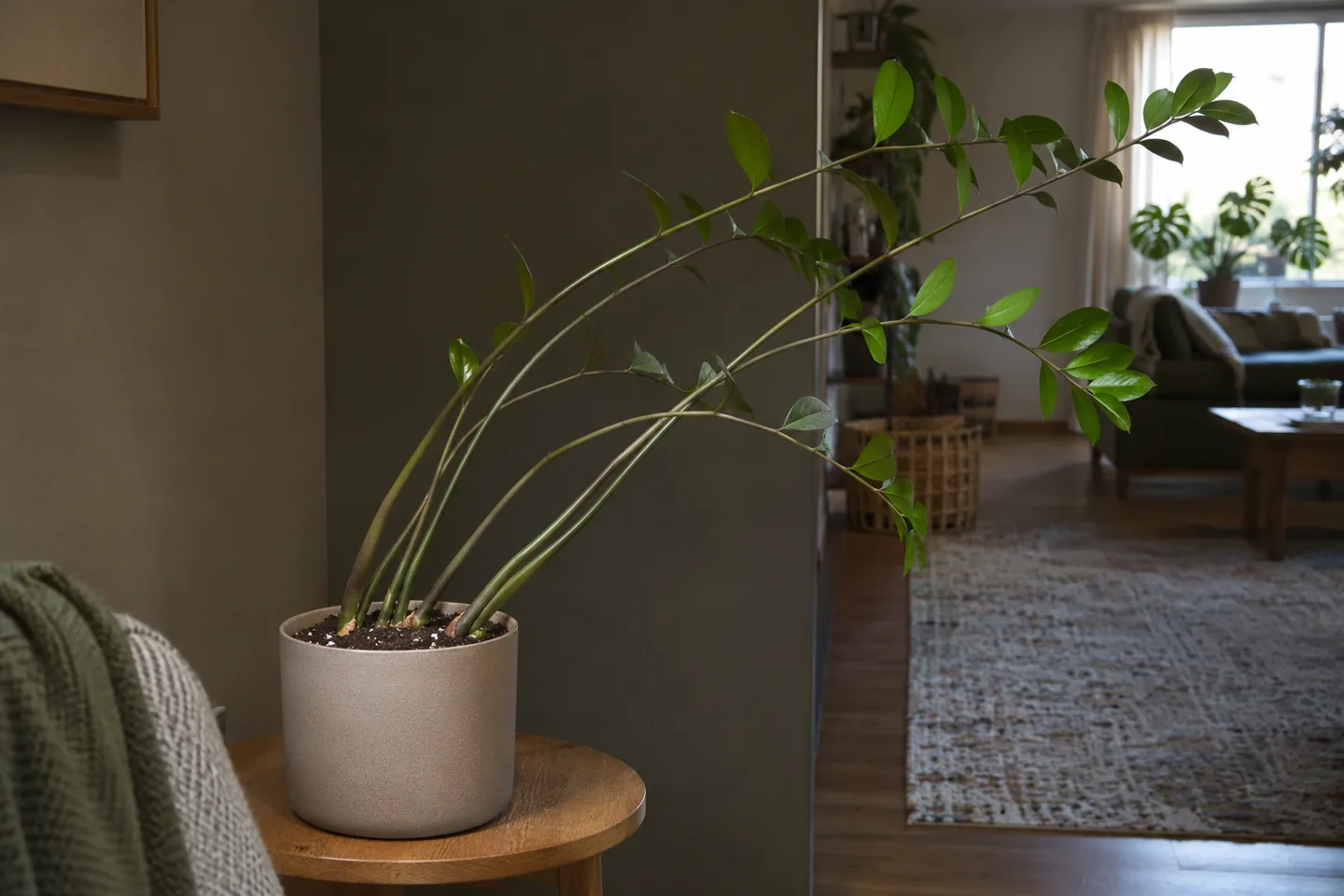
Move the plant into bright, indirect light, close to a window but out of hard direct sun, which can scorch the leaflets. Turn the pot a quarter turn every week or two so it grows straight. Stems that are already stretched will not shorten, but new ones will grow sturdier. Our guide to reading the light your plant gets shows how to judge a spot without a meter.
Drooping after repotting
A few floppy stems for a week or two after repotting are normal. The roots and rhizomes were disturbed, the plant sits looser in fresh mix, and it has to settle before it can hold its stems upright again. Our guide to repotting without transplant shock covers how to handle the first two weeks.
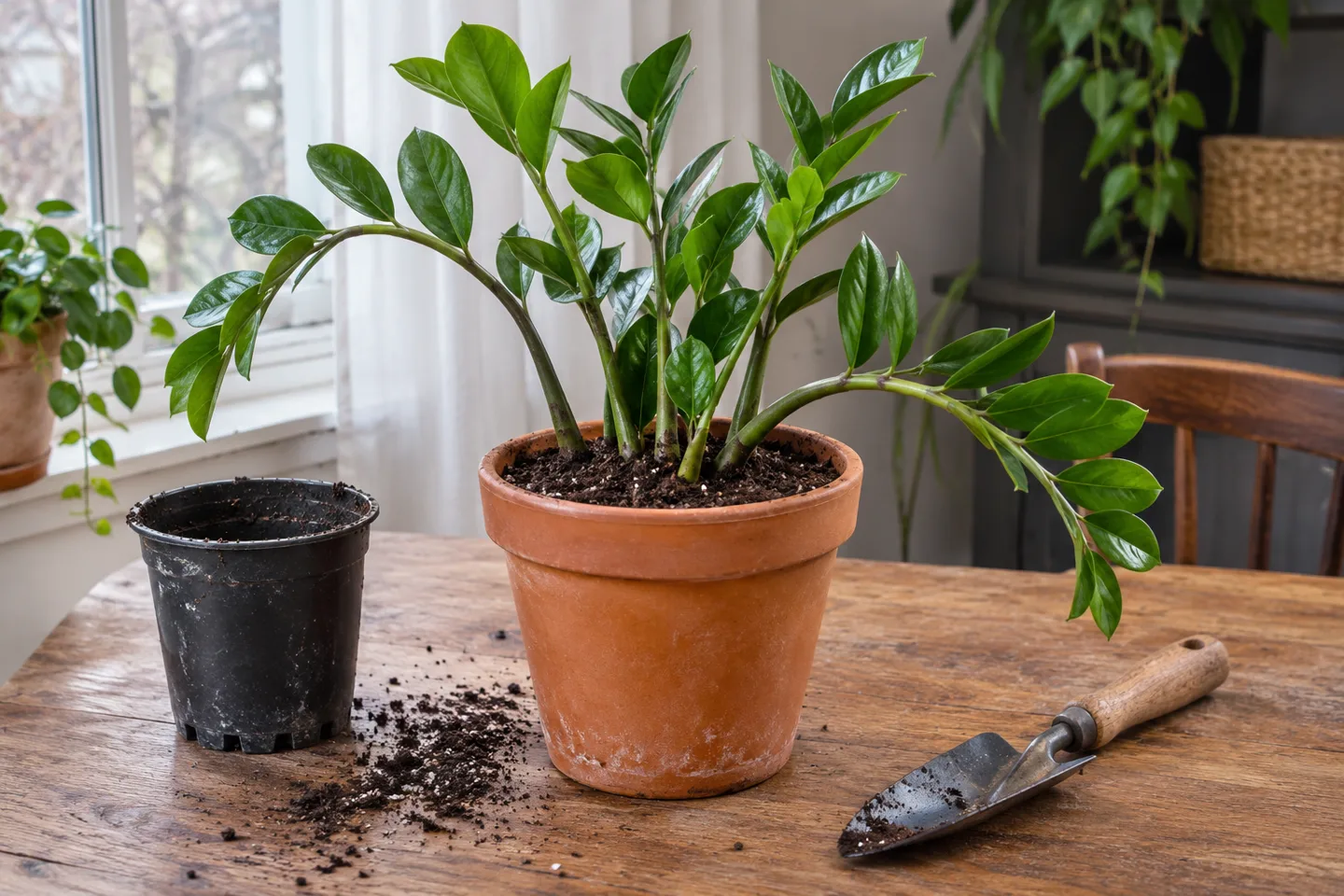
Keep it in bright shade, firm the mix gently around the base and do not add extra water to "help it recover", since a freshly repotted ZZ uses very little. If the stems are still flopping after a month, check the rhizomes for rot, because fresh mix that was too wet or a pot that was too big are common causes.
Top-heavy stems: tall plants that open up
On an older, larger ZZ, the tallest outer stems sometimes arch outward and splay away from the centre while staying firm and green. Each of those stems is in fact a single large leaf growing straight from the rhizome, and once one has bent it often will not stand fully upright again. This is shape, not sickness, and it gets worse in low light.
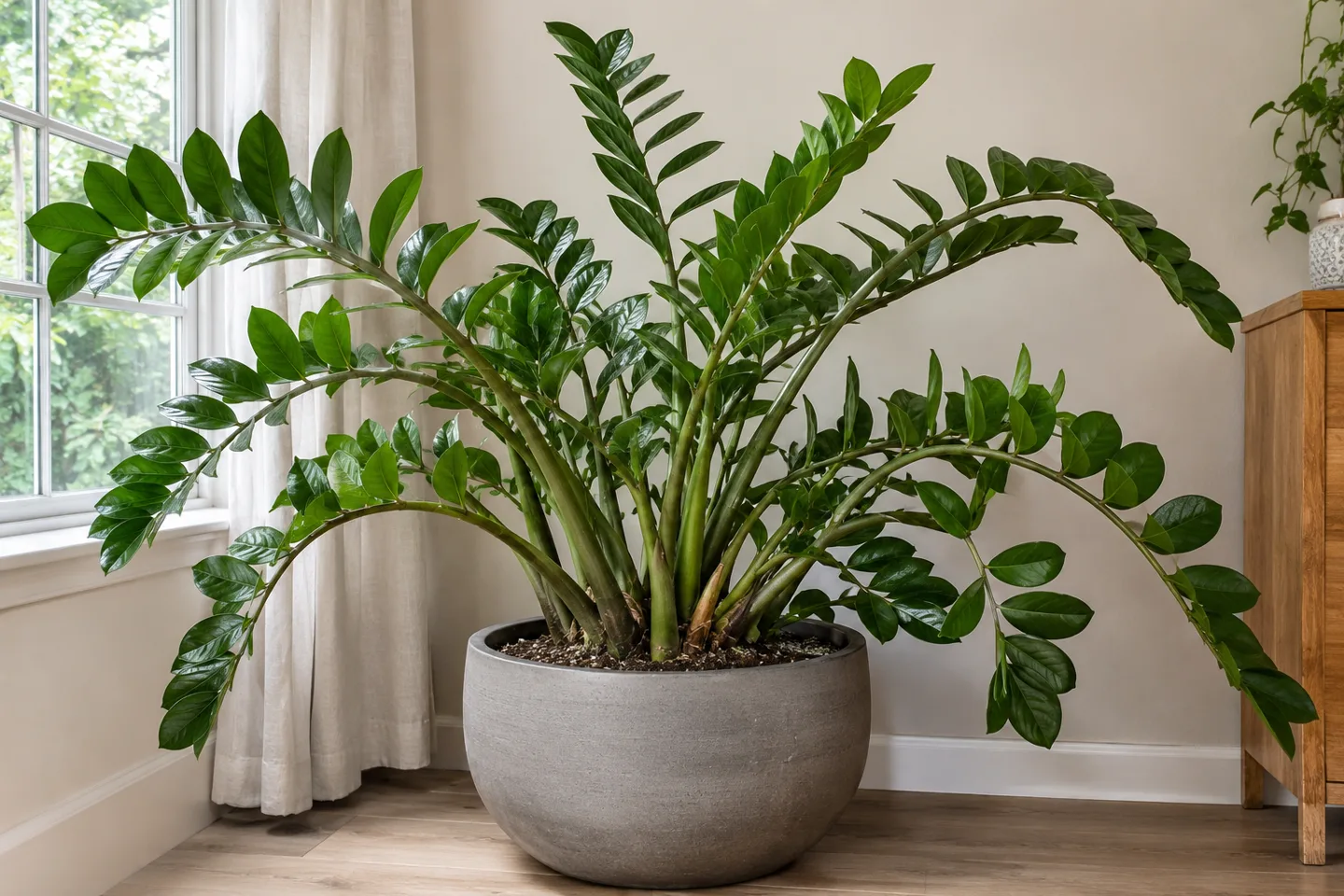
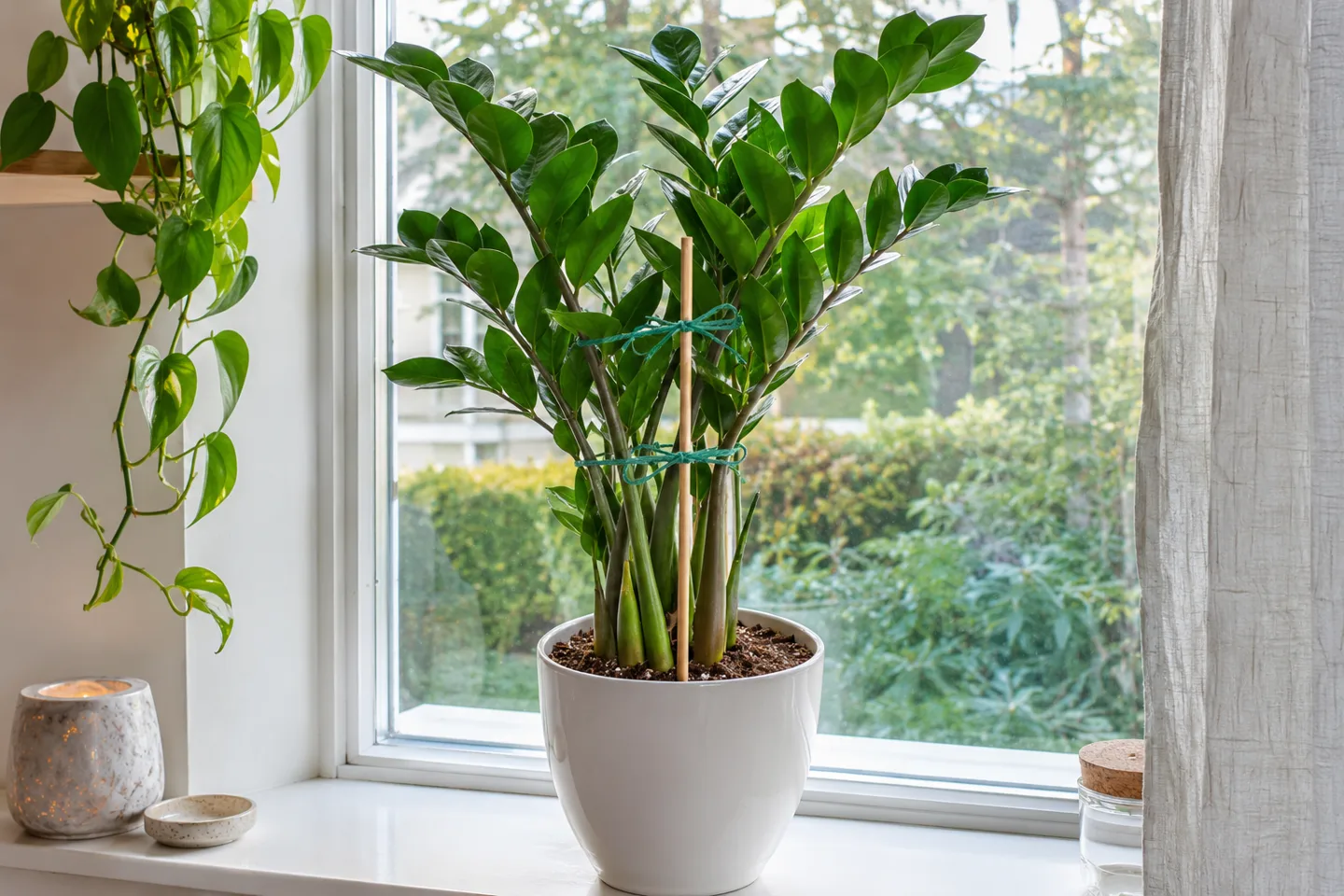
If the soil and rhizomes check out, you have three options: turn the pot so the plant grows evenly, support the floppy stems, or cut the worst ones off at the soil line with clean scissors. New stems will come up from the rhizome in time. Support works best when it is loose: a thin stake and soft twine or a plant ring around the outside, never a tight tie that cuts into the stem.
Cold and drafts
ZZ plants come from tropical Africa and dislike cold. NC State suggests bringing outdoor plants in once temperatures fall below 60°F. Indoors, a plant pressed against winter window glass or sitting next to a drafty door or an air conditioner vent can droop, and cold damage shows as leaflets that look dark, wet and translucent.
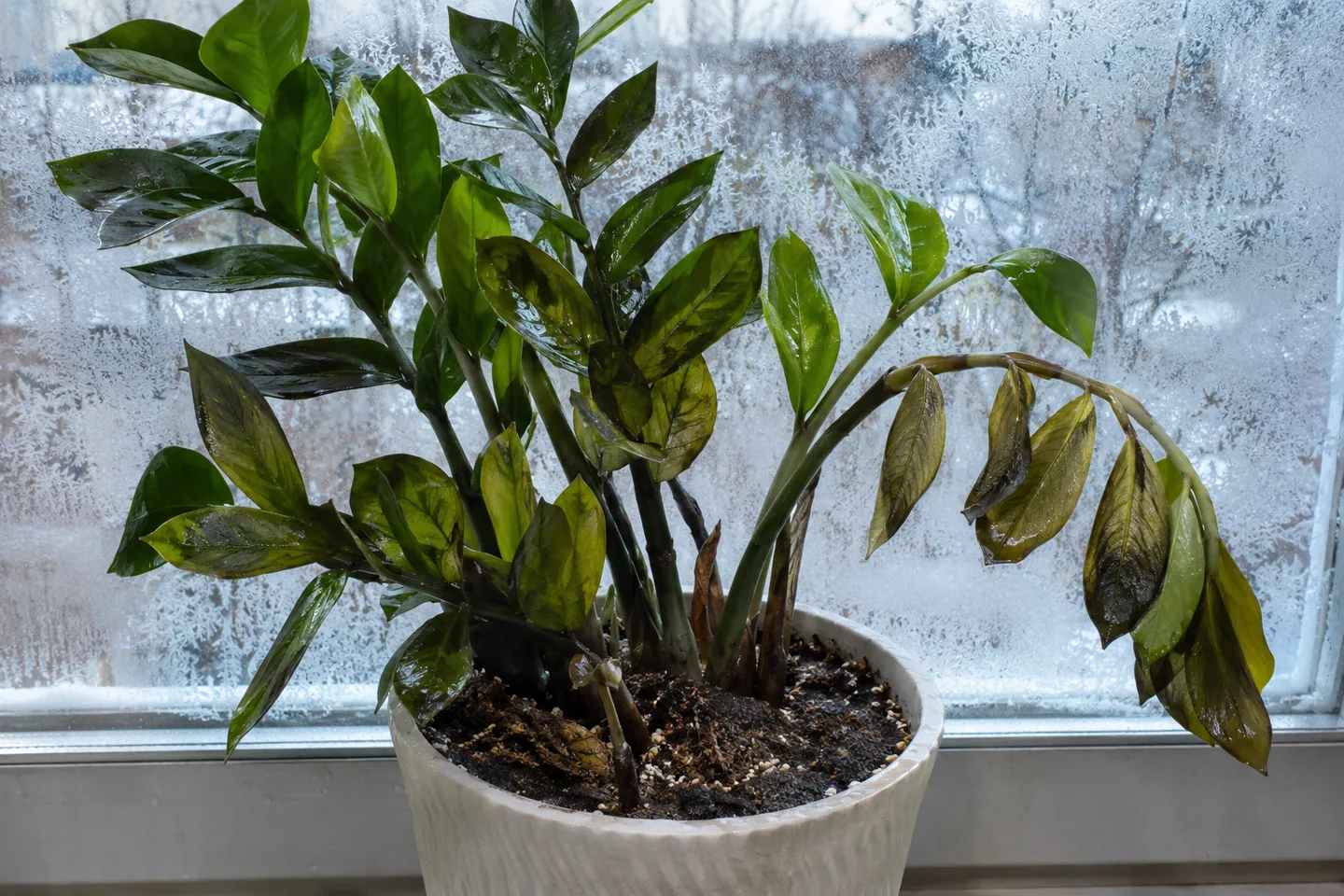
Move the plant a little back from the glass and away from vents. Cold soil also dries slowly, so water even less in winter. Damaged leaflets will not recover; trim them once new growth appears.
Is a drooping ZZ plant safe around pets?
No. NC State Extension lists ZZ plant as having medium toxicity to cats and dogs, and like other aroids it contains irritating calcium oxalate crystals. Keep it out of reach of pets and children, wash your hands after cutting it, and call your vet or a poison control line if a pet chews it.
Can a drooping ZZ plant recover?
Usually, yes, as long as some rhizomes are still firm. A plant that was only overwatered recovers once the soil dries out. One that lost rhizomes to rot comes back more slowly, because it has to grow new stems from what is left. Stems that have flopped or yellowed often will not stand back up, so judge recovery by new shoots, not by the old stems.
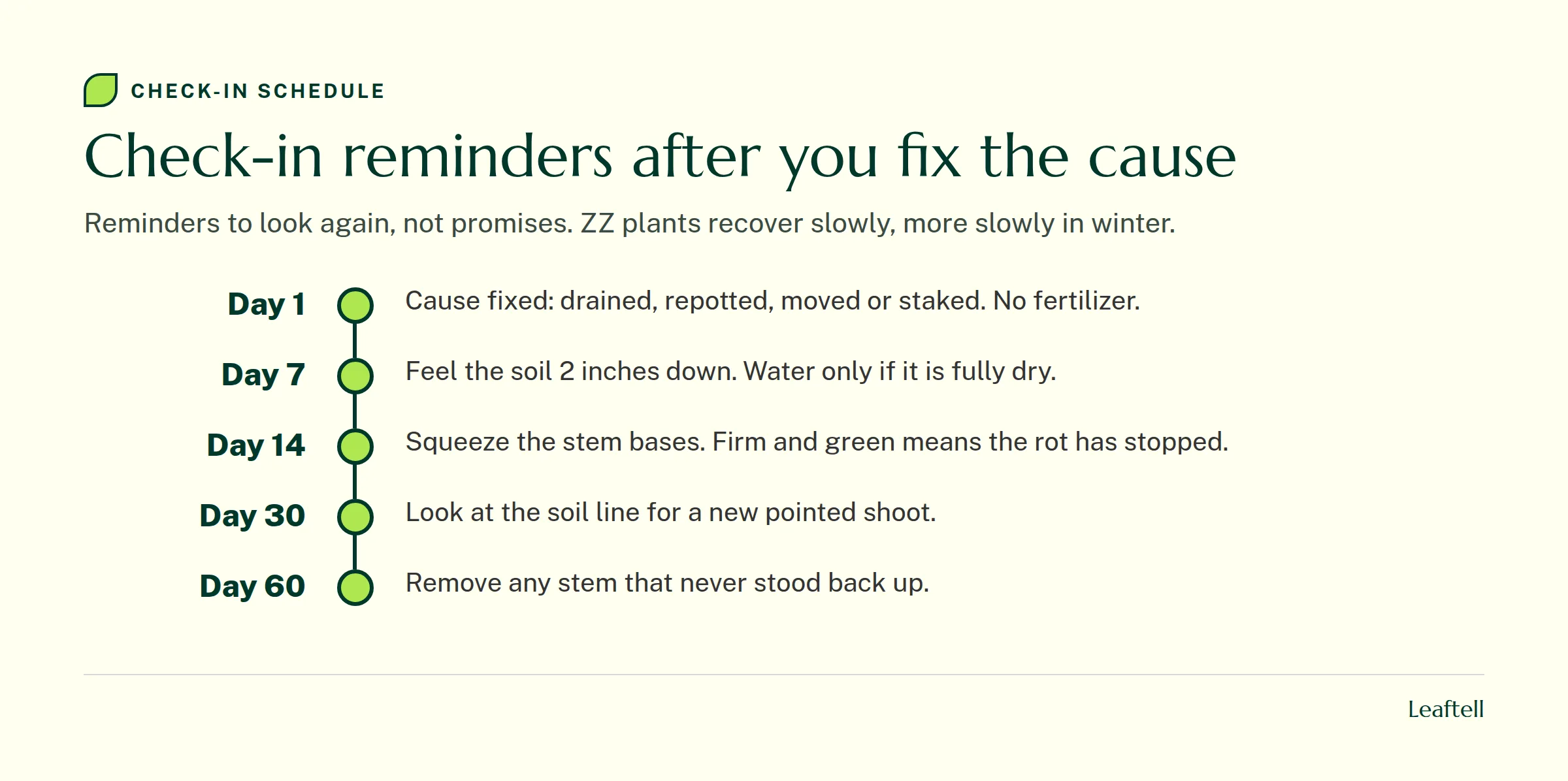
ZZ plants grow slowly, especially in winter, so a new shoot can take weeks to show. Treat the dates below as reminders to check, not promises. If your other plants are flopping too, our wider guide to drooping leaves covers the causes they share.
Check your ZZ plant in Leaftell
If you cannot tell wet-soil rot from low light, a fresh repot or simply heavy stems, check your ZZ plant in Leaftell. Send a photo of the whole plant, a close-up of the stem bases at the soil line and one of the drainage hole, and note how the soil felt 2 inches down, since a photo cannot feel the soil. Then take a fresh photo in about a week as a check-in reminder and compare.
Check your growing conditions with the plant watering calculator.
Frequently asked questions
An overwatered ZZ plant has soil that stays wet for days, stems that flop at the base, and leaflets yellowing from the bottom of the stem up. Squeeze a stem at the soil line: soft, yellow or black means rot has started. Slide the plant out and check that the rhizomes are firm, not soft and smelly.
Cut off any stem that is soft, yellow or black at the base, right at the soil line with clean scissors. A firm green stem that has only bent can stay, or you can support it loosely with a stake. Cutting healthy floppy stems is fine too if you prefer the look; new ones grow from the rhizome.
Find the cause first. Wet soil: stop watering and check the rhizomes for rot. Soil dry for weeks: give one thorough soak and let it drain. Long leaning stems: move it to brighter, indirect light. Then wait and watch for new shoots, since old stems that flopped rarely stand fully upright again.
Repotting disturbs the rhizomes and leaves the plant sitting loose in fresh mix, so a few stems often flop for a week or two. Keep it in bright shade and do not add extra water. If it is still floppy after a month, check for rot from wet mix or a pot that is too big.
A ZZ plant that leans to one side is usually growing toward its light source, which stretches the stems until they bend. Move it closer to a bright window and turn the pot every week or two. Tall stems on a big plant can also lean from their own weight; support them loosely or trim them.
Share article
About the author

Keep checking your plant
Plant care reference
Indoor plant care
Build a routine around your plant, light and potting mix.
Plant care reference
Why is my plant dying
Trace leaf and root symptoms before choosing a care change.
Plant care reference
Pothos plant care
Choose a growing spot and prune a trailing pothos for fuller growth.
Plant care reference
How to fix root rot
Inspect root firmness and drainage, then decide whether to repot.