Plants Wilting After Repotting: Shock or Too Much Water?
Filip Leszczyński 12 November 2026 12 min read
In this article
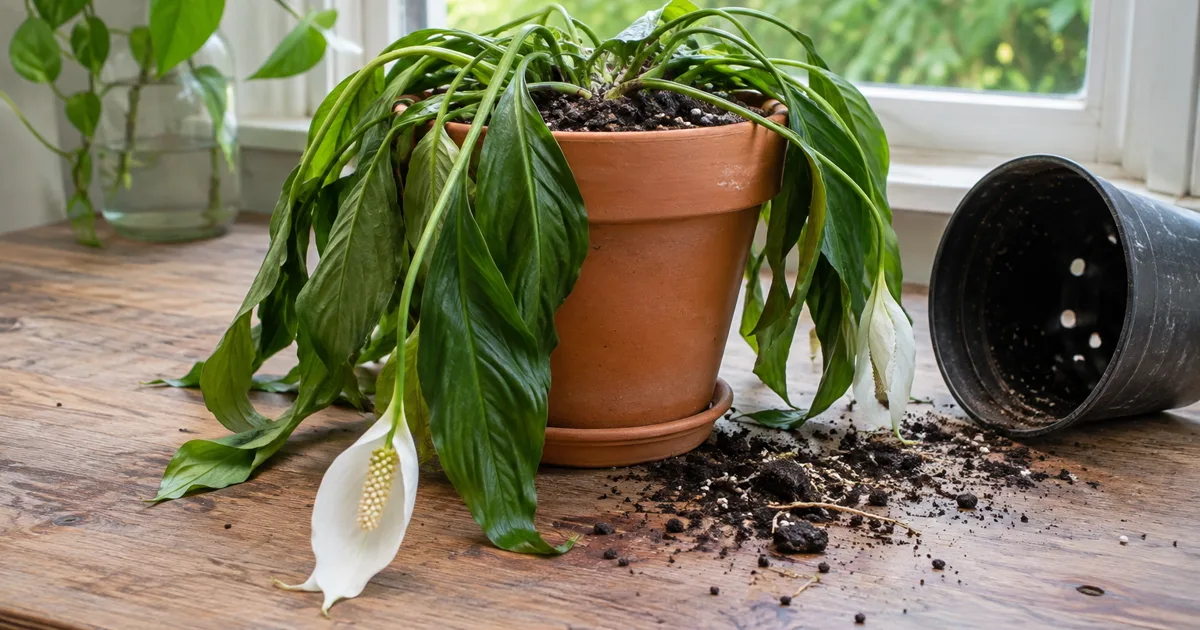
Plants wilting after repotting are usually in transplant shock: roots that were torn or disturbed in the move cannot drink fast enough to keep the leaves firm, even though the pot is wet. Keep the plant in bright shade, do not water again until the mix is dry 2 inches down, skip fertilizer, and most plants firm up within one to two weeks.
The trap is that a wilting plant looks thirsty. Watering it again is the most common way a mild case of shock turns into root rot, because the roots cannot use that water yet. Feel the soil before you do anything; the one real exception, a dry old root ball inside wet new mix, is easy to check for.
Why plants wilt after repotting
Leaves stay firm because water keeps them pressurized from the inside. Most of that water comes in through the finest root tips, and those are exactly the roots that tear or dry out when you slide a plant out, loosen the root ball and set it in new mix. Until they regrow, the plant loses water from its leaves faster than its roots can replace it, so the leaves soften and hang.
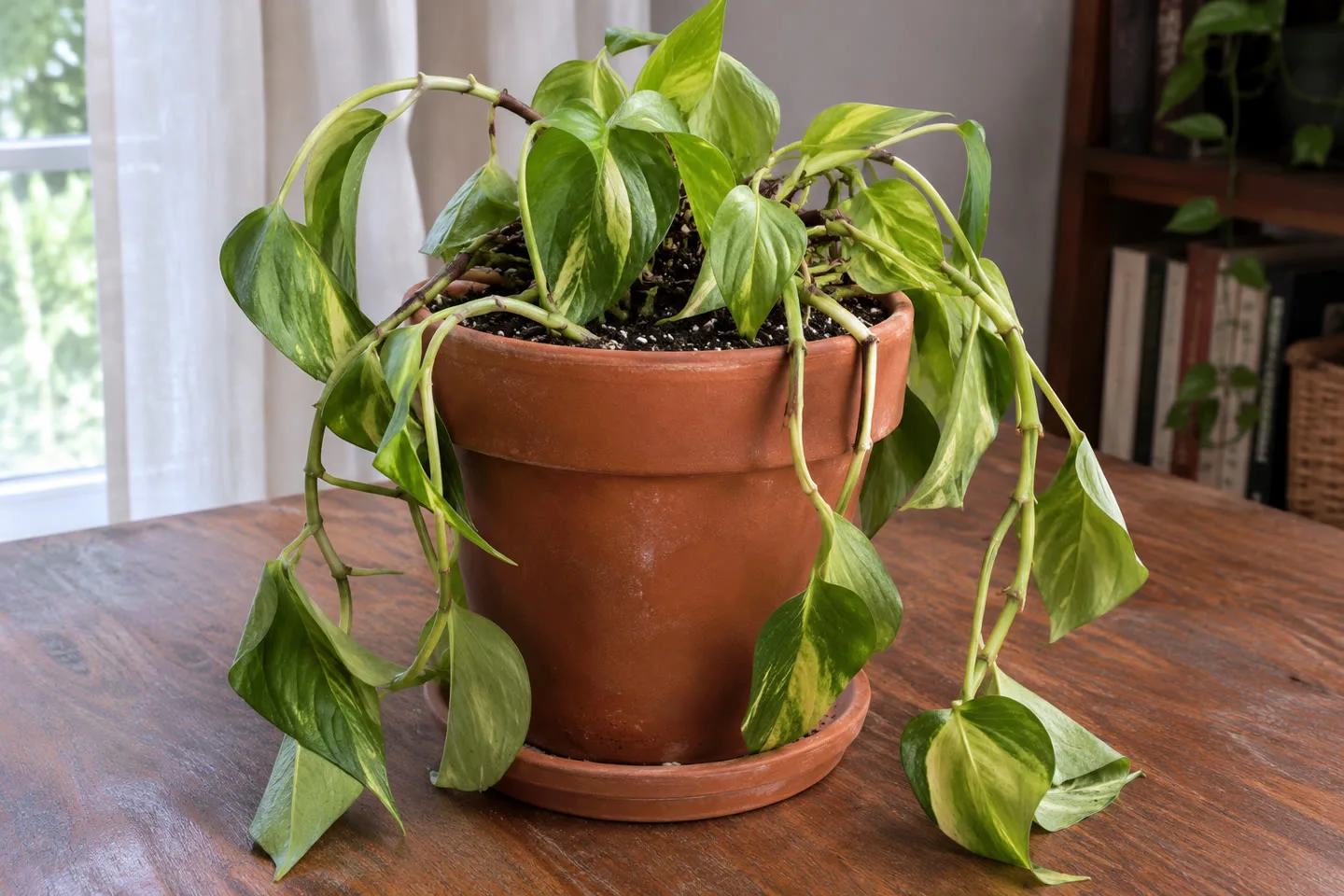
That is why the droop often shows up a day or two after the repot, not during it, and why it looks the same as thirst. The difference is in the pot: a shocked plant wilts in damp mix. Our guide to repotting plants covers how to do the move itself gently; this article is for the plant that is already drooping.
Find the cause before you water
Five things make a plant wilt after a repot, and the fix for one makes another worse. Check the soil first, then match what you see:
| Cause | What you see | How the mix feels | First fix |
|---|---|---|---|
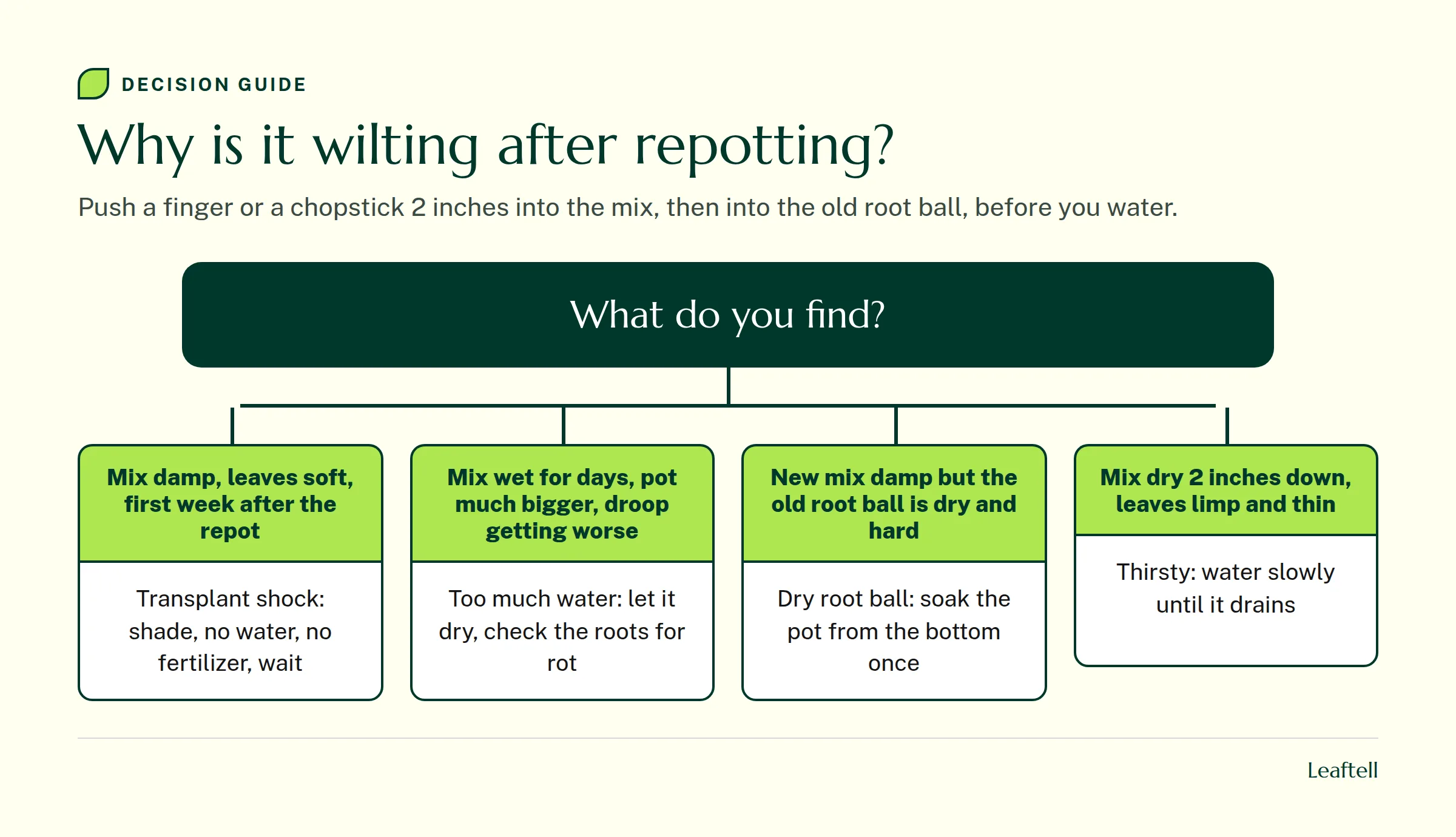
| Transplant shock | Soft, limp leaves within a few days of the repot, still green | Damp | Bright shade, no water, no fertilizer, wait |
| Too much water or a pot too big | Droop that gets worse, yellowing lower leaves | Wet for days, may smell sour | Let it dry; check roots if it keeps sliding |
| Dry old root ball | Wilting in mix that feels damp on top | New mix damp, old root ball hard and dry | Soak the pot from the bottom once |
| Damaged or rotting roots | Wilting that does not lift, dark soft stems at the soil line | Wet | Lift it out, trim brown mushy roots |
| Sun or heat right after the move | Wilting by midday, recovery by evening | Varies | Move it out of direct sun |
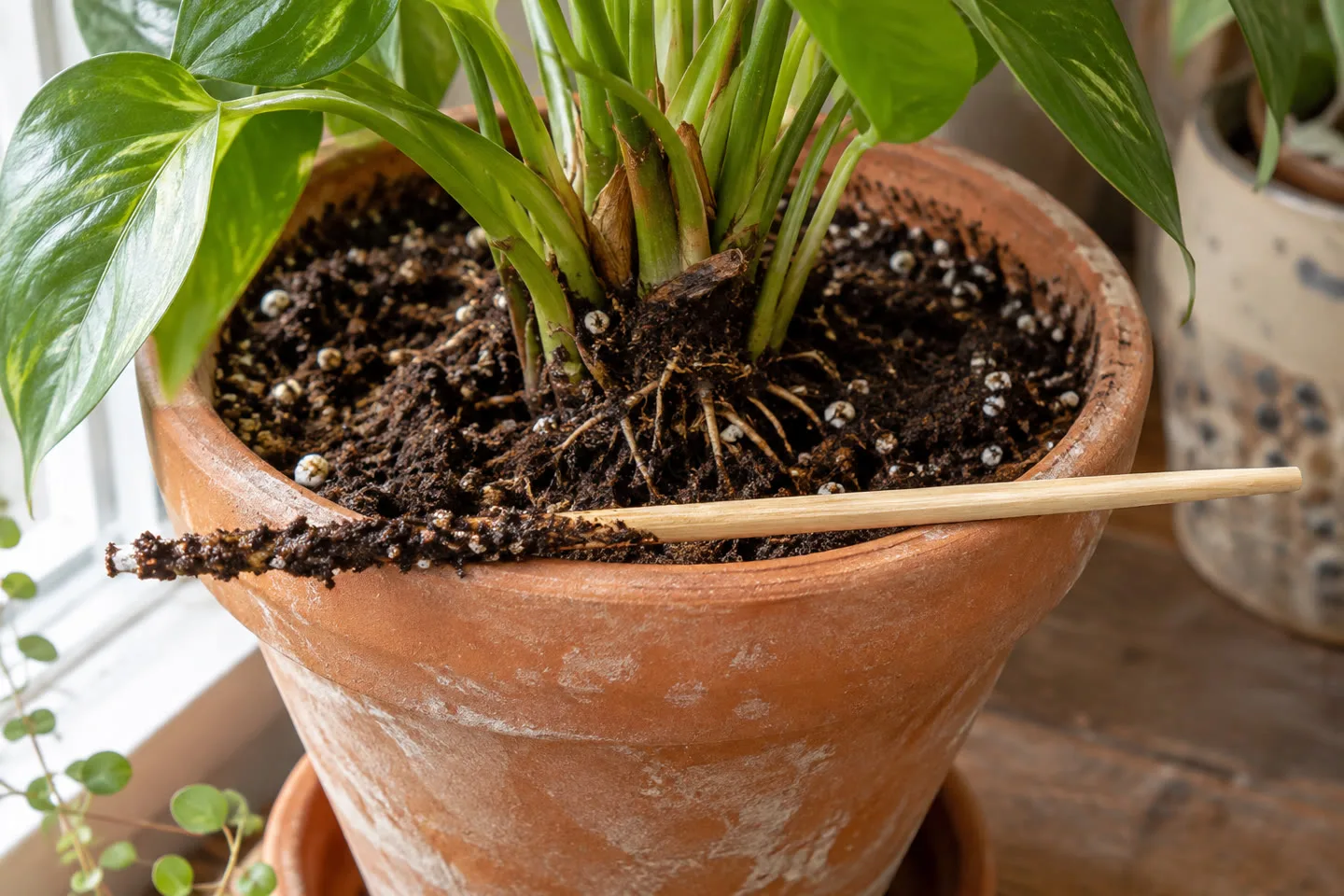
Push a finger or a wooden chopstick 2 inches into the new mix, then into the old root ball near the stems. Damp soil clinging to the stick means do not water. Our guide to checking whether soil is wet or dry shows both tests.
Transplant shock
Shock is the most likely cause when the leaves went soft within a few days of the repot, they are still green, and the mix is damp. It needs less from you, not more. Move the plant to bright, indirect light, hold off on water until the mix dries 2 inches down, and wait. A plant that is a little firmer each morning is recovering, even if it still droops by afternoon.
A dry root ball inside wet mix
This is the case where water really is the answer. If the old root ball was bone dry or tightly packed when you repotted, water poured on top runs through the loose new mix around it and drains out without soaking in. The new mix feels damp, but the roots sit in a dry core.
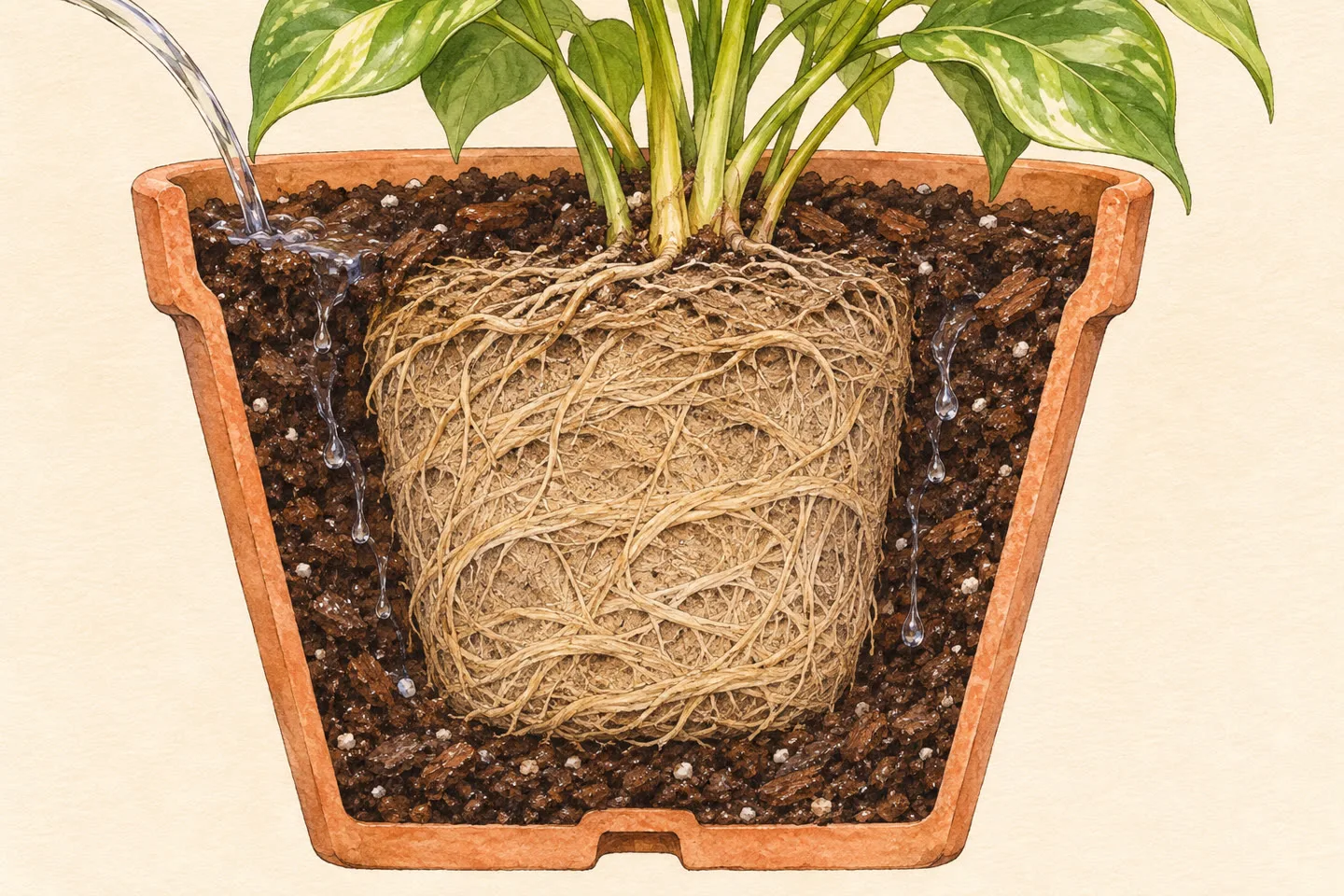
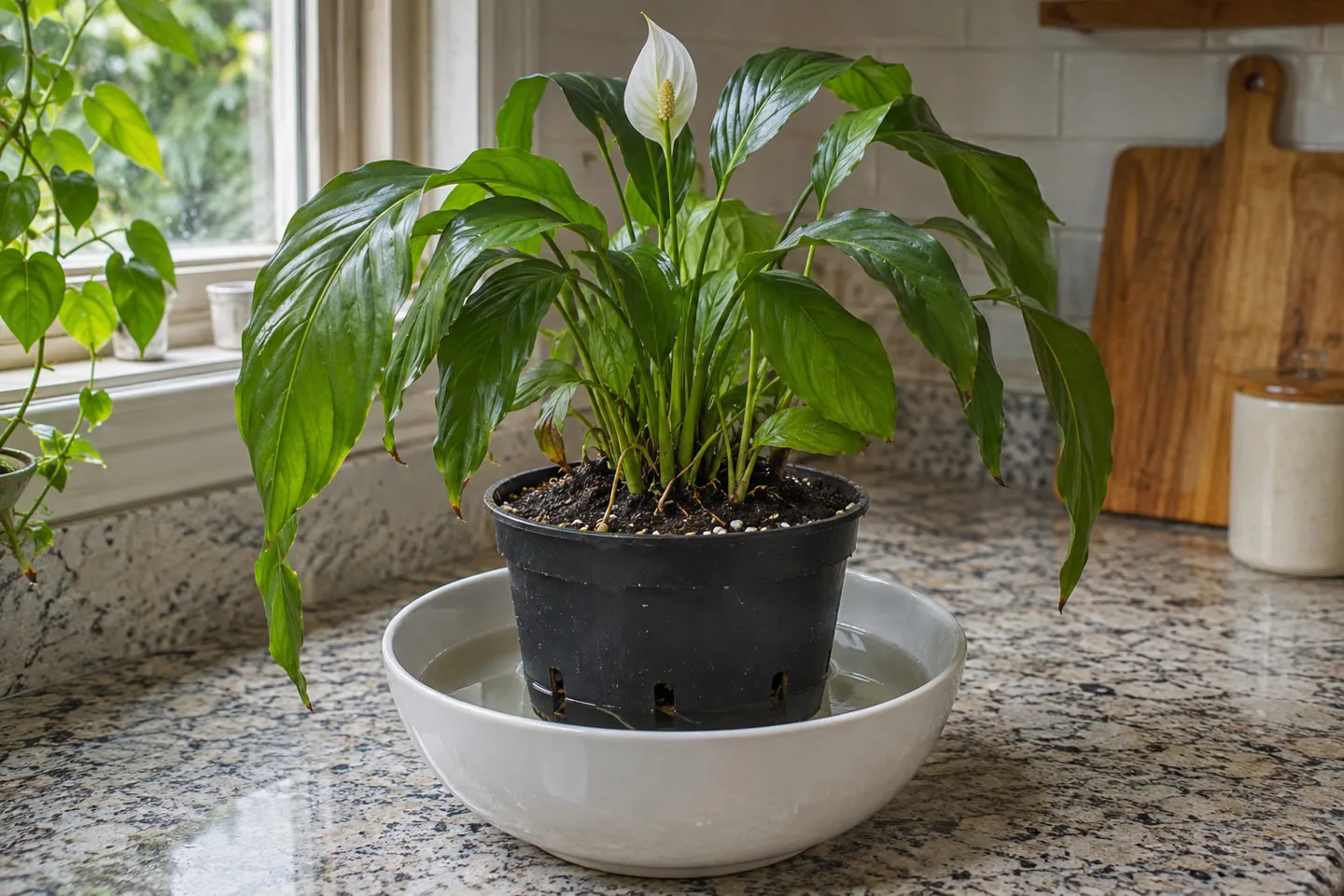
Check by pushing the chopstick right next to the stems, into the old root ball. If it comes out clean and dry while the outer mix is damp, stand the pot in a bowl with a few inches of water for 20 to 30 minutes, until the surface feels damp, then let it drain fully. Once is enough.
Too much water or a pot that is too big
If the droop is getting worse instead of better, the mix stays wet for days and the lower leaves start to yellow, the problem is water, not shock. A pot much bigger than the root ball makes it more likely: the extra mix has no roots in it to dry it out, so it stays soggy around the roots. The RHS calls this overpotting and lists wilting among its signs, noting that these plants are often watered more when they need less.
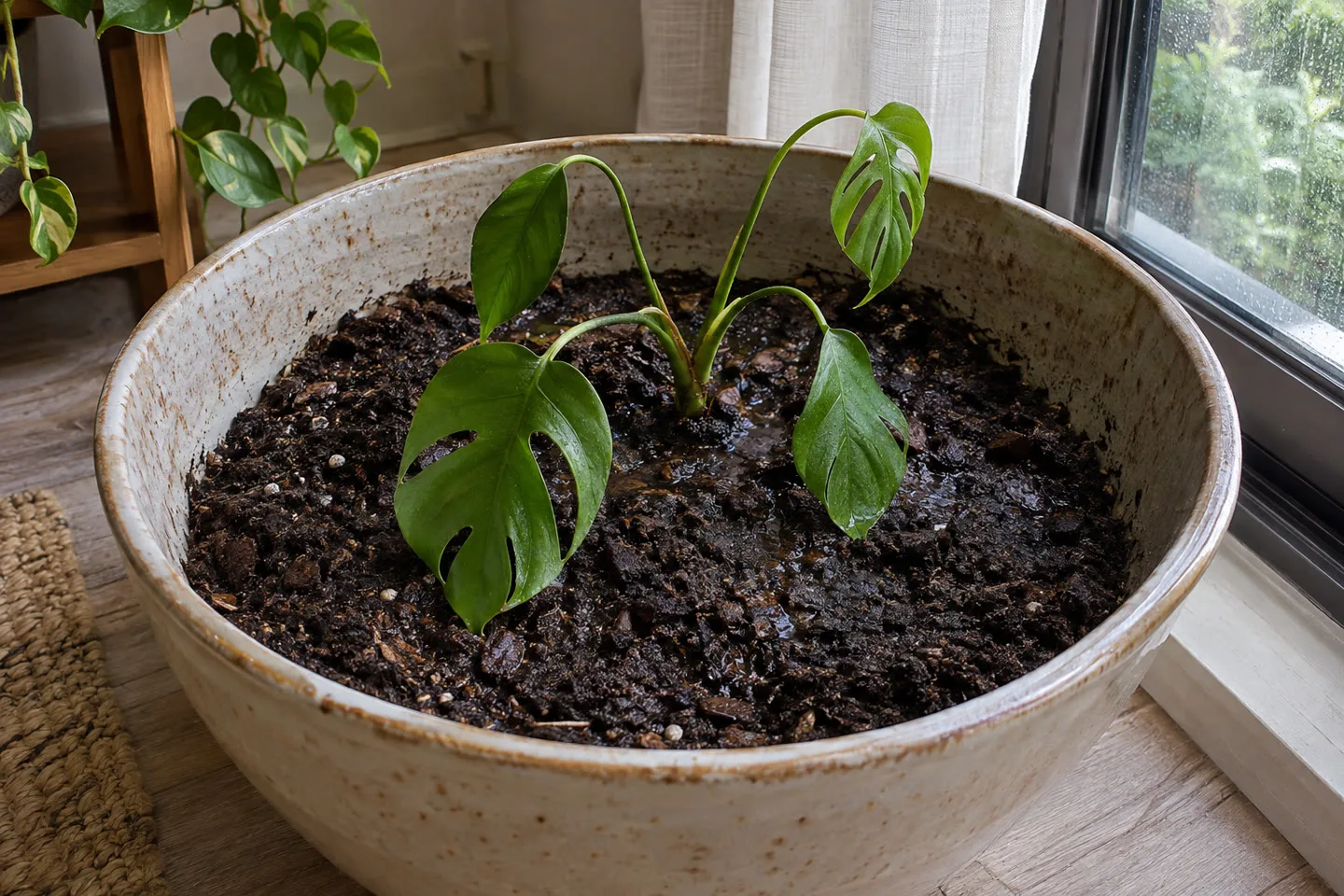
Stop watering and let the mix dry. If the plant keeps sliding for another week, follow our steps to save an overwatered plant. If the pot is far too big, moving the plant back to a pot only 1 to 2 inches wider than its root ball, as the RHS repotting guide suggests, is the one case where a second repot helps.
Damaged or rotting roots
Roots torn badly in the move, or roots that were already rotting before the repot, cannot recover on patience alone. Suspect this when the plant keeps wilting in wet mix after a week, the stems feel soft at the soil line, or the mix smells sour. Slide the plant out and look: healthy roots are white or tan and firm, rotten ones are dark brown, soft and slip their outer skin when you pull them.
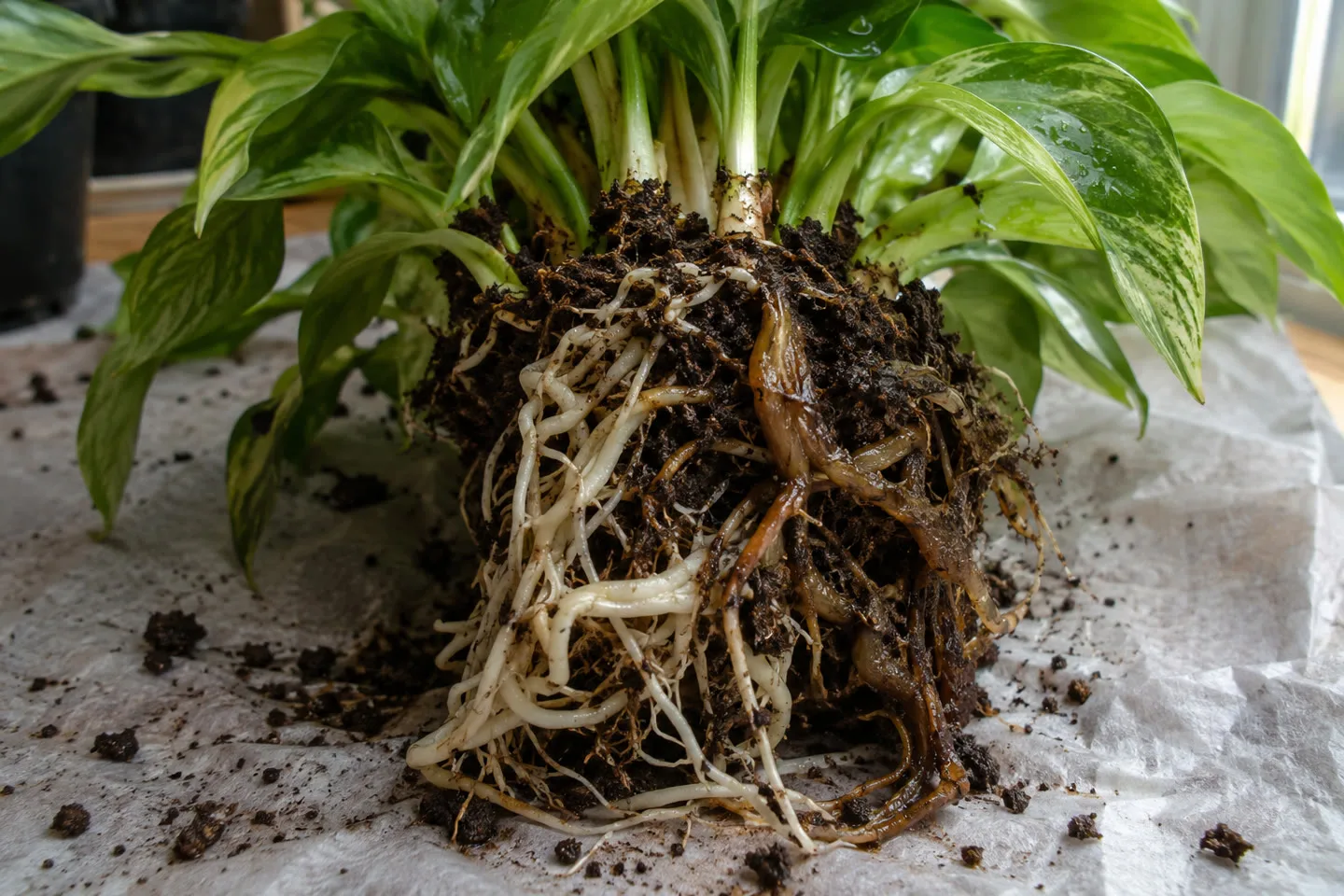
Trim rotten roots back to firm tissue with clean snips and repot into fresh, dry-ish mix in a pot that just fits what is left. Our guide on how to fix root rot walks through it.
Sun or heat right after the move
A plant with a reduced root system cannot keep up with a hot, sunny window. If it wilts by midday and perks up by evening, move it back from the glass for a week or two. Our guide to reading your plant's light helps you find bright shade in your home.
How to help a wilting plant recover
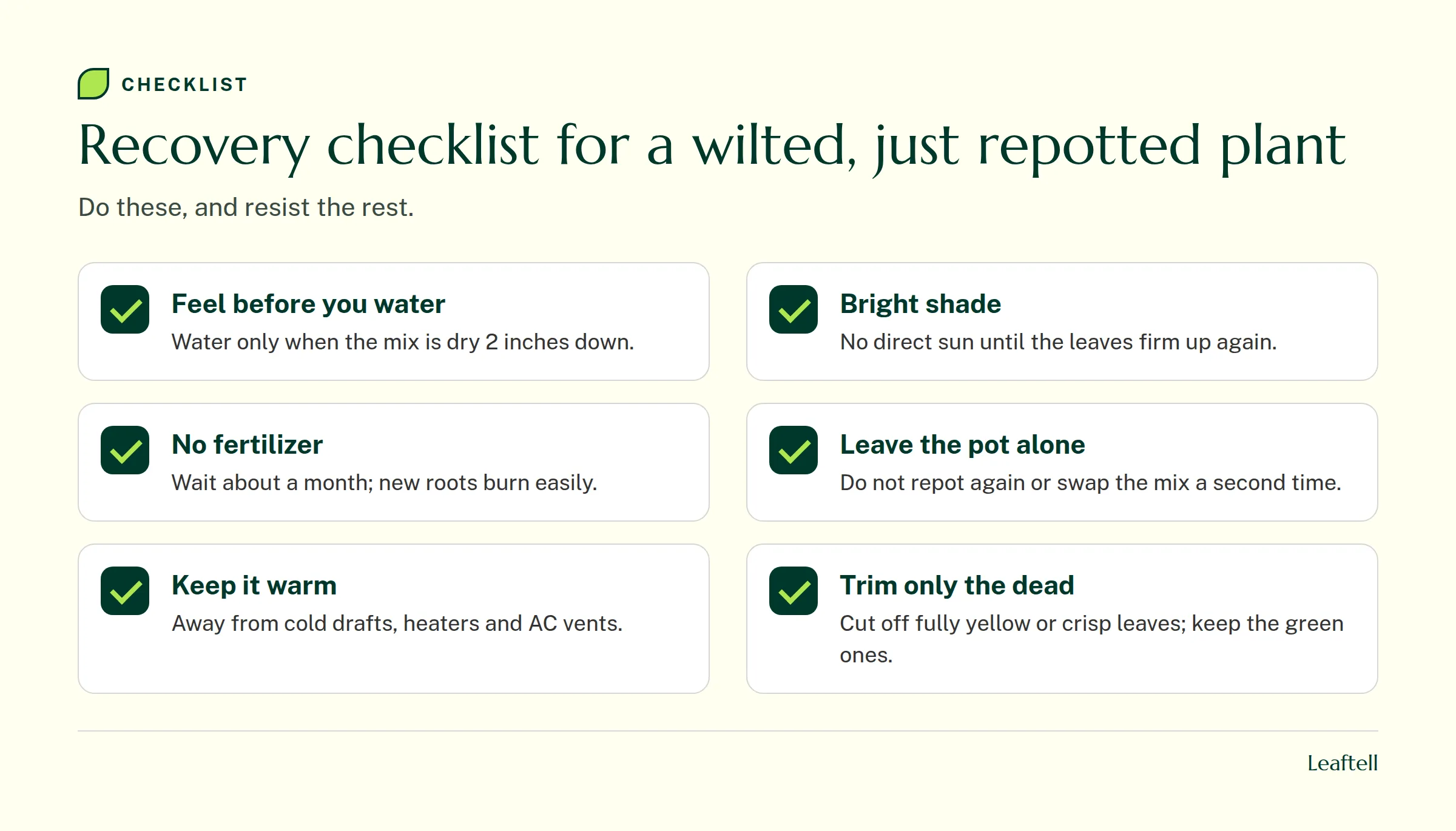
How to help a plant recover from transplant shock
- Check the soil and the root ball
Push a finger or chopstick 2 inches into the new mix and into the old root ball near the stems. This tells you whether to water, soak or wait.
- Move it to bright shade
Put it where it gets bright, indirect light and no direct sun, away from heaters, AC vents and cold drafts.
- Water only when 2 inches down is dry
If the mix is damp, leave it. If the old root ball is dry, give it one bottom soak. Then go back to feeling the soil before every watering.
- Hold off on fertilizer
Wait about a month. Fresh potting mix usually contains some feed, and new root tips burn easily.
- Trim only what is dead
Cut off leaves that are fully yellow or crisp. Keep every green leaf, even a limp one; it is still feeding the plant.
- Leave the pot alone
Do not repot again or swap the mix unless the roots are rotting or the pot is far too big. Each move tears the new root tips again.
The hardest step is the last one. A drooping plant makes you want to do something, and repeated changes (more water, a new spot every day, another pot) keep resetting the recovery.
Vegetable transplants wilting in the garden
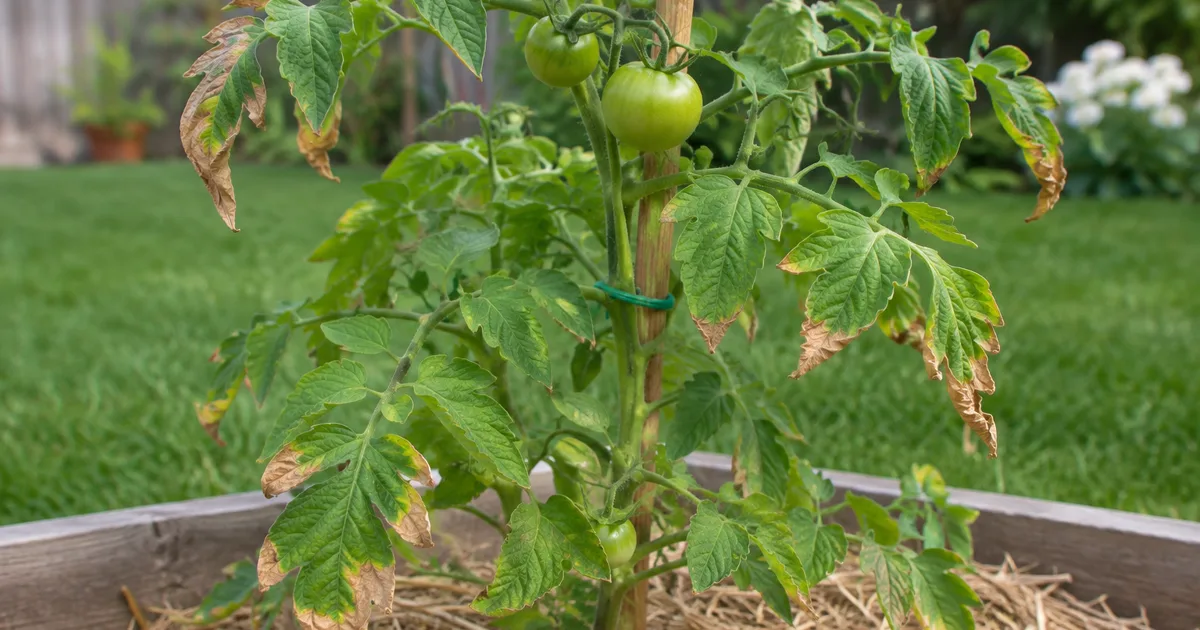
Seedlings moved from indoors into a bed or a bigger container go through the same shock, plus a jump in sun, wind and heat. A tomato transplant that wilts in the afternoon sun but stands up again by evening is usually fine. Water it in well at planting, then keep the soil evenly moist rather than soaked, and shade it for the first few hot afternoons with shade cloth or an upturned basket.
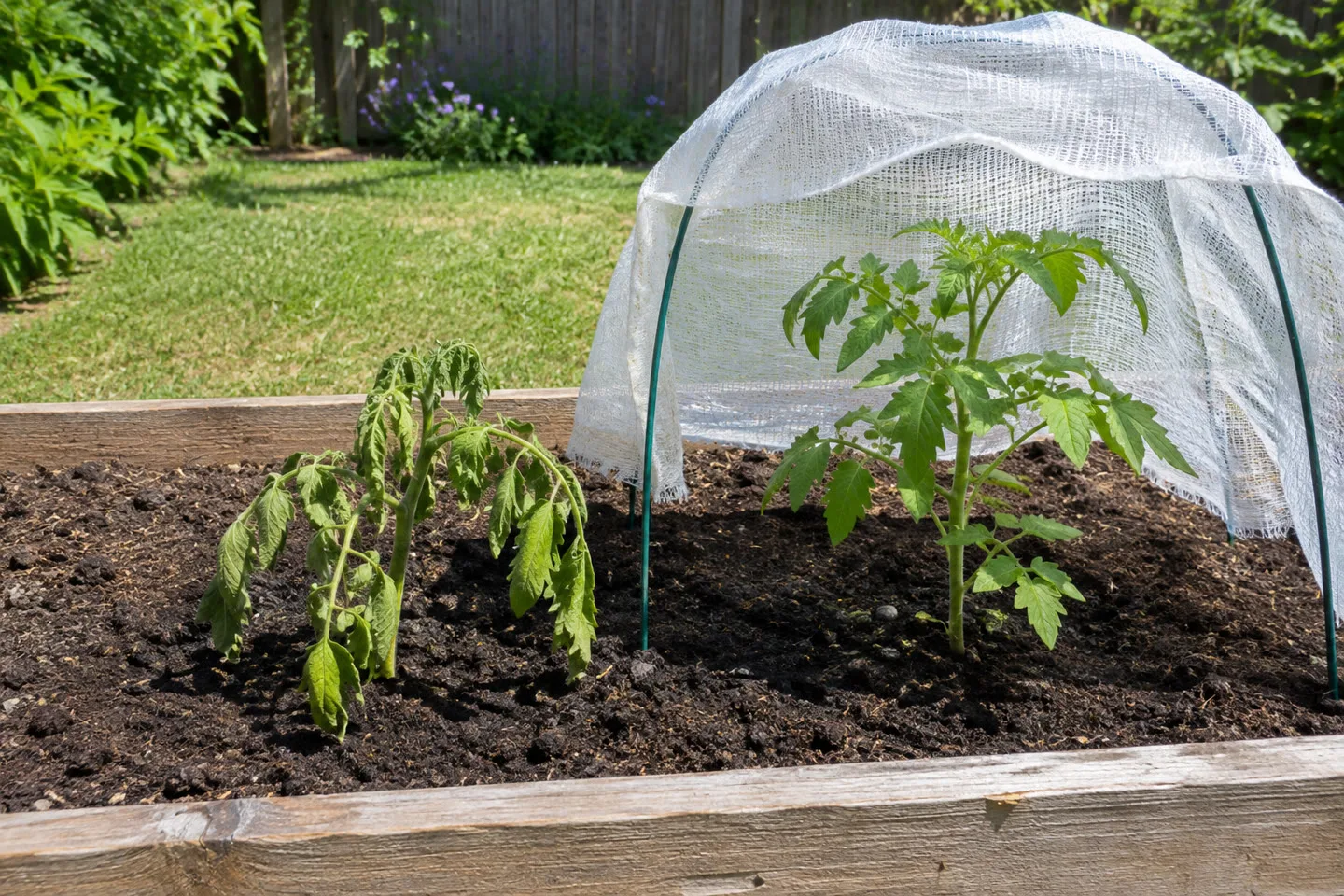
Hardening seedlings off before planting, by setting them outside for a few hours a day and lengthening that over about a week, prevents most of this. If a tomato still droops in the morning after the first week, look past shock; our guide on why tomato plants droop covers watering, heat and wilt diseases.
How long recovery takes
Most houseplants in mild shock look firmer within a few days and are back to normal within one to two weeks. Recovery is slower in winter and for plants that lost a lot of roots. Treat the dates below as reminders to look again, not as a watering schedule.
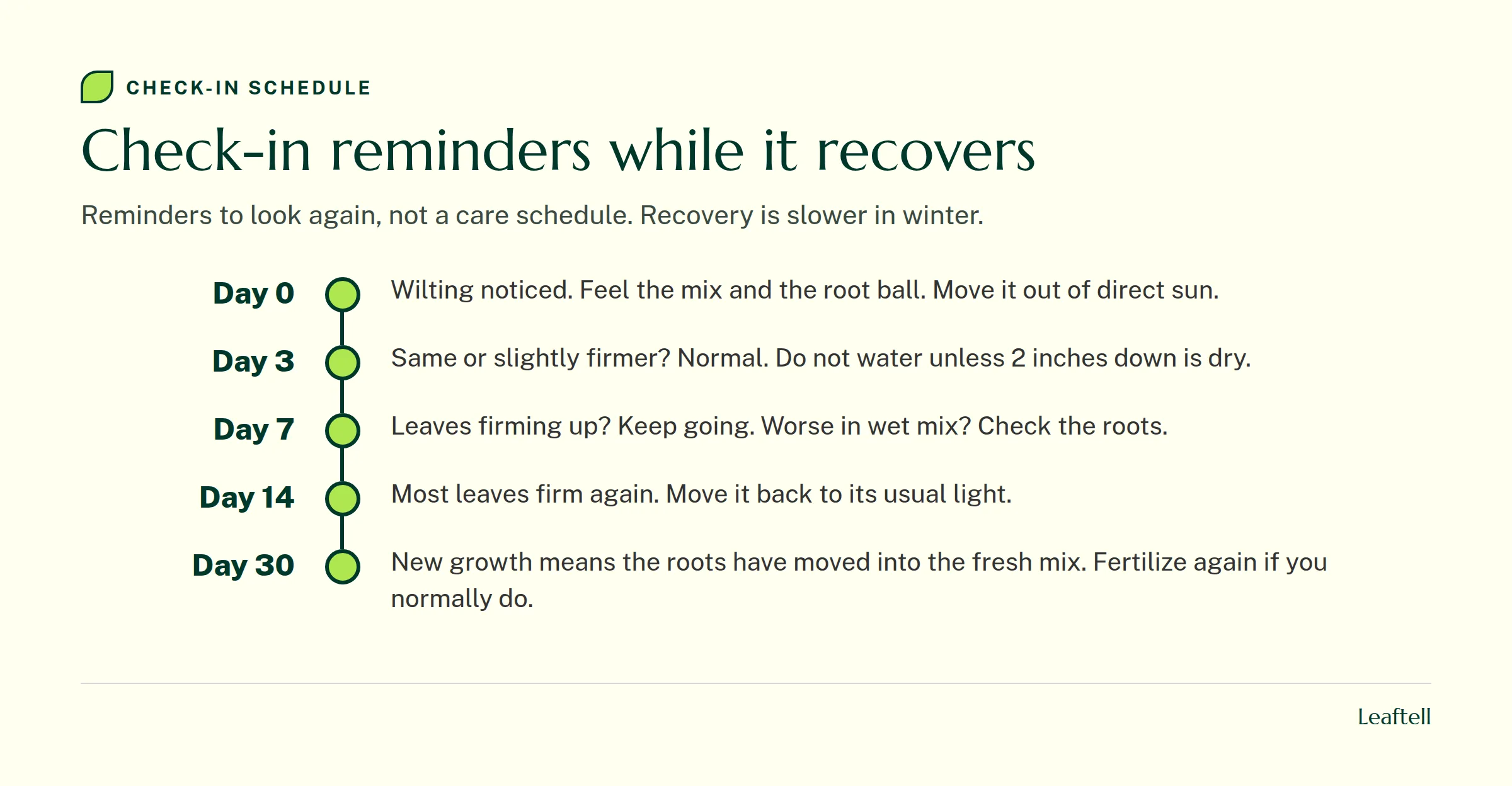
New growth is the real sign it worked. A fresh leaf at the tip of a vine or from the center of the plant means the roots have moved into the new mix.
When to stop waiting
Patience fixes shock, but not rot or a pot that stays soggy. Look closer if the plant is worse after a week instead of better, if the mix is still wet after a week, if stems turn dark or soft at the soil line, or if leaves go yellow from the bottom up. Those signs point to water and roots, and waiting longer will not fix them. A fresh, well draining mix matters too; our potting mix guide explains what to use.
If you cannot tell shock from too much water, check your plant in Leaftell. Send a photo of the whole plant and a close up of the limp leaves, and note how the mix and the old root ball feel 2 inches down, since a photo cannot feel the soil. Then take another photo in about a week as a check-in reminder and compare.
Check your growing conditions with the plant watering calculator.
Frequently asked questions
Most houseplants settle in one to two weeks, and a little droop in the first few days is normal. Plants that lost a lot of roots, or were repotted in winter, can take longer. New growth, usually within a month, is the sign the roots have moved into the fresh mix.
Usually because the fine roots that take up water were torn or dried out in the move, so the leaves lose water faster than the roots can replace it. Feel the mix before you water: if it is damp, that is transplant shock and the fix is shade and patience. If the old root ball is dry, soak the pot from the bottom once.
Repot in spring or early summer, keep as much of the root ball intact as you can, and use a pot only 1 to 2 inches wider. Afterward, give the plant bright shade, skip fertilizer for about a month and water only when the mix is dry 2 inches down. Our repotting guide linked above covers the move step by step.
A hardened off tomato transplant usually stands up again within a few days, and wilting that only happens in the afternoon sun often passes within the first week or two. Shade it on hot afternoons and keep the soil evenly moist. If it still droops in the morning after that, check watering, heat and wilt diseases rather than shock.
Share article
About the author

Keep checking your plant
Plant care reference
Indoor plant care
Build a routine around your plant, light and potting mix.
Plant care reference
Why is my plant dying
Trace leaf and root symptoms before choosing a care change.
Plant care reference
Pothos plant care
Choose a growing spot and prune a trailing pothos for fuller growth.
Plant care reference
How to fix root rot
Inspect root firmness and drainage, then decide whether to repot.