How to Tell if a Plant Needs Water: 3 Soil Checks
Filip Leszczyński Updated 17 October 2026 7 min read
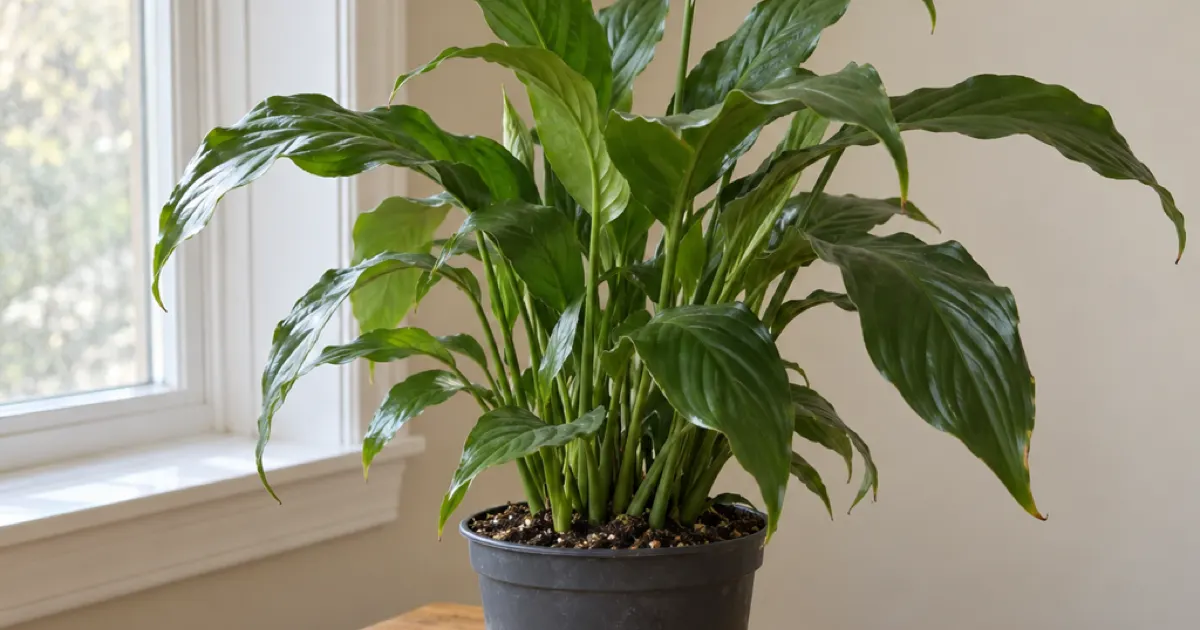
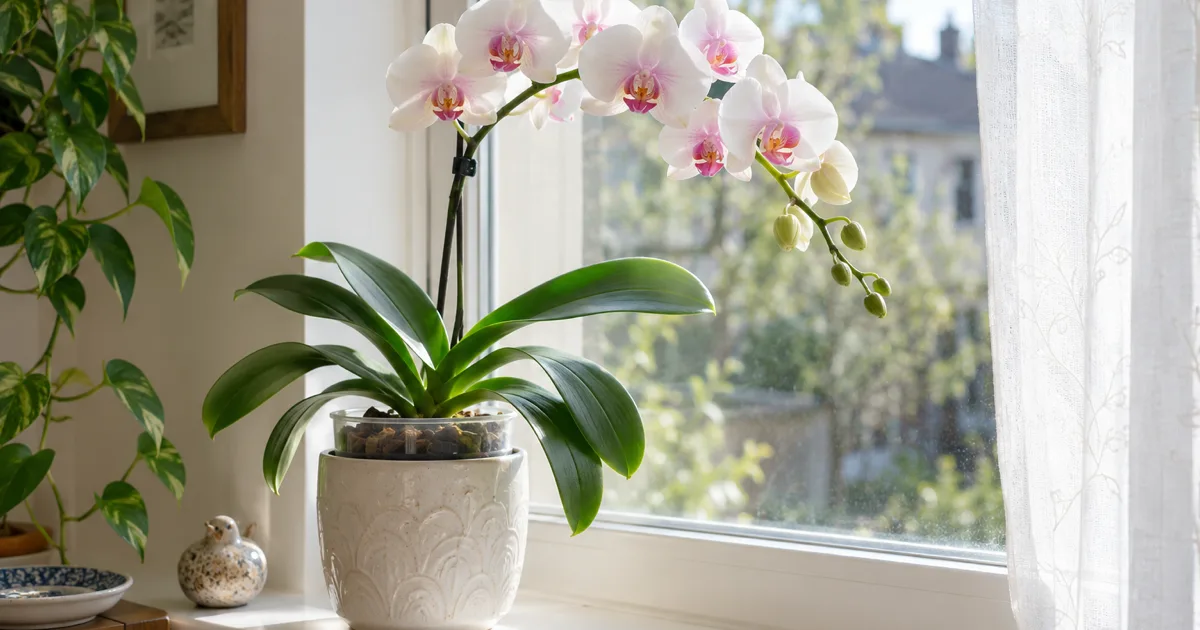
Illustrative AI-generated plant-care scene, not a documented diagnosis.
In this article
If you want to know how to tell if a plant needs water, check below the soil surface and lift the pot before reaching for the watering can. Dry-looking topsoil can cover a wet root ball. A calendar reminder is useful for checking, but it cannot decide whether to water. To estimate how often to water plants before you check, start from your plant, pot and light.
The useful comparison is your plant against its own previous checks. Two identical pots can dry at different rates because of their mix, roots and window position. Start with the houseplant care hub if you need to confirm how much drying your species tolerates.
Neither a drooping leaf nor a surface photo reveals moisture deeper in the pot. Leaftell can help you work through your selected soil and drainage observations when those clues disagree.
How to check soil moisture before watering
Push a clean finger gently into accessible mix, avoiding the stem and crowded roots. The University of Maryland watering guide suggests checking about 2 inches (5 cm) down for many houseplants, with exceptions such as cacti and succulents. A succulent and a moisture-loving fern need different amounts of drying. If you cannot reach the mix, use a plain wooden skewer carefully near the pot edge and look for adhering damp particles.
A spider plant stores water in fleshy roots, so a dry-looking surface is not a reason to keep topping up an already damp root ball.
Check more than one spot. A dry pocket beside the rim does not mean the center is dry. A moisture meter can add a clue, but its reading depends on the mix and probe contact. Do not turn a single number into a diagnosis.
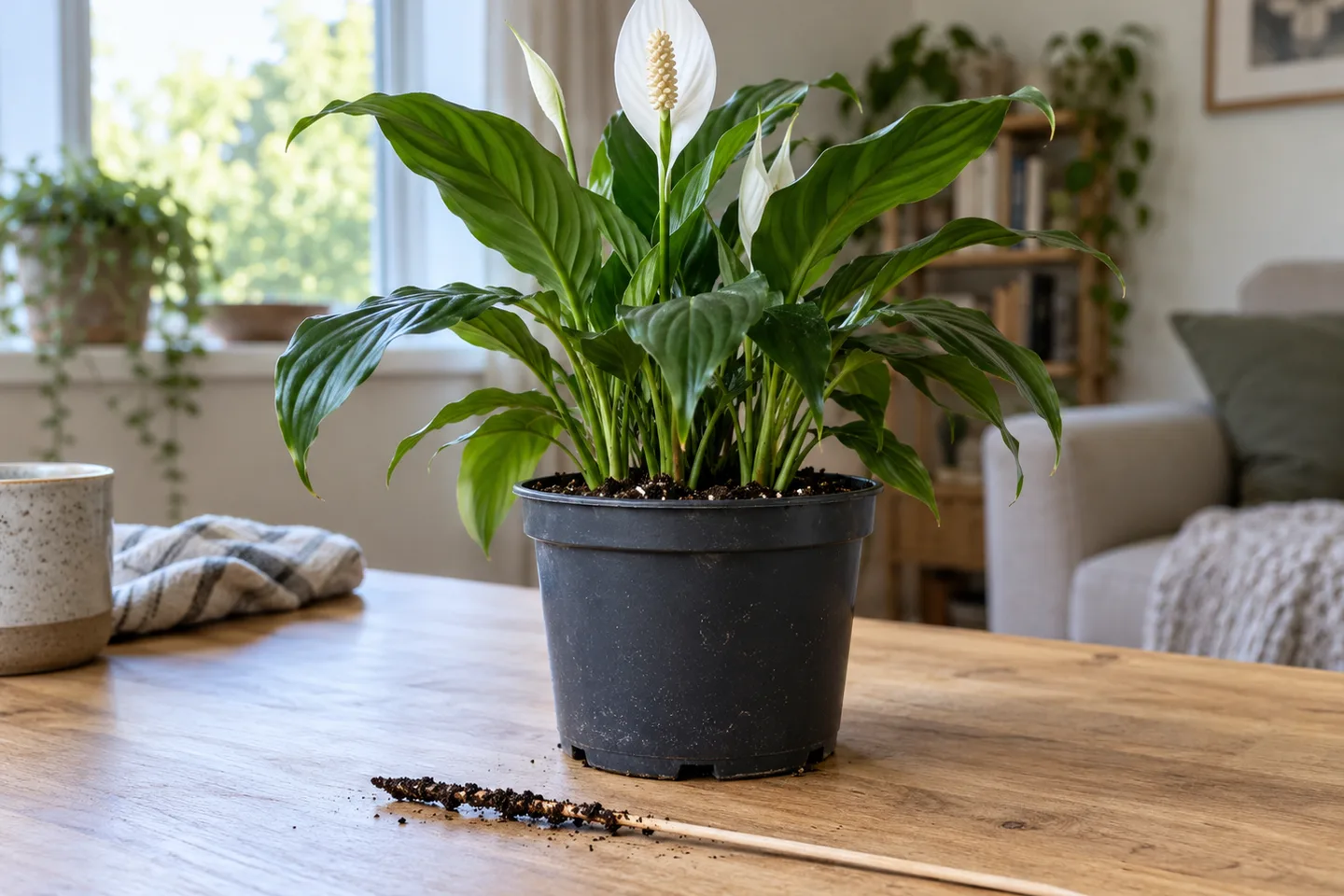
A wilted leaf cannot tell you whether roots are thirsty or struggling in wet mix, and a dry surface hides what is below. Leaftell is a next step for comparing your chosen moisture, drainage and symptom answers; your photo stays a visual reference, not a diagnosis.
Use pot weight to check soil moisture before watering
Lift the inner pot after watering and draining it, then compare its weight at later checks. You are learning the difference for that pot, not chasing a weight from someone else's plant. A heavy ceramic cover can hide the change, so lift the nursery pot separately when practical. Do not lift a pot that is too heavy to handle safely. Orchids in chunky bark are the exception to the finger test, so read the roots through a clear pot and lift it instead.
Write down today's moisture, weight impression and last watering date. Check again tomorrow if the evidence conflicts. This is an observation schedule, not an instruction to water every day. When you do water, apply it evenly and allow excess to drain. Empty the saucer or decorative cover afterward.
| Soil and pot evidence | Next check | What it tells you |
|---|---|---|
| Dry at the species' checking depth, noticeably lighter pot | Confirm the plant's drying preference | Water may be due |
| Dry surface, damp below, still-heavy pot | Check again later | The surface alone was misleading |
| Water runs down the edge, center remains dry | Check whether the root ball absorbed water | Runoff alone does not prove even wetting |
| Wet mix and a pot standing in water | Empty the cover and inspect drainage | More water is unlikely to help |
Adapt the check to the container
Pot diameter alone cannot set a watering depth or a drying schedule. These are suggested ways to apply the moisture check without forcing a finger into a small or crowded root ball; the inch values are inspection depths, not amounts to water.
| Pot situation | Practical check | Limit of the result |
|---|---|---|
| 3-4 inch (8-10 cm) pot | Check accessible mix about 1 inch down and lift the pot | A shallow sample cannot prove the base is dry |
| 5-8 inch (13-20 cm) pot | Check about 2 inches down at two accessible spots | Compare with species needs before watering |
| 10 inch (25 cm) or larger pot | Start with the same 2-inch check; inspect drainage and use a careful deeper skewer comparison if accessible | Never assume the center matches the surface; do not lift a heavy pot |
Worked example, hypothetical: a peace lily in a 6-inch charcoal nursery pot at a north window looks limp. The top half-inch is pale, but mix 2 inches down clings damply to a skewer and water remains in the white saucer. Empty the saucer, pause watering and check drainage; compare peace lily drooping with wet or dry mix. Recheck tomorrow rather than adding a standard cup. If the plant keeps collapsing, seek local horticultural help. For the rest of its routine, including watering from below, see how to care for a peace lily.
Check drainage before interpreting a thirsty-looking plant
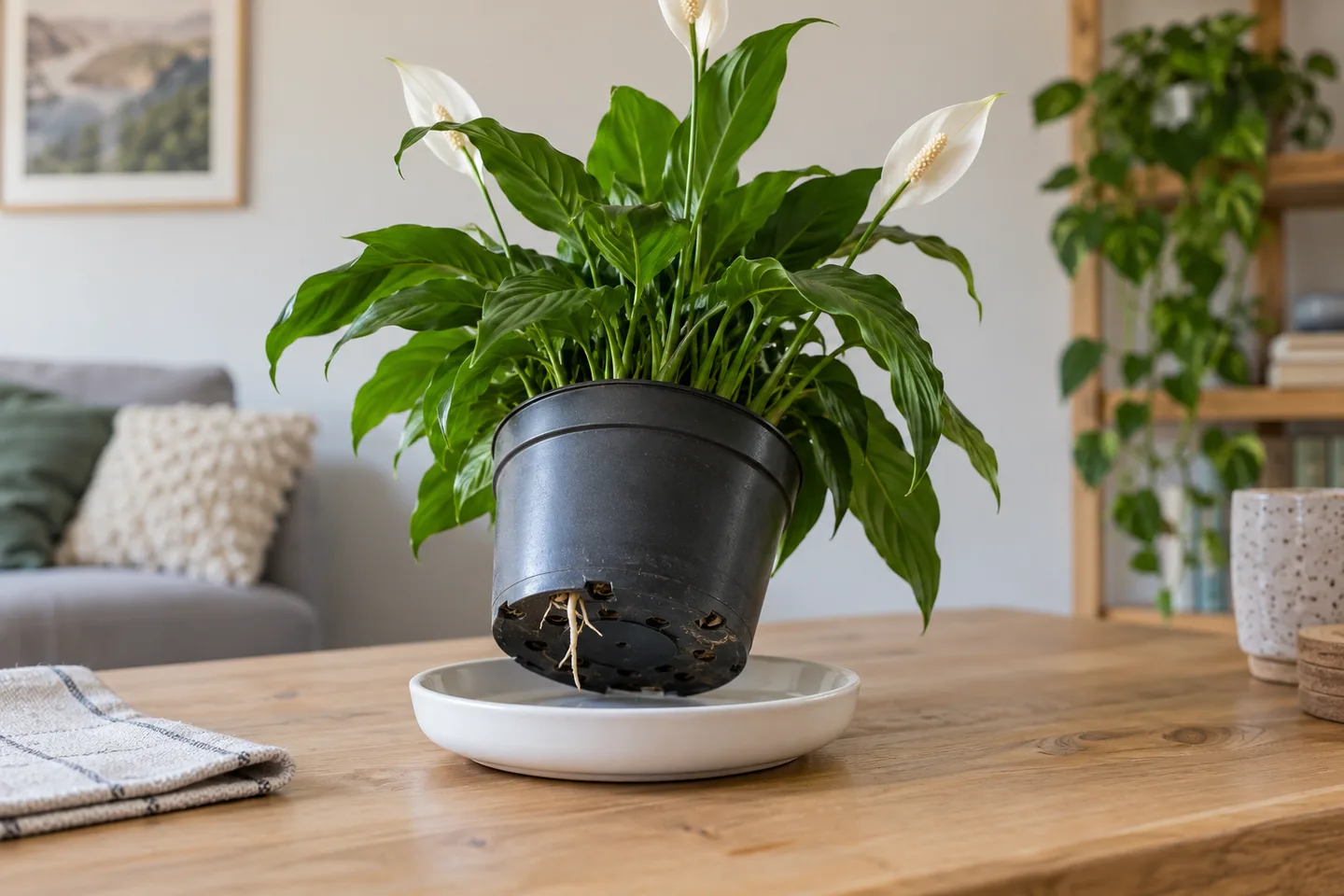
Remove the inner pot from its cover and look for drainage holes and trapped runoff. A wilted plant with wet mix needs a different investigation from one in dry mix. The drooping plant guide covers that symptom; this routine helps you collect the moisture evidence first.
If the mix stays wet and the stem base softens, consult the root rot guide. Do not keep adding water just because the leaves remain limp. Leaf appearance alone cannot distinguish thirst from damaged roots.
Mistakes when deciding whether a plant needs water
Avoid small daily splashes that wet only part of the pot, watering all plants together, or adding fertilizer to unexplained wilting. A dark corner can slow water use, so revisit your plant's light requirements when a familiar watering pattern stops fitting.
Keep a simple seven-day record of checks. Note when you watered, but leave the watering column blank on days the plant did not need it. Seven days is a comparison window, not a promised recovery time. If persistent dampness comes with small flying insects, compare fungus gnats around damp potting mix.
Make your next watering decision from three checks
Use soil moisture, pot weight and drainage together. When all three agree with your species' needs, the decision becomes clearer. When they disagree, pause and inspect the container instead of adding another splash. Photograph the whole plant and the soil surface today so you can compare visible changes at the next check.
References
The University of Maryland watering source linked above supports checking moisture, relative pot weight and drainage together. Its indoor plant problem guide adds context for wilting and root stress. The container table and worked example are practical applications, not measured drying rates.
Check your growing conditions with the plant watering calculator.
Frequently asked questions
Twenty minutes is not a reliable dose for a houseplant. For top watering, wet the mix evenly and let surplus drain; for bottom watering, check whether moisture actually reached the root ball rather than assuming the timer settled it.
If you mean a happy plant such as Dracaena fragrans, check its species guidance and the mix below the surface first. Water when its drying preference and pot weight agree, then let excess water drain and empty the saucer.
Check outdoor containers more often in extreme heat, but do not automatically water every indoor plant daily. Air conditioning, window exposure and pot size can make indoor conditions very different from the outdoor temperature.
Inspect regularly and water when the mix has dried enough for that species. A weekly reminder can prompt a check, but it cannot account for changes in roots, light, season or potting mix.
One US cup is about 237 mL, but that volume can be too much for a tiny pot and too little for a large dry root ball. Judge moisture and even wetting with free drainage, rather than using one cup for every plant.
There is no dependable number of days for every indoor plant. Before a trip, record how long your particular pot takes to reach its normal watering point under similar conditions and arrange checks accordingly.
Share article
About the author

Keep checking your plant
Plant care reference
Indoor plant care
Build a routine around your plant, light and potting mix.
Plant care reference
Drooping plant
Tell a dry root ball from a wet pot before adding water.
Plant care reference
How to fix root rot
Inspect root firmness and drainage, then decide whether to repot.
Plant care reference
Pothos plant care
Choose a growing spot and prune a trailing pothos for fuller growth.