Leaves Are Drooping? 5 Patterns That Tell You Why
Filip Leszczyński 4 November 2026 12 min read
In this article
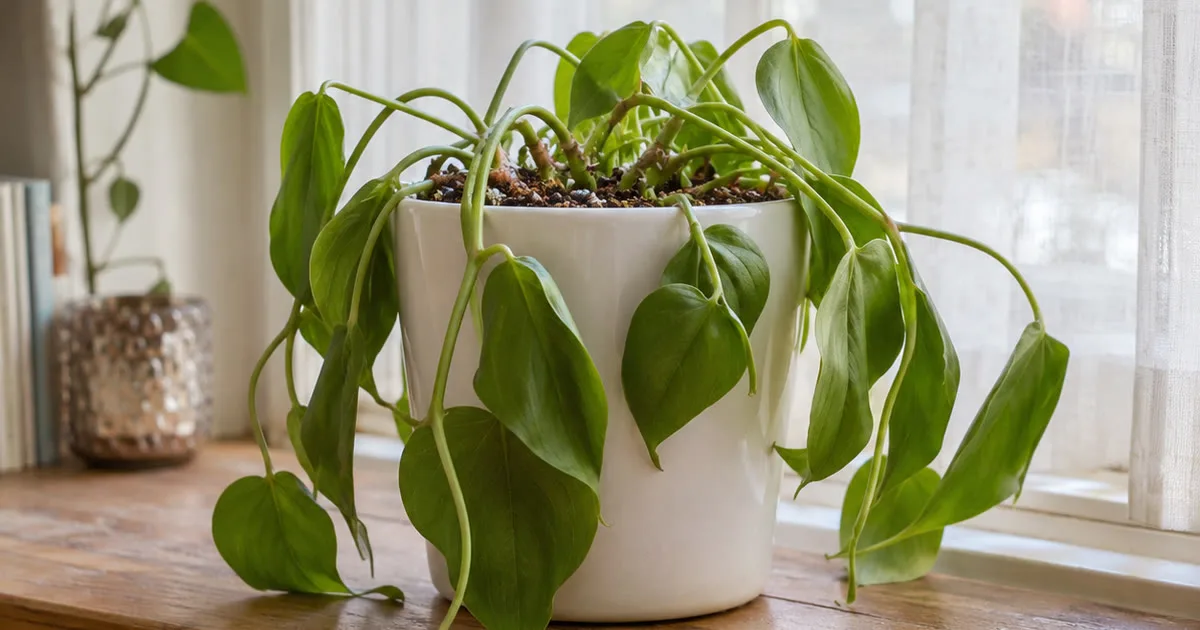
When leaves are drooping, the cells inside them have lost water pressure, either because the roots cannot deliver water fast enough or because the plant is folding its leaves on purpose. Before you water, note when the droop happens and lift the pot: those two clues separate a thirsty plant from a drowning one, a hot afternoon or a plant that is simply going to sleep.
That order matters because a droop from soggy roots looks almost the same as a droop from dry soil, and the usual reflex (more water) fixes one and makes the other worse. Below are the five droop patterns, how to tell them apart in about two minutes, and what to do over the next week.
What drooping leaves are telling you
A leaf stays upright the way a bike tire stays round: water inside each cell pushes out against the cell wall. The Durham County Extension Master Gardeners explain that about 95% of the water a plant takes up leaves again through its leaves, and when that loss outpaces what the roots can replace, the pressure drops and the leaf goes limp.
So a droop is a supply problem, not a disease in itself. The question is always which part of the supply chain broke:
- No water in the pot. The roots are fine, the soil is empty.
- Water in the pot, but roots that cannot use it. Rot, a waterlogged root ball or roots torn during repotting.
- Roots that cannot keep up. Heat, sun and dry air pull water out faster than healthy roots can pump it in.
- Nothing broken at all. Some plants lower or fold their leaves every evening.
The leaf looks the same in all four. The pot, the clock and the feel of the leaf do not.
Five droop patterns and what each one means
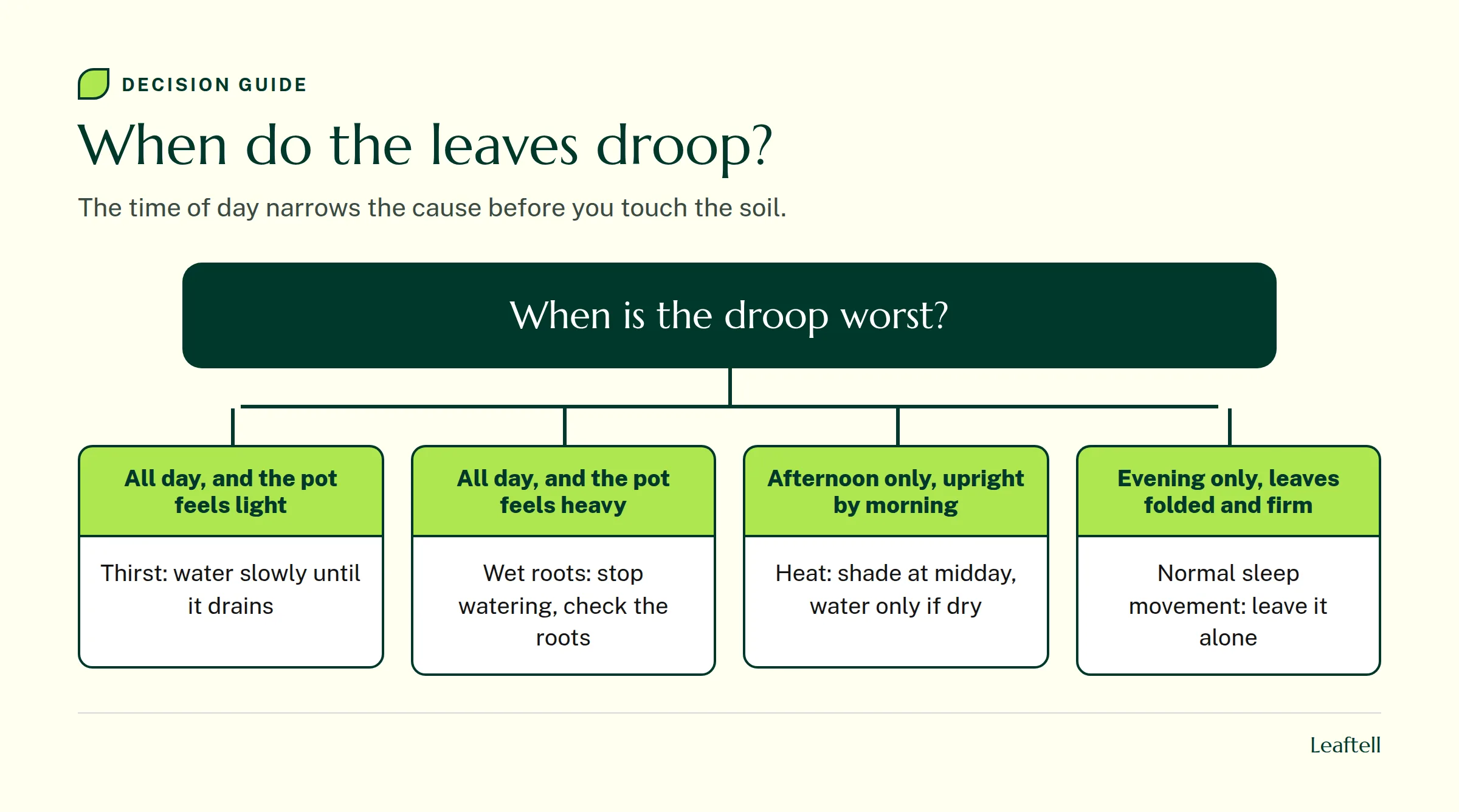
Here is the whole diagnosis on one page. Find the row that matches your plant, then read its section below.
| When it droops | How the leaves feel | Soil and pot | Most likely cause | First move |
|---|---|---|---|---|
| All day, getting worse | Thin, soft, papery | Dry, pot feels light, soil pulled from the edge | Thirst | Water slowly until it drains |
| All day, getting worse | Soft, heavy, lower leaves yellowing | Wet, pot feels heavy, may smell sour | Roots failing in wet soil | Do not water; empty the saucer, check roots |
| Afternoon only, fine by evening | Limp but still green and smooth | Moist | Heat outpacing the roots | Shade it at midday; water only if dry |
| Evening and night only | Folded neatly, firm | Normal | Natural sleep movement | Nothing |
| Days after repotting or a move | Limp, sometimes curling | Moist, fresh mix | Transplant shock | Bright indirect light, steady moisture, wait |
Droops all day and the pot feels light: thirst
This is the easy one. The soil is dry well below the surface, the pot lifts noticeably lighter than usual, and often the mix has shrunk away from the inside wall of the pot. Thin-leaved plants such as nerve plants and peace lilies collapse dramatically when they hit this point, then stand back up within hours of a proper drink.
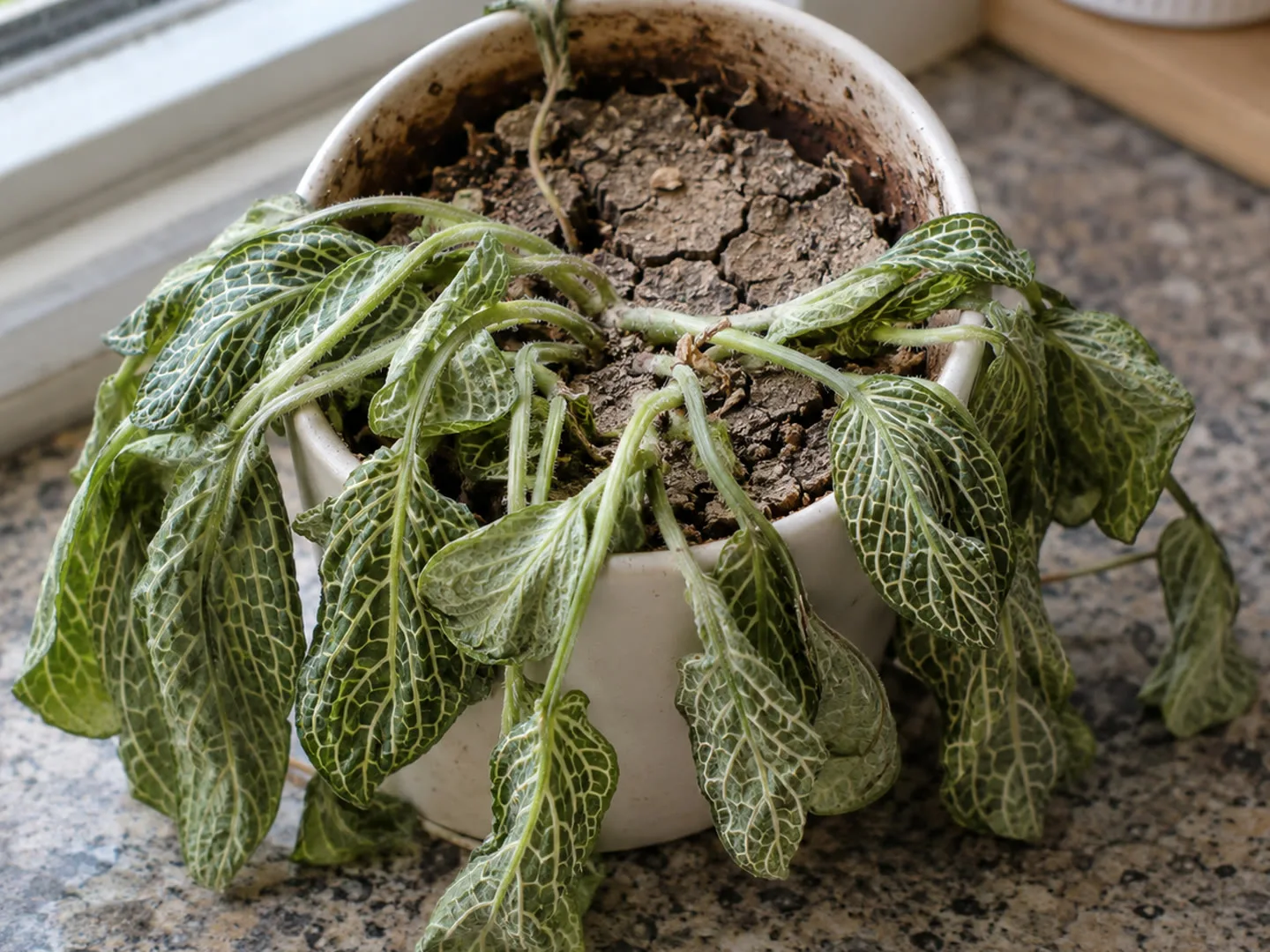
Water slowly at the edge of the pot until it runs out of the drainage holes, wait a few minutes and water again, because dry mix sheds the first pour down the gap at the side. If the mix has shrunk badly, set the pot in a bowl of water for 20 to 30 minutes so the root ball rewets from the bottom, then let it drain fully. Our guide to telling wet soil from dry soil before you water covers the finger and weight checks in detail.
Droops all day and the soil is wet: roots, not water
This is the pattern that kills plants, because it looks like thirst. The leaves hang, so you water, and they hang lower. The real problem is that roots sitting in waterlogged mix run short of air, start to rot and stop pulling water up, so the leaves go limp in a pot that is full of it.
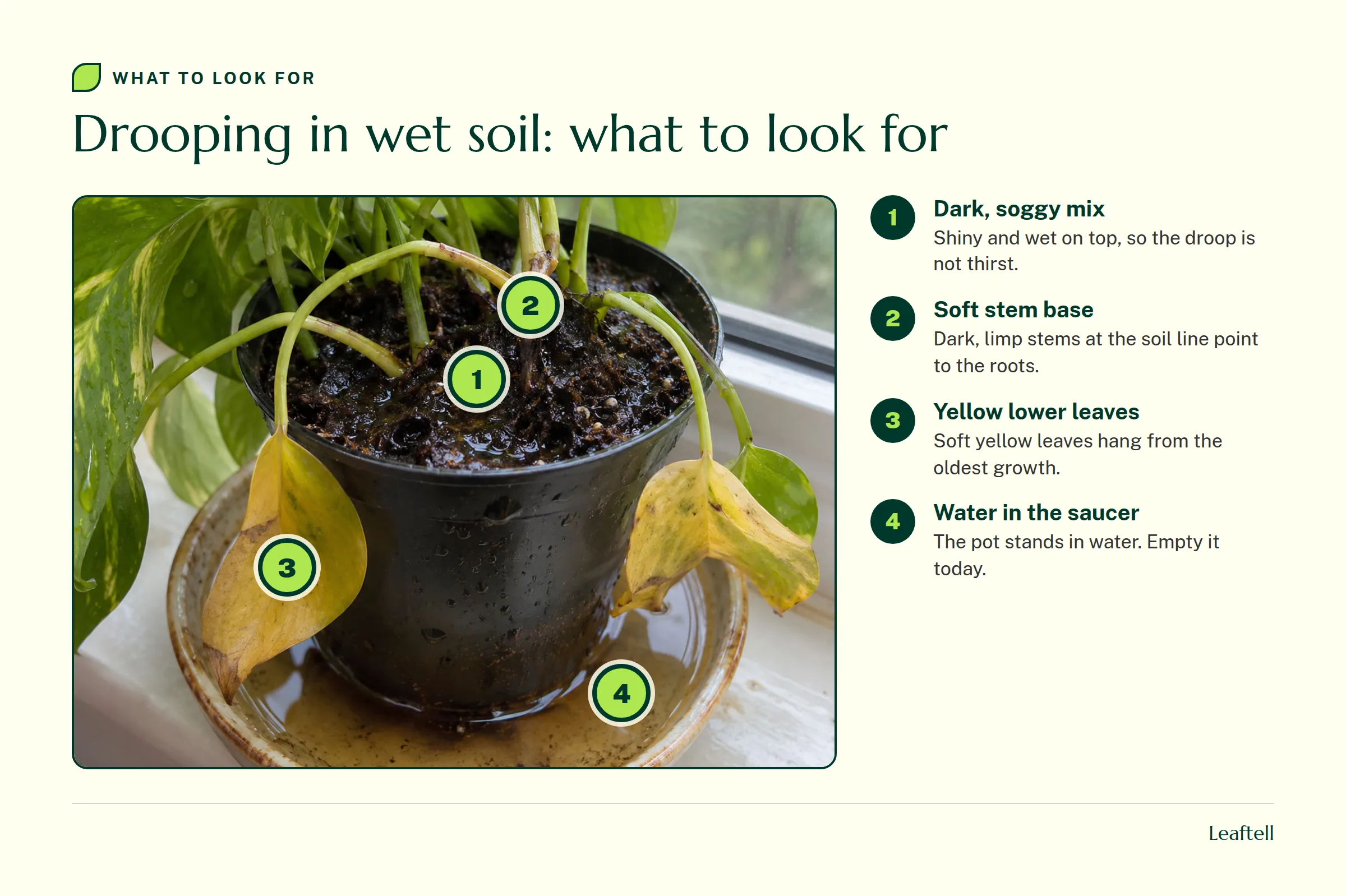
The clues: a heavy pot, dark mix that stays wet for days, water standing in the saucer or cover pot, soft yellow lower leaves, and sometimes a dark, soft stem base or a sour smell. Do not water. Empty the saucer, move the plant to bright indirect light, and if the mix is still wet after a few days, slide the plant out and look. White or tan firm roots mean wait for the mix to dry. Brown, mushy roots that slip their skin mean it is time for the root rot rescue steps. Our page on overwatered plant symptoms shows the rest of the signs side by side.
Droops in the afternoon, perks up by evening: heat
On hot, bright days a plant can lose water through its leaves faster than its roots can take it up, even from moist soil. The same Durham County article notes that plants with water available recover in the evening once it cools, then may wilt again the next afternoon. Big-leaved vegetables such as squash, cucumbers and tomatoes do this all summer.
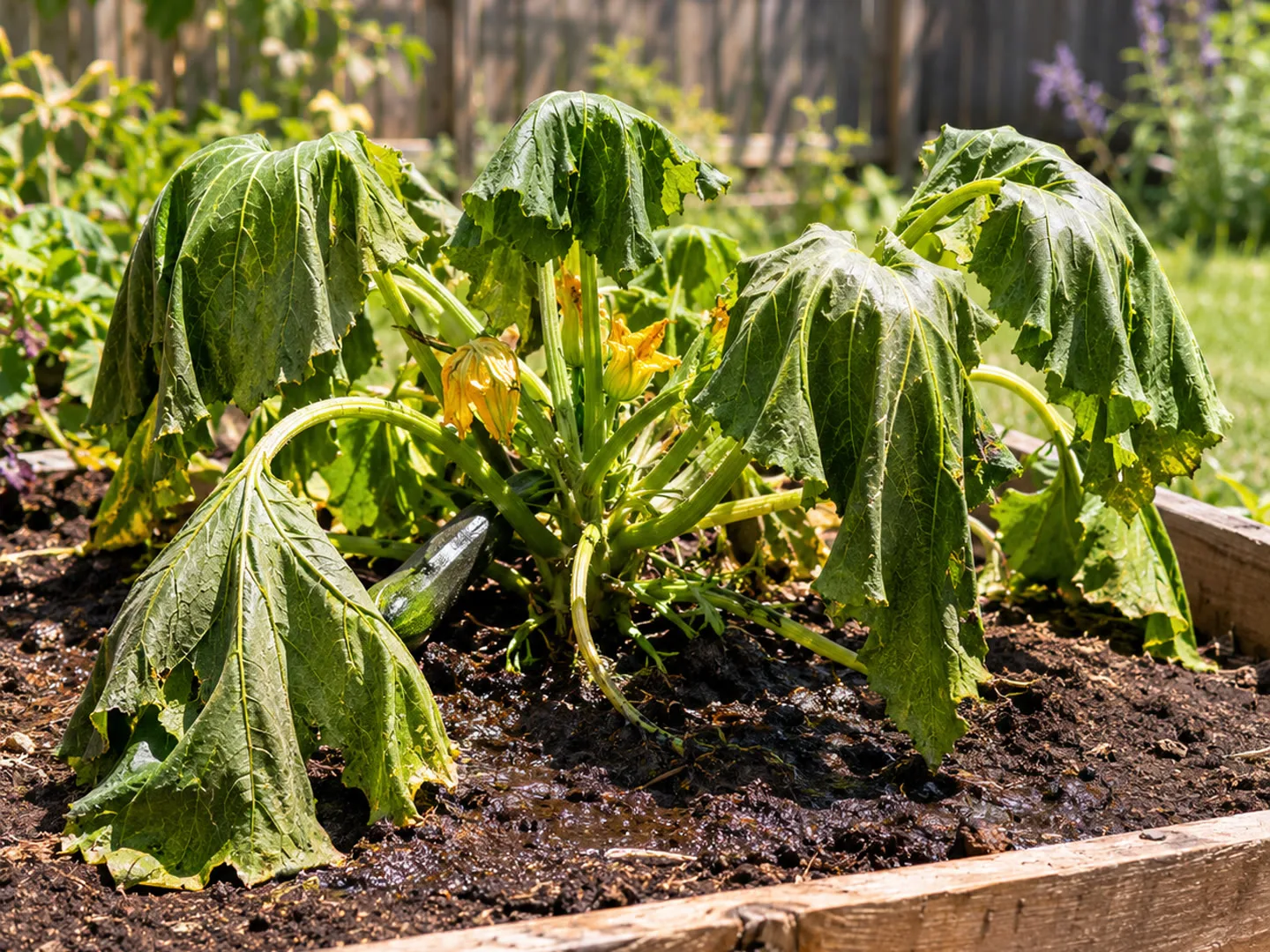
The test is timing. Look at the plant early in the morning. If it is upright then, the roots are working and you do not need extra water, only shade at the hottest hour or a spot away from a hot south window indoors. If it is still limp at dawn, the soil really is dry or the roots are in trouble, so go back to the two patterns above. For garden beds, our guide on how often to water tomatoes explains deep watering that carries plants through hot spells.
Folds down at night only: normal sleep movement
Some plants move their leaves on a daily rhythm. Purple shamrock (Oxalis) closes its leaflets like small umbrellas at dusk, and the New York Botanical Garden describes this as nyctinasty, a movement tied to the onset of darkness, which also happens on very dim days. Prayer plants fold their leaves up at night for the same reason.
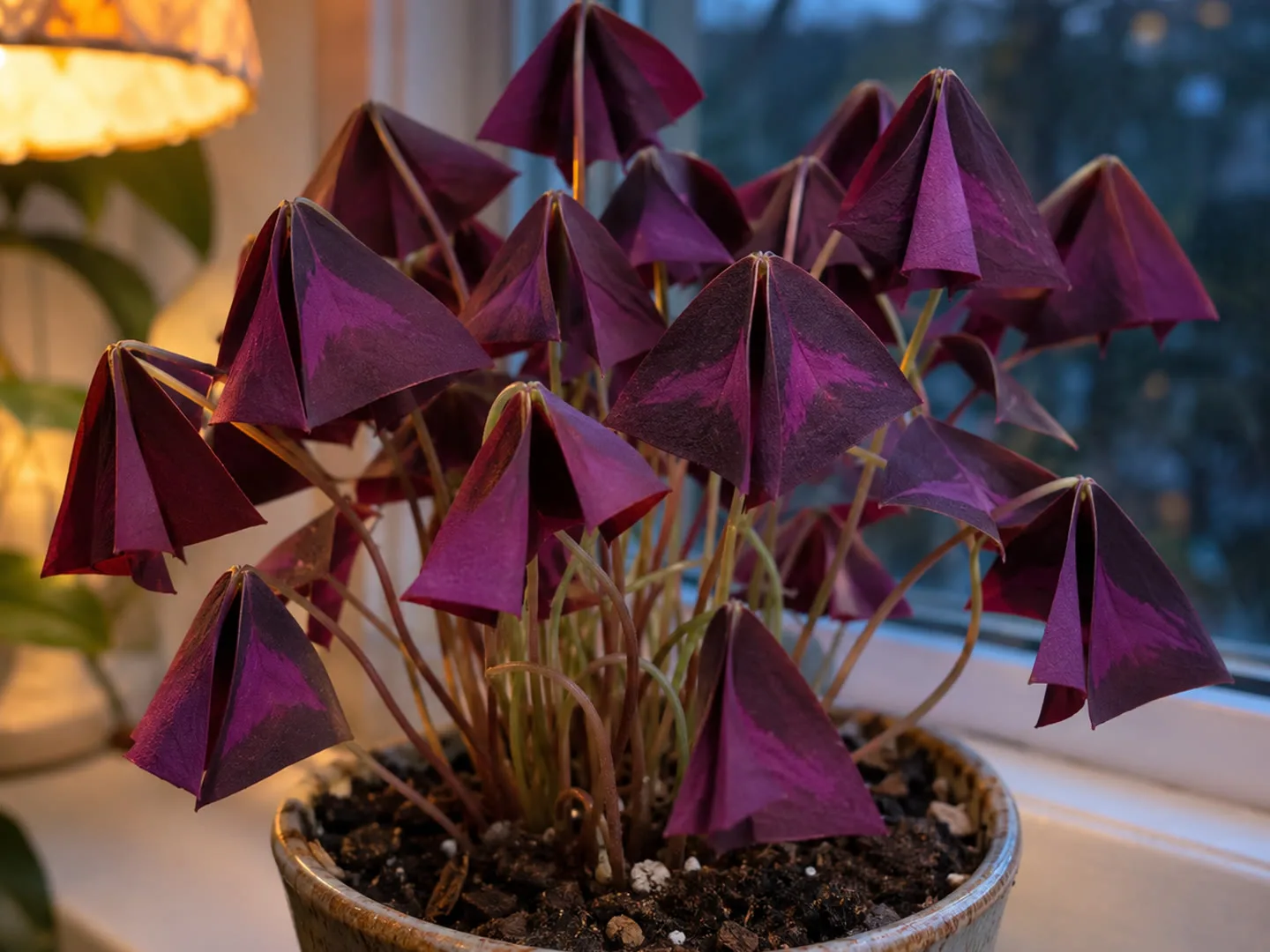
If the leaves are firm, the color is good and they open again in the morning, nothing is wrong. If they stay closed through bright daytime hours for several days, the plant is probably short of light; our guide to reading your plant's light helps you check the spot.
Droops after repotting or a move: transplant shock
Repotting tears fine roots, and a move changes light, heat and humidity in one go. Purdue Extension lists wilting, yellowing and leaf rolling or curling on recent transplants as the typical signs of transplant shock. The plant is fine; it is short of working roots for a while.
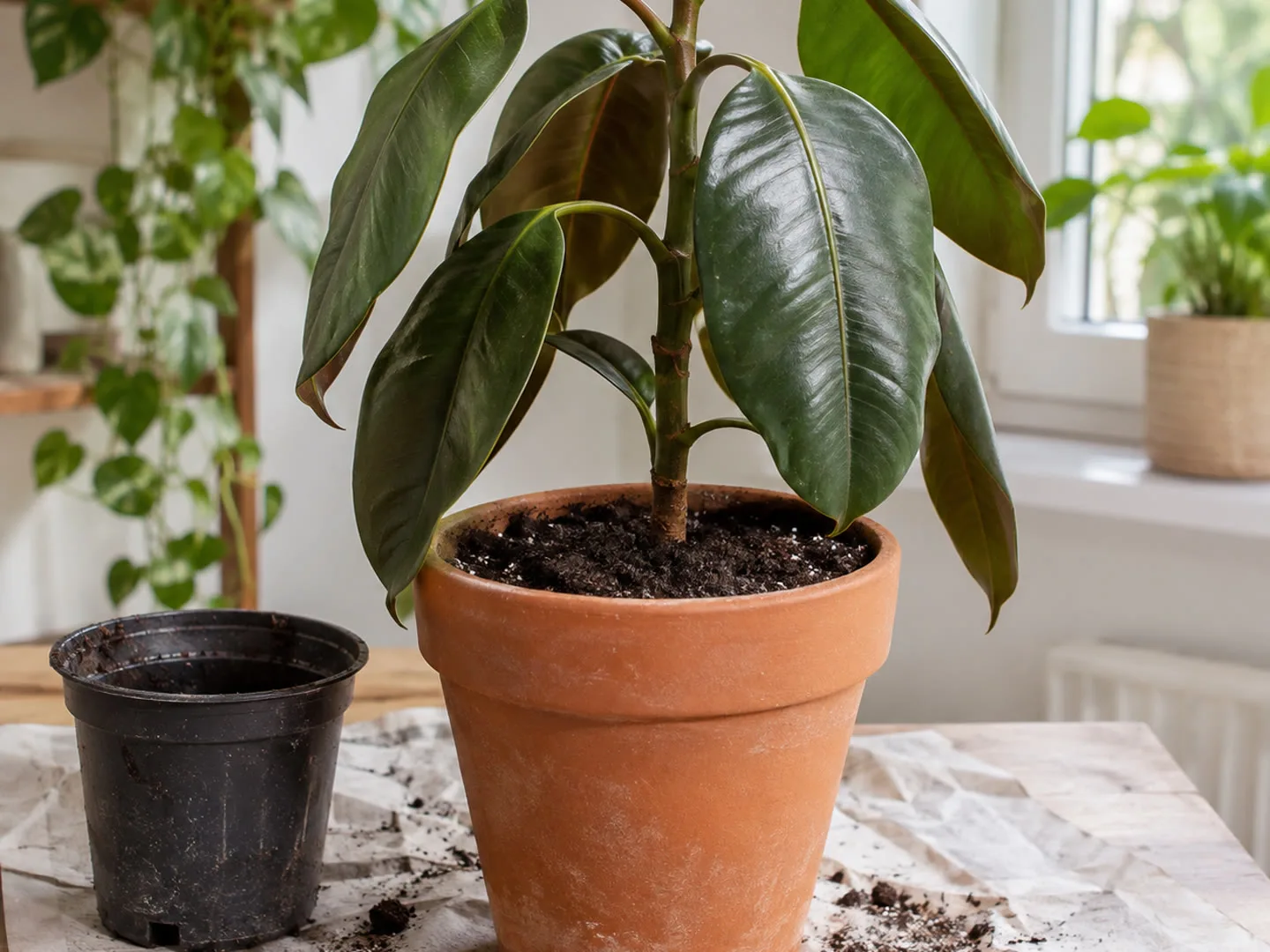
Keep it in bright indirect light, out of direct sun, and keep the mix lightly moist but never soggy. Fresh mix in a bigger pot holds more water than the old one, so check with a finger before each watering instead of following your old routine. Do not fertilize and do not repot again. If the droop has not eased after a couple of weeks or the stem base turns soft, check the roots, because a too-large pot of wet mix can tip shock into rot.
Feel the leaf, then lift the pot
When the pattern is not obvious, two touches settle most cases. A thirsty leaf feels thin and papery, and the pot feels light. A leaf failing from wet roots feels soft and heavy, often with yellow on the oldest leaves, and the pot feels heavy. A leaf folded for the night feels firm and normal.
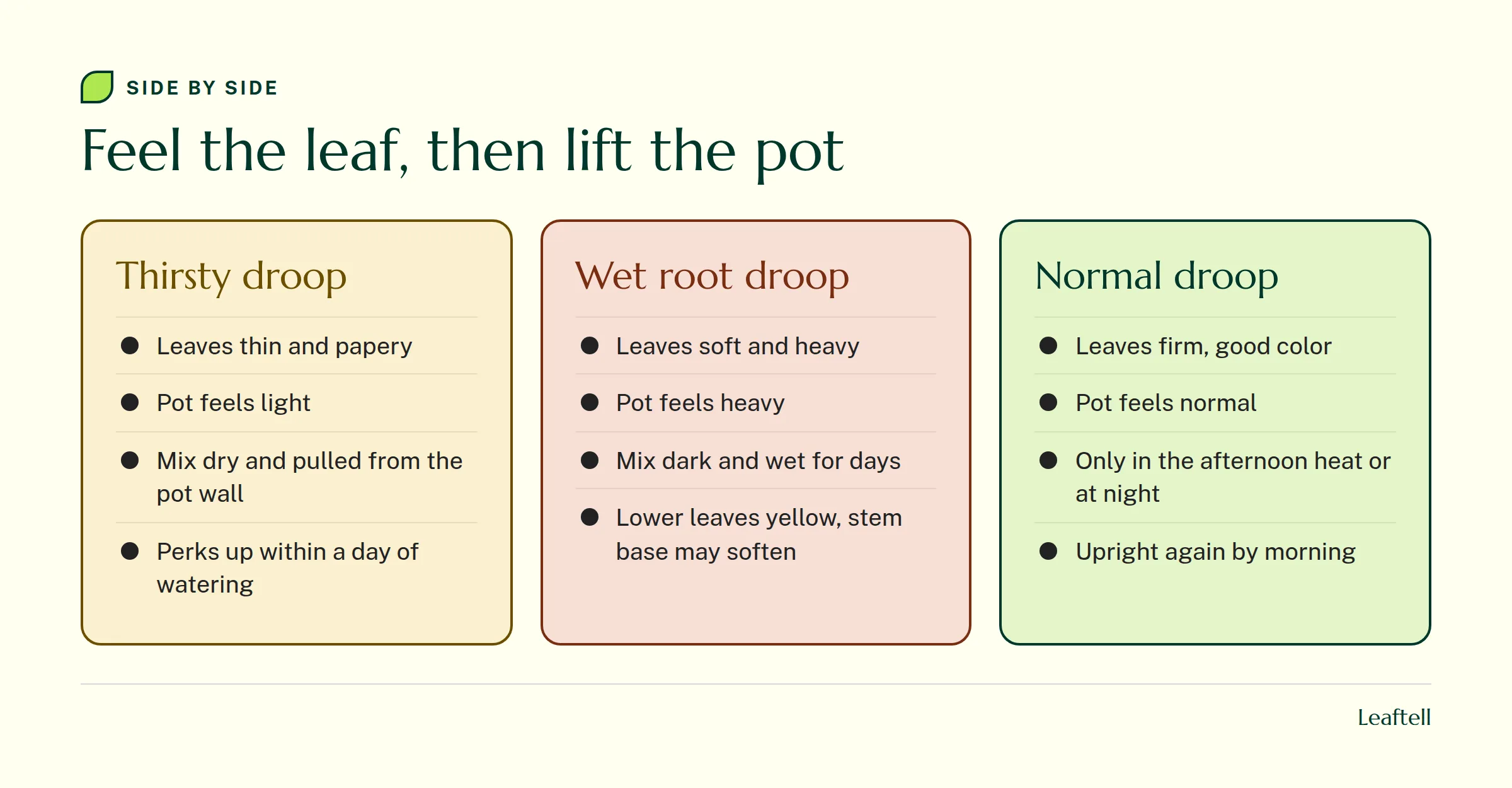
If you can, look under the soil line. Slide the plant out of its pot over a sink and look at the outside of the root ball. Dry roots look pale and wiry in crumbly mix pulled away from the pot wall. Rotting roots look brown and mushy in dark, wet mix that smells sour.
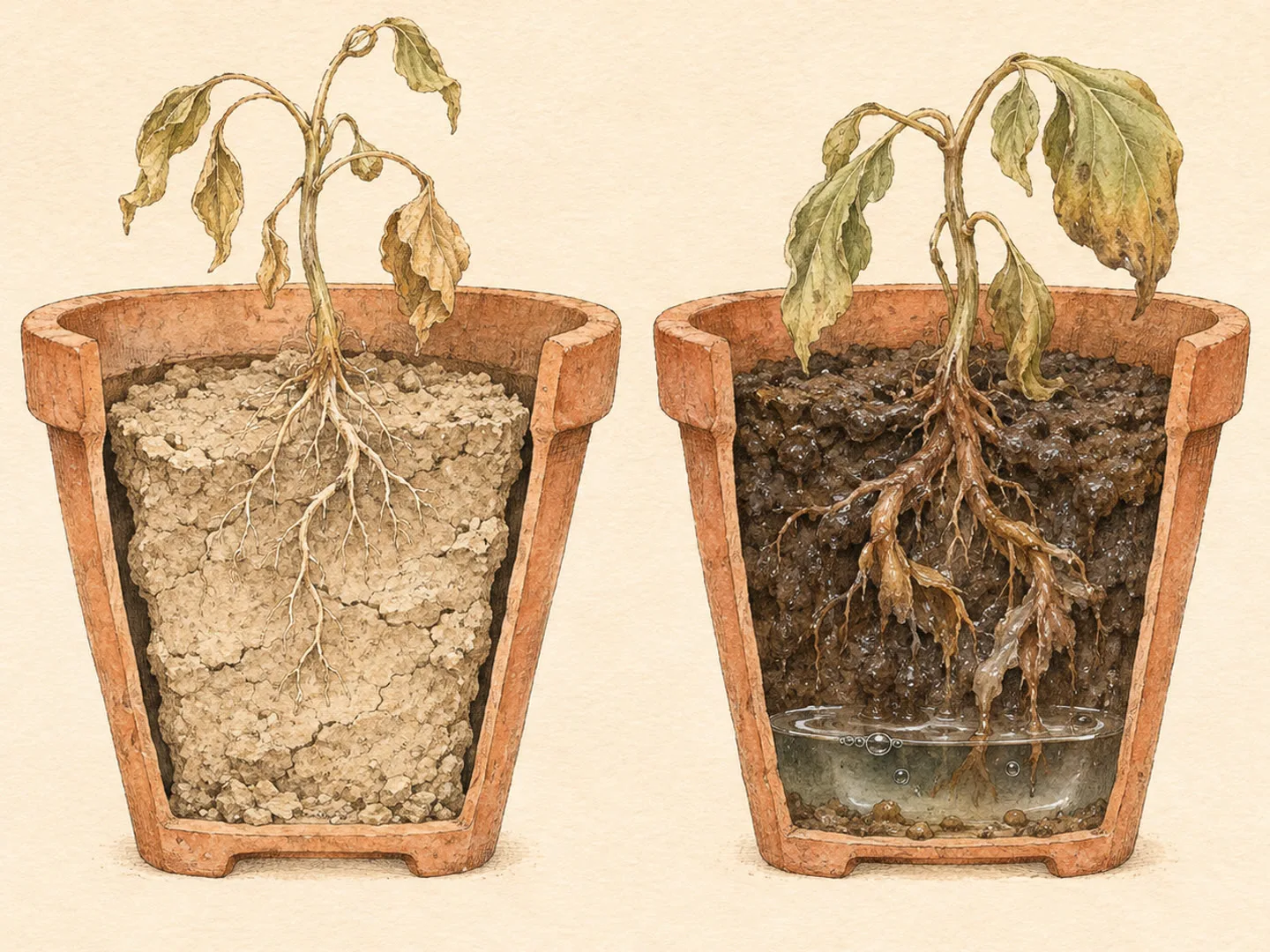
This is the step most people skip, and it is the one that tells you whether a droopy plant needs water or needs to dry out. Our broader guide to why a plant droops goes deeper on the pot weight check.
Not sure whether your plant is thirsty, drowning or just sleeping? A photo of the whole plant, a close-up of the drooping leaves and a note on how the soil feels a knuckle down is a good place to start.
What to do over the next week
Once you have picked a cause, change one thing and watch. A dry plant usually lifts within a day of a thorough watering. A plant drying out from wet roots or recovering from repotting takes longer, so the useful habit is to look again on set days rather than adding water each time it looks sad.
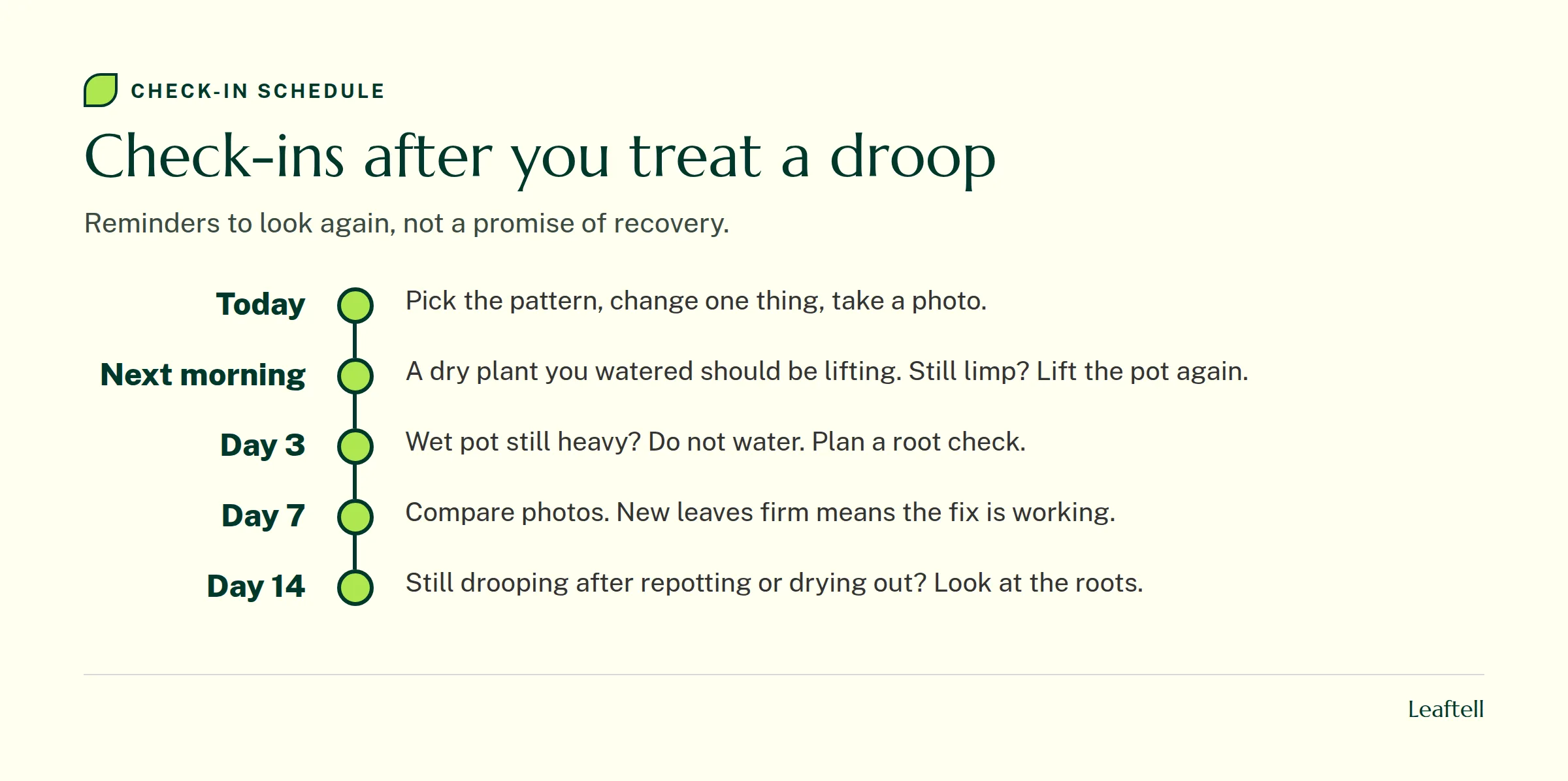
Take a photo from the same angle each time. Comparing the newest leaves across a week tells you more than staring at the plant once a day, and it stops you from reacting to an afternoon heat droop.
Mistakes that turn a droop into a dead plant
- Watering every droop. A limp plant in wet soil is the one case where more water does real harm. Lift the pot first.
- Leaving water in the cover pot. Decorative pots without holes hide a pool at the bottom that keeps the roots soaked. Tip it out after every watering.
- Moving a stressed plant into full sun. More light means more water loss through the leaves, which a plant short of working roots cannot cover.
- Repotting a drooping plant into a much bigger pot. Extra wet mix around a small root ball stays soggy for days. Go up only one pot size, and only when the roots are crowded. A root-bound spider plant is the classic case where a bigger pot is the fix.
- Cutting off leaves too early. A drooping leaf that is still green can stand back up. Remove only leaves that have turned yellow, brown or mushy.
- Judging at the wrong time of day. Check in the morning. An afternoon droop on a hot day says little about water.
If the leaves are curling as well as drooping, the cause is often light, heat or pests rather than water; our guide to plant leaves curling sorts those out.
The short version
Drooping leaves mean the plant is short of water inside its leaves, not necessarily short of water in the pot. Check when it droops, feel the leaf and lift the pot before you reach for the watering can. Dry and light: water slowly until it drains. Wet and heavy: stop watering and check the roots. Limp only in the afternoon or folded only at night: leave it alone. Drooping right after repotting: steady light, steady moisture, patience.
If you still cannot tell which pattern you are looking at, check your plant in Leaftell with a photo of the whole plant, a close-up of the leaves and a note on how the soil feels. Take a fresh photo about seven days later as a check-in reminder and compare the newest leaves.
Check your growing conditions with the plant watering calculator.
Frequently asked questions
A plant looks droopy when its leaves lose water pressure. The most common causes are dry soil, roots rotting in wet soil, heat that pulls water out faster than the roots can replace it, and shock after repotting or a move. Some plants, like purple shamrock and prayer plants, also fold their leaves every evening as normal behavior. Check the time of day and the weight of the pot to tell which one you have.
There is no safe fixed schedule, because pot size, mix, light, season and the plant itself change how fast the soil dries. Water when the mix is dry to the depth your plant prefers (about a knuckle down for most tropical foliage plants, all the way through for succulents), then water until it drains and empty the saucer. Checking the soil and the pot weight works better than any calendar.
An overwatered plant droops even though the soil is wet. The pot feels heavy, the mix stays dark for days, lower leaves turn soft and yellow, and the stem base can go dark and mushy. Leaves feel limp and heavy rather than thin and crisp. Stop watering, empty any standing water and check the roots if the soil has not started drying within a few days.
Plant shock, or transplant shock, is the stress a plant shows after repotting, planting out or moving to a new spot. Damaged roots and new conditions mean it cannot take up water as well for a while, so leaves droop, yellow or curl even when the soil is moist. Keep it in bright indirect light, keep the mix lightly moist, skip fertilizer and give it time before changing anything else.
Share article
About the author

Keep checking your plant
Plant care reference
Indoor plant care
Build a routine around your plant, light and potting mix.
Plant care reference
Why is my plant dying
Trace leaf and root symptoms before choosing a care change.
Plant care reference
Pothos plant care
Choose a growing spot and prune a trailing pothos for fuller growth.
Plant care reference
How to fix root rot
Inspect root firmness and drainage, then decide whether to repot.