How to Tell if a Plant Is Overwatered or Underwatered
Filip Leszczyński 9 November 2026 11 min read
In this article
To tell if a plant is overwatered or underwatered, push a finger 2 inches into the soil and feel one of the drooping leaves. Wet soil with soft, limp leaves means too much water; dry soil with thin, crisp or papery leaves means too little.
Look at the leaves alone and you will often guess wrong, because both problems make a plant droop, yellow and brown. The reason is the same in both cases: the leaves are not getting water. An underwatered plant has none to take up. An overwatered plant has plenty, but its roots are starved of air and cannot drink it. That is why a plant wilting in wet soil is never thirsty, and why watering a droopy plant without checking first is the most common way an overwatered plant gets finished off.
Overwatered vs underwatered: the side by side
Read the table from the top. The first two rows decide it in most pots; the rest confirm what the soil already told you.
| Clue | Overwatered | Underwatered |
|---|---|---|
| Soil 2 inches down | Wet, cool, dark, sticks to your finger | Dry, dusty, crumbles off |
| Pot weight | Heavy for its size | Noticeably light |
| Leaf feel | Soft, limp, sometimes translucent | Thin, wrinkled, crisp or papery |
| Yellow leaves | Bright yellow, soft, often several lower leaves at once | Yellow then dry and crunchy, oldest leaves first |
| Brown areas | Dark brown, soft patches, often with a yellow edge | Light tan, dry tips and edges |
| Soil surface | Dark, may grow a green film or fungus gnats | Pale, cracked, shrinking away from the pot wall |
| Roots | Brown, soft, may smell sour | Firm but dry and shriveled |
| After watering | No change or gets worse | Perks up within a day |
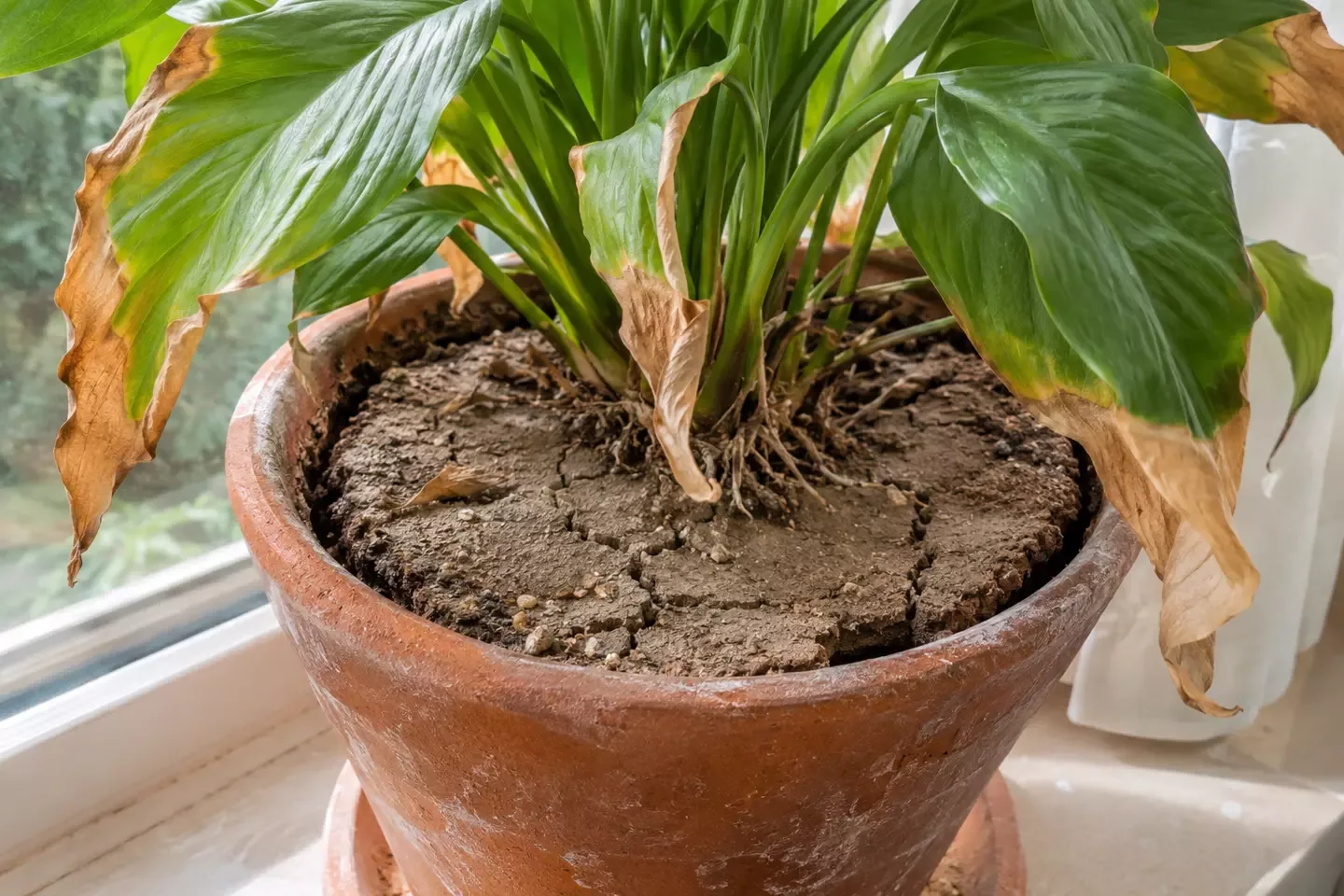
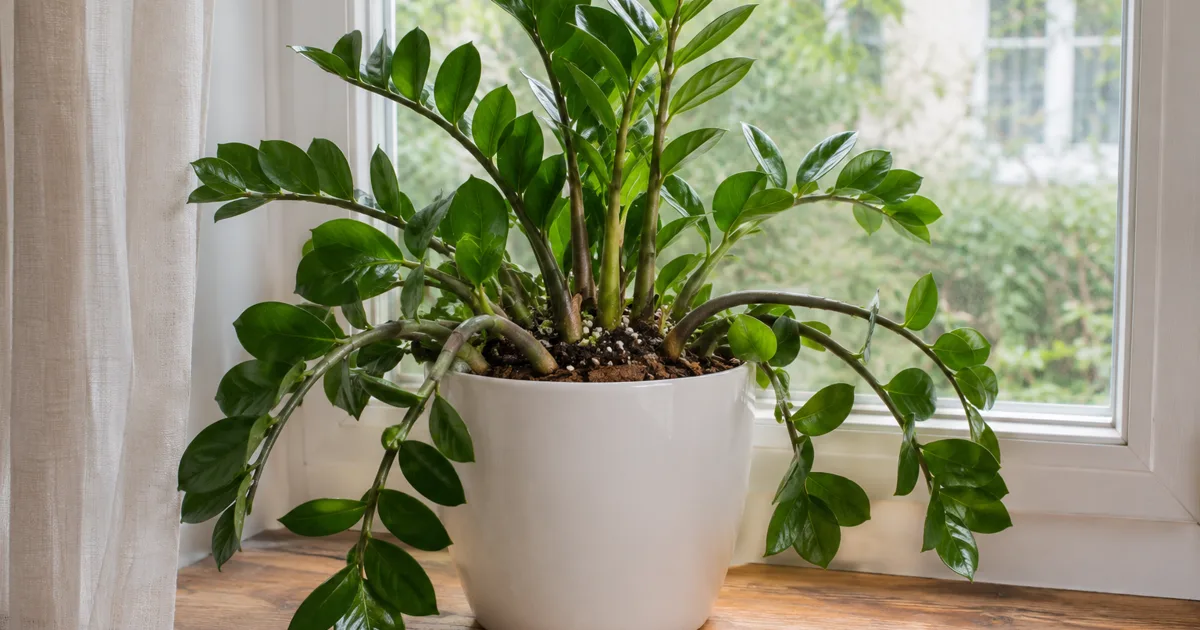
The underwatered plant above shows the dry side clearly: leaves thin and curling, edges gone crisp, and soil that has shrunk away from the terracotta so water would run straight down the gap.
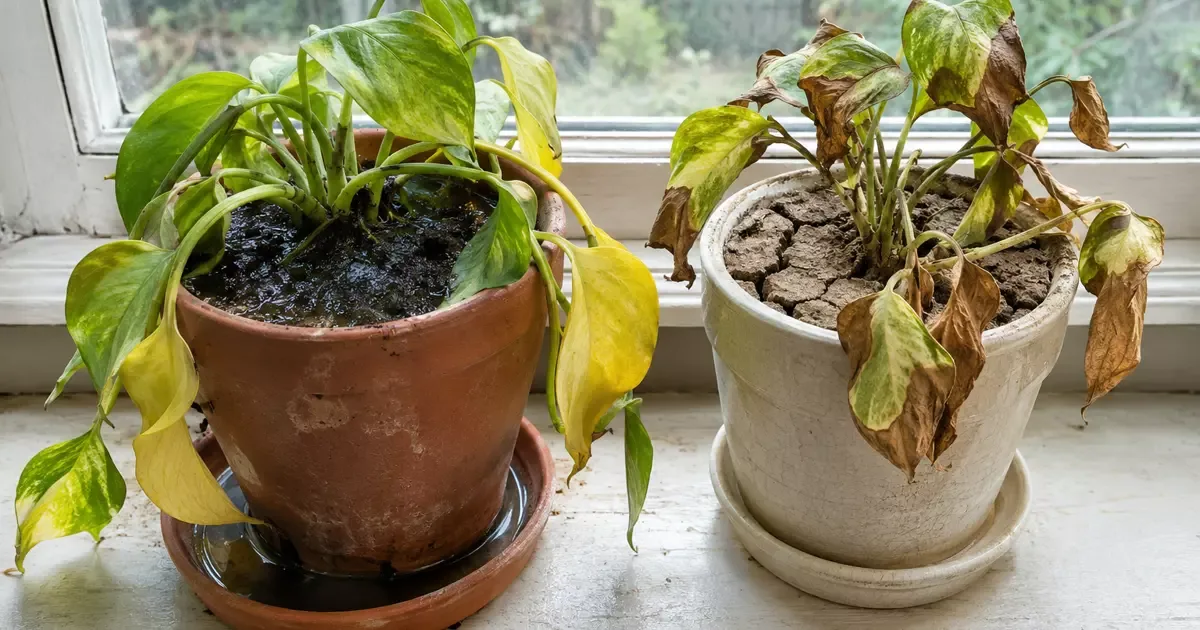
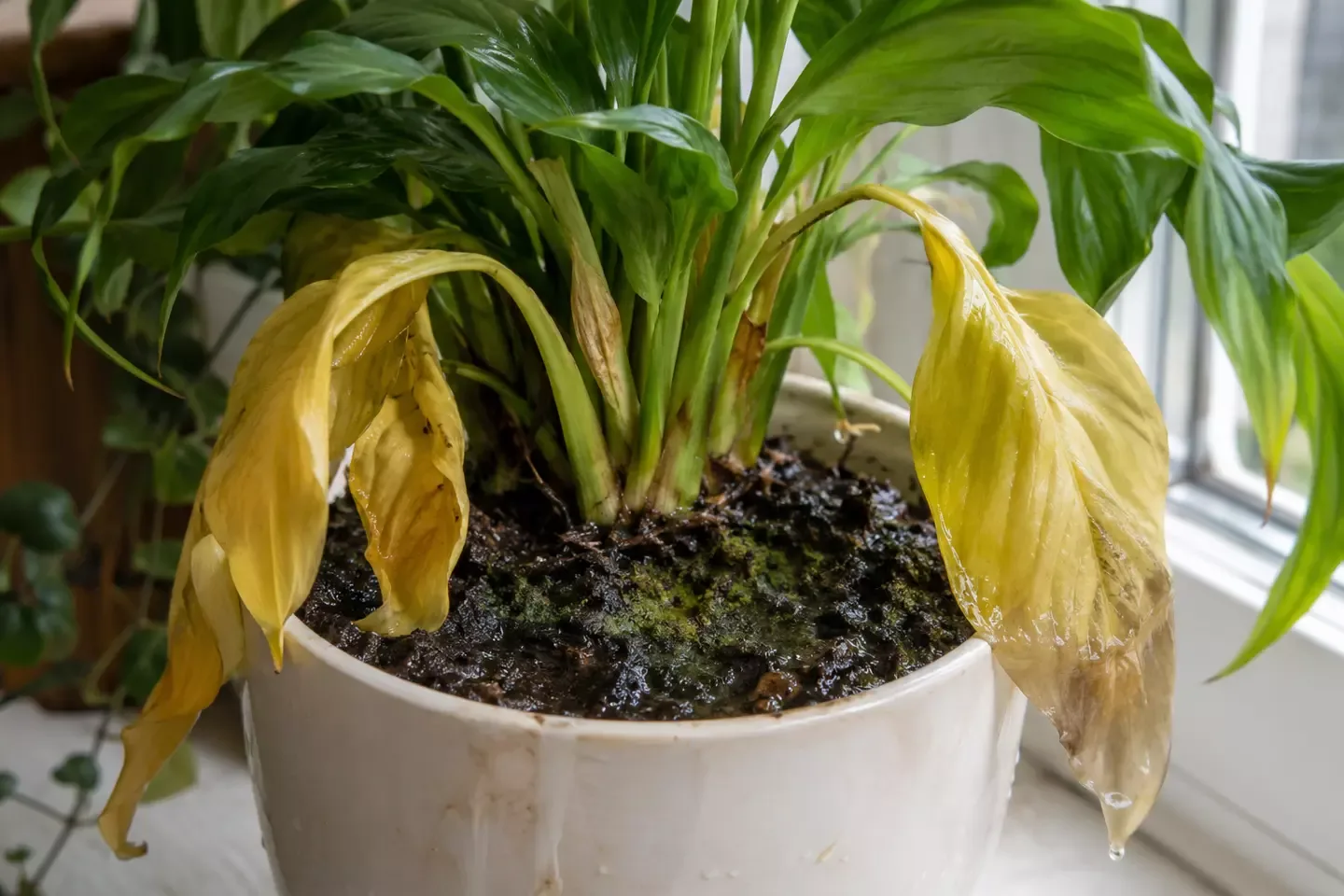
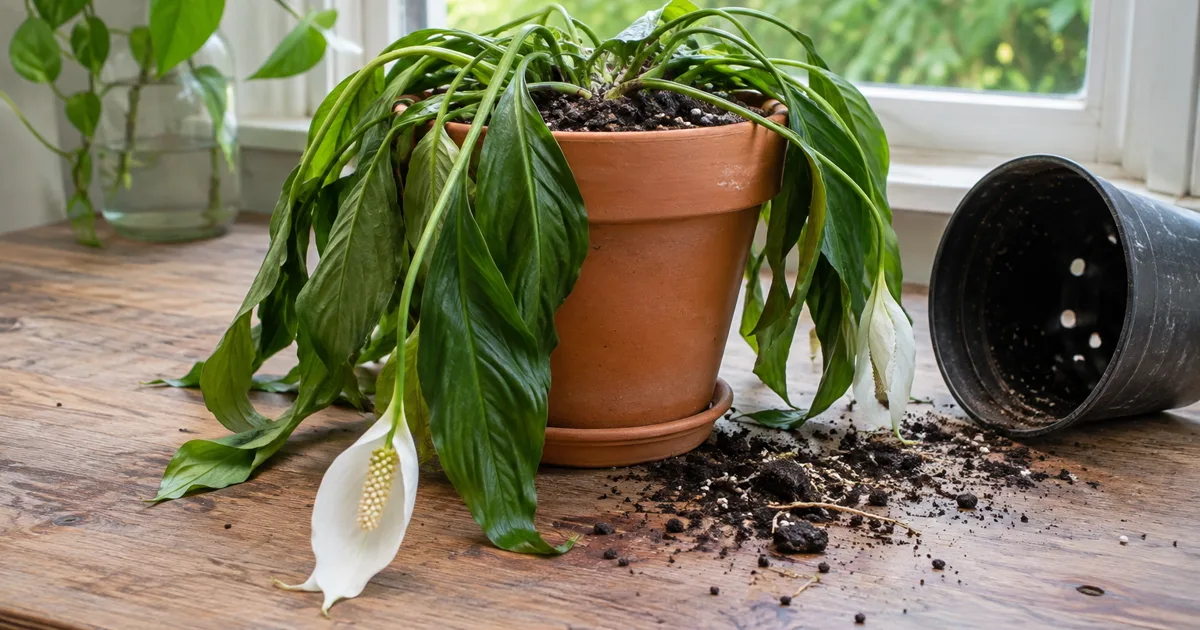
The overwatered version looks just as unhappy from a distance. Up close, the yellow leaves are soft rather than crisp, the soil is dark and glossy, and the pot is sitting in its own runoff. Our guide to overwatered plant symptoms goes deeper on that side once you know it is the one you have.
Start with the soil, not the leaves
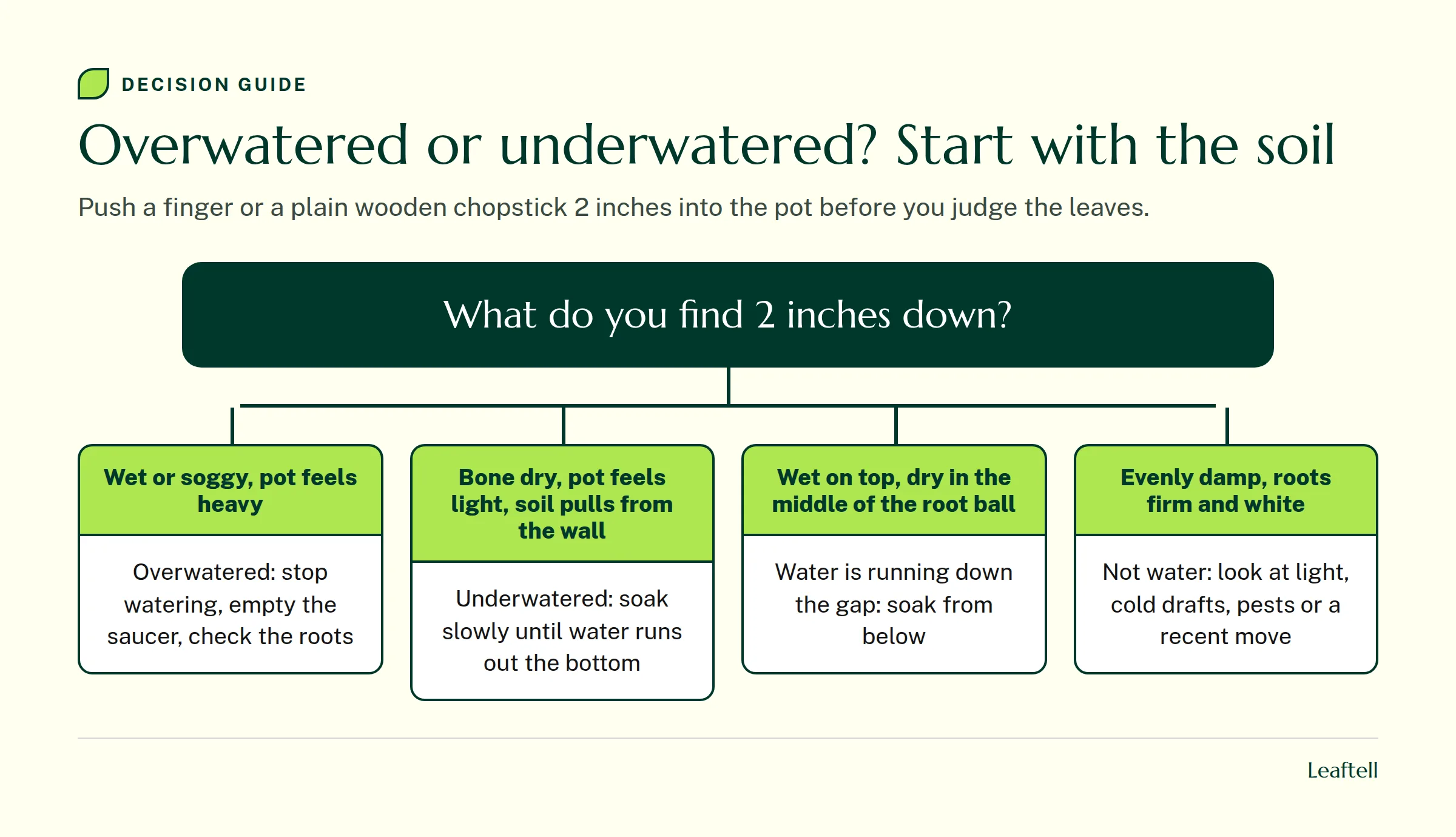
The soil check takes 30 seconds and settles most cases. Do it before you water, before you move the plant and before you buy anything.
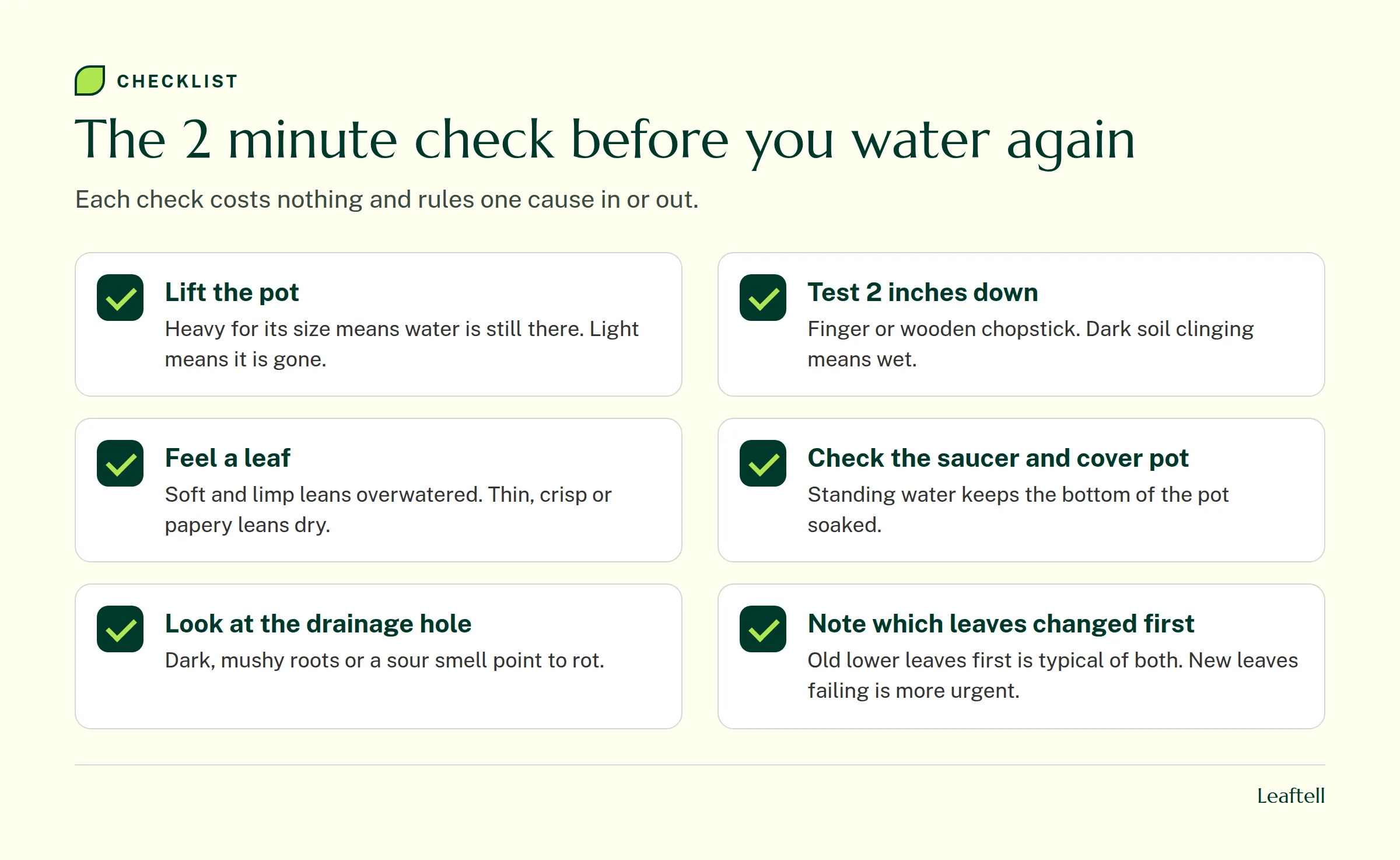
- Lift the pot. Pick it up right after a good watering once, so you know what "full" feels like. A pot that is much lighter than that is dry.
- Test 2 inches down. Use a finger, or push a plain wooden chopstick in and leave it for a minute. Dark soil clinging to it means the root zone is still wet, whatever the surface looks like.
- Check the saucer and the cover pot. Standing water at the bottom keeps the lower roots soaked even when the top has dried.
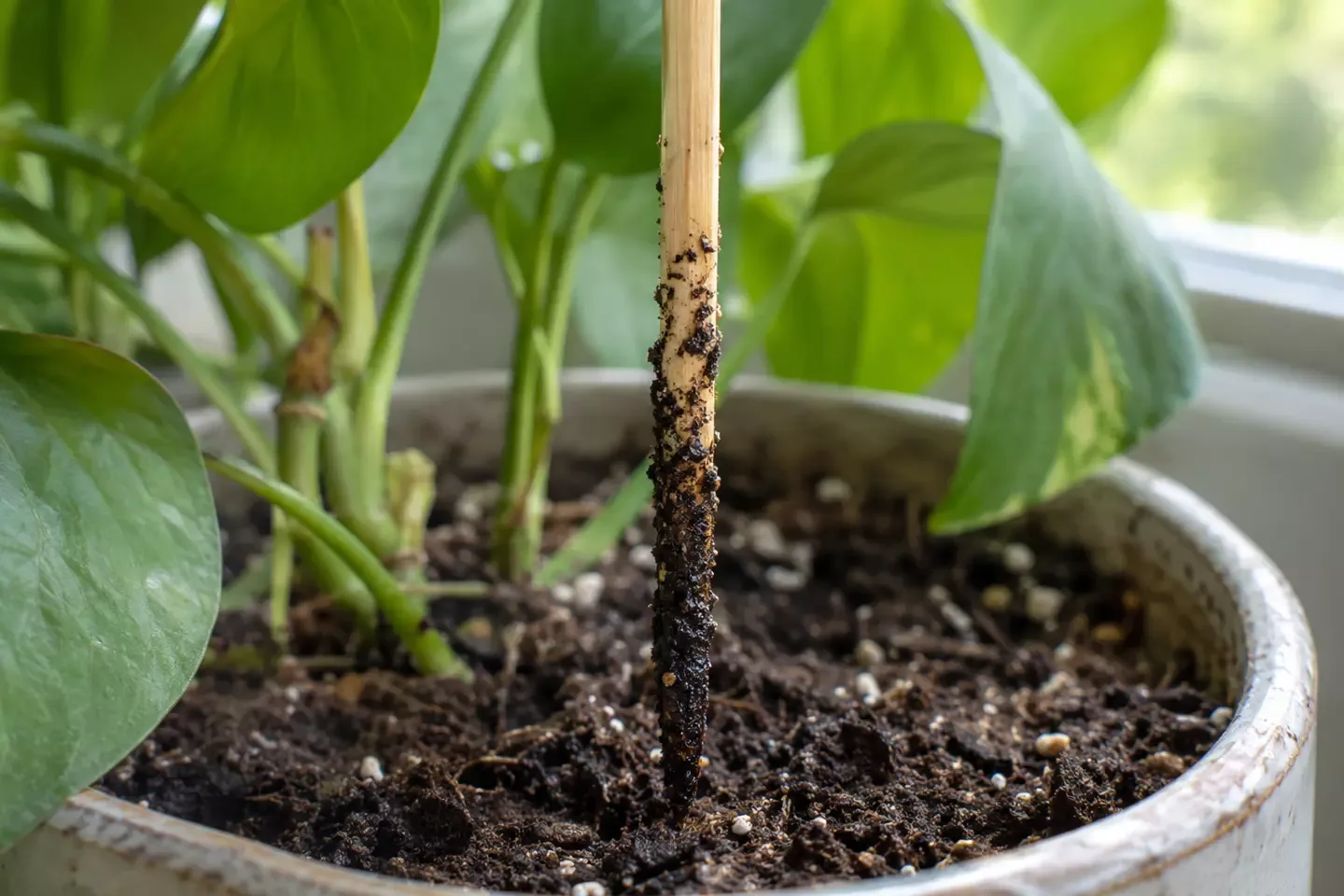
The surface is the part that misleads people. In a warm, bright room the top inch can dry in a day while the bottom of the pot stays wet for a week. Checking whether the soil is wet or dry before watering covers the finger, chopstick and weight tests in more detail.
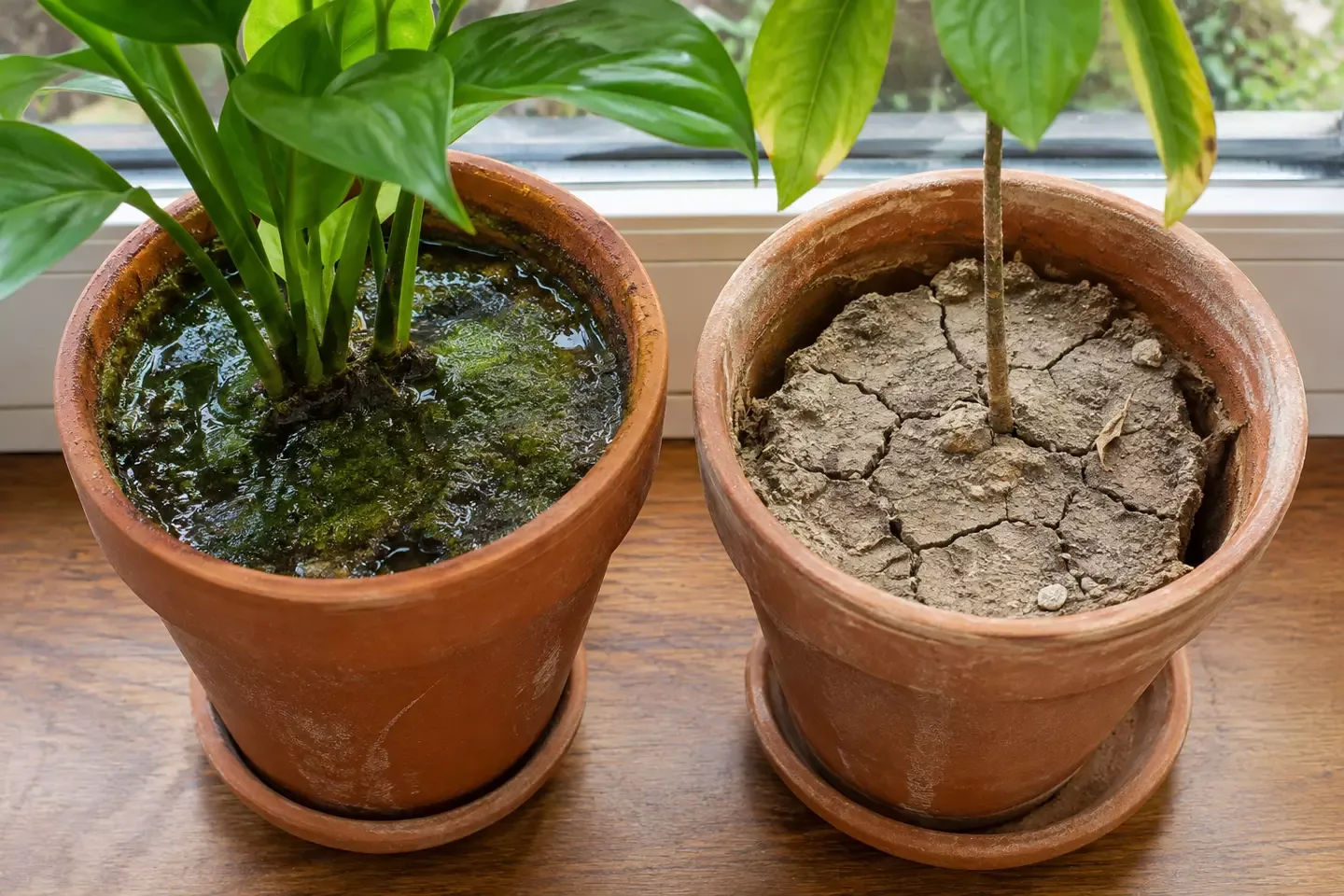
Side by side, the two soils look nothing alike. Waterlogged mix goes dark and shiny and can grow a green film or attract fungus gnats. Dry mix turns pale, cracks and pulls back from the pot wall.
What the leaves add once you know the soil
Leaves are the second check, not the first. Once the soil points one way, the leaves tell you how far it has gone.
Drooping
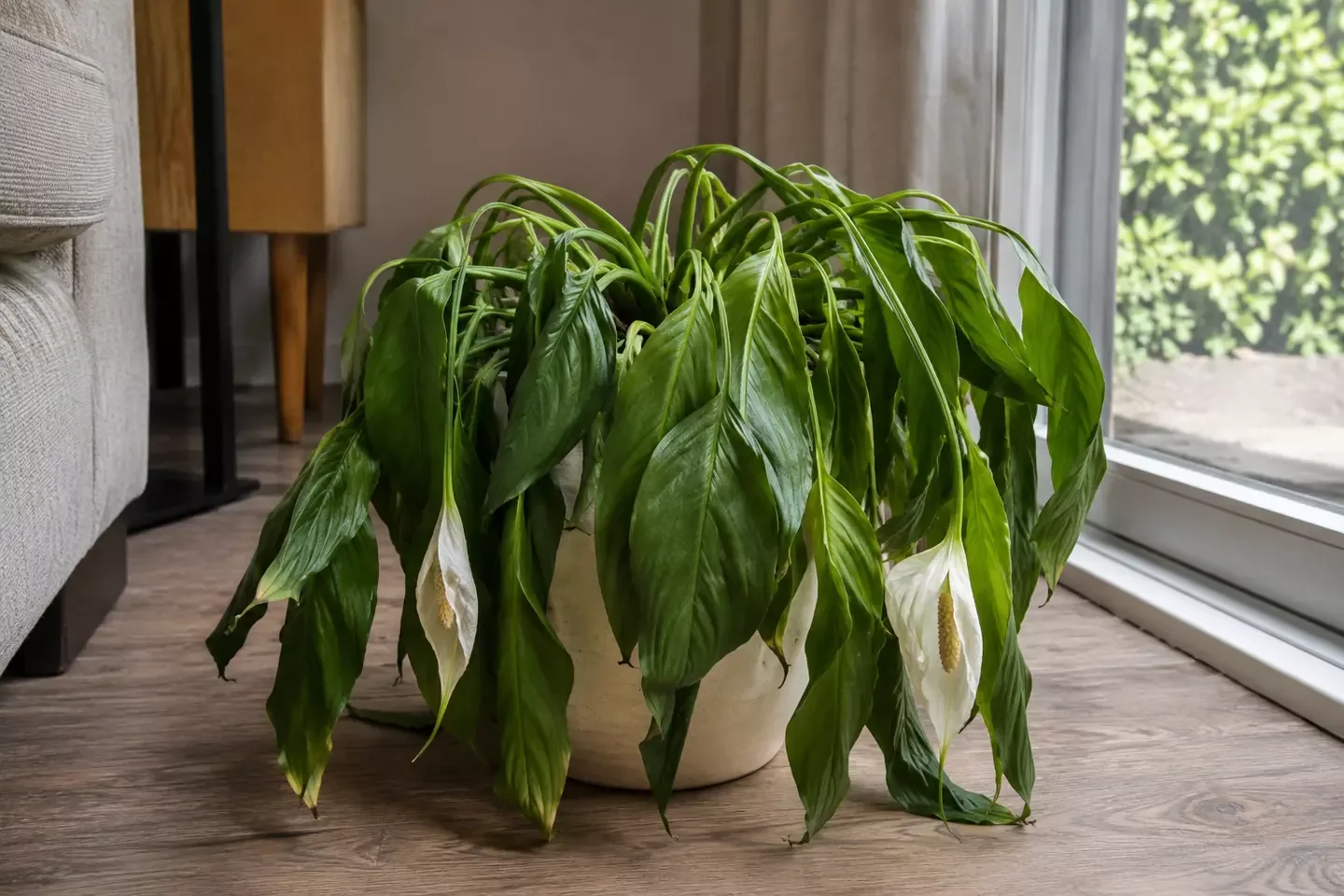
Both problems cause drooping, so drooping alone tells you nothing. The difference is how the leaf feels. An underwatered leaf is limp but dry, and it firms up within hours of a soak. An overwatered leaf is limp and soft, and water makes no difference because the roots are not taking it up. If your plant droops for reasons that turn out to be neither, our drooping plant guide covers light, cold and transplant shock.
Yellow leaves
Underwatered plants usually yellow from the oldest leaves, which then dry out and turn crunchy. Overwatered plants yellow several lower leaves at once, and those leaves stay soft and floppy. The University of Maryland Extension lists overwatering as a common cause of yellowing and wilting together, because it damages the roots. For every other cause of yellowing, see yellow leaves on plants.
Brown leaves
Brown is where texture matters most. Dry, light tan tips and edges that crumble when you crush them point to underwatering or low humidity. Dark brown, soft patches, often ringed with yellow, point to overwatering and rotting roots.
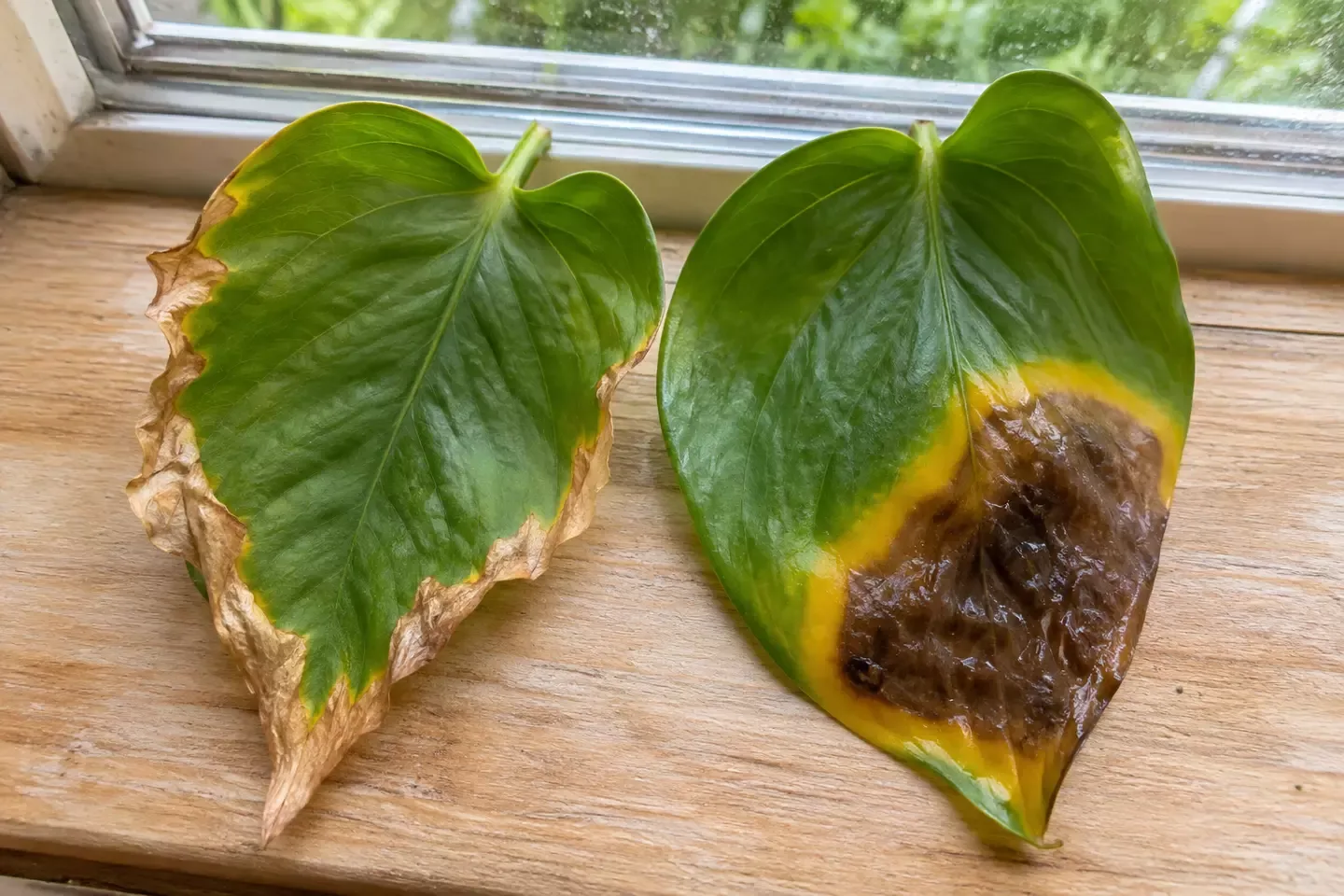
The two leaves above show the contrast. If only the tips are brown and the soil checks out, brown tips on leaves walks through humidity, salts and fertilizer as well.
When the signs point both ways
Some plants show a bit of both. These are the three situations that cause it, and each has a clear tell.
The soil is wet on top and dry in the middle. Peat based potting mix that dries out completely starts to repel water. Water runs down the gap between the root ball and the pot and out the bottom, so the surface looks watered while the roots stay dry. The plant looks underwatered because it is. Soaking from below fixes it.
The plant was overwatered, and now it looks thirsty. Once roots rot, they cannot take up water at all. The plant wilts, dries at the edges and looks underwatered even though the soil is damp. If the soil is damp and the plant still looks dry, the roots are the problem, not the watering can. The University of Maryland Extension's guide to root rots on indoor plants describes rotted roots as brown to black and soft or mushy, and notes that plants with root rot wilt even when the potting mix is moist.
The soil is damp and the roots are fine. Then it is not water. Look at light, cold drafts, pests or a recent move. A plant that was just repotted or carried to a new window can sulk for a week or two with perfectly normal soil.
| You notice | Likely real cause | First move |
|---|---|---|
| Water runs straight through, soil still dry inside | Underwatered, dry mix repels water | Soak from below for 30 minutes |
| Wilting in damp soil, roots dark and soft | Overwatered, roots rotted | Treat the roots, not the leaves |
| Damp soil, firm white roots, still unhappy | Not water | Check light, temperature and pests |
How to fix an underwatered plant
An underwatered plant with healthy roots usually recovers fast. Water slowly until water runs out of the drainage hole, wait ten minutes, and water again. If the water rushes straight through, the mix has shrunk and needs a soak from below.
Stand the pot in a bowl or sink with a few inches of water for about 30 minutes, until the surface of the soil looks damp. Then lift it out and let it drain fully. Trim leaves that are fully brown and crisp; they will not turn green again, but the plant will put out new ones.
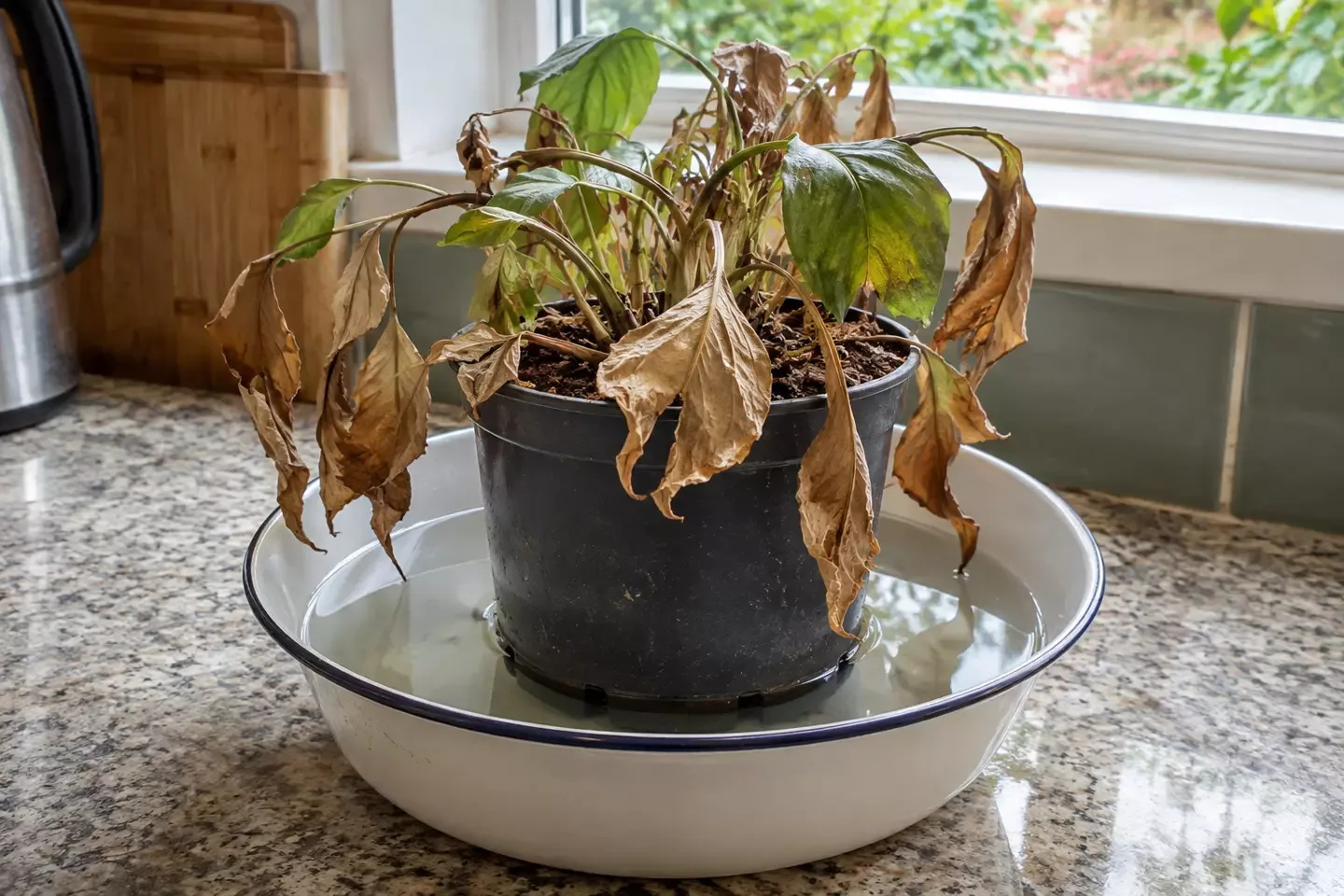
If the plant dries out again within a couple of days, the pot may be packed with roots. Look at which potting mix suits your plant before moving it up one size.
How to fix an overwatered plant
The fix for overwatering is mostly about stopping, then checking the roots. Do it in this order, and see our overwatered plant rescue guide for ways to dry the soil faster and how long recovery takes.
How to fix an overwatered plant
- Stop watering and empty standing water
Pour out the saucer and lift the plant out of any cover pot. Water trapped at the bottom keeps the lower roots soaked no matter how carefully you water from now on.
- Let the pot drain and get air
Stand it somewhere bright and warm, out of direct hot sun, and do not water again until the soil is dry 2 inches down. That can take a week or more.
- Check the roots if it keeps wilting
Slide the plant out of its pot. Firm, light roots mean it should recover with better watering. Brown, mushy or smelly roots mean rot, and those parts need to come off.
- Repot only if the roots or the mix need it
If you cut away rotten roots or the mix stays soggy for days, repot into fresh, well draining mix in a pot with a drainage hole. Our root rot guide covers that step by step.
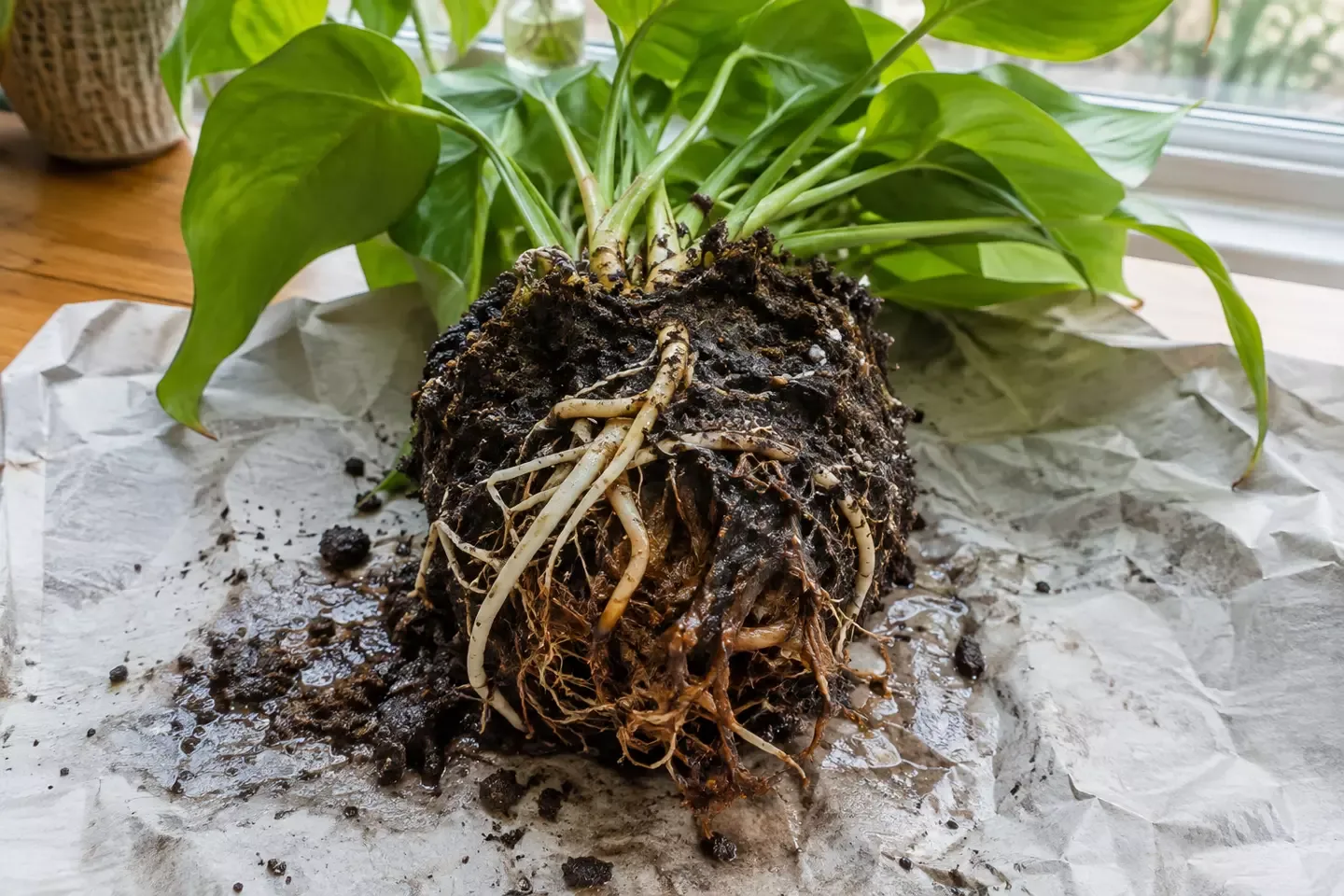
Two mistakes undo most rescues. Watering again because the leaves still droop, and moving the plant into a much bigger pot. A big pot holds more wet soil than a weak root system can use, so it stays wet even longer.
Check before you water again
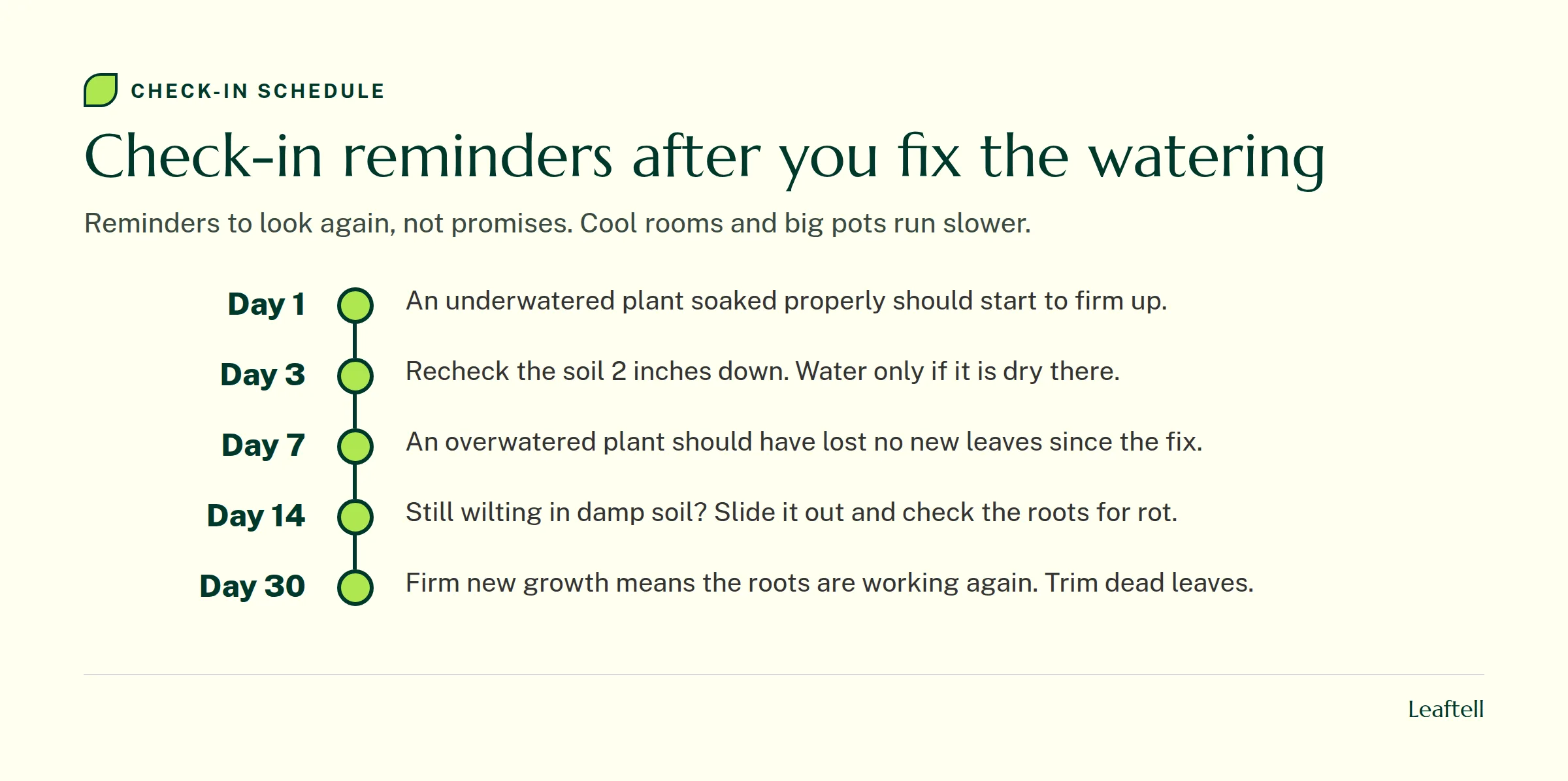
The soil 2 inches down tells you more than any leaf. Make lifting the pot and testing the soil a habit before every watering, and most overwatered or underwatered plants never get to the point of looking sick.
If you have checked the soil and the leaves still do not add up, check your plant in Leaftell. Send a photo of the whole plant, a close-up of the worst leaves and one of the soil surface, and say how the soil felt 2 inches down, since a photo cannot feel the soil.
Sources
Check your growing conditions with the plant watering calculator.
Frequently asked questions
Stop watering, empty the saucer and any cover pot, and let the soil dry until it is dry 2 inches down. If the plant keeps wilting in damp soil, slide it out and check the roots. Cut away brown, mushy roots and repot into fresh, well draining mix only if rot or soggy mix makes it necessary.
Water when the soil is dry at the depth your plant likes, not on a fixed schedule. For most leafy houseplants that means dry about 2 inches down; succulents and cacti like to dry out further. The same plant needs water more often in a warm, bright summer room than in a cool winter one, so check the soil each time rather than counting days.
Yes. Overwatering browns leaves too, but the brown looks different. It tends to be dark and soft, often with a yellow edge, and appears alongside wet soil. Underwatering gives light tan, crisp tips and edges with dry soil. Feel the brown area and the soil together to tell which you have.
Share article
About the author

Keep checking your plant
Plant care reference
Indoor plant care
Build a routine around your plant, light and potting mix.
Plant care reference
Why is my plant dying
Trace leaf and root symptoms before choosing a care change.
Plant care reference
Pothos plant care
Choose a growing spot and prune a trailing pothos for fuller growth.
Plant care reference
How to fix root rot
Inspect root firmness and drainage, then decide whether to repot.