Why Is My Tomato Plant Drooping? Check It at Dawn First
Filip Leszczyński 5 November 2026 15 min read
In this article
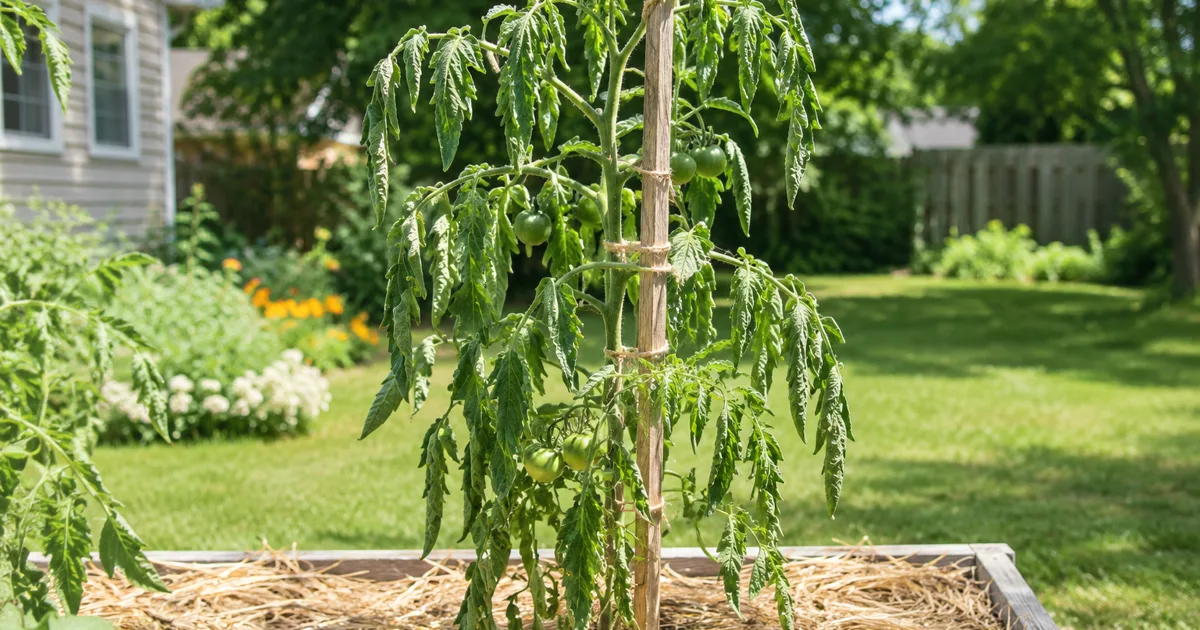
A tomato plant that droops in the afternoon heat and stands back up by morning is usually fine. A tomato plant that is still drooping at dawn has a real problem: roots that are too dry, roots sitting in water, or something blocking the water-carrying tissue inside the stem.
So check it at sunrise, before you reach for the hose. The most common mistake is watering a heat-wilted plant whose soil is already moist. The leaves were never short of water in the ground; they were losing it faster than the roots could move it on a hot afternoon. Extra water does nothing for that, and it can push a healthy plant toward the soggy-root droop that does need fixing.
The dawn test: one check that sorts every droop
Go out early, before the sun reaches the bed. Look at the plant first, then push a finger about 2 inches into the soil beside the stem. Those two facts together point to the cause far better than how the plant looked at 3 pm.
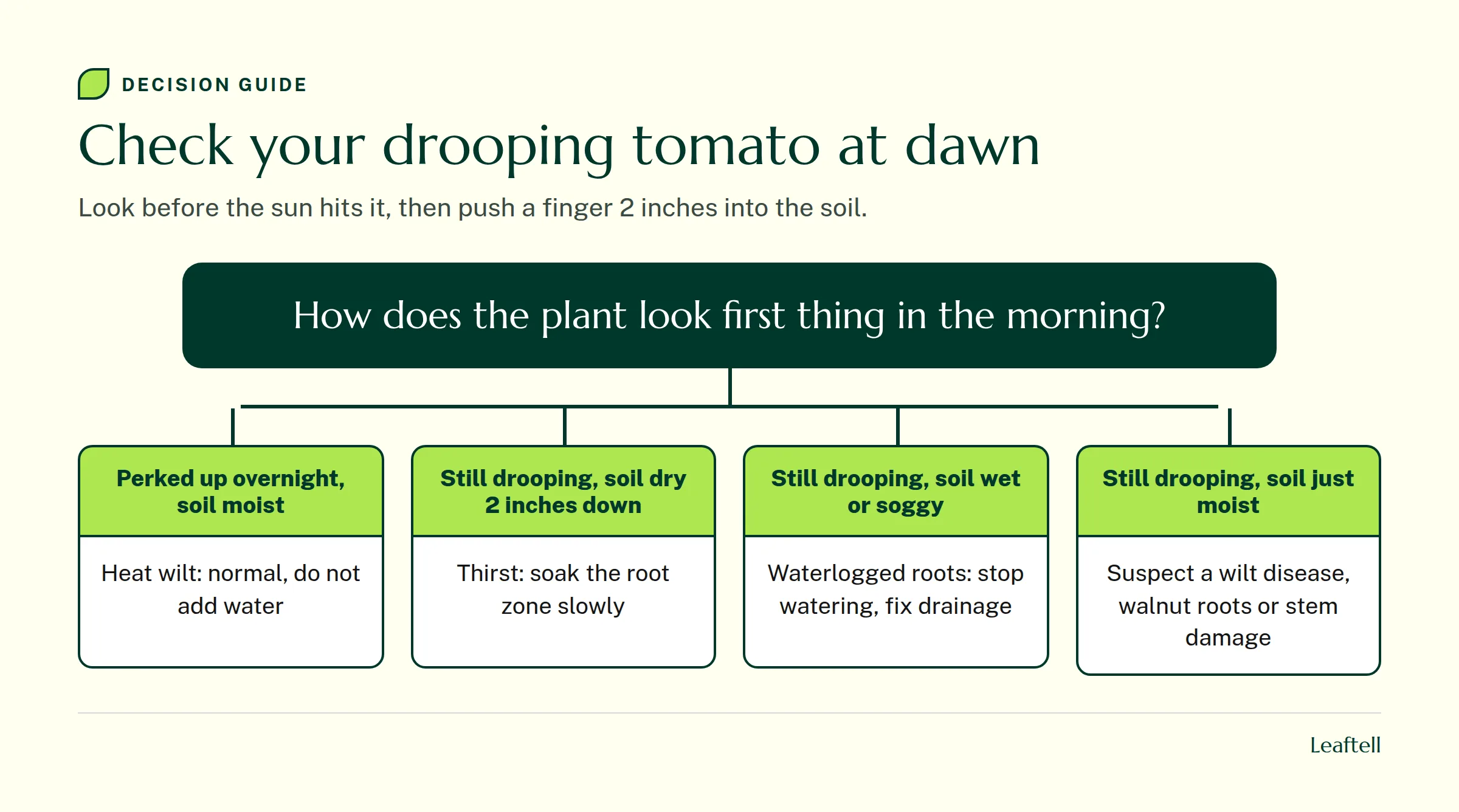
A plant that has perked up overnight was dealing with heat, not a shortage of water in the soil. A plant that is still limp at dawn needs a closer look, and the soil tells you where to start. If the soil is dry, it is thirst. If it is soggy, the roots are short of air. If it is just moist and the plant still hangs, start suspecting disease, walnut roots or damage to the stem. In a deep container, a wooden skewer pushed to the bottom tells you more than a finger does.
Why is my tomato plant drooping? The causes at a glance
Find the row that matches what you see at dawn, then jump to that section. If two rows fit, deal with the soil first, because water is the only cause you can change today.
| Cause | Morning look | Soil at 2 inches | Other clues | First move |
|---|---|---|---|---|
| Afternoon heat | Upright again | Moist | Droops only on hot, sunny afternoons | Mulch, leave the water alone |
| Thirst | Still limp | Dry | Pot feels light, soil pulls from the rim | Slow, deep soak |
| Too much water | Still limp | Wet or soggy | Lower leaves yellowing, water in the saucer | Stop watering, fix drainage |
| Fusarium or Verticillium wilt | Limp, worse each week | Moist | Yellowing from the bottom up, brown streaks inside the stem | Split a lower stem |
| Bacterial wilt | Limp, often suddenly | Moist | Top leaves wilt while still green, hot weather | Cut stem in a glass of water |
| Black walnut nearby | Limp, yellowing | Moist | A walnut tree within reach of the roots | Grow in pots or raised beds next time |
| Stem damage at the base | Limp above one point | Moist | Hole, soft rot or white threads at the soil line | Inspect the base of the stem |
| Transplant shock | Limp for a few days | Moist | Planted out in the last week or two | Shade and steady water |
| Heavy fruit | Branch bent, leaves fine | Any | Big trusses on one stem | Stake or tie the branch |
Afternoon heat: the droop that fixes itself
On a hot, bright afternoon a large tomato loses water through its leaves faster than its roots can pull it in, so the softer leaves fold down. It is a short-term response, and a plant that recovers by evening or the next morning has not been harmed. The University of Maryland Extension lists very hot weather among the causes of wilting tomato plants, alongside lack of water.
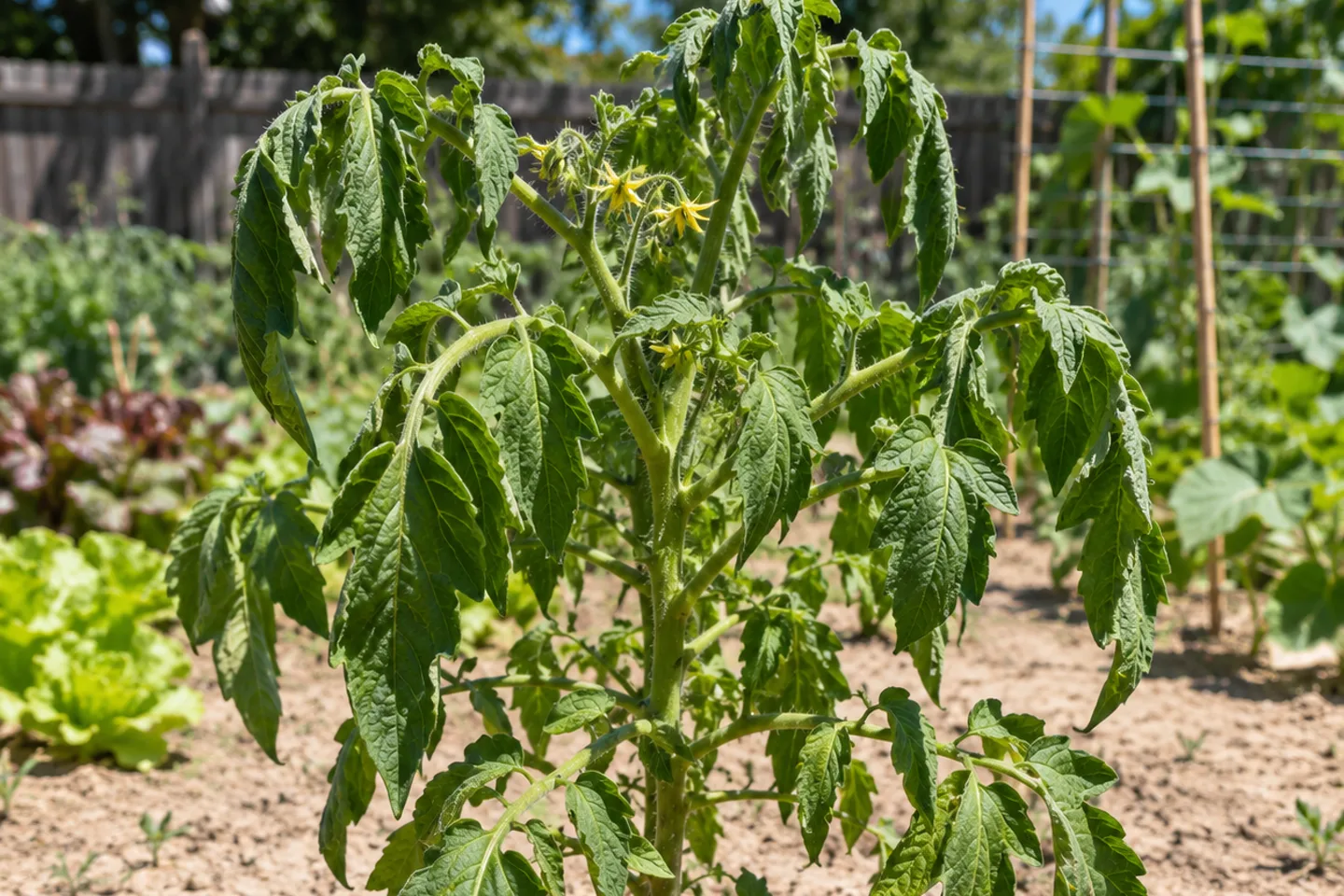
The fix is mostly to leave it alone. Check the soil instead of the leaves: if it is moist at 2 inches, do not water. A 1 to 2 inch layer of mulch keeps the root zone cooler and holds moisture through the day; University of Wisconsin plant pathologist Brian Hudelson recommends mulching around tomatoes partly for this reason. Containers on hot paving can be moved where they get afternoon shade.
One warning: a plant that wilts every afternoon and recovers at night is also how early wilt disease looks. If the afternoon droop gets a little worse each week, or leaves start yellowing from the bottom, read the disease section below.
Thirst: dry soil all the way down
This one is simple to confirm. The plant is still limp at dawn, the soil is dry at 2 inches, and a container feels light when you tip it. Nebraska Extension notes that tomato plants may wilt badly when soils are dry but revive rapidly once they are watered, and puts their need at about 1 inch of water per week.
Water slowly at the base until the whole root zone is wet, not just the surface. In a container, keep going until water runs out of the drainage holes. Then check again the next morning; a thirsty plant should be upright within a day. If it keeps happening, the plant needs deeper, steadier watering rather than more frequent sips. Our guide on how often to water tomato plants covers beds, containers and hot spells.
Too much water: drooping in soggy soil
A tomato in waterlogged soil droops for a reason that surprises people: the roots are drowning. Roots need air as well as water, and in soil that stays saturated they stop working, so the leaves above wilt even though water is all around them.
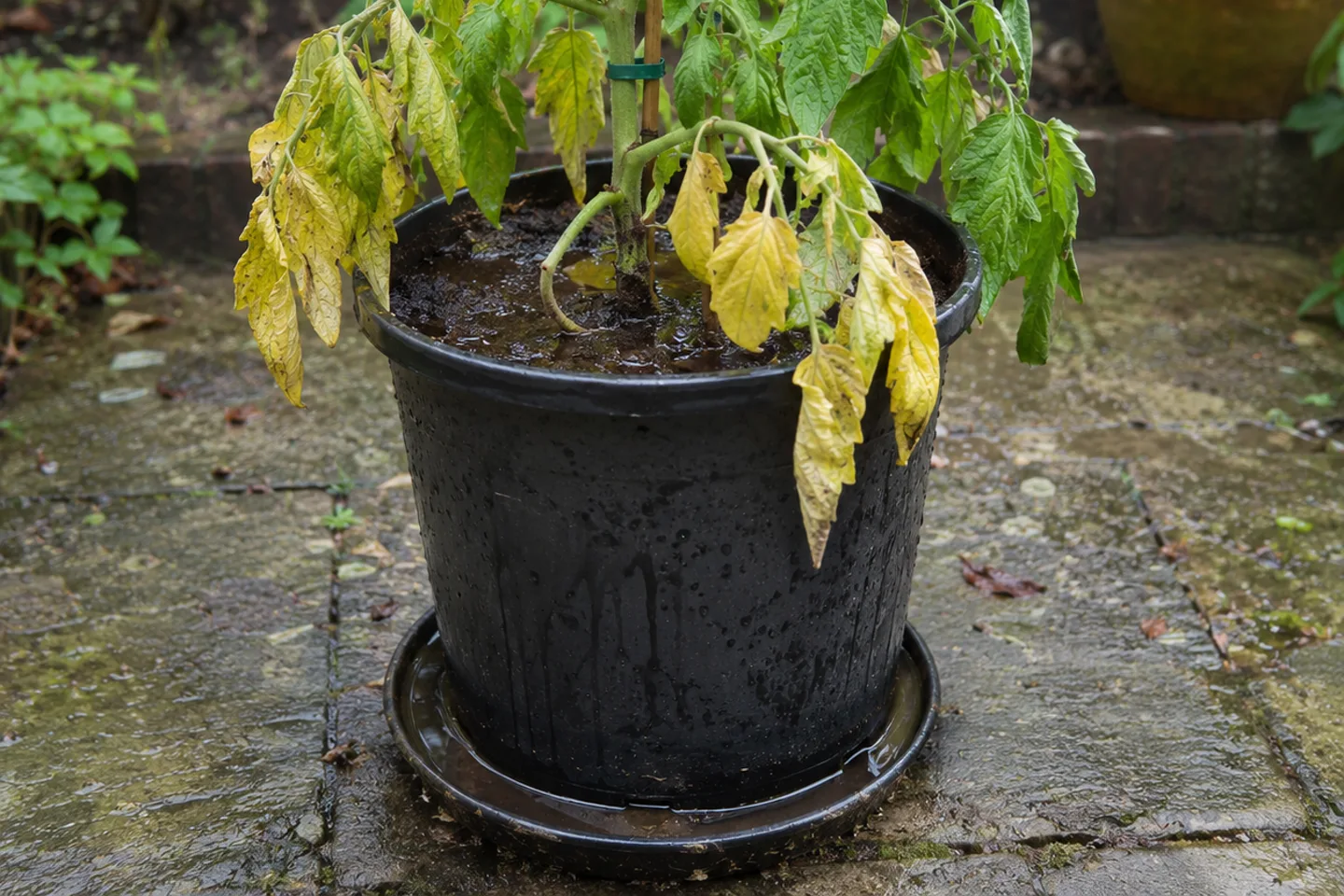
The clues are a soil surface that stays dark and shiny, water standing in the saucer, and lower leaves turning pale yellow. Containers without drainage holes and heavy clay beds after days of rain are the usual setups. More water makes it worse, which is why the dawn soil check matters so much.
What to do:
- Stop watering until the top 2 inches feel dry.
- Empty the saucer and make sure the pot has open drainage holes.
- In a bed, pull back thick mulch for a few days so the surface can dry.
- Watch for rot. If the plant still droops once the soil has dried, the roots may be damaged. Our overwatered plant symptoms guide explains the signs, and this root rot rescue guide covers what to do for a container plant.
Wilt diseases: when the stem cannot carry water
If your tomato is still drooping at dawn in moist, well-drained soil, a wilt disease moves to the top of the list. Fusarium wilt, Verticillium wilt and bacterial wilt all work the same way: the organism gets into the water-carrying tissue of the stem and plugs it. The leaves wilt for the same reason they do in drought, except watering cannot fix it.
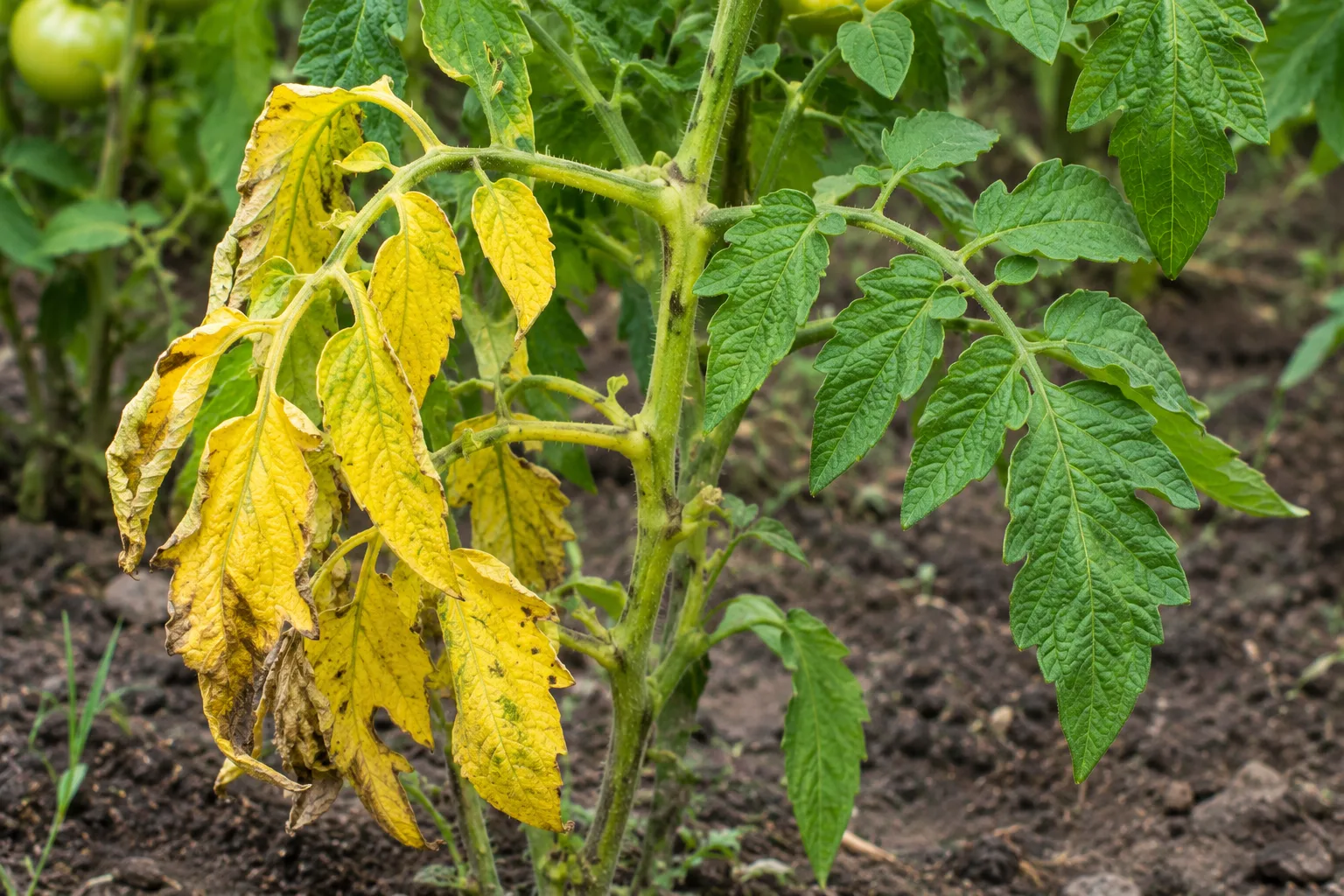
Fusarium wilt
University of Maryland Extension calls Fusarium by far the most common wilt disease in Maryland. The first sign often appears as fruit begins to mature: lower leaves turn yellow, sometimes on one side of the plant or one side of a branch, followed by wilting. Early on the plant may recover at night, then stop recovering.
Verticillium wilt
Verticillium looks similar but moves more slowly and more evenly through the plant. NC State Extension describes V-shaped lesions on the leaflets, and notes that Verticillium does not wilt a plant as suddenly as bacterial wilt does.
Bacterial wilt
Southern bacterial wilt is the fast one. NC State describes the youngest leaves wilting first while the plant is still green, often seeming to come on suddenly, and the disease favors temperatures above 85°F with moist soil. It is mostly a problem in warm regions.
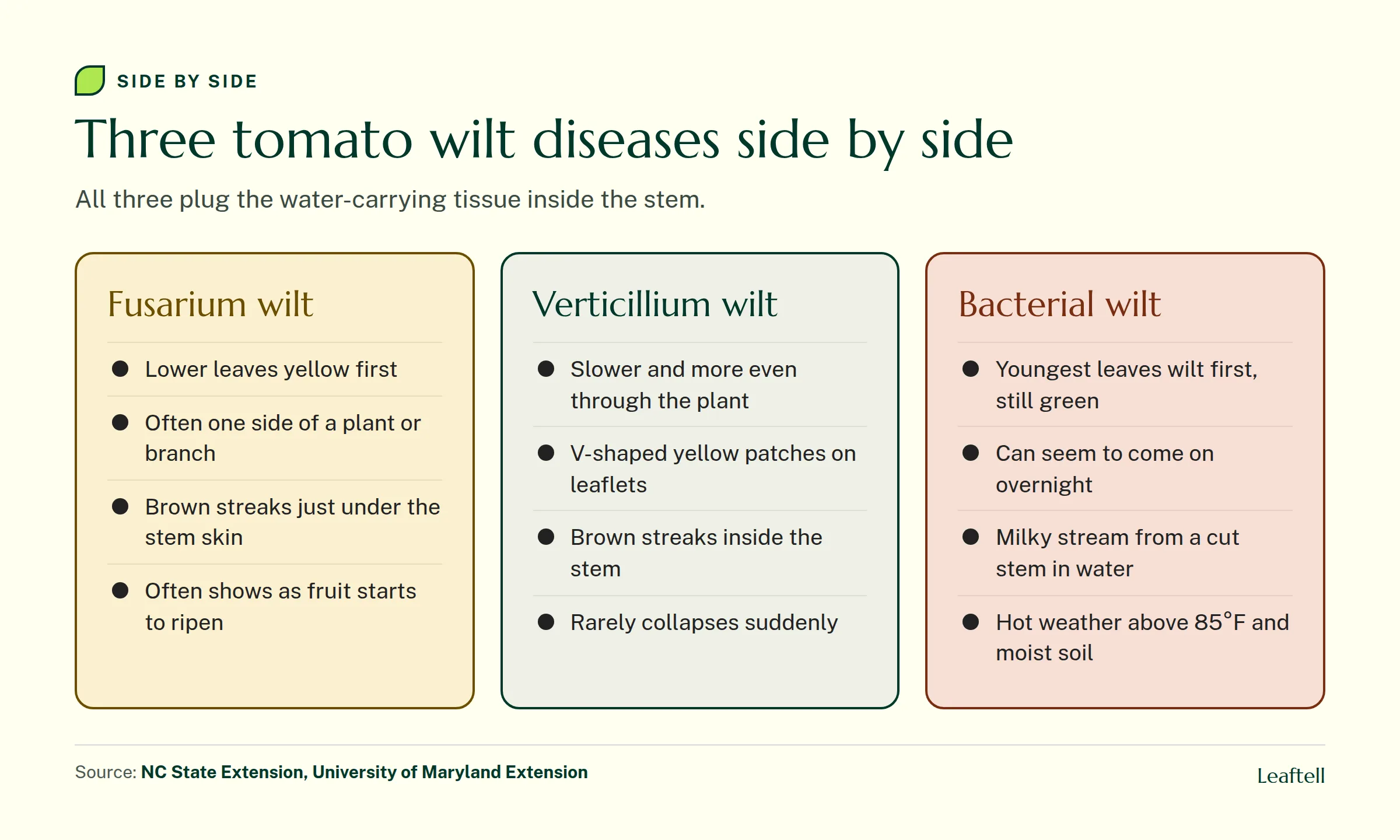
The way to tell these apart from simple watering problems is inside the stem. You do not need a lab for the first look.
How to check a drooping tomato stem for wilt disease
- Pick a stem low on the plant
Choose a branch or a section of the main stem just above the soil on the worst affected side. Disease is easiest to see there.
- Split it lengthwise
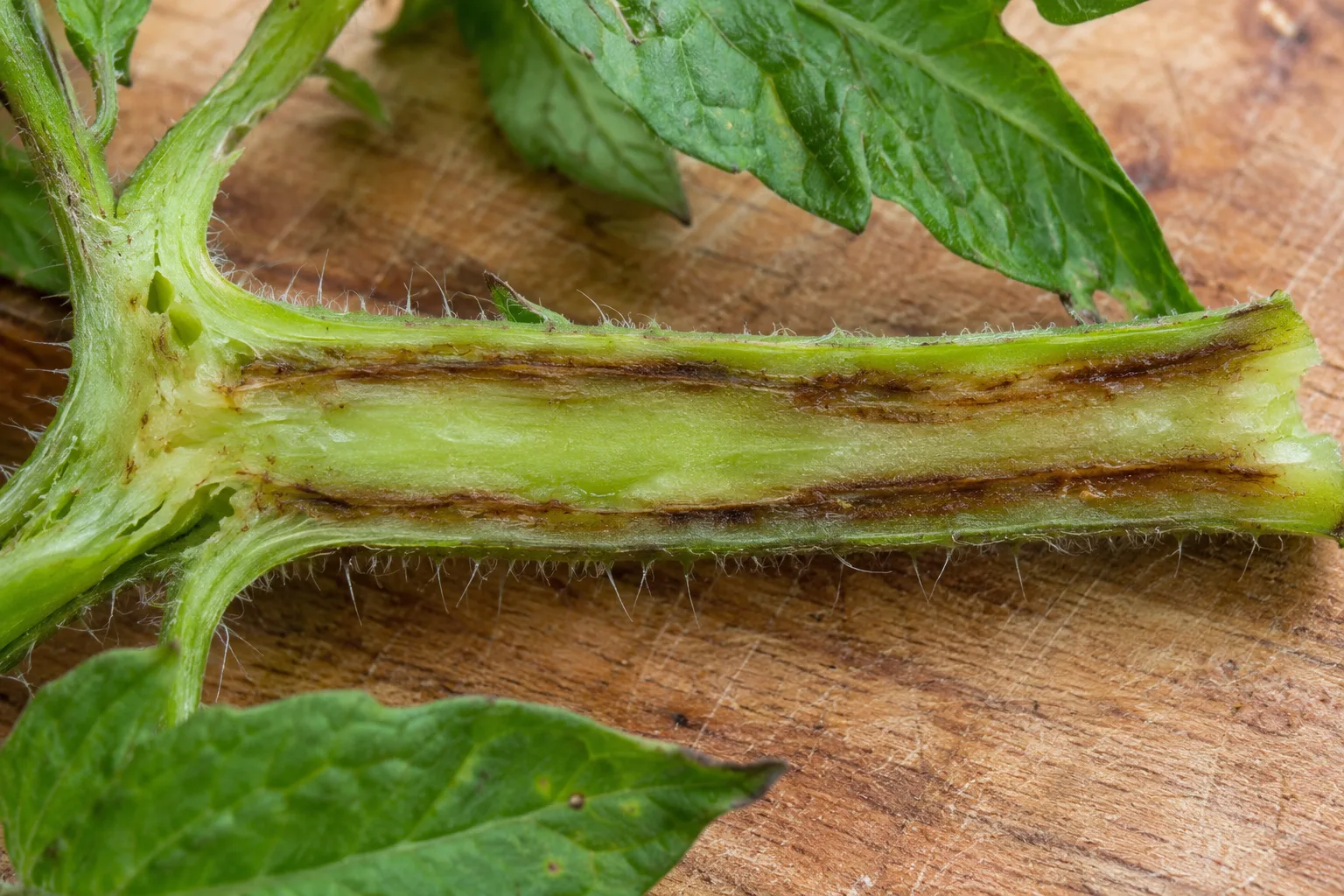
Cut the piece and slice it down its length with a clean knife. Look at the thin layer just under the green skin.
- Read the color
Healthy tissue is pale green or cream all the way through. Brown streaks just under the skin, with the center of the stem still healthy, point to Fusarium or Verticillium.
- Try the glass of water test
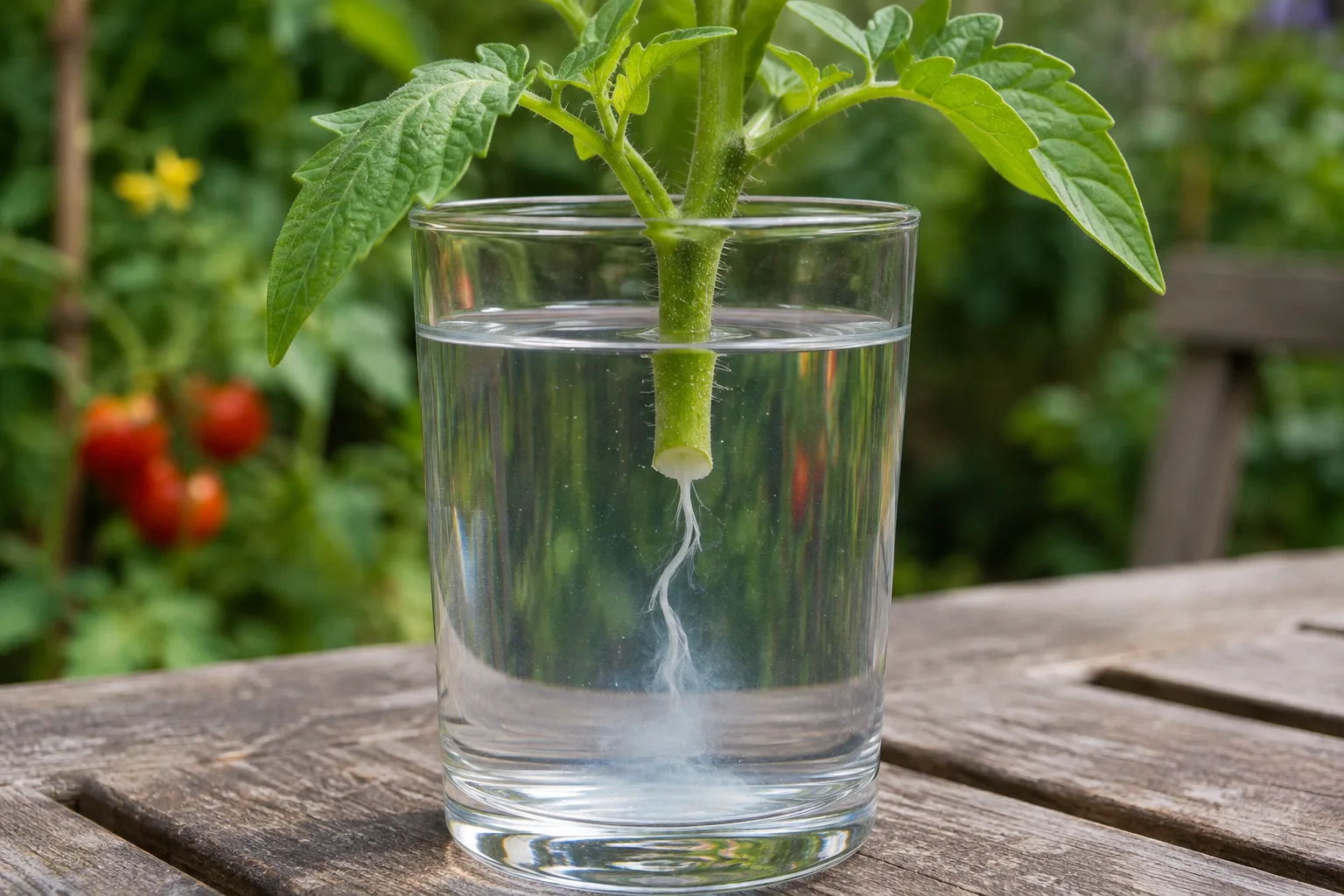
Cut a fresh piece from the base of the stem and hold it so the cut end just touches clear water. Watch for a few minutes. A milky white stream drifting down from the cut is a strong sign of bacterial wilt.
There is no cure for any of the three once a plant is infected. Pull the plant, bag it and put it in the trash, not the compost, as Nebraska Extension advises. Then plan next season: choose varieties labeled with V and F resistance, and move tomatoes to another spot or into containers of fresh potting mix, because these organisms persist in garden soil for years. Our guide to common tomato plant diseases covers the leaf diseases that are often confused with wilt, and why tomato leaves turn yellow helps when yellowing is the main symptom.
A black walnut tree nearby
If there is a black walnut anywhere near your tomatoes, it is a prime suspect. Brian Hudelson at the University of Wisconsin Plant Disease Diagnostic Clinic writes that the first question he asks about wilting tomatoes is whether there is a walnut tree near the garden, and that more times than not the answer is yes.
Walnut roots and leaves release a compound called juglone that tomatoes are especially sensitive to. Affected plants yellow, wilt and die, and nothing will save a plant that is already damaged. The root zone of a walnut can extend three to five times the tree's height from the trunk, and cutting the tree down does not fix it quickly because the roots keep releasing the toxin for years. The practical answer is growing tomatoes in raised beds or containers, as far above the walnut roots as you can get them.
Damage at the base of the stem
When everything above one point on the stem collapses, look at the base. Pull back the mulch and check the stem from the soil line up a few inches.
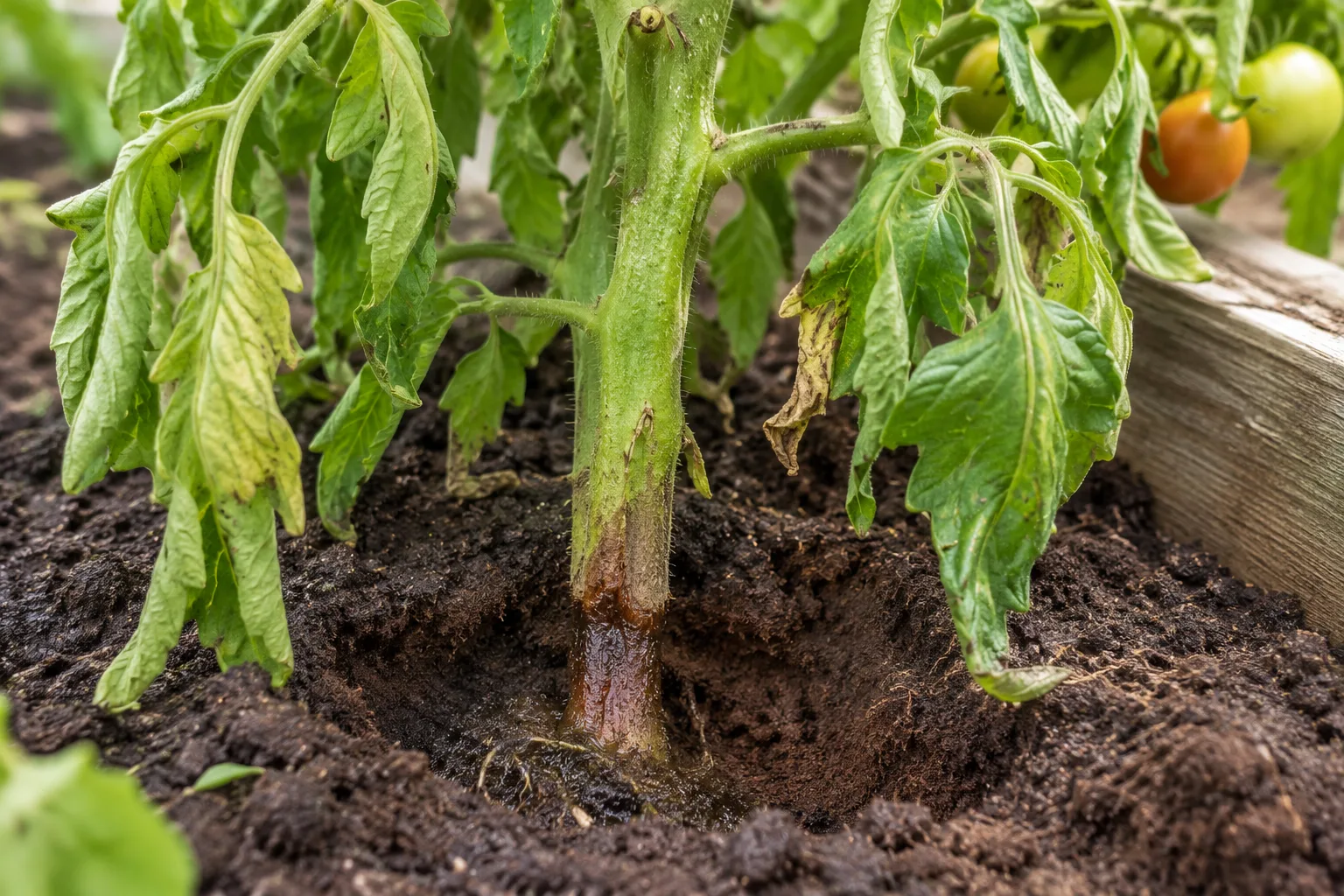
- A small hole in the stem can mean a stalk borer, a caterpillar that tunnels inside. Nebraska Extension notes that insecticides do not control it effectively, but a damaged plant given good care may survive. Mowing tall weedy areas near the garden helps prevent it.
- A soft, dark rot at the soil line with white threads and tiny tan or brown round bodies points to southern blight, according to NC State Extension.
- Long cracks or open wounds in the stem near the soil can be bacterial canker, which the University of Wisconsin clinic notes usually arrives on infected seed or transplants.
Any of these is worth a clear photo of the stem base before you pull the plant, because the next planting depends on knowing which one it was.
Drooping seedlings and new transplants
Young tomatoes droop for their own reasons. Seedlings moved straight from a windowsill into full sun and wind often flop over within a day, and their leaves can bleach to white patches where the sun scorched them. Newly planted transplants also droop for a few days while their roots settle in.
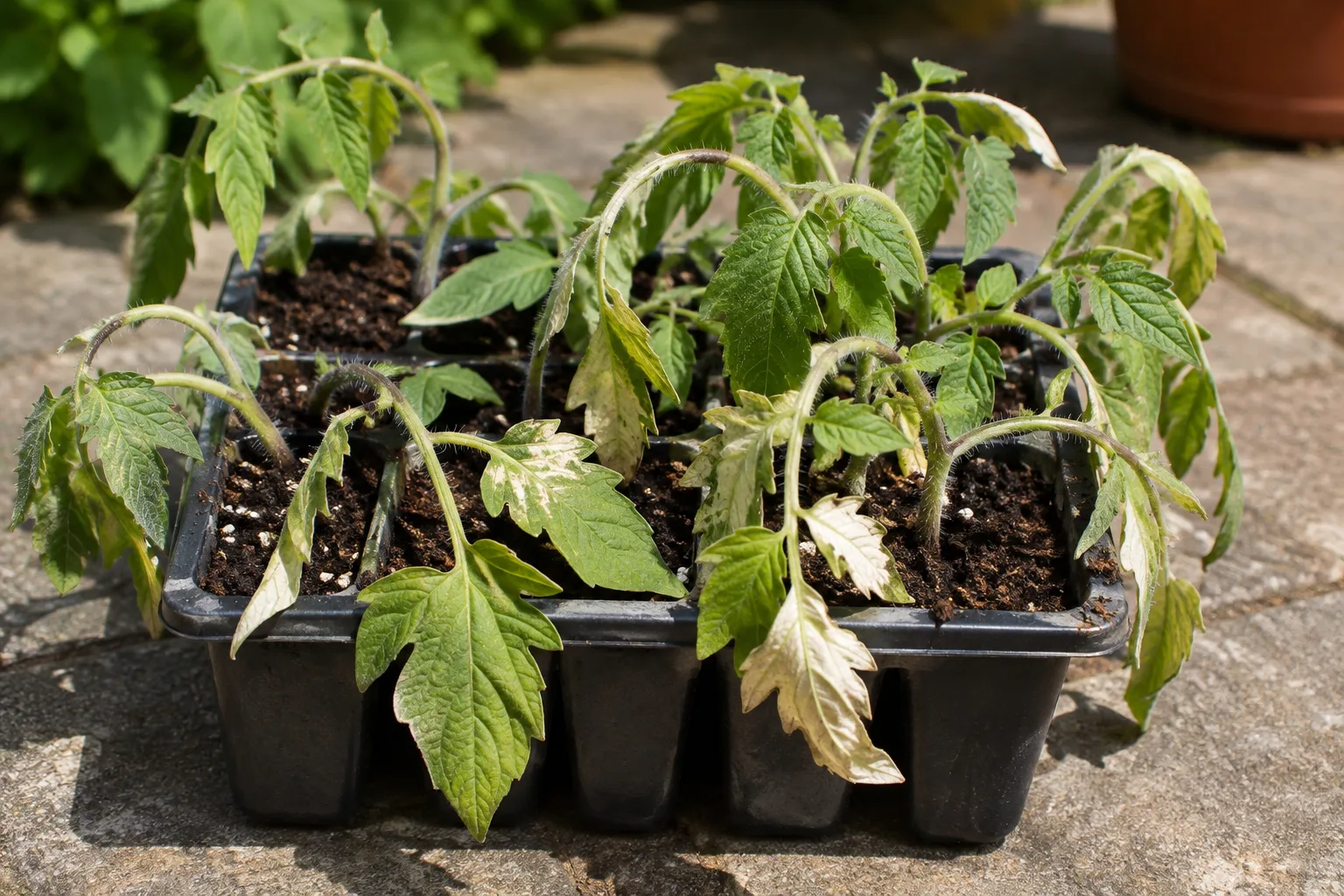
Both usually recover if the stem is firm and green. Move seedlings back into shade, then reintroduce them to the outdoors gradually: an hour or two of morning sun at first, building up over about a week. For transplants, keep the soil evenly moist, not soggy, and give them a little shade on the first hot afternoons. A seedling that has gone thin and dark at the base of the stem, right at the soil, is a different problem and rarely recovers.
Droops that are not a problem
Not every droop is a symptom. A heavy truss of ripening fruit can pull a side branch down until it almost touches the ground, while the leaves on that branch stay perfectly upright and green.
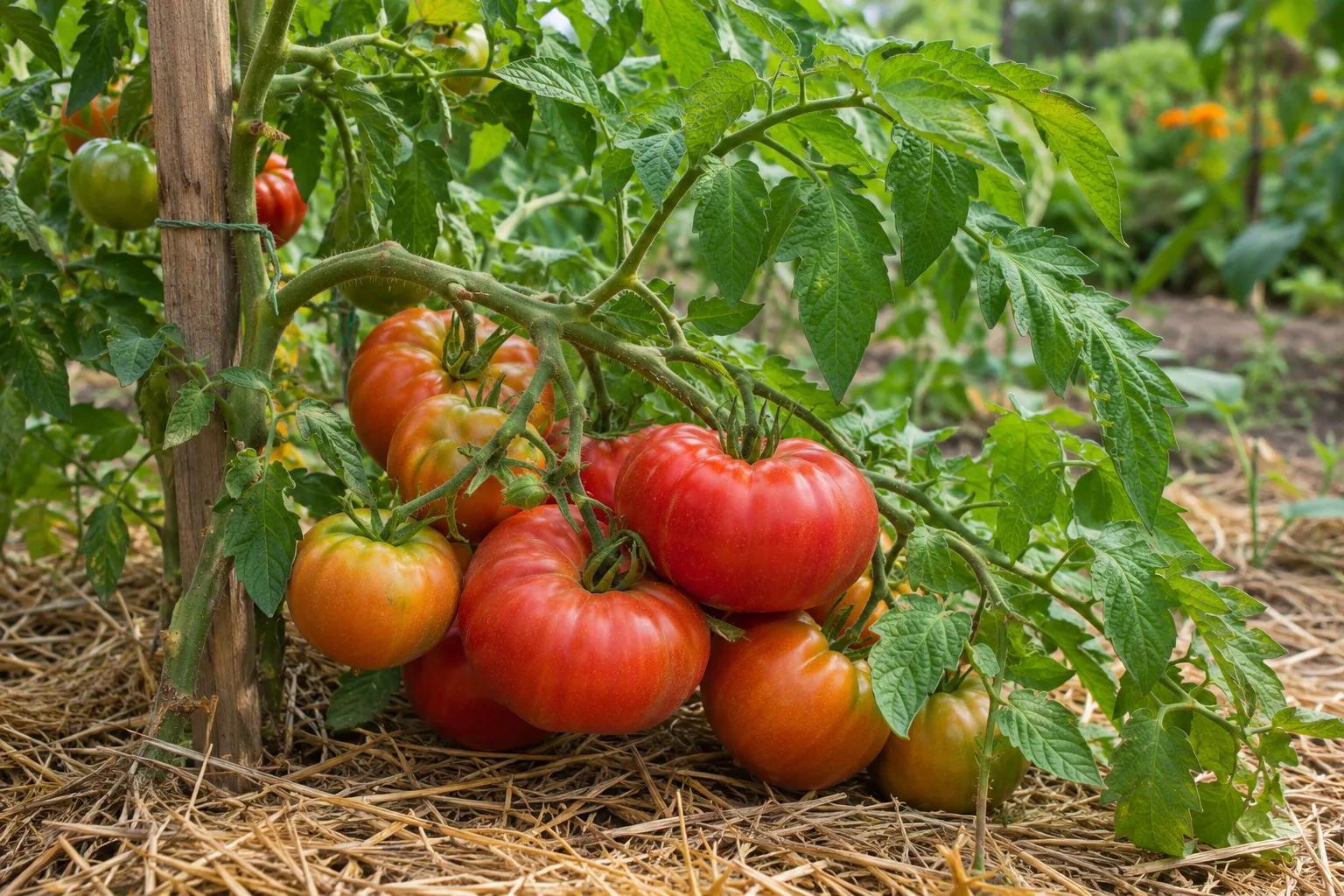
That is a support problem, not a health problem. Tie the branch to a stake or cage with soft ties before the weight snaps it. Leaves that roll or curl rather than hang limp are also a different issue, often from heat, wind or pruning; our guide to tomato leaves curling explains how to tell harmless leaf roll from the kinds that need action.
Can a drooping tomato plant recover?
Usually, if the cause is heat, thirst, too much water or transplant shock. A thirsty plant often stands up within a day of a deep soak, and a heat-wilted one recovers on its own by evening. A plant with Fusarium, Verticillium or bacterial wilt, or one poisoned by walnut roots, will not recover, and the sooner it comes out, the less you spread.
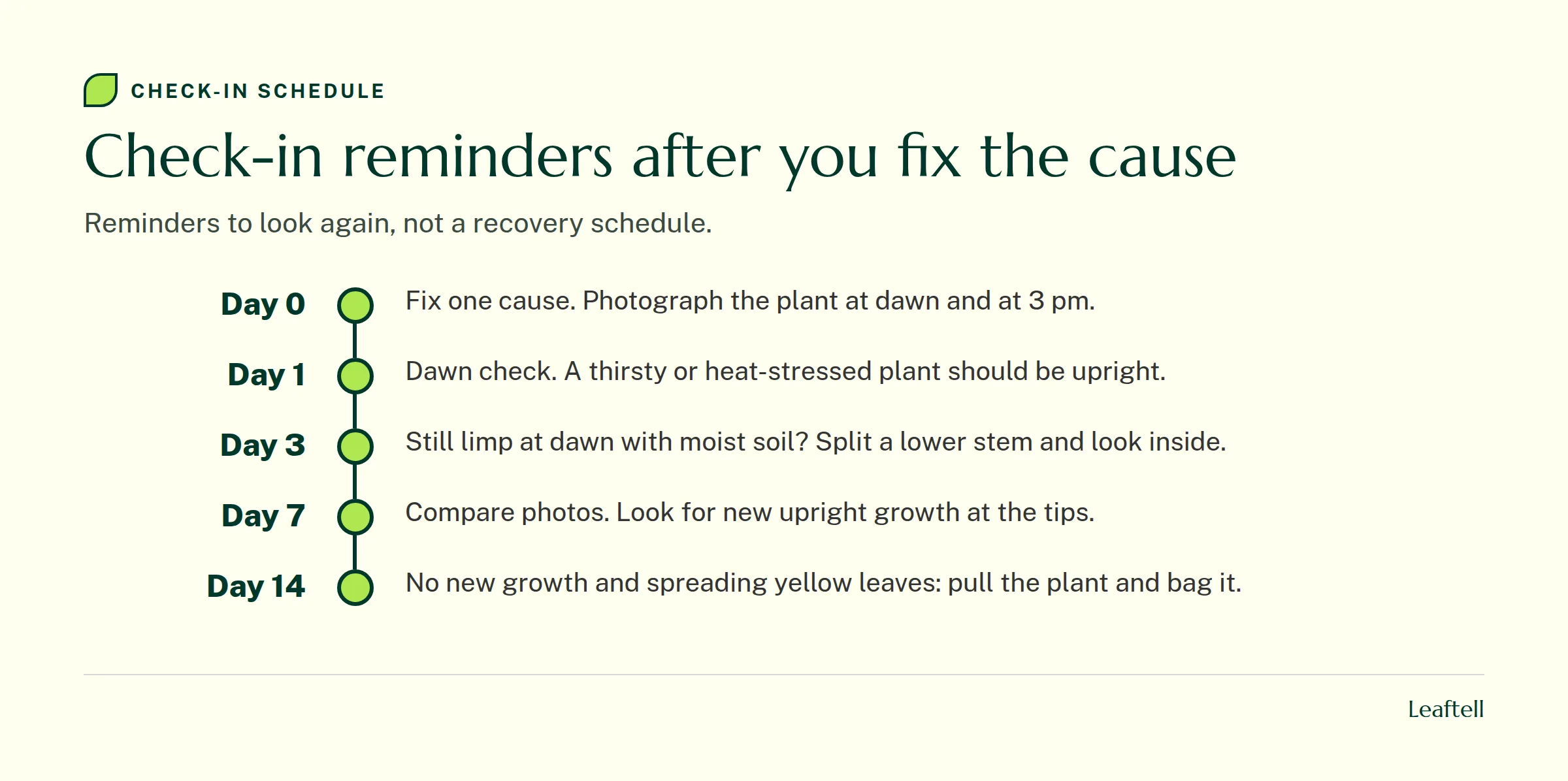
Fix one cause at a time and judge by the dawn check, not by the afternoon. Take a photo at sunrise and another at 3 pm, then compare them over the next week. Upright new growth at the tips means the fix worked. If you are dealing with drooping on other plants in the house or garden, our general guide to why plants droop covers the wider list.
Check your tomato in Leaftell
If you cannot tell heat wilt from thirst, soggy roots or disease, check your tomato in Leaftell. Send a photo of the whole plant, a close-up of the lower leaves and one of the stem at the soil line, and note how the soil felt at 2 inches at dawn, since a photo cannot feel the soil. Then take a fresh photo as a check-in reminder in about seven days and compare.
Check your growing conditions with the plant watering calculator.
Frequently asked questions
Usually, yes, if the stems are still firm and green. Move them out of direct sun and wind, check that the soil is moist but not soggy, and let them recover for a day or two. Then harden them off gradually over about a week. A seedling with a thin, dark, pinched stem at the soil line rarely recovers.
It is a popular garden tip, usually claimed to make tomatoes sweeter, but it does not fix drooping and there is no good evidence it sweetens fruit. Baking soda is sodium bicarbonate, and sodium can build up in soil. If your plant is drooping, check the soil moisture and the stem instead.
Nebraska Extension puts it at about 1 inch of water per week for tomato plants, applied at the base of the plant. Hot, dry spells and containers need more frequent checks. Water when the soil is dry about 2 inches down, and soak the whole root zone rather than giving small daily sips.
An overwatered tomato droops even though the soil is wet. The soil surface stays dark and shiny, water sits in the saucer, and the lower leaves turn pale yellow and limp. Unlike a thirsty plant, it does not perk up after watering. Stop watering until the top 2 inches dry out.
Common causes of sudden wilt and death include lack of water, Fusarium or Verticillium wilt, bacterial wilt in hot weather, tomato spotted wilt virus, black walnut toxicity and stalk borers. Check the soil, then split a lower stem: brown streaks inside point to a wilt disease, which has no cure.
If the soil was dry, yes, usually within a day. If the soil was already moist and the plant stays limp the next morning, more water will not help and can make things worse. That pattern points to soggy roots, a wilt disease or stem damage instead.
Share article
About the author

Keep checking your plant
Plant care reference
Indoor plant care
Build a routine around your plant, light and potting mix.
Plant care reference
Why is my plant dying
Trace leaf and root symptoms before choosing a care change.
Plant care reference
Pothos plant care
Choose a growing spot and prune a trailing pothos for fuller growth.
Plant care reference
How to fix root rot
Inspect root firmness and drainage, then decide whether to repot.