How to Save an Overwatered Plant: 7 Steps That Bring It Back
Filip Leszczyński Updated 12 November 2026 13 min read
In this article
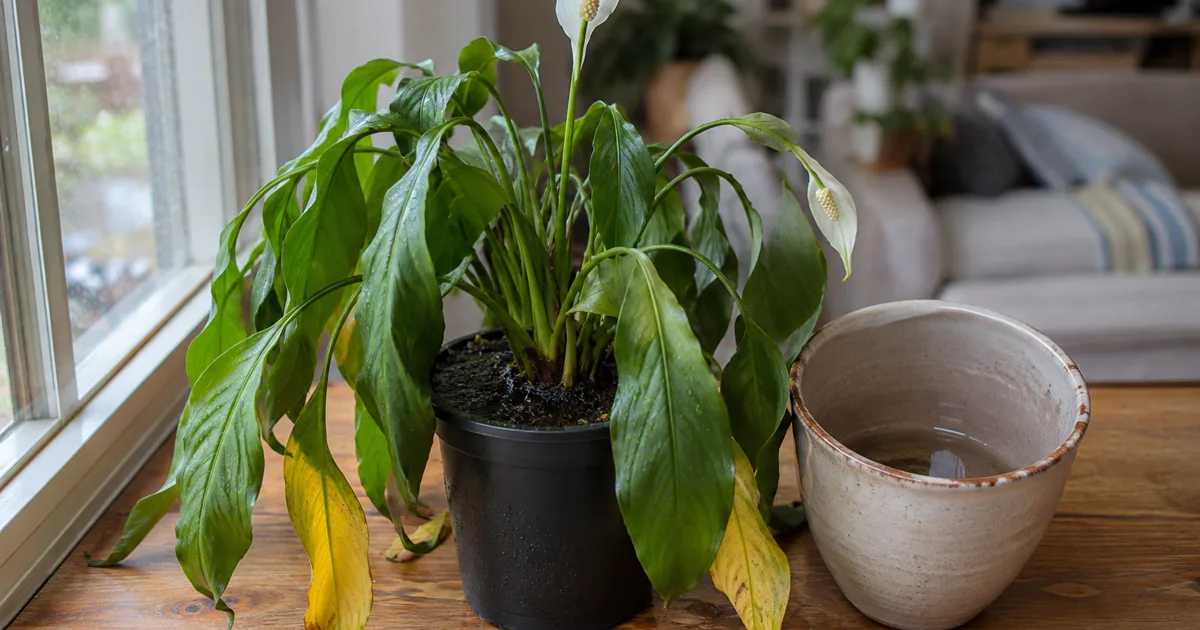
To save an overwatered plant, stop watering, empty the saucer and any cover pot, and get air back into the soil so it can dry from the inside out. Then slide the plant out of its pot and look at the roots: firm white roots need only time, while brown, mushy roots have to be trimmed before the plant can recover.
The reason this works is the part most rescue advice skips. Soggy soil does not hurt a plant because there is too much water. It hurts because water fills the air spaces, and roots need oxygen to work. Without it, the fine roots die and the plant wilts in wet soil because it can no longer drink (University of Maryland Extension). So the rescue is about air, not about drying the plant out as hard and as fast as you can. Most overwatered plants that die are finished off by the rescue itself: another drink because the leaves still droop, a big new pot, a dose of fertilizer or a spell in hot sun.
First, make sure it is really overwatered
Thirty seconds of checking saves you from treating the wrong problem. Push a finger or a plain wooden chopstick 2 inches into the soil and lift the pot. Wet, cool soil that clings to the stick and a pot that feels heavy for its size mean the roots are sitting in water. Dry soil and a light pot mean the plant is thirsty, and everything below would make it worse.
If the leaves and the soil seem to disagree, read how to tell if a plant is overwatered or underwatered before you start. If you are already sure and want the full list of warning signs, the overwatered plant symptoms guide covers them leaf by leaf. This page is about what to do next.
What to do depends on where the water is
An overwatered pothos on a windowsill and a zucchini in a flooded bed need different first moves. Find your situation in the table, then go to the steps below.
| Your situation | What you usually see | First move | Repot? |
|---|---|---|---|
| Indoor pot with a drainage hole, wet for a few days | Droop, one or two soft yellow lower leaves | Empty the saucer, raise the pot, stop watering | Rarely |
| Pot with no drainage hole, or a cover pot holding water | Sour smell, dark wet mix, several yellow leaves | Lift it out, tip out the water, wick the root ball | Often, into a pot with a hole |
| Roots brown and mushy when you look | Wilting in wet soil that does not improve | Trim to firm tissue, fresh mix | Yes |
| Succulent or cactus | Translucent, soft or blackening leaves at the base | Unpot at once and let the roots air dry | Yes, into gritty mix |
| Vegetable bed after heavy rain | Big leaves wilting and yellowing, puddles at the base | Keep off the soil, clear standing water, skip watering | No |
The first row is the common one, and it is good news. A plant that has been wet for a few days with firm roots usually needs nothing more than an empty saucer, some air and patience.
How to save an overwatered plant, step by step
Do these in order and stop as soon as you reach a step your plant does not need. Most plants never get past step 4.
How to save an overwatered plant
- Stop watering and pour out trapped water
Empty the saucer and lift the plant out of any decorative cover pot. Water pooled at the bottom keeps the lowest roots soaked however careful you are from now on, and University of Maryland Extension advises pouring off saucer water for that reason.
- Tip the pot to drain
Hold the pot on its side over a sink for a few minutes, or set it at an angle on a dish rack. Gravity pulls out water that a flat pot keeps sitting in.
- Give the soil air
Push a chopstick or skewer straight down in five or six spots between the stems, away from the main roots. Each hole lets air into the mix and lets the wet center dry faster.
- Move it to bright, indirect light
Put the plant somewhere bright and at normal room warmth, out of hot direct sun and away from heaters. Light and warmth help the plant use water; harsh sun on a plant that cannot drink scorches the leaves.
- Slide it out and read the roots
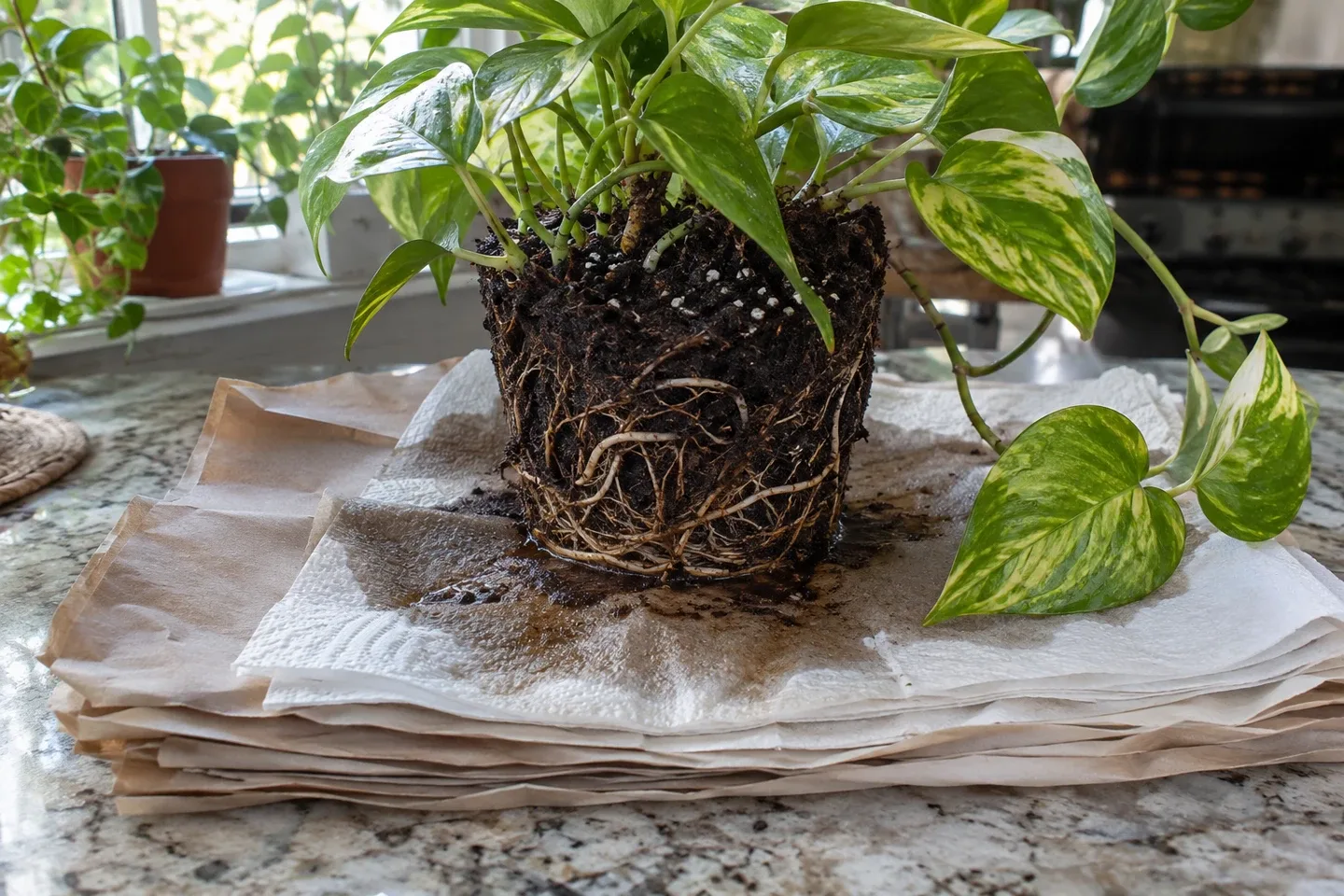
If the plant still wilts after a few days, or the pot smells sour, ease the root ball out. Firm, white or cream roots mean you only need to wait. Brown, soft roots that pull apart or slide out of their skin are rotting.
- Trim and repot only if the roots or the mix need it
Cut rotten roots back to firm tissue with clean scissors and pot the plant into fresh, barely damp mix in a pot with a drainage hole, no bigger than the one it came from. Our guide on how to fix root rot walks through the trim in detail.
- Water again only when it is dry 2 inches down
The first watering after the rescue should wait until the top 2 inches are dry. Then water until it drains through and empty the saucer again.
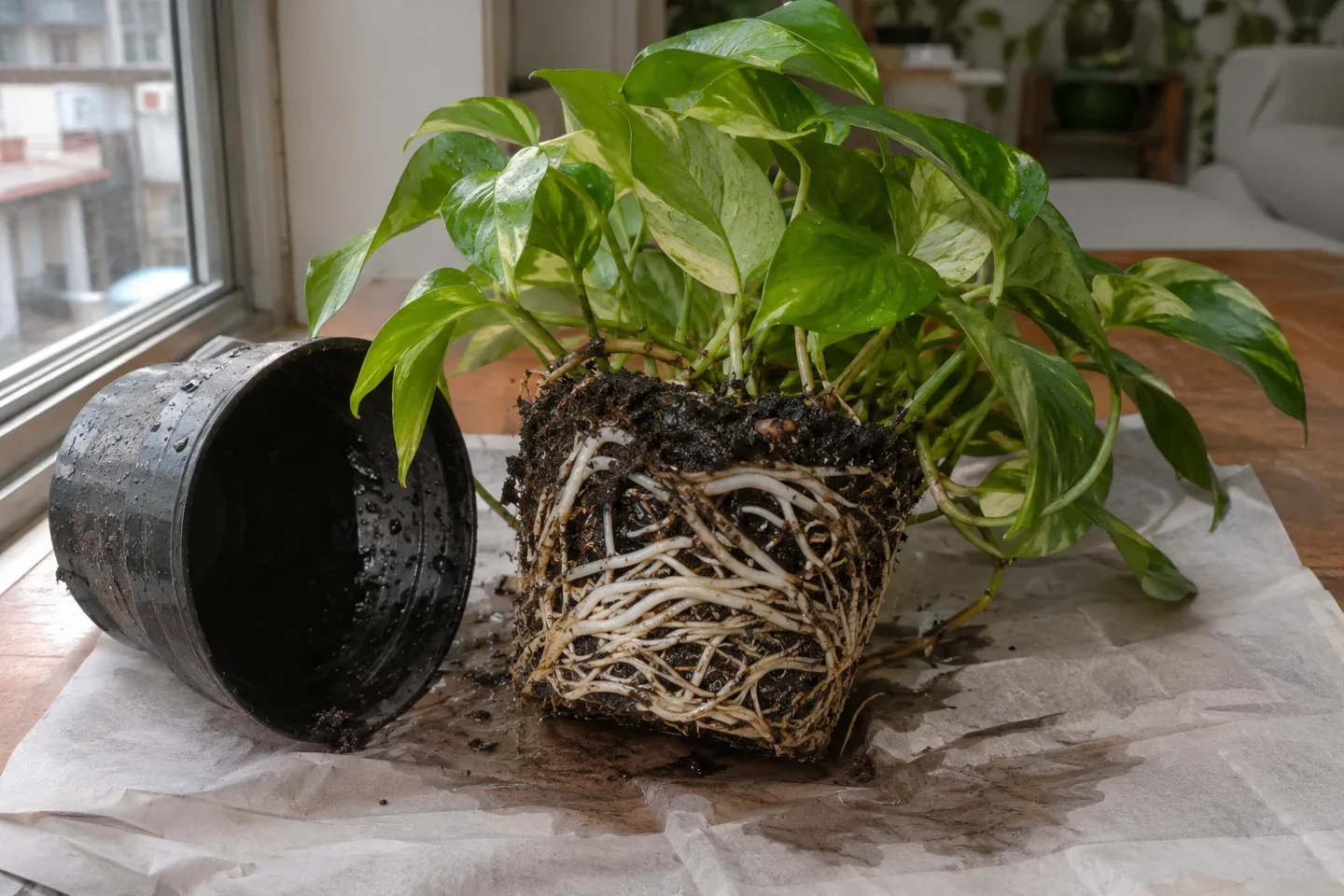
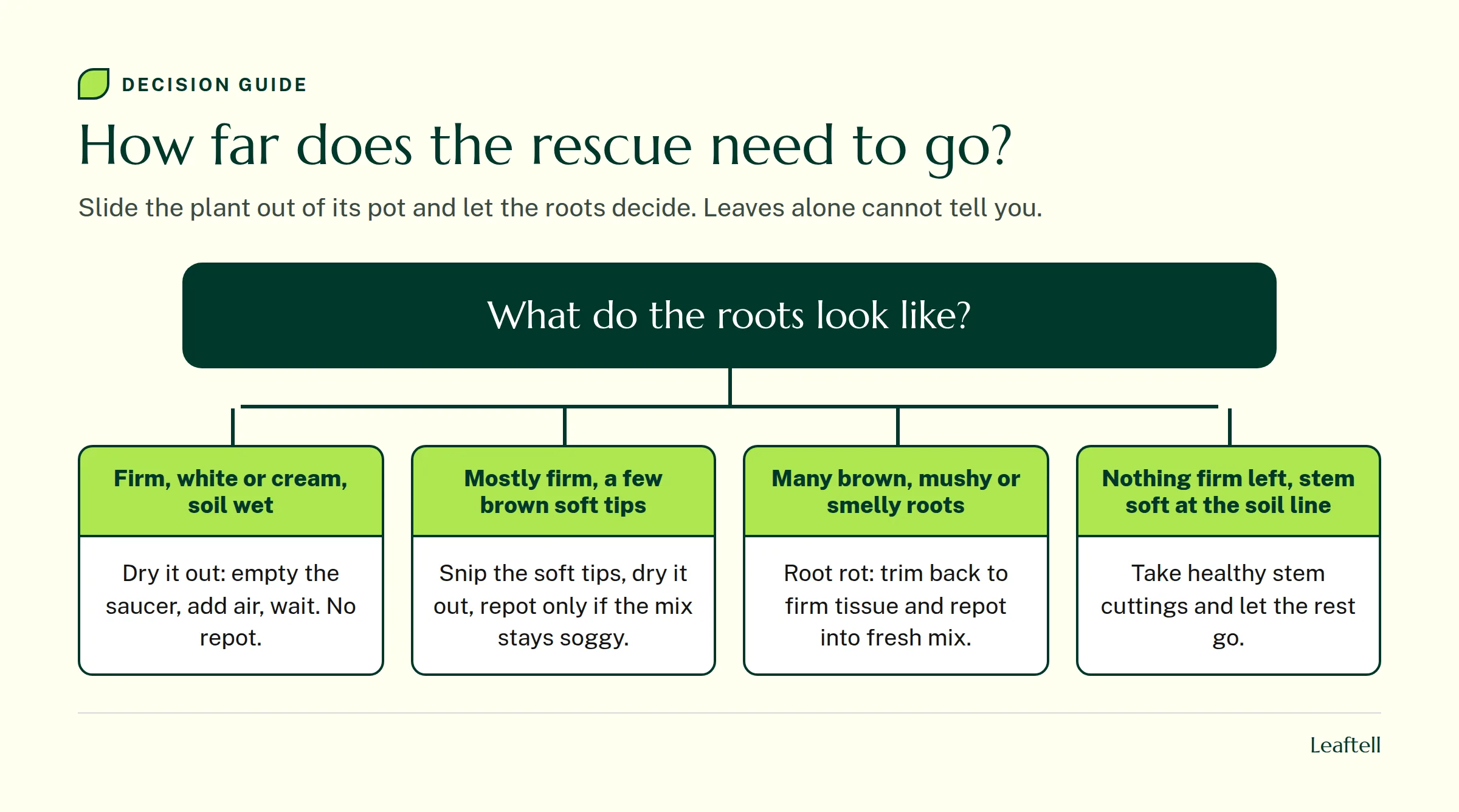
When you slide the plant out, the root ball tells you how far to go. Use the chart below as the decision, not the leaves. Yellow leaves will not turn green again whatever you do, so they are a poor guide to whether the rescue is working.
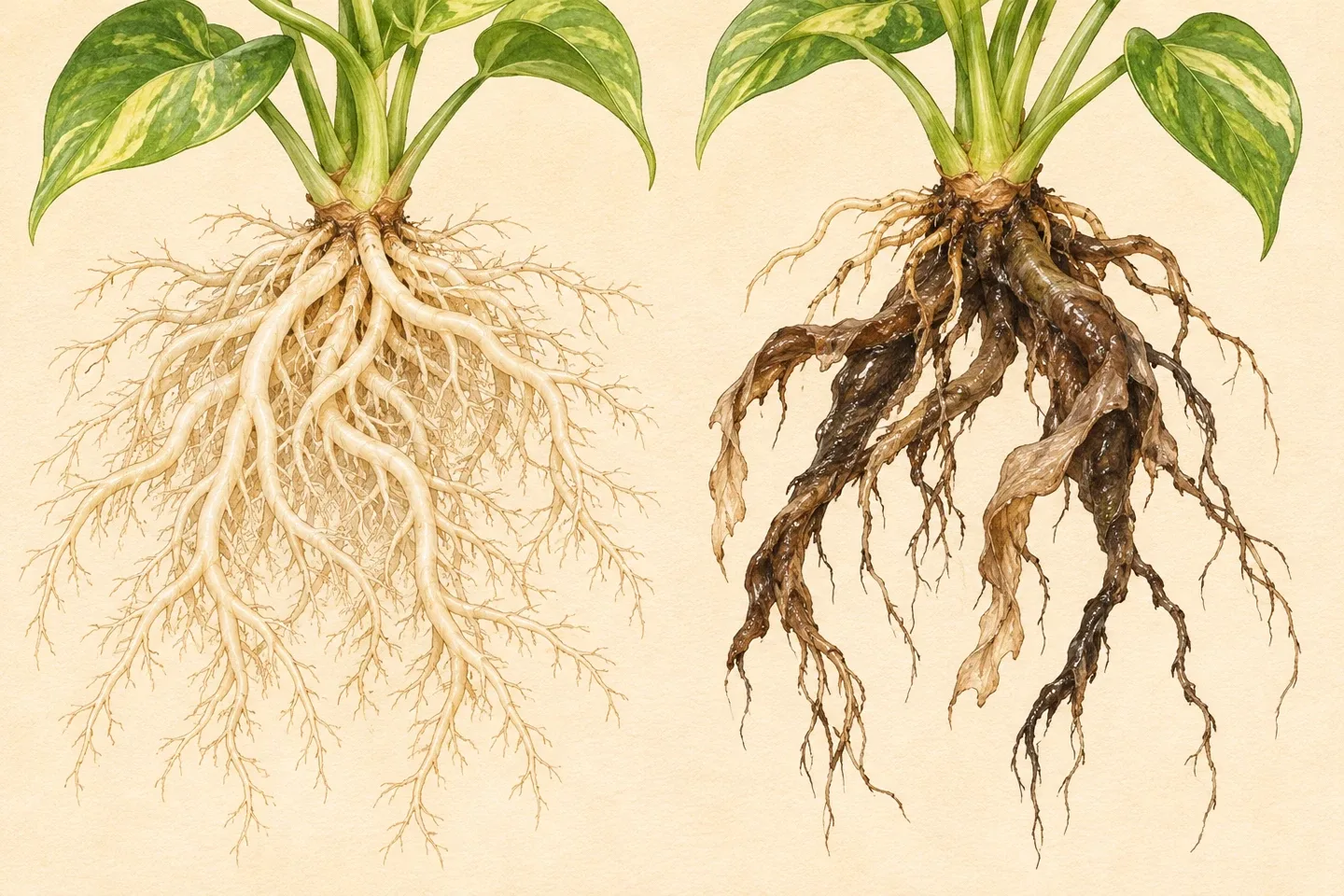
Healthy roots are firm and pale and hold their shape when you press them. Rotting roots look dark, feel slimy and leave a thin thread behind when the outer layer slips off between your fingers. A few brown tips on an otherwise firm root ball are normal after a soaking and do not mean rot.
How to dry out soil in a potted plant faster
You cannot force the soil dry, but you can stop slowing it down. These methods work with the plant rather than against it.
- Wick it with paper. If the root ball came out soaking, set it on a thick stack of newspaper or paper towels for a few hours and change the paper when it is wet through. The paper pulls water out of the outer layer of the mix.
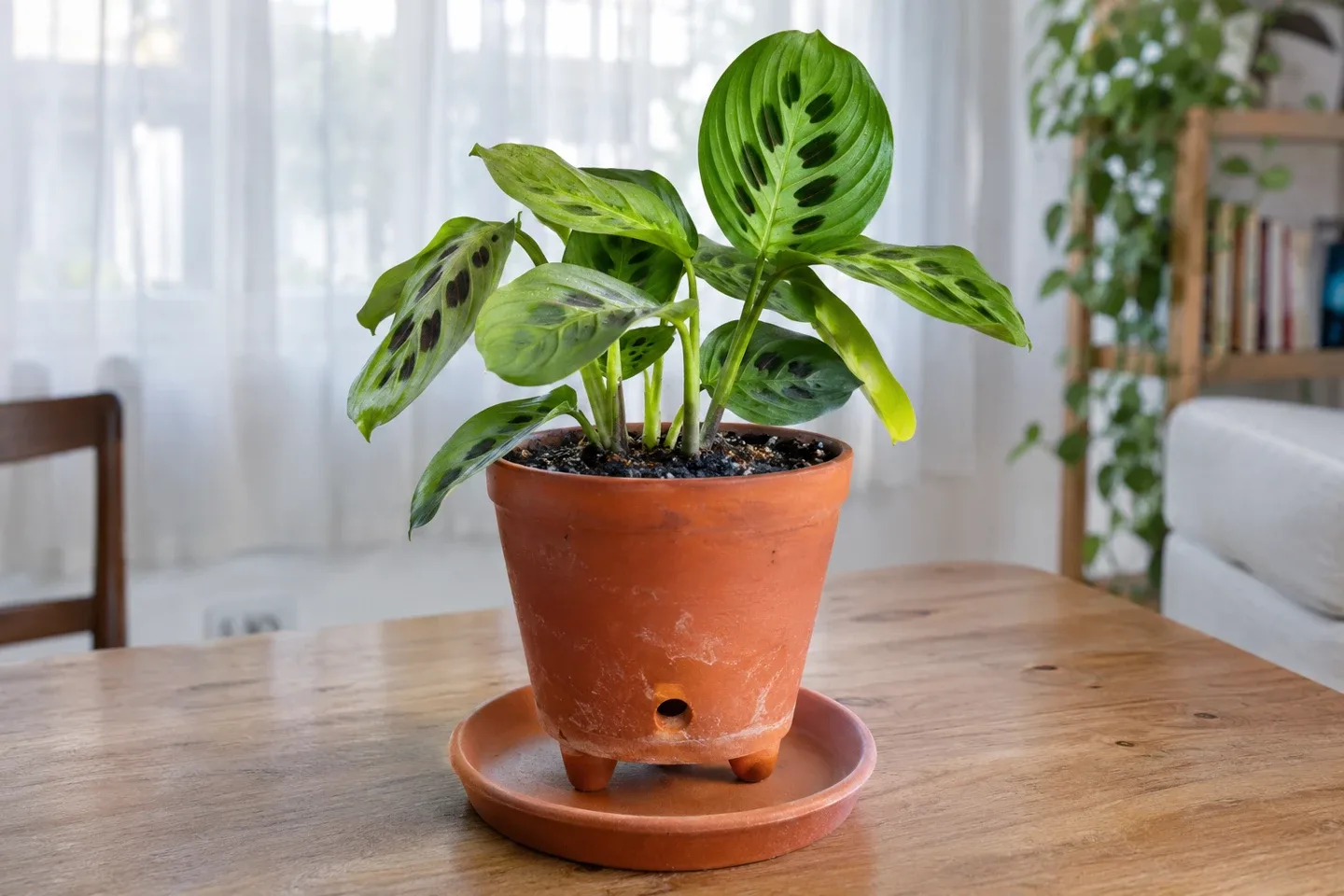
- Raise the pot. Pot feet, a few corks or a wire rack under the pot let water leave the drainage hole and let air reach the bottom.
- Use terracotta if you repot. Unglazed clay loses water through its walls; plastic and glazed ceramic do not. University of Maryland Extension lists the type of pot among the things that change how fast a plant needs water.
- Add gentle air movement. A fan on low in the room, not pointed straight at the plant, helps the surface dry.
What not to do matters as much. Heat from a hair dryer, a radiator or an oven cooks the surviving root tips. A sunny windowsill dries the leaves faster than the roots can replace the water. Both turn a recoverable plant into a dead one.
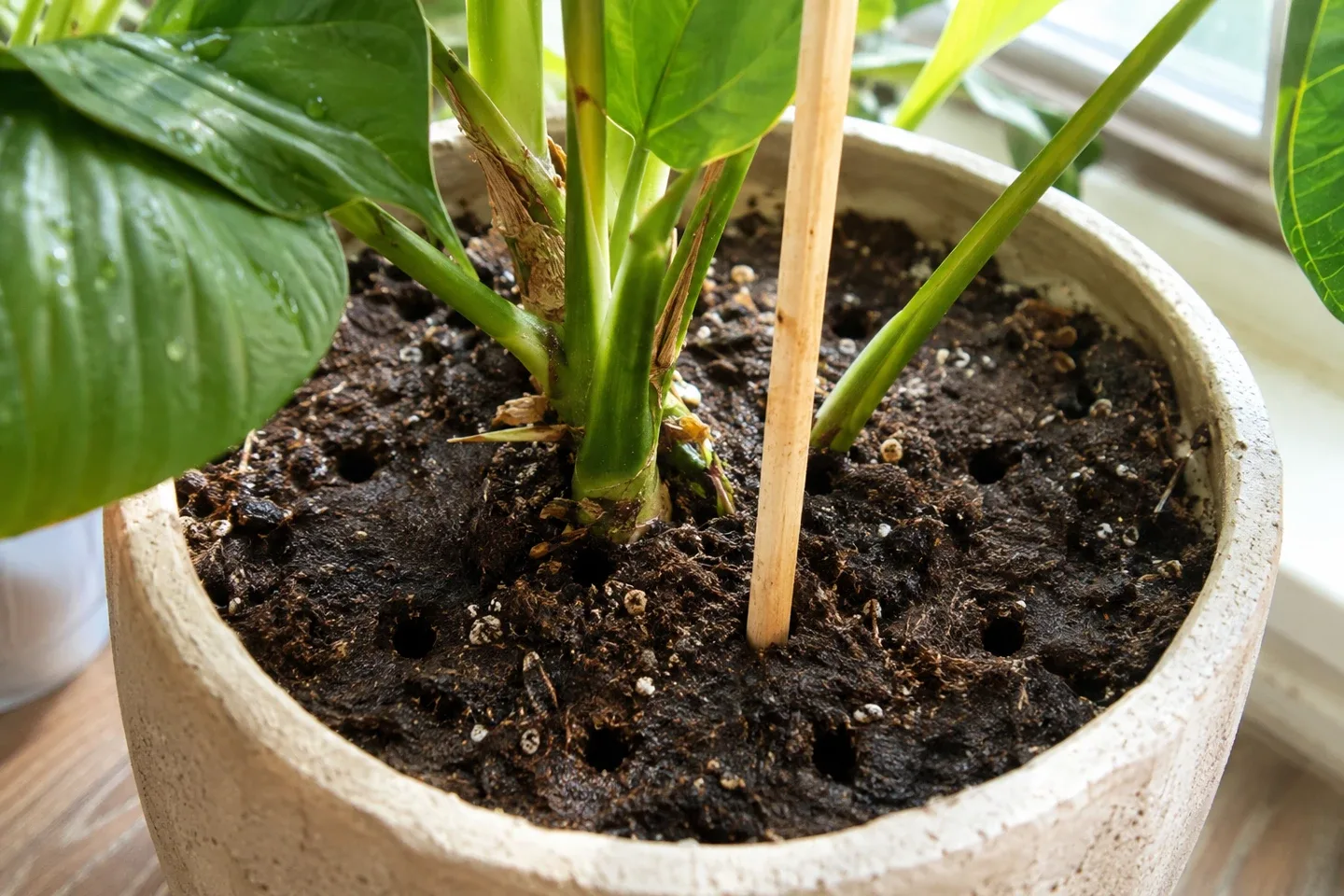
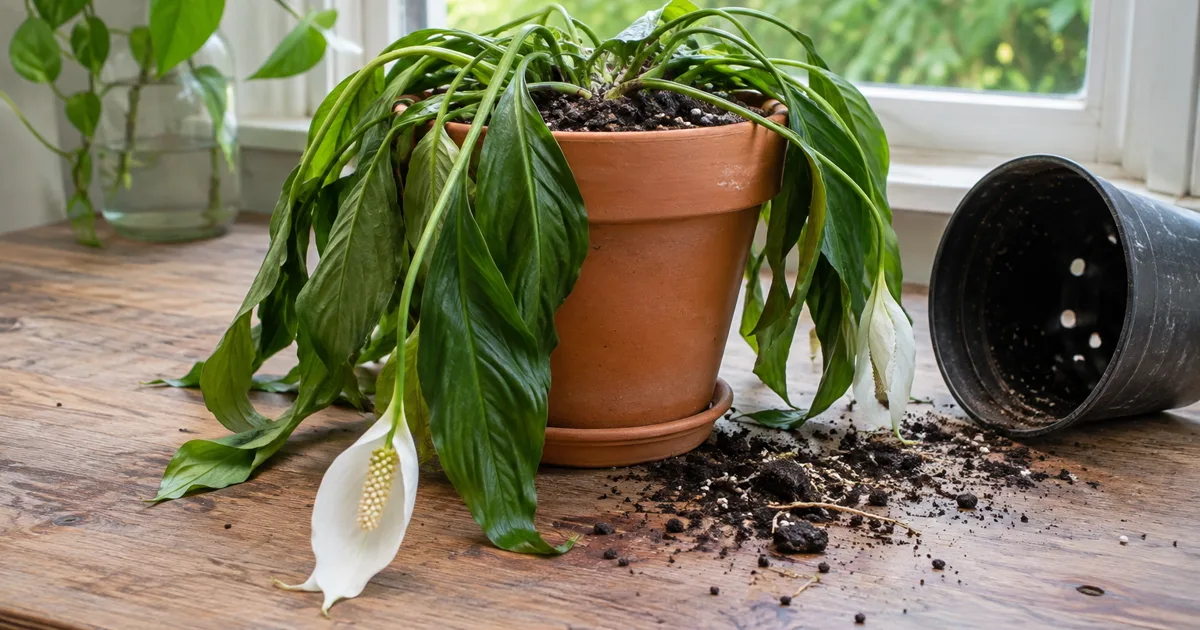
The holes in the photo above are what step 3 looks like: narrow openings spread between the stems, with the chopstick doubling as your moisture tester. Leave it in for a minute, pull it out and look at the soil clinging to it.
Mistakes that undo the rescue
These are the moves that turn a few yellow leaves into a lost plant. Each one feels helpful at the time.
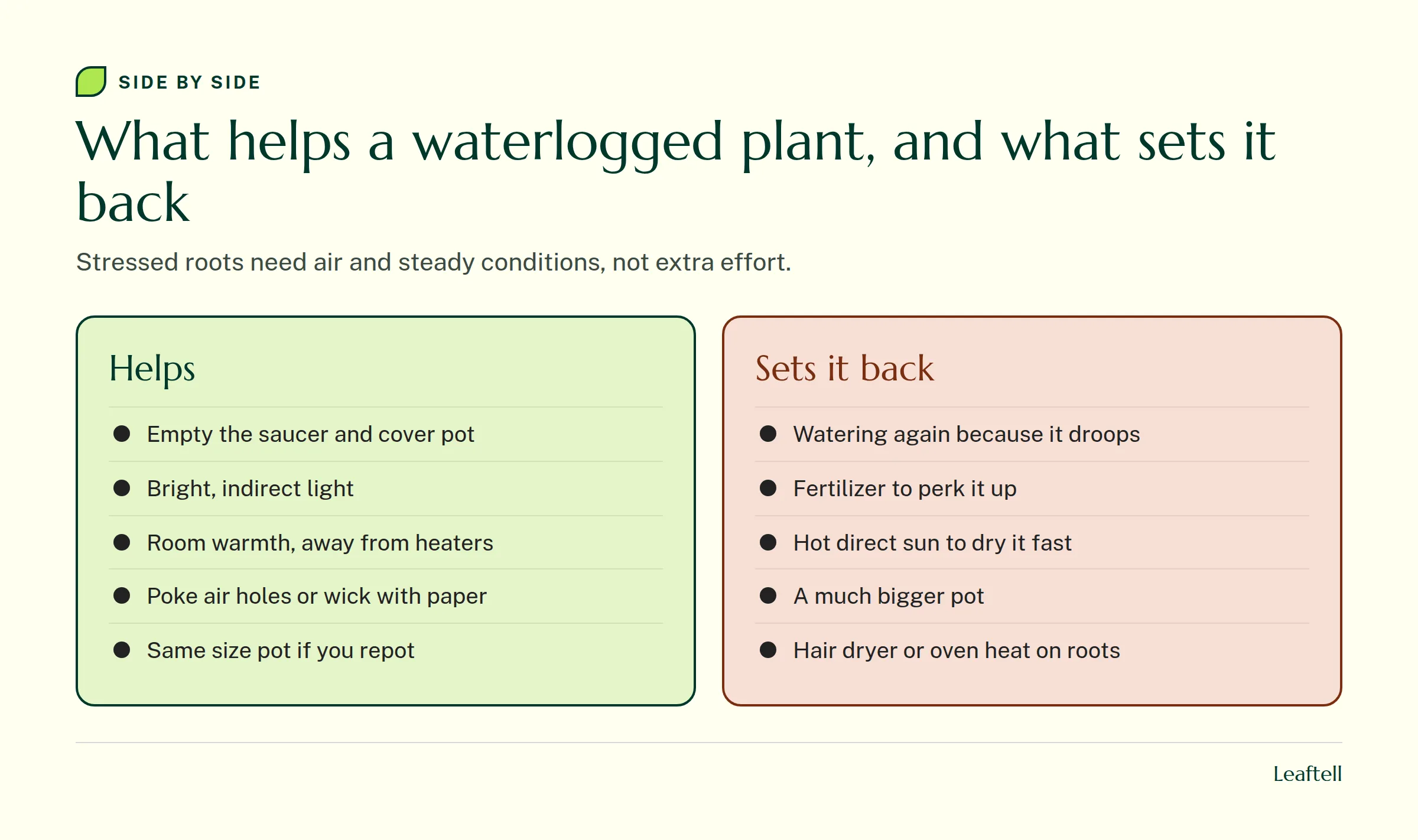
- Watering because it still droops. An overwatered plant wilts because its roots cannot drink, not because it is short of water. Another drink drowns what is left. Check the soil, not the leaves.
- Fertilizing to perk it up. Damaged roots cannot use fertilizer, and the extra salts stress them further. Wait until you see firm new growth.
- A much bigger pot. More mix holds more water than a weak root system can use, so the pot stays wet even longer. Go back into the same size, or one size up at most if the roots fill it.
- Repotting a plant that did not need it. If the roots are firm, repotting just tears fine roots that were about to recover. Dry it out in place instead. A freshly repotted plant that droops in damp mix is often in transplant shock rather than overwatered, so give it a week of bright shade before you change anything.
- Leaving the dead leaves on soggy soil. Fallen, rotting leaves on wet mix invite fungus gnats. Pick them up. If gnats have already moved in, our guide to getting rid of fungus gnats starts with exactly this drying step.
Succulents and cacti deserve a special warning. They store water in their leaves and stems, so overwatering shows up as soft, see-through or blackening tissue near the base, and it moves fast. Unpot one as soon as you see that and let the roots air dry for a day or two before replanting in gritty mix. Our page on why a succulent is dying covers that rescue in detail.
Saving an overwatered vegetable plant outdoors
A garden bed after heavy rain is a different problem, because you cannot tip it out. Zucchini, squash and tomato plants with waterlogged roots show yellow, wilting lower leaves while the soil around them is still muddy, and stems at the soil line can darken and soften if the water sits for days.
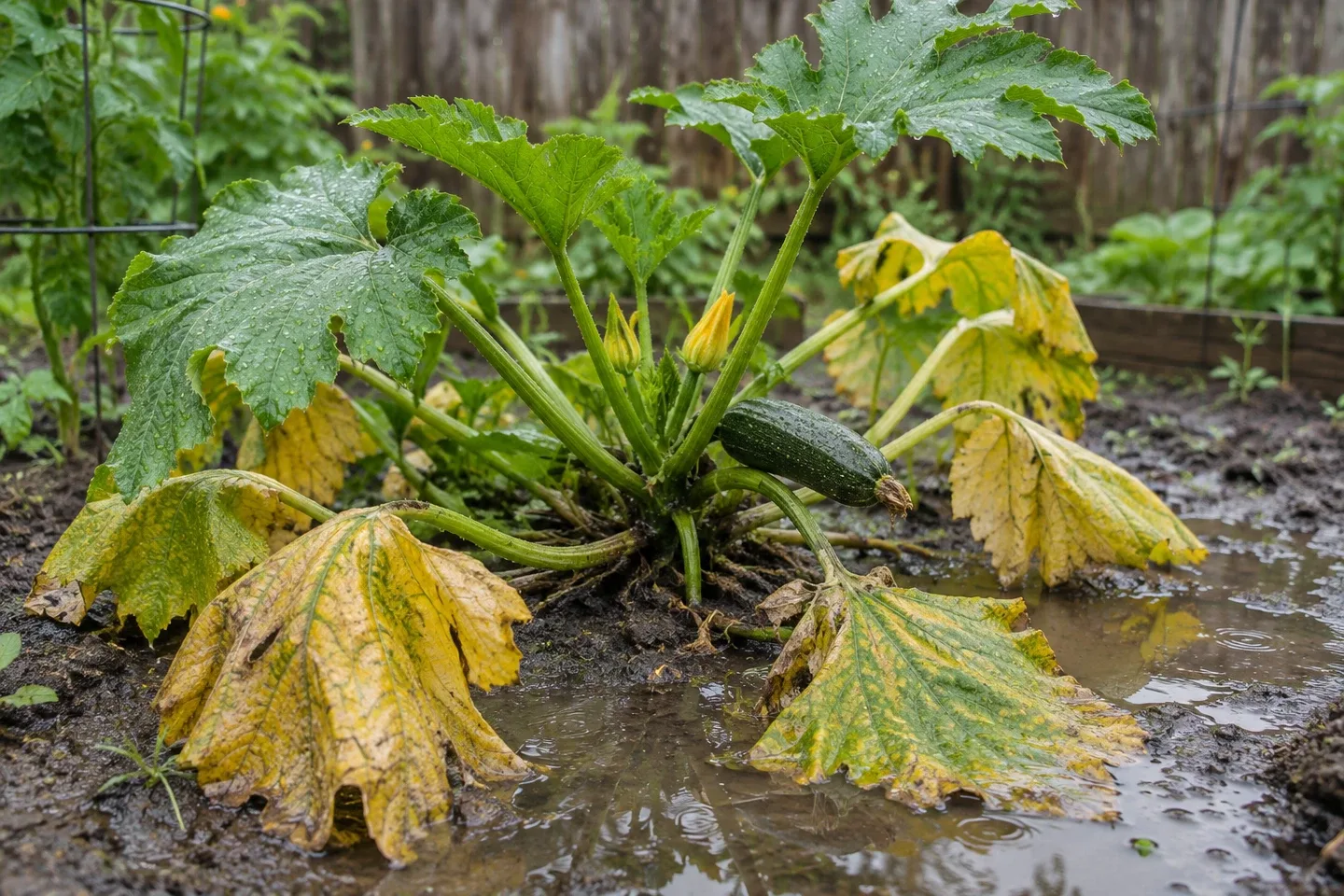
- Stay off the wet bed. Walking on saturated soil packs it down and squeezes out the air the roots need.
- Clear standing water. Scratch a shallow channel to lead puddles away from the stems.
- Skip watering until the top few inches dry. Even in summer heat, check with a trowel before watering again.
- Pull mulch back from the stems for a few days so the soil surface can breathe, then put it back.
- Remove leaves that have collapsed or rotted so they do not sit on wet soil.
One thing to know before you panic: big-leaved plants like zucchini often wilt in the afternoon heat even when the roots are fine, then stand up again by evening. If the leaves recover overnight and the soil is not soggy, that is heat, not overwatering. If they stay limp in the cool of the morning with wet soil, the roots are struggling. Our guide to why a tomato plant is drooping uses the same morning check.
How long recovery takes
Expect the soil in an indoor pot to take several days to a week or more to dry 2 inches down, depending on pot size, mix, light and temperature. The leaves that already turned yellow will not recover; the sign of success is that no new leaves fail and, a few weeks on, a firm new leaf appears.
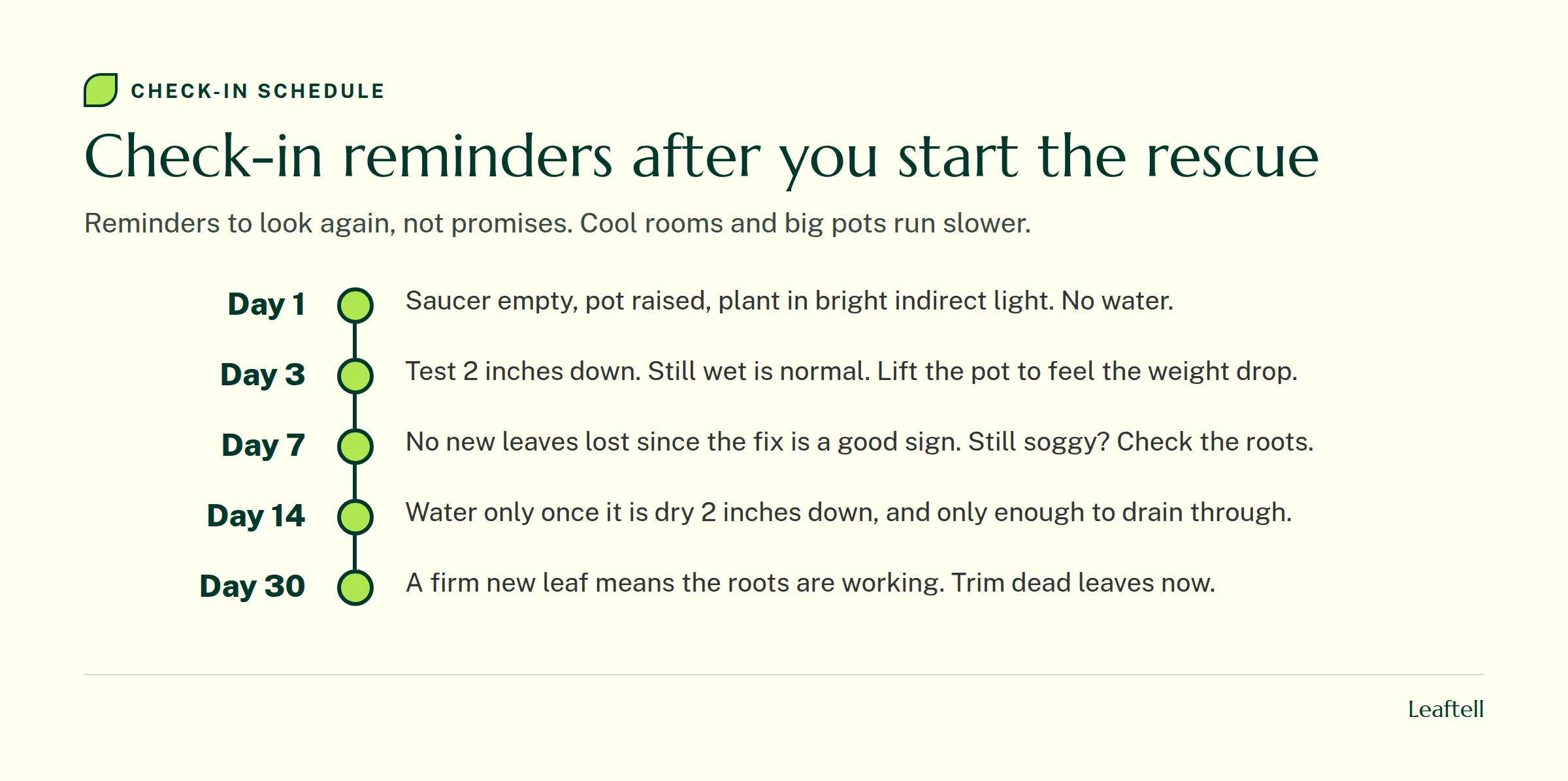
These are reminders to look again, not a schedule. A small pot in a warm, bright room moves faster than a big pot in a cool one. If the plant keeps losing leaves after two weeks of drier soil, go back to the roots and check them again.
Keep it from happening again
Most plants get overwatered on a schedule, not on need. Lift the pot and test 2 inches down before each watering, and water only when it is dry there. A guide to checking whether the soil is wet or dry covers the finger, chopstick and weight tests, and if your mix stays wet for a week after every watering, repot into a mix with more bark or perlite at the next spring repot.
If you have dried the plant out and it still is not improving, check your plant in Leaftell. Send a photo of the whole plant, one of the worst leaves and one of the roots if you have unpotted it, and say how the soil felt 2 inches down, since a photo cannot feel the soil.
Sources
Check your growing conditions with the plant watering calculator.
Frequently asked questions
Empty the saucer, lift the pot out of any cover pot and tip it on its side for a few minutes to drain. Then poke a few air holes with a chopstick, raise the pot on feet and keep it in bright, indirect light. If the root ball is soaking, wick it on newspaper or paper towels for a few hours. Avoid direct heat and hot sun.
As long as it takes for the soil to dry 2 inches down, which is often one to two weeks indoors and can be longer in a big pot or a cool room. Most leafy houseplants handle two weeks without water easily when the soil is already wet. Test the soil rather than counting days, and water only when it is dry at that depth.
An overwatered zucchini has yellowing, wilting lower leaves while the soil around it is still muddy, and the leaves stay limp in the cool of the morning. After days of standing water the stem at the soil line can darken and turn soft. A zucchini that wilts only in afternoon heat and recovers by evening is usually fine.
Share article
About the author

Keep checking your plant
Plant care reference
Indoor plant care
Build a routine around your plant, light and potting mix.
Plant care reference
Why is my plant dying
Trace leaf and root symptoms before choosing a care change.
Plant care reference
Pothos plant care
Choose a growing spot and prune a trailing pothos for fuller growth.
Plant care reference
How to fix root rot
Inspect root firmness and drainage, then decide whether to repot.