Is ZZ Plant Toxic to Cats? What a Bite Really Does
Filip Leszczyński 24 November 2026 13 min read
In this article
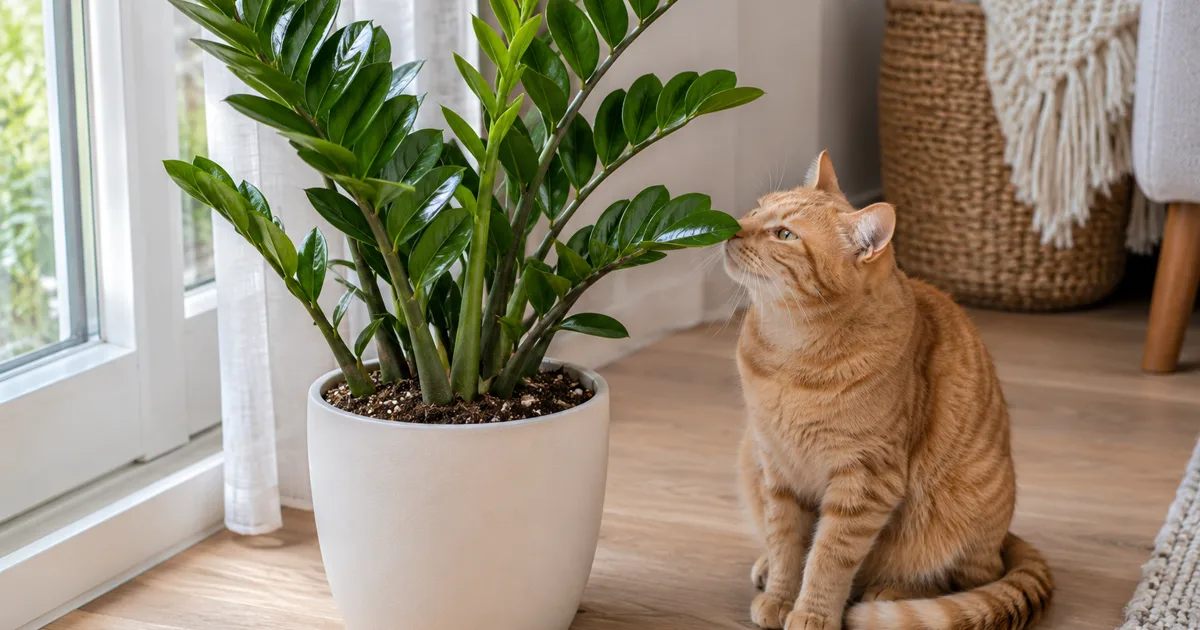
Yes, the ZZ plant is toxic to cats. NC State Extension lists Zamioculcas zamiifolia as a problem for cats and dogs, with calcium oxalate in the leaves as the toxic principle, and rates it a medium severity poison that causes vomiting and diarrhea when leaves are eaten in quantity.
Here is the part most answers miss: the ZZ plant is not on the ASPCA's toxic plant list at all, which is why you see Facebook threads and Reddit posts that flatly disagree. The plant belongs to the aroid family, the same family as pothos and peace lily, and the ASPCA lists those relatives as toxic for the same calcium oxalate crystals. Those crystals sting the mouth on the first bite, so most cats stop quickly. That makes a ZZ bite a sore mouth and an upset stomach, not a lily-style emergency. The real risk is a cat that chews plants out of habit, and this guide covers that cat, what to do after a bite and which plants are safe swaps.
Why the ZZ plant is toxic to cats
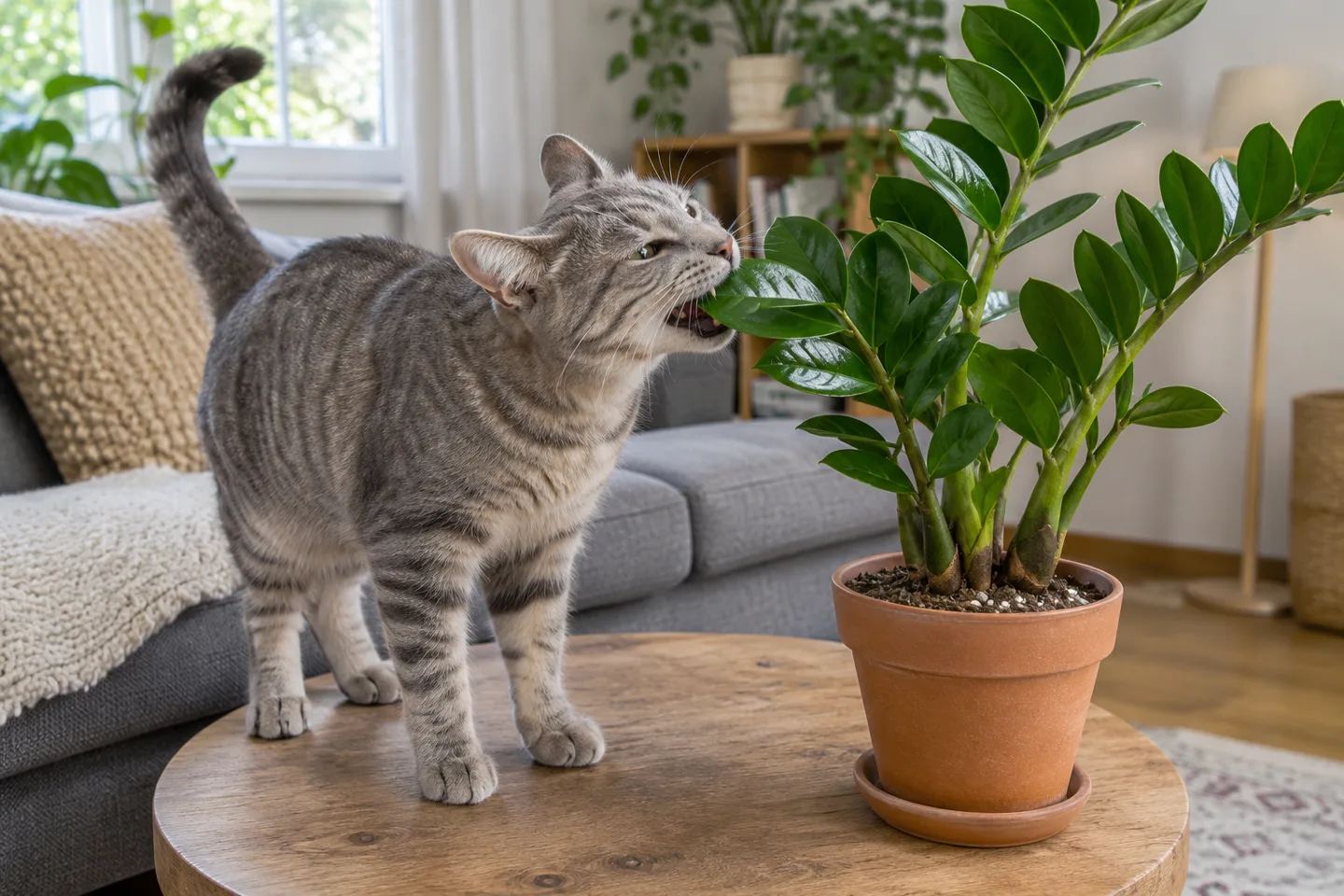
ZZ leaves and stems hold insoluble calcium oxalate crystals, tiny needle-shaped crystals packed into the plant's cells. When a cat bites a leaflet, the crystals are released and pierce the soft tissue of the mouth, tongue and lips. For the ZZ plant's aroid relatives, the ASPCA lists the signs as oral irritation, intense burning of the mouth, excessive drooling, vomiting and difficulty swallowing.
That instant sting is the reason most cases stay small. A cat feels it on the first bite and usually backs off, so it rarely swallows much. NC State's own wording matches: vomiting and diarrhea "if leaves are consumed in quantity". A single curious nibble is a mouth problem. A cat that keeps chewing is a stomach problem too.
You may also read that the ZZ plant is "so toxic it causes cancer" or that touching it is dangerous. Neither claim appears in the sources above, and NC State lists the plant as causing no contact dermatitis. The leaves are the problem when chewed, not when brushed past.
How the ZZ plant compares with other common houseplants
Toxic is a wide label. This table puts the ZZ plant next to plants cat owners ask about most, using the ASPCA and NC State listings.
| Plant | Listed toxic to cats? | What causes it | Typical signs | How worried to be |
|---|---|---|---|---|
| ZZ plant | Yes (NC State; not on the ASPCA list) | Calcium oxalate crystals | Drooling, mouth pain, vomiting, diarrhea | Call your vet, rarely an emergency |
| Pothos | Yes (ASPCA) | Calcium oxalate crystals | Mouth irritation, drooling, vomiting | Same as ZZ plant |
| Peace lily | Yes (ASPCA) | Calcium oxalate crystals | Mouth irritation, drooling, vomiting | Same as ZZ plant |
| Snake plant | Yes (ASPCA) | Saponins | Nausea, vomiting, diarrhea | Mostly stomach upset |
| Aloe vera | Yes (ASPCA) | Saponins, anthraquinones | Vomiting, lethargy, diarrhea | Mostly stomach upset |
| True lilies (Lilium) | Yes, cats only (ASPCA) | Unknown | Kidney failure | Emergency, go to a vet now |
| Spider plant | No (ASPCA) | None listed | None listed | Safe swap |
So the ZZ plant sits in the same group as pothos and peace lily: painful, unpleasant, usually short. If you also keep a snake plant, our guide on whether snake plants are pet safe explains why that one is more of a stomach issue. Aloe works the same way, as our post on aloe vera and cats covers.
Is your cat at risk? It depends on the cat
The plant is equally toxic to every cat. What changes is how likely your cat is to bite it. Judge your own cat's habits, not cats in general.
| Your cat | Chance of a bite | What to do with your ZZ plant |
|---|---|---|
| Ignores plants completely | Low | A floor pot is usually fine; check the leaflets weekly |
| Chews grass or crunchy leaves | High | Move it out of reach or swap it |
| Kitten under a year old | High; kittens test everything with their mouth | Out of reach until the chewing phase passes |
| Bored indoor cat that knocks things off shelves | Medium to high | High shelf with nothing nearby to jump from |
| Cat with a known health condition | Same chance, harder recovery | Out of reach, and call your vet sooner after any bite |
ZZ leaflets are thick, glossy and stiff, which some cats find satisfying to bite. They also sit at nose height on a side table, the exact spot where a cat walks past. Most bites happen there, not on the floor.
How to tell if your cat has been chewing the ZZ plant
Check the leaflets closest to the edge of the pot first. Fresh chewing leaves a torn, ragged edge with pale tissue showing, usually on the lower leaflets or the ones that hang over the rim.
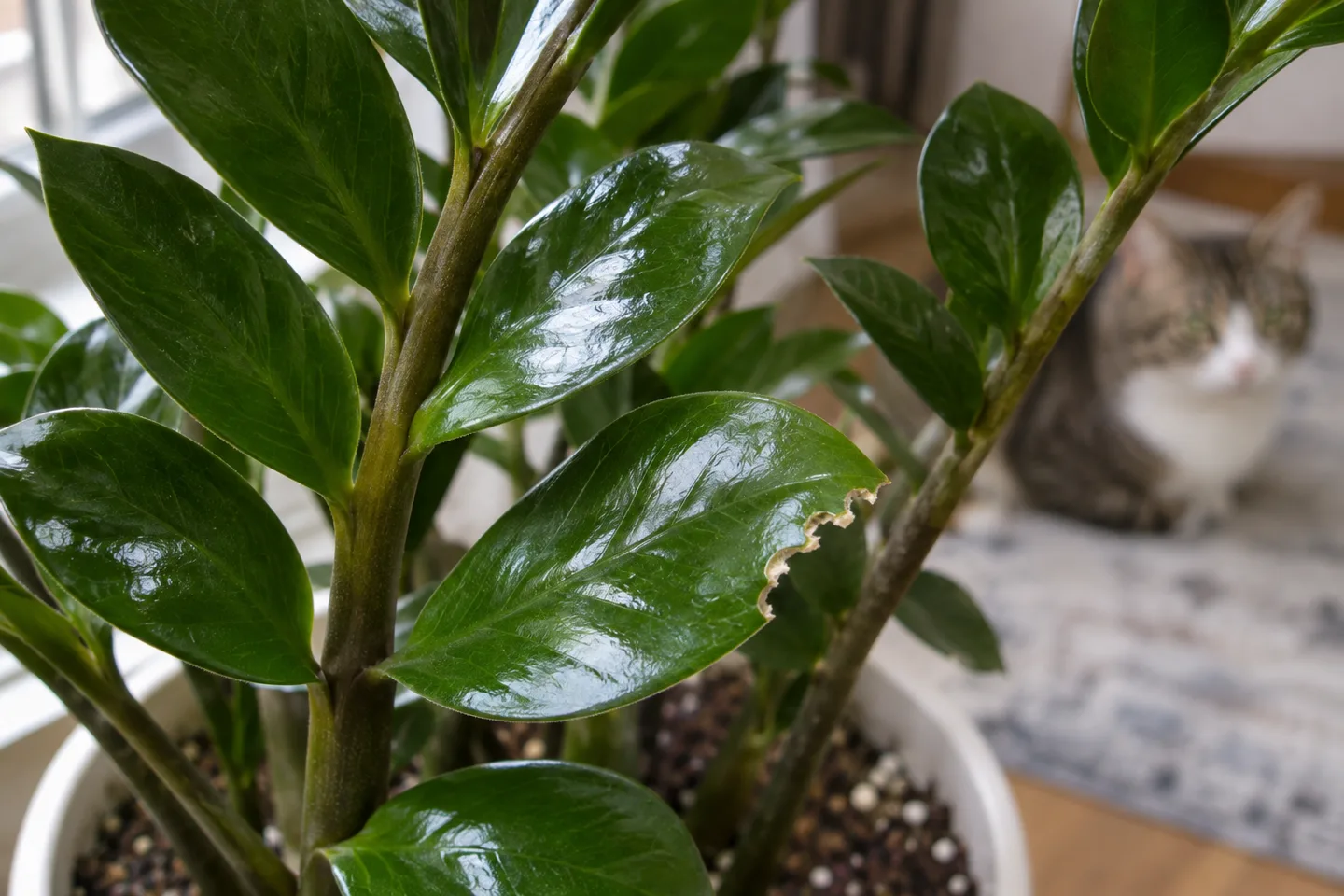
A ZZ leaflet that is yellow or soft from the base is a watering or light problem, not a cat. Our guide to ZZ plant leaves turning yellow covers those, and stems that flop over are covered in why a ZZ plant droops.
Other clues: leaflets on the floor, a snapped stem, green flecks in vomit, or a cat that suddenly drools or paws at its face after time near the plant.
Are ZZ plants toxic to dogs too?
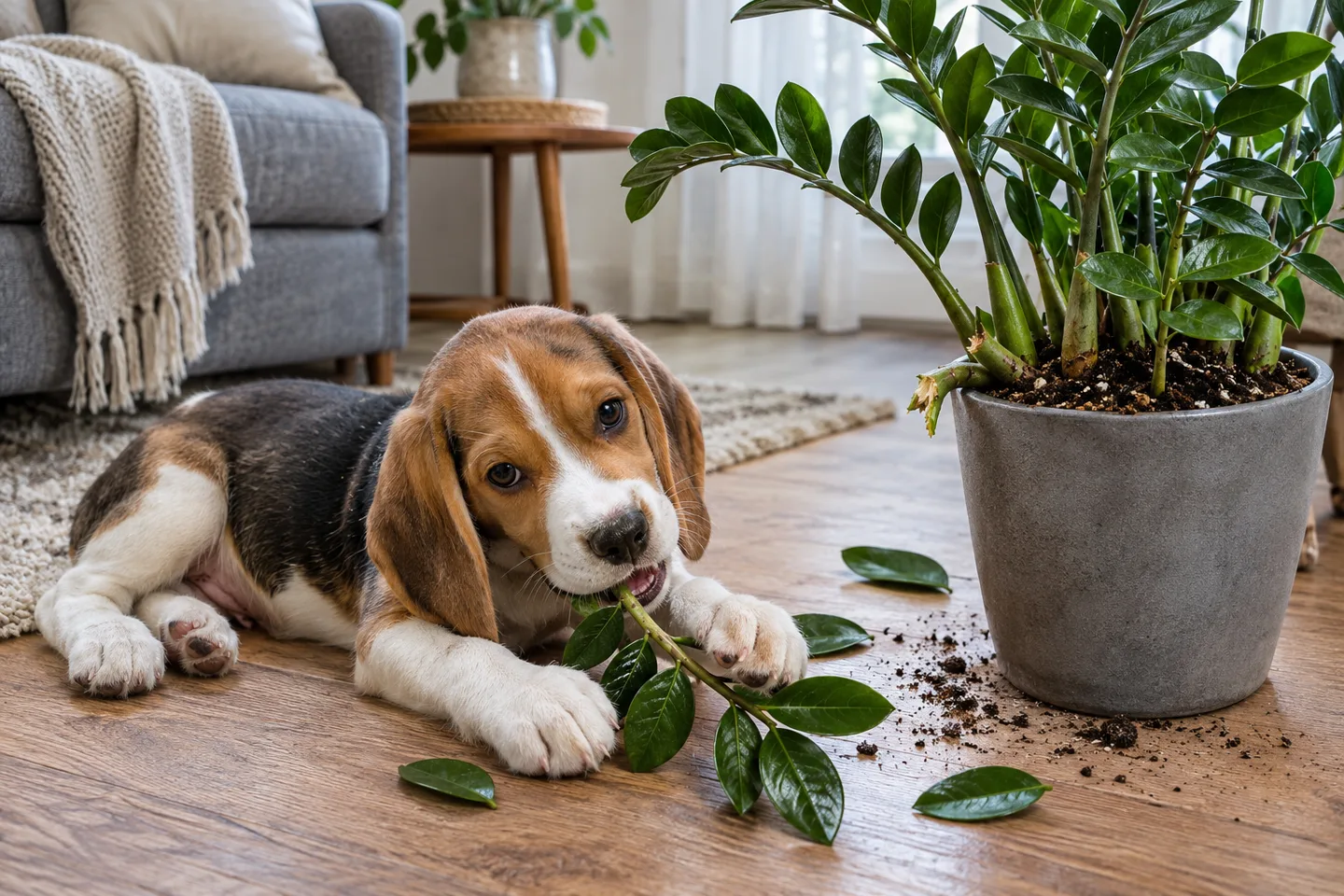
Yes. NC State lists the ZZ plant as a problem for dogs as well as cats, for the same calcium oxalate crystals. Dogs meet it differently: a puppy is more likely to grab a whole stem from a floor pot and chew it like a stick, so dogs can swallow more than a cat would.
The ZZ plant is also sold as Zanzibar gem, emerald palm and eternity plant. They are all the same plant with the same toxicity, so a "Zanzibar gem" label is no safer for a dog or cat.
My cat ate a ZZ plant: what to do
Most bites need watching, not panic. If your cat licked or nibbled a leaflet and is acting normally, take the plant away and keep an eye on them for the next few hours. If signs appear, or you do not know how much was eaten, call for advice instead of guessing.
What to do if your cat chewed a ZZ plant
- Move the plant
Put the pot in a room your cat cannot get into and pick up any leaflets or stem pieces on the floor, so the chewing stops while you deal with the rest.
- Clear the mouth
Gently wipe your cat's mouth with a damp cloth and remove any leaf pieces you can see. Offer fresh water. Do not try to make your cat vomit unless a vet tells you to.
- Note what and when
Write down roughly how many leaflets are missing and the time. A photo of the plant and the chewed leaflets helps whoever you call identify it.
- Watch for signs
Look for drooling, pawing at the mouth, head shaking, vomiting, diarrhea or refusing food and water.
- Call if anything shows
Call your vet or an animal poison control line if signs appear, if a lot was eaten, or if your cat is a kitten, elderly or already unwell. ASPCA Animal Poison Control is on (888) 426-4435; a consultation fee may apply.
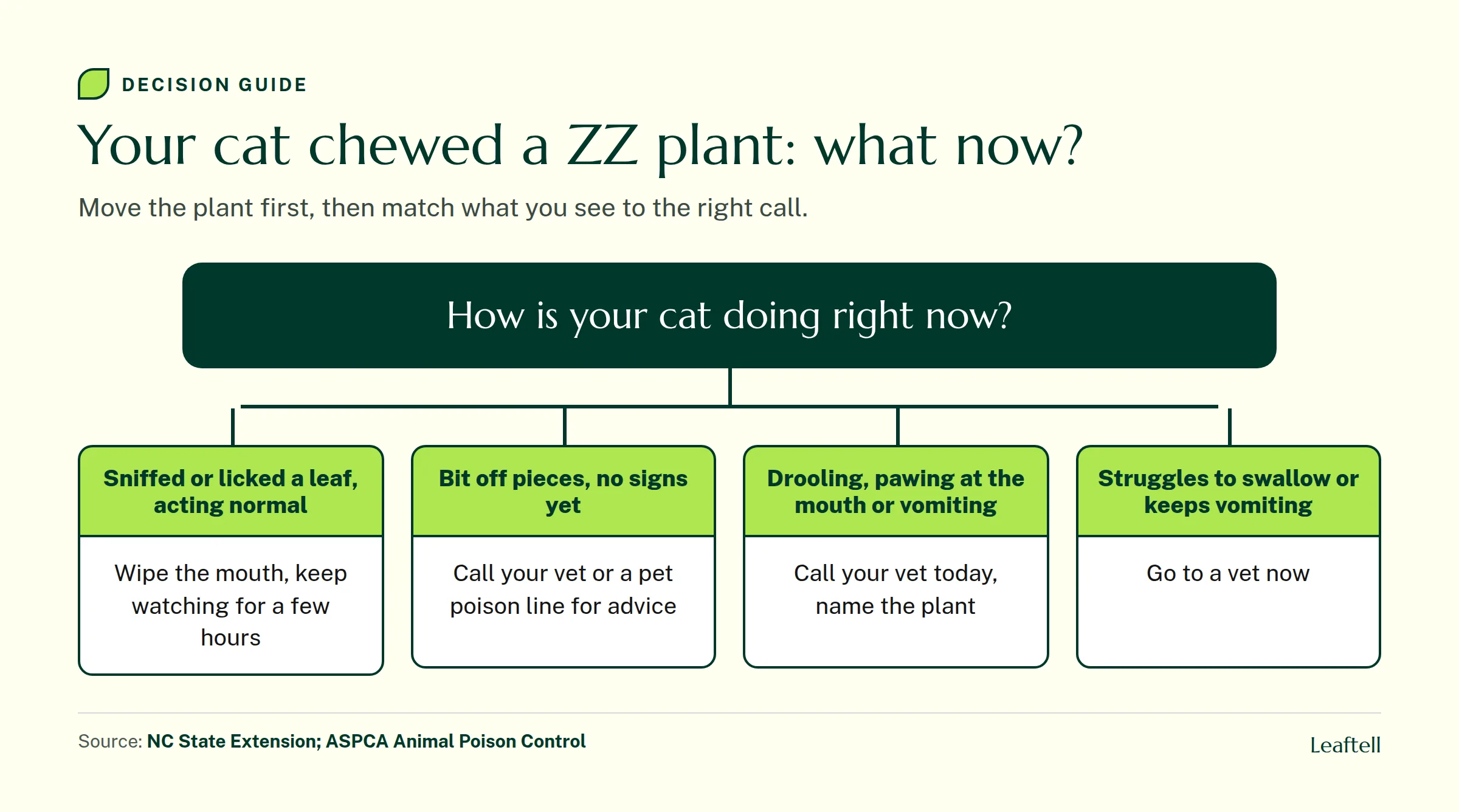
When you call, say "ZZ plant, Zamioculcas zamiifolia". Because it is missing from the ASPCA list, the scientific name gets you a faster and clearer answer than the nickname.
Symptoms to watch after a ZZ plant bite
The signs start in the mouth, then move to the stomach if your cat swallowed pieces. Note when each one starts so your vet gets a clear timeline.
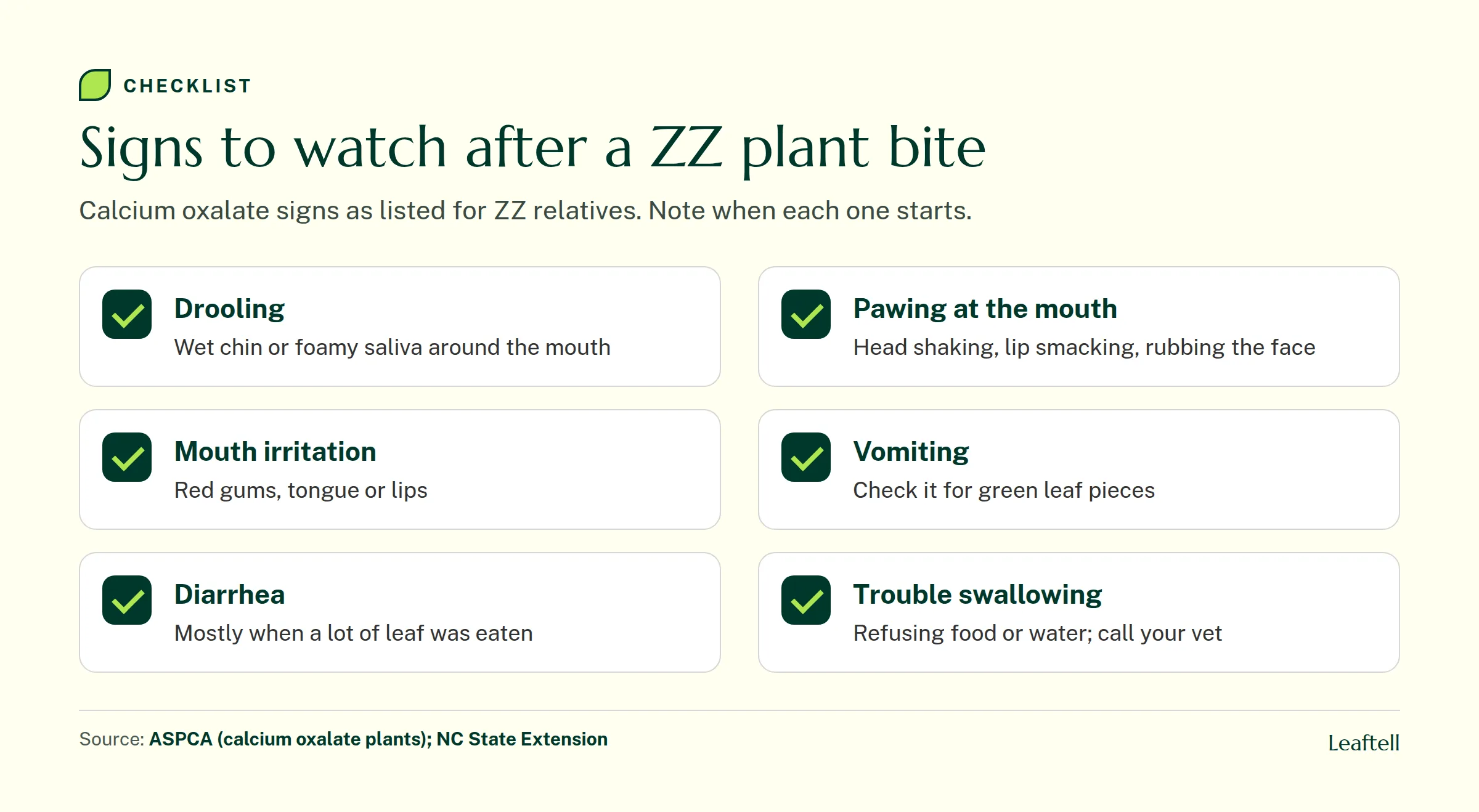
Vomiting that keeps going, a cat that will not drink, or one that struggles to swallow are reasons to see a vet in person rather than wait. A small cat can get dehydrated quickly from repeated vomiting, whatever started it.
How to keep a ZZ plant safely with a cat
If your cat is not a dedicated plant chewer, you can usually keep both. The whole job is distance and tidiness.
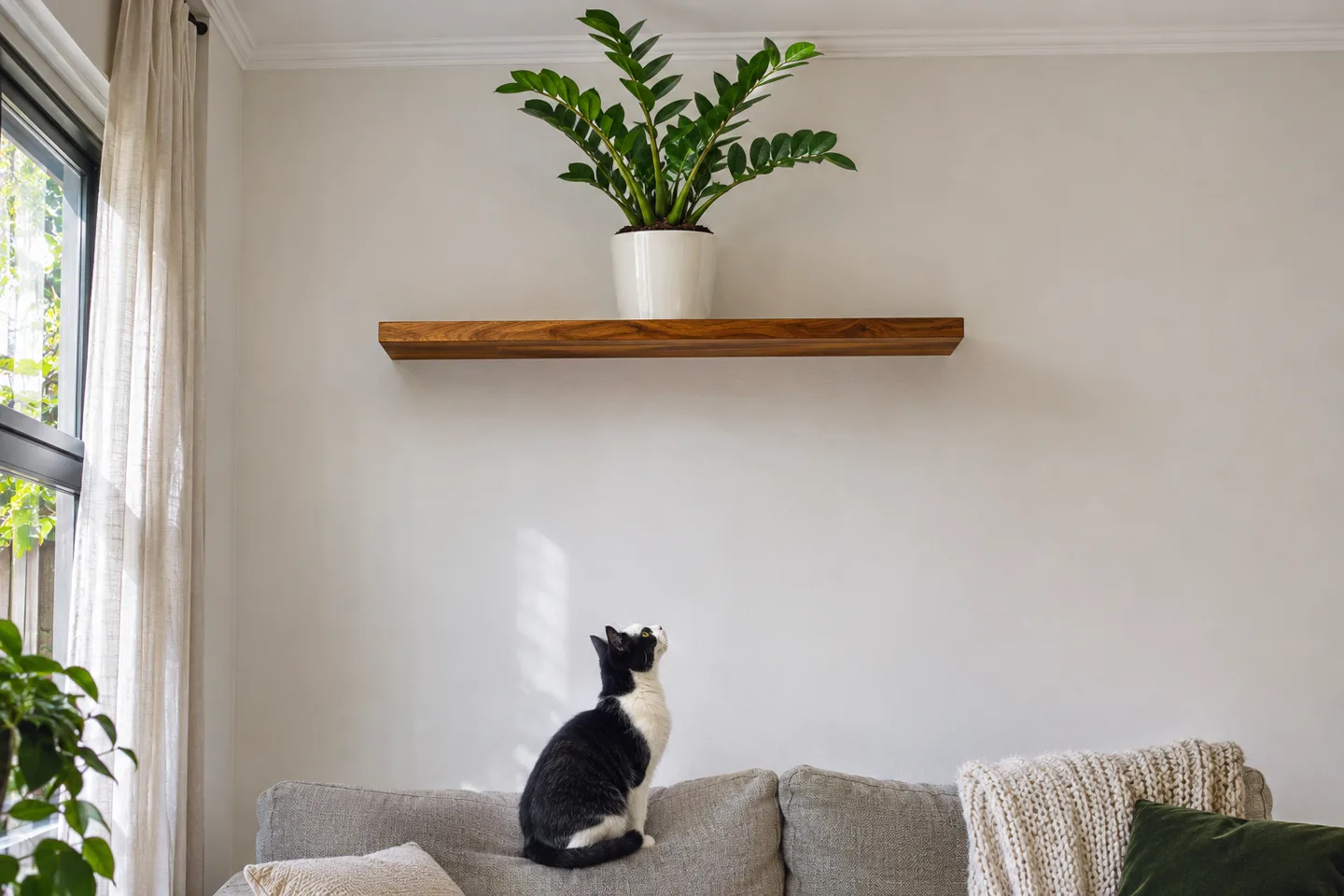
- Go high and away from launch points. A wall shelf with no furniture nearby to jump from works for most cats. ZZ plants handle lower light well, so a shelf away from the window is fine for the plant, and our list of low light indoor plants shows which other shade lovers to check before you buy.
- Use a room your cat does not enter. A home office or spare room with the door shut is the most reliable spot.
- Pick up every fallen leaflet and cut stem. Loose pieces on the floor are what cats bat around and chew.
- Give a chewing cat a legal option. A tray of cat grass in an easy spot pulls some cats away from houseplants.
- Check the leaflets once a week. New bite marks tell you the setup is not working before your cat gets sick.
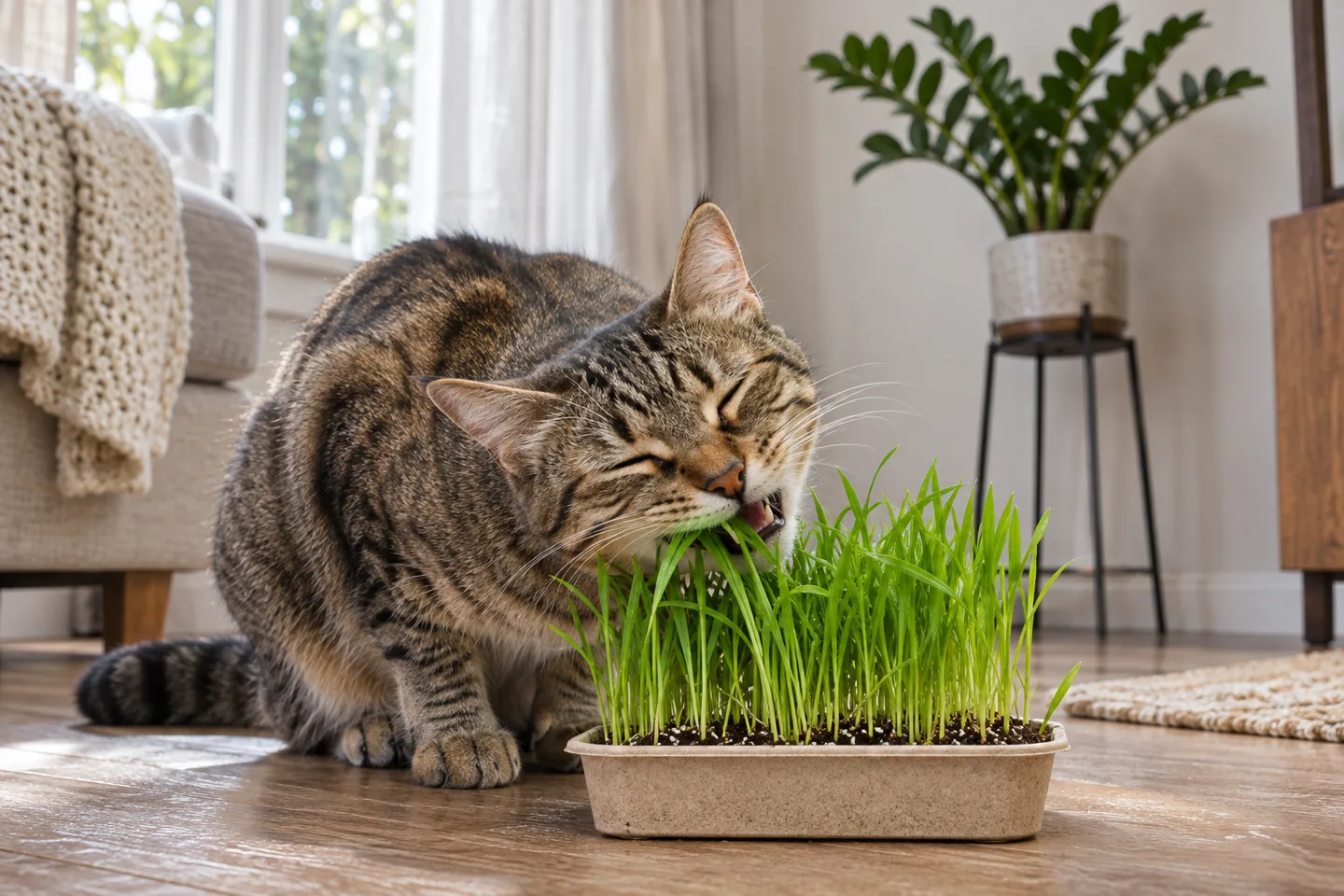
Bitter sprays and citrus peels help with some cats and do nothing for others. A spot your cat physically cannot reach is the only fix that does not depend on your cat's taste.
Repotting and propagating with a cat in the house
Repotting day is when most loose ZZ pieces end up on the floor. Lifting the plant exposes the fat rhizomes, and dividing or trimming leaves stems and leaflets lying around.
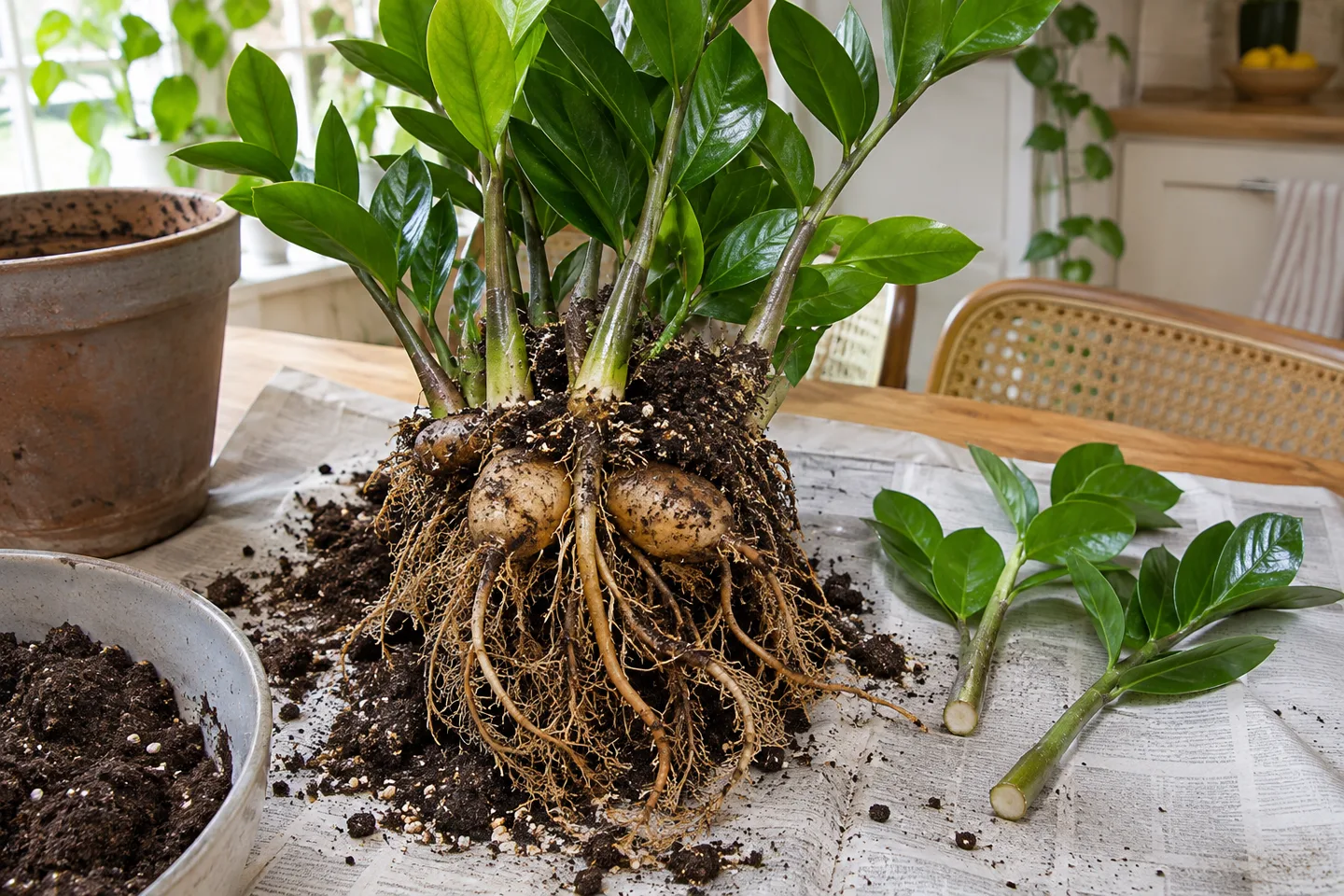
Shut the cat out of the room while you work, sweep up every scrap afterward and wash your hands. If you are rooting leaflets or stems from our ZZ plant propagation guide, keep the jars or trays on a high shelf for the weeks they take to root. A jar of water with leaves in it is very tempting to a cat.
Does the variety matter?
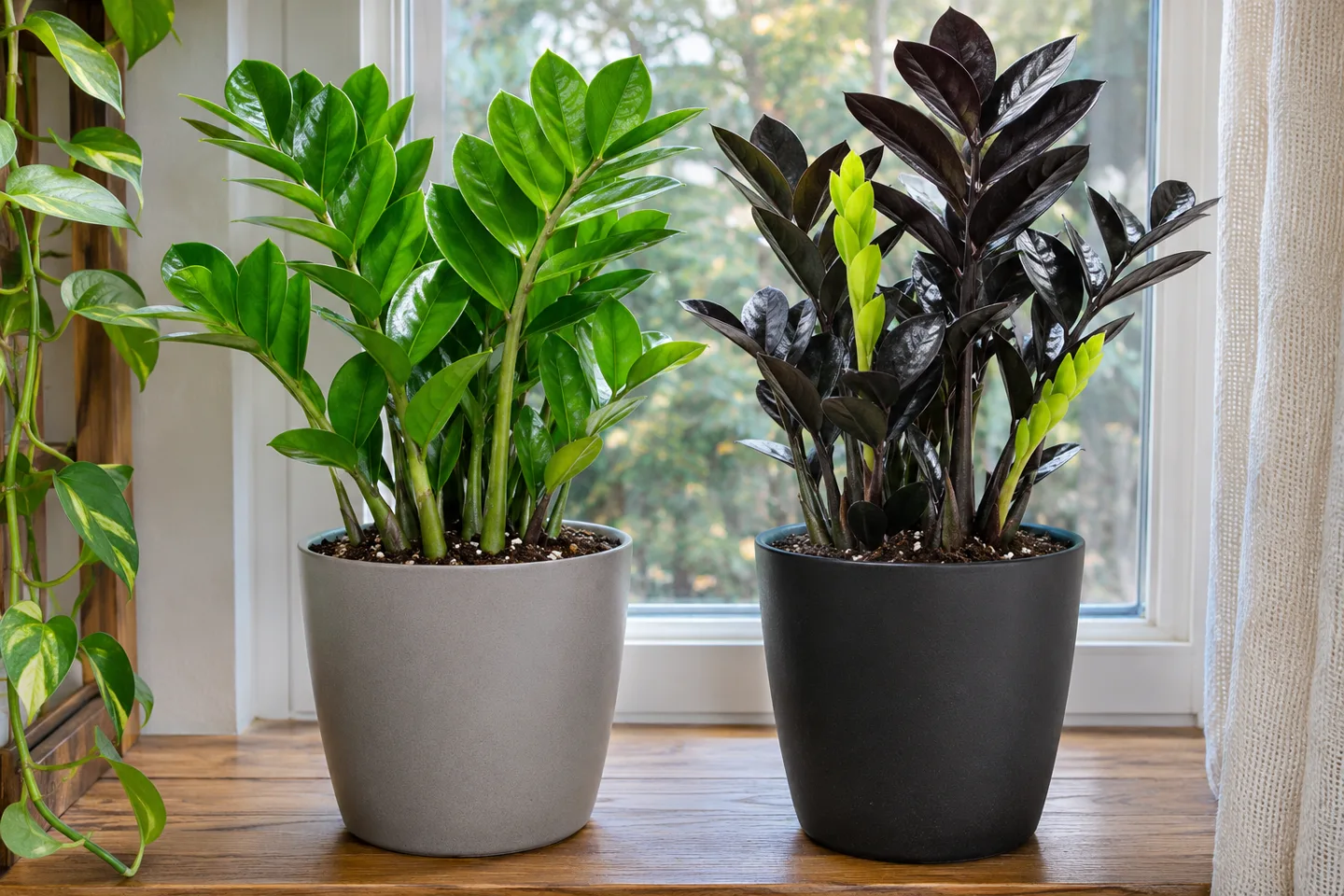
No. The Raven ZZ, with its near black leaflets, and the compact dwarf types are the same species, so treat them the same around pets. A darker leaf does not mean a safer or riskier plant.
Cat-safe plants to grow instead of a ZZ plant
If your cat chews plants, swapping is easier than fighting it. These are listed as non-toxic to cats and dogs by the ASPCA, and each covers one reason people buy a ZZ plant: low light, low care or a glossy upright look.
| Plant | Why it works as a swap | ASPCA listing |
|---|---|---|
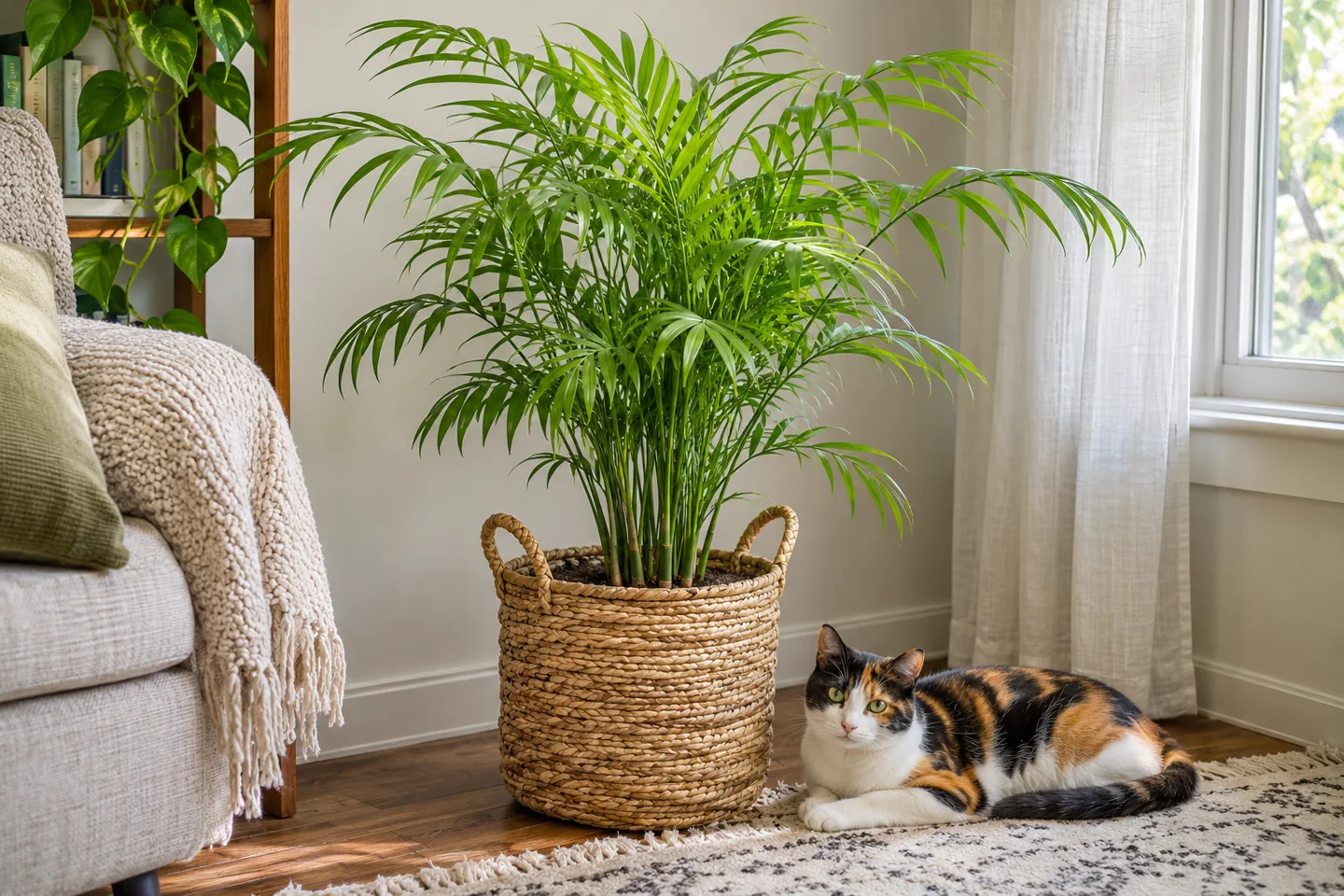
| Parlor palm | Tall, soft, handles indoor light, fills a floor spot | Non-toxic to dogs and cats |
| Cast iron plant | Upright dark leaves, copes with dim corners and neglect | Non-toxic to dogs and cats |
| Spider plant | Just as forgiving, easy to keep alive | Non-toxic to dogs and cats |
| Boston fern | Full green look for a brighter, humid spot | Non-toxic to dogs and cats |
The parlor palm is the swap for a floor spot where a large ZZ would sit. A nibbled frond looks scruffy, but it will not hurt your cat.
For a shelf, the spider plant is the easiest swap; our spider plant care guide covers light and watering. The cast iron plant is the best match for the dim corner where ZZ plants often end up.
The bottom line
The ZZ plant is toxic to cats and dogs, but it is a sore-mouth plant, not a kidney-failure plant like a true lily. If your cat ignores plants, a ZZ on a high shelf is a reasonable choice. If your cat chews, a kitten is on the way or you would rather not think about it, swap it for a parlor palm or cast iron plant. Either way, move the plant first after any bite, then watch, then call if signs appear.
Check your growing conditions with the plant watering calculator.
Frequently asked questions
Yes. NC State lists the ZZ plant as a problem for dogs as well as cats. The calcium oxalate crystals cause mouth pain, drooling and vomiting, and a dog that swallows a lot of leaf can get diarrhea. Puppies are the main risk because they chew whole stems from floor pots.
No. Zanzibar gem is another name for the ZZ plant, Zamioculcas zamiifolia, so it carries the same calcium oxalate and the same risk. Treat any plant sold as Zanzibar gem, emerald palm or eternity plant as toxic to pets.
Not necessarily. If your cat ignores plants, move it to a high shelf or a room your cat does not use and check the leaflets weekly for bite marks. If your cat chews plants or you have a kitten or puppy, rehome it or give it to a friend without pets.
Yes for normal handling. NC State lists the plant as poisonous to humans if eaten but as causing no contact dermatitis. Wash your hands after repotting or pruning and keep the plant away from small children who might chew it.
The ASPCA lists spider plant, parlor palm, cast iron plant, Boston fern and prayer plant as non-toxic to cats. Check any new plant against the ASPCA list before you bring it home, because several popular low light plants are toxic.
True lilies (Lilium) are among the most dangerous common plants for cats. The ASPCA lists kidney failure as the sign, so any lily bite in a cat should go straight to a vet. The ZZ plant is far milder by comparison.
Share article
About the author

Keep checking your plant
Plant care reference
Indoor plant care
Build a routine around your plant, light and potting mix.
Plant care reference
Why is my plant dying
Trace leaf and root symptoms before choosing a care change.
Plant care reference
Pothos plant care
Choose a growing spot and prune a trailing pothos for fuller growth.
Plant care reference
How to fix root rot
Inspect root firmness and drainage, then decide whether to repot.