Spider Plant Care: Light, Water, Brown Tips and Babies
Filip Leszczyński 17 October 2026 10 min read
In this article
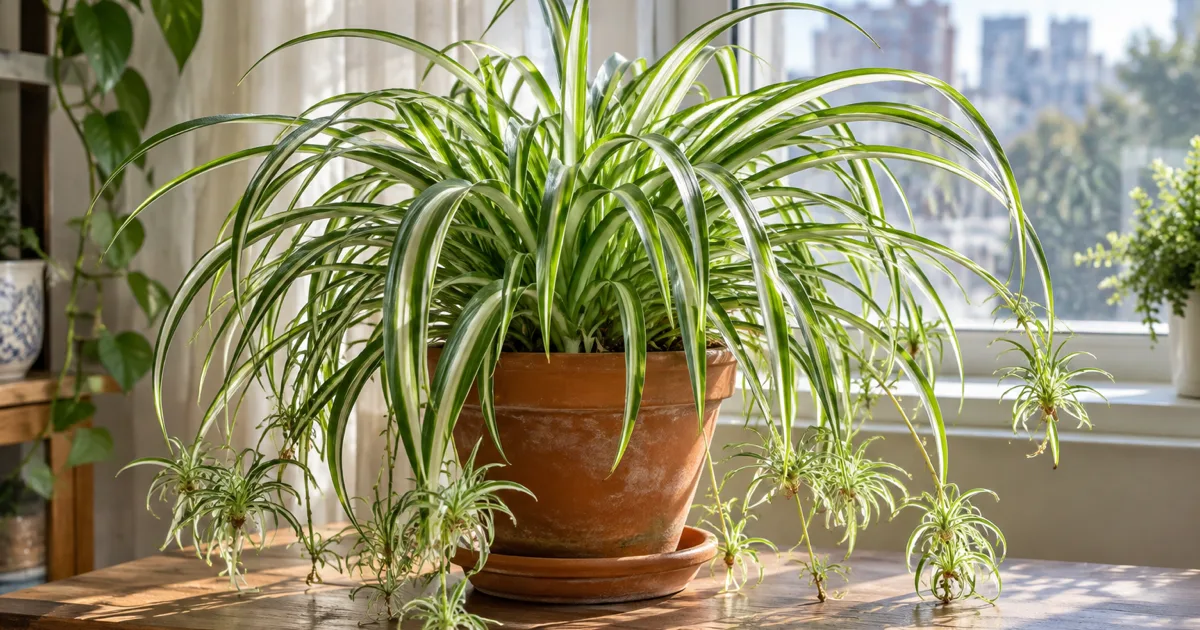
Spider plant care starts with bright, indirect light, a pot that drains, and letting the mix dry slightly between thorough waterings. Brown tips do not automatically mean your plant needs more water: fertilizer salts, water quality and moisture swings can leave similar marks.
A spider plant (Chlorophytum comosum) stores water in thick, fleshy roots. That makes it forgiving when you miss a check, but it does not make permanently wet soil safe. The useful goal is healthy new growth, not perfectly green tips on every old leaf.
A quick care guide for your setup
| Care decision | A useful starting point | Change course when |
|---|---|---|
| Light | Medium to bright, indirect window light | Leaves develop bleached patches after direct sun |
| Water | Let the mix dry slightly, then soak and drain | The root ball is still damp or water sits in the outer pot |
| Soil | General purpose indoor potting mix in a draining pot | Water bypasses a dense root ball or the mix stays soggy |
| Feeding | Light feeding while the plant is actively growing | Tip browning follows extra fertilizer or growth slows |
| Repotting | A slightly larger pot when roots crowd out the mix | Roots are soft rather than firm: inspect for rot first |
| Babies | Leave them attached or root them in their own pots | The mother plant is struggling and needs its conditions checked |
These are starting conditions, not a calendar. A hanging basket near a bright window can dry much faster than a large pot in a cool bedroom. Check the actual root ball before you repeat last week's routine.
Give the leaves bright light without hot direct sun
Choose a spot near a window where the leaves receive plenty of light without sitting in strong, hot sun. A sheer curtain can soften a harsh exposure. Check the spot at different times of day: a gentle morning window and a hot afternoon window are not interchangeable.
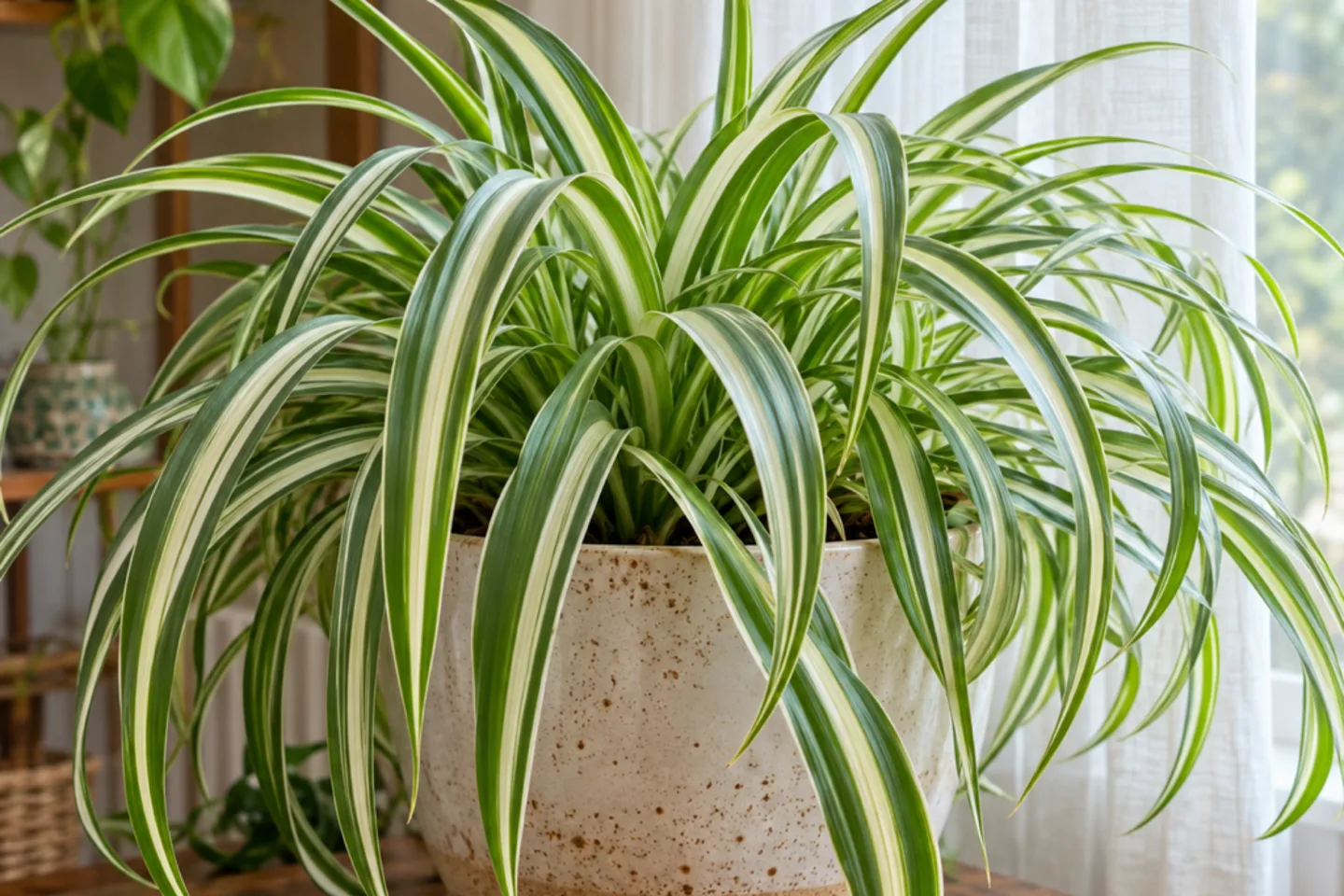
Spider plants tolerate lower light, but tolerance is not the same as vigorous growth. If yours is barely growing in a dim corner, moving it gradually toward a brighter position is more useful than adding fertilizer. Our guide to reading your plant's light explains how to assess the window rather than relying on room brightness alone.
Average indoor humidity usually suits this plant, according to University of Wisconsin Extension's spider plant guide. Keep leaves away from heater airflow and cold window glass. Misting is not a substitute for correcting a hot, dry draft or a pot that repeatedly dries out completely.
Water the soil, not the calendar
Feel the mix below its dry surface and lift the pot to learn its weight. Water when the root ball has dried slightly, then wet it evenly until excess drains out. Empty the saucer or decorative outer pot. Do not keep adding small splashes to a pot whose center is already wet.
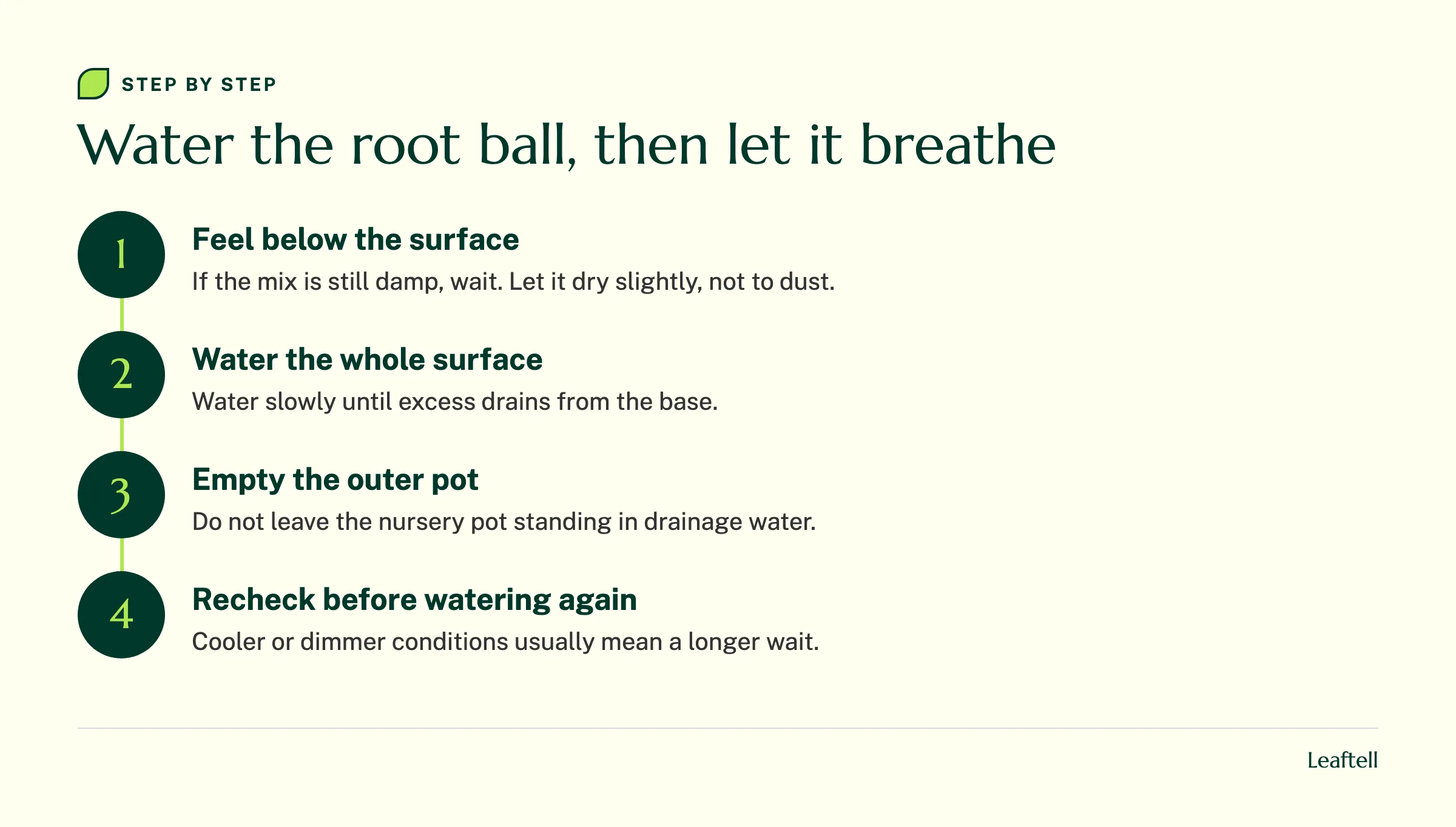
A dry-looking top layer can hide moisture below. If the readings disagree, use the checks in wet or dry soil before watering before adding more. In winter or a dimmer location, the same plant may take longer to use its water. Change the check frequency, not the amount of standing water you tolerate.
The fleshy roots help the plant survive an occasional dry spell. They are not a reason to leave the whole root ball bone dry for long periods. If water races down the edge while the center stays dry, slow the watering and check whether the roots have packed the container.
Repot when the roots need room, not because a tip browned
A slightly snug pot can support good growth and plantlet production. Eventually, however, the thick roots can crowd out the potting mix. Inspect when the pot dries unusually fast, water repeatedly bypasses the root ball, or roots form a dense mass inside the container.
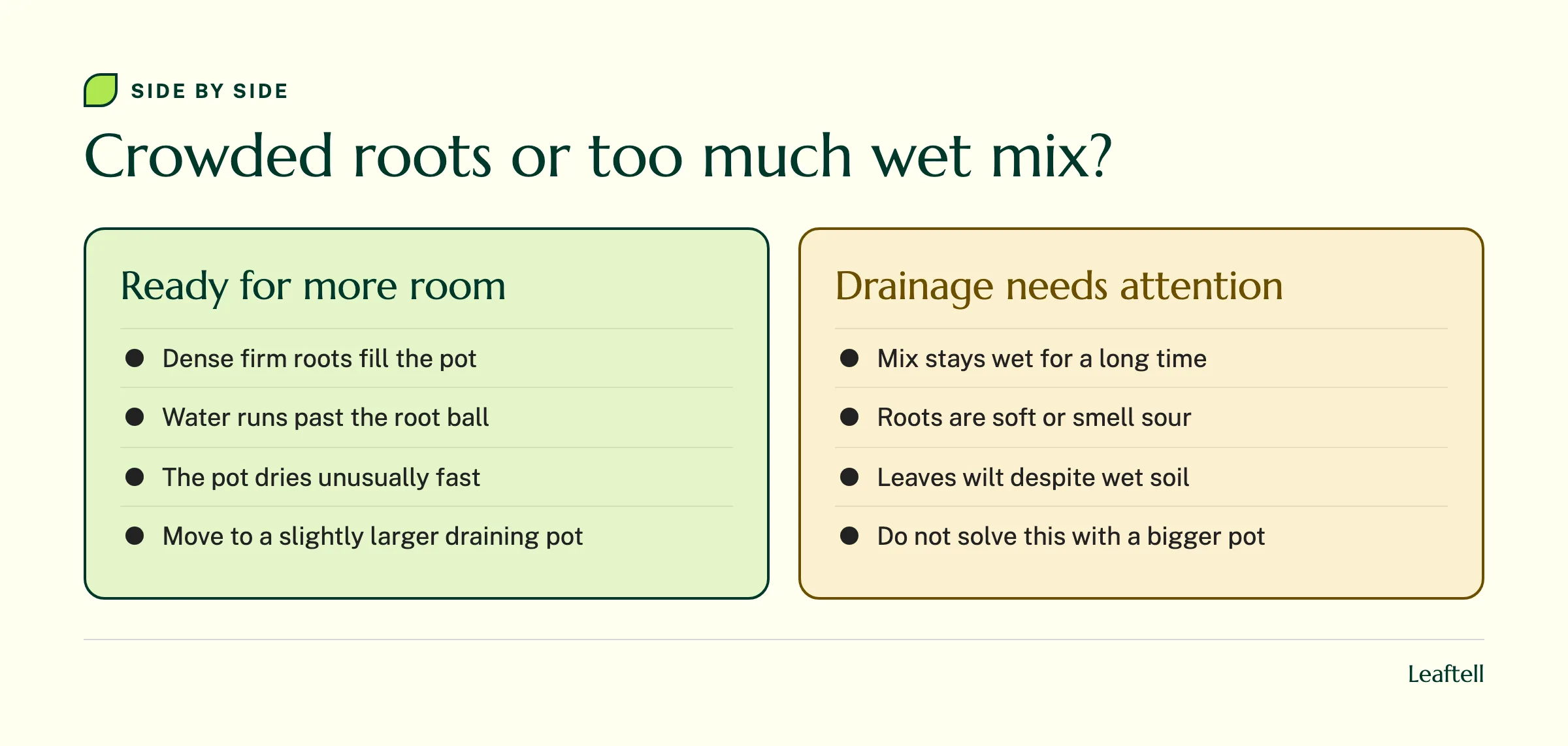
Choose a pot only a little larger than the root ball, with drainage holes, and fresh general purpose potting mix. Keep the crown at its previous level rather than burying the leaf bases. A large jump in pot size leaves more wet mix around a comparatively small root system.
Firm, pale roots are different from soft, dark roots with a sour smell. If the plant wilts while the soil stays wet, investigate root rot and the drainage changes it needs. Do not move a struggling, wet-rooted plant into an even larger pot and call that a cure.
Brown tips: check the pattern before changing care
A narrow, dry brown tip is old damaged tissue. It will not turn green again. Check whether new leaves are developing cleanly and whether the brown area is expanding before deciding that your latest change failed.
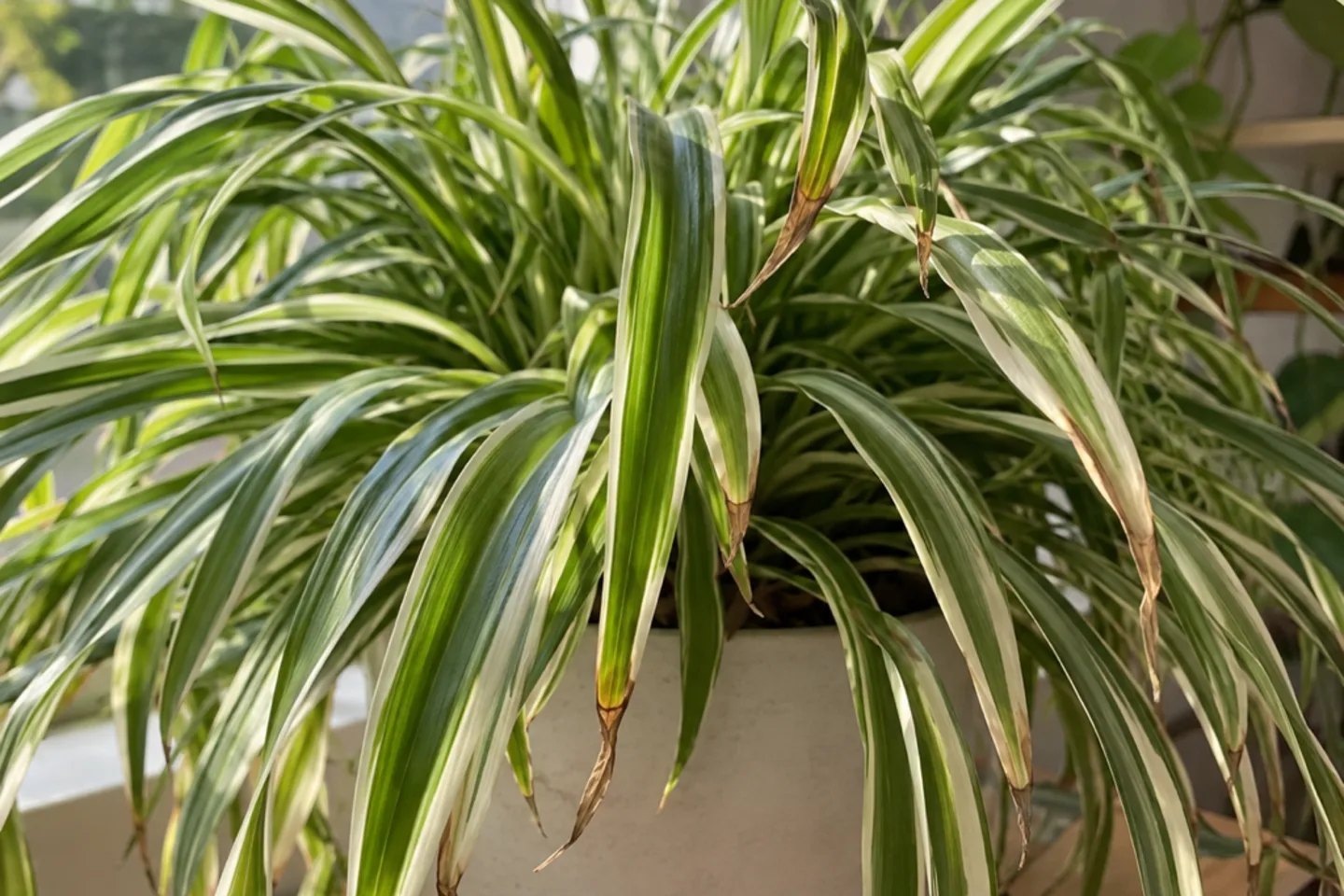
Wisconsin Extension lists several possible causes: excessively dry soil, low humidity, salt accumulation, and chemicals in tap water, particularly fluoride or chlorine. Overfeeding can also contribute. None can be identified from a tip photo alone. Start with the watering history, recent fertilizer use and the plant's position.
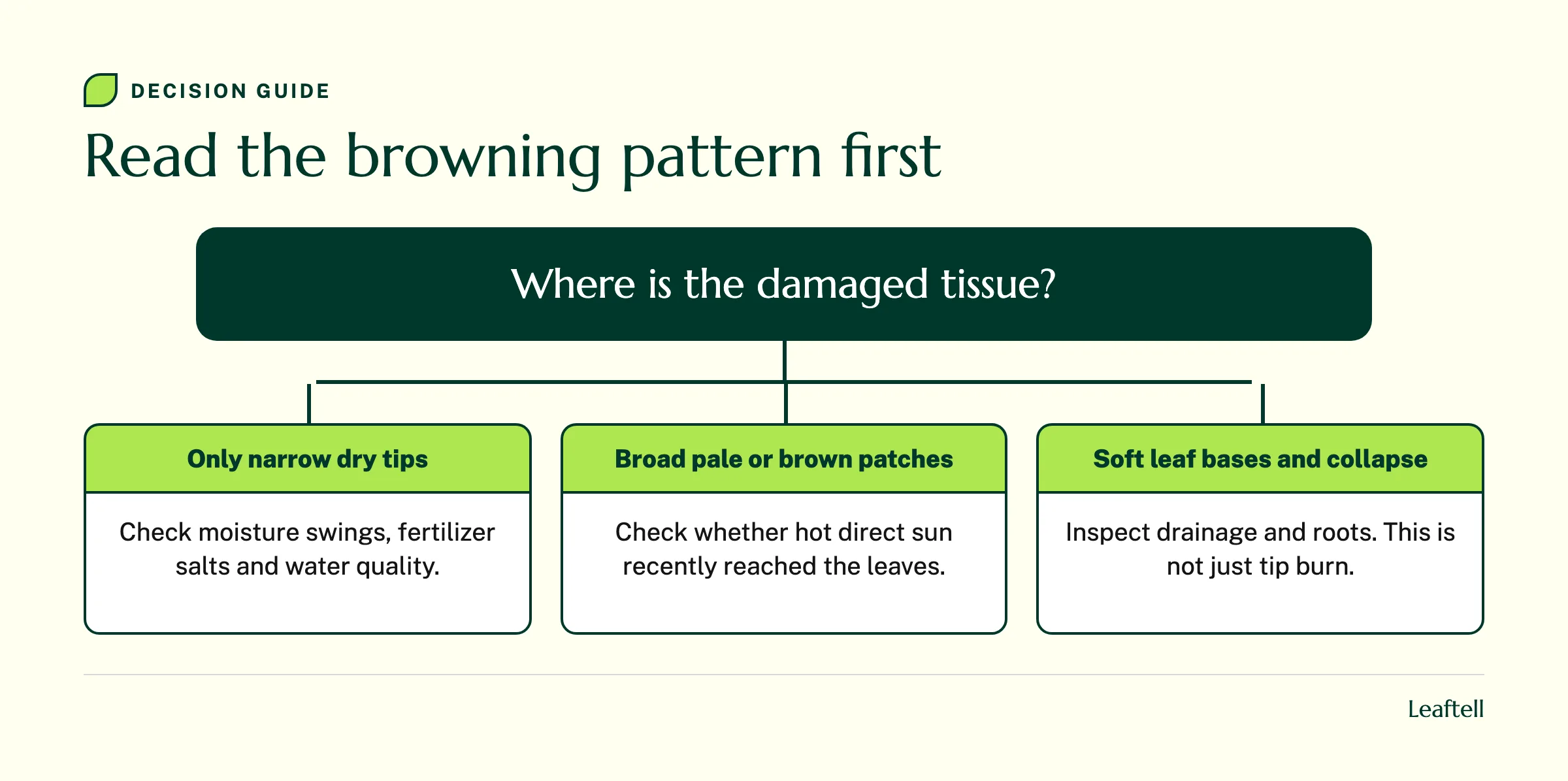
If you have been feeding frequently, pause extra applications while you investigate. For routine care, use a generic houseplant fertilizer conservatively and follow the label. Wisconsin notes that feeding every three to four months is often sufficient; that is a reference point, not a reason to feed a plant that is not growing. Keep fertilizer and treated drainage water away from pets and children, and never mix products.
If browning persists despite stable moisture and sensible feeding, try distilled water and watch subsequent growth. Leaving tap water out does not remove dissolved fluoride or fertilizer salts. Avoid changing the water, pot, light and fertilizer all at once, because you will lose track of which change mattered.
Trim a dry tip only if you want a neater leaf. Use clean scissors and leave a narrow brown edge rather than cutting into green tissue. The broader brown tips on leaves guide helps distinguish tip burn from sun damage and scattered leaf spots.
Root babies while they are still attached
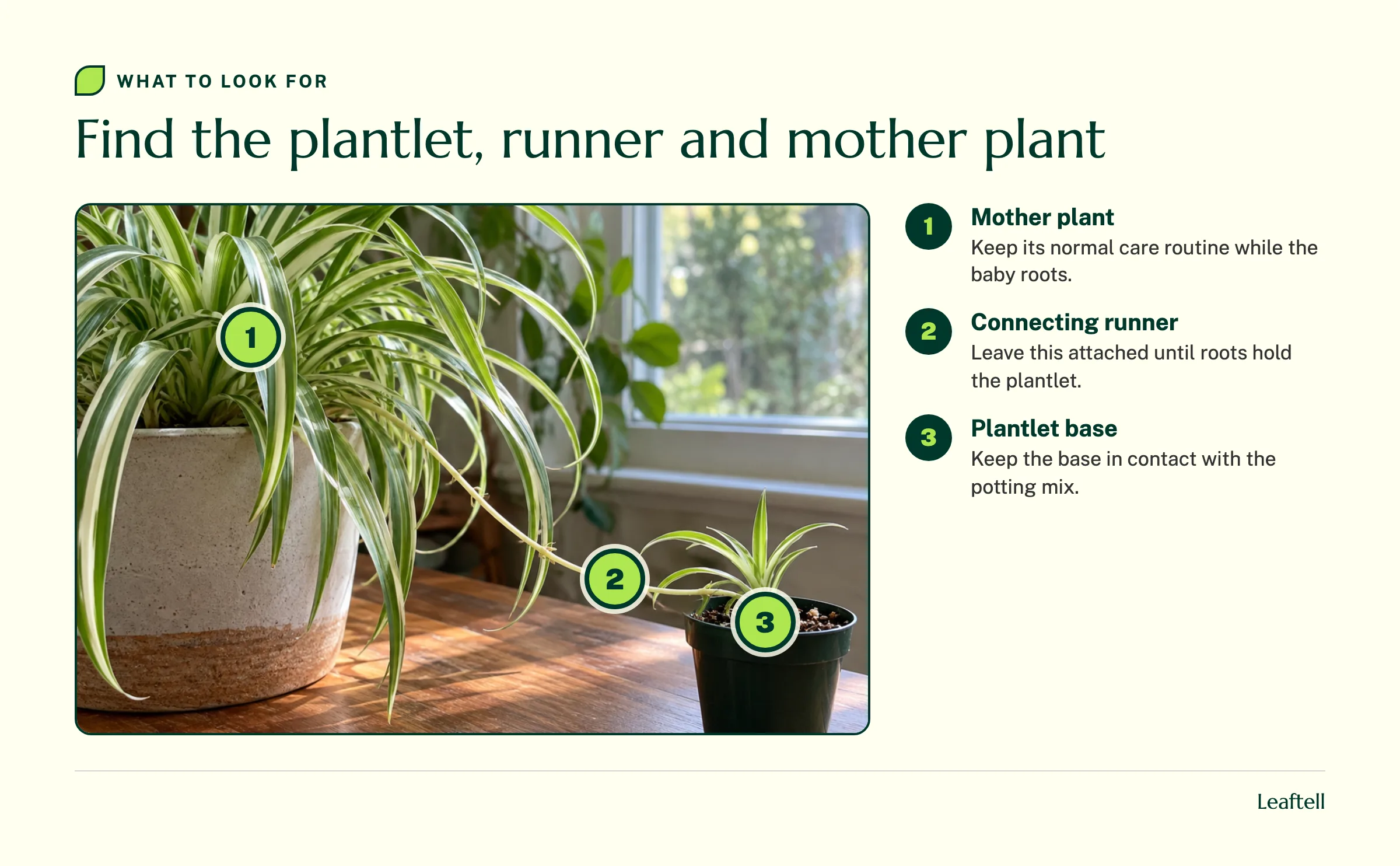
The small plants at the ends of long runners are plantlets, often called babies or spiderettes. You do not have to remove them from a healthy mother plant. To make a new plant with less disruption, root one in a small pot while it remains attached.
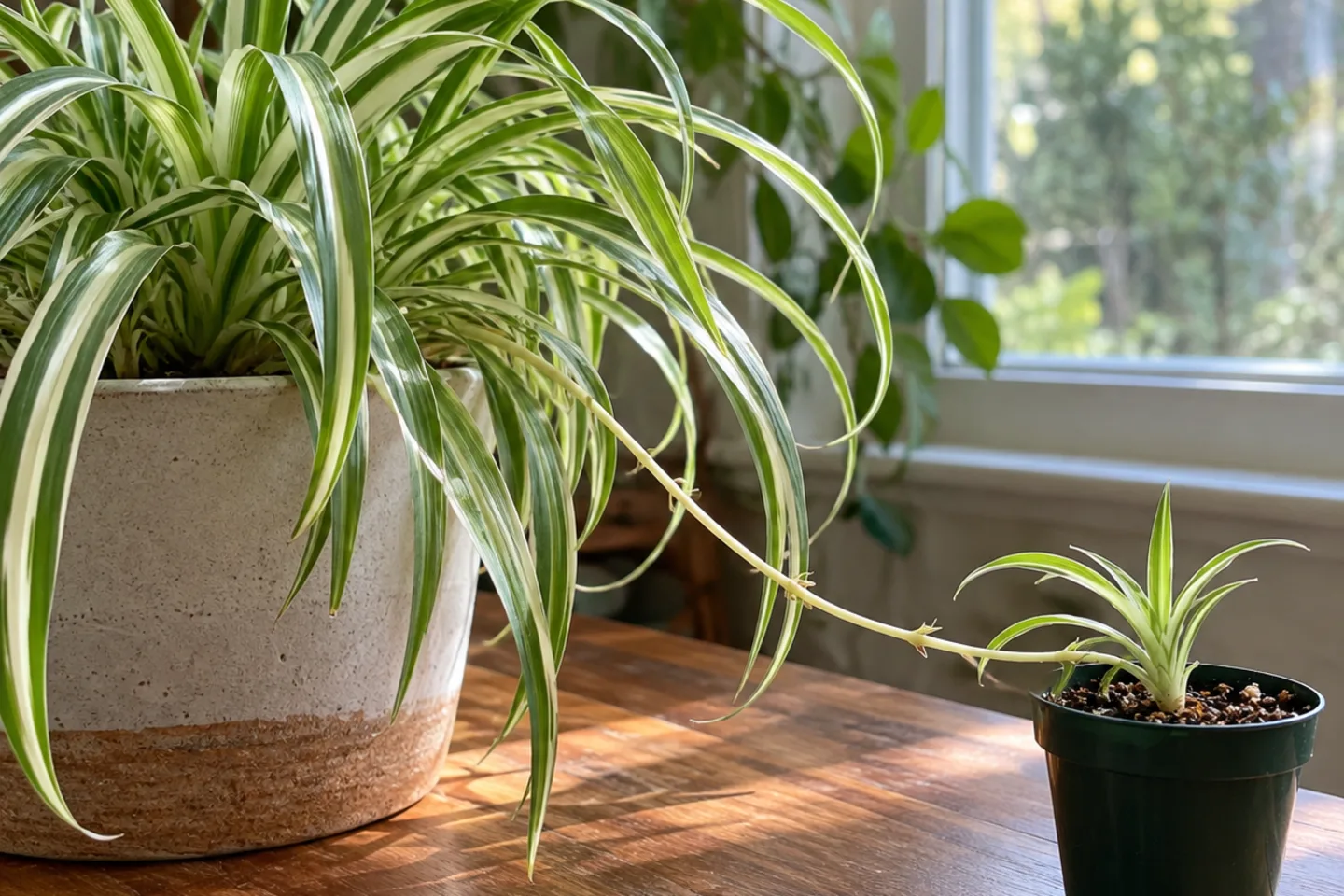
How to root a spider plant baby in potting mix
- Choose a developed plantlet
Pick a healthy baby with a clear leafy rosette and, ideally, visible root beginnings at its base. Set a small pot of fresh potting mix beside the mother plant.
- Rest the base on the mix
Place the base in contact with the mix while leaving the leaves above it. Keep the runner attached. If needed, use a gentle support to keep the baby in position without crushing its base.
- Keep the rooting mix lightly moist
Water carefully and let excess drain. The little pot needs its own moisture checks; it may dry differently from the mother's larger container.
- Separate after roots establish
Wait until roots hold the plantlet in place and it is growing. Then cut the connecting runner with clean scissors. Do not pull it away or use a promised number of days as proof that it has rooted.
A plant that has not made babies is not necessarily unhealthy. Maturity, light conditions and feeding all matter. NC State Extension describes the role of short days and long, uninterrupted nights in runner and plantlet development. Extra fertilizer is not a reliable shortcut and can reduce plantlet formation.
Inspect leaf bases before treating pests
Spider plants usually have few pest problems, but mealybugs and scale can hide at leaf bases and along stems. Isolate a plant with visible pests, then wipe or rinse away what you can. Check nearby plants too. Do not apply a pesticide merely because tips are brown.
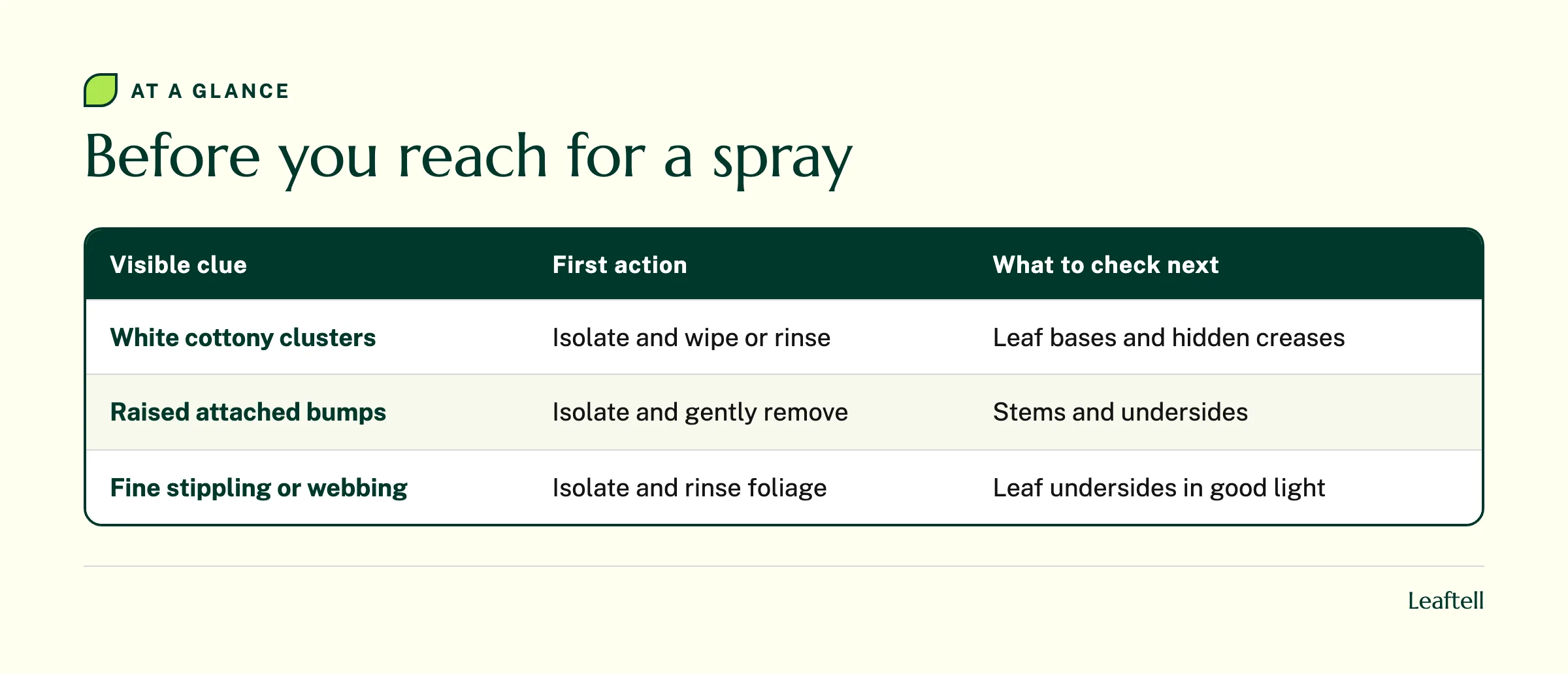
Use the houseplant pest checklist to compare visible signs. White cottony clusters call for the more specific mealybug checks; raised attached bumps suggest a different problem. If a labeled houseplant insecticidal soap is needed after identification, follow the label, test a small area first, and keep pets and children away as directed. Never mix treatments.
The ASPCA lists spider plant as non-toxic to cats and dogs. That classification does not make fertilizer, pesticide residues or potting mix safe. Keep the pot stable and dangling runners out of reach of pets or children who might pull the plant down. If an animal becomes unwell after chewing a plant, contact a veterinarian rather than relying on a plant photo.
Check your spider plant in Leaftell
Start with the window, moisture inside the pot and whether water can escape. Correct the clearest problem, then take a new photo in seven days as a check-in reminder, not a recovery deadline or watering schedule. Compare the newest leaves instead of expecting old brown tips to disappear.
If the cause is still unclear, check your spider plant in Leaftell with a whole-plant photo, a close-up of the damage and your watering observations. A photo cannot tell whether the center of the pot is wet, so include that detail before deciding on the next change.
Check your growing conditions with the plant watering calculator.
Frequently asked questions
Give it medium to bright indirect light, a draining pot and thorough watering after the mix dries slightly. Avoid repeated soaking of already damp soil and unnecessary fertilizer. Healthy new growth is a better guide than whether every old tip is perfect.
Long leaves and dangling runners need space, and brown tips can appear when moisture, water quality or feeding is off. Its vigorous roots eventually need more room. A hanging pot also needs a secure support and a way to drain without dripping onto furniture.
No. A healthy mother plant can keep its plantlets. Remove or propagate them if you want to reduce the spread or grow new plants, not because every baby must be cut off. Check the mother's care conditions if it is declining.
Near a bright window with filtered light, away from hot direct sun, heater airflow and cold glass. Keep it where you can reach the pot to check moisture and empty drainage water. A dim corner may keep it alive but usually gives slower growth.
Share article
About the author

Keep checking your plant
Plant care reference
Indoor plant care
Build a routine around your plant, light and potting mix.
Plant care reference
Why is my plant dying
Trace leaf and root symptoms before choosing a care change.
Plant care reference
Pothos plant care
Choose a growing spot and prune a trailing pothos for fuller growth.
Plant care reference
How to fix root rot
Inspect root firmness and drainage, then decide whether to repot.