Are Snake Plants Pet Safe? The Real Risk for Cats and Dogs
Filip Leszczyński 14 November 2026 11 min read
In this article
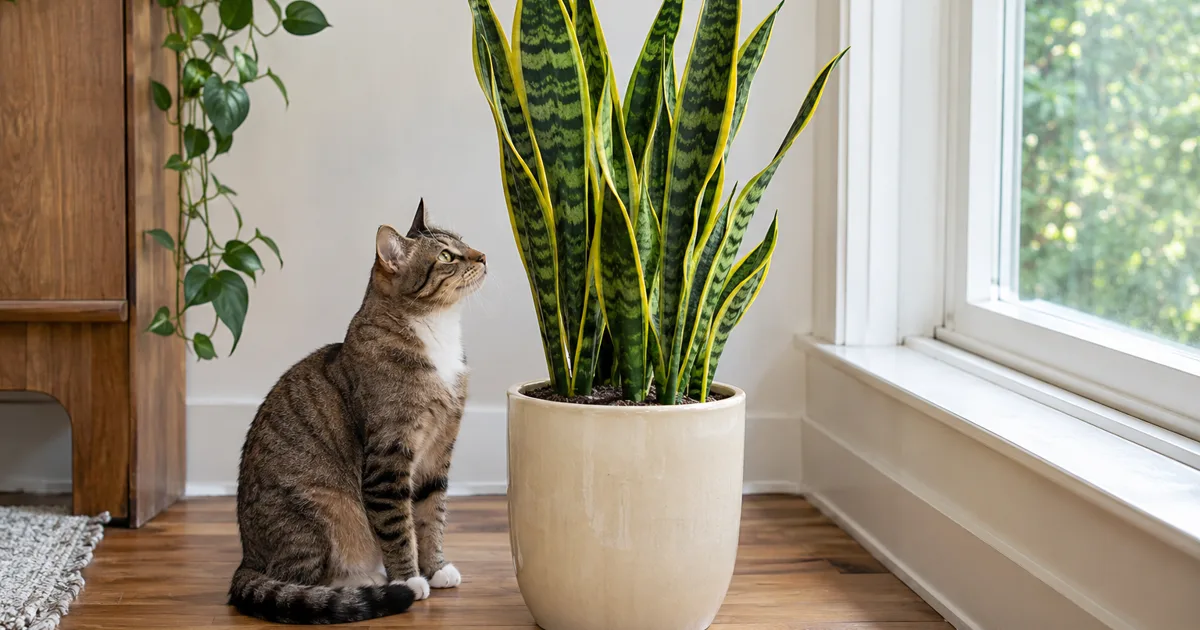
No, snake plants are not pet safe. The ASPCA lists the snake plant (Sansevieria trifasciata, also called mother-in-law's tongue) as toxic to both dogs and cats, because its leaves contain saponins that cause nausea, vomiting and diarrhea.
That label sounds scarier than the plant usually is, and that is the part most answers skip. The signs the ASPCA and the Pet Poison Helpline report are mostly stomach upset, not the kind of emergency you get from a lily and a cat. So the real question is not "toxic or not" but "does my pet chew plants?" A cat that ignores greenery and a puppy that eats everything at floor level need very different answers. This guide covers both, what to do if your pet already took a bite, and the lookalike plants that are actually safe.
What makes a snake plant toxic to pets
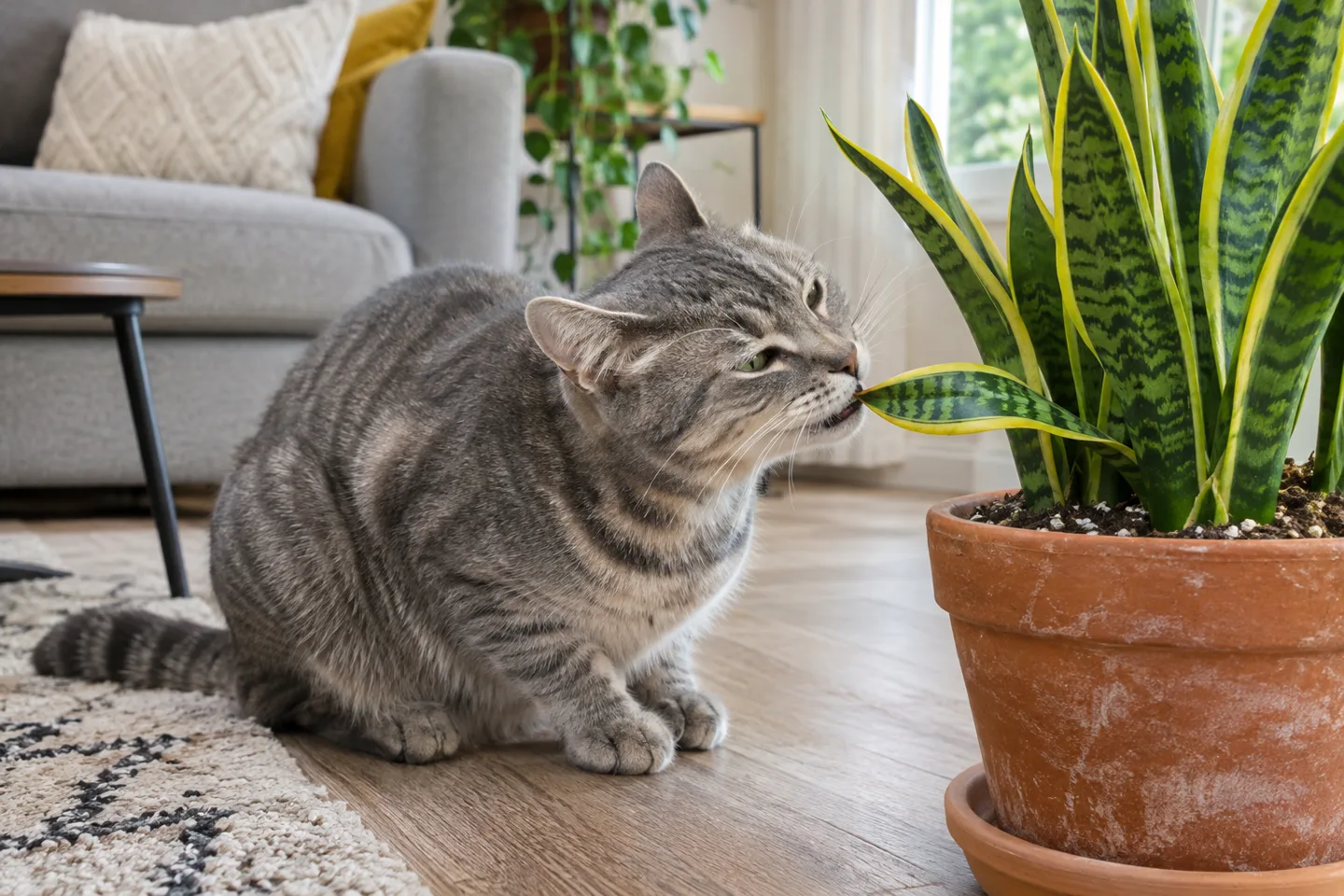
Snake plant leaves and stems contain saponins, natural soap-like compounds that taste bitter and irritate the gut. A pet that chews a leaf gets a mouthful of that sap. The ASPCA lists the clinical signs as nausea, vomiting and diarrhea. The Pet Poison Helpline adds drooling, and reports dilated pupils and a wobbly gait specifically in cats.
Notice what is not on either list: neither source lists organ damage or other severe effects for snake plant. That is why a bite is usually a stomach problem, not an emergency. It is still not harmless: a bored puppy or a determined plant chewer can swallow enough to get properly sick, and a small animal needs less to show signs.
Snake plant and cats vs dogs: which pets are at risk
The plant is equally toxic to both. What differs is how each pet meets it. Use your own pet's habits, not its species, to decide.
| Your pet | Risk with a snake plant | What to do |
|---|---|---|
| Cat that chews grass or leaves | High chance of a bite, mostly stomach upset | Keep it out of reach or choose a pet-safe plant |
| Cat that ignores plants | Low; watch the first weeks after you bring it home | A floor pot is usually fine; check leaf tips weekly |
| Puppy or young dog | High; floor pots get chewed, dug and knocked over | Out of reach until the chewing phase ends |
| Adult dog that ignores plants | Low | Fine with care; pick up fallen or trimmed leaves |
| Rabbit, guinea pig or other small pet that roams free | Not well documented; small bodies react to less | Keep it in a room they cannot enter |
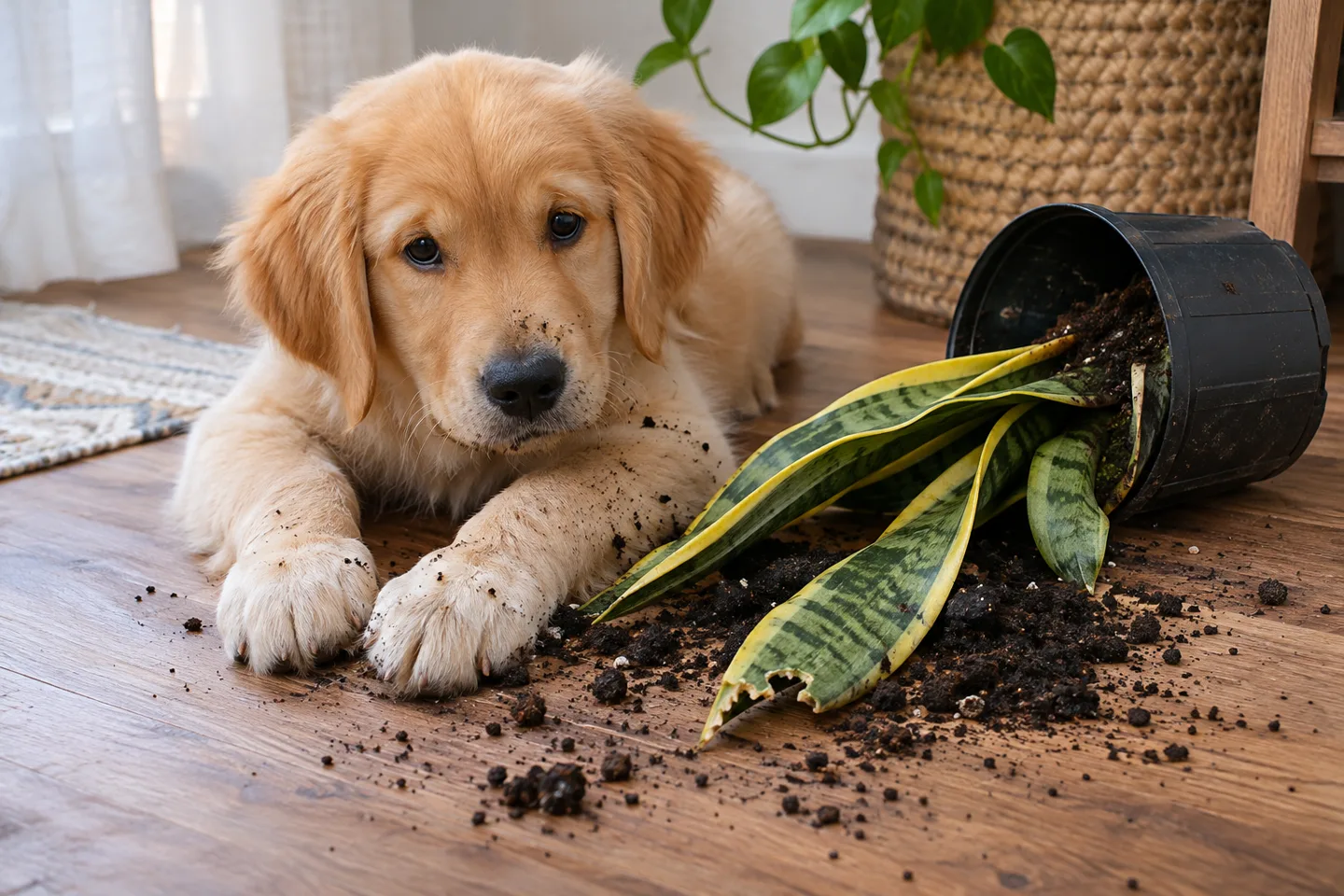
Cats are the trickier case because they climb. A snake plant on a low shelf is at nose height for a cat, and some cats chew stiff, grass-like leaves on purpose. Dogs mostly meet the plant at floor level, so a large floor pot is the classic puppy target: they dig the mix, knock the pot and chew the leaves that fall.
How to tell if your pet has been chewing your snake plant
Look at the leaf tips and edges first. Fresh chewing leaves torn, ragged edges with pale fibers showing, usually on the lowest or outermost leaves where a pet can reach. A tip that is simply brown and dry is more likely a watering or light issue; our guide to snake plant leaves turning yellow covers those.
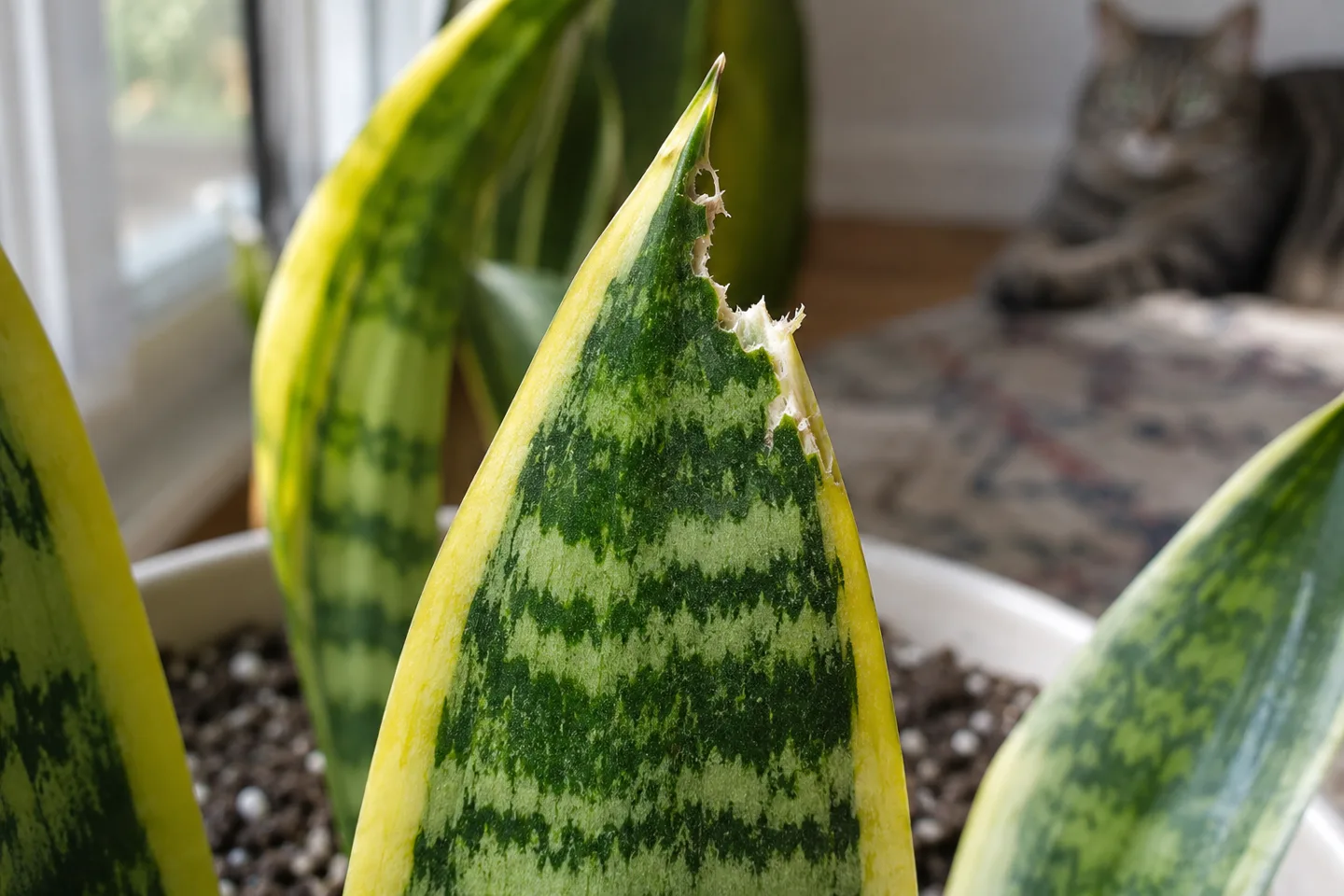
Other clues: leaf pieces on the floor, potting mix dug out of the pot, or green flecks in vomit. If you see bite marks but your pet seems fine, you have caught it early. Move the plant before you deal with anything else.
My pet ate a snake plant: what to do
Most cases need watching, not panic. If your pet is acting normally after a small bite, remove the plant and keep an eye on them. If signs appear, or you are not sure how much was eaten, call for advice rather than guessing.
What to do if your pet chewed a snake plant
- Take the plant away
Move the pot to a room your pet cannot reach and pick up any fallen leaf pieces, so they cannot keep chewing while you sort things out.
- Check the mouth
Gently look for leaf pieces left in the mouth or stuck in the teeth and clear them away. Do not try to make your pet vomit unless a vet tells you to.
- Note what and when
Write down roughly how much leaf is missing and what time it happened. A photo of the chewed plant helps whoever you call identify it.
- Watch for signs
Look for drooling, vomiting, diarrhea, lip licking or going off food. In cats, also watch for dilated pupils and wobbly walking.
- Call if anything shows
Call your vet or an animal poison control line if signs appear, if you think a lot was eaten, or if your pet is very small, young, old or already unwell. ASPCA Animal Poison Control is on (888) 426-4435; a consultation fee may apply.
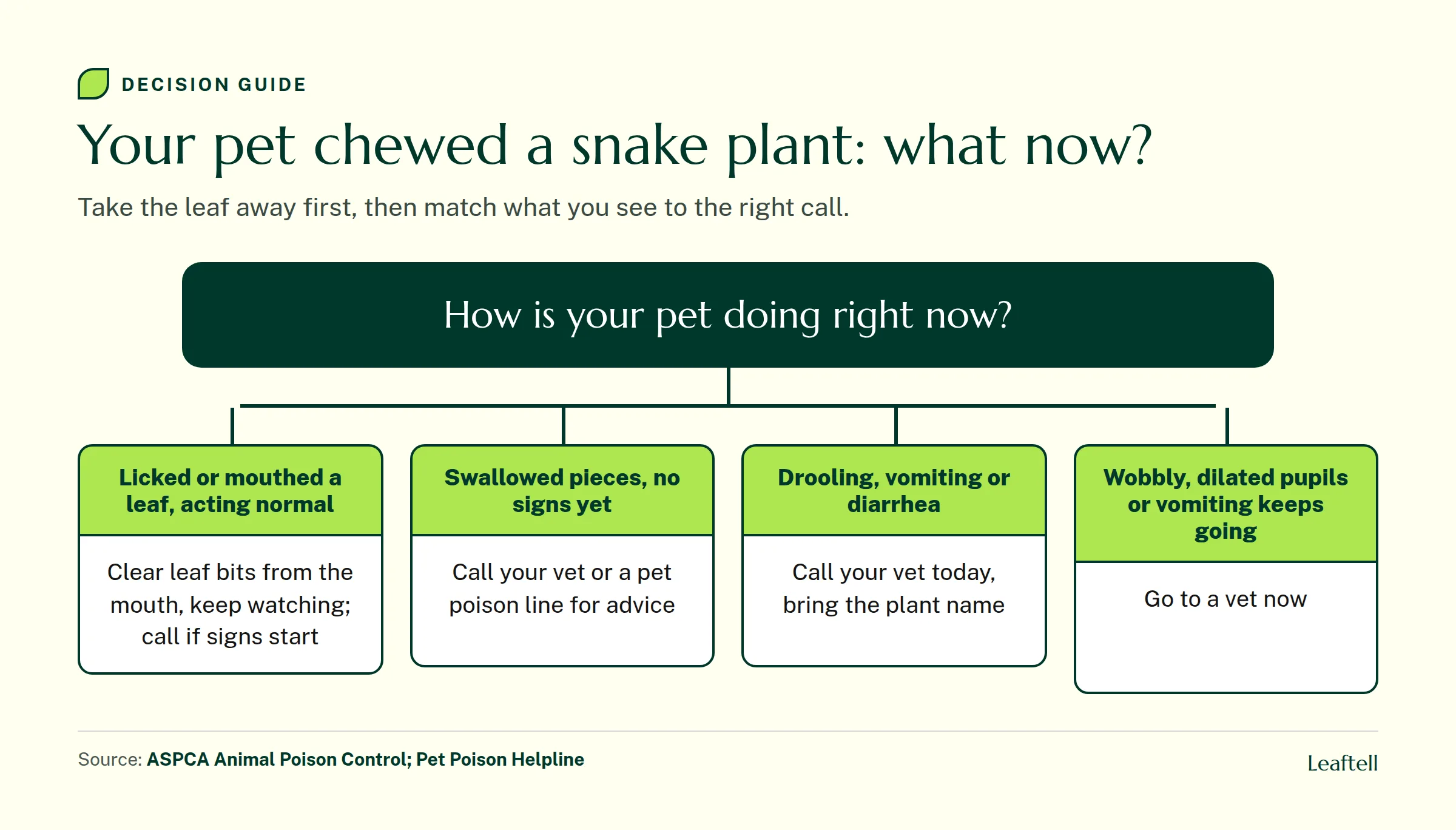
Keep the plant's name handy when you call. "Snake plant", "mother-in-law's tongue" and "Sansevieria" (now often listed as Dracaena trifasciata) all mean the same plant, and the right name gets you a faster answer.
Symptoms to watch for after a pet eats a snake plant
The reported signs are mostly digestive. Write down when each one starts so you can give your vet a clear timeline.
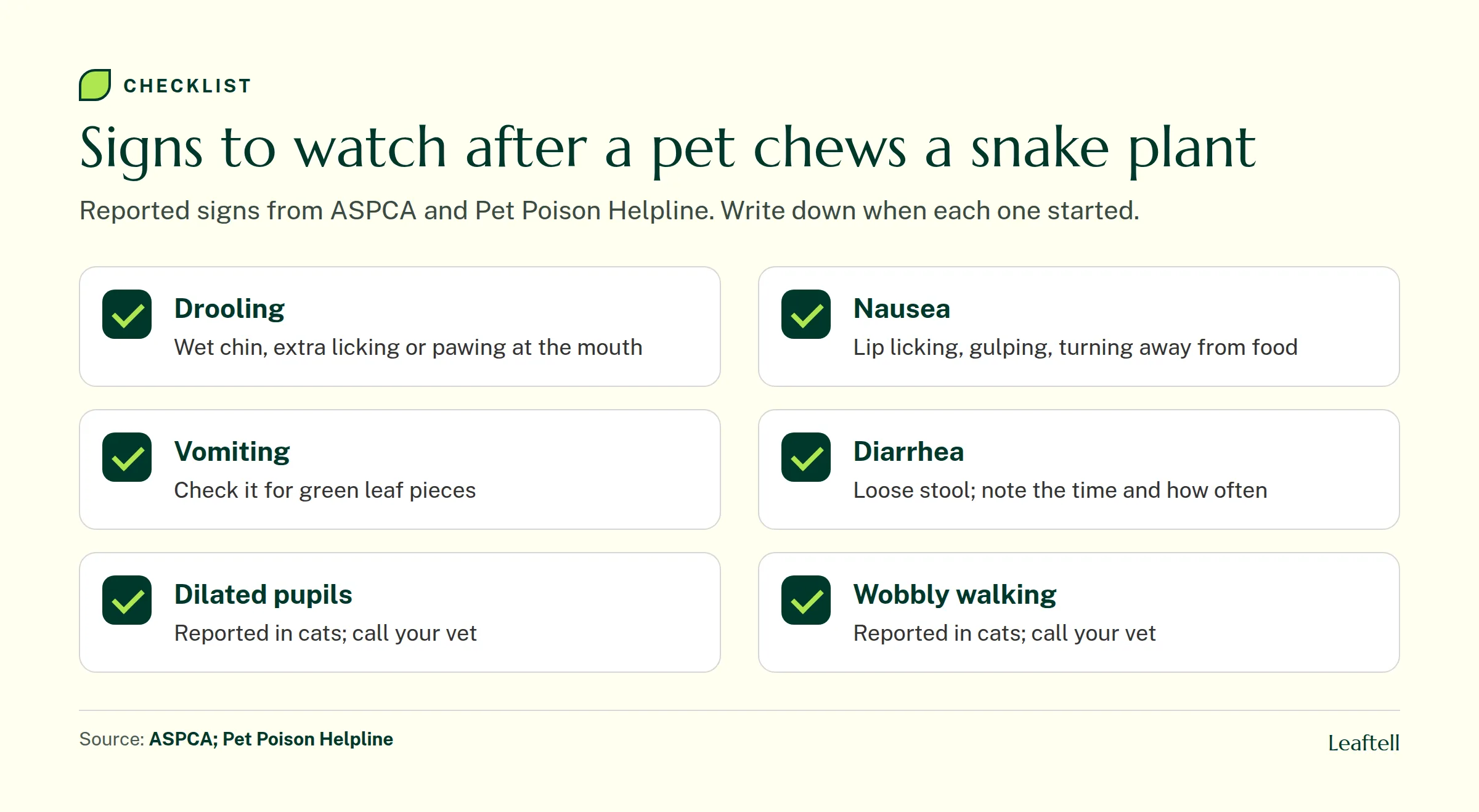
Vomiting or diarrhea that keeps going, a pet that stops drinking, or a cat that seems unsteady are reasons to see a vet in person rather than wait it out. Repeated vomiting can dehydrate a small pet quickly, whatever caused it.
How to keep a snake plant safely with pets
If you love the plant and your pet is not a dedicated chewer, you can usually keep both. The whole job is distance.
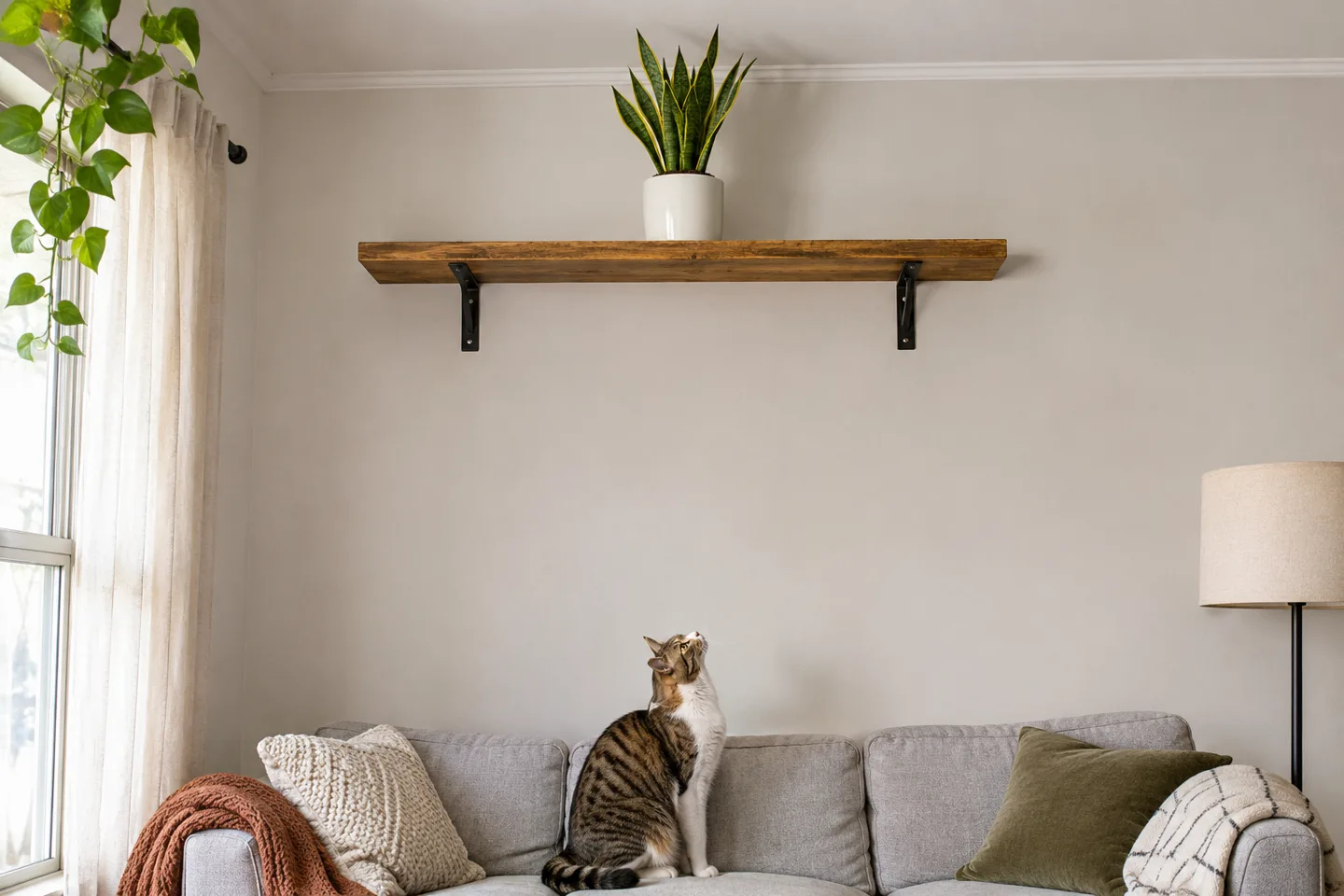
- Go high and out of jumping range. A wall shelf with no nearby furniture to climb works for cats; a tall stand works for most dogs. Snake plants tolerate lower light, so a shelf away from the window is fine for them, as our snake plant care guide explains.
- Use a room your pet does not enter. A home office or spare room with the door closed is the most reliable option.
- Pick up every trimmed or fallen leaf. Cut leaves from repotting or dividing are the pieces pets most often find on the floor.
- Give a chewing cat something better. A pot of cat grass in an easy spot can pull attention away from your houseplants.
- Check the tips once a week. New bite marks tell you the setup is not working before your pet gets sick.
Do not rely on bitter sprays or citrus peels alone. They help some pets and do nothing for others, and they do not change the fact that the plant is toxic. A spot your pet physically cannot reach is the only fix that does not depend on your pet's taste.
Pet-safe plants that look like a snake plant
If your pet chews plants, swap rather than fight it. These are all listed as non-toxic to dogs and cats by the ASPCA, and each covers one reason people buy a snake plant in the first place.
| Plant | Why it works as a swap | ASPCA listing |
|---|---|---|
| Spider plant | Same easy care and striped, strappy leaves | Non-toxic to dogs and cats |
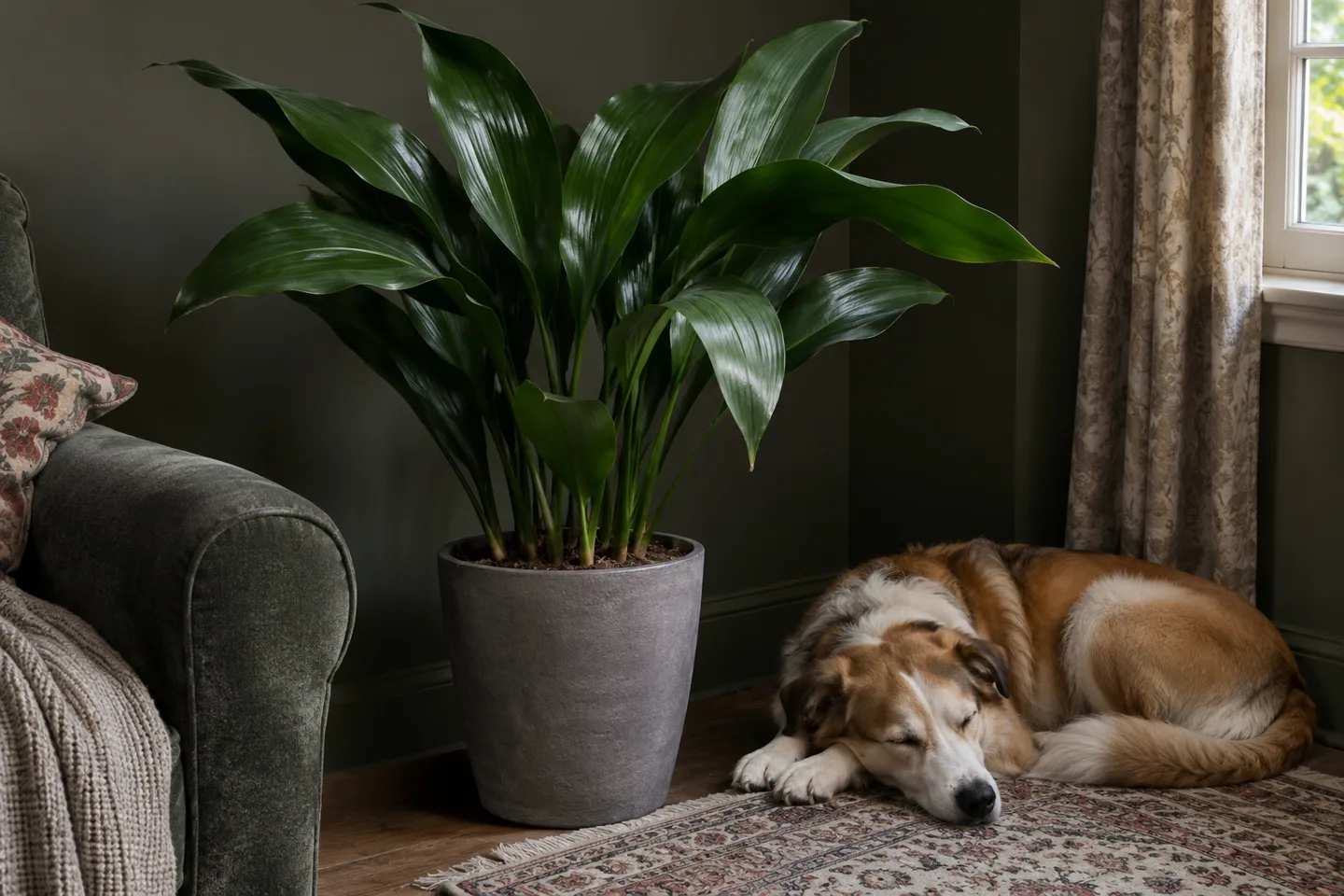
| Cast iron plant | Upright dark leaves, handles low light and neglect | Non-toxic to dogs and cats |
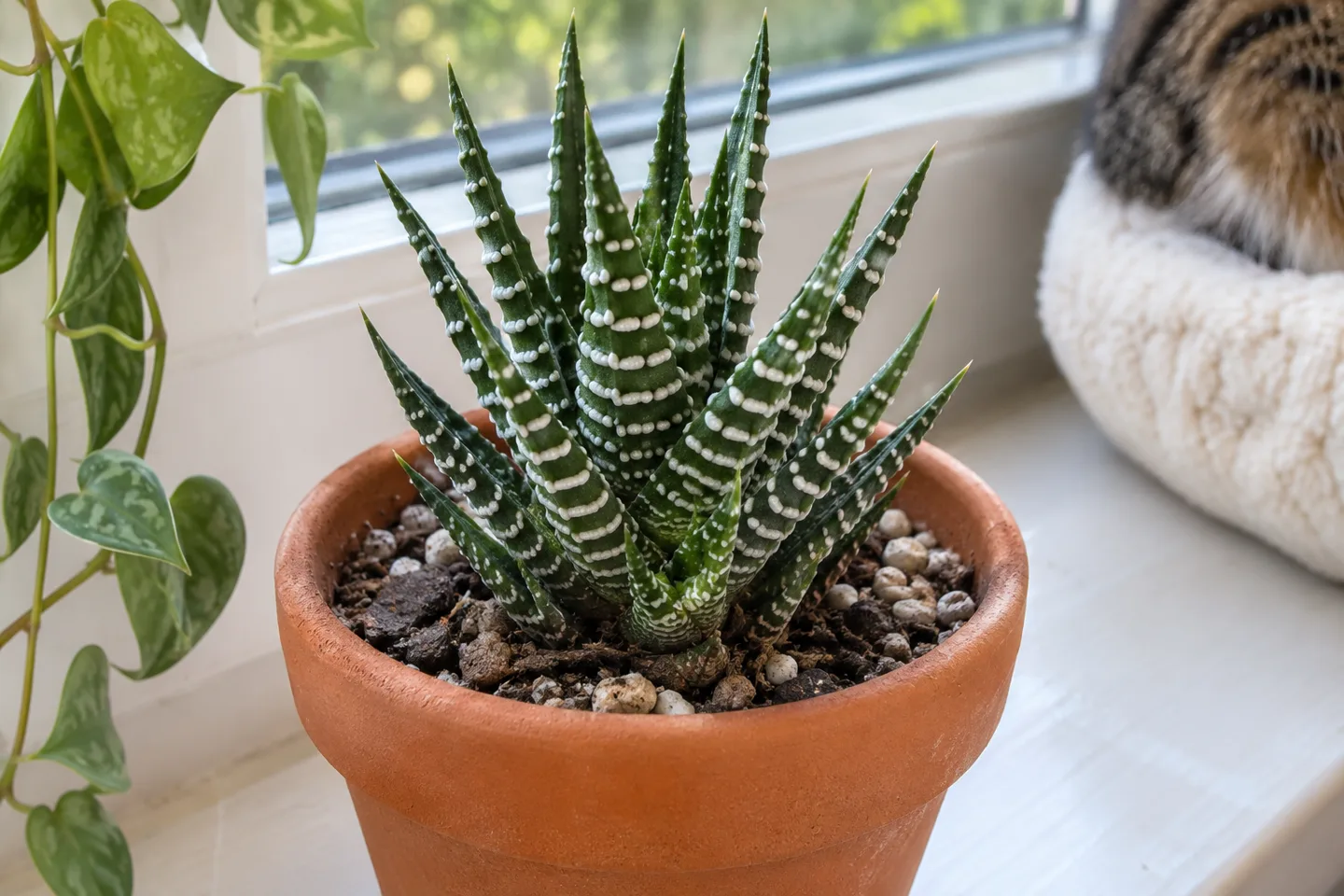
| Zebra haworthia | Small, stiff, striped leaves, a mini snake plant look | Non-toxic to dogs and cats |
| Parlor palm | Tall floor plant for the spot a big snake plant would fill | Non-toxic to dogs and cats |
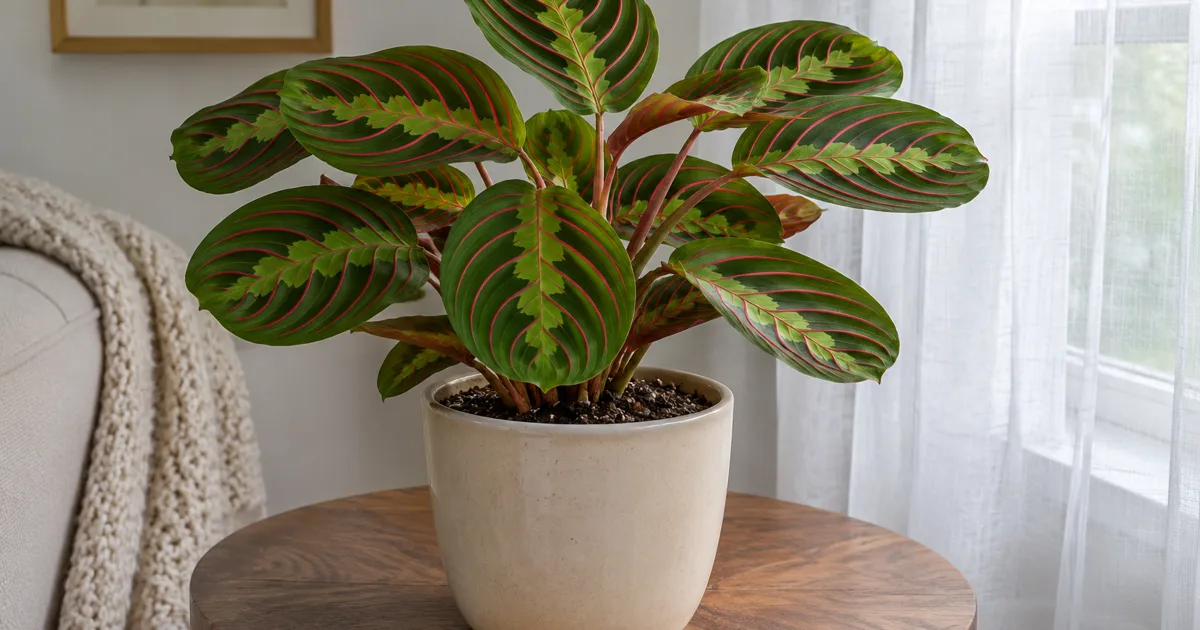
| Prayer plant | Patterned leaves for a shelf or table | Non-toxic to dogs and cats |
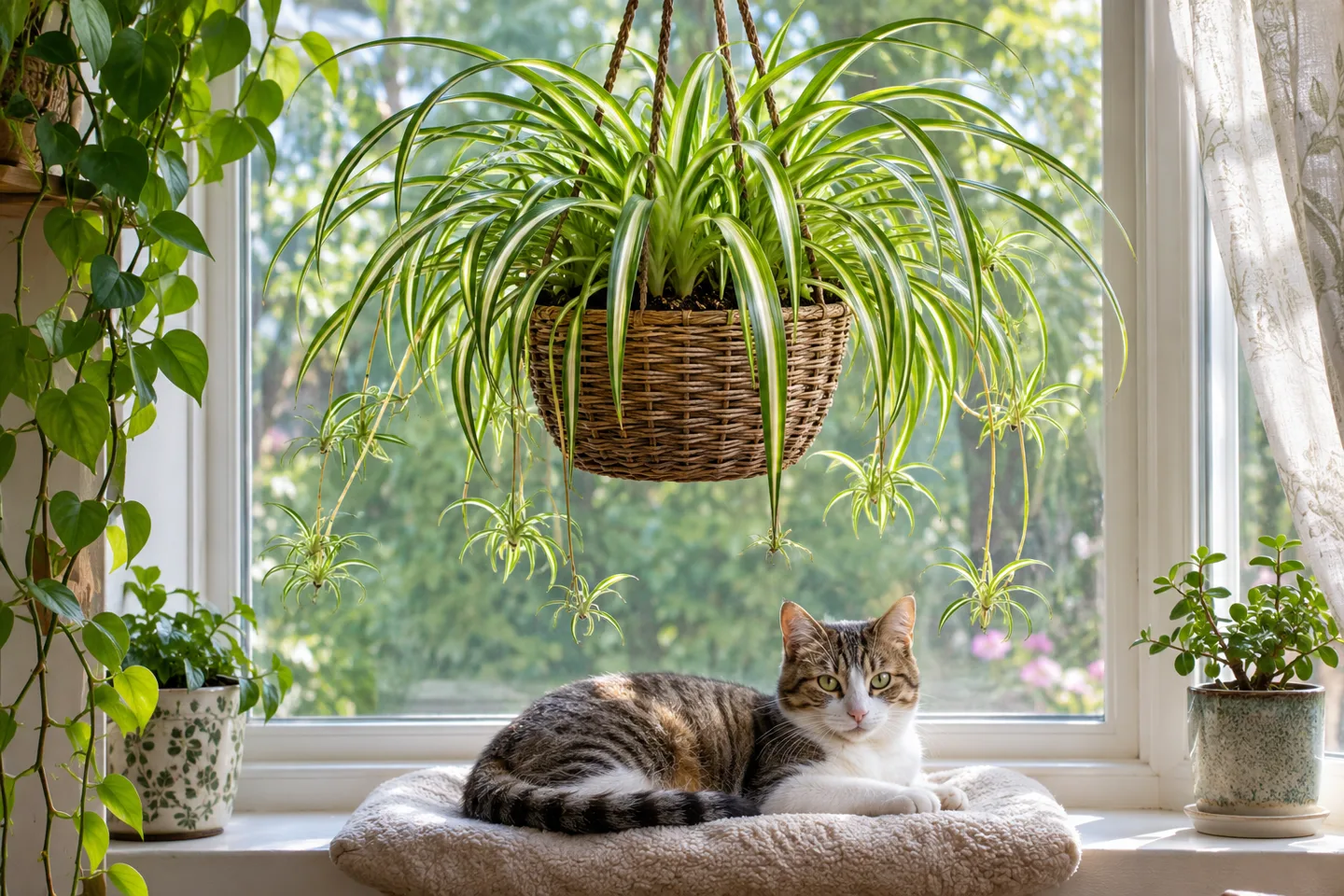
The spider plant is the closest swap for most homes: it is just as forgiving, and our spider plant care guide covers the light and watering. Cats do like to bat at the dangling babies, so a hanging basket keeps the plant looking good, even though a nibble will not hurt them.
The cast iron plant is the swap for a dim corner, where a snake plant often ends up. It has the same upright, architectural look and it is even slower to complain. If you need more options for a dark room, our list of low light indoor plants is a good place to start, but check each one against the ASPCA list before you buy, because several popular low light plants are toxic.
For a windowsill, a zebra haworthia gives you the stiff, striped look at a fraction of the size. Pattern lovers can try a prayer plant instead; our prayer plant care tips explain the humidity it wants.
Be careful with the other usual suspects. Pothos, aloe vera and peace lily are all on the ASPCA toxic list too, so swapping a snake plant for one of them does not solve anything. Our guides to pothos, aloe vera and peace lily care cover how to grow them if you keep them out of reach.
The short answer
Snake plants are toxic to cats and dogs, but the usual result of a bite is an upset stomach, not an emergency. Decide by your pet, not the label: a pet that ignores plants can live with one placed out of reach, while a chewing cat or a puppy is better off with a spider plant or cast iron plant. If a bite happens, move the plant, watch for drooling, vomiting and diarrhea, and call your vet or a pet poison line if any sign appears.
Check your growing conditions with the plant watering calculator.
Frequently asked questions
Yes, if the cat cannot reach it or does not chew plants. Put it on a high shelf with nothing nearby to climb, or in a room the cat does not enter, and check the leaf tips weekly for bite marks. If your cat is a known plant chewer, a spider plant or cast iron plant is the safer choice.
Yes. The ASPCA lists snake plant as toxic to dogs because of its saponins, which cause nausea, vomiting and diarrhea. Puppies are the most at risk because they chew floor pots. Keep it out of reach and call your vet if your dog shows signs after chewing it.
Most cats get stomach upset: drooling, nausea, vomiting or diarrhea. The Pet Poison Helpline also reports dilated pupils and a wobbly gait in cats. Take the plant away, watch your cat closely and call your vet or a pet poison line if any sign appears.
Zebra haworthia, cast iron plant, spider plant, parlor palm and prayer plant are all listed by the ASPCA as non-toxic to cats. Zebra haworthia is the closest in look, with stiff striped leaves, and cast iron plant is the closest for a low light corner.
No. The ASPCA lists spider plants as non-toxic to dogs and cats, which makes them one of the easiest snake plant swaps. A cat may still chew the leaves for fun, so hang it if you want the plant to stay tidy.
Share article
About the author

Keep checking your plant
Plant care reference
Indoor plant care
Build a routine around your plant, light and potting mix.
Plant care reference
Why is my plant dying
Trace leaf and root symptoms before choosing a care change.
Plant care reference
Pothos plant care
Choose a growing spot and prune a trailing pothos for fuller growth.
Plant care reference
How to fix root rot
Inspect root firmness and drainage, then decide whether to repot.